Samsung Electronics is preparing to unveil its flagship Galaxy S26 series, including the premium Galaxy S26 Ultra, at a Galaxy Unpacked event on February 25, 2026, in San Francisco, according to multiple reliable leaks and industry reports. The high-end model will hit global markets starting March 11, marking a later-than-usual launch window for the South Korean tech giant’s annual flagship lineup.
The February 25 date, a Wednesday, aligns with Samsung’s preference for mid-week Unpacked events and has been corroborated by prominent leakers such as Evan Blass (@evleaks), who shared what appears to be an official event invite on X. The invitation confirms the timeline, though specifics on the exact start time and full agenda remain under wraps. Pre-orders are expected to open immediately following the announcement, with in-store availability commencing on March 11—a Wednesday Samsung reportedly selected to avoid the superstitious connotations of Friday the 13th.
This schedule represents a shift from recent years, when Samsung typically revealed its Galaxy S series in January. The delay to late February stems from production adjustments, including mass production timelines for components and a strategic push to refine features amid intense competition from Apple, Google, and emerging Chinese brands. South Korean outlet The Elec previously reported that mass production for the S26 Ultra began in December 2025, while base models followed in January, contributing to the extended runway.
The Galaxy S26 Ultra, positioned as Samsung’s top-tier offering, is expected to retain a familiar design language while introducing targeted upgrades. Leaks from Android Headlines and other sources have surfaced official-looking renders showing a 6.9-inch Dynamic AMOLED 2X display with QHD+ resolution (likely 3120 x 1440 pixels) and a variable 1-120Hz refresh rate. The panel reportedly incorporates Samsung’s new “Privacy Display” technology, which limits visibility from side angles to enhance user privacy—a feature teased in recent company announcements.
Advertisement
Dimensions are projected at approximately 163.6 x 78.1 x 7.9mm and 214 grams, nearly identical to the Galaxy S25 Ultra’s profile, suggesting incremental refinements rather than a radical redesign. The device will support the built-in S Pen stylus, with rumors of a curvier tip for improved ergonomics and precision.
Under the hood, the S26 Ultra is widely expected to feature Qualcomm’s Snapdragon 8 Elite Gen 5 chipset globally, though some markets may see a variant with Samsung’s in-house Exynos 2600 processor. The chip promises enhanced AI capabilities, improved power efficiency, and superior performance for gaming and multitasking. RAM is tipped to reach 16GB across configurations—up from 12GB in recent models—while storage options start at 256GB and extend to 1TB, with no microSD expansion.
Camera upgrades remain a focal point for the Ultra model. Leaks indicate a quad rear setup headlined by a 200MP main sensor (ISOCELL HP2 or similar) with an f/1.4 aperture for better low-light performance and light gathering. It will be joined by a 50MP ultrawide (Samsung JN3), a 50MP periscope telephoto with 5x optical zoom (IMX854 sensor), and a 10MP or 12MP 3x telephoto lens. The front camera is expected to be a 12MP unit. A redesigned camera island and potential improvements in processing via the new chipset aim to address past criticisms of over-processing in Samsung’s flagship photography.
Battery life has drawn mixed reactions from leaks. The S26 Ultra is rumored to retain a 5,000mAh capacity—unchanged from predecessors—with 45W wired charging, though some reports suggest a jump to 60W in certain configurations. Reverse wireless charging support continues, but no major capacity increase appears imminent, disappointing some analysts who anticipated a stacked battery design for better endurance.
Advertisement
Other anticipated features include Android 16 out of the box with One UI 8, seven years of major OS updates and security patches, enhanced Galaxy AI tools for photo editing, real-time translation, and productivity, and improved water and dust resistance (likely IP68). Color options may include Cobalt Violet, Black, and additional shades teased in renders.
Pricing remains speculative but is expected to start around $1,299 for the base 256GB model in the U.S., with potential increases due to component costs and inflation. In other markets, including South Korea and Europe, equivalents could see slight adjustments. Samsung’s trade-in program and carrier promotions are likely to soften the entry price for upgraders.
The S26 series launch arrives amid a fiercely competitive smartphone market. Apple’s iPhone 17 lineup is rumored for September 2026, while Google’s Pixel 11 series could debut earlier. Samsung aims to differentiate through its ecosystem integration, including seamless connectivity with Galaxy Watches, Buds, and tablets, plus advanced AI features powered by on-device processing.
Industry observers view the February timing as strategic, allowing Samsung to showcase innovations ahead of Mobile World Congress in early March and capitalize on early-year consumer interest. The company has ramped up reservations on its U.S. website, offering early access perks for those who sign up.
Advertisement
While leaks provide a detailed picture, official confirmation will come at the February 25 Unpacked event, where Samsung is also expected to reveal the Galaxy Buds 4 series and possibly other wearables or accessories.
As anticipation builds, the Galaxy S26 Ultra represents Samsung’s latest bid to maintain dominance in the premium Android segment, blending incremental hardware evolution with software-driven AI advancements.
Britain’s steel producers are sounding the alarm over a widening electricity price chasm with European rivals, warning that the escalating Middle East war has pushed UK power costs to levels that threaten the industry’s survival and could derail the Government’s flagship Steel Strategy.
In its response to the Government’s publication today of findings from the consultation on the British Industrial Competitiveness Scheme (BICS), trade body UK Steel has offered cautious praise tempered with a stark warning: while the new scheme will deliver meaningful relief to parts of the steel supply chain, it does nothing to tackle the crippling wholesale electricity costs squeezing steelmakers themselves.
The numbers make sobering reading for anyone invested in the fortunes of British heavy industry. UK steelmakers are now paying up to 77% more for electricity than their counterparts in France and Germany, a yawning gap that has ballooned from roughly 25% in a matter of months. Indicative industrial prices for 2026 place UK costs at around £84 per megawatt hour, against approximately £48 in France and £65 in Germany.
The fallout is measured in tens of millions. Without intervention, UK Steel calculates the industry will shoulder an additional £82 million in annual electricity costs compared with operating in France, a burden that risks stalling decarbonisation projects, bleeding order books to continental rivals and undermining the credibility of the Government’s Steel Strategy.
The BICS itself has been broadly welcomed for what it does offer. The scheme will materially reduce electricity bills for parts of the steel supply chain and energy-intensive assets that have until now fallen outside existing support frameworks. For companies previously ineligible for any relief, it represents a significant and overdue lifeline.
Advertisement
The sticking point is that steelmakers themselves already benefit from similar support via the British Industry Supercharger, leaving the core competitiveness challenge untouched. That challenge has been brought into painful relief by the Middle East war, which has sent wholesale gas and electricity prices surging and exposed once again the UK’s structural dependence on gas-driven power pricing.
Frank Aaskov, Director of Energy and Climate Change Policy at UK Steel, said the scheme was a helpful step but fell short of addressing the fundamental problem.
“The BICS will bring welcome relief for parts of the steel supply chain and manufacturers not currently covered by existing schemes and materially lower their energy bills,” he said. “But it will not lower electricity prices for steel producers themselves, who remain exposed to exceptionally high wholesale power costs.”
Aaskov added that the deterioration had been rapid and severe. “That problem has intensified sharply in recent months. As a result of the Middle East war, UK steelmakers are now paying nearly 80% more for electricity than competitors in France and Germany, up from around 25% previously. This is happening despite the support already in place and reflects the UK’s continued exposure to gas-driven electricity prices.”
Advertisement
The industry body is pressing ministers to go further, advocating for a wholesale price rebalancing mechanism along the lines proposed by consultancy Baringa. Such a measure, UK Steel argues, would realign Britain’s industrial power costs with those of continental competitors and restore the investment confidence the sector urgently needs.
“To make the Steel Strategy a success and deliver the Government’s industrial and decarbonisation ambitions, additional measures are now essential,” Aaskov said. “That means targeted action to bring wholesale electricity prices into line with our European competitors that gives industry the confidence to invest.”
For SME suppliers woven through the steel value chain, from specialist fabricators to downstream manufacturers, the stakes are considerable. A weakened domestic steel industry would reverberate through thousands of smaller firms whose order books depend on healthy demand from the big producers. The question now facing Westminster is whether a partial fix is enough, or whether bolder intervention on wholesale pricing is the only credible route to keeping British steel in the game.
Amy Ingham
Amy is a newly qualified journalist specialising in business journalism at Business Matters with responsibility for news content for what is now the UK’s largest print and online source of current business news.
LOS ANGELES (April 16, 2026) — Los Angeles Lakers superstar Luka Doncic remained sidelined Thursday with a Grade 2 left hamstring strain, but the Slovenian phenom is inching closer to a potential postseason return after undergoing specialized regenerative treatment in Spain.
Doncic, who suffered the injury April 2 during a blowout loss to the Oklahoma City Thunder, has been ruled out for the remainder of the regular season. The Lakers open the NBA playoffs Saturday against the Houston Rockets, with Doncic’s availability for the first-round series still uncertain as he prepares to rejoin the team in Los Angeles.
Luka Doncic
The five-time All-NBA selection traveled to Madrid shortly after the injury for advanced medical care, including regenerative injections aimed at accelerating healing. Multiple reports indicate Doncic is scheduled to return to the United States on Friday, April 17, where he will undergo further evaluation by Lakers medical staff. No firm timetable has been set for his on-court activity, but optimism persists that he could factor into the series if the Lakers advance.
A Grade 2 hamstring strain involves a partial tear of muscle fibers and typically requires four to six weeks of recovery. Standard timelines would place Doncic’s return around late April to early May, potentially missing the entire first round against the Rockets, whose best-of-seven series could conclude as late as April 30 if it goes the distance.
Lakers coach J.J. Redick and team officials have emphasized a cautious approach, describing Doncic’s status as day-to-day while stressing the need to avoid re-injury. Hamstring strains, particularly in high-usage players like the 27-year-old Doncic, carry risks of recurrence if rushed. Recent history shows NBA stars missing significant time with similar injuries, though some have returned successfully with proper management.
Advertisement
Doncic’s agent, Bill Duffy, confirmed the decision to seek treatment abroad to promote faster healing. Reports suggest the protocol may have included platelet-rich plasma (PRP) injections or stem cell therapy, procedures that a 2022 study indicated could shorten recovery by about nine days on average compared to conventional rest and rehabilitation. Even with accelerated treatment, experts project a realistic return no earlier than late April.
The injury occurred in the third quarter of the April 2 contest against Oklahoma City, when Doncic pulled up awkwardly while driving to the basket. He did not return, and an MRI the following day confirmed the moderate strain. The Lakers, who had already clinched a playoff spot, finished the regular season without their leading scorer.
Without Doncic, the Lakers leaned heavily on supporting cast members, including LeBron James and a resurgent bench. Austin Reaves is also sidelined with his own injury, expected to miss time until at least May, further thinning Los Angeles’ backcourt depth heading into the postseason.
Doncic averaged career-high numbers this season before the setback, posting around 33.5 points, 9 assists and 8 rebounds per game while leading the Lakers to a strong Western Conference standing. His absence has been felt, though the team has shown resilience in recent weeks.
Advertisement
As Doncic completes the initial phase of his recovery program overseas, focus shifts to his re-evaluation upon arrival. Team sources indicate he will not be available for Game 1 on Saturday but could be re-assessed for subsequent contests. If the Lakers can navigate the early games without him, a potential debut in Games 3, 4 or 5 remains a possibility, depending on medical clearance and how the series unfolds.
Medical professionals note that hamstring injuries demand gradual ramp-up: initial rest, followed by light mobility work, strengthening exercises, and eventually sport-specific drills including cutting, jumping and full-speed running. Full basketball activities, including five-on-five scrimmages, typically come in the later stages of rehab.
Lakers fans and analysts have expressed mixed emotions. Some worry that rushing Doncic back could jeopardize not only this series but future playoff runs, given the physical demands of deep postseason basketball. Others point to his competitive fire and history of playing through discomfort, hoping the European treatment provides a breakthrough.
Doncic has dealt with lower-body issues in the past, including recurring calf strains during his Mavericks tenure. Those experiences may inform a more patient approach this time, as he reportedly told confidants he wants to ensure 100% readiness rather than risk a setback.
Advertisement
The broader NBA landscape adds pressure. With the Western Conference as competitive as ever, the Lakers view this matchup against a young, athletic Rockets squad as winnable but challenging without their superstar. Houston boasts rising talents and defensive versatility that could exploit Los Angeles’ temporary backcourt limitations.
If Doncic returns midway through the first round, he would likely start with minutes restrictions and a focus on efficiency rather than his usual heavy workload. Monitoring his movement, explosiveness and pain levels will be critical. Any signs of compensation or tightness could push his timeline further.
League insiders, including ESPN’s Shams Charania and Dave McMenamin, have provided consistent updates, noting the treatment’s goal was to compress the typical recovery window. While no guarantees exist, the hope is for a contribution in a potential second-round series if the Lakers advance.
The organization has remained relatively tight-lipped on specifics to protect the process, but Redick has spoken generally about the importance of load management and long-term health for star players. “We’re going to do what’s right for Luka and for the team,” Redick said in a recent availability.
Advertisement
Doncic’s presence off the court could still provide value. His basketball IQ and vocal leadership have been assets in film sessions and huddles, even while sidelined. Teammates have praised his engagement during recovery, calling him a vocal presence in meetings.
As the playoffs approach, speculation swirls about Doncic’s exact return date. Conservative estimates suggest he might miss the opening two games, targeting a possible Game 3 on April 24 or later. More optimistic projections, factoring in the regenerative therapy, point to a late-April window if progress continues smoothly.
Rehabilitation experts emphasize that true recovery extends beyond pain-free movement to restored strength symmetry and neuromuscular control. Advanced metrics, such as force plate testing and motion capture analysis, likely factor into the Lakers’ clearance decisions.
The case draws parallels to past high-profile hamstring recoveries across the league. Some players have returned ahead of schedule with modern interventions, while others have seen seasons derailed by premature comebacks. The Lakers appear determined to learn from those examples.
Advertisement
Community reaction on social media and sports talk shows reflects the stakes. Lakers Nation buzzes with anticipation for Friday’s arrival and subsequent updates, while rival fans question whether the injury timing could tilt the Western Conference bracket.
Doncic himself has stayed largely quiet on public platforms, focusing instead on his regimen. Those close to the situation describe him as motivated and frustrated by the timing but committed to a smart recovery.
With the regular season concluded, all eyes turn to the postseason. The Lakers’ path forward hinges partly on how quickly their franchise cornerstone can reclaim the floor. A healthy Doncic transforms Los Angeles into a dangerous contender capable of making noise beyond the first round.
Medical re-evaluation Friday or early next week will provide the next key data point. Until then, the team prepares without its MVP-caliber leader, relying on collective effort and home-court advantage in the series opener.
Advertisement
Anyone following the Lakers’ playoff journey will watch closely for signs of Doncic’s progress. His return, whenever it comes, could shift momentum in what promises to be an intense opening-round battle.
As of Thursday evening, Luka Doncic’s status remains out indefinitely, with no confirmed date for resuming training or basketball activities. The coming days of evaluation will clarify whether the Spain trip yielded the hoped-for acceleration in his healing process.
The Lakers continue to list both Doncic and Reaves as out, underscoring the challenges ahead. Yet the organization and its star express confidence that, with patience, he will be back stronger and ready to lead in the playoffs.
President Donald Trump joins FOX Business’ Maria Bartiromo to discuss the AI race with China, Iran tensions, NATO clashes, and his push to overhaul the Fed while touting a strong U.S. economy and global strength.
President Donald Trump unloaded on Federal Reserve Chairman Jerome Powell on Wednesday, threatening to fire him over his alleged “incompetence” if he fails to leave his position.
President Donald Trump and Federal Reserve Chair Jerome Powell. (Getty Images/Photo illustration / Getty Images)
The investigation drew ire among some, including outgoing Republican North Carolina Sen. Thom Tillis, who pledged to “oppose the confirmation of any Federal Reserve nominee, including for the position of chairman, until the DOJ’s inquiry into Chairman Powell is fully and transparently resolved.”
Advertisement
Trump touched on that topic when asked whether he planned to advise U.S. Attorney for the District of Columbia Jeanine Pirro to end the probe.
“[This is a] building that I would have done for $25 million that’s going to cost maybe $4 billion,” Trump said.
“Don’t you think we have to find out what happened there?”
The Marriner S. Eccles Federal Reserve building in Washington, D.C., on Tuesday, June 25, 2024. (Ting Shen/Bloomberg via Getty Images / Getty Images)
He also touched on Tillis when asked if he believed Warsh would be confirmed.
“We’re going to have to find out [if he will be confirmed]. He might not, but that’s why Thom Tillis is no longer a senator,” he said, referring to Tillis’ decision not to seek reelection in 2026.
He proceeded to call Tillis a “good man” who he didn’t believe would intentionally “hurt” Warsh’s chances.
Sen. Tim Scott, R-S.C., joins ‘Mornings with Maria’ to discuss delays in Kevin Warsh’s Federal Reserve confirmation hearing, Jerome Powell’s future, and the fight to pass the CLARITY Act.
“He’s on his way out… and I think he doesn’t want the legacy of stopping a great person who could be great…. I know he said what he said, and maybe it’s true, in which case I’ll have to live with it…”
Trump also criticized Powell over a range of other issues, including his handling of interest rates, reiterating his insistence that rates should be lowered by now.
Fox Business’ Amanda Macias contributed to this report.
Current boss John Brown is stepping down after nearly two years in the role
Toby Parkins is the interim CEO of Cornwall Chamber(Image: Cornwall Chamber of Commerce)
Cornwall Chamber of Commerce has appointed its current president as interim chief executive. Toby Parkins will take the helm of the organisation as it looks to hire a replacement for former boss John Brown.
It is understood Mr Parkins will focus on “maintaining the strategic position” of the chamber as well as supporting the team who deliver business services such as events, membership and trade support.
Laura Whyte, chair of Cornwall Chamber of Commerce, said: “We are extremely grateful to Toby for stepping into this role at an important time for the chamber. His leadership, insight, and deep understanding of our organisation will provide the continuity we need as we look to the future. This gives us the time and space to find the right long-term successor while ensuring our work continues without disruption.”
Mr Brown, meanwhile, will remain on the board and continue to provide support during the transition period, particularly focusing on policy development, according to the chamber.
Advertisement
“I’m privileged to support the chamber during this transition period,” said Mr Parkins. “Cornwall’s business community is resilient and innovative, and I look forward to working closely with the board, team, and members to continue delivering value and impact. One of the main objectives to ensure our next permanent chief executive has a strong chamber to go forward with.”
Mr Brown is stepping down as chamber chief after nearly two years in the role. He is taking up a full-time executive job within a private sector organisation.
“We are proud of the contribution John has made to the chamber and to the wider business community, and we remain firmly on track with our priorities and ambitions to provide Cornwall with a strong, credible and commercially grounded voice,” Ms Whyte said previously.
“We are excited that John will bring his enthusiasm at a strategic board level and with his new role driving crucial new investment into Cornwall, that connection is something we welcome. We believe in celebrating progression, so when talented people step into roles that help drive Cornwall forward, that is something to celebrate.”
SYDNEY — In what authorities describe as an Australian first, a father and son commercial fishermen have each been fined $15,000 for deliberately sinking their 16-metre trawler off the New South Wales South Coast, marking the inaugural successful prosecution under federal sea-dumping laws for the illegal scuttling of a vessel.
Marcus Clem McDermott, 29, and his father Mark Anthony McDermott, 55, from the Morton area near Ulladulla, were convicted and sentenced in Nowra Local Court on April 14, 2026. The pair admitted to towing the aging fishing vessel, named Maria Louise K or MLK, out to sea and sinking it without a permit on January 24, 2023.
The Department of Climate Change, Energy, the Environment and Water, known as DCCEEW, led Operation Bannerman, the investigation that uncovered the deliberate act. An anonymous tip-off provided video evidence showing the men in the process of scuttling the boat, which was later located on the seabed northeast of Ulladulla. Additional CCTV footage and vessel monitoring systems helped build the case against them.
Her Honour Judge Julie Zaki determined beyond reasonable doubt that the McDermotts agreed to dump the vessel because of its low commercial viability. Purchased in 2020, the boat — originally built in 1970 and previously operated as a commercial trawler in Western and South Australia — had become a financial burden. The men stripped parts from it and sold them before towing the hull out to sea to avoid the $12,700 cost of obtaining a proper scuttling permit or dealing with legitimate disposal options.
Advertisement
The maximum penalty for dumping a vessel into Australian waters without a permit under the Environment Protection (Sea Dumping) Act 1981 is $16,500 or up to two years in jail. In sentencing, the judge noted the offence carried a potential six-month jail term in this specific context but opted for fines, describing the act as financially motivated and emphasizing the need for strong deterrence against marine pollution.
DCCEEW officials hailed the outcome as a landmark moment. A department spokesperson said the fines send a clear message: “The illegal dumping of fishing vessels and other unwanted items or waste at sea won’t be tolerated, and offenders will face serious consequences for their actions.” The sentencing concludes a multi-year probe that underscores the federal government’s commitment to protecting Australian marine environments.
Environmental groups and marine experts have welcomed the ruling, warning that scuttled vessels can pose long-term risks. Sunken ships may leak residual fuel, oils and other contaminants, harming marine life and disrupting ecosystems. Abandoned hulls can also create navigation hazards or damage sensitive habitats such as reefs and seagrass beds. In this case, the Maria Louise K rested in waters off Ulladulla, a popular fishing and tourism area on the NSW South Coast.
The case highlights broader challenges in Australia’s commercial fishing industry. Many older vessels become uneconomical to maintain or repair as operators face rising costs, stricter regulations and fluctuating catches. Proper disposal or recycling of decommissioned boats can be expensive and logistically complex, sometimes tempting owners to take shortcuts. Authorities stress that legal pathways exist, including permitted scuttling in designated areas under strict environmental assessments, but illegal acts undermine those systems.
Advertisement
The McDermotts’ vessel had a documented history. After its purchase in 2020, it operated in local waters before being deemed unseaworthy or unprofitable. Instead of pursuing authorized options, the father and son chose to tow it offshore and sink it deliberately, an act captured on video that proved pivotal in court.
Operation Bannerman involved close collaboration between federal environment officers, the Australian Maritime Safety Authority and local law enforcement. The anonymous tip that included video evidence was crucial, illustrating how public vigilance can aid enforcement of maritime laws. Once the wreck was located on the seabed, further inspections confirmed it matched the Maria Louise K.
Legal experts note this prosecution sets an important precedent. While sea-dumping charges have been used for smaller waste items, this marks the first time the law has been successfully applied to the deliberate sinking of an entire commercial fishing vessel. The outcome could encourage more rigorous monitoring of vessel decommissioning and deter others considering similar actions.
The fines total $30,000, a significant penalty for the individuals involved but well below the maximum. The court considered factors such as the defendants’ guilty pleas, their lack of prior environmental offences and the financial motivation behind the crime. No jail time was imposed, though the judge warned that future cases could result in harsher penalties as awareness of the law increases.
Advertisement
For the Ulladulla community, the case has sparked mixed reactions. The South Coast fishing town relies heavily on its commercial fleet, and many locals understand the pressures facing operators. At the same time, residents and tourism operators value the pristine waters that draw visitors for diving, fishing and boating. Environmental advocates in the region have called for better support programs to help fishermen retire old vessels responsibly.
Broader implications extend to Australia’s marine protection efforts. The federal government has ramped up enforcement of sea-dumping laws in recent years, particularly as concerns grow over plastic pollution, abandoned vessels and industrial waste. Similar cases involving smaller boats or debris have resulted in convictions, but the scale of a 16-metre trawler makes this ruling stand out.
DCCEEW continues to urge vessel owners to seek proper permits and guidance for decommissioning. Legal scuttling is possible in approved offshore sites after thorough environmental impact assessments, ensuring minimal harm to marine ecosystems. Alternatives include recycling programs that salvage steel, engines and other materials, though these can involve transport and processing costs.
The department’s investigation also serves as a reminder of the role technology plays in enforcement. Video evidence, vessel tracking systems and public reporting have become powerful tools in combating illegal activities at sea. Authorities encourage anyone with information about suspected dumping to contact relevant agencies, promising confidentiality where appropriate.
Advertisement
As climate change and environmental pressures intensify, protecting Australia’s oceans has become a national priority. Incidents like the scuttling of the Maria Louise K contribute to cumulative damage that can affect fish stocks, biodiversity and coastal economies. The $15,000 fines per person, while historic, reflect a growing judicial willingness to impose meaningful penalties to safeguard these resources.
The McDermotts have not publicly commented on the sentencing. Court records indicate they cooperated during the later stages of the investigation after initially facing charges in late 2025. The case, which progressed through Nowra Local Court, concluded with the April 14 ruling that has drawn national attention.
Marine conservation organizations say the decision reinforces accountability. “This sends a strong signal that shortcuts harming our oceans will not go unpunished,” one advocate noted. They called for expanded government assistance for vessel disposal to prevent future illegal acts driven by economic hardship.
Looking ahead, the ruling may prompt reviews of decommissioning policies within the fishing industry. Industry bodies have acknowledged the need for more accessible and affordable options for retiring aging fleets, especially as newer, more efficient vessels enter service.
Advertisement
For now, the case stands as a cautionary tale. Two commercial fishermen, bound by family and occupation, chose an illegal path to dispose of an unwanted vessel and paid the price. Their $30,000 total penalty, combined with the public nature of the prosecution, serves as a deterrent for others tempted by similar actions.
Australian waters, home to diverse marine life and vital to the nation’s economy, demand vigilant protection. This landmark prosecution under the sea-dumping laws demonstrates that authorities are prepared to act decisively, ensuring that deliberate pollution carries real consequences.
As the details of Operation Bannerman circulate through fishing communities and beyond, the message is clear: the deliberate scuttling of vessels will no longer fly under the radar. With video evidence, inter-agency cooperation and judicial resolve, the era of unchecked sea dumping faces stronger headwinds than ever before.
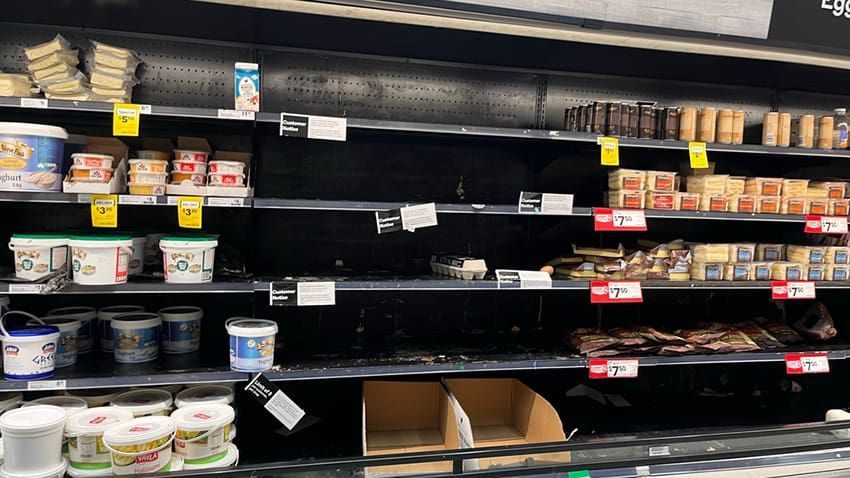
Britain’s supermarkets could be staring down the barrel of patchy shelves by midsummer, with ministers quietly war-gaming a scenario in which the continuing conflict with Iran chokes off carbon dioxide supplies to the country’s food and drink industry.
Whitehall officials have been rehearsing what they describe internally as a “reasonable worst-case scenario” should the strait of Hormuz remain closed into June, shipping routes stay jammed, and a mechanical hiccup at one of Britain’s critical CO2 plants compound the pressure. The exercise, codenamed Turnstone and convened under the Cobra emergency framework, has drawn in officials from Downing Street, the Treasury and the Ministry of Defence.
News of the drill, first surfaced by The Times, has prompted a rapid-fire reassurance campaign from ministers, who insist the planning is prudent rather than panicked. Business Secretary Peter Kyle told Times Radio on Thursday that the leak was “unhelpful” but argued the public “need to be reassured that we are doing this kind of planning”. CO2 supplies, he added, were “not a concern” for the UK economy.
For small and medium-sized food producers, brewers and hospitality operators, however, the contingency talk lands at an awkward moment. The summer trading window, already inflated by the World Cup kicking off on 11 June, is make-or-break territory for independent breweries and wholesalers. A squeeze on carbon dioxide would ripple rapidly through their supply chains, hitting everything from pint pulls to packaged meats.
Carbon dioxide, though a by-product of other industrial processes, is the quiet workhorse of British food and drink. The gas is used to stun pigs and poultry at abattoirs, to pack fresh meat and salad leaves in modified-atmosphere packaging that keeps bacteria at bay, and to put the fizz in beer and soft drinks. It also underpins refrigeration, MRI scanning, surgical procedures and the cooling of nuclear reactors.
Advertisement
The UK ranks among Europe’s heaviest consumers of the gas, a dependency that has already prompted pre-emptive action. In March, Mr Kyle earmarked £100m to restart the mothballed Ensus bioethanol plant on Teesside for a three-month run, specifically to hedge against wartime shortages. On Thursday he argued the Teesside decision showed “we are doing this kind of action behind the scenes to keep resilience in our economy”.
Britain’s largest grocer, for its part, appears sanguine. Tesco chief executive Ken Murphy said the government was “doing the right thing” in preparing for the worst, calling the analysis a reasonable one and welcoming the Ensus reopening. But he stressed Tesco had “seen nothing at this point” in its own supply chain and that none of its suppliers had flagged problems with CO2 availability.
Mr Murphy, whose business has absorbed six years of rolling disruption, Covid, Brexit, energy shocks, inflation, said Tesco was “constantly working on various scenarios internally” and confident it could head off issues before they reached the shop floor. The bigger near-term headache, he suggested, has actually been the punishing weather across southern Spain and north Africa, though shoppers would be hard-pressed to spot the fallout because the grocer had been able to “flex” its sourcing.
A government spokesperson underlined the caveat that “reasonable worst-case scenarios are a planning tool used by experts and are not a prediction of future events”, adding that ministers were “continuing to work closely with business groups to tackle the impacts of events in the Middle East”.
Advertisement
For SME owners watching the tea leaves, the message from Whitehall is calibrated: keep calm, carry on, but don’t mistake the silence on the shelves for complacency in the corridors of power. With Hormuz still contested and the diplomatic track with Tehran far from delivering a durable settlement, the summer trading season is shaping up as a stress test for a supply chain that, as 2021’s last major CO2 crunch demonstrated, can turn from background utility to front-page crisis within days.
Jamie Young
Jamie is Senior Reporter at Business Matters, bringing over a decade of experience in UK SME business reporting.
Jamie holds a degree in Business Administration and regularly participates in industry conferences and workshops.
When not reporting on the latest business developments, Jamie is passionate about mentoring up-and-coming journalists and entrepreneurs to inspire the next generation of business leaders.
British tradespeople and small business owners are turning to the internet in record numbers to investigate a switch out of diesel, with Google searches for “electric vans” leaping by 143% in March, new figures show.
The analysis, compiled by online comparison site The Van Insurer, part of the Howden group, found that enquiries peaked in the days immediately before the Easter weekend, a period that traditionally sees sole traders, couriers and last‑mile delivery operators reviewing the running costs of their fleets ahead of the busier spring and summer trading months.
With diesel still powering the overwhelming majority of the 4.6 million vans on Britain’s roads, the scale of the surge points to a marked shift in sentiment among operators who have spent the past two years absorbing successive increases at the forecourt. Industry observers say the combination of stubbornly high pump prices, tightening clean‑air zone restrictions in London, Birmingham, Bristol and beyond, and the narrowing premium on new battery‑electric models is nudging even the most reluctant drivers to crunch the numbers on an EV switch.
Ed Bevis, commercial director at The Van Insurer, said diesel operators were bearing the brunt of the current squeeze. “Diesel van drivers are being hit hardest by the current fuel crisis, so it’s hardly surprising we’re seeing a sharp rise in interest around electric vans,” he said.
“Many owners are starting to look towards a future that’s less dependent on fossil fuels and less exposed to volatile fuel prices and running‑cost uncertainty. As a result, we expect demand for battery and hybrid‑electric van insurance to accelerate over the coming months.”
Advertisement
For Britain’s army of self‑employed traders, the plumbers, sparks, florists, parcel drivers and mobile mechanics for whom the van is not a vehicle but a livelihood, the economics are increasingly difficult to ignore. Even modest fluctuations at the pump translate directly into thinner margins on already pressured jobs, while the residual values on late‑plate diesel models have softened as buyers weigh the risk of further regulatory tightening.
Mr Bevis acknowledged the financial strain on the sector and said the comparison site was attempting to take some of the sting out of premiums. “At a time when many consumers and business owners are having to count every penny, we believe it’s important to offer meaningful support, particularly for those whose vans are integral to earning a living,” he said, pointing to £500 of free excess protection now being offered on qualifying policies.
Whether the March spike marks the beginning of a decisive migration away from diesel or simply another bout of curiosity from hard‑pressed operators will depend heavily on the direction of wholesale fuel prices, the pace of the public charging rollout and the Treasury’s next move on vehicle taxation. For now, however, the direction of travel in the search data is unmistakable, and insurers, dealers and manufacturers will all be watching the next set of figures closely.
Amy Ingham
Amy is a newly qualified journalist specialising in business journalism at Business Matters with responsibility for news content for what is now the UK’s largest print and online source of current business news.
Carnelian Asset Management founder Vikas Khemani has revealed his top investment picks and strategy amid the ongoing market turbulence, staying firm on mid and largecap exposure while making selective contra bets.
IndiGo as a contra play
Khemani’s boldest call right now is IndiGo. He increased his position in the airline during the recent market fall, citing the company’s status as the lowest-cost market leader in a growing industry. With no meaningful competition expected for the next five years and aircraft supplies lined up, he sees the current dip as a buying opportunity. “If you are getting the stock cheaper for whatever reason and you are happy to take a short-term drawdown, that becomes a very interesting play,” he said.
Power sector: Conventional over renewable
On the power theme, Khemani is bullish but selective. Rather than chasing renewable energy stocks, which he believes suffer from high competitive intensity, he prefers conventional power enablers. Carnelian holds BHEL, which has delivered strong returns over the past two years, and Kalpataru Power, which is active in transmission businesses globally. He sees power demand remaining strong, driven by industrial growth, rising consumption, and the global data center and AI boom.
Banking: Company selection matters more than PSU vs private
Khemani added more PSU bank positions during the market correction, finding attractive risk-reward setups. However, he remains positive on select private banks too, holding ICICI Bank and Federal Bank. His view is clear: the private versus public debate misses the point. Within the same sector, individual stock selection determines returns. He pointed to the very different performance of HDFC Bank, ICICI Bank, and IndusInd Bank as proof that picking the right name matters far more than the category.
Advertisement
No change in market cap mix
Despite the volatile environment, Carnelian has not shifted its portfolio up the market cap curve. Khemani maintains exposure across large and midcaps, arguing that a bad market creates good entry points even in smaller companies. His investment horizon of three to five years means short-term swings do not drive allocation decisions.
Live Events
What he is avoiding
Khemani was direct about what he steers clear of. He has avoided Zomato parent Eternal despite its wide popularity, saying he does not understand its risk-reward well enough to invest. His broader advice: avoid fads, avoid companies you do not fully understand, and never bet on promoters with questionable quality. He noted that most mistakes in his investing career have come from misjudging management quality, not from getting sector or macro calls wrong.
The EMS basket
On electronics manufacturing services stocks, Khemani said valuations and return profiles have not yet convinced him to invest meaningfully, though he continues to track the space closely. In summary, Carnelian’s playbook is built on conviction, quality, and patience — buying beaten-down market leaders and avoiding momentum-driven noise.
Manchester-founded Beauty Tech Group posted stronger-than-expected revenue of £141m, up 39.4%, in its first full year since floating on the London Stock Exchange
Saskia Koopman www.cityam.com
11:29, 16 Apr 2026
A Ziip Dot Nanocurrent and Microcurrent Acne Treatment device from the Beauty Tech Group(Image: The Beauty Tech Group)
The Beauty Tech Group has delivered better-than-anticipated full-year results following its London listing last year, with revenues and profits climbing sharply as appetite for at-home beauty devices continued to expand across global markets.
Advertisement
The Alderley Park business, which made its debut on the London Stock Exchange in October at a valuation of approximately £300m, said on Thursday that revenue climbed 39.4 per cent to £141m for the year ending 31 December 2025.
Own-brand revenue surged 60 per cent to £140.9m, underpinned by robust growth across all regions and a significant uplift in sales at its flagship Currentbody Skin label, where revenue climbed 59 per cent to £125.8m.
Gross profit rose 53.9 per cent to £88.3m, with margins strengthening to 62.7 per cent from 56.8 per cent.
The firm said the figures surpassed the targets it outlined at IPO, representing its third upward revision since floating on the market, as reported by City AM.
Advertisement
Chief executive Laurence Newman described 2025 as a “transformational year” for the group, noting that its brands were gaining increasing recognition among consumers as demand for at-home beauty technology continues to gather momentum.
The figures represent the company’s first full-year results since joining the London market, having raised approximately £29m in gross proceeds during a rare consumer-facing flotation for the exchange.
The IPO additionally enabled the business to clear its external debt entirely, leaving it with net cash of £40.8m at the year’s close, compared with net debt of £27.1m just twelve months earlier. The strengthened balance sheet, combined with the elimination of pre-IPO interest charges and one-off listing costs, is anticipated to boost earnings and cash flow in 2026.
The Beauty Tech Group distributes products across more than 90 markets, through brands including Currentbody Skin, ZIIP Beauty and Tria Laser. It has established itself in the rapidly expanding market for at-home beauty treatments such as LED masks and laser hair removal.
Advertisement
Tria Laser generated £2m prior to its March relaunch, while ZIIP Beauty sales increased 46 per cent.
The company said it anticipates revenue growth to persist throughout the year, which is currently aligned with market forecasts of £160m. Profit is exceeding expectations owing to improved margins.
Some 80 per cent of the group’s turnover is generated beyond the UK and Ireland, with the business depending predominantly on direct-to-consumer online sales rather than conventional retail channels.































































You must be logged in to post a comment Login