
Business
Maali Group sues Halo Civil in dispute over info access


Check out what’s clicking on FoxBusiness.com.
Since entering the national spotlight, former NFL MVP Cam Newton has been authentically and unapologetically himself.
Whether on the field, or now off of it in his new content-creating realm, Newton’s fans and followers have gravitated toward his genuine, no-filter takes on his hit shows “Funky Friday” and “4th & 1 with Cam Newton.” Now, with a new, key partnership with Offscript Worldwide, Newton’s reach to the masses will be far greater.
Iconic Sage Productions, the independent production powerhouse founded by Newton, joined Offscript, a creator-owned ecosystem that connects culture-shaping brands and platforms under one roof, including REVOLT, REVOLT Sports and 3BlackDot, among others. The major expansion was announced at the 2026 IAB NewFronts, as Offscript, which represents more than 130 creators and produces over 150 creator-led series that reach more than 250 million subscribers on YouTube alone.
CLICK HERE FOR MORE SPORTS COVERAGE ON FOXBUSINESS.COM
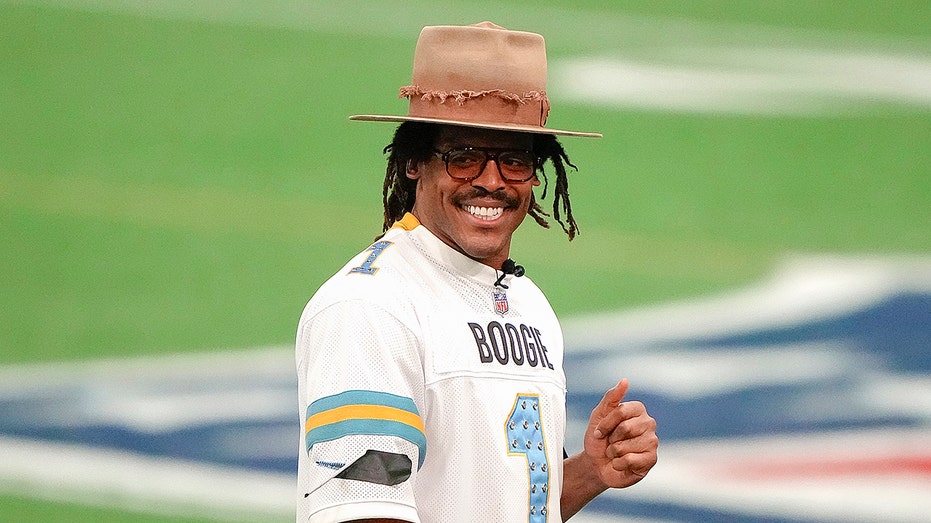
Cam Newton of team J Balvin looks on against team Druski during the Super Bowl LX Celebrity Flag football game on YouTube at Moscone Center South on Feb. 7, 2026 in San Francisco, California. (Thearon W. Henderson/Getty Images / Getty Images)
As part of the expansion, Newton’s Iconic Saga will integrate into Offscript’s creator-led ecosystem, which will ultimately amplify the reach of Newton’s signature storytelling.
“When you really think about Offscript, it’s like the ecosystem that bridges so many different facets of our lives, from sports, to culture, to lifestyle and so many different things,” Newton explained to Fox Business. “That transition for me wasn’t foreign. Instead of training to be the best football player, or the best athlete. Now, I’m just training to be the best content creator I can possibly be.
“I just always want to be a beacon of the person, in a lot of ways, figured it out as I went. I’m just so thrilled that Offscript gives me and Iconic Saga the opportunity to continue to believe in our vision, and we’re not able to do these things without great partners like this.”
TOM BRADY OPENS UP ABOUT HIS HEALTH AMID GLP-1 SURGE: WATER, MOVEMENT AND DISCIPLINE
Content creation is usually viewed as an independent art, but Newton knows that’s not the case, especially now with Offscript.
“It’s comparable to when I was playing football,” he said. “Even though I would probably make a play, and they’d always use the analogy, ‘Oh my God, he made an unbelievable play, that’s all him.’ Well, you still had offensive lineman, you had receivers blocking, you had coaches calling the play, you had general managers assessing the team.
“For us, that’s the same thing. We want to play to our strengths and partner in our weaknesses. That’s what Offscript gives us the opportunity to do – partner with their ecosystem to really bring ease to the business as we know it.”
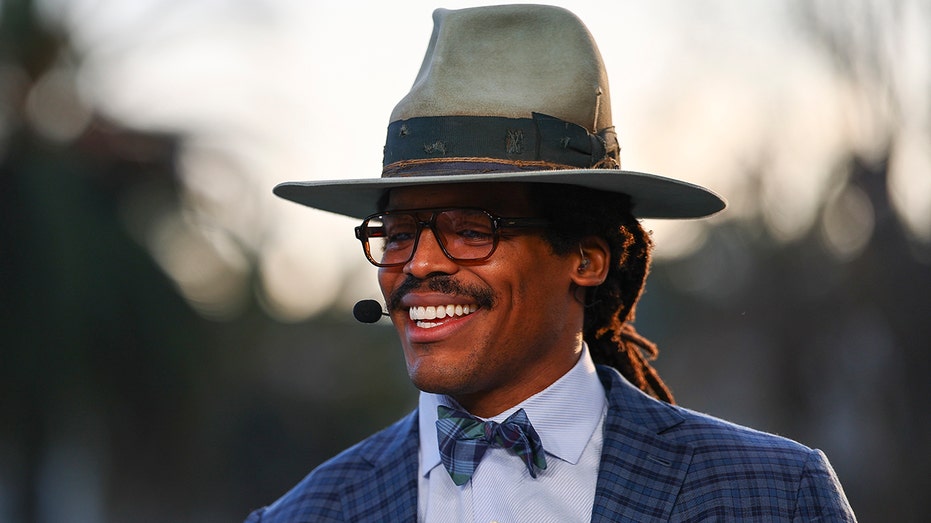
ESPN analyst Cam Newton is on the set of “First Take” on Feb. 6, 2026 in San Francisco, California. (Aaron M. Sprecher/Getty Images / Getty Images)
The content creation game is also about being authentic with your audience, which Newton said is “nothing new” from him. But he also recognizes how today’s consumers can “identify B.S.,” as he put it.
As Iconic Saga preaches authenticity, so does Offscript, which Newton gravitated toward with this partnership. It also helps that Offscript can bridge the gap with global brands to partner with Newton’s content in the future as well.
“These brands who align, you can also sell them the visual output that people look to your platform to see,” Newton said. “…The real game changer, so to speak, is when brands align with your message. Brands align with your audience. Brands align with your real value to capturing people’s attention. That’s where we’re at with Iconic Saga, no different than if it’s ‘Funky Friday’ or ‘4th & 1.’”
As this partnership kicks off, that message is going on tour as well, with the “4th & 1 College Tailgate Tour.” Iconic Saga is running the show, meaning Newton will be taking full ownership of the narrative, which means his unfiltered, authentic connection directly to the HBCU community.
“4th & 1” will be traveling to America’s HBCU campuses, where live recordings of the show will allow fans to experience, what Newton calls, “from the set to the yard.” Whether at home or in person, the tour, which is set to begin in Fall 2026, will shine a spotlight on the student-athletes, academic programs, and the unique game-day culture that defines an HBCU.
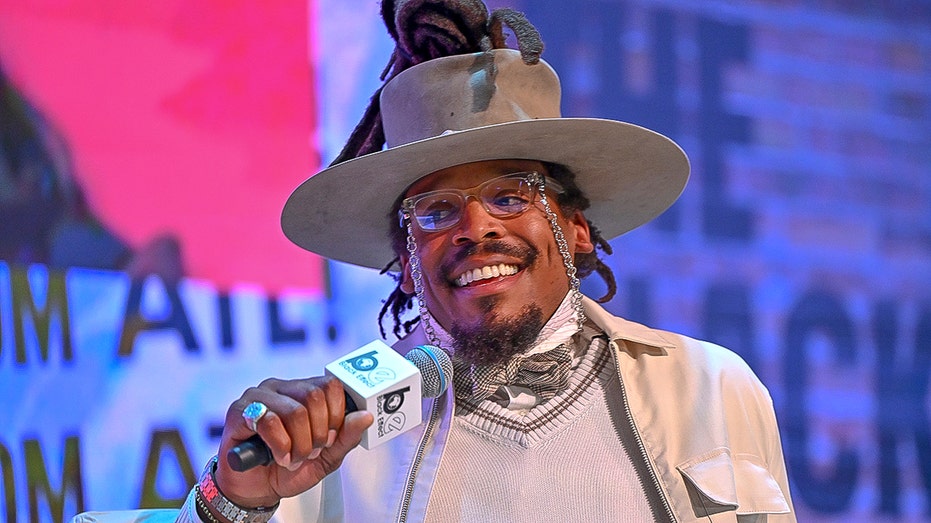
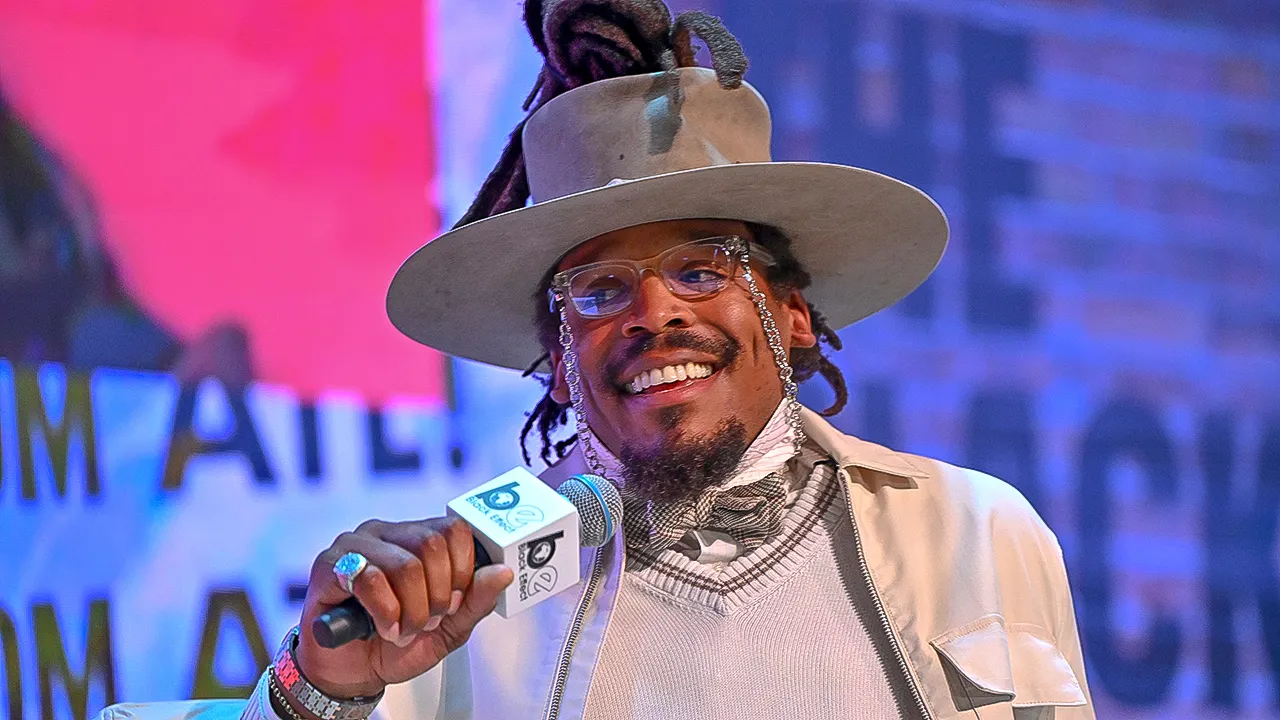
Cam Newton speaks on the “Funky Friday” panel during the 2025 Black Effect Podcast Festival at Pullman Yards on April 26, 2025 in Atlanta, Georgia. (Derek White/Getty Images / Getty Images)
GET FOX BUSINESS ON THE GO BY CLICKING HERE
This and much more is expected as Newton, Iconic Saga and Offscript embark on a partnership aimed at continuing to make an impact at the intersection of sports, culture, and lifestyle.
“We’ve always had interests outside the game,” Newton said. “Now, I can 100% dedicate my time, energy and effort not into just creating, but also aligning with incredible partners like Offscript, as well as beefing up my personnel within Iconic Saga to not just get any person, but the right person that can magnify the brand to be able to get the most out of ‘Funky Friday’ as well as ‘4th & 1.’”
Follow Fox News Digital’s sports coverage on X and subscribe to the Fox News Sports Huddle newsletter.

Woodside Energy and Chevron have both confirmed production impacts from Tropical Cyclone Narelle, with LNG and domestic gas supply interrupted.


The globally-inspired noodles are available at Canadian retailers.

Nobody tells you what the silence after a stem cell transplant feels like. The months before the transplant requires multiple medical visits together with important medical choices and intense physical activity. The procedure begins and you find yourself in a hospital room during a period of waiting. Your new cells need to complete the process of engraftment. Your body counts require a period of waiting until they increase. Your body needs to determine its upcoming actions.
Patients who undergo stem cell transplantation must face the most difficult process of both physical and emotional recovery. The treatment results in remarkable life changes for many patients who receive it. The guide will assist you in understanding the structure of your journey through the upcoming weeks and different stages until you reach the end.
The First Phase: Early Recovery in Hospital
You will stay at the hospital for two to four weeks after your transplant operation. The most important time occurs during this time frame. Your body experiences maximum infection risk because your immune system has been purposely weakened for stem cell transplant purposes. The medical staff will conduct daily blood count tests to track your progress until the new stem cells start their process of creating healthy blood cells. The whole procedure has this milestone as its most eagerly awaited point of progress. The transplant begins its successful operation when the counts start to rise.
The treatment will result in severe tiredness for you during the entire time because your body will reach its full state of exhaustion. Mucositis develops because of high-dose chemotherapy because it creates severe mouth and digestive system inflammation. The typical symptoms of the landscape include nausea and loss of appetite and weakness. Your current situation presents a difficult task which will end when you complete your daily progress to reach the next stage of your work.
“Recovery isn’t a straight line. It’s more like a tide some days the water comes in strong, and some days it pulls back. What matters is the overall direction.”
Going Home: The First 100 Days
The first three months after a stem cell transplant demonstrate the highest danger period because patients need to complete multiple outpatient medical visits during this time.
At Liv Hospital, post-transplant care needs to achieve the same degree of precision which the transplant operation requires. The follow-up team maintains continuous contact during this time period to track complications and modify medications while providing complete assistance to the patient throughout their journey back home. What does life look like during these 100 days? The situation becomes restricted but remains manageable through proper guidance. Most patients are advised to:
- Avoid entering public places which have many people and which include sick individuals
- They must adhere to food safety standards which prohibit the consumption of raw meat and unpasteurized items and unwashed produce
- They must take all prescribed drugs without fail which includes antifungals and antivirals and antibiotic prophylaxis
- The guidelines require individuals to use masks in specific locations which include indoor spaces and healthcare facilities
- Patients need to rest while they should also practice mild activities which they can handle because exercise helps their healing process
- Patients should attend all scheduled outpatient visits regardless of their current health status
Precautions exist to protect people, but they do not create prison-like conditions. The body requires this protection because the immune system needs time to develop its defenses and this period determines how well the body will perform in the future.
Graft-Versus-Host Disease: The Complication Worth Understanding
The medical field requires understanding graft-versus-host disease (GVHD) because it represents the primary concern for patients who undergo allogeneic transplant procedures which involve donor cell transplants to treat their medical conditions. The patient’s body becomes attacked by donor immune cells because they perceive the patient’s body tissues as foreign entities.
GVHD exists in two forms because it can develop during the first three months after transplant or it can start later and continue for several years. The condition can impact multiple body systems including the skin and liver and gut and eye and mouth and lung systems. The condition presents various degrees of intensity which range between minor and severe situations.
The patient needs to inform their medical team about these symptoms which include persistent skin rash or redness and yellowing of the skin or eyes and ongoing diarrhea or abdominal cramping and dry or painful eyes and difficulty swallowing and unexplained shortness of breath. GVHD treatment results better when doctors use early treatment methods for GVHD management. Certain blood cancers benefit from using GVHD because the immune system attacks both healthy tissues and remaining cancer cells.
The Recovery Timeline: What to Expect and When
Every patient recovers in a unique way, but most individuals follow a typical recovery pattern. The stages that people experience during stem cell recovery and their follow-up process enable people to create correct expectations while reducing their anxiety about uncertain outcomes.
Days 0–30: Engraftment Phase
The new stem cells establish themselves in bone marrow before they start producing blood cells. The patient needs daily monitoring because of their high infection risk and their experience of extreme fatigue. This period represents the highest level of medical activity.
Days 30–100: Early Recovery
The blood counts reach stable levels. The body starts to build its immune system through a gradual process. The patient needs to visit outpatient facilities for treatment. The patient shows improvement in energy but their ability to sustain energy throughout the day remains restricted. The medical staff currently observes the patient’s GVHD condition.
Months 3–6: Immune Rebuilding
The patient moves back to their daily life through a gradual process. Medical professionals will reduce the dosage of medications. The patient will start their new vaccination program according to established guidelines. Most patients who undergo this treatment period will experience significant progress toward their normal state.
Months 6–12: Continued Strengthening
The body’s immune system continues to develop better functions. Most limitations on activities have been removed. The person can now think about returning to work or school. The schedule for future medical check-ups has been extended to longer intervals between appointments.
Year 1 and Beyond: Long-Term Follow-Up
Patients now follow a routine that includes annual or bi-annual medical examinations. The ongoing medical treatment now concentrates on assessing treatment-related late effects which include organ function and bone health and secondary medical conditions.
Long-Term Follow-Up: Why It Never Really Ends
Patients exhibit difficulty in accepting their need for continuous follow-up care which extends indefinitely. Transplant patients require ongoing monitoring throughout their lives, even after they achieve successful transplant outcomes. The medical team displays their full operational capacity through this standard procedure which they conduct.
Patients who undergo high-dose chemotherapy and transplant procedures face enduring effects that impact their fertility abilities and bone density levels and thyroid and hormonal systems and heart condition and cognitive functions. Some effects of the treatment remain dormant until they emerge after several years. The procedure of routine monitoring enables identification and treatment of medical conditions before they progress into severe health issues.
People entering this period should take active steps to re-establish their connection with life. Transplant survivors achieve their complete rehabilitation when they resume work and travel and maintain their relationships with others. The follow-up phase focuses on constructing future goals which the patient will achieve after they complete their current illness period.
The Emotional Recovery Nobody Warns You About
People pay most of their attention to physical recovery because they underestimate the equal difficulty of emotional recovery. Transplant survivors experience three common emotions which include anxiety about relapses and difficulty adjusting to a changed body and survivor’s guilt and the strange grief of leaving active treatment behind.
The act of speaking about something is significant. The act of identifying your feelings to a therapist or support group or trusted friend or medical team represents a strength rather than a weakness. The most beneficial action you can take to improve your health for future years stands as your ability to maintain hydration throughout the day. Psychological support has become standard practice in post-transplant care at many transplant centres because of its proven benefits to patients.
People need their daily life activities to establish their recovery process beyond the restricted space of medical facilities. Your recovery process depends on your food intake and sleep patterns and physical activity and stress management and ability to engage with activities that bring you joy. For practical, warm, and genuinely useful guidance on building those habits back up, Live and Feel is a lifestyle and wellness resource designed to support exactly that kind of whole-life recovery — because healing fully means feeling well in every sense of the word.


The snacks are now USDA certified organic.

The 2027 Infiniti QX65.
Courtesy: Infiniti
Japanese brand Infiniti on Thursday unveiled a new midsize luxury SUV, called the QX65, as it tries to mount a comeback in the U.S.
The vehicle will have a 268-horsepower VC-Turbo engine with 286 foot-pounds of torque, as well as dual 12.3-inch displays.
The QX65 “accelerates INFINITI into its next era,” Eric Ledieu, vice president of Infiniti Americas, said in a press release.
Infiniti, Nissan’s premium brand, sold a record 153,000 vehicles in 2017 in the U.S., one of the world’s most important auto markets. Last year, it sold just a third of that, according to the company.
The 2027 Infiniti QX65.
Courtesy: Infiniti
After its record 2017, sales have declined nearly every year, according to a report from Haig Partners, a firm that facilitates dealer transactions. Infiniti sales fell 9% in 2025 over the previous year.
“Now down 65.6% from its peak, and with only two nameplates on dealer lots, INFINITI sits in a tough position,” the report said.
Contrast that with Lexus, the luxury brand from Nissan’s Japanese competitor, Toyota, which saw sales climb 7.1% in 2025, after an already record year in 2024, according to Haig Partners. Sales of Acura also rose slightly in the same period, at just under 1%.
Infiniti has been in a “product lull” for a while, said Stephanie Brinley, principal automotive analyst at S&P Global Mobility.
“They’ve changed, of course, a couple of times over the last few years,” she said. “And Nissan, the parent company, has had a lot on its plate. While the intent to support Infiniti is there, it has faltered a little bit.”
Right now, Infiniti has two 2026 models in the U.S. The QX65 will make a third, and it will be a midsize SUV — hitting one of biggest single segments in the U.S. With a starting price of $53,990, it’s less expensive than the average luxury midsize vehicle’s manufacturer’s suggested retail price of about $77,000, according to Cox Automotive.
The brand touted its American ambitions with the vehicle’s launch, choosing New York City’s Grand Central Terminal as the site to unveil the QX65 and, as it has in the past, enlisting NFL stars Rob Gronkowski and Julian Edelman as hosts for the event.
Brinley also said the QX65 draws on Infiniti’s old FX line of sport utility vehicles, which debuted in the U.S. in the early 2000s.
“[Those vehicles] were terrific,” she said. “They were super stylish, they were performance oriented, and still just really cool and really vibrant.”
Infiniti said it plans to release one vehicle annually over the next five years, as opposed to a more aggressive cadence.
“Hopefully they can … turn this into a turnaround,” Brinley said. “But it’s going to take some time.”
The QX65 is set to be manufactured in Smyrna, Tennessee, with vehicles arriving at retailers in early summer.
Correction: The headline on this story has been updated to reflect that Infiniti is releasing a new SUV in the U.S. A previous headline misspelled the brand’s name.

Q4: 2026-03-26 Earnings Summary
EPS of $0.08 beats by $0.07
| Revenue of $71.69M (110.49% Y/Y) beats by $11.00M

Seeking Alpha’s transcripts team is responsible for the development of all of our transcript-related projects. We currently publish thousands of quarterly earnings calls per quarter on our site and are continuing to grow and expand our coverage. The purpose of this profile is to allow us to share with our readers new transcript-related developments. Thanks, SA Transcripts Team

Former MLB player Keith Hernandez joins ‘Varney & Co.’ to weigh in on the MLB’s introduction of the automated ball-strike challenge system.
Netflix subscribers in the U.S. can expect to start paying more each month as the streaming giant raises prices across all of its plans.
Updated pricing listed on the company’s U.S. website shows the ad-supported tier at $8.99 per month, up from $7.99, while the standard plan is priced at $19.99 and the premium tier at $26.99.
Fees to add members outside a subscriber’s household have also increased, with extra members costing $7.99 per month on ad-supported plans and $9.99 on ad-free tiers. Netflix says accounts are intended for use within a single household, with added charges for users who do not live together.
WHY NETFLIX’S CEO DROPPED HIS BID TO BUY WARNER BROS DISCOVERY AND TRUMP ‘DIDN’T CARE’

Netflix also raised prices on fees to add members outside a subscriber’s household. (David Benito/FilmMagic via Getty Images)
Netflix, which has more than 325 million subscribers globally, previously eliminated its lowest-priced ad-free “basic” plan, leaving customers to choose between higher-priced tiers or an ad-supported option.
FOX Business reached out to Netflix for comment.
NETFLIX BACKS OUT OF WARNER BROS BIDDING WAR AFTER PARAMOUNT MADE ‘SUPERIOR’ OFFER
The pricing changes were first reported by Reuters, which said the increases come as Netflix expands into additional content formats, including video podcasts and live programming.
The company recently declined to pursue a bid for certain Warner Bros. studio and streaming assets. (Mario Tama/Getty Images)
Analysts expect the higher prices to boost how much Netflix earns per subscriber, with estimates pointing to roughly 6% growth year over year in the U.S.-Canada region in 2026.
NETFLIX FOLLOWS WARREN BUFFETT’S PLAYBOOK: DON’T OVERPAY, WALK AWAY
The pricing changes will impact all plans. (Nikos Pekiaridis/NurPhoto via Getty Images)
Netflix last adjusted its pricing in early 2025. The company reported $12.1 billion in revenue for the October–December quarter, slightly exceeding analyst expectations.
CLICK HERE TO GET FOX BUSINESS ON THE GO
The rise in prices comes after Netflix recently declined to pursue a bid for certain Warner Bros. studio and streaming assets, a decision that could shape broader media deal activity.
Reuters contributed to this report.

Oil Price Shock Raises Inflation And Policy Risks In The Philippines


A version of this article first appeared in CNBC’s Inside Wealth newsletter with Robert Frank, a weekly guide to the high-net-worth investor and consumer. Sign up to receive future editions, straight to your inbox.
Major luxury stocks have fallen 15% or more since the Iran war started, and sales in the increasingly important Middle East market could drop by half, according to analysts.
Shares of LVMH and Hermès are down roughly 16% and 20%, respectively, this month, while the S&P 500 has fallen less than 6%. Shares of Ferrari are also down 15%, and the company announced it would temporarily suspend deliveries to the Middle East. Bentley, Maserati and other high-end car companies are also halting deliveries due to security risks and logistics.
“At the moment, we don’t have an impact from a production side,” said Bentley CEO Frank-Steffen Walliser on the company’s recent investor call. “But for sure, people in the Middle East have other thoughts than looking for a new Bentley at the moment.”
For investors and luxury companies, the Iran war has highlighted the increasing importance of the Middle East to the global luxury industry and the high-net-worth economy. While the region accounts for a relatively small share of overall luxury sales, it’s growth has become critical to the industry.
The region was the fastest-growing luxury market in the world last year, posting growth of between 6% and 8% compared with flat growth globally, according to Bernstein luxury analyst Luca Solca. The Middle East now accounts for about 6% of global luxury sales, on pace to potentially rival Japan, which claims about 9% of global sales, according to Solca.
Dubai in the United Arab Emirates has been the biggest driver of growth, accounting for about 80% of the UAE’s rise, which itself accounts for more than half the luxury growth in the full region, according to research from Morgan Stanley.
The troubles in the Middle East come at a critical time in the luxury industry. After two years of stagnant sales, the industry was betting on a recovery in 2026. The China market has been showing slight improvements in sales after years of declines. The U.S. luxury consumer remains strong, thanks to rising wealth from artificial intelligence and stock markets. And Europe remained steady, helped in part by spending from tourism.
A research note from UBS luxury analyst Zuzanna Pusz and her teams said investor sentiment in luxury is “the most bearish in years.” While investors had been betting on a rebound in the beginning of the year, “heightened geopolitical uncertainty is likely to weigh on near-term earnings and delay the long-awaited inflection in fundamentals.”
Share price moves have already wiped out roughly $100 billion in market cap from the major luxury companies, with LVMH and Hermès both losing more than $40 billion in value each.
Solca said that if sales in the Middle East fall by half in March, which he described as a worst-case scenario, quarterly growth would drop by about 1 percentage point for many luxury companies.
Yet he said the decline could be milder. While stores and malls in the region may be largely empty, many luxury companies are still carrying out sales by reaching out individually to top clients and delivering products to their homes. Solca also said the wealthy who have left Dubai may continue spending on luxury in other countries.
“Most of the companies we’ve been talking to are not really pointing to a disastrous decline in the Middle East,” Solca said. “At the end of the day, if this was contained to the month of March, this would largely be a nonevent.”
Other contributing factors to Dubai’s recent success – no income taxes, stable governments, sunny beaches – remain intact. The city’s millionaire population has doubled since 2014 to more than 81,000, according to Henley & Partners. An estimated 9,800 millionaires moved to Dubai in 2025, bringing $63 billion in wealth — more than any other country in the world, according to Henley. Most of Dubai’s wealthy are arriving from the U.K., China, India, and other parts of Europe and Asia.
Still, Dubai’s reputation for safety and security has been shaken. The Middle East luxury market is heavily dependent on wealthy tourists, who may avoid the region long after a possible ceasefire.
According to Morgan Stanley, around 60% of luxury spend in the UAE is courtesy of tourists, of which 60% are Russian, Saudi, Chinese and Indian visitors. Of the remaining 40% spent by UAE residents, about half is from foreign UAE residents, who may also change their plans to stay in the region long term.
Higher oil prices could also weigh on luxury sales. Analysts say aspirational luxury consumers, who are more sensitive to inflation and economic slowdowns, could pull back on spending with higher gas prices and food costs. At the same time, wealthy consumers could be spooked by volatile stock markets. Since the spending of the wealthy is more dependent on stock markets and the so-called wealth effect, declining or even flat stocks could cause a pullback.
“Higher oil prices could prompt a downward adjustment in global stock markets and that would be very bad,” Solca said.” The consumer sentiment of people with wealth in the stock market would be damaged.”

Goalie battle among key storylines as Canadian men return to action
4 Of The Worst Drill Bit Brands You Can Buy, According To Users

Four Banksy paintings are set to go up or sale at an ‘Extraordinary Auction’ in Belfast


-
 Crypto World7 days ago
NIO (NIO) Stock Plunges 6.5% as Shelf Registration Sparks Dilution Worries
-
 NewsBeat2 days ago
Manchester United reach agreement with Casemiro over contract clause amid transfer speculation
-

 Fashion7 days ago
Weekend Open Thread: Adidas – Corporette.com
-

 Politics7 days ago
Jenni Murray, Long-Serving Woman’s Hour Presenter, Dies Aged 75
-

 Crypto World6 days ago
Best Crypto to Buy Now: Strategy Just Spent $1.57 Billion on Bitcoin During Fear While Early Investors Quietly Enter Pepeto for 150x Potential
-

 Crypto World6 days ago
Bitcoin Price News: Bhutan Sells $72 Million in BTC Under Fiscal Pressure, but the Smart Money Entering Pepeto Sees What the Market Does Not
-

 News Videos2 days ago
Parliament publishes latest register of MPs’ financial interests
-

 Sports4 days ago
Remo Stars and Kano Pillars Strengthen Survival Hopes in NPFL
-

 Sports4 days ago
Gary Kirsten Accuses Pakistan Cricket Board Of ‘Interference’, Mohsin Naqvi Responds
-

 Business5 days ago
No Winner in March 21 Drawing as Prize Rolls to $133 Million for Next
-

 Tech5 days ago
Give Your Phone a Huge (and Free) Upgrade by Switching to Another Keyboard
-

 Sports7 days ago
2026 Kentucky Derby horses, odds, futures, preview, date: Expert who nailed 12 Derby-Oaks Doubles enters picks
-

 Tech5 days ago
AI enters the chat: New Seattle dating app relies on tech to facilitate meaningful human connections
-

 News Videos4 days ago
Ch 9 Financial Management Part 1 | Detailed One Shot | Class 12 Business Studies Boards 2026
-
Business7 days ago
Columbia Sportswear enters $500 million credit agreement with JPMorgan Chase
-

 Tech6 days ago
Today’s NYT Connections Hints, Answers for March 22 #1015
-

 Business19 hours ago
Instagram, YouTube Found Responsible for Teen’s Mental Health Struggle in Historic Ruling
-
 Crypto World7 days ago
Small-cap Russell 2000 enters correction territory
-

 Business5 days ago
Will Duke Basketball Win It All? Duke Basketball Enters Second Round as Third Favorite to Claim NCAA Title
-

 Sports4 days ago
2026 Kentucky Derby horses, odds, futures, preview, date: Expert who hit 12 Derby-Oaks Doubles enters picks
You must be logged in to post a comment Login