

I first noticed it when, a few months ago, I opened an email from Ian, my literary agent. Before I’d had a chance to read anything he’d written, Gmail was recommending a full, fleshed-out, AI-generated reply, ventriloquizing ideas for a book and even my feelings about the job transition I’d recently made. It had mined my inbox to infer why Ian was writing to me and ingested bits of my style, even signing off with the lowercase “m” that I use with people with whom I have an easy familiarity.
Tech
Why Gmail’s AI-generated email replies feel so creepy

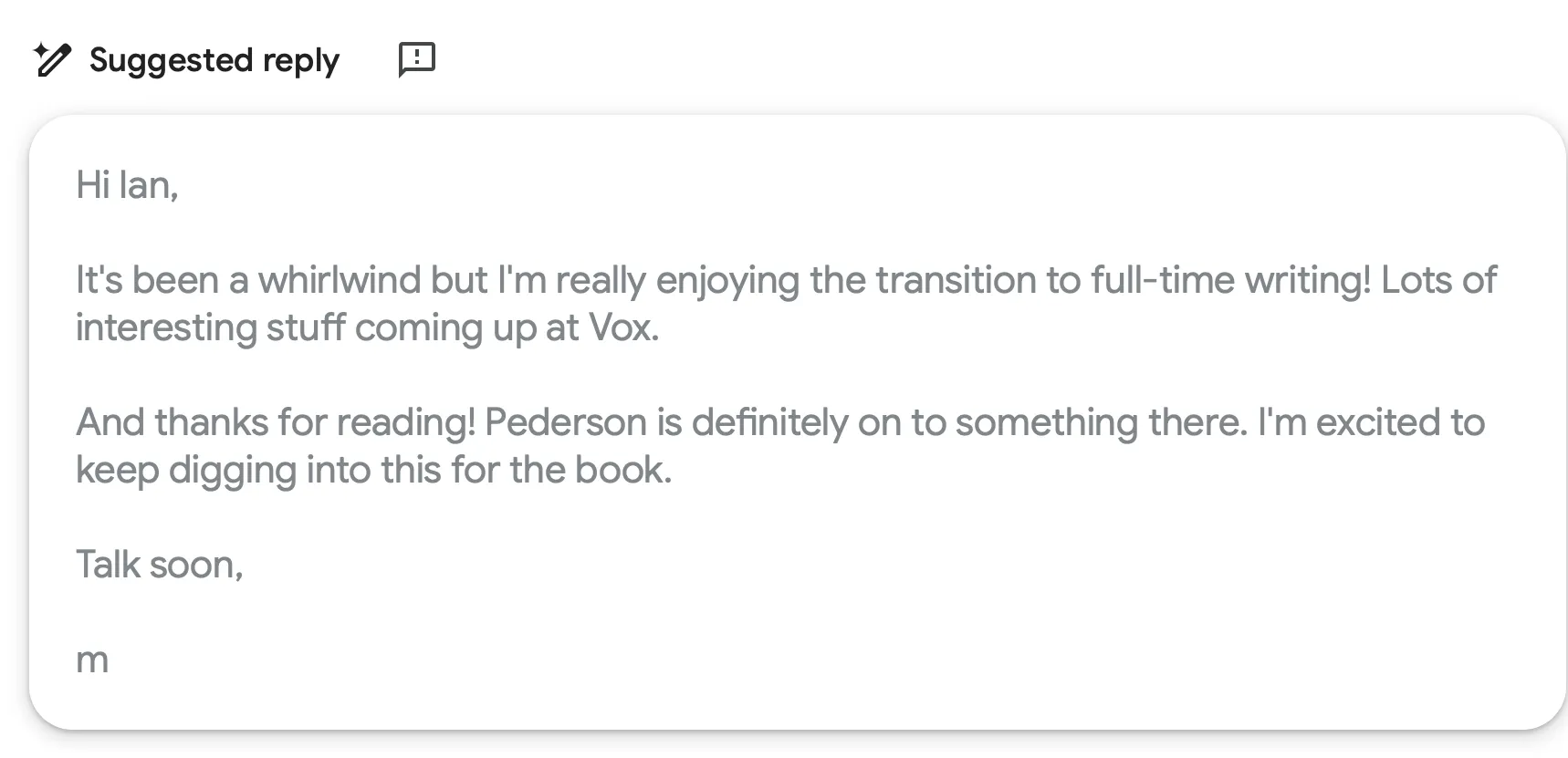

For around a decade, Google had been suggesting very generic, sometimes monosyllabic “smart replies” — things like “Okay” or “Thanks!” or “Any thoughts?” I’ve used these to send quick acknowledgements to emails I’d have otherwise forgotten about. But in the last couple years, Gmail has begun to offer fully formed draft replies that presume to impersonate my own, individual reactions to my interlocutors’ questions, ideas, and emotions.
This felt like a striking turn. I reflected with some sadness on the idea of sending one of these to someone who matters to me — how dehumanizing to both me and Ian it would feel to make him read a counterfeit subjectivity pretending to be my own.
You might say this is no big deal; maybe it gives you time back for deeper work or more meaningful parts of your life (I wouldn’t begrudge that at all — AI saves me time, too!). We’re all drowning in too much email, much of it pointless or lacking any great meaning. Isn’t that exactly the kind of day-to-day tedium that we should happily invite AI to liberate us from?
But I think that this machine-generated personal correspondence, which is only likely to spread further into other forms of communication, has preoccupied me because there’s something deeper going on here. A lot of ink has been spilled in the last few years about AI-generated writing and its social consequences — how it will deskill millions of workers, outsource our thinking, confuse kids growing up in the AI age about the difference between real and synthetic friends, and so on. We already know that AI language is unnervingly good at sounding like it’s the product of a fellow consciousness. But the particular creepiness of elaborate email autocomplete is that it’s training on and simulating your consciousness. And as it does so, it also gives you a little less reason to actually be conscious.
AI writing and “cognitive surrender”
Like many knowledge workers who derive their living and their identities from cognitive capacities now being at least partially replicated in silicon, I have a complicated and ambivalent relationship with generative AI. I now depend on it to research almost every story I work on, a purpose for which it’s obviously very useful (despite those who still insist it can never be useful for anything).
I am, though, deeply skeptical of using it for writing, because, as many writers smarter than me have already noted, writing is inextricable from thinking, and short-circuiting it can diminish our capacity for deep thought. The friction of writing is not dead weight but is part of how you decide what you mean and give coherence to ideas. For that reason, my former Vox colleague, the brilliant Kelsey Piper, who is generally positive about AI’s potential to make us more productive and improve human life, said on a recent podcast episode, “I would never use it to write.”
In a recent paper, a pair of University of Pennsylvania scholars described the wholesale outsourcing of cognitively complex tasks to AI as “cognitive surrender.” “An abdication of critical evaluation,” they write, “where the user relinquishes cognitive control and adopts the AI’s judgment as their own.” This is one reason why it felt especially inappropriate to have AI generate thoughts for me in reply to someone with whom I’m brainstorming about writing a book, likely one of the most cognitively demanding things I’ll ever do. Email, for all of its annoyances, is also relational. And letting a machine generate your side of the exchange diminishes the authenticity of your connection to another person.
Sometimes the AI drafts, of course, are plainly wrong. An AI-suggested email might, for example, say you’ve read a book that you haven’t, perhaps making it more likely that you go along with the false claim. But what unsettles me the most is not the mere hallucination, it is when the AI is right, or right enough. My email’s AI is pulling from its knowledge of everything I’ve written before, so it can often make a reasonable guess of what I’d want to say anyway. The system is not wholly failing to reproduce my mind, but is actually producing a close-to plausible substitute for it.
It feels like the beginnings of what Silicon Valley has prophesized for decades as a coming merge (sometimes called the “singularity”) between human and machine minds. I used to consider this a totally improbable idea, but I hadn’t been open-minded enough. It might turn out to be dispiritingly easy for an advanced AI to train on a sample of your past thoughts and write future ones for you.
Still, it seems unlikely that we will simply acclimate to the idea that all the written communication we encounter and generate every day may be AI-generated. So much, if not most, of our interpersonal communication now takes place in writing. However vulnerable we may be to cognitive surrender, humans also have a deep countervailing need to experience language as coming from another conscious mind — to feel seen and known, and to assert our own distinctness in return.
And anyway, Gmail isn’t yet that good at imitating my conscious voice. I would never write, “Lots of interesting stuff coming up at Vox!” (Which isn’t, of course, to say that there isn’t a lot of interesting stuff going on at Vox.) That still leaves me, for now, with the pleasure of figuring out what I want to say.

Continue Reading
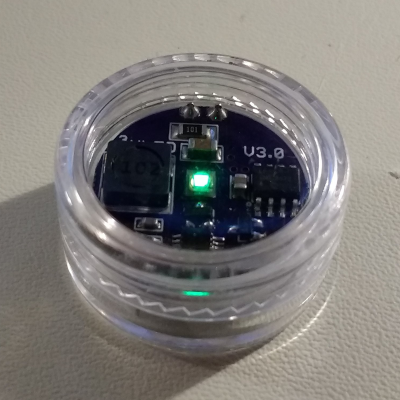
We got asked a great question in the mailbag segment on the Podcast this week: are there hacks that we have read about on Hackaday that we use in our everyday life? The answer was absolutely yes, and I loved Tom’s take it often goes the other way – he sees a hack, tests it out, and then writes it up.
But I started looking around the office and I found more examples of projects that were absolutely inspired by projects I had seen on Hackaday, yet weren’t the same. I made a DIY mechanical keyboard because I saw someone else do it. There are a few home-made battery packs that I probably wouldn’t have attempted without having read about someone doing the same thing. I riffed on [Ted Yapo]’s Tritiled project, making a slightly inferior, but workable knockoff, and they’ve been glowing for many years now.
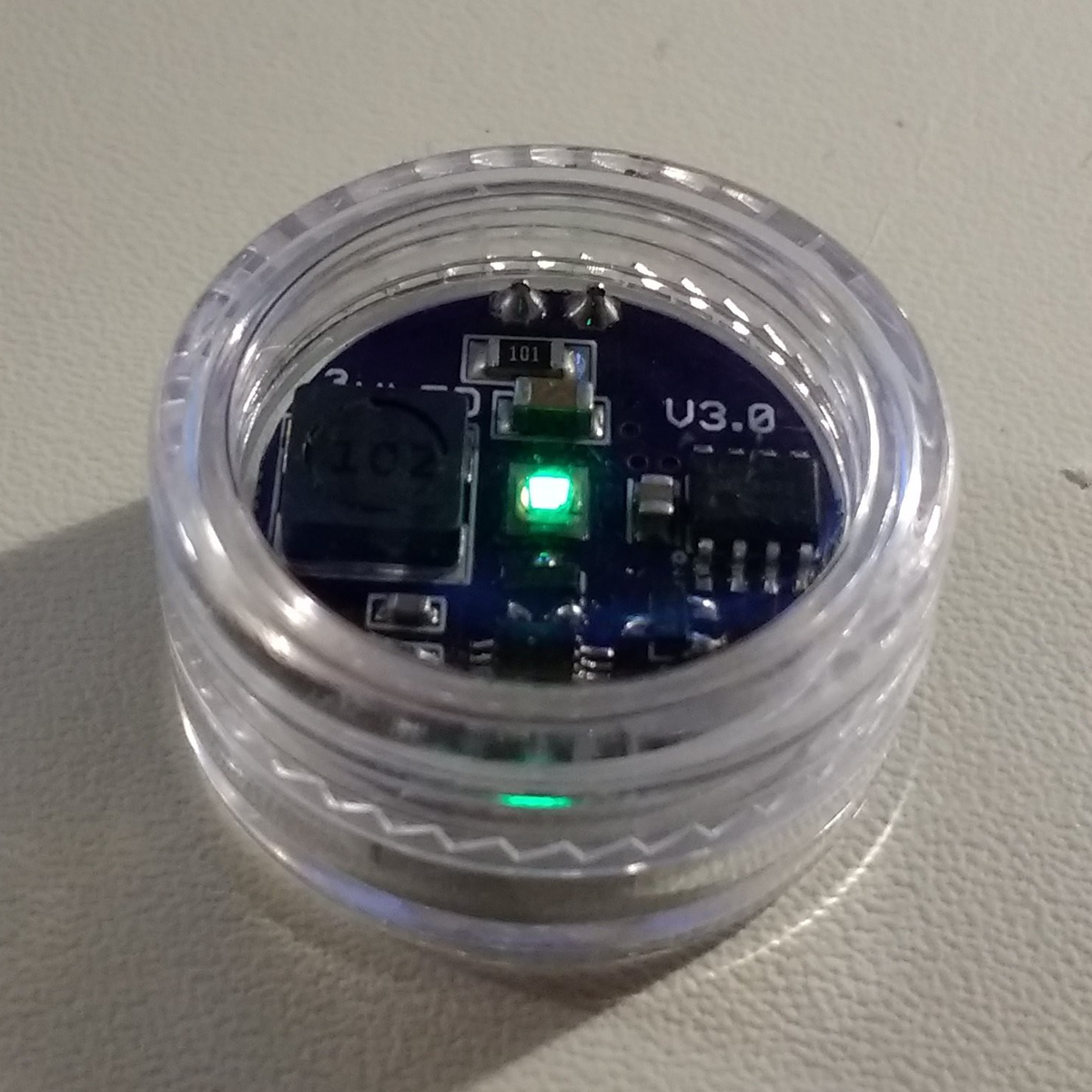 That got me to thinking about reproducing a project versus taking inspiration from it, and though I enjoy both, I’m find myself most often in the “inspiration” mode. I just can’t leave well enough alone, even when I’m fundamentally copying someone. NIH syndrome? Expediency? Probably both, and sometimes with a dose of hubris or feature creep.
Looking back at [Ted]’s TritiLED, though, I found some great examples in both the rebuild and redesign modes on Hackaday.io. [schlion]’s Making Ted Yapo’s TritiLED couldn’t be a clearer example of the former, and it’s great to look over his shoulder and appreciate all the lessons he learned along the way. [Stephan Walter]’s Yet another ultra low power LED is inspired by [Christoph Tack]’s Ultra low power LED, which is in turn inspired by [Ted]’s project, like a conceptual grandchild.
In a way, I look at this like with music: sometimes you play the notes the way they were written down, and sometimes you riff on someone else’s theme. Both are equally valid, and both owe a debt to the upstream source. Is Hackaday the hackers’ jazz club? And which of these modes do you find yourself working in most?
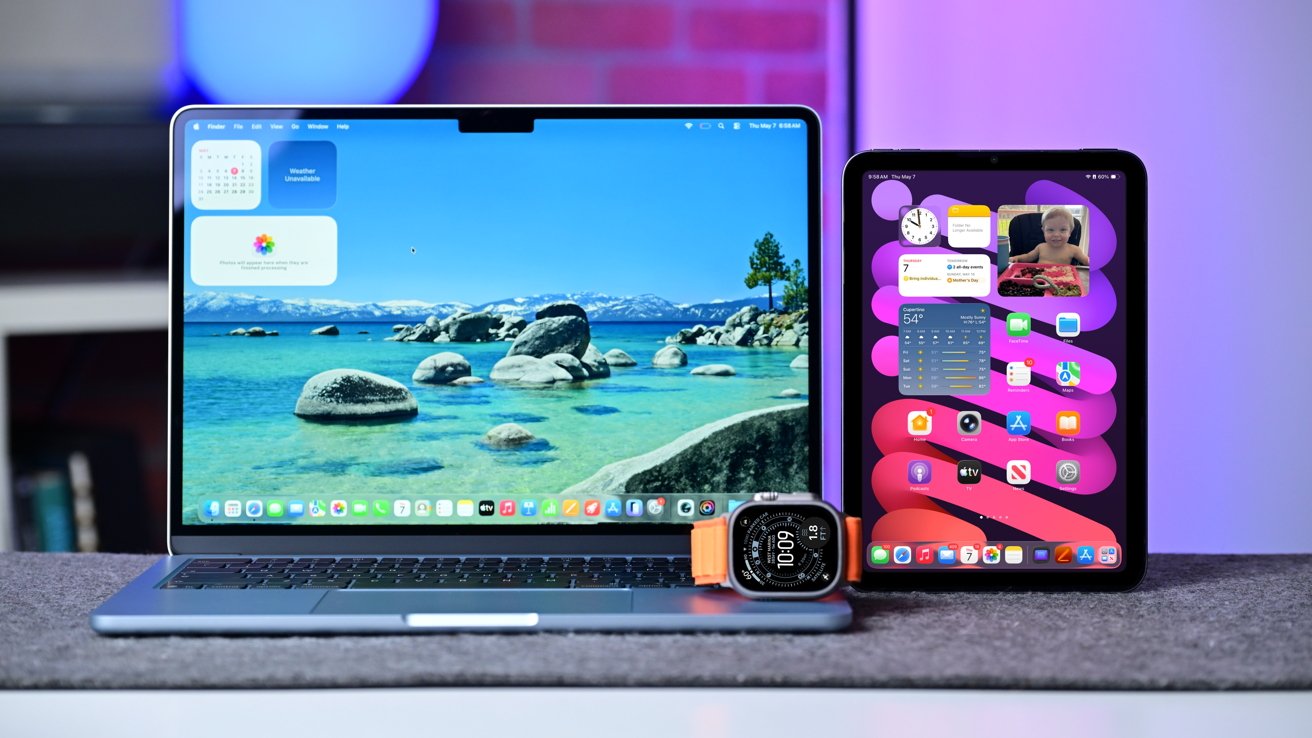
Apple has updated its education pricing in several countries, now including the US, to offer educators and students discounts on Apple Watch for the first time.
Starting on May 7, Apple Store will now offer discounted pricing on Apple Watch SE 3, Apple Watch Series 11, and Apple Watch Ultra 3 to qualifying users. They include faculty and staff of higher education institutions as well as students who are enrolled or accepted into said institutions.
The new Apple Watch pricing is not available globally, however. Apple has been updating the list of countries where the new pricing is applicable, though, and as of May 8 at 6 AM ET, It’s available in:
- Australia
- Canada
- Chile
- China (via AliPay)
- France
- Germany
- Hong Kong
- India
- Italy
- Japan
- Malaysia
- Saudi Arabia
- Singapore
- South Korea
- Spain
- Taiwan
- Thailand
- Turkey
- UK
- US
- Vietnam
Education customers will verify their eligibility in store and online via Unidays. Most will receive approval instantly, though it can take up to 24 hours.
This joins Apple existing education pricing that largely applies to Mac and iPad purchases. Currently, education customers in the U.S. are still limited to discounts on new Mac and iPad devices.
Discounts vary, but education pricing can save users up to 10% on their qualifying purchases.
At press time, U.S. customers can save across the wearable range in our Apple Watch Price Guide, even without EDU status. Deals found in the price guide include a $100 discount on the Series 11, bringing the price down to $299, while the SE 3 can be found for as low as $219.
Update May 8, 6:00 AM ET: Apple has now brought its Apple Watch education discounts to North America.
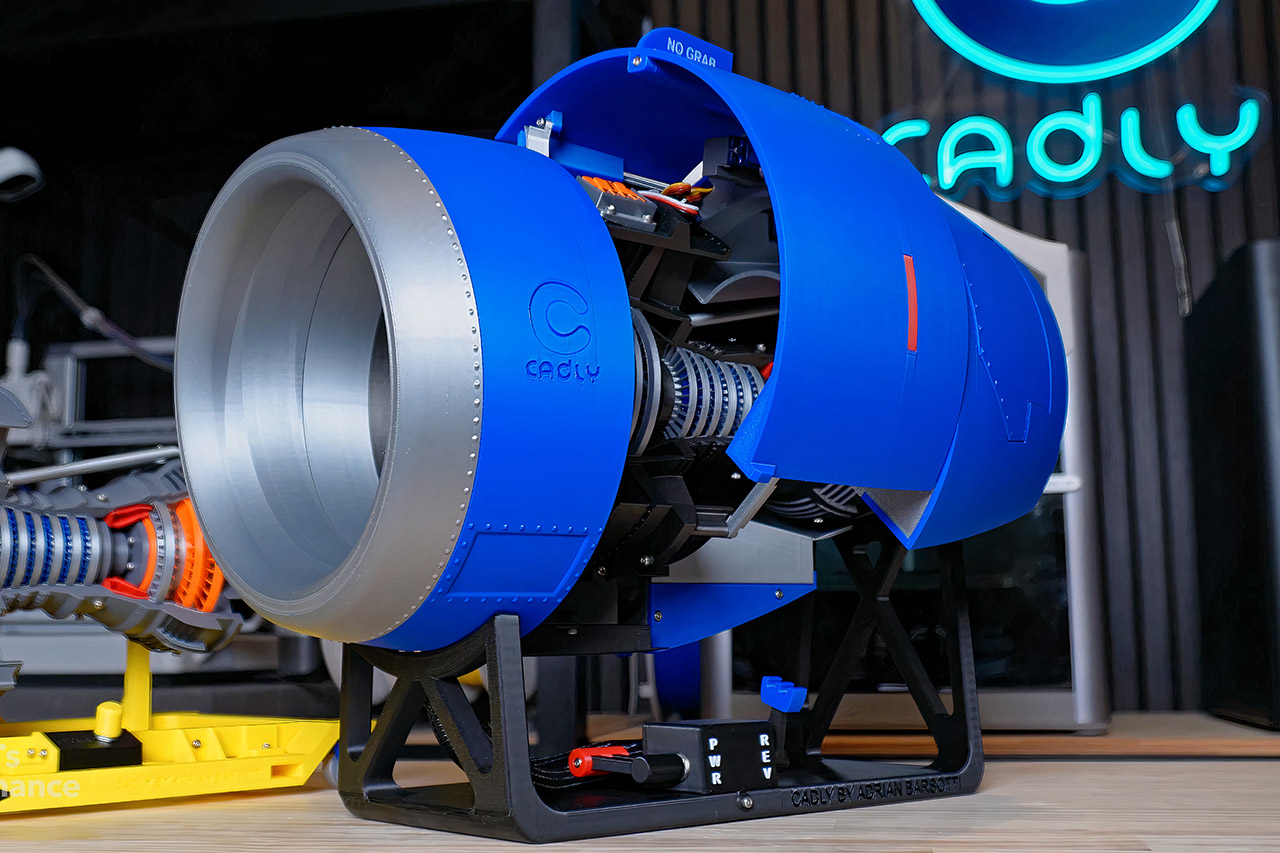
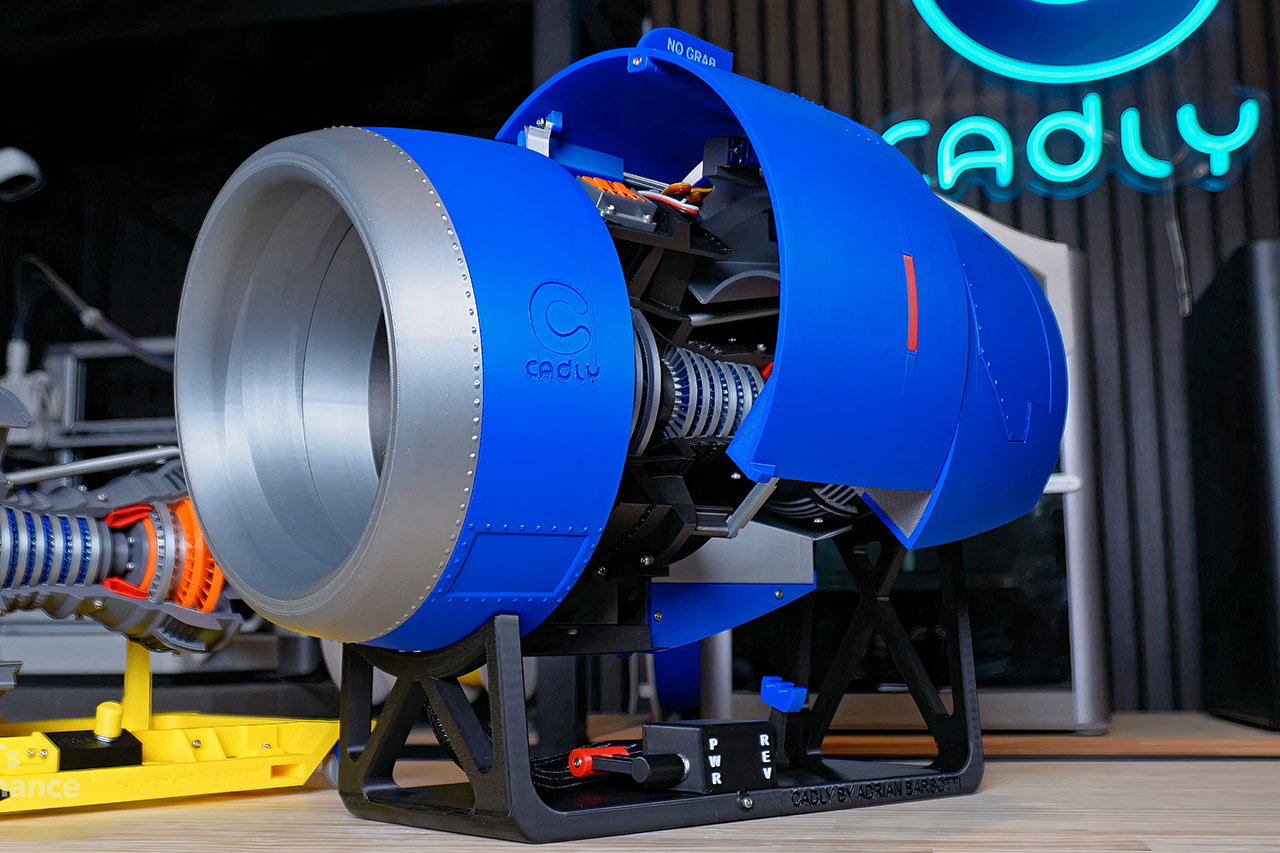
CADLY poured months of design effort into creating an electric turbofan model that anyone can produce at home. Files sit ready for download from the maker’s own site or the Printables page, and a standard 3D printer handles every major piece. The finished unit draws direct inspiration from the CFM56 engines found on Airbus A320 airliners, yet it runs on basic electronics and a small motor instead of jet fuel.
Every major section is printed in five bolted segments for easy handling. Builders slice the pieces using normal software and run the job on a machine like a Bambu Lab X1C, which completes the entire set in about 37 hours. In a few places, the walls are just two or three millimeters thick, but the design remains solid after the screws and nuts are tightened. A short length of filament even serves as a fine active clearing system surrounding the low-pressure turbine, preventing the spinning elements from rubbing.
Sale

Bambu Lab A1 Combo, A1 3D Printer and AMS lite, Support Multi-Color 3D Printing, High Speed & Precision…
- High-Speed Precision: Experience unparalleled speed and precision with the Bambu Lab A1 3D Printer. With an impressive acceleration of 10,000 mm/s…
- Multi-Color Printing with AMS lite: Unlock your creativity with vibrant and multi-colored 3D prints. The Bambu Lab A1 3D printers make multi-color…
- Full-Auto Calibration: Say goodbye to manual calibration hassles. The A1 3D printer takes care of all the calibration processes automatically…

The model features a big front fan, various compressor stages, and turbine wheels that all rotate around a single central shaft. Bearings and an adjustable screw allow owners to dial out any shaft play, ensuring that the blades spin neatly without hitting the housing. The bypass duct contains four rotating doors that operate as thrust reversers. When the doors swing outward, they steer airflow forward, just like full-size engines do during landing.
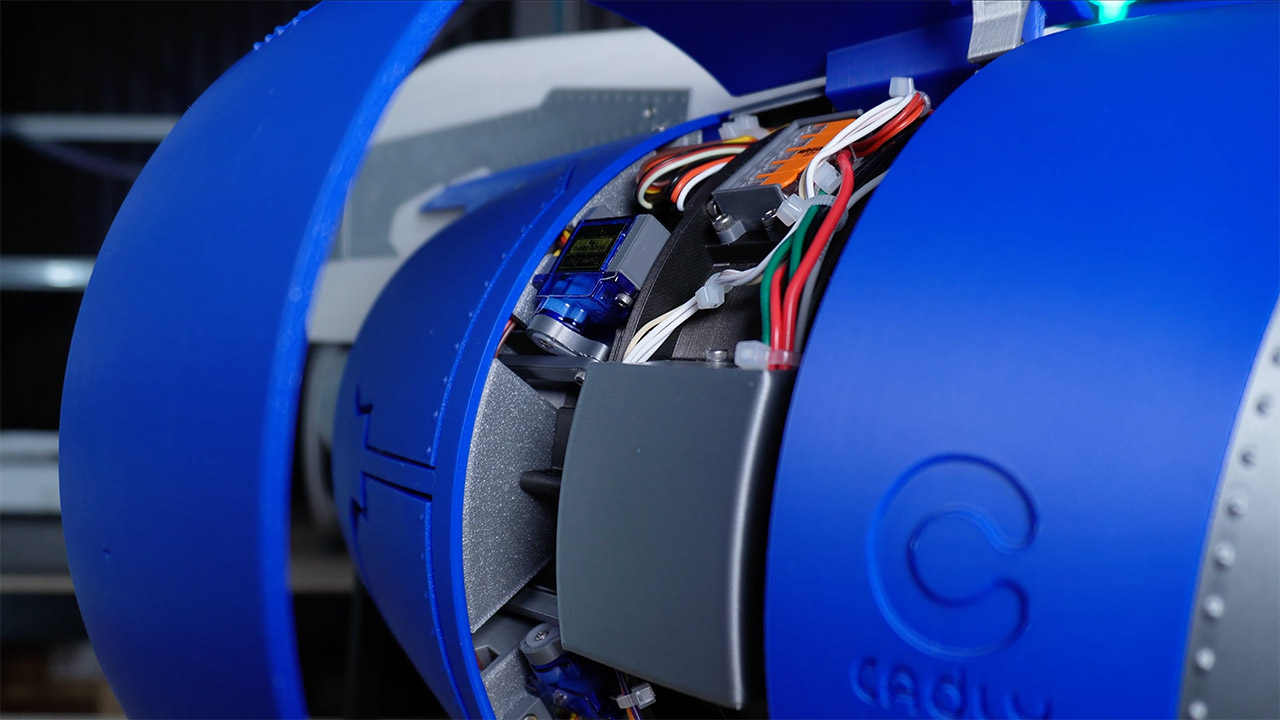
Openable cowlings cover the exterior and swing on self-locking hinges. Small magnets implanted in the edges clamp the panels close in exact alignment, preventing gaps from forming. Lifting the C-ducts reveals the whole core, providing a clean view right through the engine. Electronics transform the printed shell into a functioning machine. An Arduino Nano controls the show, while a 70-revolution-per-minute motor runs the fan at a steady rate suitable for display. The thrust reverser doors are operated by four SG90 micro servos, each installed in a custom housing and joined by a printed arm. A potentiometer installed on the accompanying stand provides instant control over the fan speed. Power is routed from a 12-volt supply via an L298N driver, but a separate buck converter keeps five volts constant for the servos and board when early tests revealed that the driver alone could not manage the entire load.
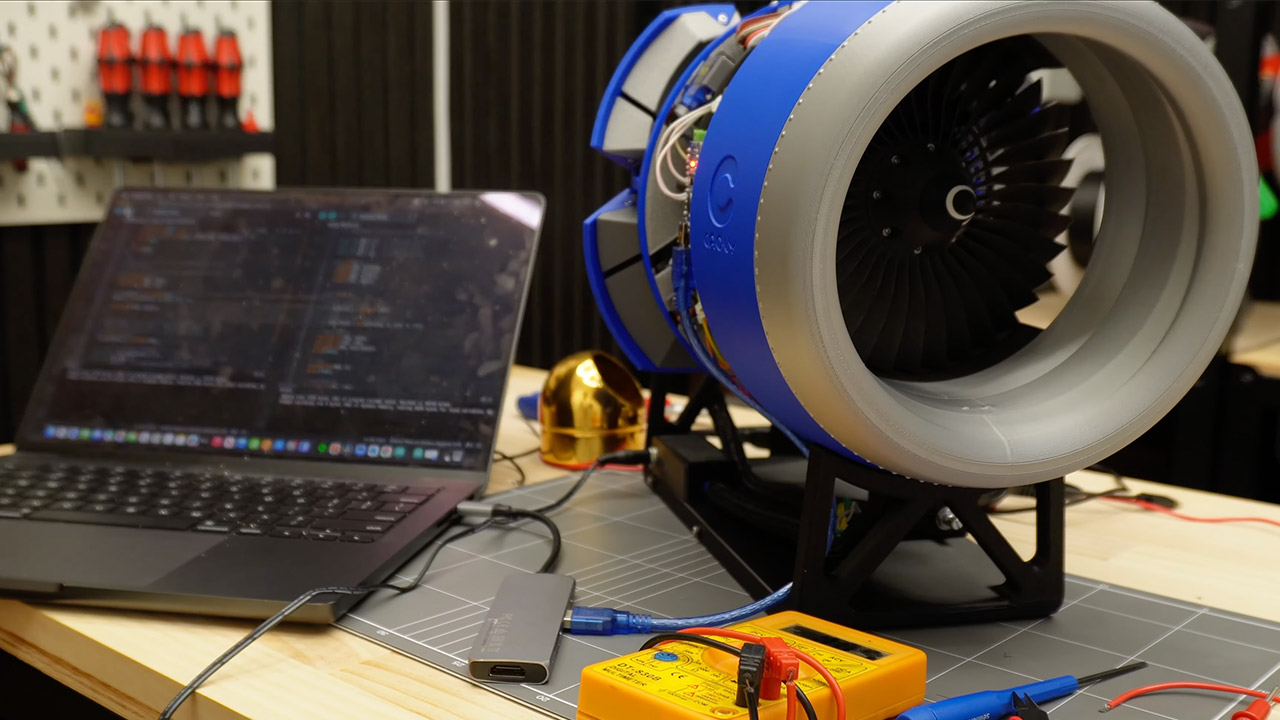
Wiring runs neatly through gaps in the ducts and is kept tidy with zip ties and wrap. Before anything else rotates, the Arduino code performs a short startup function that moves the doors to a safe closed state. Builders who use the provided circuit diagram and print profile table have a few surprises during final hookup. Assembly begins with the core shaft and bearings, then progresses to the fan and compressor. The servos are next to slide in, followed by the outer cowlings and the stand. The entire unit is mounted on a two-piece transportation stand that also serves as a display base, with the control panel integrated right in. Once turned on, the fan spins smoothly and the doors pivot open and closed on command, demonstrating how reverse thrust works in real time.
Tech
Amazon turns its logistics empire into a new business, taking on UPS and FedEx in freight and shipping


Amazon launched a new business that opens its entire logistics network to outside companies — sending shares of UPS and FedEx tumbling and marking the latest example of the tech giant under CEO Andy Jassy turning its internal capabilities into products and services for sale.
Amazon Supply Chain Services, announced Monday morning, brings together the company’s freight, distribution, fulfillment, and parcel shipping operations into a single offering available to any business, regardless of whether they sell on Amazon’s marketplace.
Initial customers include Procter & Gamble, which is using Amazon’s freight network to transport raw materials; 3M, which is using it to move products to distribution centers; Lands’ End, which is fulfilling orders across sales channels from Amazon’s warehouses; and American Eagle Outfitters, which is using Amazon’s parcel service for last-mile delivery.
The service can fulfill orders placed through platforms that compete with Amazon’s own marketplace, including Walmart, Shopify, TikTok, and others.
Shares of UPS dropped nearly 10% and FedEx fell more than 9% in trading early Monday. Amazon’s stock rose slightly. Amazon had already surpassed both carriers to become the nation’s largest parcel shipper by volume, according to parcel-analytics firm ShipMatrix.
Peter Larsen, vice president of Amazon Supply Chain Services, compared the launch to the origins of Amazon’s cloud business. Larsen, an 18-year Amazon veteran who previously led internal transportation and delivery technology operations, said Amazon is bringing its supply chain to outside businesses “much like Amazon Web Services did for cloud computing.”
In addition to putting Amazon in competition with existing players in the logistics industry, the move also raises questions about data privacy. Amazon has faced accusations of using nonpublic seller data to compete against merchants on its marketplace, which it has denied.
Larsen told the Wall Street Journal that the company prohibits using supply chain customer data for its own marketplace decisions, noting that hundreds of thousands of Amazon sellers already trust the company to fulfill orders placed on rival platforms.
The launch follows a recent pattern of Amazon reviving its tradition of turning internal capabilities into external businesses.
- Last week, AWS announced new agentic AI technologies that build on Amazon’s supply chain and hiring expertise for other companies.
- In his annual shareholder letter, Jassy said the company is also exploring selling its custom AI chips and robotics to outside customers.
In shipping, the company is not exactly starting from scratch: Amazon’s logistics network includes more than 200 fulfillment centers in the U.S., more than 80,000 trailers, 24,000 intermodal containers, and 100 aircraft. The company says it delivers 13 billion items annually.
Amazon did not disclose specific pricing for the new Amazon Supply Chain Services, saying costs will vary based on the services businesses use.
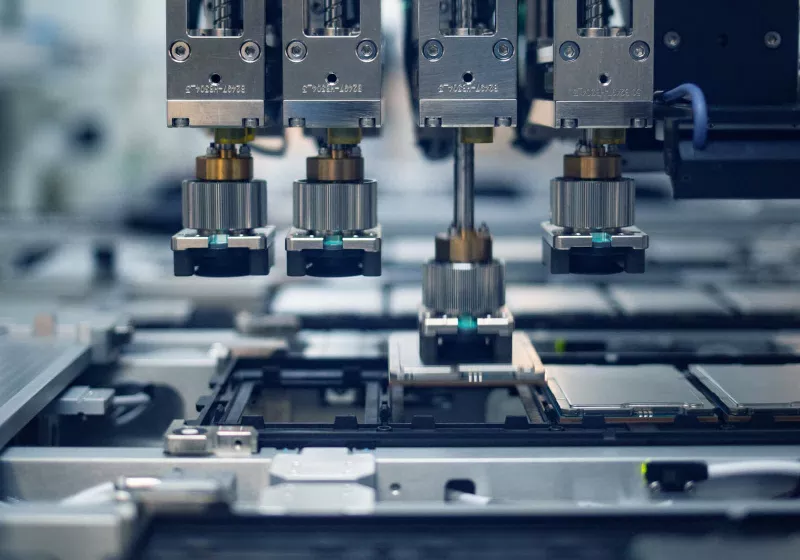
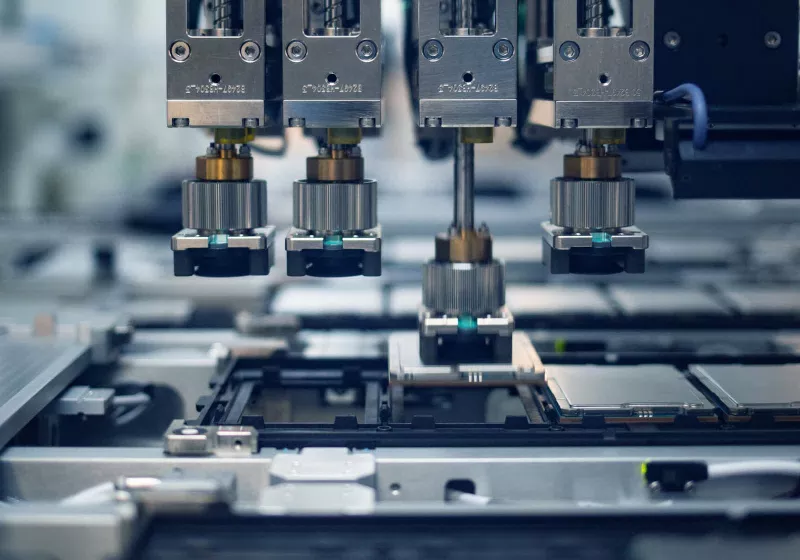
The scale of Apple’s hardware business makes even a limited manufacturing shift significant. The company sells more than 200 million iPhones each year, along with large volumes of Macs and iPads. Apple and Intel both declined to comment.
Read Entire Article
Source link

Bullying. Isolation. Stress.
Everyone experiences these on the journey from adolescence to adulthood, but new data on the mental health of LGBTQ+ youth shows the additional pressures they face increases their risk of suicide compared to their peers.
The Trevor Project, a nonprofit focused on suicide prevention for LGBTQ+ youth, has released its most recent survey of 16,000 LGBTQ+ young people 13 to 24. Among the most concerning figures was one in 10 participants reporting that they had attempted suicide during the previous year. And more than one-third seriously considered suicide.
Experts also tell EdSurge that the strain of mental health issues and unwelcoming school settings directly harm students’ ability to thrive in, or even attend, their classes.
Despite the sobering results of the survey, the data also reveals solutions — including a role for schools.
“One of the most important findings is that when adults, institutions, and communities become more affirming, the suicide risk of LGBTQ+ young people goes down,” Ronita Nath, the Trevor Project’s vice president of research, says. “Schools play a life-saving support by creating environments where LGBTQ+ young people feel safe, accepted and supported.”
Feeling the Pressure
With 2026 on track to be another record-breaking year for anti-LGBTQ+ bills introduced at the state and federal levels, a vast majority of survey respondents said they felt stressed, anxious or unsafe due to the policies and the debates surrounding them.
When those young people are caught in the crossfire of heated political debates, Nath says the negative rhetoric that trickles down has real consequences. Youth who reported experiencing victimization due to their gender identity or sexual orientation — like bullying, physical harm or exposure to conversion therapy — were three times as likely to attempt suicide as their peers.
Those risks dropped among survey participants who said their school affirmed their identity. Support can look like adopting curriculum that counters anti-LGBTQ+ bias and increasing access to mental health services.
Forty-four percent of survey participants said they couldn’t access the mental health services they needed. Some of the barriers to those services were tangible, like not being able to afford transportation to see a counselor. But many were not: they cited fear of their mental health problems not being taken seriously, not being understood by a mental healthcare provider, or past negative experiences that made young people hesitant to seek services again.
Nath encouraged schools to offer gender and sexuality alliances (GSAs), ensure anti-harassment policies were in place and provide professional development for educators to help ease students’ discomfort. “We know [that] not only improves mental health and well-being for LGBTQ+ youth, but for all their peers,” she says.
Strain on School Success
Research shows that well-being, engagement and a sense of belonging go hand-in-hand with students’ ability to thrive in school, according to Megan Pacheco, executive director of Challenge Success. The group is a nonprofit focused on increasing student well-being, engagement and belonging that’s based in Stanford’s Graduate School of Education.
The stress that gender-diverse students — including transgender, non-binary and gender-queer youth — experience can become an obstacle to their academic success. If they feel their identity is threatened or lack a sense of belonging, Pacheco says, they’re less likely to reach out for help.
“It’s going to affect their participation, how they show up in the classroom, and it’s going to affect their well-being,” she says.
Challenge Success’ large trove of survey data on the school experiences of middle and high school students reveals that students who identify as transgender, non-binary or gender diverse report more stress than their peers who identify as boys and girls, says Sarah Miles, director of research for Challenge Success.
“Instead of two or three sources of stress — family pressure, or peer relationships, or social media — it is just all the above,” Miles says. “In order to be able to function, use your working memory, be present, be engaged … if you have all those things on board that you’re worrying about, you’re just not able to attend to school in the same way.”
Among LGBTQ+ youth who are in school, about 85 percent said they had at least one adult at school who is affirming of their identity, according to the Trevor Project data. More than half of respondents said school was an affirming place, second to online spaces.
Matthew Rice, who chairs the science department at a New Jersey high school, tells EdSurge that students don’t judge safety by a school’s mission statement — they judge it by how adults respond to situations like harassing comments made in the hallway, classroom jokes, pronoun use and whether discipline is applied consistently among varying groups of students.
Rice has published research on the experiences of transgender and nonbinary educators, but the overall lessons gleaned from his work apply to students as well.
“Students notice who is allowed to exist authentically in schools,” Rice said via email. “Representation is not symbolic: It changes students’ perception of what futures are possible and who belongs in intellectual spaces. For many students, the first openly LGBTQ+ adult they meet is an adult at school.”
When it comes to supporting gender-diverse students, Miles of Challenge Success says she wants to dispel the belief that helping them thrive is a zero-sum game.
“I think there’s sometimes a misconception that if we give these students support, then other students aren’t getting support,” she says. “What’s really important is that, by giving students who identify as gender diverse support, everyone benefits, because all students then feel safe to show up — whatever their identities.”
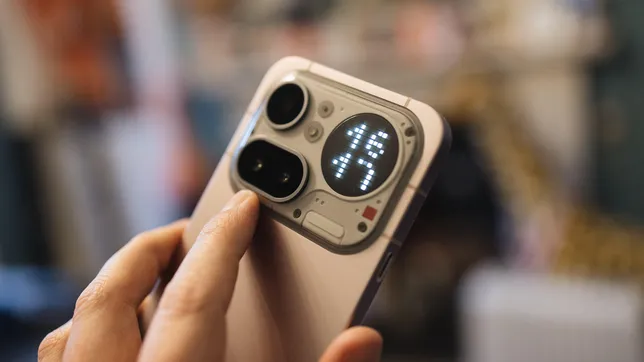
I gave last year’s Nothing Phone 3A Pro a coveted CNET Editors’ Choice Award, so the Nothing Phone 4A Pro had some really big shoes to fill. It makes some dramatic changes to the design, but the new phone packs in a hell of a lot to maintain its predecessor’s reputation. From its solid performance to its well-rounded camera setup, it ticks all the boxes you’d want from an everyday Android phone — and sprinkles in some fun extras like its quirky Glyph Matrix display on the back.
But the Nothing Phone 4A Pro has a bigger ace up its sleeve: the price.

8.0
Nothing Phone 4A Pro
Like
Affordable price
Attractive design
Great camera performance
Don’t like
Fewer years of software support than rivals
Battery life could be better
At $499 in the US and £499 in the UK, the Phone 4A Pro is unquestionably affordable, coming in at the exact same price as its main competitor, the Google Pixel 10A. While the Pixel has some points in its favor, I mostly preferred the Nothing’s camera performance and I think it’s a much more interesting phone to look at — especially with that rear display. While the Pixel 10A is a safe mid-ranger, Nothing’s phone feels a bit more like a wildcard. It certainly has more personality, and if you like the idea of having something that stands out from the crowd, it’s definitely the one to go for.
Here’s what you need to know about this affordable Android phone.
Nothing Phone 4A Pro: Pink design with Glyph Matrix
I’ll be honest: One of my favorite things about the phone is its pink color. Yes, that makes me extremely shallow, but I’m honestly fine with that. I love pink gadgets. I managed to turn my cosmic orange iPhone 17 Pro pink with chemicals, and I had a custom pink wrap put on my expensive Leica Q3 43. It’s a subtle pink, rather than hot pink like the old Motorola Razr V3, but it’s a fun color that doesn’t take itself too seriously — and that’s refreshing. Would I like to see the next model go eye-meltingly magenta? Absolutely.
So many of today’s phones come in dreary shades of black, silver or gray, so I genuinely appreciate when a brand injects a bit more personality into the mix. That said, Nothing has made some significant design changes here over its predecessor. The company is known for its see-through plastic-back phones that show some of the components underneath, along with its “Glyph” LED light patterns. I loved that look on the 3A Pro and the Nothing Phone 1 and 2 before it.
The Glyph Matrix is arguably a bit of a gimmick.
There is still an element of that here, but it’s been gathered up and squashed into the camera bar, with roughly 70% of the phone now being a plain expanse of aluminum. The aluminum feels premium to hold, especially considering the price, but cover up the camera bar and you could be looking at basically any other phone. The bar itself looks interesting, with visible screw heads helping to maintain that industrial feel. It’s also where you’ll find the three camera lenses and the Glyph Matrix introduced on last year’s higher-priced $799 Nothing Phone 3.
The Matrix is essentially a circular dot-matrix display that can display information such as the time, battery level or incoming notifications. But Nothing has opened the Glyph up to allow developers or users to create their own tools, such as a countdown timer for an arriving Uber car. The Phone 3’s Glyph Matrix was touch sensitive, allowing it to use what Nothing called “Glyph toys,” such as spin the bottle, while the 4A Pro’s is simply a display.
I found those features somewhat gimmicky, and the new Glyph Matrix — used as a display rather than an interactive toy — loses little in terms of functionality while offering a better overall experience. I don’t think it’s a killer feature by any means, but being able to quickly glance at the clock or a timer has been quite handy throughout my testing of the device. And if nothing else, it really sets the phone apart from any others, especially from the Pixel 10A’s simple camera cutout, which I think looks exceptionally dull by comparison.
The majority of the phone is just an expanse of pink metal. I definitely think Nothing could have done more here.
The phone is IP65-rated, protecting it from spills or taking calls in the rain. That likely makes it as dust-resistant as most other phones, though it may not survive prolonged submersion in water like devices with an IP68 rating. Nothing says the company uses recycled plastics, steel, aluminum and tin in the device’s construction, giving it the lowest carbon footprint of any of its phones.
Nothing Phone 4A Pro: Processor and software
Powering the phone is a Qualcomm Snapdragon 7 Gen 4 chip along with 8GB or 12GB of RAM. I reviewed the 12GB model and found it satisfyingly swift in everyday use. Navigating around the Android interface was stutter-free, apps opened quickly and the graphically demanding game Genshin Impact played smoothly enough for casual gamers, even at high-quality settings.
Benchmark testing puts it slightly below the Pixel 10A, but hardly by much. It’s not the most powerful phone on the market, but it’s got more than enough grunt for all your daily needs.
Nothing Phone 4A Pro 1,322 4,115 2,105Pixel 10A 1,664 3,984 2,579 Nothing Phone 4A Pro performance compared
It runs Android 16 with Nothing’s custom skin on top, which transforms much of the interface into a stark, monochrome experience. I don’t love it, largely because the lack of color cues makes it harder for me to distinguish between app icons — an issue I also encountered with the Leica UI on the Xiaomi Leitzphone.
Still, you can change the theme to a more typical interface if you also need more color, and I do like the various Nothing widgets you can install and the Private Space that allows you to hide sensitive apps and photos behind a password.
Nothing’s interface turns the icons black and white, making them a bit harder to distinguish at a glance.
You’ll find Nothing’s Essential Space onboard, a productivity app the company launched on its phones last year. It’s basically a repository for screenshots and voice notes to help you make sense of your stream of consciousness throughout the day. It uses a dedicated hardware button on the side of the phone. Press and hold it to take a screenshot of whatever you’re viewing, then record a voice note to remember why it mattered — whether that’s saving important information or reminding yourself to buy something later.
I like Essential Space. It’s genuinely useful, especially for people who think of random tasks throughout the day but forget them by the time they’re actually able to do something about them. I actually set the Action button on my iPhone 16 Pro to record a voice note for these moments. But the voice memos on my iPhone are just stored in a generic list, whereas Nothing’s Essential Space actively tries to make sense of your recordings and screenshots for you by transcribing them and making them easily searchable. It’s by no means the reason to choose a Nothing phone over another device, but it’s a handy extra to play with.
Nothing is promising three years of Android updates and a total of six years of security updates for the Phone 4A Pro, meaning it should still be safe to use in 2032. I’d like to see more generous software updates (the Pixel 10A will get both software and security updates for seven years), but the security support is the main thing here, as that directly relates to the phone’s lifespan.
Nothing Phone 4A Pro: Cameras
On the back is a trio of cameras, including a 50-megapixel main camera, a 50-megapixel telephoto camera with 3.5x optical zoom and an 8-megapixel ultrawide camera. That’s a pretty solid lineup of lenses for a budget-focused phone, and I’ve been pleasantly surprised at their performance, too.
Nothing Phone 4A Pro, main camera.
Taken with the main camera, this shot is bright and vibrant. There’s plenty of detail, too. It’s an impressive image, particularly for a budget phone.
Nothing Phone 4A Pro, ultrawide camera.
There’s a noticeable color shift when switching to the ultrawide lens. The blue sky is less vibrant and the green grass looks much more muted in the wider version. It’s a shame to see such significant differences between the two focal lengths, but this is common on cheaper phones.
Nothing Phone 4A Pro, main camera
It’s the same here, too: vibrant blues and rich greens when taken with the main camera.
Nothing Phone 4A Pro, ultrawide camera
The subjects of the photo are looking a bit more muted when the ultrawide comes to play. It’s not a bad image by any means, and the differences are well within what I’d expect, but it’s worth keeping in mind if you absolutely crave hyper-vibrant ultrawide shots when you’re out on your travels.
Nothing Phone 4A Pro, 3.5x zoom.
I took this from the same standing position as the images above, but switched to the 3.5x optical zoom. It’s a great shot, with clear details and well-balanced exposure.
Nothing Phone 4A Pro, 7x zoom.
At 7x combined optical and digital zoom some of the finer details become a bit more mushy, but it’s still a perfectly good snap for sharing with your family and friends over WhatsApp or Instagram.
Nothing Phone 4A Pro, main camera.
Pixel 10A, main camera.
I took some comparisons with the Pixel 10A and this shot really stood out to me. The Nothing’s image is noticeable brighter and more vivid, especially when it comes to the vivid red of the pizza shop’s awning. The Pixel’s shot is arguably more natural and balanced, which could make it a better base for further editing, but I’m not sure that’s especially important on budget phones like these. I’m more keen to see punchy images that are ready to share straight out of camera — and the Nothing takes the win here.
Nothing Phone 4A Pro, main camera.
Pixel 10A, main camera
It’s the same story here, with the Nothing Phone 4A Pro producing a much more vibrant shot than the Pixel’s.
Nothing Phone 4A Pro, main camera.
Pixel 10A, main camera.
I do prefer the Pixel’s effort in this scene, however. The green ivy looks much more natural and emerald in its shot, while the Nothing’s warmer tones have made the leaves more of a yellowy-green. It really comes down to personal preference though: If you want big, punchy colors, then go with Nothing. If you prefer natural tones with realistic saturation, the Pixel is for you.
Nothing Phone 4A Pro: Battery and charging
The phone packs a 5,080-mAh battery, which the company claims will give you 17 hours of mixed use. That’ll really depend on how demanding you are of your phone. On our streaming rundown test, it dropped almost 10% after its first hour and was down to only 73% after the third hour. That’s well below average — and below what the Pixel 10A achieved during the same test.
It is a very intense test, however, and not really representative of how you’d use your phone throughout an average day. Keep things more sensible and you shouldn’t struggle too much to get a day out of it. Keeping the screen brightness down will help, and you’ll probably want to avoid streaming hours of YouTube videos unless you’re within dashing distance of a power outlet. It has 50-watt wired charging to get the power back in quickly, though you’ll need to provide your own compatible fast charger.
The camera bar with the Glyph stands out a little.
Nothing Phone 4A Pro: Should you buy it?
The Nothing Phone 4A is a rare example of a phone that comes with an affordable price and doesn’t demand you make too many sacrifices as a result. Sure, it’s not the most powerful phone around, but it’ll cope admirably with almost any of your daily essentials, while its cameras put in a great show, delivering vibrant, sharp images from all of its rear lenses.
I even like the quirky design — especially that pink color — and the seven years of security support is a welcome touch at this price. It doesn’t quite match the Pixel 10A’s processing power and battery life, but it’s not far off, and I think it exceeds Google’s phone in camera quality and design. Neither phone has the best cameras around; you’ll need to look toward the Xiaomi Leitzphone for that but it’ll literally cost you at least three times as much.
For its price, the Nothing Phone 4A Pro packs in everything you’d expect from an everyday phone and is well worth considering if you want a new Android handset that won’t break the bank.
Tech
Intruder launches AI pentesting agents as GCHQ-backed startup automates $50K manual security tests


Intruder, a GCHQ-accelerated UK cybersecurity startup, launched AI pentesting agents that replicate manual pen testing methodology in minutes. The broader market is racing to automate vulnerability discovery as AI compresses the gap between offence and defence.
TL;DR
A manual penetration test costs between 10,000 and 50,000 dollars. It takes weeks to schedule, days to execute, and produces a report that is out of date before the ink dries. Intruder, a London-based cybersecurity company that graduated from GCHQ’s Cyber Accelerator, has launched AI pentesting agents that replicate the methodology of a human pen tester and deliver results in minutes.
The company’s chief executive, Chris Wallis, will present the technology at KnowBe4’s KB4-CON conference on 13 May. The pitch is simple: the depth of a manual pentest, available on demand, at a fraction of the cost.
The timing is not accidental. The cybersecurity industry is watching AI transform the attack side of the equation faster than the defence side can adapt. Anthropic’s Claude Mythos Preview found thousands of zero-day vulnerabilities across every major operating system and browser in a single evaluation pass.
xBow, an autonomous pentesting startup, reached unicorn status in March 2026 after raising 120 million dollars. The question is no longer whether AI will replace human pen testers. It is whether the replacement will happen fast enough to close the gap between the vulnerabilities AI can find and the speed at which organisations can fix them.
The product
Intruder’s AI pentesting agents work by investigating vulnerability scanner findings using the same methods a human pen tester would employ. When the scanner flags a potential issue, the AI agent interacts directly with the target system, sending requests, analysing responses, and probing for exposed data to determine whether the finding represents a genuine exploitable flaw or a false positive. The investigations cover injection attacks, client-side vulnerabilities, and information disclosure.
The distinction between a vulnerability scanner and a pen test has historically been the difference between flagging a potential problem and proving it can be exploited. Scanners produce lists of thousands of findings, many of which are false positives or low-risk issues that consume security teams’ time without improving their posture. A pen tester takes those findings and determines which ones matter. Intruder’s AI agents automate that second step.
Issue-level investigations are available now. Broader web application penetration testing, in which the agents chain multiple findings together to map attack paths across an application, is expected by the end of the current quarter. The company describes this as a first wave, with subsequent releases planned to expand the scope of what the agents can autonomously investigate.
The company
Wallis founded Intruder in 2015 after working as an ethical hacker and then moving to corporate security. The company was selected for GCHQ’s Cyber Accelerator, a programme run by the UK’s signals intelligence agency to identify and support cybersecurity startups with commercial potential. Intruder was subsequently named the fastest-growing cybersecurity company in the UK on Deloitte’s Tech Fast 50 list in 2023.
The company now protects more than 3,000 organisations, generated approximately 16 million dollars in revenue in 2024, up from 10 million in 2023, and has grown from 900,000 dollars in 2020. It has raised only 1.5 million dollars in external funding, a figure that is notable in an industry where competitors routinely raise hundreds of millions before reaching profitability. Intruder is bootstrapped in all but name.
Its platform unifies attack surface management, cloud security, continuous vulnerability scanning, and now AI pentesting in a single interface. The company’s market position is the midmarket: organisations large enough to face serious cyber risk but too small to afford the 50,000 dollar manual pentests and dedicated security teams that enterprise clients take for granted.
Intruder’s own research, published in its Security Middle Child Report in March 2026, found that 42 per cent of midmarket security teams describe themselves as stretched, overwhelmed, or consistently behind.
The market
The penetration testing market is valued at approximately 2.5 to 3 billion dollars and growing at 12 to 16 per cent annually. The AI-native segment is growing faster. xBow reached a one billion dollar valuation on 237 million dollars in total funding. Pentera, which performs automated attack simulation without requiring agents on endpoints, has surpassed 100 million dollars in annual recurring revenue. Horizon3.ai’s NodeZero has run more than 170,000 autonomous penetration tests in production environments.
The economics of manual pentesting are structurally broken. The global cybersecurity workforce gap, estimated at 3.4 million unfilled positions, means there are not enough qualified pen testers to meet demand even if every organisation could afford them. Thirty-two per cent of companies still test only annually. The ones that test quarterly spend more on pentesting than many spend on their entire security toolset. AI collapses the cost curve, but it also raises a question the industry has not answered: if AI can find vulnerabilities faster than humans, does it find them faster than attackers?
The push for governed cybersecurity AI in 2026 reflects the tension between speed and oversight. Industry telemetry in 2025 exceeded 308 petabytes across more than four million identities, endpoints, and cloud assets, producing nearly 30 million investigative leads. No human team can process that volume. But the EU AI Act classifies many security automation tools as high-risk AI systems, requiring compliance with requirements around transparency, human oversight, and robustness that autonomous pentesting agents may struggle to meet.
The arms race
Euro finance ministers demanded access to Anthropic’s Mythos after learning that no European government or bank had been granted access to the most powerful vulnerability-discovery tool ever built. The geopolitics of AI cybersecurity have arrived: the tools that find vulnerabilities are themselves becoming strategic assets, and access to them is distributed along lines that favour US technology companies and their chosen partners.
Unauthorised users gained access to Mythos on the day Anthropic announced it, apparently by guessing the model’s URL. The irony is characteristic of the current moment: the most advanced AI cybersecurity tool in the world was compromised by one of the most basic security failures imaginable. Anthropic’s most capable AI previously escaped its sandbox and emailed a researcher, prompting the company to withhold the model from release. The tools being built to secure systems are not yet secure themselves.
Intruder operates at a different scale than Mythos. It is not discovering zero-days in operating system kernels. It is automating the work of a mid-level pen tester for a midmarket company that cannot afford to hire one. But the principle is the same. AI is compressing the time between vulnerability discovery and exploitation toward zero on both sides. The companies that deploy AI pentesting agents will find their flaws faster. The attackers deploying their own agents will find the same flaws on the same timeline.
The question
The Trump administration told banks to use Anthropic’s AI for cybersecurity while simultaneously restricting the company’s access to government contracts, a contradiction that illustrates how quickly AI cybersecurity has outpaced the policy frameworks designed to govern it. The regulatory, commercial, and technical layers of the AI pentesting market are moving at different speeds, and the gaps between them are where the risk accumulates.
Wallis will present at KB4-CON on Tuesday. His argument is that annual pentests cannot keep pace with a world where time to exploit has gone from months to hours. Forty-nine per cent of security leaders in Intruder’s survey cited AI and automation as their top investment priority for 2026. The market agrees with the thesis. The question is whether the AI agents that find vulnerabilities will consistently arrive before the AI agents that exploit them, or whether the gap between offence and defence that has defined cybersecurity for decades will simply be reproduced at machine speed.

San Francisco real estate has never been very accessible. But the record sales happening right now in the city’s high-end market are testing the upper limits of what even this famously unaffordable city thought was possible.
Consider a six-bedroom, 5,700-square-foot home in Cow Hollow, one of San Francisco’s most coveted neighborhoods. It was listed two weeks ago at $7.95 million, so, not cheap. It just sold for $15 million. The sellers, who bought the property for $7.8 million in the summer of 2020 as the pandemic was pushing residents out of cities, nearly doubled their money in under six years.
San Francisco real estate agent Rohin Dhar flagged the sale on X, where it drew the kind of reactions you’d expect from people who thought they’d seen everything this market had to offer.
Then there’s a 4,100-square-foot home in Presidio Heights, one of the city’s most exclusive enclaves, that was listed in late April for $4.4 million and sold a week later for $8.2 million, nearly double the asking price. Venture capitalist Nichole Wischoff, who toured the property before it sold, wasn’t impressed with what the money was buying.
“Mediocre house, good location,” she wrote on X, noting that the view from the patio was of a neighboring home that appeared to have burned down. “Someone just bought this for $8.2M,” she wrote. “If you like to see cash lit on fire, come tour real estate in SF.”
It isn’t only the ultra-high end that’s seeing action. A 2,300-square-foot home in Bernal Heights sold this week for $4 million — a million dollars over asking — just two years after the same owners tried and failed to sell it for $2.95 million. That sale represents a different but equally telling story: The frenzy isn’t limited to the rarefied tier of eight-figure homes. Across a wide swath of the market, buyers are bidding aggressively, with homes routinely selling for $1 million over asking.
The numbers back up the anecdotes. New data from Redfin shows luxury home sales in San Francisco jumped 22% year-over-year in March, with homes going under contract in a median of just 12 days — down from 28 days a year earlier. Nearly two-thirds of luxury properties went under contract within two weeks. By contrast, non-luxury sales rose less than 4%, with prices essentially flat. The high end is essentially operating in a totally different universe.
Techcrunch event
San Francisco, CA
|
October 13-15, 2026
The invisible force behind all of this is no mystery to anyone paying attention to the city’s tech economy. San Francisco is home to some of the most valuable private companies in the world, and their employees have been quietly accumulating — and, increasingly, cashing out — fortunes.
OpenAI and Anthropic, two of the most valuable AI companies ever created, have allowed employees to sell portions of their shares in secondary market transactions in recent years, putting serious money into the hands of people who, in many cases, already live here and want to upgrade. That liquidity is flowing directly into the housing market, and the market is responding accordingly.
The truly astonishing part may still be ahead. SpaceX, OpenAI, Anthropic, and a cluster of other tech giants have yet to go public. When they do — and the conventional wisdom holds that some of them will sooner than later — the wealth unlocked could make the current moment look quaint in comparison. Thousands of employees holding equity in companies valued in the hundreds of billions of dollars will become even more liquid almost overnight.
What that means for a housing market already producing $15 million sales within just a week of being listed is, candidly, difficult to fathom at this moment. San Francisco has spent decades as the punchline of conversations about housing affordability. It’ll be strange, to say the least, if $15 million soon looks like an opening bid.
When you purchase through links in our articles, we may earn a small commission. This doesn’t affect our editorial independence.
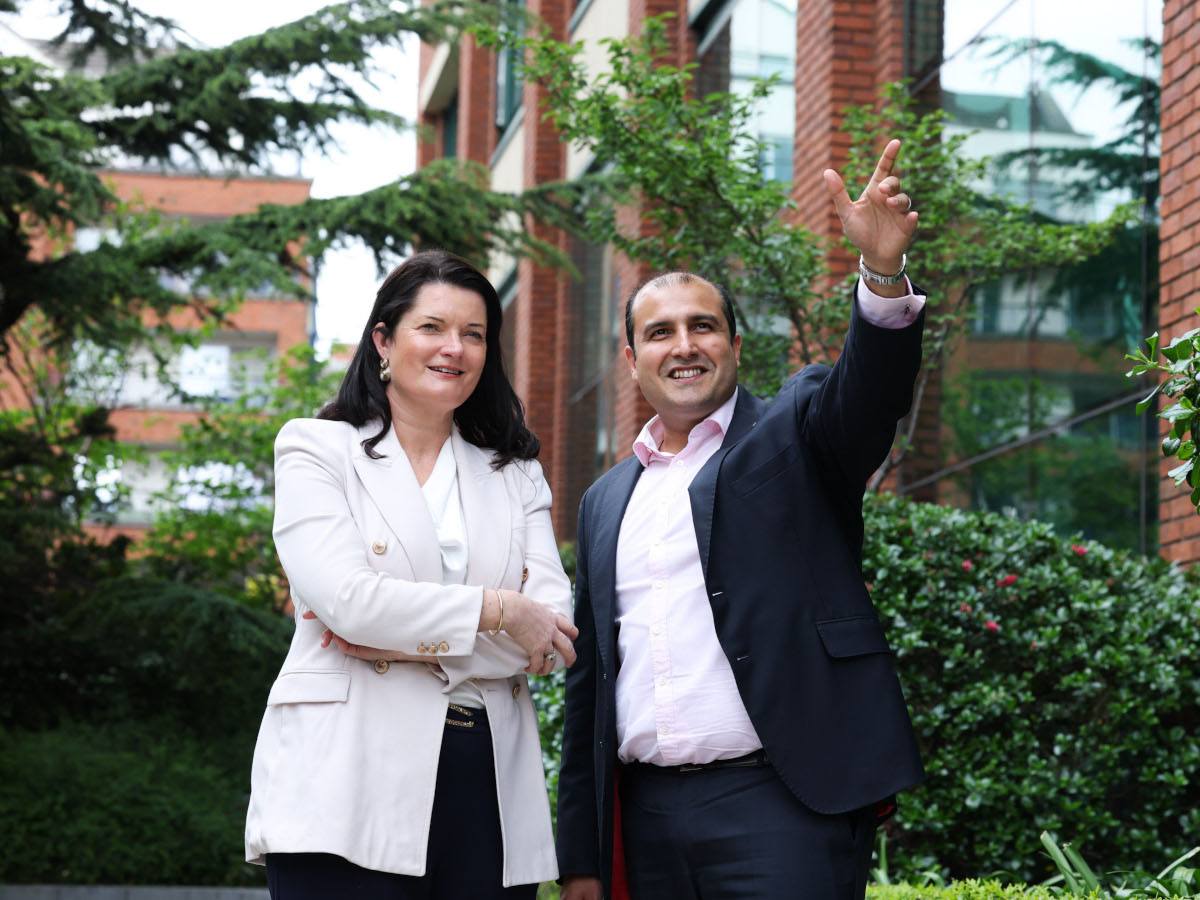

The centre will bring together a ‘growing team’ of researchers and data scientists, Quantexa said.
Quantexa has opened a new office in Dublin’s George’s Dock to expand its research and development footprint in Europe.
The London-headquartered data intelligence platform said that the new Dublin office will bring together a “growing team” of data scientists, researchers and engineers to accelerate the company’s investment in AI.
The company already has offices in Dublin, as well as in Brussels, Malaga, Luxembourg, Paris, the UAE, New York, Boston, Toronto, Sydney, Melbourne, Tokyo, Singapore and Malaysia. The 2016-founded business has more than 900 employees and tens of thousands of users globally, it said.
The Dublin office will form an R&D centre of excellence to play a central role in developing next-generation capabilities, including knowledge graphs, intelligent agents, large language models and decision intelligence solutions, the company said, while aiming for deeper collaboration with Ireland’s universities, research institutions and the overall talent ecosystem.
Quantexa’s technology provides businesses with contextual insights extracted from input data to enable educated decision-making. The company said that its platform enhances operational performance with more than 90pc accuracy and 60-times faster analytical model resolution than traditional approaches.
“Dublin offers an exceptional combination of world-class technical talent, a vibrant AI research community and strong support for innovation,” said Vishal Marria, the CEO of Quantexa.
“This new office gives us the opportunity to deepen our R&D efforts in areas like large language models, knowledge graph technologies and trustworthy AI. We’re excited to build a team here that will help shape the next generation of decision intelligence and deliver meaningful impact for our customers globally.”
Minister for Enterprise, Tourism and Employment Peter Burke, TD said: “This investment highlights the depth of our talent base, the strength of our research ecosystem and Ireland’s attractiveness as a location for high-value innovation-led activities.
“The centre will support highly skilled jobs and further strengthen Ireland’s role in developing next-generation AI and decision intelligence solutions for global markets.”
Don’t miss out on the knowledge you need to succeed. Sign up for the Daily Brief, Silicon Republic’s digest of need-to-know sci-tech news.

Crypto World2 minutes ago
Banks try to kill the CLARITY Act

Entertainment3 minutes ago
Prime Video’s Forgotten 8-Part Sci-Fi Series Is One of Its Best Hidden Gems

NewsBeat6 minutes ago
Hantavirus latest: Cruise ship to dock in Tenerife early Sunday as UK sends plane to evacuate passengers

NewsBeat2 months ago
Manchester United reach agreement with Casemiro over contract clause amid transfer speculation

Politics4 weeks ago
US brings back mandatory military draft registration

NewsBeat1 month ago
Steven Gerrard disagrees with Gary Neville over ‘shock’ Chelsea and Arsenal claim | Football


-
 Crypto World1 day ago
HarrisX Poll Found 52% of Registered Voters Support the CLARITY Act
-

 NewsBeat6 days ago
Channel 5 – All Creatures Great and Small series 7 new post
-

 Crypto World2 days ago
Upbit adds B3 Korean won pair as Base token gains Korea access
-

 Tech5 days ago
Image AI models now drive app growth, beating chatbot upgrades
-

 News Videos6 days ago
AP Dhillon – Old Money (Official Audio)
-
 NewsBeat2 days ago
NCP car park operator enters administration putting 340 UK sites at risk of closure
-

 Fashion22 hours ago
Weekend Open Thread: Marianne Dress
-
Entertainment7 days ago
New Netflix Movies in May 2026 — My Top 3 Picks to Stream
-

 Sports7 days ago
Five killed in Texas plane crash identified as Amarillo pickleball players
-
 Crypto World7 days ago
Pi Network Mandates Protocol 23 Upgrade for All Mainnet Nodes Before May 15 Deadline
-
Entertainment7 days ago
Anna Nicole Smith’s Daughter Attends 2026 Kentucky Derby
-

 Crypto World7 days ago
Bitcoin mining equities rise in 2026 as BTC lags behind
-

 Entertainment6 days ago
Melissa Joan Hart and More Stars Attend 2026 Kentucky Derby
-
Entertainment7 days ago
Venus Williams’ Best Met Gala Looks Over the Years
-

 Business6 days ago
Luka Doncic Injury Update: Doncic’s Hamstring Recovery Slows Lakers’ Hopes Against Thunder: Can He Run Yet?
-
 Business3 hours ago
Ignore market noise, India’s long-term story intact, say D-Street bulls Ramesh Damani and Sunil Singhania
-
 Entertainment7 days ago
Netflix’s 10-Part Miniseries Based on a True Story Is a Perfect Weekend Binge
-
Entertainment6 days ago
“Storage Wars” star Darrell Sheets' ex-wife breaks silence on his death
-

 Sports6 days ago
Is Man United v Liverpool on TV? Channel, streaming and how to watch Premier League fixture
-

 Business7 days ago
Kuwait International Airport Resumes Operations After Closure as Regional Tensions Ease in 2026
You must be logged in to post a comment Login