
Business
Beyond the Spider-Verse to Conclude Miles Morales Story


Sony Pictures has confirmed that the highly acclaimed animated Spider-Verse film series will conclude with the upcoming Spider-Man: Beyond the Spider-Verse, effectively ending further continuation of the core Miles Morales-centered storyline beyond the planned trilogy. Producers Phil Lord and Chris Miller made the revelation during a recent appearance on the “Happy Sad Confused” podcast, surprising many fans who hoped for an expanded multiverse saga following the massive success of the first two films.

The decision marks a significant shift for Sony’s animated Spider-Man efforts as the studio focuses on wrapping the beloved trilogy while continuing its live-action partnership with Marvel Studios. Spider-Man: Beyond the Spider-Verse is now slated for a 2027 release after earlier production delays pushed it from a potential 2026 window.
This development comes amid broader changes in Sony’s Spider-Man strategy. The studio has scrapped or paused several live-action spin-off projects in its Sony’s Spider-Man Universe (SSU) following underwhelming box office results for films like Morbius, Madame Web and Kraven the Hunter. In February 2026, Sony Pictures CEO Tom Rothman confirmed plans to reboot the live-action spin-off universe with fresh talent and a new approach, while emphasizing that the overall deal with Marvel Studios remains strong.
Details on the Animated Trilogy’s Conclusion
The Spider-Verse films introduced audiences to a vibrant multiverse of Spider-People, with Miles Morales (voiced by Shameik Moore) as the central hero alongside Gwen Stacy/Spider-Gwen (Hailee Steinfeld), Peter B. Parker (Jake Johnson) and a host of alternate Spider-heroes. The first film, Spider-Man: Into the Spider-Verse (2018), won an Academy Award for Best Animated Feature and revolutionized the medium with its innovative visual style blending 2D and 3D animation.
Its 2023 sequel, Spider-Man: Across the Spider-Verse, earned critical acclaim and strong box office returns, further elevating expectations for the conclusion. Lord and Miller, who serve as producers and were deeply involved creatively, told podcast host Josh Horowitz that Beyond the Spider-Verse will provide a satisfying endpoint for this particular chapter of Miles’ journey.
While the film will still deliver the epic scale and emotional payoff fans anticipate, the confirmation ends speculation about additional sequels or spin-offs directly extending the main trilogy’s narrative. Sony has not ruled out future animated Spider-Man projects in the broader multiverse, but the core Miles-focused saga will reach its conclusion in 2027.
Live-Action Landscape and Spin-Off Changes
Sony’s live-action plans have seen more dramatic adjustments. The studio has reportedly canceled or placed on hold multiple spin-off films, including the long-gestating Spider-Woman project once attached to director Olivia Wilde. Other rumored entries, such as a potential Sinister Six film or projects involving characters like Knull, have also been shelved or paused as Sony reassesses its standalone villain-focused universe.
Rothman’s comments in February signaled a strategic reboot: new creative teams, fresh casts and a reset approach to interconnected storytelling. Despite the setbacks with recent SSU entries, the core collaboration with Marvel Studios for Tom Holland’s Peter Parker remains intact and successful.
Spider-Man: Brand New Day, the fourth solo film starring Holland as the web-slinger, is scheduled for release in July 2026. The movie continues the Marvel Cinematic Universe storyline and represents Sony’s most reliable Spider-Man franchise pillar. Additional 2026 projects include the live-action Spider-Noir series on Amazon Prime Video starring Nicolas Cage as a 1930s version of the character, and the animated Your Friendly Neighborhood Spider-Man Season 2 on Disney+.
These moves reflect Sony’s effort to streamline its Spider-Man portfolio after years of ambitious expansion. The SSU launched with Venom in 2018 and aimed to build a shared universe of anti-heroes and villains separate from the MCU, but inconsistent critical reception and box office performance led to a more cautious strategy.
Fan Reactions and Industry Impact
The news about the Spider-Verse trilogy’s end has elicited mixed responses from fans. Many expressed disappointment that the innovative animated world won’t continue indefinitely, praising the films’ groundbreaking animation, heartfelt storytelling and diverse representation. Others welcomed a definitive conclusion, hoping it delivers a strong payoff without overstaying its welcome.
The broader Spider-Man franchise remains one of Hollywood’s most valuable properties. Holland’s MCU films have grossed billions globally, while the animated entries have earned critical accolades and loyal followings. Sony’s decision to conclude the Miles Morales trilogy while rebooting spin-offs suggests a focus on quality over quantity in the near term.
Industry analysts note that the changes align with wider studio trends toward careful franchise management amid rising production costs and shifting audience preferences. The ongoing partnership with Marvel Studios continues to provide stability, allowing Sony to benefit from MCU integration while retaining control over key characters.
What’s Next for Spider-Man
Looking ahead, Spider-Man: Brand New Day will likely dominate 2026 headlines as fans anticipate Holland’s next chapter alongside potential crossovers in upcoming Avengers films. The Spider-Noir series promises a darker, more mature take on the mythos, breaking some long-standing conventions for the character in live-action.
For the animated side, Beyond the Spider-Verse remains a major event for 2027, with expectations high for resolution to the multiverse-spanning conflicts set up in Across the Spider-Verse. Sony has left the door open for new animated projects, potentially exploring different Spider-heroes or timelines once the current trilogy wraps.
The studio’s overall Spider-Man rights deal with Marvel continues to be described as mutually beneficial, providing Sony with theatrical releases while feeding into the larger MCU ecosystem.
As production timelines shift and creative directions evolve, Sony’s latest moves underscore the challenges of sustaining long-running superhero franchises. The decision to end the Spider-Verse trilogy on a planned high note while rebooting live-action spin-offs reflects a calculated effort to refresh the brand for new audiences without abandoning its most successful elements.
Fans can still look forward to plenty of web-slinging action in 2026 and beyond, from Holland’s return this summer to the animated conclusion in 2027 and the noir-style series. Whether through multiverse adventures, MCU team-ups or fresh reboots, Spider-Man’s cultural dominance shows no signs of slowing.

Business
ETMarkets Smart Talk | Bharat investors to drive next growth wave in wealth management: Nilesh Naik
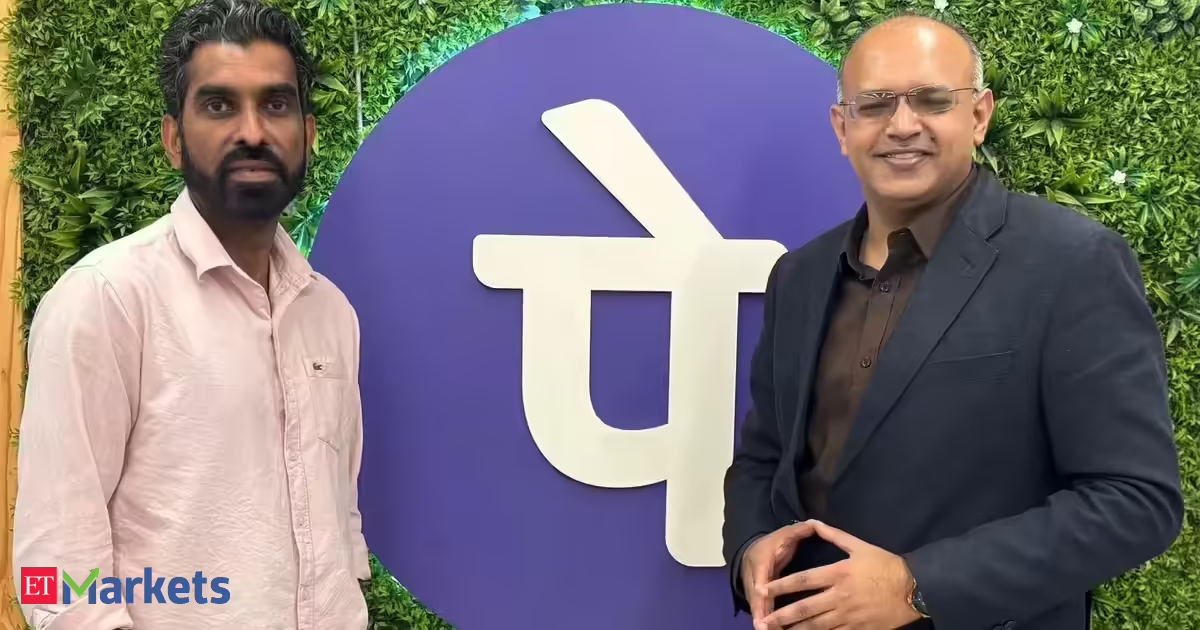
In an interaction with Kshitij Anand of ETMarkets Smart Talk, Nilesh D. Naik, Head of Investment Products at Share.Market, highlighted how the rise of ‘Bharat’—spanning tier II, tier III, and smaller towns—is reshaping the wealth management ecosystem.
With deeper digital penetration and growing participation from B30 cities, he believes this segment will be instrumental in expanding India’s investor base from around 60 million to nearly 200 million over the next decade, while also redefining how platforms approach product design, education, and investor behaviour. Edited Excerpts –
Kshitij Anand: Now that the access problem has been solved by digital apps, what specific psychological barriers are preventing retail investors from making those intelligent decisions?
Nilesh D. Naik: You are right— from an access perspective, the problem has largely been solved over the last five to six years. But one of the key challenges today is the complexity involved in starting the investing journey. And I think that is where platforms need to spend a lot of time.
For example, for people who have been investing in mutual funds, it may not be that difficult— mutual funds may come across as a very simple product.

But for a first-time investor, with thousands of products available, how do you zero down on the right one? That remains a big challenge. Going forward, you will see a lot of platforms focusing on this area in a big way.
Kshitij Anand: And how can a retail investor distinguish between a fund that is genuinely consistent and one that is simply riding a temporary market tailwind?
Nilesh D. Naik: Yes, this is an interesting question and one of the key issues that has been widely discussed in the industry. The general tendency of customers is to go by performance— they look at three-year or one-year performance and invest accordingly.
At least at PhonePe, we have tried to address this issue by not focusing too much on performance, but by highlighting the consistency of the product. When I say consistency, there are complex concepts like rolling returns and so on.
We try to simplify these, do the heavy lifting at our end, and present a simple metric that helps customers see whether the product has been consistent over the long term in relative terms, compared to other schemes in the category.
I think it is very important to shift the focus away from point-to-point returns, which are highly cyclical— not just at the market level, but even at the relative performance level. So yes, this is a key area to focus on.
Kshitij Anand: And at PhonePe, you very much believe in the Bharat story. So, how is that evolving at PhonePe and in the wealth management space?
Nilesh D. Naik: Yes, the strength of PhonePe is our distribution reach, and we have a very strong presence in tier II, tier III cities and beyond. Just to share some numbers with you—if you look at the mutual fund customers that we have, more than two-thirds of them are from B30 cities, beyond the top 30, as per the AMFI definition.
And not just from a customer perspective, but even from an AUM perspective, this is very different from the industry numbers, where it is actually the other way around, at least in terms of assets. So, the participation that we have seen is very encouraging, and it motivates us to build more for that cohort.
That is going to be the growth engine for the industry as well, in terms of moving from a 60 million customer base to, let us say, 200 million over the next decade or so.
Kshitij Anand: And let me also get your perspective on this—in a market that is prone to sudden volatility, how can platforms move beyond just providing data and actually help engineer better investor behaviour?
Nilesh D. Naik: Yes, it does not start with volatility. What you need to do is ensure that when the customer or investor is investing, at that stage itself, you offer the right kind of product mix. That will take away half the problem because when you invest in the wrong product, the volatility tends to be much higher.
A classic example today is investors who have invested in small caps. For a first-time investor, the kind of volatility experienced there is very different from someone who started with a large-cap, index, or hybrid product.
So, retaining a customer who has invested in core products is relatively easier compared to someone investing in small-cap or thematic products.
However, when such situations arise, there cannot be a single solution that addresses the entire problem. Continuous education is very important. Having the right contextual education within the app is critical. The nudges you give to customers—guiding them on how certain actions may work against them—are also very important. And of course, customers learn through experience.
No matter how much we educate them, experience cannot be replaced. The good thing is that many of these customers are in their 20s, which means over the next three to four years, if they continue investing, they will develop their own learning—and that is the best teacher.
Kshitij Anand: Staying with the Bharat story, as investors spread into tier II and tier III cities, how do we ensure that intelligence is simplified enough to be accessible to first-time investors?
Nilesh D. Naik: There are different ways to do this, but I can share what we have done at PhonePe Wealth to help customers. When it comes to shortlisting or identifying funds, there are three core parameters that we focus on.
The first is the consistency of the fund’s performance. The second is risk. And the third is whether there is a method behind that performance. By method, I mean the style of the fund manager and how the product is managed.
We have launched an interesting tool called CRISP, which stands for Consistency, Risk, and Investment Style of Portfolio. We understand that these are relatively complex concepts, so we simplify them by categorising factors such as consistency into high, medium, or low; and risk into acceptable or high levels, so that investors can make informed decisions.
Lastly, we also explain how the product is managed—whether it follows a quality, value, or momentum style—so that customers can create the right mix of funds that complement each other.
However, even with simplification, education remains critical. We are focusing a lot on educating customers about these concepts in a simple and accessible manner.
Kshitij Anand: Do you feel there is any single mistake that investors usually make when selecting a fund or investing?
Nilesh D. Naik: Two things I would highlight here. One is, of course, investing based on past performance. In fact, we have done several studies wherein, if you look at, say, the previous three-year ranking of funds in a category and compare it with the next three years—for example, 2019 to 2022 versus 2022 to 2025—and then look at the ranks, the rank correlation is actually close to zero.
This means there is absolutely no correlation between the two, which tells you that investing based on past performance does not work. However, it is a common behaviour among customers to look at returns and invest, and this is where one of the biggest mistakes comes from the customer side.
The second is the absolute lack of planning. It is like someone tells me that this is a good fund, and I invest without thinking about why I am investing or what my framework should be.
Every investor, no matter how small the investment, needs a framework that they can refer back to, especially during times when markets are highly volatile. Otherwise, you will keep debating whether to add more equity or redeem. Having a framework helps.
When I say framework, it means understanding that your investment is long term and defining the level of downside risk you can tolerate. For example, based on recent data, markets can fall by as much as 40% in a worst-case scenario.
But if, as an investor, I cannot tolerate more than a 20% downside, then I would probably allocate 50–60% to equity and the rest to fixed income products, gold, etc. Now, whenever something happens in the market, you can go back to that asset allocation framework and assess whether you are still aligned with your plan.
It is a very simple concept, and there can be many variations of it. But having a proper plan is extremely important, and this is something that is missing for most investors.
(Disclaimer: Recommendations, suggestions, views, and opinions given by experts are their own. These do not represent the views of the Economic Times)

Netflix’s Prices Are Increasing. Don’t Expect Streaming to Get Cheaper Soon.

This is the forum for daily political discussion on Seeking Alpha. A new version is published every market day.
Please don’t leave political comments on other articles or posts on the site.
The comments below are not regulated with the same rigor as the rest of the site, and this is an ‘enter at your own risk’ area as discussion can get very heated. If you can’t stand the heat… you know what they say…
More on Today’s Markets:
Moderation Guidelines:
We remove comments under the following categories:
- Personal attacks on another user account
- Anti-Vaxxer or covid related misinformation
- Stereotyping, prejudiced or racist language about individuals or the topic under discussion.
- Inciting violence messages, encouraging hate groups and political violence.
Regardless of which side of the political divide you find yourself, please be courteous and don’t direct abuse at other users.
For any issue with regards to comments please email us at : moderation@seekingalpha.com.
Seeking Alpha’s Disclosure: Past performance is no guarantee of future results. No recommendation or advice is being given as to whether any investment is suitable for a particular investor. Any views or opinions expressed above may not reflect those of Seeking Alpha as a whole. Seeking Alpha is not a licensed securities dealer, broker or US investment adviser or investment bank. Our analysts are third party authors that include both professional investors and individual investors who may not be licensed or certified by any institute or regulatory body.
Business
Effort to restore Homeland Security funding founders in Congress, Trump says will pay airport security workers
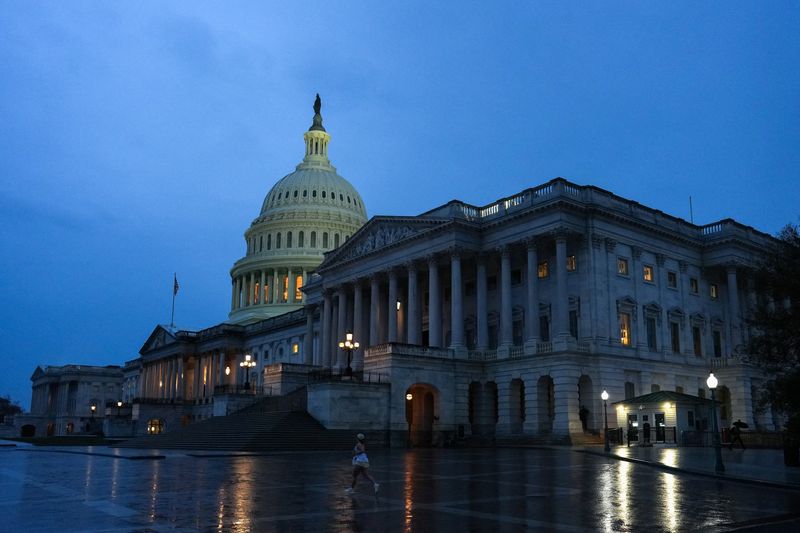

Effort to restore Homeland Security funding founders in Congress, Trump says will pay airport security workers

A List Of Worries That Risk Flipping Much Worse
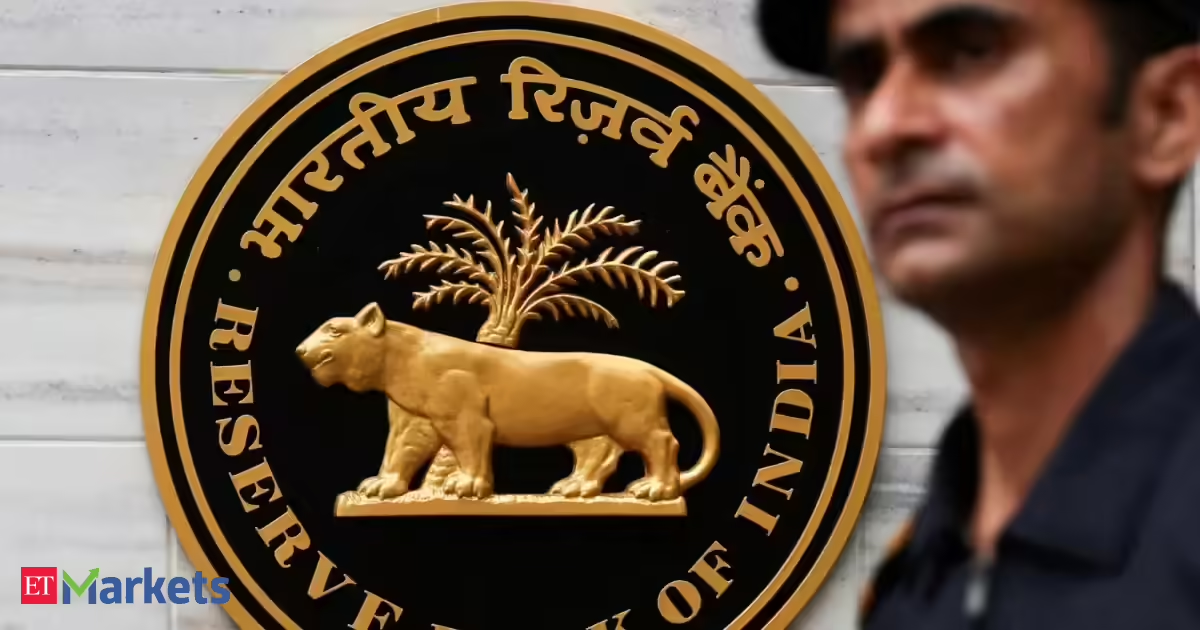
In a notification issued Friday, the central bank asked authorised dealers of foreign currency to comply with the rule by April 10. The cap will be on their open position on the onshore deliverable market.
“Traders must be long on the dollar in a large way. This regulation basically curbs speculative positions of a bank, which will in turn reduce pressure on the rupee,” said a currency trader at a private sector bank.
“This is called the overnight open position which traders are allowed to keep in respect of all currencies involving the rupee. For a large bank, these positions can usually be at around $1 billion both in onshore and offshore markets,” he said.
RBI prescribes limits for open positions involving the rupee for exchange rate management and orderly development of the market, depending on market conditions.
The rupee has depreciated 3.5% since the start of the war and nearly 10% in this fiscal year. High crude oil prices are clouding the outlook for the local unit, with traders now expecting the rupee to touch 96-97 per dollar if oil prices remain around $115 per barrel.
“It has now been decided that authorised dealers shall ensure that their NOP-INR positions in the onshore deliverable market shall be maintained within $100 million at the end of each business day,” RBI said Friday in its master direction on risk management and inter-bank dealings.

Banks led by IDBI had sought a challenge bid to NARCL’s Rs 130 crore offer earlier this month, with due diligence for prospective bidders ending on March 23.
No bidder came forward till the end of the day on March 24, the final day for bids in the Swiss challenge auction, after which banks are moving ahead with the transfer to NARCL.
The NARCL offer means a 13% recovery for banks and will be in a mix of 15% cash and the rest in security receipts to be redeemed on recovery.
Kay Bouvet is a heavy engineering company engaged in the design, engineering and manufacturing of specialised equipment for strategic industries such as nuclear energy, power, defence and space. It has two manufacturing facilities in Maharashtra and Haryana.
CaixaBank, S.A. (CAIXY) Shareholder/Analyst Call – Slideshow

Adidas: A Buy At Undemanding Valuations As Inventory Set To Normalize

The brokerage said suppliers of energy in the Nifty, including companies in coal, electricity and upstream oil, will benefit from higher realisations. Meanwhile, demand for coal and electricity is likely to increase as users shift away from oil and gas as fuel inputs.
 Agencies
Upstream oil, coal and power make up energy mix in index, which will see higher realisations
ICICI Securities said oil and gas suppliers, such as oil marketing and gas companies-the most impacted-are largely outside the Nifty and are spread across the small-cap and mid-cap segments. Energy-intensive industrials such as chemicals, fertilisers and building materials are also concentrated in the small-cap and mid-cap segments and are significantly impacted by higher crude and gas costs.
Within consumption, sectors such as aviation, autos, and consumer goods could be impacted by higher input costs, although larger companies within the Nifty can pass on costs and consolidate market share.
The brokerage said services sectors, including IT, banks and financials, which account for a large weight in the index, do not rely much on oil and gas, limiting the overall impact.

Pizza and bread products sold in 10 states under recall for possible metal shards
ETMarkets Smart Talk | Bharat investors to drive next growth wave in wealth management: Nilesh Naik

Ripple Says Stablecoins Will Drive Enterprise Crypto Adoption


-
 NewsBeat3 days ago
Manchester United reach agreement with Casemiro over contract clause amid transfer speculation
-

 News Videos2 days ago
Parliament publishes latest register of MPs’ financial interests
-

 Crypto World6 days ago
Best Crypto to Buy Now: Strategy Just Spent $1.57 Billion on Bitcoin During Fear While Early Investors Quietly Enter Pepeto for 150x Potential
-

 Crypto World6 days ago
Bitcoin Price News: Bhutan Sells $72 Million in BTC Under Fiscal Pressure, but the Smart Money Entering Pepeto Sees What the Market Does Not
-

 Sports5 days ago
Remo Stars and Kano Pillars Strengthen Survival Hopes in NPFL
-

 Sports5 days ago
Gary Kirsten Accuses Pakistan Cricket Board Of ‘Interference’, Mohsin Naqvi Responds
-

 Business6 days ago
No Winner in March 21 Drawing as Prize Rolls to $133 Million for Next
-

 Tech5 days ago
Give Your Phone a Huge (and Free) Upgrade by Switching to Another Keyboard
-

 Tech5 days ago
AI enters the chat: New Seattle dating app relies on tech to facilitate meaningful human connections
-

 News Videos5 days ago
Ch 9 Financial Management Part 1 | Detailed One Shot | Class 12 Business Studies Boards 2026
-

 Tech6 days ago
Today’s NYT Connections Hints, Answers for March 22 #1015
-

 Business1 day ago
Instagram, YouTube Found Responsible for Teen’s Mental Health Struggle in Historic Ruling
-

 Business6 days ago
Will Duke Basketball Win It All? Duke Basketball Enters Second Round as Third Favorite to Claim NCAA Title
-

 Sports5 days ago
2026 Kentucky Derby horses, odds, futures, preview, date: Expert who hit 12 Derby-Oaks Doubles enters picks
-
 NewsBeat6 days ago
Update on Wisbech river crash as search for teenage boy enters fifth day
-
 Entertainment5 days ago
Cynthia Bailey Dishes on ‘RHOA’ Season 17, Discusses Kandi
-

 Tech4 days ago
Samsung will soon let you control smart home devices from your car’s dashboard
-

 Fashion3 days ago
Does It Matter What You Wear When You’re Laid Off and Looking?
-
 NewsBeat3 days ago
Tesco is selling new Cadbury Dairy Milk bar and people can’t wait to try it
-

 NewsBeat6 hours ago
The Story hosts event on Durham’s historic registers
You must be logged in to post a comment Login