It might be darker mornings but the nights will start to be lighter
Sunday will see the clocks change as British Summer Time begins, heralding the way for brighter nights across the UK. Many have already begun to get accustomed to later daylight hours with the arrival of spring just days ago.
Advertisement
However the big change comes at 1am on Sunday, March 29, when the clocks “spring forward” pushing the daylight away from the start of the day to later in the evening. While it will mean darker mornings it will also see sunset jumping forward an hour – plus the few extra minutes it grows by naturally.
Timeanddate.com explains we gain just under four minutes of extra daylight each day in March. While the exact timings differ slightly depending on where you live, in London on March 28, the eve of British Summer Time beginning, sunrise is at 5.45am and sunset at 6.26pm, resulting in daylight lasting 12 hours, 41 minutes and 50 seconds.
On March 29, accounting for the clock change, the sun rises at 6.42am and sets at 7.28pm. This equates to 12 hours, 45 minutes and 47 seconds of daylight.
Advertisement
Meanwhile, further north in Scotland, people in Edinburgh will have about four and a half minutes more daylight each day during March. By Saturday, the day before British Summer Time, sunrise is at 5.54am with sunset at 6.42pm, meaning daylight lasts for 12 hours, 48 minutes and 37 seconds.
Following the clock change, on Sunday, sunrise will be at 6.51am with sunset at 7.44pm. This will deliver 12 hours, 53 minutes and 17 seconds of daylight.
Do we get more time in bed this weekend?
Sadly no, as the Royal Observatory Greenwich explains. It said: “Unfortunately, the clocks moving forward means that we lose an hour in bed.”
Advertisement
It added: “An easy way to remember which way the clocks change at which time of year is to remember that the clocks ‘spring forward’ in spring, and ‘fall back’ in autumn.”
The latest rugby news stories from Wales and beyond
Here are your rugby morning headlines for Saturday, March 28.
Advertisement
Taulupe Faletau suffers cruel blow
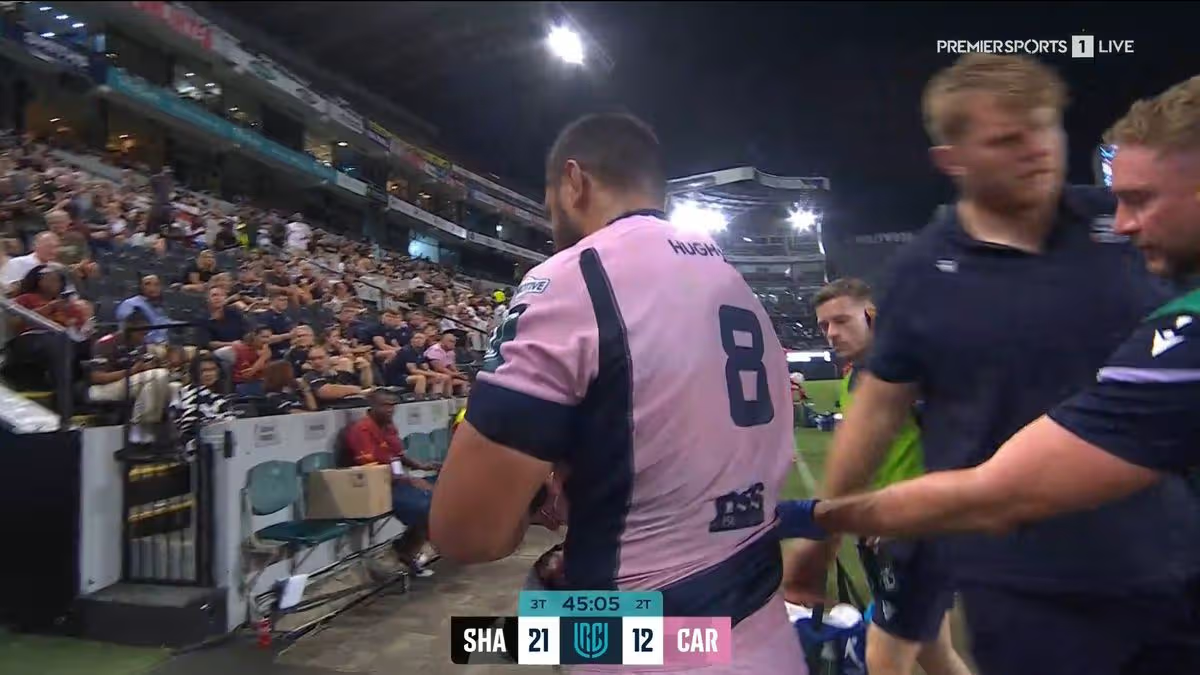
Cardiff are sweating on the fitness of Wales legend Taulupe Faletau after he was forced off with an apparent shoulder injury in their defeat to the Sharks.
The No. 8 was making his first start since New Year’s Day, having endured an injury-hit campaign. A calf problem kept him out of the Six Nations, with a knee injury preventing him from playing in the autumn.
He left the pitch in Durban using his jersey as a temporary sling for his arm – begging the question whether he will feature in Cardiff’s remaining matches this season. Faletau’s future at the Welsh region beyond this season is unclear and this could yet prove to be his last appearance for Cardiff if the worst is confirmed.
Advertisement
The Wales legend has been beset by a series of cruel injuries in recent years, particularly arm issues. He suffered a broken arm in Wales’ World Cup victory against Georgia in October 2023, before fracturing his shoulder in his comeback match six months later.
The Blue and Blacks have five guaranteed matches left, plus whatever comes in the way of further knockout matches in the United Rugby Championship and Challenge Cup.
As well as Faletau, Cardiff lost second-row Josh McNally and prop Corey Domachowski in the first-half to injury.
“It was tough to lose those players early on and that put us under pressure,” said Cardiff coach Corniel Van Zyl. “There were two actions we probably could have dealt with better and they ended up scoring twice.
Advertisement
“The pressure of those early changes meant we couldn’t bring fresh legs at the end, and that makes a difference in a tight game like that. It was close at the end, but we just came up short.”
Cardiff set for English invasion
Around 50,000 English rugby supporters are expected to take over Cardiff’s Principality Stadium today as Bristol Bears play Harlequins at the iconic rugby venue.
Bristol bring a top Gallagher Prem clash to the Wesh capital for the second year running after the success of last year’s first ‘Big Day Out’ occasion against Bath.
Louis Rees-Zammit starts for Bristol at full-back, with former Wales under-20s star Aidan Boshoff named on the wing.
Advertisement
There is also strong Welsh interest in the Harlequins team, with Jarrod Evans starting at outside-half and rising young talent Bryn Bradley at 12. The match kicks off at 3.30pm at the Principality.
A current Tonga international has been accused of scamming people out of money through the sale of match-worn jerseys.
Tau Koloamatangi, who has played for Waikato, Otago and Super Rugby outfit Moana Pasifika, has been accused of taking payment for the sale of jerseys before ceasing any contact with buyers. The former New Zealand U20s international has reportedly been listing jerseys for sale through social media and online marketplace websites.
He is then alleged to have blocked some buyers after receiving payment, as revealed by an investigation by the New Zealand Herald.
Advertisement
The majority of the jerseys are understood to be from Tests he has played in. The paper also claim he has allegedly taken old listings and pretended they were his.
The Herald said they had spoken to multiple people who feel helpless after not receiving the jersey they paid for, leaving them thousands of NZ dollars out of pocket.
One person they interviewed had paid NZ$1650 – around £714 – for an All Blacks jersey they did not receive, while another said they had paid NZ$2250 – roughly £974 – for a 2023 World Cup Springbok jersey that did not arrive.
The Herald did say they had tried to reach Kolomatangi without any success, although he has reached out to alleged victims – providing at least one with a refund.
Advertisement
Gloucester looking for final piece after Morgan and Lake signings
Gloucester head coach George Skivington admits a loosehead is the final position the Gallagher Prem club need to strengthen, having already signed Wales captains Dewi Lake and Jac Morgan for next season.
The Ospreys pair will head to the Kingsholm club later this year amid ongoing uncertainty in Welsh rugby. The Cherry and Whites are on the lookout for a prop, having missed out on Scotland international Jamie Bhatti.
The Glasgow loosehead will instead join Bath – with Skivington having to move on to other targets.
“There’s one position we’re working away on still,” he said this week. “I thought we were done, but that one is just dragging on a little bit, so that could still take a few twists and turns, but we’re only one position away from being done now,”
Traditionally we eat spring onions raw with bread and feta cheese as staple fare of the Persian table. Grilling them mellows out the oniony flavour, and intense charring works beautifully with the sweetness of cooked onion flesh. Chargrilling them on a barbecue is ideal, but you can also cook them easily on the hob in a griddle pan.
MP Charlotte Nichols recently took the brave step to speak publicly about her rape trial experiences in parliament. Nichols endured a 1,088-day wait for her case to reach court. This experience led her to speak out, in a debate over the government’s plan to cut jury trials in England and Wales. Arguing that the proposals would only minimally reduce wait times, she called instead for the creation of special courts to hear rape cases.
Later, in an in-depth Guardian interview, Nichols disclosed that it took her 48 hours to mentally accept that what had happened to her was rape. This delay was used against her in court to undermine her credibility as a witness. Her case ended with a jury unanimously acquitting the man she accused of raping her. But this line of enquiry was based on outdated stereotypes of what “real” rape looks like.
Delayed realisation, when someone does not immediately name that what happened to them was rape, is extremely common. Most people imagine rape as an obvious crime: a stranger attack, force, threats or immediate fear. But the reality looks very different for many victims.
Back in 1988, Liz Kelly, a professor of sexualised violence, reported that around 60% of women she spoke to could not name assaults when they happened. More recent studies, including research led by criminologist Jennifer Brown, and my own research with disabled victims of sexual violence, continue to show this pattern.
Advertisement
Nichols disclosed that she had consensual “vanilla sex” during a one-night stand with a man: “We did have a really fun night actually where I was fully up for it.” This made what happened later that night harder to comprehend. She woke up to find him having sex with her again, biting her back, breasts and thighs.
Being betrayed in this way by someone you trusted and had positive feelings for can cause disassociation and shock. Nichols described feeling “outside my own body” and on “autopilot” in the hours after being raped. Many victims cope by rationalising or minimising what has happened. One of my respondents told herself: “No, it wasn’t that bad, it was all okay.”
Victims may use humour or detachment as coping strategies. Nichols did this when she sent her friend a joking text message the morning after the rape. Although the correspondence with this friend included later messages where she gradually began to acknowledge that what happened wasn’t right, this initial text message was used against her in the trial.
Many victims have internalised rape myths: widely-held attitudes about how rape happens that are generally false. These beliefs may hinder them from naming their experiences.
Advertisement
Although delayed realisation can happen to anyone, it is important to acknowledge that disabled women in our research faced additional barriers. Some had limited access to sex education. Some grew up being treated as childlike or passive, and others had been repeatedly disbelieved by professionals when they tried to report more mundane instances of maltreatment. These conditions make it even harder to understand or dare to name sexual violence.
How delayed realisation is used against victims
The criminal justice system often treats delayed realisation as suspicious. Nichols’ delayed realisation and outwardly calm behaviour in the immediate aftermath were presented as proof that the sex must have been consensual.
The emotional scars caused by rape led Nichols to developed post-traumatic stress disorder (PTSD). Emily Hunt, a former government rape adviser, claimed that 50% of sexual violence victims develop PTSD. On this ground alone, a large proportion of rape victims could be considered disabled and entitled to additional protections under the Equality Act.
Instead, rape victims’ trauma survival strategies, such as the “fawn response” – disassociation and masking one’s distress, as Nichols described – are exposed in court as evidence to undermine their credibility.
Advertisement
In my research this was especially common among neurodivergent women, who are generally well-versed at masking (mimicking neurotypical traits to fit into social situations).
Some respondents felt discriminated against because they expressed trauma differently from how they were expected to, for example by laughing when recalling uncomfortable events. Others were told they were “over-emotional” or “not emotional enough”. Several women said that their criminal justice experience made them feel that they were not the “right kind of victim”.
The current legal definition of rape requires that the perpetrator did “not reasonably believe” that the victim consented. Consequently, when Nichols’ case went to court, she was made to feel that she was on trial. The focus was on dissecting her behaviour in the aftermath of the rape to establish whether she had consented.
Advertisement
For most victims I spoke to, their cases were discontinued before they even reached court. Delayed realisation was routinely used to argue that it was not possible to “reasonably believe” that the victim had not consented.
The UK government’s ambition to increase rape convictions as part of the violence against women and girls strategy is commendable. However, low conviction rates will continue unless the law and how it is implemented are changed to reflect the reality that delayed realisation is a common trauma response for many rape victims.
Nichols’ courage in speaking publicly could open a national conversation about normalising delayed realisation. Her frank account is powerful, because it directly challenges many common rape myths, while highlighting how the presence of these views in the courtroom led to her feeling – and ultimately being – disbelieved.
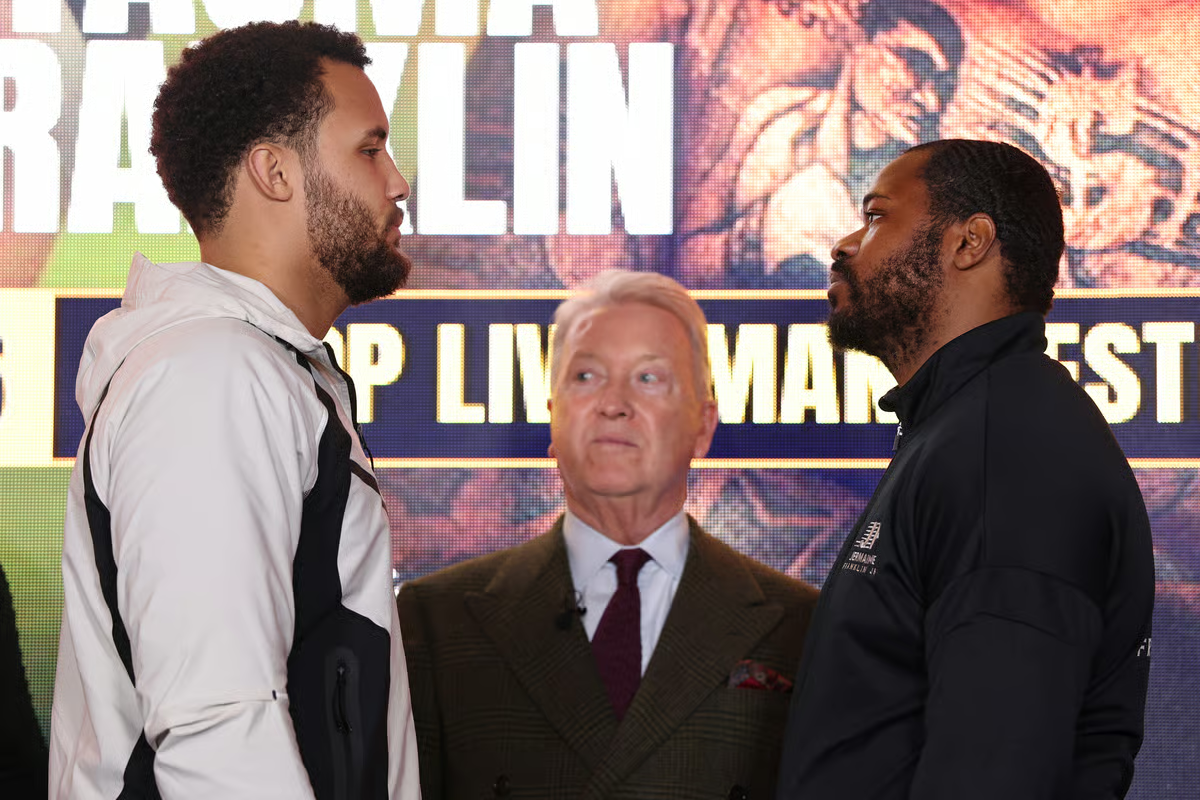
Frank Warren and Queensberry’s delayed Magnificent 7 card takes centre stage at the Co-op Live, two months after the show was originally supposed to take place.
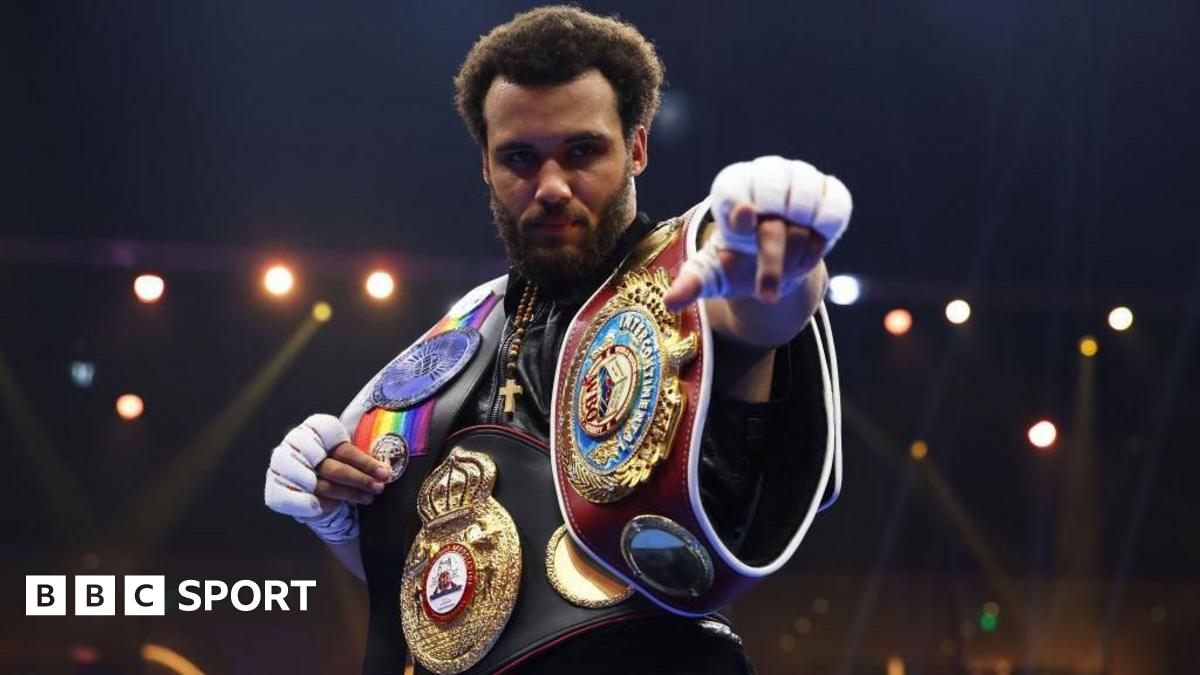
Itauma is now recovered from a biceps tear sustained in training that forced that postponement and ready to take the next step in his ascending heavyweight career against what, on paper at least, should be his toughest opponent to date.
The 21-year-old is one of the biggest young stars anywhere in the sport and being tipped for a huge future that will surely include world title glory sooner rather than later, having delivered a number of destructive early knockouts to develop a fearsome reputation.
Advertisement
The American has never previously been stopped and gave a good account of himself in his only two professional losses to date, which came on points in successive outings in London against Whyte and Anthony Joshua – since when he has bounced back with a three-fight winning streak, albeit against lower opposition.
How to watch Itauma vs Franklin
TV channel and live stream: Itauma vs Franklin is being shown live in the UK through DAZN and is part of their regular subscription service, rather than on pay-per-view.
The undercard starts at 5pm GMT, with the main event expected at approximately 11pm.
Advertisement
Live blog: Standard Sport’s live fight blog will keep you fully up to date on how events unfold across the night.
Itauma’s professional journey has been brief but brutal. He has boxed just 26 rounds in his pro career – and many of those were cut short.
He demolished Marcel Bode in just 23 seconds on his debut in January 2023 at Wembley Arena. But just like the Whyte fight, the early ending brought little joy.
“I didn’t care,” he reflects. “My brother suffered his first loss, literally a couple of minutes before. To be honest, I didn’t even want to fight that day.”
Family is the core of the Itauma story. His brother, light-heavyweight Karol Itauma, sits behind the cameras during fight week duties. The bond was forged through a 1,050-mile journey from Kezmarok, beneath Slovakia’s Tatra Mountain, to Chatham in Kent.
Advertisement
Born to a Slovak mother and Nigerian father, their early years were defined by racism and a search for a place to belong.
“Me and my brothers, we don’t look very Slovak, and that kind of limited opportunities that we can have in that country,” says Itauma.
“My mum was like, they’re probably going to have more opportunities and a better upbringing if they move to a country where people of mixed-race backgrounds are more common.”
Those sacrifices influenced every decision that followed. Itauma started boxing at nine, but it wasn’t until 14 that he decided to take it seriously.
Advertisement
“My mum sacrificed a lot coming over to the UK,” he says. “I need to kind of make it. So, yeah, it’s difficult, but I’m happy that my mum made the decisions and obviously I’m following through.”
That “family first” mentality is why he snubbed the Olympic route with Team GB to sign with Frank Warren’s Queensberry Promotions.
“The short and sweet of it was that my family needed the money,” he adds.
WARNING GRAPHIC CONTENT: Maria is accused of murdering her husband after years of domestic violence, telling police “it was the only option”
Emilia Randall GAU Writer
07:00, 28 Mar 2026
A 48-year-old woman is alleged to have attacked her husband following his night shift, beheading him and feeding his genitals to their dogs after enduring years of domestic abuse.
The horrifying incident is said to have unfolded when Maria, a Ukrainian woman, encountered her husband Oleksandr arriving home in the early hours after work on August 23, 2019.
Advertisement
She stands accused of strangling him with her bare hands. Maria was reportedly “covered in blood” according to eyewitnesses.
Police revealed the incident followed a prolonged period of physical abuse from her husband. Officers said she informed them she “was suffering domestic violence for ages and murdered her husband to put an end to it and that it was the only way out”.
Maria is alleged to have initially strangled her husband before beheading him by severing his head with an axe. She is then alleged to have seized a knife from the kitchen, removed his genitals and fed them to her pet dogs.
Maria is then accused of attempting to dismember the victim’s body but failed and fled into the street covered in blood.
Speaking to local media, Nadezhda Opanasiuk, a neighbour who encountered the accused on the street, said she couldn’t believe what Maria was telling her until she witnessed the horrific scene and she confessed to having her husband’s head in a sack.
Opanasiuk said: “Her hands, feet and clothes were in blood. She said, ‘I am in trouble. I’ve killed my husband.’ I did not believe her. I thought they had a quarrel and she might have hit him. I went to see if he needed medical help.
“When I walked into the room, I saw his mutilated body. The bedsheets were soaked with blood. I asked her, ‘Where’s his head?’, and she replied, ‘there, in the sack.’”
Advertisement
Opanasiuk raised the alarm with neighbours, who immediately contacted police. Officers arrived at the property and arrested Maria following her admission to the killing.
Police spokesman Vadim Artiukhovich verified the incident, stating: “The suspect confessed in full at the scene. She was charged with murder and taken into custody.”
He added: “The woman said that she was constantly suffering physical and emotional abuse and did not see any other option to end her misery.
“Neighbors say they, in fact, saw the husband beating her up and chasing her with an axe a lot of times. However, the woman has never reported the incidents.”
Advertisement
Yet Maria’s son Viktor Fesianov remains unable to pardon her actions. “I know she is my mother. But I do not want to see her any more,” he informed local media.
Ditch disposable period products for good with this comfortable and reliable underwear (Picture: WUKA/Metro)
Metro journalists select and curate the products that feature on our site. If you make a purchase via links on this page we will earn commission – learn more
Did you know that the UK throws away 4 billion disposable period products every year, totalling roughly 200,000 tonnes of waste?
It’s really no wonder so many people are choosing to do away with disposable period products altogether and opt for something not just better for the Earth, but for their bodies, too.
Designed to help you ditch disposable period products in favour of comfort, sustainability and protection, WUKA’s world’s first period pants really work, helping you replace single use with reusable, leak-proof and plastic-free protection.
And now to celebrate Earth Hour, the brand are offering an unmissable one hour only deal to help you save on your next period pant purchase.
Between 8.30pm and 9.30pm today, March 28th, you can slash 50% off the WUKA Ultimate Collection and 30% off the WUKA Stretch™ Range. But yes, this is just an hour-long deal, so it’s one you’ll want to set your calendar reminders for.
Helping you do away with pads and tampons, WUKA pants offer a number of different absorbencies to suit you and your period, with the most absorbent holding over 20ml of blood – about four tampons or three pads’ worth.
Advertisement
This is all thanks to the built-in absorbent and odour-proof gusset that tackles everything from light to heavy flows, providing reliable protection that keeps you comfortable and confident throughout the day.
With one pair designed to replace 200 disposable products going into landfill, there’s a good reason women are ditching their archaic period practises and opting for WUKA instead.
Take your pick from an array of different colours, designs and styles (Picture: WUKA)
Designed to be as comfortable as they are practical, the underwear features the brand’s trusted Stretch™ Technology, engineered to retain its stretch and expand up to four sizes, moulding comfortably to all body shapes and ensuring a smooth, seamless, first-time fit.
This means that despite there only being two sizes – Size 1 (XS – L) and Size 2 (XL – 3XL) – you’ve got a comfortable and functional fit that keeps up with you.
No leaks, no exceptions.
Advertisement
Better still, the buttery-soft microfibre pants feel amazing on the skin, boasting a seamless finish that gives an invisible, second skin look and feel, with no VPLs even under tight clothing.
The lightweight yet absorbent pants are hypoallergenic, breathable and free from added chemicals and silver treatments (Picture: WUKA)
The lightweight yet absorbent pants are also hypoallergenic, breathable and free from added chemicals and silver treatments, so, unlike with disposable period products, you don’t have to worry about any nasties getting into your body.
And arguably the best bit? The brand has a huge array of colours and designs to pick from – whether you prefer a thong or full brief, bright patterns or plain hues. You can even personalise your absorbency!
Be sure to snap up your own to try today in the WUKA Earth Hour sale. Between 8.30pm and 9.30pm on March 28th, you can slash 50% off the WUKA Ultimate Collection and 30% off the WUKA Stretch™ Range.
TRY Talking was set up in 2024 by Jon Hurst, aiming to break the stigma around men speaking about their mental wellbeing.
The group has grown in the time since, going from four members to over 30 regular members each week, playing games of tag rugby and gaining a chance to relax and have a laugh.
Now, TRY Talking will be playing a match in aid of Bolton Manbassadors against charity rugby team Fat Monkey.
Jon, aged 46, said: “The lads have been keen, because it has been going for a while now, so we decided to set up a game to raise awareness of what we are doing.
Advertisement
A rugby group will be holding a match for charity (Image: TRY Talking)
“Lots of them support the idea of what we are doing to promote mental health, and are keen to get us out there and show off our skills.
“We have lots of lads who had never touched a rugby ball when they came down, one lad had never done so but now is one of the first picks for the Westhoughton Lions Masters team.”
The match will take place at the Westhoughton Lions’ ground on Cunningham Road in Westhoughton from 6pm on April 10.
There will be fundraising in the club, including bingo, with food and drink being available.
Jon added: “The success of it has been the belief from the lads that what we are doing is a good thing, and needed in the community.
“We found at the beginning that it was tough to get going, men’s mental health is a tough subject for people and lots weren’t sure whether they would have to come down and talk about their problems.
“But then I didn’t push the mental health side of it, instead focusing on the camaraderie, a chance for a social session and somewhere to have a laugh and relax.
Advertisement
“Then organically, the lads on the Whatsapp group ended up supporting each other and talking about their issues.”
He added a thank you to Bluegyp Ceilings and Partitions for their financial support with TRY Talking.
THE recent social media trial regarding children being sucked into social websites to their detrimental welfare has been highlighted in the news recently.
It has been likened to the “tobacco moment ” of the past where harmful products were airbrushed away as healthy and safe.
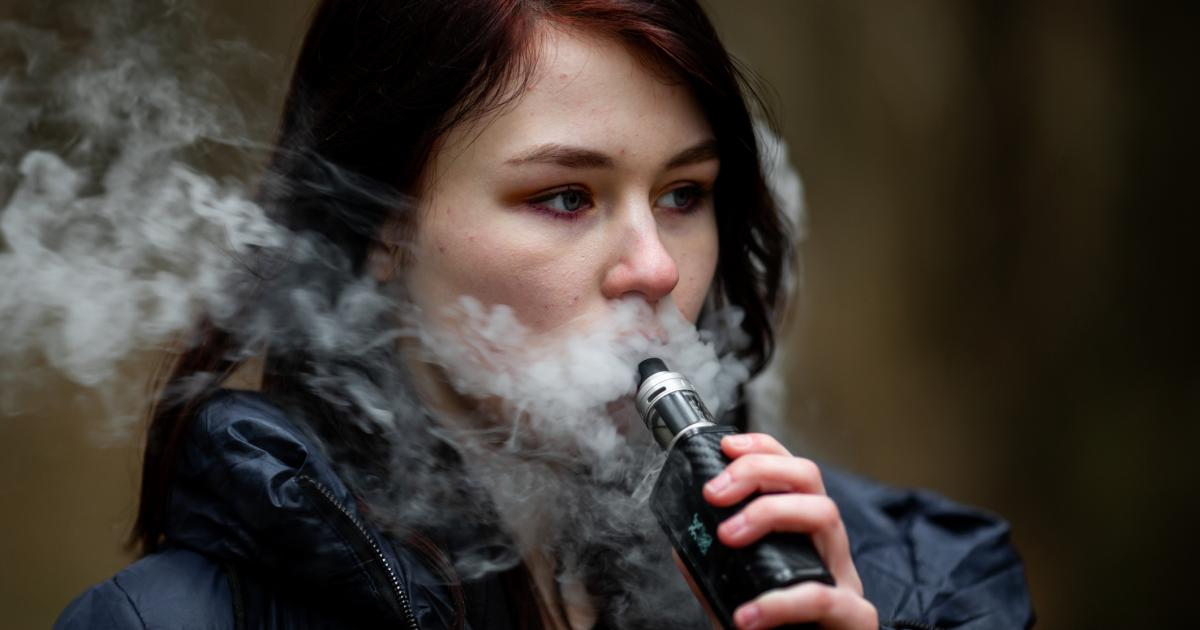
Today my worry is the same regarding vapes (which many people consider to be OK to use and with no health risk).
Advertisement
Puffing nicotine into the lungs seems madness to me but we consume alcohol with the same bravado!
Do we have a knowledgeable doctor for advice?
Put simply – if it’s enjoyable then it appears to be bad for you so moderation in most things is the answer!
Phil Shepherdson,
Advertisement
Woodthorpe,
York
—
Is this the reason we have no upgrade for A64?
Advertisement
ONCE again an upgrade of the A64 York to Scarborough road has been put on the back burner, could the reason for this be because the road passes through no Labour-held parliamentary seat?
Peter Rickaby,
Moat Way,
Brayton,
Advertisement
North Yorkshire
—
Don’t feed other people’s pets without permission
WALKING down Aldwark in York (Aldwark the old English for “old wall” referring to the old Roman city wall that runs parallel to Aldwark), I had a chat to a lady out walking a dog.
Advertisement
After the conversation I asked if it was ok to give the animal a dog treat.
She asked to see the treat before I gave it to the animal.
After showing the small bone-shaped biscuit she explained that someone had given her daughter’s dog a piece of fruit cake and they had to rush the animal to the vets, resulting in a £400 bill for the emergency procedure.
So the message is clear – don’t feed other people’s pets without permission, and certainly don’t give dogs anything with grapes/raisins, chocolate, alcohol, sweets and nuts (particularly macadamia nuts).
Advertisement
It’s dangerous for them and can potentially be fatal.
D M Deamer,
Penleys Grove Street,
Monkgate,
Advertisement
York
What do you think?
Feel strongly about an issue? Write us a letter. Please write no more than 250 words and you must provide your full name, address and mobile number. Send your views by email to: letters@thepress.co.uk
Advertisement
Write a comment
Join the debate and leave a comment in our comments section below this article – we may use your comments for a follow up article.
Lagos taxi driver Adegbola Isaac went to the gas station twice last weekend. Each time, the price in the Nigerian city had climbed further and hit 1,350 naira ($0.99) per liter, a nearly 35% increase since the Iran war started. That’s wiped out most of his daily profit.
“It is hitting hard,” Isaac told The Associated Press.
Like many people across the world, Isaac is one of millions across Africa who are reeling from the economic impacts of the faraway conflict in the Middle East, which began Feb. 28 with joint U.S.-Israeli strikes on Iran.
For many Africans, the fuel price hike because of the Strait of Hormuz being largely closed off worsens the hardships they already struggle with in some of the world’s poorest households.
Advertisement
The latest shock also isn’t isolated.
Africa is hurting again from another global crisis it had no part in starting.
From the COVID-19 pandemic to the war in Ukraine and now the Middle East conflict, the world’s fastest-growing continent — with a population rivaling China and India — is at the painful end of ripple effects that include a global scramble for critical resources like fuel and fertilizer.
With the majority of African countries being net importers of refined oil products, the impact has been swift, leading to rising retail fuel prices in Africa and associated increases in the costs of most goods and services.
Advertisement
Experts say African countries are critically integrated into global economies and are exposed to global shocks because of their dependence on major economies.
The United Nations on Friday said it is pursuing a way to allow fertilizer to resume safe transit through the Strait of Hormuz, hoping it would build confidence in wider diplomatic efforts around the Iran war.
Africa is the epicenter of crises
According to a 2025 report by U.N. Trade and Development, or UNCTAD, which describes Africa as “the epicenter of overlapping global crises,” more than half of the continent’s imports and exports are with five non-African countries.
Advertisement
All of Kenya’s fuel comes from the Middle East, particularly from the United Arab Emirates, with its fuel retailers saying 20% of the country’s outlets are already affected. Uganda’s fuel stock was initially projected to last a few weeks.
South Africa sources a significant amount of its fuel from Saudi Arabia. Nigeria, Africa’s largest oil producer, lacks local refinery capacity and relies on importing refined crude products from Europe.
Adapting to higher prices
In Zimbabwe, health labor workers protested in favor of an increase in wages as the cost of living rose sharply. In response, the government plans to increase the blending of fuel with ethanol, from the current 5% to 20% ethanol blending. The blend poses a danger to cars, and a higher blend contributes to the emission of pollutants.
Advertisement
“I now avoid going into town during peak hours because the fares are too high,” said Washington Nyakarize, an informal cellphone trader who works in Harare’s Central Business District. “If I go later, the charge is a bit lower, but I lose business, because most customers come early in the morning.”
After South Africa’s fuel supplies from Saudi Arabia dropped, diesel-dependent industries started to panic-buy, fearing the worst. That is despite the Department of Mineral and Petroleum Resources, or DMPR, saying the country still has untapped strategic reserves and diversified supply routes.
War is likely to impact more than fuel
Access to fertilizer across Africa, including conflict-wracked countries like Sudan and Somalia, is set to be impacted, according to UNCTAD.
Advertisement
Kenya’s flower industry also has reported weekly losses of up to $1.4 million since the Iran war began, with growers attributing the losses to a decline in demand and shipping disruptions.
Experts say the war could further put Africa in uncharted territory if it lasts longer.
“If the conflict persists for another month or two, honestly, we’re going to be in unknown terrain, that no one else, like, no one can really predict, and we just have to wait and see,” said Zainab Usman, a senior research scholar at the New York-based Center on Global Energy Policy.
Governments scramble for alternatives
Advertisement
With the global squeeze in oil supply, African governments have begun to look for alternative routes for supplies.
Bloomberg reported this week that several countries including South Africa, Kenya and Ghana have reached out to Nigeria’s Dangote Refinery for fuel deals.
While it regularly exports jet fuel used in aircraft to the U.S. and Asia, the Dangote refinery this week announced that it completed the sale of 12 shipments of refined petroleum products to several African countries, including Ivory Coast, Cameroon, Tanzania, Ghana and Togo, a first at that scale since reaching full capacity earlier this year.
Energy experts say the Dangote refinery could be challenged in meeting growing demands for its products if its planned expansion is slowed down or if there are disruptions to its crude oil supply.
Advertisement
“As long as there is a steady supply of crude oil, the (Dangote) refinery has the capacity to meet some of the needs” from across the continent, according to Olufola Wusu, a Lagos-based oil and gas expert who was part of a team that helped review Nigeria’s national gas policy.
___
Michelle Gumede and Mogomotsi Magome in Johannesburg, South Africa, and Farai Mutsaka in Harare, Zimbabwe, contributed to this report.



















































You must be logged in to post a comment Login