
Crypto World
Bitcoin, ETH, Nasdaq Selloff Aligns With $38K BTC Setup


TLDR:
- BTC lost 67K support and confirmed a bear flag continuation with $49K as the first clean downside target.
- Stablecoin dominance breakout above 75.67 could strengthen the path toward the projected $38K BTC zone.
- ETH dropped 9.32% in two days as downside technical structure opened a potential move toward $1,000.
- Nasdaq, VIX, DXY, and crypto all flashed aligned breakdown signals across correlated risk markets.
Bitcoin slipped below the closely watched $67,000 pivot low before rebounding from $65,618, reviving a bearish chart structure that now points to deeper downside.
The move coincided with renewed weakness across Ethereum, altcoins, and major equity futures, tightening correlations between crypto and traditional risk assets.
Stablecoin dominance and volatility indicators also strengthened, reinforcing defensive positioning across the market. The latest technical breakdown now places $49,000 and $38,555 as the next major Bitcoin price levels in focus.
Bitcoin Price Bear Flag Breakdown Revives $38K Target
The latest market update shared by Aaron Dishner, known online as MooninPapa, outlined a clean bear flag continuation after BTC lost the 67K pivot.
According to the posted chart levels, Bitcoin’s first downside objective now sits at $49,000. The larger measured move extends to $38,555.
The move mirrors the same 38.73% decline structure tracked from the March 17 local high. Momentum indicators continue to align with that bearish setup.
Relative strength index data printed a lower local low, which kept downside momentum intact rather than signaling reversal conditions.
On-balance volume also crossed below its moving average, adding another layer of confirmation to the BTC price weakness.
Ethereum tracked the broader decline and fell 9.32% over the past two days, based on the same market breakdown. The reported structure now places $1,000 as a possible support zone.
Stablecoin dominance, combining USDT.D and USDC.D, broke above its bull flag formation in the same dataset. The February 24 high at 75.67 now acts as a critical trigger level.
If stablecoin dominance clears that level, the signal historically aligns with deeper crypto capitulation, placing the $38,000 Bitcoin zone in focus.
Crypto Market Selloff Spreads to Altcoins, Stocks, and Commodities
The broader crypto market structure also weakened as TOTALES, TOTALE50, and TOTALE100 all broke key support zones.
Those indices failed to produce any TBO reset, while RSI continued making lower lows across the tracked timeframes.
Among large-cap altcoins, XRP showed weakness near TBO support, with the referenced fair value gap beginning near $0.50.
Solana also rejected from a bear flag pattern, keeping the $30 target active in the shared technical map.
Several tokens, including AAVE, NEAR, VET, ETHFi, TWT, and EIGEN, printed TBO breakdown clusters in the same update.
Outside crypto, the U.S. dollar index broke short-term resistance in a bull flag structure on Friday, extending pressure on risk markets.
That move pushed USDJPY to 160.247, its highest level in two years, according to the provided macro data.
The VIX closed at 31.04, above Monday’s high, while S&P futures and Nasdaq both printed fresh TBO breakdowns.
Gold and silver diverged from the broader weakness, with both metals holding support after confirmed RSI resets in the same market snapshot.


TLDR:
- Senator Warren sent a formal letter to Commerce Secretary Lutnick seeking Bitmain-related national security documents.
- Federal probe “Operation Red Sunset” examined whether Bitmain rigs could spy on or sabotage the US power grid.
- American Bitcoin Corp., backed by Eric and Donald Trump Jr., purchased 16,000 Bitmain rigs for $314 million.
- Warren urged Commerce to prevent politically connected crypto firms from influencing national security decisions.
Senator Elizabeth Warren has raised concerns about Bitmain Technologies, a Chinese Bitcoin mining company, amid a federal investigation into potential national security threats.
She sent a formal letter to Commerce Secretary Howard Lutnick requesting documents on the matter. Warren also sought clarity on any communications between Bitmain, the Trump family, and the Commerce Department.
Warren Targets Bitmain Over Federal Security Investigation
The Massachusetts senator’s letter came after Bloomberg News reported a federal probe called “Operation Red Sunset.” The investigation started under the Biden administration and focused on Bitmain’s hardware.
Authorities sought to determine whether the machines could be used for spying. There were also concerns about possible sabotage of the American power grid.
The current status of Operation Red Sunset remains unclear to the public. National security investigations can run for years without any public legal proceedings.
The Department of Homeland Security, which led the probe, did not respond to comment requests. Bitmain also declined to respond to the latest inquiries.
Bitmain previously denied the allegations, calling the reports “seriously inconsistent with the facts and constitute false news.”
The company maintained that it “strictly complies with US and applicable laws and regulations and has never engaged in activities that pose risks to US national security.” Those statements were made in response to the Bloomberg News report last year.
A May 2024 federal review had already flagged concerns about a Bitmain-operated site near a US military base, noting “significant national security concerns.”
A Senate Intelligence Committee report from July also named Bitmain’s devices as presenting “several disturbing vulnerabilities” to the US.
The report stated those devices could potentially be manipulated from China. These findings added weight to Warren’s request for answers.
Trump Family Ties to Bitmain Draw Scrutiny
Among Bitmain’s notable clients is American Bitcoin Corp., a firm connected to the Trump family. Eric Trump and Donald Trump Jr. are both investors in American Bitcoin.
The company signed a contract to acquire 16,000 Bitmain rigs for $314 million last year. That deal drew attention given the ongoing federal interest in Bitmain.
A spokesman for American Bitcoin said the company had conducted extensive security tests on Bitmain’s devices. The tests found no vulnerabilities allowing remote access.
The spokesman stated the company believes that when Bitmain’s devices “are deployed within modern industrial security standards, they do not present a credible risk to the United States power grid or to national security.” American Bitcoin did not respond to the most recent requests for comment.
Warren’s letter asked Commerce to clarify what actions it has taken to prevent conflicts of interest. She specifically asked about steps taken to “insulate the Commerce Department’s national security decisions from the influence of firms that have business ties to the Trump family.”
Commerce holds authority to investigate foreign threats to information and communications technology. However, Democrats remain in the Senate minority and cannot compel a formal response.
Warren made her position clear, writing that “we must ensure that politically connected crypto interests do not receive special treatment and undermine our national security.” The Commerce Department had not responded to comment requests at the time of publication.
TLDR:
- Pakistan delivered Washington’s 15-point peace plan to Iran on the same day Chinese warships docked in Karachi.
- Gwadar Port, operated by China under a 40-year lease, sits 400 km from Hormuz and bypasses the blocked strait entirely.
- Hormuz traffic has collapsed over 90 percent, with Iran collecting yuan tolls and drafting laws to make them permanent.
- Pakistan owes China over $30 billion and sources 81 percent of its arms from Beijing while holding U.S. ally status.
Pakistan finds itself at the center of a growing geopolitical puzzle as the Strait of Hormuz crisis deepens. The country is actively mediating between the United States and Iran while simultaneously hosting China’s most strategic maritime bypass.
Analysts are now watching Islamabad closely. Pakistan holds Major Non-NATO Ally status with Washington, owes Beijing over $30 billion, and operates a port that becomes more valuable the longer Hormuz stays closed.
Pakistan’s Dual Role in the Hormuz Standoff
Traffic through the Strait of Hormuz has collapsed by over 90 percent. Iran is currently collecting yuan-denominated tolls from Chinese-linked vessels passing through the strait. Bloomberg reports that Iran’s parliament is drafting legislation to make these tolls permanent.
On March 25, Pakistan delivered a 15-point American peace plan to Tehran. Special Envoy Steve Witkoff confirmed this at a Cabinet meeting, describing the mediation channel as “strong and positive.” Prime Minister Shehbaz Sharif has also offered to host direct face-to-face talks between the parties.
On the very same day, PLA Navy Ship Daqing docked in Karachi. The vessel is participating in Sea Guardian IV, joint naval drills with Pakistan running through April 2. These exercises are taking place in the Arabian Sea, the same waters where Gwadar Port operates.
Analyst Shanaka Anslem Perera noted the timing on social media: “Pakistan is the only country on earth that profits from both outcomes of this war.” This observation has since circulated widely among geopolitical observers.
Pakistan receives 81 percent of its arms from China, according to SIPRI data. That dependency, combined with its American alliance and active mediation role, places Islamabad in a structurally unique position during this crisis.
Gwadar Port and the CPEC Bypass Corridor
Gwadar Port sits approximately 400 kilometers from the Strait of Hormuz on the Balochistan coast. China Overseas Port Holding Company operates it under a 40-year lease. It serves as the southwestern terminal of the $62 billion China-Pakistan Economic Corridor.
CPEC connects the Arabian Sea directly to China’s Xinjiang region through 3,000 kilometers of roads, railways, and pipelines.
According to CPEC planning documents, this route cuts China’s Middle Eastern energy import distance from 12,000 kilometers by sea to roughly 2,500 kilometers overland.
Every barrel of oil that cannot pass through Hormuz strengthens the economic argument for routing energy through CPEC instead. A permanent Iranian toll regime at the strait would further accelerate Chinese investment in this overland alternative.
Iran’s fifth ceasefire condition currently demands permanent sovereignty over the Strait of Hormuz. If any version of that condition is accepted, the yuan toll system could gain international legitimacy. China stands to benefit most from that outcome.
The Sea Guardian drills conclude on April 2. The Trump administration’s diplomatic deadline falls on April 6. That four-day gap separates the end of Chinese military exercises in Pakistan’s waters from a moment when the largest American military buildup since 2003 either acts or withdraws. Pakistan’s position between these two timelines is not coincidental.


Bitcoin (BTC) extended its decline on Friday as traders reacted to the year’s largest options expiry and continued caution in crypto ETF flows.
Summary
- Bitcoin fell below $66,000 after $14 billion in options expired and ETF outflows persisted Friday.
- Whale and retail wallets added Bitcoin in March even as price dropped and sentiment weakened.
- Analyst XO said a drop toward $55,000 to $60,000 could set up longs in April.
Consequently, the drop pushed the asset to its lowest level in more than three weeks, even as some market signals pointed to rising accumulation and possible oversold conditions.
Bitcoin fell to as low as $65,500 on Friday, its weakest level since March 2. At the time of writing, BTC traded near $66,300, down 2% over 24 hours and 6% over the past week (per CoinGecko’s data).
Meanwhile, the move came as roughly $14 billion in Bitcoin options expired, based on open interest. That expiry added pressure to an already cautious market and pushed traders toward a more defensive stance during the session.
ETF activity also remained in focus as investors continued pulling funds from spot Bitcoin products. Data showed that investors withdrew $171 million from spot ETFs on Thursday, adding to short-term pressure on price action.
Still, the broader monthly picture looked more balanced. March recorded about $1.4 billion in net inflows into Bitcoin ETFs after four straight months of net outflows, showing that demand had not fully disappeared despite the latest setback.
While price remained under pressure, on-chain data pointed to continued buying from large holders and smaller wallets. According to Santiment, wallets holding between 10 and 10,000 BTC added 61,568 BTC over the past month, a 0.45% increase.
Smaller holders also showed similar behavior. Wallets with less than 0.01 BTC increased their balances by 0.42% over the same period, nearly matching the pace seen among whales and sharks.
Analysts watch for oversold bounce
Market watchers also pointed to oversold signals as Bitcoin traded well below its October 2025 all-time high above $126,000. Current pricing left BTC down 47.42% from that peak, while its market capitalization stood near $1.33 trillion.
Crypto analyst XO said March could mark only the second time Bitcoin posts six straight losing months if the month closes in the red. He wrote,
“If April sees an early sweep into the $55–60K range, it could create a compelling setup for mean-reversion longs.”
He also said that the higher timeframe trend would stay in control unless a clear structural shift appears.
Disclosure: This article does not represent investment advice. The content and materials featured on this page are for educational purposes only.
Senator Elizabeth Warren has reportedly asked the US Commerce Department to explain how it is handling potential national security risks tied to Chinese crypto mining giant Bitmain, following previous reports that the firm has been under federal scrutiny.
In a letter sent Thursday to Commerce Secretary Howard Lutnick, Warren requested documents and communications related to Bitmain, which manufactures a large share of the world’s Bitcoin mining equipment, Bloomberg reported on Friday.
In November last year, it was reported that US authorities had launched an investigation into Bitmain over potential national security risks. The probe, known as “Operation Red Sunset” and led by the US Department of Homeland Security, aimed to examine whether Bitmain’s ASIC machines could be remotely accessed for espionage or used to disrupt the US power grid.
According to Bloomberg, the probe remains unresolved, and its current status is unclear. National security investigations of this type can run for years without public disclosure or legal action.
Related: MARA sells $1.1B in Bitcoin to buy back debt at 9% discount
US scrutiny of Bitmain deepens
The scrutiny follows earlier actions, including halted shipments of Bitmain devices and a separate investigation into a related Chinese chip firm over alleged links to sanctioned Huawei.
In 2024, a federal review also flagged the use of its machines near a US military base as raising “significant national security concerns.”

In July last year, Bloomberg also reported that Bitmain is preparing to open its first US-based ASIC manufacturing facility, with chip production expected to begin in early 2026 and scale by year-end.
Cointelegraph reached out to Warren and Bitmain for comment, but had not received a response by publication.
Related: Bitcoin mining difficulty falls 7.7% as miner pressure persists
Trump-backed American Bitcoin buys Bitmain mining rigs
Bitmain’s machines are widely used in Bitcoin mining operations, including by American Bitcoin Corp., which counts Eric Trump and Donald Trump Jr. among its investors. The firm agreed last year to acquire 16,000 Bitmain rigs in a $314 million deal.
Warren’s letter also seeks details on any communications between Bitmain, the Trump family and Commerce officials, and asks what steps the department has taken to shield national security decisions from political influence.
Magazine: Bitcoin may take 7 years to upgrade to post-quantum — BIP-360 co-author
Crypto World
HSBC Joins Canton Network Validator Set, Potentially Bringing 40M Clients to Blockchain Rails
TLDR:
- HSBC joins Canton Network’s validator set, planning to prototype regulated financial market use cases under its Digital Assets initiatives.
- Validators on Canton Network will no longer earn liveness rewards after April 30th, making durable transaction volume the only profitable path.
- HSBC’s entry brings $3T in assets and 40M customers to Canton Network, giving the blockchain rare institutional-grade transaction flow.
- Analyst Heslin Kim noted Canton’s compliance-ready model is pulling institutional flows away from general-purpose EVM and SVM blockchains.
HSBC has joined the Canton Network validator set, marking a concrete step toward institutional blockchain adoption at scale.
The development could quietly expose more than 40 million customers across 62 countries to distributed ledger infrastructure.
With trillions in annual cross-border flows and over $3 trillion in assets, HSBC carries the operational weight to drive real transaction volume on the network. This move builds on the bank’s existing digital asset strategy.
HSBC Deepens Blockchain Commitment Through Canton Network Integration
HSBC has been building toward this position for some time now. The bank launched the HSBC Orion tokenized asset platform and expanded tokenized settlement across both bonds and private assets. Those steps laid the groundwork for broader blockchain participation.
Crypto analyst Heslin Kim observed the development on X, drawing attention to the validator reward change. Kim noted that validators will no longer earn liveness rewards after April 30th.
According to Kim, durable transaction volume becomes the only profitable path for any Canton validator going forward.
The Canton Network validator proposal takes HSBC’s commitment a step further. The bank plans to run an HSBC-managed validator node on the Canton Network testnet. HSBC intends to contribute to network resilience and deliver operational feedback throughout the process.
Beyond technical participation, the proposal includes plans to prototype regulated financial market use cases. These prototypes will fall under HSBC’s existing Digital Assets initiatives.
Internal developers will also be onboarded, and potential partner projects will be evaluated across the Canton ecosystem.
Institutional Scale and Validator Economics Position HSBC as a Key Network Actor
John O’Neill, Group Head of Digital Assets & Currencies at HSBC, addressed the strategic rationale directly. He stated that driving liquidity in digital asset markets requires ecosystems with strong connectivity and market access. That statement reflects the bank’s broader outlook on digital infrastructure investment.
HSBC’s financial profile makes its validator entry particularly meaningful under the new reward structure. The bank holds a market capitalization above $300 billion and recorded roughly $71 billion in annual revenue for FY 2025. Its balance sheet carries over $3 trillion in total assets.
With over 40 million customers across 62 countries, HSBC can generate consistent and real-world transaction flow on the network.
That scale positions the bank as one of the more consequential validators in the Canton ecosystem. Few institutions globally carry that kind of operational reach.
Kim’s post also noted that Canton’s compliance-ready model is drawing institutional flows away from general-purpose blockchains.
The post added that purpose-built solutions are meeting institutional demand where EVM and SVM networks have fallen short. Kim referenced the Zenith Foundation as a connected participant in this broader shift.
Morgan Stanley, the $9 trillion banking giant, is preparing to enter the US spot Bitcoin ETF market with the lowest fee in the category.
This pricing move signals that the bank is aiming to quickly buy market share in one of crypto’s most crowded product categories.
Morgan Stanley Sets 0.14% Fee for New Bitcoin ETF
On March 27, the banking giant filed an amended S-1 registration statement proposing a 0.14% fee for its forthcoming ETF.
“The Trust will pay the unitary Delegated Sponsor Fee which is accrued daily at an annualized rate of 0.14% of the net asset value of the Trust (the “Delegated Sponsor Fee”) and the amount of bitcoin payable in respect of each daily accrual shall be determined by reference to the Pricing Benchmark,” the filing stated.
This pricing structure is the cheapest in the market and sits significantly lower than the industry-leading iShares Bitcoin Trust, issued by BlackRock. IBIT currently charges a fee of 0.25%.
Nate Geraci, president of Nova Dius Wealth Management, said the proposed fee stands out not only within crypto ETFs but across commodity-linked products more broadly.
“Morgan Stanley, one of the world’s largest and most prominent financial firms, is set to launch a spot Bitcoin ETF. The fee on that ETF will be the lowest in the category, and meaningfully lower than the world’s largest physical gold ETF,” Nate Geraci, president of Nova Dius Wealth stated on X.
Moreover, the aggressive pricing strategy is unsurprising, given that rivals have been in the market for more than two years.
Since their approval in 2024, US spot Bitcoin ETFs have recorded $55.93 billion in total net inflows. The funds collectively manage $84.77 billion in assets, representing roughly 7% of the total global Bitcoin supply. BlackRock’s fund currently dominates the sector, holding $51.49 billion in net assets.
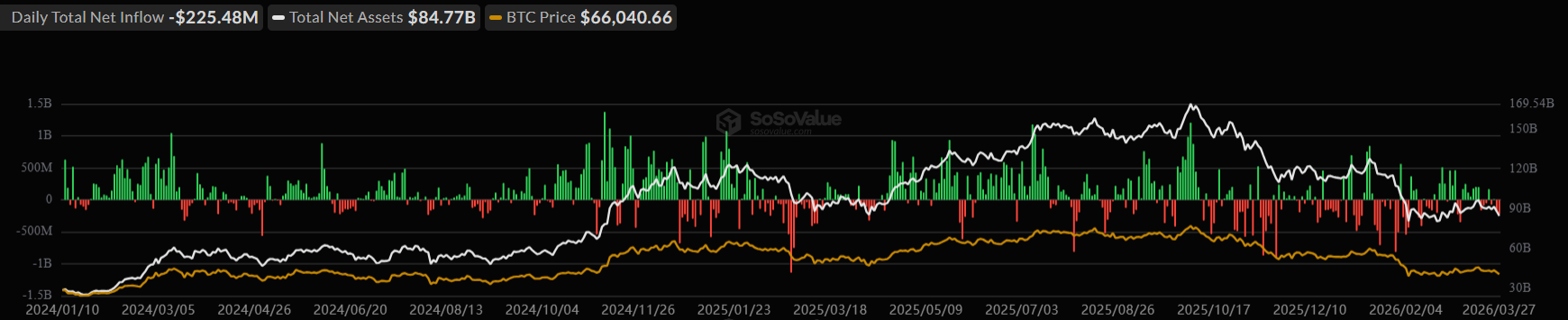
Market observers argue that Morgan Stanley is now positioned to challenge those dominant players thanks to its massive distribution advantage.
The bank’s wealth management division oversees roughly $6 trillion in client assets and commands a network of 16,000 financial advisors.
Previously, Morgan Stanley allowed these advisors to offer clients access to third-party Bitcoin ETFs. By launching an in-house fund, the firm can vertically integrate its cryptocurrency offerings and capture the fee revenue directly.
Meanwhile, the proposed Morgan Stanley Bitcoin ETF represents just one component of a sweeping digital asset expansion at the financial giant. In January, the firm also filed for ETFs on other digital assets, including Ethereum and Solana.
Moving beyond ETFs, the bank is aggressively building out its core infrastructure to support decentralized finance (DeFi) and the tokenization of real-world assets.
The post Morgan Stanley Nears Bitcoin ETF Launch With Fee Below BlackRock appeared first on BeInCrypto.

The Blockchain Where All Finance Happens.
TxFlow Chain is an L1 blockchain built for on-chain financial infrastructure and a multi-application platform organized around TIP Liquidity Standards — an extensible set of trading protocol standards covering spot, perpetuals, RWA, prediction markets, and more. Each application on TxFlow L1, called a Channel, composes from one or more TIP standards and inherits shared on-chain liquidity and settlement without bridging. TxFlow DEX, a high-performance CLOB orderbook DEX for perpetual trading, is the prime Channel application on TxFlow L1 — now live with invitation-only access. More channels will follow on the same chain. No investor token allocation. Governance and ownership rest entirely with the community.
TxFlow L1: One Chain. 250K TPS. High-Performance Infrastructure for Multi-Application Finance
TxFlow L1 processes over 250,000 TPS on-chain. Two core architectural decisions drive this performance: DAG-based parallel execution enables high transaction throughput by processing non-conflicting transactions simultaneously, and a multi-threaded pipeline with a state machine enables high-performance transaction processing without bottlenecks. This level of performance is a deliberate architectural requirement: supporting high-frequency, CLOB-based trading and other demands infrastructure that general-purpose blockchains cannot provide.
“Fragmented liquidity kills finance. TIP Liquidity Standards fix it — composable modules that let any builder launch a Channel and inherit liquidity already on the chain.”
TIP Liquidity Standards extend this further — a set of composable trading protocol standards that let application builders construct their own channels by combining TIP modules. TIP1 covers spot, TIP2 derivatives, TIP3 prediction markets with additional standards extensible as the ecosystem grows. The design reflects a specific thesis: teams with deep liquidity expertise can build high-performance trading applications directly on the TxFlow L1 infrastructure, while teams focused on user acquisition or compliance can deploy their own Channel and tap into liquidity already established on the chain — without having to build it from scratch. TxFlow L1 is also built with AI-native design as a long-term vision.
TxFlow DEX Is Now Live: Fully On-Chain CLOB
TxFlow DEX is the prime Channel application on TxFlow L1 — a high-performance CLOB orderbook DEX, now live with invitation-only access. Processing over 250,000 TPS with one-block finality, every order, cancel, match, and liquidation is settled fully on-chain. TxFlow DEX is the first proof that TxFlow L1 handles real financial workloads at production scale. At launch: 13 TradFi perpetual markets, Protocol Vaults and User Vaults for liquidity provisioning and strategy deployment, a Blockchain Explorer for real-time on-chain transparency.
The vision is an open application ecosystem built on TxFlow L1: financial channels that compose with each other, share on-chain liquidity, and settle without intermediaries.
Access is currently invitation-only. Onboarding instructions are available at txflow.com.
About TxFlow L1 – The Blockchain Where All Finance Happens.
TxFlow L1 is a high-performance blockchain built for on-chain financial infrastructure, organized around TIP Liquidity Standards that define how financial products are built, composed, and settled on-chain. TxFlow DEX is the first Channel on TxFlow L1 — a CLOB orderbook DEX for perpetual trading, processing over 250,000 TPS with one-block finality. TxFlow L1 is designed from the ground up to be AI-native, built for a financial ecosystem where autonomous agents and human traders operate on equal footing. No investor token allocation. Governance and ownership rest entirely with the community.
Official Website: https://txflow.com/
Media Contact: Gelsey Birkett
The post TxFlow L1 Mainnet Launch Marks a New Phase for Multi-Application On-Chain Finance appeared first on BeInCrypto.
Senator Elizabeth Warren has asked the US Commerce Department to explain how it is handling reported security concerns tied to Bitmain, the Chinese company that makes much of the world’s Bitcoin mining equipment.
Summary
- Warren asked Commerce for records on Bitmain as federal security scrutiny of mining hardware continues.
- Earlier probes examined whether Bitmain machines could pose espionage risks or disrupt critical infrastructure systems.
- Warren also requested details on Bitmain contacts with Commerce officials and Trump family members involved.
Her request adds to growing attention on foreign-made mining hardware used across the US crypto sector.
Bloomberg reported that Warren sent a letter on Thursday to Commerce Secretary Howard Lutnick asking for documents and communications related to Bitmain and any steps the department has taken to address “potential national security concerns.” The report said the letter focused on how Commerce is handling the matter and whether political influence has affected those decisions.
The request follows months of reporting about federal scrutiny of the company. A national security inquiry into Bitmain remains unresolved, and the current status of that review is still unclear. The same report noted that cases of this type can continue for years without a public enforcement action.
The Department of Homeland Security opened a probe known as Operation Red Sunset to examine whether Bitmain’s mining machines could create espionage or sabotage risks. That review looked at whether the machines could be remotely accessed or used in ways that could threaten US systems.
Moreover, a May 2024 federal review raised “national security concerns” about Bitmain machines used near a US military base.
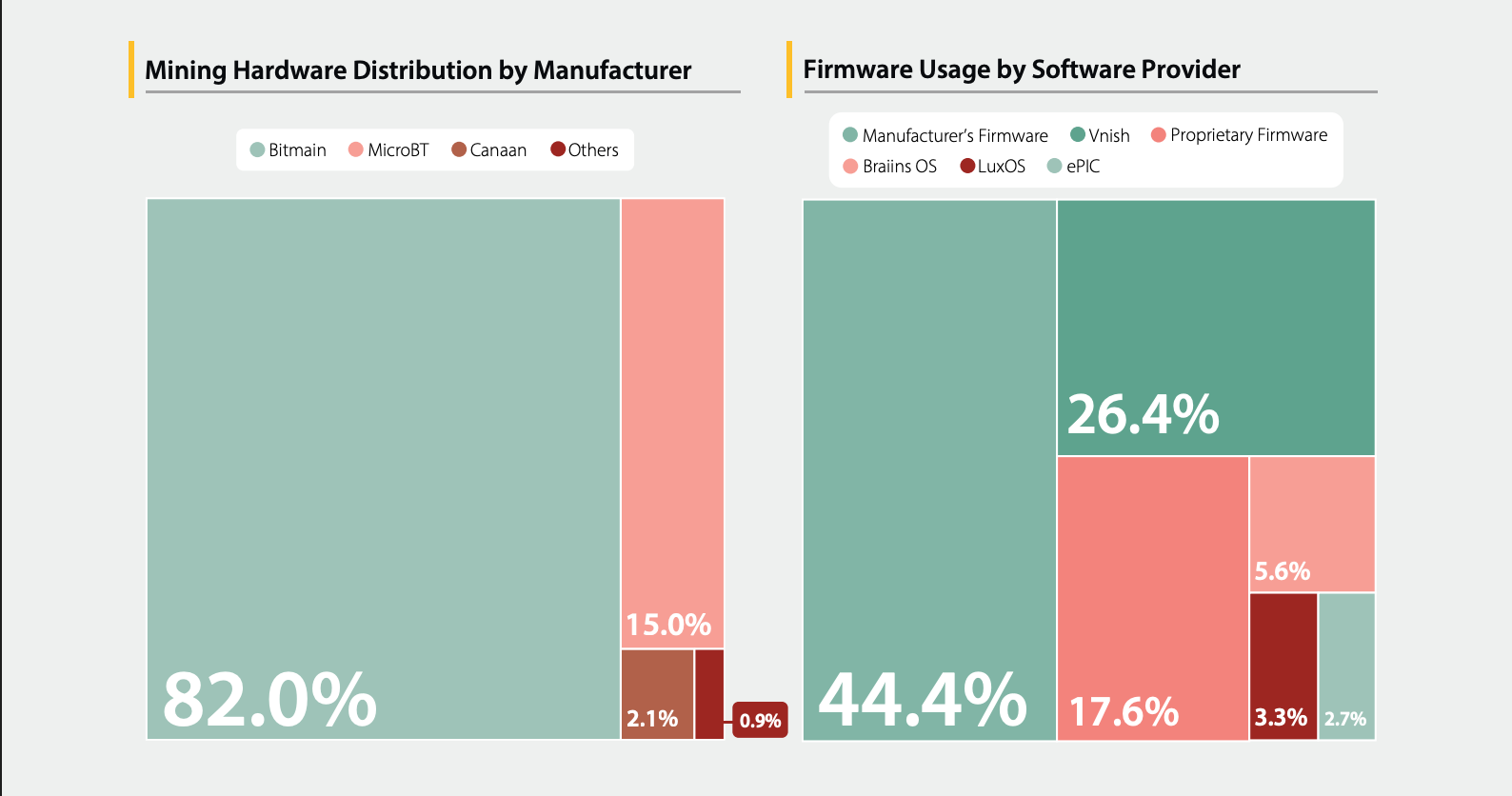
Separately, Cambridge’s Digital Mining Industry Report said the ASIC mining hardware market is highly concentrated, with the top three manufacturers controlling more than 99% of market share and the largest vendor alone holding 82%.
Pressure on Bitmain has not been limited to the DHS review. In February 2025 US miners faced delivery delays after customs scrutiny affected Bitmain equipment shipments. TSMC halted shipments to Sophgo, a Bitmain-linked chip design firm, after a chip linked to Huawei was discovered. Later, the US added Sophgo to its trade blacklist.
These steps widened the focus from mining hardware alone to Bitmain’s broader business links. They also placed more attention on how Chinese crypto hardware suppliers interact with US trade and security policy.
Trump-linked mining ties add another layer
Bitmain also has business ties to American Bitcoin, a mining firm backed by Eric Trump and Donald Trump Jr. The company agreed last year to acquire 16,000 Bitmain rigs for $314 million, according to securities filings cited by Bloomberg. Warren’s request seeks information on any communications involving Bitmain, Commerce officials, and Trump family interests.
At the same time, Bitmain has been building a larger US presence. In July 2025 the company planned its first US-based manufacturing site, with initial output expected in early 2026 and a broader ramp later in the year. That plan now sits beside an unresolved federal review and renewed political scrutiny in Washington.

Bitcoin (BTC) has given back much of its March momentum, dipping about 1.4% for the month and registering a roughly 24.6% drop for the first quarter of 2026. Market observers note that this retreat fits a longer-term drawdown pattern that could extend into the end of 2026, with many analysts projecting another roughly 40% slide from prior highs. If that path plays out, a sustained recovery might not arrive until 2027, shifting the timing of a new bull phase well into the next year.
Across on-chain and market indicators, the signal mix remains nuanced. While price action points to renewed selling pressure, some metrics suggest the market is not yet at historic bottom zones, leaving traders watching for clearer signs of capitulation before a bottom is confirmed.
Key takeaways
- Bitcoin’s drawdown deepens the uncertainty around the timing of a new cycle low, with potential relief not expected until late 2026 or 2027.
- The Bitcoin Combined Market Index (BCMI) sits near 0.27, well above past bottoms around 0.12–0.15, implying further downside could be needed to retrace to historical troughs.
- Historical data linking drawdown depth to recovery time suggests that a 40–60% decline can extend the path back to prior highs by many months.
- On-chain and liquidity-focused perspectives point to ongoing selling pressure from larger market participants, potentially prolonging the downturn before a durable bottom forms.
- A handful of macro- and policy signals—such as anticipated rate moves—could influence the pace of BTC’s recovery, reinforcing that the trajectory depends on both crypto dynamics and external factors.
Longer-cycle implications for BTC’s recovery window
Analysts highlight a pronounced link between how far Bitcoin falls and how long it takes to reclaim previous highs. Data from Ecoinometrics indicates that each additional 10% drop historically adds roughly 80 days to the time required to surpass prior peaks. With BTC down about 48% from its late-2025 highs, the implied recovery horizon stretches toward roughly 300 days from the October peak of around $126,000 in 2025. At the same time, about 172 days have elapsed in this cycle, suggesting approximately 125 to 130 more days if the cycle low lands near $60,000.
Even so, those cycle lows have not necessarily been definitively tagged, leaving open the possibility of further downside in the near term. The current picture is one of a protracted consolidation with macro volatility capable of reshaping the trajectory depending on policy and external demand drivers.
On-chain and market indicators complicate the bottoming process
On-chain analytics add nuance to the narrative. The Bitcoin Combined Market Index (BCMI), which aggregates MVRV, NUPL, SOPR and market sentiment, sits around 0.27. That level remains above the thresholds that have historically marked cycle bottoms since 2018, where bottom zones hovered near 0.15 or lower. In practical terms, BCMI’s current position suggests additional downside could be required to revisit historical lows, particularly if sell pressure persists across spot and futures markets.
From a liquidity perspective, commentary from market observers underscores a stubborn weakness in the broader BTC liquidity regime. The narrative centers on a persistent distribution by larger holders, a factor that can slow any swift rebound even in the face of favorable macro developments.
Analyst voices: cycles, capitulation, and macro context
“Larger players are selling into this structure harder than they have in 18 months. That does not mean price has to collapse immediately. But it does mean this level is being tested with real sell pressure pressing into it.”
That assessment comes from a well-known trader who tracks whale-to-retail dynamics, highlighting that the current setup is being tested by substantial selling pressure at key technical levels. The implication is not an imminent crash, but rather a test of supply-demand equilibrium under heavy participation from larger market players.
Another influential voice in the space has long emphasized a wider cycle narrative. A prominent liquidity-focused analyst had previously sketched a path where Bitcoin could rally to the mid-$70,000s, only to re-enter a bearish regime as overall market liquidity deteriorates, and the “bear” phase extends through the latter part of the decade. In this framework, a deeper capitulation could extend the cycle until a clearer bottom forms, with the recovery not taking hold until early 2027.
Within the same ecosystem, macro considerations loom large. A respected macro-focused publication recently noted that monetary policy expectations are shifting. A notable forecast referenced by market watchers suggested rate cuts might not arrive until late 2027, with a non-trivial probability that rates could rise by March 2027. The dynamic between policy expectations and liquidity conditions adds an additional layer of uncertainty to Bitcoin’s timing for a durable rebound.
These perspectives—whether anchored in on-chain signals, macro policy, or liquidity dynamics—underscore a common thread: the path to a new upside regime remains contingent on both the crypto market’s internal mechanics and the broader economic backdrop.
Related coverage has previously highlighted how shifts in on-chain metrics—such as supply in profit levels and other profit-and-loss indicators—can precede multi-fold moves in Bitcoin’s price. While not a guarantee, the interplay between investor behavior, realized versus market value, and macro stimuli remains a focal point for evaluating the next meaningful swing in BTC.
This synthesis reflects a cautious, data-driven view: Bitcoin’s next phase will depend on deeper capitulation signals, a rebalancing of on-chain metrics toward traditional bottoms, and a macro environment that gradually aligns with a renewed appetite for risk. Investors should monitor how the BCMI behaves relative to historical bottoms and watch for any decisive shifts in liquidity conditions and policy expectations as the year progresses.
This article does not constitute financial advice. Readers should conduct their own research and consider their risk tolerance before acting on market signals.


Top trending stories this week were centered on politics, market stress, geopolitics, memecoin chatter, and yield-focused positioning.
Summary
- David Sacks moved to a broader advisory role as crypto traders tracked shifting Washington influence.
- Risk-off selling, Circle worries and oil gains kept traders focused on market positioning this week.
- Memescope Monday and cash-yield strategies showed traders balancing viral hype with capital preservation this weekend.
Santiment social data showed that traders entered the weekend watching David Sacks’ White House transition, a fresh risk-off selloff, new tech security fears, “Memescope Monday,” and a broader move toward cash and income strategies.
David Sacks transition draws early attention
Santiment listed the David Sacks transition as one of the main stories in crypto discussion. Sacks stepped down from his White House AI and crypto role after reaching the 130-day limit for special government employees.
Moreover, Sacks is moving into a broader advisory role as co-chair of the President’s Council of Advisors on Science and Technology. That shift moves him away from a direct crypto policy post and toward a wider technology brief.
Risk-off selling stays at the center of market talk
Santiment said traders spent Friday discussing another risk-off move across tech and crypto. Meta shares fell after jury verdicts raised concerns about new legal exposure, while separate market coverage showed ARK Invest using Kalshi prediction market data as a risk tool.
The same social theme also included worries around Circle and USDC after debate over stablecoin reward limits in the CLARITY Act. Recent market reporting said those concerns pushed Circle shares sharply lower earlier this week.
Geopolitics and AI security concerns widen the focus
Santiment said market nerves also rose as geopolitical tension and tech news collided. Oil prices rose on Friday as traders doubted the chances of a ceasefire in the Iran war, while social chatter tracked the effect on broader risk assets.
At the same time, concern around Anthropic’s “Claude Mythos” spread across markets. Leaked details described the model as Anthropic’s most powerful system so far, and market coverage showed cybersecurity stocks falling as investors reacted to those capabilities.
Memecoin hype and cash strategies round out the list
Santiment also said “Memescope Monday” became a viral social topic among traders looking for short-term momentum in memecoins and related protocols. The firm framed it as a retail-driven trend built on online attention rather than a formal policy or market event.
The final theme was “cash-and-yield.” Santiment said traders were discussing cash, stablecoins, options income, and tokenized yield as safer ways to manage uncertainty while war fears and rate pressure stayed in view.
Cristiano Ronaldo’s Al-Nassr could lose superstar Sadio Mane as Turkish giants make offer to sign him in the summer: Reports

Power of SWP far better then SIP. #finance #swp #sip #passiveincome

Mary Rand: The trailblazing Olympic champion who caught Mick Jagger’s eye


-
 NewsBeat3 days ago
Manchester United reach agreement with Casemiro over contract clause amid transfer speculation
-

 News Videos2 days ago
Parliament publishes latest register of MPs’ financial interests
-

 Crypto World7 days ago
Best Crypto to Buy Now: Strategy Just Spent $1.57 Billion on Bitcoin During Fear While Early Investors Quietly Enter Pepeto for 150x Potential
-

 Crypto World7 days ago
Bitcoin Price News: Bhutan Sells $72 Million in BTC Under Fiscal Pressure, but the Smart Money Entering Pepeto Sees What the Market Does Not
-

 Sports5 days ago
Remo Stars and Kano Pillars Strengthen Survival Hopes in NPFL
-

 Sports5 days ago
Gary Kirsten Accuses Pakistan Cricket Board Of ‘Interference’, Mohsin Naqvi Responds
-

 Business6 days ago
No Winner in March 21 Drawing as Prize Rolls to $133 Million for Next
-

 Tech6 days ago
Give Your Phone a Huge (and Free) Upgrade by Switching to Another Keyboard
-

 Tech6 days ago
AI enters the chat: New Seattle dating app relies on tech to facilitate meaningful human connections
-

 News Videos5 days ago
Ch 9 Financial Management Part 1 | Detailed One Shot | Class 12 Business Studies Boards 2026
-

 Tech6 days ago
Today’s NYT Connections Hints, Answers for March 22 #1015
-

 Business2 days ago
Instagram, YouTube Found Responsible for Teen’s Mental Health Struggle in Historic Ruling
-

 Business6 days ago
Will Duke Basketball Win It All? Duke Basketball Enters Second Round as Third Favorite to Claim NCAA Title
-

 Sports5 days ago
2026 Kentucky Derby horses, odds, futures, preview, date: Expert who hit 12 Derby-Oaks Doubles enters picks
-

 NewsBeat14 hours ago
The Story hosts event on Durham’s historic registers
-
 NewsBeat6 days ago
Update on Wisbech river crash as search for teenage boy enters fifth day
-
 Entertainment5 days ago
Cynthia Bailey Dishes on ‘RHOA’ Season 17, Discusses Kandi
-

 Tech5 days ago
Samsung will soon let you control smart home devices from your car’s dashboard
-
 NewsBeat3 days ago
Tesco is selling new Cadbury Dairy Milk bar and people can’t wait to try it
-

 Tech6 days ago
SteamOS update adds support for Steam Machine and other non-Valve hardware
You must be logged in to post a comment Login