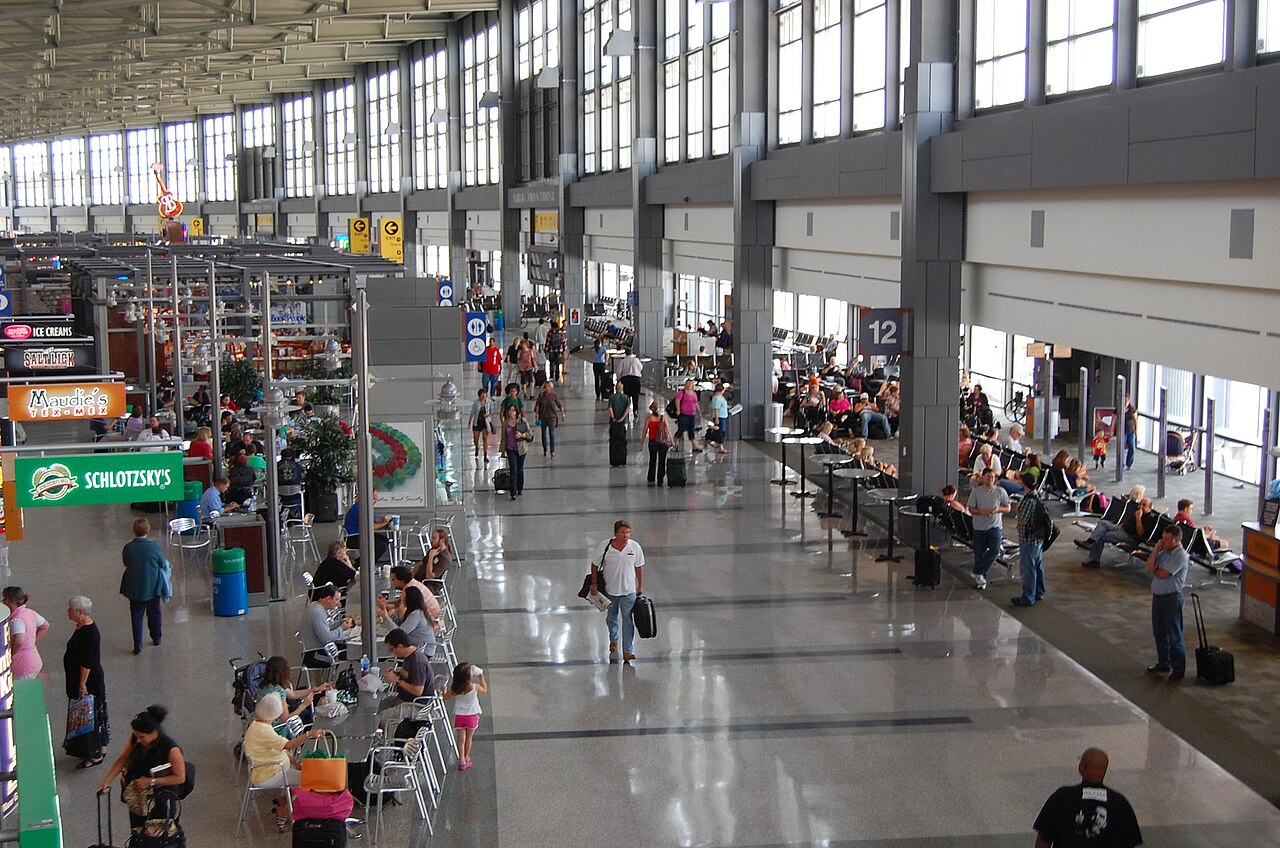
AUSTIN, Texas — Travelers asking about TSA wait times at Austin-Bergstrom International Airport (AUS) on Saturday, March 28, 2026, can expect relatively smooth security screening for most of the day, with average waits under 15 minutes at many times, though early morning peaks and occasional spikes up to 30-35 minutes remain possible amid ongoing spring break and high passenger volumes.
Austin-Bergstrom International Airport
As of late morning into the afternoon, multiple real-time trackers reported standard security lines averaging around 0-12 minutes, with TSA PreCheck lanes often clearing in 5 minutes or less. However, airport officials continue to urge passengers to arrive 2.5 to 3 hours before domestic flights — and even earlier for international departures — due to the busy travel season that has strained operations in recent weeks.
Austin-Bergstrom, the primary gateway to the Texas capital known for its live music vibe and “Keep Austin Weird” spirit, has seen significant passenger surges this March. The airport warned of “high passenger volume days” stretching from mid-March through early April, coinciding with spring break for many school districts and lingering effects from major events like South by Southwest.
On peak days earlier in the month, such as March 13-16, security lines spilled outside the terminal doors, with some travelers reporting waits of 45 to 90 minutes during the busiest pre-dawn hours between 4 a.m. and 8 a.m. Videos and social media posts showed long queues snaking through the check-in areas and onto sidewalks, prompting airport alerts and media coverage of the chaos.
Officials emphasized that the extended lines were driven primarily by record-breaking passenger numbers rather than TSA staffing shortages alone, though a partial government shutdown affecting federal agencies added pressure with higher callouts reported nationwide. U.S. Sen. John Cornyn and airport representatives noted that TSA screening itself was not the core bottleneck; instead, the sheer volume of travelers checking bags, returning rental cars and navigating parking contributed to the backups.
Advertisement
Checkpoint operations at AUS typically begin around 3 a.m., with multiple lanes opening progressively. Checkpoint 2 often serves as the main hub, while others provide overflow capacity. On Saturday, data from trackers like OnAirParking and iFly showed fluctuating hourly averages: as low as 0 minutes in some slots, climbing to 27-33 minutes during traditional rush periods like 5-7 a.m. and 10-11 a.m. Afternoon hours have generally trended lighter.
TSA PreCheck and CLEAR members continue to enjoy significantly shorter experiences, often bypassing standard lines entirely. Enrollment in these programs has proven especially valuable during busy periods, with PreCheck waits frequently under 10 minutes even when general lines lengthen.
The MyTSA app remains a recommended tool for real-time crowd-sourced updates, though some users note that official estimates can lag during disruptions. Third-party sites such as Takeoff Timer and FlightQueue provide supplementary live data, showing standard security around 11-35 minutes depending on the exact moment of check. Travelers are advised to cross-reference multiple sources and monitor the official @AustinAirport social channels for alerts.
Airport management has increased staffing where possible and adjusted lane configurations to handle demand. Despite the challenges, flight operations have largely remained on schedule, with only minor delays reported on most days. FAA data indicated low airborne and gate delays as of late March.
Advertisement
For those departing today, the busiest window remains early morning departures. Travelers with flights before 9 a.m. should plan conservatively, factoring in parking, bag drop and potential rental car returns. Midday and evening flights have seen more predictable flows in recent reports.
AUS offers several amenities to ease the journey, including diverse dining options featuring local Austin flavors — from barbecue to breakfast tacos — and shopping that highlights Texas artists and musicians. Free Wi-Fi, charging stations and family-friendly areas help passengers pass the time if they arrive with extra buffer.
The surge reflects broader trends in Texas aviation. Austin’s rapid growth as a technology and music hub has driven consistent increases in enplanements, making AUS one of the faster-growing medium-sized airports in the country. Officials expect the high-volume period to ease after early April as spring break concludes for most districts.
Passengers can further speed their experience by preparing in advance: removing liquids and electronics from carry-ons, wearing slip-on shoes, and ensuring ID and boarding passes are readily accessible. The TSA’s 3-1-1 liquids rule remains strictly enforced, and prohibited items can cause secondary screening delays.
Advertisement
International travelers face additional considerations, with longer recommended arrival windows to account for customs and immigration on return, though outbound international security follows similar domestic protocols at AUS.
Looking ahead, the airport continues infrastructure improvements to handle future growth. While Checkpoint 3 remains closed through parts of 2026 for upgrades, the remaining facilities have proven resilient during the current busy stretch.
Travelers with disabilities or needing assistance can request expedited or accessible screening through TSA Cares. Families with young children benefit from dedicated lanes when available.
As Saturday evening approaches, lines are expected to remain manageable unless a late surge occurs. Real-time conditions can shift quickly with flight banks or unexpected events, so checking 30-60 minutes before heading to the airport is wise.
Advertisement
Austin-Bergstrom’s convenient location just minutes from downtown continues to make it a favorite for both business and leisure travelers. Its compact layout generally allows efficient movement once past security, with gates easily accessible.
In summary, while TSA wait times at AUS are currently short for much of Saturday, March 28, the lesson from recent weeks is clear: build in extra time during this high-volume spring travel season. Arriving early ensures a smoother experience and reduces stress, allowing passengers to enjoy the airport’s unique Austin character rather than worrying about missing their flight.
For the absolute latest updates, consult the MyTSA app, third-party wait time trackers, or the airport’s official website and social media. Safe travels to all departing from Austin-Bergstrom today and throughout the busy period.
Michael Burry, the investor made famous in The Big Short, is warning that the Nasdaq 100 Index is headed toward a dramatic reversal after a “parabolic” surge that has driven technology valuations to unsustainable heights.
In a post on Substack, Burry said the market resembles the peak of the dot-com bubble just before it burst, citing in particular the steep jump in chip stocks that has pushed up the Philadelphia Stock Exchange Semiconductor Index by nearly 70% since the end of March.
He said the Nasdaq 100, by his reckoning, is trading at 43 times earnings — well above the implied level of around 30 times — because “Wall Street may be overstating by more than 50% the earnings at our fastest growing, most highly valued companies.”
“We are witnessing history. In the stock market, that is not a good thing,” Burry said. He likened it to the “scene of the bloody car crash, minutes before it happens.”
Advertisement
Agencies
Chip Stocks Head for Second-Best First Half Versus S&P Ever
Burry is among a number of market observers who have expressed concerns about the rally unleashed by the artificial-intelligence spending boom from Alphabet Inc., Amazon.com Inc. and the other big tech companies. That’s pushed indexes to record highs even as the US war against Iran threatens to both slow growth and fan inflation by elevating oil prices.
Live Events
Sundial Capital Research analysts led by Jason Goepfert noted that this will be only the fourth time the S&P 500 has hit a record high while only 5% of its members were at 52-week lows, underscoring the scope of the rally. Data compiled by Bespoke Investment Group show that the Philadelphia semiconductor index has pushed this far above its 200-day moving average only two other times, in July 1995 and in March 2000, at the peak of Internet bubble. Burry advised against shorting stocks, given the expense of put options and the risk of being burned by ill-timed trades.He said he is holding a “significant leveraged short position against a portfolio of companies” that he finds “depressed and cheap,” without elaborating, and plans to “lighten up on companies” that don’t meet his “strictest valuation requirements.” He advised taking profits from the recent rally and reducing exposure to stocks in general, particularly those from the tech sector.
“Even if it seems there is more time to run up, anyone lucky enough to be riding these parabolic moves, by not selling, is betting on one’s own ability to jump off at or near the top,” he wrote.
“History tells us that even if the party goes on for another week, month, three months or year, the resolution will be to much lower prices,” he said. “We are getting into that rare air, so extreme that the consequences will be unavoidable, no matter where one hides.”
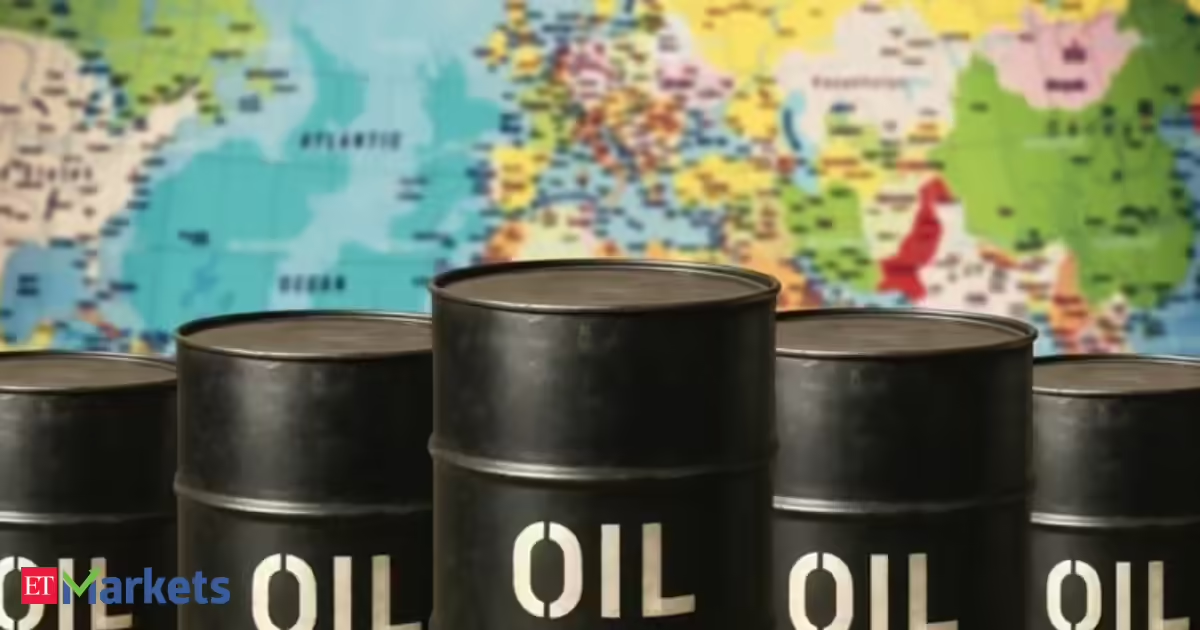
Oil prices edged higher on Tuesday, extending gains for a second session in a row, as prospects for a resolution to the conflict between the United States and Iran remained uncertain, keeping concerns over global crude supply firmly in focus.
U.S. President Donald Trump said on Monday that the ceasefire with Iran was “on life support,” citing disagreements over several key issues, including a halt to hostilities across all fronts, the lifting of a U.S. naval blockade, the restart of Iranian oil exports and compensation for war-related damages.
Crude oil price on May 12
Brent crude futures climbed 30 cents, or 0.29%, to $104.51 a barrel, while U.S. West Texas Intermediate rose 31 cents, or 0.32%, to $98.38 by 0002 GMT. Both benchmarks had already gained nearly 2.8% on Monday.In an effort to calm markets, the Trump administration said on Monday it would release 53.3 million barrels of crude from the U.S. Strategic Petroleum Reserve through loans to refiners and suppliers.
Advertisement
Live Events
Market attention now shifts squarely to President Trump’s visit to China this week. Experts say there is hope he can persuade Beijing to leverage its influence over Iran to push for a comprehensive ceasefire and a resolution to the ongoing disruption in the Strait of Hormuz. Separately, the Wall Street Journal reported on Monday that the UAE carried out military strikes inside Iran, including an attack earlier in April on a refinery located on Lavan Island. The UAE has not publicly confirmed the operation, according to the report. Since the U.S. and Israeli-led war against Iran began on Feb. 28, both Brent and WTI crude prices have surged more than 40%. Citi said in a note that oil prices were likely to remain volatile and could rise further if negotiations between Washington and Tehran continue to face obstacles.
Where are prices headed?
According to Morgan Stanley analysts, the global oil market is now in “a race against time,” as the factors that have so far prevented a sharper spike in crude prices may weaken if the Strait of Hormuz remains shut into June.
Despite disruptions impacting nearly 1 billion barrels of oil supply, crude prices still remain below the highs reached in 2022 after Russia invaded Ukraine. Analysts led by Martijn Rats said the market entered the current crisis with stronger buffers, while investors have largely continued to expect that Hormuz would eventually reopen.
Morgan Stanley also pointed to rising U.S. crude exports and softer Chinese imports as two major reasons why the market has so far avoided a deeper supply shock. However, the brokerage cautioned that a prolonged closure of Hormuz could tighten global supplies again if the disruption lasts longer than either China or the United States can comfortably manage.
Haitong Futures said the market remains nervous, warning that the ceasefire may only be temporary. The firm added that stalled negotiations between the U.S. and Iran could trigger another escalation in tensions and push oil prices higher.
Advertisement
Nuvama Institutional Equities said an extended shutdown of the Strait of Hormuz could disrupt nearly 20 million barrels per day of crude flows globally. In such a scenario, the brokerage said oil prices could potentially climb to between $110 and $150 a barrel.
Saudi Aramco CEO Amin Nasser warned on Monday that disruptions to shipments through Hormuz could delay the return of stability in oil markets until 2027, potentially affecting around 100 million barrels of oil supply per week.
(Disclaimer: Recommendations, suggestions, views and opinions given by the experts are their own. These do not represent the views of The Economic Times)
The Middle East war caused higher costs. Supply chain stumbles and production slowed due to supply problems
The intensification of the war in the Middle East has reinforced global business awareness that “geopolitical risks” It is no longer just a temporary event that creates periodic fluctuations, but is becoming a structural risk to the global economy This will inevitably affect long-term business operations. The war in the Middle East had a wide-ranging impact. From volatile and skyrocketing oil prices, transportation costs, freight and insurance premiums from significantly increased war risks. to the problem of delayed transportation and shortages of raw materials or parts in the chainSupply Many countries are beginning to see a slowdown in production activity, not as a result of lost demand but as a result of supply disruptions
For Thailand, such risks have a wide impact on the business sector. The EEC area is one of the production bases of important industries that are affected by various groups, such as energy, petrochemicals, automobiles, and electronics. including agriculture and food These industries all rely on foreign raw materials, parts, and machinery, while also relying on export markets inhigh proportion When the war situation is still highly uncertain The impact therefore occurs in many dimensions. both higher costs Uncertainty in the supply of production factors and risks in product delivery Such risks not only affect a particular company. But it is a structural risk for the entire industry cluster. Because if the upstream industry stopsCha Ngak downstream industries will be affected in a chain
How to ensure continuity of production and delivery? Even in the face of uncertainty
Over the past several decades The mass production sector grows under the concept Just‑in‑Time Or having raw materials “just in time, just using ”, which will help reduce stock costs and increase efficiency in normal conditions where transportation is stable. But as the global context shifts from certainty to geopolitical risk, Such models therefore began to existWeaknesses are greater because systems without adequate bumpers become fragile immediately when raw materials or critical parts are missing, causing the entire production line to be disrupted
The important question that businesses need to rethink is not just “, how to keep costs as low as ”, but “, how to ensure continuous production and delivery? Even in the face of uncertainty” Especially in industries that rely heavily on the global market, in this context the Just‑in‑Case concept Therefore, it has returned to play a greater role as a risk management tool. However, Just‑in‑Case It does not mean hoarding so many products that costs escalate. But it is about giving importance to flexibility and being able to absorb shocks throughManage stock with goals The business sector should start by specifying which raw materials or parts are “bottlenecks that, if lacking, will result in production being halted. Then build a safety stock at a critical point, distributing purchasing sources to more than one country. or have backup suppliers for important parts along with investing inSupplier mapping system to see the supply chain as deep as Tier 2-3 and use real-time data to help predict and recognize risks from the beginning
Advertisement
Lessons from abroad clearly reflect this idea. For example, Japan’s Toyota, which was previously severely affected by the earthquake and tsunami. Until having to review the supply chain in a big way An important list of parts that must maintain continuity of supply has been prepared and a minimum level of reserve has been set for some specialized partsType The goal is not to abandon the Lean system (a work process aimed at reducing waste and using fewer resources), but rather to make the Lean system more impact resistant
In the period ahead, business competitiveness will not be measured solely by the lowest costs, but rather by readiness for uncertainty Businesses that can balance efficiency Just‑in‑Time and flexibility Just‑in‑Case Maintain continuity of production Adjust the supply chain to be flexible. Increase the efficiency of raw material and energy management well and be able to deliver products as scheduled. It will have the potential to become an important production base in the global supply chain. Because in a world where “Irregularities have become normal” Ability to deliver continuously Therefore, it is one of the keys to competitiveness
Published in N.S.P Krungthep Turakij, Smart EEC Column, May 7, 2026
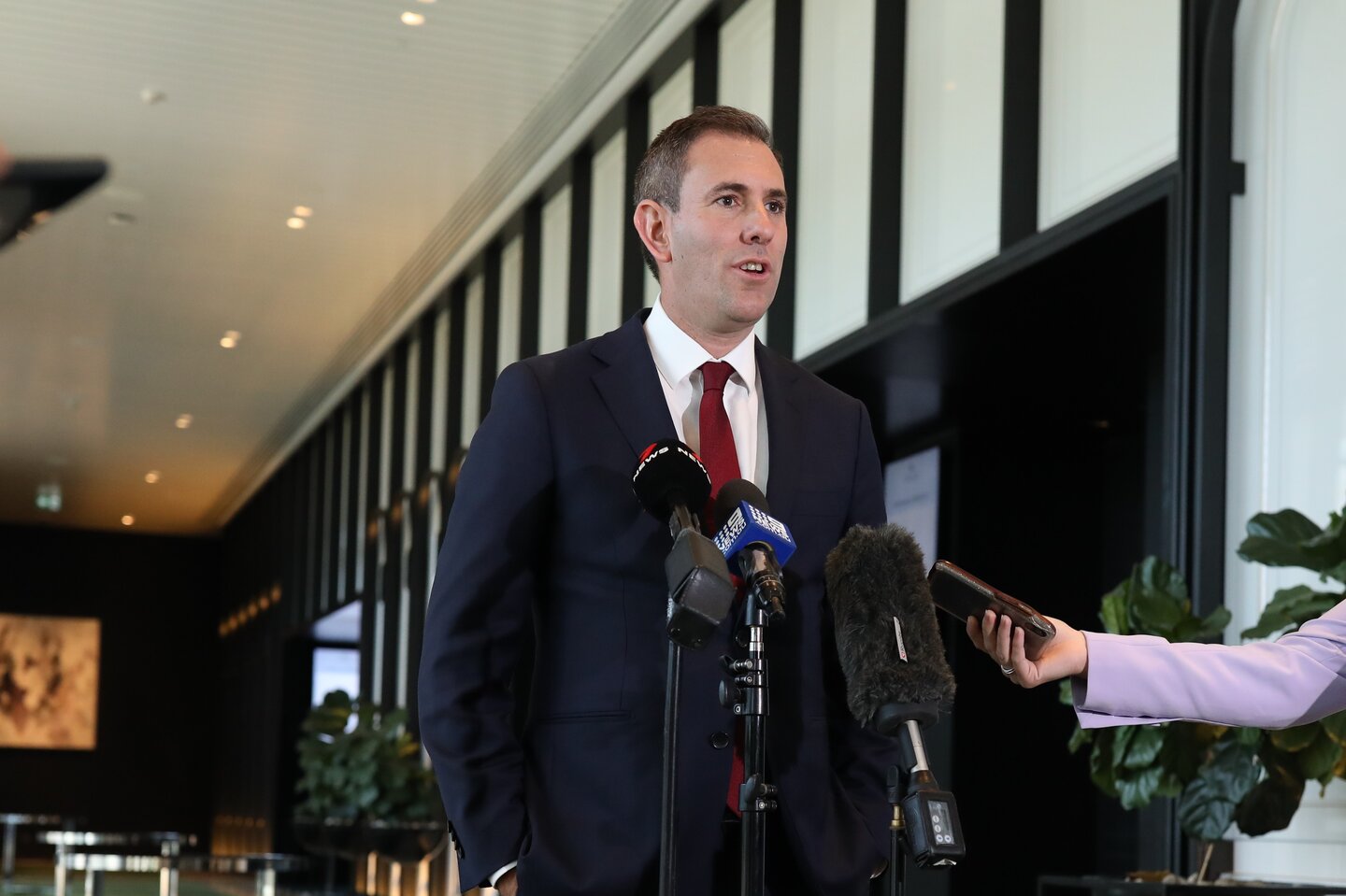
Australia’s bottom line will receive a major improvement, as Labor sets its sights on tackling intergenerational inequity through tax and housing reforms.
flyExclusive, Inc. (FLYX) Q1 2026 Earnings Call May 11, 2026 5:30 PM EDT
Company Participants
Christopher Neale Thomas Segrave – Founder, CEO & Chairman of the Board Bradley Garner – Chief Financial Officer
Advertisement
Presentation
Operator
Greetings, and welcome to flyExclusive, Inc.’s First Quarter 2026 Earnings Call. [Operator Instructions]. Please note that this conference is being recorded. I will now turn the call over to Chris Neale with Marketing. Thank you, Chris. You may begin.
Advertisement
Christopher Neale
Thank you, operator. Good evening, and thank you for joining flyExclusive’s First Quarter 2026 Earnings Conference Call. Joining me on the call today is Jim Segrave, flyExclusive Founder and Chief Executive Officer; and Brad Garner, our Chief Financial Officer. We announced fourth quarter and year-end financial results this morning before the market opened, along with the filing of our Form 10-Q for 3 months ended March 31 — March 31, 2026. We’ll be providing certain non-GAAP information during today’s discussion. Important disclosures about this information and a reconciliation of the non-GAAP information to comparable GAAP information is included in our Form 10-K filed with the SEC and is available on our Investor Relations website. In addition, this discussion might include forward-looking statements. Actual results might differ materially from any number of reasons, including risk factors described in our annual report on Form 10-K and our quarterly reports from Form 10-Q and in the press release covering forward-looking statements. Rather than rereading this information, we are going to incorporate it by reference in our prepared remarks. And with that, let me turn the call over to Jim.
Thomas Segrave Founder, CEO & Chairman of the Board
Advertisement
Thank you, Chris, and thank you to everyone joining us this afternoon. The first quarter of 2026 was another important proof-of-concept point for flyExclusive. For the better part of 2 years, I have told






















































You must be logged in to post a comment Login