
Crypto World
As stocks, bonds fall, a trade that boomed in 2022 may be winner again


Managed future strategies are gaining renewed attention as investors look for new sources of returns from the market at a time when both stocks and bonds are under pressure as a result of the U.S.-Iran war and the risk of 1970s-style stagflation.
These strategies, which are typically run by commodity trading advisors, use systematic models to trade future contracts across different asset classes. Rather than focus on short-term market moves in traditional asset classes, they aim to capture broader trends that unfold over months. The ability to adapt to changing market conditions, and their performance back in 2022, has made managed futures funds increasingly relevant in 2026.
In 2022, when the S&P 500 Index fell around 18% and the Bloomberg U.S. Aggregate Bond Index was down about 13%, managed future strategies were up 20%.
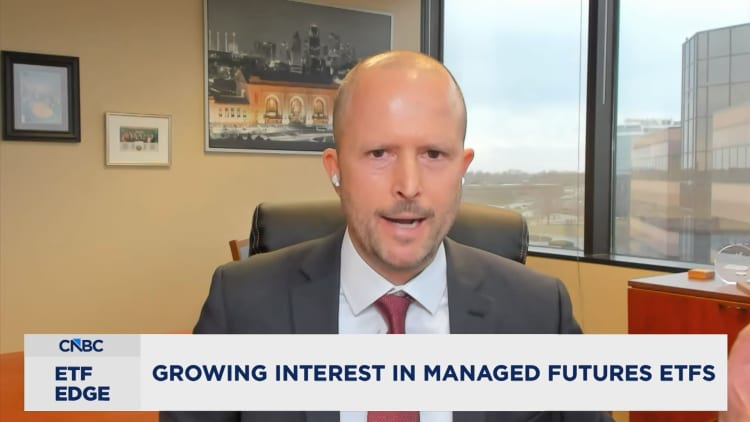
“That’s meaningful outperformance in an environment when stocks and bonds are under pressure,” Nate Geraci, NovaDius president, said on CNBC’s “ETF Edge” earlier this week.
Andrew Beer, managing member at DBi, which manages the largest managed futures ETF, the iMGP DBi Managed Futures Strategy ETF (DBMF), said on “ETF Edge” that the uncertainty around inflation and interest rates, and the volatile geopolitical backdrop, are a good match for the managed futures approach, which can take long or short positions and have the flexibility to respond to different trends across the markets.

Performance of the iMGP DBi Managed Futures Strategy ETF over the past five years.
Managed futures ETFs remain a relatively small category, collectively holding around $6.5 billion in assets, according to ETFAction.com. Within that space, the iMGP DBi Managed Futures Strategy ETF has attracted about $1 billion in flows this year.
The use of the managed futures approach with ETFs allows more investors to access a strategy that been associated with the world of hedge funds historically, but in a more liquid and transparent structure.
“We’re leveraging the work of largest hedge funds, and trying to be more efficient, pick up what they are doing,” Beer said. “We thrive with changes over 3, 6, 9, 12 months, not Monday to Thursday,” he said.
“Certainly, the [ETF] industry is going to be launching additional managed futures products along with other hedge funds strategies,” Geraci said during the podcast portion of “ETF Edge.”
Geraci said one clear signal that this approach is likely to see more interest from retail investors is three of the biggest asset managers getting into the space with their own branded managed futures ETFs: BlackRock, Invesco and Fidelity Investments.
“They all entered the market in the past year and that is a sign of real investor demand going forward,” Geraci said. “The interest is there, especially given the backdrop of this market environment,” he added.
Still, managed future ETFs remain more complex than regular stock and bond investments, and investors need to understand that while their performance can beat stocks and bonds during periods of market stress and volatility, they can also lag.
“I do think these are clearly more complex than other types of ETFs on the market,” Geraci said. “Investors and advisors need to have a firm understanding of how these work,” he said. Maybe most important, he added, “Investors have to be able to stick with managed futures through inevitable periods of underperformance.”
“They can work really well when you need them, but you have to be able to let them work over full market cycles,” Geraci said.
Beer said investors can think of an allocation to this type of strategy being in the range of 3% to 5% of an overall market portfolio diversification approach, “just sitting there alongside hard assets or infrastructure.”
“I think we all have the same goal: we want our investors to be able to grow their assets, but sleep at night,” he said.

P2P.me, a cryptocurrency payments platform, is facing questions over a $20,000 Polymarket bet tied to its own fundraising campaign after disclosing that it traded on the outcome before the round opened publicly.
On March 27, P2P.me announced that it had liquidated a Polymarket betting position on its ability to meet its $6 million fundraising target. The company disclosed that it placed the bets 10 days before officially opening its funding round.
Big Polymarket Profit Sparks Insider Trading Debate
P2P.me admitted that, at the time the wagers were placed, it had already secured an oral commitment of $3 million from the venture capital firm Multicoin.
Some legal observers said the $3 million oral commitment could be viewed as material non-public information, though P2P.me said the absence of signed documents meant the outcome was still uncertain.
P2P.me further defended the trade and characterized the bet as a “vote of confidence.”
“We named the account “P2P Team” deliberately – to give a marketing signal of our presence to the community and reflect our intent to be transparent. But intent isn’t the same as action. Not disclosing at the time was a mistake we own. We took time to study the legal implications before speaking, which is why we stayed silent until now with a “No Comments” stance! – that too is a fair criticism,” it stated.
P2P.me eventually raised $5.2 million from outside investors, allowing the firm to close its Polymarket positions at $35,212. The trade generated a profit of roughly $14,700 from an initial entry of $20,500.
Following the backlash, some investors and industry insiders argued that the incident was being blown out of proportion. They attributed the trade to naiveté rather than malice.
Simon Dedic, co-founder of Moonrock Capital and an investor in P2P.me, defended the team’s character and motive. According to him, the trade was a misguided “guerrilla marketing stunt” designed to show conviction.
“No one with any common sense would risk a $6 million raise over $15,000. The idea was to show such strong conviction in the sale that they’d even bet on themselves. This is exactly why they intentionally named the account ‘P2P team.’ Otherwise, you’d have to argue they’re the most incompetent insider traders of all time,” Dedic added.
Amid mounting criticism on the eve of its planned initial coin offering, P2P.me announced that it would route the proceeds from trading to the MetaDAO Treasury. The company clarified that MetaDAO had no prior knowledge of the trades.
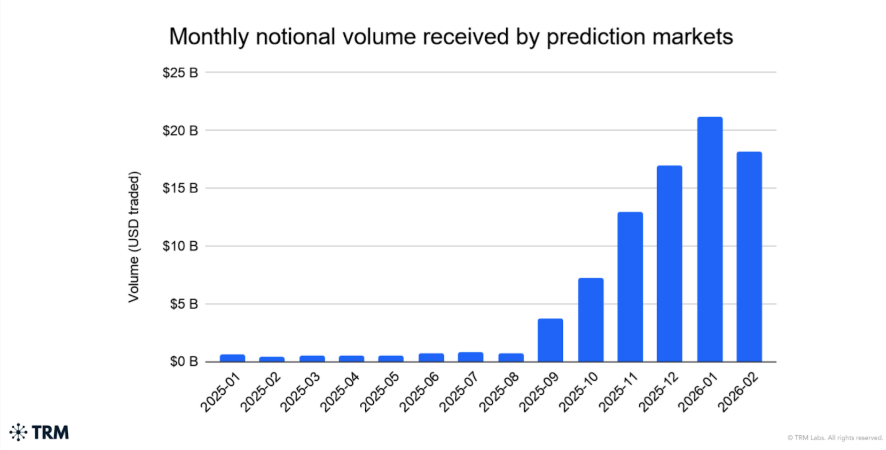
This incident comes at a time when prediction markets are enjoying an explosive growth in the sector. Blockchain platform TRM Labs stated that the sector’s transaction volumes have surged from $1.2 billion in early 2025 to more than $20 billion by January 2026.
Due to this rapid growth, there have been increasing regulatory concerns about decentralized prediction markets. Platforms such as Polymarket and Kalshi have recently implemented stricter surveillance measures to curb insider trading.
The post P2P.me Faces Insider Trading Allegations Over Polymarket Bets appeared first on BeInCrypto.

Google is preparing to support a multibillion-dollar data center project in Texas leased to Anthropic as competition for AI infrastructure accelerates.
The project, operated by Nexus Data Centers, could exceed $5 billion in its initial phase, with Google expected to provide construction loans, Financial Times reported on Friday, citing people familiar with the matter. A consortium of banks is also competing to arrange financing by mid-year, per the report.
According to the report, Anthropic recently signed a lease for the 2,800-acre campus, which forms part of its broader infrastructure tie-up with Google. Construction is already underway, supported by early-stage debt financing from Eagle Point, a publicly traded closed-end investment company.
The site is expected to deliver around 500 megawatts of capacity by late 2026, roughly equivalent to powering 500,000 homes, with potential expansion to 7.7 gigawatts. Its location is near major gas pipelines operated by companies including Enterprise Products Partners, Energy Transfer and Atmos Energy, allowing the project to rely on on-site gas turbines.
Related: David Sacks’ 130-day term as Trump’s crypto and AI czar has ended
Judge blocks Pentagon ban on Anthropic
On Thursday, a US federal judge in San Francisco temporarily blocked the Pentagon from labeling Anthropic a national security risk and halting government use of its AI tools. Judge Rita Lin granted a preliminary injunction, pausing a directive backed by President Donald Trump that sought to cut off federal use of Anthropic’s chatbot, Claude.
The ruling came in a lawsuit filed by Anthropic, which argued that Defense Secretary Pete Hegseth overstepped his authority by designating the company a supply chain risk. The judge described the government’s actions as “arbitrary” and warned against branding a US company as a threat without clear legal basis.
The dispute followed a breakdown in negotiations between Anthropic and the Pentagon over the military use of its AI. The company resisted allowing its models to be used for lethal autonomous weapons or mass surveillance, leading to a broader standoff with the administration.

In her decision, Lin said the government may have retaliated against Anthropic for its public stance, calling the measures a likely violation of First Amendment protections.
Related: CFTC Chair Selig says blockchain could help verify AI-generated content
US military used Anthropic AI in Iran strike
As Cointelegraph reported, US military units reportedly used Anthropic’s Claude AI model during a major airstrike on Iran, even after the ban order by Trump. Military commands, including US Central Command (CENTCOM) in the Middle East, reportedly used the AI model for operational support
Magazine: Bitcoin may take 7 years to upgrade to post-quantum — BIP-360 co-author
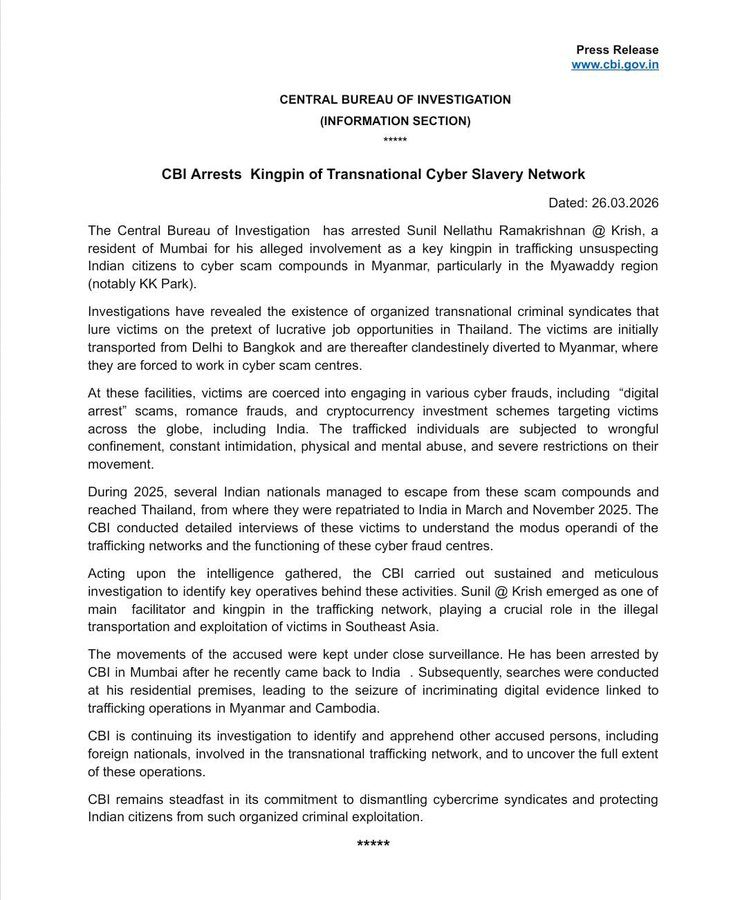
India Central Bureau of Investigation has arrested a Mumbai-based suspect it identifies as a key trafficking kingpin who funneled Indian nationals into crypto fraud compounds in Myanmar’s Myawaddy region, a cross-border enforcement action that pulls together intelligence threads from Thailand, Myanmar, and Cambodia.
The operation marks one of India’s most operationally specific strikes yet against the Southeast Asian scam compound ecosystem.
For crypto exchanges and compliance teams, the arrest is a direct signal: Indian regulators are actively tracing the human infrastructure behind pig butchering and digital arrest scams — and the financial rails those operations run on are next.
- Enforcement Action: The CBI arrested Sunil Nellathu Ramakrishnan, also known as Krish, after he returned to India, seizing digital evidence from his Mumbai residence linking him to trafficking networks in Myanmar and Cambodia.
- Suspect Profile: Ramakrishnan allegedly routed victims from Delhi to Bangkok under fake job offers before diverting them to KK Park in Myawaddy, where they were forced to run crypto investment scams, romance frauds, and digital arrest schemes.
- Regulatory Signal: The arrest — built on victim testimony from repatriations in March and November 2025 — shows Indian federal agencies operationalizing intelligence from trafficking survivors into actionable enforcement against financial crime networks.
Discover: The best crypto presales gaining institutional momentum right now
A Mumbai Manhunt: How the CBI Built the Case
The CBI identified Ramakrishnan as a main facilitator through sustained surveillance that tracked his return to India, following detailed accounts from Indian nationals who escaped KK Park.
Those victims were repatriated from Thailand in March and November 2025, and their interviews directly produced the intelligence that named him.

The operational model Ramakrishnan allegedly ran was precise. Victims were recruited in Delhi with promises of legitimate employment in Thailand, transported to Bangkok, then diverted into Myanmar’s Myawaddy region, a corridor that ethnic armed groups turned into a structured cybercrime hub after seizing control from the Myanmar junta in 2024.
Once inside KK Park, victims faced wrongful confinement, physical abuse, and forced participation in crypto investment scams and romance fraud operations targeting victims globally, including in India.
The CBI said searches at Ramakrishnan’s Mumbai residence produced incriminating digital evidence tying him to operations across both Myanmar and Cambodia, confirming the network extends beyond a single compound or geography.
The agency stated directly that he served as a “key kingpin in trafficking unsuspecting Indian citizens to cyber scam compounds in Myanmar,” and that it continues to pursue other accused individuals, including foreign nationals.
That matters because the evidentiary trail is now documented and cross-border. This is not an arrest on circumstantial grounds; it is a case built from survivor testimony, digital forensics, and international repatriation coordination.
The investigative architecture that produced this arrest is replicable against other nodes in the same network. Crypto-enabled fraud infrastructure operating across Southeast Asia should read this as a proof of concept, not an isolated action.
Discover: The best crypto to diversify your portfolio with
The post India Arrests Suspect Linked to Myanmar Crypto Scam Compounds appeared first on Cryptonews.

Tether just took a major step toward transparency by hiring KPMG and PwC to audit its finances, a first for the world’s biggest stablecoin. With tighter regulations coming, many investors are shifting their interest toward AI crypto coins that offer more growth potential.
DeepSnitch AI has now raised over $2.6 million, with its Stage 8 presale price at $0.04669. It is better than most projects in the crypto market because it protects you from scams and is your smart trading assistant.
Here’s why you need to make a fast decision and join the presale now before it ends on March 31st.
Tether prepares for strict federal compliance
The Financial Times recently confirmed that Tether formally engaged KPMG for its inaugural financial statement audit and brought in PwC to prepare its internal systems. This massive mandate follows years of relying solely on periodic reserve attestations from BDO Italia.
This push for transparency comes as Tether weighs a major equity raise and expansion under the new federal GENIUS Act framework. With $185 billion in circulation, heavy regulatory compliance completely suffocates the explosive volatility that retail participants desperately need.
The best AI crypto coins in the market
DeepSnitch AI has established itself firmly among the top AI crypto coins.
DeepSnitch AI: This is your chance to make $1 million from this presale
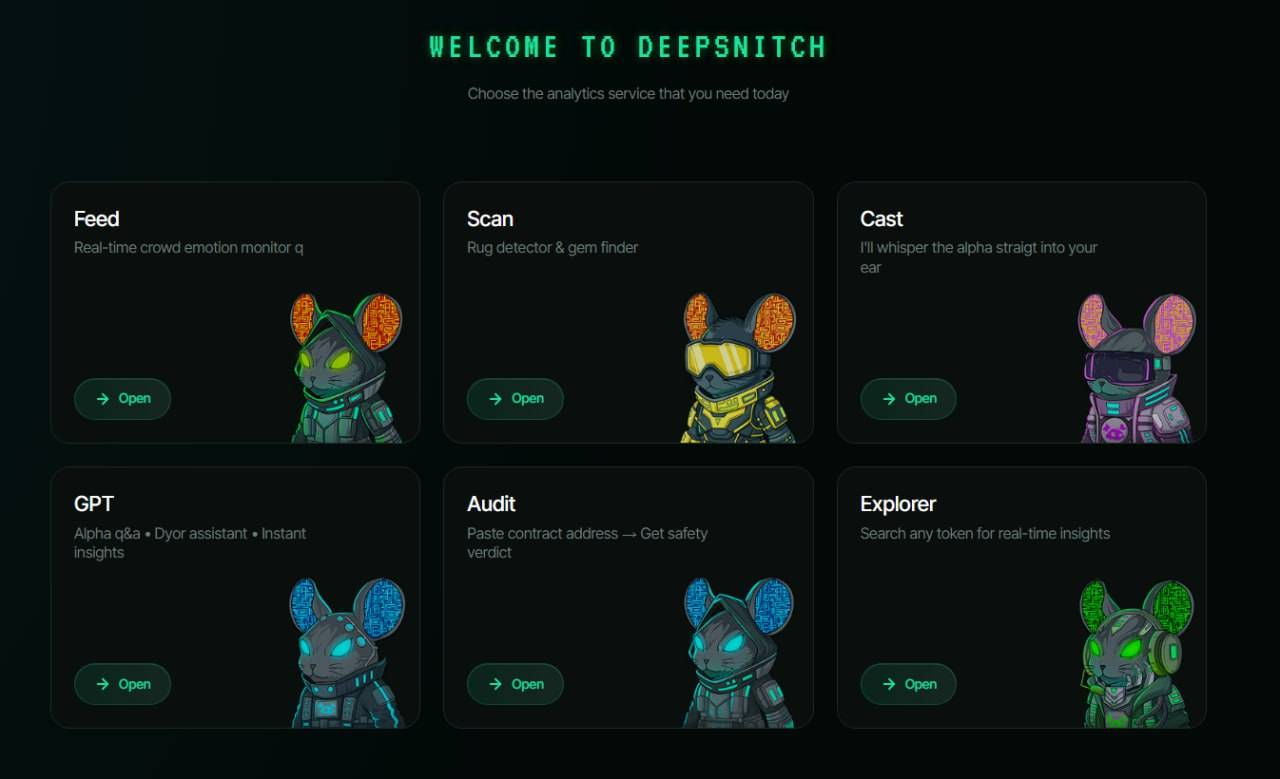
DeepSnitch AI watches over your crypto transactions in real time and cuts off any suspicious activity immediately. That kind of hands-on protection is what separates it from most AI crypto coins that don’t offer much beyond a concept.
But the presale is ending very soon, and there are a few days left to take action. It ends at 11 AM UTC, March 31st, and then the listing on Uniswap is scheduled at 12 pm UTC.
If you want to make massive profits in this cycle, you can make a $10,000 investment before the presale ends. At the current presale price of $0.04669, this gets you about 214,178 DSNT tokens. Since the project is still small and early, a 100x surge to $4.67 per token is a realistic target. At that price, your $10,000 turns into roughly $1 million.
That’s why you need to get in early on a project with real utility. While other AI crypto coins are still trying to prove their value, DeepSnitch AI already has a clear purpose, and the numbers back it up.
BitQuant price prediction
BitQuant recently recorded a 933% increase in 24-hour trading volume as of March 27th, pushing its daily activity past $1.3 million. Within the same period, the RSI remains trapped within a neutral 30-70 range, indicating a completely stagnant price trend that is expected to persist.
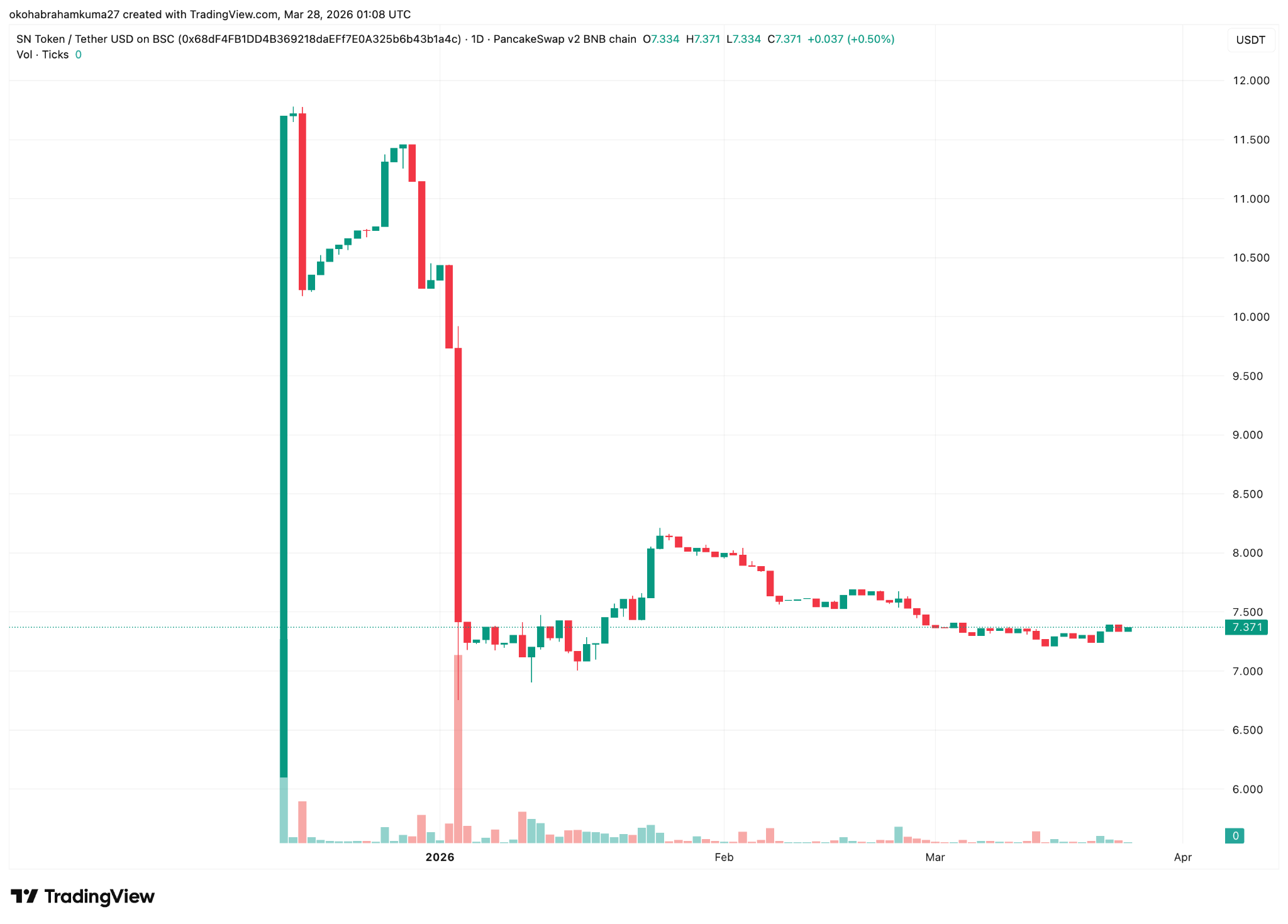
Price predictions for this token estimate that the price will only move from $8.02 in 2026 to $9.75 by the year 2030. Waiting four years to secure a small 20% gain is a highly inefficient capital allocation strategy. You must prioritize high-potential AI crypto coins like DeepSnitch AI to secure explosive multipliers.
NEAR Protocol price prediction
NEAR Protocol currently trades near $1.19 as of March 27th and is within an extreme fear index rating of 13. The technical analysis reveals a completely bearish market sentiment accompanied by a high volatility rate of 7.30%.
Price projections for this AI crypto token predict a devastating 21% decline by the end of 2026, dragging the price down to $0.9337. The long-term projections become even worse over time, expecting a 47% collapse by the year 2030.
Final verdict
Reviewing the potential of DeepSnitch AI confirms that you must enter immediately to secure your position among the top AI crypto coins.
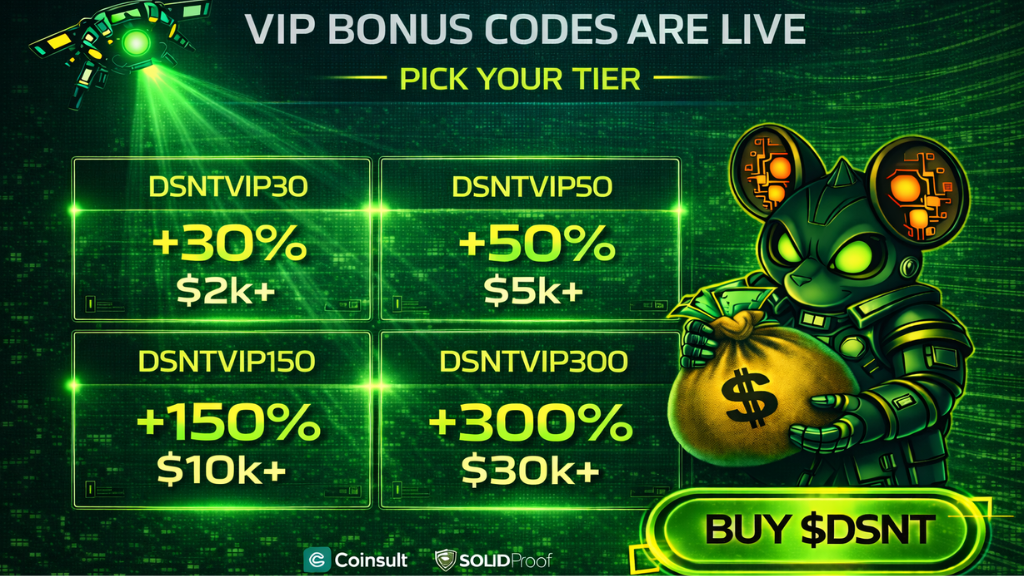
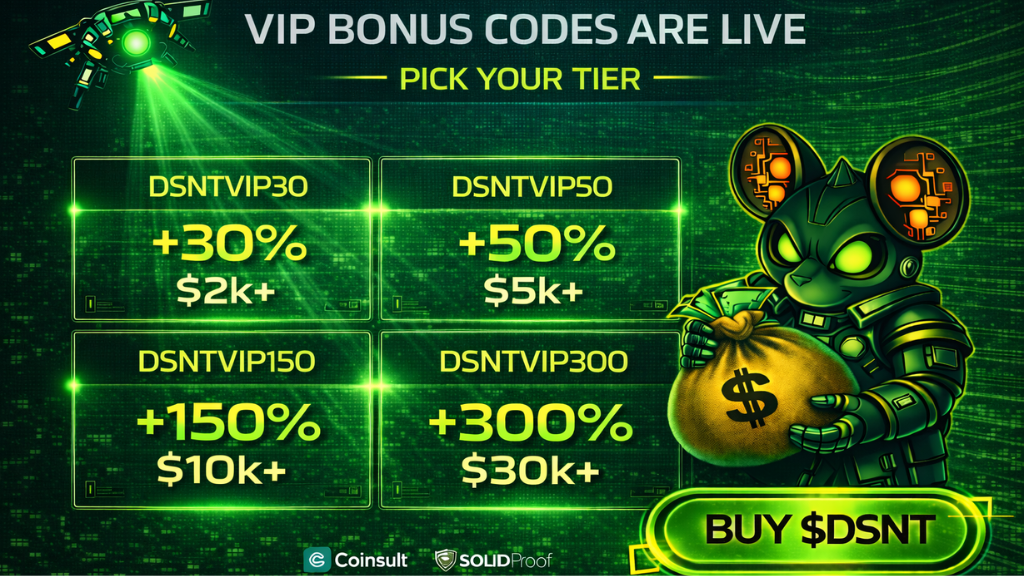
By entering the promo code DSNTVIP150 during checkout, you can even earn a massive 150% bonus. People are joining before the presale ends on March 31st.
Visit the official DeepSnitch AI website, join Telegram, and follow on X for more updates.
FAQs
Which of the top AI crypto projects has big potential?
DeepSnitch AI has the highest potential among many top AI crypto projects because it is starting small but with a tangible utility.
What are the best AI crypto coins?
Among the best AI crypto coins, many investors say DeepSnitch AI is the number one, especially with the presale coming to an end.
What is the best AI crypto token?
The best AI crypto token might be DeepSnitch AI, as it has the potential to deliver over 100x ROI.
Disclaimer: This is a Press Release provided by a third party who is responsible for the content. Please conduct your own research before taking any action based on the content.

Pi Network has started its second migration phase with the required Protocol 21 upgrade. The update sets an April 6 deadline for mainnet node operators and opens the path toward later upgrades that aim to add smart contracts and DeFi tools.
Summary
- Pi Network requires mainnet nodes to upgrade to Protocol 21.2 before the April 6 deadline.
- The roadmap schedules Protocol 22.1 for April and smart contract features for the May rollout.
- Pi traded near $0.174 as RSI and MACD signaled weak momentum and sellers still controlled.
The move also comes as Pi’s token trades near $0.174, far below its all-time high. At the same time, chart indicators show weak momentum as the market waits for the next stage of network changes.
Pi Network has moved from Protocol 20.2 to version 21.2 as part of its second migration phase. The Pi Core Team said all mainnet node operators must complete the upgrade before April 6 to remain connected to the network.
The update focuses on network stability and better node efficiency. It aims to help the system handle heavier traffic while keeping nodes synchronized across the mainnet.
The team warned that nodes that miss the April 6 deadline may lose network connection. That notice places direct pressure on node operators to update their software on time and avoid disruption.
Pi Network framed Protocol 21 as a base layer for future features rather than a full feature release. While new tools will arrive in stages, the current step prepares the network for broader functionality in later protocol versions.
According to the roadmap shared by the Pi team, Protocol 22.1 is scheduled for April 22. Protocol 23.0 is expected to follow on May 18 as the network moves toward smart contract support.
The roadmap also lists features tied to that transition, including a Pi DEX, on-chain liquidity tools, and broader support for decentralized applications. The stated goal is to improve transaction flow and expand network use cases for its user base.
Pi price holds weak tone as traders track indicators
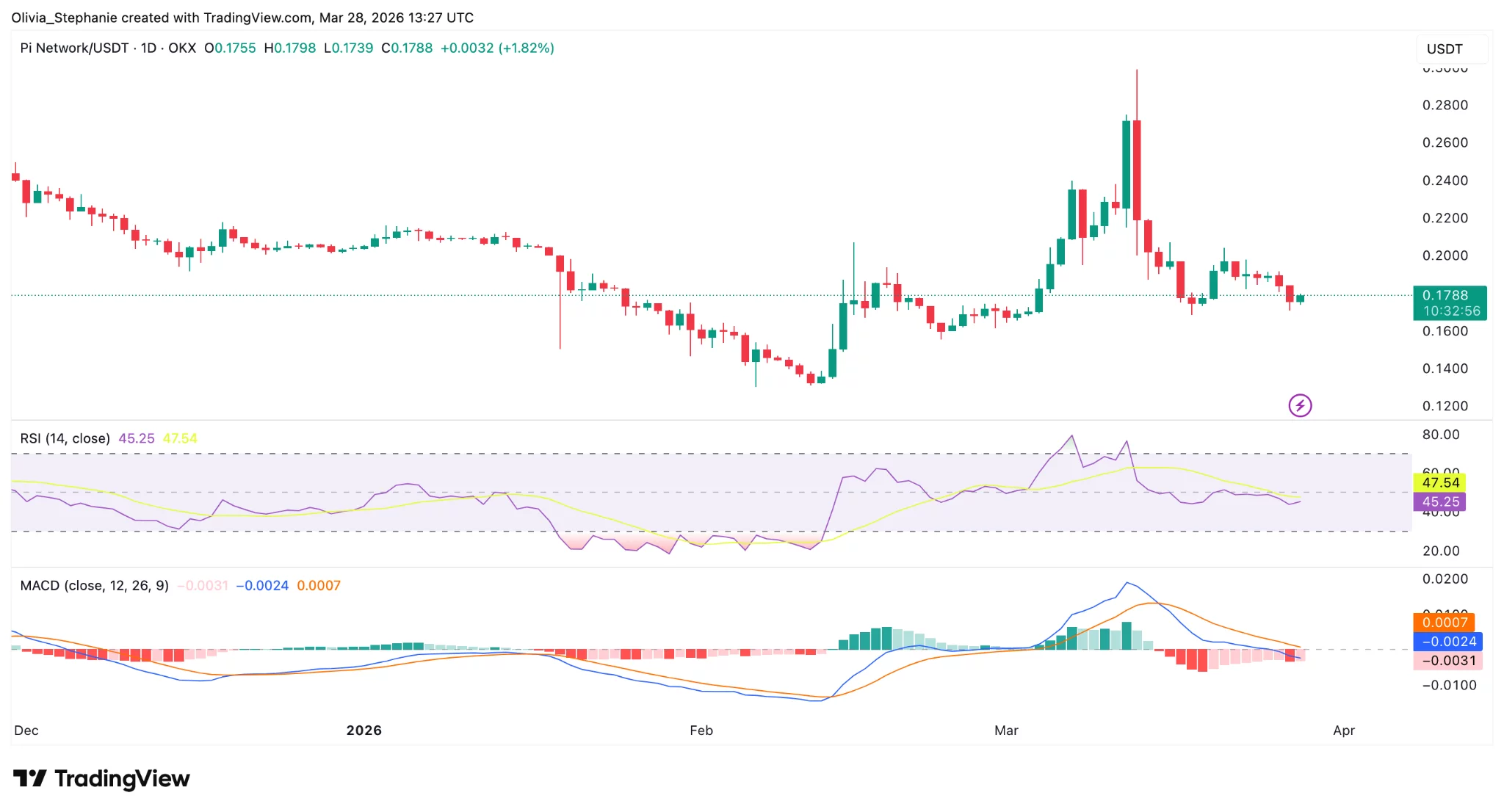
Pi coin traded around $0.174 at the time of reporting, about 78% below its all-time high. That price level reflects a market that remains cautious even as the network moves ahead with technical upgrades.
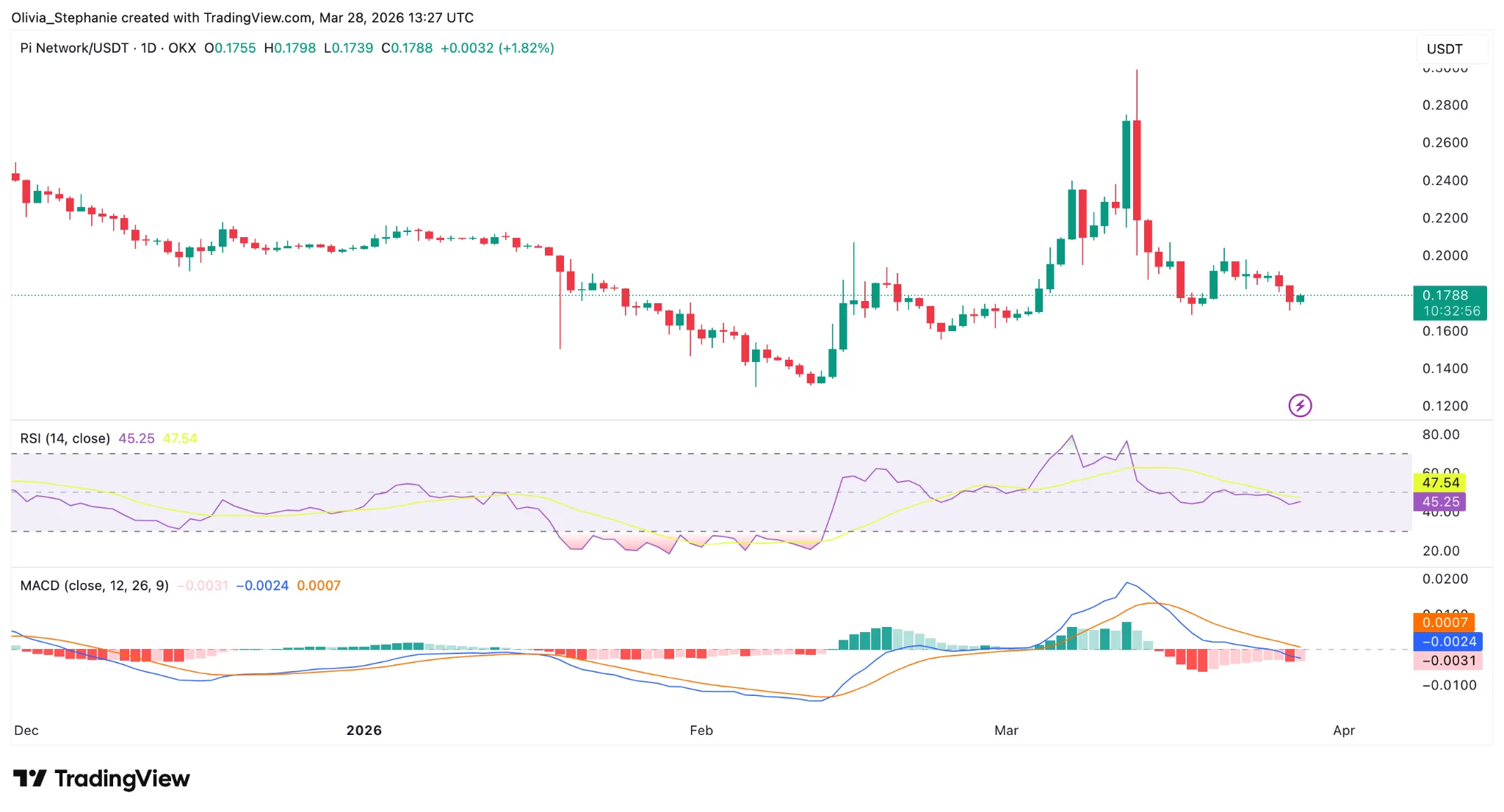
Daily chart indicators showed a soft bearish setup. The RSI stood at 45.29, below both the neutral 50 mark and its moving average of 47.54, which pointed to weak momentum without oversold conditions.
The MACD line remained below the signal line, while the negative histogram showed that sellers still held control, though downside pressure had started to ease.

Twenty One Capital, led by Jack Mallers, has emerged as the second-largest publicly traded Bitcoin treasury, overtaking competitors after MARA reduced its holdings.
While the BTC leaderboard is being reshaped, investors are hell-bent on finding the next crypto to explode, with DeepSnitch AI (DSNT) stealing the spotlight.
So far, the project has proven to be highly profitable among other altcoins set to explode, raising over $2.6 million and up more than 220% to $0.04669.
Already tagged the next 100x crypto, there is optimism among investors about a potential 1000x rally as its deadline draws near.
Twenty One Capital rises to second-largest public Bitcoin holder after major MARA sell-off
Twenty One Capital, led by Jack Mallers, has become the second-largest publicly traded Bitcoin treasury firm. This comes after MARA Holdings offloaded a substantial portion of its Bitcoin reserves, reshaping the leaderboard among corporate BTC holders. The newly established treasury firm now controls 43,514 BTC.
Meanwhile, MARA reportedly sold around 15,133 BTC, worth $1.1 billion, throughout March 2026. Behind Twenty One Capital, Metaplanet now stands as another major player, holding an estimated 35,100 BTC.
Next crypto to explode: DeepSnitch AI presale final week fuels 1000x projections as investors grow optimistic
Since DeepSnitch AI entered its final week, the project has taken over headlines. No other presale is drawing investors like this. With the project already being dubbed the next crypto to explode, the rush is only growing.
With DeepSnitch AI’s utility, traders have been able to rise above volatility and navigate the market with confidence. They can identify and avoid scams, scan for promising opportunities, and get a complete breakdown of any token’s history, all from one streamlined dashboard.
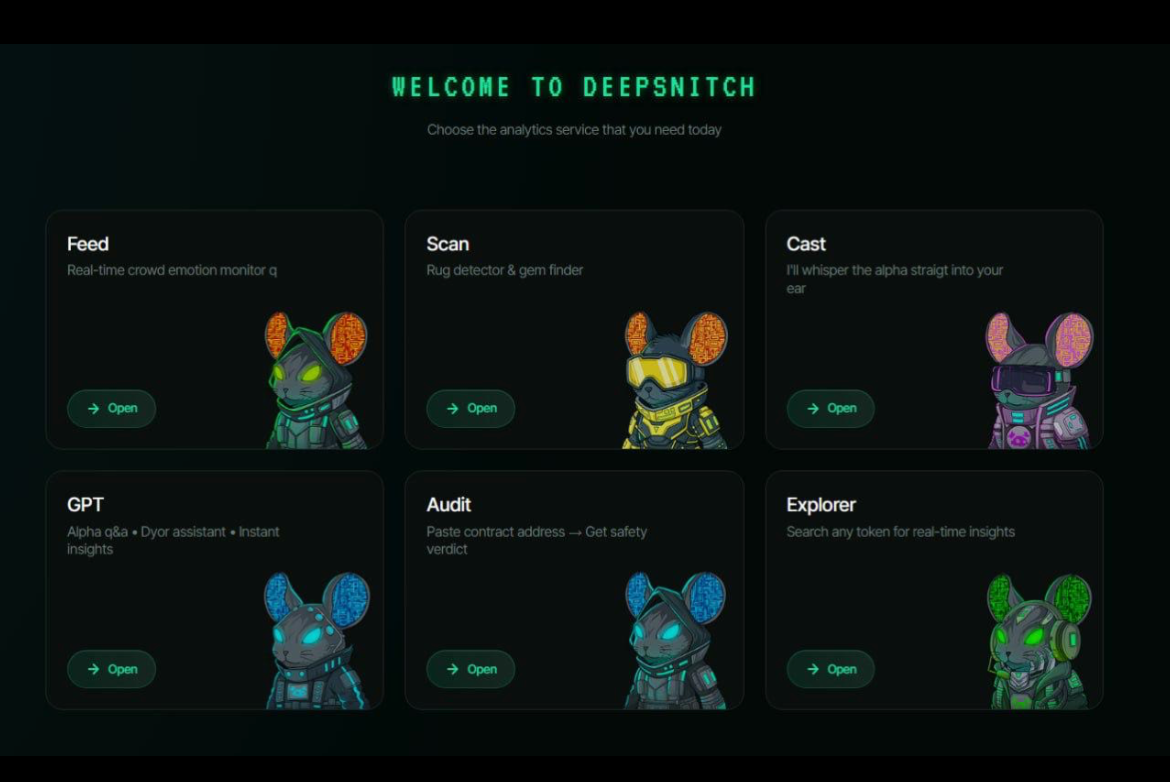
That kind of utility is rare in crypto presales. But DeepSnitch AI isn’t just a presale; it’s becoming the go-to tool for traders. That shift fuels massive adoption, which in turn drives significant price surges and long-term growth.
To start enjoying these benefits before the token hits public trading, now is the time to join. Once the presale ends, DeepSnitch AI will list on Uniswap, with other exchanges likely to follow.
If you’re aiming for a potential 1000x boost to your portfolio, this is the last chance.
Monero records 4% monthly decline as volatility hits the altcoin market
Monero saw a pullback in March amid bearish conditions across altcoins. On March 2, XMR traded at $352, but by March 26, it had fallen to $324, a 4% decline over the period.
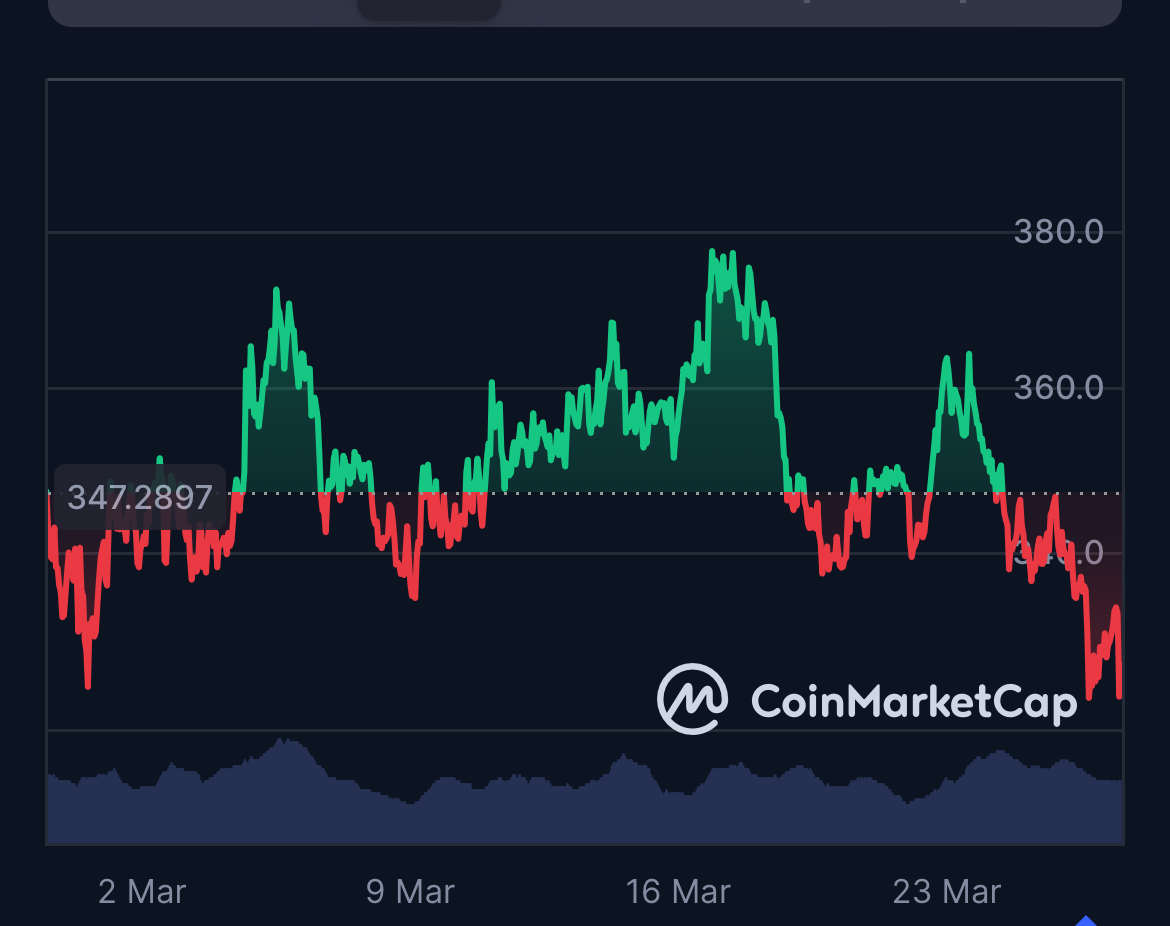
This decline stems from investors rotating out of privacy assets and into more stable DeFi and AI options. However, while Monero is not the top name on the next crypto to explode list, it could see a recovery if the market’s focus shifts back to privacy.
XRP struggles below key levels as $2 breakout hopes face delay
XRP has dropped in price over the last few weeks, with a $2 target taking much longer to reach. The token was $1.45 on March 2, but by March 27, it had slipped to $1.33.
Recent market data show XRP hovering near $1.35 after repeated sell-offs, a level it has been trying to break above for some time.
Conclusion
The DeepSnitch AI presale has taken over the headlines, even amid market volatility. With only a few days to go, this is the only window left to enjoy the exponential gains of what could be the next crypto to explode.
DeepSnitch AI also offers amazing bonuses as a presale incentive for investors. For instance, a $5,000 buy would give 107,090 DSNT tokens. When the 50% bonus code (DSNTVIP50) is applied, the total rises to 160,635 DSNT tokens.
To join the next crypto to explode, visit the DeepSnitch AI website and follow them on X and Telegram for updates.
FAQs
Why is DeepSnitch AI recognized as the next crypto to explode?
DeepSnitch AI is projected as the next crypto to explode because of its huge growth potential and impressive utility. This projection is also fueled by the massive buzz around its March 31 presale deadline.
Can XRP hit $5 this cycle?
The possibility of XRP hitting $5 is not far-fetched, but it depends on market sentiment moving forward. However, instead of living in uncertainty, many are already migrating to DeepSnitch AI for high price action.
What happens after the DeepSnitch AI presale?
After the DeepSnitch AI presale, the token would begin trading on Uniswap. Also, investors who staked and participated in the bonus offers would have seven days to claim bonuses and tokens.
Disclaimer: This is a Press Release provided by a third party who is responsible for the content. Please conduct your own research before taking any action based on the content.
Crypto World
Where Is Bitcoin’s Bottom After a 53% Decline? On-Chain Data and Historical Cycles Have the Answer

TLDR:
- Bitcoin has dropped 53% from its October 2025 peak, trading near $66,000 as of late March 2026.
- Historical bear cycles saw drawdowns of 77–84%, placing the current 53% decline short of prior lows.
- New whale cost basis at $82,800 creates heavy overhead resistance, making sustained recovery structurally difficult.
- The macro support floor sits at $54,300, with a key cluster between $55,900 and $58,900 as the bottom zone.
Bitcoin is down 53% from its peak, raising urgent questions about cycle positioning. As of late March 2026, BTC trades near $66,000, having fallen sharply from its October 2025 high.
On-chain data, whale cost basis levels, and historical drawdown patterns now form the basis of serious cycle analysis.
The evidence points to a market still navigating overhead resistance, with macro support sitting well below current prices.
Historical Cycles Place the 53% Drop in Context
A 53% decline from peak sounds severe, but history tells a more measured story. The 2017–18 bear market saw Bitcoin drop 84% from its high.
The 2021–22 cycle produced a 77% drawdown before a floor formed. By those standards, the current 53% correction has not yet reached the depths that prior cycles demanded.
That context does not rule out further downside. Historically, the 40–70% drawdown range has remained active deep into bear phases.
A move toward the $58,000–$55,000 zone would push the drawdown closer to 55–56%, which still falls within the historical range without triggering alarm. Markets rarely bottom before the majority of participants exhaust their confidence.
On-chain analyst Burak Kesmeci noted that key whale cost basis levels tell a clear structural story. New whales, defined as holders with coins younger than 155 days, carry a cost basis of $82,800.
With BTC near $66,000, this group sits in significant unrealized loss. Recovery becomes structurally difficult when a major holder cohort remains underwater at levels far above current price.
Key Levels That Will Determine Where the Bottom Forms
The Short-Term Holder cost map as of March 26 confirms the overhead picture. The STH Realized Price overall stands at $86,900.
The 1M–3M cohort sits at $82,600, the 3M–6M cohort at $96,000, and the 365-day SMA at $97,700. Every major cost cluster remains well above current price, functioning as resistance rather than support.
The nearest overhead level to watch is the STH 1W–1M cost basis at $70,100. A weekly close above that level would mark the first real structural progress.
However, it remains far from resolving the broader wall of supply sitting between $82,600 and $97,700. Without a close above $86,900, those bands stay active as resistance.
On the downside, two levels form a meaningful support cluster. The Binance User Deposit Address sits at $58,900, and Miner Whale cost basis falls at $55,900.
Below those, the macro support floor based on the Realized Price rests at $54,300. That $54,000–$58,000 range represents the most credible bottoming zone if selling pressure persists through current levels.

GameStop Tuesday 10-K filing to the SEC confirmed the company still holds 4,710 BTC worth approximately $368 million, ending two months of speculation triggered by an onchain transfer that looked like a crypto sale but was actually the setup for a covered-call income strategy.
- Position confirmed: GameStop holds 4,709 BTC pledged as collateral on Coinbase Prime plus one BTC held directly, totaling 4,710 BTC — no sale occurred.
- Covered-call mechanics: The company sold short-dated call options with strike prices between $105,000 and $110,000 per BTC expiring today, March 27, generating a $2.3 million unrealized gain against a $700,000 liability on the options book.
- Accounting impact: Due to Coinbase Credit‘s rehypothecation rights, U.S. GAAP required derecognizing the 4,709 BTC from GameStop’s balance sheet, replacing it with a digital assets receivable — dropping its ranking to approximately 190th among public company Bitcoin holders.
Discover: The best crypto presales gaining institutional momentum right now
GameStop Actually Confirmed Holding Bitcoin, Bullish for Crypto?
The 10-K filed with the SEC shows GameStop pledged 4,709 BTC to Coinbase Credit in January as collateral for an over-the-counter covered-call strategy, not to exit the position.
The company originally purchased 4,710 BTC in May 2025 for approximately $500 million, deploying available cash reserves into Bitcoin at levels that now represent a $131.6 million loss on digital assets for fiscal 2025.

The January onchain transfer to Coinbase Prime that alarmed analysts was preparation for the collateral agreement, not a liquidation signal.
Because Coinbase Credit holds rehypothecation rights, meaning it can reuse, commingle, or sell the pledged coins, U.S. GAAP forced GameStop to derecognize the 4,709 BTC from its balance sheet entirely. The company now records digital asset receivables of $368.3 million as of January 31, 2026, rather than a direct BTC line item.
That distinction matters for benchmarking purposes. BitcoinTreasuries.net adjusted GameStop’s ranking from 21st to approximately 190th among public company holders, not because the coins are gone, but because the accounting treatment obscures direct ownership. One BTC remains directly held on GameStop’s balance sheet.
GameStop’s covered-call pivot is a direct response to Bitcoin’s 45% decline from its all-time high.

Rather than selling into weakness or holding passively with mounting unrealized losses, the company chose to monetize its position through premium income, selling call options that give buyers the right to purchase its BTC at $105,000–$110,000, pocketing the premium if those options expire unexercised.
Discover: The best crypto to diversify your portfolio with
The post GameStop Confirms It Still Holds 4,710 BTC Worth Roughly $368M appeared first on Cryptonews.


Anthropic is testing the most powerful AI model it has ever built, and the world wasn’t supposed to know yet.
A data leak reported by Fortune on Thursday revealed that the AI lab behind Claude has trained a new model called “Mythos,” which it internally describes as “by far the most powerful AI model we’ve ever developed.”
The model was discovered in a draft blog post left in an unsecured, publicly searchable data cache, alongside nearly 3,000 other unpublished assets, according to cybersecurity researchers who reviewed the material.
Anthropic confirmed the model’s existence after Fortune’s inquiry, calling it “a step change” in AI performance and “the most capable we’ve built to date.” The company said it is being trialed by “early access customers” and acknowledged that a “human error” in its content management system caused the leak.
The draft blog post introduced a new model tier called “Capybara,” described as larger and more capable than Anthropic’s existing Opus models, which were previously its most powerful.
“Compared to our previous best model, Claude Opus 4.6, Capybara gets dramatically higher scores on tests of software coding, academic reasoning, and cybersecurity, among others,” the draft said.
It’s the cybersecurity dimension that matters most for the crypto industry. The draft blog post said the model “poses unprecedented cybersecurity risks,” a framing that has direct implications for blockchain security, smart contract auditing, and the escalating arms race between attackers and defenders in DeFi.
This week alone, Ripple announced an AI-driven security overhaul for the XRP Ledger after an AI-assisted red team uncovered more than 10 vulnerabilities in its 13-year-old codebase. Ethereum launched a dedicated post-quantum security hub backed by eight years of research.
And the Resolv stablecoin lost its peg after an attacker exploited a minting contract with no oracle checks and single-key access control, the kind of infrastructure failure that more capable AI tools could potentially identify before an attacker does, or exploit faster than defenders can respond.
For the AI token market, the leak raises a different question. Bittensor’s decentralized network recently released Covenant-72B, a model that competes with Meta’s Llama 2 70B, triggering a 90% rally in TAO and driving subnet tokens to a combined market cap of $1.47 billion.
A “step change” from a centralized lab like Anthropic resets the benchmark that decentralized AI projects need to match. The competitive distance between what a well-funded corporate lab can build and what a permissionless network can produce just got wider.
Anthropic said it is “being deliberate” about the model’s release given its capabilities. The draft blog noted the model is expensive to run and not yet ready for general availability. The company removed public access to the data cache after Fortune contacted it.
The leak itself is its own cautionary tale. A company building what it describes as an AI model with unprecedented cybersecurity capabilities left the announcement of that model in an unsecured, publicly searchable data store due to human error. The irony needs no elaboration.
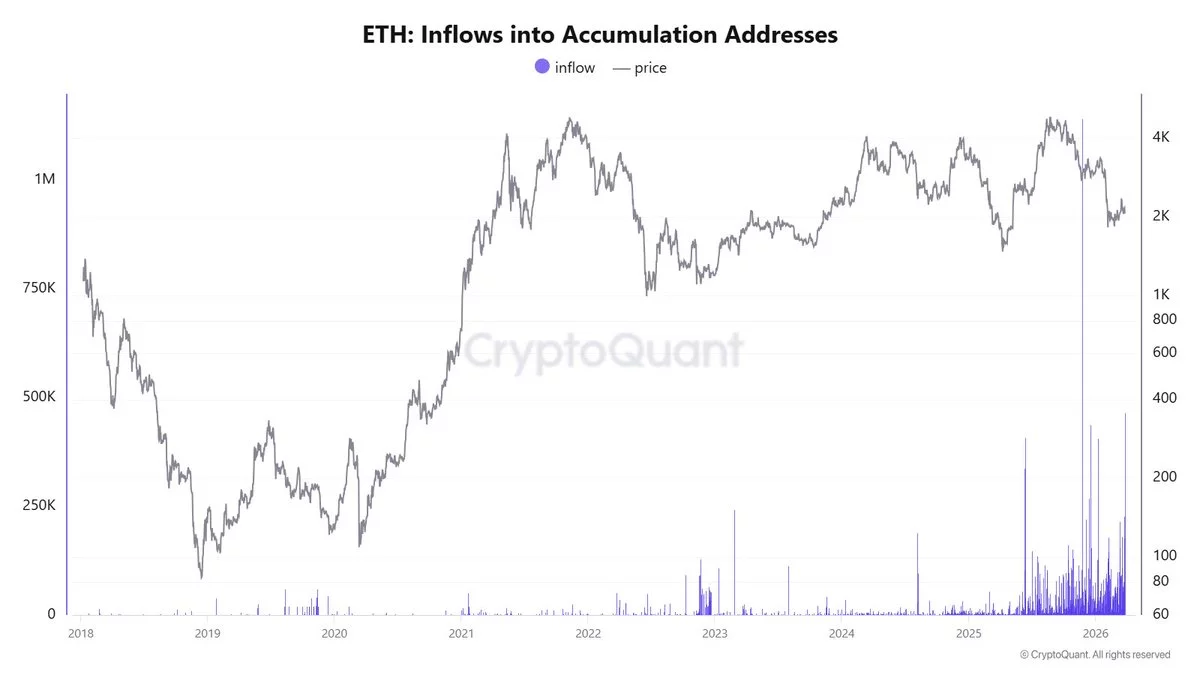
Ethereum (ETH) is drawing fresh market attention as stablecoin activity, whale accumulation, and derivatives data point in different directions.
Summary
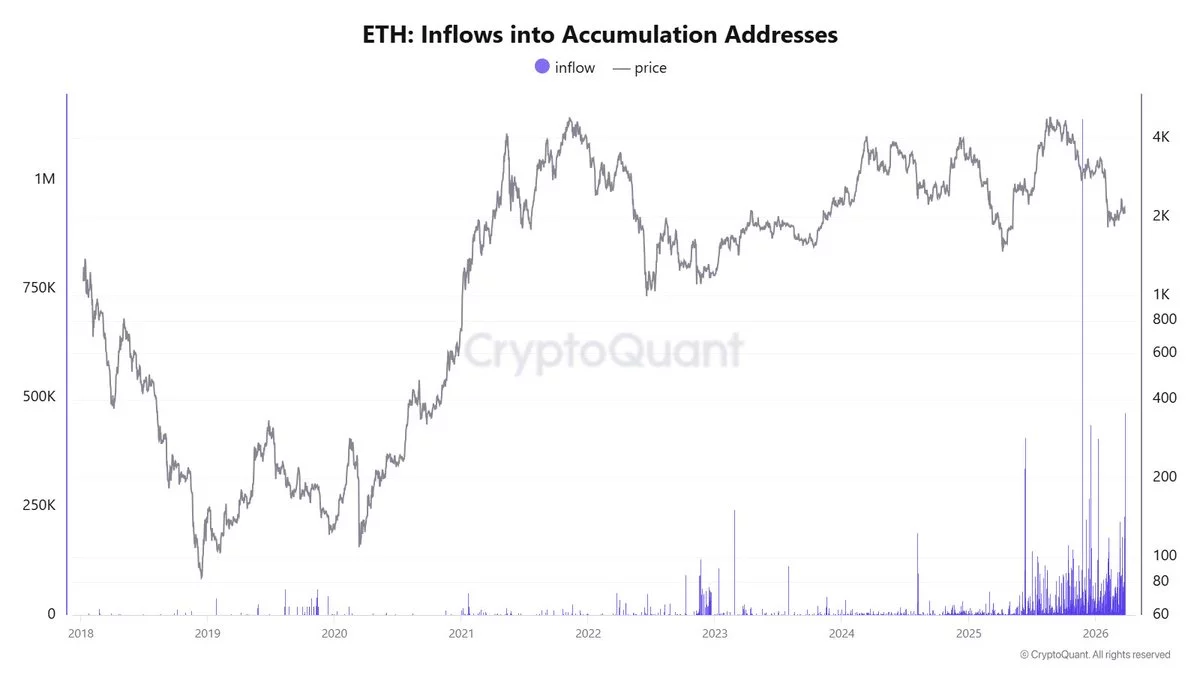
- Whales added 466,500 ETH to accumulation addresses as Ethereum traded near $2,000 during the pullback.
- Coinbase said stablecoin balances and tokenized asset values on Ethereum moved back toward record highs.
- Record leverage in Ethereum futures raised liquidation risk as analysts tracked bearish levels below $2,000.
Recent reports show stronger activity on Ethereum’s base layer, while analysts continue to track downside risks in price and leverage.
Coinbase Institutional said Ethereum has regained some ground relative to layer-2 networks as user activity and stablecoin balances tilt back toward the main chain. The firm also said stablecoin supply and tokenized asset values on Ethereum are near record levels and still showing positive momentum.
The report linked that trend to Ethereum’s role in composability and execution density. Coinbase Institutional also said ETH has outperformed major layer-2 tokens since October 2025, adding to the view that the network is regaining attention as stablecoin rules continue to evolve.
Ethereum traded at around $2,000 at the time of reporting, based on CoinGecko data. The token posted a slight gain over the past 24 hours, though it remained down 7% for the week. Its 24-hour trading volume stood at $13.6 billion, while market capitalization reached about $241.1 billion.
Crypto analyst CW said large holders have increased buying during the recent decline. He wrote that “the largest accumulation since the decline in ETH is taking place” and said 466,500 ETH moved into an accumulation address on March 26. According to the analyst, that marked the second-largest inflow seen in the current cycle.
While accumulation has increased, some market watchers remain cautious on price structure. Crypto Patel said ETH is reacting from a higher-time-frame fair value gap near $2,078 and described the recent setup as weak after a liquidity sweep and lower highs on the four-hour chart.
He said the market is showing “bearish continuation toward sell-side liquidity” and listed downside targets at $1,980, $1,800, and $1,500. He added that a four-hour close above $2,204 would invalidate that setup.
Record futures leverage adds pressure to the market setup
CryptoQuant analyst Carmelo Alemán said Ethereum’s Estimated Leverage Ratio reached 0.99495738 on March 27, its highest level on record. The metric compares futures open interest with ETH reserves on exchanges and shows how large derivatives exposure has become relative to available spot collateral.
Alemán said the reading points to a fragile market structure. He wrote that when leverage reaches extreme levels, even small price moves can trigger rapid liquidations and sharper volatility. That leaves traders watching both on-chain accumulation and derivatives pressure as Ethereum tests its next move.
Disclosure: This article does not represent investment advice. The content and materials featured on this page are for educational purposes only.

Olivier-Maxence Prosper, Grizzlies set sights on Bulls

UK government recommends maximum one hour of screen time for younger children: what the evidence says

Selena Gomez Embraces Married Life, Beauty Empire Growth and Nostalgic Disney Reunion in Busy 2026


-
 NewsBeat3 days ago
Manchester United reach agreement with Casemiro over contract clause amid transfer speculation
-

 News Videos3 days ago
Parliament publishes latest register of MPs’ financial interests
-

 Crypto World7 days ago
Best Crypto to Buy Now: Strategy Just Spent $1.57 Billion on Bitcoin During Fear While Early Investors Quietly Enter Pepeto for 150x Potential
-

 Crypto World7 days ago
Bitcoin Price News: Bhutan Sells $72 Million in BTC Under Fiscal Pressure, but the Smart Money Entering Pepeto Sees What the Market Does Not
-

 Sports5 days ago
Remo Stars and Kano Pillars Strengthen Survival Hopes in NPFL
-

 Sports5 days ago
Gary Kirsten Accuses Pakistan Cricket Board Of ‘Interference’, Mohsin Naqvi Responds
-

 Business6 days ago
No Winner in March 21 Drawing as Prize Rolls to $133 Million for Next
-

 Tech6 days ago
Give Your Phone a Huge (and Free) Upgrade by Switching to Another Keyboard
-

 Tech6 days ago
AI enters the chat: New Seattle dating app relies on tech to facilitate meaningful human connections
-

 News Videos5 days ago
Ch 9 Financial Management Part 1 | Detailed One Shot | Class 12 Business Studies Boards 2026
-

 Tech7 days ago
Today’s NYT Connections Hints, Answers for March 22 #1015
-

 Business2 days ago
Instagram, YouTube Found Responsible for Teen’s Mental Health Struggle in Historic Ruling
-

 Business6 days ago
Will Duke Basketball Win It All? Duke Basketball Enters Second Round as Third Favorite to Claim NCAA Title
-

 Sports5 days ago
2026 Kentucky Derby horses, odds, futures, preview, date: Expert who hit 12 Derby-Oaks Doubles enters picks
-
 Entertainment5 days ago
Cynthia Bailey Dishes on ‘RHOA’ Season 17, Discusses Kandi
-

 Tech5 days ago
Samsung will soon let you control smart home devices from your car’s dashboard
-

 NewsBeat17 hours ago
The Story hosts event on Durham’s historic registers
-
 NewsBeat6 days ago
Update on Wisbech river crash as search for teenage boy enters fifth day
-
 NewsBeat3 days ago
Tesco is selling new Cadbury Dairy Milk bar and people can’t wait to try it
-

 Tech7 days ago
SteamOS update adds support for Steam Machine and other non-Valve hardware
You must be logged in to post a comment Login