
Business
AZ Gov. Hobbs vetoes GOP bill to rename Loop 202 after Charlie Kirk


PHOENIX — Arizona will not rename the Loop 202 freeway after conservative activist Charlie Kirk following Democratic Gov. Katie Hobbs’ veto of a Republican-backed bill on Friday, March 27, 2026, in a move that reignited partisan tensions over public memorials and the legacy of the slain Turning Point USA founder.

Hobbs rejected Senate Bill 1010, which sought to designate the entire 78-mile Loop 202 — also known regionally as the Red Mountain Freeway, Santan Freeway and Congressman Ed Pastor Freeway — as the “Charlie Kirk Loop 202.” The legislation, sponsored by Senate President Warren Petersen, would have required the Arizona Department of Transportation to install a “reasonable amount” of new signage bearing the name while retaining existing regional designations.
In her veto message, Hobbs acknowledged Kirk’s assassination as “a tragic and horrifying act of violence” but argued that renaming roadways should remain a nonpartisan process rather than “the center of political games.” She emphasized adherence to existing traditions for highway naming, which typically involve broader consensus and avoid direct legislative overrides of established protocols.
The bill passed the Republican-controlled Senate on Feb. 18 and the House on March 18 along party lines, with no Democratic support. It arrived on Hobbs’ desk shortly before the veto, marking the second recent rejection of Kirk-related legislation after she blocked a specialty license plate proposal earlier in March.
Background on Charlie Kirk and the Proposal
Charlie Kirk, who founded Turning Point USA in 2012 as a college student, built the organization into a major conservative youth movement with headquarters in the Phoenix area near portions of Loop 202. Kirk, 32 at the time of his death, was assassinated in September 2025 in what authorities described as a targeted attack. His killing drew widespread condemnation across political lines while intensifying debates over political violence and free speech.
Supporters of the renaming, primarily Republicans, viewed the measure as a fitting tribute to Kirk’s influence on young conservatives and his Arizona roots. They argued the freeway’s proximity to Turning Point USA’s operations made the honor symbolically appropriate and that swift legislative action honored his memory without unnecessary delay.
Critics, including Democrats and some transportation advocates, contended that the bill bypassed standard naming procedures, which often require community input, time for public reflection and avoidance of politicizing infrastructure. Opponents noted that Loop 202 already carries multiple sectional names honoring diverse figures, including the late Democratic Congressman Ed Pastor, and warned against setting a precedent for rapid, partisan-driven renamings.
Hobbs’ Veto Rationale and Political Context
In statements accompanying the veto, Hobbs stressed that government acts like highway naming “should remain nonpartisan” and not become tools for political theater. Her message echoed language from the earlier license plate veto, signaling a consistent stance against what she described as rushed commemorations tied to recent tragedies.
The veto comes amid Arizona’s deeply divided political landscape. Republicans hold majorities in both legislative chambers, but Hobbs’ position as a Democratic governor elected in 2022 gives her veto power, which the GOP would need a two-thirds majority to override — a high bar unlikely to be met on this measure.
The Loop 202, a key east-west and southern beltway around metropolitan Phoenix, serves heavy commuter traffic in the East Valley and connects growing suburbs. Daily drivers on segments like the Red Mountain or Santan portions will continue seeing existing signage without the addition of Kirk’s name.
Reactions from Lawmakers and Advocates
Republican leaders expressed disappointment. Senate President Petersen and other sponsors framed the bill as a simple, meaningful honor for a prominent Arizonan whose work inspired thousands. Some conservatives accused Hobbs of politicizing the issue herself by blocking a tribute to a victim of violence.
Democratic lawmakers and progressive groups welcomed the veto, arguing it preserved the integrity of public infrastructure decisions and prevented the freeway system from becoming a battleground for ideological score-settling. Transportation experts noted that frequent renamings can confuse drivers and increase costs for signage and mapping updates.
Turning Point USA issued a statement mourning the veto while reaffirming commitment to Kirk’s vision of engaging young people in conservative principles. The organization stopped short of immediate calls for an override, focusing instead on continuing Kirk’s legacy through programming.
Broader Implications for Memorial Naming in Arizona
The episode highlights ongoing debates in Arizona and nationally over how states commemorate public figures, especially in polarized times. Highway naming has long served as a low-cost way to honor veterans, civil rights leaders, politicians and community icons, but rapid legislative pushes tied to recent events have sparked concerns about precedent.
Arizona maintains processes for naming through the state transportation board, which typically allows for community proposals and review periods. Critics of SB 1010 said the bill short-circuited those safeguards, potentially opening the door to future disputes over other roadways.
Similar controversies have played out elsewhere, with debates over renaming bridges, buildings or parks after polarizing figures. In Arizona, the veto aligns with Hobbs’ pattern of rejecting measures she views as overly partisan, including previous attempts at symbolic legislation.
As of March 29, 2026, no immediate plans for an override vote had been announced, and Loop 202 signage will remain unchanged. The Arizona Department of Transportation confirmed it would not proceed with any modifications related to the failed bill.
Kirk’s Enduring Influence Despite the Veto
While the freeway will not bear his name, Kirk’s impact on Arizona conservatism remains significant. Turning Point USA continues operations from its Phoenix-area base, hosting events, training activists and influencing campus politics nationwide. Supporters point to his role in mobilizing young voters and promoting limited government as reasons his memory deserves public recognition, even if not through infrastructure.
Opponents counter that true legacies are built through ideas and actions rather than government-mandated signage, and that hasty memorials risk diminishing the gravity of public honors.
The veto closes one chapter in the post-assassination discussion around Kirk but is unlikely to end broader conversations about political violence, youth engagement and how Arizona balances commemoration with neutrality in public spaces.
For commuters on Loop 202, daily drives through the East Valley and South Mountain areas will proceed without new tributes or added signage costs. The 78-mile corridor, vital for connecting Phoenix suburbs and relieving traffic on parallel routes like Interstate 10, retains its current mix of regional designations honoring both bipartisan figures and geographic features.
As Arizona’s legislative session continues, observers expect further clashes over symbolic bills, with Hobbs positioned as a check on Republican priorities in a divided state. Whether future proposals for Kirk-related honors emerge — or similar measures for other deceased leaders — remains to be seen.
In the meantime, the Loop 202 freeway stands as a reminder of infrastructure’s role in everyday life and the challenges of assigning symbolic meaning in an era of deep political division.


Osaic chief market strategist Phil Blancato analyzes the latest trends from CES 2026, focusing on A.I.’s impact on Amazon’s future and more on ‘Making Money.’
Every spring, Coca-Cola bottles look a little different, sporting a bright yellow cap rather than the usual red. While social media has compared the seasonal product to Mexican Coke which uses cane sugar instead of high fructose corn syrup, the origin of the cap change traces back to a rabbi in Atlanta, Ga.
Rabbi Tobias Geffen, who led Atlanta’s Orthodox Jewish community and served as the rabbi of Congregation Shearith Israel, is credited with making the iconic beverage kosher and, eventually, giving it approval for consumption during Passover, according to The Atlanta Jewish Times.
Jews who keep kosher are forbidden from eating certain items, including pork and shellfish. They are also barred from eating beef that is not certified kosher. During Passover, these guidelines become more stringent, as many Jews refrain from consuming grain products, taking corn syrup off the table.
COCA-COLA’S SUGARCANE SHIFT: STATES THAT COULD BENEFIT FROM THE BEVERAGE GIANT’S LATEST MOVE

Coca-Cola bottles with yellow caps have drawn curiosity online as social media foodies compare the Passover product to Mexican Coke. (Rachel Wolf/Fox News Digital / Fox News)
In 1935, the Coca-Cola Company allowed Geffen to see the ingredients of the beverage, while preserving its secret by not revealing the proportions. He found that the beverage contained two items of concern: glycerin derived from non-kosher beef tallow and corn syrup.
While Coke failed Geffen’s initial inquiry, the company’s scientists found that glycerin derived from cottonseed and coconut oil could be used without altering the soda’s taste, solving one problem. After the ingredient change, Geffen gave it his seal of approval for consumption, but Coke was still forbidden during Passover. However, the company’s scientists were able to replace the grain-derived ingredients with cane and beet sugars, allowing Jews to enjoy the beverage during Passover and all yearlong.
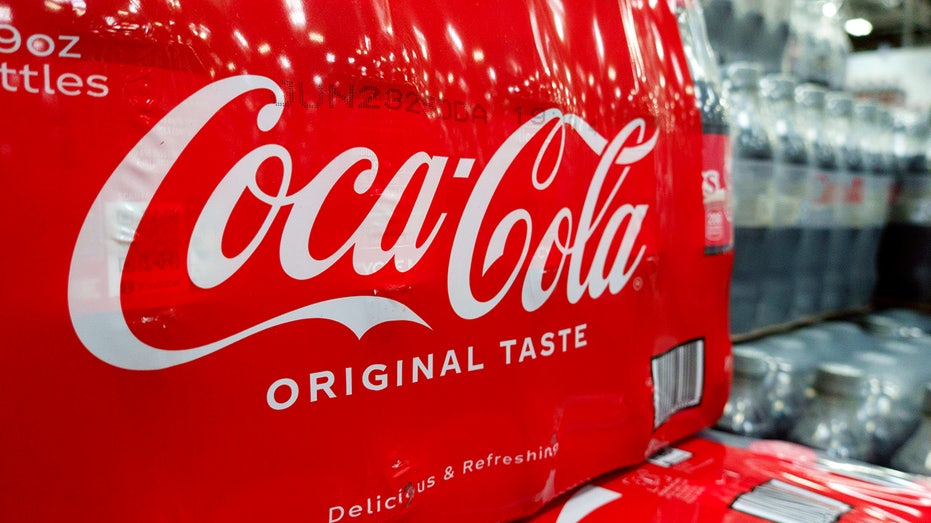
Cases of Coca-Cola soda are displayed at a Costco Wholesale store on April 27, 2025, in San Diego, Calif. (Kevin Carter/Getty Images / Getty Images)
After Coca-Cola shifted to high fructose corn syrup in its standard U.S. formula in the 1980s, the Passover version remained a seasonal exception. Every year in the weeks leading up to Passover, shelves fill with Coca-Cola products with the bright yellow caps, signifying that they are sweetened with cane sugar, not corn syrup.
The renewed interest in the cane sugar soda came as Coca-Cola started to expand its use of the sweetener in the U.S. beyond the seasonal product. In October 2025, Coca-Cola began rolling out cane sugar soda packaged in glass bottles. The change garnered the support of President Donald Trump, who said the cane sugar soda was “better” than the high fructose corn syrup alternative. The product was introduced in select markets, though Coca-Cola has not indicated whether it plans to shift away from high fructose corn syrup entirely.

In this photo illustration, Coke beverages are displayed in an ice-cooler at a park on July 17, 2025, in Austin, Texas. (Brandon Bell/Getty Images / Getty Images)
GET FOX BUSINESS ON THE GO BY CLICKING HERE
In recent years, the yellow cap bottles have attracted more attention on social media as some began comparing them to Mexican Coke, which is sweetened with cane sugar. While Mexican Coke is typically sold in glass bottles, and generally costs more than the soda produced in the U.S., the version that is available around Passover has the sweetener without the higher price tag.
Some social media foodies have encouraged followers to stock up on the seasonal edition of the soda because of the lower price. The posts have sparked discussions about why the cane sugar version was not available year-round. This could be due to a supply issue, as Coca-Cola Company’s Chief Financial Officer John Murphy told Bloomberg News that there “is only a certain amount of cane sugar available in the United States.”
Coca-Cola did not immediately respond to FOX Business’ request for comment.
FOX Business’ Sophia Compton, Daniella Genovese and Alex Koch contributed to this report.

Analyst estimates highlight select BSE mid-cap stocks with strong upside potential over the next year. Based on Trendlyne data, these stocks offer projected gains driven by improving fundamentals and positive sentiment. With consensus Buy or Strong Buy ratings, they present compelling opportunities for investors seeking high-growth mid-cap ideas.


I am a stock analyst with over 20 years of experience in quantitative research, financial modeling, and risk management. My focus is on equity valuation, market trends, and portfolio optimization to uncover high-growth investment opportunities. As a former Vice President at Barclays, I led teams in model validation, stress testing, and regulatory finance, developing a deep expertise in both fundamental and technical analysis. Alongside my research partner (also my wife), I co-author investment research, combining our complementary strengths to deliver high-quality, data-driven insights. Our approach blends rigorous risk management with a long-term perspective on value creation. We have a particular interest in macroeconomic trends, corporate earnings, and financial statement analysis, aiming to provide actionable ideas for investors seeking to outperform the market.
Analyst’s Disclosure: I/we have no stock, option or similar derivative position in any of the companies mentioned, and no plans to initiate any such positions within the next 72 hours. I wrote this article myself, and it expresses my own opinions. I am not receiving compensation for it (other than from Seeking Alpha). I have no business relationship with any company whose stock is mentioned in this article.
Seeking Alpha’s Disclosure: Past performance is no guarantee of future results. No recommendation or advice is being given as to whether any investment is suitable for a particular investor. Any views or opinions expressed above may not reflect those of Seeking Alpha as a whole. Seeking Alpha is not a licensed securities dealer, broker or US investment adviser or investment bank. Our analysts are third party authors that include both professional investors and individual investors who may not be licensed or certified by any institute or regulatory body.


Ian Bezek is a former hedge fund analyst at Kerrisdale Capital. He has spent the decade living in Latin America, doing the boots-on-the ground research for investors interested in markets such as Mexico, Colombia, and Chile. He also specializes in high-quality compounders and growth stocks at reasonable prices in the US and other developed markets. Ian leads the investing group Ian’s Insider Corner. Features of the group include: the Weekend Digest which covers everything from new ideas to updates on current holdings and macro analysis, trade alerts, an active chat room, and direct access to Ian. Learn More.
Analyst’s Disclosure: I/we have a beneficial long position in the shares of U either through stock ownership, options, or other derivatives. I wrote this article myself, and it expresses my own opinions. I am not receiving compensation for it (other than from Seeking Alpha). I have no business relationship with any company whose stock is mentioned in this article.
Seeking Alpha’s Disclosure: Past performance is no guarantee of future results. No recommendation or advice is being given as to whether any investment is suitable for a particular investor. Any views or opinions expressed above may not reflect those of Seeking Alpha as a whole. Seeking Alpha is not a licensed securities dealer, broker or US investment adviser or investment bank. Our analysts are third party authors that include both professional investors and individual investors who may not be licensed or certified by any institute or regulatory body.
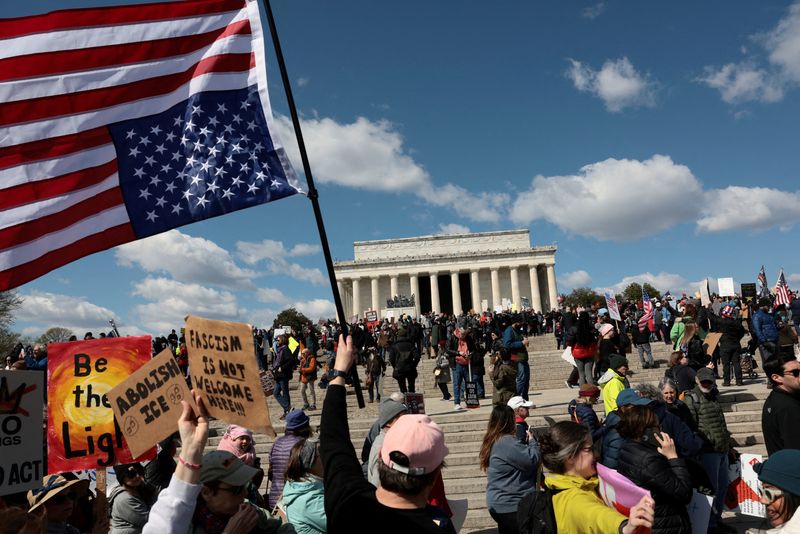

Anti-Trump ’No Kings’ rallies pop up in thousands of US cities

NEW YORK — Bitcoin rose steadily on Sunday, March 29, 2026, climbing 0.72% to trade at $66,808.99 as of 12:14 p.m. UTC, extending a modest recovery in the broader cryptocurrency market amid easing geopolitical concerns and steady institutional inflows.
The world’s largest cryptocurrency by market capitalization has now reclaimed the $66,000 level after fluctuating in a relatively tight range over the past week. The daily gain of $477.29 reflected renewed buying interest from both retail and institutional investors, though trading volumes remained moderate on the weekend..

Bitcoin’s market capitalization stood near $1.32 trillion, while total crypto market capitalization hovered around $2.45 trillion. Ethereum traded near $2,650, up roughly 1.1%, while Solana and other major altcoins posted similar modest gains.
Drivers Behind Today’s Move
Analysts pointed to several factors supporting Bitcoin’s price action. Diplomatic signals suggesting possible de-escalation in Middle East tensions helped reduce some risk-off sentiment that had weighed on risk assets earlier in the week. Additionally, continued inflows into U.S. spot Bitcoin ETFs provided underlying demand, with several funds reporting positive net flows in recent sessions.
Institutional interest remains a key pillar of Bitcoin’s current price support. Companies and investment funds have maintained their accumulation strategy, viewing Bitcoin as a long-term store of value and inflation hedge. MicroStrategy and other public companies continued adding to their Bitcoin treasuries, reinforcing confidence among large holders.
Technical indicators showed Bitcoin holding above key support levels near $64,000–$65,000. The relative strength index (RSI) remained in neutral territory, suggesting room for further upside without immediate overbought conditions. However, resistance around $68,000–$70,000 could limit near-term gains unless stronger catalysts emerge.
Broader Market Context
The cryptocurrency market has shown resilience in early 2026 despite macroeconomic uncertainties and regulatory developments. Bitcoin’s year-to-date performance remains positive, though it has traded well below its all-time high near $109,000 recorded in late 2025. The current price level represents a consolidation phase after significant volatility in prior months.
Ethereum continued to benefit from ongoing developments in its ecosystem, including Layer-2 scaling solutions and increased decentralized finance activity. Solana maintained strong performance in the DeFi and meme-coin sectors, while newer tokens tied to artificial intelligence and real-world asset tokenization also attracted attention.
Regulatory news remained mixed. In the United States, lawmakers continued debating clearer frameworks for digital assets, while several countries in Asia and Europe advanced pilot programs for central bank digital currencies. These developments have created both opportunities and uncertainty for market participants.
Institutional and ETF Influence
Spot Bitcoin ETFs have played a transformative role since their approval in early 2024. Cumulative inflows have exceeded $50 billion, providing a structural bid that many analysts believe underpins current price floors. BlackRock, Fidelity and Ark Invest remain among the largest holders through their ETF vehicles.
Corporate adoption has also accelerated. More companies are allocating portions of their balance sheets to Bitcoin, citing its scarcity and potential as a hedge against fiat currency depreciation. This trend has helped stabilize Bitcoin during periods of traditional market weakness.
Risks and Outlook
Despite today’s gains, risks remain. Geopolitical developments in the Middle East could still trigger volatility if tensions escalate. Macroeconomic data, including upcoming U.S. inflation figures and Federal Reserve policy signals, will likely influence risk appetite in coming weeks.
Some analysts warn that Bitcoin could face selling pressure if it fails to break decisively above $70,000 soon. Others remain bullish, forecasting prices could test $80,000–$90,000 by mid-2026 if institutional momentum continues and regulatory clarity improves.
For retail investors, experts recommend caution and dollar-cost averaging rather than trying to time short-term moves. Bitcoin’s historical volatility means sharp swings in either direction remain possible.
What This Means for Investors
Bitcoin’s move above $66,800 today reinforces its status as the market leader capable of driving sentiment across the entire crypto sector. As the 2026 bull cycle narrative builds, many observers see current levels as an accumulation zone before potential further upside later in the year.
The coming weeks will be critical. Key events include any fresh ETF flow data, corporate earnings from crypto-related companies, and developments around potential U.S. regulatory bills. Bitcoin’s correlation with traditional markets, particularly Nasdaq tech stocks, also remains an important factor to watch.
For now, the cryptocurrency market appears cautiously optimistic. Bitcoin’s ability to hold gains and push higher on relatively light weekend volume suggests underlying strength. Whether this momentum carries into next week will depend on broader risk sentiment and any headline catalysts.
Investors and traders should continue monitoring on-chain metrics, ETF flows, and macroeconomic indicators for the clearest picture of Bitcoin’s near-term direction. As always, cryptocurrency investments carry substantial risk, and participants should conduct thorough research and consider their own risk tolerance.


I am an avid investor with a major focus on small cap companies with experience in investing in US, Canadian, and European markets. My investment philosophy to generating great returns on the stock market revolves around identifying mispriced securities by understanding the drivers behind a company’s financials, and ultimately, most often revealed by a DCF model valuation. This methodology doesn’t limit an investor into rigid traditional value, dividend, or growth investing, but rather accounts for all of a stock’s prospects to determine the risk-to-reward.
Analyst’s Disclosure: I/we have no stock, option or similar derivative position in any of the companies mentioned, but may initiate a beneficial Long position through a purchase of the stock, or the purchase of call options or similar derivatives in LOVE over the next 72 hours. I wrote this article myself, and it expresses my own opinions. I am not receiving compensation for it (other than from Seeking Alpha). I have no business relationship with any company whose stock is mentioned in this article.
Seeking Alpha’s Disclosure: Past performance is no guarantee of future results. No recommendation or advice is being given as to whether any investment is suitable for a particular investor. Any views or opinions expressed above may not reflect those of Seeking Alpha as a whole. Seeking Alpha is not a licensed securities dealer, broker or US investment adviser or investment bank. Our analysts are third party authors that include both professional investors and individual investors who may not be licensed or certified by any institute or regulatory body.
Business
(VIDEO) Kimi Antonelli Wins 2026 Japanese Grand Prix at Suzuka in Dominant Mercedes Display

SUZUKA, Japan — Mercedes rookie Kimi Antonelli claimed a commanding victory in the 2026 Japanese Grand Prix on Sunday, March 29, becoming the youngest driver to win two races in a single season and strengthening his early championship challenge.
The 18-year-old Italian led from pole position and controlled the 53-lap race at the iconic Suzuka circuit, finishing more than 13 seconds ahead of McLaren’s Oscar Piastri. Ferrari’s Charles Leclerc completed the podium in third, while Antonelli’s Mercedes teammate George Russell recovered to fourth after a difficult qualifying.

Antonelli’s win marked Mercedes’ third consecutive victory in 2026 and extended the team’s early dominance under the new regulations. The result also propelled the young Italian to the top of the drivers’ championship standings for the first time in his fledgling career.
Race Summary and Key Moments
Antonelli started strongly from pole and maintained a comfortable lead throughout, managing tyre wear effectively on the demanding Suzuka layout. Light rain in the early stages added complexity, but the Mercedes driver navigated the tricky conditions with maturity beyond his years.
Piastri delivered McLaren’s first podium of the season after a solid recovery drive, while Leclerc held off Russell in a tense battle for third. Lando Norris finished fifth for McLaren, with Lewis Hamilton sixth in the second Ferrari. Red Bull’s Max Verstappen could only manage eighth, highlighting the team’s ongoing struggles with the 2026 car.
A significant incident involved Oliver Bearman, who walked away unhurt from a heavy crash, triggering a brief safety car period that shuffled the order but did not derail Antonelli’s march to victory.
Antonelli’s Rapid Rise
The former Formula 2 champion has made an extraordinary start to his Formula 1 career. After winning in China earlier in the season, his Suzuka triumph cements his status as one of the brightest young talents in the sport. Team principal Toto Wolff praised Antonelli’s composure and race management, calling it a “special performance on a special track.”
Mercedes now leads the constructors’ championship convincingly, while Antonelli sits atop the drivers’ standings ahead of Russell and Leclerc.
Suzuka’s Enduring Challenge
The Japanese Grand Prix at Suzuka remains one of Formula 1’s most revered events. The figure-eight layout, high-speed corners like 130R, and technical demands reward precision and car balance. Mercedes clearly brought the strongest package to Japan, excelling in both qualifying and race pace on a circuit that traditionally favours high-downforce setups.
Ferrari showed improved form compared with early races, while McLaren showed signs of recovery after earlier disappointments. Red Bull and Verstappen continue searching for answers, with the Dutchman’s eighth-place finish underscoring the team’s current difficulties.
Championship Implications
With three races completed in the 2026 season, the title battle is already taking shape. Mercedes looks formidable, but Ferrari and McLaren remain close enough to challenge if development progresses favourably. Antonelli’s early success has added fresh excitement to the championship narrative, with many comparing his poise to past young stars.
The result also highlights the depth of talent coming through Formula 1’s junior categories. Antonelli’s seamless transition to the top level reflects well on Mercedes’ driver development program.
Broader Context and Fan Reaction
Suzuka delivered its usual mix of drama and high-speed action, delighting the passionate Japanese fans who packed the grandstands. The cherry blossom season added visual beauty to an already spectacular venue.
Social media erupted with praise for Antonelli, while Verstappen supporters expressed concern over Red Bull’s form. The race also renewed debates about the 2026 regulations and their effect on competitive balance.
As the season heads toward the next round, teams will analyse data from Suzuka to refine their packages. For Antonelli, the focus will be on maintaining consistency and building on this momentum. For his rivals, the challenge is clear: close the gap to Mercedes before the championship battle intensifies.
The 2026 Japanese Grand Prix will be remembered as the day a teenage sensation took another major step toward potential greatness. Kimi Antonelli’s victory at Suzuka marks another milestone in what is shaping up to be a fascinating season.
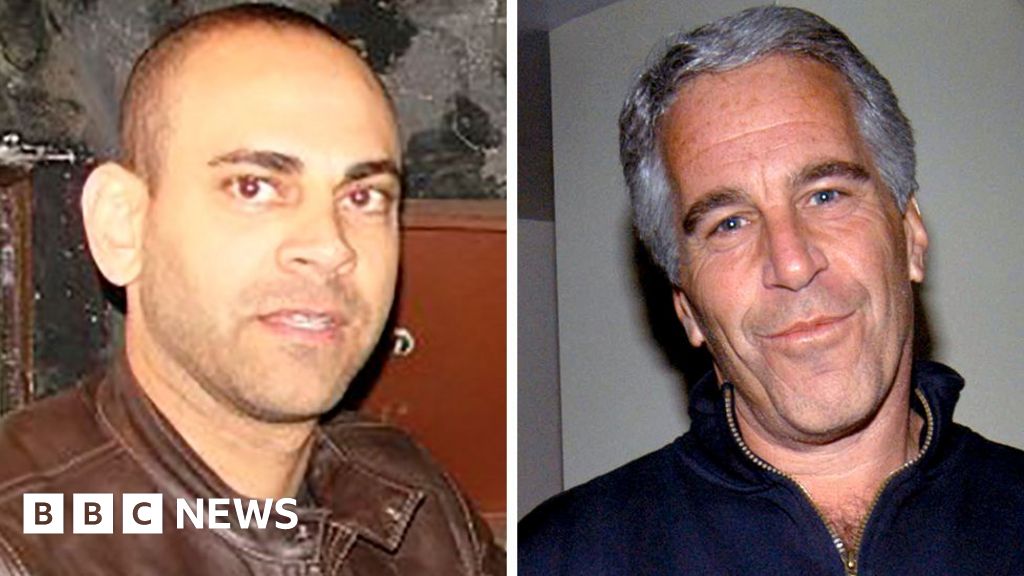
Ramsey Elkholy introduced the financier to women as young as 18 in correspondence over almost a decade.
Business
Mutual fund NFO: Only one passive fund opens for subscription this week. Check dates, details
A new passive fund from Zerodha is launching this week. The Zerodha Nifty LargeMidcap250 Plus 8-13 yr G-Sec 70:30 Index Fund will open for subscription on April 1 and close on April 15. This open-ended scheme will replicate the Nifty LargeMidcap250 Plus 8-13 yr G-Sec 70:30 Index. Investors can start with a minimum of Rs 100.

Inside Aave’s governance battle as DeFi giant prepares for upgrade

Why Coca-Cola’s yellow cap Passover bottles have become a seasonal trend

Bryan Hoops retains lead in Golfweek Senior Division National Championship


-
 NewsBeat4 days ago
Manchester United reach agreement with Casemiro over contract clause amid transfer speculation
-

 News Videos3 days ago
Parliament publishes latest register of MPs’ financial interests
-

 Sports6 days ago
Remo Stars and Kano Pillars Strengthen Survival Hopes in NPFL
-

 Sports6 days ago
Gary Kirsten Accuses Pakistan Cricket Board Of ‘Interference’, Mohsin Naqvi Responds
-

 Business7 days ago
No Winner in March 21 Drawing as Prize Rolls to $133 Million for Next
-

 Tech7 days ago
Give Your Phone a Huge (and Free) Upgrade by Switching to Another Keyboard
-

 Tech7 days ago
AI enters the chat: New Seattle dating app relies on tech to facilitate meaningful human connections
-

 Business3 days ago
Instagram, YouTube Found Responsible for Teen’s Mental Health Struggle in Historic Ruling
-

 News Videos6 days ago
Ch 9 Financial Management Part 1 | Detailed One Shot | Class 12 Business Studies Boards 2026
-

 NewsBeat2 days ago
The Story hosts event on Durham’s historic registers
-
 NewsBeat4 days ago
Tesco is selling new Cadbury Dairy Milk bar and people can’t wait to try it
-

 Sports6 days ago
2026 Kentucky Derby horses, odds, futures, preview, date: Expert who hit 12 Derby-Oaks Doubles enters picks
-

 Tech6 days ago
Samsung will soon let you control smart home devices from your car’s dashboard
-
 Entertainment15 hours ago
Lana Del Rey Celebrates Her Husband’s 51st Birthday In New Post
-
 NewsBeat7 days ago
Update on Wisbech river crash as search for teenage boy enters fifth day
-
 Entertainment6 days ago
Cynthia Bailey Dishes on ‘RHOA’ Season 17, Discusses Kandi
-
 NewsBeat6 days ago
Colombian military plane with 110 soldiers onboard crashes following takeoff
-

 Fashion5 days ago
Does It Matter What You Wear When You’re Laid Off and Looking?
-

 Business5 days ago
More women enter wealth management, but few in advisory roles: study
-

 Sports4 days ago
Fantasy Baseball Week 1 Preview: Top sleeper hitters for both five- and 12-day period led by Munetaka Murakami
You must be logged in to post a comment Login