
You might remember feminist writer Lindy West from her days on X (né Twitter) yelling at sexist, anti-fat trolls. Or from her book Shrill. Now, West is back with Adult Braces, a memoir detailing her journey, a literal road trip, to accepting her husband’s request to open up their marriage. Except it wasn’t really a request, as West tells it. And this time, people across social media had very strong opinions about it.
Tech
Lindy West’s new memoir Adult Braces and its polyamory controversy, explained.

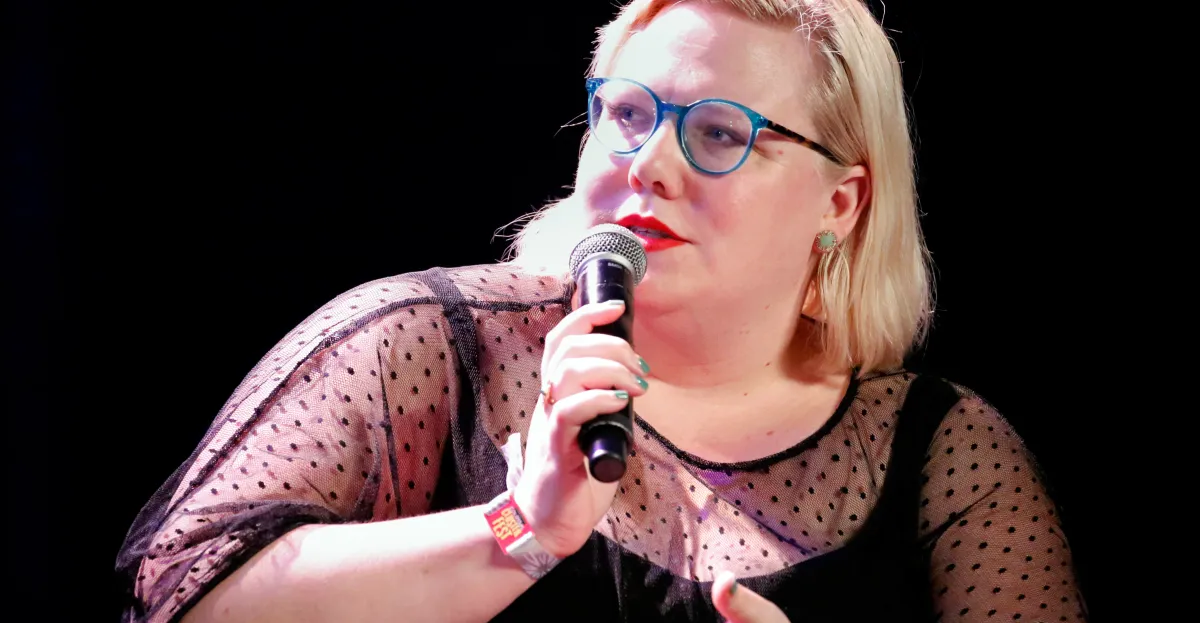
Slate senior writer Scaachi Koul joined Today, Explained co-host Noel King to talk through the internet’s reaction to West’s new book, and all that came after.
Below is an excerpt of Koul’s conversation with Today, Explained, edited for length and clarity. There’s much more in the full episode, so listen to Today, Explained wherever you get podcasts, including Apple Podcasts, Pandora, and Spotify.
Tell me about Adult Braces.
It’s a very digestible book. Adult Braces is Lindy’s memoir. This is her fourth book. She’s written a lot of political polemics, social polemics, a lot of personal writing, but this is some of her most personal. It’s a memoir about her taking a cross-country road trip, but also about her reformatting her marriage and turning towards polyamory with her husband.
Why do you think [the polyamory] has got people so upset here?
I think there’s a few trains of controversy here, and some is legitimate and some is really not. So the illegitimate complaints are kind of about this narrative having to do often with Lindy’s weight. She’s fat. She writes a lot about being fat. Or some people are saying that it has a lot to do with gender. Her partner, Aham, who is her husband — Aham goes by he/him and they/them — is nonbinary. So there’s been a lot of needless jabs at this particular facet of the story.
The other side of it is that the story that Lindy tells in this memoir — and all we really have to go on is what she tells us — is pretty brutal to her. Their entry into polyamory is not necessarily honest. A lot of people have been using the word “coercive polyamory.” It’s not a term I’ve ever heard before, but the idea that you kind of tell your partner, “it’s this or nothing.”
She’s clearly a reluctant participant for the first spell of their jaunt into polyamory. They meet someone, he falls in love with her first, and then she also falls in love with this person, Roya. And now the three of them are together.
When we frame this as it was coercive, as she was talked into it. There’s an opposite side of this that says: No, Aham, her husband, was honest with her right from the beginning, and she sort of hoped that it would never come to pass.
It’s clear that he told her, A condition of our marriage will be polyamory.
I think she understood some of the risks. She’s an adult. Lindy does not want to be infantilized. She said that several times — that she had and has autonomy, and these are her decisions. I believe that they are her decisions.
I want to bring the third into this, as the marriage did: Roya. Tell me about where Lindy starts with Roya, where Lindy ends with Roya, and why you think the ending has also made people uncomfortable.
When Roya is brought into the picture, it is true that Aham had more than one other girlfriend in addition to his wife. And so Lindy is a little…I would say she was reticent to kind of learn anything about this person and was sort of like, go do what you must. Aham starts to travel to Portland once a month to spend a weekend with Roya.
He has a big medical issue come up while she’s touring, and Roya is there to help. That starts to change the nature of their dynamic. Lindy talks a lot about — Wow, is this what it’s like to get a wife? Somebody who’s so organized, who takes care of the medical details and listens to me?
Over time, they start to develop a friendship, and then their relationship turns, and it becomes romantic. It fundamentally reshapes the entire nature of their polyamory and of their marriage and of their family. And then after that, Roya, she moves into the woods with them, and that’s where she is now.
You went out to the place where the family lives now. You wrote a profile of Lindy West. When you were there, did you push her at all on the question of coercion?
She preempts that question. I think it’s something that people have already said to her. She says that that’s just not true, and I kind of understand what she’s saying, which is, How can I prove it to you other than living in this life?
But if you try to write anything to convince other people, especially when it comes to memoir, it will feel dissatisfying. And I know that intimately. There’s only so much I can do. What I can offer is a perspective and a version of events. But as soon as I cross a threshold into feeling like I’m evangelizing for something, if you don’t believe me about my own experience, then it doesn’t mean anything.
I think people look at Lindy as a one-way mirror in a lot of ways. They see themselves in her. And when she makes decisions — when anybody in that position, [whether] a celebrity, influencer, writer, [or] creative, makes decisions that their audience doesn’t like, [that audience] takes it really personally.
Lindy is someone who I think a lot of people, especially her fan base, have viewed as bombastic and confident and bawdy and fun. And [then] compare that with the version that we read in Adult Braces — who is anxious and insecure, and being harmed by this person in her life.
As the audience, your proxy is her. You feel defensive of her.
What do you think about this argument that Lindy West’s memoir about coming to polyamory is like the death of millennial feminism?
We can have feelings about anybody’s relationship as it is displayed to us. We are entitled to that, especially when we’re being offered a commodity like a book which you purchase. But one person’s personal story, discomfort, misery, contentment, fulfillment, or lack of fulfillment does not speak to the end of a social movement that was knit together over several decades, and has more to do with Lindy West’s corner of the internet.
Social movements flex. They change. I don’t think it’s the death of anything. It is just where that version of it maybe ended up.

Continue Reading
Every co-founder Elon Musk recruited to build xAI has now reportedly left the company. Manuel Kroiss, who led the pretraining team, told people this month that he was departing. Ross Nordeen, described by Business Insider as Musk’s “right-hand operator,” left on Friday. They were the last two of eleven co-founders, all of whom have exited a company that was valued at $250 billion when SpaceX acquired it in February and that Musk himself described two weeks ago as having been “not built right the first time around.”
The departures are not ordinary startup attrition. The researchers Musk assembled in 2023 were among the most accomplished in artificial intelligence. Jimmy Ba co-authored the 2014 Adam optimisation paper, the most-cited paper in AI with more than 95,000 citations. Igor Babuschkin, the chief engineer, came from Google DeepMind. Christian Szegedy came from Google. Tony Wu led the reasoning team. Greg Yang, Toby Pohlen, Zihang Dai, Guodong Zhang, and Kyle Kosic brought experience from DeepMind, Google, Microsoft, and OpenAI. That entire cohort is now gone, and the company they helped build is being, in Musk’s words, “rebuilt from the foundations up.”
A timeline of unravelling
The exodus accelerated sharply in early 2026. Christian Szegedy left in February 2025, an early signal. But the cascade began in earnest when Tony Wu, one of the most operationally central co-founders, announced his departure on February 10, 2026. Jimmy Ba resigned within 24 hours, reportedly amid tensions over demands to improve model performance. By mid-March, only Kroiss and Nordeen remained. Their departures this week complete the sweep.
The timing is difficult to separate from the corporate restructuring happening around xAI. On February 2, SpaceX acquired xAI in an all-stock transaction that valued SpaceX at $1 trillion and xAI at $250 billion, creating a combined entity worth $1.25 trillion, the largest corporate merger by valuation in history. The deal brought xAI, X (formerly Twitter), and SpaceX under a single corporate umbrella, with SpaceX now preparing for a potential IPO in mid-2026 that could target a $1.75 trillion valuation.

The 💜 of EU tech
The latest rumblings from the EU tech scene, a story from our wise ol’ founder Boris, and some questionable AI art. It’s free, every week, in your inbox. Sign up now!
Weeks earlier, in January, Tesla invested $2 billion in xAI’s Series E round at an approximate $230 billion valuation. Tesla shareholders are suing Musk for breach of fiduciary duty over the investment, arguing that the company’s chief executive effectively directed shareholder capital into his own private venture. The lawsuit gained additional force on March 13, when Musk publicly acknowledged that xAI’s products, particularly its coding tools, were not competitive with Anthropic’s Claude Code or OpenAI’s Codex. Tesla had invested $2 billion in a company whose founder admitted it needed to be rebuilt from scratch.
What “not built right” means at $250 billion
Musk’s admission on March 13 was unusually candid for a chief executive whose company had just been acquired for a quarter of a trillion dollars. He said xAI’s AI coding tools simply did not work, and that the underlying system needed to be rebuilt. The statement appeared to validate the co-founders’ decision to leave: if the company’s own leadership acknowledges that the product failed, the researchers who built it have limited incentive to stay for the rebuild, particularly when they can command extraordinary compensation at competitors.
The AI talent market in 2026 is the most competitive it has ever been. Meta has reportedly offered packages worth up to $300 million over four years to retain top AI researchers. OpenAI, Google DeepMind, and Anthropic are all expanding their research teams aggressively. The eleven researchers who left xAI represent a concentration of talent that any of those companies would pay handsomely to acquire. Where they end up will say as much about the industry’s future direction as their departure says about xAI’s past.
xAI is not without assets. The Colossus supercomputer, built with more than 200,000 NVIDIA H100 GPUs, remains one of the largest AI training clusters in the world. Grok, the company’s chatbot, has a distribution channel through X’s user base. And the SpaceX merger provides access to capital, infrastructure, and engineering talent at a scale that few AI companies can match. The question is whether infrastructure and distribution are sufficient when the research leadership that was supposed to make the product competitive has entirely departed.
The pattern
The xAI co-founder exodus follows a pattern that has repeated across Musk’s companies. Twitter lost the majority of its senior leadership and roughly 80 per cent of its workforce within months of his 2022 acquisition. Tesla’s senior ranks have thinned steadily as Musk’s attention has divided across six companies. The common thread is a management style that produces extraordinary results in hardware engineering, where Musk’s tolerance for risk and pace of iteration have built SpaceX and Tesla into industry-defining companies, but appears less effective in research-driven fields where the most valuable people have abundant alternatives and low tolerance for instability.
Artificial intelligence research is, in 2026, the most competitive labour market in technology. The researchers who co-founded xAI did not need to be there. They chose to be, attracted by the resources Musk could deploy and the ambition of the project. That every one of them has now chosen to leave, during a period when the company received a $250 billion valuation and access to the resources of SpaceX, suggests that the problems at xAI are not principally financial or infrastructural. They are organisational. And no amount of capital can rebuild a research culture once the people who created it have gone.
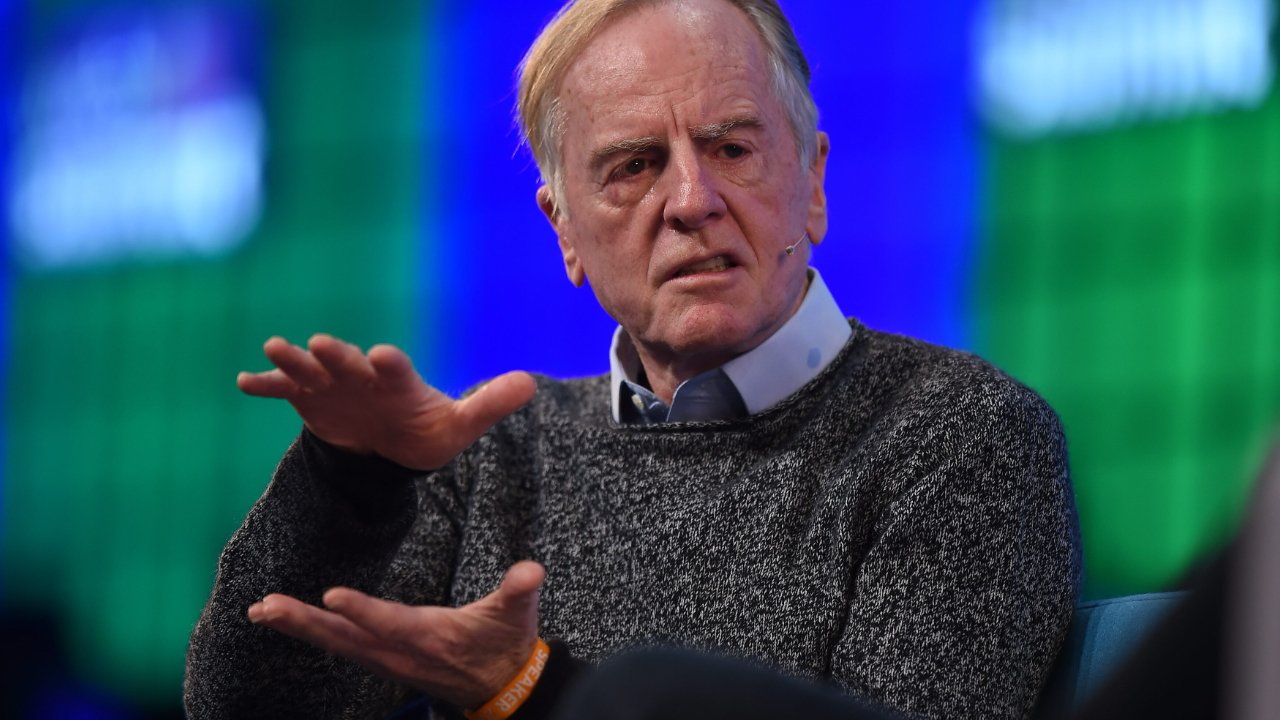
John Sculley’s ten years as Apple CEO saw huge financial growth and innovative ideas like the Newton — but also a financial crash and the ousting of Steve Jobs.
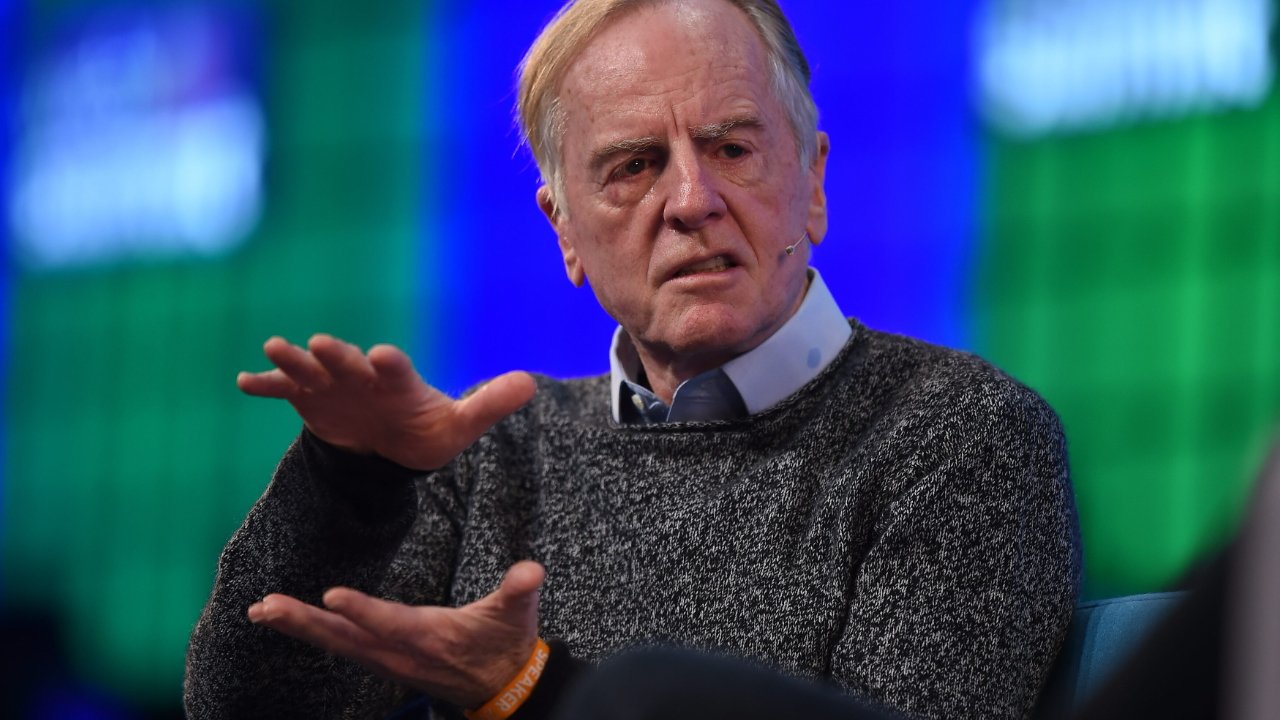
If you can just stick around long enough, your reputation is likely to change. Today it’s common to see ex-Apple CEO John Sculley praised, or at least described as having been unfairly treated by history.
There are reasons to back that up, most specifically to do with how he didn’t actually fire Steve Jobs as years of rumors would have it. That’s a little bit hair-splitting, though, because the situation between the two men had deteriorated so badly, but it is true.
Continue Reading on AppleInsider | Discuss on our Forums
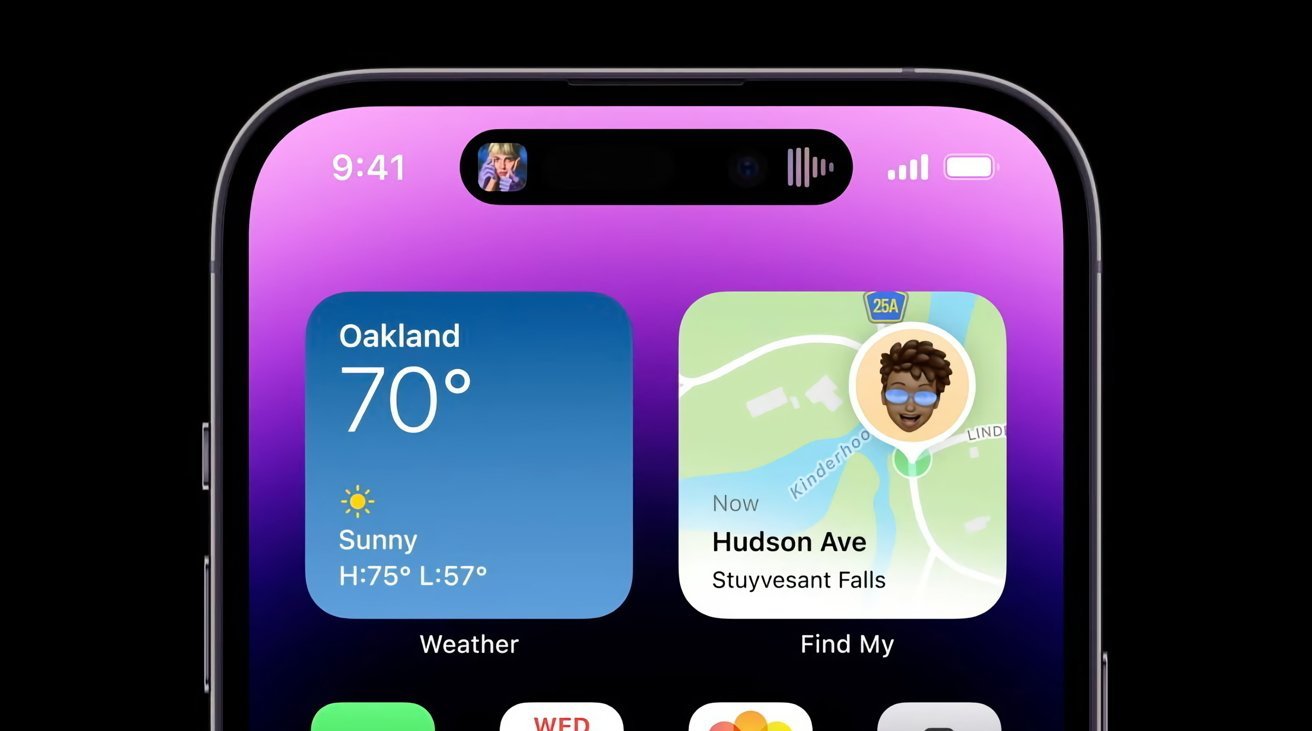
It could be wishful thinking, but a tiny new leak appears to suggest that Apple will shrink the Dynamic Island on every iPhone 18.
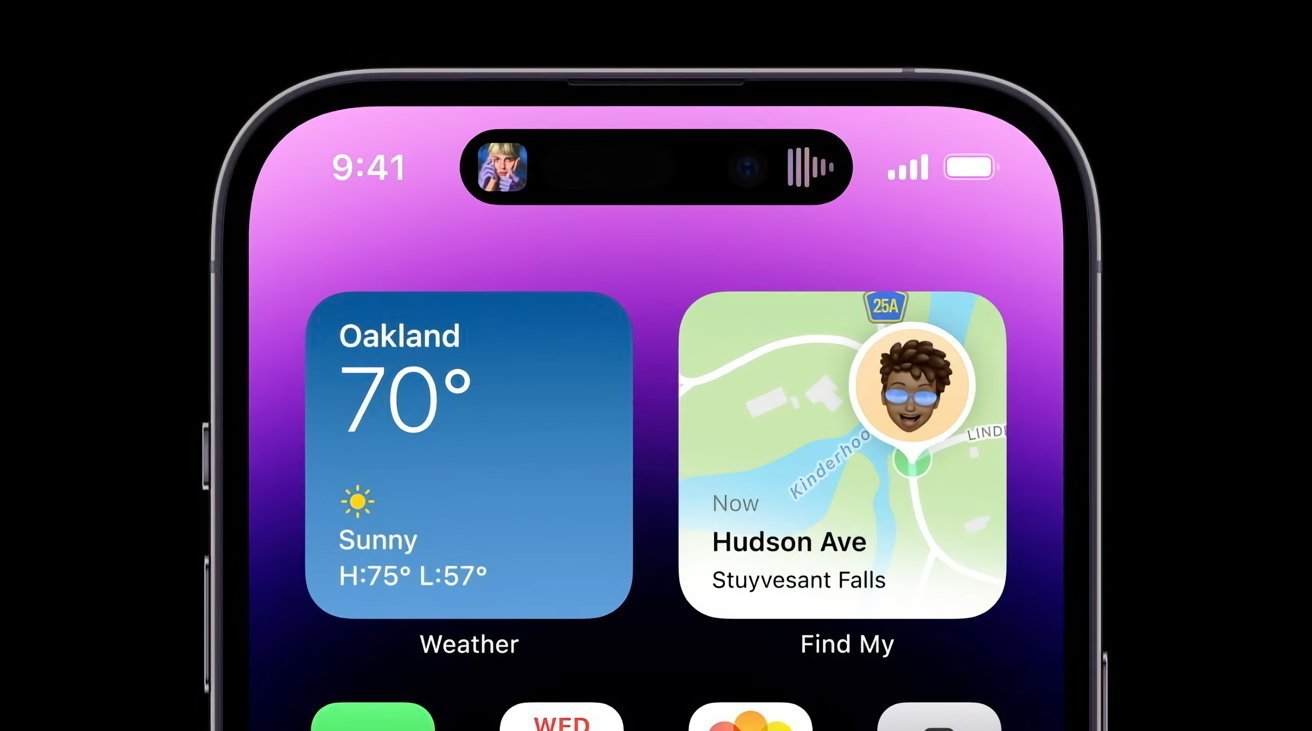
The Dynamic Island is Apple’s way of making a virtue out of the necessary Face ID and camera notch
Since the very day the iPhone X was launched with its Face ID notch, there have been rumors that Apple will switch to an all-screen display with no visible cutouts. The company is surely working toward this, but the most recent claims have focused on how it might reduce the current Dynamic Island.
Now according to leaker Ice Universe, that smaller Dynamic Island is definitely coming to the iPhone 18.
Continue Reading on AppleInsider | Discuss on our Forums
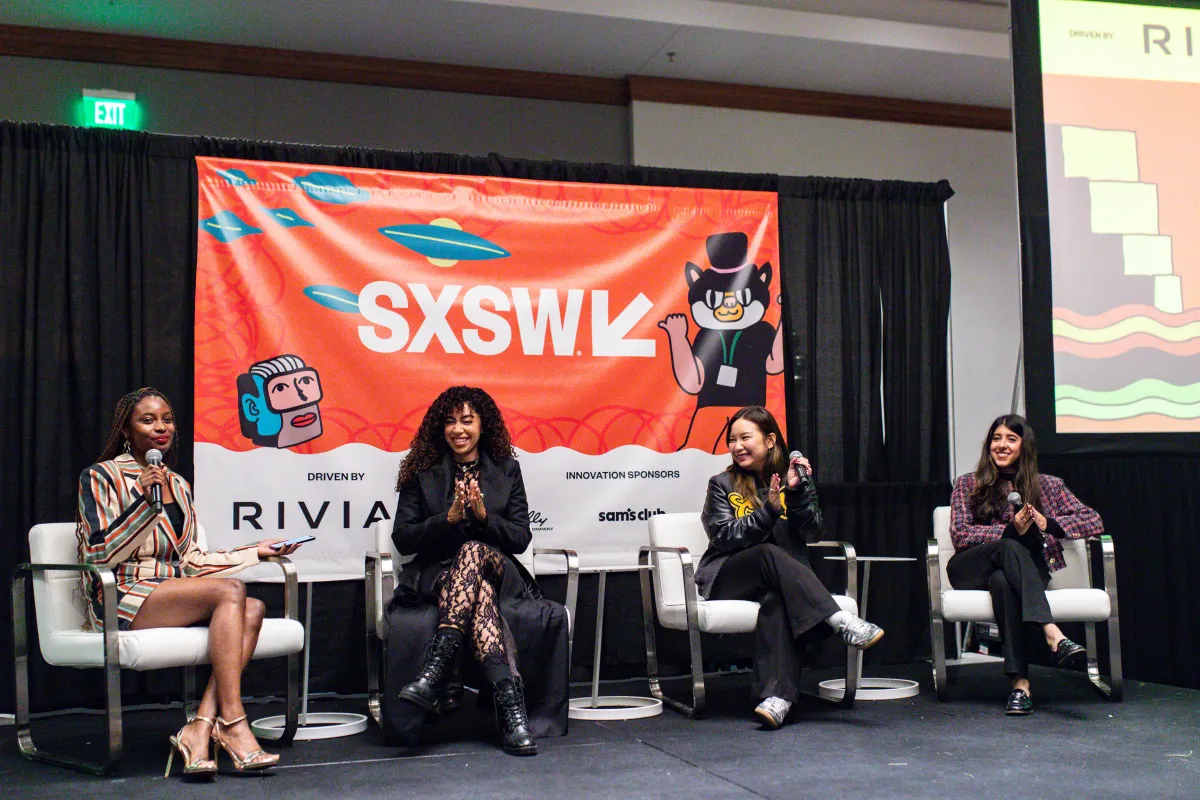
The air felt different at this year’s SXSW, the annual March festival where tech meets pop culture in Austin. I was reminded of the 2019 SXSW when people packed downtown, and snake lines formed out of local ventures.
Attendees said it was like that again this year, though my friend, who lives in the area and has attended many times, admitted that some stuff has changed. For instance the festival is now two days shorter than it used to be. It was also “decentralized,” mainly due to the demolition of the Austin Convention Center, which scattered events and panels throughout downtown venues. That made the whole conference feel less overwhelming but also less connected.
The event is also still recovering from the pandemic, during which it laid off staff and went two years without much income. It’s switched hands since then and, as of this year, has adopted a new strategy.
Greg Rosenbaum, the SVP of programming at SXSW, said this year, the conference’s 40th anniversary, was its most “ambitious reinvention” yet. He cited changes like the new Clubhouses, for recharging, networking, and special programming, that attracted 5,000 people daily. He noted how attendees were experiencing “more of Austin and the downtown community.”
For at least the tech founders I spoke with, the conference remains immensely valuable, and everyone had the same advice: conferences like these, you get what you give.
After all, there were people to meet and panels to speak on. The Grammy-nominated Lola Young performed, Vox threw a hot party, the new Boots Riley film premiered, while Serena Williams and Steven Spielberg had keynotes. (I also moderated a panel about AI and taboo topics like relationships and money, which was pretty good if you ask me.)
Ashley Tryner-Dolce, an investor and founder, said the conference was still an “incredible gathering of ideas.” Like many festivals, though, she found the most “meaningful moments” happened at the side events — like INC’s Founder House party, where she connected with other founders and CEOs.
Techcrunch event
San Francisco, CA
|
October 13-15, 2026
“It’s less about the main stage and more about who you’re sitting across from,” she said.
James Norman, a managing partner at Black Ops VC, didn’t even have a proper badge to the festival. He threw an event to connect founders with opportunities and attended some film screenings and dinners.
“If you’re just showing up without the right connections or proximity to the rooms and conversations that matter, you’re going to struggle to unlock the real value of the event,” he said, which is exactly what Jonathan Sperber, a founder who participated in the SXSW pitch competition, also expressed.
“The value tends to depend on how well you prepare for it,” Sperber said, adding that his team made sure to have meetings lined up and a clear strategy going in. He called it an “effective setting for connecting with large enterprises and other key stakeholders.”
The talk of SXSW being dead has circled the industry for years, but that never seems to be the case. For every batch of tiring founders, emerges a crop of fresh eyes and ambition, ready to take advantage of what lies in the festival’s wake.
For example, this was Simon Davis’ first SXSW. He said that his overall impression was that it was “a media conference with a tech angle, not the other way around.” He praised the diversity of the event compared to other tech events (which we will spare to mentioning).
“At SXSW, you get a much wider range of people, backgrounds, and experience levels,” he continued. “The live music programming reinforces that. It’s a different energy entirely. Not somewhere you’d necessarily go to do deals as a tech company, but a great place to share and learn.”
This year, SXSW introduced a new badging system, meaning each person had a different experience, depending on what track badge they bought — film, music, or tech. I, for example, felt surrounded by conversations about AI and technology, and overheard other tech people talking about how the festival once had a stronger music focus (though it did seem, for sure, that there were more tech-focused panels this year than music showcases or film opportunities).
The conference also eliminated the secondary access that let people with, say, music badges get into film events. Instead, people had to buy the all-in-one premium badge for around $2,000. It also introduced a reservation system (to help with lines), where badge holders had to book time for whatever they wanted to do. That was true even for those with a platinum badge, like Sperber.
As a result, he said the festival didn’t feel like a place where anyone could just show up, and noted that some events booked up so quickly they were difficult to get into. The decentralized bit also made it harder to get around than he would have liked.
“I liked the openness and the ability to meet folks from all life experiences, got to really understand the city, and some of the interactive exhibits were very interesting,” he said.
Rosenbaum said the team made the decision to get rid of secondary access after hearing feedback that attendees want more of a “streamlined access across the badges, as well as more benefits for Platinum badges.” They also lowered the price of the platinum badge to make the all-in-one option more affordable. Reservations, meanwhile, will return next year, he said, citing positive feedback (aside from a few technical errors and capacity confusion). “We will certainly adjust and refine them as needed,” he said.
Norman described it as more of an “unconference” now, at least from his perspective. He said the event was more flexible, allowing people to move around, meet people, and then go to other places.
Rodney Williams, the co-founder of the fintech SoLo Funds, has also noticed a change, but again, it’s not necessarily a bad one. He’s been going to SXSW for more than a decade and has hosted events and spoken on panels. Usually, he goes for the entire festival, but this year, he decided to go only for a few days, throwing his own events and avoiding lines.
He said that for tech founders, SXSW has “moved from an intimate, scrappy discovery zone to a high-cost, high-competition space,” focused on “investor interaction and experiential marketing” — meaning companies with big budgets can put on the big activations and get more eyeballs.
“If you are attending for the first time or don’t have access to the right events or connections, the event can definitely prove to be tricky,” Williams said.
Adweek reported fewer spectacles overall and said that there was an absence of big tech companies advertising. Williams elucidated that even with the lack of big tech companies, advertising is still a big-bucks game.
“Companies with massive marketing budgets are usually the only ones participating, launching products, or throwing pricey events,” he said. “It wasn’t always like this, and that shift has taken away opportunities from the emerging tech companies that used to participate.”
Williams added, “Now, standing out requires more than just a great product, demanding significant marketing investment that only companies with huge budgets can do.”
That didn’t stop him from throwing a party this year. Norman either. In fact, the organizers expected around 300,000 people to show up this year (final numbers won’t be available until April), revealing that the conference has yet to lose its steam or its magic.
“I always enjoy it and make the most out of it,” Williams said.

Get caught up on the latest technology and startup news from the past week. Here are the most popular stories on GeekWire for the week of March 22, 2026.
Sign up to receive these updates every Sunday in your inbox by subscribing to our GeekWire Weekly email newsletter.
Most popular stories on GeekWire

Two tech workers took it Offline, and opened a Seattle coffee shop that AI can’t replicate
The new cafe in Seattle’s Capitol Hill neighborhood draws on Chinese cafe culture for its menu and aesthetic while leaning into the “third place” and serving as a deliberate departure from the corporate world both founders left behind. … Read More

GeekWire rides the world’s first floating-bridge train — Seattle tech commutes will never be the same
A preview of the Crosslake Connection, the region’s newest mass transit milestone, featured a trip between South Bellevue and new stations at Mercer Island and Judkins Park. … Read More

Microsoft hires former Ai2 CEO Ali Farhadi and key researchers for Suleyman’s AI team
Microsoft is hiring former Ai2 CEO Ali Farhadi, along with Hanna Hajishirzi and Ranjay Krishna from the Allen Institute for AI to join Mustafa Suleyman’s Superintelligence team, GeekWire has learned. … Read More

Bungie scores an unexpected success with ‘Marathon’ revival
After a CEO’s departure, layoffs, an indefinite delay, and the failure of a similar Sony title, Bungie’s online shooter looked like it was headed for disaster. … Read More

More layoffs at T-Mobile: Company confirms it’s ‘further aligning’ IT org
The new round of cuts comes less than two months after T-Mobile shed 393 workers in Washington state. … Read More

Microsoft, Lime and others helping to celebrate opening of new light rail line from Seattle to Eastside
Events will take place at 10 stations across the expanded 2 Line from the International District to Bellevue and Redmond. … Read More

AWS at 20*: Inside the rise of Amazon’s cloud empire, and what’s at stake in the AI era
With Amazon marking the 20th anniversary of AWS this month, GeekWire spoke with early builders, current AWS insiders, and longtime observers of the company to tell the story of how the business got started, how it won the cloud, and what it’s up against now. … Read More

‘No more’: Washington state sues Kalshi, alleging prediction market is illegal gambling
Washington Attorney General Nick Brown is suing prediction market platform Kalshi, alleging the company violates state gambling and consumer protection laws by operating an online betting service where users can wager on sports, elections, wars and other events. … Read More

Drone home: Brinc moving to massive new HQ and factory in Seattle amid startup’s rapid growth
Brinc is taking over 35,000 square feet at West Canal Yards, in a former fish cannery along the Lake Washington Ship Canal in Queen Anne. … Read More

Forget new power plants — Seattle startup Edo wants to turn your office building into one
Edo spent five years building tech to turn commercial buildings into virtual power plants, and with the grid buckling under data center demand and extreme weather, utilities and building operators are taking notice. … Read More

How powerful is Jupiter’s lightning? Thick clouds cover the view, notes Science magazine. But using an instrument on NASA’s Juno spacecraft (orbiting Jupiter for the past decade), researchers determined Jupiter’s lightning bolts are 100 to 10,000 times more energetic than earth’s:
A single bolt of lightning on Earth releases about 1 billion joules of energy. That means the most extreme bolts of jovian lightning carry 10 trillion joules of energy, equivalent to 2400 tons of TNT, or one-sixth the power of the atomic bomb dropped on Hiroshima, Japan. Based on the rates of flashes seen by Juno, storms on this tempestuous world can unleash the force of multiple nuclear weapons every minute…
The four storms Juno studied were monstrous, says Michael Wong, a planetary scientist at the University of California, Berkeley and one of the study’s authors. There were three flashes per second on average, often emerging from the hearts of storms that are 3000 kilometers across, longer than the distance from New York City to Denver.
The researchers used the Hubble Space Telescope (and photographs from Juno’s camera) to track Jupiter’s storms with such precision that their radiometer could then pick out individual lightning flashes, according to the article.
“It’s just a massive ball of gas. It makes sense that there’s very energetic lightning happening,” says Daniel Mitchard, a lightning physicist at Cardiff University who wasn’t involved with the new study. But confirming such suspicions “is exciting,” he says, because lightning plays an important role in forging complex chemistry — including the sort that primordial life is built on.
Thanks to Slashdot reader sciencehabit for sharing the article.


A vulnerability in the Smart Slider 3 WordPress plugin, active on more than 800,000 websites, can be exploited to allow subscriber-level users access to arbitrary files on the server.
An authenticated attacker could use it to access sensitive files, such as wp-config.php, which includes database credentials, keys, and salt data, creating the risk for user data theft and complete website takeover.
Smart Slider 3 is one of the most popular WordPress plugins for creating and managing image sliders and content carousels. It offers an easy-to-use drag-and-drop editor and a rich set of templates to choose from.
The security issue, tracked as CVE-2026-3098, was discovered and reported by researcher Dmitrii Ignatyev and impacts all versions of the Smart Slider 3 plugin through 3.5.1.33.
It received a medium severity score due to requiring authentication. However, this only limits the impact to websites with membership or subscription options, a feature that is common on many platforms these days.
The vulnerability stems from missing capability checks in the plugin’s AJAX export actions. This allows any authenticated user, including subscribers, to invoke them.
According to researchers at WordPress security company Defiant, the developer of the Wordfence security plugin, the ‘actionExportAll’ function lacks file type and source validation, thus allowing arbitrary server files to be read and added to the export archive.
The presence of a nonce does not prevent abuse because it can be obtained by authenticated users.
“Unfortunately, this function does not include any file type or file source checks in the vulnerable version. This means that not only image or video files can be exported, but .php files can as well,” says István Márton, a vulnerability research contractor at Defiant.
“This ultimately makes it possible for authenticated attackers with minimal access, like subscribers, to read any arbitrary file on the server, including the site’s wp-config.php file, which contains the database credentials as well as keys and salts for cryptographic security.”
500K websites still vulnerable
On February 23, Ignatyev reported his findings to Wordfence, whose researchers validated the provided proof-of-concept exploit and informed Nextendweb, the developer of Smart Slider 3.
Nextendweb acknowledged the report on March 2 and on March 24 delivered a patch with the release of Smart Slider version 3.5.1.34.
According to WordPress.org stats, the plugin was downloaded 303,428 times over the past week. This means that at least 500,000 WordPress sites are running a vulnerable version of the Smart Slider 3 plugin and are exposed to attacks.
CVE-2026-3098 is not flagged as actively exploited as of writing, but the status may change soon, so prompt action is required by website owners/administrations.

Automated pentesting proves the path exists. BAS proves whether your controls stop it. Most teams run one without the other.
This whitepaper maps six validation surfaces, shows where coverage ends, and provides practitioners with three diagnostic questions for any tool evaluation.
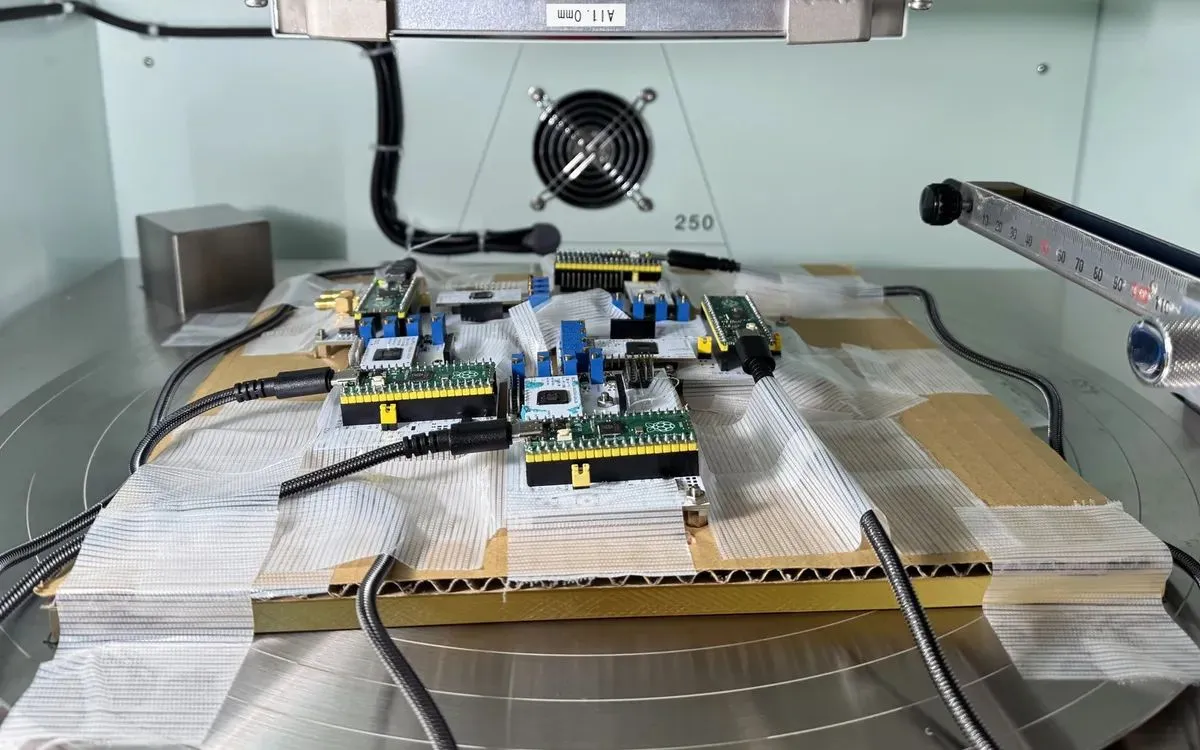
Ionizing radiation damage from electrons, protons and gamma rays will over time damage a CMOS circuit, through e.g. degrading the oxide layer and damaging the lattice structure. For a space-based camera that’s inside a probe orbiting a planet like Jupiter it’s thus a bit of a bummer if this will massively shorted useful observation time before the sensor has been fully degraded. A potential workaround here is by using thermal energy to anneal the damaged part of a CMOS imager.
The first step is to detect damaged pixels by performing a read-out while the sensor is not exposed to light. If a pixel still carries significant current it’s marked as damaged and a high current is passed through it to significantly raise its temperature. For the digital logic part of the circuit a similar approach is used, where the detection of logic errors is cause for a high voltage pulse that should also result in annealing of any damage.
During testing the chip was exposed to the same level of radiation to what it would experience during thirty days in orbit around Jupiter, which rendered the sensor basically unusable with a massive increase in leakage current. After four rounds of annealing the image was almost restored to full health, showing that it is a viable approach.
Naturally, this self-healing method is only intended as another line of defense against ionizing radiation, with radiation shielding and radiation-resistant semiconductor technologies serving as the primary defenses.


The Ryzen 9 9950X3D2 doubles down on AMD’s V-Cache formula by equipping each of its two CCDs with stacked cache memory. The design results in a massive 208MB of total cache, a configuration that AMD claims can yield 5% to 10% faster performance in select rendering and content creation workloads…
Read Entire Article
Source link
Tech
JBL PartyBox On-The-Go 2 Plus Launches as Portable Party Speaker with Wireless Mic, Bigger Sound, and All-Day Battery
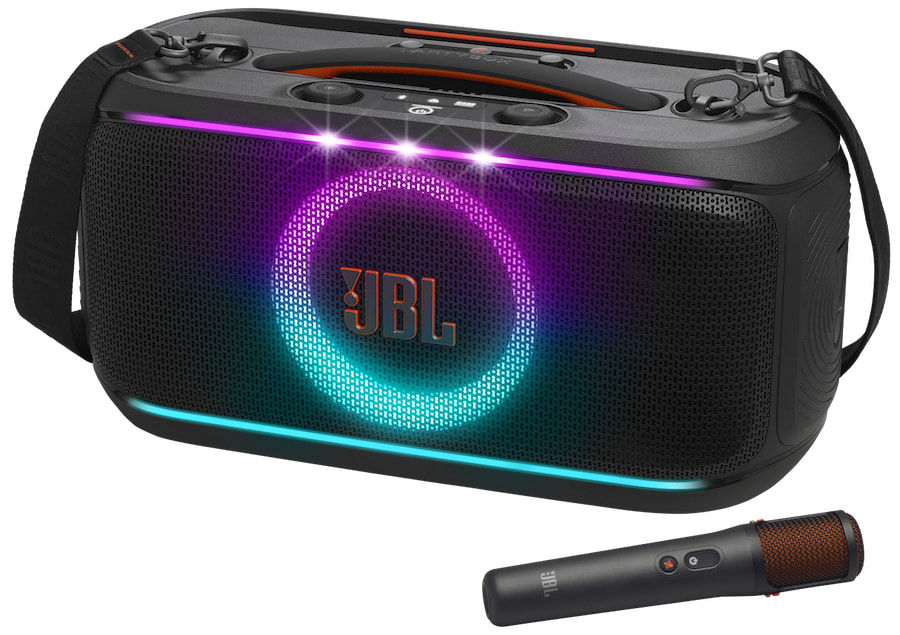
JBL is doubling down on portable party speakers with a clear focus on karaoke, expanding its PartyBox lineup with the new PartyBox On-The-Go 2 Plus alongside the EasySing microphone ecosystem. At the center of the launch is AI-powered EasySing technology, which uses on-device processing to separate vocals from music in real time—allowing users to reduce or remove the original singer without relying on cloud services or pre-processed tracks.
The system goes beyond simple vocal stripping. JBL integrates pitch support, Voice Boost for high-frequency clarity, and built-in effects like reverb, echo, and noise suppression to create a more controlled and customizable performance. Paired with the new EasySing microphones, the platform is designed to turn any song into an instant karaoke track while keeping latency low and setup straightforward—no apps, subscriptions, or external processing required.
“As music continues to evolve, so does the way people experience it together,” said Carsten Olesen, President of Consumer Audio at HARMAN. “At JBL, we’re harnessing advanced AI technologies like real-time vocal separation and intelligent vocal enhancement to transform passive listening into shared, interactive moments. By integrating AI directly into our products, we’re creating new ways for people to connect and celebrate.”
JBL PartyBox On-the-Go 2 Plus
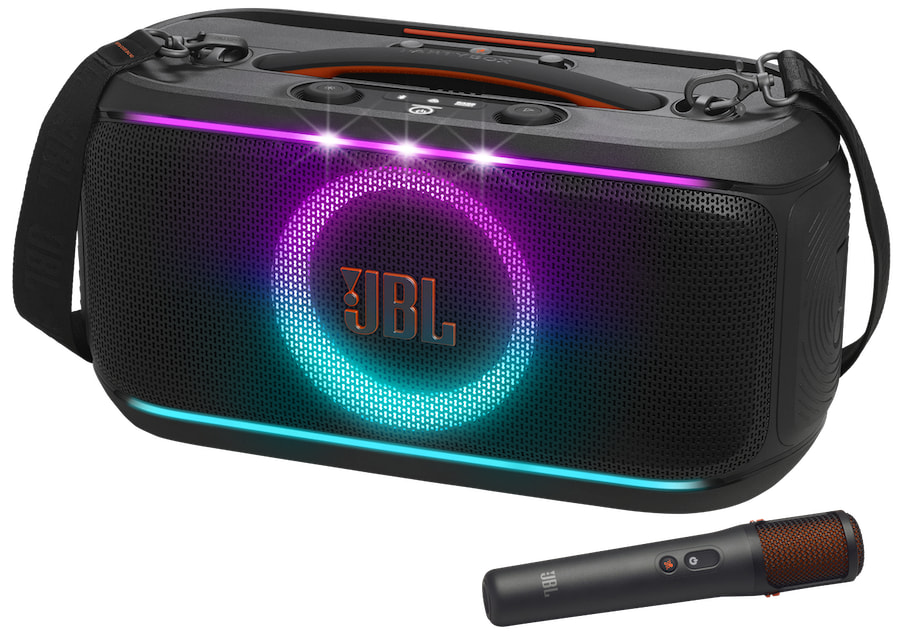
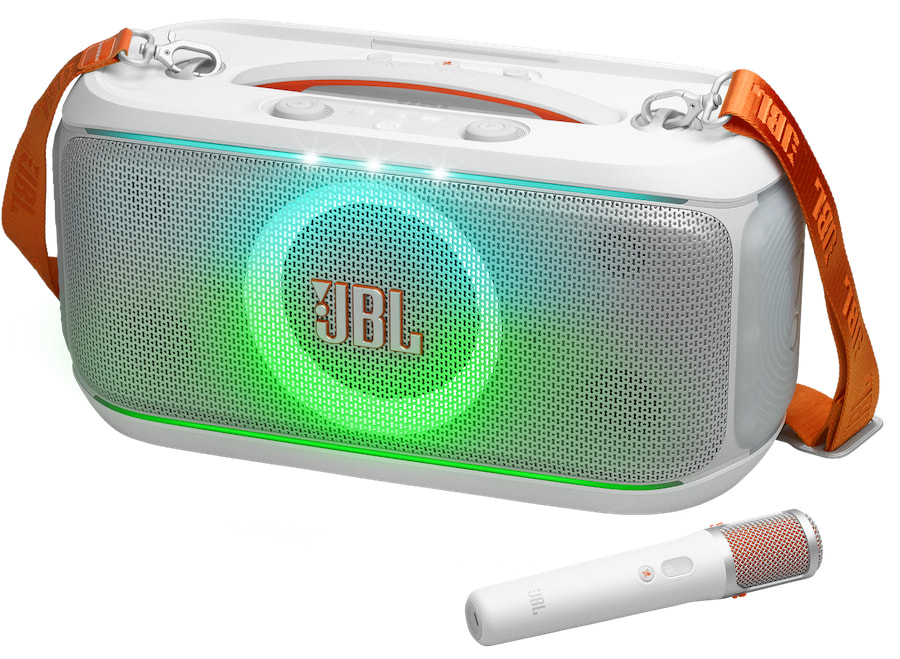
Designed to elevate both parties and karaoke nights, the JBL PartyBox On-The-Go 2 Plus combines JBL’s signature sound and dynamic lightshow with its new EasySing AI technology. Using the JBL One app, users can adjust sound and lighting settings, while the system brings vocals forward in real time to instantly transform any track into a performance-ready experience.
Portability gets a practical upgrade with a redesigned central handle for better weight balance, along with a wider, thicker shoulder strap that makes it easier to carry between locations.
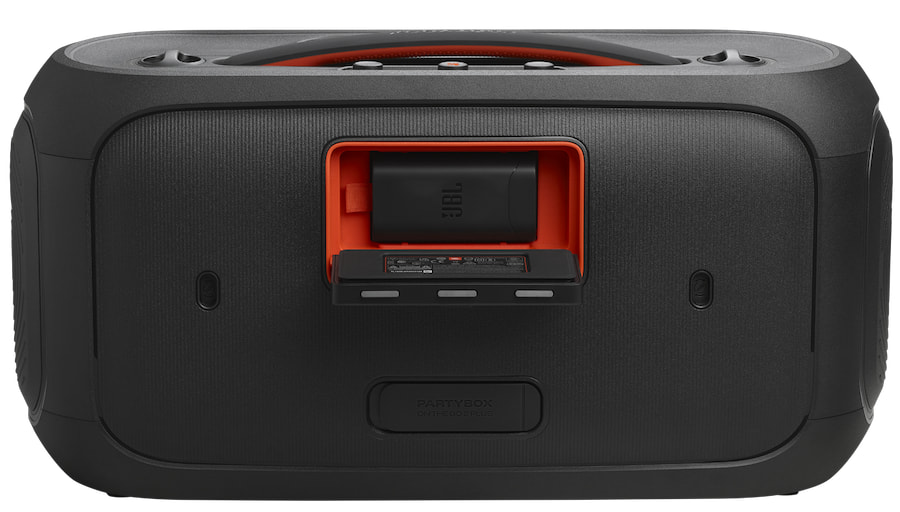
Under the hood, the speaker delivers up to 100 watts of power, driven by dual silk-dome tweeters and a 5.25-inch woofer for solid bass and clear, detailed highs. Battery life is rated at up to 15 hours, and the inclusion of a replaceable battery means it’s built for extended sessions without cutting the party short.
For even more party flexibility, the PartyBox On-The-Go 2 Plus is also Auracast compatible for easy multi-speaker pairing with JBL Auracast-enabled speakers
Comparison

| JBL Model | PartyBox On-The- Go 2 Plus (2026) | PartyBox On-The- Go 2 (2026) | PartyBox On-The- Go (2020) |
| Product Type | Party Speaker | Party Speaker | Party Speaker |
| Price | $419.95 | $419.95 | $249.95 |
| Output Power | 100 W RMS | 100 W RMS | 100 W RMS |
| Speaker Drivers | 1 x 5.25-inch (135 mm) woofer
2 x 0.75 inch (20 mm) Dome tweeters |
1 x 5.25-inch (135 mm) woofer
2 x 0.75 inch (20 mm) Dome tweeters |
1 x 5.25in (133mm) woofer
2 x 1.75in (44mm) tweeters |
| Frequency Response | 40 Hz – 20 kHz (-6 dB) | 40 Hz – 20 kHz (-6 dB) | 50Hz – 20KHz (-6 dB) |
| Signal-to-Noise Ratio | > 80dB | > 80dB | > 80dB |
| Bluetooth/USB Input | -9dBFS | -9dBFS | -9dBFS |
| USB Playback Formats Supported (Disable for EMEA region) | MP3, .WAV, FLAC | MP3, .WAV, FLAC | MP3, .WAV, WMA |
| USB File Format | FAT16, FAT32 | FAT16, FAT32 | FAT16, FAT32 |
| Bluetooth Version | 5.4 | 5.4 | 4.2 |
| Bluetooth® Profile | A2DP V1.4, AVRCP V1.6 (SW), TMAP1.0, PBP1.0 | A2DP V1.4, AVRCP V1.6 (SW), TMAP1.0, PBP1.0 | A2DP 1.3, AVRCP 1.6 |
| Bluetooth Auracast | Yes | Yes | No |
| Bluetooth® Transmitter Frequency Range | 2.4 GHz – 2.4835 GHz | 2.4 GHz – 2.4835 GHz | 2.4 GHz – 2.48 GHz |
| Bluetooth® Transmitter Power | ≤ 16 dBm (EIRP) | ≤ 16 dBm (EIRP) | 10dBm (EIRP) |
| Bluetooth® Transmitter Modulation | GFSK, π/4 DQPSK, 8DPSK | GFSK, π/4 DQPSK, 8DPSK | GFSK, π/4 DQPSK, 8DPSK |
| 2.4G Wireless Transmitter Frequency range | 2404 – 2478 MHz | 2404 – 2478 MHz | Not Indicated |
| 2.4G Wireless Transmitter Power | < 10 dBm (EIRP) | ≤ 8.5 dBm (EIRP) | Not Indicated |
| 2.4G Wireless Modulation | GFSK | GFSK, π/4 DQPSK, 8DPSK | Not Indicated |
| Aux-In | 370 mV RMS (3.5mm connector) | 370 mV RMS (3.5mm connector) | (3.5mm connector) |
| Mic-In | 20 mV RMS | 20 mV RMS | Yes – voltage not indicated |
| Battery | Battery Type: Li-ion 34 Wh (7.2 V / 4722 mAh)
Battery Charge Time: < 3.5 hours (Speaker off mode) Music Play Time: up to 15 hours (varies by volume level and xaudio content) Fast Charging: 10 minutes provides up to 80 minutes of playtime |
Battery Type: Li-ion 34 Wh (7.2 V / 4722 mAh)
Battery Charge Time: < 3.5 hours (Speaker off mode) Music Play Time: up to 15 hours (varies by volume level and xaudio content) Fast Charging: 10 minutes provides up to 80 minutes of playtime |
Battery type: Lithium-ion 18Wh (7.2V @ 2500mAh)
Battery charge time: <3.5hrs |
| USB Charge Out | 11 V / 2 A (Max) (Speaker off mode) | USB charge out: 11V / 2A (Max) (Speaker off mode) | Not Indicated |
| Power Input | 100 – 240 V ~50/60 Hz | 100 – 240 V ~50/60 Hz | 100 – 240 V ~50/60 Hz |
| Power Cable Type | AC power cable (type varies by region) | AC power cable (type varies by region) | AC power cable (type varies by region) |
| AC Cable Length | 2.0m / 6.6 ft | 2.0m / 6.6 ft | 2.0m / 6.6 ft |
| IPX Rating | IPX4 | IPX4 | IPX4 |
| Dimensions (WHD) | 501 x 258 x 221 mm
19.72 x 10.16 x 8.70 inches |
501 x 258 x 221 mm
19.72 x 10.16 x 8.70 inches |
489 x 244.5 x 224 mm
19.3 x 9.6 x 8.8 inches |
| Weight | 6.45 kg / 14.22 lbs | 6.36 kg / 14.02 lbs | 6.5 kg / 14.3 lbs |
| Wireless Microphone | EASYSING with AI vocal removal included
Frequency response: 50 Hz – 15 kHz (-6 dB) Transmitter transmitting power: < 8.5 dBm (EIRP) 2.4G wireless transmitter frequency range: 2404 – 2478 MHz Microphone playtime: up to 10 hours Rechargeable battery: 240mAh 3.7V Li-ion battery Carrier frequency: 2404~2478MHz Receiver Max Output Level: <1VRMS |
JBL Standard Mic Included
Frequency Response: 50Hz – 15kHz(-6dB) Signal-to-Noise: >59dBA Transmitter transmitting power: <8.5dBm (EIRP) 2.4G wireless transmitter frequency range: 2404 – 2478MHz Distance between transmitter and receiver: ≤30m |
JBL Standard Mic Included
Frequency response: 65Hz – 15kHz Signal-to-noise (S/N) ratio: >60dBA Transmitter transmitting power: <10mW Microphone battery play time: <10hrs Distance between transmitter and receiver: >10m |
| Wireless Microphone Dimensions (WHD): | 46.5mm x 225mm x 43mm
1.83’’ x 8.86’’ x 1.69’’ |
Not Indicated | Not Indicated |
| Wireless Microphone Weight | 197g / 0.434lbs Mic | Not Indicated | Not Indicated |
| What’s in the Box | 1 x JBL PartyBox On-The-Go-2 Plus 1 x Quick-start guide 1 x Safety Instruction and Warranty Card 1 x wireless microphone (EASYSING) 1 x microphone holder AC power cord – quantity and plug type vary by regions 1 x shoulder strap |
1 x JBL PartyBox On-The-Go-2
1 x Quick-start guide 1 x Safety Instruction and Warranty Card 1 x wireless microphone 1 x microphone holder AC power cord – quantity and plug type vary by regions 1 x shoulder strap |
1 x JBL PartyBox On-The-Go
1 x Quick-start guide 1 x Safety Instruction and Warranty Card 1 x wireless microphone 1 x microphone holder AC power cord – quantity and plug type vary by regions |
JBL EasySing Mics & JBL EasySing Mic Mini
Pro Tip: Images and full specifications for the JBL EasySing Mic Mini were not available at the time of publication.
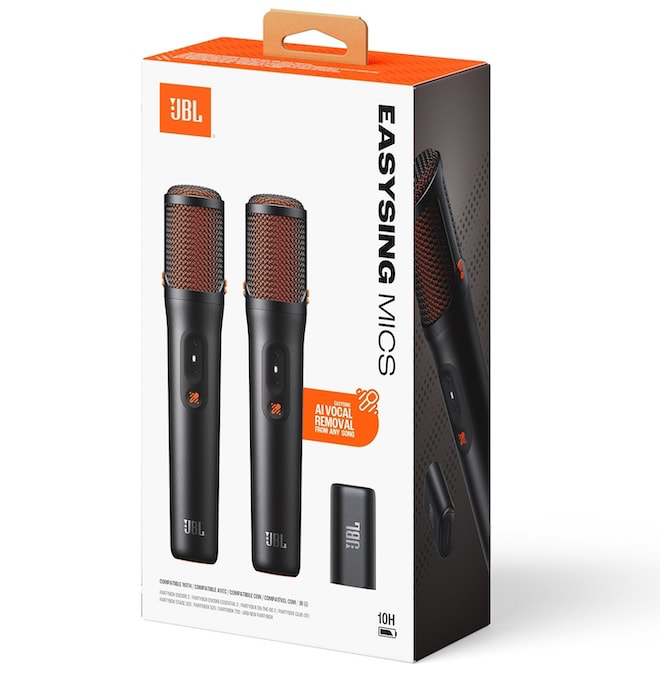
Expanding the EasySing ecosystem, JBL is also introducing the EasySing Mics and the EasySing Mic Mini. These AI-powered microphones integrate real-time vocal separation and enhancement into a compact, performance-ready design.
Built for flexibility, they offer users greater control over vocals with improved clarity and processing, making them a natural extension of the PartyBox experience for karaoke sessions, parties, and casual performances.
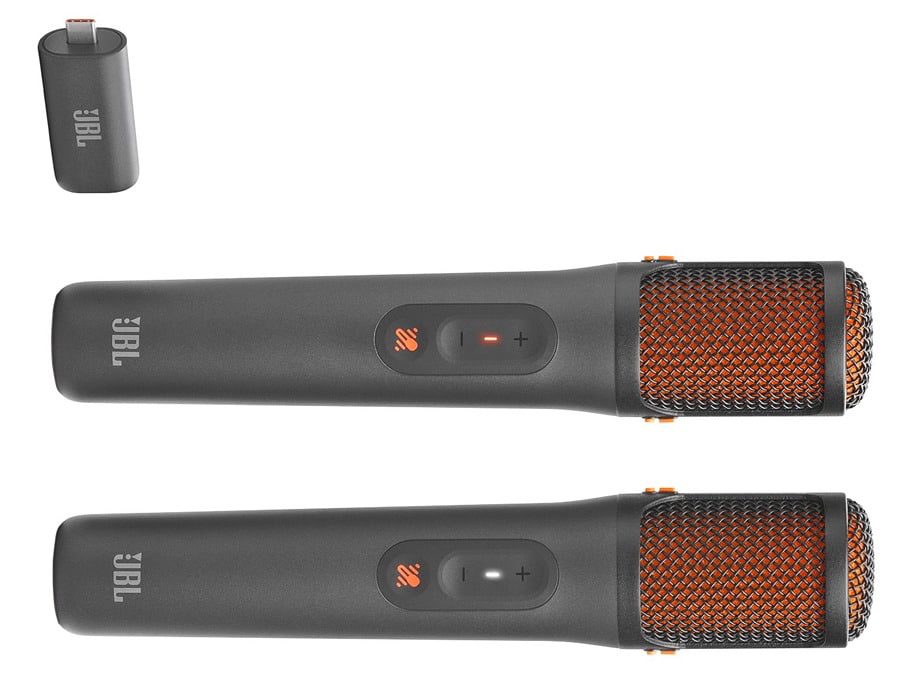
The JBL EasySing Mics provide real-time, AI-powered vocal removal from any track while maintaining clear, balanced audio. Users can adjust the level of original vocals to 25%, 50%, or fully removed, while JBL’s EasySing algorithm enhances live vocals with Voice Boost for improved high-frequency clarity, along with natural reverb, echo, and noise suppression.
The JBL EasySing Mic Mini takes a more compact approach, offering a pocket-sized solution for singing and content creation. It includes Voice Boost for high-pitch support and AI-based noise suppression to reduce background interference, making it suitable for a wider range of environments.
Setup is intentionally simple. There are no apps or complicated pairing steps—just plug the included USB-C dongle into a compatible JBL speaker and start using the microphones immediately. It’s a straightforward, wireless approach that keeps the focus on performance rather than setup.
Portability is also a priority. A compact carrying bag makes it easy to store in a pocket or small bag, while the microphone design includes a ring handle for a secure grip and a magnetic clip for hands-free use.
Each set includes two microphones, offering up to 10 hours of battery life on average and a 30-meter wireless range for duets and group performances. A USB-C dongle is also provided for seamless plug-and-play. EQ customization is provided by the JBL One App
JBL EasySing Mics are compatible with JBL PartyBox On-the-Go 2, JBL PartyBox Encore 2, JBL PartyBox Encore Essential 2, JBL PartyBox Club 120, JBL PartyBox Stage 320, JBL PartyBox 520, and JBL PartyBox 720.
JBL EasySing Mic Mini is compatible with JBL Go 5, JBL Grip, JBL Flip 7, JBL Charge 6, JBL Xtreme 5, JBL Boombox 4, and all JBL PartyBox models through Aux. (Aux cable not included.)
JBL EasySing Mic Specifications
| JBL Model | EasySing Mic |
| Product Type | Wireless Microphone |
| Price (comes as a pair) | $199 |
| Dynamic Range | 98 dBA @ 1 kHz |
| Signal -to -Noise | 59 dBA |
| THD (Total Harmonic Distortion) | < 1% @ 94 dB SPL, 100 Hz – 10 kHz |
| Microphone Head | 16 mm ECM |
| Transmitting Power | < 10 dBm |
| Carrier frequency | 2404 – 2478 MHz |
| Encryption | AES – 128 |
| Frequency / Channel selection | Adaptive channel selection |
| Frequency response: 50 Hz – 15 kHz | 50 Hz – 15 kHz |
| Battery Specifications | Microphone rechargeable battery: 240 mAh, 3.7 V Li-ion polymer battery
Microphone battery charge time: < 3.5 hours in off mode Playtime: Up to 10 hours |
| Dimensions (WHD) | Microphone: 45.5 x 224.5 x 42.7 mm / 1.79” x 8.84” x 1.68”
Dongle: 24 x 45.4 x 15.6 mm / 0.95” x 1.79” x 0.61” |
| Weight | Microphone: 195 g / 0.43 lbs
Dongle 12 g / 0.026 lbs |
| What’s in the Box | 2 x Microphone 1 x AI Dongle 2 x Microphone Holder 1 x USB to USB-C Adaptor 1 x QSG (Quick Start Guide) 1 x Safety Sheet |
The Bottom Line
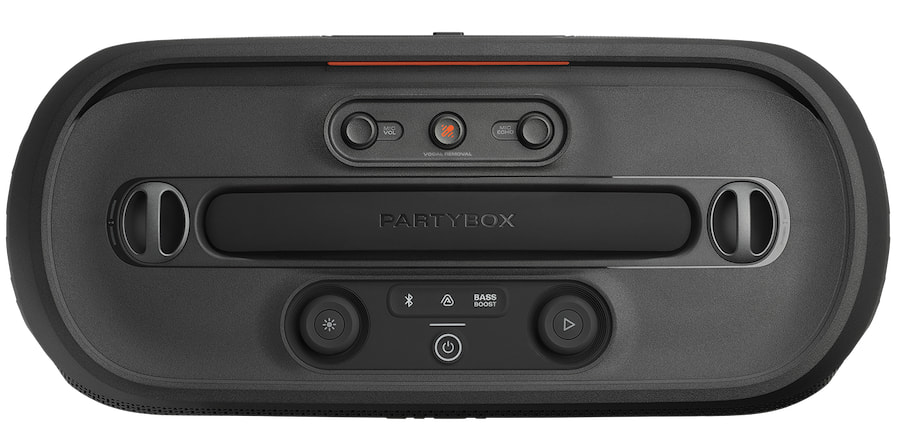
JBL knows exactly where this category is heading and isn’t standing still. The PartyBox On-The-Go 2 Plus leans hard into AI-driven karaoke with EasySing, combining real-time vocal removal, onboard vocal processing, and Auracast support into a portable speaker that’s built as much for participation as it is for playback. That’s the hook—this isn’t just background music anymore, it’s the main event. The addition of dedicated EasySing microphones pushes JBL further into a more complete ecosystem that feels purpose-built for social listening and performance.
What’s missing? This isn’t an audiophile product and doesn’t pretend to be. You won’t find high-resolution streaming features, advanced codec support, or the kind of system integration that serious hi-fi buyers expect. And if you don’t care about karaoke or AI vocal tricks, the standard PartyBox On-The-Go 2 might make more sense—and cost less—since it sticks to the basics with a traditional wireless mic.
Who is this for? Anyone who wants to turn a backyard, beach day, or living room into a low-effort karaoke setup without messing around with apps, subscriptions, or complicated gear. If your idea of a good night involves a microphone, questionable song choices, and zero patience for setup, JBL just made your life easier.
Price & Availability
- JBL PartyBox On-The-Go 2 Plus comes with one EasySing Mic and is available for pre-sale for $419.95 on JBL.com with a sale date of April 12, 2026.
- JBL PartyBox On-The-Go 2 (without EasySing Mic and AI) – $419 at Amazon
- JBL EasySing Mics – $199 at Amazon
- JBL EasySing Mic Mini will be available for pre-sale beginning April 12, 2026, at JBL.com for $179.95 with an on-sale date of May 10, 2026.
Related Reading:

Business52 seconds ago
Savannah Guthrie’s Mother Remains Missing for Nearly 58 Days

Crypto World2 minutes ago
Linea Ends Direct EVM Arithmetization, Moves to RISC-V to Match Ethereum’s Proving Roadmap
Entertainment3 minutes ago
Kelly Ripa’s $19 Serum Makes Wrinkles ‘Disappear,’ Per Shoppers


-
 NewsBeat4 days ago
Manchester United reach agreement with Casemiro over contract clause amid transfer speculation
-

 News Videos4 days ago
Parliament publishes latest register of MPs’ financial interests
-

 Sports6 days ago
Remo Stars and Kano Pillars Strengthen Survival Hopes in NPFL
-

 Sports6 days ago
Gary Kirsten Accuses Pakistan Cricket Board Of ‘Interference’, Mohsin Naqvi Responds
-

 Tech7 days ago
Give Your Phone a Huge (and Free) Upgrade by Switching to Another Keyboard
-

 Tech7 days ago
AI enters the chat: New Seattle dating app relies on tech to facilitate meaningful human connections
-

 Business3 days ago
Instagram, YouTube Found Responsible for Teen’s Mental Health Struggle in Historic Ruling
-

 News Videos6 days ago
Ch 9 Financial Management Part 1 | Detailed One Shot | Class 12 Business Studies Boards 2026
-

 NewsBeat2 days ago
The Story hosts event on Durham’s historic registers
-
 NewsBeat4 days ago
Tesco is selling new Cadbury Dairy Milk bar and people can’t wait to try it
-

 Tech6 days ago
Samsung will soon let you control smart home devices from your car’s dashboard
-

 Sports7 days ago
2026 Kentucky Derby horses, odds, futures, preview, date: Expert who hit 12 Derby-Oaks Doubles enters picks
-
 Entertainment19 hours ago
Lana Del Rey Celebrates Her Husband’s 51st Birthday In New Post
-
 Entertainment6 days ago
Cynthia Bailey Dishes on ‘RHOA’ Season 17, Discusses Kandi
-

 Fashion5 days ago
Does It Matter What You Wear When You’re Laid Off and Looking?
-
 NewsBeat6 days ago
Colombian military plane with 110 soldiers onboard crashes following takeoff
-

 Business5 days ago
More women enter wealth management, but few in advisory roles: study
-

 Sports4 days ago
Fantasy Baseball Week 1 Preview: Top sleeper hitters for both five- and 12-day period led by Munetaka Murakami
-

 Politics6 days ago
How Media Platforms Balance Performance and Accessibility in Image Delivery
-
 NewsBeat5 days ago
NASA Artemis II Astronauts enter 14-Day quarantine as moon rocket reaches launchpad
You must be logged in to post a comment Login