

Politics
‘Asinine BS’: RFK Jr. Blasted Over This ‘Genuinely Crazy’ Trump Claim

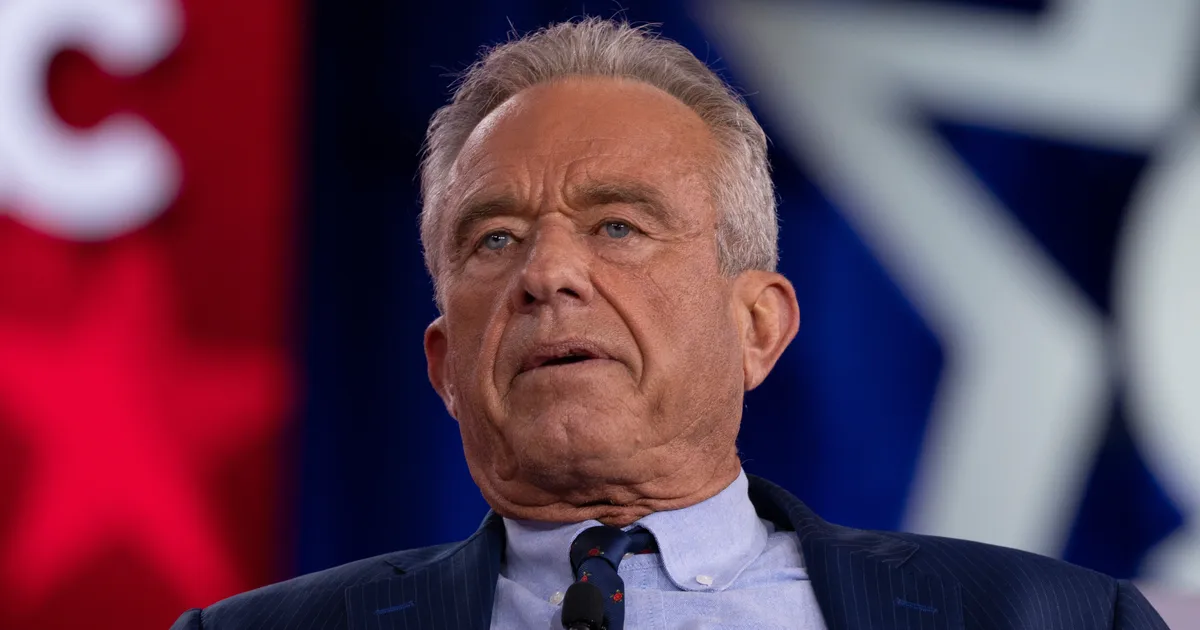
Health Secretary Robert F Kennedy Jr, who once flexed his disdain for Donald Trump and his base of “belligerent idiots,” stressed on Saturday that he “drank the Kool-Aid,” and the president wasn’t as “ill-informed” as he once believed.
In remarks at the Conservative Political Action Conference, Kennedy claimed Trump has “encyclopedic, molecular knowledge” across a “wide range of very, very eclectic interests” before recalling a time the two dined on McDonald’s aboard his plane during the 2024 campaign.
“We started talking about Syria and he got a placemat and he turned it on its back and then he took a Sharpie and drew a perfect map of the Mid East,” said Kennedy of Trump, who claimed that he “never wrote a picture” in his life last year while denying that he gave a racy 2003 birthday card to Jeffrey Epstein.
Kennedy continued, “Then he put the troop strength of every country on every border on that map. It challenged a lot of the assumptions that I had been told about him.”
He added that Trump has an “extraordinary depth of knowledge” about what’s happening in each agency alongside an “instinct for making good choices” before concluding that the president is better than his uncle, John F. Kennedy, at understanding the use of power in the White House.
Social media users swiftly clowned Kennedy over his Trump story, with one user on X calling out the health secretary over his “asinine BS” and another writing that it’s “genuinely crazy to watch the North Korean level hero worship manifest in real time.”

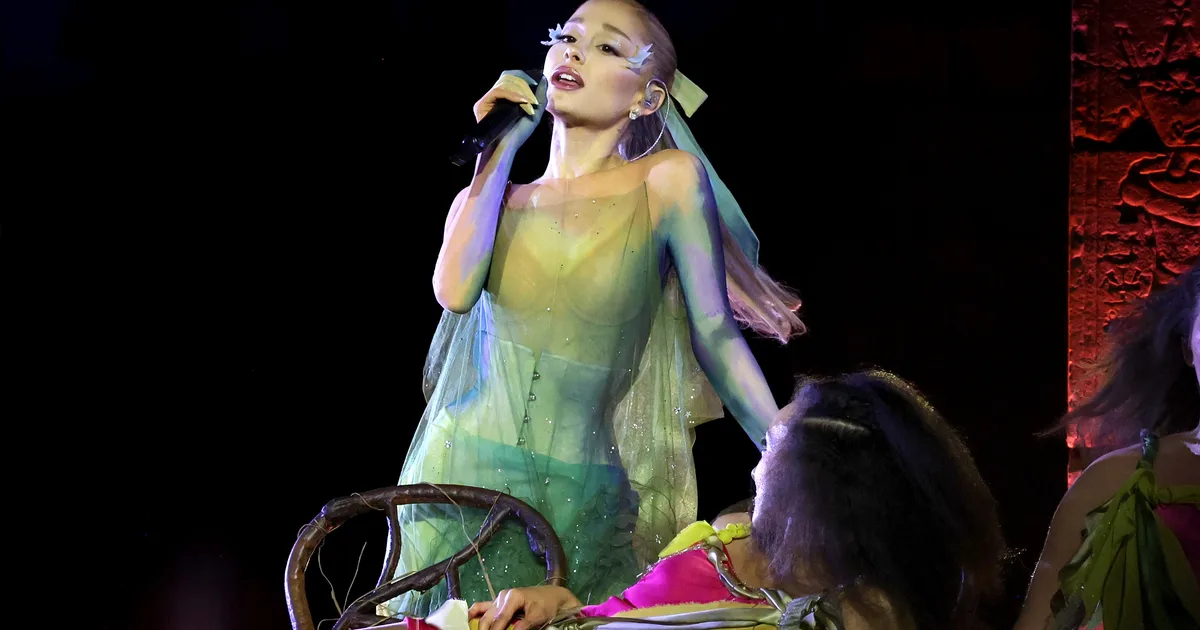
Over the last decade, Ariana Grande has become renowned for her confessional approach to songwriting, whether she’s singing about personal tragedy, heartbreak or the public’s misconceptions about her as a person.
And on her new single Hate That I Made You Love Me, it seems the Grammy winner has a couple more things to get off her chest.
The Wicked star kicked off a new era in her music career on Friday morning with the lead single from her upcoming eighth album Petal.
Ostensibly a break-up song reflecting on a past relationship, it’s already been speculated by many fans that on Hate That I Made You Love Me, Ariana is actually singing about complicated feelings about fame, celebrity, her own public persona and the parasocial relationships between a performer and their audience on her new musical offering.
“Tell me, why is it this way? Why you so hate to see women endure?” she sings in the bridge, before continuing: “Is it really my fault you all gave me your hearts of your own accord? I don’t really think so.”
She also laments on the chorus: “I hate that I made you love me. Sorry if I made you my type. I hate that I made you love me. ’Cause I barely tried.”
Elsewhere on the song, she questions: “What’s happening now? You studied my crown and borrowed my body.
“Warm, kissed by the sun, then cold likе the wind, a bee stuck in honey.”
Have a listen to Hate That I Made You Love Me below:
Ariana previously described Hate That I Made You Love Me as “one of my favourite songs i’ll ever give to you, the greatest fans in the entire world”.
“I’m so grateful for all of the art, moments, songs we have shared,” she told her fans. “I can’t wait for this next chapter and all of the surprises I have for you.”
The music video for Hate That I Made You Love Me, starring actor Justin Long, is also due to premiere next week.
Petals will follow on 31 July, and has been described by Ariana as being “full of life” and inspired by “growing” in light of “cold and hard and challenging” life experiences.
Before that, though, Ariana is due to embark on a world tour, the European leg of which will consist of just 10 nights at London’s O2 Arena.
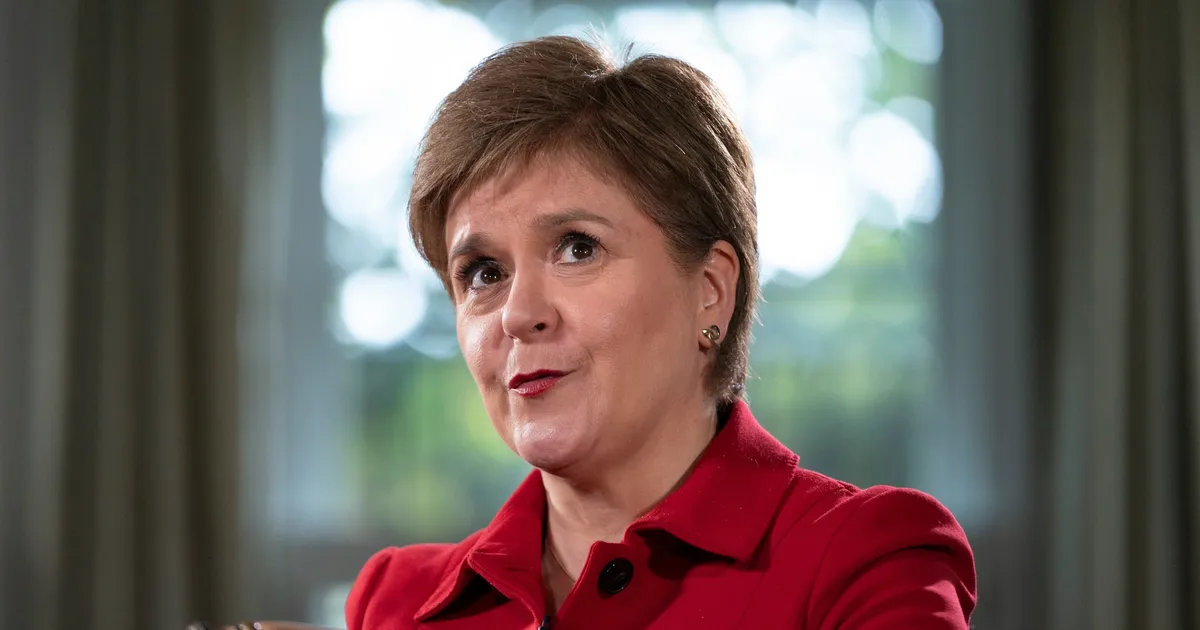
Ian Blackford stunned online critics after he came up with a strange explanation for former first minister of Scotland Nicola Sturgeon’s ignorance about her estranged husband’s embezzlement crimes.
Peter Murrell, chief executive of the Scottish National Party between 2001 and 2023, pleaded guilty to taking more than £400,000 from the SNP this week.
He has been charged with embezzling funds from the party between August 2010 and October 2022.
Murrell was arrested as part of Operation Branchform, a Police Scotland probe into the party’s finances, in 2023, and charged in April 2024.
He has been remanded in custody and is set to be sentenced at the end of June.
He made a series of extravagant purchases while he was SNP chief, including a £124,550 campervan for his own personal use.
His estranged wife Sturgeon was also arrested in 2024 and questioned by detectives, but was never charged with any offences.
Sturgeon, who led Scotland from 2014 until 2023, has insisted she “did not know at all” about her husband’s crimes and that she has been “deceived, misled, lied to and betrayed”.
The ex-SNP leader, who separated from her partner in January 2025, revealed that this has been the “worst week of my life”.
Speaking at Listowel Writers’ Week in Co Kerry, Sturgeon said she was not aware of many of the luxury products Murrell had bought, including three coffee machines worth over £1,000 each.
Explaining how she did not notice such purchases, the former first minister of Scotland said: “We were two people on high salaries, no kids. I was doing a job – and this is another factor – I was doing a job that had me working around the clock, away from home a lot of the time.
“Maybe this doesn’t reflect well on me: I didn’t spend a lot of time in my kitchen – spend any time in my kitchen – but I would never question that some of these things he was buying that I was aware of he couldn’t have afforded, because on the basis of our incomes he could have afforded it.”
Blackford, who worked as the SNP’s Westminster leader from 2017 and 2022, told Times Radio: “I know Nicola very well, she’s a friend of mine.
“Nicola does not have a passion for cooking, it’s not something that she does, so I think that explanation is one that I absolutely can understand.”
“She’s given her explanation, I’m satisfied with the explanation, she’s not someone who would normally spend that much time in the kitchen,” he said.
That explanation went down like a lead balloon on social media, with many criticising the “bizarre” and “insane” response…
Subscribe to Commons People, the podcast that makes politics easy. Every week, Kevin Schofield and Kate Nicholson unpack the week’s biggest stories to keep you informed. Join us for straightforward analysis of what’s going on at Westminster.
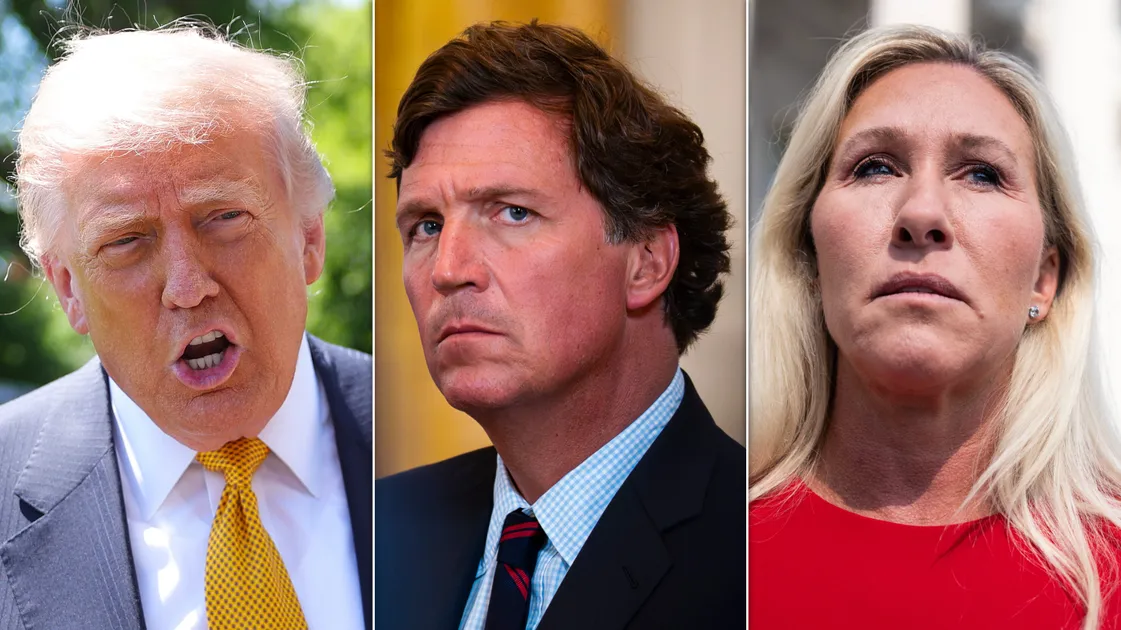
President Donald Trump mocked multiple right-wing Trump critics, including Tucker Carlson and former congresswoman Marjorie Taylor Greene, in an AI-generated photo on Saturday amid his ongoing habit of portraying his political foes in unfavourable ways using artificial intelligence.
Trump’s Truth Social post featured a fake image of Carlson, Greene, Repuplican Representative Thomas Massie, far-right political commentator Candace Owens, Representative Lauren Boebert and Senator Rand Paul crowded together in an SUV.
In the AI image, a smiling Massie was at the wheel of the vehicle with Greene to his right in the front passenger seat. Carlson was squeezed in between Owens and Boebert in the middle row, while Paul is seen in the far backseat with a smirk.
The group of MAGA outriders presumably was driving through Washington DC as the US Capitol building appeared in the background.
“Get in loser, we’re going losing,” the photo was captioned.
Trump’s post came after Massie lost the Republican primary earlier this month to challenger Ed Gallrein, who was backed by the president, and following Trump’s withdrawal of his support for Greene, whom he called “wacky” and accused of having “gone Far Left.”
Trump also called Carlson and Owens “low IQ” people, and attacked Boebert for her support for Massie and her push to release the Jeffrey Epstein files. Rand has also been criticised by Trump for voting against the GOP on key issues.
The president took aim at several of his other political opponents on Saturday, using AI-generated images on Truth Social.
In a separate post, he shared a fake image of himself wearing a New York Knicks jersey and slam dunking on Governor Kathy Hochul.
“PRESIDENT DONALD J. TRUMP vs. Kathy Hochul, New York’s failed Governor who, if people are smart, will vote for Bruce Blakeman — He will, MAKE NEW YORK GREAT AGAIN!” Trump captioned the post.
Trump’s post appeared to be in response to Hochul jeering his Knicks fandom last week by challenging him to name the starting lineup of the “1993 championship team” to test his knowledge of the New York team.
Hochul was ridiculed online over her jab after she apparently mixed up the dates, considering the Knicks haven’t won an NBA championship since 1973.

The season finale of Euphoria has now premiered, and with it, its creator has announced that the show will not be returning to our screens.
Speculation has been rampant since even before season three had even started airing that the latest run of episodes would be the show’s last.
Finally, on Sunday evening, it was confirmed that the award-winning drama has reached its end.
After the episode aired, executive producer Sam Levinson said on the New York Times podcast Popcast: “In terms of the story that we set out to tell, which is a story about addiction and its consequences, this feels like the end to me.”
In the run-up to season three’s release, series lead Zendaya indicated that she didn’t see a future for Euphoria past the episodes that had already been shot.
“I think so, yeah,” she told Drew Barrymore when asked if she thought Euphoria would end with season three. “I think so. Yeah. Closure is coming!”
Sam Levinson also told Variety at the new season’s premiere that he writes every iteration of Euphoria “like it’s the last”, and has “no plans” to continue it in the future right now.
“I want to finish this as strong as I can,” he noted. “I’m [putting the finishing touches on episodes] seven and eight still.”
He added: “I just want to deliver a fucking slam dunk season.”
It’s fair to say that Euphoria’s third season has been the most divisive in its entire run, with some critics suggesting the show lost its footing in growing its characters up from high-school students to young adults.
The show’s depiction of women has also been called into question, with the penultimate episode and finale also serving up back-to-back deaths of major characters.
All three seasons of Euphoria are available to stream on Sky and Now in the UK.

Rosamund Pike had something to get off her chest after spotting someone texting in the audience of her West End show.
The Oscar nominee is currently appearing in a production of Inter Alia at the National Theatre in London, and at the end of Saturday night’s performance, she took a moment during curtain call to address the audience.
“I just wanted to say, for anyone going to the theatre, it’s a huge thing that we’re trying to give you,” she began (as reported by The Independent). “I am trying to tell you a story, and I’m feeling you, and I hope you’re feeling me too.
She then explained that she’d seen someone in the house texting during an emotional part of the show.
“You know who you are and I’m not going to single you out,” the Saltburn actor continued. “Maybe it was very important, and maybe you’re a doctor, and you’re saving someone’s life, and I hope you are.
“But we do see these [things, and] we do feel them.”
She added: “I’ve got you, I feel like I’ve got to hold you all, so when I feel that and see it, it’s hard.”
One of the most notoriously outspoken figures on the matter is stage icon Patti LuPone, who once went as far as swiping an audience member’s phone after seeing them on it during a performance in 2015.
British performer Gemma Arterton also claimed during an interview on The Graham Norton Show that she did the same, after spotting a patron filming her while she was performing in the West End musical adaptation of Made In Dagenham.
Back in April, Cynthia Erivo was similarly irked at seeing someone on their phone in the crowd during her one-woman show, even briefly stopping the performance around an hour in so the matter could be dealt with.
Phone use during theatrical performances is becoming an increasingly contentious issue.
Meanwhile, just a few weeks ago, Lesley Manville took issue with the current trend that has seen theatres allowing guests to film the curtain call on their phones.
Lesle told Radio 4: “Clap or don’t clap, but don’t just stick your phone in our face. I find it insulting.”
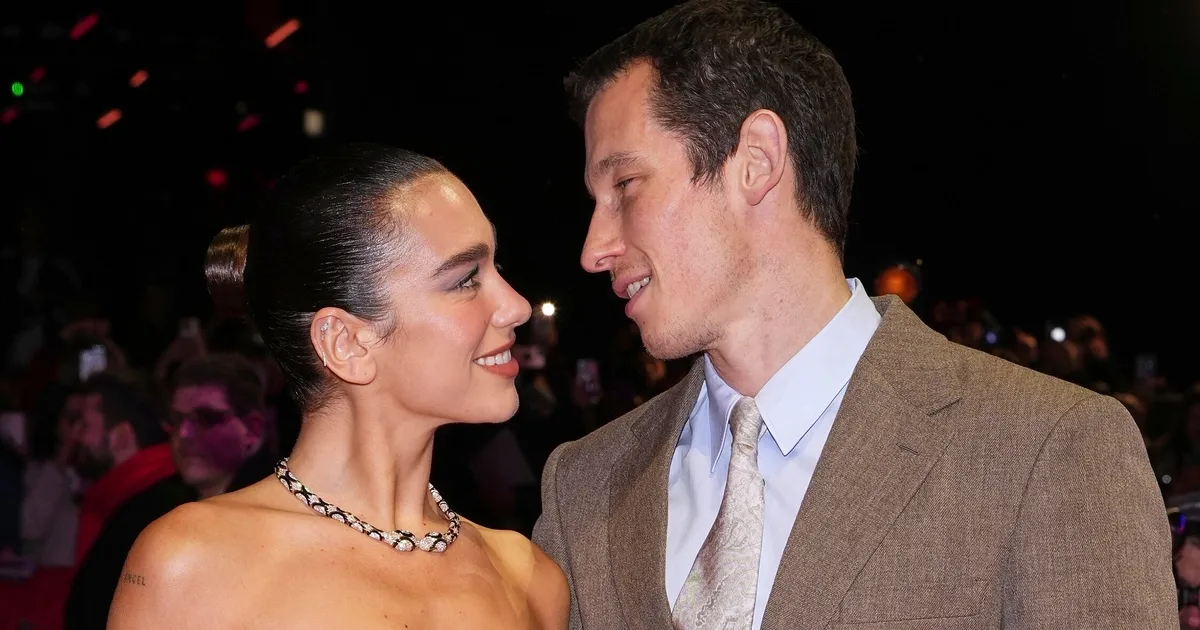
Dua Lipa and Callum Turner are officially married after tying the knot over the weekend.
On Sunday afternoon, the British pair held an intimate wedding ceremony at Old Marylebone Town Hall in central London, around a year after it was first rumoured that they were engaged.
Pictures taken on the day show the happy couple leaving the venue arm in arm while being showered with confetti by loved ones.
Dua wore a custom pale blue Schiaparelli suit for the occasion, including a floor-length skirt and oversized hat, while the Masters Of The Air actor wore a double-breasted navy suit by Ferragamo.
Check out photos from the big day in The Sun.
Since they began dating in January 2024, Dua and Callum have largely kept their relationship out of the spotlight, aside from the odd Instagram post.
However, they made their red carpet debut together at the 2025 Met Gala, around a month before confirming their engagement.
The Future Nostalgia singer told British Vogue in June last year that the engagement was “very exciting”, revealing her new fiancé had designed her engagement ring for her, and that she was “obsessed with it”.
“It’s nice to know the person that you’re going to spend the rest of your life with knows you very well,” she beamed.
Shortly after this, Callum had the entire world swooning when he gave a candid interview about how he and Dua first met.
“We sat next to each other and realised we were reading the same book, which is crazy,” he told The Times. “I had just finished the first chapter and I told her and she looked at me and said, ‘I just finished the first chapter too’. I said, ‘So we’re on the same page’.”
“In the movie version of it I look up to the sky and I’m like, I hear you. I understand. The signs are loud, don’t worry. And that was really the first [moment],” he added, revealing that prior to that, there’d been several near misses when they almost met by chance, but didn’t.
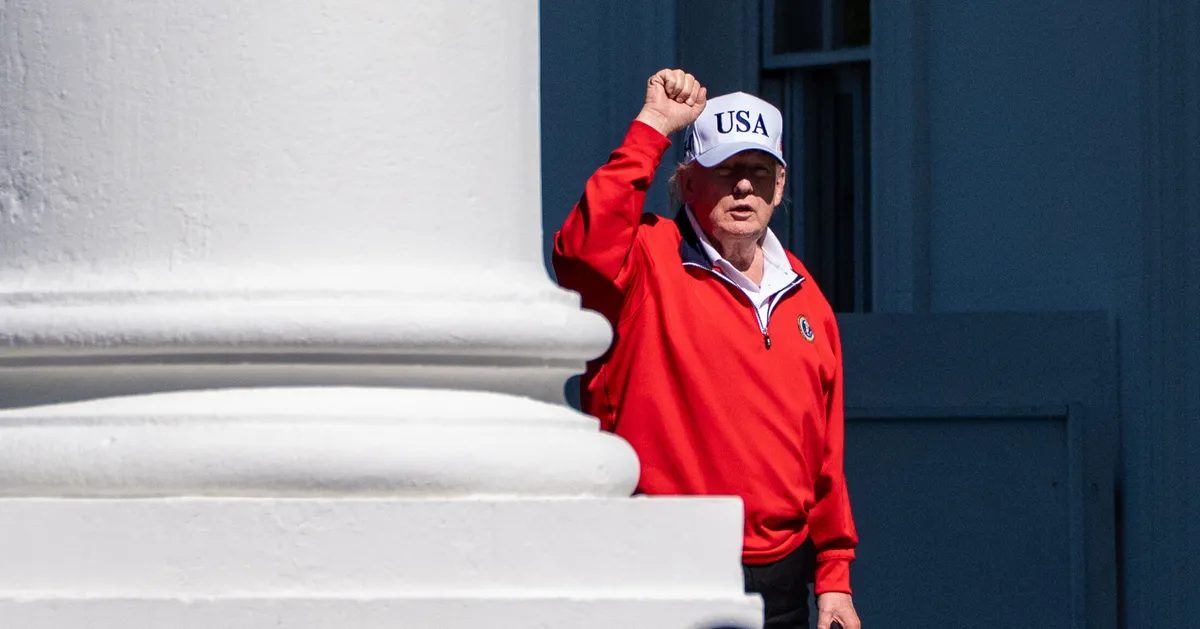
A senior BBC expert has branded the Iran war “a severe blunder” as he slammed Donald Trump’s handling of the crisis.
Jeremy Bowen, the corporation’s international affairs editor, said the US president’s decision to launch air strikes in February had been “a gross miscalculation”.
He also hit out at Trump’s “famously limited attention span” and said he was now desperately trying to find a way out of the conflict.
His comments came as the president once again claimed Iran wants to agree a deal to end the war – but with no permanent ceasefire in sight.
Bowen said: “It seems that President Trump is deeply reluctant to get back into any kind of sustained military action against the Iranians. He’d like this whole thing to be over, he’d like to find a way out of what actually was a gross miscalculation back in February.
“On the Iranian side, they have fundamental demands that they believe are existential, and it’s pretty clear I’d say that more strikes are not going to budge them on that.”
He said the “best case scenario” at the moment would be a memorandum of understanding between both sides which would allow them to continue peace talks without a return to fighting.
But he added: “If the Strait of Hormuz is not reopened, that is economically disastrous for much of the rest of the world, including the United Kingdom.
“I think we’re seeing the consequences of what was a really severe blunder by the Americans and the Israelis to attack Iran back in February. They got it wrong because they underestimated the degree to which the Iranians were prepared to rise this out.”
Bowen went on: “We’re seeing this continued period of confusion, and at the centre of it is Donald Trump, with his famously limited attention span when it comes to really difficult situations, his desire for quick victories, and in this case, his absolute inability to deliver one.”
Subscribe to Commons People, the podcast that makes politics easy. Every week, Kevin Schofield and Kate Nicholson unpack the week’s biggest stories to keep you informed. Join us for straightforward analysis of what’s going on at Westminster.

Forty-eight percent of people in England and Wales live in towns – nearly half the population – and it’s clear to me that the UK will not succeed unless its towns succeed. But for too long we have reached for a cities-first playbook – as though towns exist to serve the economies of nearby cities rather than to drive their own.
The data tells the story plainly. Over the last ten years, employment in cities grew by 10.7%. In towns, 5.4%. A stark difference. And people living in places like Stafford have to live with the consequences of that – watching investment land nearby but not reach them, watching young people move away believing opportunity lies somewhere else, and watching their high streets shrink and decline.
The issue is of course, multifaceted. But I believe some small but important changes could be huge engines of growth for our towns, and therefore the economy of our country.
The data shows that certain sectors are more likely to employ people in towns than cities – manufacturing is a strong example, which employs 9% of all employees in towns, more than double the 4% who work in manufacturing in cities. Investing in our manufacturers is therefore a brilliant way to invest in our towns, creating a virtuous cycle of business growth, job creation, and spending in the local economy.

MDU warns Chancellor clinical negligence system ‘not fit for purpose’

Northern Ireland RE curriculum is ‘indoctrination’ – Supreme Court
But for too long, our government procurement framework hasn’t been doing enough to reward companies that are already manufacturing in Britain. Public procurement is a hugely powerful tool, with the government spending £434 billion in 2024/25 across the UK. How this money is spent affects our businesses, our workforce, our environment, and our communities. It impacts how we build homes, whether we meet net zero, how healthy our communities are, and whether our local businesses succeed.
These factors form the social value of a contract – the benefits beyond pure delivery of a product or service. While of course price and quality remain key factors, given today’s fragile supply chains and increased global competition, the importance of Social Value is going up.
The historic social value weighting hasn’t been sufficient to tip decisions in the favour of UK manufacturing. Businesses in my constituency have felt this firsthand – and I’ve been pushing the Government to change it.
It is clear from approaches taken in the US, European Union, and elsewhere that there is an appetite for domestic-focused procurement. Germany shows strong preference for domestic suppliers, particularly for critical assets and maintenance reliability, which is crucially important in times of increased global uncertainty.
The European Commission has recently proposed the Industrial Accelerator Act to increase the share of EU products and services in public procurements – a significant change to its current legal framework for investment. The act aims to increase manufacturing to 20% of the EU’s GDP by 2035.
This trend is showing how procurement is becoming a key priority for economic growth and resilience, and things are no different in the UK.
The government’s procurement reform, announced in March 2026, marks the biggest overhaul in a generation and one I believe is an excellent move for the UK. It will mean that bids that deliver real community support, local jobs, skills, and apprenticeships will be rewarded. And it shows this government is committed to buying British, building British and backing British.
The reforms focus on four key sectors: steel, shipbuilding, energy infrastructure, and AI – those that are key to our national security. Importantly, they include a new definition of Social Value to put local communities at the heart of procurement decisions, as well as requiring government departments to publish and annually assess the social value delivery of contracts over £5m.
But I think there is more we can do. We could look at increasing the UK content weighting: where government money is spent it should support domestic production and skilled jobs wherever possible. For the businesses in my constituency, like Perkins making engines, GE Vernova making transformers, or Bostik making adhesives, this would make a real difference.
Outside of procurement reform, the government has recognised that our manufacturers require real support too, announcing £120 million of investment into ceramics manufacturing, £350 million to support the chemicals sector as well as legislation that brings the option to nationalise British Steel. Supporting British manufacturing in more industries, particularly ones like ceramics and steel where energy prices are having a real impact, will help us meet our targets as a country, while supporting British employment in our towns.
The government has made an excellent start, but until businesses in my constituency have a fair shot at their tenders, one that considers their local impact and UK manufacturing properly, I’ll keep pushing. When businesses are already backing Britain, we should absolutely be backing them. And when 48% of people in England and Wales live in towns, we should be creating policy that reflects that – not just reaching for the age-old cities-first playbook we’ve been relying on for so long.
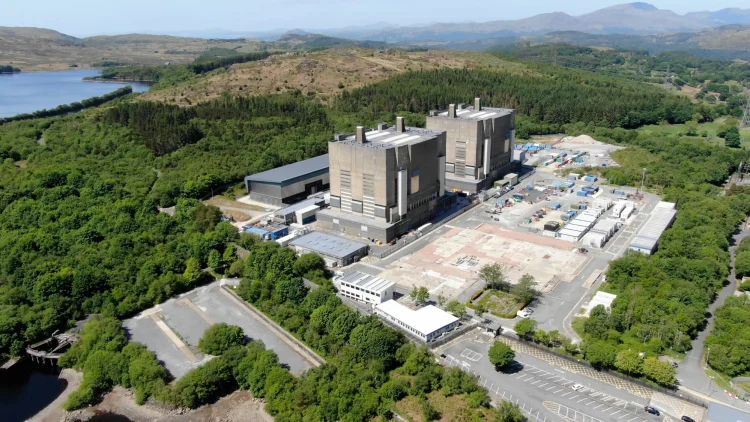
Trawsfynydd, Gwynedd, North Wales, one of the UK’s nuclear sites progressing through decommissioning, underpinning national capability, skills and future energy opportunities. Image Credit: Nuclear Restoration Services.

There is a version of the nuclear decommissioning story that focuses entirely on endings. Sites going quiet, reactors being dismantled, an eventual reduction of jobs. That version misses many critical things that matter.
Nuclear Restoration Services (NRS) manages 14 former nuclear sites across the United Kingdom. Our work will continue well into the next century. The communities that grew up around these sites have given decades of skilled, committed service to the country’s energy needs, and our job is to honour that by building something lasting in return.
In Scotland, NRS supports around 3500 jobs across 4 sites and contributes £241.0 million GVA to the Scottish economy. At Dounreay in Caithness, the numbers speak clearly. More than 1300 people work at the site representing around 11% of all employment in Caithness and North Sutherland. The site alone supports around 2700 jobs across Scotland, contributing £189.4 million GVA to the Scottish economy. Dounreay has been recruiting engineering apprentices for over 60 years. The expertise accumulated there, across generations of workers, is one of the most significant concentrations of technical skill anywhere in the UK.
“We all greatly value the contribution to the economy of the Far North by NRS – and I should add that this is in parallel with our great desire to see a next-generation small modular reactor (SMR) being planned for the same area where we have a licensed site and highly skilled workforce.” – Jamie Stone MP, Caithness, Sutherland and Easter Ross
When Hunterston B transferred to NRS in April 2026, hundreds of highly skilled workers came with it. These are engineers, technicians and specialists who have spent careers mastering one of the most demanding disciplines in industry. Keeping that workforce together, in the communities where they live and where their families are rooted, is central to what NRS does.
Not far from Dounreay, in Wick, the Nucleus nuclear archive is the kind of institution that rarely makes headlines but quietly anchors a local economy. It employs 68 people and generates between £4 million and £4.5 million for the area each year. For a town of Wick’s size, that kind of reliable, skilled employment is genuinely significant.
In Wales, NRS operates Trawsfynydd and Wylfa nuclear sites in parts of the country where well-paid technical work has long been valued by the communities that depend on it. NRS is also responsible for Maentwrog hydroelectric power station, which has been generating renewable electricity since 1928 and provides enough power for around 12,000 home each year. In 2025, these sites contributed more than £55 million GVA to the Welsh economy and supported over 800 jobs. Since 2005, the NDA and NRS have invested nearly £16 million across Anglesey and Gwynedd in socio-economic grant funding, supporting hundreds of businesses and thousands of jobs while drawing in millions more from partner funders.
One of the most exciting projects to emerge from that commitment is the Egni low carbon innovation team at Menai Science Park on Anglesey, which received £389,000 from NRS. Since the programme began, Egni has delivered more than 5,000 hours of business support, attracted over £7 million in wider investment, and brought thousands of school children into contact with science and engineering through STEM outreach. It is exactly the kind of initiative that changes what young people in North Wales believe is possible for them.
Wylfa itself sits at the centre of something bigger. The government’s decision to site the UK’s first small modular reactors there is expected to create thousands of jobs at peak construction. That decision reflects decades of nuclear expertise embedded in the local workforce, expertise that NRS has played a significant role in sustaining. The skills being developed today, through decommissioning, are many of the same skills that will build the energy infrastructure of tomorrow.
Across Scotland and Wales, NRS works with hundreds of businesses, from specialist contractors to small local firms, supporting employment and building commercial capability throughout local supply chains. The breadth of that activity, spread through communities the length of both nations, is one of the most enduring contributions that decommissioning makes to regional economies.
The community investment figures for 2024/25 give a sense of the scale of what is possible when public investment is thoughtfully directed. NRS invested £2.3 million across 149 projects as part of our socio-economic investment in our communities and every pound unlocked a further £8.23 in match funding, generating £18.8 million in total community support. Across those projects, 142 new jobs were created, 215 businesses supported, 70 start-up grants awarded, and more than 10,000 training opportunities delivered.
Among them: a community café and hub in North Wales that received £65,000 and created four local jobs, and a 27-acre forest school in the south of England that will serve schools and community groups for years to come. Eighty-two grassroots organisations received support in 2024/25, the kind of quiet, sustained investment in community life that makes a real difference on the ground.
None of this works without people coming through. The NDA group invests more than £45 million each year in early careers programmes, and this year saw the biggest apprentice and graduate intake in the group’s history so far, with more than 1,100 people starting schemes. Graduate applications hit a record high. The nuclear sector is drawing in talented people who see a long, rewarding career ahead of them, and NRS is a significant part of why.
At Chapelcross in Dumfries and Galloway, a former nuclear site is being carefully prepared for new uses, with the land steadily restored and made ready for whatever the community and government decide comes next. It is a model for how decommissioning, done well, creates opportunity rather than just closing a chapter.
The communities of Caithness, Anglesey, Ayrshire and the other places where NRS operates have contributed enormously to the UK’s energy history. NRS’s commitment is to give something lasting back, through good jobs, strong supply chains, genuine investment in local life, and the patient work of preparing the ground for what comes next. That work is well under way.
On Friday, the funeral of former Conservative MP Derek Conway was held in his beloved Northumberland. In the end, I was unable to go, which was such a shame as Derek was one of those people who was a one-off, one of life’s most positive and generous people. He was great company, and although I wouldn’t pretend to be one of his closest personal friends, I remember some quite deep and meaningful conversations, and some hilarious Whatsapp exchanges in recent years.
The last time I saw him was at my Margaret Thatcher booklaunch last June. He told me afterwards that people he had known for years hadn’t recognised him as he’d been on Mounjaro. Given there were a couple of hundred people there, we didn’t have much time to talk, but I remember we promised to meet up soon and have a proper catch-up. It never happened. In February, he was diagnosed with a terminal illness and given less than a year to live. He died on 5 May, at home with his darling wife Colette and their three children, Henry, Freddie and Claudia. He was only 73. I’ve just looked up his last message to me on Whatsapp. It came on 10 April and read:
“Fading rather quickly🤕 Around 9st now (not the 16 you’ll recall!) They gave me less than a year on mid-Feb so the clock is ticking down steadily. YOU ENJOY EVERY DAY💪Dx”.
At that point I had planned to go and see him when I was going to be in the North East in mid May. Despite that message I didn’t realise he thought the end was imminent. Andrew Mitchell and David Davis went to see him around that time for a final reunion of the band of brothers that became lifelong friends in the whips office during the Major government.
I didn’t know Derek at that point. He had been elected as MP for Shrewsbury in 1983, but I didn’t come across him when I worked in Parliament in the mid 1980s, or subsequently when working as a lobbyist in the 1990s. I do remember, however, his colleague Patrick Nicholls asking me in 1997 if I knew of any jobs going, as he was keen to help Derek following the loss of his seat in the Blair landslide. Derek subsequently became chief executive of the Cats Protection League, transforming it and increasing its turnover from £5 million to £27 million in only five years.
I first got to know Derek in the early months of 2005 when I attended a weekend meeting at Andrew Mitchell’s home in Nottinghamshire, ostensibly to discuss a potential David Davis leadership campaign, followed in late March by a similar event over dinner at the Conway’s magnificent flat near Westminster Cathedral. Believe me, dinners at the Conways were always memorable.
Derek’s public reputation and his actual real character were at odds with one another. During the leadership campaign itself, Derek and Andrew were often described in the newspapers as bullies. They were accused of issuing threats to Tory MPs that if they didn’t get on board with the DD campaign, they wouldn’t be rewarded with shadow ministerial positions. If that side of Derek really existed, I never witnessed it. As DD’s chief of staff during that period. Indeed, quite the opposite. All I saw was a man full of the joys of life, often displaying a wicked sense of humour, and someone who was very comfortable in his own skin. It proved to be a difficult six months for me, as I was a square peg in a round hole. Given at that stage I didn’t know him well, he was incredibly kind to me and was full of wise and advice, especially in how to handle the more difficult personalities involved in the campaign.
Back in April 2023, I met Derek for dinner in Hexham. I was there for the literary festival and had had a nightmare journey up the M1 and A1. I had gone almost blind in one eye half way up the M1 and had no idea if it would be long lasting. Derek shared some of his own health concerns and we joked about we were becoming typical old people – obsessed with health issues. We reflected on the DD campaign, then 18 years in the past, but my abiding memory of the dinner is that it was full of laughter.
Andrew Mitchell gave the eulogy at Derek’s funeral, and I can think of no better way of ending this tribute by quoting from it.
“For reasons I cannot immediately recall, he ended up presenting on television a book review show. This, as the title suggests, involved reading the book or books that were the subject of the show each week – which Derek always did – and the guests he invited on his show to discuss the books were supposed to do likewise. On the occasion that Iain Dale and I were his guests, it quickly became apparent that neither I nor Iain had actually opened the book in question. However, with magnificent sang froid, Derek managed to deliver the half-hour programme.”
I had forgotten all about this, but when Andrew phoned me to confirm the details, it all came flooding back. Sadly, neither of us can recall the book that remained unread by two of the three of us!
Everyone who counted Derek as a friend can’t quite believe we’ll never hear his gentle north east accent again, or hear that wonderful chortle. He enriched our lives, and that isn’t a bad legacy.
The Times has done a full obituary of Derek, which you can read HERE.

May 2026 Crypto Security Losses Plunge 90% to $68.3 Million After April’s Surge

Euphoria’s Sydney Sweeney Mourns Rue Death While Washing Sex Toys

Ariana Grande’s Hate That I Made You Love Me Has An Intriguing Meaning


-

 NewsBeat5 days ago
Israel says it has killed new Hamas military leader in Gaza City airstrikes
-

 Tech5 days ago
NASA taps Blue Origin to deliver lunar rovers for Moon Base initiative
-

 Politics7 days ago
Bridgerton Season 5: Cast, Release Date And Everything We Know So Far
-

 Sports6 days ago
2026 NBA Finals schedule, odds: Knicks await Thunder or Spurs after winning East
-

 News Videos5 days ago
XRP *JUST* SUCCEEDED!!!! CLARITY ACT EXPOSED!!! (SHE EXPOSED IT)
-

 News Videos3 days ago
This is BROKEN! INSANE 5x MONEY CAR WASH WEEK! The NEW GTA Online UPDATE Today! (GTA5 New Update)
-
Crypto World5 days ago
Micron Crosses $1 Trillion Market Cap as AI Demand Reshapes Memory Sector
-
 NewsBeat7 days ago
Hottest May day ever as London hits 34.8C in 2C leap from previous records
-

 Business5 days ago
Selena Gomez Reportedly Upset Over Benny Blanco’s Comments on Her ‘Terrible’ Diet
-
 Tech6 days ago
China assigns ID codes to 28,000+ humanoid robots
-

 Business7 days ago
BTS Sells Out Four Las Vegas Shows at Allegiant Stadium for ARIRANG World Tour
-

 Business6 days ago
Nikkei 225 Surges Past 65,000 for First Time as Iran Peace Hopes Fuel Record Rally
-

 Tech7 days ago
Microsoft’s quiet Claude Code retreat and the real cost of enterprise AI
-

 Tech3 days ago
Waymo dominates autonomous vehicle registrations as Tesla trails behind
-
 Entertainment6 days ago
‘Breaking Bad’ Star’s Easy-to-Binge 6-Part Crime Series Spin-Off Is Finally Heading to Free Streaming
-

 NewsBeat7 days ago
Crowds find riverside shade in York as temperatures soar
-
Tech5 days ago
The Samsung pay deal is the moment Korean unions changed register
-

 Tech7 days ago
Westone Audio and Etymotic Acquired by Fidelity Collective in Major IEM Market Move
-

 Entertainment6 days ago
Days of our Lives 2-Week Spoilers May 25-June 5: Gwen Rages, Abe Confesses & 2 Tragic Anniversaries!
-

 Tech5 days ago
Millions of AI agents imperiled by critical vulnerability in open source package
You must be logged in to post a comment Login