Europe’s artificial intelligence sector is gaining momentum in 2026, with a wave of ambitious startups challenging U.S. dominance through open-source models, enterprise tools, voice and video generation, and specialized infrastructure. While the continent still trails North America in total funding, several high-growth companies have achieved multi-billion-dollar valuations and rapid revenue traction, fueled by strategic investments from governments, tech giants and defense contractors.
Top 10 Rising AI Companies in Europe 2026: Mistral Leads Charge
France, the United Kingdom and Germany remain the primary hubs, benefiting from strong research talent, supportive policies on AI sovereignty and growing enterprise adoption. As of March 2026, these rising players are delivering practical applications across industries while addressing European priorities such as data privacy, multilingual capabilities and industrial competitiveness.
Here are 10 of the most promising rising AI companies in Europe this year, selected for funding momentum, valuation growth, technological innovation and commercial impact:
1. Mistral AI (Paris, France) Mistral AI has emerged as Europe’s flagship AI champion. Founded in 2023, the company reached a valuation of approximately $14 billion by late 2025 after major investments, including a significant stake from ASML. It builds efficient, open-weight large language models that compete with leading U.S. offerings while emphasizing multilingual performance and enterprise deployment. Mistral’s focus on sovereign AI infrastructure, including data center partnerships, has positioned it as a key player in reducing Europe’s reliance on foreign models. Revenue growth and adoption by European businesses have been robust.
2. ElevenLabs (London, United Kingdom) This voice AI specialist has seen explosive growth, with reports of its valuation climbing toward $6–11 billion and annual recurring revenue approaching or exceeding $300 million. ElevenLabs delivers hyper-realistic text-to-speech, voice cloning and conversational audio tools used by creators, enterprises and developers worldwide. Its rapid expansion highlights strong demand for audio AI in content creation, dubbing, accessibility and agentic systems. Backed by substantial funding, the company continues to roll out advanced features while expanding globally from its London base.
Advertisement
3. Wayve (London, United Kingdom) Wayve develops embodied AI for autonomous driving, using end-to-end machine learning rather than traditional mapping and rule-based systems. Valued at around $8.6 billion after cumulative funding exceeding $1 billion, the company is advancing toward robotaxi trials and commercial partnerships. Its data-driven approach to urban navigation has attracted automaker interest and underscores Europe’s strength in applied AI for mobility and safety.
4. Synthesia (London, United Kingdom) Synthesia leads in generative video AI, enabling users to create realistic avatar-based videos from text for training, marketing and internal communications. The company has surpassed $100 million in annual recurring revenue and achieved a valuation near $4 billion. Its platform serves thousands of enterprises, demonstrating how synthetic media can reduce production costs and timelines while supporting multiple languages — a key advantage in Europe’s diverse markets.
5. Black Forest Labs (Freiburg, Germany) This visual AI startup behind the Flux image generation models has quietly become one of Europe’s most valuable AI companies. It raised $300 million in a Series B at a $3.25 billion valuation in late 2025, drawing investment from Salesforce Ventures, a16z, Nvidia and others. Black Forest Labs focuses on high-quality, controllable image and visual AI tools, carving out a strong position in generative media despite intense global competition.
6. Quantexa (London, United Kingdom) Specializing in decision intelligence and entity resolution, Quantexa applies AI to connect complex datasets for fraud detection, risk management and compliance. The company has reached a valuation exceeding $2.6 billion and serves major banks and government agencies. Its contextual analytics platform helps uncover hidden patterns in financial crime investigations, making it a trusted name in regulated industries across Europe.
Advertisement
7. Hugging Face (Paris, France / New York) Although it has significant U.S. operations, Hugging Face maintains deep European roots and influence. The open-source AI platform and model hub has grown into a central ecosystem for developers, with a reported valuation around $4.5 billion. It hosts thousands of models and supports collaborative AI development, playing a vital role in democratizing access to cutting-edge tools while fostering Europe’s open AI community.
8. Stability AI (London, United Kingdom) Known for pioneering open-source generative models such as Stable Diffusion, Stability AI continues to innovate in image, video and multimodal generation. Despite evolving business models, the company retains significant influence in creative AI applications for artists, designers and enterprises. Its contributions to accessible generative technology have sparked both innovation and important discussions on ethics and copyright.
9. Harmattan AI (France) This defense-tech newcomer, founded in 2024, rapidly achieved unicorn status with a $1.4 billion valuation following a $200 million Series B led by Dassault Aviation. Harmattan AI develops AI solutions for autonomous systems and defense applications, aligning with Europe’s push for technological sovereignty in security and military capabilities. Its swift rise reflects growing investment in dual-use AI technologies.
10. DeepL (Cologne, Germany) DeepL has become a global leader in AI-powered translation and language tools, offering superior accuracy and natural results compared to many competitors. The company continues to expand its suite of productivity tools while maintaining strong European focus on data privacy and multilingual excellence. Steady growth and enterprise adoption have solidified its position as a reliable AI success story.
Advertisement
Europe’s AI ecosystem benefits from world-class universities, collaborative research networks and policy initiatives aimed at building compute capacity and talent pipelines. Governments in France, the UK and Germany have backed strategic projects to foster homegrown innovation and reduce dependence on non-European providers.
Many of these companies emphasize responsible AI development, with attention to transparency, bias mitigation and compliance with regulations such as the EU AI Act. This regulatory clarity has helped attract investment while differentiating European approaches from less constrained models elsewhere.
Funding trends show increased interest from both domestic and international investors, though Europe still captures a smaller share of global AI capital than the United States. Strategic bets on infrastructure, defense and industrial applications have helped several firms scale quickly.
Challenges persist, including competition for top talent, energy demands for large models and the need for more domestic compute resources. Partnerships with semiconductor leaders and cloud providers are helping address these gaps.
Advertisement
Sectors driving growth include generative media (voice, video and images), enterprise decision tools, autonomous systems and defense applications. Public-sector and industrial adoption provides stable revenue streams for several players.
As 2026 unfolds, analysts anticipate further funding rounds, potential IPO activity and deeper integration of AI into European industries. Milestones such as expanded model releases, commercial robotaxi pilots or major defense contracts could boost valuations and visibility.
The broader European AI market is projected to contribute meaningfully to economic growth and productivity, with rising companies playing a central role. Talent retention, international expansion and ethical leadership will determine which firms become enduring global leaders.
For investors and enterprises, these rising stars offer opportunities in high-potential technologies with strong regional advantages. Early engagement through partnerships or pilot programs can provide competitive edges in a rapidly evolving landscape.
Advertisement
Europe’s AI story in 2026 reflects a maturing ecosystem moving from research excellence to scalable commercial impact. While gaps with U.S. giants remain, focused innovation and strategic investments are creating a more competitive and diversified continental AI sector.
The landscape continues to evolve quickly, with new entrants emerging from university spinouts and accelerator programs. Ongoing monitoring of funding announcements, product launches and regulatory developments will be essential for tracking momentum.
For more than a decade, Japanese home builders have been tiptoeing into the U.S. housing market with small, discreet acquisitions of private American construction companies. Their quiet era is over.
Japanese builders have announced or closed acquisitions of 23 U.S. single-family home builders since 2020, more than double the number from 2013 to 2019. That doesn’t include the multifamily developers and construction-supply companies they have also bought. By some estimates, Japanese builders are now set to own about 6% of the U.S. home-construction market.
The Trump administration proposed a regulation on Monday that is intended to open 401(k)s and similar retirement plans to private equity and private credit.
It is a victory for the Wall Street firms that have lobbied to get these higher-cost alternative investments into the $14.2 trillion 401(k) market. But it comes at an inopportune time for the industry, as investors pull money from some private-credit funds.
Payments firm to reorganise into four business units
Alistair Houghton Editor, Business Live and Anna Wise Press Association Business Reporter
15:52, 30 Mar 2026Updated 15:54, 30 Mar 2026
The PayPoint sign can be found across the UK(Image: Newcastle Chronicle)
Payment solutions provider PayPoint has revealed a restructuring plan aimed at cutting costs and attracting more customers to use its services in shops.
It will result in the company being restructured into four divisions, encompassing its network services, merchant services, digital payments and open banking, and its Love2shop brand.
Advertisement
PayPoint operates a retail network of over 30,000 convenience stores, offering community services such as cash withdrawals and deposits, ATMs, cash bill payments, energy top-ups and vouchers. It also runs Collect+ and Royal Mail Shops, enabling parcels to be collected and returned at thousands of local outlets.
The company has not disclosed cost-cutting targets or specified whether there will be any impact on its workforce, which numbered around 940 employees this time last year. However, it said the reorganisation will create cost savings and could potentially result in increased dividends for shareholders.
As part of the changes, PayPoint stated it is concentrating on boosting consumer footfall and enhancing sales from its services across retail partners. The overhaul will also entail a significant “reset” of the structure of its merchant services division, which collaborates with over 30,000 UK SMEs (small and medium-sized enterprises) to provide payment services in their shops.
Meanwhile, PayPoint plans to expand the Love2shop brand, which provides digital and physical gift cards. That division, based in Liverpool’s landmark 20 Chapel Street building, is set to bring in £53.2m in revenue this financial year.
Advertisement
The group said: “The reorganisation will enable an improved focus on new business growth and on maximising opportunities across Love2shop’s distribution channels. Continued investment in our technology platform, ongoing product enhancement and leveraging AI to improve marketing insight will strengthen our go-to-market strategy and support accelerated new business growth across Love2shop Business, the expansion of our prepaid savings proposition and growth of our consumer channels, including through our Incomm Payments partnership. There also remain significant opportunities to integrate Love2shop more efficiently across the wider PayPoint Group and client base.”
PayPoint acquired Love2Shop when it took over Merseyside Christmas vouchers firm Appreciate Group in an £83m deal in 2023. That business, formerly known as Park Group, was founded by former Everton FC and Tranmere Rovers owner Peter Johnson and was originally best known for its Christmas hamper savings scheme.
London-listed PayPoint anticipates reporting a record financial performance for the year ending in March, with results due to be published in June. It also forecasts returning over £90 million to shareholders through buybacks and dividends during the financial year.
Ineos has reported a sharp widening in losses to $593 million, as rising energy costs, supply chain disruption and geopolitical tensions weigh heavily on Sir Jim Ratcliffe’s petrochemicals empire.
The group, controlled by Jim Ratcliffe alongside co-owners Andy Currie and John Reece, has also suspended its dividend for a second consecutive year, underscoring the financial pressure facing the business.
Losses before tax increased significantly from $71.1 million the previous year, while revenues declined to €14.3 billion from €16.2 billion. The downturn reflects a challenging operating environment for the European chemicals sector, where demand has weakened and costs have risen sharply.
Ineos pointed directly to the escalation of tensions in the Middle East as a key risk factor, warning that disruption to global energy markets is already impacting operations.
The group highlighted Iran’s strategic position near the Strait of Hormuz, a critical shipping route for oil and liquefied natural gas, noting that any prolonged conflict could further destabilise supply chains and drive up commodity prices.
Advertisement
“Any escalation or expansion of hostilities could adversely affect global supply chains, commodity prices and macroeconomic conditions,” the company said in its annual report.
The surge in oil and gas prices has increased input costs across the petrochemicals industry, while also raising shipping expenses as companies adjust logistics routes to avoid high-risk areas.
The impact has been particularly acute in Europe, where Ineos has long warned of structural challenges including high energy prices, carbon taxes and competitive pressures from overseas producers.
Earnings before exceptional items in the region almost halved to €252.3 million in 2025, down from €470.2 million the previous year. Revenues in the European business fell by 9.2 per cent, reflecting weaker demand and margin compression.
Advertisement
Ratcliffe has previously described the European chemicals industry as facing “challenging market conditions”, with rising regulatory costs and energy prices eroding competitiveness.
The group has also been hit by logistical challenges linked to global shipping disruptions. In previous years, Ineos was forced to reroute shipments for its major Project One chemicals plant in Belgium around the Cape of Good Hope, adding more than €30 million in costs.
The company warned that similar disruptions could occur again if tensions escalate, potentially delaying the completion of key projects and further increasing expenses.
It also flagged risks to the delivery timeline of a new plant in the Netherlands, citing ongoing volatility in energy markets.
Advertisement
Ineos ended the year with net debt of €11.7 billion, highlighting the scale of its financial commitments at a time of declining profitability.
The decision to halt dividend payments reflects a focus on preserving cash and maintaining financial flexibility as the company navigates an uncertain outlook.
The results underline the pressures facing energy-intensive industries in Europe, where companies are grappling with a combination of high input costs, regulatory burdens and geopolitical instability.
For petrochemical producers, the reliance on oil and gas as both feedstock and energy source makes them particularly sensitive to price fluctuations.
Advertisement
Looking ahead, Ineos warned that continued volatility in energy markets could have a “significant” impact on its operations and financial performance.
The trajectory of the Middle East conflict will be a key factor, with prolonged disruption likely to exacerbate cost pressures and delay investment projects.
For Ratcliffe’s group, the challenge will be balancing investment in long-term growth with the need to manage short-term financial strain — a task made more complex by the increasingly uncertain global economic environment.
Amy Ingham
Amy is a newly qualified journalist specialising in business journalism at Business Matters with responsibility for news content for what is now the UK’s largest print and online source of current business news.
Stone Fox Capital is an RIA from Oklahoma. Mark Holder is a CPA with degrees in Accounting and Finance. He is also Series 65 licensed and has 30 years of investing experience, including 15 years as a portfolio manager. Mark leads the investing group Out Fox The Street where he shares stock picks and deep research to help readers uncover potential multibaggers while managing portfolio risk via diversification. Features include various model portfolios, stock picks with identifiable catalysts, daily updates, real-time alerts, and access to community chat and direct chat with Mark for questions. Learn more.
Analyst’s Disclosure: I/we have no stock, option or similar derivative position in any of the companies mentioned, but may initiate a beneficial Long position through a purchase of the stock, or the purchase of call options or similar derivatives in UPST over the next 72 hours. I wrote this article myself, and it expresses my own opinions. I am not receiving compensation for it (other than from Seeking Alpha). I have no business relationship with any company whose stock is mentioned in this article.
The information contained herein is for informational purposes only. Nothing in this article should be taken as a solicitation to purchase or sell securities. Before buying or selling any stock, you should do your own research and reach your own conclusion or consult a financial advisor. Investing includes risks, including loss of principal.
Advertisement
Seeking Alpha’s Disclosure: Past performance is no guarantee of future results. No recommendation or advice is being given as to whether any investment is suitable for a particular investor. Any views or opinions expressed above may not reflect those of Seeking Alpha as a whole. Seeking Alpha is not a licensed securities dealer, broker or US investment adviser or investment bank. Our analysts are third party authors that include both professional investors and individual investors who may not be licensed or certified by any institute or regulatory body.
Treasury Secretary Scott Bessent joins ‘Fox & Friends’ to discuss the gradual reopening of the Strait of Hormuz and unveils a new fraud crackdown program to expose scams in healthcare and other industries.
Treasury Secretary Scott Bessent is offering what could be big money for potentially “hundreds of billions” recouped from fraudsters emboldened during a Biden administration that unwound guardrails under the guise of COVID relief urgency, he told Fox News on Monday.
“We can pay up to a 30% reward for the recovered funds,” Bessent told “Fox & Friends.”
Advertisement
Bessent said fraudsters were let loose as a result of former President Joe Biden’s administration reducing fraud controls to expedite hundreds of billions in pandemic-related funds out to Americans who needed it, and now the buck stops with President Donald Trump and Vice President JD Vance as fraud czar.
“We are all hands on deck because this is money that is not going to where it’s supposed to go, but more importantly, it’s being stolen from the American taxpayer,” Bessent said. “We need to be a high-trust society. We need to understand where the money is going.”
Treasury Secretary Scott Bessent is offering up to 30% of “hundreds of billions” potentially recouped from Biden-era emboldened fraudsters. (FOX Business)
“This could be hundreds of billions of dollars in recouped money,” he noted.
Advertisement
Bessent’s Treasury Department is now offering whistleblowers a major financial incentive to help expose fraud, directing would-be tipsters to the Treasury.gov website and saying the administration has already received more than 700 leads. Treasury’s whistleblower page says eligible tipsters can receive between 10% and 30% of monetary sanctions collected in successful actions.
Bessent also blamed weaknesses in anti-fraud enforcement on the Biden administration’s handling of pandemic aid.
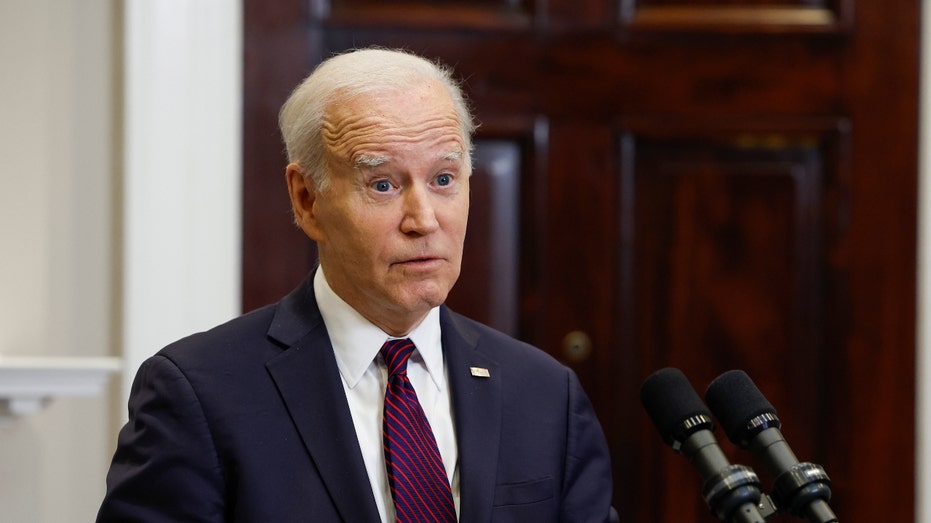
Former President Joe Biden’s administration has been rebuked for unwinding fraud and oversight controls of hundreds of billions of COVID relief funds. (Anna Moneymaker/Getty Images)
“A lot of this is a result of during COVID,” Bessent said. “Many of the agencies under the Biden administration gutted their fraud departments, their fraud detection, or took down the fraud detection to get the money out quickly for COVID relief. But they never brought back the guardians of our money. So, we have to have integrity in these programs.”
Advertisement
He argued stronger oversight and public visibility are needed to restore integrity to government programs, claiming that blue states like California and New York are covering for fraudsters against government oversight and investigations.
Unleash Prosperity co-founder Stephen Moore and Heritage Foundation senior economist Peter St. Onge discuss the Trump administration’s push to crack down on fraud on ‘The Bottom Line.’
While Minnesota fraud among the state’s Somali community has made headlines thus far thanks to independent journalist Nick Shirley’s reporting, Bessent actually praised that state for having some level of transparency that is not permitted in California or New York.
Advertisement
“That’s why that young man, Nick Shirley, was able to go to see the scams, because it was: This is the name of the facility; this is the address; this is how much money they got,” Bessent said. “Oh look, it’s an empty storefront. There’s no one here. New York, California are hiding it.”
Independent journalist Nick Shirley breaks down his alleged fraud findings in Minnesota and California on ‘FOX Business In Depth.’
“We’re all in favor of states’ rights and states doing more, but the money goes into a lot of these blue states, and some of the red states could be more transparent,” he said.


























































You must be logged in to post a comment Login