Ineos has reported a sharp widening in losses to $593 million, as rising energy costs, supply chain disruption and geopolitical tensions weigh heavily on Sir Jim Ratcliffe’s petrochemicals empire.
The group, controlled by Jim Ratcliffe alongside co-owners Andy Currie and John Reece, has also suspended its dividend for a second consecutive year, underscoring the financial pressure facing the business.
Losses before tax increased significantly from $71.1 million the previous year, while revenues declined to €14.3 billion from €16.2 billion. The downturn reflects a challenging operating environment for the European chemicals sector, where demand has weakened and costs have risen sharply.
Ineos pointed directly to the escalation of tensions in the Middle East as a key risk factor, warning that disruption to global energy markets is already impacting operations.
The group highlighted Iran’s strategic position near the Strait of Hormuz, a critical shipping route for oil and liquefied natural gas, noting that any prolonged conflict could further destabilise supply chains and drive up commodity prices.
Advertisement
“Any escalation or expansion of hostilities could adversely affect global supply chains, commodity prices and macroeconomic conditions,” the company said in its annual report.
The surge in oil and gas prices has increased input costs across the petrochemicals industry, while also raising shipping expenses as companies adjust logistics routes to avoid high-risk areas.
The impact has been particularly acute in Europe, where Ineos has long warned of structural challenges including high energy prices, carbon taxes and competitive pressures from overseas producers.
Earnings before exceptional items in the region almost halved to €252.3 million in 2025, down from €470.2 million the previous year. Revenues in the European business fell by 9.2 per cent, reflecting weaker demand and margin compression.
Advertisement
Ratcliffe has previously described the European chemicals industry as facing “challenging market conditions”, with rising regulatory costs and energy prices eroding competitiveness.
The group has also been hit by logistical challenges linked to global shipping disruptions. In previous years, Ineos was forced to reroute shipments for its major Project One chemicals plant in Belgium around the Cape of Good Hope, adding more than €30 million in costs.
The company warned that similar disruptions could occur again if tensions escalate, potentially delaying the completion of key projects and further increasing expenses.
It also flagged risks to the delivery timeline of a new plant in the Netherlands, citing ongoing volatility in energy markets.
Advertisement
Ineos ended the year with net debt of €11.7 billion, highlighting the scale of its financial commitments at a time of declining profitability.
The decision to halt dividend payments reflects a focus on preserving cash and maintaining financial flexibility as the company navigates an uncertain outlook.
The results underline the pressures facing energy-intensive industries in Europe, where companies are grappling with a combination of high input costs, regulatory burdens and geopolitical instability.
For petrochemical producers, the reliance on oil and gas as both feedstock and energy source makes them particularly sensitive to price fluctuations.
Advertisement
Looking ahead, Ineos warned that continued volatility in energy markets could have a “significant” impact on its operations and financial performance.
The trajectory of the Middle East conflict will be a key factor, with prolonged disruption likely to exacerbate cost pressures and delay investment projects.
For Ratcliffe’s group, the challenge will be balancing investment in long-term growth with the need to manage short-term financial strain — a task made more complex by the increasingly uncertain global economic environment.
Amy Ingham
Amy is a newly qualified journalist specialising in business journalism at Business Matters with responsibility for news content for what is now the UK’s largest print and online source of current business news.
NEW YORK — Navitas Semiconductor Corporation (NASDAQ: NVTS) shares skyrocketed more than 25% in morning trading Monday, reaching $22.79 as investors poured into the gallium nitride and silicon carbide power chip specialist amid booming demand for high-efficiency solutions in artificial intelligence data centers.
Navitas Semiconductor Stock Explodes 25% on Surging AI Data Center Demand and Strong Q1 Results
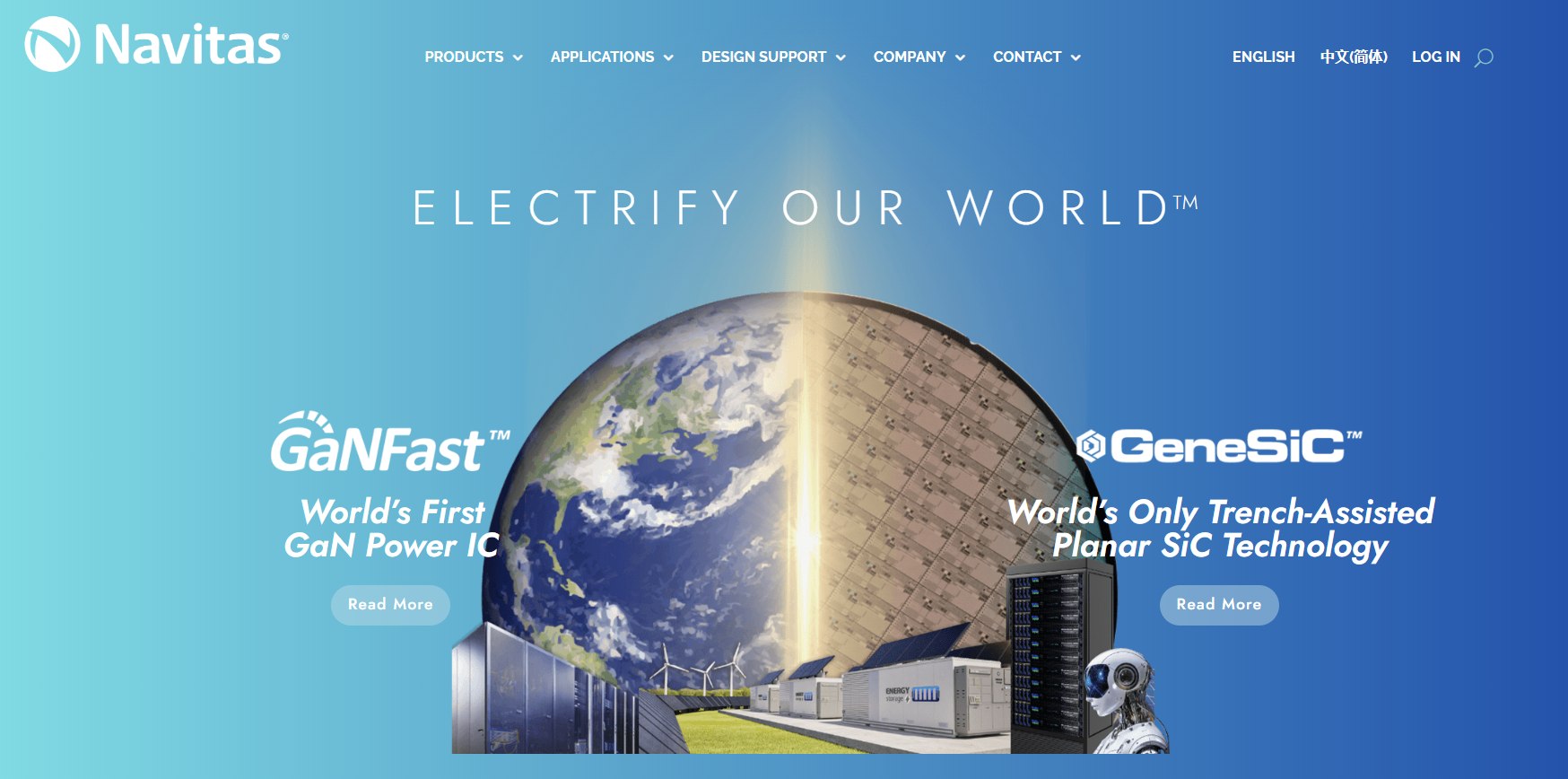
The semiconductor company, which specializes in next-generation GaNFast and GeneSiC power semiconductors, has emerged as one of the clearest pure-play beneficiaries of the AI infrastructure buildout. Monday’s surge pushed the stock well above recent trading ranges on heavy volume, reflecting renewed enthusiasm for companies enabling faster, cooler and more efficient power conversion in hyperscale data centers.
Q1 results fuel optimism
Navitas reported first-quarter 2026 results on May 5 that showed sequential revenue growth of 18% to $8.59 million, beating analyst expectations. The company highlighted a meaningful shift toward high-power markets, including AI data centers, grid infrastructure, and industrial electrification. Gross margins also expanded as the product mix improved.
CEO Chris Allexandre emphasized the company’s successful pivot away from lower-margin mobile markets toward higher-value AI and energy applications. Navitas guided for Q2 revenue between $10.0 million and $10.5 million, with continued margin expansion driven by its growing design-win pipeline now exceeding $2.4 billion.
Advertisement
AI power revolution drives momentum
The core catalyst for Navitas has been its leadership in gallium nitride (GaN) and silicon carbide (SiC) technologies. These materials allow for significantly more efficient power conversion than traditional silicon, reducing energy loss and heat generation — critical advantages as AI training clusters consume enormous amounts of electricity.
At NVIDIA’s GTC 2026 conference in March, Navitas showcased an innovative 800V-to-6V GaNFast power delivery board designed specifically for NVIDIA’s MGX platform. The demonstration underscored Navitas’ growing integration into next-generation AI infrastructure, sparking investor excitement about multi-year design wins with major hyperscalers.
Analysts note that AI data centers require unprecedented levels of power density and efficiency. Navitas’ solutions address exactly these challenges, positioning the company at the intersection of two of the most powerful secular trends in technology: artificial intelligence and energy efficiency.
Advertisement
Short squeeze and technical breakout
Monday’s explosive move also carried elements of a short squeeze. Navitas had been heavily shorted earlier in the year by investors skeptical of its transition strategy. As positive momentum built on strong guidance and product momentum, shorts were forced to cover, accelerating the upward spiral.
Technically, the stock has broken out of a multi-month consolidation pattern on significantly elevated volume, with analysts raising price targets in recent weeks. Some bullish voices now see potential for $30+ if execution continues and AI spending remains robust.
Company transformation story
Advertisement
Navitas has undergone a significant strategic shift over the past 18 months. Once heavily focused on consumer mobile charging, the company has successfully repositioned itself toward high-power applications. This “Navitas 2.0” strategy appears to be paying off as revenue from AI and industrial markets grows rapidly.
Recent governance enhancements, including the appointment of experienced independent directors, have also helped boost investor confidence. The company maintains a strong balance sheet and continues investing in R&D to maintain its technology edge.
Risks and valuation debate
Despite the enthusiasm, some analysts caution that the stock’s rapid rise leaves it vulnerable to pullbacks. Memory and power semiconductor stocks are historically cyclical, and any slowdown in AI capital expenditure could pressure results. At current levels, Navitas trades at premium multiples that assume continued hyper-growth.
Advertisement
However, many growth investors argue the valuation is justified given the massive addressable market and Navitas’ early-mover advantage in GaN and SiC for AI. The company’s expanding design-win pipeline provides some visibility into future revenue.
Broader semiconductor AI theme
Navitas’ surge fits into a larger narrative of AI infrastructure winners. Companies enabling efficient power delivery are increasingly seen as critical picks-and-shovels plays in the AI gold rush. Navitas joins peers benefiting from hyperscaler spending on data center expansion and next-generation computing.
What investors should watch
Advertisement
Going forward, key catalysts for Navitas include:
Q2 earnings in early August
Progress on major design wins converting to revenue
Updates from hyperscaler customers
Potential new product announcements at industry events
Monday’s dramatic move highlights how quickly sentiment can shift in the semiconductor sector when a company demonstrates clear momentum in a high-growth area like AI power electronics.
As trading continues, Navitas Semiconductor stands out as one of the most compelling — and volatile — stories in the 2026 semiconductor landscape. Whether the rally sustains depends on continued execution, but for now, investors are rewarding the company’s successful pivot to the heart of the AI revolution.
NEW YORK — Shares of Innodata Inc. (NASDAQ: INOD) exploded higher Monday, rising more than 25% in morning trading to $106.72 as investors continued to pile into the AI data engineering and generative AI services company following its blockbuster first-quarter results and sharply raised 2026 outlook.
Innodata (INOD) Stock Surges 25% on Massive AI Data Wins and Record Q1 Earnings Beat
The surge extends the extraordinary momentum the stock has seen since its earnings release on May 7, when it more than doubled in a single session. Monday’s move pushed Innodata’s year-to-date gains well over 300%, turning the once-obscure data services firm into one of the hottest AI-related plays on Wall Street.
Record Q1 results ignite rally
Innodata reported first-quarter revenue of $90.1 million, a 54% increase from the prior year and well ahead of consensus estimates. Adjusted EBITDA soared to $25.0 million, crushing expectations by 139%, while adjusted gross margin expanded to 47%. Net income nearly doubled to $14.9 million, or $0.42 per diluted share.
CEO Jack Abuhoff highlighted strong execution across the company’s AI-focused businesses, particularly in data annotation, model training support, and evaluation services for large language models. The results reflect accelerating demand from Big Tech clients building next-generation AI systems.
Advertisement
Major Big Tech engagement disclosed
Perhaps most exciting for investors was the announcement of new engagements with an unnamed leading Big Tech company expected to generate approximately $51 million in revenue this year alone. Management noted this customer went from zero contribution last year to potentially the company’s second-largest client in 2026.
Innodata also introduced a new Evaluation and Observability Platform for agentic AI systems, further expanding its offerings in the rapidly growing space of autonomous AI agents.
Guidance raised significantly
Advertisement
Buoyed by strong visibility, Innodata raised its full-year 2026 revenue growth guidance to approximately 40% or more, up from the previous target of 35% or more. The upbeat outlook reinforced investor conviction that the company is well-positioned in the AI value chain.
Why the market is excited
Innodata provides essential data engineering services that power generative AI development, including high-quality training data, annotation, model evaluation, and synthetic data generation. As hyperscalers and AI leaders race to scale their models, demand for these specialized services has surged.
The company’s pivot toward higher-value AI solutions has dramatically improved margins and revenue visibility. Analysts see Innodata as a “picks and shovels” play in the AI gold rush — essential infrastructure that benefits regardless of which large language model ultimately dominates.
Advertisement
Short squeeze adds fuel
Heavy short interest earlier in the year created conditions for a classic short squeeze. As positive news flowed and the stock broke key technical levels, shorts were forced to cover, accelerating the upward move. Trading volume on Friday and Monday has been exceptionally heavy.
Valuation and risks remain
Despite the euphoria, some caution is warranted. At current levels, Innodata trades at premium multiples that assume continued hyper-growth. The stock remains volatile, and any slowdown in AI spending or delays in major contracts could trigger a sharp pullback.
Advertisement
However, many growth investors argue the valuation is justified given the massive addressable market and Innodata’s expanding pipeline. The company’s recent performance suggests it is successfully executing its transformation into a high-growth AI services leader.
Broader AI data services theme
Innodata’s surge fits into a larger wave of enthusiasm for companies enabling AI development. As model training and deployment scale dramatically, specialized data services have become critical bottlenecks. Innodata joins a select group of public companies directly monetizing this trend.
What’s next for Innodata
Advertisement
Investors will watch closely for Q2 results in early August and any updates on the major Big Tech engagements. Continued execution on margins and new customer wins could support further upside, while any signs of slowing AI investment would likely pressure the stock.
Monday’s dramatic move underscores how quickly sentiment can shift in the AI sector when a company delivers tangible results. For Innodata, the combination of record earnings, raised guidance, and major new contracts has transformed it from a niche player into one of 2026’s standout AI stories.
As trading continues, all eyes remain on whether this momentum can be sustained or if profit-taking will eventually cool the red-hot rally. For now, investors are rewarding Innodata’s successful bet on the generative AI revolution.
NEW YORK — Shares of Babcock & Wilcox Enterprises Inc. (NYSE: BW) surged more than 23% in morning trading Monday to $17.95, extending a remarkable rally as investors rewarded the industrial company’s growing role in powering artificial intelligence data centers and its strong first-quarter performance.
Babcock & Wilcox (BW) Stock Rockets 23% on AI Data Center Power Deals and Strong Q1 Results
The move comes one day after the company reported first-quarter 2026 results that showed significant backlog growth, new contract wins, and raised full-year guidance, reinforcing its transformation into a key player in the energy infrastructure needed for hyperscale AI facilities.
Q1 earnings beat expectations
Babcock & Wilcox reported first-quarter revenue of $214.4 million, up 44% year-over-year, with adjusted EBITDA of $16.1 million — a 296% increase. The company highlighted a massive $2.4 billion power generation project for AI data centers and more than $21 million in new fuel-switching technology awards.
Management raised its 2026 adjusted EBITDA guidance to $80–$100 million, citing strong demand for behind-the-meter power solutions tailored to AI factory campuses. The company’s backlog reached $2.7 billion, while its total pipeline exceeded $14 billion.
Advertisement
Major AI power project drives momentum
The biggest catalyst remains Babcock & Wilcox’s $2.4 billion design-build contract with Base Electron to supply 1.2 gigawatts of natural gas-fired power generation capacity for Applied Digital’s AI data centers. The project includes four 300-MW boiler and steam turbine systems, with potential for an additional 1.2 GW.
This positions the century-old boiler and power plant specialist at the center of the AI energy boom, where massive computing clusters require reliable, high-capacity power sources that the strained electrical grid often cannot provide quickly enough.
Analyst and market reaction
Advertisement
Several Wall Street firms have raised price targets on BW in recent weeks, with some bullish voices now calling for $25 or higher. The stock has delivered extraordinary returns, up more than 4,400% over the past year from deeply depressed levels, though it remains volatile.
Monday’s surge came on elevated volume, with traders rotating into industrial names tied to AI infrastructure. Despite the massive run-up, some analysts argue the valuation still offers upside if the company successfully executes on its expanding backlog.
Company transformation story
Babcock & Wilcox has undergone a significant strategic shift, moving from traditional boiler services toward high-growth areas including renewable energy, fuel switching, and now large-scale power generation for data centers. The company has completed more than 150 boiler conversions and continues winning new fuel-switching awards amid baseload power demand.
Advertisement
CEO Kenneth Young has emphasized the company’s ability to deliver turnkey solutions for the energy transition while capitalizing on AI-driven electricity needs. The firm’s parts and services segment also continues performing strongly.
Risks and legal overhang
The rapid rise has not been without controversy. Class action lawsuits allege misleading statements regarding the $2.4 billion contract and potential conflicts of interest. Investors with losses between November 2025 and March 2026 have until June 15 to seek lead plaintiff status.
Like many small-cap industrial names, BW remains sensitive to execution risks, project delays, and broader economic conditions. However, current momentum appears driven by tangible contract wins and improving financial metrics.
Advertisement
Broader AI infrastructure theme
Babcock & Wilcox joins a growing list of companies benefiting from the enormous power requirements of AI training and inference. Data centers are projected to consume a dramatically larger share of U.S. electricity in coming years, creating opportunities for companies capable of delivering reliable generation capacity quickly.
What investors should watch
Key upcoming catalysts include progress updates on the $2.4 billion project, additional contract wins, and the Q2 earnings report. Continued strength in the parts and services business and successful execution on fuel-switching projects will also be closely monitored.
Advertisement
Monday’s sharp gain reflects growing Wall Street conviction that Babcock & Wilcox is well-positioned in one of the decade’s most powerful secular trends. While volatility remains high, the company’s pivot toward AI power infrastructure has clearly captured investor imagination.
As trading continues, BW stands out as one of the more compelling industrial turnaround stories of 2026 — a legacy power equipment maker reborn as an essential player in the artificial intelligence revolution.
Kodiak Gas Services, Inc. (KGS) Q1 2026 Earnings Call May 11, 2026 11:00 AM EDT
Company Participants
Graham Sones – Vice President of Investor Relations Robert McKee – CEO, President & Director John Griggs – Executive VP & CFO
Advertisement
Conference Call Participants
Elias Jossen – JPMorgan Chase & Co, Research Division John Mackay – Goldman Sachs Group, Inc., Research Division James Rollyson – Raymond James & Associates, Inc., Research Division Douglas Irwin – Citigroup Inc., Research Division Neal Dingmann – William Blair & Company L.L.C., Research Division James Larkin – BofA Securities, Research Division Theresa Chen – Barclays Bank PLC, Research Division Sebastian Erskine – Rothschild & Co Redburn, Research Division Elvira Scotto – RBC Capital Markets, Research Division Joshua Jayne – Daniel Energy Partners, LLC
Advertisement
Presentation
Operator
Greetings, and welcome to the Kodiak Gas Services First Quarter 2026 Earnings Call. [Operator Instructions] As a reminder, this conference is being recorded. I would now like to turn the conference over to your host, Graham Sones, Vice President of Investor Relations. Thank you. You may begin.
Advertisement
Graham Sones Vice President of Investor Relations
Good morning, and thanks for joining us for the Kodiak Gas Services conference call and webcast to review our first quarter of 2026 results. Joining me from the company today are Mickey McKee, President and Chief Executive Officer; and John Griggs, Executive Vice President and Chief Financial Officer. After my remarks, Mickey and John will cover recent market developments, share an update on our power strategy and walk through our results and updated 2026 outlook, including our new Power segment.
Then we’ll open it up for Q&A. Replay of today’s call will be available by webcast and phone through May 25, 2026. Replay details are on the Investors tab of our website at kodiakgas.com. And as a reminder, the information discussed today speaks only as of May 11, 2026, and may no longer be
FOX Business host Larry Kudlow discusses efforts to end the war in Iran on ‘Kudlow.’
President Trump rejected the ludicrous Iranian conditions for an end to the war as totally unacceptable. Here’s what he said earlier today: “After reading that piece of garbage they sent us. I didn’t even finish reading it.” He added: “I’m not going to waste my time reading it.” It’s basically the same nonsense they were throwing at him a month ago. A permanent end to the war. Lift the blockade. Give them control over the Strait of Hormuz. Give them money.
No discussion of ending nuclear capabilities or handing over their enriched uranium. Or stopping their missile production. Or ending their state-sponsorship of terror and financing terror proxies. In other words, they’re not serious. Of course not: in 47 years they’ve never been serious.
Advertisement
And that’s why Mr. Trump’s war against Iran along with our ally Israel, is so important and so courageous. One Iranian spokesman says the American conditions amounted to a surrender by Iran. Right. My only disagreement is that it should be an unconditional surrender.
Not only stopping Iran’s radical Islamist crusade against civilization, but also restoring freedom to the vast majority of Persian Iranians who do not favor the crazy inhumane, Nazi-like Islamic Revolutionary Guard Corps regime. Yet restoring freedom to Israel and the rest of the Middle East, including of course our Gulf allies, and really restoring freedom and prosperity worldwide.
Ret. Gen. Jack Keane discusses President Donald Trump’s announcement of ‘Project Freedom’ to escort neutral ships safely out of the Strait of Hormuz on ‘Kudlow.’
Mr. Trump is in fact doing a great service, literally to the entire world outside of the murderers in Iran. Some 42,000 people have been killed so far this year. Is that not inhumane? Does that not require overthrowing that regime?
Advertisement
I hope we all remember nearly 25 years ago, the Al Qaeda attack on the World Trade Center. The whole country then rallied around American patriotism and security. The radical IRGC is a different breed of Islamic extremism, but it’s the same hatred of America, hatred of Israel, hatred of Western culture, and hatred of civilized people around the world.
It’s why the apparent Democratic party opposition to the Iran war is unfathomable to me. Perhaps it’s because the Democrats have become the anti-Israel party, but that too is unfathomable to me. In any case, Mr. Trump will undoubtedly be taking additional actions against Iran. He has mentioned Project Freedom plus, and in all likelihood there will be substantial combat operations.
For my part, I believe it’s essential that America take total control of the entire Arabian Gulf, Hormuz included. While keeping the successful blockade on Iran which is squeezing down the already collapsing Iranian economy. And perhaps if we give the civilian population some strong help, now is the time they will overthrow the most gruesome government since the Nazis of nearly 100 years ago and perhaps the worst regime of any time in history.
Good day. My name is Desiree and I will be your conference operator today. At this time, I would like to welcome everyone to monday.com’s First Quarter Fiscal Year 2026 Earnings Conference Call.
I would like to turn the call over to monday.com’s Vice President of Investor Relations. Mr. Byron Stephen. Please go ahead.
Advertisement
Byron Stephen Director of Investor Relations
Hello, everyone, and thank you for joining us on today’s conference call to discuss the financial results for monday.com’s First quarter Fiscal Year 2026.
Joining me today are Roy Mann and Eran Zinman co-CEO’s of monday.com; Eliran Glazer, monday.com’s CFO; and Casey George, monday.com’s CRO. We released our results for the first quarter of fiscal year 2026 earlier today. You can find our quarterly shareholder letter, along with the investor presentation and a replay of today’s webcast under the News and Events section of our IR website at ir.monday.com.
Certain statements made on the call today will be forward-looking statements, which reflect management’s best judgment based on currently available information. These statements involve risks and uncertainties that may cause actual results to
In the dynamic landscape of retail, staying ahead of competitors requires more than just intuition and market experience.
The proliferation of digital data and evolving consumer expectations have made it essential for retailers to adopt technology-driven strategies. Among these, advanced price monitoring tools have emerged as pivotal instruments for maintaining competitive pricing and driving profitability.
The Evolving Role of Price Monitoring in Modern Retail
Traditionally, price adjustments and discount management were often based on periodic market reports and manual checks. However, the rapid shift towards e-commerce and omnichannel sales strategies has substantially accelerated market movements. This transforming environment demands a more agile approach to pricing. Retailers now need real-time insights into competitor pricing trends, inventory dynamics, and market demand fluctuations. Implementing a price monitoring tool early in the pricing decision process allows businesses to adapt quickly, refine their strategies, and ultimately gain an edge over competitors.
How Data-Driven Pricing Enhances Retailer Agility
Modern price monitoring systems operate by gathering extensive market data from a variety of sources, including online listings, competitor websites, and customer feedback channels. This vast pool of information enables retailers to analyze trends and market sentiment with a level of precision that manual methods simply cannot match. With reliable, up-to-date data, pricing strategies can be recalibrated in near real-time to reflect changes in consumer demand or competitor activities.
The sophisticated analytical capabilities embedded in these systems not only identify discrepancies in pricing but also highlight opportunities for adjusting margins based on purchasing patterns and seasonal trends. By adopting these tools, businesses can optimize their pricing structure, balance stock levels, and improve overall customer satisfaction. The integration of comprehensive market data into pricing decisions means that retailers can now forecast trends more accurately and manage risks more effectively.
Advertisement
Retail Price Tracking: An Essential Component of Market Strategy
Retail price tracking is much more than simply monitoring competitor prices. It provides insight into the broader competitive landscape, including factors such as product availability, promotional strategies, and consumer sentiment. In a market characterized by rapid innovation and intense competition, this level of detail becomes invaluable.
For instance, when a rival adjusts their prices in response to supply chain disruptions or changes in consumer behavior, a robust price monitoring system will capture these deviations almost immediately. This capability allows retailers to mirror market moves when necessary or differentiate their offerings by providing additional value through superior customer service or enhanced product features. The ability to track retail prices in real time also fosters a culture of proactive strategy adjustment rather than reactive crisis management.
Integrating Dynamic Pricing Strategies for Long-Term Advantage
Dynamic pricing, where prices are constantly optimized based on market conditions, has become a cornerstone of modern retail management. Strategies authorized by reliable data empower businesses to operate with greater flexibility. Instead of being caught off guard by sudden market changes, companies employing these strategies can quickly pivot their models to capture emerging opportunities and mitigate potential losses.
When a retailer leverages an integrated price monitoring solution, they can correlate external market trends with internal data such as historical sales and customer behavior. This synthesis of insights not only prompts timely adjustments but also encourages a holistic approach to pricing that encompasses various customer segments and geographical regions. Over time, such a data-centric pricing philosophy can translate into sustained competitive advantage and increased market share.
Advertisement
Case Studies: Real-World Impact of Effective Price Monitoring
The benefits of price monitoring tools are well documented in numerous industry case studies. In one instance, a mid-sized retail chain was able to identify and address unwarranted price discrepancies across its network of stores. By employing a system that continuously tracked competitor pricing data and adjusted its own prices in real time, the retailer not only improved its profit margins but also strengthened its brand promise of offering both quality and value.
Another compelling example comes from the e-commerce sector, where businesses that regularly adjust their prices in response to real-time market insights have seen significantly improved conversion rates and reduced instances of lost sales. In a market where consumers are increasingly driven by online research and instant price comparisons, ensuring that products are competitively priced can be the difference between securing a sale or watching a potential customer turn to a competitor.
Sustainable Growth Through Intelligent Pricing Solutions
As market conditions become more unpredictable, retailers are compelled to embrace innovations that not only streamline operations but also contribute to long-term growth. Price monitoring tools represent a critical piece in the broader puzzle of business intelligence. By providing transparency in pricing and supply chain dynamics, these tools empower businesses to make informed decisions that align with their strategic goals.
Furthermore, such monitoring systems are fundamental in developing effective marketing campaigns and promotional strategies. When retailers have access to precise retail price tracking data, they are better positioned to design targeted discount campaigns, seasonal promotions, or even loyalty programs that resonate with evolving consumer trends. This kind of data-informed approach helps ensure that promotional activities are both competitive and customer-centric.
Advertisement
Conclusion: Embracing Technology for Competitive Resilience
The modern retail landscape demands agility, foresight, and a proactive approach to pricing strategy. As digital disruption transforms consumer expectations and escalates competition, information-driven tools like sophisticated price monitoring systems become indispensable assets. By integrating these advanced technologies into their operational framework, retailers can maintain a competitive edge and drive sustainable growth.
Ultimately, the move towards data-centric pricing is not just a reaction to current market pressures but a strategic investment in the future. Retailers who harness the power of dynamic, real-time data will be best equipped to navigate market volatility, respond to competitive pressure, and capitalize on emerging growth opportunities. This trend underscores the importance of evolving from traditional pricing methods to solutions that empower businesses with actionable insights for long-term success.
Evercore ISI senior managing director Mark Mahaney joins Varney & Co. to discuss the departure of Netflix Chairman Reed Hastings and to address questions about the company’s future leadership and strategy.
The state of Texas announced a lawsuit against streaming giant Netflix on Monday, accusing the company of spying on children and other consumers by collecting their data without consent and designing the platform to be addictive.
Texas claims that Netflix has falsely represented to consumers that it didn’t collect or share user data while it actually tracked and sold viewers’ habits and preferences to commercial data brokers and advertising technology companies.
Advertisement
The lawsuit, filed by Texas Attorney General Ken Paxton, claims that “Netflix’s endgame is simple and lucrative: get children and families glued to the screen, harvest their data while they are stuck there, and then monetize the data for a handsome profit.”
The state of Texas announced a lawsuit against streaming giant Netflix on Monday. (Nikos Pekiaridis/NurPhoto via Getty Images)
“When you watch Netflix, Netflix watched you,” Texas added in the lawsuit.
The complaint quotes comments made by former CEO Reed Hastings who said in 2020, while he was still leading the streaming company, that “we don’t collect anything,” amid questions over Big Tech companies’ data collection practices.
Advertisement
Netflix was also accused of quietly using “dark patterns” to keep users watching on its platform, such as an autoplay feature that starts a new show after a different show ends.
Texas Attorney General Ken Paxton filed the lawsuit. (Cheney Orr/Reuters)
Paxton said in a press release that Netflix “has built a surveillance program designed to illegally collect and profit from Texans’ personal data without their consent, and my office will do everything in our power to stop it.”
The attorney general said he’s charging Netflix under the state’s Deceptive Trade Practices Act and seeks to require Netflix to stop the unlawful collection and disclosure of user data, require Netflix to disable autoplay by default on kid’s profiles, and to secure injunctive relief and civil penalties.
California Independent Petroleum Association CEO Rock Zierman joins ‘Varney & Co.’ to warn that state policies are slashing in-state oil production, driving up gas prices and increasing California’s reliance on foreign energy sources.
FIRST ON FOX: Sen. Josh Hawley, R-Mo., is introducing legislation to suspend the federal gas tax, Fox News has learned.
The move comes just hours after President Donald Trump confirmed he supports taking the measure, which would require an act of Congress. Gas prices spiked to over $4.52 this weekend as the conflict with Iran continues, according to AAA.
Advertisement
Hawley’s Gas Tax Suspension Act would pause both the 18.4 cent gas tax and the 24.4 cent diesel tax for 90 days upon passage. The bill would also allow Trump to extend the suspension for an additional 90 days if he determines it is necessary.
“President Trump has proposed to suspend the federal gas tax and he’s exactly right,” Hawley told Fox News Digital in a statement. “American workers and families deserve immediate relief and this legislation will do just that.”
A sign displays fuel prices at a Shell gas station in downtown San Diego on May 4, 2026. (Ariana Drehsler/Bloomberg via Getty Images)
Energy Secretary Chris Wright said Sunday the Trump administration was open to suspending the tax, though he framed the potential suspension as part of a broader effort by the administration to respond to higher energy costs.
“We are working every day to offset this rise in prices because of a critical conflict in Iran to drive prices down and we’re open to all such ideas,” Wright said.
Advertisement
Iran’s closure of the Strait of Hormuz has driven a rise in gas prices across the globe. (Giuseppe Cacace/AFP via Getty Images)
Several states, including Georgia, Indiana and Utah, have temporarily suspended state gas taxes to provide relief to drivers. Other members of Congress have also proposed plans to pause the federal gas tax.































































You must be logged in to post a comment Login