We test all sizes and shapes of vacuums here at CNET. From lightweight cordless alternatives to increasingly advanced robot vacuums, we’ve put hundreds of models across every category through their paces. Our cordless vacuum testing takes place at the CNET test lab in Louisville, Kentucky. Each cordless vacuum goes through a gamut of tests across different flooring types, along with evaluations of features, battery life and overall usability. Here’s how we do it.
How we test cordless vacuum cleaners at CNET
All the vacuums on CNET’s best lists are tested and evaluated in our state-of-the-art test labs. CNET Testing Labs go beyond product specifications to test in real-world conditions with real-life messes. Over the years, our experts have tested 50 cordless vacuums and counting.
We test the vacuums on both hardwood and two diffrent types of carpet.
Getty Images/Amy Kim/CNET
Cordless vacuum scoring methodology
The main test we use on all vacuums is a straight-line test across different flooring types (hardwood floors, low-pile carpet and midpile carpet). The test involves vacuuming at a standard suction level, along with calculations to ensure it’s fair for all the models that pass through our lab.
Our process is closely aligned with the standard established by the International Electrotechnical Commission. The goal of a straight-line test is to measure what percentage of dirt the vacuum is capable of picking up. We use play sand and pet hair as our primary test materials, along with our dust area adjuster to measure how much we disperse on the floor.
Advertisement
undefined
Subrating category
Weight
What we look for
Performance
30%
Performance score extrapolated from the average sand score on hard flooring, low-pile carpets and midpile carpets.
Value/price
25%
Retail price rating considering all other features. Does this price seem fair for the value offered?
Running time
20%
How long does the battery last when cleaning at medium setting? (No ECO, turbo, MAX, etc.)
Features
15%
Overall comfort and handling of the product (e.g. weight, comfortable grip handle).
UX (Comfort, ease of use)
10%
UX – All aspects of comfort. Does it have a good grip/handle? Is it heavy to operate/lift? How easy is the setup? Does it come with smart home functionality? Smartphone app? Voice assist?
Awarding the highest performers
The Eureka ReactiSense 440 costs just $180 but offers the best performance we’ve seen in a cordless vacuum.
Advertisement
Eureka/CNET
After running all the tests below, we award the best cordless vacuums an Editors’ Choice or a lab award in the category where they excel. Most recently, the Eureka ReactiSense 440 earns our lab award for the best suction on carpet at 98.53% sand pickup from low-pile carpet and 92.16% from midpile carpet. It also earns an Editors’ Choice award for its unbeatable value as our best overall cordless vacuum. Similarly, the Dreame Z30 earns not one, but two separate lab awards; it excels in multiple categories across our lab testing. It takes both our lab award for the longest battery life at 110 minutes and the highest suction score on hardwood at 98.77%.
Inside CNET’s Testing Labs: How we test cordless vacuums and why the sand scores matter
Our team of experts and engineers uses play sand to mimic dirt and dust. Each vacuum is tested on a low-pile carpet, midpile carpet and a hard surface with play sand. This test reveals exactly how much physical debris a vacuum is able to pick up off the floor.
Sand pickup
Our rig to distribute soil across the test bed.
Advertisement
Tyler Lizenby/CNET
Using the dust area adjuster (what we use to disperse sand or pet hair onto the floor), we subtract one inch from the measured nozzle width to give the stick vacuum ample coverage and opportunity to pick up all debris on the carpet or hardwood. We use different nozzle widths and amounts of debris based on the floor sample size and square footage.
During testing, we set controls to ensure each vacuum undergoes the same test. For example, each vacuum is set to the same nozzle width, and we measure and lay down the exact same amount of debris each time.
We test on both low-pile and midpile carpet to see how well cordless vacuums are able to remove sand from them.
Advertisement
Ry Crist/CNET
At minimum, we conduct three cleaning runs on each floor type. We rerun test cycles if there’s an obvious outlier among the three tests, such as one result that’s much higher or lower in pickup percentage. We also conduct separate cleaning tests with pet hair (acquired from a nearby groomer) on each surface type, photographing and visually evaluating how much pet hair, if any, remains after running the vacuum over it.
We weigh the dustbin before and after each run. From there, we can calculate the percentage of debris pickup for every cleaning run and the average amount of soil a vacuum manages to remove.
Pet hair
We measure a precise amount of pet hair to evaluate pickup performance, but use before-and-after visuals to assess results instead of weighing the dustbin.
Advertisement
Ajay Kumar/CNET
Our pet hair test is the simplest. We use 2 grams of pet hair sourced from a local groomer, spread across each test bed, and take before-and-after photos for visual comparison.
For pet hair, we don’t weight the pet hair after the test; we use before and after pictures of the cleaning run to subjectively evaluate the effectiveness of the cordless vacuum at picking up pet hair.
Cordless vacuum battery life and running time
We test battery life by running the vacuum on standard suction until it’s drained.
Advertisement
Credit: Cole Kan/CNET/Getty/Dreame, Shark, Levoit
To test battery life, we fully charge the vacuum battery, then run it on the medium setting until it drains, avoiding Max or Eco modes. We repeat the test three times and average the results. The longer the duration, the better the score. Most of the vacuums on our list have a battery life of 25 to 40 minutes before needing another charge, although many models are starting to offer higher-capacity batteries with running times of 60 minutes per charge.
Several of the vacuums we’ve tested can do even better, including the Shark Stratos (80 minutes) and Dreame Z30 (110 minutes). In truth, needing more than 40 minutes for a single vacuuming session is rare, and the prevalence of charging docks makes it easy to recharge between cleaning runs.
With its 110 minutes tested cleaning time, the Dreame Z30 is a great option for large homes.
Advertisement
Jeffrey Hazlewood/CNET
Most cordless vacuums we recommend now feature replaceable batteries, so you can buy an extra if you need more runtime or are concerned about battery degradation over time.
Several of the graphs below show the relationships we discovered in our study between battery life and suction, battery life and price and battery life and weight. A recent lab data study revealed that most cordless vacuums with stronger suction power also have a shorter battery life. Even so, you don’t need to spend a lot to get a high-performing vacuum.
Cordless vacuum warranties
Using the Shark Stratos in the test lab on hardwood flooring gave us impressive scores for sand pickup.
Advertisement
Schylar Breitenstein/CNET
Cordless vacuum warranties vary by manufacturer and model, but the majority of models we’ve tested offer at least a year of coverage, and many offer two years. The best warranty we’ve seen comes from SharkNinja, which offers a five-year limited warranty on its cordless vacuums. A longer warranty period is good because it means your vacuum is covered if a part breaks or something is defective.
Filters and air quality
Most cordless vacuums have a filter that prevents dust from being blown back into the room while you’re vacuuming. Most of the best cordless vacuums come with replaceable HEPA filters (commonly found in air purifiers) that can filter particles as small as 0.3 microns, while cheaper models may have a more basic cloth filter. One recent innovation we’re seeing from SharkNinja is the incorporation of an anti-allergy seal and anti-odor capsules that help keep your vacuum and dustbin from developing odors, though this requires odor-releasing pods that add extra cost.
User experience (ease of use and comfort)
The Aero base station charges the vacuum and self-empties it into a 3.5-liter dust bag.
Advertisement
Ajay Kumar/CNET
While it’s not a primary factor, the ease and comfort of using a cordless vacuum and emptying its dustbin still play a role. We consider this part of the overall user experience. We like cordless vacuums that can stand upright on their own and models with charging docks or self-emptying features, since both reduce the amount of maintenance required. Strong bonus points go to a vacuum docking station that empties dust into a bag rather than a bagless dust canister because it means that dust is less likely to get all over your newly vacuumed floors when you empty it into the trash.
What about handheld vacuums?
I obtained the vacuums in this test through retail purchases and manufacturer samples.
John Carlsen/CNET
Most, if not all, of the cordless vacuums on this list can be broken down into handheld units, making them suitable for cleaning your car or upholstery. However, we use a slightly different testing methodology for handheld vacuums, so we recommend checking our recently updated list of the best handheld vacuums to see our recommendations for use cases ranging from cleaning cars to pet hair. Plus, many handheld vacuums weigh as little as 1.2 pounds, putting them in a different weight category from these cordless vacuums.
Advertisement
Other features
The Shark Stratos has useful LED headlights to help it find dust.
Schylar Breitenstein/CNET
As new cordless stick vacuum models emerge, we’re seeing the ability to detect dirt types and floor types and adjust suction power accordingly. “This means that when a large amount of dirt is detected, suction increases and when less dirt is present, suction decreases,” says CNET’s lab engineer Gianmarco Chumbe. Chumbe, who’s been testing home tech products at CNET labs for eight years, says the latest vacuum tech can sense floor type and adjust suction power accordingly. “The main benefit of this feature is increased battery efficiency, resulting in a more effective and longer-lasting cleaning experience.”
Consumers shopping for vacuums today, Chumbe says, should consider the cost-to-value ratio. “Ask yourself, does the price justify the performance, features and comfort it offers?” CNET writers and editors use price and value in our vacuum scoring precisely for this reason.
Advertisement
Cordless vacuum weight, size and bin capacity
The PencilVac rollers are designed to eject hair to avoid tangling.
Ajay Kumar
Most of the cordless vacuums we tested weigh between 4 and 8 pounds. When a vacuum weighs 10 pounds or more, we consider it unwieldy. Most of the vacuums on this list were also very similar in height and overall size. They also come with accessories that can be attached and detached to give you flexible cleaning options. For instance, a common tool is a crevice-cleaning attachment that lets you fit the vacuum nozzle into tight spaces and corners where a larger brush head can’t reach.
For the dustbin size, we consider anything of 0.6 liters or bigger to be good. Generally, anything less than 0.5 liters will require you to empty it after every cleaning session. A large dustbin means you can go longer without emptying. However, if the cordless vacuum comes with a self-emptying charging dock, it can often store dust and debris for 30 days or more, minimizing the amount of dust you’re faced with when vacuuming.
Australian clothing brand Cotton On has no plans to exit Asia, nor close any operations in the region, said the retail store giant in a statement on Tuesday (Mar 31).
The statement came after media reports suggested that Cotton On stores in Asia were shutting down, citing a Government Gazette notice on Monday (Mar 30).
The notice referred to the winding up of Cotton On Asia and an extraordinary general meeting held via video call last Wednesday (Mar 25), during which PwC Singapore was appointed as liquidator to wind up the business. A separate notice also called on creditors to submit details of outstanding debts or claims.
“There have been misleading media reports suggesting that Cotton On stores operating in Asia are being closed, this information is incorrect and we have no plans to exit the Asia region,” the company said.
Advertisement
Cotton On clarified that Cotton On Asia, the liquidated entity, never operated any stores or employed staff. “It was an inactive holding company that was no longer required. This has no impact on customers, team members, stores, suppliers, or operations within the Asia region,” the statement added.
Cotton On Singapore, a second entity, continues operating as a retail business.
Cotton On was first started by Nigel Austin in Australia back in 1991. It opened its first Singapore store at Wisma Atria in 2007 and later established its Asia headquarters here in 2014, employing more than 90 staff. As of Mar 31, the Cotton On website listed over 30 stores in Singapore.
According to the group’s website, it operates eight brands across 20 countries and 1,300 stores, employing about 20,000 people.
Advertisement
Read other articles we’ve written on Singaporean businesses here.
The exposure traces back to version 2.1.88 of the @anthropic-ai/claude-code package on npm, which was published with a 59.8MB JavaScript source map intended only for internal debugging. The map file enabled the reconstruction of roughly 512,000 lines of TypeScript code powering Claude Code’s orchestration layer and CLI. Within hours of… Read Entire Article Source link
Nothing ever made is truly perfect and indeed, CPU architectures like x86, RISC-V, ARM, and PowerPC all have their own upsides and downsides. Today, I aim to make an architecture that learns from all these mistakes and improves architecture design for everyone.
I’ve consulted with many people opinionated on the matter, both from a software perspective, and from a hardware perspective. I have taken all their feedback in mind while creating this initial draft of the WheatForce architecture (PDF). It is inspired by pieces from many architectures: segmentation inspired by x86, hash table-like paging from PowerPC, dynamic endianness control from RISC-V and PowerPC, and more. Let’s look into each feature in a little bit more detail.
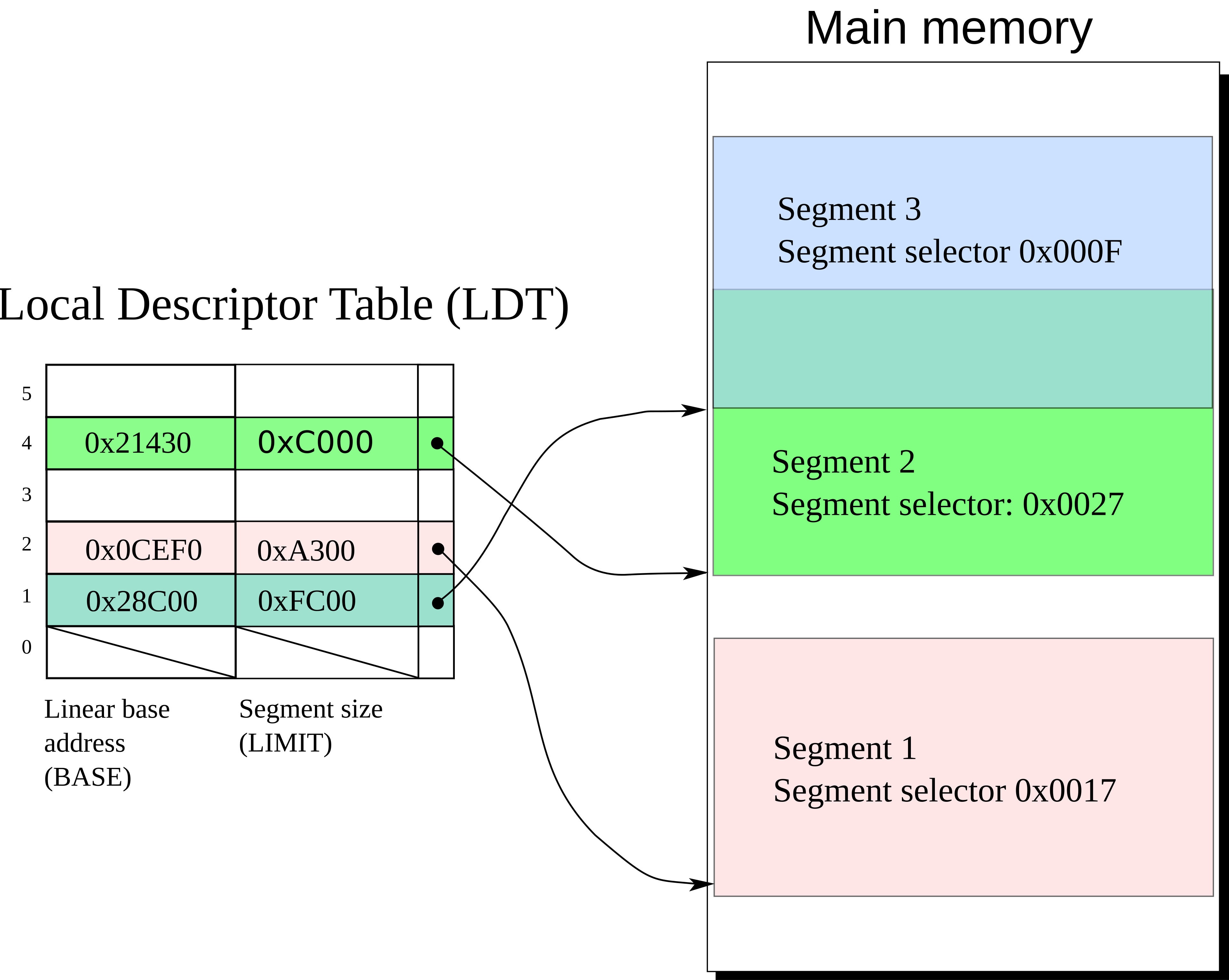
Segmentation is a powerful virtual-memory feature that is tragically underused today. I believe this is due to limited flexibility, so I have added an improvement above the model that x86 had used: every single register can now use its own segment selector. With this added flexibility, one can surely make better use of the address translation powers of segmentation with minimal extra overhead.
Hash Table-Like Paging
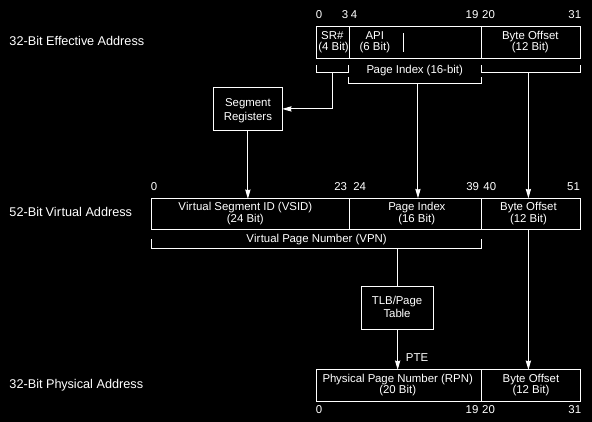
PowerPC’s hash table-like paging makes its paging vastly superior to the likes of x86, RISC-V and ARM by decreasing the number of required cache line fetches drastically. Much like a true hash table, the keys (or input addresses) are hashed and then used as an index into the table. From there, that row of the table is searched for a cell with a matching virtual address, which can be accelerated greatly due to superior cache locality of the entries in this row.
Dynamic Endianness Control
A diagram of PowerPC’s paging structures from the PowerPC manual
RISC-V and PowerPC both have some real potential for better compatibility with their dynamic endianness control. However, both these architectures can only change the endiannes from a privileged context. To make this more flexible, WheatForce can change the data endianness at any time with a simple instruction. Now, user software can directly interoperate between big-endian and little-endian data structures, eliminating the need for a costly byte-swap sequence that would need many instructions. Finally, you can have your cake and eat it to!
Conclusion
WheatForce has observed the mistakes of all architectures before it, and integrates parts of all its predecessors. You can read the full specification on GitHub. After you’ve read it, do let me know what you think of it.
In a new interview, Apple CEO Tim Cook talks about how the company’s 50th anniversary is making him remember Steve Jobs, and insists that working with Trump doesn’t mean its values are changing.
Tim Cook (left) with Steve Jobs — image credit: Apple
Before Apple’s birthday celebrations began, and even before Tim Cook wrote an open letter about the anniversary, he spoke to Esquire magazine about planning for the 50th — and thinking back to Steve Jobs. “I think about him often — and in the last few months, thinking about the fiftieth anniversary, even more so, honestly,” said Cook. “You think about the things he believed in.” Continue Reading on AppleInsider | Discuss on our Forums
The 400 new jobs are understood to break down as 300 in Ireland and 100 in the US, bringing total headcount to more than 570.
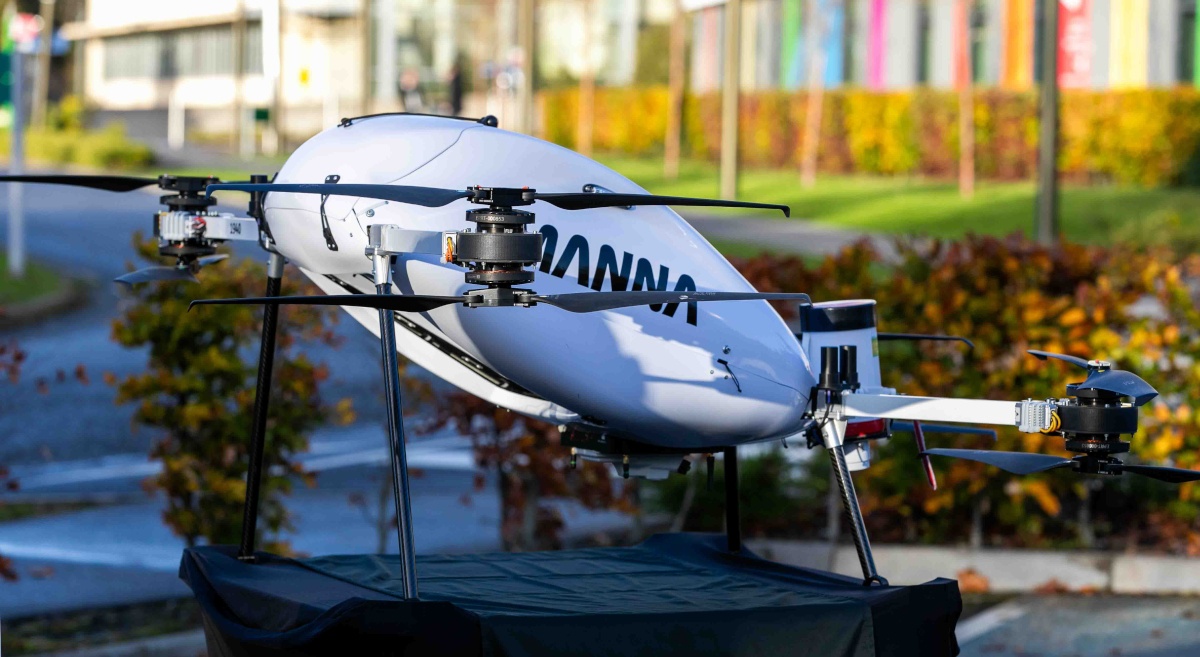
Dublin’s Manna Air Delivery, Bobby Healy’s drone delivery company, has officially confirmed a $50m Series B funding round and announced plans to create 400 new jobs across Ireland and the US.
The round, which brings total investment in the company to $110m, sees funding from ARK Invest -the fund known for backing OpenAI, Anthropic, Tesla and SpaceX – Boston-based Schooner Capital and the Ireland Strategic Investment Fund (ISIF), alongside existing investors Enterprise Ireland, Coca-Cola HBC and Molten Ventures.
Today’s (1 April) announcement confirms details first reported last week by Sky News City editor Mark Kleinman, who said that Manna was close to finalising the round, with ISIF, ARK Invest and Schooner Capital among the backers.
Advertisement
The 400 new roles will span robotics, software engineering, mechanical engineering, aviation operations, ground operations and regulatory functions, with a strong focus on STEM disciplines. The positions will be spread across Manna’s Irish operational hubs and its expanding US operations, bringing the company’s total headcount from 170 to more than 570.
The Irish roles are understood to number some 300, with 100 in the US. In Ireland, roles are expected to be split between those working on manufacturing and developing drones, and aviation personnel at operational bases.
“Ireland is the foundation of everything we do. We design and build our drones here, develop our software here, and have spent seven years refining our operations in communities across the country,” said Bobby Healy, CEO and founder of Manna. “These 400 new roles are high-quality STEM positions and we’re competing with some of the largest companies in the world and winning.”
Manna, which was founded in 2019, designs, builds and operates its drones and software in Ireland. The company says it has completed more than 250,000 regulated drone flights, including 60,000 in Blanchardstown.
Advertisement
It currently operates in Dublin (Blanchardstown), Balbriggan, Moneygall, Oranmore and Cork, as well as internationally in Texas and Finland. The company delivers food, clothing, books and over-the-counter pharmaceuticals, and recently simulated hospital sample transport with The Rotunda Hospital. Its principal competitors include Wing and Zipline.
Visiting Manna’s Dublin headquarters today, where the company designs, builds and flies its drones, Minister for Enterprise, Trade and Employment Peter Burke, TD welcomed the announcement saying it represented “a powerful endorsement of Ireland’s standing as a global centre for innovation and advanced manufacturing”.
“The creation of so many highly-skilled positions across robotics, software engineering, aviation and regulatory disciplines underscores the depth and quality of Ireland’s STEM talent base.”
Rebekah Brady, interim director at ISIF, said the fund is “committed to supporting Manna as part of our mandate to invest commercially in ways that deliver long-term economic impact for Ireland”.
Advertisement
Kevin Sherry, executive director at Enterprise Ireland, described Manna as “a standout example of an Irish company with clear global growth opportunities driven from an Irish headquarters”.
One investor source cited in Kleinman’s original Sky News report suggested that the successful conclusion of this round could herald a further, larger capital injection, so Manna certainly continues to be one to watch.
Don’t miss out on the knowledge you need to succeed. Sign up for the Daily Brief, Silicon Republic’s digest of need-to-know sci-tech news.
Anthropic has accidentally revealed a huge chunk of how its AI coding tool actually works.
A debug file bundled into version 2.1.88 of its Claude Code package briefly exposed a 500,000+ line codebase (via VentureBeat). This gave developers an unusually detailed look at the system behind one of the fastest-growing AI tools right now.
The file was pulled quickly, and Anthropic says no customer data or credentials were exposed. However, the damage, at least from a competitive standpoint, is already done. The code has been widely mirrored and picked apart online.
At a glance, the leak confirms that Claude Code is far more than just a chatbot wrapper. In fact, it’s effectively a multi-layered system for managing long-running AI tasks. There is also a heavy focus on memory, specifically solving the problem of AI “forgetting” or getting confused over time.
Advertisement
Developers analysing the code pointed to a “self-healing memory” system that avoids storing everything at once. Instead, it keeps a lightweight index (called MEMORY.md) and pulls in relevant information only when needed. The idea is simple: less clutter, fewer hallucinations.
Advertisement
Another standout is something called KAIROS, which hints at a shift towards more autonomous AI. Rather than waiting for prompts, Claude Code can run background processes. This includes a feature dubbed autoDream that tidies up its own memory while idle. Consequently, it’s a more proactive approach than most current AI tools.
The leak also reveals internal model codenames and performance struggles. Notably, one newer model variant reportedly shows a higher false-claim rate than earlier versions. This suggests Anthropic is still ironing out reliability issues even as it scales.
Advertisement
There are also signs of more experimental features, including an “undercover” mode designed to let the AI contribute to public codebases without revealing it’s AI-generated.
For users, Anthropic says there’s no immediate risk. However, the company has warned developers to update away from the affected version and avoid npm installs from a specific window tied to a separate supply-chain attack.
For everyone else, this is a rare glimpse behind the curtain, and a reminder that the race to build smarter, more autonomous AI is still very much in progress.
The company declined to comment on the total scope of the layoffs, though some estimates suggest they could affect as many as 20,000 to 30,000 workers. Oracle employed about 162,000 people worldwide as of the end of May. Read Entire Article Source link
S’pore employers are moving towards skills-based hiring
The Ministry of Manpower released its 2025 jobs report on Mar 20, and the numbers tell a story that would have seemed improbable just a decade ago.
Academic qualifications were not the main determinant in hiring for 79.6% of job vacancies last year, up from 78.8% in 2024 and 74.9% in 2023. The movement is slow enough to miss if you’re not looking, but steady enough to reshape who gets hired in Singapore.
Employers who have made the shift to skills-based hiring report faster recruitment, access to a broader talent pool, and improved employee performance.
Specifically, the change is taking hold in software development, data analytics, and AI-enabled roles across technology, finance, and engineering—the very positions where Singapore is concentrating its growth, and can see some of the highest pay.
Advertisement
A shift driven by tech giants
Image Credit: Framalicious via Shutterstock
This movement did not begin with Singaporean startups going out of the ordinary to see beyond academic qualifications. It actually started with multinational corporations that had the data and scale to test what actually predicted job performance.
Between 2017 and 2022, the share of Google job postings requiring a college degree dropped from 93% to 77%, according to analysis by the Burning Glass Institute.
Today, IBM’s share of United States hires without degrees approaches 20%. The company has proven that capability can precede credentials—and that the door opens wider when employers look at what candidates can do, not where they studied.
Firms in S’pore are starting to follow, particularly in the age of AI
Image Credit: Freepik
Now, firms in Singapore across finance, logistics, and retail are starting to follow.
Beyond academic degrees, companies now look for curiosity, problem-solving, and the ability to learn. This is skills-based hiring—and it’s becoming the default, particularly in the age of artificial intelligence.
More companies are adopting AI into digital workflows, and the tech is rewriting what “entry-level” and “job-ready” mean.
A Sept 2025 report from Morgan Stanley predicts that AI could impact 90% of occupations to some extent. This shift means hiring teams must focus on candidates whose skills align with long-term company goals, many of which will increasingly involve AI.
Advertisement
Thus, what matters is not what someone learned five years ago, but their capacity to learn what is needed five years from now.
Singaporeans are increasingly embracing this mindset, with growing numbers tapping into lifelong learning initiatives like SkillsFuture to stay relevant in a rapidly changing job market.
Over 606,000 Singaporeans tapped into SkillsFuture-supported training in 2025, up from 555,000 in 2024. Of these, 458,000 used their SkillsFuture Credits—a sharp increase from 260,000 the year before.
Nearly 123,000 mid-career individuals specifically chose courses designed to boost employability, up from 112,000 in 2024. These are not hobbyists killing time, but workers betting that skills, not credentials, will be the currency of the next decade.
Advertisement
The results suggest they are not wrong. 73% of respondents to SkillsFuture surveys reported that training improved their work performance, up from 69% in 2024. Moreover, two in three respondents attributed career advancements directly to their courses.
The door is still there, but it is no longer the only way in
It’s no longer about where you went to school. The pathway to hiring has become more flexible, as seen from how a portfolio can open doors that a transcript cannot.
2p2play via Shutterstock
But here comes the uncomfortable reality: Singapore’s education system and its labour market are running on slightly different timelines.
The system still sorts students by qualifications. The market increasingly sorts them by capabilities. The firms now following, in finance, logistics, and retail, are playing catch-up in a game where the rules are still being written.
But that doesn’t mean your degree is useless—it’s just insufficient, as nearly 80% of job vacancies don’t consider your educational qualification when hiring.
Advertisement
What you can do is starting to matter more than what you studied. The workers who understand this distinction—and who invest accordingly in skills that demonstrably transfer to the work itself—are the ones who will define the next decade of Singapore’s economy.
The door is still there, but it is no longer the only way in.
Read other articles we’ve written on Singaporean businesses here.
The revelation comes from a March 26 response to Markey’s investigation into how autonomous vehicle companies use remote assistance operators. Read Entire Article Source link
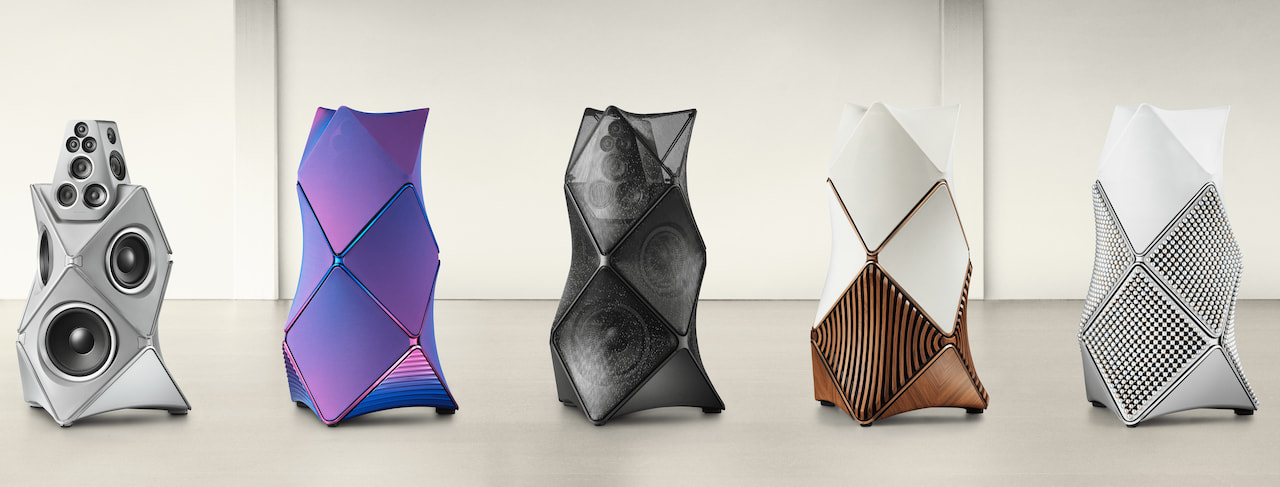
To close out its 100th anniversary in appropriately over-the-top fashion, Bang & Olufsen has introduced the final two models in its five-part Beolab 90 Special Edition series: the Zenith and Monarch. They join the previously released Phantom, Mirage, and Titan variants, all built around the company’s flagship Beolab 90 loudspeaker, which remains in regular production. These aren’t incremental updates or lightly tweaked finishes.
They are ultra-limited, design-forward statements aimed at buyers who treat six-figure audio purchases the way most people treat a weekend Costco run. If you’re weighing one of these against a Bentley SUV and Porsche 911 Turbo on a random Monday and still have enough left over to feed an entire girls soccer team Chick-fil- A and imported herring, Bang & Olufsen knows exactly who you are and would like to have a word.
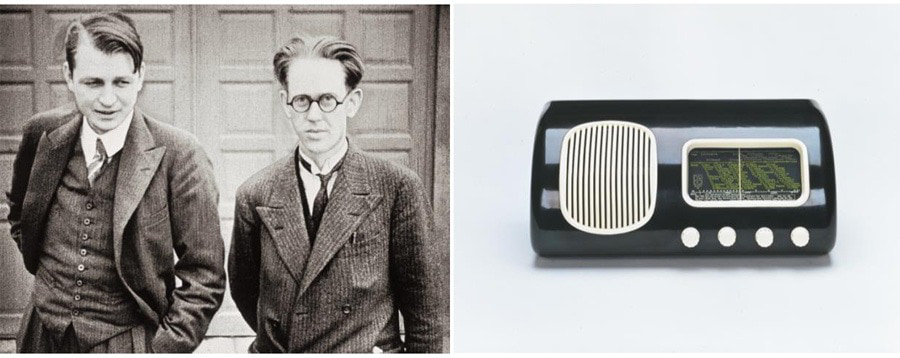
Peter Bang and Svend Olufsen, Founders
Founded in 1925 by Peter Bang and Svend Olufsen, the company didn’t just shape the look of modern audio gear—it built its reputation on turning serious engineering into functional art. A century later, Bang & Olufsen is marking the milestone the only way it knows how: by leaning harder into statement products that remind everyone why the brand still commands attention 100 years on.
The Original Beolab 90
Bang & Olufsen Beolab 90 (original)
The original Beolab 90 landed in 2015 as Bang & Olufsen’s 90th anniversary statement, and it wasn’t subtle. It hit like a controlled detonation. I was there for the debut, and the reaction hasn’t changed since: this thing is a brute, but a smart one. The engineering is serious, the power is borderline absurd, and the design doesn’t ask for your attention—it takes it. You don’t forget hearing a Beolab 90. Not the first time, not the tenth.
Each speaker packs 8,200 watts of built-in amplification driving 18 Scan-Speak drivers, powered by 14 ICEpower amps and four additional Class D units. It’s a ridiculous amount of hardware, housed inside an angular, multi-faceted enclosure that sits on a curved wooden base. The whole thing looks less like a loudspeaker and more like something pulled from a modern architecture exhibit.
Advertisement
And it’s not just brute force. The Beolab 90 backs it up with real flexibility: extensive wired and wireless connectivity, including WiSA, plus a deep toolkit of calibration and room optimization technologies to shape how it performs in your space. This isn’t a flagship that leans on looks alone. It earns it.
Active Room Compensation: Adjusts for room acoustics, furniture placement, and speaker positioning to deliver a more precise soundstage with clearer spatial cues.
Beam Width Control: Lets you dial in how focused or wide the sound dispersion is, shifting from a tight sweet spot to broader room coverage for more relaxed listening.
Beam Direction Control: Enables selection of one of five acoustic “front” positions, allowing the system to redirect the primary listening focus based on your room layout.
Advertisement
Active Bass Linearization (ABL): Dynamically manages bass output relative to volume and available power, enhancing low-end presence at lower levels while protecting the drivers from overload.
Now that the fundamentals of the Beolab 90 are clear, Bang & Olufsen is marking both its 100th anniversary and the speaker’s 10-year milestone with five limited releases: the Beolab 90 Titan Edition, Phantom (Shadow), Mirage, and the new Monarch and Zenith editions, all developed through B&O’s Atelier program.
Advertisement. Scroll to continue reading.
Beolab 90 Monarch Edition
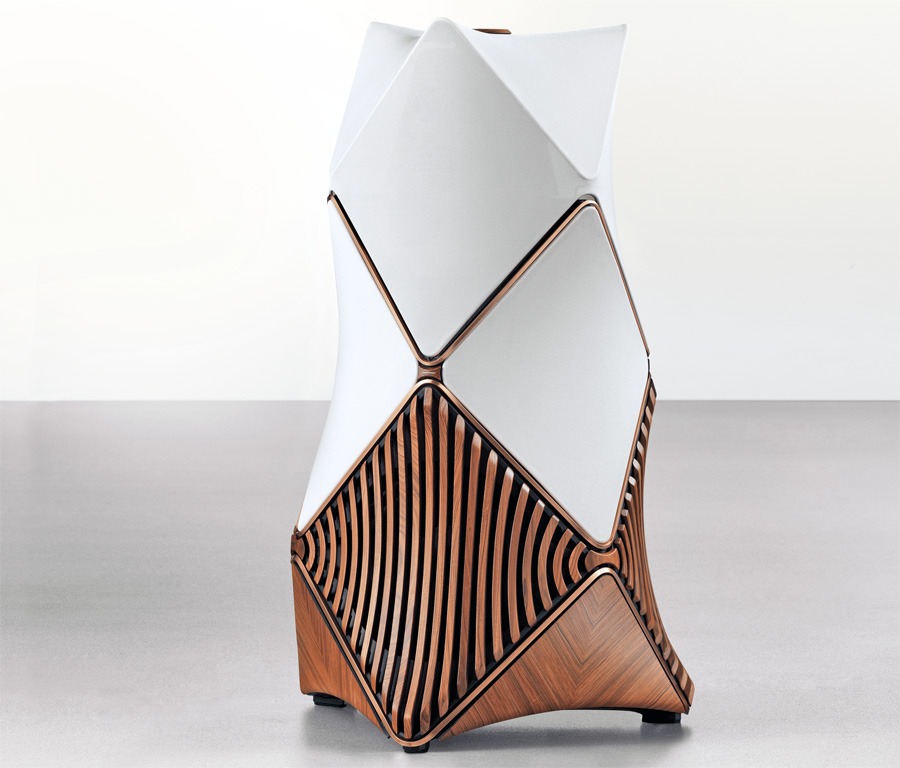
The Beolab 90 Monarch Edition leans into textural sophistication and Danish furniture design heritage, but compared to its sibling, this is the “restrained” one—if anything in this price range can be called that. It’s still sculptural, still a little intimidating, but at least it doesn’t look like it’s about to wake up in the middle of the night and make a decision about your family or dog.
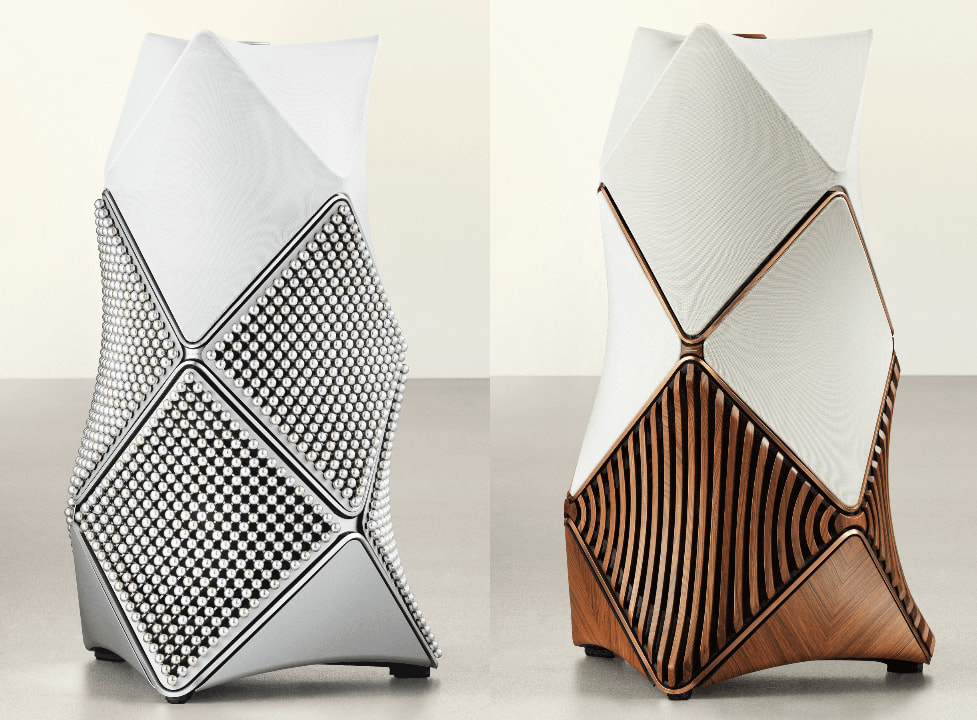
Wood in Motion: Angled and curved rosewood lamellas follow the contours of the aluminium cabinet, creating a 360-degree visual rhythm that nods to classic fabric covers while adding real texture and tactility.
Advertisement
Dynamic Knots: Six wooden knots connect the lamellas, with the front knot incorporating a subtle light-through-wood stripe that adds depth without screaming for attention.
Architectural Flow: A rosewood top ring frames the speaker, while the lower base panels continue the lamella pattern, tying the entire structure together in a cohesive, sculptural form.
Material Dialogue: The interplay between rosewood and ochre-coloured aluminium feels deliberate and balanced, blending natural warmth with precision engineering.
Textured Acoustics: Semi-transparent fabric sections reveal glimpses of the drivers beneath, reinforcing that this is still a serious piece of audio equipment—just dressed like high-end furniture instead of a sci-fi prop.
Advertisement
Beolab 90 Zenith Edition
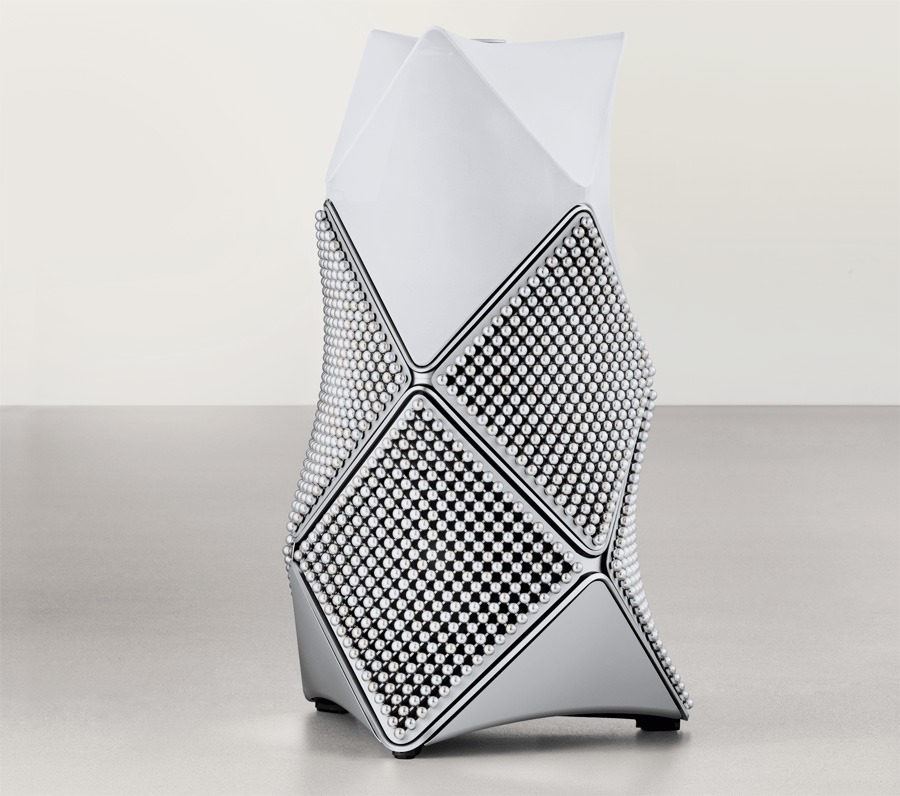
The Beolab 90 Zenith Edition takes a very different path with less restraint, and more spectacle. It’s a study in textural precision and sculptural excess, the kind of design that makes you stop and wonder if it’s genius, madness, or both. We’re honestly torn. Is this Rick James with metal cornrows, or something a high priest would wear in Dune? Either way, subtlety didn’t get an invite.
Pearl Architecture: Six panels feature 289 anodized aluminium spheres each, arranged in seven pearl-inspired finishes that shimmer and shift with the light. It’s mesmerizing—and just a little confrontational.
Facemask Precision: The machined aluminium facemask is pearl blasted and anodized in dark grey, giving it an oyster shell vibe that feels both organic and slightly armored.
Top Lid Inlay: A circular mother-of-pearl inlay crowns the speaker, matching the sphere dimensions and adding a luminous focal point that draws your eye whether you want it to or not.
Sculptural Flow: Curved panels follow the cabinet’s contours, integrating the layered textures into the overall architectural form without completely taming the visual chaos.
Advertisement
Material Harmony: Polished aluminium elements and semi-transparent fabric attempt to balance the design, blending acoustic function with a tactile, almost ceremonial aesthetic that you’re either going to admire—or quietly question.
Advertisement. Scroll to continue reading.
Specifications
Pro Tip: As of now, all Beolab 90 variants; including the Monarch, Zenith, Titan, Phantom (Shadow), and Mirage Editions, share the same internal architecture and specifications. If Bang & Olufsen indicates otherwise, we’ll update the chart accordingly.
Bang & Olufsen Model
Beolab 90
Product Type
Wireless Powered Speaker
Price (pair)
From $211,800 (base model) Special Editions priced higher – refer to Availability and Price section
Designer
Noto GmbH
Construction Materials
Aluminium Fabric Wood
Recommended Room Size
30-200 m² 300-2000 ft²
Driver Configuration (per speaker)
7 x 1″ Scan-Speak Illuminator tweeter 7 x 4 ½” Scan-Speak Illuminator mid-range 3 x 10″ Scan-Speak Discovery woofer 1 x 13″ Scan-Speak Revelator front woofer
Amplification (per speaker)
7 x Bang & Olufsen ICEpower AM300-X for tweeter 7 x Bang & Olufsen ICEpower AM300-X for mid-range 3 x Heliox AM1000-1 for woofer 1 x Heliox AM1000-1 for front woofer
Frequency Range
<12 – >43,000 Hz
Maximum Sound Pressure Level (SPL) @1m
126 dB SPL
Bass Capability (per pair)
118 dB SPL
Advanced Sound Features
Adaptive Bass Linearization Advanced Active Room Compensation Beam Direction Control (5 sides) Beam Width Control
Thermal Protection
Yes
Wireless Connections
Wireless Power Link (24-bit/48kHz) WiSA (24-bit/96kHz)
Physical Connections (Primary Speaker)
1 x RCA (L/R) 1 x MIC / IR 1 x Power Link (RJ45) 1 x S/P DIF (24 bit / 192 kHz) 1 x XLR (L/R) (fully balanced) 1 x Optical (24 bit / 96 kHz) 1 x USB-B (Audio) (24 bit / 192 kHz) 1 x USB-A 2 x Digital Power Link 1 x Digital Power Link / Ethernet 1 x Power
Physical Connections (Secondary Speaker)
1 x USB-B (Audio) 1 x USB-A 3 x Digital Power Link 1 x Power
Dimensions per speaker (WxHxD)
73.5 x 125.3 x 74.7 cm (28.94 x 49.33 x 29.41 inches)
Weight (per speaker)
137 kg / 302 lbs
The Bottom Line
Bang & Olufsen is not chasing volume here. The Monarch and Zenith editions exist to reinforce a point. The Beolab 90 remains one of the most technically ambitious loudspeakers ever built, and B&O can still wrap that engineering in designs that feel closer to gallery pieces than traditional hi-fi.
What is unique? The performance has not changed, and that is intentional. You still get the full Beolab 90 platform with 8,200 watts of amplification, beamforming, room compensation, and one of the most adaptable active speaker systems available. The premium is in the materials, finish, and exclusivity.
Advertisement
What is great is that B&O left the core alone. The Beolab 90 remains a reference level system that can adapt to real rooms in ways most speakers at this level cannot. What is not so great is the price and the design risk. These sit in the middle of the six figure range, and the Zenith in particular will divide opinion and raise some questions from your therapist.
Who are these for? Not anyone chasing value. These are for buyers who want top tier performance and a visual statement that makes everything else in the room feel ordinary. In the context of ultra high-end Danish audio, that price almost feels reasonable when you look at what Børresen is asking for its top models.
Beolab 90 Zenith Edition (left) | Monarch Edition (right)
Pricing & Availability
Following the debut of the Phantom (Shadow) and Mirage Editions at Bang & Olufsen’s San Francisco Culture Store in December 2025, the Beolab 90 Monarch and Zenith Editions are set to make their first public appearance at the same location before heading out on a global tour. Prospective buyers will have a chance to see them up close and hear them in a more controlled setting than the usual trade show chaos. Only 10 pairs of each edition will be produced, which tells you everything you need to know about who these are really for.
Each pair includes a certificate of authenticity, and buyers will also receive a miniature aluminum Beolab 90 sculpture in the matching finish, packaged in a custom aluminum case. It’s equal parts accessory and reminder that you didn’t just buy speakers, you bought into the mythology.
Advertisement
U.S. pricing has not been officially confirmed, but estimates put both the Monarch and Zenith at around $520,000 per pair. In the UK, pricing is reported at £410,000, with EU pricing at €480,000 per pair. For context, the original Beolab 90 launched in 2015 at roughly $78,000, climbed to $135,000 in 2023, and now sits at $211,800 per pair in 2025. Inflation is one thing. This is something else entirely.
























































You must be logged in to post a comment Login