Spectrum Internet service experienced widespread disruptions Thursday, April 2, 2026, with thousands of customers across the United States reporting outages starting in the early morning hours, according to real-time tracking sites and social media complaints.
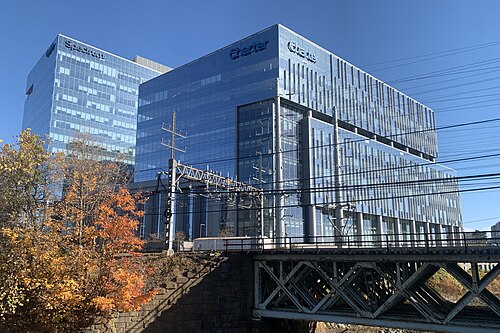
Spectrum HQ
DownDetector, a popular outage monitoring platform, recorded a sharp spike in user reports beginning around 1:50 a.m. Eastern Time, with the majority of complaints centered on broadband internet and Wi-Fi connectivity issues. By mid-morning, the site showed hundreds of reports per hour, far exceeding typical baseline levels for the Charter Communications-owned provider.
The outage appeared to affect residential and business subscribers in multiple regions, though no single national epicenter was immediately confirmed by Spectrum. Users in states including New York, California, Texas, Florida and the Midwest flooded social media platforms and forums with complaints of complete loss of internet access, slow speeds or intermittent connections. Some reported that television and phone services remained operational in areas where bundled packages are common, suggesting the issue was isolated to the broadband network.
Spectrum, which serves more than 32 million residential customers across 41 states under the Spectrum brand, has not issued a formal public statement on the cause or expected resolution time as of early afternoon Thursday. The company’s official support pages directed users to check for outages via the My Spectrum app or website, but many customers said those tools were also unresponsive or showed no active alerts.
One user in the DesignTAXI community forum, which first highlighted the issue shortly after 5 a.m. Eastern, wrote: “Spectrum Internet is reportedly down for some subscribers right now. Are you one of them?” The post quickly gained traction as hundreds echoed similar experiences. Similar threads appeared on Reddit’s r/Spectrum and local Facebook groups, with customers sharing screenshots of error messages and router lights indicating no connection.
Advertisement
The timing of the outage — occurring during peak morning hours when many remote workers and students rely on stable internet — amplified frustration. Parents reported children unable to join virtual classes, while small business owners described lost productivity and revenue. In some areas, cellular hotspots provided temporary relief, but Spectrum mobile customers in affected households often faced the same broadband-related problems.
This is not the first time Spectrum has faced significant service interruptions in 2026. Earlier in the year, the provider dealt with several notable outages linked to network maintenance, weather events and technical glitches. A January outage affected nodes in New York, Washington, D.C., and Houston, lasting over an hour and impacting downstream partners internationally. February and March saw additional regional disruptions, prompting criticism from consumer advocacy groups about reliability in an era when high-speed internet is considered essential infrastructure.
Industry analysts noted that Spectrum’s vast hybrid fiber-coaxial network, while expansive, can be vulnerable to cascading failures when core routing or backbone issues arise. Possible causes for Thursday’s event include routine overnight maintenance that encountered unexpected problems, fiber cuts, or a broader software configuration error — though without official confirmation, speculation remains rampant on tech forums.
Spectrum customers experiencing issues were advised to follow standard troubleshooting steps: power cycling modems and routers, checking cables, and testing connections on multiple devices. However, many reported that even these basic steps failed to restore service, pointing to a provider-side problem rather than individual equipment failure.
Advertisement
Consumer advocates urged affected users to document the outage for potential compensation claims. Under Spectrum’s service agreement, prolonged disruptions may qualify for bill credits, though the company typically requires customers to contact support directly once service resumes. The Federal Communications Commission encourages reporting major outages, especially those affecting public safety or emergency communications, though no widespread 911 or emergency service impacts were reported Thursday.
The outage highlights broader concerns about internet reliability in the United States, where millions depend on a handful of large providers. Spectrum, as the second-largest cable internet provider behind Comcast’s Xfinity, has faced repeated scrutiny over service quality, pricing and customer service response times. Consumer Reports and other watchdogs have consistently ranked Spectrum lower in satisfaction surveys compared with fiber-based competitors like Verizon Fios or Google Fiber.
In response to similar past incidents, Spectrum has emphasized investments in network upgrades, including the rollout of DOCSIS 4.0 technology for multi-gigabit speeds in select markets. Company executives have touted these improvements as part of a broader modernization effort, yet recurring outages continue to frustrate subscribers.
As of midday Thursday, DownDetector’s heatmap showed concentrated reports in major metropolitan areas, though rural and suburban customers also reported problems. Some users noted partial restoration in certain neighborhoods, suggesting the issue might be resolving in waves as technicians address localized problems.
Advertisement
Spectrum’s automated support chat and phone lines were reportedly overwhelmed, with long wait times or generic outage messages. The company’s official X (formerly Twitter) account had not posted an update on the situation by early afternoon, though it frequently directs users to the My Spectrum app for real-time status.
For families and remote workers, the disruption served as a stark reminder of digital dependence. One New York resident told local media that the outage forced her to drive to a coffee shop with public Wi-Fi to complete work deadlines. In Florida, retirees described frustration over lost streaming access during morning routines.
Telehealth providers and online educators advised users to switch to mobile data or alternative networks when possible. Schools in affected districts activated contingency plans, including paper-based assignments or delayed virtual sessions.
The event also sparked renewed calls from lawmakers for stronger oversight of broadband providers. Some consumer groups renewed pushes for stricter service-level agreements and automatic credits during outages lasting more than a few hours.
Advertisement
As investigations continue, Spectrum customers are encouraged to monitor the company’s official channels and third-party trackers like DownDetector for updates. Restoration timelines remain unclear, but historical patterns suggest many outages of this scale are resolved within several hours to a full day.
In the meantime, affected users can explore workarounds such as using public Wi-Fi hotspots, mobile hotspots from other carriers, or wired Ethernet connections where available. Spectrum has previously offered goodwill credits following major disruptions, and customers should retain records of the outage duration and impact.
This latest incident underscores the fragility of even major internet providers in an increasingly connected world. While Spectrum continues to expand its fiber and advanced cable infrastructure, events like Thursday’s outage remind subscribers of the need for backup connectivity options and realistic expectations around uptime.
Spectrum, formerly known as Charter Spectrum after the 2016 merger, operates one of the largest cable networks in the country. Its services include high-speed internet, cable television and home phone, often bundled for residential and small business users. The company has faced class-action lawsuits and regulatory scrutiny in the past over billing practices and service reliability.
Advertisement
As the day progressed, some users began reporting gradual restoration, while others continued to experience full outages. The situation remains fluid, with no official root cause or estimated full resolution time released by Spectrum executives.
For the latest developments, customers should check Spectrum’s outage map, the My Spectrum app or trusted third-party monitors. Authorities have not indicated any connection to broader cybersecurity threats or natural disasters, suggesting a technical network issue.
The outage serves as a timely reminder for all internet users to maintain backup communication plans, especially in an era when remote work, education and essential services increasingly rely on stable broadband connections.
Rep. Mark Alford, R-Mo. discusses tariffs after the Supreme Court ruling and previews President Donald Trump’s State of the Union address on ‘Mornings with Maria.’
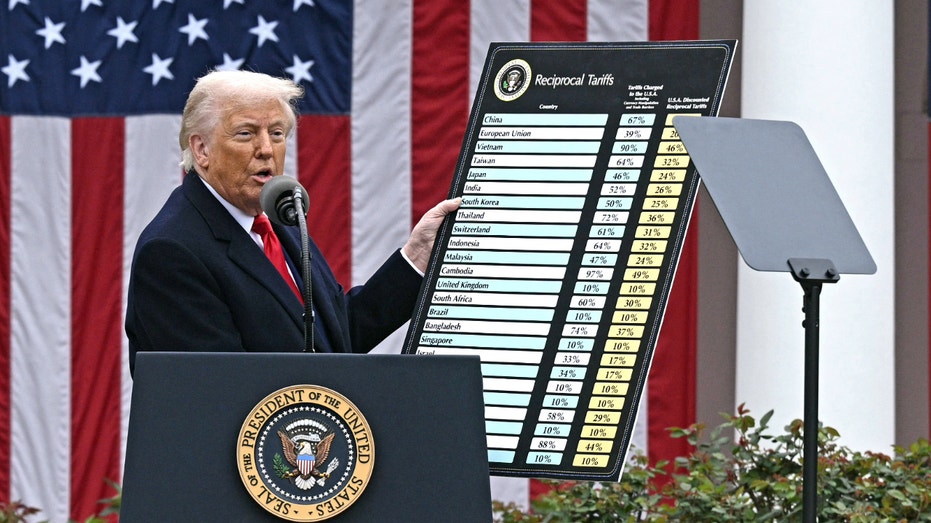
One year ago, President Donald Trump launched sweeping global tariffs, ratcheting up trade tensions and fueling new concerns about the U.S. and global economy.
Dubbed “Liberation Day,” the tariffs targeted imports broadly, with Trump arguing they would fix trade imbalances and curb reliance on foreign goods.
Advertisement
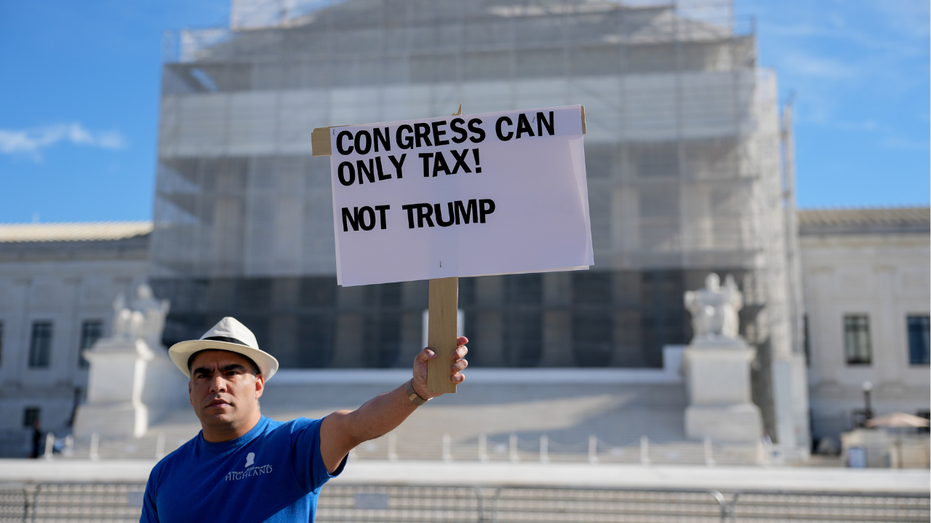
A year later, many of those tariffs have been struck down by the Supreme Court. The federal government is now working on a plan to refund roughly $166 billion in improperly collected duties, with details expected by mid-April.
President Donald Trump delivers remarks on reciprocal tariffs during an event in the Rose Garden on April 2, 2025. (Brendan Smialowski/AFP/Getty Images)
On the heels of “Liberation Day,” duties jumped from $9.6 billion in March to $23.9 billion in May following the rollout of the tariffs.
For fiscal 2025, which ended Sept. 30, collections reached $215.2 billion, according to Treasury data, and the upward trend has continued into fiscal 2026, with receipts already outpacing last year.
Advertisement
Revenue for the current fiscal year has reached $181.6 billion. Since Trump’s return to office, tariff collections have risen roughly more than 300%, delivering a major windfall to federal coffers.
Tariffs function as a tax on imports, and in many cases, U.S. importers absorb the upfront cost and then pass it along through higher prices for wholesalers, retailers and, ultimately, consumers. That means households and businesses may face increased costs for goods ranging from electronics to raw materials.
Whether tariffs ultimately help or hurt the economy depends on how much of that burden consumers absorb, how domestic producers respond and whether the intended economic or geopolitical advantages are worth the added costs to consumers.
Meanwhile, the revenue surge underscores how central tariffs have become to Trump’s economic agenda, with the administration arguing that duty collections can help fund domestic priorities, reduce the nation’s debt and even deliver a proposed $2,000 dividend to Americans.
Advertisement
It’s unclear whether that plan is still on the table.
The Bank of England has warned that escalating tensions in the Middle East could push the UK towards a financial crisis scenario, as rising energy costs, higher borrowing rates and market volatility expose underlying vulnerabilities in the economy.
In its latest assessment, the Bank’s Financial Policy Committee (FPC) said the Iran conflict has already triggered a “substantial” shock to global markets, tightening financial conditions and increasing inflationary pressures at a time when risks were already elevated.
One of the most immediate impacts is being felt by homeowners. The Bank estimates that around 5.2 million borrowers, more than half of all mortgaged households, are now expected to face higher repayments by 2028, up from 3.9 million before the conflict began.
The increase reflects a sharp shift in market expectations for interest rates, with investors scaling back hopes of cuts and, in some cases, pricing in further rises.
More than 1,500 mortgage products have already been withdrawn from the market as lenders react to increased volatility, further limiting options for borrowers.
Advertisement
Andrew Bailey cautioned that markets may be overreacting to the outlook for rates, but acknowledged that the environment has become significantly more uncertain.
The conflict has disrupted global energy supplies, particularly through the Strait of Hormuz, a key route for oil and gas exports. The resulting surge in energy prices is feeding directly into inflation, raising the prospect of sustained cost pressures across the economy.
The FPC warned that higher inflation would weigh on growth while increasing borrowing costs, creating a challenging environment for both households and businesses.
Fuel prices have already risen sharply, and further increases in household energy bills are expected later in the year, adding to the cost-of-living squeeze.
Advertisement
The Bank also highlighted growing instability in financial markets. Hedge funds have unwound around £19 billion of positions linked to expectations of falling interest rates, contributing to volatility in short-term borrowing costs.
At the same time, the increasing interconnectedness of equity and bond markets, partly driven by hedge fund activity, raises the risk that stress in one area could quickly spread to others.
“A sharp correction in equity markets could transmit stress to gilt markets,” the committee warned, pointing to the potential for broader financial disruption.
Particular concern has been raised about the $18 trillion private credit sector, which has expanded rapidly since the financial crisis and now plays a significant role in corporate lending.
Advertisement
The recent collapse of Market Financial Solutions was cited as an example of vulnerabilities in the sector, including high leverage, limited transparency and optimistic valuations.
Bailey drew parallels with the early stages of the 2008 crisis, noting that initial warnings about isolated problems can sometimes underestimate systemic risks.
The report also flagged rising risks in sovereign debt markets, with governments, including the UK, issuing large volumes of bonds to finance spending.
The UK is expected to spend more than £100 billion this year on debt interest alone, limiting fiscal flexibility and reducing the ability to respond to future shocks.
Advertisement
The FPC warned that the combination of higher borrowing costs and weaker growth could create a “debt trap” for some economies, further amplifying global financial risks.
Despite the warnings, the Bank stressed that the UK’s core financial system remains resilient, with banks well capitalised and capable of absorbing shocks.
However, it cautioned that the combination of multiple pressures, including high household debt, market volatility and geopolitical uncertainty, increases the risk of a more severe downturn if conditions deteriorate further.
The Bank’s assessment underscores the fragility of the current economic environment, where global events are quickly feeding into domestic financial conditions.
Advertisement
For households, the prospect of higher mortgage payments and rising living costs presents a significant challenge. For businesses, tighter financial conditions and weaker demand could constrain investment and growth.
For policymakers, the task is to navigate a narrow path between controlling inflation and supporting economic stability, while preparing for the possibility that the current shock could evolve into a broader financial crisis if multiple risks materialise at once.
Azim Premji, Founder Chairman of Wipro, speaks during the inauguration of the Wipro Hydraulic Plant in Jaipur, Rajasthan, India, on Aug. 22, 2024.
Vishal Bhatnagar | Nurphoto | Getty Images
A version of this article first appeared in CNBC’s Inside Wealth newsletter with Robert Frank, a weekly guide to the high-net-worth investor and consumer. Sign up to receive future editions, straight to your inbox.
Advertisement
Investment firms of ultra-wealthy families dialed back their deal-making in March as the Iran conflict rattled the market.
Family offices made 39 direct investments in companies last month, a 25% drop from February when adjusted for month length, according to data provided exclusively to CNBC by Fintrx, a private wealth intelligence platform.
That said, the family offices that are still inking deals are making bold bets. A quarter of last month’s investments were part of mega-rounds, or fundraises in excess of $100 million, according to Fintrx.
In March, Jeff Bezos‘ namesake family office co-led a $1.03 billion seed round for Advanced Machine Intelligence. Also known as AMI Labs, the new startup is training artificial intelligence models on real-world sensory data, rather than text.
Advertisement
Other boldface-name billionaires such as ex-Google CEO Eric Schmidt and serial entrepreneur Mark Cuban also participated in the fundraise.
This trend of making fewer but larger deals is also playing out with corporate investors.
This past quarter, the total value of global mergers and acquisitions activity rose by 26% compared with the same quarter last year to $1.2 trillion, but the number of deals fell by 17%, according to data from LSEG. The second week of March was the worst week for global M&A in over a year, falling below $33 billion, LSEG found.
However, some family offices continue to be prolific dealmakers.
Advertisement
In March, Indian billionaire Azim Premji’s family office made at least four direct investments in companies, according to Fintrx. Premji Invest’s largest round, which it also led, was a $450 million Series A for Rhoda AI, another startup developing novel ways to train artificial intelligence models. Rhoda AI aims to train industrial robots on hundreds of millions of videos. Kleiner Perkins billionaire John Doerr also backed the round.
Construction begins on 85,000 sqft advanced manufacturing centre for motorhome and caravan electrical systems
Ian Sargent and Neil Sargent at the Sargent Electrical Advanced Manufacturing Centre site where construction has begun on Grovehill, Beverley
Construction has begun on a new factory for electrical equipment manufacturer Sargent Electrical Services in Beverley. Building crews are now on site at the Grovehill location which will house the company’s Advanced Manufacturing Centre.
Groundworks are currently in progress as part of an initial construction phase for the 85,000 sq ft facility which has been designed to operate predominantly off grid. Crews from Triton Construction are now readying the site for the building’s steel framework, which is anticipated to arrive within weeks.
Family-run Sargent describes the project as a substantial investment and says it will underpin plans to expand its workforce from roughly 140 to 200 employees. The business hopes the new facility will become operational from April next year.
The factory will provide Sargent with additional capacity for its production of electrical systems for motorhomes and caravans. It will also deliver new office accommodation and employee amenities.
Advertisement
Triton has been named as principal contractor and will oversee the entire project, managing all specialist subcontractors and building services using its track record of delivering industrial, logistics and manufacturing developments throughout the North of England, reports Hull Live.
The Sargent Electrical Advanced Manufacturing Centre site where construction has begun on Grovehill, Beverley
Paul Clarkson, managing director at Triton Construction, said: “This is a fantastic project for our team and an important investment in advanced manufacturing in East Yorkshire. Triton Construction is ready to deliver this facility and showcase our expertise in the industrial, logistics and manufacturing sectors.
“Having successfully delivered industrial developments across the region for clients including Mileway, Marshalls CPD, Chancerygate and Hanson Logistics, we look forward to bringing that experience to the Sargent Advanced Manufacturing Centre.”
James Burgess, contracts manager at Triton Construction, added: “With construction now underway our focus is on maintaining a safe, well-coordinated programme. We will be working diligently with local residents and other neighbours to be a considerate constructor.”
Advertisement
Ian Sargent, managing director of Sargent Electrical Services, said: “The Advanced Manufacturing Centre represents a major step forward for our business. It will allow us to expand manufacturing capacity, improve efficiency and create a modern facility that reflects our commitment to innovation and sustainability. We are delighted to be working with Triton Construction to deliver this important investment in the future of our business.”
The £14.8m turnover Sargent specialises in constructing intricate wiring systems and, alongside its established niche in motorhomes and caravans, has also achieved notable success on large-scale projects, including several prominent London landmarks. The firm has also developed telemetry-based systems utilised in precision farming, providing farmers with valuable data on soil conditions and other key variables.
Sargent secured planning permission last year for the Grovehill site, which formerly housed a care home. The company currently operates from a unit at Tokenspire Business Park.
A Starbucks barista fulfills an order in a South Philadelphia store.
Mark Makela | Reuters
Starbucks will award baristas and shift supervisors quarterly bonuses of $300 if their stores hit certain targets to aid the coffee chain’s turnaround efforts, the company said Thursday.
Advertisement
The program will begin in July, with the first payout coming in the fall to store employees who meet or exceed specific sales, operational and customer service metrics, Starbucks Chief Operating Officer Mike Grams and Chief Partner Officer Sara Kelly wrote in a memo to employees on Thursday.
However, baristas at locations represented by Starbucks Workers United likely will not see the quarterly bonuses until Starbucks and the union reach a collective bargaining agreement.
“This new program, at the approximately 5% of U.S. locations where partners have a union, will be subject to collective bargaining as required by federal law,” Grams and Kelly said in the letter.
Negotiations between Starbucks and union have been at a standstill for more than a year. In March, the company said that it had proposed to resume in-person bargaining with Workers United. Talks between the two parties are expected to resume this month.
Advertisement
Under CEO Brian Niccol, Starbucks has been undergoing a turnaround focused on getting “back to Starbucks.” Much of the strategy has centered on improving the customer experience, from making its cafes cozier to requiring baristas to write messages on cups.
But the turnaround plan also hinges on its baristas and their willingness to carry out Niccol’s vision. Starbucks has tried to improve barista turnover, with improved staffing and plans to add assistant managers to most North American locations this year.
More changes are ahead for baristas. The company also announced on Thursday that it will give customers more methods to tip their baristas. Anyone who orders and pays through the mobile app will be able to tip, as well as customers who scan the app at the register to pay.
Combined with the new bonuses, baristas could see their pay rise as much as 8% as a result, according to the company.
Advertisement
Additionally, all Starbucks U.S. employees will be paid on a weekly basis, starting in August.
So far, the “Back to Starbucks” strategy is starting to pay off for for the company. Last quarter, the chain reported traffic growth for the first time in two years.





















































You must be logged in to post a comment Login