
Business
DoubleVerify Stock: Strong Retention, Attractive Valuation (NYSE:DV)



With combined experience of covering technology companies on Wall Street and working in Silicon Valley, and serving as an outside adviser to several seed-round startups, Gary Alexander has exposure to many of the themes shaping the industry today. He has been a regular contributor on Seeking Alpha since 2017. He has been quoted in many web publications and his articles are syndicated to company pages in popular trading apps like Robinhood.
Analyst’s Disclosure: I/we have a beneficial long position in the shares of DV either through stock ownership, options, or other derivatives. I wrote this article myself, and it expresses my own opinions. I am not receiving compensation for it (other than from Seeking Alpha). I have no business relationship with any company whose stock is mentioned in this article.
Seeking Alpha’s Disclosure: Past performance is no guarantee of future results. No recommendation or advice is being given as to whether any investment is suitable for a particular investor. Any views or opinions expressed above may not reflect those of Seeking Alpha as a whole. Seeking Alpha is not a licensed securities dealer, broker or US investment adviser or investment bank. Our analysts are third party authors that include both professional investors and individual investors who may not be licensed or certified by any institute or regulatory body.

Business
(VIDEO) Mavs Rookie Cooper Flagg Scores 51 Points to Become First Teen to Reach 50 in NBA Game

Cooper Flagg erupted for a career-high 51 points Friday night, becoming the first teenager in NBA history to score 50 or more points in a game as the Dallas Mavericks fell to the Orlando Magic 138-127 at American Airlines Center.

The 19-year-old rookie forward, selected No. 1 overall in the 2025 NBA Draft out of Duke, delivered an explosive performance that rewrote the record books despite the Mavericks’ loss. At 19 years and 103 days old, Flagg surpassed previous marks to claim the distinction as the youngest player ever to reach the 50-point plateau.
Flagg finished with 51 points on 19-of-30 shooting from the field, including 6 of 9 from three-point range, and a perfect 7 of 7 from the free-throw line. He added six rebounds, three assists, three steals and one block in 34 minutes. The outburst came in a game where tensions boiled over early when Flagg appeared to be fouled without a call, leading to the ejection of Mavericks coach Jason Kidd and a teammate for protesting the no-call.
Less than a quarter later, Flagg had turned the frustration into fuel. He poured in 24 points in the fourth quarter alone, capping the historic night with an and-one that pushed him past 50. After converting the free throw for his 51st point with 2:05 remaining, Flagg exited to a standing ovation from the Dallas crowd.
The performance marked Flagg’s second-highest scoring output as a teenager after he dropped 49 points against the Charlotte Hornets on Jan. 29. It also made him just the ninth rookie in NBA history to score 50 or more points, joining legends such as Wilt Chamberlain, Rick Barry, Elgin Baylor, Kareem Abdul-Jabbar and Allen Iverson. Among rookies in the last 30 years, he became only the third to achieve the feat, following Brandon Jennings in 2009 and Iverson in 1997.
Mavericks interim leadership, with assistant Frank Vogel filling in after Kidd’s ejection, briefly pulled Flagg late in the fourth when he sat at 45 points. Upon his return, the Duke product drilled a corner three-pointer before driving for the bucket-and-foul that sealed the milestone.
Orlando’s balanced attack proved too much for Dallas, which dropped its 14th straight home game. Paolo Banchero led the Magic with 28 points, while the visitors shot efficiently and controlled the tempo in the second half. The Mavericks struggled to find secondary scoring, leaving Flagg to shoulder much of the offensive load.
Flagg’s rookie season has been marked by flashes of brilliance amid the challenges of a rebuilding Dallas team. Entering Friday’s contest, he was averaging approximately 20.3 points, 6.6 rebounds and 4.5 assists per game across 64 appearances, showcasing a well-rounded game that includes strong defensive instincts for a player his age. His efficiency and playmaking have drawn comparisons to elite two-way wings, though the Mavericks’ overall record has limited team success.
The 6-foot-9, 205-pound forward has already shattered several franchise and league rookie milestones this season. He previously broke the Mavericks’ rookie scoring record and became the youngest player in NBA history to record a 40-point game with 10 or more rebounds. His rapid ascent has fueled Rookie of the Year discussions, even as the team navigates a difficult campaign without star guard Luka Doncic for portions of the year due to injuries.
Friday’s game highlighted Flagg’s scoring versatility. He attacked the rim with authority, knocked down open threes and converted tough mid-range jumpers. His 63.3% field-goal shooting for the night underscored his ability to finish through contact and create his own shot against NBA defenders.
Teammates and coaches expressed awe at the performance. “He’s special,” one Mavericks player said postgame. “To see a 19-year-old do what he did tonight, especially after the early frustration, shows the kind of competitor he is.” Vogel, who has guided the team through recent stretches, praised Flagg’s poise and work ethic.
The historic night arrives as the NBA regular season winds down, with Dallas fighting for positioning in a crowded Western Conference. Flagg’s emergence offers hope for the franchise’s future, positioning him as a potential cornerstone alongside returning veterans.
NBA Commissioner Adam Silver and league officials took note of the achievement on social media, congratulating the young star. Analysts quickly pointed out that Flagg now holds the top two highest-scoring games by a teenager in league annals.
Flagg was born on Dec. 21, 2006, making him one of the youngest players in the league this season. His pre-draft hype as a consensus top prospect stemmed from his elite athleticism, basketball IQ and defensive versatility at Duke, where he helped lead the Blue Devils deep into the NCAA Tournament.
In the broader context of young NBA phenoms, Flagg’s feat eclipses previous teenage performances. Brandon Jennings held the prior youngest 50-point game record at 20 years and 52 days with 55 points in 2009. LeBron James and Devin Booker also achieved 50-point games before turning 21, but none as teenagers.
The Mavericks’ loss extended their home struggles, but Flagg’s individual brilliance provided a silver lining. Dallas shot well from the field at times but couldn’t match Orlando’s pace or defensive execution in crunch time.
Postgame, Flagg remained humble. “It’s a great feeling, but we came up short as a team,” he told reporters. “I just tried to play hard and help my teammates. The record is cool, but winning is what matters.”
The performance could bolster Flagg’s case in end-of-season awards voting. He has already logged multiple 40-point games this season, the most by a rookie in recent memory in some stretches, and leads the Mavericks in several statistical categories.
As the league heads toward the playoffs, Flagg’s trajectory suggests a bright future. Scouts and executives have marveled at his ability to impact both ends of the floor at such a young age, with his defensive versatility complementing his growing offensive arsenal.
The game also featured strong contributions from Magic veterans and young talent, underscoring Orlando’s competitiveness this season. Their victory improved their standing in the Eastern Conference playoff race.
For the Mavericks, the focus remains on developing young talent like Flagg while managing injuries and integrating pieces around him. His 51-point explosion serves as a reminder of the star potential that prompted Dallas to draft him first overall.
Fans and analysts flooded social media with highlights of Flagg’s buckets, from thunderous dunks to step-back threes. The moment he reached 50 — a driving layup followed by the free throw — quickly became a viral clip.
NBA history is filled with rookies who flashed potential before becoming superstars. Flagg now joins that conversation with a signature performance that will be remembered for years.
As Saturday dawned, the basketball world continued to digest the achievement. At just 19, Flagg has already etched his name alongside some of the game’s greats in the record books.
The Mavericks will look to build on the momentum from Flagg’s big night as they close out the regular season. For a franchise with championship aspirations in the years ahead, nights like Friday provide both excitement and a blueprint for what could come.
Flagg’s stats for the season reflect steady growth. He has improved his scoring average as the year progressed, showing increased confidence and efficiency. His ability to rebound and facilitate at his size adds layers to his game that could make him a perennial All-Star candidate.
In the end, despite the final score, April 3, 2026, belonged to Cooper Flagg. His 51 points not only shattered records but also announced to the league that a new generation’s brightest star has arrived — and he is just getting started.

Ukrainian drone and missile attack kills at least one in southern Russia, governor says

Wall Street Horizon provides institutional traders and investors with the most accurate and comprehensive forward-looking event data including earnings calendars, dividend dates, option expiration dates, splits, investor conferences and more. Covering 9,500 companies worldwide, we offer more than 40 corporate event types via a range of delivery options. By keeping clients apprised of critical market-moving events and event revisions, our data empowers financial professionals to take advantage of or avoid the ensuing volatility.

A Dog, A Diagnosis And A Different Way To Understand AI

Kuaishou Technology: Downgrade To Hold As Near-Term Setup Is Poor
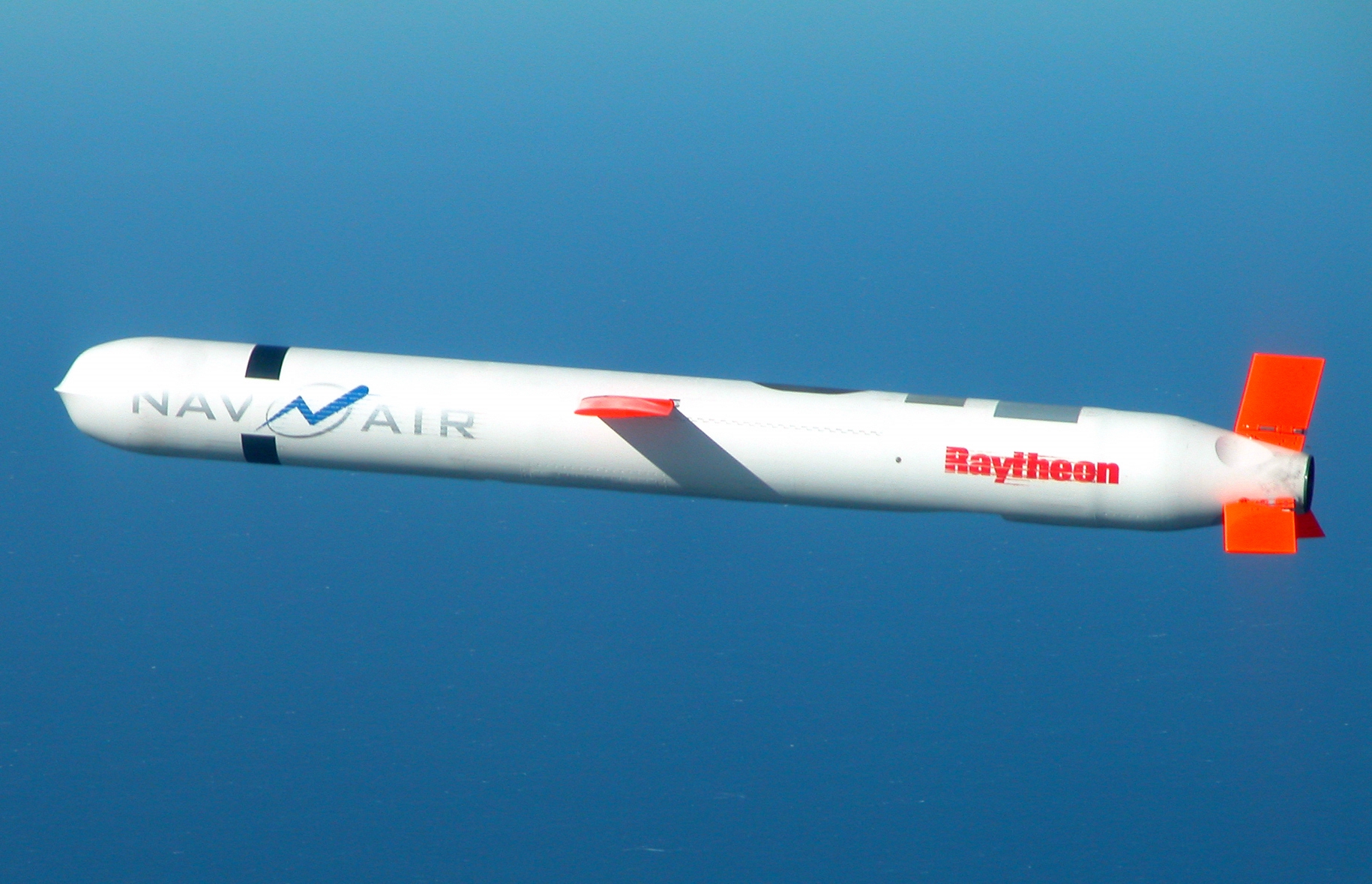
More than five weeks into Operation Epic Fury, the U.S.-led military campaign against Iran that began Feb. 28, 2026, a range of advanced weapons has shaped the conflict’s deadly course. U.S. and allied forces have unleashed precision strikes on Iranian military targets, while Iran has responded with ballistic missiles, drones and air defenses that claimed at least one American aircraft.
Here are 10 of the most lethal weapons used so far, based on U.S. Central Command reports, independent analyses and public footage as of April 4. Lethality is assessed by destructive power, frequency of use, confirmed impacts and strategic effect.

- Tomahawk Cruise Missiles The U.S. Navy has fired more than 850 Tomahawk land-attack missiles from destroyers and submarines since the campaign opened. These subsonic, GPS-guided weapons, capable of striking targets up to 1,000 miles away with 1,000-pound warheads, have devastated Iranian missile production facilities, naval vessels and command centers. Pentagon officials expressed alarm at the rapid depletion of stockpiles, with some describing the expenditure as “years’ worth” in just weeks. Tomahawks initiated many opening salvos and remain a backbone of standoff strikes.
- Precision Strike Missiles (PrSM) Used in combat for the first time, the Army’s PrSM extended-range rocket has delivered deep strikes from HIMARS and M270 launchers. With a range exceeding 400 kilometers and improved accuracy over its ATACMS predecessor, PrSM has targeted hardened sites. Controversy arose after reports linked a PrSM strike near Lamerd to civilian casualties, though U.S. officials denied hitting non-military areas. Its debut underscores the shift toward ground-launched precision fires.
- F-35 Lightning II Stealth Fighters U.S. and Israeli F-35 variants have conducted hundreds of sorties, penetrating Iranian airspace with advanced sensors and munitions. Equipped with JDAMs and small-diameter bombs, these fifth-generation jets have suppressed air defenses and struck deeply buried targets. Their low-observable technology has been key to maintaining air superiority despite Iranian attempts at retaliation.
- F-15E Strike Eagle The workhorse twin-seat fighter has flown extensive strike and suppression missions but suffered the first confirmed U.S. manned combat loss of the war on April 3. An F-15E was shot down over Iran, with one crew member rescued and search efforts continuing for the second. Earlier, three F-15Es were lost in a friendly-fire incident over Kuwait. The jet’s heavy payload and long range made it central to sustained operations.
- MQ-9 Reaper Drones Armed with Hellfire missiles and guided bombs, Reaper unmanned aircraft have provided persistent intelligence, surveillance and strike capability. Operating from regional bases, they have targeted time-sensitive Iranian assets, including missile launchers and naval vessels, while minimizing risk to pilots.
- HIMARS Rocket Systems The mobile M142 High Mobility Artillery Rocket System has launched salvos of guided rockets and PrSM missiles against Iranian ground targets. Its rapid mobility and precision have allowed U.S. forces to strike from safer distances, contributing to the destruction of hundreds of launchers and support infrastructure.
- B-2 Spirit Stealth Bombers These long-range bombers have dropped massive ordnance penetrators and other heavy munitions on deeply buried Iranian facilities, including missile production sites. Operating from distant bases, the B-2’s stealth and payload capacity enable strikes that conventional aircraft cannot easily replicate.
- Iranian Ballistic Missiles (Fateh, Shahab and Sejjil variants) Iran has fired hundreds of ballistic missiles at U.S. bases, Israeli targets and Gulf allies. Systems like the Fateh family, Shahab-3 derivatives and solid-fuel Sejjil have inflicted damage despite heavy interception. While many were downed by Patriot and THAAD systems, successful strikes have caused casualties and highlighted Iran’s asymmetric deterrent.
- Patriot and THAAD Air Defense Systems U.S. and allied Patriot MIM-104 and Terminal High Altitude Area Defense (THAAD) batteries have intercepted dozens of Iranian missiles and drones. These systems proved vital in protecting regional bases but have consumed significant stockpiles, raising concerns about sustained defense against prolonged barrages.
- JDAM-Equipped Bombs and Hellfire Missiles As expensive standoff munitions depleted, U.S. forces shifted to Joint Direct Attack Munitions (JDAM) kits on unguided bombs and AGM-114 Hellfire missiles from aircraft and drones. Tens of thousands of JDAMs provide cost-effective precision for closer-range strikes, while Hellfires have been used extensively against vehicles, small boats and personnel.
The conflict has exposed vulnerabilities on both sides. U.S. forces achieved early air supremacy and degraded much of Iran’s navy and missile infrastructure, sinking dozens of vessels and destroying launchers. Iran, however, has adapted with cheaper drone swarms, older ballistic missiles and portable air defenses that downed the F-15E. Civilian casualties have been reported on both sides, with Iranian officials citing strikes near populated areas and U.S. forces noting proxy attacks on bases.
Munitions stockpiles have become a central concern. Rapid Tomahawk and interceptor expenditure has prompted Pentagon discussions about accelerating production. Analysts warn that prolonged fighting could strain supplies further, particularly for high-end systems.
The war’s human cost remains fluid. U.S. and Israeli strikes have targeted military sites, while Iranian responses have hit regional facilities. Exact casualty figures vary by source, but both sides acknowledge significant losses.
As operations continue into April, the balance of lethality favors U.S. precision and air power, yet Iran’s ability to sustain asymmetric attacks with lower-cost weapons complicates a swift resolution. The downing of the F-15E on April 3 served as a reminder that no platform is invulnerable in contested airspace.
Military experts note the campaign’s evolution from initial high-end strikes to a mix of standoff and stand-in weapons. B-2 bombers and carrier-based aircraft have maintained pressure, while ground systems like HIMARS extend reach inland.
The list reflects weapons with the greatest documented impact through early April 2026. New systems or tactics could emerge as the conflict progresses. Both sides continue to adapt, with U.S. forces emphasizing precision to minimize collateral damage and Iran relying on volume and concealment.
The ongoing war underscores the high cost of modern conflict, where advanced munitions deliver devastating effect but deplete rapidly. As diplomatic efforts remain stalled, these weapons will likely determine the campaign’s next phase.

CMB.TECH: Valuation Implies Mid-Cycle – Reality Looks Stronger

Over the five trading sessions ending April 2, the Sensex benchmark slipped 1.01%, losing 749 points to close at 73,319. Although the index finished higher in three of the five sessions between March 25 and April 2, sharp declines in the other two sessions pulled overall performance into negative territory. Despite this weakness, nine stocks from the BSE small-cap index posted gains in all five sessions during that period. (Data Source: ACE Equity)

Australians are grappling with sharply higher fuel costs in early April 2026 as the U.S.-Iran war disrupts global oil supplies, pushing wholesale prices higher and triggering a domestic fuel supply crunch despite government intervention.

The conflict, which began in late February, has threatened shipping through the Strait of Hormuz and driven volatility in global oil markets. While Brent crude has fluctuated around $100-$110 per barrel in recent days — down from peaks above $110 but still well above pre-war levels — the impact on Australian petrol and diesel pumps has been immediate and painful.
Here are 10 essential things consumers, businesses and policymakers should know about the current oil and fuel price situation.
- Record-High Petrol and Diesel Prices Have Eased Slightly After Excise Cut National average regular unleaded petrol prices hit a record $2.38 per litre in late March before falling in early April. Following the federal government’s decision to halve the fuel excise from about 52.6 cents to 26.3 cents per litre starting April 1, averages dropped 13-25 cents per litre in major cities. As of early April 4, unleaded sat around $2.23-$2.44 per litre in capitals, with diesel near or just under $3 per litre in many areas after similar relief. Some stations briefly dipped below $2 for unleaded before stabilising.
- The Iran War Is the Main Driver Disruptions to oil flows from the Middle East, including threats to the Strait of Hormuz, have caused a roughly 40% surge in Australian fuel prices since late February. Australia imports about 90% of its refined petrol and diesel, mostly from Asian refineries that rely on Middle Eastern crude. A potential “fuel supply cliff” at the end of April loomed as inventories ran low, though shipments are now en route and panic buying has eased somewhat.
- Government Halved Fuel Excise for Three Months Prime Minister Anthony Albanese announced the temporary cut on March 30, costing the budget around A$400 million in foregone revenue through June 30. Retailers passed on most of the savings quickly, with cities like Adelaide seeing the largest drops. A further small cut using GST revenue brought total relief closer to 32 cents per litre in some calculations. The measure aims to cushion households and businesses from the worst effects.
- Diesel Prices Hit Particularly Hard Diesel climbed above $3 per litre in several capitals in March, squeezing farmers, truckers, construction firms and councils. Surcharges of 8-10% have appeared on building projects and freight, feeding into higher costs for goods and services. Rural and regional areas faced even steeper increases and more frequent stockouts.
- Fuel Stocks Remain Tight but Improving As of April 4, Australia held about 39 days of petrol, 29 days of diesel and 30 days of jet fuel. The number of service stations without diesel has declined in states like New South Wales and Victoria, though dozens remain affected. Energy Minister Chris Bowen has assured supplies are strong, with billions of litres of fuel inbound, but warned against complacency.
- Global Oil Prices Have Moderated but Risks Remain Brent crude traded around $104-$110 per barrel in early April after peaking higher. Analysts warn that prolonged conflict could push prices toward $150 or even $180 per barrel if shipping disruptions worsen. Markets currently price in a relatively quick resolution, but a drawn-out war would extend pain at the pump and risk pushing Australia toward recession.
- Broader Economic Ripple Effects Are Emerging Higher fuel costs are inflating food prices, with grocers and farmers warning of increases in fresh produce, red meat and supermarket staples. Construction faces widespread surcharges, while public transport usage has risen modestly. Treasury modeling suggests a prolonged oil shock could shave 0.6% or more off GDP in 2027, though higher export revenues from coal, gas and gold provide some offset.
- No Immediate Return to Pre-War Prices Expected Even with the excise cut, fuel prices remain 20-40% above early 2026 levels. Economists forecast elevated costs for at least six months as global markets adjust. Households filling a typical 65-litre tank are still paying significantly more than before the conflict, adding to cost-of-living pressures.
- Strategic Vulnerabilities Exposed Australia’s heavy reliance on imported refined fuel and limited domestic refining capacity has heightened concerns. Strategic reserves, while at multi-year highs, offer only weeks of cover under normal demand. The crisis has renewed calls for greater energy self-sufficiency and diversification of supply sources.
- What Drivers and Businesses Can Do Shop around using apps like FuelCheck or state price trackers, as regional variations persist. Fill up early in the week when prices often dip, combine trips, maintain proper tyre pressure and consider public transport where available. Businesses facing surcharges should review contracts and explore efficiency measures. The Australian Competition and Consumer Commission is monitoring for price gouging and excise pass-through.
The situation remains fluid. While the excise cut and incoming shipments have provided short-term relief, the underlying global supply shock tied to the Iran conflict means Australians should prepare for continued volatility through the middle of 2026 and possibly beyond.
Prime Minister Albanese and Treasurer Jim Chalmers have stressed that no government can fully insulate citizens from international events but have vowed to take further steps if needed, including potential extensions of relief measures.
For now, the combination of moderated global oil prices, government tax relief and stabilising domestic supplies has prevented the worst-case scenario of widespread shortages or prices exceeding $3 per litre for unleaded on a sustained basis. Still, the episode serves as a stark reminder of Australia’s exposure to Middle East tensions despite its geographic distance.
Motorists heading into the Easter weekend on April 5 can expect relatively stable prices compared with late March peaks, but should check local stations as regional differences and daily fluctuations continue. Long-term, the crisis may accelerate policy discussions around fuel security, refining capacity and the transition to alternative energy sources.
As the war’s outcome remains uncertain, so too does the trajectory of Australian fuel prices. Consumers are advised to stay informed through official sources such as the Australian Institute of Petroleum weekly reports and state fuel price trackers.

This has led to a growing perception that AI struggles in volatile environments. The limitation, however, is not artificial intelligence itself. It lies in how these systems are designed and what they are trained on. Much of today’s AI relies on limited slices of history and narrow datasets, often placing too much weight on recent market behaviour because it is easier to process. Markets do not operate on short memory. Patterns emerge across cycles, regimes, and very different environments.
If AI systems are not exposed to diverse conditions, including periods of stress, regulatory change, and structural breaks, they cannot be expected to respond effectively when those conditions reappear. The paradox is clear. We expect AI to detect patterns beyond human capability, yet constrain it to the same limited datasets. This is where much of the perceived underperformance of AI in volatile markets originates.
The real opportunity lies not in prediction but in improving decision-making. AI should not be seen as a replacement for human judgment. It should be designed to enhance it. Financial markets are complex and adaptive, and no system can operate without interpretation and context. The strength of AI lies in processing large volumes of data, identifying non-obvious patterns, and surfacing insights that may otherwise be missed. These outputs are not decisions, but inputs.
This distinction becomes especially important in volatile markets, where blind reliance on any system can be risky. What investors need is not automated decisions, but better awareness. One of the most valuable applications of AI is in stress testing and scenario analysis. Investors often focus on predicting what will happen next. Losses, however, rarely come from a lack of prediction. They come from a lack of preparedness. The more important question is what happens if the view turns out to be wrong.

Understanding how a trade behaves under different conditions, such as spikes in volatility, sharp market moves, or breakdowns in correlation, can significantly improve outcomes. Traditionally, this kind of analysis has been difficult to do consistently because it requires time, data, and effort. AI changes this by enabling rapid simulation of multiple scenarios, challenging assumptions, and surfacing potential risks. It allows investors to think more rigorously about the downside, not just the upside. Most investors spend more time planning entries than exits under stress. AI can help correct that imbalance. Good AI does not just help you take trades. It helps you survive them.
For AI to be effective in such situations, it must also be adaptive in real time. Markets are influenced by a constant flow of information, including price movements, news, corporate actions, global events, and shifts in participation. AI systems need to continuously ingest and interpret these signals. Simultaneously, real-time data alone is not sufficient. The same event can have very different implications depending on the broader environment. A policy change or earnings result may be interpreted differently in a strong market compared to a fragile one. Adaptive systems must therefore go beyond detecting events and move towards interpreting them in context.In financial markets, information is abundant, but context is scarce. During regime changes, signals often conflict, and cause-and-effect relationships are not always clear. This is where human judgment remains critical. AI can surface insights, but deciding what matters and what action to take still requires interpretation.
The rise of retail participation makes this discussion even more relevant. India now has a large and increasingly active base of retail investors. This is no longer a passive segment. More individuals are engaging directly with markets, making independent decisions, and using technology as a core part of their workflow. AI has expanded access to capabilities that were once limited to institutions. However, access alone is not enough. Retail investors need reliable systems, meaningful context, and tools that go beyond generic solutions.
Used well, AI can significantly improve the quality of decision-making across this growing base. It is important to recognise that AI is an amplifier, not a replacement. It can enhance strengths and expand awareness, but it can also amplify mistakes if used without discipline. AI should therefore be viewed not as a standalone feature, but as an intelligence layer that supports discovery, analysis, execution, and learning. The focus should remain on ensuring that decision-making stays transparent, contextual, and ultimately driven by the investor.
The future of AI in investing will not be defined by how well it predicts markets, but by how effectively it helps investors navigate them. In volatile markets, the edge will not come from predicting the future. It will come from adapting to it faster and making better decisions in real time.
(Yashas Khoday is Co-founder & CPO at FYERS)
(Disclaimer: The recommendations, suggestions, views, and opinions given by the experts are their own. These do not represent the views of The Economic Times.)

Judge continues Nevada ban on Kalshi sports markets

Jana Duggar Reacts To Joseph Duggar Case Amid Shock

He Asked His Mom for Money and Still Somehow Tried to Act Unbuyable

Smart energy pays enters the US market, targeting scalable financial infrastructure

Why Israel is blocking foreign journalists from entering

Bitcoin: We’re Entering The Most Dangerous Phase
He Asked His Mom for Money and Still Somehow Tried to Act Unbuyable

Life is expensive enough, stop wasting money, start learning to save money by #couponing instead!

XRP HOLDERS IN DANGER? RIPPLE PRESIDENT EXPOSES DIGITAL ID PLAN (THIS IS SERIOUS)
-

 NewsBeat2 days ago
Steven Gerrard disagrees with Gary Neville over ‘shock’ Chelsea and Arsenal claim | Football
-

 Business1 day ago
No Jackpot Winner and $194 Million Prize Rolls Over
-
Entertainment5 days ago
Fans slam 'heartbreaking' Barbie Dream Fest convention debacle with 'cardboard cutout' experience
-

 Fashion12 hours ago
Weekend Open Thread: Spanx – Corporette.com
-

 Crypto World2 days ago
Gold Price Prediction: Worst Month in 17 Years fo Save Haven Rock
-

 Tech5 days ago
The Pixel 10a doesn’t have a camera bump, and it’s great
-
 Entertainment6 days ago
Lana Del Rey Celebrates Her Husband’s 51st Birthday In New Post
-
Crypto World4 days ago
Dems press CFTC, ethics board on prediction-market insider trades
-

 Tech5 days ago
Avatar Legends: The Fighting Game comes out in July and it looks pretty slick
-

 Sports4 days ago
Tallest college basketball player ever, standing at 7-foot-9, entering transfer portal
-

 Tech4 days ago
EE TV is using AI to help you find something to watch
-

 Business2 days ago
Login and Checkout Issues Spark Merchant Frustration
-

 Fashion6 days ago
Amazon Sundays: Soft Spring Layers
-

 Tech6 days ago
Elon Musk’s last co-founder reportedly leaves xAI
-

 Tech4 days ago
How to back up your iPhone & iPad to your Mac before something goes wrong
-

 Politics4 days ago
Should Trump Be Scared Strait?
-

 Crypto World4 days ago
U.S. rule change may open trillions in 401(k) funds to crypto
-

 Fashion5 days ago
The Best Spring Trends of 2026
-

 Tech5 days ago
Apple will hide your email address from apps and websites, but not cops
-

 Tech4 days ago
Flipsnack and the shift toward motion-first business content with living visuals
You must be logged in to post a comment Login