
Connect with us
DAPA Banner

Tech

After fighting malware for decades, this cybersecurity veteran is now hacking drones

Published

on

Mikko Hyppönen is pacing back and forth on the stage, with his trademark dark blonde ponytail resting on an impeccable teal suit. A seasoned speaker, he is trying to make an important point to a room full of fellow hackers and security researchers at one of the industry’s global annual meet-ups.

“I often call this ‘cybersecurity Tetris’,” he tells the audience with a serious face, reeling off the rules of the classic video game. When you complete a whole line of bricks, the row vanishes, leaving the rest of the bricks to fall into a new line.

“So your successes disappear, while your failures pile up,” he tells the audience during his keynote at Black Hat in Las Vegas in 2025. “The challenge we face as cybersecurity people is that our work is invisible… when you do your job perfectly, the end result is that nothing happens.”

Hyppönen’s work, however, has certainly not been invisible. As one of the industry’s longest serving cybersecurity figures, he has spent more than 35 years fighting malware. When he started in the late 1980s, the term “malware” was still far from everyday parlance; the terms instead were computer “virus” or “trojans.” The internet was still something few people had access to, and some viruses relied on infecting computers with floppy disks

Advertisement

Since then, Hyppönen estimated he has analyzed thousands of different kinds of malware. And thanks to his frequent talks at conferences all over the world, he has become one of the most recognizable faces and respected voices of the cybersecurity community.

While Hyppönen has spent much of his life trying to keep malware from getting into places it is not supposed to, now he is still doing much of the same, albeit a slightly different tack: His new challenge is to protect people against drones. 

Hyppönen, who is Finnish, told me during a recent interview that he lives about two hours away from Finland’s border with Russia. An increasingly hostile Russia and its 2022 full-scale invasion of Ukraine, where the majority of deaths have reportedly come from unmanned aerial attacks, have made Hyppönen believe he can have renewed impact by fighting drones.

For Hyppönen, it is also a matter of recognizing that while there are still long-standing problems to solve in the world of cybersecurity — malware is not going anywhere and there are plenty of new problems on the horizon — the industry has made huge strides over the last two decades. An iPhone, Hyppönen brought up as an example, is an extremely secure device. The cybersecurity aspects of drone warfare, on the other hand, remain almost uncharted territory.

Advertisement
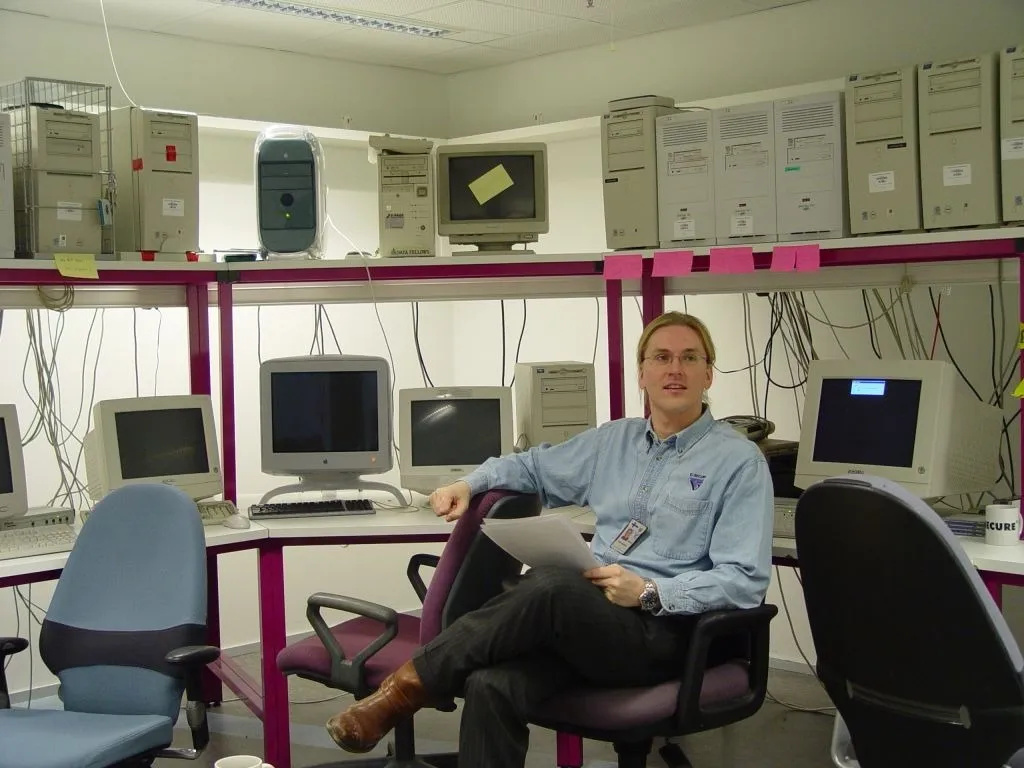
a younger Mikko Hyppönen surrounded by computers.
Image Credits:courtesy of Mikko Hypponen

From viruses and worms to malware and spyware…

Hyppönen started early in cybersecurity by hacking video games during the 1980s. His love for cybersecurity came from reverse engineering software to figure out a way to remove anti-piracy protections from a Commodore 64 games console. He learned to code by developing adventure games, and sharpened his reverse engineering skills by analyzing malware at his first job at Finnish company Data Fellows, which later became the well-known antivirus maker F-Secure. 

Since then, Hyppönen has been on the front lines of the fight against malware, witnessing how it evolved.

In the early years, virus writers developed their malicious code often exclusively out of passion and curiosity to see what was possible with code alone. While some cyberespionage existed, hackers had yet to discover ways to monetize hacking by today’s standards, like ransomware attacks. There was no cryptocurrency to facilitate extortion, nor a criminal marketplace for stolen data.

Form.A, for example, was one of the most common viruses in the early 1990s, which infected computers with a floppy disk. A version of that virus did not destroy anything — sometimes just displaying a message on the person’s screen, and that was it. But the virus travelled around the world, including landing on the research stations at the South Pole, Hyppönen told me.

Hyppönen recounted the infamous ILOVEYOU virus, which he and his colleagues were the first to discover in 2000. ILOVEYOU was wormable, meaning it spread automatically from computer to computer. It arrived via email as a text file, purportedly a love letter. If the target opened it, it would overwrite and corrupt some files on the person’s computer, and then send itself to all their contacts. 

Advertisement

The virus infected over 10 million Windows computers worldwide.

Malware has changed dramatically since then. Virtually no one develops malware as a hobby, and creating malicious software that self-replicates is practically a guarantee that it will get caught by cybersecurity defenders capable of neutralizing it quickly, and potentially catching its author.

No one does it for the love of the game anymore, according to Hyppönen. “The age of viruses is firmly behind us,” he said. 

Seldom do we now see self-spreading worms — with rare exceptions, such as the destructive WannaCry ransomware attack by North Korea in 2017; and the NotPetya mass-hacking campaign launched by Russia later that year, which crippled much of the Ukrainian internet and power grid. Now, malware is almost exclusively used by cybercriminals, spies, and mercenary spyware makers who develop exploits for government-backed hacking and espionage. Those groups typically stay in the shadows, and want to keep their tools hidden to continue their activities and to avoid cybersecurity defenders or law enforcement. 

Advertisement

The other differences today are that the cybersecurity industry is now estimated to be worth $250 billion. The industry has professionalized, in part as a necessity, to fight the increase in malware attacks. Defenders went from giving away their software for free, to turning it into a paid service or product, said Hyppönen. 

Computers and newer inventions like smartphones, which began to take off during the early 2000s, have become much harder to hack. If the tools to hack an iPhone or the Chrome browser cost six-figures or even a few million dollars, Hyppönen argued, this effectively makes an exploit so expensive that only the highly resourced, like governments, can use them, rather than financially motivated cybercriminals. That’s a huge win for consumers, and for the cybersecurity industry that’s a job well done.

a photo of a younger Mikko Hyppönen, wearing a blue shirt and tie, on a purple chair, with his feet up and a laptop with stickers on his lap.
Image Credits:courtesy of Mikko Hypponen

From fighting spies and criminals… to countering drones

In mid-2025, Hyppönen pivoted from cybersecurity to a different kind of defensive work. He became the chief research officer at Sensofusion, a Helsinki-based company that develops an anti-drone system for law enforcement agencies and the military. 

Hyppönen told me that was motivated to get into a developing new industry because of what he saw happening in Ukraine, a war defined by drones. As a Finnish citizen, who serves in the military reserves (“I can’t tell you what I do, but I can tell you that they don’t give me a rifle because I’m much more destructive with a keyboard,” he tells me), and with two grandfathers who fought the Russians, Hyppönen is acutely aware of the presence of an enemy just over his country’s border.

“The situation is very, very important to me,” he tells me. “It’s more meaningful to work fighting against drones, not just the drones that we see today, but also the drones of tomorrow,” he said. “We’re on the side of humans against machines, which sounds a little bit like science fiction, but that’s very concretely what we do.”

Advertisement

The cybersecurity and drone industries may seem leagues apart from one another, but there are clear parallels between fighting malware and fighting drones, according to Hyppönen. To fight malware, cybersecurity companies have come up with mechanisms, known as signatures, to identify what is malware and what is not and then detect and block it. In the case of drones, Hyppönen explained, defenses involve building systems that can locate and jam radio drones, and by recognizing frequencies that are being used to control the autonomous vehicles. 

Hyppönen explained that it’s possible to identify and detect drones by recording their radio frequencies, known as their IQ samples. 

“We detect the protocol from there and build up signatures for detecting unknown drones,” he said. 

He also explained that if you detect the protocol and frequencies used to control the drone, you can also try to conduct cyberattacks against it. You can cause the drone’s system to malfunction, and crash the drone into the ground. “So in many ways, these protocol level attacks are much, much easier in the drone world because the first step is the last step,” Hyppönen said. “If you find a vulnerability, you’re done.”

Advertisement

The strategy in fighting malware and fighting drones is not the only thing that hasn’t changed in his life. The cat-and-mouse game of learning how to stop a threat, and then the enemy learning from that and devising new ways to get around defenses, and on and on, is the same in the world of drones. And then, there’s the identity of the enemy.  

“I spent a big part of my career fighting against Russian malware attacks,” he said. “Now I’m fighting Russian drone attacks.”

Source link

Advertisement
Continue Reading
Click to comment

You must be logged in to post a comment Login

Leave a Reply

Tech

The Dreame Miracle Pro finally gives my scalp and hair the attention they deserve

Published

on

Why you can trust TechRadar


We spend hours testing every product or service we review, so you can be sure you’re buying the best. Find out more about how we test.

Dreame Miracle Pro: two-minute review

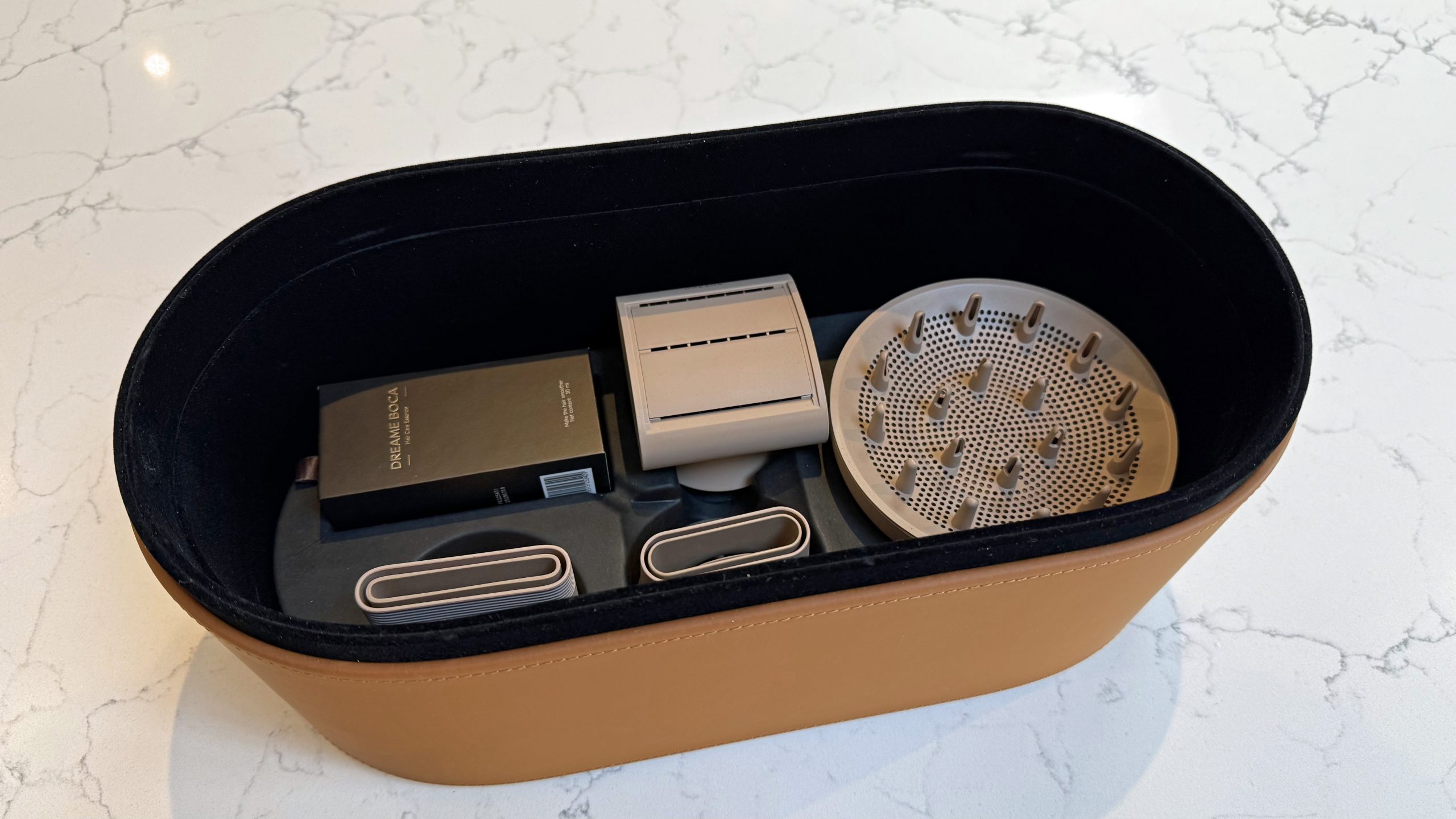
The Dreame Miracle Pro is a premium dryer that does a lot more than just dry your hair. Alongside six modes — Cool, Scalp, Essence, Comfort, Quick Dry, AI Smart — it comes with a built-in essence mister, a ring of red and near-infrared light therapy around the barrel, and a distance sensor that automatically adjusts heat and airflow depending on how close the dryer is to your head.

Advertisement

Source link

Continue Reading

Tech

Open Graphics Card Powers Cyberpunk “Laptop”

Published

on

For once, we can avoid debating in the comments what constitutes a “cyberdeck”, because [LCLDIY] does not refer to his cyberpunk masterpiece as such — he calls it a laptop. Considering the form factor is more like an all-in-one with a built-in laser projection keyboard, that’s arguably an even more controversial label to use, but as stylish this build is, it’s what’s inside it that interests us most.

This would be much easier than the original for our old eyes, especially in the dark.

No, not the cash-register motherboard that serves as the brain, though that has got to be worth some hacker cred. No, it’s the graphics card [LCLDIY] designed to drive 10″ electroluminescent (EL) displays that really has us interested. EL screens have a unique and beautiful glow that many find captivating, but we don’t see them all that often for two reasons. One is price: if you can’t find them surplus, they’re not cheap. The other is driving them, which [LCLDIY]’s project helps with, because the graphics card is open source.

The card is PCI, so you’ll need an adapter to plug it into a modern PCIe slot, or you’d have to redesign the thing. Since this isn’t elegant-engineering-a-day, we know which we’d do. The card is based on the CHIPS65548/5 chip, which means you should be able to find driver support under Linux and Windows. [LCLDIY] seems to be using Windows 2000, but that might just be because it’s all been downhill since then.

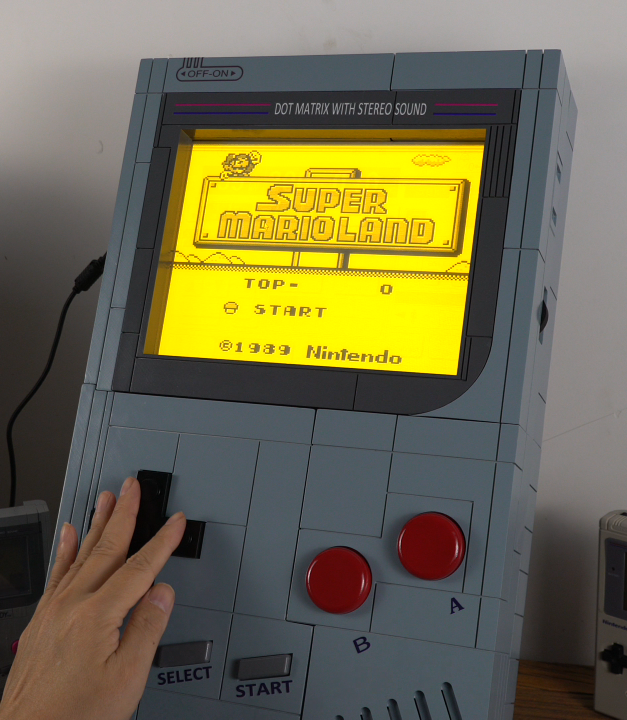
If the cyberpunk laptop wasn’t enough inspiration, [LCLDIY] also created a giant-scale Game Boy using the same 10″ screen and DIY graphics card. The soft glow of the EL display is particularly suited to the low-res nature of the retro games, as it’s not entirely unlike a CRT. You can see it in action–both builds!– in videos embedded below.

The last time somebody posted an EL display here, they had to build the driver board for it, too.

Advertisement

Source link

Advertisement
Continue Reading

Tech

Fixing Your Slow SSD Might Be Easier Than You Think

Published

on


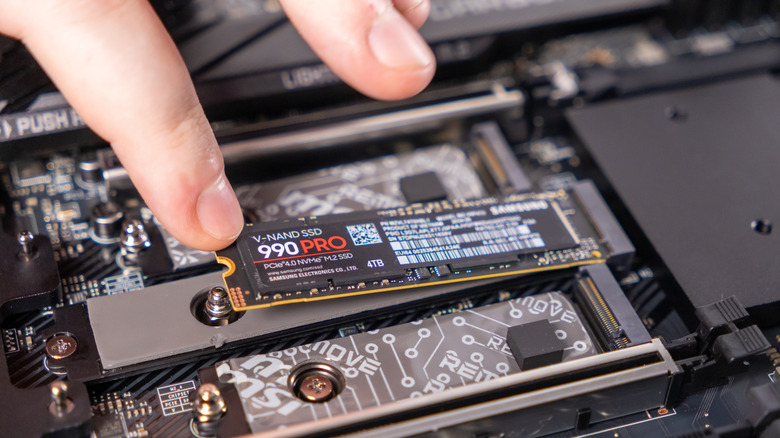
Solid-state drives have completely changed the game for storage on computers and laptops. No moving parts, no RPM (revolutions-per-minute) to worry about, and lightning-fast read and write speeds. Even early SSDs were impressive, but once the M.2 format hit the market, things got even better. While SSDs are currently monstrously expensive, pretty much every modern desktop and laptop uses them, mostly due to the demands of modern software, video games, and operating systems.

Here’s the thing, though. Even though modern SSDs are super fast, and they will last a lot longer than most hard drives due to their lack of moving parts, they can still slow down. As you fill them up with data, which can happen very quickly if it’s a smaller SSD, that advertised speed of several thousand megabytes per second goes down fast. 

Fortunately, modern operating systems like Windows support a standard hardware command to help you solve this issue, with a very fitting name: TRIM. TRIM cleans up so-called blocks of data so that the SSD knows which ones to use, making it more efficient and increasing its lifespan.

Advertisement

Why should you use TRIM?

Although it has a much cooler name, TRIM is essentially the modern equivalent of disk defragmentation, which Windows can still do. Defragmenting old hard drives brought all the data closer together in a more accessible spot, allowing the hard drive to cycle through the data more efficiently and make it faster. TRIM doesn’t work on the same principle as defragmentation, as SSDs and HDDs store data in different ways, but TRIM does serve a similar purpose. It increases your SSD’s efficiency and lifespan by clearing up empty blocks of data that are no longer in use.

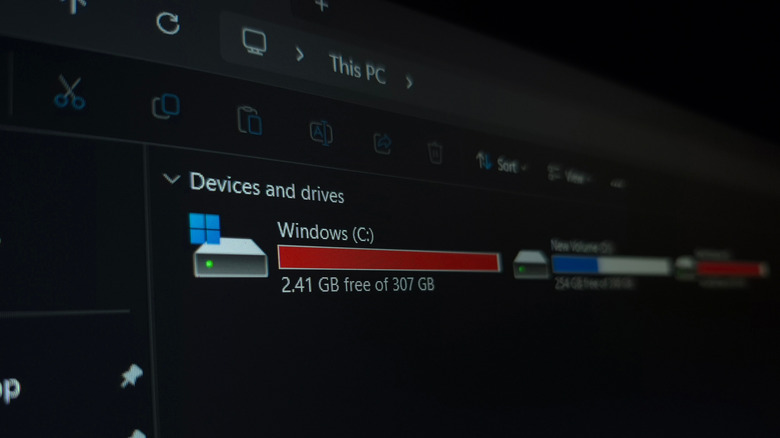
Recent releases of Windows run this process automatically in the background, and you can check this through the drive’s properties from inside This PC on your computer. If the scheduled optimization (which you can find inside of Properties > Tools > Optimize) is set to On, then Windows runs TRIM for you on a weekly basis. 

Advertisement

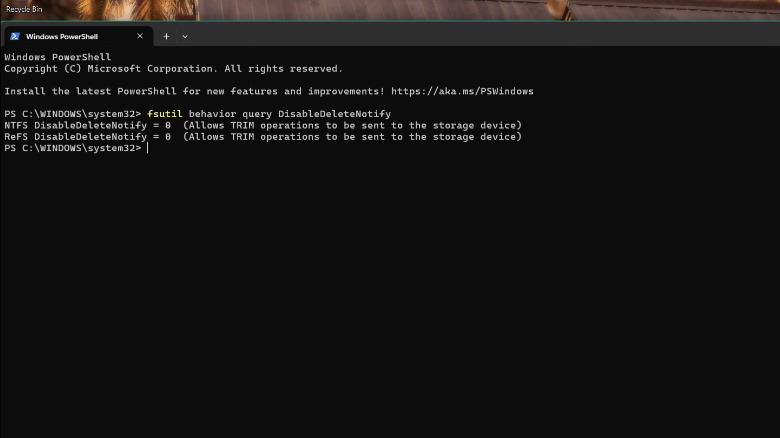
Another way to check if TRIM is on is through PowerShell. Simply run PowerShell with administrator privileges. Next, type “fsutil behavior query DisableDeleteNotify” without the quotes, then hit Enter.

If both values are zero, then TRIM is on, and you don’t need to worry about it. We would not recommend disabling it, as in this era of highly unpredictable SSD prices and the importance of keeping our data safe and secure, it’s always a good idea to keep your SSD on its best behavior, and TRIM definitely helps out with that.


Advertisement

Source link

Continue Reading

Tech

Please, Apple, let me turn off this one feature on my iPhone

Published

on

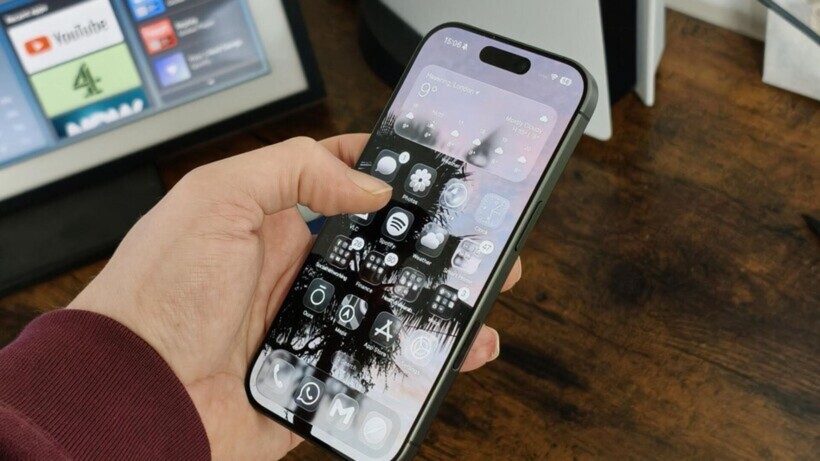
We’ve all been there at one point or another; you unlock your iPhone with the intention of checking the weather or sending a quick text, only to be greeted by a sea of little red circles. 

They’re everywhere, screaming for your attention like a digital toddler until you open the app and clear it. It’s a core part of the iOS experience, sure, but after years of staring at these tiny stress-inducers, I’ve had enough. The problem? I can’t really do much about it. 

App badges are my worst enemy

The problem with app badges is that they are designed to be addictive. They’re pitched as helpful reminders, but in reality, they’re designed to draw you into an app to see what’s “new,” even when there’s nothing of substance actually waiting for you. 

Every time I unlock my iPhone and see a bunch of badges on my home screen, I’m immediately distracted. Instead of doing what I actually set out to do, I find myself mindlessly scrolling through a feed just to make the number go away.

Advertisement
iPhone 17 in handiPhone 17 in hand
Image Credit (Trusted Reviews)

Advertisement

It’s even more infuriating when the badges refuse to leave. We’ve all dealt with that one stubborn app – it’s the Oura app for me at the moment, oddly enough – where you’ve cleared every notification, read every message, and checked every update, yet the badge remains. 

For a company that prides itself on “clean” design, the home screen often looks like a messy desk covered in red Post-it notes.

No, I’m not going to disable them one by one

Now, I know what the power users among you are going to say, “Just go into Settings and turn them off!” And yes, technically, you can. 

But, there’s the catch: Apple forces you to do it on an app-by-app basis. I have hundreds of apps installed on my iPhone, and the idea of diving into the notification settings for every single one of them to toggle off “Badges” leaves me in a cold sweat – and besides, it’d take the better part of an afternoon.

Advertisement

It begs the question: why isn’t there a system-wide toggle? Apple gives us “Silence Unknown Callers” and “Focus” modes to reclaim our digital sanity, yet it won’t give us a single master switch to kill the red dots. It’s a bizarre omission when you really think about it, especially for an operating system that is supposed to be the very pinnacle of user-friendliness.

Advertisement

Android fixed the issue years ago

What makes this even harder to swallow is that our friends over in the Android camp solved this ages ago. 

Samsung Galaxy S26 UltraSamsung Galaxy S26 Ultra
Image Credit (Trusted Reviews)

On most Android skins, app badges (or “dots”) are intrinsically linked to the notification shade. If you swipe away a notification because you’ve seen it and decided it’s not important, the badge on the app icon vanishes too. A system that, in my mind, makes a lot of sense.

On iOS, the badge and the notification centre live in two completely different worlds. You can clear your entire lock screen, but those red circles will stay pinned to your icons until you manually open the app. 

Advertisement

At the very least, Apple should give us the option to mirror that Android-style functionality in the Settings menu for those of us who find the current system a little bit archaic.

It probably won’t change any time soon

As much as I’d love to be optimistic, I’m not holding my breath. With the reveal of iOS 27 scheduled for WWDC in early June, the rumour mill is buzzing about the long-awaited reveal of the Gemini-powered Siri and even more powerful AI features, but a badge overhaul is nowhere to be found.

Advertisement

Badges have been a staple of the iPhone since the very beginning, and despite Apple redesigning the notification system multiple times over the last decade, they’ve remained largely untouched. It seems Apple is perfectly happy with the status quo, even if it means our home screens remain a cluttered, distracting mess for the foreseeable future. 

Advertisement

Please, Apple, prove me wrong.

Source link

Advertisement
Continue Reading

Tech

The Document Foundation Removes Dozens of Collabora Developers

Published

on

Long-time GNOME/OpenOffice.org/LibreOffice contributor
Michael Meeks is now general manager of Collabora Productivity. And earlier this month he complained when LibreOffice decided to bring back its LibreOffice Online project, as reported by Neowin, which had been inactive since 2022. After the original project went dormant — to which Collabora was a major contributor — they forked the code and created their own product, Collabora Online.

But this week Meeks blogged about even more changes, writing that the Document Foundation (the nonprofit behind LibreOffice) “has decided to eject from membership all Collabora staff and partners.
That includes over thirty people who have contributed faithfully to LibreOffice for many years.” Meeks argues the ejections were “based on unproven legal concerns and guilt by association.”

This includes seven of the top ten core committers of all time (excluding release engineers) currently working for Collabora Productivity. The move is the culmination of TDF losing a large number of founders from membership over the last few years with: Thorsten Behrens, Jan ‘Kendy’ Holesovsky, Rene Engelhard, Caolan McNamara, Michael Meeks, Cor Nouws and Italo Vignoli no longer members. Of the remaining active founders, three of the last four are paid TDF staff (of whom none are programming on the core code).
The blog It’s FOSS calls it “LibreOffice Drama.” They’ve confirmed the removals happened, also noting recently adopted Community Bylaws requiring members to step down if they’re affiliated with a company in an active legal dispute with the Foundation. But The Documentation Foundation “also makes clear that a membership revocation is not a ban from contributing, with the project remaining open to anyone, and expects Collabora to keep contributing ‘when the time comes.’”

Collabora’s Meeks adds in his blog post that there’s “bold and ongoing plans to create an entirely new, cut-down, differentiated Collabora Office for users that is smoother, more user friendly, and less feature dense than our Classic product (which will continue to be supported for years for our partners).

Advertisement

This gives a chance to innovate faster in a separate place on a smaller, more focused code-base with fewer build configurations, much less legacy, no Java, no database, web-based toolkit and more. We are excited to get executing on that.

To make this process easier, and to put to bed complaints about having our distro branches in TDF gerrit [for code review], and to move to self-hosted FOSS tooling we are launching our own gerrit to host our existing branch of core…
We will continue to make contributions to LibreOffice where that makes sense (if we are welcome to), but it clearly no longer makes much sense to continue investing heavily in building what remains of TDF’s community and product for them — while being excluded from its governance. In this regard, we seem to be back where we were fifteen years ago.

Source link

Advertisement
Continue Reading

Tech

Anthropic says Claude Code subscribers will need to pay extra for OpenClaw usage

Published

on

It’s about to become more expensive for Claude Code subscribers to use Anthropic’s coding assistant with OpenClaw and other third-party tools.

According to a customer email shared on Hacker News, Anthropic said that starting at noon Pacific on April 4 (today), subscribers will “no longer be able to use your Claude subscription limits for third-party harnesses including OpenClaw.” Instead, they’ll need to pay for extra usage through “a pay-as-you-go option billed separately from your subscription.”

The company said that while it’s starting with OpenClaw today, the policy “applies to all third-party harnesses and will be rolled out to more shortly.”

Anthropic’s head of Claude Code Boris Cherny wrote on X that the company’s “subscriptions weren’t built for the usage patterns of these third-party tools” and that Anthropic is now trying “to be intentional in managing our growth to continue to serve our customers sustainably long-term.”

Advertisement

The announcement comes after OpenClaw creator Peter Steinberger said he was joining Anthropic rival OpenAI, with OpenClaw continuing as an open source project with support from OpenAI.

Steinberger posted that he and OpenClaw board member Dave Morin “tried to talk sense into Anthropic” but were only able to delay the increased pricing by a week.

“Funny how timings match up, first they copy some popular features into their closed harness, then they lock out open source,” Steinberger said.

Techcrunch event

Advertisement

San Francisco, CA
|
October 13-15, 2026

Cherny, however, insisted that Claude Code team members are “big fans of open source” and that he himself “just put up a few [pull requests] to improve prompt cache efficiency for OpenClaw specifically.”

Advertisement

“This is more about engineering constraints,” he said, adding that Anthropic is still offering full refunds for subscribers. “We know not everyone realized this isn’t something we support, and this is an attempt to make it clear and explicit.”

Meanwhile, OpenAI recently shut down its Sora app and video generation models, reportedly to free up computing resources and as part of a broader effort to refocus on winning over the software engineers and enterprises that are increasingly relying on products like Claude Code.

Source link

Advertisement
Continue Reading

Tech

Rec Room shutdown, robot umps, torpedo bats, FedEx meets Amazon, and OpenAI’s odd media buy

Published

on

This week on the GeekWire Podcast: Rec Room, the Seattle-based social gaming platform once valued at $3.5 billion, is shutting down — and Snap is picking up some of the pieces.

Todd talks about what it was like fielding calls from distraught users on the night of the announcement. John offers his thoughts on what the shutdown says about the VR hype cycle, and whether everyone betting on the AI boom should take notes.

Plus: Major League Baseball’s new automated ball-strike system is already exposing umpires and creating a whole new kind of showboating — including one player who was so confident the robot would overrule the ump that he just started walking to first base.

Also on the show: Todd road-tests Amazon’s new FedEx Office returns partnership (pro tip: don’t ask for stamps), OpenAI makes a head-scratching move into media by acquiring tech talk show TBPN, John gets fooled by an April Fools’ prank, WSU researchers take on the torpedo bat, and our weekly trivia question ties Apple’s 50th anniversary to a piece of Microsoft lore.

Subscribe to GeekWire in Apple Podcasts, Spotify, or wherever you listen.

Advertisement

Audio editing by Curt Milton.

Source link

Continue Reading

Tech

JerryRigEverything Disassembles LG’s Rollable Phone and Unrolls the Secrets From a Lost Prototype

Published

on

JerryRigEverything LG Rollable Phone Disassembly Teardown
Back in 2021, rumors circulated about a new LG phone with a screen that unfurled like a scroll, similar to a roll-up map rather than a fold. Interestingly, they had planned to release it that year, but LG decided to discontinue its entire mobile division. As a result, the idea fizzled, only to resurface recently with a prototype reaching Zack Nelson (of JerryRigEverything fame).


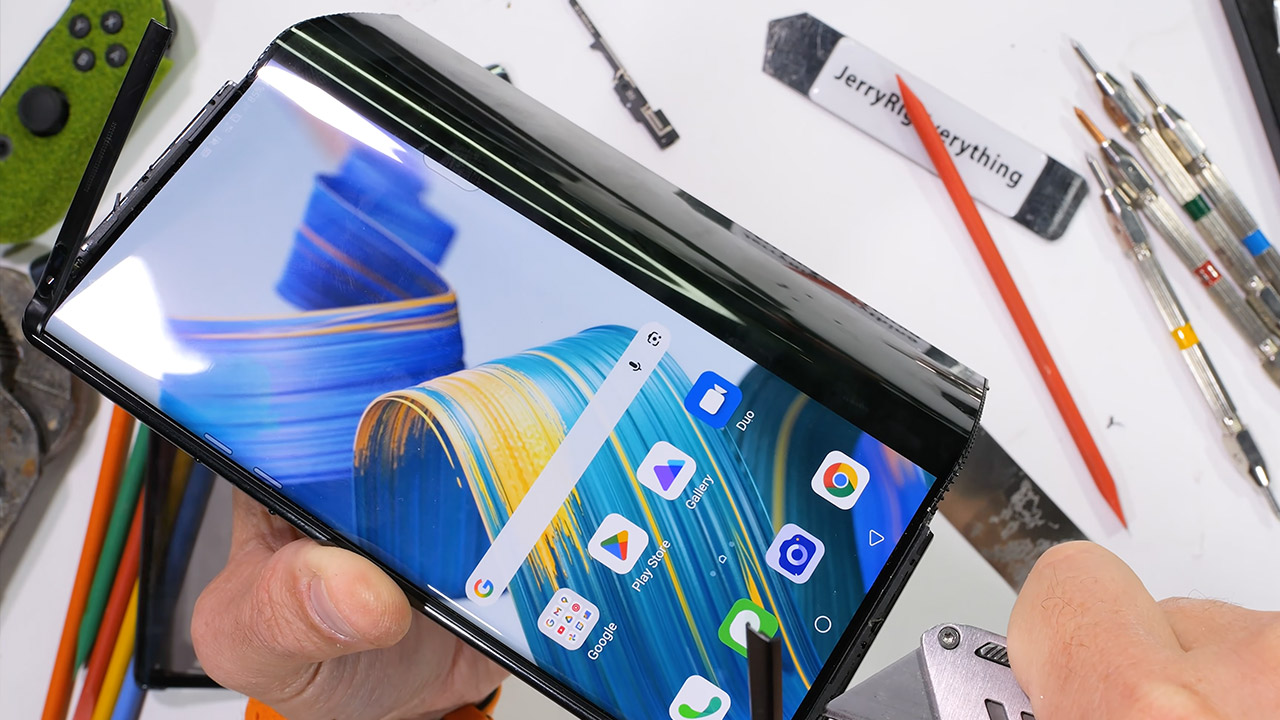
Zack Nelson began by looking at the exterior elements. In its compressed state, the screen measures around 6.8 inches diagonally. With a simple command, the display expands to 7.4 inches diagonally, thanks to the internal motors. It generates a rather mild buzzing noise, which is thankfully muffled by software that includes some great sound effects. Users can watch the item expand in size in real time and even get dynamic backgrounds that adapt on the fly.

Sale


Samsung Galaxy Z Fold7 Cell Phone, 256GB AI Smartphone, Unlocked Android, AI Photo Edits, Large Screen…
  • BIGGER, YET SLIMMER THAN EVER: Who would’ve guessed that wider could also be lighter? The design of Galaxy Z Fold7 is refined to feel like a…
  • BEST CAMERA ON A FOLD YET: You asked for more – now you can have the most. Galaxy Z Fold7 now boasts an ultra-premium 200MP camera with Pro-Visual…
  • SCREENSHARE FOR STREAMLINED ASSISTANCE: Intrigued by something you see? Go Live with Google Gemini, then screenshare or point your camera at it for…

Jerry Rig Everything LG Rollable Phone Disassembly Teardown
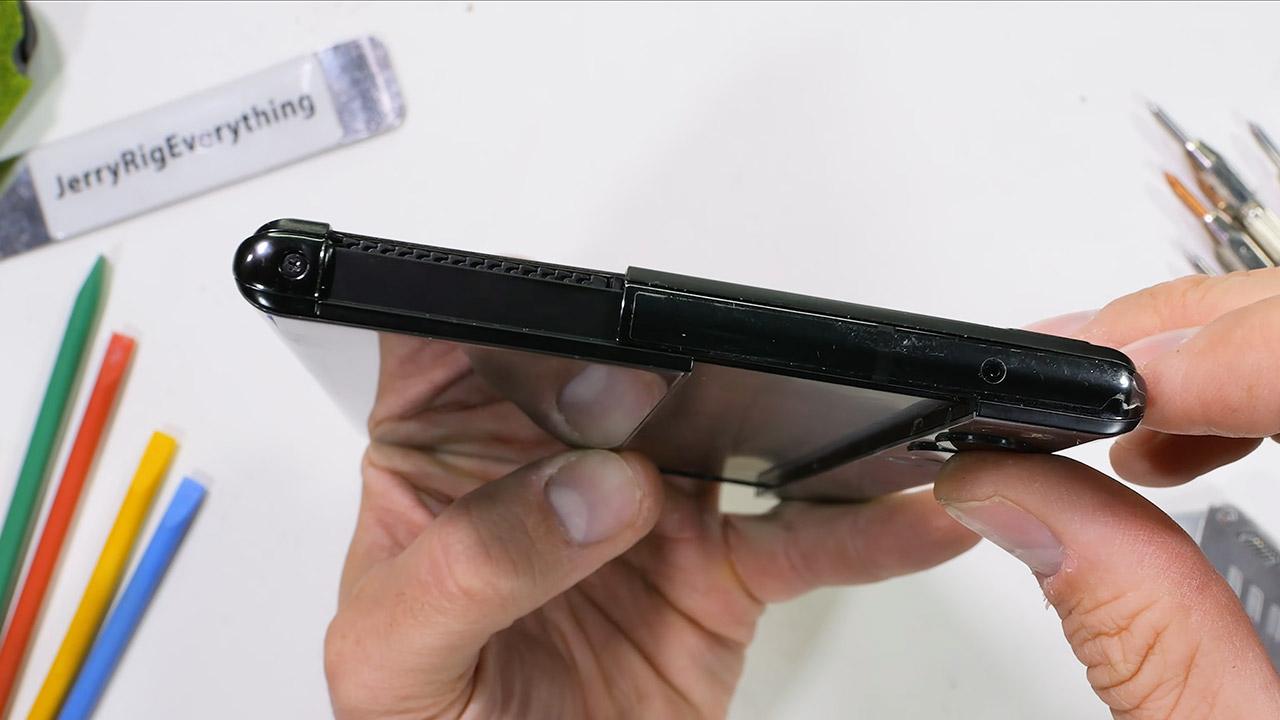
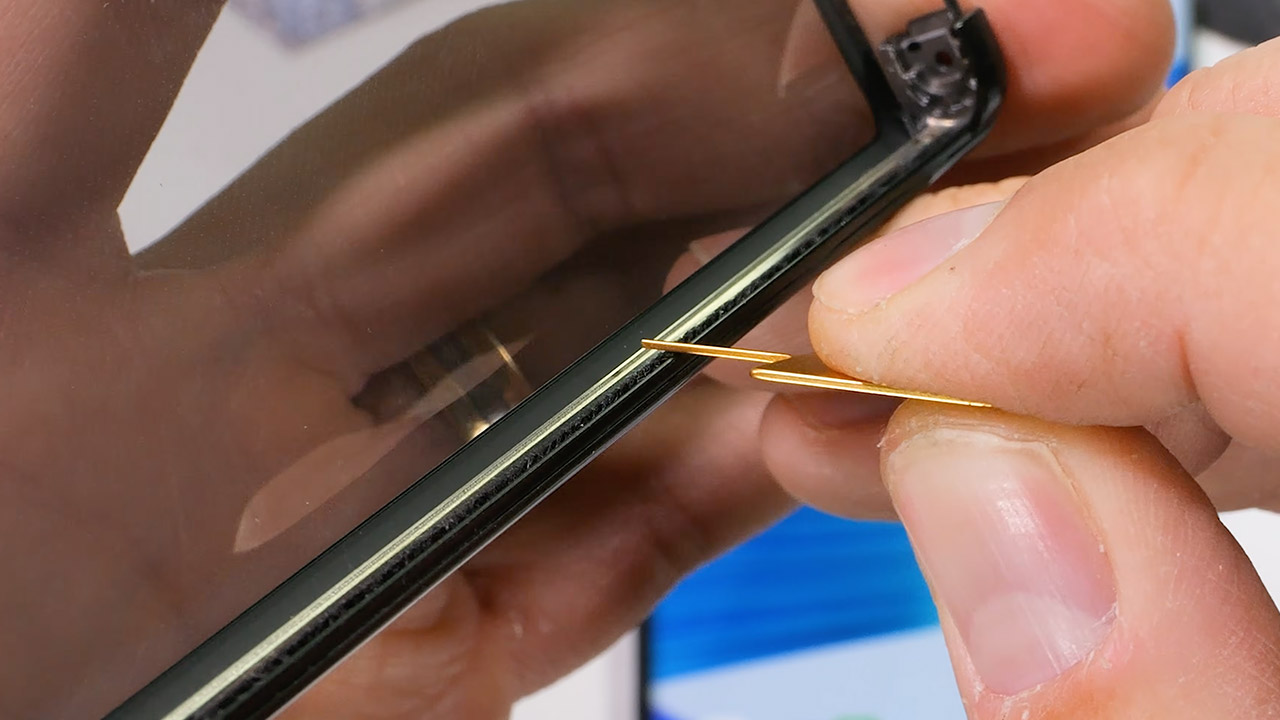
Nelson removed two Phillips head screws near the roller bit as he began to disassemble it. He applied heat to the back glass, and it popped straight off in one piece. With the glass removed, the side panel came away, and he discovered all these minuscule little hair-like things designed to keep dust from entering the flexy screen area. These tiny hairs are enclosed in a metal cage that protects the part that rolls up.

Jerry Rig Everything LG Rollable Phone Disassembly Teardown
After that, Nelson proceeded on to check the actual roll component itself, which required him to retract it completely for some extra wiggle room to free it from the frame. He was surprised to see the screen curved around a pretty mild radius, compared to the other folding phones. Behind the screen, there are a series of elevated slats that rise upwards like escalator steps, helping to keep the entire structure flat and stable during expansion.

Jerry Rig Everything LG Rollable Phone Disassembly Teardown
Other interesting features include little zipper-like linkages along the top and bottom margins of the screen. The sides have metal guides going along them to keep everything neat and tight. It all operates in tandem with two geared motors that communicate via a rack system. There are even three little spring-loaded arms that help keep the entire thing straight and smooth during extension, ensuring that it does not wobble or become stuck. LG stated that the entire system can withstand around 200,000 cycles, which is a significant number given the amount of stress placed on it.

Jerry Rig Everything LG Rollable Phone Disassembly Teardown
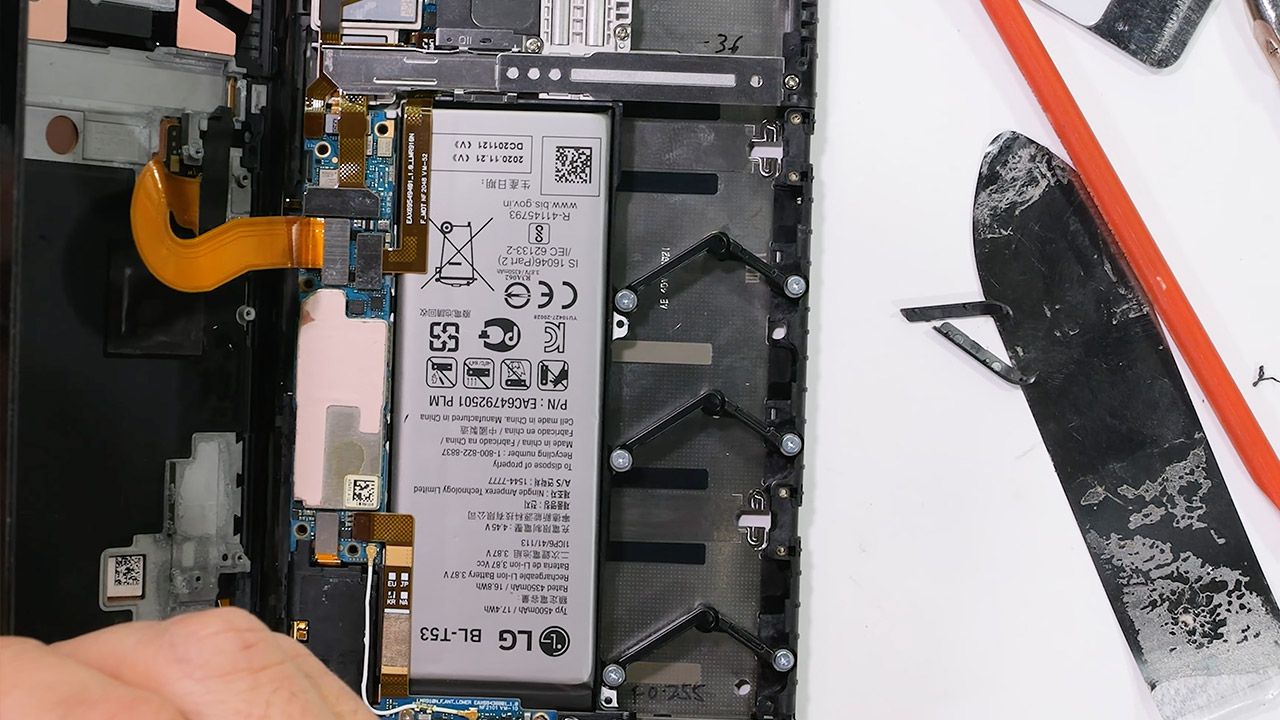
Deeper inside the phone, you’ll find a battery rated a solid 4500 milliamp hours, as well as the usual suspects like a Snapdragon processor, 12 gigs of RAM, and 256 gigs of storage. The rear camera configuration includes a 64-megapixel primary sensor with optical stabilisation and a 12-megapixel ultra-wide lens. On the back, you’ll find a power button that also serves as a fingerprint reader. All of the connection wires are arranged in a fairly straightforward manner that may be simply disassembled.

Jerry Rig Everything LG Rollable Phone Disassembly Teardown
The screen has a plastic layer that may be scratched with a fingernail, similar to the flexible screens on other phones. When you roll it up, the active portion rests behind the rear glass, allowing you to quickly check alerts and even take selfies (with the main cameras). If anything gets in the way, the software will pause the roll and offer a friendly warning.

Advertisement

Source link

Continue Reading

Tech

Simulating A Glowing Fireplace With An RP2040

Published

on

Today, fireplaces, their cozy glow once a household staple, are mostly a thing of the past. In fact, a decent amount of old fireplaces are completely blocked up! [David Capper] brings back the atmosphere without the actual flames, with his RP2040-based fireplace glow simulator.

It’s not just a string of LEDs with some PWM brightness control, either. No, [David] goes into detail about the black body radiation that gives these fires their colors. He then uses the theory of black-body radiation to determine the colors that the LEDs glow to simulate the colors of a real fire.

But the colors alone don’t make for a good simulated fire, so [David] adds the heat equation. It starts with a grid wherein each cell has a temperature. Over time, cells are randomly selected to have heat added to them (increasing the cell’s temperature), then he applies the heat equation to diffuse and decay the heat within the grid for a nice simulated crackling fire. Add in a custom PCB and a nice little 3D-printed case and you’re ready for a cozy hacker time.

Advertisement

Source link

Advertisement
Continue Reading

Tech

HBO Max: The 31 Absolute Best TV Shows to Watch

Published

on

Nathan Fielder, best known for his Comedy Central show, Nathan For You (and cringe comedy), writes, directs and stars in this new HBO series. In the show, the comedian goes to extraordinary lengths to let people rehearse moments before they happen. In the first episode, Fielder helps a man prepare for a confession to a friend, and builds an exact replica of the bar they’re planning to meet at (the attention to detail is incredible). After planning for any outlandish thing that might happen, we see how the real exchange between the two friends plays out. Bizarre and truly fascinating, The Rehearsal should get some time on your screen.

Source link

Continue Reading

Trending

Copyright © 2025