Plans to turn a flat on Castlemilk Road into a short term holiday let have been approved by councillors on the planning committee today (January 27) despite a wave of objections from neighbours.
A short-term let has been approved in Rutherglen despite neighbour objections.
Advertisement
Plans to turn a flat on Castlemilk Road into a short term holiday let have been approved by councillors on the planning committee today (January 27) despite a wave of objections from neighbours.
The application relates to an upper-floor cottage flat within a four-in-a-block building, and the plans sought permission to change the use of the property from a permanent home to a short-term visitor accommodation.
The decision was taken to the planning committee after seven formal objections were raised.
Residents lodged concerns about potential noise and disruption, increased footfall, loss of privacy and pressure on on-street parking.
Advertisement
Planning officers decided that the change of use would not result in significant harm to residential amenity. A key factor was that the flat has its own private entrance, reducing interaction with neighbouring households in the shared building.
Permission has been granted on a temporary basis until January 2036, after which the property must revert to residential use unless further consent is approved. Conditions also require the submission of landscaping details to protect neighbouring privacy along with an agreed scheme for waste and storage collection.
*Don’t miss the latest headlines from around Lanarkshire. Sign up to our newsletters here.
And did you know Lanarkshire Live had its own app? Download yours for free here.
When the Strait of Hormuz first closed in March and oil hit US$120 a barrel, a very old question came back: is this finally the moment electric vehicles take off for good – or just another false start?
EVs have been here before. They surged after the 1973 oil embargo, collapsed when oil fell, and surged again. Each wave died when the external pressure eased.
We think this time is different. In a new discussion paper, we argue that the economic case for electric vehicles is now improving on its own terms. This is because of what has happened to batteries, not because of the oil price. The same evidence, though, shows the transition creates new problems as serious as the ones it solves.
Why this time is different
Battery costs have fallen 93% since 2010. That is the number that changes everything. A pack that cost more than US$1,000 per kilowatt-hour in 2010 cost US$108 by late 2025, driven down by a decade of learning, investment and policy support.
Advertisement
Research on the global battery industry finds that every time cumulative production doubles, costs fall by around 9%. More buyers, more production, lower costs, more buyers.
Ethiopia is enjoying an EV boom. Joerg Boethling / Alamy
An economic platform, not just a better engine
The deeper reason this wave will not fade is not technical – it is economic. An EV is a platform. Its value grows as the network around it grows, just as smartphones became indispensable not because of the hardware but because of everything connected to it.
Every charger built makes the next EV more attractive. Every software update raises the value of every car already on the road. Every recycled battery feeds back into the supply chain that makes the next one cheaper. It’s part of the reason some other technologies like hydrogen fuel cell vehicles have struggled to get off the ground in numbers – the tech exists, but all the other elements aren’t quite there.
One study of 8,000 drivers in Shanghai found that range anxiety – the fear of running out of charge – has a real economic cost due to unnecessarily avoided trips. But that cost is falling sharply, not because batteries improved, but because charging networks expanded.
Making real-time charger availability visible could add 6–8 percentage points to market share by 2030. And because EV charging is far more flexible than other household electricity demand, drivers can shift away from peak hours remarkably easily when the price is right – turning the car into a grid asset, able to store and release electricity when needed. These are economic network effects, not engineering features.
Advertisement
Swapping one dependency for another
Ending oil dependence does not end geopolitical exposure. It relocates it.
In late 2025, China introduced rules requiring government approval for exports containing more than 0.1% rare earths. The leverage that once came from control of oil flows now comes from control of processing capacity and component supply chains.
The minerals at stake – lithium, cobalt, nickel, graphite and neodymium to name but a handful – carry their own geopolitical risks and, as we have written elsewhere, serious human costs in the communities that mine them. This creates a predictable cycle of social contestation that threatens to stall the transition unless the industry commits to responsible, sustainable innovation.
The metal cobalt traditionally helped EVs travel further on the same charge. And when prices spiked, so did research into making batteries with less or even no cobalt. Today, more than half of all EV batteries sold globally are cobalt free.
Advertisement
Four decades of patent data show the same pattern: higher mineral prices consistently redirect research and development toward mineral-saving technologies.
The Hormuz crisis is a reminder of what concentrated energy dependence costs. The EV transition does not need it. The learning curve keeps falling, the platform keeps compounding, the economics keep improving. That is what makes this wave different.
What it does not do is eliminate geopolitical risk. Unlike oil, where leverage comes from energy flows, EV supply chains concentrate power at materials, processing capacity, and technological bottlenecks – supply chains that are highly concentrated and carry their own serious risks. Fuel dependence becomes mineral dependence. That dependence is highly concentrated.
Advertisement
Traditional carmaking regions are already absorbing concentrated job losses, and history shows such disruptions leave persistent scars even if the long-term aggregate effects are positive. Yet electric vehicle assembly is proving more labour-intensive in western countries than expected – requiring more workers on the shopfloor, not fewer, at least in the ramp-up phase. Contrast this with China, where massive automation has led to the creation of “dark factories” where there are so few humans, internal lighting isn’t required.
The same regions facing losses could benefit. But the gains and losses do not fall on the same people. That is where the work remains.
If your fresh tulips keep drooping over the vase edge, a gardening expert has shared a simple method that keeps them standing upright in just seconds
Millie Bull Deputy Editor, Spare Time and Angela Patrone Senior Lifestyle Reporter
00:59, 17 Apr 2026
While nothing rivals the beauty of a mature tulip elegantly curving and swooping like a swan, there are times when tulips tend to droop dramatically over the vase rim and persistently refuse to stay upright, regardless of your efforts to straighten them.
Even when you’re familiar with all the techniques to extend the lifespan of your bouquets, cut flowers can still display signs of deterioration or decline quickly. Tulips, in particular, have gained a reputation for wilting exceptionally rapidly.
Advertisement
The cause of their collapse has long been a mystery, as have the techniques to avoid it. Nevertheless, following a tulip experiment, gardening instructor and expert Bethie shared on her Instagram account @blueacregarden to disclose the “winning” results so you can “fix your floppy tulips fast”. Bethie found there was one “clear far and away winner” in this experiment.
Starting with a selection of drooping tulips, the horticulturist placed two tulip stems in each of four vases and “waited exactly six days” to examine the results.
One vase held vodka, the second included coins, the third involved using a pin to create a hole in the tulips, while the final one functioned solely as a control specimen to show how the tulips looked without any additions or alterations, reports the Mirror.
Advertisement
Bethie observed that all tulips received a fresh cut before she captured the footage, and that all flowers were positioned in a well-lit spot in her kitchen.
The gardening enthusiast found that the “biggest loser” of the trial was the vodka vase. She said: “The one shot of vodka tulip plants fared horribly.” The blooms looked “sad, saggy, and droopy”. The stems had entirely lost their firmness.
Content cannot be displayed without consent
Bethie added: “It took up a good amount of water, but that seems to have petered off after a few days, and the plants suffered.”
The control group did “slightly better” than the vodka method. While the stems still had a touch of stiffness, they flopped over the vase’s rim, and the leaves displayed no strength at all.
Advertisement
The coin approach came next, with these tulips maintaining some structural support in both stems and leaves. Bethie observed, “I honestly think that if I had made a fresh cut on these and put them in fresh water, these actually might perk up a little bit.”
Ultimately, the “big and very clear far and away winner” turned out to be the pin technique, taking just seconds to carry out.
Bethie stated, “That’s right. By putting one tiny air hole using a pin under the petals of your tulips, you can have tulips that stand up nice and tall and strong.
Advertisement
“This method far and away outlasts any of the other most commonly recommended ways to keep your tulips tall and upright.”
By creating a tiny hole at the top of your tulips, you allow any air pockets potentially trapped inside the stem to release from your plant. This guarantees your plant can take in enough water, maintaining it upright and robust.
Marvel Rivals – has it had its time? (NetEase Games)
The Friday letters page hears more tales of people getting teary-eyed over video games, as a reader is frustrated at Borderlands 4’s hidden extras.
Games Inbox is a collection of our readers’ letters, comments, and opinions. To join in with the discussions yourself email gamecentral@metro.co.uk
End of an era I would love to think that the rule of live service games is finally coming to an end. Hearing that they’re all in decline is music to my ears, especially as it sounds like once you strip out the live service titles, ‘proper’ games are actually doing pretty well right now.
The big question is whether this is just the old guard losing their grip, to be replaced by newer live service games, or whether the whole idea has run its course. I’d like to think it’s the first, obviously, and there hasn’t been a big new hit since Marvel Rivals, unless you count Arc Raiders – which isn’t free.
Advertisement
The problem is that the main reasons these games are successful is because they are free. That’s the main reason people play them and I think if they were completely different games, as long as they were free they’d probably be just as popular.
People aren’t playing these multiplayer shooters because of what they are but because they don’t cost £70. Obviously, the games have to have a certain level of quality, but would anyone pretend Fortnite or Apex Legends are the best games ever?
Expert, exclusive gaming analysis
Sign up to the GameCentral newsletter for a unique take on the week in gaming, alongside the latest reviews and more. Delivered to your inbox every Saturday morning.
Advertisement
We’ll see what happens over the coming months, but I imagine GTA 6 is going to be very bad news for a lot of these games, if they’re already on the ropes before it even comes out. Tolly
Keep it at home I really don’t think Sony should release a dedicated handheld system, it wouldn’t be powerful enough. I think the PlayStation Portal is a great bit of kit, and even in the new 1080p high bitrate settings it barely uses more than a 25MBs download.
I get over 1GB speed at home and anywhere between 40-1,000 on my mobile hotspot so that’s been my portable system for a while now and I do own a Switch 2. I’d much prefer a 120Hz HDR enabled 1440-4K model and would be happy to pay for it. Inbox magic, please. P B
Advertisement
Good AI vs. bad AI Regarding Oscar’s worries about ‘AI slop’ being used to bridge the power gap in the new PlayStation handheld, it’ll definitely have a ML upscaler like DLSS (so, PSSR 2 or its successor, since it’s PlayStation). That’s just how modern graphics work and I wouldn’t be too worried about it, as ML upscaling has been a game changer on Switch 2 and is now finally allowing PS5 Pro to consistently outshine the other home consoles.
DLSS 5, the technology that was just announced to ‘yassify’ existing games is Nvidia technology so you won’t be seeing that on PlayStation or Xbox anytime soon (they use AMD, which is about three to five years behind Nvidia with upscaling, frame generation, etc.).
The only console that uses Nvidia chips is Switch 2, and it’s too underpowered to ever run something like DLSS 5 which hasn’t even come to high-end PC gaming (and might never, given the backlash). So, we’ll have to wait at least another generation or two to finally have Mario look like Bob Hoskins the way he’s supposed to. Magnumstache
Doctorin’ the TRYDIS Thanks for that interview with Nigel Alderton. I always enjoy David Jenkins’ enthusiasm and depth of knowledge on these matters. I particularly liked the gentle prodding towards indie games. It would be great if this interview led to Alderton re-entering the industry after all these years. Please keep up the good work!
Incidentally, does anyone remember Doctor What on the Spectrum? You had to reunite the eight doctors spread across space and time and get them all into the TRYDIS without breaking BBC copyright. Loved that game! GLEN
GC: Thank you.
Advertisement
Welcome homework Loved the interview with Nigel about his game Chuckie Egg. That was the game that got me into gaming as a young boy, when my aunt who was a teacher brought a BBC computer home with Chuckie Egg on it.
I was so sad when she took it back to school but a few years later, I was given a C64 for Christmas and Chuckie Egg was one of the first games I bought for it.
God bless you Nigel, you are a true gaming legend. I will be getting the new iPhone port for sure. Mark Matthews
Hidden extras I recently bought Borderlands 4 and have mixed feelings. On the one hand, I am really enjoying the game itself. The world, combat and build-crafting are all awesome, in my opinion. And the story, whilst it is by no means good, is at least not intrusive. And some of the stories are genuinely weird – already the one where you have to help the guy hatch then mate his thrasher Daisy had me in tears.
Advertisement
But the price of the game is mad.
I just got the base game which £50 in the sale. I now need to spend more than that if I want to get the vault hunter and bounty packs. Which seems to be a lot considering the game didn’t come out all so long ago.
Are these add-ons worth it? I was thinking maybe of just getting the bounty pack for now and see if the vault hunter one goes on sale down the line. Borderlands 3 is only £5 at the moment, for example!
There’s a global cost of living crisis on, so I do think publishers need to be more sensitive with their prices. Tom
Lonely fox I’ve only ever cried once whilst playing a video game. It was after completing Sonic 2 on the Sega Master System without collecting all six of the Chaos emeralds.
When Sonic stops running after the end credits he looks up to the stars and there is a picture of Tails (his fox friend for the few who aren’t familiar) alone.
As a young boy at the time it made me feel really sad. However, I collected all the emeralds on my next play though and it was very rewarding to see Sonic and Tails together up in the stars afterwards. A bit embarrassed writing this but, hey ho! Adams6legend
Advertisement
Interactive melancholy I wouldn’t say any game has made me cry but one game did make me put the controller down, look away from the screen and contemplate just how sad that scene from the game I had just witnessed was.
It was very well done and if that’s what they where going for then they completely nailed it.
The game is called Lost Words: Beyond The Page and is written by Rhianna Pratchett (Terry Pratchett’s daughter). The voice acting is top notch too, adding to the emotional side of it.
Advertisement
Spoiler alert!
It’s about a young girl who is writing a story, you play as the character in her story while she narrates it. All while visiting her sick grandmother in hospital and showing off to her proud grandmother the next chapter she had just written her.
The Forest Quartet is not as sad as Lost Words, but it is quite poignant in places. Which is about a jazz quartet who’s lead singer has passed away and they try to play one last gig in the woods in her honour. It’s also quite good if you are looking for that sort of melancholy type of game. freeway 77
Inbox also-rans Kudos to whoever recommended Beyond Words on the Switch to play. My wife and I have been loving it. It’s surprisingly tricky and a nice change from everything else we usually play. neil
Advertisement
Metro 2039 looked good but oh boy, that dev’s voice! He’s got to be a voice actor as well, right? He’s so gravelly I could park my car on him. Winston
The small print New Inbox updates appear every weekday morning, with special Hot Topic Inboxes at the weekend. Readers’ letters are used on merit and may be edited for length and content.
You can also submit your own 500 to 600-word Reader’s Feature at any time via email or our Submit Stuff page, which if used will be shown in the next available weekend slot.
Advertisement
You can also leave your comments below and don’t forget to follow us on Twitter.
This roundup of The Conversation’s environment coverage was first published in our award-winning weekly climate action newsletter, Imagine.
Every scalable solution has to start somewhere small. With a spark of an idea, an anomaly during an experiment or, perhaps, an empty seashell on an Irish beach.
Juan Diego Rodriguez-Blanco at Trinity College Dublin has found a clever use for discarded oyster shells – a byproduct of the shellfish industry. Remarkably, these shells can capture rare earth elements from water and lock them into new minerals. Rare earth elements are an essential ingredient for the green transition – they are used to make high-performance magnets used in wind turbines and electric cars, for example. So capturing these “vitamins of modern industry” by crystallising them into the calcium carbonate of the shell (rather than just sticking or adsorbing to it) is a reliable way to recover these valuable resources for future use.
Of course, this tech is in its infancy but it just goes to show, there are so many hidden surprises within nature that might, on the surface, look like worthless waste.
Advertisement
The Conversation is made up of a dozen English-speaking editions plus various non-English ones, including French, Spanish and Indonesian. One of the most joyful parts of my job is coordinating regular meetings for the environment editors at each edition to share ideas, develop collaborations and support each other.
Together, we cover the planet’s biggest story – the climate crisis. This beat can sometimes feel relentless. But uncovering scientific discoveries, breakthroughs and insights from academics all over the world gives me hope. Here, my global colleagues share some of their favourite – and most promising – stories from recent weeks.
Governments deploy dozens of different policies simultaneously, such as carbon taxes, renewable energy subsidies and emissions standards, but which ones are the most effective? Evaluating and comparing the results of climate strategies actually presents a major challenge for researchers and policymakers.
Advertisement
After analysing 1,737 climate policies across 40 countries over 32 years, scientists at the universities of Barcelona, Ludwig Maximilian of Munich, Lausanne and Oslo, have identified 28 measures that consistently reduce emissions. Their discovery will enable governments to focus on really effective strategies and avoid wasting resources, making climate action more successful.
In the western US, seven states rely on water from the mighty Colorado River, but a long-running drought and rising water demand have left reservoirs near record lows and cities’ water supplies at risk. Cities have been scrambling to lower their water use and finding creative solutions to encourage residents to make cuts, from low-flow shower heads to tearing out lawns and replacing them with xeriscaping (an approach to gardening and landscaping that reduces the need for irrigation). Las Vegas, a fast-growing city in the desert, has cut its per-capita water use by nearly 60% in the past two decades with steps like those. But as temperatures rise and the snowpack that feeds the river diminishes, we’ve wondered, can conservation alone be enough?
Environmental scientists Renee Obringer of Penn State and Dave White of Arizona State University recently ran computer models to understand what three cities – Las Vegas, Phoenix and Denver – will face in the future and how each city’s climate solutions for a dwindling water supply will hold up.
Advertisement
Stacy Morford, Senior Environment, Climate and Energy Editor at The Conversation US, says these results are eye-opening. This research suggests the region needs to start thinking beyond just conservation to much bigger solutions, the kind that Obringer and White describe that take years to build.
Las Vegas has water investigators who can issue tickets for illegal water use. Jim West/UCG/Universal Images Group via Getty Images
Anna Weekes, Environment and Energy Editor at The Conversation Africa, particularly loved a story highlighting another innovative way to tackle drying up water supplies. This time in South Africa’s dry Karoo desert.
Groundwater pumped from boreholes is the only water supply for many small towns. But as the climate warms and rain falls later in the year, aquifers aren’t replenishing enough to meet the demand for water. Surina Esterhuyse, Fanus Fourie and Danita Hohne are hydrologists and groundwater scientists who’ve designed and built low-cost aquifer recharge systems, drilling infiltration boreholes through hardened clay in dry river beds so that when it finally rains, the war goes straight into the aquifer instead of flowing away across the surface.
Advertisement
In the rural Karoo towns of Carnarvon, Vanwyksvlei, Williston, Sutherland and Calvinia, these recharge systems have been a huge success. They’re affordable and easy to implement at a small scale and offer a practical, scalable way to strengthen drought resilience and secure water supplies for vulnerable communities.
Buds, butterflies and bees
Gabrielle Maréchaux, Environment and Energy Journalist at The Conversation France loves a story about a free smartphone app called PlantNet. This “shazam” for plants, which is available on both iOS and Android, covers 85,000 species out of an estimated 400,000.
It’s popular among hikers and botanical enthusiasts. But what’s less well known is that it was developed by scientists and also helps with research by tracking abundance and locations of particular flowers, fruit, twigs and bark. It’s also a vital tool for monitoring the spread of invasive or “alien” non-native species that can disrupt ecosystems.
Meanwhile, butterflies, with their captivating patterns and colours, don’t always receive the attention they deserve, according to Ibrahim Daair, Environment and Energy Editor at The Conversation Canada. They are a fundamental part of global ecosystems, but insects have been declining at alarming rates in many places. Now, a group of researchers is working on developing a global butterfly index to track how environmental changes are affecting butterflies worldwide. They assembled a dataset of 45,000 population trends for over 1,000 butterfly species to help guide conservation and better understand the scale of the biodiversity crisis.
Advertisement
Don’t have time to read about climate change as much as you’d like?
In 2015, a mining dam in Mariana, in Minas Gerais state, collapsed and released about 55 million cubic meters of toxic waste – crushed rock, water and chemicals left after extracting iron – sending a massive, polluted mudflow downstream. At the time, it was the largest human-made environmental disaster in Brazil. After observing the devastated landscape, Sandra Moura, a professor at the Federal University of Ouro Preto, discovered a plant capable of accelerating the recovery process in the areas affected by the disaster.
But simply recovering the landscapes was not enough, and the professor decided to create a project to assist the affected communities by using beekeeping as a reforestation and income-generating strategy.
This story is featured in one of the episodes of the podcast Voices from the South produced by The Conversation Brazil, about solutions to the environmental problems facing Brazil and Australia.
Advertisement
While visiting the project’s apiary, Luciana Julião, Journalist and Audiovisual Producer at The Conversation Brazil, met incredible people, all with very diverse specialisms, who are working together in the search for possible ways to save the planet.
The coolest library on Earth
And finally, Sarah Sermondadaz, Head of Environment and Energy at The Conversation France, loved learning about first ice core library in Antarctica, designed to preserve humanity’s “climate memory”. With an average temperature of -50°C, Antarctica’s first-ever 100% natural sanctuary protects endangered ice cores from global warming. On January 14 2026, the coolest library on Earth was inaugurated at the Concordia station, Antarctica. Samples from glaciers rescued worldwide are now beginning to be stored there for safekeeping.
Speaking after the vote, Councillor Mel Jacob, the deputy leader of Wiltshire Council, said: “We have a legal duty to protect listed buildings and conservation areas and when a concern is raised about unlawful works to a listed building we are required to investigate and, where necessary, take appropriate action.
But then Capcom has been on a hot streak for years – between the likes of Resident Evil 4 remake and Monster Hunter Wilds – and this extends to its support of the Nintendo Switch 2. The developer has released a string of impressive ports, including Street Fighter 6 and Resident Evil Requiem, which take an expected hit in the resolution department, but if you’re not a stickler for crisp hair physics, are surprisingly close to the PlayStation 5 and Xbox Series X versions.
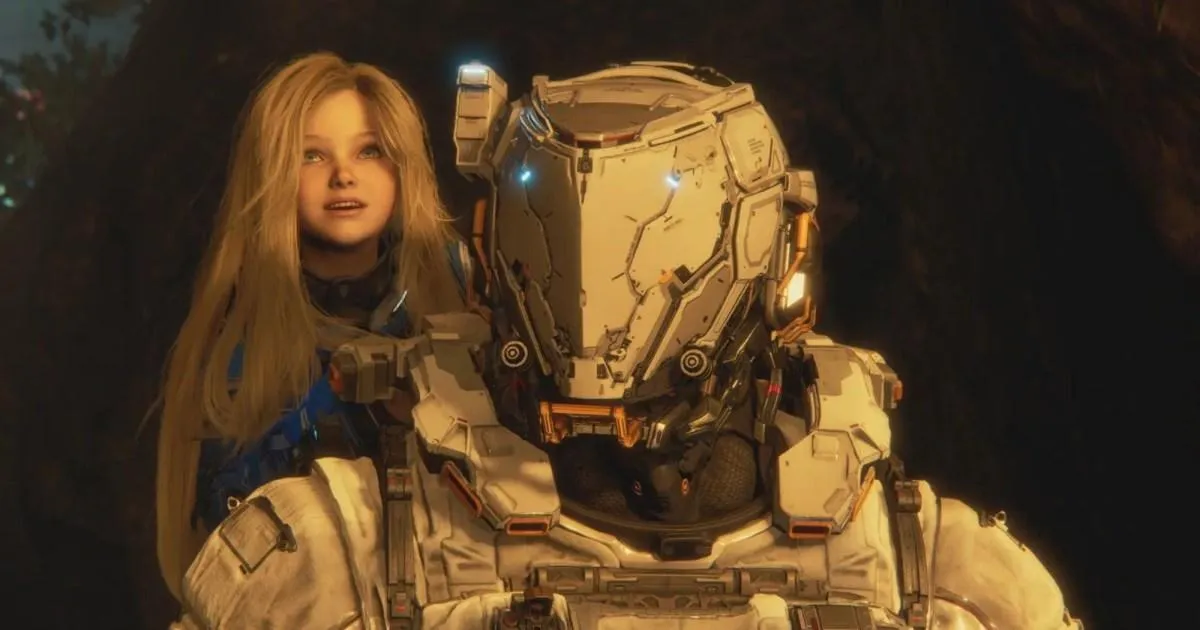
The Switch 2 version of Pragmata easily joins these ranks. It has some rough edges, and Diana (the android girl that can hack other robots) looks like she’s been blasted through a car wash during close-up conversations, but it’s still a well optimised showcase of what Nintendo’s handheld can do.
Advertisement
In many ways, this port is more impressive because Pragmata is a faster-paced action game when compared to Resident Evil Requiem. In the heat of the firefights, where you’re oscillating between Diana’s hacking capabilities and Hugh’s arsenal of weapons, there are lots of flashy sci-fi effects, explosions, and multiple enemies on-screen at once.
Some of the extra detail is dialled down on Switch 2 – like smoke effects, for example – but this isn’t noticeable unless you’re actively looking for differences in comparison shots or videos.
Expert, exclusive gaming analysis
Sign up to the GameCentral newsletter for a unique take on the week in gaming, alongside the latest reviews and more. Delivered to your inbox every Saturday morning.
Advertisement
These trade-offs keep the action running smoothly. Pragmata targets 60fps on Nintendo’s console, and while it doesn’t achieve this consistently (like other Capcom games, it has an unlocked frame rate), it rarely dips to a noticeable degree. It fares better in handheld mode thanks to the VRR (variable refresh rate) support, but even when docked the performance is surprisingly good considering how frenetic the action can be.
The most distracting and noticeable downgrade is Diana herself. There’s an uncanny valley element to the android infant on other platforms, but on the Switch 2 the details have been reduced to a less believable degree. Her static, clumpier hair when bounding around is the biggest giveaway, but during close-up conversations in the Shelter hub area, it can feel like you’re talking to a smudged doll who hasn’t been synchronised properly.
Advertisement
These visual qualms are more noticeable in handheld mode, where everything does have a blurrier effect when compared to the PlayStation 5 version, but it is still impressive how much detail it still maintains in the surroundings. Playing the second area, set in a 3D printed duplicate of New York’s Times Square, across both the PS5 Pro and Switch 2, it’s surprising how comparable the experiences are, minus the finer visual flourishes on Nintendo’s console
The negatives are a small price to pay, If you want to play Pragmata on the go. We’d definitely advise using a Pro Controller, though, as the Joy-Con controls can get finicky when you’re trying to cycle through weapons in the heat of a ruckus. The analogue sticks on the Joy-Cons don’t feel built to sustain frequent clicks either, which you’ll be doing fairly often to make Hugh run (there is a toggle in the options menu, so technically you don’t need to hold it down to sprint, but that feels weird).
There are some unfortunate omissions, though. One of the Switch 2’s most underused features, mouse controls, isn’t supported, which is a shame as it could have presented an intuitive way of dealing with the hacking minigame (or broken it entirely). There’s no toggle to lock the frame rate either, which would have been optimal for those who are more sensitive to frame rate dips.
If you’re looking for the best version of Pragmata, you’re better off sticking with PlayStation 5, Xbox Series X or PC, but the Switch 2 edition is a comparable and valid alternative which isn’t far removed from its more powerful cousins. When positioned next to Capcom’s existing ports, and other current gen titles like Star Wars Outlaws, it’s another sign that the era of mangled, heavily compromised Switch ports appears to be over. Well, not counting Overwatch anyway.
Advertisement
Formats: PlayStation 5, Xbox Series X/S, Nintendo Switch 2, and PC Price: £49.99 Publisher: Capcom Developer: Capcom Release Date: 17th April 2026 Age Rating: 16
This is as bad as it ever looks on Switch 2 (Capcom)
Chairman Dave Sullivan echoed the opinions of Planning Board members by saying that none of them were “comfortable” with the new plans, lamenting the loss of affordable housing as well as the removal of the reviews. However, the committee approved the plans as the project would help address the borough’s housing needs.
Engineering work between Preston and Lancaster on the West Coast Main Line will mean line closures between Preston and Carlisle from April 17 to 19.
Avanti West Coast has confirmed that no trains will run between Preston and Glasgow Central or Edinburgh on the normal West Coast Main Line route during the works.
One train per hour will operate between London Euston and Preston via Nuneaton.
Advertisement
Northern services will also be impacted, with trains between Barrow-in-Furness and Manchester Airport running only as far as Lancaster on April 18, and between Windermere and Manchester Piccadilly only as far as Oxenholme Lake District or Lancaster.
Rail replacement buses will operate between Preston and Lancaster throughout the works.
On April 19, rail replacement services will also operate between Grange-over-Sands and Lancaster, Heysham Port/Morecambe and Lancaster, and Windermere and Oxenholme Lake District.
No Avanti West Coast services will run between Preston and Carlisle on Saturday or Sunday.
Advertisement
Services between London Euston and Manchester Piccadilly or Liverpool Lime Street will not be impacted and will operate as normal.
READ MORE:
Passengers are encouraged to check their journey before travelling and allow extra time where rail replacement transport is in use.
A spokesperson for Avanti West Coast said: “To help you complete your journey between Preston and Glasgow Central, Avanti West Coast are operating rail replacement buses on various routes.
Advertisement
“Please note that you may also need to use buses provided by other operators to complete your journey.”
NEW YORK (AP) — The worrisome rise in colorectal cancer deaths in younger adults is concentrated in people with less education, suggesting socioeconomic factors could be driving the escalation, according to a new study.
Celebrity deaths — including Chadwick Boseman in 2020 and James Van Der Beek earlier this year — have highlighted the increase in colorectal cancer deaths among younger adults, but the new paper was called the first to parse which people are most affected by the alarming rise.
The researchers found that over the last 30 years, the rise in colorectal cancer deaths in young adults occurred almost entirely among people without a four-year college degree.
Of course, getting a college degree doesn’t protect you from getting colon cancer. Rather, experts say it’s a marker for other issues: People without degrees tend to earn less money, have poorer diets, exercise less and get less medical care.
Advertisement
It’s not totally unexpected that the death risk is concentrated in the less advantaged, but the paper published Thursday in JAMA Oncology is the first national study to actually show the connection, said Dr. Paolo Boffetta, a researcher at Stony Brook Cancer Center in New York who wasn’t involved in the work.
American Cancer Society researchers used government data on more than 101,000 younger adults, ages 25 to 49, who died of colorectal cancer from 1994 through 2023.
Overall, the colorectal cancer death rate rose from about 3 per 100,000 in that age group to about 4 per 100,000. But for people who only made it through high school, the rate rose from 4 to 5.2 per 100,000, while the rate for people with at least a bachelor’s degrees did not change from 2.7 per 100,000.
Ahmedin Jemal, the study’s first author, said the findings underscore the need for public awareness about colorectal cancer and for younger adults to heed screening recommendations. Symptoms can include blood in stool or rectal bleeding; changes in bowel habits, such as diarrhea, constipation or narrowing of stool that lasts more than a few days; unintended weight loss; and cramps or abdominal pain.
Advertisement
The American Cancer Society estimates that more than 158,000 cases of colorectal cancer will be diagnosed in the U.S. this year. Overall, it’s the nation’s second leading cancer killer, behind lung cancer, and is expected to claim more than 55,000 in 2026.
The number of deaths for adults younger than 50 is around 7% of the total — about 3,900. Earlier this year, cancer society researchers reported that colorectal cancer mortality in Americans under 50 had increased by 1.1% a year since 2005, making it now the deadliest cancer in that age group.
Scientists don’t know what’s behind that increase. But they note risk factors include obesity, lack of physical activity, a diet high in red or processed meat and low in fruits and vegetables, and a family history of colorectal cancer. The American Cancer Society changed its screening guidelines in 2021, lowering the age U.S. adults should start getting screened from 50 to 45.
Why did the researchers behind Thursday’s study look at education level and not other factors?
Advertisement
Death certificates don’t detail how much money a person had, or most other aspects of their life. But they do note how much schooling someone completed. And other research has found that data often aligns with statistics about income, health insurance, physical activity and chronic disease. So education serves as a proxy, but can’t speak to other factors, like whether the person had health insurance.
“The focus on education is really (due to) something which was available in the data,” Boffetta observed.
___
The Associated Press Health and Science Department receives support from the Howard Hughes Medical Institute’s Department of Science Education and the Robert Wood Johnson Foundation. The AP is solely responsible for all content.






















































You must be logged in to post a comment Login