Connect with us
DAPA Banner

Tech

The five best headphones of 2026

Published

on

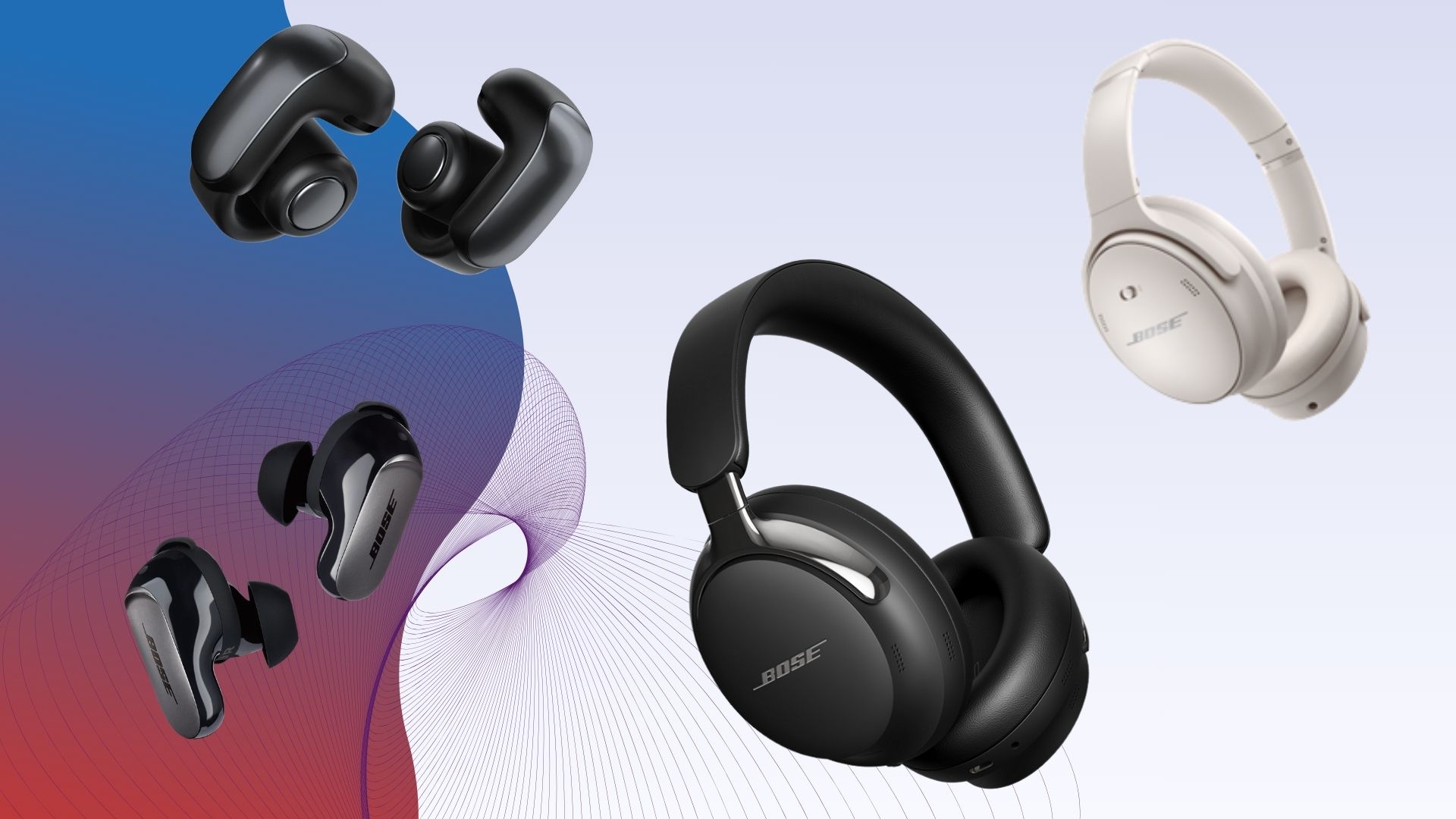
Bose were the pretty much the first brand to bring noise-cancelling cans to the masses, but they also make a wide range of headphones to suit whatever need you’re after.

Whether it’s a pair of wireless over-ears, true wireless or open-earbuds; we’ve got plenty of options for you to choose from. The headphones we’ve highlighted are the best that Bose offers.

Each pair has been put through rigorous testing in real world settings. We test the noise-cancelling in outdoor environments, on planes (when we can), on public transport and walking around cities to give you our best judgement on good Bose headphones cancel noise.

We take calls on the headphones in quiet and busy areas to judge whether they’re good enough in that department. We’ll walk through areas with wireless interference to test how good the connection is. We’ll drain the battery over several hours to see if it lives up to Bose’s claims, as well as test the app and other features the headphones come with.

Advertisement

Sound, however, is king; and we’ll give these headphones a thorough listen with a wide range of music to see how good they sound. Where possible, we’ll compare new Bose headphones to older models to see if they’ve improved and how the sound might have changed.

The aim is always to give you the best picture of how good Bose headphones are. If there’s an area where we don’t think they’re good in, we’ll make it clear in our reviews and you can judge for yourself.

Advertisement

If you’re shopping around we have other lists we’d recommend you have a look at. Our selection of best headphones, best over-ears, best noise-cancelling headphones, and best wireless earbuds will keep you busy with plenty of alternatives to look at

Advertisement

We also have brand-specific best lists as well, including one for Bose’s biggest rival in the best Sony headphones.

SQUIRREL_ANCHOR_LIST

Advertisement

  • Class-leading noise-cancellation
  • Improved call quality
  • Tweaks to audio are positive
  • Comfortable to wear
  • Excellent Bluetooth performance
  • Technics edges it for sound
  • Battery life slipping behind others
  • Among the most expensive wireless earbuds

Bose’s noise-cancelling earbuds have been excellent ever since we reviewed the very first one. Nearly each and every single one of them has scored five-stars and that’s a run that continues with its latest ANC earbud in the QC Ultra Earbuds 2nd Gen.

They’re not the best noise-cancelling earbuds (that crown would go to Sony) but they’re not far off with a performance that’s even better than the previous earbuds, creating a world that’s almost dead silent, suppressing people’s voices and environmental noises with excellence.

The transparency is excellent too, perhaps the most natural-sounding on the market, filtering in outside sounds with brilliant clarity. If there’s an area they do struggle a little with, it’s in managing wind noise.

Advertisement

Call quality has improved, a previous bug bear of older Bose true wireless, this flagship picks up voices well and isolates your voice from any noises around you. You can now use the Bose earbuds for calls both inside and outdoors without too much of an issue.

The sound quality is mostly the same, with few improvements here and there. The bass performance is slightly reduced for a more balanced performance.  The highs are more detailed, while the midrange is clearer and more insightful. It’s an overall more detailed and clearer sound, and so far, the best of any Bose earbuds.

Battery life is the same as before and a little disappointing in the grand scheme of things. You’d hope for more than five hours per charge when Bose’s rivals are offering more.

Nonetheless, if you want the best that Bose offers for earbuds then look no further than the QC Ultra Earbuds 2. If you can’t afford this premium price, then we’d suggest having a look at the QuietComfort Earbuds, which are an excellent mid-tier choice.

Advertisement
  • Class-leading ANC for the money
  • Clear, spacious audio
  • Excellent Bluetooth performance
  • Customisable performance
  • Comfortable fit
  • Slightly chunky appearance
  • Not the most exciting sound
  • Below-par call quality
  • ANC isn’t adjustable

If you find Bose’s flagship earbuds too expensive for your wallet, there is a less expensive option in the QuietComfort Earbuds (2nd Gen) and they are an excellent choice.

They bring Bose’s noise-cancelling skills to more affordable prices, delivering class-leading performance for less than £200. They’re good at suppressing people’s voices, good at reducing noise on planes and public transport, with the ANC good enough that we never felt we had to raise the volume to remove more noise.

The transparency mode is not as clear as the flagship but that’s no surprise. It sounds natural enough and clear when the Aware mode is activated though there is some additional noise to the sound that they create.

The call quality isn’t great though, with voice pick not very strong leading to a mumbly performance.

The sound is on stronger footing. It’s clear, spacious, detailed and balanced across the frequency range. Bass is good, though not the biggest you’ll ever hear, and these aren’t the most dynamic and energetic of earbuds to listen to. They lack a little excitement, but they’re an easy pair to listen to.

Advertisement

When it comes to Bose’s true wireless options, these are the best value earbuds they offer.

  • Improved noise-cancellation
  • Comfortable to wear
  • Strong wireless performance
  • USB-C audio
  • Better battery life
  • Average call quality
  • Rivals offer better sound for less money

The sequel to the original QuietComfort Ultra Headphones is an improvement, despite the lower score we’ve awarded them.

If you want the Bose’s best performance for noise-cancellation, battery life, and sound; then the QuietComfort Ultra Headphones 2nd Gen are the headphones you should buy without delay.

The sound is improved with a little more detail, clearer highs and a better performance with Immersive Audio than their predecessors, though we still feel the sound of the headphones’ spatial audio could be better.

They suppress noises better than the original model, though it’s a slight improvement rather than a massive one. The transparency mode is clear and detailed, though call quality we’d rate as average. These headphones let in noise and that affects how clear calls, especially outside, can be.

Advertisement

The design hasn’t changed much aside from a slightly more premium look. These headphones can fold, which means you can pack them in a small bag if you don’t have much space, and they do come with a carry case to keep scratches and marks at bay.

There’s a new Cinema mode for watching video on the go that uses the headphones’ Immersive Audio feature for a bigger, deeper and wider performance. These headphones have also introduced USB-C audio with support up to 24-bit/192kHz. If you want to hear these headphones at their best, we recommend you have a listen over a wired USB-C connection.

They’re comfortable to wear as we’ve come to expect from Bose, and the battery life has been extended to 30 hours, so they can survive a few long-haul flights before they need a charge.

Though they scored lower than the original QC Ultra Headphones, these are a better effort. But they’re still pricey and rivals are better in some respects if you’re thinking of shopping outside of the Bose family.

Advertisement
  • Comfortable to wear
  • Clear, detailed sound
  • Solid battery life
  • Striking looks
  • Weak noise isolation
  • Indifferent call quality
  • Lacks bass
  • Expensive

There’s only been one pair of open-ears from Bose and they’re a pretty impressive one in the Ultra Open Earbuds.

They clip on to the ear rather than sit on the earlobe, effectively kickstarting the design that others have adopted.

Since release, Bose has leaned into the visual look of buds by offering different colours. If you want a pair of headphones that also stand out as fashion statement, the Ultra Open Earbuds are very bougie.

We found them very comfortable to wear, with the clip-on design not causing any irritation or pinching. They come with physical controls rather than touch, which makes using them easier. An IPX4 rating means they’re protected against some sweat and water, so you could consider taking these for a run or to the gym.

Battery life is 7.5 hours and in our tests that was right on the money. Fast-charging is supported but there’s no wireless charging unless you pay an additional £70. If there’s a sequel to these earbuds, we hope that Bose includes it as standard given the high price.

Advertisement

There’s support for Bose’s Immersive Audio feature, though we found it doesn’t work as well in an outdoor environment when the audio of the earbuds is competing with everything else.

The sound quality is up there with the best for open ears, though Bose’s in-ear true wireless offer much higher levels of clarity, detail and bass.

But the clarity, sharpness, and levels of detail the Bose offer are best-in-class. Where they’re lacking most is in the bass department, which is not a surprise as it affects most models, but if a sequel were to come along, bass would be an area for improvement.

Leakage of audio is also surprisingly little. Turn the volume up (which you will need to) and people around won’t hear much of what you’re listening to.

Advertisement

The clever, innovative design and solid sound make these open-earbuds a winner. The price is high but as like the rest of the headphones on this list, Bose charges a premium. These are, however, one of the best open-ears you can get.

  • Warmer, bigger bass than older model
  • Solid enough noise-cancellation
  • Very comfortable to wear
  • Excellent wireless performance
  • Beaten for battery life
  • Strange call performance

While the QuietComfort Ultra Headphones 1st Gen are still available at a reduced price, the over-ear headphones we think are best for most people are the QuietComfort Headphones.

These are priced around £229 / $229, and they’re a simple pair in comparison to the Ultra models. They don’t feature Immersive Audio, there’s no aptX Bluetooth, the battery life isn’t as long, and the noise-cancellation isn’t as strong.

But we’d expect fewer features and a trade-off in performance for the price.

As usual, the comfort levels of these headphones is good, with a light clamping force so the headphones don’t feel too tight, and the earpads providing a soft cushion against the head. There’s an adjustable slider to fit different head sizes.

Advertisement

Battery life is 24 hours, though our tests suggest it’s less than that. The noise-cancellation isn’t the most powerful performance but it’s good at cutting down environmental noise, traffic and people’s voices, though wind noise can distract on a blustery day.

The call quality isn’t the best, especially in noisy places as it becomes harder for the headphones to pick up your voice when it’s competing against other noise.

Though they look very much like the QC 45 headphones, the QuietComfort Headphones have a different sound profile. Warmer, with more bass, detail and definition than the older model.

These are a rock-solid pair of Bose headphones at a price that’s less expensive than Bose’s other over-ears. If the Ultra Headphones are too expensive, this over-ear is what we’d recommend if you’re not fussed about spatial audio and higher Bluetooth specs.

Advertisement

SQUIRREL_ANCHOR_LIST

Full Specs

  Bose QuietComfort Ultra Earbuds (2nd Gen) Review Bose QuietComfort Earbuds (2nd Gen) Review Bose QuietComfort Ultra Headphones (2nd Gen) Review Bose Ultra Open Earbuds Review Bose QuietComfort Headphones Review
UK RRP £299 £179.95 £449 £299 £299
USA RRP $299 $449 $299 $299
EU RRP €349
AUD RRP AU$449
Manufacturer Bose Bose Bose Bose Bose
IP rating IPX4 IPX4 No IPX4 No
Battery Hours 24 31.5 30 27 24
Wireless charging Yes Yes
Fast Charging Yes Yes Yes Yes Yes
Size (Dimensions) x x INCHES
Weight 77 G 250 G 237 G
ASIN B0F7M3HPBD B0D8BT4BRN B0CPFV77W4 B0CCZC9J1V
Release Date 2025 2024 2025 2024 2023
Audio Resolution SBC, AAX, aptX Adaptive SBC, AAC SBC, AAC, aptX Adaptive SBC, AAC, aptX Adaptive SBC, AAC
Noise Cancellation? Yes Yes Yes Yes
Connectivity Bluetooth 5.3 Bluetooth 5.3 Bluetooth 5.4, USB-C Bluetooth 5.3 Bluetooth 5.1
Colours Black, Whie, Plum, Violet Black, Lilac, Pink, Blue, White Black, Desert Gold, Driftwood Sand, Midnight Violet, White Black, White pink, white, blue, lilac, sandstone, black and twilight blue
Frequency Range 20 20000 – Hz 20 20000 – Hz 20 20000 – Hz – Hz 20 20000 – Hz
Headphone Type True Wireless True Wireless Over-ear In-ear Over-ear
Voice Assistant N/A


Source link
Continue Reading
Click to comment

You must be logged in to post a comment Login

Leave a Reply

Tech

Will ‘AI-Assisted’ Journalists Bring Errors and Retractions?

Published

on

Meet the “journalist” who “uploads press releases or analyst notes into AI tools and prompts them to spit out articles that he can edit and publish quickly,” according to the Wall Street Journal.

“AI-assisted stories accounted for nearly 20% of Fortune‘s web traffic in the second half of 2025.” And most were written by 42-year-old Nick Lichtenberg, who has now written over 600 AI-assisted stories, producing “more stories in six months than any of his colleagues at Fortune delivered in a year.”

One Wednesday in February, he cranked out seven. “I’m a bit of a freak,” Lichtenberg said… A story by Lichtenberg sometimes starts with a prompt entered into Perplexity or Google’s NotebookLM, asking it to write something based on a headline he comes up with. He moves the AI tools’ initial drafts into a content-management system and edits the stories before publishing them for Fortune’s readers… A piece from earlier that morning about Josh D’Amaro being named Disney CEO took 10 minutes to get online, he said…

Like other journalists, Lichtenberg vets his stories. He refers back to the original documents to confirm the information he’s reporting is correct. He reaches out to companies for comment. But he admits his process isn’t as thorough as that of magazine fact-checkers.

While Lichtenberg started out saying his stories were co-authored with “Fortune Intelligence”, he now typically signs his own name, according to the article, “because he feels the work is mostly his own.” (Though his stories “sometimes” disclose generative AI was used as a research tool…) The article asks with he could be “a bellwether for where much of the media business is headed…”

“Much of the content people now consume online is generated by artificial intelligence, with some 9% of newly published newspaper articles either partially or fully AI-generated, according to a 2025 study led by the University of Maryland. The number of AI-generated articles on the web surpassed human-written ones in late 2024, according to research and marketing agency Graphite.”

Some executives have made full-throated declarations about the threat posed by AI. New York Times publisher A.G. Sulzberger said AI “is almost certainly going to usher in an unprecedented torrent of crap,” referencing deepfakes as an example. The NewsGuild of New York, the union representing Fortune employees and journalists at other media outlets, said the people are what makes journalism so powerful. “You simply can’t replicate lived experiences, human judgment and expertise,” said president Susan DeCarava.

For Chris Quinn, the editor of local publications Cleveland.com and the Plain Dealer, AI tools have helped tame other torrents facing the industry. AI has allowed the outlets to cover counties in Ohio that otherwise might go ignored by scraping information from local websites and sending “tips” to reporters, he said. It has also edited stories and written first drafts so the newsrooms’ journalists can focus on the calls, research and reporting needed for their stories…. Newsrooms from the New York Times to The Wall Street Journal are deploying AI in various ways to help reporters and editors work more efficiently….

Advertisement

Not all newsrooms disclose their use of AI, and in some cases have rolled out new tools that resulted in errors or PR gaffes. An October study from the European Broadcasting Union and the BBC, which relied on professional journalists to evaluate the news integrity of more than 3,000 AI responses, found that almost half of all AI responses had at least one significant issue.
Last week the New York Times even issued a correction when a freelance book reviewer using an AI tool unknowingly included “language and details similar to those in a review of the same book published in The Guardian.” But it was actually “the second time in a few days that the Times was called out for potential AI plagiarism,” according to the American journalist writing The Handbasket newsletter.
We must stem the idea being pushed by tech companies and their billionaire funders who’ve sunk too much into their products to admit defeat that the infiltration of AI into journalism is inevitable; because from my perch as an independent journalist, it simply is not…

Some AI-loving journalists appear to believe that if they’re clear enough with the AI program they’re using, it will truly understand what they’re seeking and not just do what it’s made to do: steal shit… If you want to work with machines, get a job that requires it. There are a whole lot more of those than there are writing jobs, so free up space for people who actually want to do the work. You’re not doing the world a favor by gifting it your human/AI hybrid. Journalism will not miss you if you leave…

But meanwhile, USA Today recently tried hiring for a new position: AI-Assisted reporter. (The lucky reporter will “support the launch and scaling of AI-assisted local journalism in a major U.S. metro,” working with tools including Copilot and Perplexity, pioneering possible future expansions and “AI-enabled newsroom operations that support and augment human-led journalism.”) And Google is already sponsoring a “publishing innovation award“…

Source link

Continue Reading

Tech

A new OnlyOffice fork is Europe's answer to Microsoft Office

Published

on


Developed by a consortium including Nextcloud, Ionos, and Proton, Euro-Office builds directly on the open-source OnlyOffice codebase. It offers a word processor, spreadsheet editor, presentation tool, and PDF editor, all supporting Microsoft formats (docx, pptx, xlsx) and open standards such as ODF. Its preview version is already available on GitHub,…
Read Entire Article
Source link

Continue Reading

Tech

Sunday Reboot: Gift bags, China flubs, and iPhones in space

Published

on

In this week’s “Sunday Reboot,” Apple’s gift bags and artifacts get a close look, China briefly gets Apple Intelligence ahead of schedule, and iPhones go to the Moon.

Orange smartphone with triple rear cameras appears behind a large view of Earth from space, showing swirling clouds over blue oceans against a dark starry background
The iPhone 17 Pro Max is in space.

Sunday Reboot is a weekly column covering some of the lighter stories within the Apple reality distortion field from the past seven days. All to get the next week underway with a good first step.
This week, Apple Ireland was fined by UK regulators for seemingly breaking sanctions on Russia, an AI porn startup sued Apple over its App Store rules, and the Apple Fitness+ chief prepares to retire amid claims he introduced a toxic mental health work environment.
Continue Reading on AppleInsider | Discuss on our Forums

Source link

Continue Reading

Tech

The deep-tech founder using AI to address immunology challenges

Published

on

Camille Bouget discusses how artificial intelligence is impacting innovation in the treatment of diseases affecting the immune system.

“Immuno-inflammatory diseases are often described as niche. They are not,” Camille Bouget, the CEO and co-founder of healthcare start-up Scienta Lab, explained to SiliconRepublic.com.  

With as many as one out of every 10 people in Western countries potentially impacted by an immuno-inflammatory condition, she noted, symptoms are often debilitating and the available therapeutic options frequently deeply inadequate for a significant proportion of patients. 

This is why, in 2021, Bouget co-founded Scienta Lab, a biotechnology company that aims to advance research within immunology via modern technologies such as artificial intelligence and EVA, the organisation’s multimodal AI model purpose-built for translational research in immunology and inflammation. 

“It was designed to answer the concrete questions that R&D teams face throughout drug development: which therapeutic targets are worth pursuing, which preclinical biological signals are robust enough to carry forward into clinical trials, and which patients are most likely to respond to a given candidate drug,” said Bouget. 

Advertisement

Applied across multiple stages of the pipeline, she explained, early on EVA can estimate therapeutic efficacy prior to a patient beginning treatment. As the programme advances, EVA can evaluate whether molecular signals observed in animal subjects are likely to translate to humans. And at the clinical stage, it can support the identification of patient subgroups for more precisely designed trials.

“The primary beneficiaries are biopharmaceutical and biotech companies working in immunology and inflammation,” she said.

“Ultimately, however, the downstream beneficiary is the patient: better-designed trials, fewer failed programmes and faster access to treatments that genuinely address unmet needs in diseases like rheumatoid arthritis, lupus and inflammatory bowel disease.”

Why AI?

A persistent challenge for Bouget and the industry she operates within has been in properly communicating the complexity of what they do in a manner that is accessible for all of the major stakeholders, be they investors, partners or the broader public.

Advertisement

“Immune diseases are notoriously difficult to characterise”, she noted, as often even the experts don’t always know how to measure them, what might prompt a flare-up, or why a treatment is effective for one patient but fails to work for another. 

“Convincing people that AI can meaningfully navigate that complexity without overpromising requires constant effort,” she said, especially as a young deep-tech company in an industry that is currently dominated by what she referred to as larger key players. 

She is of the opinion that the implication of AI for patients is significant, not least because the immunology drug development pipeline has historically suffered from high late-stage attrition, with programmes failing at phase II or phase III after years of investment and work. 

“Each of those failures represents not only a financial cost, but delayed or denied access to potentially effective therapies,” said Bouget. 

Advertisement

“AI that genuinely improves the translational accuracy of preclinical decision-making can meaningfully shorten that timeline and shift more resources toward candidates that are more likely to succeed.”

Sturdy foundations

But it isn’t simply a matter of having access to advanced technologies. For Bouget, multidisciplinary teams of scientists and engineers are critical to the overall success of any organisation attempting to transform immunology research and development.  

She said: “Multidisciplinary teams are the entire foundation of doing this well. The failure mode we see most often in the application of AI to drug development is a disconnect between the computational sophistication of a model and its biological relevance. 

“A model trained without deep immunological understanding may optimise for the wrong signal. Conversely, a team with outstanding biological expertise but limited machine learning capability will struggle to extract meaningful structure from the scale of data that modern multiomics generates.”

Advertisement

At Scienta Lab, the co-founding team consists of a pharmacist and former industry strategist, a biomedical engineer, and a mathematician with deep AI expertise.

“Day-to-day, our team spans immunology, bioinformatics, machine learning and clinical pharmacology,” Bouget explained.

“The ability to build bridges between those disciplines, to have a conversation where a wet-lab immunologist and a transformer architect are genuinely learning from each other, is what allows us to build models that are both technically rigorous and biologically meaningful.”

She added: “Organisations that try to solve this problem with either pure data science or pure biology will hit a ceiling. The translational gap in drug development is not fundamentally a data problem or a computing problem alone, but one of understanding that requires genuinely integrated teams.”

Advertisement

Don’t miss out on the knowledge you need to succeed. Sign up for the Daily Brief, Silicon Republic’s digest of need-to-know sci-tech news.

Source link

Continue Reading

Tech

Crooks Behind $27M in ‘Refund’ Scams Busted By YouTube Pranksters After Being Lured to Fake Funeral

Published

on

One crime ring scammed 2,000 elderly people of more than $27 million between 2021 and 2023 using tech support/bank impersonation/refund scams. “Victims were in their 70s and 80s,” reports the U.S. Attorney’s office for California’s southern district. Victims were first told they’d received a refund (either online or via phone), but then told they’d been “over-refunded” a massive amount, and asked to return that amount.

But 42-year-old Jiandong Chen just admitted Thursday in a U.S. federal court that he was involved in the fraud and money laundering via cryptocurrency — pleading guilty to two charges with maximum penalties of 40 years in prison and a $1 million fine, plus 20 years in prison with a maximum fine of $500,000 or twice the amount laundered. “Chen, a Chinese national, is the second defendant charged in a five-defendant indictment.” And what tripped him up seems to be that “Certain members of the conspiracy also did in-person pickups of money directly from victims…”

And so YouTube enters the story — when the scammers called pranksters with 1,790,000 subscribers to their “Trilogy Media” channel. In an elaborate three-hour video, the team of pranksters lured the scammer to a rented Airbnb where they’re staging a fake funeral with a nun. (One of the men acting in the video remembers “we start doing a prayer… I’m holding the scammer’s hand in my nun outfit…”)

They convince the scammer to collect the cash from a dead man — “Is there anything you’d like to say to him?” Then there’s demon voices. The scammer’s victim resurrects from the dead. Did the cash mule bring holy water?

The end result was a video titled “CONFRONTING SCAMMERS WITH A FAKE FUNERAL (EPIC REACTIONS)“. But two and a half years later, their “cash mule sting house” video has racked up over 1.3 million views, 22,000 likes, and 2,979 comments. (“This video is longer than Oppenheimer. Thanks for the laughs fellas.”)

Advertisement

And the scammer is facing 60 years in prison.

Source link

Continue Reading

Tech

Engineer Launches Genius AI Scheme To Track The Price Of His Favorite Beer

Published

on


A man in Ireland has figured out a way to find the cheapest pint of Guinness using just AI programs. Matt Cortland became frustrated when he paid nearly $9 for a pint at a pub in Dublin, and decided he had to figure out a way to track prices across the country. 

The first step was to find out the prices. To do that, Cortland created “Rachel” using the AI voice-generation platform ElevenLabs, then had her call every pub across Ireland — with a Northern Irish accent, of course. She ended up calling over 6,000 pubs, asking each one what their price was for a pint of Guinness. 

The second step was to sort the data. He used Claude to create a price index called “Guinndex,” which he can update himself, or bartenders can update whenever prices change. This offers Cortland — and anyone else craving a Guinness — up-to-date prices.

The key was making AI feel authentic over the phone

While it all sounds pretty methodical, the most successful part of Cortland’s AI procedure was making Rachel feel human. Rachel was inspired by Rachel Duffy, the winner of the U.K. reality show “The Traitors” – but given a Northern Irish accent. Cortland reported that most pubs across Ireland couldn’t even tell Rachel was an AI over the phone, which likely yielded more results. 

A wide range of industries has started using AI to make phone calls. A study of car dealerships found that when AI handled customer service calls, it actually seemed more successful than average phone calls across the industry. Data from Regal found that humans actually appear to prefer talking to AI representatives more than human ones, staying on the phone longer and providing longer responses. Rachel’s phone calls with pubs appeared to reflect this, with bartenders happily telling her that she could even come in and get a pint for free. 

It seemed like they didn’t even know she was AI — in reality, AI robots aren’t having as much success in that category. People have also reported not enjoying AI-led job interviews, likely already biased since they know it’s AI on the other end. Maybe let’s stick to the AI pint trackers.

Advertisement


Source link

Continue Reading

Tech

This Android phone can run Windows games locally, no PC required

Published

on


In a recent video, creator ETA Prime showcases Red Magic’s phone running multiple Windows games directly on Android. The device is powered by a Snapdragon 8 Elite Gen 5 SoC, paired with 24GB of LPDDR5T memory and 1TB of UFS 4.1 Pro storage.
Read Entire Article
Source link

Continue Reading

Tech

Samsung will discontinue its Messages app in July and replace it with Google’s

Published

on

Samsung is putting the final nail in the coffin for its own messaging app. The smartphone maker posted an “End of Service Announcement” on its website, revealing that the Samsung Messages app will no longer be available by July of this year. Samsung also recommended that anyone still using Samsung Messages switch over to Google Messages as the default messaging app.

For Samsung Messages users in the US, the switch to Google offers RCS messaging that lets you send high-quality media, join group chats and get real-time typing indicators no matter the smartphone’s OS. Galaxy smartphone owners may lose out on some of the Samsung Messages customization options, but Google Messages will make up for it generative AI from Gemini that can remix your photos in chats. On top of those features, Google Messages makes it easier for Samsung users to switch chats between a smartphone, tablet or smartwatch.

It’s no surprise that Samsung is only using Google Messages from now on, since it has been phasing out Samsung Messages for a few years now. Dating back to the Galaxy Z Fold 6 and Flip 6, and then followed by the Galaxy S25 series, Samsung stopped preloading the Samsung Messages app and instead pre-installed the Google Messages app. The Samsung Messages app is still available on the Galaxy Store, but Samsung said the exact final date will eventually be announced on the app itself.

Source link

Continue Reading

Tech

Monzo quits the US to focus on Europe ahead of a London IPO

Published

on

In short: Monzo announced on 1 April 2026 that it is closing its US operations, stopping new American sign-ups immediately and shutting existing accounts by June, and cutting approximately 50 roles. The decision comes three months after the UK challenger bank received a full banking licence from the European Central Bank and the Central Bank of Ireland, opening up expansion across the EU. It also arrives as Monzo prepares for a London IPO that Morgan Stanley is advising on, with a target valuation of between £6 billion and £7 billion.

Monzo is leaving the United States. The UK challenger bank announced on 1 April 2026 that it would cease accepting new American customers immediately, cut approximately 50 US-based roles, and close all existing American accounts by June. In a statement, the company framed the decision as a deliberate reorientation rather than a retreat: “With a fast-growing customer base of 15 million in the UK and the growth opportunity our European banking licence creates, we’re making a deliberate, strategic decision to focus on scaling in our home market and Europe and to step away from the US.” The announcement ends a seven-year experiment that never fully resolved its central structural problem, Monzo could not get a banking licence in the US, and without one, it could not compete.

Seven years, no charter

Monzo announced its American expansion in June 2019, rolling out a simplified version of its app to US customers and partnering with Sutton Bank, an Ohio-based FDIC-insured institution, to hold customer deposits and issue debit cards. The arrangement was always a workaround: without its own banking charter, Monzo could not originate loans, access core payment infrastructure directly, or compete in the lending and interchange revenue streams that define US retail banking profitability. It filed an application with the Office of the Comptroller of the Currency for a national bank charter in April 2020, but withdrew the application in late 2021 after regulators signalled it would not be approved. The company faced opposition from the National Community Reinvestment Coalition, among others, which argued that Monzo had not demonstrated sufficient commitment to serving local community needs. After withdrawing the OCC application, Monzo continued operating in the US through partner institutions, but it never secured the infrastructure that would have made its American business structurally viable.

The result, after seven years, was a product that offered a digital current account but not the full-service banking relationship that Monzo had built in the UK. US customers could not access mortgages, personal loans, or the premium credit products that generate meaningful revenue. They had a sophisticated spending tracker and a card linked to a partner bank’s balance sheet. That is a reasonable travel companion. It is not a challenger bank.

Advertisement

The European licence that changed the calculation

On 17 December 2025, the European Central Bank and the Central Bank of Ireland granted Monzo a full banking licence, making it the first digital bank to be fully regulated by the Central Bank of Ireland and establishing Dublin as its European headquarters. The licence unlocks what the OCC application never delivered: the right to hold customer deposits directly, originate loans, and operate as a full bank across the 27-member EU single market under the EU’s passporting regime. Europe’s appetite for homegrown technology champions in financial services has grown considerably in recent years, and Monzo’s Irish licence positions it to compete for that opportunity on equal terms with incumbent banks for the first time. The three months between the Dublin licence and the US exit announcement are not coincidental. The company now has a credible path to scaled profitability in a market where it is already the dominant challenger; the US, by contrast, remained a market where it was permanently constrained.

The 💜 of EU tech

The latest rumblings from the EU tech scene, a story from our wise ol’ founder Boris, and some questionable AI art. It’s free, every week, in your inbox. Sign up now!

An IPO in the background

The withdrawal also has a more immediate audience: the investors Monzo is courting ahead of a public listing. The company has appointed Morgan Stanley to advise on a London Stock Exchange IPO that is expected in 2026, with a target valuation of between £6 billion and £7 billion — compared with the $5.9 billion implied by a secondary share sale in October 2024. Companies preparing for public listings in 2026 have generally found that a clean, focused growth story commands a higher multiple than a sprawling international footprint with mixed results, and a US operation that could not clear its structural barriers was a complication the IPO story did not need.

The listing has already generated internal turbulence. TS Anil, who served as Monzo’s CEO for five years, stepped down in February 2026 following a reported dispute with the board over the timing and location of the IPO. Anil is understood to have favoured an earlier listing and had expressed interest in a New York venue; the board opted for London and more time. Diana Layfield, who spent nearly a decade at Google and more than a decade at Standard Chartered, was named his successor in October 2025 and took the role subject to regulatory approvals. Her mandate is the European expansion and the public listing. The US exit is the first visible act of that mandate.

Advertisement

The numbers behind the decision

Monzo’s financial trajectory gives the pivot a logic that is easier to explain to prospective public market investors than to American customers receiving account-closure notices. For the financial year ending March 2025, the bank reported revenue of £1.24 billion, up 48% year on year. Adjusted pre-tax profit reached £113.9 million, an eightfold increase on the prior year. Customer deposits grew 48% to £16.6 billion. A year that saw digital banking’s growth trajectory sharpen considerably across European markets validated the core bet: that a mobile-first bank with no branch network could generate the kind of revenue and profit that commands a credible IPO valuation. The US, in that context, was consuming resources that could instead be deployed against a market where the regulatory framework and customer base are already in place.

The subscription and premium-tier model that has driven platform revenue growth across technology is central to how Monzo has reached profitability in the UK: Monzo Plus and Monzo Premium accounts charge monthly fees and bundle benefits including travel insurance, higher interest rates on savings, and cashback. Replicating that model in the US required a depth of product, overdrafts, credit, savings, that a partner-bank structure made impossible. In the UK and, increasingly, in Europe, Monzo can offer all of it.

The broader picture

The move leaves the US challenger banking market increasingly to domestic incumbents and to a handful of well-capitalised European fintechs that have managed to secure their own charters. Revolut, Monzo’s nearest European rival, has been pursuing a US banking licence since 2021 and has yet to obtain one. The structural barriers that defeated Monzo’s OCC application remain in place. The lesson emerging from several high-profile European technology companies is that the conviction to double down on home-market strength, rather than spreading capital across geographies where the terms are unfavourable, is increasingly what investors reward. Monzo’s board, in pushing for a London listing and a European expansion over an American one, appears to have reached the same conclusion.

For American customers, the practical consequence is a June 2026 account closure. Monzo said it would provide guidance in the coming days on how to transfer funds, redirect direct deposits, and access statements after the accounts are closed. For Monzo itself, the US chapter closes with a banking licence in Dublin, a public listing in preparation, and 15 million customers in the UK who collectively generated more than a billion pounds in revenue in a single year. The experiment in America is over. The business case for ending it is not difficult to read.

Advertisement

Source link

Continue Reading

Tech

‘Marshals’ Release Schedule: When Episode 6 Hits Paramount Plus

Published

on

Marshals, a new Yellowstone spinoff starring Luke Grimes as Kayce Dutton, is airing on CBS right now. You can also tune in with Paramount Plus. The Yellowstone sequel series sees Grimes’ former Navy SEAL join an elite unit of US Marshals to bring range justice to Montana, according to a synopsis from CBS.

The show includes Yellowstone actors Gil Birmingham as Thomas Rainwater, Mo Brings Plenty as Mo and Brecken Merrill as Tate. Spencer Hudnut is the showrunner of Marshals — formerly known as Y: Marshals — and Taylor Sheridan is an executive producer.

When to watch new Marshals episodes on Paramount Plus

Episode 6 of Marshals airs on CBS on Sunday, April 5. Viewing options for Paramount Plus customers vary by subscription tier. You can watch the episode live if you have Paramount Plus Premium, which includes your local CBS station. If you subscribe to Paramount Plus Essential, you can watch the installment on demand the following Monday, but not live on Sunday.

Here’s a release schedule for the next three episodes of Marshals.

Advertisement

  • Episode 6, Out of the Shadows: Premieres on CBS/Paramount Plus Premium on April 5 at 8 p.m. ET/8 p.m. PT/7 p.m. CT. Streams on Paramount Plus Essential on April 6.
  • Episode 7, Family Business: Premieres on CBS/Paramount Plus Premium on April 12 at 8 p.m. ET/8 p.m. PT/7 p.m. CT. Streams on Paramount Plus Essential on April 13.
  • Episode 8, Blowback: Premieres on CBS/Paramount Plus Premium on April 19 at 8 p.m. ET/8 p.m. PT/7 p.m. CT. Streams on Paramount Plus Essential on April 20.

You can also watch CBS and the sixth episode of Marshals without cable with a live TV streaming service such as YouTube TV, Hulu Plus Live TV or the DirecTV MyNews skinny bundle. In addition to offering a lower-cost option, Paramount Plus lets you watch the other two Yellowstone spinoffs: the prequels 1883 and 1923.

James Martin/CNET

After a price increase in early 2026, the ad-supported Essential version runs $9 per month or $90 per year. The ad-free Premium version runs $14 per month or $140 per year. Paying more for Premium gives you downloads, the ability to watch more Showtime programming than Essential and access to your live, local CBS station.

Source link

Continue Reading

Trending

Copyright © 2025