
Connect with us
DAPA Banner

Tech

Samsung’s next big audio bet might skip your ears entirely

Published

on

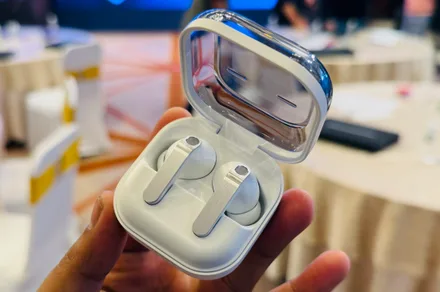
Samsung could be preparing to shake up its audio lineup with a radically different kind of earbuds – ones that don’t even rely on your ear canal. According to recent leaks, the company is working on a new product, possibly called “Galaxy Buds Able,” and early signs suggest these could use bone conduction technology instead of traditional speaker drivers.

Multiple leaks and certifications, including a recent appearance on India’s BIS database, indicate that the product is actively in development. While details remain limited, the unusual model numbering and repeated references across sources hint that this isn’t just another incremental Galaxy Buds refresh, but potentially an entirely new category.

Bone conduction audio works very differently from conventional earbuds

Instead of pushing sound waves through your ear canal, it sends vibrations through your skull directly to the inner ear, effectively bypassing the eardrum. This allows for an open-ear design, meaning users can still hear their surroundings while listening to audio—something traditional in-ear or noise-canceling earbuds often block out.

That shift matters more than it might seem. As wearable tech evolves, companies are increasingly looking at ways to blend digital experiences with real-world awareness. Bone conduction could make earbuds safer for outdoor use, more comfortable for long sessions, and even more accessible for users who struggle with in-ear designs. It also opens doors for new health and assistive applications, especially when combined with Samsung’s growing interest in wellness-focused audio features.

Advertisement

For users, the appeal is straightforward. Imagine listening to music, taking calls, or interacting with voice assistants without isolating yourself from your environment. Whether you’re commuting, working out, or just walking through a busy street, this kind of tech promises a more natural and less intrusive experience.

Looking ahead, timing could be key

Reports suggest Samsung may be positioning these earbuds for a major launch alongside its next-generation foldables, such as the Galaxy Z Fold 8 and Flip 8. If that happens, the “Buds Able” could represent the company’s push into more experimental, next-gen hardware – going beyond iterative upgrades and into entirely new user experiences.

While nothing is official yet, the direction is clear: Samsung isn’t just refining earbuds anymore – it may be redefining how we hear them.

Advertisement

Source link

Continue Reading
Click to comment

You must be logged in to post a comment Login

Leave a Reply

Tech

Garmin Approach S50 review: a mid-range banger that shoots well below its handicap

Published

on

Why you can trust TechRadar


We spend hours testing every product or service we review, so you can be sure you’re buying the best. Find out more about how we test.

Garmin Approach S50: One-minute review

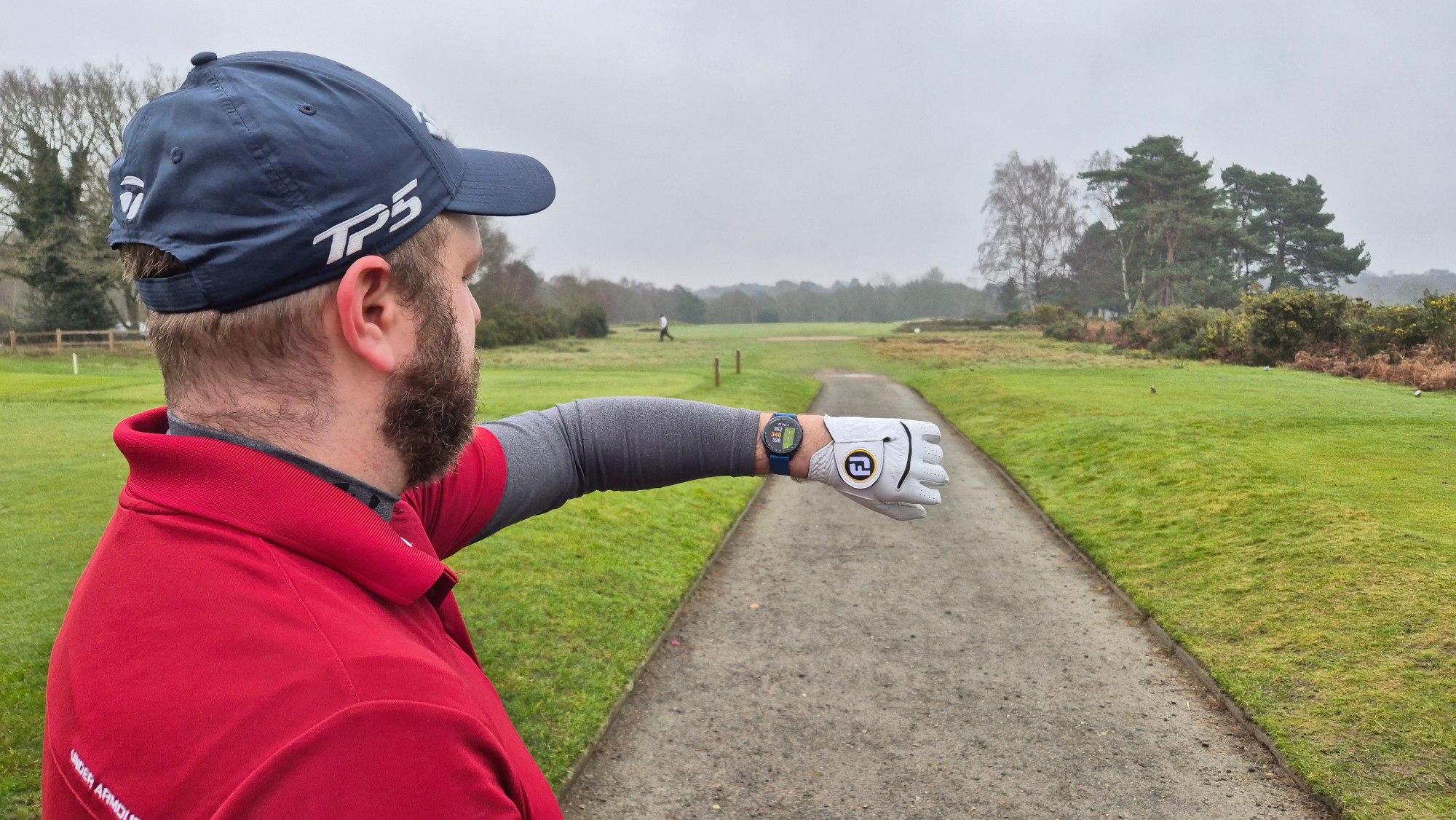
Sitting in the mid-range of the brand’s golf watch range, the Garmin Approach S50 is an excellent course companion. It includes all of the brand’s suite of excellent golfing features, as well as just the right amount of extra health and fitness, and everyday functionality to offer a golf-first, near-complete package.

It’s the golfing pedigree that shines the brightest, of course, and it puts those features into action brilliantly as a course companion. It enhanced my time and game on the course with its accurate yardages, automatic shot tracking and score logging, golf course and hole graphics, and the excellent PlaysLike feature — which factors in elevation and weather — is brilliant.

Advertisement

Source link

Advertisement
Continue Reading

Tech

Italian court says Netflix must refund customers up to $576 over price hikes

Published

on


An injunction action brought by consumer group Movimento Consumatori against Netflix Italia’s price increases has been upheld by the Court of Rome.
Read Entire Article
Source link

Continue Reading

Tech

Samsung just gave up on its own Messages app

Published

on

Samsung is finally doing what it probably should’ve done years ago: killing its own Messages app. And while this might sound like just another app shutdown, this isn’t just a feature getting deprecated. It’s Samsung basically saying, “Yeah, just use Google’s app instead.”

Samsung Messages is officially getting the boot

Samsung has officially announced that its native Messages app will be discontinued in July 2026, with users being pushed toward Google Messages as the default replacement. Once the cutoff hits, Samsung Messages won’t function like a normal texting app anymore, and in most cases, users will need to switch if they want to keep sending regular texts.

Now here’s the interesting part: this didn’t come out of nowhere. Samsung has been slowly backing away from its own app for years. As reported by 9to5Google, new Galaxy phones already ship with Google Messages as the default, and in some cases, Samsung Messages isn’t even pre-installed anymore. So yeah, this isn’t a sudden decision. It’s just the final nail in the coffin.

This feels less like a shutdown… and more like a surrender

Instead of maintaining its own app, Samsung is fully handing things over to Google, betting on a more unified Android messaging experience powered by RCS. On paper, it makes sense. Compared to Samsung Messages, Google Messages is more consistent across devices, supports modern features like read receipts, better media sharing, and encryption, and plays nicer with carriers.

But there’s also a slightly bitter aftertaste here. Android used to be all about choice, and Samsung was one of the biggest champions of that. Now, it’s essentially removing its own alternative and nudging everyone into the same app.

You must be kidding, Google messages, the design is awful, the marked messages, i can’t differentiate them from the other i cant see the unread messages, tell me what is good in Google messages?

— Grwilliam (@Grwilliam5) April 5, 2026

Advertisement

And the internet has noticed. Some users are fine with it, others are already complaining about losing a familiar interface and being forced into Google’s ecosystem. Samsung might be simplifying things, but it’s also slowly becoming just another skin on Google.

Source link

Advertisement
Continue Reading

Tech

The Xiaomi 17 Ultra has some impressive add-ons that make snapping photos really fun

Published

on

In the U.S., discussions about top camera phones largely center around iPhones, the Samsung Galaxy series, and, lately, the Google Pixel. In contrast, people in Asia and parts of Europe get a wider range of choice with companies like Xiaomi, Oppo, and Vivo upping their camera game.

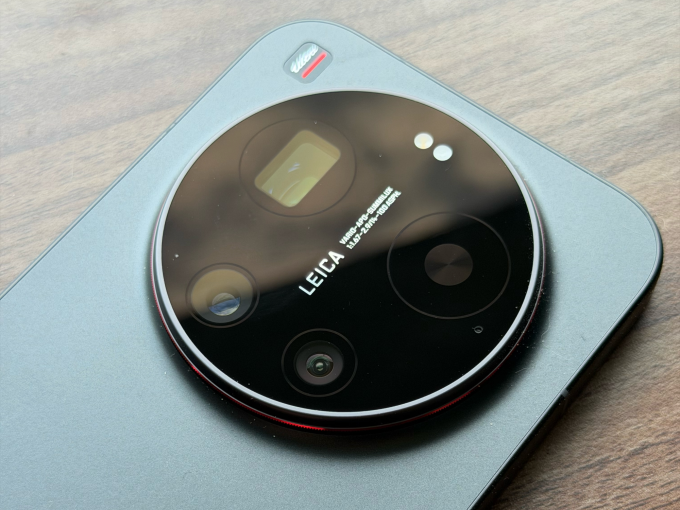
The Xiaomi 17 Ultra, which recently had its global launch, is one of those devices, with a big camera bump that houses a versatile set of sensors, and a partnership with the storied German camera maker Leica to supply software-level changes and sensibilities to how scenes are shot.

The camera has tons of options to choose from, ranging from different focal lengths on the hardware side to various filters and settings to change how the final image looks.

Image Credits: Ivan MehtaImage Credits:Ivan Mehta

Xiaomi has also released external add-ons that snap on like a cover to the camera, as well as a USB-based accessory that provides hardware buttons to shoot video or photos. While these add-ons don’t particularly add a lot of features, it makes one-hand operation of the camera easier.

Besides the camera, Xiaomi has packed its phone with top components to compete with the best phones of the year. I will talk about the camera in detail, but let me get the rest of the hardware description out of the way.

Advertisement

Hardware

The Xiaomi 17 Ultra uses Qualcomm’s latest Snapdragon 8 Gen 5 processors, which will be the choice of flagships this year. On the front, there is a 6.9-inch AMOLED screen with 1200 x 2608 pixels resolution and 120Hz refresh rate.

The screen is quite bright at a peak brightness of 3,500 nits. This is handy in operating the phone in bright conditions and also makes for a good video-watching experience.

Techcrunch event

San Francisco, CA
|
October 13-15, 2026

Advertisement

The 6,000 mAh battery is possibly one of the best outcomes of the Silicon/Carbon-Ion tech Xiaomi is using. Given the sheer size of the battery, it can last you a couple of days of light to medium usage, and also has good standby time. While the battery is big, the phone is still lighter than the iPhone Pro Max, so that is also a win for the company’s engineering team.

The phone supports 90W of wired charging, and you can use the charger Xiaomi supplies with the phone or any PD (Power Delivery) 3.0 or PPS (Programmable Power Supply)-based charger. It also supports 50W with Xiaomi’s own charger.

Advertisement

The Xiaomi 17 Ultra has 16GB of RAM and two memory options of 512GB and 1TB.

Camera

Xiaomi is using a 1-inch type 50-magapixel sensor with an f/1.67 aperture for the main camera, aiming to gather more light. The camera takes sharp and vivid photos without losing the white balance. The sensor is good at catching details in different lighting conditions. Just like the iPhone Pro Max, with the main camera, you can switch to 23mm, 28mm, and 35mm equivalent framing.

The phone has a rather unique 200-megapixel telephoto lens. Instead of offering staggered optical zoom options like 2x and 4x, it has continuous optical zoom from 3.2x to 4.3x. On the face of it, this doesn’t seem like a lot, but when taking photos of pets or framing certain objects within the frame, it is very handy. One limitation is that on the camera UI, you can easily jump to 75mm, 85mm, 90mm, and 100mm focal lengths, but you need to press down the zoom control and move around the dialer if you need to get to other focal lengths between 75mm and 100mm.

The company is using a 50-megapixel ultrawide camera with an f/2.2 aperture. This lens is also helpful for very impressive macro shots. Largely, this camera is sufficient, but it does lose a bit of detail as compared to the other two cameras in certain shots. There is also a 50-megapixel selfie camera, but remember to turn off all the beauty filters.

Camera controls are a standard affair, but the option for you to get one object’s photo in different looks is aplenty. By default, the camera follows a Leica authentic color scheme, but with one tap, you can change it to Leica Vibrant. There is a filter option that gives you options like positive and negative film; Leica-specific filters like vivid, natural, black & white, speia, and blue; and Xiaomi’s own filters like cinematic, monsoon, teal mist, and scarlet.

The company’s two add-ons are called The 17 Ultra Photography Kit and The 17 Ultra Photography Kit Pro. The base version acts like a cover and snaps to the phone directly. It connects to the phone through Bluetooth, has a two-stage shutter button (for autofocus and capturing shots), and a video recording button. The case uses contact charging for its battery.

Advertisement
Xiaomi 17 Ultra Photography Kit Image Credits: XiaomiImage Credits:Xiaomi

The Xiaomi 17 Ultra Photography Kit Pro packs a cover and another camera-grip-like controller that attaches to the phone via USB-C. The Kit Pro also has a 2,000 mAh battery to power its operation. The grip allows you to hold the phone with one hand easily.

On top of the grip, there is a dedicated shutter button and a video recording button. There is also another customizable dial that can control exposure, filters, ISO, shutter speed, or white balance. You can also use this dial to skim through the gallery. The Kit Pro also comes with a ring, where you can fit in compatible 67 mm camera filters.

I used the Kit Pro consistently when I was moving around the streets because I could easily grip the phone with one hand and take photos with a good number of camera controls at my fingertips. Plus, using a camera-like add-on made it fun to snap photos and videos. I really appreciated having a hardware zoom control.

Xiaomi 17 Ultra Photography Kit Pro Image Credits: Ivan MehtaImage Credits:Ivan Mehta

Both kits activate a fastshot software mode within the camera, which has easily accessible controls for street photography.

The Xiaomi 17 Ultra will face competition in the global market from upcoming devices such as the Vivo X300 Ultra, which also has a swanky photography kit including a 2.35x telephoto extender, and the Oppo Find X9. But because of the earlier launch of its phone, Xiaomi might enjoy this momentum. Apart from the camera, the phone packs a punch if you are okay with a big camera housing on the back.

The Xiaomi 17 Ultra starts at €1,499 in Europe. The Photography Kit is priced at €99.99, and the Photography Kit Pro is priced at €199.99.

Advertisement

Source link

Continue Reading

Tech

Today’s NYT Connections Hints, Answers for April 6 #1030

Published

on

Looking for the most recent Connections answers? Click here for today’s Connections hints, as well as our daily answers and hints for The New York Times Mini Crossword, Wordle, Connections: Sports Edition and Strands puzzles.


Today’s NYT Connections puzzle isn’t terrible if you know your Broadway shows. Read on for clues and today’s Connections answers.

The Times has a Connections Bot, like the one for Wordle. Go there after you play to receive a numeric score and to have the program analyze your answers. Players who are registered with the Times Games section can now nerd out by following their progress, including the number of puzzles completed, win rate, number of times they nabbed a perfect score and their win streak.

Advertisement

Read more: Hints, Tips and Strategies to Help You Win at NYT Connections Every Time

Hints for today’s Connections groups

Here are four hints for the groupings in today’s Connections puzzle, ranked from the easiest yellow group to the tough (and sometimes bizarre) purple group.

Yellow group hint: Boogie down.

Advertisement

Green group hint: A portion of a business or venture.

Blue group hint: Popular arcade game.

Purple group hint: Broadway, baby.

Answers for today’s Connections groups

Yellow group: Events with dancing.

Advertisement

Green group: Interest.

Blue group: Components of Whac-A-Mole.

Purple group: Musicals with last letter changed.

Read more: Wordle Cheat Sheet: Here Are the Most Popular Letters Used in English Words

Advertisement

What are today’s Connections answers?

completed NYT Connections puzzle for April 6, 2026

The completed NYT Connections puzzle for April 6, 2026.

NYT/Screenshot by CNET

The yellow words in today’s Connections

The theme is events with dancing. The four answers are ball, hoedown, hop and rave.

The green words in today’s Connections

The theme is interest. The four answers are claim, concern, share and stake.

Advertisement

The blue words in today’s Connections

The theme is components of Whac-A-Mole. The four answers are holes, mallet, mole and timer.

The purple words in today’s Connections

The theme is musicals with last letter changed. The four answers are carouser (Carousel), Evite (Evita), olives (Oliver) and wicket (Wicked).

Source link

Advertisement
Continue Reading

Tech

New FortiClient EMS flaw exploited in attacks, emergency patch released

Published

on

Fortinet

Fortinet has released an emergency weekend security update for a new critical FortiClient Enterprise Management Server (EMS) vulnerability that is actively exploited in attacks.

Tracked as CVE-2026-35616, the flaw is an improper access control vulnerability that allows unauthenticated attackers to execute code or commands via specially crafted requests.

The issue was patched Saturday, with Fortinet confirming it has been exploited in the wild.

“Fortinet has observed this to be exploited in the wild and urges vulnerable customers to install the hotfix for FortiClient EMS 7.4.5 and 7.4.6,” warns Fortinet.

Advertisement

Fortinet says the vulnerability impacts FortiClient EMS versions 7.4.5 and 7.4.6 and can be mitigated by installing one of the following hotfixes:

The vulnerability will also be fixed in the upcoming FortiClientEMS 7.4.7. FortiClient EMS 7.2 is not affected.

The flaw was discovered by cybersecurity firm Defused, which described it as a pre-authentication API access bypass that allows attackers to bypass authentication and authorization controls entirely.

Defused shared on X that they observed the flaw being exploited as a zero-day earlier this week before reporting it to Fortinet under responsible disclosure.

Advertisement

Internet security watchdog Shadowserver has found over 2,000 exposed FortiClient EMS instances online, with the majority located in the USA and Germany.

The vulnerability follows a separate critical FortiClient EMS flaw, CVE-2026-21643, reported last week and also actively exploited in attacks.

Both vulnerabilities were discovered by Defused, with Fortinet also crediting Nguyen Duc Anh for the latest flaw.

Fortinet is urging customers to apply the hotfixes immediately or upgrade to version 7.4.7 when it becomes available to mitigate the risk of compromise.

Advertisement

Automated pentesting proves the path exists. BAS proves whether your controls stop it. Most teams run one without the other.

This whitepaper maps six validation surfaces, shows where coverage ends, and provides practitioners with three diagnostic questions for any tool evaluation.

Source link

Continue Reading

Tech

Geekom A5 Pro mini PC review

Published

on

Why you can trust TechRadar


We spend hours testing every product or service we review, so you can be sure you’re buying the best. Find out more about how we test.

GEEKOM A5 Pro: 30-second review

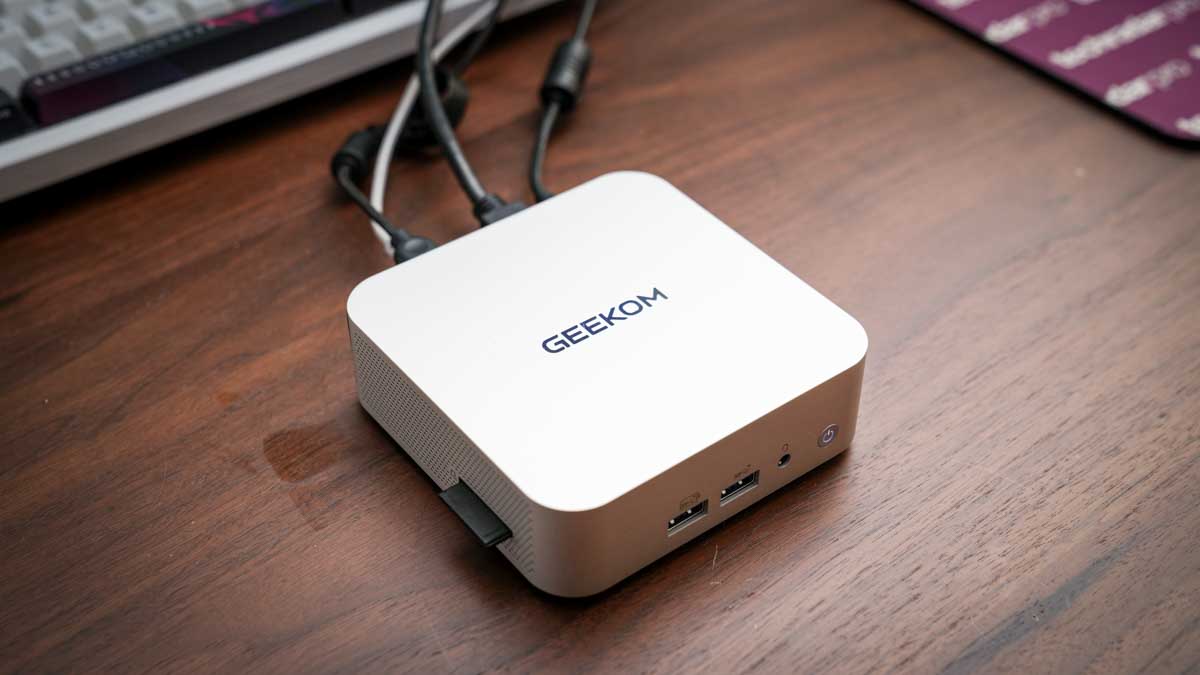
The Geekom A5 Pro at 112.4 x 112.4 x 37mm is one of the smaller Mini PCs that I’ve looked at; however, removing it from the box, the all-aluminium casing gives it an instantly premium look and feel. The finish is exceptional, and it’s a good, solid machine that will be equally at home in the office or used as a portable machine in the field, for events or any situation where a PC is required. The design is decidedly premium, and unlike some of the more plastic Mini PC options, there’s an overall feeling of quality and style that would make this a perfect option for offices as well as stylish studios.

Advertisement

Source link

Continue Reading

Tech

Artemis II arrives in lunar space ahead of its trip around the Moon

Published

on

Artemis II and its four-person crew have entered the Moon’s “sphere of influence,” meaning the spacecraft is more affected by lunar gravity than the Earth’s pull. The transition occurred at a distance of 39,000 miles from the Moon, four days, six hours and two minutes into the mission. The next and most important phase will happen tomorrow when the craft loops around the Moon’s far side, taking humans deeper into space than they’ve ever been before.

At their apogee, Astronauts Reid Wiseman, Christina Koch, Victor Glover and Canada’s Jeremy Hansen will be 252,757 miles from Earth. That will break the previous record held by the Apollo 13 crew by just over 4,000 miles. They’re the first humans to cross the lunar threshold since 1972’s Apollo 17 moon landing mission.

The crew spent this weekend carrying out preparations for their lunar flyby. That included manual piloting demonstrations, reviewing their science objectives for the six-hour observation period and evaluating their space suits, which are there for life support in the event of an emergency and for their return home. But, they’ve had plenty of time to take in the views, too — and those views sure are spectacular. In the latest series of images shared by the space agency, the astronauts are seen gazing at Earth through the windows of the Orion spacecraft.

Orion will reach the moon’s vicinity shortly after midnight on Monday, April 6. Later that day, the crew is expected to reach a point farther than any humans have traveled from Earth, surpassing the record of 248,655 miles from Earth set by the Apollo 13 astronauts in 1970.

Advertisement
NASA astronaut and Artemis II mission specialist Christina Koch peers out of one of the Orion spacecraft's main cabin windows, looking back at Earth, as the crew travels towards the Moon.

Mission specialist Christina Koch takes in the view. (NASA)

The lunar observation period will start at 2:45PM ET, and a few hours later, they’ll be behind the moon and briefly drop out of communication. The spacecraft’s closest approach to the moon is expected to occur at 7:02PM, when it will be 4,066 miles from the surface. “From that distance, the crew will see the entire disk of the Moon at once, including regions near the north and south poles,” according to NASA. The crew will later get a chance to see a solar eclipse “as Orion, the Moon, and the Sun align in such a way that the astronauts will see our star disappear behind the Moon for about an hour.” NASA will have coverage of the flyby starting at 1PM ET.

Update April 7 at 1:40 AM ET: The post has been updated with news that Artemis II has entered the Moon’s sphere of influence.

Source link

Advertisement
Continue Reading

Tech

Pocket-Sized E-Ink Gets A Firmware Upgrade

Published

on

Not so long ago, e-ink devices were rare and fairly pricey. As they have become more common and cheaper, some cool form-factor devices have emerged that suffer from subpar software. [Concretedog] picked up just such a device, and that purchase led to the discovery of a cool open-source firmware project for this tiny gadget.

[Concretedog] described the process of loading the firmware, which is just about as easy a modification as one can make. You plug the e-ink display into your computer, visit a website, and can flash it right from there. Once the display is running the CrossPoint Reader firmware, it unlocks some new tricks on this affordable reader. The firmware lets you turn the device into a WiFi hotspot and upload books wirelessly, or it can connect to an existing network to add files that way. It also enables rotating the display and KOReader syncing if you have multiple devices you read from.

We love seeing the community step in and improve devices that are hardware-wise good, sometimes great, but come up lacking in the software or firmware department. Thanks [Concretedog] for sharing your experience with this device and the cool open-source firmware. Be sure to check out some other projects we’ve featured where a firmware tweak breathed new life into the hardware.

Advertisement

Source link

Advertisement
Continue Reading

Tech

Microsoft’s own ToS calls Copilot ‘entertainment only’ amid adoption slump

Published

on

In short: Microsoft has spent billions building Copilot into every corner of its product lineup, pitching it as an indispensable AI co-worker. Its own Terms of Use tell a different story. A clause quietly buried in the document labels Copilot “for entertainment purposes only” and warns users not to rely on it for important advice. The gap between the marketing and the fine print has drawn fresh scrutiny as adoption figures reveal that fewer than one in 30 eligible users is actually paying for the tool.

Somewhere between Satya Nadella’s earnings calls and the product pages promising to “transform the way you work,” Microsoft inserted a sentence into Copilot’s Terms of Use that reads rather differently from the rest of its AI pitch. Updated in October 2025 and surfacing widely in early April 2026, the clause appears under a section in bold capital letters labelled “IMPORTANT DISCLOSURES & WARNINGS.” It says: “Copilot is for entertainment purposes only. It can make mistakes, and it may not work as intended. Don’t rely on Copilot for important advice. Use Copilot at your own risk.

The same document states that Microsoft makes no warranty or representation of any kind about Copilot, that users should not assume its outputs are free from copyright, trademark, or privacy rights infringement, and that users are solely responsible for any Copilot content they choose to share or publish. The terms apply to consumer Copilot products; the enterprise-facing Microsoft 365 Copilot is excluded from the clause.

What Microsoft has been saying publicly

The disclaimer sits in sharp contrast to years of aggressive promotion. Since integrating Copilot across Windows 11 and the Microsoft 365 suite in 2023, the company has positioned the tool as a productivity multiplier, its “AI companion” for workers in Word, Excel, PowerPoint, and Outlook. Nadella has described Copilot as “becoming a true daily habit” and told investors that daily active users had grown nearly threefold year on year. The company spent approximately $80 billion on AI-related capital expenditure in fiscal year 2025, including a $13 billion investment in OpenAI whose models underpin Copilot’s core capabilities.

Advertisement

Microsoft 365 Copilot is priced at $30 per user per month as an enterprise add-on, with a business tier at $18 per user per month. Premium consumer tiers carry costs that reach into the tens of dollars monthly. “Entertainment purposes only” is not language typically associated with a product charging at those rates.

The legal logic behind the clause

Legal analysts who reviewed the language offered a measured interpretation. The most widely cited read is that the clause represents a lawyer’s attempt to limit liability in circumstances where the product fails, an overcorrection that has become embarrassing because of how bluntly it contradicts the marketing. OpenAI, Google, and Anthropic all include similar advisories in their terms of service, acknowledging inaccuracy and placing responsibility for verifying outputs on users. None of them, however, uses the phrase “entertainment purposes only,” which Android Authority noted is “the same disclaimer that a psychic uses to avoid getting sued.”

The broader legal context matters. Microsoft has faced litigation over Copilot’s outputs before: a class-action suit in a US federal court in San Francisco challenged the legality of GitHub Copilot over alleged open-source licence violations, and a separate dispute in Australia concerned customers who were moved to more expensive plans with Copilot bundled in. The consumer Copilot ToS language, on this reading, is corporate defensiveness made explicit, an attempt to establish in writing that the product never warranted the reliance users might have placed on it.

The adoption numbers that give context

The disclaimer arrives at an awkward moment for Copilot’s commercial trajectory. Data published in early 2026 showed that only 3.3% of Microsoft 365 and Office 365 users who have access to Copilot Chat actually pay for it. Of roughly 450 million Microsoft 365 seats, 15 million are paid Copilot subscribers, a conversion rate that reflects the difficulty of persuading existing users to pay a significant premium for AI they find unreliable.

Research from Recon Analytics traced the problem in part to accuracy. Its tracking of Copilot’s accuracy Net Promoter Score found it at -3.5 in July 2025, deteriorating to -24.1 by September 2025, and only partially recovering to -19.8 by January 2026. In surveys of lapsed Copilot users, 44.2% cited distrust of answers as the primary reason they had stopped using the tool. Separately, the US paid subscriber market share fell from 18.8% in July 2025 to 11.5% in January 2026, a 39% contraction in six months. When users are given a choice between Copilot, ChatGPT, and Gemini, just 8% of workers opt for Copilot.

Advertisement

The hallucination record has not helped. In August 2024, Copilot falsely accused German court reporter Martin Bernklau of the crimes he had covered for years, describing him as a convicted child abuser and fraudster and providing his home address. Microsoft was forced to block queries about Bernklau after a data protection complaint. In January 2026, Copilot generated false claims about football-related violence, triggering further coverage of the tool’s reliability problem. The “entertainment purposes only” clause looks rather less like a legal technicality in that context, and rather more like an accurate description.

Microsoft’s pivot and what it means

Nadella’s response to Copilot’s uneven performance has been to assume direct control over AI product development, reportedly delegating other responsibilities from September 2025 onward to focus personally on the roadmap. The company has also begun building its own models. Microsoft’s launch of MAI-Transcribe-1, MAI-Voice-1, and MAI-Image-2 in April 2026 , its first proprietary AI model releases since renegotiating its contract with OpenAI in September 2025 — signals a strategic intent to reduce dependency on the models that currently sit under Copilot’s hood.

The irony is that Copilot’s limitations are well understood inside Microsoft. The company’s own leaked internal feedback, as reported by several outlets, described integrations that “don’t really work.” The ToS language is, in a sense, the legal department’s way of saying what the product team has been grappling with in private. The expectation that AI tools be trustworthy, verifiable, and fit for purpose has moved from aspiration to regulatory reality across multiple jurisdictions, making the gap between Copilot’s marketing and its terms of service harder to sustain.

None of this means Copilot is uniquely unreliable by the standards of the current generation of AI assistants. Its primary competitor, ChatGPT, has its own well-documented accuracy problems even as OpenAI pushes into commercialisation. The difference is that Microsoft bet earlier, louder, and more money on the proposition that AI assistants were ready to become essential workplace tools. The fine print in its own terms of service suggests the company is hedging on that bet while the marketing continues to double down on it. Competitors raising billions on promises of AI reliability will have noticed the opening. The race that defined 2025 is entering a phase where the gap between “for entertainment purposes only” and genuinely trustworthy AI is the most valuable real estate in the industry.

Advertisement

Source link

Continue Reading

Trending

Copyright © 2025