
Crypto World
Bitcoin, Oil, and Stock Markets Flip as Trump’s Iran Deadline Nears Deal Breakthrough

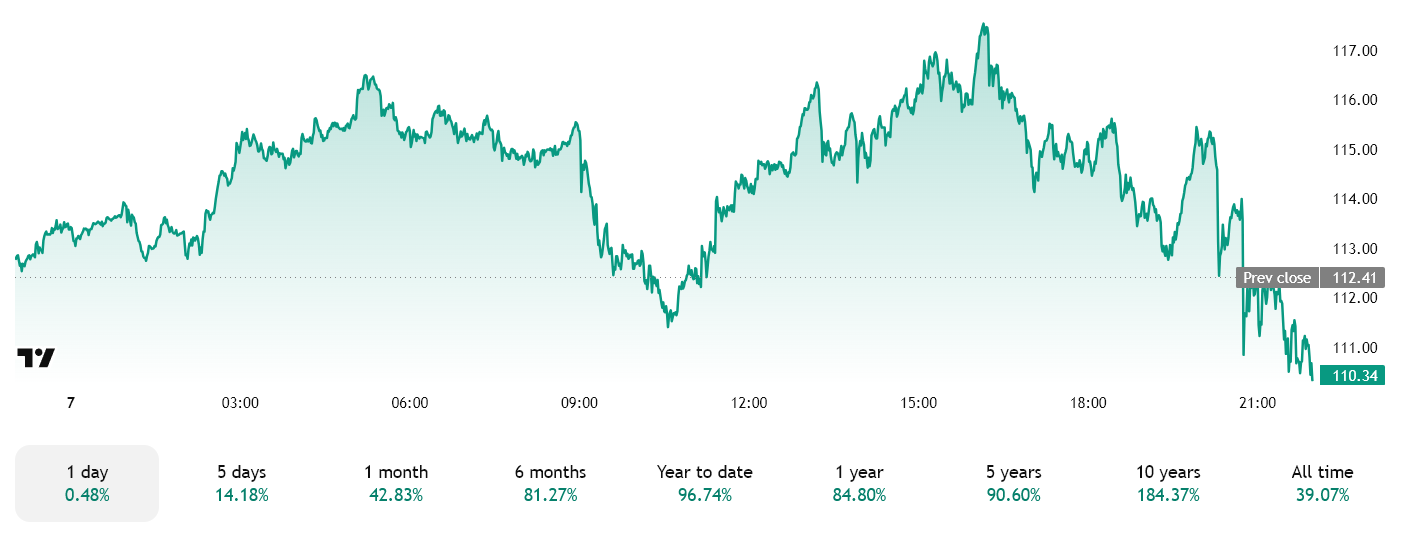
Oil prices dropped sharply late April 7 while Bitcoin climbed back toward $70,000, as markets reacted to signs that a last-minute diplomatic breakthrough between the US and Iran may be close.
Reports from CNN citing a regional source said “some good news is expected from both sides soon,” with expectations that a deal could be finalized before President Donald Trump’s deadline expires. The shift in tone comes just hours after markets braced for potential escalation in the Middle East.
Bitcoin rebounded to around $69,900, recovering intraday losses, while oil pulled back from earlier highs as traders priced in a lower risk of supply disruption.
Trump’s Deadline Pushes Markets to the Edge
Earlier in the day, Trump imposed a hard deadline of 8 p.m. ET (midnight GMT) for Iran to agree to a US proposal that includes reopening the Strait of Hormuz.
He warned that failure to comply would trigger large-scale strikes on Iran’s infrastructure, including power plants and transport networks.
The rhetoric escalated quickly. Trump said a “whole civilization will die tonight” if no deal is reached, while US and Israeli strikes intensified across Iranian targets ahead of the deadline.
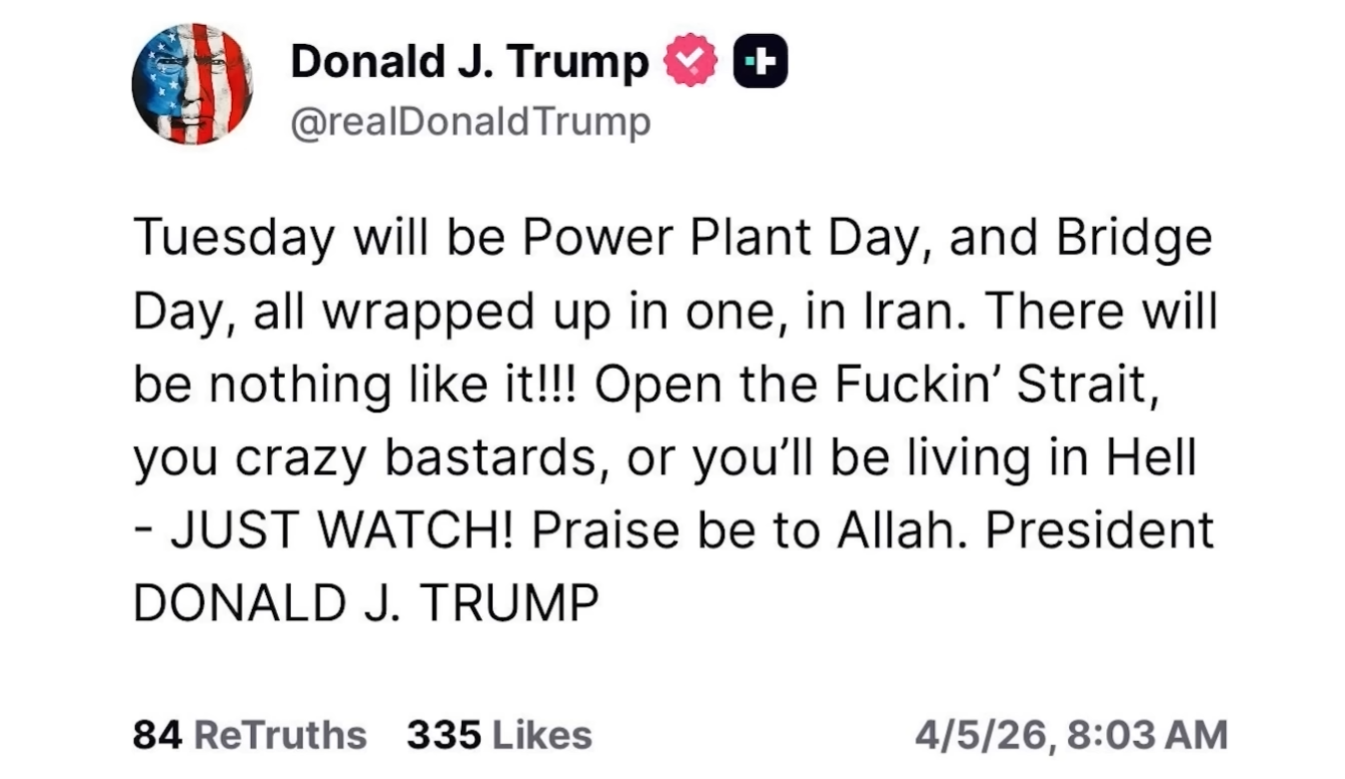
Iran responded with threats of regional retaliation and urged civilians to form human chains around critical infrastructure.
Markets reacted in real time. Oil surged on fears of prolonged disruption to global supply routes, while risk assets, including crypto, saw volatility. Now, on reports of positive diplomatic developments, oil price has sharply dropped.
Pakistan Mediation and Last-Minute Deal Signals
Diplomacy accelerated in the final hours. Pakistan, acting as a key intermediary, formally requested a two-week extension to allow negotiations to continue.
Prime Minister Shehbaz Sharif urged both sides to observe a temporary ceasefire and reopen the Strait of Hormuz as a goodwill measure.
The White House confirmed Trump was reviewing the proposal. At the same time, US officials said negotiations were ongoing, and Iran signaled it was considering the extension.
Now, with reports pointing to a possible agreement “tonight,” markets are shifting from panic to cautious optimism. The drop in oil and Bitcoin’s rebound suggest traders are positioning for de-escalation rather than immediate conflict.
The post Bitcoin, Oil, and Stock Markets Flip as Trump’s Iran Deadline Nears Deal Breakthrough appeared first on BeInCrypto.



Institutions are accelerating their adoption of crypto, with major players steadily entering the market and expanding their exposure to digital assets. But while participation is rising, the way these institutions engage with the ecosystem has fundamentally changed.
The old model, where funds parked large amounts of capital directly on crypto exchanges, is being replaced. In its place is a new architecture where trading and custody are no longer intertwined.
“Counterparty risk awareness in crypto comes in cycles, and the recent major cyber-attack has triggered one of the largest waves of exchange derisking since FTX. It is yet another reminder that separating crypto custody from exchange trading is essential for security,” says Dominic Lohberger, Sygnum Chief Product Officer.
How FTX Broke Institutional Trust in Exchange Custody
Before 2022, the dominant strategy was simple. Deposit funds onto an exchange, execute trades, and leave capital there for convenience and speed. Exchanges acted as both trading venues and custodians. That model worked, until it didn’t.
The collapse of FTX exposed a critical flaw. Investors were taking on massive, often invisible counterparty risk. FTX operated as an exchange, custodian, lender, and clearinghouse all in one
What had been considered operational efficiency was suddenly recognized as a structural vulnerability. Customer assets were not held in verifiable, on-chain, segregated accounts. When the firm filed for bankruptcy, clients discovered their funds had been diverted to Alameda.
The damage extended well beyond FTX’s direct users. Galois Capital, a former registered investment adviser, shut down after half its assets were stuck on FTX when the exchange collapsed.
In September 2024, the SEC fined Galois $225,000 for failing “to comply with requirements related to the safeguarding of client assets.”
The Celsius bankruptcy added another layer of alarm. A US bankruptcy court ruled that customer deposits into Celsius Earn Accounts became the property of the debtors’ estate, not the depositors.
Investors who believed they were holding assets learned they were, in legal terms, unsecured creditors.
Research from Coalition Greenwich found that institutional-grade cold storage and exchange wallets were equally popular before the FTX collapse. That changed overnight.
The industry mantra “not your keys, not your coins” evolved from a philosophical stance into a compliance requirement.
What Off-Exchange Settlement Actually Looks Like
The traditional crypto trading model required institutions to deposit funds into an exchange before placing a trade. The exchange held both the assets and the execution function, thereby concentrating risk in a single entity.
Off-exchange settlement, or OES, flips this model. This new class of infrastructure is designed specifically to isolate risk. Assets remain with a third-party custodian or in a self-custodied wallet.
Instead of holding assets on exchanges, institutions now store them with third-party custodians. These custodians, often regulated entities or specialized infrastructure providers, secure funds in segregated wallets.
Trading still happens on exchanges, but with a key difference. Exchanges are granted limited access to a trading balance or credit line, typically backed by assets held in custody.
The exchange can execute trades, but it cannot unilaterally move or withdraw the underlying funds. Settlement happens separately, often on a net basis after trades are completed.
Subscribe to our YouTube channel to watch leaders and journalists provide expert insights
The Rise of Risk Isolation Models
In traditional finance, this separation between custody and execution has existed for decades. Crypto lacked this structure until several companies, including Fireblocks and Copper, built it.
The former launched Fireblocks Off Exchange in November 2023. Off-Exchange offers Collateral Vault Accounts (CVAs).
These are on-chain wallets secured by Multi-Party Computation (MPC) cryptography. When an institution deposits assets into a CVA, the connected exchange receives a trading credit.
Copper’s ClearLoop is an off-exchange settlement solution in which assets remain in Copper’s MPC (Multi-Party Computation) custody. Trades settle on Copper’s own infrastructure.
Both systems have gained significant traction. Deribit became the first exchange to fully integrate Fireblocks OES in February 2024. HTX followed in April 2025.
“Since the launch, HTX has onboarded numerous institutional clients and recorded a 200% increase in trading volume, validating market demand for secure off-exchange settlement models,” the press release read.
Copper’s ClearLoop now connects several live exchanges, including Coinbase, OKX, Bybit, Deribit, Bitget, and more, facilitating over $50 billion in monthly notional trading volume. The Bybit hack of 2025 further demonstrated the advantages of off-exchange settlement.
How Bitcoin ETFs Made the Separation Permanent
The approval of spot Bitcoin (BTC) ETFs in January 2024 did more than open a new investment vehicle. It hardwired the custody-execution separation into the most visible crypto product on Wall Street.
For instance, like many other ETFs, BlackRock’s iShares Bitcoin Trust ETF (IBIT) uses Coinbase Custody Trust Company, LLC. The structure is built so that Bitcoin sits in cold storage vaults, entirely separate from any trading venue.
Creation and redemption of ETF shares follow an operational process in which assets move between the vault and trading balances within defined settlement windows. The exchange where IBIT trades on the secondary market never touches the underlying Bitcoin.
This is not an optional design choice. It is how ETFs work by definition. The custodian holds the asset. The authorized participant handles creation and redemption. The exchange handles price discovery. Three roles, three entities, no overlap.
Off-Exchange Trend Rises, but Coinbase Holds the Crown
While the shift away from exchange custody is real, the data suggest a more nuanced transition rather than a full-scale replacement.
Despite the rise of off-exchange models, Coinbase remains the dominant force in institutional crypto custody. The firm currently holds custody for over 80% of global crypto ETF assets.
It also serves as custodian for eight of the top 10 publicly traded companies with Bitcoin (BTC) on their balance sheets.
This dominance is further reinforced by regulatory momentum. In April 2026, the Office of the Comptroller of the Currency granted Coinbase conditional approval to charter Coinbase National Trust Company, a move that would allow it to operate as a federally regulated crypto custodian upon full approval.
Follow us on X to get the latest news as it happens
The significance of this shift is twofold. First, it strengthens Coinbase’s position as a qualified custodian, a key requirement for institutional investors such as asset managers, pension funds, and ETF issuers.
Second, it signals that while institutions are reducing exposure to exchange risk, they are not abandoning centralized players altogether.
Instead, capital is consolidating around a smaller group of regulated, systemically important custodians. This creates a hybrid market structure:
- Off-exchange infrastructure reduces direct counterparty risk
- Regulated exchanges and custodians continue to anchor institutional trust
- Market power concentrates in platforms that can offer both compliance and scale
In effect, the post-FTX evolution isn’t about eliminating intermediaries. It’s about redefining which intermediary institutions are willing to trust.
What Would Happen If an FTX-Scale Collapse Occurred Today
Amid growing attention toward off-exchange models, a natural question emerges: would an FTX-style failure still have the same impact on institutional capital?
Under the old model, an exchange collapse froze all deposited assets. Institutions became unsecured creditors in a years-long bankruptcy proceeding.
Under the current OES infrastructure, the outcome would differ substantially. If an exchange using Fireblocks OES collapsed, the institution’s assets would remain in its CVA. The principal never entered the exchange’s balance sheet.
Fireblocks’ disaster recovery mechanism, powered by Coincover, also enables institutions to ensure operational security by eliminating single points of failure. The only exposure would be unsettled profit-and-loss from recent trades.
With ClearLoop, the English Law Trust would shield client assets from both exchange and Copper insolvency. Again, an institution’s loss would be limited to any unsettled trading obligations, not the total portfolio.
At FTX, institutions lost their entire deposited balance. Under OES, the same scenario would expose them to days of unsettled P&L at most. That is the difference the new plumbing makes.
That distinction highlights the real impact of crypto’s changing infrastructure. The industry hasn’t eliminated risk, but it has significantly reduced the scope of catastrophic loss tied to exchange failure.
Market Scale and What Comes Next
The institutional crypto custody market hit approximately $3.2 billion in 2024. It is projected to reach $27.8 billion by 2033 at a 26.7% compound annual growth rate.
That growth reflects more than just new capital entering the market. It reflects a structural rebuild of how that capital is held, moved, and settled.
The next phase of that rebuild is already taking shape around tokenized collateral. Rather than locking up idle stablecoins or Bitcoin as margin on an exchange, institutions are beginning to use tokenized money market funds and yield-bearing stablecoins as on-exchange.
“Institutions aren’t chasing speculation; they’re chasing capital efficiency. Off-exchange settlement delivers that by putting custody and control back where they belong. As tokenised collateral and regulated venues converge, OES will become the default workflow for serious institutional participation,” Wing Cheah, Product Manager, Interchange, said.
Traditional banks are also entering the picture. In 2025, BBVA partnered with Binance to offer regulated off-exchange custody services to Binance’s institutional clients.
Nomura’s digital assets arm, Laser Digital, applied for an OCC license to open a national trust bank focused on crypto custody, spot trading, and staking for clients.
These moves signal that the custody function is migrating from crypto-native firms into the broader financial system. Taken together, these developments point in a consistent direction.
The custody function is quietly migrating away from exchanges. Liquidity and price discovery remain on the trading venue, but the assets themselves increasingly do not.
What started as a post-FTX demand from a handful of institutional players is gradually becoming the default wiring of the market. The separation is not yet complete, but the direction has not reversed either.
The post Since FTX, Institutions No Longer Want to Keep Crypto on Exchanges appeared first on BeInCrypto.
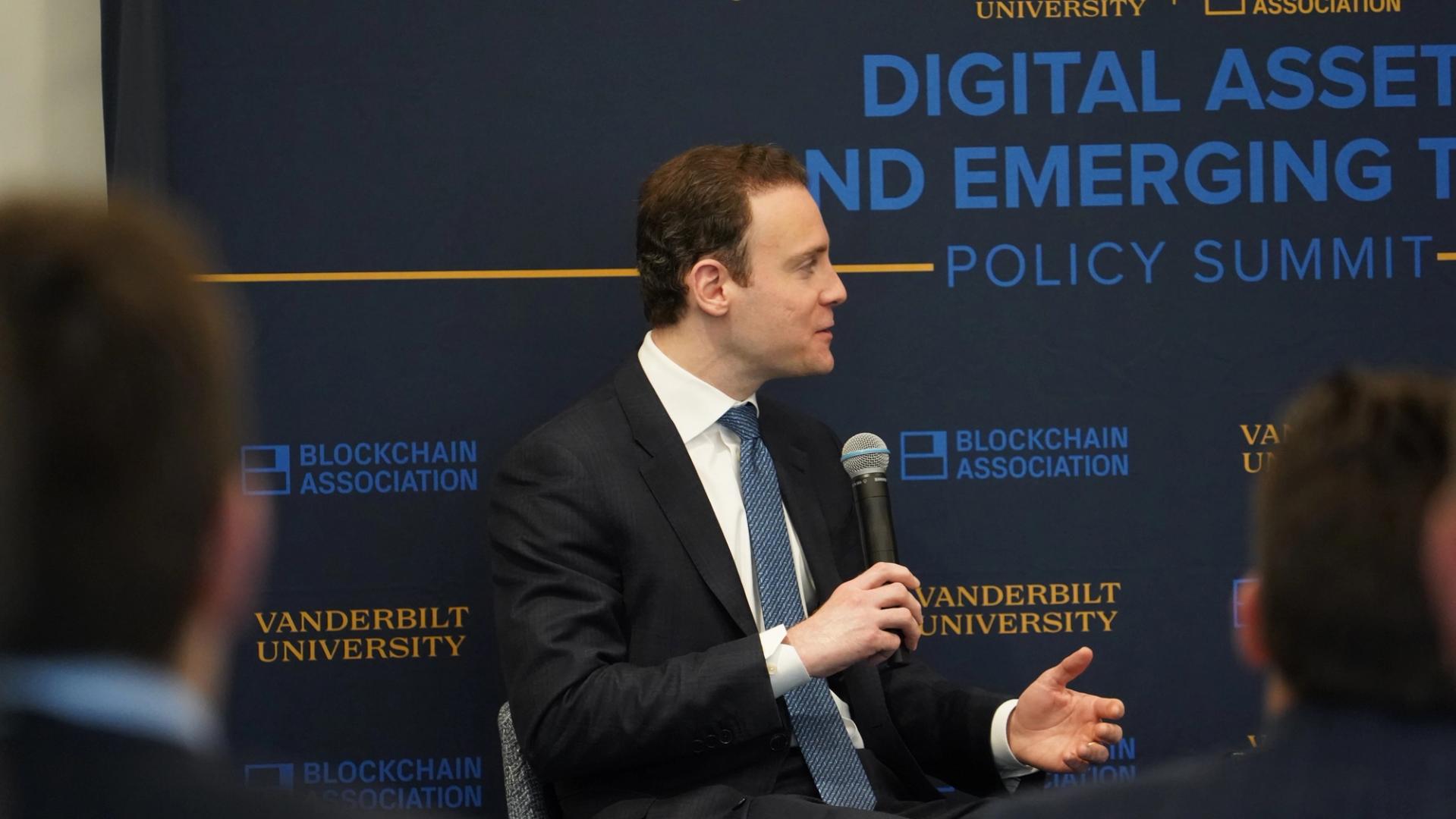
A federal judge has blocked the state of Arizona from bringing criminal charges against prediction market provider Kalshi, at least temporarily, in response to a motion from the Commodity Futures Trading Commission.
District Judge Michael Liburdi, in the District of Arizona, ruled Friday that Arizona cannot hold an arraignment of Kalshi as scheduled on Monday, April 13. Arizona announced last month it would file 20 criminal charges against Kalshi for offering what the state claimed were betting products in violation of Arizona law.
“Defendants are temporarily restrained and enjoined from enforcing AZ’s gambling laws in any criminal or civil enforcement actions to any contracts listed on CFTC-regulated [designated contract markets],” the judge ruled in the temporary restraining order, according to Paradigm senior regulatory counsel Stefan Schropp.
In a statement Friday, CFTC Chair Michael Selig said the regulator “appreciated” the judge’s decision.
“Arizona’s decision to weaponize state criminal law against companies that comply with federal law sets a dangerous precedent, and the court’s order today sends a clear message that intimidation is not an acceptable tactic to circumvent federal law,” he said.
The CFTC sued Arizona and two other states arguing that prediction markets, otherwise known as event contracts, are swaps subject to the federal agency’s supervision, and that its role preempts state law.
It’s a view that’s seen largely mixed results in court; state courts have often sided with states, such as when a Nevada state court ruled that the Gaming Control Board could temporarily block Kalshi while a broader case moves forward.
Federal courts have had different results; the Third Circuit Court of Appeals ruled earlier this week that prediction markets are subject to CFTC rule, and it was up to the CFTC’s discretion on if it wanted to block providers from offering sports-related products or not.
The Ninth Circuit Court of Appeals declined to weigh in on the aforementioned Nevada action, allowing that state court to block Kalshi, but it will hold a hearing on a consolidated case next week allowing various providers and other parties to argue.
Judge Liburdi of Arizona granted the CFTC’s motion to block the Arizona state action against Kalshi two days after denying Kalshi’s own motion for a preliminary injunction against the state.
MetaMask now supports the ERC-7715 standard, allowing agents and dApps to request execution permissions on OP Mainnet.
Optimism announced that agents and decentralized applications can now request wallet execution permissions on OP Mainnet, with MetaMask enabling builders to request these permissions using the ERC-7715 standard. The update unlocks new permission models for dApps and agents operating on the Optimism network.
ERC-7715 is a token standard for permission-based execution, allowing for more granular control over what actions dApps and agents can perform with user wallets. The integration with MetaMask expands the capability of applications built on Optimism to implement sophisticated permission frameworks beyond basic transaction approval.
Sources: Optimism
This article was generated automatically by The Defiant’s AI news system from publicly available sources.

The Bitcoin (BTC) community is discussing the feasibility and implications of the Iranian government accepting BTC for tolls paid by oil tankers crossing the Strait of Hormuz, a critical shipping lane through which about 20% of the global oil supply passes.
The reactions were sparked by a Financial Times report, published on Wednesday, which said that the Iranian government was considering BTC payments for oil tolls to avoid sanctions imposed by the United States.
Several conflicting reports have been published since the Financial Times article, which suggest that the tolls are payable in stablecoins or Chinese yuan, according to Alex Thorn, the head of firmwide research at crypto investment firm Galaxy.

BTC advocate Justin Bechler said that stablecoins can be frozen by the issuer and cited the compliance controls introduced in the GENIUS stablecoin regulatory framework as reasons why the Iranian government would not collect tolls in US-dollar stablecoins. He said:
“USDT and USDC include built-in blacklist functions at the smart contract level. When an address is flagged, the issuer can freeze the tokens, rendering them completely illiquid. The law’s enforcement depends entirely on the compliance of issuers.
Bitcoin has no issuer, no compliance officer to pressure, and no freeze function. Iran’s pivot toward Bitcoin follows directly from this structural reality,” he added.
If the Iranian government begins accepting BTC for oil tanker payments, it would boost Bitcoin’s credibility as a neutral settlement layer for international transactions, advocates say.

Related: Crypto Biz: Will Bitcoin secure safe passage through the Hormuz Strait?
Iran would likely use QR codes to collect BTC payments
Thorn estimated that each oil tanker would need to pay between $200,000 and $2 million in tolls to pass through the Strait of Hormuz.
The initial reporting from the Financial Times cited a spokesperson for Iran’s Oil, Gas and Petrochemical Products Exporters’ Union, who said that ships would have a “few seconds” to complete payment in BTC.
This suggests that ships would pay via the Lightning Network, a layer-2 payment solution for BTC that allows parties to send transactions in seconds, rather than waiting for the 10-minute block confirmation.
However, the largest known transaction over the Lightning network to date has been for $1 million, Thorn said.
“More likely, the Iranian authorities would provide a QR code or alphanumeric Bitcoin address to the ships upon approval of their requests to pass through the Strait,” he added.
Magazine: Bitcoin may take 7 years to upgrade to post-quantum: BIP-360 co-author

The debate over how Iran might collect tolls from oil tankers crossing the Strait of Hormuz has intensified within the Bitcoin community. The chokepoint through which roughly 20% of global oil supply passes is now being discussed as a potential testing ground for Bitcoin as a cross-border settlement tool, following a Financial Times report that Iran was exploring BTC payments for tolls to dodge sanctions.
Since the FT piece, competing accounts have circulated about what form tolls could take. One line of speculation centers on BTC payments, while other reports point to stablecoins or even Chinese yuan as plausible settlement options. Analysts and advocates alike have stressed the issue is far from settled, but the core question remains: could Iran rely on Bitcoin to bypass traditional financial channels in a manner that would be visible at the corridor’s narrow, high-pressure lanes?
“If this development were to materialize, it would spotlight Bitcoin’s role as a neutral settlement layer for international trade,” according to proponents. Yet the discussion isn’t purely theoretical. The same debate touches on technical feasibility, sanctions risk, and the practical realities of on-chain settlement at oceanic scale.
The Financial Times report cited a spokesperson from Iran’s Oil, Gas and Petrochemical Products Exporters’ Union, who described toll payments as needing to be completed in seconds. That framing has led observers to consider the Lightning Network, a layer-2 solution built on Bitcoin designed for rapid, off-chain transactions, as a potential mechanism for toll settlement. The FT coverage suggested that ships could pay via a quick QR code scan or a Bitcoin address provided after ship clearance. If such a system were deployed, payments would be processed with minimal delay, sidestepping the slower on-chain confirmation times that typically accompany BTC transactions.
Nevertheless, the most widely discussed numbers in this narrative come from analysts who cautioned that any toll scheme would need to handle substantial value per voyage. Alex Thorn, head of firmwide research at Galaxy, floated the possibility of tolls ranging from several hundred thousand dollars to a few million dollars per tanker, depending on the vessel’s size and the crossing’s risk profile. Thorn also noted that, in practice, the largest publicly known Lightning Network transaction is around $1 million, underscoring the operational questions that would need to be resolved for high-volume, time-critical payments at sea. He emphasized that if Iran advances a toll collection framework, it would likely rely on a BTC payment point that ships can access upon approval to pass through Hormuz.
Key takeaways
- Iran’s potential acceptance of BTC for Hormuz tolls would mark a high-profile test of Bitcoin as a cross-border settlement layer amid sanctions pressures.
- Conflicting reporting suggests tolls could be payable in BTC as originally reported, or alternatively settled in stablecoins or yuan, highlighting uncertainty about the exact mechanism.
- Technical feasibility hinges on rapid settlement; while the Lightning Network enables near-instant transfers, the scale of toll payments per voyage could challenge current capacity, given historical LN transaction sizes.
- Advocates point to Bitcoin’s lack of a central issuer or blacklist, contrasting with regulated stablecoins that can be frozen, a factor some see as relevant to Iran’s strategic aim.
- If real, the development would have implications for the perception of Bitcoin as a neutral, global settlement layer and could influence regulatory discourse around cross-border crypto usage.
How the toll concept could unfold in practice
The Financial Times described a scenario in which Iranian authorities would require an extremely quick BTC payment as a ship enters Hormuz. In practical terms, this could involve generating a QR code or a Bitcoin address that the ship’s crew or their payment system would interact with upon receiving clearance. If adopted, this approach would lean on layer-2 solutions like the Lightning Network to keep settlement times short enough to match the navigational and regulatory checkpoints faced by vessels transiting the strait.
However, observers caution that the logistics are nontrivial. The strait’s traffic is heavy, and oil toll calculations can be complex, potentially varying with vessel type, cargo, and passage window. While the Lightning Network offers rapid settlement, its capacity and liquidity at scale for frequent, large-value payments remain an area for close monitoring. As Thorn noted, the largest documented Lightning transaction to date sits around the $1 million mark, which calls into question how a toll scheme would scale for multiple simultaneous crossings or exceptionally large tankers. The alternative—the use of QR codes or alphanumeric addresses—would still require robust onshore or on-chain settlement checkpoints to ensure compliance, routing, and reconciliation with oil-trade records.
Implications for Bitcoin, sanctions policy, and the broader market
Supporters argue that a successful BTC toll system at Hormuz would underscore Bitcoin’s potential as a decentralized, censorship-resistant settlement layer capable of operating in highly sanctioned environments. This line of thinking aligns with broader commentary about Bitcoin as an alternative settlement primitive for international trade, a view that has been echoed in various industry circles. Still, critics point to practical friction, including liquidity management on the Lightning Network, counterparty risk in a sanctioned domain, and the challenge of auditing cross-border flows when on-chain data may be partitioned or obfuscated by policy constraints and compliance regimes.
More broadly, the discussion touches on the evolving regulatory and technical landscape. Some analysts argue that, even if toll payments were settled in BTC, policymakers could still apply controls at different points in the transaction chain, including the gateways and exchanges used to bridge between crypto and fiat. Others highlight recent developments in stablecoin regulation as a reason why a BTC-centered toll arrangement would stand out as a unique case study in crypto-enabled sanctions evasion. As one commentator paraphrased, unlike stablecoins with built-in compliance layers, Bitcoin’s native architecture lacks a centralized issuer that can freeze or sanction tokens, a factor that some see as increasing Iran’s incentive to consider BTC payments in high-risk corridors.
Within the crypto industry, the discussion reflects a longer-running debate about Bitcoin’s credibility as a settlement medium for large-scale, real-world value transfers. Some proponents link this potential use case to arguments that Bitcoin could serve as a neutral, global settlement layer for complex financial transactions. Others urge caution, noting that even if such a toll system emerges, it would operate within a tightly controlled, geopolitically sensitive context that could limit its scalability and adoption outside the immediate environment.
What to watch next
Readers should monitor additional reporting from established outlets for confirmation about whether Iran will proceed with BTC tolls, stablecoins, or yuan settlements. The coming weeks could reveal more concrete details about the mechanics, governance, and interoperability of any toll-collection framework. If actual pilot payments materialize, investors and builders will want to assess the implications for Bitcoin’s transactional use in real-world, sanctioned corridors, as well as the potential regulatory responses that such a development might provoke.
In the meantime, developments at Hormuz will continue to test how crypto-native settlement concepts interface with one of the world’s most consequential energy chokepoints, offering a glimpse into how policymakers, banks, and blockchain networks might navigate the next era of cross-border trade.
Source notes: The Financial Times reported on Iran’s consideration of BTC payments for Hormuz tolls this week, with subsequent commentary from Galaxy’s Alex Thorn outlining alternative possibilities and scale considerations. See the FT coverage for details, and additional commentary linked to industry discussions on Bitcoin’s use as a settlement layer.


Congress is calling for a Polymarket investigation after at least 50 newly created accounts placed bets on a US-Iran ceasefire in the minutes before President Trump announced it on social media on April 9.
Summary
- At least 50 brand-new Polymarket accounts placed winning ceasefire bets minutes before Trump’s announcement.
- Representative Ritchie Torres sent a letter to the CFTC demanding a formal review of the platform.
- Senator Richard Blumenthal called Polymarket “an illicit market” for exploiting national security secrets.
The prediction market platform Polymarket is at the center of a congressional firestorm after the US-Iran ceasefire announcement. At least 50 newly created accounts placed bets on the outcome in the hours and minutes before President Trump posted about the deal, and most made no other bets before or since.
According to NPR, at least 50 new accounts placed substantial bets on a US-Iran ceasefire in the hours and minutes before President Trump posted the deal on social media. The accounts had no prior betting history and made no other trades, raising immediate suspicion of insider activity.
Rep. Ritchie Torres sent a letter to the CFTC demanding a formal investigation. Sen. Richard Blumenthal went further, calling Polymarket “an illicit market to sell and exploit national security secrets unlike any in history.”
A Pattern Polymarket Cannot Escape
This is not the first time suspicious betting has preceded a major geopolitical event. As crypto.news reported, six Polymarket accounts were previously accused of using insider information to profit from the timing of earlier US strikes on Iran, earning roughly $1 million and triggering the so-called DEATH BETS Act from Senator Adam Schiff.
Analytics firm Bubblemaps had flagged newly created wallets placing timely bets just hours before those strikes commenced. The pattern has now repeated with greater speed: the latest bets were placed in the minutes before the announcement, not just hours.
Regulatory and Legal Exposure
The CFTC issued an advance notice of proposed rulemaking on prediction markets in March 2026, with the comment window set to close on April 30. More than 10 anti-prediction market bills have been introduced in Congress since January.
As crypto.news noted, six Democratic senators previously urged the CFTC to ban contracts that resolve on or correlate to an individual’s death. Polymarket, which operates outside US jurisdiction and requires only a crypto wallet to trade, has not commented on the latest congressional demands.


Bitcoin $73,000 has proven an impassable ceiling for the third time since the ceasefire, dragging ETH, SOL, and DOGE lower as analysts say the market needs a clean break above $75,000 before any sustained upside is possible.
Summary
- Bitcoin has failed to break $73,000 for the third time since the US-Iran ceasefire was announced.
- ETH, SOL, and DOGE have slid on the day as BTC stalls at a level that has capped every rally since the war began.
- Analysts say $75,000 must break before the market enters a genuine bullish phase.
Ethereum, Solana, and Dogecoin are sliding on April 10 as Bitcoin fails again to break above $73,000. The level has acted as a ceiling for every relief rally over the six weeks of the Iran conflict, and the third rejection in as many days has renewed pressure on the broader altcoin market.
Bitcoin reached an intraday high of $73,111 on April 10 before pulling back, according to crypto.news market data. The repeated failure at this level has weighed on altcoin momentum, with ETH, SOL, and DOGE each recording losses on the day as Bitcoin’s hesitation discourages broad risk-on positioning.
The level has “capped every rally during the six-week war,” according to CoinDesk’s April 10 market daybook, with analysts saying $75,000 must break before the market enters a genuine bullish phase. Even the brief relief from softer core CPI data this morning was not enough to push Bitcoin through.
Altcoins Bear the Brunt
Ethereum, Solana, and Dogecoin each declined on the day, tracking Bitcoin’s inability to convert the $73,000 test into a breakout. The altcoin market is structurally leveraged to Bitcoin’s directional moves; when BTC fails resistance, altcoins tend to sell off faster and recover slower.
The three consecutive rejections at $73,000 have reinforced the view that the ceasefire alone was not enough to end the war’s grip on market sentiment. Traders are still pricing persistent geopolitical risk from an only partially open Strait of Hormuz and a fragile, untested peace process.
What Could Break the Resistance
A full diplomatic resolution from the Islamabad talks this weekend, including an unconstrained reopening of the Strait of Hormuz, would remove one of the market’s largest macro headwinds. As crypto.news noted, oil falling sustainably below $100 would likely shift macro sentiment in favor of risk assets, potentially providing the catalyst needed to break above $73,000 and trigger the next leg of altcoin recovery.


XRP is holding at $1.34 as traders await Senate action on the XRP CLARITY Act, with Congress returning from Easter recess on April 13 and a Banking Committee markup expected in the second half of the month.
Summary
- XRP is trading in a tight $1.34 to $1.35 range with modest 0.8% to 1.0% gains over 24 hours.
- The Senate Banking Committee markup of the CLARITY Act is targeted for the second half of April.
- Analysts say passage could unlock $4 to $8 billion in additional XRP ETF inflows, per Standard Chartered.
XRP has been in a holding pattern on April 10, trading between $1.34 and $1.35 as institutional investors wait for the US Senate to act on legislation that could permanently define XRP’s regulatory status. The next window opens April 13.
According to FX Leaders, XRP held between $1.33 and $1.35 on April 10, posting modest gains of 0.8% to 1.0% over the prior 24 hours. The range trade reflects a market waiting for a binary legislative outcome rather than responding to technicals.
The Senate returns from Easter recess on April 13, with the Banking Committee markup of the CLARITY Act targeted for the second half of the month. As crypto.news reported, Polymarket currently gives the bill roughly a 63% to 66% probability of becoming law in 2026. Senator Bernie Moreno has warned publicly that missing the May window risks pushing the legislation off the calendar for the rest of the year.
What the CLARITY Act Means for XRP
The CLARITY Act would formally define XRP as a digital commodity under US law, giving banks and large asset managers the legal certainty they need to commit capital at scale. Standard Chartered analyst Geoffrey Kendrick has projected that Senate Banking Committee advancement could unlock $4 to $8 billion in additional XRP ETF inflows.
Seven US spot XRP ETFs already pulled in $1.44 billion since launching between September and December 2025, without the CLARITY Act as law. With formal legislation in place, analysts say institutional capital currently sitting on the sidelines would have permanent legal cover to enter at scale.
The Clock Is Narrowing Fast
Ripple CEO Brad Garlinghouse has already pushed his expected passage timeline from the end of April to the end of May. As crypto.news noted, TD Cowen and multiple legal analysts have warned the bill could slip off the congressional calendar entirely if it does not clear the Senate before summer, with midterm election dynamics making a post-August push nearly impossible.
Treasury Secretary Scott Bessent has publicly urged Congress to act, writing in a Wall Street Journal op-ed that “Senate floor time is scarce, and now is the time to act.” For XRP traders, the $1.34 floor may hold until the Senate shows its hand.

TLDR
- Hong Kong Monetary Authority issued its first stablecoin licences to Anchorpoint and HSBC Hong Kong.
- Anchorpoint plans to launch HKDAP, a Hong Kong dollar-backed stablecoin, in a phased rollout.
- The Stablecoins Ordinance requires HK$25 million capital and strict compliance standards.
- Authorities enforce penalties up to HK$5 million and seven years imprisonment for violations.
- Global stablecoin market exceeds $311 billion, dominated by US dollar-based tokens.
Hong Kong regulators have issued the first stablecoin licences under a new legal framework. Authorities approved Anchorpoint and HSBC Hong Kong as initial issuers. The move establishes a regulated path for Hong Kong dollar-backed digital tokens.
Standard Chartered, HSBC Secure Early Stablecoin Approval
The Hong Kong Monetary Authority granted licences to Anchorpoint and HSBC Hong Kong under its stablecoin rules. Anchorpoint operates as a joint venture involving Standard Chartered, Animoca Brands, and HKT. The approval allows both entities to issue regulated stablecoins within Hong Kong’s financial system.
Anchorpoint confirmed plans to introduce HKDAP, a Hong Kong dollar-backed stablecoin, in phases during the second quarter. The company will use a structured rollout strategy targeting institutional and commercial use cases. It aims to support digital payments and tokenized financial transactions within regulated channels.
Bill Winters, Group Chief Executive of Standard Chartered, emphasized the bank’s commitment to financial innovation.
He said, “The issuance of HKDAP provides a regulated medium of exchange for modern financial markets.” He added that the initiative supports evolving global trade systems and digital finance adoption.
Anchorpoint Chief Executive Dominic Maffei highlighted the firm’s operational focus and ecosystem goals. He said the company will provide “secure, accessible, and regulated tokenized money” for users. He stated that this approach will reshape financial transactions and infrastructure across institutions and individuals.
The firm plans to deploy a B2B2C distribution model to expand adoption across different market segments. Selected distributors will connect the platform to end users and business clients. The strategy also supports partnerships with financial and technology service providers.
HKMA Framework Defines Capital and Compliance Standards
Hong Kong introduced its Stablecoins Ordinance in August 2025 to regulate digital asset issuance. The law established a licensing system and defined operational standards for issuers. Regulators designed the framework to ensure oversight and financial stability.
The ordinance requires issuers to maintain at least HK$25 million in paid-up capital. It also mandates HK$3 million in liquid assets for operational resilience. These thresholds aim to ensure financial strength among licensed participants.
Authorities set strict penalties for unauthorized stablecoin issuance under the new rules. Violators face fines of up to HK$5 million and possible prison sentences of seven years. Enforcement measures aim to maintain compliance and deter unlicensed activity.
The Hong Kong Monetary Authority also released guidelines on supervision and risk management practices. These rules include anti-money laundering and counter-terrorism financing requirements. Issuers must follow strict reporting and operational controls under regulatory supervision.
Data from CoinGecko shows the global stablecoin market exceeds $311 billion in total value. Most transaction volumes remain concentrated in US dollar-based tokens like USDT and USDC. Hong Kong aims to expand regulated alternatives tied to its local currency.
Officials continue to develop the licensing system to support controlled innovation in digital finance. The framework focuses on practical use cases like cross-border settlement and tokenized banking services. Authorities maintain oversight while enabling stablecoin adoption in regulated financial environments.

Crypto World
TAO Tanks 20% as Major Subnet Developer Accuses Bittensor Founder of ‘Decentralization Theatre’
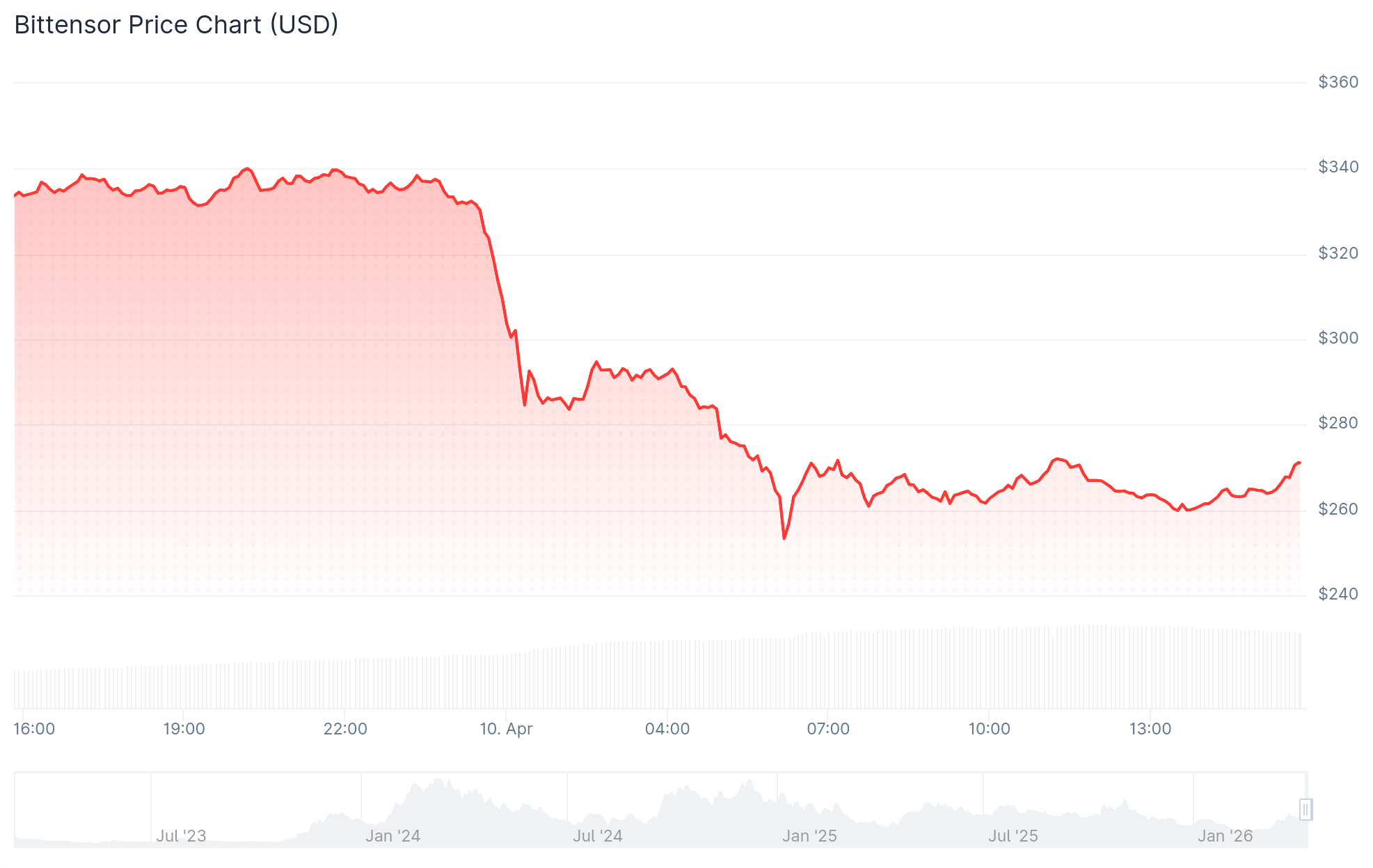
The founder of Covenant AI announced the project’s departure from Bittensor last night, kicking off public accusations from both sides, and sending the subnet ecosystem down 26%.
Bittensor’s TAO token is the worst performer among the top-100 large-caps today, April 10, after a major subnet operator announced their departure from the ecosystem.
Yesterday evening ET, TAO plunged from around $338 to a low near $253 — a drop of roughly 25% — erasing close to $900 million in market cap, per CoinGecko data. The asset is currently down 20% over the past 24 hours, trading near $270 at press time.

The sell-off was triggered by an extended X post from Sam Dare, founder of Covenant AI, announcing the project’s departure from Bittensor, a decentralized artificial intelligence (AI) protocol.
In his statement, posted on X yesterday evening ET, Dare accused Bittensor founder Jacob Steeves (known online as “Const”) of exercising unilateral control over a network that presents itself as decentralized, alleging Steeves suspended emissions to Covenant’s subnets, stripped their moderation capabilities, deprecated their infrastructure, and applied economic pressure through large, visible token sales timed to moments of operational conflict.
“The entire premise of Bittensor… is that no single entity controls it,” Dare wrote. “That promise is a lie.”
Covenant AI operated subnets SN3, SN81, and SN39 — specialized sub-networks dedicated to specific AI tasks — and was the team behind Covenant-72B: the model whose reveal catalyzed a 90% TAO rally after Nvidia CEO Jensen Huang and investor Chamath Palihapitiya endorsed Bittensor’s decentralized AI training model on the All-In Podcast, as The Defiant reported previously.
Steeves pushed back in an X response on April 10, disputing each claim. He acknowledged selling some of his alpha holdings across Covenant’s three subnets, but said it was because they “were not running, and were on near 100% burn code” — and that the sales amounted to less than 1% of his total investment in the project.
He also denied having any ability to unilaterally suspend emissions, said Dare deprecated his own channels, and noted that visibility in token sales is “impossible to avoid” given his position.
Not everyone in the community is sympathetic to Dare’s account. Prominent Bittensor community member @DreadBong0 alleged that Dare dumped 37,000 TAO worth of subnet alpha tokens across the Grail, Basilica, and Templar subnets on the way out — a move that “completely destroyed the investments of everyone who followed and trusted these guys.”
DreadBong0’s X post called the alleged move a “rug for max extraction,” adding: “Maybe that’s wrong but that’s exactly how it looks to me.” The dump allegation has not been independently verified, and Dare has not publicly addressed it.
Subnet Ecosystem Suffers
The Bittensor subnets sector more broadly is down nearly 26% on the day per CoinGecko, with τemplar (SN3) — which had surged around 400% over the prior month to an over $150 million market cap — now down almost 63% in the past 24 hours.
Nearly $10 million in TAO long positions were liquidated in the past 24 hours, per CoinGlass data.
The Defiant had covered the TAO rally last month, noting the surge in Bittensor subnet tokens and the outsized role Covenant AI’s model played in driving enthusiasm.
The network has also attracted a wave of institutional interest, with publicly traded companies building TAO treasuries and, more recently, the potential conversion of the Grayscale TAO Trust into a spot ETF on the horizon.
This article was written with the assistance of AI workflows. All our stories are curated, edited and fact-checked by a human.

Vikings’ Draft History—the Good, Bad and What’s to Come

Owner of award-winning Italian restaurant shares ‘secret’ to success

Fluence Energy Stock Jumps 7% as Battery Storage Leader Rides AI Data Center Boom


-

 Business5 days ago
Three Gulf funds agree to back Paramount’s $81 billion takeover of Warner, WSJ reports
-

 Sports6 days ago
India men’s 4x400m and mixed 4x100m relay teams register big progress | Other Sports News
-

 Politics5 hours ago
US brings back mandatory military draft registration
-

 Business7 days ago
Expert Picks for Every Need
-

 Fashion6 hours ago
Weekend Open Thread: Veronica Beard
-

 Tech3 days ago
How Long Can You Drive With Expired Registration? What Florida Law Says
-

 Business6 days ago
No Jackpot Winner, Prize to Climb to $231 Million
-

 Fashion5 days ago
Massimo Dutti Offers Inspiration for Your Summer Mood Board
-
 Sports6 hours ago
Man United discover Nico Schlotterbeck transfer fee as defender reaches Dortmund agreement
-

 Fashion3 days ago
Let’s Discuss: DEI in 2026
-

 Crypto World2 days ago
Bitcoin recovers as US and Iran Agree a Ceasefire Deal
-

 Business6 days ago
Akebia Therapeutics, Inc. (AKBA) Discusses Pipeline Progress and Strategic Focus on Kidney Disease Treatments at R&D Day – Slideshow
-

 Business3 hours ago
Tesla Model Y Tops China Auto Sales in March 2026 With 39,827 Registrations, Beating Cheaper EVs and Gas Cars
-

 Crypto World1 day ago
Canary Capital Files SEC Registration for PEPE ETF
-

 Politics7 days ago
The UK should not pay a penny in slavery reparations
-

 Business12 hours ago
OpenAI Halts Stargate UK Data Centre Project Over Energy Costs and Copyright Row
-

 Tech5 days ago
Samsung just gave up on its own Messages app
-

 Tech5 days ago
Haier is betting big that your next TV purchase will be one of these
-

 Tech5 days ago
The Xiaomi 17 Ultra has some impressive add-ons that make snapping photos really fun
-

 Tech5 days ago
Gamer Restores the Original PlayStation Portal From Two Decades Ago
You must be logged in to post a comment Login