
Business
10 Compelling Reasons to Visit Yosemite National Park in 2026: No Reservations Needed

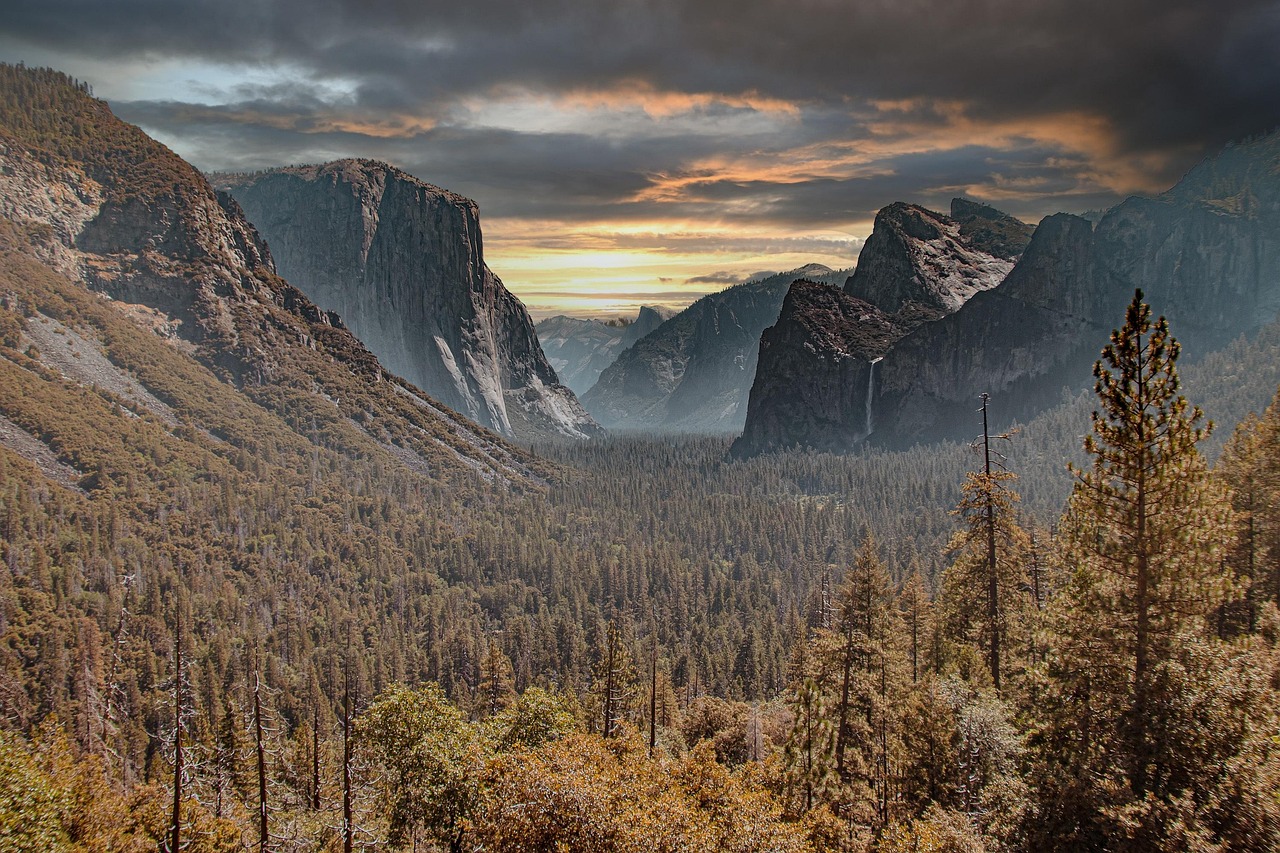
YOSEMITE NATIONAL PARK, Calif. — Yosemite National Park, one of America’s most iconic natural treasures, offers visitors in 2026 an unprecedented level of flexibility with no vehicle entry reservations required for the entire year, including peak summer months and the popular Horsetail Fall “Firefall” event.
The National Park Service announced in February that Yosemite will forgo timed-entry systems used in recent years, relying instead on real-time traffic management, additional seasonal staffing and temporary diversions when parking reaches capacity. This change, following evaluation of 2025 visitation patterns, makes 2026 an ideal time to plan a trip to the park’s granite cliffs, thundering waterfalls and ancient sequoia groves without the stress of securing advance permits.

With roughly 4 million visitors annually in recent years, Yosemite remains a bucket-list destination. Here are 10 compelling reasons to experience it in 2026, when access feels more spontaneous yet the park’s timeless wonders shine as brightly as ever.
1. Easier Access Without Reservation Hassles
For the first time in several years, drivers can enter Yosemite without booking a timed vehicle reservation, even during busy summer weekends or the February-March Firefall window. Park officials will monitor traffic and implement short-term management measures as needed, such as temporary diversions.
Visitors can purchase entrance passes online in advance through Recreation.gov for smoother arrival or buy them at the five entrance stations. This shift broadens access while the park strengthens staffing to handle crowds responsibly. Weekday visits and exploration of less-visited areas like Hetch Hetchy or the high country remain smart strategies for avoiding peak congestion.
2. Spectacular Spring and Early Summer Waterfalls at Peak Flow
Yosemite’s waterfalls roar with snowmelt, creating some of the most dramatic displays in the world. Yosemite Falls, North America’s tallest at 2,425 feet, thunders in multiple tiers, while Bridalveil Fall, Vernal Fall and Nevada Fall offer misty hikes and viewpoints.
In 2026, with roads like Glacier Point and parts of Tioga Pass opening progressively from May onward, visitors can time trips for April through June when flows often hit maximum. Early spring also brings fewer crowds than midsummer, letting hikers enjoy the mist without battling peak-season heat.
3. Iconic Granite Landmarks and World-Class Views
The park’s signature granite formations — Half Dome, El Capitan and Sentinel Rock — dominate the landscape. Sunrise at Tunnel View delivers postcard-perfect panoramas of the valley, while Glacier Point offers sweeping vistas of Half Dome and the high Sierra.
Climbers from around the globe tackle El Capitan’s sheer 3,000-foot face, providing free entertainment for spectators with binoculars. In 2026, with no entry barriers, spontaneous day trips to these landmarks become simpler, though parking management in Yosemite Valley will encourage early arrivals or shuttle use.
4. Ancient Giant Sequoias in Mariposa Grove
Walking among the Mariposa Grove’s roughly 500 mature giant sequoias feels humbling. The Grizzly Giant, estimated at more than 1,800 years old, stands as a living testament to the park’s deep time.
A free shuttle from the welcome plaza operates seasonally, and trail improvements funded by the Yosemite Conservancy continue to enhance access. The grove provides a serene contrast to the busy valley floor, ideal for families or those seeking contemplative moments amid towering trees.
5. World-Class Hiking for Every Ability
With more than 750 miles of trails, Yosemite caters to novices and experts alike. Easy valley loops, moderate Mist Trail climbs to Vernal Fall and strenuous Half Dome cables (permit required for the final section) offer options year-round.
In 2026, ongoing trail rehabilitation projects — including work near Cathedral Lakes and in the Merced River corridor — promise improved conditions. High-country areas like Tuolumne Meadows typically open by mid-June, revealing wildflower meadows and alpine lakes once snow recedes.
6. Opportunities to Witness the Rare “Firefall”
Horsetail Fall transforms into a glowing “Firefall” when sunset light hits the waterfall just right, usually in mid- to late February. In 2026, no special reservations are needed for the event, though parking restrictions and trail access rules will apply to manage crowds.
The phenomenon draws photographers and spectators, but officials remind visitors to practice Leave No Trace principles. Even outside Firefall season, sunset and sunrise light on the cliffs creates magical alpenglow moments.
7. Rich Biodiversity and Wildlife Viewing
Black bears, mule deer, bobcats and more than 400 bird species call Yosemite home. Spring and summer bring active wildlife, from birds nesting to bears foraging — though proper food storage remains essential.
The park’s varied ecosystems, from oak woodlands to subalpine forests, support diverse flora. Wildflower blooms in meadows and along trails add color, particularly after wet winters. Educational programs and ranger-led walks help visitors appreciate this ecological richness responsibly.
8. Stargazing and Dark Skies in a Pristine Setting
Far from urban light pollution, Yosemite offers excellent stargazing. The park’s high elevation and clear mountain air reveal the Milky Way in stunning detail on moonless nights.
Summer evenings in the valley or high country provide prime viewing. Rangers occasionally host astronomy programs, and the surrounding wilderness enhances the sense of isolation and wonder under vast skies.
9. Philanthropic Improvements Enhancing the Visitor Experience
The Yosemite Conservancy announced $19 million in 2026 funding for about 60 projects, including meadow restoration in the high country, trail rehabilitation spanning dozens of miles, and even an AI study on bear behavior to improve human-wildlife coexistence.
These efforts, alongside park initiatives, aim to protect resources while boosting access. Visitors in 2026 will benefit from better-maintained paths and interpretive enhancements without compromising the park’s wild character.
10. A Historic Landscape That Inspired the National Park Idea
Yosemite’s preservation story dates to 1864, when President Abraham Lincoln signed the Yosemite Grant, laying groundwork for the national park system. John Muir’s advocacy further cemented its legacy as a place of inspiration and conservation.
In 2026, amid ongoing discussions about balancing access and preservation, a visit connects travelers to this heritage. Whether camping, staying in historic lodges like The Ahwahnee or simply driving through, the park offers reflection on humanity’s relationship with nature.
Practical Tips for a 2026 Visit
Entrance fees remain required: $35 per vehicle for seven days or consider the America the Beautiful Pass. Nonresident fees may see adjustments, so check nps.gov for current rates. Lodging and camping inside the park book quickly, so reserve early through authorized channels.
Weather varies dramatically by elevation and season; pack layers and check conditions for road openings. Shuttle buses in Yosemite Valley reduce parking pressure, and apps or the park website provide real-time updates.
Wildfire risk persists in California’s dry summers, but the park maintains strong preparedness. Officials encourage flexibility, especially on weekends, and exploration beyond the valley floor to disperse crowds.
For many, 2026 represents a sweet spot: easier logistical planning combined with the park’s enduring majesty. Whether chasing waterfalls in spring, hiking high trails in summer or catching autumn colors, Yosemite delivers unforgettable experiences.
As one longtime ranger noted, “The mountains are calling — and in 2026, more people than ever can answer without extra hurdles.”


Datavault AI signs $750M in tokenization contracts in Q1
Gov. Ron DeSantis joins ‘Hang Out with Sean Hannity’ to discuss the massive migration to Florida and why blue states like New York and California are facing declining populations.
A new economic iron curtain is falling across America as the “Boom Belt” — an 11-state powerhouse in the U.S. Southeast — shatters records and challenges the traditional financial dominance of New York and Chicago.
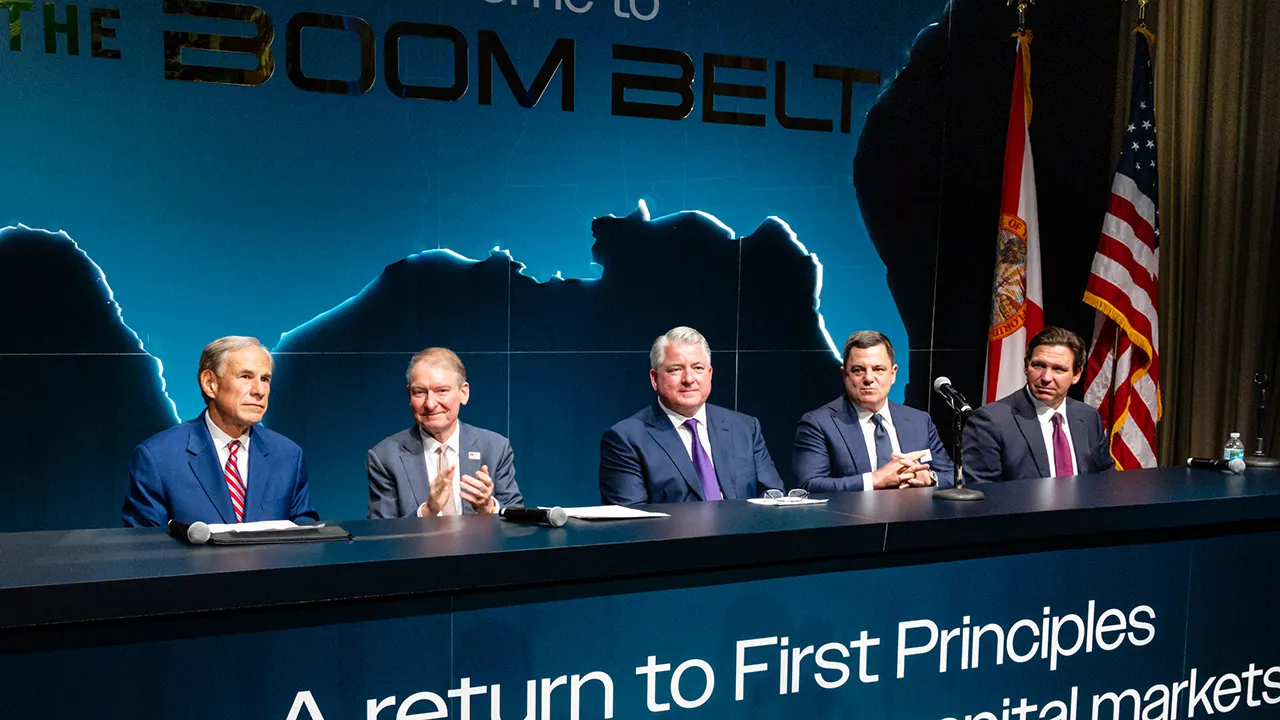
Florida Gov. Ron DeSantis and Texas Gov. Greg Abbott joined forces in Miami on Tuesday to celebrate a $9 trillion gross domestic product (GDP) region that is now outpacing every other quadrant of the country in population, jobs and capital investment.
“I often tell people, as Governor of Florida, my job is to closely follow California, Illinois, New York, so I can do precisely the opposite of what they do,” DeSantis said during the panel held at the Pérez Art Museum. “Florida’s had more adjusted gross income move into our state since I’ve been governor than has ever moved into any state in the history of the United States.”
“Visionary business leaders seek to where not the puck is right now, but to where it is going… while other regions where the puck has been in the past, they’re now burdened by high taxes, by restrictive regulations, by policies that are actually hostile to businesses,” Abbott added.
The governors spotlighted how Alabama, Arkansas, Florida, Georgia, Louisiana, Mississippi, North Carolina, Oklahoma, South Carolina, Tennessee and Texas now generate $9 trillion in annual GDP, trailing only the U.S. and China globally, while absorbing 70% of all U.S. population growth in the last five years.
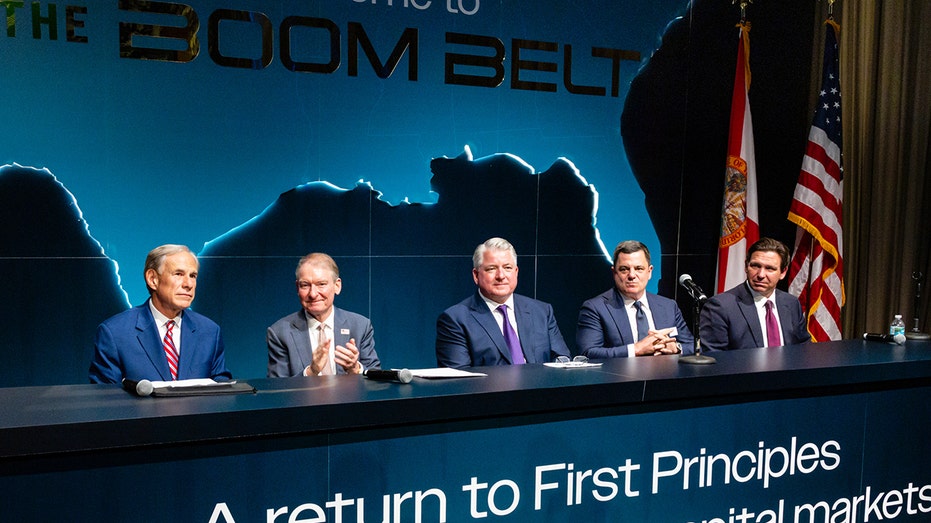
Greg Abbott, governor of Texas, from left, Paul Atkins, chairman of the U.S. Securities and Exchange Commission (SEC), Jim Lee, founder and chief executive officer of the Texas Stock Exchange, Jim Esposito, president of Citadel Securities, and Ron De (Getty Images)
The migration has been fueled by more than just sunshine; it is a tactical retreat from a wave of tax-the-rich proposals sweeping through blue-state legislatures including California, New York and now Washington.
“We’re in the 250th anniversary of the founding of the United States. The founding fathers, they wanted a system based on the consent of the government… They wanted to have a rule of law and they wanted some of this stuff, particularly private property, to not just be subjected to those types of whims,” DeSantis said.
“Hence, in Texas, even though we have never had a state income tax, we wanted to make sure that future generations would not be able to impose an income tax, so we made income taxes unconstitutional in the state of Texas,” Abbott said. “We made a wealth tax unconstitutional. We made a death tax unconstitutional, and as [Citadel’s] Jim Lee pointed out, we made a transactions tax unconstitutional.”
Texas REALTORS Chairman of the Board Jennifer Wauhob speaks to Fox News Digital about the Lone Star State’s recent wealth and population boom that’s ‘creating good things for Texas.’
“I know that there’s been a lot of very healthy competition between states like Florida, Tennessee, Texas, Georgia, some of these. And I think that’s really, really good,” DeSantis noted. “When Greg’s doing stuff, people say, ‘Look [at] what Texas just did.’”
SEC Chairman Paul Atkins and TXSE CEO Jim Lee warned that the U.S. has lost half of its public companies over the last 30 years because the federal government made it “complicated, expensive and legally treacherous” to go public.
“When capital, companies and people all move in the same direction, with that kind of consistency and at that kind scale, it behooves us to ask why. I believe that the answer, more often than not, is the region’s steady adherence to first principles, including those that rigorously protect investors without needlessly paralyzing companies,” Atkins said. “So for our part, the SEC is returning to those same principles by renewing the conditions that make our public markets the natural destination for companies to raise capital and for investors to share in their success.”
‘The Big Money Show’ examines blue state tax policies as the wealthy flock to low-tax states.
“As Chairman Atkins has remarked repeatedly, it used to be cool to be public, so what happened? The answer is we made it complicated, expensive and legally treacherous to be a public company. Remaining private became the only rational choice. This is not a coincidence. It is a consequence,” Lee emphasized.
GET FOX BUSINESS ON THE GO BY CLICKING HERE
As someone who helped lead the firm’s move from Chicago to Miami, Citadel Securities President Jim Esposito highlighted the practical, bottom-line reasons why the “Boom Belt” is winning the war for capital — framing the Southern governing style as an inspiration for the rest of America.
“Across Florida, Texas and other high-growth states, government officials have created environments where businesses can operate, invest. And importantly, grow with confidence,” he said. “This type of public and private partnership should be the model for the rest of our country.”

5 Markets Getting Pummelled Right Now

India’s aviation market is set to grow but is held back by limited long-haul capacity, says Willie Walsh.
The consumer council says the government is profiting from rising fuel costs via taxation.

Analysts fear long-lasting economic damage has already been set in motion.


The Crave Shoppe offers new snack options.

A new government fund launched on 1 April will provide financial support for households on heating oil.
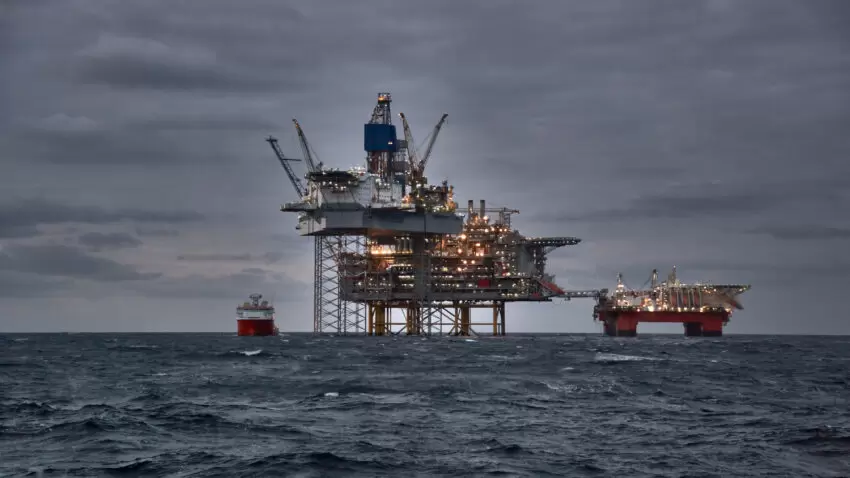
Britain’s standing as a global climate leader faces a critical test as senior figures in international diplomacy have warned that any move to open new oil and gas fields in the North Sea would deal a severe blow to worldwide efforts to cut greenhouse gas emissions.
The government is facing mounting pressure from the oil industry, the Conservative opposition, Reform UK, certain trade unions and factions within the Treasury to grant new drilling licences. This comes despite research showing that the two largest remaining fields, Rosebank and Jackdaw, would displace just 1% and 2% respectively of the UK’s gas imports, offering negligible benefit to either prices or energy security.
The North Sea basin is now more than 90% depleted, and extracting its remaining pockets of hydrocarbons is becoming progressively more costly and energy-intensive. Yet the political appetite for new licensing persists, placing Ed Miliband, the energy security and net zero secretary, in an increasingly uncomfortable position.
Nicolas Stern, professor at the London School of Economics, cautioned that fresh drilling would be damaging on multiple fronts, bad for growth, bad for energy security and a harmful signal to the international community. Lord Stern pointed to Britain’s track record as the first G7 nation to commit to net zero by 2050 and its influential climate legislation, arguing that the world pays close attention when the UK changes course.
The backlash from the developing world has been particularly fierce. A senior African negotiator, speaking anonymously, said the continent would reject any UK expansion of oil drilling, describing it as fundamentally at odds with the Paris agreement. Mohamed Adow, director of the Nairobi-based Power Shift Africa thinktank, warned that approval of new projects would signal that short-term interests were being placed above long-term responsibility, setting a precedent that could prove impossible to contain.
The timing is especially sensitive. Britain has been one of the principal supporters of a global conference on fossil fuel transition taking place in Colombia later this month. However, Miliband will not attend, with climate envoy Rachel Kyte going in his place, a decision likely to disappoint campaigners who credited the energy secretary with brokering a last-minute deal at the Cop30 summit in Brazil last November.
Christiana Figueres, former executive secretary of the UN framework convention on climate change, acknowledged the geopolitical pressures driving the energy security debate but argued that expanding drilling risked locking in infrastructure that was increasingly out of step with the direction of the global energy system. True energy independence, she suggested, lay in scaling up clean domestic energy rather than prolonging the life of declining industries.
The strategic concern for Britain’s business community is clear. Many developing nations are weighing whether to exploit their own fossil fuel reserves rather than invest in renewables. If they choose the former path, the world would far exceed the carbon limits scientists say are necessary to avert the worst consequences of climate breakdown. A senior development official put the matter bluntly: developing countries are already asking why they should forgo their own resources if the UK will not do the same.
An ally of Miliband defended the government’s position, describing the decision to halt new exploration licences as a landmark stance for a major oil and gas producing nation. A government spokesperson confirmed that clean energy and climate action remained at the heart of the agenda, including what it called a world-leading commitment to stop issuing licences for new fields.
Whether that commitment holds in the face of political and industrial pressure will be one of the defining questions of Britain’s energy policy in the months ahead.

Jamie Young
Jamie is Senior Reporter at Business Matters, bringing over a decade of experience in UK SME business reporting.
Jamie holds a degree in Business Administration and regularly participates in industry conferences and workshops.
When not reporting on the latest business developments, Jamie is passionate about mentoring up-and-coming journalists and entrepreneurs to inspire the next generation of business leaders.

Elon Musk’s SpaceX holds a commanding lead in the intensifying rivalry with Jeff Bezos’ Blue Origin, launching more rockets, deploying thousands of satellites and securing key NASA contracts, even as both billionaires pivot aggressively toward lunar ambitions in 2026 amid a broader U.S. push to beat China back to the Moon.

As of April 2026, SpaceX has flown hundreds of missions with its reusable Falcon 9 rockets, maintains a Starlink constellation exceeding 10,000 satellites and continues rapid testing of its massive Starship vehicle. Blue Origin, while making strides with its New Glenn rocket — including successful booster landings in late 2025 — remains years behind in flight rate and orbital infrastructure.
The contest, once focused on low-Earth orbit and reusable rocketry, has shifted to the Moon. Musk has redirected SpaceX resources toward “Moonbase Alpha,” including plans for a lunar launch device, while Bezos has refocused Blue Origin on its Blue Moon lander for NASA’s Artemis program.
“This rivalry is accelerating America’s return to the Moon,” said a NASA official involved in Artemis planning. “Competition between these two is healthy, even if one is clearly ahead right now.”
SpaceX’s Dominance in Launch and Satellites
SpaceX’s operational edge is undeniable. The company generated roughly $8 billion in profit in 2025 and has received more than $24 billion in U.S. government funding over time. Its Falcon 9 rocket achieved the first orbital-class booster landing a decade before Blue Origin’s New Glenn accomplished similar feats.
In 2026, SpaceX prepares to fly an upgraded Starship version 3 with enhanced payload capacity — up to 200 tons to low-Earth orbit in reusable mode. The vehicle’s full reusability and potential for orbital refueling remain critical for lunar missions, though testing has included fiery setbacks that Musk embraces as part of rapid iteration.
Starlink continues to expand, providing broadband to remote areas and generating significant revenue. Musk has dismissed Blue Origin’s new TeraWave satellite constellation — a planned 5,408-satellite network promising up to 6 terabits per second — by stating that SpaceX’s laser links will surpass those speeds.
Blue Origin announced TeraWave in January 2026 as a direct challenge, alongside Amazon’s Project Kuiper (now Leo) efforts. Yet analysts say SpaceX’s head start and scale make catching up difficult in the near term.
Blue Origin’s Methodical Approach Gains Traction
Bezos has poured more than $10 billion of his personal fortune into Blue Origin since its founding, calling it his most important work. The company’s New Glenn rocket, powered by BE-4 engines, achieved its first orbital flight and booster recovery in 2025. Plans call for 12 or more launches in 2026, with potential for up to 24.
New Glenn’s upgrades, including variants with greater thrust, position it as a heavy-lift competitor, though its payload capacity remains smaller than Starship’s. Blue Origin has shifted resources toward the Blue Moon lander, aiming for uncrewed lunar missions soon and crewed capabilities later.
In NASA’s Artemis program, SpaceX holds the primary human landing system contract worth billions for Starship-derived landers. Blue Origin secured a $3.4 billion award for a competing lander starting with later missions, such as Artemis V. NASA has adjusted timelines, adding test flights and reopening elements of competition due to Starship delays, giving Blue Origin a clearer path on some fronts.
Internal Blue Origin documents suggest a strategy to avoid Starship’s complex orbital refueling by pursuing a more straightforward architecture, prompting public jabs between the founders, including Bezos sharing turtle memes implying slow-and-steady wins.
Lunar Focus Intensifies Rivalry
Both companies now eye sustained lunar presence ahead of China’s targeted 2030 crewed landing. Musk envisions a self-growing lunar city with satellite-slinging capabilities. Bezos has long advocated industrial activity on the Moon, including potential factories.
NASA’s Artemis program relies on both: SpaceX for initial human landing systems and Blue Origin for cargo and follow-on landers. Recent changes to Artemis architecture include low-Earth orbit tests of commercial landers, potentially accelerating development for either or both firms.
The competition has spurred investor interest in the broader lunar economy, with startups in rovers, infrastructure and resource utilization reporting increased attention. One lunar company CEO noted 20 investor inquiries in a single week following heightened Musk-Bezos announcements.
Contrasting Styles, Shared Goals
Musk’s “move fast and break things” philosophy has delivered rapid progress — and occasional explosions during Starship tests — but also criticism over safety and regulatory pace. Bezos favors a more deliberate, engineering-heavy approach, which critics say has slowed Blue Origin but may yield more reliable systems long-term.
Both face pressure in 2026. SpaceX must demonstrate reliable Starship refueling and lunar-capable flights. Blue Origin needs to ramp New Glenn operations and prove its lander technology.
The rivalry extends beyond hardware. Musk’s xAI ties and planned SpaceX IPO (potentially valuing the company at over $1 trillion) contrast with Bezos stepping back from Amazon to focus more on Blue Origin. Public exchanges on social media add drama, yet both have expressed respect for the other’s contributions to humanity’s spacefaring future.
NASA leaders have praised private investment from Musk, Bezos and others, noting it advances capabilities benefiting all. “These billionaires are putting resources on the line for the good of humankind,” one official said.
Broader Implications for U.S. Space Leadership
The Musk-Bezos contest occurs against a national push to maintain superiority over China in cislunar space. Delays in government-led systems like the Space Launch System have elevated commercial partners.
Analysts say SpaceX currently “wins” on metrics of launches, revenue and deployed infrastructure. Blue Origin, however, could close gaps if New Glenn achieves high flight rates and its lunar lander matures faster than expected.
No clear victor exists yet in the long-term “space war.” Musk’s Mars ambitions persist in the background, while Bezos emphasizes gradual expansion from the Moon outward. The real beneficiaries may be NASA and the emerging space economy, driven by competition that lowers costs and accelerates innovation.
For now, SpaceX sets the pace while Blue Origin mounts a serious challenge. As both target the Moon in 2026 and beyond, their duel could determine not just who plants more footprints on lunar soil, but the speed and scale of humanity’s multi-planetary future.
Datavault AI signs $750M in tokenization contracts in Q1

Trump Announces 50% Tariff Penalty for Nations Arming Iran

Hulu’s Best Sci-Fi Series Officially Begins Production on Final Season With First Image

Why Israel is blocking foreign journalists from entering

Bitcoin: We’re Entering The Most Dangerous Phase

Alan Cumming Brands Baftas Ceremony A ‘Triggering S**tshow’

Joe Rogan on Ferrari Suing Philipp Plein! #money #finance #changeyourmindsetchangeyourlife

Monthly Subsidy of 70,000 Rupees Announced | Big Financial Relief| Hum News | Pakistan

New Financial Year 2026, Major Changes From April 1st | V6 News
-

 NewsBeat6 days ago
Steven Gerrard disagrees with Gary Neville over ‘shock’ Chelsea and Arsenal claim | Football
-

 Business6 days ago
No Jackpot Winner and $194 Million Prize Rolls Over
-

 Fashion5 days ago
Weekend Open Thread: Spanx – Corporette.com
-

 Crypto World7 days ago
Gold Price Prediction: Worst Month in 17 Years fo Save Haven Rock
-

 Business4 days ago
Expert Picks for Every Need
-

 Business3 days ago
Three Gulf funds agree to back Paramount’s $81 billion takeover of Warner, WSJ reports
-

 Sports4 days ago
India men’s 4x400m and mixed 4x100m relay teams register big progress | Other Sports News
-

 Business7 days ago
Login and Checkout Issues Spark Merchant Frustration
-

 Tech17 hours ago
How Long Can You Drive With Expired Registration? What Florida Law Says
-
Business3 days ago
No Jackpot Winner, Prize to Climb to $231 Million
-

 Tech6 days ago
Commonwealth Fusion Systems leans on magnets for near-term revenue
-

 Fashion2 days ago
Massimo Dutti Offers Inspiration for Your Summer Mood Board
-

 Crypto World7 days ago
Ripple rolls out enterprise crypto treasury platform for corporates
-

 Tech7 days ago
Drawing Tablet Controls Laser In Real-Time
-

 Fashion22 hours ago
Let’s Discuss: DEI in 2026
-
Politics5 days ago
Wings Over Scotland | The quality of mercy
-

 Crypto World7 days ago
Why It’s Partnering, Not Issuing
-
 Sports7 days ago
Steal Gary Woodland’s subtle power move for longer drives
-
Sports7 days ago
Tom Pelissero Drives the Final Nail in the Coffin
-

 Tech7 days ago
Battery Tester Outperforms Cheaper Options
You must be logged in to post a comment Login