Apple’s long-rumored foldable iPhone hasn’t been announced yet, but after years of speculation, it seems like this device could finally be coming out soon(ish). Multiple sources claim that Apple could be targeting a late-2026 launch for its first foldable phone, and new rumors suggest the company is even already thinking about its second model, which could be a clamshell-style foldable iPhone.
But of course, nothing is official yet. Plans can change, features can be dropped and timelines can slip. Still, recent reports paint the clearest picture yet of how Apple might approach a foldable iPhone and how it plans to differentiate itself from rivals like Samsung and Google.
Here, we’ve rounded up the most credible iPhone Fold rumors so far, covering its possible release timing, design, display technology, cameras and price. We’ll continue to update this post as more rumors and details become available.
When could the iPhone Fold launch?
Rumors of a foldable iPhone date back as far as 2017, but more recent reporting suggests Apple has finally locked onto a realistic window. Most sources now point to fall 2026, likely alongside the iPhone 18 lineup.
Some reports still claim the project could slip into 2027 if Apple runs into manufacturing or durability issues, particularly around the hinge or display. Given Apple’s history of delaying products that it feels aren’t ready, that remains a real possibility.
What will the iPhone Fold look like?
Current consensus suggests Apple has settled on a book-style foldable design, similar to Samsung’s Galaxy Z Fold series, rather than a clamshell flip phone.
When unfolded, the iPhone Fold is expected to resemble a small tablet like the iPad mini (8.3 inches). Based on the rumor mill, though, the iPhone Fold may be a touch smaller, with an internal display measuring around 7.7 to 7.8 inches. When closed, it should function like a conventional smartphone, with an outer display in the 5.5-inch range.
Advertisement
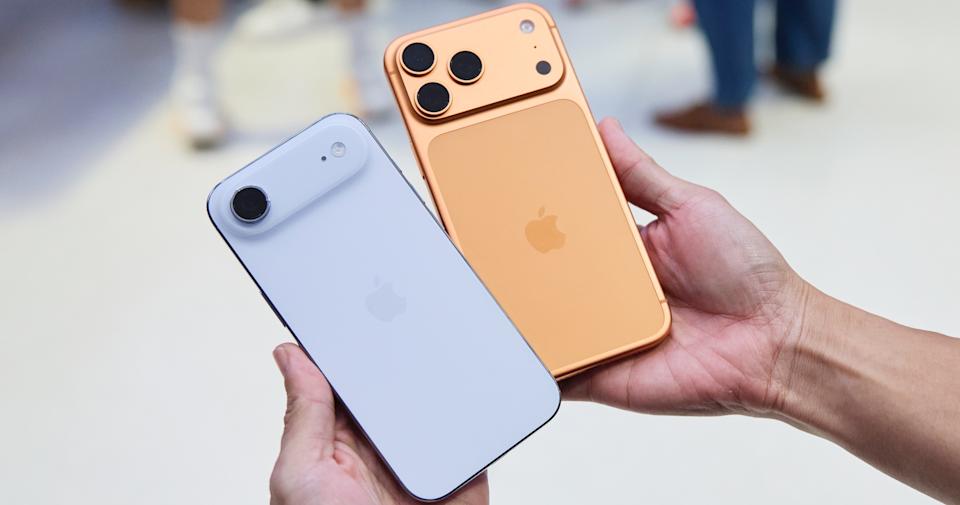
CAD leaks and alleged case-maker molds suggest the device may be shorter and wider than a standard iPhone when folded, creating a squarer footprint that better matches the aspect ratio of the inner display. Several reports have also pointed to the iPhone Air as a potential preview of Apple’s foldable design work, with its unusually thin chassis widely interpreted as a look at what one half of a future foldable iPhone could resemble.
If that theory holds, it could help explain the Fold’s rumored dimensions. Thickness is expected to land between roughly 4.5 and 5.6mm when unfolded, putting it in a similar range to the iPhone Air, and just over 9 to 11mm when folded, depending on the final hinge design and internal layering.
iPhone 17 Pro, iPhone Air (Engadget)
Display and the crease question
The display is arguably the biggest challenge for any foldable phone, and it’s an area where Apple appears to have invested years of development.
According to these reports, the panel combines a flexible OLED with a laser-drilled metal support plate that disperses stress when folding. The goal is a display with a nearly invisible crease, something Apple reportedly considers essential before entering the foldable market.
If Apple does use this panel, it would mark a notable improvement over current foldables, which still show visible creasing under certain lighting conditions.
Cameras and biometrics
Camera rumors suggest Apple is planning a four-camera setup. That may include:
Two rear cameras (main and ultra-wide, both rumored at 48MP)
One punch-hole camera on the outer display
One under-display camera on the inner screen
Several sources claim Apple will avoid Face ID entirely on the iPhone Fold. Instead, it’s expected to rely on Touch ID built into the power button, similar to recent iPad models. This would allow Apple to keep both displays free of notches or Dynamic Island cutouts.
Advertisement
Under-display camera technology has historically produced lower image quality, but a rumored 24MP sensor would be a significant step up compared to existing foldables, which typically use much lower-resolution sensors.
iPhone Fold’s hinge and materials
The hinge is another area where Apple may diverge from competitors. Multiple reports claim Apple will use Liquidmetal, which is a long-standing trade name for a metallic glass alloy the company has previously used in smaller components. While often referred to as “liquid metal” or “Liquid Metal” in reports, Liquidmetal is the branding Apple has historically associated with the material.
Liquidmetal is said to be stronger and more resistant to deformation than titanium, while remaining relatively lightweight. If accurate, this could help improve long-term durability and reduce wear on the foldable display.
Leaks from Jon Prosser also reference a metal plate beneath the display that works in tandem with the hinge to minimize creasing — a claim that aligns with reporting from Korean and Chinese supply-chain sources.
Advertisement
Battery and other components
Battery life is another potential differentiator. According to Ming-Chi Kuo and multiple Asian supply-chain reports, Apple is testing high-density battery cells in the 5,000 to 5,800mAh range.
That would make it the largest battery ever used in an iPhone, and competitive with (or larger than) batteries in current Android foldables. The device is also expected to use a future A-series chip and Apple’s in-house modem.
Estimates currently place the price between $2,000 and $2,500 in the US. Bloomberg has said the price will be “at least $2,000,” while other analysts have narrowed the likely range to around $2,100 and $2,300. That positions the iPhone Fold well above the iPhone Pro Max and closer to Apple’s high-end Macs and iPads.
Advertisement
Despite years of rumors, there’s still plenty that remains unclear. Apple hasn’t confirmed the name “iPhone Fold,” final dimensions, software features or how iOS would adapt to a folding form factor. Durability, repairability and long-term reliability are also open questions. For now, the safest assumption is that Apple is taking its time and that many of these details could still change before launch.
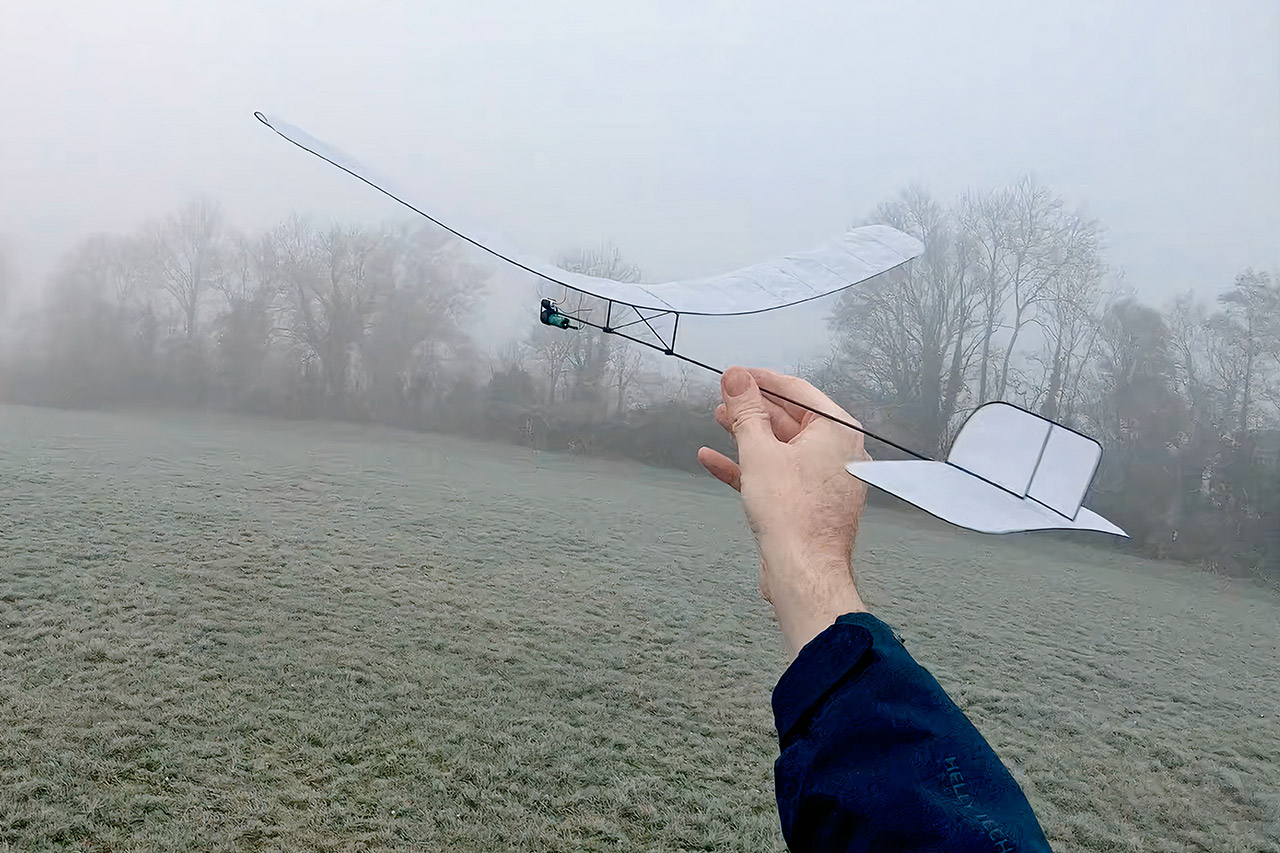
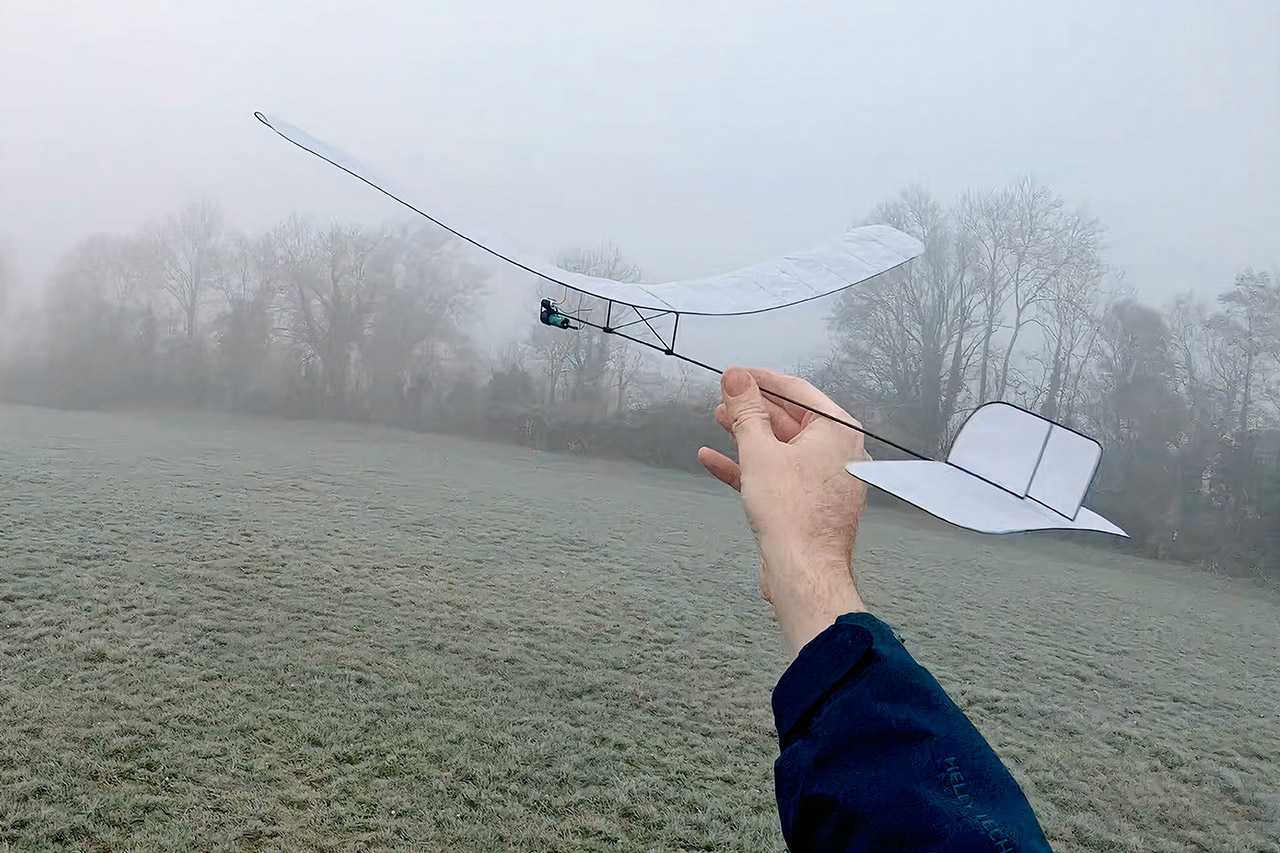
Tom Stanton has spent years fiddling with many strange flying machines. His current idea cleverly updates a traditional toy. Rubber band planes have been around forever, storing energy in twisted bands that then spin a propeller. The problem is that they must be wound up for several minutes merely to produce a short burst of flight. Stanton sought to create a flying machine that was faster, more practical, and could be built with easily accessible components.
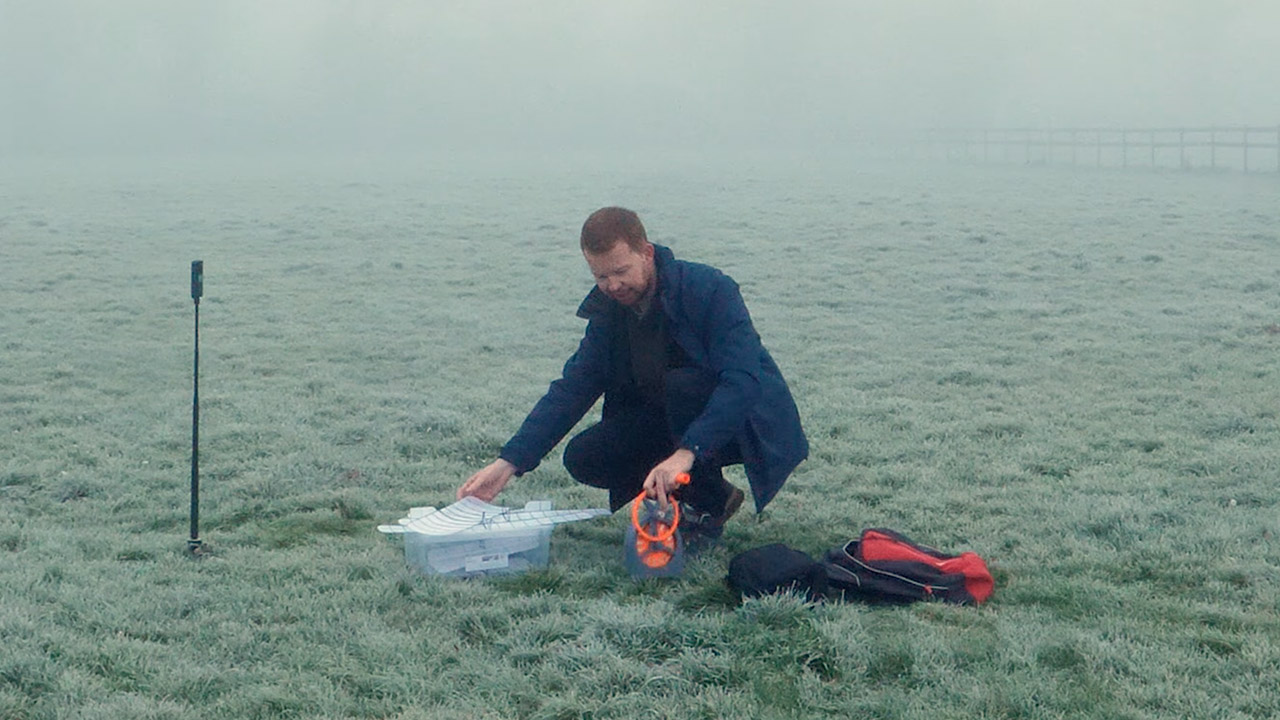
Instead of relying on rubber bands, Stanton used supercapacitors to store energy. A hand crank generator charges the capacitors up to a 10-farad unit, which weighs just 3 grams and takes just a few seconds to charge. To keep an eye on things, an analog voltmeter is used to ensure that the voltage does not exceed 2.7 volts and destroy the capacitor. Once fully charged, the capacitor powers a small brushed motor repurposed from a toy drone, which propels a propeller engineered to work efficiently with the capacitor’s low voltages.
PILOTED FLIGHT – Grab a sheet of paper, fold it, and go! Instantly put yourself in the cockpit of an amazing smartphone controlled paper airplane that…
INCREDIBLE STABILITY – Loops, Barrel Rolls, & Hammerheads are achieved with the special Acro Mode! Your paper plane’s onboard computer automatically…
CONNECTED FLYING – Pair your plane with the POWERUP App to maneuver your plane, keep a robust flight log, compete with other flyers on the…
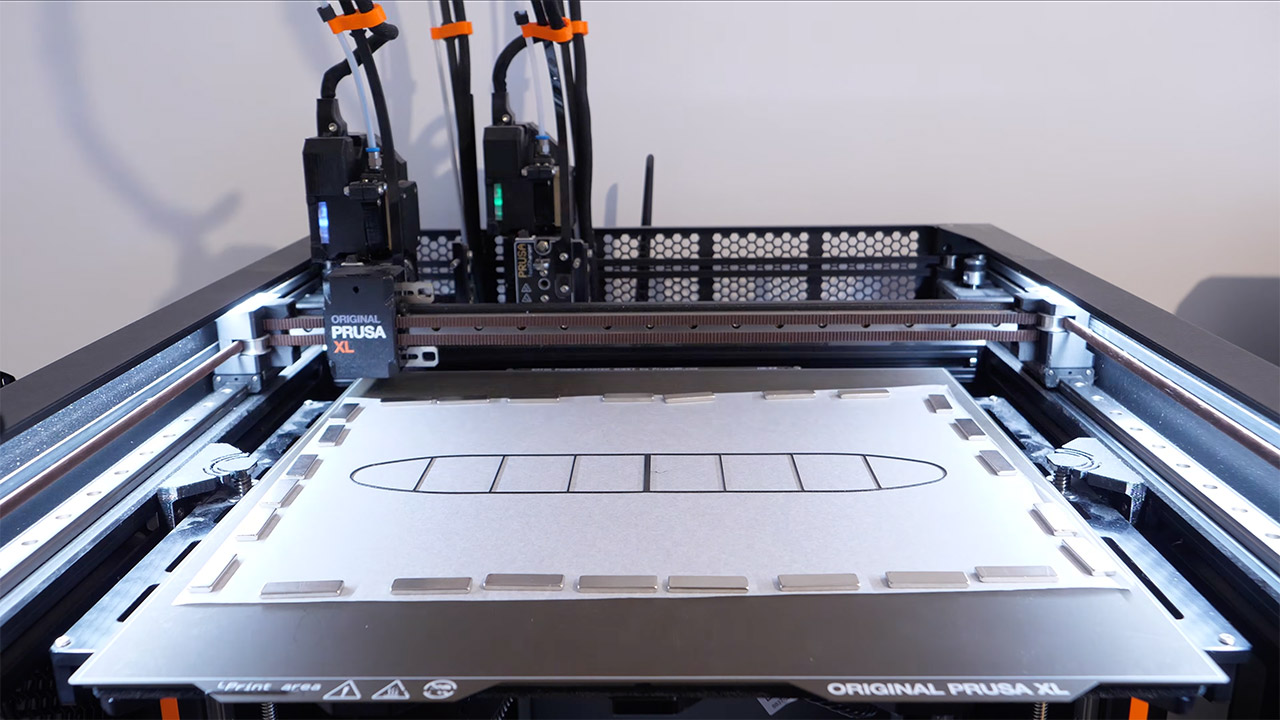
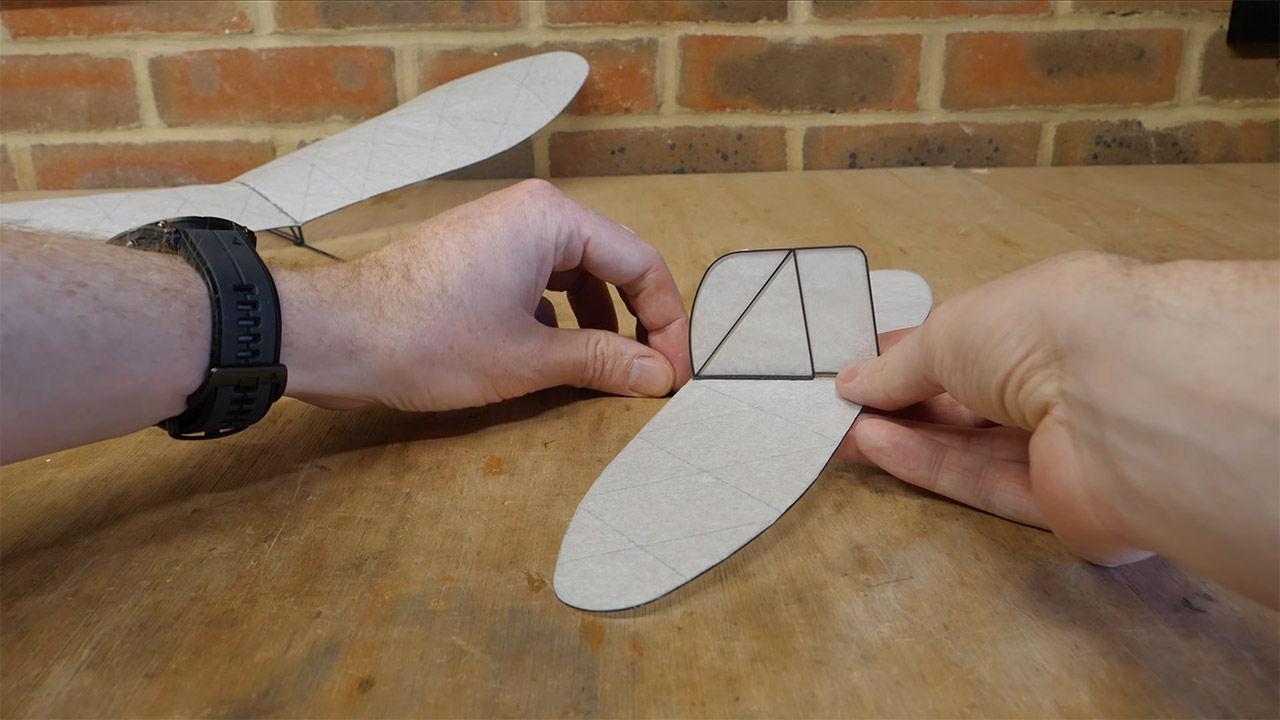
Stanton just printed the wings directly onto tissue paper. He used a textured construction plate secured with magnets so that the printer could lay down the structure without breaking the paper. After finishing the print, he simply clipped the edges, applied some adhesive, and used a heat gun to mold the paper so it could function as an airfoil. The initial effort at a wing was a disaster, as it flexed too much under load, sending the plane straight into the ground. However, later versions converted to shorter wings with a greater aspect ratio, which solved the problem by reducing flex and drag while adding minimal weight.
The plane’s fuselage is built of carbon fiber rods, which provide it strength without weighing a ton. Stanton built notches into the rod to prevent it from being drilled out of the holes, allowing the wings and tail to slip in and out with a simple friction fit, making changes easy when testing the plane. The tail is a 3D print that is glued to the back of the rod, and up front, a small steel bolt serves as the nose weight to keep everything balanced. Stanton adjusted the wing mount slightly to keep the propeller out of the line of the airflow, and a printed bracket connects the capacitor and motor and simply clips into the rod.
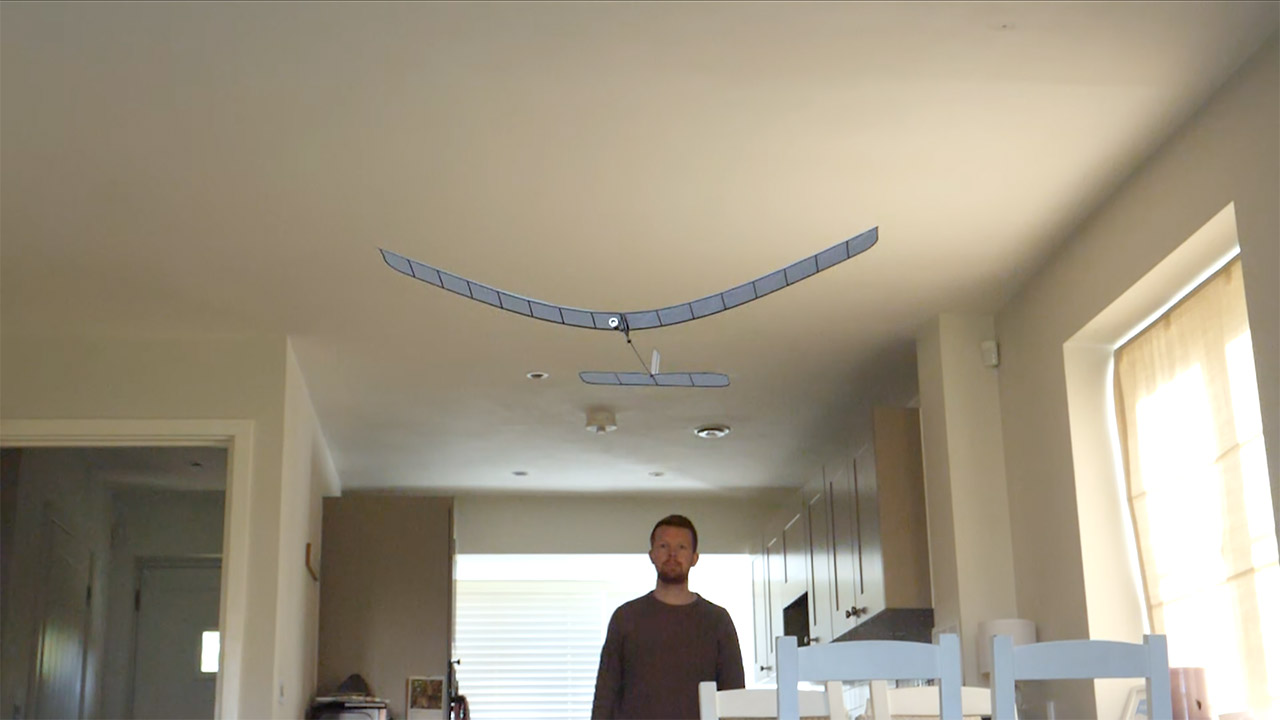
First, Stanton tested the basic glider on its own, as it was so light (weighing only 3.8 grams) that it flew through the air like a dream and outperformed a simple paper plane. Adding the power system increased the total weight to 15.6 grams, which isn’t terrible given it’s still lighter per square inch than most paper airplanes. When he tried it with the power system, it shot up high after launch and settled into a long, steady glide. Cranking the hand crank for 4 seconds gave him 45 seconds of flight time, but what about the charging time? It was a blazing 0.1 seconds. Stanton thought the charging-to-flight time ratio was impressive to say the least, especially since the charging process takes roughly the same amount of time as blinking.
Cold and damp air reveal one weakness: tissue paper absorbs moisture and loses rigidity quickly. The wings began to sag and the plane fought to stay aloft, as Stanton mentioned in his video, although other individuals have had success with minor repairs such as coatings on comparable planes. To be fair, the primary design of the product demonstrated that the concept works. In the end, the last plane popped right up off the ground, kept altitude far longer than I expected, and then glided down for a rather easy landing.
Stanton made the glider files accessible on Printables, allowing anyone to print their own version and try it out. The entire project is very simple, as it just requires some basic hardware: a 3D printer, a piece of tissue paper, a carbon rod, and the minimum essentials of some electronics. There are no sophisticated or high-tech materials or intricate machine work involved.
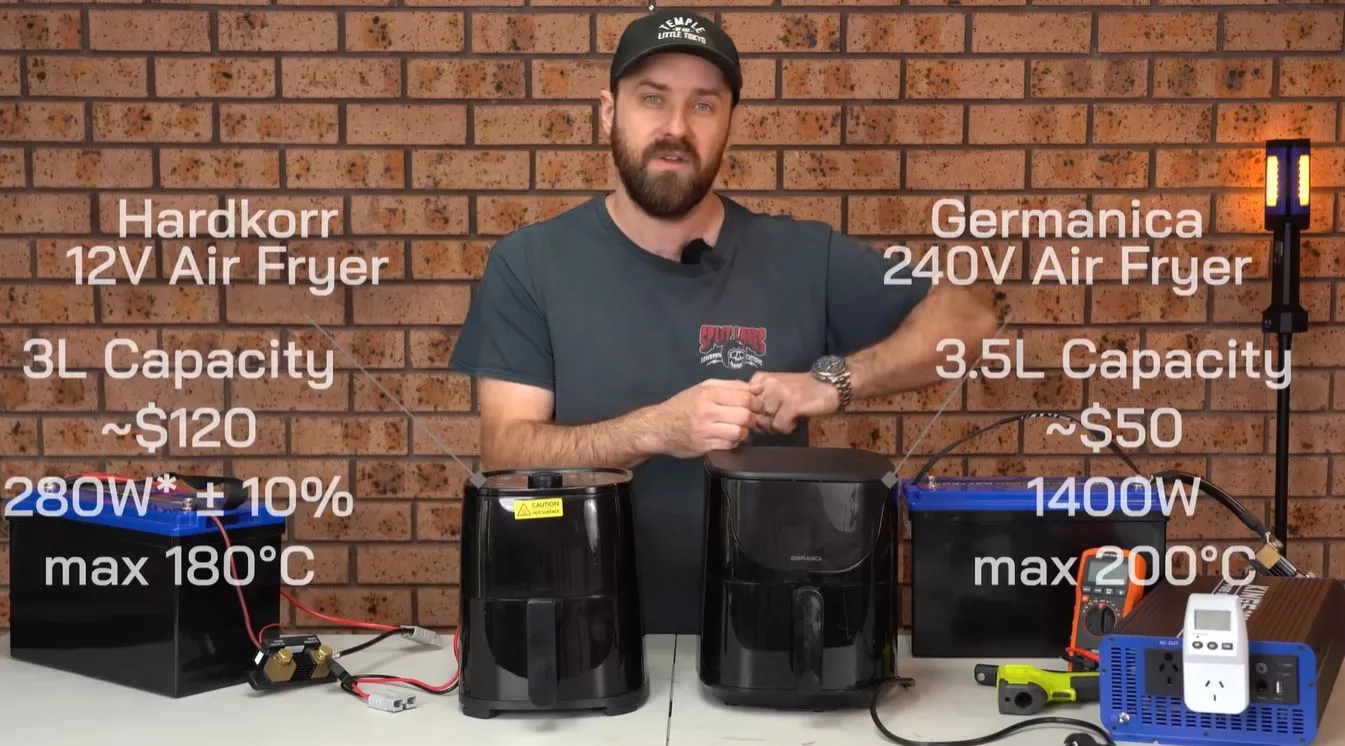
That boiling water is a contentious topic of discussion is clear, but what about hot air? When you take a 12 VDC, 280 Watt-rated air fryer and pit it against a bog-standard 240 VAC, 1400 Watt unit, which one would you want to use when you’re doing some camping or other exciting off-the-grid opportunities? Unlike with boiling water the physics aren’t as clear-cut here, so [Cahn] did some testing to figure out exactly what the efficiency numbers look like
Since air fryers rely on the transfer of thermal energy from the resistive heating element into the food, any thermal energy that’s not immediately transferred is effectively wasted. This, combined with the relatively low power rating and thus much higher time demand of the low-voltage air fryer is enough to set one’s expectations pretty low.
As scientific test samples chicken nuggets were used with the test, following a preheating period for the 12 VDC unit. Both units managed to hit a safe temperature inside the nuggets after 20 minutes, thus successfully staving off food poisoning, but the browning with the 240 VAC air fryer was much better.
As for the efficiency, the 12 VDC unit required 150 Wh for 20 minutes plus the 10 minutes of preheating, with 45 minutes total at 225 Watt to get proper browning. Meanwhile the 240 VAC unit burned through 250 Wh in 20 minutes, with no pre-heating, though only 230 Wh with no inverter losses included. As a final test, the 12 VDC unit was run at 400 Watt using 14.6 VDC input, which did indeed get it up to temperature much faster.
Advertisement
Thus both are equivalent, just with the caveat that the low-voltage unit will take considerably more time to get the same result. This mirrors the results with boiling water, where most options mostly vary in how much time they require to get water up to a boiling temperature.
An anonymous reader quotes a report from the Guardian: We may appear to have little in common with sperm whales – enormous, ocean-dwelling animals that last shared a common ancestor with humans more than 90 million years ago. But the whales’ vocalized communications are remarkably similar to our own, researchers have discovered. Not only do sperm whale have a form of “alphabet” and form vowels within their vocalizations but the structure of these vowels behaves in the same way as human speech, the new study has found.
Sperm whales communicate in a series of short clicks called codas. Analysis of these clicks shows that the whales can differentiate vowels through the short or elongated clicks or through rising or falling tones, using patterns similar to languages such as Mandarin, Latin and Slovenian. The structure of the whales’ communication has “close parallels in the phonetics and phonology of human languages, suggesting independent evolution,” the paper, published in the Proceedings B journal, states. Sperm whale coda vocalizations are “highly complex and represent one of the closest parallels to human phonology of any analyzed animal communication system,” it added.
[…] The new study shows that “sperm whale communication isn’t just about patterns of clicks — it involves multiple interacting layers of structure,” said Mauricio Cantor, a behavioral ecologist at the Marine Mammal Institute who was not involved in the research. “With this study, we’re starting to see that these signals are organized in ways we didn’t fully appreciate before.” The latest discovery around sperm whale speech has inched forward the possibility of someday fully understanding the creatures and even communicating with them. Project CETI has set a goal of being able to comprehend 20 different vocalized expressions, relating to actions such as diving and sleeping, within the next five years. A future where we’re able to fully understand what the whales are saying and be able to have a conversation with them is “totally within our grasp,” said David Gruber, founder and president of Project CETI. “We’ve already got a lot further than I thought we could. But it will take time, and funding. At the moment we are like a two-year-old, just saying a few words. In a few years’ time, maybe we will be more like a five-year-old.”
A new wearable device that looks like a simple beanie could soon change how people interact with computers. Developed by Silicon Valley startup Sabi, the prototype uses brain-computer interface (BCI) technology to convert a user’s internal speech into text, effectively allowing them to “type” using their thoughts.
According to a report by WIRED, the device is designed to be one of the least intrusive brain-tech wearables yet, avoiding the bulky, futuristic look of many experimental headsets. Instead, it blends into everyday clothing, making it more practical for daily use.
A Wearable That Listens To Your Thoughts
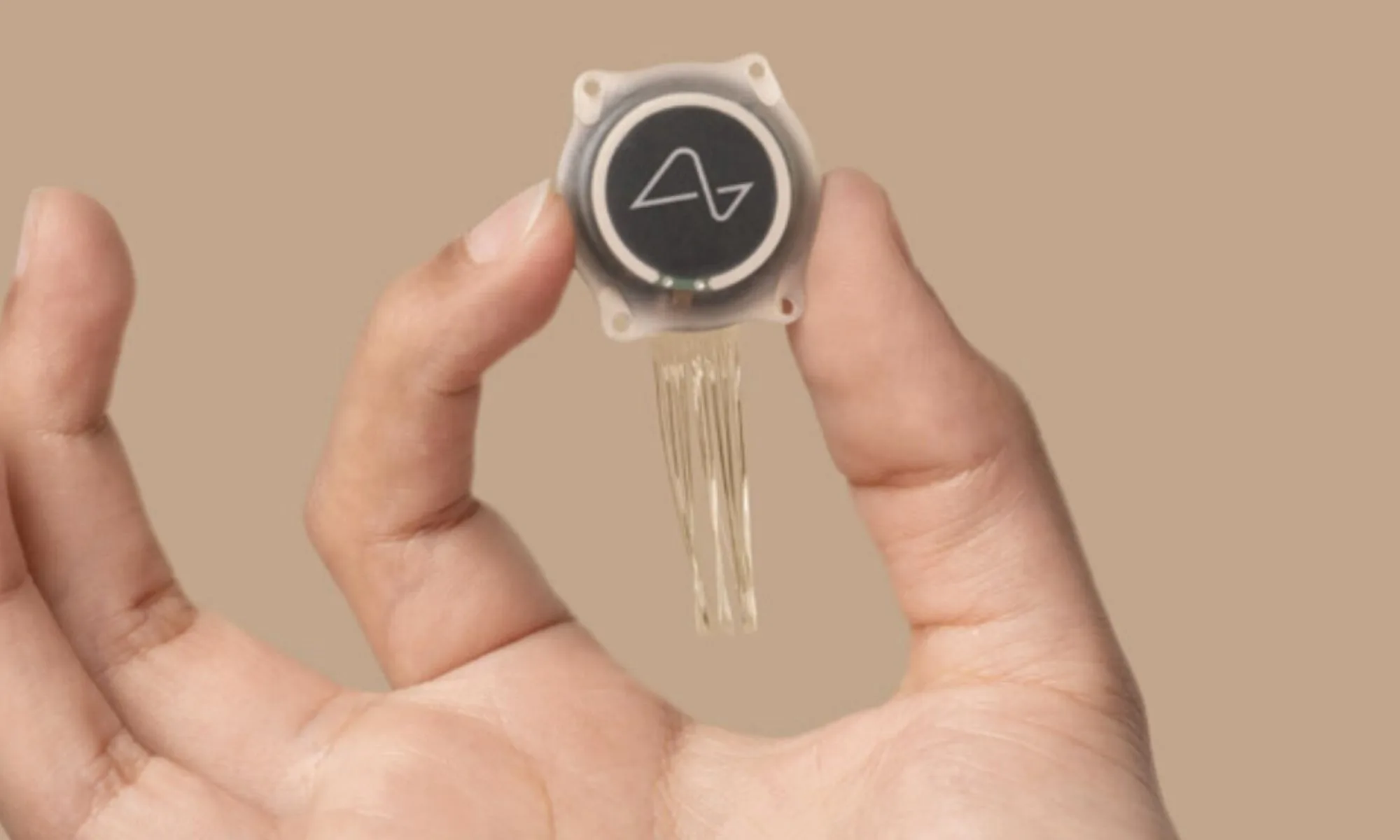
The beanie works using electroencephalography (EEG), a non-invasive method that reads electrical signals from the brain through the scalp. Unlike implant-based systems such as those being developed by companies like Neuralink, Sabi’s approach does not require surgery.
NeuralinkNPR
The goal is to detect “internal speech” – the words people think but don’t say out loud – and convert it into text on a connected device. If successful, this could allow users to communicate or control devices without speaking or typing.
To improve accuracy, the beanie reportedly includes tens of thousands of miniature sensors, far more than traditional EEG devices. This high-density sensing is designed to capture more detailed neural signals, helping the system better interpret what the user is thinking.
Advertisement
Why This Approach Matters
Brain-computer interfaces are not new, but most existing systems fall into two categories: invasive implants or bulky external hardware. Both approaches have limited mainstream adoption due to medical risks, cost, or usability challenges.
Sabi’s beanie takes a different path by focusing on comfort and accessibility. The device is designed to work out of the box without requiring daily calibration, which has been a major limitation for many BCI systems.
Early targets suggest typing speeds of around 30 words per minute, with the potential to improve as users become more familiar with the system.
This could open up new use cases, from accessibility tools for people with disabilities to hands-free computing for everyday users.
Advertisement
The Challenges Of Reading The Mind
Despite its promise, the technology faces significant hurdles. Brain signals vary widely between individuals, and even the same thought can produce slightly different neural patterns each time.
To address this, Sabi is developing a large-scale AI model trained on thousands of hours of brain data collected from volunteers. The aim is to identify patterns that correspond to internal speech across different users.
However, experts caution that “mind-reading” remains a complex and often overstated concept. Current systems can decode limited patterns or commands, but translating continuous, natural thought into text is still an evolving challenge.
Privacy And Ethical Questions
One of the biggest concerns surrounding this technology is privacy. Neural data is deeply personal, potentially revealing thoughts, intentions, and cognitive patterns.
Advertisement
Data PrivacyUnsplash
Sabi says it is addressing this by encrypting data and working with neurosecurity experts to ensure safe handling. Still, the broader conversation around brain data rights and ethical use is likely to grow as such devices move closer to commercialization.
What Comes Next
The company is aiming to release its first consumer version of the beanie – and a cap variant – by late 2026.
If successful, the device could represent a shift toward more subtle, everyday brain-computer interfaces that integrate seamlessly into daily life.
For now, the idea of typing with your thoughts may still feel futuristic. But with devices like this beanie, that future is starting to look a lot more wearable—and a lot less intrusive.
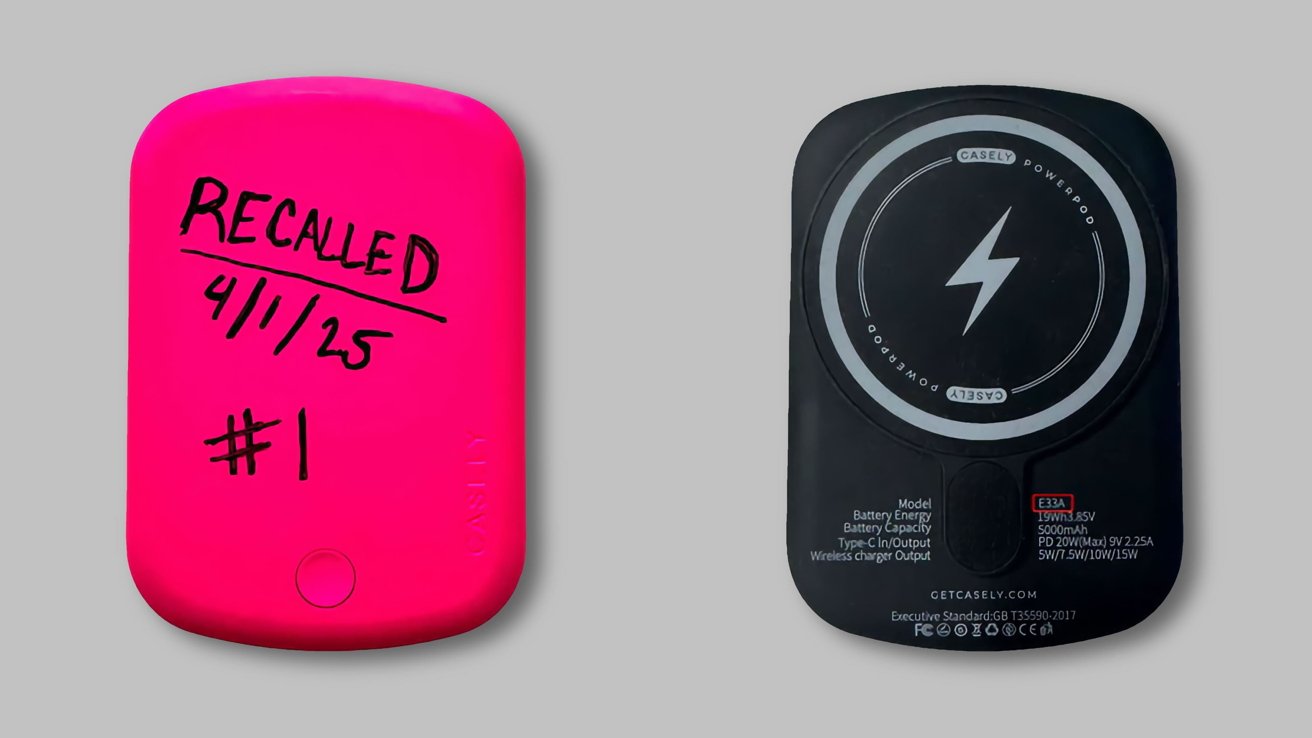
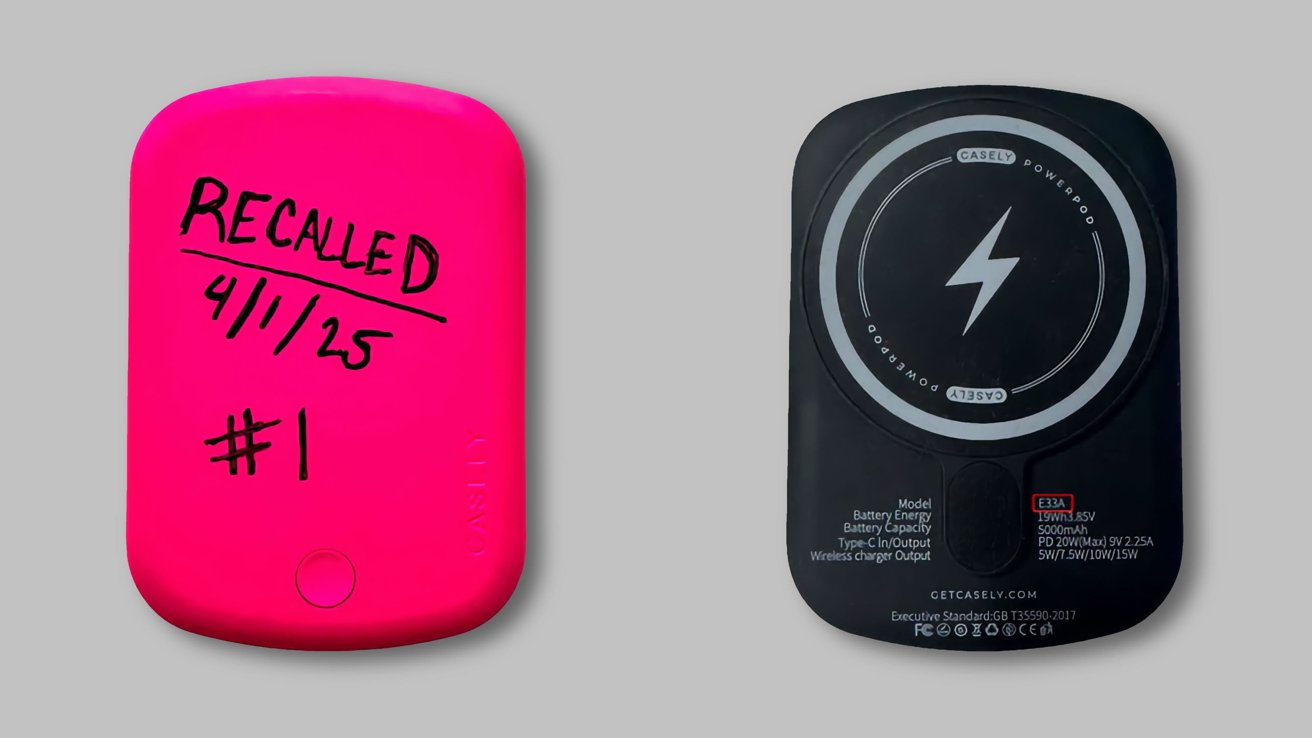
After one person passed away and after dozens more were injured, Casely has reannounced a recall of its MagSafe-compatible power bank.
Casely has reannounced its 2025 recall of the 5,000mAh Power Pods MagSafe charger.
Back in April 2025, Casely and the US Consumer Product Safety Commission (USCPSC) published a recall of the 5,000mAh Power Pods wireless. More than 429,000 units were recalled, following 51 incidents of the products “overheating, expanding, or catching fire,” ultimately causing burns. A year later, the same recall has been reissued, as 28 additional incidents have occurred. “The recalled power banks pose a risk of serious injury or death from fire and burn hazards to consumers,” says the USCPSC. Continue Reading on AppleInsider | Discuss on our Forums
Privacy in the digital age is more important than ever, and using a strong VPN can help keep your internet behavior safe from prying eyes. We write a lot about VPNs, and one provider has been making moves over the past two weeks to expand its global coverage.
Proton VPN is the privacy tool in question, and the Swiss-based company’s network, which has the best free VPN option on the market, now spans roughly 20,000 servers across 145 countries — with new server locations in Lebanon, Nicaragua, Gabon, Papua New Guinea, Kyrgyzstan and the Democratic Republic of the Congo — making it the top provider on our best VPN list for worldwide coverage.
VPNs, or virtual private networks, operate by masking your actual IP address with one from a remote server, allowing you to disguise your location and keep your internet activity secure.
Advertisement
There are a multitude of ways a VPN can enhance your experience, whether you’re looking to access streaming titles from another country or get around oppressive government firewalls that can block important information and communication pathways, and impede an open, uncensored internet.
Proton VPN now has the biggest global footprint out of all the VPNs CNET has tested. It has a vastly larger number of servers than NordVPN (9,300), and its reach exceeds NordVPN’s (135 countries), ExpressVPN’s (105 countries) and Surfshark’s (11 countries).
There is one caveat in all of this expansion: Proton VPN doesn’t have a server presence in all 50 US states, unlike NordVPN. That said, it’s still an excellent choice for watching streaming TV shows and movies — especially if you’re traveling internationally.
A Proton VPN spokesperson didn’t immediately respond to our request for comment.
Popular gaming platform Roblox agreed to pay more than $12 million and implement new safety features as part of a settlement with the state of Nevada. This settlement comes amid several lawsuits accusing the company of an alleged lack of protection of children on the platform.
The agreement resolves potential litigation over allegations that Roblox failed to adequately safeguard children while they played the online game, Nevada Attorney General Aaron Ford said in a press release on Wednesday.
As part of the deal, Roblox will spend $10 million over three years to encourage children to engage in non-digital activities, as well as institute age verification for all users. This will include “facial age estimation technology and government-issued ID for age assurance, and will use behavioral monitoring to identify users who may have been aged incorrectly,” according to the press release.
Advertisement
“The injunctive relief that Roblox has agreed to will give parents the tools they need to protect their children on the platform; institute default protections to block predators from engaging with children; and ensure that messages involving minors are not encrypted,” Ford said in the press release.
Roblox also committed to spending $1 million over two years on a campaign to educate minors and adults about online safety and another $1.5 million to develop a law enforcement liaison position to work with state law enforcement agencies over concerns about the platform.
Roblox Chief Safety Officer Matt Kaufman said it’s part of the company’s “work to establish a new standard for digital safety.”
“This resolution creates a blueprint for how industry and regulators can work together to protect the next generation of digital citizens,” Kaufman said Thursday. “We have no finish line when it comes to safety.”
Advertisement
Roblox is under significant legal pressure amid more than 140 lawsuits, according to Reuters. The suits, filed in 2025, allege the company knowingly created a gaming platform that allowed child predators to target minors.
Roblox Kids will be available for children between the ages of 5 and 8, and Roblox Select is for those ages 9 to 15. Roblox is reportedly used by nearly half of US children under 16. Children who are older than 16 will be in their own age group, simply called “Roblox.”
Kids and Select accounts would be available in those age groups as determined by Roblox’s age-check technology or by a verified parent.
Unmonitored chat in the game has been a point of criticism for the platform, as it allows predators to chat with children. Kids’ accounts will have chat turned off by default, with limited access to Minimal or Mild games as determined by the platform. Select accounts will have chat with safeguards and access to games with Moderate content, which is described by the platforms as having “moderate violence, light realistic blood, moderate crude humor, unplayable gambling content, and/or moderate fear.”
These new age-based accounts will roll out sometime in early June.
A recent cosmological model combines two of the most eccentric ideas in contemporary physics to explain the nature of dark matter, the invisible substance that makes up about 85 percent of all matter in the universe. To understand it, it’s necessary to look beyond the Big Bang we all know and consider two concepts that rarely intersect: cyclic universes and primordial black holes.
A Different Kind of Multiverse
There are different versions of the “multiverse.” The most popular model—that of the Marvel Cinematic Universe—proposes that there are as many universes as there are possibilities and that these versions of reality are parallel. Physics proposes something more sober and mathematically consistent: the cosmic bounce.
In this model, the universe is not born from a singularity, but expands, contracts, and expands again in an endless cycle. Each “universe” is not parallel, but sequential—that is, one arises from the ashes of the previous one.
Is it possible for something to survive the end of its universe and endure into the next? According to a paper published in Physical Review D, yes. Author Enrique Gaztanaga, a research professor at the Institute of Space Sciences in Barcelona, shows that any structure larger than about 90 meters could pass through the final collapse of a universe and survive the rebound. These “relics” would not only persist, but could also seed the formation of giant, unexplained structures observed in the early stages of the present-day universe. Moreover, they could be the key to understanding dark matter.
Advertisement
For decades, the dominant explanation for dark matter has been that it is an unknown particle or particles. But after years of experiments without direct detections, physicists have begun to explore alternatives. One of them proposes that dark matter is not an exotic particle, but an abundant population of small black holes that we overlook.
The idea is appealing, but it has a serious problem. For these black holes to explain dark matter, they would have to exist from the earliest moments of the universe, long before the first stars could collapse. There are indications that these objects could exist, but a convincing physical mechanism to explain their origin is lacking.
A Universe Born With Black Holes
This is where Gaztanaga’s newly proposed model shines. If cosmic bouncing allows compact structures to survive the collapse of the previous universe, then the current universe would have already been born with pre-existing black holes. They would not have to have been generated by extreme fluctuations or finely tuned inflationary processes, but would simply have been there from the first instant.
The assumption has the potential to solve two riddles at once: the origin of black holes and the nature of dark matter. If this model is correct, dark matter would not be a mystery of the early universe but rather a legacy of a cosmos that predates our own.
Advertisement
“Much work remains to be done,” Gaztanaga, also a researcher at the Institute of Cosmology and Gravitation at the University of Portsmouth, said in an article for The Conversation. “These ideas must be tested against data—from gravitational-wave backgrounds to galaxy surveys and precision measurements of the cosmic microwave background.”
“But the possibility is profound,” he added. “The universe may not have begun once, but may have rebounded. And the dark structures shaping galaxies today could be relics from a time before the Big Bang.”
This story originally appeared inWIRED en Español and has been translated from Spanish.
More than 75,000 individuals using distributed denial-of-service (DDoS) platforms for disruptive attacks have been warned through emails and letters during the latest phase of the Operation PowerOFF international law enforcement action.
The ongoing operation is supported by Europol and involves authorities in 21 countries. Coordinated efforts led to the arrest of four people, taking offline 53 domains, and issuing 25 search warrants.
“Leading up to the action week, a series of operational sprints took place, gathering experts from national authorities across the globe to carry out actions against high-value target users of DDoS-for-hire platforms and raise awareness about the illegality of these activities,” Europol says.
“During these sprints, the participating countries disrupted illegal booter services, dismantling the technical infrastructure that supports illegal DDoS.”
The operation has a global span, and includes multiple European Union countries as well as Australia, Thailand, the United States, the United Kingdom, Japan, and Brazil.
Advertisement
Latest Operation PowerOFF reach Source: Europol
“Booter services” are DDoS-for-hire platforms that allow users to pay for renting the firepower of DDoS swarms, typically consisting of compromised routers and IoTs, and directing it to their intended targets.
Some operators of these services attempt to hide their real goal by claiming they are used for legitimate stress testing, but lack verification of target ownership and hence are still used for illegal attacks.
The latest Operation PowerOFF action was built on previous phases that resulted in dismantling key infrastructure and seizing databases with more than 3 million criminal accounts.
Europol states that the operation is now entering its prevention phase, which includes launching awareness campaigns and disruption measures.
These involve placing search engine ads aimed at young people seeking DDoS tools, removing from search results more than 100 URLs that promote these illegal services, and adding on-chain warning messages tied to illicit payments.
Advertisement
AI chained four zero-days into one exploit that bypassed both renderer and OS sandboxes. A wave of new exploits is coming.
At the Autonomous Validation Summit (May 12 & 14), see how autonomous, context-rich validation finds what’s exploitable, proves controls hold, and closes the remediation loop.
A Call of Duty movie is still happening, but don’t hold your breath for it to hit screens any time soon. Today, the popular FPS’ social media revealed that the movie’s theatrical release date will be June 30, 2028.
A film adaptation of the game franchise was first revealed last year, and shortly after, we learned that Taylor Sheridan and Peter Berg would be serving as the producers. The duo, whose past credits include Friday Night Lights and Yellowstone, will also be co-writing the project under Berg’s direction. We still haven’t heard anything about the cast, or even what era of the long-running series will be depicted, so it seems like a safe bet that there’s still a ways to go before this wraps. But CoD is nothing if not a money-maker, so reimagining it as a summer blockbuster seems pretty expected.


























































You must be logged in to post a comment Login