I focus on a rigorous fundamentals-foremost equity and credit research. I currently work as a financial advisor/planner, and do analysis in my free time. I have an undergrad in business administration, an MBA in finance, and currently am a doctoral candidate (a DBA with a concentration in Finance and Investment Management). My research style typically involves process-driven research, followed by blending several valuation models together to get a blended, 12 month price target. I enjoy utilizing full DCF analysis in conjunction with SOTP, peer/multiples analysis, and risk-adjusted approaches. I thoroughly enjoy reading filings, technical documentation relevant to the sector, and then translating that data into conclusions with actionable insights. I enjoy learning about the various sectors and companies I find myself researching, and always feel like there is something to learn. As a curious individual, equity and credit research is very fulfilling, and even fun!I always try to find 2-4 variables that drive value or hinder growth, stress test them, and then let fundamental evidence incorporated with book-value set my viewpoint for the research project. I enjoy the energy sector, commodities, tech, and financial sectors the most. I joined Seeking Alpha to share my thoughts with a wide audience. I originally started with sharing my analysis with a few of my friends who are also advisors and/or analysts. I am always open to a myriad of viewpoints, as I feel the most accurate viewpoints and research is made through a collection of great minds working together to figure something out. If you appreciate thorough research, and want to learn more about a company beyond just what is inside of their books, then I believe you will enjoy the research that I work on.
Analyst’s Disclosure: I/we have no stock, option or similar derivative position in any of the companies mentioned, but may initiate a beneficial Short position through short-selling of the stock, or purchase of put options or similar derivatives in DGRO over the next 72 hours. I wrote this article myself, and it expresses my own opinions. I am not receiving compensation for it (other than from Seeking Alpha). I have no business relationship with any company whose stock is mentioned in this article.
The views expressed in this article are solely the author’s own and do not represent the opinions or recommendations of an SRO or broker-dealer. This article is for informational purposes only and does not constitute investment advice, a solicitation, or a recommendation to buy or sell any security. Readers should consult their own financial advisor before making investment decisions. As a reminder, investment products: Are NOT FDIC insured. Not deposits of, or obligations of a bank, and may be subject to investment risk, including a possible loss of principal.
Advertisement
Seeking Alpha’s Disclosure: Past performance is no guarantee of future results. No recommendation or advice is being given as to whether any investment is suitable for a particular investor. Any views or opinions expressed above may not reflect those of Seeking Alpha as a whole. Seeking Alpha is not a licensed securities dealer, broker or US investment adviser or investment bank. Our analysts are third party authors that include both professional investors and individual investors who may not be licensed or certified by any institute or regulatory body.
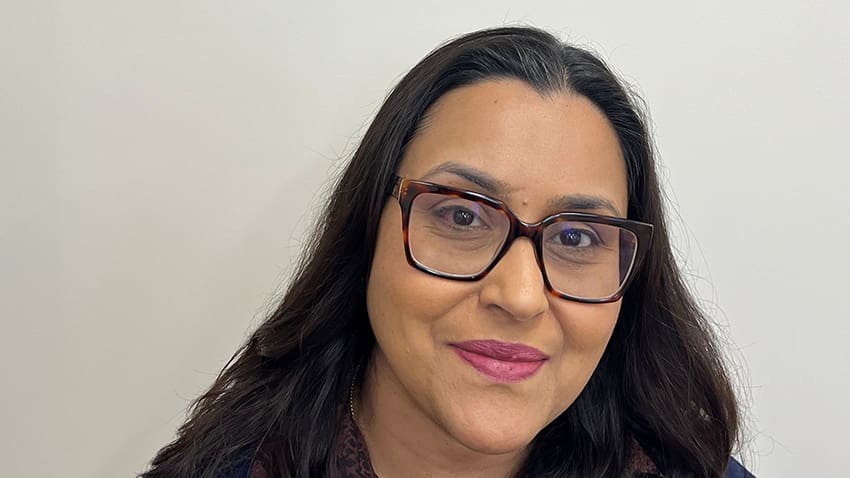
Leading Hampshire law firm Andrew & Andrew Solicitors has appointed Shikha Datta as Head of its newly established Family Law Department, as the firm continues its growth and expansion of services.
Shikha brings over 25 years of experience in family law, advising clients on achieving the best possible outcomes in both financial and children-related matters.
Her expertise spans complex financial settlements involving trust structures and overseas assets, prenuptial agreements, and jurisdictional disputes. She also has extensive experience in children matters, including residence and contact arrangements, as well as leave to remove applications.
Known for her calm and collaborative approach, Shikha has represented a diverse client base that includes business owners, CEOs, entrepreneurs, actors, musicians, academics, and professionals both in the UK and internationally.
Shikha said: “I’m thrilled to be joining Andrew & Andrew Solicitors. It is a firm where the culture genuinely reflects the values I bring to my practice: considered, client-focused, and committed to achieving the optimal outcome.
Advertisement
“The breakdown of a relationship can be an emotionally difficult and stressful time, with concerns regarding how finances will be divided, how the children of the family will be affected and how to navigate a new phase of life. I feel I am well-placed with my extensive experience to lead this new department and navigate the complexities of family law.”
The introduction of family law services enhances Andrew & Andrew Solicitors’ existing offering, enabling the firm to provide comprehensive legal support to clients across a broader range of personal and professional matters. With offices in Portsmouth, Emsworth and Wickham, the firm serves clients across Hampshire and the surrounding region.
Andrew Wisniewski, Director at Andrew & Andrew Solicitors said: “We are delighted to welcome Shikha as Head of our Family Law Department. Her extensive experience and client focused approach make her an exceptional addition to the practice.
“Shikha’s appointment marks a significant step in our continued growth as we expand our services to include family law.”
Advertisement
For more information about Andrew & Andrew Solicitors, visit a2solicitors.co.uk.
A cascade of major cloud and server outages throughout 2025 exposed the fragility of the world’s digital infrastructure, with analysts estimating that unplanned IT downtime inflicted hundreds of billions of dollars in global economic losses as businesses, governments and consumers grew ever more reliant on always-on services.
AFP
While no single event matched the scale of the 2024 CrowdStrike incident — which alone caused an estimated $5 billion to $10 billion in damages — the cumulative toll from repeated disruptions at Amazon Web Services, Microsoft Azure, Cloudflare and other providers underscored a troubling trend: even routine configuration errors or regional failures can ripple worldwide, halting e-commerce, grounding flights, delaying financial transactions and disrupting healthcare operations.
The most disruptive outage of the year struck on Oct. 20 when an AWS DynamoDB failure originating in the US-EAST-1 region propagated globally due to dependencies in services like IAM and DynamoDB Global Tables. The incident, lasting up to 15 hours in some cases, generated more than 17 million reports on Downdetector and affected over 1,000 companies, including Slack, Atlassian and Snapchat. Early estimates placed direct losses from that single event between $38 million and $581 million, though broader productivity and revenue impacts likely pushed the figure far higher.
Just days later, on Oct. 29, a Microsoft Azure Front Door configuration change triggered worldwide HTTP 503 errors and connection timeouts. Additional outages hit Google Cloud, Cloudflare — which saw 3.3 million reports in a November incident lasting nearly five hours — and other providers. Between August 2024 and August 2025, the three largest cloud platforms experienced more than 100 service disruptions of varying durations.
Industry reports painted a sobering picture of the financial stakes. Unplanned downtime averaged $14,000 to $23,750 per minute depending on company size, with high-impact outages costing a median of $2 million per hour according to New Relic’s 2025 Observability Forecast. Organizations reported median annual exposure of $76 million from such incidents. Across the Global 2000, annual downtime costs have hovered around $400 billion in recent analyses, a figure that continued to climb as digital dependency deepened.
Advertisement
Government-imposed internet shutdowns added another layer of loss. In 2025, intentional outages in 28 countries lasting more than 120,000 hours cost the global economy an estimated $19.7 billion — a 156% increase from the previous year — highlighting how both technical failures and policy decisions can exact heavy economic tolls.
The human and operational costs extended beyond dollars. Airlines faced delayed flights and passenger disruptions, hospitals shifted to manual processes that strained staff and risked patient safety, and retailers lost sales during peak periods. E-commerce platforms, SaaS providers, gaming companies and media streamers reported lost revenue, refunds and SLA credits totaling hundreds of millions across incidents.
One analysis of 2025’s major cloud outages attributed roughly $581 million in combined losses to configuration-related failures at AWS, Azure and Cloudflare alone. Indirect costs — including engineering response time, surge staffing for customer support, legal fees and reputational damage — often multiplied the direct hit. Manufacturing firms idled production lines, with some sectors facing daily downtime costs exceeding $1.9 million.
Experts attributed the persistence of outages to several factors. Cloud providers now underpin an estimated 94% of enterprise services, with AWS, Azure and Google Cloud controlling more than 62% of the market. Complex interdependencies mean a single regional glitch can cascade globally. Configuration changes, automation errors and latent race conditions proved especially troublesome, as seen in the AWS and Azure incidents.
Advertisement
“These weren’t sophisticated cyberattacks but routine operational missteps with outsized consequences,” said one infrastructure analyst reviewing the year’s events. Businesses that relied on single-cloud architectures or lacked robust failover mechanisms suffered the most.
The New Relic study found that organizations with full-stack observability reduced high-impact outage costs by half, yet many firms still lacked comprehensive monitoring. Surveys showed 88% of executives expected another major global IT outage on the scale of recent events, underscoring a sense that such disruptions had become the new normal rather than rare anomalies.
Smaller businesses and mid-market companies were not immune. While Fortune 500 firms might absorb multimillion-dollar hourly losses, even brief outages could cripple smaller operations lacking redundancy. Some reports indicated that 51% of organizations experienced monthly losses exceeding $1 million from internet or network degradations, with one in eight facing over $10 million monthly.
In healthcare, where patient portals and electronic records systems went dark, the shift to paper-based workflows not only slowed care but raised safety concerns. Aviation and transportation sectors saw routing and booking systems fail, leading to operational backlogs that took days to clear.
Advertisement
Financial services faced particular scrutiny. Trading platforms, payment processors and banking apps experienced delays that could cascade into market volatility or missed opportunities. One October outage affected critical financial infrastructure, prompting calls for stricter oversight of cloud providers deemed systemically important.
Recovery efforts varied. Cloud giants typically restored services within hours, but downstream impacts lingered as companies restarted systems, reconciled transactions and reassured customers. Legal fallout included lawsuits over SLA breaches, though many contracts limited provider liability.
The year’s events accelerated discussions about multi-cloud strategies, edge computing and improved observability tools. Companies began investing more heavily in redundancy, automated failover and chaos engineering to simulate failures before they occur. Yet building true resilience carries significant upfront costs, creating tension for budget-conscious executives.
Analysts projected that without meaningful improvements in infrastructure resilience, annual global losses from server and cloud outages could continue escalating into the hundreds of billions. The Uptime Institute’s Annual Outage Analysis 2025 emphasized that preventing outages remains a strategic priority for data center operators, with human error and process failures still leading causes.
Advertisement
Broader economic context amplified the pain. With inflation pressures easing but growth uneven, businesses could ill afford unexpected revenue hits. Supply chains, already tested in recent years, faced additional friction when tracking and logistics platforms faltered.
Public reaction mixed frustration with resignation. Social media filled with memes about “the cloud going dark” again, while executives fielded questions from boards and shareholders about risk exposure. Consumer trust eroded in some cases, particularly when outages hit popular services during high-traffic periods.
Looking ahead, 2026 is expected to bring both challenges and innovations. Providers have pledged enhanced safeguards, including better change management and transparency. Regulators in Europe and the U.S. have signaled interest in greater accountability for critical digital infrastructure.
For now, the 2025 tally serves as a cautionary tale. As the world digitizes further — with artificial intelligence, Internet of Things devices and 24/7 online services becoming ubiquitous — the cost of even momentary server or network failures will likely keep rising.
Advertisement
Business leaders are urged to assess their dependency chains, test recovery plans rigorously and consider diversified architectures. For the average company, the message is clear: in an interconnected economy, no server outage is truly isolated.
Government-imposed shutdowns and technical failures together painted a picture of vulnerability that transcends any single provider or region. As one report summarized, “No industry was immune,” from technology and transportation to manufacturing and financial services.
The true global economic loss for 2025 remains difficult to pinpoint with precision, as many impacts — lost productivity, damaged customer relationships and deferred investments — resist easy quantification. Conservative estimates place direct and indirect costs well into the hundreds of billions when aggregating all major incidents and the pervasive drag of frequent smaller disruptions.
In an era when milliseconds can determine competitive advantage, the repeated outages of 2025 reinforced a hard truth: digital infrastructure has become the backbone of the global economy, and its occasional fractures carry consequences that reach far beyond the data center.
Mumbai: The Reserve Bank of India (RBI) Wednesday kept its key policy rate unchanged amid the ongoing West Asia crisis, warning that supply chain disruptions pose upside risks to inflation and downside risks to growth in the current fiscal year, while reiterating that interest rates are likely to remain low in the short to medium term.
The six-member Monetary Policy Committee (MPC) unanimously voted to keep the repurchase (repo) rate at 5.25%, in line with market expectations, and maintain a neutral stance.
The West Asia conflict and the resulting spike in energy prices weighed heavily on the policy commentary.
Cautious Approach He said the committee assessed the “intensity and duration of the conflict, and the resultant damage to energy and other infrastructure, add risks to both inflation and growth outlooks,” even as the MPC opted to maintain the status quo.
Live Events
The RBI projected real GDP growth at 6.9% and headline inflation at 4.6% for FY27, based on a baseline assumption of crude oil prices at $85 per barrel in the current fiscal year and $75 per barrel in the next. For the first time, the central bank also provided a projection for core inflation (excluding food and fuel) at 4.4%. Both inflation estimates remain within the RBI’s target band of 2-6%, though governor Malhotra said risks to the projections are tilted to the downside amid elevated geopolitical uncertainty.Stocks, rupee advance Markets reacted positively to the news of the ceasefire, with benchmark bond yields falling 15 basis points to 6.89%, rupee strengthening 40 paise to 92.58 per dollar and Sensex rising 3.95% to close at 77,562.
The governor warned that elevated energy and commodity prices, particularly disruptions related to the Strait of Hormuz, could weigh on growth in 2026-27. He said the conflict could affect the economy through higher crude prices, supply disruptions and global financial spillovers, adding that prolonged supply shocks could eventually translate into weaker demand.
Advertisement
Economists remained cautious on the policy outlook.
A Chinese diplomat said Beijing had made its “own efforts” in pushing for a ceasefire between the US and Iran, shortly after Donald Trump credited China with playing a pivotal role in that deal.
Chinese foreign ministry spokeswoman Mao Ning on Wednesday listed the efforts her country had made in recent weeks to deescalate the conflict at a regular briefing in Beijing, without directly addressing reports China helped convince Tehran to reach the truce.
“China has consistently advocated for a ceasefire and to resolve the conflict through political and diplomatic means, and to achieve long-term stability in the Gulf and Middle East region (West Asia),” she said, when asked about the detente. “China made its own efforts in this regard.”
Mao’s comments come hours after Iran and the US agreed to a two-week pause in hostilities mediated by Pakistan, and as talks begin for a more durable peace plan. That deal was announced shortly before Trump’s deadline expired threatening attacks on civilian infrastructure in Iran.
The NYT citing three unidentified Iranian officials, reported that Iran accepted the ceasefire proposal following intervention by China, which asked the Islamic Republic to show flexibility and defuse tensions.
Advertisement
Live Events
Since the conflict began, Chinese Foreign Minister Wang Yi had made 26 phone calls with relevant counterparts, while Beijing’s special envoy conducted shuttle diplomacy in the Gulf, Mao said.
FedEx Corporation (FDX) Analyst/Investor Day April 8, 2026 9:00 AM EDT
Company Participants
Marianna Rose John Smith – President & CEO of FedEx Freight Corporation Clinton McCoy – Chief Operating Officer Michael B. Lyons – Senior VP, Chief Specialized Services & Commercial Officer Michael Rodgers – Senior VP & CTO Marshall Witt – Senior VP & CFO
Conference Call Participants
Advertisement
Ken Hoexter – BofA Securities, Research Division Christian Wetherbee – Wells Fargo Securities, LLC, Research Division Scott Group – Wolfe Research, LLC Stephanie Benjamin Moore – Jefferies LLC, Research Division Thomas Wadewitz – UBS Investment Bank, Research Division Jordan Alliger – Goldman Sachs Group, Inc., Research Division Ariel Rosa – Citigroup Inc., Research Division Brian Ossenbeck – JPMorgan Chase & Co, Research Division Daniel Moore – Robert W. Baird & Co. Incorporated, Research Division Richa Talwar – Deutsche Bank AG, Research Division Jeffrey Kauffman – Vertical Research Partners, LLC Jonathan Chappell – Evercore ISI Institutional Equities, Research Division Donald Broughton David Vernon – Bernstein Institutional Services LLC, Research Division
Presentation
Operator
Advertisement
Welcome, and thank you for joining us for FedEx Freight Investor Day. Please welcome to the stage, Marianna Rose, Managing Director, Investor Relations.
Marianna Rose
Good morning, and welcome to FedEx Freight’s First Investor Day. I’m Marianna Rose, Head of Investor Relations, and we are thrilled to have you with us as we outline the exciting path forward for FedEx Freight. A strong safety culture is one of the clearest indicators of a well-run business. And nowhere is that more evident than at FedEx Freight, where safety is more than a value, it’s at the fundamental backbone of this company.
Advertisement
As such, we begin every meeting with a safety message. And today’s message hits close to home for all of us, distracted driving. Every year, thousands of lives are lost because a driver looked away for just a few seconds. The good news is, according to preliminary estimates, automobile fatalities have declined
Two more Western Australian goldminers have reported cash and bullion balances above $1 billion, while maintaining the diesel crisis is not a challenge – yet.
Alphabet Inc.’s Class C shares (NASDAQ: GOOG) climbed more than 3% midday Wednesday, reaching $313.96, as investors cheered fresh signs of strength in the company’s artificial intelligence initiatives and cloud computing business amid a broader technology sector rebound.
Shutter Speed / Unsplash
The stock opened at approximately $317.81 and traded as high as $319.38 before settling near $313.96 by late morning, up $10.03 or 3.30% from the previous close of $303.93. Volume remained solid, reflecting renewed optimism ahead of the company’s first-quarter 2026 earnings, now scheduled for late April.
The move extended a volatile but ultimately positive stretch for the Google parent. After hitting an all-time high near $350 in early February, shares pulled back amid concerns over soaring capital expenditures for AI infrastructure. Wednesday’s gain helped recoup some of those losses and underscored Wall Street’s growing confidence that Alphabet’s heavy investments in AI will pay off through accelerated revenue growth, particularly in Google Cloud.
A key catalyst appeared to be Alphabet’s expanding partnership with Broadcom for custom AI chips and networking infrastructure. The collaboration is expected to bolster Google Cloud’s ability to meet surging enterprise demand for AI training and inference capabilities. Analysts noted that such deals signal Alphabet’s commitment to scaling its infrastructure efficiently while competing with rivals like Microsoft Azure and Amazon Web Services.
Google Cloud has emerged as a bright spot. Recent quarters showed the segment growing at rates exceeding 35-48% year-over-year, with a massive backlog reportedly reaching $240 billion. Enterprise adoption of Gemini-powered services and AI infrastructure contributed heavily to the momentum. The company has aggressively integrated its Gemini AI models across search, YouTube, Android and cloud offerings, with monthly active users for Gemini surpassing hundreds of millions.
Advertisement
Wednesday’s trading also reflected broader market sentiment favoring big-tech names with strong AI narratives. While some investors have worried about the “capex trap” — with Alphabet guiding for $175 billion to $185 billion in capital spending this year, nearly double 2025 levels — others view the outlays as necessary to secure long-term leadership in generative AI.
“Alphabet is doubling down on AI at exactly the right time,” one market strategist said. “The cloud backlog and Gemini adoption metrics suggest monetization is accelerating faster than many anticipated, even as costs rise.”
The rally came despite ongoing regulatory headwinds. Alphabet continues to navigate multiple antitrust cases in the United States and Europe, including challenges to its search dominance and ad technology business. Recent court rulings have been mixed, with some dismissals of publisher lawsuits but appeals expected in core monopoly cases. Investors appear to be pricing in that regulatory risks, while significant, will not derail the company’s core growth engines.
Alphabet’s search business, still the profit powerhouse, benefits from AI Overviews and Gemini enhancements that deliver faster, more conversational answers. YouTube continues to see engagement gains from AI-driven recommendations. These improvements help offset potential shifts in user behavior as AI agents evolve.
Advertisement
With Q1 2026 earnings approaching — currently slated around April 23-29 depending on final confirmation — analysts expect revenue growth near 15-18% and earnings per share around $2.60-$2.70. Focus will center on Google Cloud margins, AI product revenue details and any updates to full-year guidance. Management has signaled confidence that efficiency gains in models, including reported 78% reductions in certain query costs, will help balance heavy infrastructure spending.
Class C shares, which lack voting rights compared with Class A, often track closely with the more liquid GOOGL but appeal to certain institutional investors. The dual-class structure has long allowed founders to maintain control while accessing public capital.
Year-to-date, GOOG has shown modest performance after a stellar 2025 that saw gains exceeding 60-70% in some periods, driven by AI optimism and cloud acceleration. The stock remains well above its 52-week low near $145 but below the February peak. Analysts maintain a generally bullish consensus, with average price targets suggesting further upside toward $340-$367.
Institutional ownership remains high, with recent filings showing increases from major holders. Hedge funds and long-term investors appear to be accumulating on dips, betting that Alphabet’s scale in data, distribution through Android and YouTube, and talent pool position it favorably in the AI race.
Advertisement
Challenges persist. Rising energy costs for data centers, potential margin pressure from capex and competition from OpenAI, Anthropic and others require careful navigation. Waymo, Alphabet’s autonomous driving unit, continues to expand but remains a smaller contributor compared with core segments.
Broader market context aided the move. Technology stocks recovered some ground Wednesday as Treasury yields stabilized and investors rotated back into growth names. The Nasdaq Composite showed gains, with other AI-exposed names also advancing.
For retail investors, the intraday surge highlighted Alphabet’s volatility tied to AI news flow. Short interest remains relatively low, suggesting limited bearish bets despite recent pullbacks from highs.
Looking ahead, the April earnings call will likely provide the next major catalyst. Investors will scrutinize commentary on AI monetization timelines, cloud backlog conversion and any color on competitive positioning. Positive surprises on margins or user metrics could fuel further upside, while higher-than-expected capex might temper enthusiasm.
Advertisement
Alphabet has transformed significantly under CEO Sundar Pichai, evolving from a search advertising company into an AI-native conglomerate spanning cloud, hardware, autonomous vehicles and more. The company’s first-look deals and ecosystem advantages, including potential integrations with partners like Apple for certain AI features, provide structural tailwinds.
Yet execution remains key. History shows that heavy infrastructure bets can weigh on near-term profitability even as they lay groundwork for future dominance. Alphabet’s ability to maintain advertising pricing power while rolling out AI enhancements will be closely watched.
In the meantime, Wednesday’s 3.3% advance served as a reminder of the market’s appetite for proven tech leaders with clear AI roadmaps. As earnings season nears, Alphabet finds itself at a pivotal juncture: proving that massive spending today will translate into sustainable, high-margin growth tomorrow.
With a market capitalization still in the multi-trillion-dollar range, even modest percentage moves represent billions in value. The Class C shares’ performance Wednesday added to that total, rewarding shareholders who stayed the course through earlier volatility.
Advertisement
As the trading day continued, attention turned to whether the momentum would hold into the close or if profit-taking might emerge. Regardless, the session reinforced Alphabet’s central role in the ongoing artificial intelligence transformation of the global economy.
For investors, the message appeared clear: despite regulatory clouds and hefty investment bills, Alphabet’s fundamental strengths in search, cloud and AI keep it firmly in the conversation among the world’s most valuable and influential companies.
Michael A. Gayed is portfolio manager, and author of five award-winning research papers on market anomalies and investing. He has a BS with a double major in Finance & Management from NYU Stern School of Business, and is a CFA Charterholder.
Michael runs the investing group The Lead-Lag Report, focused on helping investors outperform in all market conditions. It offers a tactical, data-driven approach to investing, to achieve long-term success even in the face of uncertainty. With increasing market volatility, it’s essential to understand risk-on/risk-off signals, seize high-yield opportunities, and leverage award-winning research to maximize returns. Learn More.
Analyst’s Disclosure: I/we have no stock, option or similar derivative position in any of the companies mentioned, and no plans to initiate any such positions within the next 72 hours. I wrote this article myself, and it expresses my own opinions. I am not receiving compensation for it (other than from Seeking Alpha). I have no business relationship with any company whose stock is mentioned in this article.
I/we have no stock, option or similar derivative position in any of the companies mentioned, and no plans to initiate any such positions within the next 72 hours. I wrote this article myself, and it expresses my own opinions. I am not receiving compensation for it (other than from Seeking Alpha). I have no business relationship with any company whose stock is mentioned in this article. The Lead-Lag Report is provided by Lead-Lag Publishing, LLC. All opinions and views mentioned in this report constitute our judgments as of the date of writing and are subject to change at any time. The information provided herein is not intended to be used as the primary basis of investment decisions. Investors should consult their financial advisers prior to any investment decision.
Advertisement
Seeking Alpha’s Disclosure: Past performance is no guarantee of future results. No recommendation or advice is being given as to whether any investment is suitable for a particular investor. Any views or opinions expressed above may not reflect those of Seeking Alpha as a whole. Seeking Alpha is not a licensed securities dealer, broker or US investment adviser or investment bank. Our analysts are third party authors that include both professional investors and individual investors who may not be licensed or certified by any institute or regulatory body.
Pall Mall public realm project being separated from wider scheme
David Humphreys and Local Democracy Reporter
16:00, 08 Apr 2026
The development site at Bixteth Street Gardens in Liverpool(Image: Liverpool Echo)
Delivery of an urban park in the middle of Liverpool’s first Grade A office building scheme for more than 15 years requires public-sector intervention to ensure it can be brought to life.
Advertisement
Almost £2.5m of developer cash from projects across the city centre is to be repurposed to help create a public realm as part of proposals for a new eight storey office development at Pall Mall.
A total of £2.47m of section 106 (S106) cash – derived from development projects – will be used for eligible works, including The Lawns, Terraced Gardens and Bixteth Walk. The total cost of the scheme is expected to top out at £60m.
It is being separated from the wider scheme after a full business case indicated that “market conditions, abnormal costs and viability constraints require public‐sector intervention.”
As a result, the public realm will be funded via S106 which the local authority said would make the overall project easier to achieve.
Advertisement
The council-owned site, which lies off Bixteth Street, was remediated in 2020 but has stood dormant ever since after plans for large office buildings and a hotel stalled. There are hopes work could get underway on site during the last three months of this year, with a view to completion in 2028.
The scheme is being brought forward by Kier Property Developments Ltd with the phase one green space open to the public but privately owned. Pall Mall is a long‐standing strategic regeneration site in the city’s commercial business district, bounded by Pall Mall, Bixteth Street and Exchange Station.
The wider masterplan will deliver up to 400,000 sq. ft of Grade A office space, hotel and supporting uses centred around new green public space.
Delivery is identified as a priority within the council’s Strategic Futures Programme and the Liverpool City Region’s Grade A office growth agenda. It would represent the first development of its kind in Liverpool for almost two decades.
Advertisement
The project has progressed to full business case which has confirmed that market conditions, abnormal costs and viability constraints require public‐sector intervention. As a result, delivery of the public realm will be achieved separately, which according to city council documents makes the project easier to achieve overall.
The central gardens would be accessible 24 hours a day and maintained by a management company. A planned maintenance regime will be implemented to ensure the public realm remains safe, attractive and well‐maintained, including routine landscaping, cleaning, lighting, repairs and renewal of materials as required.
This will be funded by service charge contributions. According to the local authority, this arrangement ensures no ongoing revenue liability for Liverpool Council and preserves unrestricted public access in perpetuity.
To find all the planning applications, traffic diversions, road layout changes, alcohol licence applications and more in your community, visit the Public Notices Portal.

























































You must be logged in to post a comment Login