Connect with us
DAPA Banner

Business

Asia stocks skittish amid doubts over US-Iran ceasefire

Published

on

Continue Reading
Click to comment

You must be logged in to post a comment Login

Leave a Reply

Business

Golf District ‘a modern solution for selling tee times’

Published

on

Golf District 'a modern solution for selling tee times'

Masters season is here, which means, as the season changes, golf fever is reaching its peak in the calendar.

However, there are not many worse feelings than booking a tee time and then suddenly not being able to make it.

Advertisement

The green fees go to waste, and a day on the course is no more. However, Golf District is attempting to salvage at least one of those unfortunate circumstances.

CLICK HERE FOR MORE SPORTS COVERAGE ON FOXBUSINESS.COM

Golf stock photo

Golf District has become the StubHub of tee times, with players being able to buy and sell their reservations. (iStock)

Founded by Josh Segal, a former running back at Elon University who was teammates with comedian Shane Gillis, Golf District has labeled itself “the modern solution for selling tee times.”

Think StubHub, but for days on the links.

Advertisement

“It was probably in COVID where we realized how hard it was to get a time. And at the time we started the company, I was running growth for Starbucks on the East Coast and totally not in the golf industry,” Segal said in a recent interview with FOX Business. “The scarcity looked a lot like what we see in concerts and sports. So we took a proven model, and we applied it to golf to fix a lot of the problems.”

Segal works out deals “through approvals and agreements” with select courses, and it’s a win-win for everybody involved.

Most affordable golf towns

Golf District gives golfers the opportunity to both buy and sell tee times. (iStock)

TIGER WOODS’ ENTIRE SOBRIETY TEST CAUGHT ON BODYCAM FOOTAGE: ‘I’M GETTING ARRESTED?’

With almost 10% of reservations never fulfilled, golf courses lose money when people don’t make their tee times that they scheduled in advance, the golfers pay without playing, and those unused reservations keep other golfers off the course.

Advertisement

“We’re not just a modern booking engine. I mean, it’s, point-blank, providing better access,” Segal said.

“We get a lot of people outside the industry that get it right away, and golfers get it right away. So, the golfers that now have the access that they didn’t have and the ability to resell their times are thanking us. Every single time we open up a new course implementation, we get a lot of golfers that thank our customer support team for being available.”

Golf District officially went to market less than two years ago, and conversations with high-profile courses have already begun with more to come.

“We have dozens of courses now, and we really want this — we believe that the opportunity for the U.S. exists. You’ve got 16,000 golf courses in the U.S. and 10,000-plus are basically public,” Segal said.

Advertisement
Golf Clubs

Roughly 10% of booked tee times go unused in the United States. (iStock / iStock)

GET FOX BUSINESS ON THE GO BY CLICKING HERE

If you’re wondering why this hasn’t been done before, you are not the only one.

“It’s daily,” Segal said, “that we hear, ‘Why hasn’t this been done before?’”

Advertisement
Continue Reading

Business

The construction boss who built a new life after three years in prison

Published

on

The construction boss who built a new life after three years in prison

Traci Quinn, who was jailed for a drugs offence, has transformed herself and set up a successful firm.

Continue Reading

Business

Station reopening could ‘support planning growth and regeneration’ in Halton

Published

on

Business Live

Council wants Ditton Station to reopen but says funding is needed

The main railway buildings at Ditton were flattened more than 20 years ago, but the platforms and infrastructure remain.

The main railway buildings at Ditton were flattened more than 20 years ago, but the platforms and infrastructure remain(Image: Local Democracy Reporting Service)

Halton Council still wants to re-open a railway station closed more than three decades ago, but said funding must be secured first.

Advertisement

Ditton Station was closed in 1994 and its main buildings demolished in 2005, although its platforms still remain.

Now a transport infrastructure report – due to be presented to the council’s ruling executive board next week – outlines a number of ongoing and planned transport projects, including a desire to see a station re-open at Ditton.

It stated: “The re-opening of Ditton Station remains an ambition to support the planning growth and regeneration in the local area.”

It said funding must still be found for any such project but said its reopening would be factored in to research and feasibility studies aimed at improving accessibility in Halebank.

Advertisement

It added: “Options must compliment the Halton Curve (railway line) and potential reopening of Ditton Station to improve connectivity in the 3MG (industrial estate), Ditton, and wider Speke approaches growth corridor.”

The feasibility of reopening Ditton is also part of the Liverpool City Region (LCR) long term rail strategy, which continues to list the site as a potential location for a new station.

The Ditton and Halebank areas have seen significant numbers of new homes approved by planners in recent years, including on the site of the neighbouring Golden Triangle Industrial estate – much to the anger of businesses there.

The Halebank Parish Council has also raised concerns about the impact of increased traffic on the Ditton railway bridge itself due to the numbers of new homes being built, with Halton rejecting the concerns and stating the bridge is safe.

Advertisement

In addition to its ambitions for Ditton, the report said an appraisal would consider disabled access improvements at Hough Green Station.

Across the river, a new station is also planned at Daresbury, with Metro Mayor Steve Rotheram and Merseyrail wanting to extend the Merseyrail network into Cheshire and North Wales. The report added that Runcorn Station was also to have a new station building.

To find all the planning applications, traffic diversions, road layout changes, alcohol licence applications and more in your community, visit the Public Notices Portal.

Advertisement
Continue Reading

Business

Driving ASEAN’s Supply Chain Transformation

Published

on

Driving ASEAN's Supply Chain Transformation

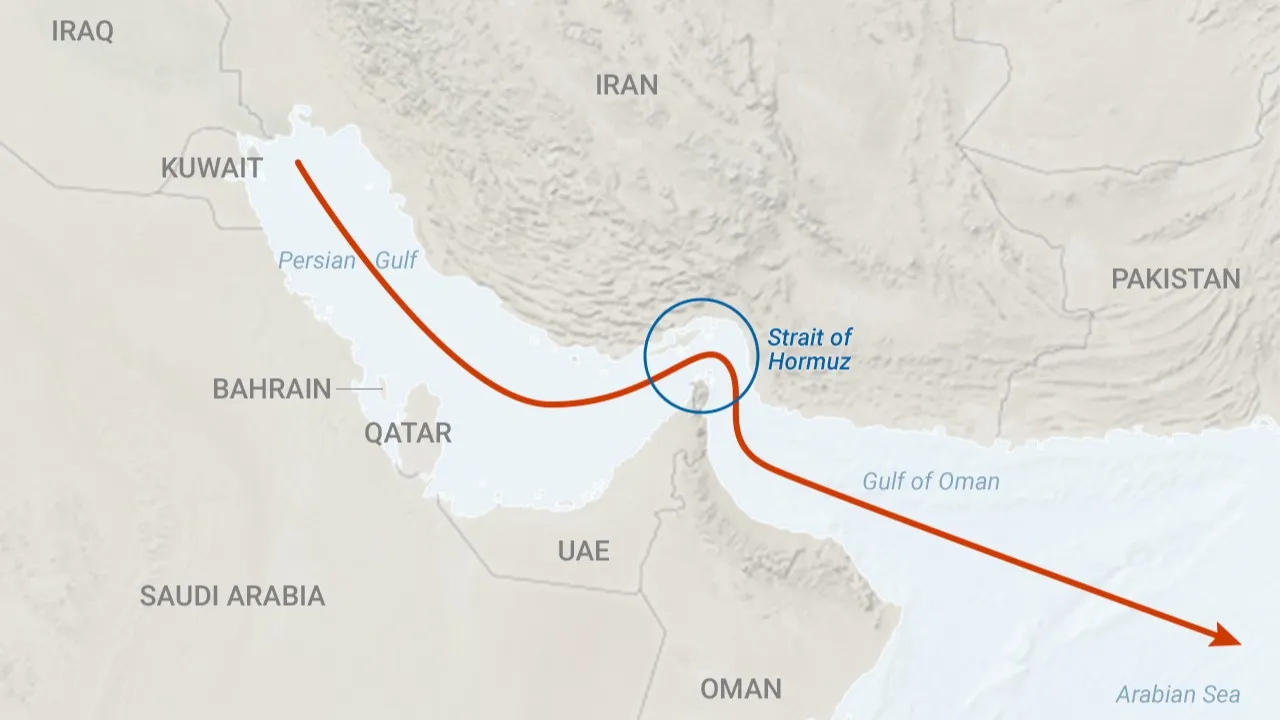
BANGKOK, April 9, 2026 — For decades, the Strait of Hormuz was a distant geopolitical “what-if” for Southeast Asian boardroom strategies. That changed on February 28. As the 2026 Middle East conflict effectively shuttered the world’s most vital energy artery, the shockwaves didn’t just hit gas pumps in Bangkok—they ignited a structural “Great Realignment” across the ASEAN supply chain.

While the “China Plus One” strategy provided the initial blueprint for diversification, the Hormuz crisis has turned a gradual transition into a panicked sprint. Here is how the disruption is permanently remapping the region’s economic DNA.


The Demise of “Just-in-Time” in the Mekong Region

The Thai-flagged vessel Mayuree Naree being struck in March 2026 was the final nail in the coffin for lean manufacturing. ASEAN’s industrial backbone—automotive, electronics, and food processing—is moving from “Just-in-Time” to “Just-in-Case.” This shift signifies a profound transformation in supply chain strategies, as companies prioritize resilience over efficiency. Warehouses are being expanded, inventory levels are increasing, and supplier diversification is taking center stage. Governments across the ASEAN region are also stepping in, offering incentives to encourage local production and reduce dependency on global supply chains.

  • Safety Stock Tripling: The Thai government has already directed oil traders to hike safety stocks from 1% to 3%, a move mirrored by private manufacturers in Vietnam and Malaysia who are now stockpiling 3–6 months of critical components.
  • The Inventory Premium: Warehousing demand in the Eastern Economic Corridor (EEC) is shifting. While prime logistics growth is slowing globally, “built-to-suit” resilient facilities are seeing record pre-leasing as firms prioritize “buffer capacity” over “efficiency.”

Energy Sovereignty: Redefining National Security

Thailand is among Asia’s most exposed economies, importing nearly 90% of its crude oil, much of it via the now-blocked Strait. This vulnerability is forcing an aggressive decoupling from Middle Eastern hydrocarbons:

  • The Renewable Fast-Track: With spot LNG prices surging 125% in local currency terms this month, the upcoming Power Development Plan (PDP) is being rewritten. Solar capacity in Thailand alone could displace 1.3 LNG cargoes per month, saving an estimated $119 million in fuel costs at current 2026 prices.
  • Biofuel Mandates: Indonesia and Thailand are accelerating palm-oil biodiesel mandates (B50 and B20) to insulate domestic transport from the $120+ Brent crude reality.

The “Overland” Pivot: Closer Ties with China

Ironically, the maritime blockade in the Middle East could strengthen ASEAN’s integration with China, as the sea-to-rail route emerges as the most dependable link to Europe and Central Asia.

  • Rail vs. Sea: The China-Laos-Thailand Railway is no longer just a “belt and road” trophy; it is a vital escape valve. Exporters are bypassing the high war-risk insurance premiums (which have jumped 4–6x in the last month) by shifting high-value electronics and perishables to overland rail.
  • RCEP Resilience: Intra-regional trade is surging. By sourcing intermediate feedstocks—like plastic resins and fertilizers—from within the RCEP bloc rather than the Gulf, ASEAN is shortening its “logistical tail.”

Sourcing: The Search for New Feedstocks

The “Hormuz Gap” has left a massive hole in chemical and fertilizer supplies. This disruption has caused significant challenges for global agriculture and industrial sectors, leading to rising costs and supply chain bottlenecks. As nations scramble to secure alternative sources, the ripple effects are being felt across markets, potentially impacting food security and economic stability worldwide.

  • Agricultural Crisis: With Thai food exports facing a potential 50% slump due to shipping constraints to the Middle East, the focus has shifted to securing non-Middle Eastern fertilizers.
  • Local Loops: We are seeing a “re-shoring” of the petrochemical industry. Investments are being redirected toward domestic clusters in Indonesia and Vietnam to create localized loops for urea and ammonia, reducing reliance on the volatile Persian Gulf.

“The Hormuz closure is a reminder that global supply chains run on geography, and geography is never neutral.”

The 2026 crisis has proven that geographic concentration is a singular point of failure. For Thailand and its ASEAN neighbors, the “Normal” of 2023 isn’t coming back. The result is a region that is becoming more self-sufficient, more energy-diverse, and more integrated than ever before—not by choice, but by necessity.

Advertisement

Key Data Points (April 2026):

  • Brent Crude: Peaked at $126/barrel in March.
  • Freight Rates: $6,000–$8,000 per container for Gulf routes.
  • LNG Spot Prices: Up from $11 to $23.50 per MMBtu.
  • Thai Export Forecast: Adjusted to a modest 2–4% for 2026 as the “Hormuz Factor” bites.

Continue Reading

Business

Mesoblast Limited (MESO) Discusses Cellular Medicine Platforms and Innovations at R&D Day Transcript

Published

on

OneWater Marine Inc. (ONEW) Q1 2026 Earnings Call Transcript

Mesoblast Limited (MESO) Discusses Cellular Medicine Platforms and Innovations at R&D Day April 8, 2026 8:00 AM EDT

Company Participants

Paul Hughes – Global Head of Corporate Communications & Joint Company Secretary
Silviu Itescu – Founder, CEO, MD, Chairman of Scientific Advisory Board & Executive Director
Marcelo Santoro – Chief Commercial Officer
Michael Schuster – Co-Founder and Head of Pharma Partnering
Roger Brown
Kenneth Borow – Executive
Eric Rose – Chief Medical Officer & Executive Director
Daniel Devine
Justin Horst – Head of Manufacturing
James O’Brien – Chief Financial Officer
Michael Schuster

Conference Call Participants

Advertisement

Joanne Kurtzberg
Susan Prockop
Douglas Beall
Emerson Perin
Saad J. Kenderian
Thaddeus Barney – Piper Sandler & Co., Research Division
Thomas Shrader – BTIG, LLC, Research Division
Douglas P. Beall
Michael Okunewitch – Maxim Group LLC, Research Division
Edward Tenthoff – Piper Sandler & Co., Research Division

Conversation

Paul Hughes
Global Head of Corporate Communications & Joint Company Secretary

Advertisement

Good morning, and welcome, everyone, to Mesoblast’s inaugural R&D Day. We’ve got a wonderful morning planned and appreciate you all investing the time to come along and hear the Mesoblast story.

Before we get started, I’ll just draw your attention to the slide, the forward-looking statement that I’ve got displayed on the screen. Okay. So the format will be presentations from Mesoblast program heads and our leaders. And they will be followed by a fireside chat with KOLs, and then we’ll conclude with Q&A. We’re delighted to have such a distinguished lineup of industry key opinion leaders for you to hear from today, and we’re very grateful for their time.

And with that, I’ll now hand over to Silviu, Mesoblast’s Chief Executive.

Advertisement

Silviu Itescu
Founder, CEO, MD, Chairman of Scientific Advisory Board & Executive Director

Good morning, everybody, and thank you for coming. We’re very excited to have our inaugural R&D Day and it’s great to have so many friends in the audience. So nice to see

Advertisement
Continue Reading

Business

Narendra Solanki sees limited IT growth, bets on rural and pharma plays

Published

on

Narendra Solanki sees limited IT growth, bets on rural and pharma plays
In a market navigating global uncertainty and shifting domestic dynamics, investors are increasingly turning selective—prioritising earnings visibility, balance sheet strength, and sector-specific tailwinds. In a recent interaction with ET Now, Narendra Solanki from Anand Rathi Shares & Stock Brokers shared his views on key sectors, highlighting where opportunities may lie and where caution is still warranted.

IT Sector: Stability Expected, Margin Watch Key

The IT sector, which has seen bouts of underperformance in recent months, may not deliver any major surprises this earnings season. According to Solanki, growth is likely to remain modest.

“Yes, definitely, as far as the results are concerned, it would be within the expected lines and the headline number would be at most 1.5% growth and the downside would be much closer to zero. So, it is a range between 0 to 1.5.”

Advertisement

However, beyond topline growth, the focus will be firmly on margins—particularly due to currency movements.


“However, the key thing would remain to be seen how the rupee depreciation actually plays out because from last quarter to this quarter we have seen around 2.5% to 2.6% kind of a depreciation in the rupee. So, the impact on the margins would be a key thing to be seen.”
Within the sector, Solanki prefers large-cap names such as Infosys and HCL Tech, while in the midcap space, Persistent and Mphasis stand out as preferred picks.Capital Markets: Preference for Stability in AMCs

Amid fluctuating market sentiment, asset management companies (AMCs) are emerging as relatively stable plays within the capital markets ecosystem.

“Yes, we will be preferring more the asset management companies like ICICI Pru AMC because of the fact that the volatility is very low in AUM-based businesses in comparison with other companies which are more exposed to market sentiment volatility. So, AMC companies would be our first preferred pick in the overall capital market segment.”

The emphasis here is clearly on business models that offer predictability over cyclicality.

Advertisement

Consumption Trends: Rural Outperformance, Urban Mixed

On the consumption front, the outlook remains mixed, with a divergence between urban and rural demand trends.

“Yes, our view is neutral to cautiously positive because if you see the urban markets, they were just starting to pick up in terms of volume growth and the recent West Asia crisis has shifted the market dynamics.”

Rising cost pressures are another concern, though companies may attempt to offset this through price hikes.

Advertisement

“Also, the cost pressures have been rising in some pockets. Although we are hearing from our channel checks that there has been some price rise coming up over the next few weeks which companies would be taking, so it has to be seen how much they can actually pass it on.”

In contrast, rural demand continues to show resilience.

“But yes, we are more positive on the rural aspects of the market wherein rural growth is expected to remain strong.”

Stocks like Marico, Dabur, and Godrej Consumer Products are among the preferred picks, along with Mrs. Bectors Food in the midcap segment.

Advertisement

Infrastructure & Middle East Opportunity: A Delayed Upside

The pause in geopolitical tensions in West Asia could eventually translate into opportunities for infrastructure companies, particularly those with a strong presence in the Middle East.

“Yes, definitely, a pause and a possible ceasefire which would lead to a permanent deal would definitely be a positive outlook for the overall Middle East region.”

Solanki believes reconstruction and fresh investments could drive order inflows in the coming quarters.

Advertisement

“The kind of damage which has happened in a month or so would lead to a lot of new construction activity, especially in the oil and gas and infrastructure segments.”

However, the near-term outlook remains uncertain.

“Having said that, the near term would continue to remain challenging because of the heavy presence in the Middle East region and we are yet to see how much impact actually would come in the current quarter as well as in the next quarter.”

The real benefits, he suggests, may materialise two to three quarters down the line.

Advertisement

Aviation: Near-Term Pain, Long-Term Promise

The aviation sector continues to grapple with cost pressures and operational challenges. “Yes, again if you see, the cost pressures would continue to hurt the company in the near term.”

Restrictions and limited access to international routes are also weighing on margins. “But beyond that, three to four quarters down the line, I think things should turn positive for the company.”

While the long-term outlook remains constructive, investors may need to brace for near-term volatility.

Advertisement

Retail & Lifestyle: Growth Intact, But No Fresh Calls

In the retail space, companies like Titan continue to demonstrate strong fundamentals, though Solanki refrained from making fresh recommendations at current levels.

“Yes, definitely if you see from both volume as well as value, the growth is there on both fronts, plus the store additions are also very impressive for Titan.”

The company’s experimentation with lab-grown diamonds could open new growth avenues. “The recent foray into lab-grown diamonds, where the company is in the testing phase, is just testing the waters and then gradually it would be leveraging and expanding into that area, which would bode well for the company’s long-term revenue growth perspective.”

Advertisement

Pharma: API Players and GLP-1 Opportunity in Focus

Within pharma, the focus is shifting toward API manufacturers and emerging opportunities in the GLP-1 segment. “Right now we are more focused towards API manufacturers like Divi’s and Divi’s Lab is our preferred pick.”

Additionally, the recent patent expiry of GLP-1 drugs in India has opened new avenues. “In the midcap space we are looking out for opportunities in GLP-1, which has just been off-patented in India from March.” Stocks such as Natco Pharma, Shaily Engineering Plastics, and Emcure Pharmaceuticals are on the radar in this space.

The Bottom Line

Advertisement

The broader market narrative remains one of cautious optimism. While global uncertainties—from geopolitical tensions to commodity price swings—continue to cast a shadow, selective opportunities are emerging across sectors.

From stable AMC plays and resilient rural consumption to long-term infrastructure tailwinds and niche pharma opportunities, the message is clear: this is a market that rewards discernment over broad-based bets.

Continue Reading

Business

The food waste 'saints' feeding city's children

Published

on

The food waste 'saints' feeding city's children

Janet Leng and Marian Hodgson volunteer at I Am Reusable food bank and redistribute food to schools.

Continue Reading

Business

Tilray Has Strong Synergies, But Sector Remains Weak (NASDAQ:TLRY)

Published

on

Tilray Has Strong Synergies, But Sector Remains Weak (NASDAQ:TLRY)

This article was written by

Welcome to the home of The Cannabis Report. I cover the cannabis sector and other sectors. I am most interested in technical stock analysis, option strategies, small cap strategies, and emerging markets. Feel free to contact me with any questions about publicly traded stocks in the cannabis industry.

Analyst’s Disclosure: I/we have a beneficial long position in the shares of TLRY either through stock ownership, options, or other derivatives. I wrote this article myself, and it expresses my own opinions. I am not receiving compensation for it (other than from Seeking Alpha). I have no business relationship with any company whose stock is mentioned in this article.

Seeking Alpha’s Disclosure: Past performance is no guarantee of future results. No recommendation or advice is being given as to whether any investment is suitable for a particular investor. Any views or opinions expressed above may not reflect those of Seeking Alpha as a whole. Seeking Alpha is not a licensed securities dealer, broker or US investment adviser or investment bank. Our analysts are third party authors that include both professional investors and individual investors who may not be licensed or certified by any institute or regulatory body.

Advertisement
Continue Reading

Business

Global relief wave lifts Indian markets, but FIIs stay cautious

Published

on

Global relief wave lifts Indian markets, but FIIs stay cautious
Mumbai: India’s equity indices shot up 4% – marking the highest single-day gain by the Sensex in five years and the strongest rally by the Nifty in 11 months – swept up in the wave of relief that propelled financial markets across the world on Wednesday after the US-Iran ceasefire was announced.

The rupee strengthened and government bond yields eased. Gold and silver rose. The two-week pause in West Asia hostilities, which paves the way for the reopening of the Strait of Hormuz, sent oil prices tumbling 15%, easing concerns that higher energy prices could stoke inflation and derail growth.

The NSE Nifty ended at 23,997.35, up 3.8% or 873.70 points over the previous day. The BSE Sensex finished at 77,562.90, up 4% or 2,946.32 points. The surge – the biggest upmove in a day by the Sensex since February 2021 and since May 2025 for the Nifty – was partly driven by liquidation of bearish bets.

Screenshot 2026-04-09 061335Agencies

Adding ₹16 Lakh Crore to Mcap
These had weighed down the market since the start of the war February 28, dragging it into the oversold zone.

“The ceasefire has come as a relief to investors as it rekindled hopes of the war coming to an end sooner, and drove them to cut bearish positions,” said A Balasubramanian, MD and CEO, Aditya Birla Sun Life AMC. “Although this is a step in the right direction, investor confidence is likely to be bolstered once a formal agreement is reached between the sparring nations.”
Wednesday’s gains added ₹16.1 lakh crore to the market cap of BSE-listed companies.

The ceasefire was announced early Wednesday morning India time. Still, foreign portfolio investors remained net sellers, pulling out a net ₹2,811.97 crore from Indian equities. That took their total sales tally for April to ₹48,317 crore. Domestic institutions brought to the tune of ₹4,168.17 crore.

Continue Reading

Business

Slideshow: Gearing up for gut-health innovations

Published

on

Slideshow: Gearing up for gut-health innovations

Formulations center on the inclusion of prebiotics and probiotics.

Continue Reading

Trending

Copyright © 2025