RAINELLE, W.Va. (AP) — Every month, Rebecca Michalski takes a deep breath before opening her electric bill. She lives on a fixed income, and heating her small house this winter has been staggering: Her February charge was $940.08 — more than her check.
It makes no sense. She turns the lights off during the day and only burns one lamp with an energy-efficient bulb in the living room at night, but she keeps falling further behind on payments. In desperation, she took out a loan after getting a cut-off notice during an extended arctic blast that kept the state’s heaters cranking when temperatures regularly dipped below zero.
“Every time you see that power bill, you’re just sick,” Michalski said, rifling through a stack of statements totaling thousands of dollars. “I already know before I open it. I just dread seeing how much.”
She’s taken to social media, demanding answers alongside thousands of other West Virginians who have been posting screenshots of their monthly charges. They are angry and perplexed over soaring utility costs that are surpassing rents and mortgages in one of the most energy-rich, yet poorest, corners of America, where some families have been forced to choose between paying for food or heat.
“And if it doesn’t work out, you’ll say, ‘Oh well, I voted for him, I still got them down a lot,’” he said. “You will never have had energy so low as you will under a certain gentleman known as Donald J. Trump.”
It hasn’t worked out.
Instead, electricity increased 4.8% in February nationwide and piped natural gas prices rose 10.9%, both compared with a year earlier, according to the Labor Department’s Consumer Price Index. That surpassed inflation even before the attacks on Iran by the U.S. and Israel sent energy costs ballooning.
Advertisement
It’s becoming an increasingly aggravating issue for some voters. Rising electricity bills emerged as a campaign issue in recent elections, including during gubernatorial races won by Democrats in New Jersey and Virginia. Cost concerns are expected to surface during midterms this fall, and an analysis by the nonprofit PowerLines found residents are not likely to get a break any time soon because new gas and electricity rate hike requests could affect more than 80 million Americans. An AP-NORC poll conducted in March also found 35% of U.S. adults were “extremely” or “very” concerned about being able to afford electricity in the next few months.
Rebecca Michalski pauses as she talks about electric bills she cannot pay while sitting next to her Chihuahua, Enos, at her home in Rainelle, W.Va., Saturday, March 21, 2026. (AP Photo/Carolyn Kaster)
Advertisement
Rebecca Michalski pauses as she talks about electric bills she cannot pay while sitting next to her Chihuahua, Enos, at her home in Rainelle, W.Va., Saturday, March 21, 2026. (AP Photo/Carolyn Kaster)
Advertisement
Advertisement
Advertisement
“It’s breaking me. And there’s nothing that can be done for it, unless the president does something,” Michalski said about her skyrocketing power bills, adding she no longer supports Trump. “And I don’t see him doing it. He’s had plenty of time.”
Increased demand, extreme weather and events, upgrading and maintaining aging infrastructure and rising natural gas prices are pushing electricity bills higher. Rising energy costs — including gas pump sticker shock now topping an average $4 per gallon nationally — could further be exacerbated by the war in Iran along with the Trump administration’s push to export higher volumes of liquefied natural gas — which, in turn, depletes domestic supply. Ratepayers are also wary as more power-gobbling data centers for artificial intelligence and cloud computing are being built or warmly embraced by politicians in places like West Virginia — where residents deep in Trump country have gone from having the cheapest electricity rate nationwide in 2005, to experiencing one of the fastest increases in the country, far outpacing the national average, according to data from the U.S. Energy Information Administration.
All in a place where people are living atop vast deposits of coal, oil and gas.
Advertisement
King Coal
Coal remains king here, but it wears a pricey crown. The state is an outlier nationwide because of its stubborn resistance to adopting cleaner, cheaper sources of energy, such as nuclear power, natural gas — even though it’s one of the nation’s top producers — and renewables like wind and solar. Instead, West Virginia clings to aging coal-fired electric plants more than anywhere else in the country — about 87% of all production. Its supermajority Republican-led government — there are only 11 Democrats in the House and Senate — has doubled down on this reliance, blaming past Democratic administrations for a war on coal fueled by increased federal regulations and restrictions, while Trump poses for photo ops with coal miners at the White House and regularly touts “beautiful, clean coal.”
“Lowering electricity prices is a top priority for President Trump,” said White House spokeswoman Taylor Rogers, blaming former President Joe Biden for the problem. “He is aggressively unleashing reliable energy sources like coal and natural gas.”
Trump has forced unprofitable coal-powered plants to remain open, rolled back pollution standards for them and provided hundreds of millions of dollars in funding to improve them. He’s also streamlined permitting and regulations to push for mining expansion when coal mines have been shutting down in the state, including several operations this year that eliminated more than 700 jobs.
Advertisement
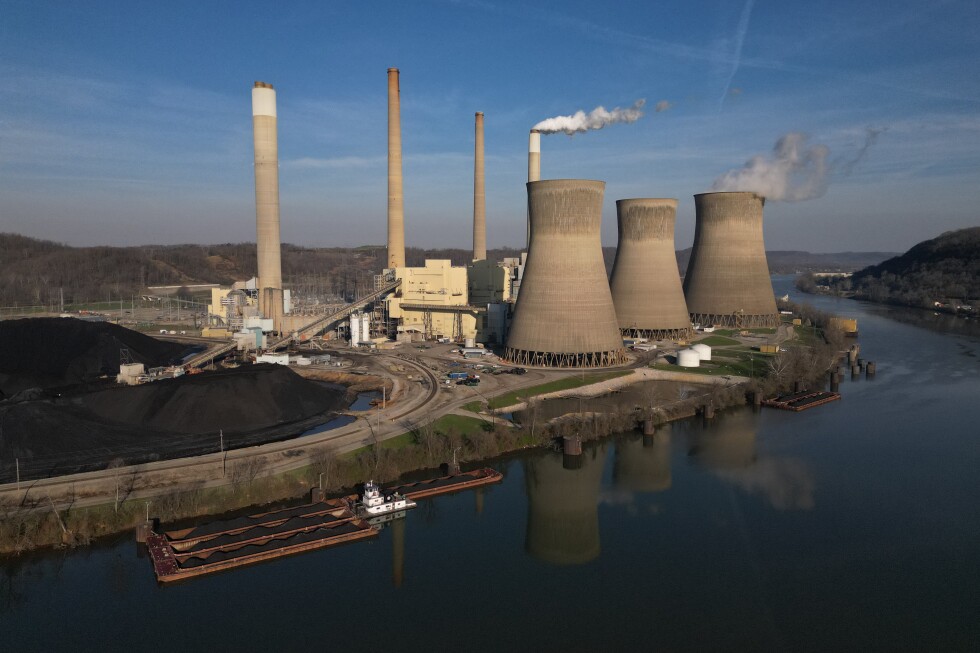
American Electric Power’s John Amos coal-fired power plant in Winfield, W.Va., stands across the Kanawha River, March 22, 2026. (AP Video/Carolyn Kaster)
Advertisement
“If you’re not 100% in on coal, then you’re a traitor. … It’s like a measure of patriotism,” said Jamie Van Nostrand, policy director at the nonprofit Future of Heat Initiative and a former West Virginia University professor who wrote a book about the state’s reliance on coal energy. “I think if you went to the average West Virginian and said, ‘Yeah, we understand you want to support the coal industry, but do you want to support it to the extent that you’re OK paying twice as much as you should be for electricity?’”
The state’s average household electricity rate per kilowatt-hour has surged 73%, natural gas has increased 51% per 1,000 cubic feet and water has risen 45% per 1,000 gallons from 2015 to 2025, according to West Virginia’s Public Service Commission, a three-member panel. It includes a former power company lobbyist and the former head of the state coal association — appointed by the governor and charged with approving rate hikes.
Even though monthly bills remain higher in other states, salaries in West Virginia have simply not kept pace — it’s the only place in the country where the median inflation-adjusted household income was lower in 2023 than it was in 1970, according to the Urban Institute. That means residents are seeing larger chunks of their paychecks going to utilities compared to people in other places.
Michalski, who’s disabled and uses a walker to get around, said she tries not to run anything in her house that can suck electricity, including her air conditioning in summer. But she simply can’t turn off the heater. During the past year, her statements totaled over $5,000. She asked family for help paying the bill this winter, but said she’s now out of options.
Advertisement
She knows what’s next.
“They come and cut off your power. Then you’re sitting in the dark. And I see that happening,” she said. “And I think for a lot of other people, it’s gonna happen too.”
“It only makes the rich richer”
Advertisement
Ed Tierney, left, and David Horne, struggle to load an overloaded pallet onto a truck at they close up one of two JCD Bargain and Trade stores, to consolidate with the other location, in Ravenswood, W.Va., Friday, March 13, 2026. (AP Photo/Carolyn Kaster)
Ed Tierney, left, and David Horne, struggle to load an overloaded pallet onto a truck at they close up one of two JCD Bargain and Trade stores, to consolidate with the other location, in Ravenswood, W.Va., Friday, March 13, 2026. (AP Photo/Carolyn Kaster)
Advertisement
Advertisement
Advertisement
Isolated by its beautiful, rugged mountains, West Virginia sits entirely within Appalachia and has long been listed at the bottom of a laundry list of failings, including poor health and a lack of education. Many residents from rural areas have lived on the same land for generations, watching a cycle of outside companies profit from extracting the state’s resources — from timber to coal and oil and gas — only to pollute and abandon communities afterward. Its people are known for being fiercely independent and proud despite their hardships, including a lack of clean drinking water that has persisted for decades in some areas, forcing residents in the southern coal fields to ferry jugs to and from roadside springs or abandoned mines while spending up to $250 a month for bottled water to cook with and drink. They also pay for public water piped into their homes that often runs black, yellow and brown.
Some, including those living in scenic areas where tourism is a major revenue driver, are protesting Big Tech companies rushing to build enormous data centers, fearing they could lead to the next cycle of outsiders taking advantage of the state’s resources. They have been loud over a lack of public input and transparency around plans to build the complexes, questioning noise pollution, huge water consumption and the effect on ratepayers’ electricity prices.
“We just roll back regulations and we keep being promised that deregulating and privatizing our systems is gonna fix everything, and it never does,” said Caitlin Ware, a pastor who advocates for clean water in southern West Virginia — her thoughts briefly interrupted as the electricity abruptly went off in her Sandyville United Methodist Church. “It only makes the rich richer, and it only puts us in a worse situation.”
Advertisement
In February, Gov. Patrick Morrisey proudly announced plans to build a data center on nearly 550 acres in Berkeley County.
“This $4 billion investment is a historic win that proves West Virginia can compete at the highest level for the global tech economy,” he said in a statement. It did not explain where the water or electricity would come from to run the 600 megawatt, 1.9 million square foot facility.
Morrisey’s office did not respond to a request for comment.
Skyrocketing electricity costs and the growth of data centers, which can use enough power to run 100,000 homes, faced voter backlash in Georgia last fall where Democrats ousted two Republicans on the state’s utility regulatory commission for the first time in nearly two decades. Trump recently tried to ease Americans’ concerns by announcing a “ratepayer protection” pledge at the White House with Big Tech companies promising to bear the cost and produce their own energy, though it’s not clear how that would be enforced.
Advertisement
The reasons behind nationwide utility price hikes are complex and vary among regions. They include adding new transmission, distribution lines and power poles; increased brutal high and low temperatures; extreme weather events such as hurricanes and wildfires; and volatility in fuel costs such as surging gas prices during the war in Ukraine.
These all play a huge role in rising bills that have left some 80 million Americans struggling to pay their monthly gas and electric bills, said Charles Hua, founder of consumer advocacy organization PowerLines that found investor-owned gas and electric utility companies asked for nearly $31 billion in increases last year nationwide, double the amount requested a year earlier. He said utility costs have become the new affordability issue akin to soaring egg prices that previously enraged consumers, making it a possible player in this fall’s elections to control Congress.
“Electric bills have gone up 40% over the last five years,” he said. “This is likely to continue to rise. This is definitely something that the Trump administration and President Trump are very concerned about.”
Advertisement
Ashley Nicole Dixon looks through her truck for electric bills outside one of her homes in Danese, W.Va., Saturday, March 21, 2026. (AP Photo/Carolyn Kaster)
Advertisement
Ashley Nicole Dixon looks through her truck for electric bills outside one of her homes in Danese, W.Va., Saturday, March 21, 2026. (AP Photo/Carolyn Kaster)
Advertisement
Advertisement
In West Virginia, all 55 counties voted for Trump in 2024. But it was a Democratic stronghold for decades prior to the switch when coal mines were the lifeblood, and unions were virtually unbreakable. The state has struggled immensely under both parties: It has experienced a major brain drain, a devastating opioid epidemic, a growing elderly population and its coveted coal industry jobs have dried up with nothing to replace them. That leaves people who work minimum wage jobs, those on fixed incomes and even college-educated middle-class families with two paychecks being pushed to the breaking point with affordability issues, including rising car insurance, grocery bills, health care and housing.
Ashley Nicole Dixon of Danese works as a manager at a Dollar General store and has a teenage daughter at home and another in college. She flipped through bills on her phone totaling more than $5,000 charged last year for electricity in her house that’s just over 1,000 square feet, even though her air conditioner didn’t work last summer. She voted for Trump, but said she’s done with him because he and other Republican politicians in West Virginia’s Capitol aren’t looking out for her interests.
Advertisement
“I love West Virginia because it’s beautiful. But anymore, it’s just a sham from the local government all the way up to Charleston,” she said, adding she believes the state’s Public Service Commission should be elected, and Trump should send her a check since he promised to cut electricity bills in half.
“I have no choice. It has to be paid,” she said. “And that’s what makes me sick because now I’m going to have to go … take more money out of my savings account just to keep the lights on.”
“Why is this so high?”
The coldest winter months were the hardest. Some people confined themselves to one room with small space heaters or used generators when they got behind on their electricity bills and were disconnected. Others were forced to choose between food, medicine and warmth, with some turning their thermostats down to 60 degrees and bundling up or coming out of retirement to take part-time jobs.
For some, the spiral began in November when their Supplemental Nutrition Assistance Program, or SNAP, benefits were put on hold due to the federal government shutdown. United Way’s Central West Virginia helpline saw more than a 1,300% increase during that time, and calls for help paying utilities were second only to housing last year.
Advertisement
Retired railroad worker and Army veteran Charles “Duke” Hodge watches old Westerns with Sophie, one of his two Yorkies, in his home at the Olde Oak RV Park and Campground where he lives and works in West Columbia, W.Va., Tuesday, March 17, 2026. (AP Photo/Carolyn Kaster)
Advertisement
Retired railroad worker and Army veteran Charles “Duke” Hodge watches old Westerns with Sophie, one of his two Yorkies, in his home at the Olde Oak RV Park and Campground where he lives and works in West Columbia, W.Va., Tuesday, March 17, 2026. (AP Photo/Carolyn Kaster)
Advertisement
Advertisement
Advertisement
More than one in three West Virginia households is considered energy burdened, spending more than 6% of their income on electricity and other fuel costs. Of those, about 20% are low-income residents who shoulder some of the highest energy costs in the state.
Advertisement
Last year, Trump fired the staff of a federal program that assists millions of low-income Americans with heating bills in the winter and proposed eliminating all of its funding in his budget — a move repeated this year. Congress allocated money for it, but billions of dollars were delayed due to the shutdown. However, many West Virginians falling behind on bills are not eligible to apply because they make just a little too much money.
Jennifer Brown of Kingwood lands in that category. She’s employed at West Virginia’s federally funded Head Start program for low-income children and her husband is a postal worker. They have four kids and during the winter months, their combined utilities can climb to $1,000 a month, eclipsing their $798 mortgage. They were on a payment plan for their gas this winter after receiving a shut-off notice, and she said they were still paying off a water bill from their previous home.
“Every month we get our utility bills, I’m so angry. I’m like, ‘Why is this so high?’” she said, adding it’s not unusual to pay $200 to $300 for electricity and the same for water, sewage and garbage combined every month. “And we can’t figure it out. Nothing seems to be wrong … and we’re not wasteful.”
Bills introduced that would have temporarily frozen electricity rates in West Virginia or helped those who are most vulnerable went nowhere this year in the state legislature even though increased energy costs are often passed on to ratepayers. The Public Service Commission has approved a flurry of rate hikes in recent years as private utilities grapple with maintaining profits while improving infrastructure in a mountainous, sparsely populated state.
Advertisement
The town of Ravenswood, W. Va. (AP Video/Jesse Wardarski)
Advertisement
It’s been a particularly tough burden for some small businesses to carry. In the western town of Ravenswood, just across the river from Ohio, some shop owners were forced to shut down this winter because they couldn’t pay their electric bills.
Heather Santee said the power at her bakery was abruptly terminated just ahead of Valentine’s Day. She was behind on her bill, but said she would have been able to pay the necessary chunk of the $4,000 she owed if she could have stayed open long enough to fulfill the holiday orders. Instead, the shut-off forced her out, leaving the tenants living in apartments upstairs without heat too.
“Once I started getting those high electric bills in the winter, I was like, ‘This will be what closes me down,’” she said, adding the bakery was her dream and the loss has her thinking maybe it would be better to just leave the state altogether. “West Virginia is holding back a lot of people because they are allowing these bills to be so high.”
Advertisement
She’s not alone. Just a couple blocks down the street, Anthony Crihfield Jones packed up his overstock retail shop, JCD Bargain and Trade, moving inventory to another warehouse because he can no longer afford to pay thousands of dollars in electricity charges for his home and businesses.
Anthony Crihfield Jones wipes tears outside his JCD Bargain and Trade store near Ripley, W.Va., Friday, March 13, 2026, as he closed his other nearby location to consolidate his businesses under one roof due to high electric bills. (AP Photo/Carolyn Kaster)
Advertisement
Anthony Crihfield Jones wipes tears outside his JCD Bargain and Trade store near Ripley, W.Va., Friday, March 13, 2026, as he closed his other nearby location to consolidate his businesses under one roof due to high electric bills. (AP Photo/Carolyn Kaster)
Advertisement
Advertisement
Advertisement
Advertisement
Even though he still supports Trump, after leaving the Democrats to vote Republican, he’s becoming increasingly concerned that neither party cares about struggling people in America.
“All I heard was … ‘Drill, baby, drill,’” he said, repeating Trump’s popular catch phrase to encourage domestic energy production. “OK. Well, they’re drillin’. Why’s my bill the same?”
Red light therapy has long been used by humans to improve skin health, slow signs of ageing and soothe sore muscles – now the treatment is giving a glow-up to one of our most vital pollinators: bees.
It works by stimulating the mitochondria – the powerhouses of living cells – boosting efficiency and catalysing tissue regeneration.
The brains behind Beefutures, an agritech outfit based in France and Norway, claim studies show bees enjoy the same benefits when exposed to red and near-infrared light.
Advertisement
Colonies given the red light treatment were better able to cope with stressors like heat, extreme weather and pesticides than those without, living longer and pollinating more effectively, the company said. The company has since launched Onibi light, a world-first, in-hive therapy light for bees, developed in partnership with University College London (UCL).
According to Ecowatch, nearly 60% of US honeybee colonies were lost last winter, with French beekeepers reporting losses of up to 50%. “When the bees stop buzzing, our food stops growing. That’s the real story. And this is what Onibi Light is all about,” said Christophe Brod, CEO of Beefutures.
Trials by UCL showed that colonies exposed to pesticides or transport stress got back to being busy bees within days when supported by the gadget.
“Our research shows that treated bees experience enhanced cellular respiration, improved visual acuity and stronger immunity,” said Glen Jeffery, professor of neuroscience at UCL.
Advertisement
Brod added: “Stronger bees mean stronger food systems. With Onibi Light, we are giving beekeepers and growers a practical tool to protect the very foundation of agriculture.”
Ian Tonks was diagnosed with kidney disease and spent years managing a failing transplant before his father-in-law saved his life
Monde Mwitumwa TV and Celebrity Reporter
14:44, 09 Apr 2026Updated 14:44, 09 Apr 2026
A man has been given a fresh start after his father-in-law donated his kidney, becoming Britain’s oldest donor.
Ian Tonks, 49, had spent years managing a failing transplant and long periods on dialysis.
Advertisement
He initially received a kidney transplant 12 years ago, but complications arose after six years due to an autoimmune condition.
For years, Ian’s life was on pause as the life-threatening condition left him unable to work, enjoy his hobbies or even drink more than half a glass of liquid a day.
Despite concerns surrounding his age, Ian’s father-in-law Graham Sisson, 84, volunteered to undergo testing and was subsequently approved for the transplant, reports the Mirror.
He proceeded to have the procedure at Manchester Royal Infirmary.
Advertisement
Over a year later, Ian and Graham featured on Thursday’s (April 9) instalment of This Morning and discussed how he now shares a profound connection with his father-in-law following the transplant.
Speaking to presenters Rochelle Humes and Joel Dommett, Ian remarked: “We’ve got an amazing bond now. We always got on well for obvious reasons but we are very close now.”
Advertisement
Graham revealed the motivation behind his decision to offer his kidney, stating: “I could see him deteriorating virtually on a daily basis. Several members of the family have already tried to donate him for various reasons but were unable to do so.”
He continued: “I felt that if someone else didn’t step in, he was literally going to die. So I spoke to my wife and said, ‘I think I might put myself forward’ and at that point, we had never thought about the age issue.
“So I just rang Ian and ‘I’d like to have a try and see if it works.’ And surprisingly, we found that we were compatible.”
He acknowledged they were forced to act swiftly, as Ian was at one stage given just 12 hours to live, revealing: “The operation was planned for August 2024 but he was too ill to have the operation. He nearly died in September.
Advertisement
“He was given 12 hours to live in September so when we got to October we snatched up (the next date) and the hospital carried out the operation.”
In November 2024, the pair made their way to Manchester Royal Infirmary for the procedure, remaining there for several days. The transplant proved successful and both men made a complete recovery.
A thankful Ian expressed his gratitude, saying: “I’d like to say a big thank you to the NHS at Manchester Royal Infirmary, it wasn’t just the surgeons but it was the coordinators, it was the dialysis team, it was everybody that was underneath that helped and kept me alive.”
Advertisement
He further added: “Also made this happen and changed a lot of peoples lives. I mean, you know, it’s like a life lottery. You don’t win the lottery but it’s like a life lottery having this.”
This Morning airs weekdays from 10am on ITV1 and ITVX
Use the Jubilee line from Waterloo to Westminster, then change for the District line to Richmond.
The reverse route is also available via Westminster
From Richmond, take the District line to Embankment, then switch to the Bakerloo or Northern line to Waterloo.
Piccadilly line options via Hounslow, Hatton Cross or Green Park, connecting to Jubilee or Northern lines.
Northern line services also run between Battersea Power Station and Waterloo.
This roundup of The Conversation’s environment coverage was first published in our award-winning weekly climate action newsletter, Imagine.
In 1968 a photo of the Earth was taken by the crew of Apollo 8 as they orbited the Moon.
It’s hard for us to imagine today what that would feel like for both the crew and the public who first saw the shot of Earth snapped from so far away. All those years ago this was a fantastic, and perhaps shocking, picture taken from somewhere many people would never have imagined humans could go.
That Earthrise shot from 1968, the first colour image of the Earth from space, showed our planet from a perspective we had never seen before, from the Moon in the foreground and the globe of the Earth in the distance. And for many people, it seemed more fragile than they had ever realised.
Advertisement
This image from space provoked a massive reaction, and is credited with prompting the creation of Earth Day, and a wave of environmental activism.
Nearly 60 years later we are inundated with images of space, planets and even AI-generated sci-fi stories. So it came as somewhat of a surprise to find myself caught up in the whirl of excitement and emotion around the Artemis II journey, and drawn into watching and discussing what the astronauts were seeing and saying.
Nick Dunstone, a science fellow at the Met Office, is a big fan of the Earthrise photo. He has had it stuck on his wall for years. The Artemis II mission prompted him to think about how much the climate around the Earth has changed in the decades between the Earthrise photo and the one taken by 2026’s astronauts from the dark side of the moon.
He points out that one of the legacies of the 1960s space race is a set of satellite observation platforms which have allowed us to monitor, understand and predict changes to our global climate. Unfortunately, many of these reveal worrying trends. For example, more frequent heatwaves on land and sea, loss of Arctic sea-ice, melting glaciers and sea-level rise.
It can seem like nothing is getting better in these days of global upheaval and endlessly escalating conflicts. It’s easy to despair about whether any small actions that we can take will make any kind of difference.
Bee stories
I ended up in a conversation with my running buddies at the weekend about whether there is anything that can cheer us up. I talked about new research that shows that queen bumblebees can survive underwater. In what seems like a story that could be made into a Pixar film, academics at the universities of Ottawa and Guelph discovered this purely by accident.
Sometimes scientific discoveries are prompted by happenstance. In this case, some tubes were accidentally filled with water and the bees which had been assumed to have died were discovered to be still alive. Queens, it turns out, can stand submersion for up to a week. This matters because climate change is bringing more rain during winters when these bees must survive underground. And the queen’s survival is vital, for she must found a new colony the next spring. Without her, there is nothing.
Then there’s the discovery by Oxford researcher Sophie Lund Rasmussen that hedgehogs can hear. Rasmussen set off to find out if there were any ways to warn hedgehogs of the dangers of crossing the road. With up to 300,000 hedgehogs killed per year on UK roads, and the same situation across Europe, this mammal which has featured fondly in many of our childhood stories, is incredibly threatened.
Research has discovered that hedgehogs can hear ultrasound. tiberiuaduve/Shutterstock
Rasmussen’s research opens the door for ultrasound hedgehog warning systems to be put in place to try and warn hedgehogs away from roads, and potentially save thousands from a messy death.
Moss, many people might think, is quite a dull subject. But in the past few weeks, after chatting with University of Limerick’s Pedram Vousoughi, I’ve become the biggest fan of this green stuff that we find on the sides of trees and on our garden paths. As it turns out, moss has almost magical qualities that could be a great help to humanity in the next decades.
For someone who had not paid much attention to this plant in the past, the abilities of this low-to-the-ground greenery was a revelation. Moss can absorb several times its own body weight in water and release it over time. This makes it ideal for helping the world cope with increasing rainfall and flooding, especially along busy roads.
Moss also absorbs air pollution and could play a role in increasing biodiversity along major roads. I’m now boring on about moss in various social situations – and it’s making me feel a bit more positive about the world.
One of my favourite places is a long pebbly beach on a thin spit of land on the Suffolk coast, where you can watch the sun go down as well as the sun rise (although as a night owl I’m less likely to see the second). I have come to realise the value of sitting somewhere incredibly quiet and just looking at the sea and the sky.
That’s why the Dutch trend of dusking – coming together with friends to watch the sun go down – struck a chord with me. As Jenny Hall and Brendan Paddison from York St John University explain, watching the light of the day disappear over the horizon can be a way of connecting with nature’s rhythms and disconnecting from your worries, bringing the work day to a natural close. This also links with studies suggesting that focusing on nature can enhance feelings of wellbeing.
In these complex times, recognising small discoveries (as well as large ones) can be vital.
We are now entering the top 10, and the arguments will be even stronger for each position. Anyone at this stage could lay claim to being the greatest
On one of the busiest sporting weeks of the year, we are bringing you our list of the top 25 Northern Ireland sport stars of all time.
Advertisement
Rory McIlroy may be the talk of the sporting world right now, but that is nothing new as iconic Northern Ireland figures like George Best, Alex Higgins and AP McCoy have been houselhold names around the world.
We are now entering the top 10, and the arguments will be even stronger for each position. Anyone at this stage could lay claim to being the greatest.
On day one, we had international hockey star Katie Mullan, gymnast trailblazer Rhys McClenaghan, rugby legend Mike Gibson, GAA colossus Kieran McGeeney and Olympic gold medal winning swimmer Dan Wiffen.
At number 20, on day two, was soccer legend Pat Jennings. Former champion jockey Richard Dunwoody was in 19th, while Norman Whiteside, ex of Manchester United was in 18th. Three-time All-Ireland winner hero Sean Cavanagh was next in 17th, with boxing legend Wayne McCullough in 16th.
Advertisement
At number 15 was Paralympic legend Bethany Firth. Down GAA hero of the 1960s Sean O’Neill was 14th, while Ireland and Lions rugby icon Willie John McBride was 13th.
At number 12 was Belfast two-weight world boxing champion Carl Frampton and at number 12 was six-time World Superbike champion Jonathan Rea.
Here are numbers six to 10 on our Northern Ireland sport stars list:
6. JOEY DUNLOP
Motorcycle icon Joey Dunlop OBE is widely considered the greatest road racer in history. Dunlop began racing in 1969 and within a few years had established a reputation alongside his colleagues in the ‘Armoy Armada’, he began to win trophies at circuits and road races throughout the British Isles.
His legacy is defined by 26 Isle of Man TT wins, five Formula One World Championships, 24 Ulster Grand Prix triumphs, and 13 North West 200 wins.
In 2015, the Ballymoney man was voted Northern Ireland’s greatest-ever sports star in a Belfast Telegraph poll.
His record of 26 Isle of Man TT wins stood for a remarkable 24 years, until his nephew Michael surpassed the longstanding Mountain Course benchmark.
Advertisement
He died in an accident in Estonia in July 2000, at the age of 48.
7. JACK KYLE
Born and educated in Belfast, John (Jack) Kyle was a central figure in Irish rugby’s post-war resurgence and played a pivotal role in Ireland’s historic Grand Slam victory of 1948, secured at Ravenhill.
Renowned for his instinctive brilliance, pace and vision, he went on to win 46 caps for Ireland and tour with the British & Irish Lions in 1950, captivating crowds in Australia and New Zealand with a style of play that marked him out as one of the game’s true greats.
Advertisement
In 1950, Kyle was declared one of the six players of the year by the New Zealand Rugby Almanac.
He is a member of the International Rugby Hall of Fame and was inducted into the IRB Hall of Fame. He was named the Greatest Ever Irish Rugby Player by the Irish Rugby Football Union in 2002.
8. PETER CANAVAN
The Errigal Ciaran man is one of the most decorated Northern Ireland-based players in Gaelic Football history.
Advertisement
The diminutive Tyrone attacker won two All-Ireland Senior Football titles, six All Stars Awards (more than any other Ulster player), four Ulster titles and two National Leagues. He represented Ireland in the International Rules Series on several occasions.
While Tyrone lost the All-Ireland final in 1995, early in Canavan’s career, he scored 11 of their 12 points in the decider. He did claim Celtic Crosses in 2003 and again in 2005.
He led the line while Tyrone were far from a powerhouse, but ultimately helped them reach the promised land of All-Ireland senior glory and was known as ‘God’ or ‘Peter the Great’ by fans before the end of a legendary career.
9. DANNY BLANCHFLOWER
Northern Ireland’s captain when they reached the quarter-finals of the 1958 World Cup, so immense was Danny Blanchflower during his illustrious career that he received three Ballon d’Or nominations.
The closest he came to winning it was in 1957 when he finished 14th in a very tight field behind runaway winner Alfredo Di Stefano.
A First Division winner with Tottenham, Blanchflower also won a European Cup Winners’ Cup and two FA Cups, and in his 56 caps for Northern Ireland he scored twice.
He was the first Northern Ireland player to pass a half-century of appearances for his country.
Advertisement
10. MARY PETERS
An Olympic icon, who built a lasting legacy through her 1972 Munich pentathlon gold medal win and decades of supporting athletes in Northern Ireland.
She established The Mary Peters Trust in 1975, helping hundreds of young sporting stars.
In the 45th pentathlon of her career, the veteran of Spartan Ladies AC achieved the ultimate success by winning an Olympic title with a new world record. English-born Peters spent much of her life in Ireland and her first pentathlon competition was at Ballymena in 1955.
Advertisement
In the 17 years leading up to her Olympic triumph, she won seven WAAA pentathlon titles as well as the gold medal at the Commonwealth Games in 1970, and finished fourth in the 1964 Olympics and ninth in 1968. She also won the WAAA shot put title twice and was the Commonwealth Games champion in 1970.
****
Tomorrow we unveil numbers 1-5 in our top 25 Northern Ireland sport stars of all time.
BRUSSELS (AP) — NATO Secretary-General Mark Rutte has weathered a fresh ordeal with President Donald Trump, this time over the U.S.-Israel war on Iran, a conflict that does not even involve the world’s biggest military alliance and one it was never consulted about.
Since launching the war, Trump has derided U.S. allies as “cowards,” slammed NATO as “a paper tiger” and compared U.K. Prime Minister Keir Starmer to Neville Chamberlain, who is probably best remembered for a policy of appeasement toward Nazi Germany.
That comes on top of Trump’s repeated threats to seize control of Greenland, which have deeply strained relations with U.S. allies in NATO and raised fears that doing by force could spell the end of the organization.
In recent days, the man who is as good as chairman of the NATO board suggested that the U.S. might leave the trans-Atlantic alliance. Trump already threatened to walk out in 2018 during his first term. His complaint now is that some allies ignored his call to help as Iran effectively shut the Strait of Hormuz, a vital trade waterway.
Advertisement
After talks with Rutte on Wednesday, the alliance’s most powerful leader took to social media to show his annoyance. “NATO WASN’T THERE WHEN WE NEEDED THEM, AND THEY WON’T BE THERE IF WE NEED THEM AGAIN,” Trump posted.
Peppered with questions later on CNN about whether Trump intended to take America out of NATO, Rutte said: “He is clearly disappointed with many NATO allies, and I can see his point.”
Keeping America in
Rutte has earned a reputation as a “Trump whisperer,” notably helping to draw up a plan that has seen European allies and Canada buy U.S. weapons for Ukraine, and keep the administration involved in Europe’s biggest war in decades.
Indeed, one of his most demanding tasks since taking office in 2024 has been to keep the mercurial U.S. leader engaged in NATO, particularly as America has set its sights on security challenges elsewhere, in the Indo-Pacific, Venezuela, and most recently Iran.
Advertisement
Rutte has used flattery, praising Trump for forcing allies to spend more on defense. He has congratulated the U.S. leader over the war and refrained from criticizing Trump’s warning that “a whole civilization will die” should Iran not reopen the strait.
“This was a very frank, very open discussion but also a discussion between two good friends,” Rutte told CNN. He declined to confirm reports that Trump is considering moving U.S. troops out of European countries that do not support the war.
Asked whether the world is safer thanks to the U.S.-Israel war, Rutte said: “Absolutely.”
War launched by a NATO member, not at one
The striking thing about the war on Iran is that NATO has no role to play there. As a defensive alliance it has protected ally Turkey when Iranian missiles were fired in retaliation at its territory, but the war was launched by a NATO member, not at one.
Advertisement
Rutte himself has said that NATO would not join the war, and there is no public confirmation that the U.S. had even raised the issue at the organization’s Brussels headquarters, although it cannot be ruled out that the administration made a request on Wednesday for that to happen.
NATO declined to say whether security for the strait has been officially discussed and referred questions to the United Kingdom, which is leading an effort outside the alliance to make the trade route safe for shipping once the ceasefire is working.
Advertisement
Sign up for Morning Wire:
Our flagship newsletter breaks down the biggest headlines of the day.
Advertisement
Estonian Foreign Minister Margus Tsahkna said Thursday that his country is always ready to consider providing support through NATO to partners who request it there.
“If the U.S. or any other NATO ally is asking (for) our support, we are always read to discuss it,” he told broadcaster CNBC. “But for that, we need of course the official ask to discuss then what is the mission, what is the goal?”
If allies “need our support, then we need to plan together,” he said.
NATO trying to stay out
Rutte himself insists that the alliance will only defend itself, and not become involved in another conflict outside of NATO territory, which is considered to be much of Europe and North America.
Advertisement
“This is Iran, this is the Gulf, this is outside NATO territory,” he said.
NATO has operated outside of the Euro-Atlantic area in the past, notably in Libya and Afghanistan. But there is no appetite to do so again given its chaotic U.S.-led exit from Afghanistan in 2021, which former NATO chief Jens Stoltenberg described as a “defeat.”
Trump’s ire seems most directed at Spain and France, rather than NATO itself. Spain has closed its airspace to U.S. planes involved in the Iran war and has refused U.S. forces the use of jointly operated military bases.
After the two-week ceasefire was announced, Spanish Prime Minister Pedro Sánchez posted on X that his government “will not applaud those who set the world on fire just because they show up with a bucket.”
Advertisement
“What’s needed now: diplomacy, international legality, and PEACE,” he added.
France has been critical, insisting that the war was launched without respecting international law and that Paris was never consulted about it. No blanket restrictions were placed on the use of joint bases or its airspace, but French authorities have said they’re making such decisions on a case by case basis.
Wendy Smyth travelled from Northern Ireland to Malaga, Spain, where she showcased the European Union’s new Entry/Exit System (EES) in full operation, highlighting the contrast for EU and non-EU citizens
Alan Johnson Social News Reporter
13:14, 09 Apr 2026Updated 13:15, 09 Apr 2026
A British national has showcased the “reality” of the new Entry/Exit System (EES) that applies to everyone travelling to a destination within the Schengen area of the European Union. The system, which has been operational since October in some locations, is gradually being rolled out across the continent.
The EES is an automated IT system for registering non-EU nationals travelling for a short stay, each time they cross the external borders of these countries and they will gradually replace passport stamps with a digital system that records when travellers enter and exit, making border checks faster and helping staff to work more efficiently.
Advertisement
Content cannot be displayed without consent
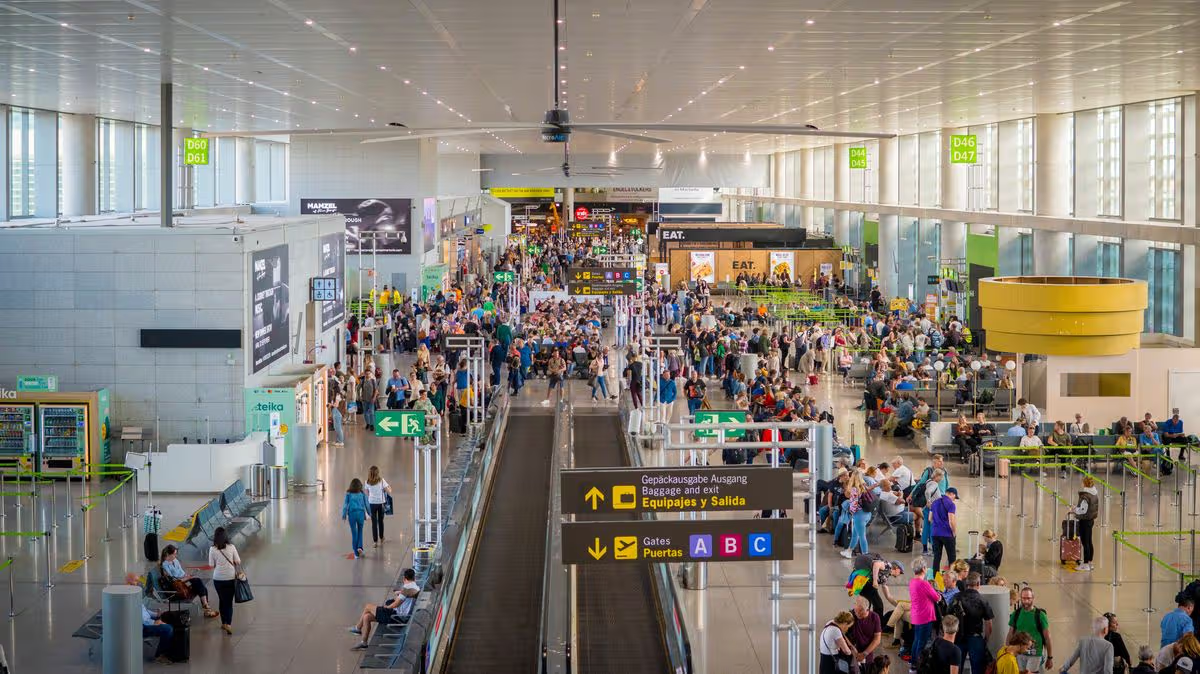
Wendy Smyth, who hails from Northern Ireland, recently put the EES to the test as she travelled to Malaga. She took to TikTok, where she showcased a very crowded airport in the Spanish hotspot.
“Before you reach Passport Control, if you’re a UK national, you will need to register your biometrics on the system,” she explained. “There’s plenty of staff around to help you do this, and it involves taking your picture, taking your fingerprints and other information.”
Wendy went on to advise the EES is expected to be fully operational across the entire Schengen region from tomorrow (April 10). “There’s plenty of signage around Malaga Airport,” she continued, before highlighting how travellers are then split into two lanes ahead of Passport Control – comprising EU and non-EU citizens.
“If you’re unsure, there is a map beforehand, which will show you if you are a ‘blue country’ or not, what lane you should go in and likewise for ‘brown countries’,” Wendy said.
Advertisement
The lanes made for harrowing viewing meanwhile. The left – for Brits – appeared incredibly long, while EU citizens were able to stroll down their lane with ease.
“You’re held in this queue before you get to the ramp to go through into Passport Control,” Wendy advised. “This is what may greet you whenever you go through those glass doors.”
“If you’re an EU citizen you are able to walk down past everyone on the ramp and go to this empty space where the E-Gates are now operational – so be prepared – you may have to wait some time before you get through Passport Control.”
Writing in response, one TikTok user exclaimed in shock: “I think this will put a lot of people off travelling.”
Advertisement
A second person shared their frustration: “I had my fingerprints and photo taken in Poland but arrived in Spain today and it didn’t recognise my passport.”
Then a third fumed: “Bet you lot who voted from Brexit back in the day are happy, this is what we need to deal with now.”
While a fourth shared their experience of Malaga: “We went through Malaga on Tuesday and was through passport control in 15 mins. Seen the queues on TikTok and we had nothing!”
The countries in the Schengen area are:
Austria, Belgium, Bulgaria, Croatia, Czechia, Denmark, Estonia, Finland, France, Germany, Greece, Hungary, Iceland, Italy, Latvia, Liechtenstein, Lithuania, Luxembourg, Malta, Netherlands, Norway, Poland, Portugal, Romania, Slovakia, Slovenia, Spain, Sweden, and Switzerland.
Advertisement
The Republic of Ireland and Cyprus are not within the Schengen area, and therefore EES is not applicable when travelling to either of these countries.
The X10 service has come in for criticism from locals over the reliability of the fleet and late cancellations – but a report from the Bus Users UK group has been hailed by the service’s operators.
An under-fire bus route has been praised in a new independent report from a passenger watchdog – despite criticism over unreliability.
Advertisement
A monitoring exercise from the Bus Users UK group focused on the X10 and X10A route which connects Stirling and Glasgow through Milngavie.
The bus is also a vital lifeline for passengers in rural Stirling, with the service making its way through villages such as Strathblane, Balfron and Kippen.
The service was found to have a 97 per cent punctuality rate, with all scheduled journeys successfully operated from the 183 monitored.
Inspectors also highlighted the “consistently high” standard of vehicles on the route and noted their clean and comfortable ride for passengers.
Advertisement
Greig MacKay, Director for Scotland, Bus Users UK, said: “Following a recent monitoring exercise concerning the X10/X10A routes that connect rural Stirling villages to Glasgow and Stirling.
“Bus Users UK recorded an overall punctuality score of 97 per cent.
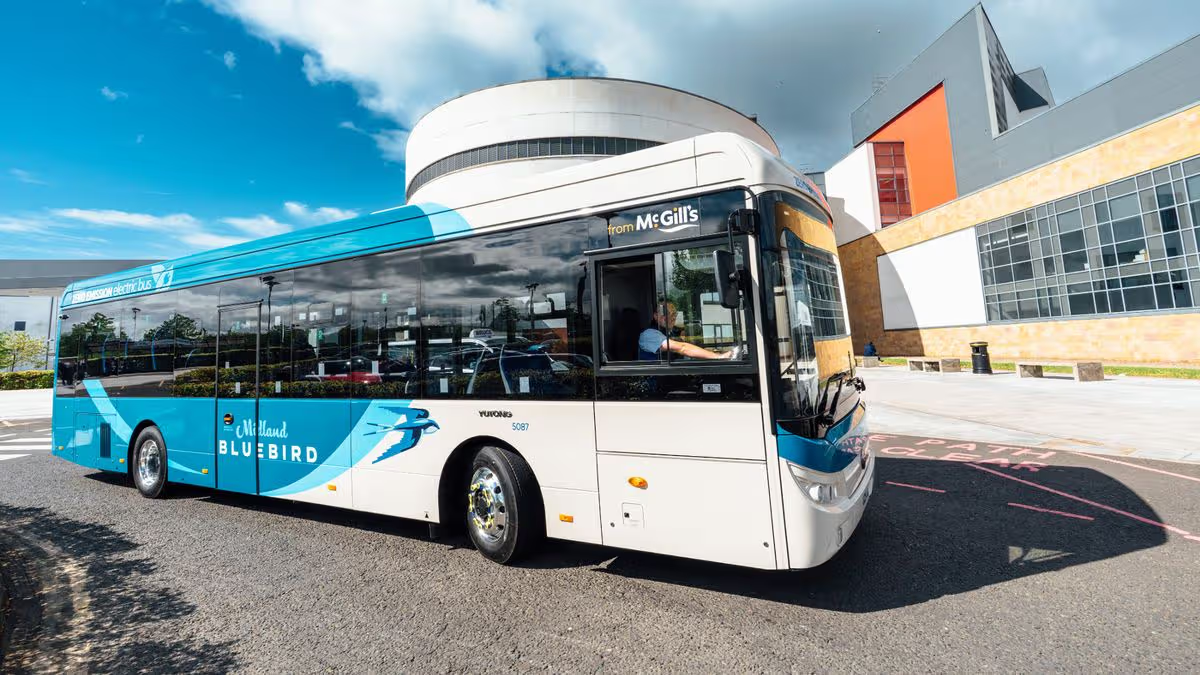
“This represents a significant improvement in punctuality standards for these two lifeline services. Passengers have also benefited from new investment by McGill’s Midland Bluebird which has contributed to more reliable services for the passengers who use them.”
The state of the X10 has been a running complaint for local bus passengers, with Buchlyvie resident Iain Smith one of those left frustrated by inconsistent arrival times.
Advertisement
Mr Smith wrote to McGill’s Group CEO Tony Williamson in February following a case where he and several other passengers were left out in the cold waiting for an X10 bus at Stirling bus station, with Mr Williamson eventually forced to fork out for a taxi to get home.
The reliability of the fleet operating the route has also come in for criticism after a recent incident where an X10 bus was pictured at the side of the road near Cambusbarron with smoke pouring from the back as traffic built up around the bus.
A spokesman for Midland Bluebird blamed the incident on a “coolant leak” with the issue resolved.
Reacting to the report, officials from McGill’s – who run Midland Bluebird – said it worked as justification for the hard work on making improvements to the X10 offering.
Advertisement
Colin Napier, Group Service Delivery Director for McGill’s Group, said: “This is a strong endorsement of the X10 and X10A services and the effort our drivers and operational teams put in every day, particularly given the level of disruption on the network.
“We’re seeing around 90 per cent satisfaction from our own passenger surveys and a steady five per cent increase in footfall, which shows that customers value the service we’re providing. In the areas where we can continue to improve, we will strive to ensure we do that.
“To build on this progress, we need continued support from local authorities and partners.
“Investment in better infrastructure – such as improved shelters with real-time information, high-access kerbs, traffic light priority and dedicated bus lanes into and out of Glasgow – would make a real difference for passengers and help us deliver even more reliable services.”
Advertisement
Graeme Leslie, Area Director of Midland Bluebird, added: “We’ve made a real effort to listen to the communities along the X10 and X10A corridor.
“The feedback we gathered at our drop-in sessions in Balfron and Milngavie has helped shape practical improvements to the service, and it’s great to see that reflected in both performance figures and independent recognition.
“We’re committed to building on that progress and continuing to deliver a service that people can rely on.”
Tyson Fury and Anthony Joshua could fight at Croke Park in September, with talks under way to stage the long-awaited heavyweight bout in Dublin.
The event is being targeted for the 80,000-seat stadium – the iconic home of Gaelic games – but the bout depends on Fury winning his comeback fight on Saturday and Joshua not taking a warm-up this summer.
Fury takes on Russian Arslanbek Makhmudov in London this weekend while Joshua has only just returned to training after he was injured in a car accident in Nigeria that killed two of his close friends, Sina Ghami and Latif Ayodele.
Should Joshua decide to take a warm-up fight before meeting Fury, the event will be targeted for the end of the year – potentially in the UK.
Speaking to BBC Sport, Croke Park stadium chief executive Peter McKenna said a Fury-Joshua fight in Dublin could mean Katie Taylor finally realised her dream of fighting in the stadium.
“The real hope is that we will get Tyson Fury here later on in the year. That would be such a world-billing event that we would be able to facilitate a Katie Taylor fight here,” he said.
“A lot of stars need to align. Katie’s manager needs to agree, Katie’s promoter needs to agree, Tyson Fury’s promoter needs to agree.
Advertisement
“I am very confident that all three are coming to the sense that this is one of Ireland’s greatest sporting athletes and it would be such a ‘wow’ to have her here and for her to finish her career here.”
Sinn Féin MLA Colm Gildernew said the community is shocked and saddened to learn of the man’s death.
13:27, 09 Apr 2026Updated 13:34, 09 Apr 2026
Police are investigating the sudden death of a man in Co Tyrone after reports of a body being discovered in a field.
The incident occurred in the Mill Road area of Aughnacloy on Wednesday, April 8.
Sinn Féin MLA Colm Gildernew said the community is shocked and saddened to learn of the man’s death.
Advertisement
The Fermanagh South Tyrone MLA said: “The community is shocked and saddened to learn that a man has lost his life in Aughnacloy.
“I want to express my sympathies and thoughts with the man’s loved ones as they come to terms with this heartbreaking news.
“Police are investigating the circumstances of his death, and I would call on the public to avoid speculation while the investigation is ongoing.
“I would also urge anyone with information to contact the police.”
Advertisement
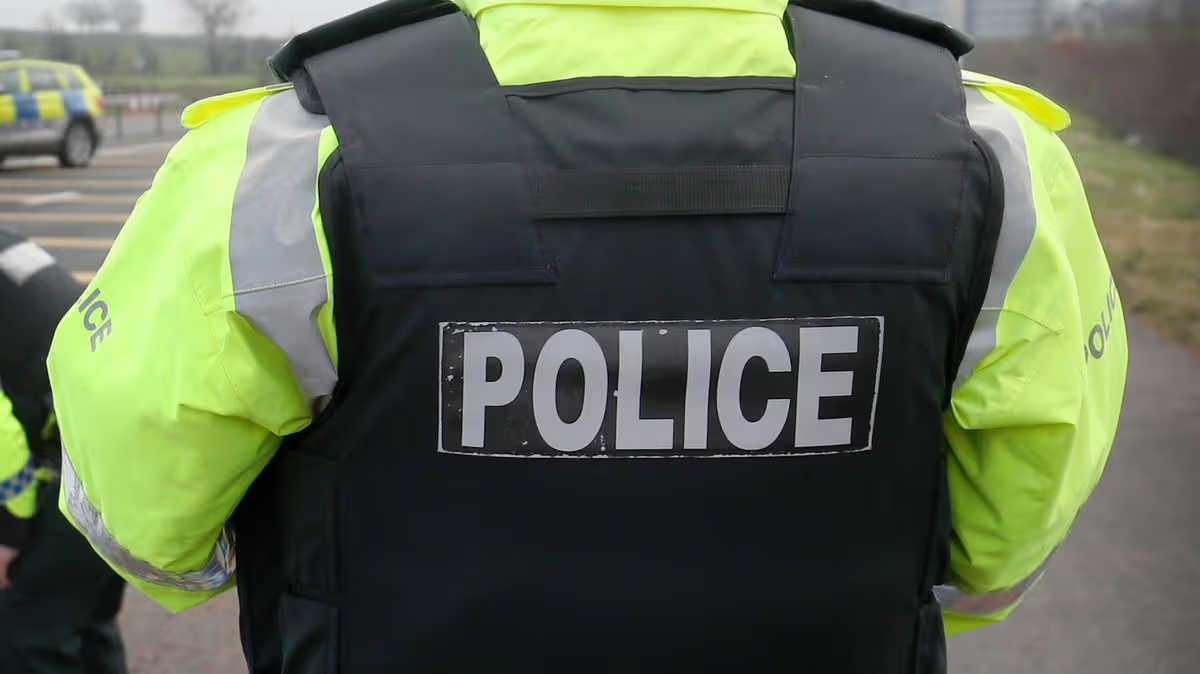
A PSNI spokesperson said: “Detectives are investigating the circumstances surrounding the sudden death of a man in the Mill Road area of Aughnacloy on Wednesday, 8th April.
“A post-mortem examination will be carried out to determine the cause of death. There is no further information at this stage.”
















































You must be logged in to post a comment Login