Connect with us
DAPA Banner

Tech

Now that’s different – hackers use miniature SVG images to try and hide credit card stealer

Published

on


  • Experts find credit card skimmer hidden in 1×1 SVG image
  • Fake “Secure Checkout” overlay stole card data
  • Likely exploited Magento PolyShell flaw, affecting many stores

Security researchers recently found a credit card skimmer on almost a hundred compromised ecommerce websites hiding in a tiny image.

Experts from Sansec reported finding 1×1-pixel Scalable Vector Graphics (SVG) elements with an ‘onload’ handler inside many e-commerce websites’ HTML.

Source link

Advertisement
Continue Reading
Click to comment

You must be logged in to post a comment Login

Leave a Reply

Tech

Printed Sleeve Gives Keys Some Grip

Published

on

[Enginerd]’s chonky key handle is a beautiful use of 3D printing that helps people help themselves. The large wings, indented faces, and beefed-up grip make a typical house key much easier for someone with arthritis or difficulty gripping those brass slivers. Bright filaments in different colors can also help someone with vision limitations. The thing that will not improve is the space in your pocket or purse.

The design only requires a tiny bit of plastic, prints without supports, and what sets it apart from similar models is that you do not need any double-sided tape or bolts, only a keyring, so someone may have to assemble it for the user. The author is clever enough to use an uncut blank in the project photo so that no one will be decoding and copying their house key. We would wager they have read Hackaday if they are so prepared.

Some of the people who purchased early consumer 3D printers already need these kinds of builds, and there is no shortage of intelligent people creating remarkable open-source designs.

Advertisement

Source link

Advertisement
Continue Reading

Tech

12 Overpowered Motorcycles Beginners Should Steer Clear Of

Published

on


When it comes to starting out in the world of motorcycling, there’s a lot of marketing speak that gets tossed around. You’ll hear things like “race technology,” “so and so horsepower,” “carbon fiber,” and other terms that make very little sense. For a beginner who is looking to get their first motorcycle, all this jargon is quite confusing and can lead to some very impractical — or downright dangerous — decisions being made. So then, what should a beginner would-be biker look for in their first motorcycle? We can get a pretty good idea by trawling through the many “best beginner motorcycle” lists from publishers like VisordownMotorcycleNews, MotorcyclistOnline, and MotorcycleCruiser, all of which are review-focused brands that are very respected by the community. 

Many of the bikes on these brands’ lists come with engines around the 500cc mark or lower, with horsepower figures hovering between 50 and 80 hp. Additionally, when you look at motorbikes marketed as “entry-level” by big legacy brands, things like the torque curves and peak RPM figures are also much more docile. 

However, there are a great many bikes that an inexperienced beginner might think are good starter motorcycles, the truth is that they’re actually not. Many of the ones we’re about to list have extreme amounts of power from an otherwise innocuously-sized engine, while others would have unmanageable torque from low RPMs. The point is, none of these bikes look inherently bad for a beginner, but they are — they should be saved for later down the line.

Advertisement

Harley-Davidson Sportster S

Throughout the history of Harley-Davidson, the company has produced some of the most iconic motorcycles known to mankind. There is absolutely no doubt that Harley is one of the greats when it comes to making bikes, but this doesn’t mean that every bike it makes is suitable for beginners; very few are, actually. Take the Harley-Davidson Sportster S for instance. In recent years, the bike has shipped with the Revolution Max 1250T engine from Milwaukee House. Displacing a gigantic 1,252 cc across the now-legendary V-twin dual-cylinder layout with a bore of 105 mm and a stroke of 72.3 mm, the engine makes a whopping 121 hp along with 92 lb-ft of torque. 

The peak figures for the power and torque come in at 7,500 and 6,000 RPMs respectively, which are points that could catch a beginner off-guard as the delivery is anything but smooth. Furthermore, the weight of the bike is quite unmanageable for beginner riders, coming in at 503 pounds with all fluids in place. Now, normally, that weight wouldn’t be too bad all things considered, but when you look at the overall length of the bike — just 89 inches long — and the very set-back seat position, the problem becomes clear. The majority of the bike’s quarter-ton weight would be concentrated towards the front, which gives it that sporty handling characteristic but also makes it easy to over or understeer for beginner riders.

Advertisement

Yamaha MT-07

Reports abound of the MT-07, a rather plain-jane-looking offering from the Japanese company, Yamaha, being described as a “wheelie monster,” with many owners posting videos to YouTube and sharing stories on forums about how their MT-07 suddenly decided to pop the front wheel in the air. In terms of specifications, the figures aren’t too bad, coming in with a wet weight (which means with all fluids accounted for) of 403 pounds, a seat height of 32 inches, and an overall length of 81 inches. 

The engine in the MT-07 is, in 2026, a 42 cubic inch (689 cc) twin-cylinder unit that is paired to a six-speed transmission, routing power to the rear wheel via chain final drive. All that is pretty standard; and even the power output stands at a fairly reasonable-but-on-the-higher-side 73.4 hp, along with 50 lb-ft of torque. 

The main issue comes in when one looks at the torque curve of the MT-07, because the bike makes peak torque from just 6400 RPM. Furthermore, while the curve is “linear”  (or smooth in other words), the horsepower is not, with a significant way to go to peak hp while peak torque is met. In other words, peak power comes in much later at about 8600 RPM. This delta in torque though relatively few RPM cycle increases is what makes the bike bad for beginners, leading novice riders popping wheelies left and right.

Advertisement

Yamaha MT-09

To the untrained eye, the Yamaha MT-09 looks like nothing out of the ordinary. It’s even a bit of a sleeper bike. While it looked like your run-of-the-mill commuter motorcycle that wouldn’t look out of place in an office parking lot, it’s actually quite performant. Too much so for beginners, in fact — it ships with a wet weight of 425 pounds, an overall length of 82 inches, and a seat height of 33 inches. All those features are not the deal breaker; the engine is. It is a 54 cubic inch (890 cc) unit that spreads that displacement across two cylinders, via a bore of 78 mm and a stroke of 62.1 mm. 

The final power output figures stand at an eye-watering 115 hp, along with 68 lb-ft of torque, which gets sent to the wheel via a six-speed transmission. Peak torque comes about at a reasonable 7,000 RPM, while peak horsepower takes a lot longer, coming in at 10,000 RPM. As such, the MT-09 is not only too powerful for a beginner; like the MT-07, it has a somewhat unpredictable power delivery. The good news is that as riders get more experience riding more beginner-friendly bikes around, this will cease to be a problem. In other words, the MT-09 has all the makings of a great bike, just not for absolute novices.

Advertisement

KTM 790/890 Duke

Austrian manufacturer KTM, which stands for Kraftfahrzeuge Trunkenpolz Mattighofen, makes the Duke 390, one of the most beginner-friendly bikes out there. It’s therefore confusing to see the same model line included on our list. However, the Duke 790 and 890, while being from the same family, are extremely different beasts. For starters, the 790 weighs just 412 pounds in running order, and comes with a 799 cc, two-cylinder engine making 95 hp and 64 lb-ft of torque. 

The 890 isn’t much better in this regard, making 120 hp and 73 lb-ft of torque from an engine that displaces 890 cc across the same twin cylinders. Both bikes utilize a six-speed transmission and feature liquid cooling, as is expected. Peak torque for the 780 comes in at 8,000 RPMs, while the 890 makes its peak torque slightly earlier, at 7,750 RPMs. 

Advertisement

That’s the main issue of both of these bikes — they’re massively overpowered. Smooth power delivery aside, they’re just unsuitable for beginner riders. For those who are fans of the brand or who like the design aesthetics of the bike, choosing a smaller, more manageable option like the KTM 390 is definitely the way to go. You can always upgrade to a larger-displacement bike down the line once you’ve gotten more experience as a rider.

Advertisement

Suzuki SV650

The SV650 from Suzuki comes with a 645 cc, V-twin cylinder engine making 75 hp along with 47 lb-ft of torque, featuring a six-speed transmission. A key benefit of the SV650, touted by many reviewers, is its stellar fuel economy, which comes in at about 40 mpg. With a fuel capacity of 3.8 gallons, that means riders can expect about 152 miles of range between fill-ups. Sadly though, the SV650 from Suzuki remains a poor choice (in our eyes) for a beginner motorcycle, partly due to most of the torque from its V-twin becoming available from a mind-bogglingly-low 3000 RPMs. 

For reference, if one was to turn the accelerator handle just half of the way (on most models), you would reach 3000 RPMs without breaking a sweat. Now, this early torque does mean that the SV650 will almost never struggle to accelerate no matter what speed you’re at or what gear you’re in, but it’s just not beginner-friendly in the long run. Aside from getting riders used to an uncommon power delivery system, the low-RPM torque also makes it difficult to adjust to other models down the line. When you move to another bike after growing accustomed to not having to account for RPM jumps and torque kicking in late, it’s a disaster waiting to happen. However, in all other regards, the SV650 remains a fantastic offering that should be explored later down the line.

Advertisement

Kawasaki Z900

The “Z” line of motorbikes from Kawasaki has the naked versions (bikes with minimal fairing and body paneling) of their regular sportbike lines. To the untrained eye, the Kawasaki Z900 simply looks like a bored-out version of the Z650 — which is a good beginner bike, to be clear — but the truth is anything but. Under this sleek, tubular, matt-black frame lies a 948 cc, four-cylinder engine that arrives paired to a six-speed transmission. 

Almost being a liter-bike itself, its power figures are expectedly insane, coming in at 124 hp and 73 lb-ft of torque. Furthermore, peak torque kicks in at 7,700 RPM, while peak RPMs come in a tad bit later at 9,500 RPM. There’s also the topic of bulk; the Z900 comes in with a running-order weight of 467 pounds and is a manageable 82 inches in length. So, while the bike certainly isn’t for beginners or the faint of heart, it’s certainly an exciting model that every biker should ride at least once. After all, it’s not every day that a legacy brand makes a street-legal hypernaked rocket bike.

Advertisement

Honda CB1000R

There is a common consensus in the motorbiking community: A liter-bike (a bike with a displacement of a cubic liter or more) is definitely not the place to start out. Bikes like the Honda CB1000R are exactly why this even needed to be a discussion in the first place, especially since its looks belie its true performance. 

At first glance, you’d be forgiven for thinking that the CB1000R is just another run-of-the-mill weekend sportbike meant to make a lot of noise, and that’s about it. However, with 143 hp and 77 lb-ft of torque delivered from its 998 cc, quad-cylinder engine, this notion is put to rest with a half-turn of the accelerator. All that power is shot straight to the rear wheel via a six-speed transmission featuring chain final drive. 

In terms of the bike’s dimensions, the overall length sits at 83 inches, while the 33 inch seat height with a fairly upright riding position makes the CB1000R quite comfortable, even for long distances. The bike is also on the heftier side — another con for beginner riders — as it tips the scales at 466 pounds with all fluids accounted for. With that said, we’ll take you back to the rule of thumb when looking for a beginner bike: Try to find something under 500 cc and around 70 hp, and you’ll be golden.

Advertisement

Suzuki GSX-S750

750 cc isn’t an insanely-high displacement. It’s certainly on the heftier side, but that isn’t too implausible for talented riders. At least, that’s the argument that many beginners have in their heads when looking at one. However, we present the best counter-argument to this sentiment in the form of the Suzuki GSX-S750. It is essentially just a scaled-down version of the company’s sport-focused Suzuki GSX-R750, known as the “Gixxer” fondly in the community. 

Yet even the most die-hard GSXR fans will never tell you that it is a good beginner bike, and that’s with good reason. The slightly-scaled-down GSX-S750 comes with a 749 cc engine that has a bore of 72 mm and a stroke of 46 mm, spreading its displacement across four cylinders. 

The bike features chain final drive, and has a six-speed transmission that has a wet multiplate clutch, like many of the other models on this list. However, the GSX-S750 makes an insane 113 hp, along with 60 lb-ft of torque, while weighing a reasonable 465 pounds; in totality; taken altogether, that’s gextremely unmanageable for a beginner rider. The scary bit is that the 750 probably seems like a good middle ground between 500 and 1000 cc bikes, perfect for those who “want a little more power” but not too much. Well, considering that the 750 makes borderline econobox car hp, it should be shelved — at least for novices.

Advertisement

Triumph Speed Twin

For starters, the Speed Twin from Triumph is pretty hefty, coming in with a running-order weight of 476 pounds. It’s not exactly compact either, with a wheelbase length of 56 inches and a seat height of 32 inches. Speaking of the seat, it too, like the Harley-Davidson Sportster S, features one that is significantly behind the bike’s center of gravity, which gives it great handling characteristics. 

The main con of this layout is that it would require a lot of experience to know how to get the most out of that great handling. That’s not something beginner riders would have. The engine in the Speed Twin is a 1,200 cc, twin-cylinder unit that makes a whopping 104 hp, along with a respectable 83 lb-ft of torque. However, the delivery of that torque is exciting for experienced riders but borderline sketchy for novices. 

At just a hair over 3,000 RPM, the bike would be making the majority of its 77 lb-ft of torque (about 70 hp at 3,150 RPM); but the hp curve takes a while to catch up. Until about 5,000 RPM, the bike makes more torque than hp — which is okay — but between 5,000 and 6,000 RPM, the opposite happens. There is a jump to about 90 hp with a fall-off in torque to about 60 hp at this time, which would create unmanageable lurching for inexperienced riders. So, while it’s a brilliant bike overall, beginners should stay away from it.

Advertisement

BMW F850GS and F900R

These two bikes, much like the KTM Dukes above, have performance that belies both the looks and reputation of the model line. For starters, the two seem like perfectly decent middleweight bikes, but both have three-digit horsepower figures, with power delivery that many beginners would find unmanageable unless they are extremely familiar with controlling rev ranges. 

The F850GS has an 853 cc, two-cylinder engine that makes 95 hp with 68 lb-ft of torque, with peak power arriving at 8,250 hp, and peak torque coming much faster, at 6,250 RPM. The F900R, for its part, comes with a very similar 895 cc, twin-cylinder engine; though it makes 105 hp and 68 lb-ft of torque, with similar RPM peaks. 

Advertisement

Where the F850GS weighs 505 pounds and is 91 inches long, the F900R comes in at 459 pounds in running order, with a length of 84 inches. Furthermore, both bikes have a six-speed transmission that drives the rear wheel through chain final drive. Much like some other units that we’ve looked at so far, the torque curve (in turn, the power delivery) are what make both of these bikes problematic for new riders. With jumps between the power seen at the rear wheel in relatively low RPMs, novices would struggle to control the throttle.

Advertisement

Indian FTR 1200

For those who are unaware, the Indian FTR is a series of sport-naked bikes from the major American company that is best-known for its long-distance cruiser motorcycles. In recent years, the FTR has shipped with a 1,203 cc engine that spreads its displacement across the brand’s legendary twin cylinders and comes with a six-speed transmission. 

The total power output for this monster stands at 123 hp, along with 87 lb-ft of torque; peak torque clocks in fairly low, at 6,000 RPM. The bike is also quite light (for a 1200 cc bike, anyway), coming in with a weight of 508 pounds with all fluids installed. This means the Indian FTR is supremely overpowered, while being decently light for the class. This is a good thing for bikers that know how to control it. The length is also on the higher end, coming in at 88 inches in total; the seat height is an admittedly decent 31 inches. The reason this bike doesn’t suit beginners is power, plain and simple: There’s too much of it, delivered too quickly and in an unpredictable fashion.

Advertisement

Indian Scout

In much the same vein as the Indian FTR above is the Indian Scout. As of early 2026, the Scout is offered in five different variations, all of which are priced in the low five figures. Both engines are V-twin units; but it’s the flagship bike, called the Indian Super Scout, that we want to talk about. 

When it comes to the Super Scout, it produces a massive 105 hp, along with 82 lb-ft of torque while weighing a (relatively) hefty 587 pounds. It’s quite sporty for a cruiser, and is the kind of bike that would encourage riders to give the throttle just a little bit more oomph — which is why it’s problematic. The Super Scout isn’t suited to new riders simply because the torque delivery doesn’t match the vast amounts of power it has; the “road feel” while riding would be very different from reality.

Advertisement

Methodology

We wanted this to be a list of bikes that beginners might consider that aren’t suitable for novices. First, we began by narrowing our search to bikes above 500 cc and below 1200 cc — which is a range that new riders are likely to want to buy in. Then, we identified which of these models made above 70 hp, as this would result in a power-to-weight ratio of 1:6.5 or at least something in that range. 

Having factored in the weight, we analyzed a dyno torque curve for each model that we listed, published by reputable companies like CycleWorld.  We looked for models where there was mismatch between the power and torque kicking in, which would be a problem for beginners. Lastly, we made sure that every model on this list was still on sale within the past five years, as we think that no beginner would be buying a bike older than that for a starter.

Advertisement


Source link

Continue Reading

Tech

SVS 3000 Micro R|Evolution Subwoofer Debuts at AXPONA 2026: Small but Mighty

Published

on

Not everyone has the space or patience for a dishwasher sized subwoofer dominating the room, and that reality is exactly where SVS is aiming with its latest release. Making its debut at AXPONA 2026, the new $999 3000 Micro R|Evolution takes the core technology from the recently launched 3000 R|Evolution series and shrinks it down into something that actually fits into real world living spaces.

That context matters. Earlier in 2026, SVS rolled out the 3000 R|Evolution lineup with redesigned 13-inch drivers, more powerful amplification, and upgraded DSP trickled down from its flagship models, pushing performance deeper into the infrasonic range with far more control . Now they’ve taken that same platform and applied it to the smallest box in the lineup.

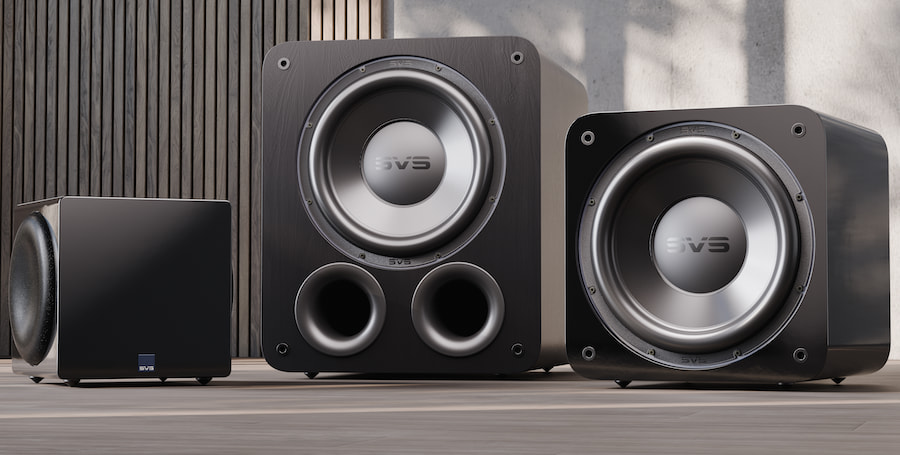
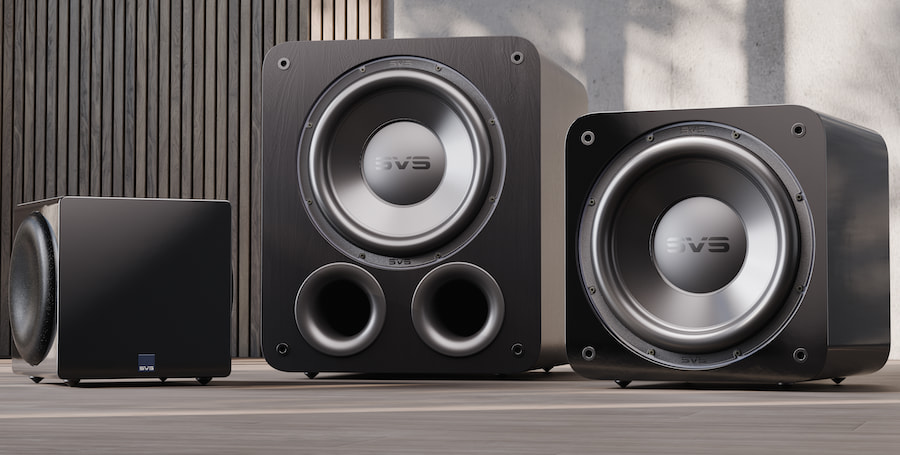
svs-3000-revolution-subwoofer-group
2026 SVS 3000 R|Evolution Subwoofer Line

The 3000 Micro R|Evolution replaces the original 3000 Micro; one of the brand’s most successful compact subs, and upgrades it with larger drivers, new amplification, and more advanced DSP, while keeping the footprint intact .

This isn’t about chasing the biggest numbers on a spec sheet. Large subs still have their place in dedicated home theater rooms, but most people aren’t building those. The 3000 Micro R|Evolution is aimed squarely at everyone else; apartment dwellers, shared spaces, and systems where space is limited but the expectation for real bass hasn’t gone anywhere.

Advertisement

SVS 3000 Micro R|Evolution Core Features

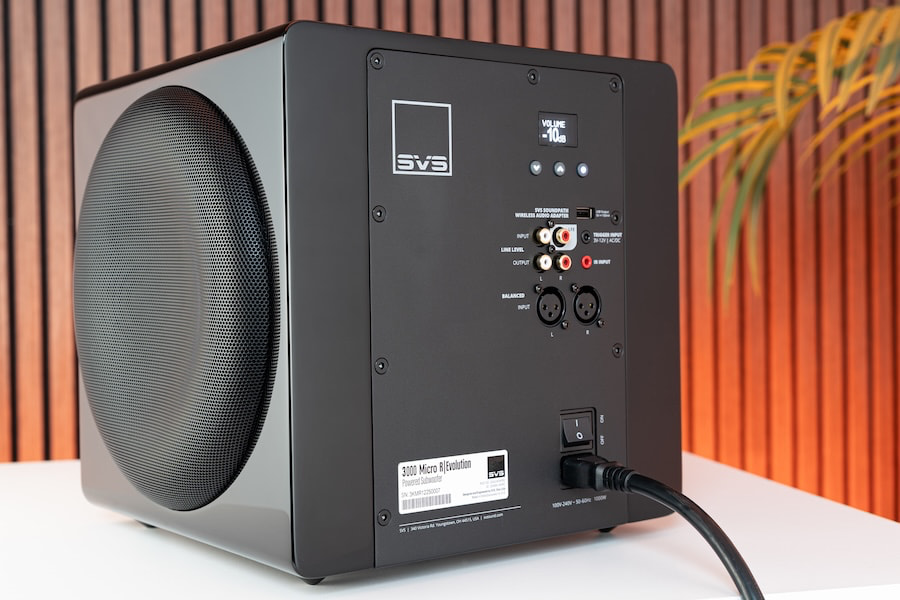
Acoustically Optimized Sealed Cabinet Design: The 3000 Micro R|Evolution uses extra thick MDF side baffles and rigid internal bracing to support its dual driver assembly and maintain an acoustically inert enclosure. The reinforced design minimizes cabinet resonance and prevents unwanted coloration, even during deep bass playback at high output levels.

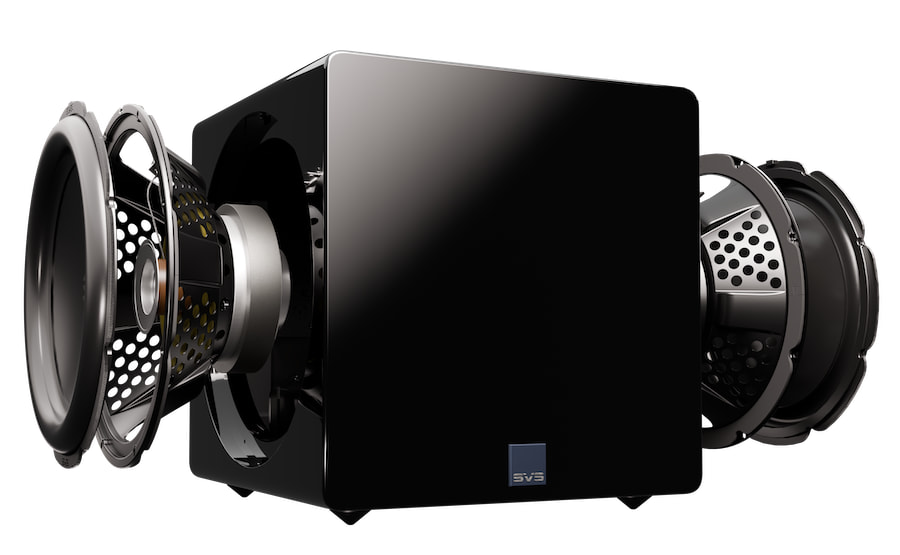
svs-3000-micro-revolution-exploded

Force Balanced Drivers: The 3000 Micro R|Evolution employs dual opposing active 9-inch drivers that fire in opposite directions to cancel mechanical forces, reducing cabinet vibration and maintaining a sonically inert enclosure. Each high excursion driver uses a progressive inverted surround to maximize linear displacement, enabling greater air movement and delivering deep, tactile bass even from a compact cabinet.

Class D Amplification: Power is delivered by a Class D amplifier with a discrete MOSFET output stage rated at 1,200 watts continuous and over 4,000 watts peak when needed.

Advanced DSP: A 295 MHz Analog Devices DSP manages power delivery, thermal performance, and driver behavior in real time, optimizing output while protecting the system under demanding conditions.

Advertisement

Balanced XLR Inputs: Alongside unbalanced RCA connections, balanced XLR inputs provide flexible integration with higher-end systems. The 3000 Micro R|Evolution is designed to work equally well in stereo setups, home theater systems, and even studio environments for mixing and mastering.

svs-3000-micro-revolution-black-back

Switch Mode Power Supply: The switch mode power supply ensures stable, consistent output even when AC line conditions fluctuate, maintaining performance under varying power conditions.

SVS Subwoofer Control App: Installed on a smartphone (iOS, Android), this app provides for easy setup, tuning, and system integration, including volume, low-pass filter, phase, polarity, room gain compensation, and up to six parametric EQ bands, with three onboard memory presets for fast system adjustments. 

Advertisement. Scroll to continue reading.
Advertisement

Comparison

SVS Model 3000 Micro R|Evolution (2026) 3000 Micro (2021)
Product Type Powered Subwoofer Powered Subwoofer
Price $999.99 $899.99
Subwoofer Type Sealed Sealed
Driver Size Dual 9-inch Opposing Drivers Dual 8-inch Opposing Drivers
Amplifier Type Class D Class D
Amplifier Power Output 1200 watts continuous
4000+ Watts Peak
800 watts continuous
2500+ watts peak
Frequency Response  (+/-3dB) 20Hz – 230Hz 23Hz – 240Hz
Signal-to-Noise Ratio (SNR) Not Indicated Not Indicated
Inputs 1 x Stereo RCA Unbalanced or LFE

1 x XLR Balanced

1 x Stereo RCA Unbalanced or LFE
Outputs 1 x Stereo RCA Unbalanced 1 x Stereo RCA Unbalanced
Dimensions (HWD w/ grille) 10.9” × 11.8” × 10.8”

276.9 x 299.7 x 274.3 mm

Advertisement
10.9” x 11.7 “ x 12.2” 

278 x 297 x 309.9 mm

Weight 22.5 lbs. (10.2kg) 22.5 lbs (10.2kg)
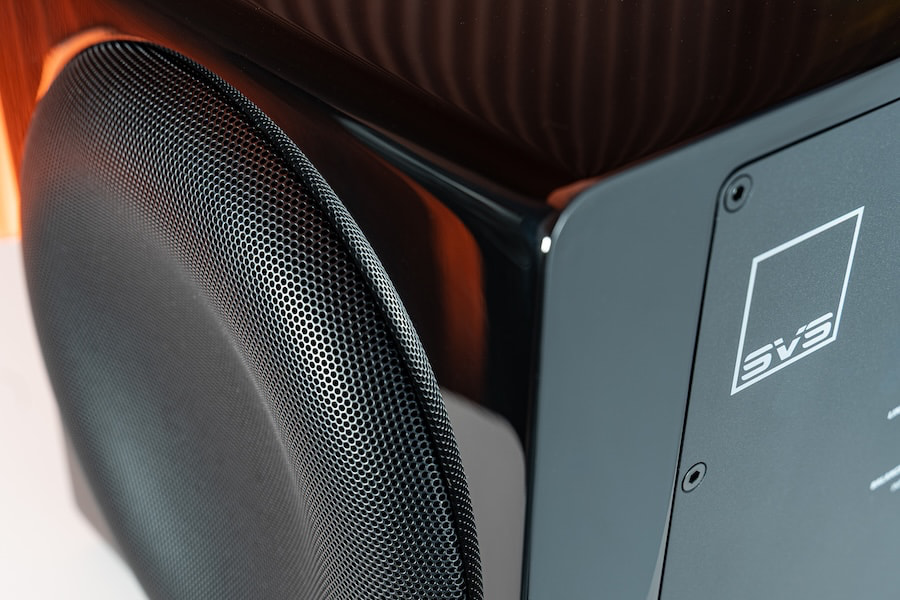
SVS 3000 Micro R|Evolution Subwoofer Black Top Corner

When the original SVS 3000 Micro subwoofer launched, we said it was like a magic trick for doing what no compact subwoofer had ever done before,” said Gary Yacoubian, President of SVS. “Our design team completely reimagined the original concept with larger drivers, double the amplifier output, lower distortion, the most powerful DSP ever deployed in a home subwoofer, and more tuning features and connectivity options, all from a cabinet that’s roughly the same size. The result is not just a vast improvement over the previous design, but a new reference standard for all micro subwoofers.”

svs-3000-micro-revolution-detail-side-inputs

The Bottom Line 

SVS isn’t chasing novelty here. The 3000 Micro R|Evolution is a calculated move that takes the company’s latest amplifier and DSP platform and pushes it into a form factor that actually works in real homes. Dual opposing drivers, serious power, and advanced control in an 11 inch cabinet is the hook, and it directly addresses the biggest compromise with compact subs which has always been output and control.

What makes it stand out is how much of the larger 3000 R|Evolution DNA made the cut. This isn’t a watered down version for small rooms. It’s a deliberate attempt to deliver legitimate low frequency extension and tactile impact without forcing people to redesign their living space around a subwoofer.

Advertisement

What’s missing is the effortless headroom and room pressurization of larger ported designs. Physics still wins. If you have a dedicated theater and want to feel explosions in your chest from across the room, SVS already sells you that solution. This isn’t it.

But for everyone else and that’s most people the 3000 Micro R|Evolution makes a lot more sense. It’s built for apartments, shared living spaces, and systems where space and aesthetics matter just as much as performance. It also hits a sweet spot for two channel listeners who want real bass integration without turning their setup into a science project.

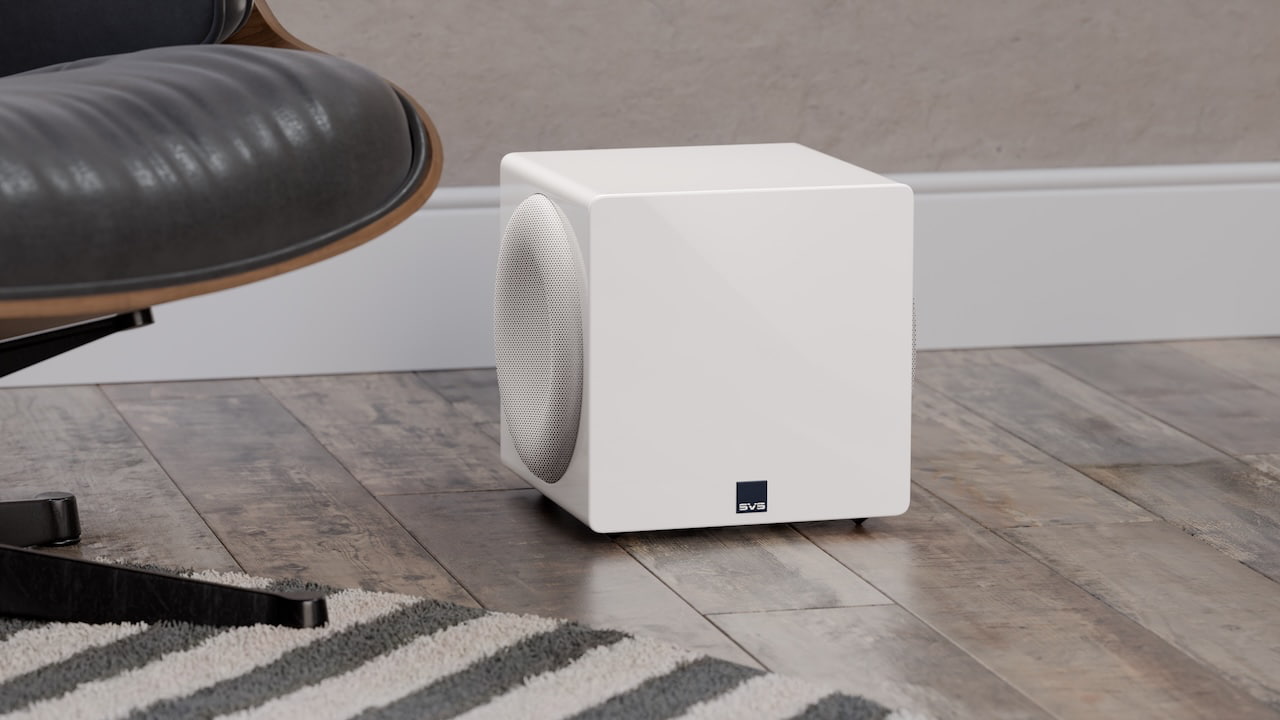
svs-3000-micro-revolution-lifestyle-white
Also available in white as shown.

Price & Availability

The SVS 3000 Micro R|Evolution subwoofer is debuting at AXPONA 2026, and will be available April 30, 2026 for $999.99 at svsound.com in piano gloss black or white finish. Pre-orders start now.

Source link

Advertisement
Continue Reading

Tech

How are software engineering graduates adjusting to AI?

Published

on

BearingPoint’s Karl Byrne, Holly Daly and Fiona Eguare discuss the effects of AI on software engineering and how it has affected graduates in particular.

The widespread integration of advanced AI technology into tech workplaces across the world has transformed working life for many, but especially so for software teams.

“Over the past few years, software engineering has undergone some of the most significant changes I’ve seen in my career,” says Karl Byrne, director and head of software development at BearingPoint Ireland.

“While the industry has navigated the transition to cloud native and DevSecOps, the arrival of generative AI represents a fundamental change in how we conceive, build and secure software.”

Advertisement

Byrne tells SiliconRepublic.com that what strikes him the most is how broad the change is. “It’s not confined to one specialism or team – it’s touching every part of how we deliver software.”

However, he adds that the fundamentals of the area haven’t changed, emphasising that strong technical understanding, sound design principles, and a focus on security and quality “remain as important as ever”.

“If anything, AI has raised the bar, because engineers now need to critically evaluate AI-generated work on top of everything else they do,” he explains.

For graduates, Byrne says, the introduction of AI to the role has spurred a “total evolution” of day-to-day roles.

Advertisement

Responsible use

Holly Daly, a technology analyst at BearingPoint Ireland, says the growing use of AI highlights the importance of using these tools carefully and responsibly – especially for graduates and early-career software engineers.

“While AI can significantly enhance productivity, graduates should avoid becoming overly dependent on it and continue to build on the foundational skills they have developed,” she says. “AI should be used as a supporting tool to improve efficiency and quality rather than becoming a replacement for your own technical understanding and critical thinking.”

She explains that it’s particularly important for a graduate to demonstrate that they understand the solutions they’re delivering and aren’t just reliant on AI.

“From my own experience as a graduate working on an AI-driven project, I’ve had the opportunity to work with several AI tools, testing and recommending them,” she says. “At the same time, I’ve placed a focus on learnings to improve my skillset so that I do not become reliant on AI. This approach has allowed me to benefit from AI, while allowing me to work confidently on my own.”

Advertisement

Daly says that BearingPoint’s graduate programme adapted to AI‑assisted engineering by exposing graduates to AI from the outset and integrating it into both their training and project experiences.

“During onboarding, graduates are given exposure to AI through dedicated talks and interactive sessions, including AI walkthroughs that highlight its capabilities, limitations, and potential use cases. These sessions help build an initial understanding of how AI can support both technical and non‑technical tasks, while reinforcing the importance of responsible usage.”

Fiona Eguare, also a technology analyst at BearingPoint Ireland, says the process of onboarding AI tech into an engineering team has multiple steps – beginning with research and testing.

“We explored the tools available and trialled those that seemed best suited to our needs. This allowed us to compare them, confirm that they fit our use cases, and evaluate the benefits they offered over more traditional tools and methods,” she says.

Advertisement

“Once the most useful tools were identified, we shared our findings across the team and wider company, and we integrated the tools into the project where appropriate.”

Eguare says that while everyone involved was enthusiastic and open to incorporating AI throughout the software development life cycle, it’s very much “an ongoing effort”.

“As the tools continue to develop, it will be essential to keep upskilling and monitoring their security, to ensure that they remain the right fit for us.”

AI-driven changes

Both Daly and Eguare say the inclusion of AI tools in their working life has had some benefits.

Advertisement

“One of the clearest effects for me,” says Eguare, “has been the increase in developer efficiency. With the help of generative AI tools, some of the more tedious and time-consuming development tasks can be completed much more quickly.

“These tools can also be a great help when debugging. While they can sometimes miss the mark on this, some generative AI tools do an excellent job of understanding the context of the project and codebase, making them great at pinpointing the source of bugs.”

Daly has found that tasks such as writing new code, refactoring existing code and debugging errors have become “much faster and more efficient” with the support of AI tools.

As well as the benefits, both also recognise the potential pitfalls of the technology.

Advertisement

Eguare highlights the cybersecurity vulnerabilities of the tech, saying it has made it easier for attackers to exploit vulnerabilities, while Daly says AI has changed the requirements of the role.

“The role is no longer just about writing code, but also about reviewing, validating, and improving AI‑generated work,” says Daly. “Software engineers need to be more intuitive and analytical when assessing whether AI‑suggested code is correct, secure, maintainable, and suitable for the problem being solved. As a result, strong technical understanding and critical thinking are more important than ever.

“Overall, while AI can be an effective productivity booster, it is important that software engineers do not let it take over, as responsibility still lies with them to ensure the final solution meets the required standards.”

Human oversight

What’s remained consistently important in using generative AI tools in software engineering, according to Eguare, is human oversight.

Advertisement

“When working as a team on projects of larger scale and significance, oversight is essential; its importance really can’t be overstated,” she says.

“A lack of oversight can lead to issues, like bloated code or serious vulnerabilities slipping through to production.”

Eguare explains that in order to tackle these issues, it is important to use “high-quality prompts, specifying expectations around quality and security”, as well as testing.

“Alongside traditional testing, tools that specifically address common issues with AI-generated code can be particularly helpful here,” she says. “We also rely on CI/CD pipelines with automated quality and security scanners to enforce consistent standards and catch issues early – especially important when AI accelerates code changes.”

Advertisement

Another issue she highlights is that if too much of a program is generated without human oversight, it can become “quite difficult” for a developer to debug or understand the codebase.

“While AI can also help with this, staying familiar with the structure of the program can help to ensure that the code remains clean, secure, and high quality as changes are made.”

Don’t miss out on the knowledge you need to succeed. Sign up for the Daily Brief, Silicon Republic’s digest of need-to-know sci-tech news.

Advertisement

Source link

Continue Reading

Tech

Waymo Is Offering To Help Cities Fix Their Potholes

Published

on

Waymo is launching a pilot with cities and Google’s Waze to share pothole data collected by its robotaxis, giving local transportation departments a new way to find and fix road damage more quickly. “We realized, hey, once we’re at scale, we can actually share this data with cities, which is something that they’ve asked for and something that we collect at scale,” said Arielle Fleisher, Waymo’s policy development and research manager. “And so we figured out a way to make that happen.” The Verge reports: Waymo uses its perception hardware, including cameras and radar, as well as accelerometers and the vehicle’s physical feedback system, to log every pothole its vehicles encounter. These sensors detect physical changes to the road’s surface, such as tilt and movement when the vehicle encounters irregularities. Originally, Waymo knew it needed the ability to detect potholes so it could ensure that its vehicles slowed down to avoid damage or injury to the passenger. Later, the company realized this could be invaluable data for cities, too.

Under the new pilot program, that data will now be made available to cities’ departments of transportation through a free-to-use Waze for Cities platform, which provides access to real-time, user-generated traffic data that officials can then use to make important decisions — such as pothole repair. The platform also allows for Waze users to validate pothole locations through their own observations, decreasing the chances that city officials will be led astray by false positives.

Currently, many cities rely on a patchwork of non-emergency 311 reports and manual inspections to address their pothole problems. Waymo developed this pilot program after collecting years of feedback from city officials about the state of their highways and surface streets. The company is launching the new pilot in the San Francisco Bay Area, as well as Los Angeles, Phoenix, Austin, and Atlanta, where Waymo says it has already helped the city identify approximately 500 potholes. Fleisher said that Waymo would be open to expanding the project to other street maladies based on further feedback from officials. The company is eager to learn what other types of street condition or safety data might be valuable, she said. “We want to be responsive to cities,” Fleisher said. “They are interested in safer streets and potholes are really a tough challenge for cities. So we really wanted to meet that need as part of our desire to be a good partner and to ultimately advance our goal for safer streets.”

Source link

Advertisement
Continue Reading

Tech

Save $20 on This Already Inexpensive Wireless Mic Set

Published

on

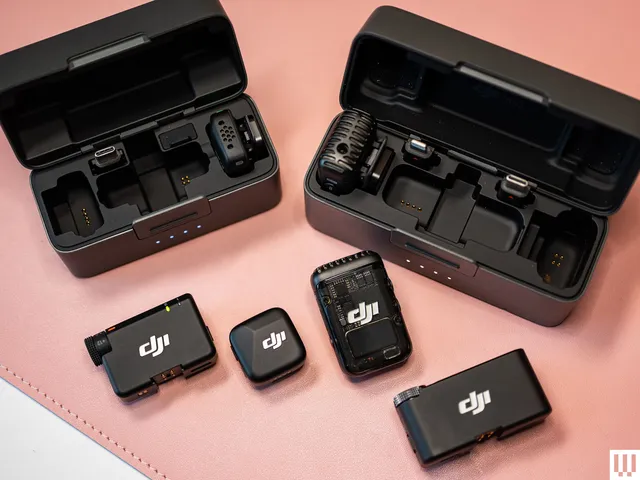
Modern smartphones shoot surprisingly high-quality video, with optical zoom, image stabilization, and onboard processing, but even the best out there have generally pretty awful microphones. Thankfully, there are wireless lavalier microphone kits like the DJI Mic Mini you can use to catch crystal clear dialogue, even when you’re on the go. Right now, you can grab the DJI Mic Mini kit with a receiver, two microphones, and a charging case to carry it all on Amazon for just $79, a $20 discount from the usual price.

Image may contain: Electronics, Mobile Phone, Phone, and Adapter

Photograph: Julian Chokkattu

The most appealing part of this microphone kit is just how easy it is to set up and use. The tiny transmitters don’t drag on clothing, and can be attached with either a clip or via magnets without leaving holes in your shirt. All you have to do is remove them from the case, plug the receiver into your phone’s USB-C port, and start shooting, although Android users will want to double check that the camera app is using the DJI instead of its built-in mic. They even work with digital cameras via the included 3.5-mm TRS cable. You’ll get even more value out of them if you’re already in the DJI ecosystem. Just the other day I wrote about a deal on the DJI Osmo 360, and these actually connect directly to that camera for perfect audio without any extra pieces.

Despite the tiny size and easy setup, the sound that comes through the DJI Mic Mini is pretty impressive, certainly better than any smartphone’s built-in microphones. There are manual gain controls, and you can also use automatic limiting to keep yourself from peaking when a truck drives by. It has two levels of noise canceling, both of which do an impressive job keeping the outside world quiet, so you can sneak in a recording wherever you may end up.

If you’re ready to turn up the volume on your smartphone videos, head over to Amazon to grab the DJI Mic Mini 2 bundle for $79, with various discounts on the individual pieces in case you want to build your own bundle.

Advertisement

Source link

Continue Reading

Tech

Electric Candela P-12 Business Ferry Glides Across Water in Near Silence

Published

on

Electric Candela P-12 Business Ferry
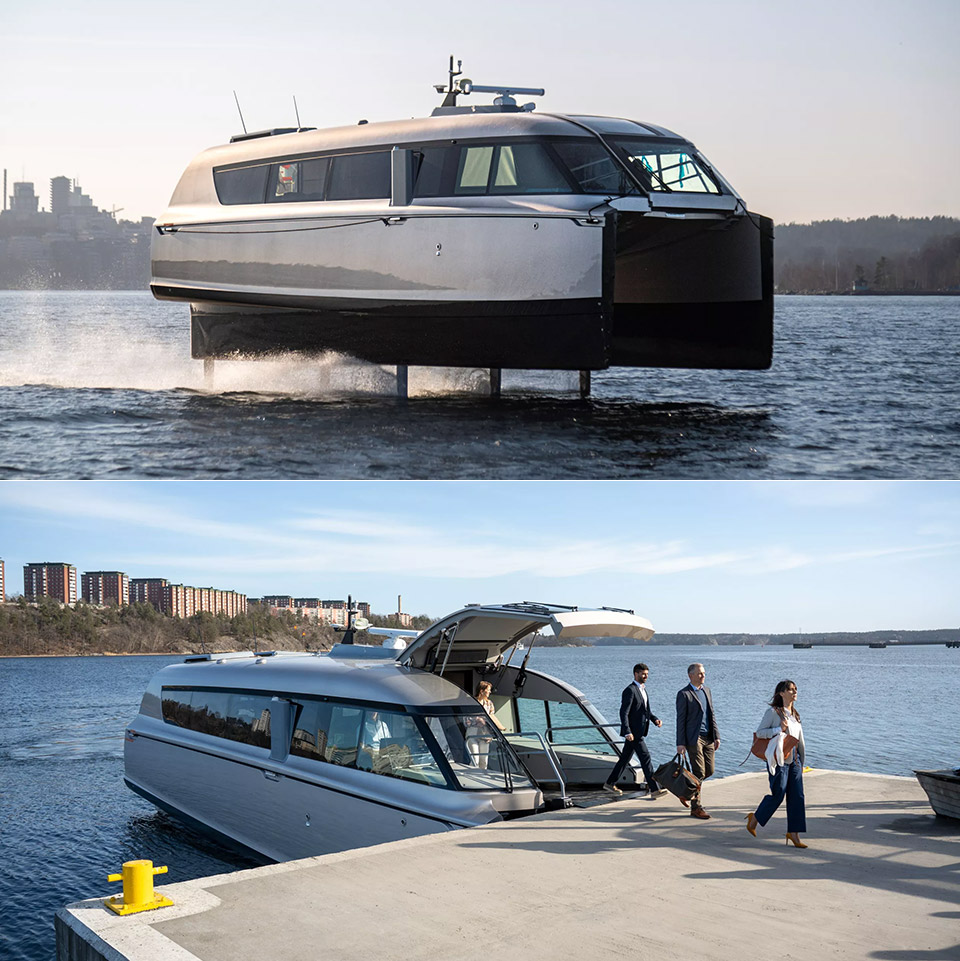
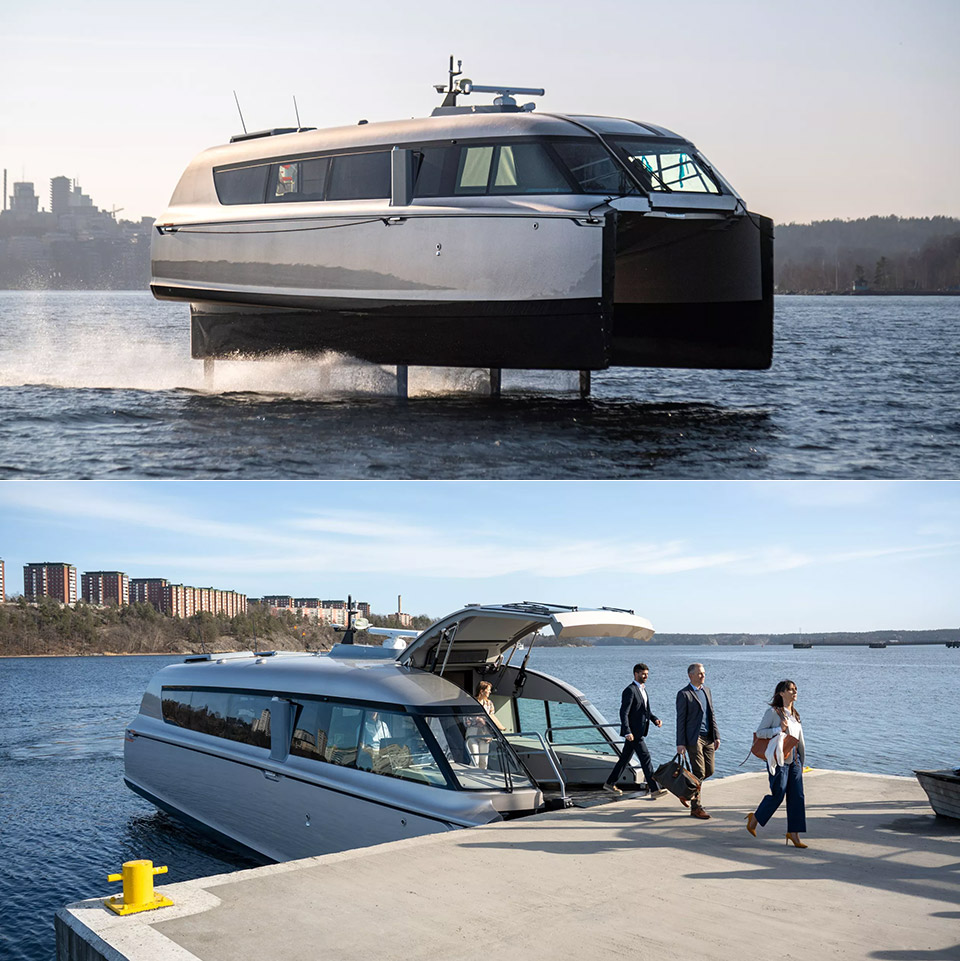
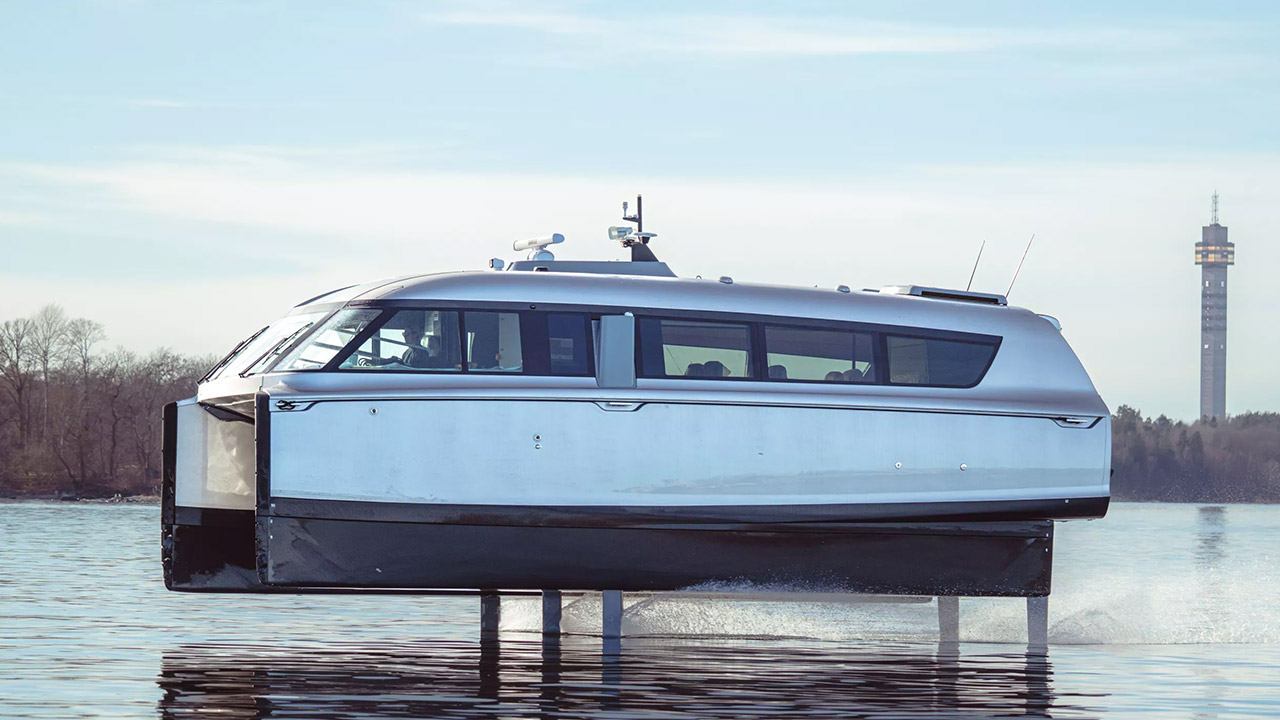
Passengers board a ferry that feels more like a luxury executive lounge than any other boat on the water. The Candela P-12 Business truly delivers, as the ride is so silky smooth and silent that discussions flow smoothly, you can even hold a full cup of coffee in your hand, and the entire journey becomes the highlight of your day. Candela devised a set of computer-controlled underwater wings for this 12-meter electric ferry, which lifts the hull out of the water once the boat reaches speed. Drag plummets and waves simply flow below instead than bouncing off the sides.


Two motors generate electricity, each having 110 kilowatts of continuous power and 160 kilowatts to spare. The motors are powered by a 378-kilowatt-hour battery pack, which can only be used for approximately 336 kilowatt-hours. At a steady cruise speed of 25 knots, the ferry may travel up to 40 nautical miles on a single charge, which is not surprising given the average length of daily routes between islands, coastal towns, and city harbors. During testing, top speed exceeded 30 knots. Recharging is achieved using the conventional high-power DC stations used for heavy trucks or rapid electric vehicles.

Sale


DJI Osmo 360 Camera Adventure Combo, Waterproof 360° Action Camera with 1-Inch 360° Imaging, Extended…
  • Big Views, Brilliant Quality – Groundbreaking 1-inch 360° imaging [1] delivers excellent low-light for sharper shots on every adventure. Now with…
  • Stunning, Day or Night – Capture every detail with 8K 360° videos and store them effortlessly with 105GB Built-in Storage. Whether you’re exploring…
  • No Pole, All Action – 1.2m Invisible Selfie Stick turns your Osmo 360 into a cameraman that follows you. Shoot super-smooth 4K/120fps and magical…

Electric Candela P-12 Business Ferry
Noise levels within the cabin are roughly similar to a normal discussion in a quiet room (63 to 64 dB) when cruising at high speeds. Traditional speedboats, on the other hand, frequently reach 85 to 95 decibels, making quite the racket. Even modern diesel ships operate at 65 to 75 decibels. To put things into perspective, a 10 decibel drop sounds about half as loud to human hearing. The only sound you hear is a mild hum from the motors; there are no roaring engines or regular thuds of water against the hull. They’ve installed more sound insulation and some very thick carpets to keep the space as quiet as possible.

Electric Candela P-12 Business Ferry
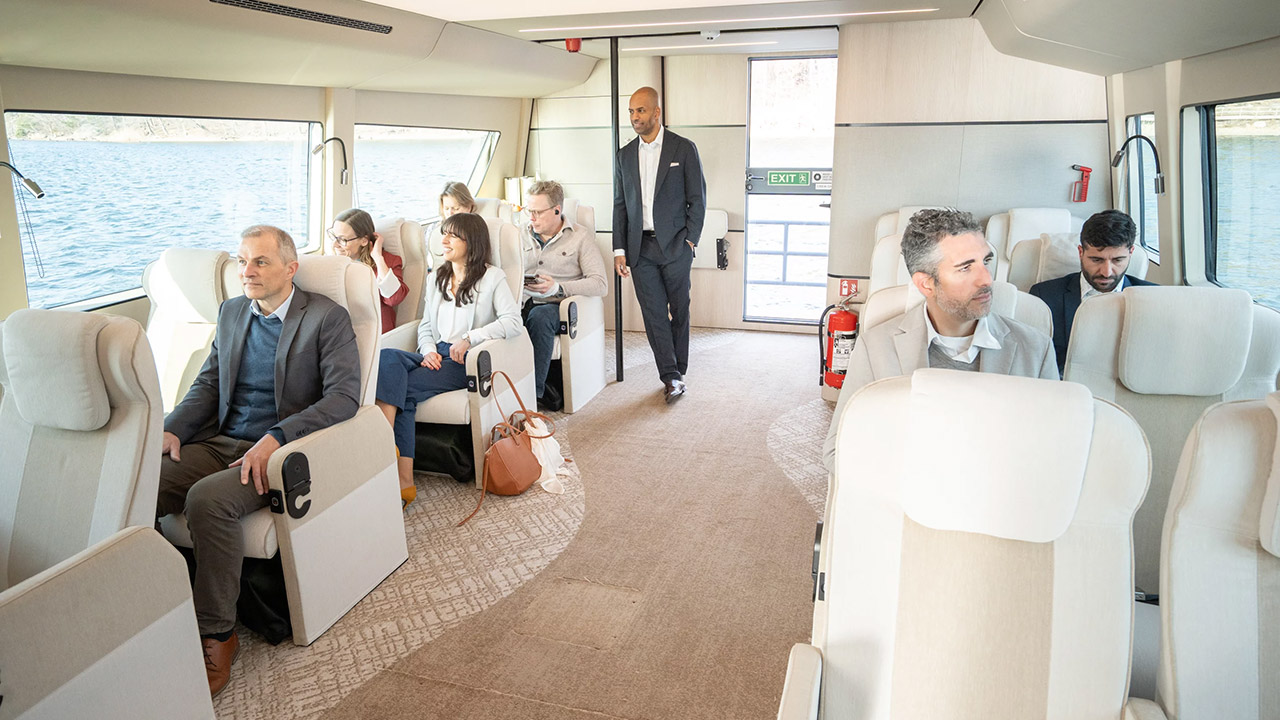
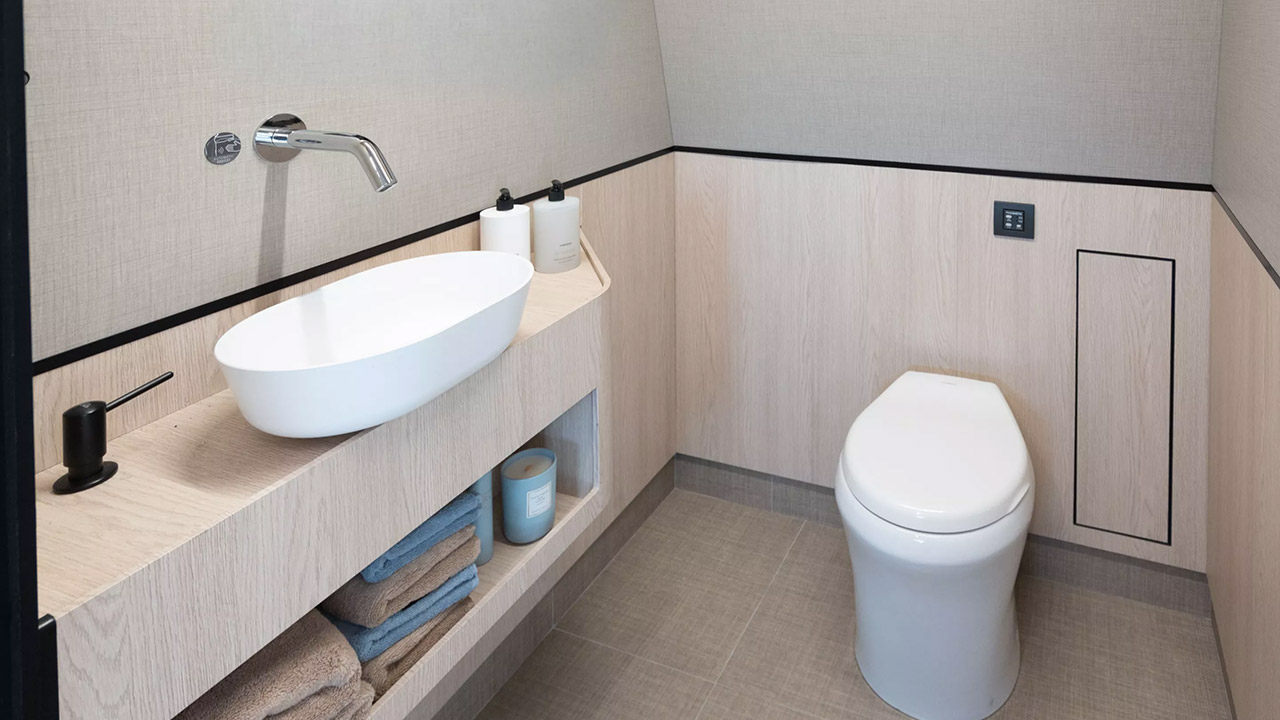
Inside, the layout prioritizes comfort for up to 20 passengers (although 16 is the typical). There are some quite comfortable seats with plenty of legroom, and each seat has a built-in USB-C connector to keep your electronics charged. They also have a coffee bar to keep everyone refreshed and air conditioning to keep the temperature consistent. There’s also some storage room in the back to keep people’s gear. At night, a star ceiling lighting system casts a calm, shifting radiance above. There are large panoramic windows that let you to take in the views from all directions, which is a huge plus. A wide, robust ramp at the boarding point is extremely useful, especially for anyone who need additional assistance, such as strollers or wheelchairs.

Electric Candela P-12 Business Ferry
The P-12 Business’s operators gain significantly from its design. When the ferry is on its foils, energy consumption lowers by up to 80% compared to a typical vessel of the same size. That means decreased fuel bills, because electricity is far less expensive than marine diesel, after all. As a result, the boat causes significantly less disturbance to shorelines and other vessels. It also minimizes underwater noise, which benefits marine life significantly. All of these qualities make the P-12 Business a clear winner on routes where emissions and noise laws are tightening.
[Source]

Advertisement

Source link

Continue Reading

Tech

Microsoft 365 Copilot and the end of the single-model era in enterprise AI

Published

on

Steve Gustavson, Microsoft’s corporate vice president for design and research. (Microsoft Photo)

[Editor’s Note: Agents of Transformation is an independent GeekWire series, underwritten by Accenture, exploring the adoption and impact of AI and agents. See coverage of our related event.]

Using an AI model still comes with an unspoken asterisk: Verify before you act. Fact-check it. Google it. Ask a colleague. The burden of accuracy has always landed on the human at the end of the day. But Microsoft thinks it has a way to shift that burden — have two AIs keep tabs on each other.

In an era when workforce tasks are increasingly being handled by AI agents, this multi-model strategy now reaches into something human workers assumed was theirs alone: the judgment call. The human-in-the-loop had long been the one non-negotiable in AI workflows. Microsoft’s approach doesn’t eliminate it, but it does raise the question of how much of that role we’re willing to hand over.

‘Two heads are better than one’

Microsoft isn’t alone in this bet. Amazon Web Services, Google, and others are building platforms that give enterprises access to multiple models through a single interface. 

AWS Bedrock offers access to foundation models from multiple providers, while Google’s Gemini Enterprise presents a single front door for workplace AI. Microsoft’s distinction is that it’s embedding multi-model review directly into a productivity tool used by millions of workers.

Advertisement

We saw the first implementation of this plan last week with new upgrades to Microsoft 365 Copilot. Its Researcher agent can now use OpenAI’s GPT to draft a response, then have Anthropic’s Claude review it for accuracy, completeness, and citation quality before finalizing it. 

“We intentionally want a diversity of opinions,” Steve Gustavson, Microsoft’s corporate vice president for design and research, told GeekWire in an interview. “Two heads are better than one when they come together.”

That’s not a trivial concern. Research has already shown that AI users tend to outsource critical thinking to models they perceive as authoritative. If we’re already surrendering judgment to a single model, can having a second one push back on the first be the check that’s been missing? 

It’s a question Microsoft has been wrestling with in designing Critique and Council, the two new features within its Researcher agent.

Advertisement

“Our research consistently shows that workers continue to crave both deeper trust in AI and quality content,” Gustavson said. “People are either over-trusting AI — accepting claims they shouldn’t — or under-trusting it and not getting the full value. Both are design and technical opportunities.”

Take Microsoft’s Critique feature, for example. Gustavson said Microsoft designed it around a deliberate handoff: GPT leads the generation, and Claude steps in as the reviewer. 

“The separation matters because evaluation is a different cognitive mode than generation,” he said. “When one model does both, you get the same blind spots twice. When a second model’s job is to validate the first, you get something structurally different.”

This creates a “powerful feedback loop that delivers higher-quality results across factual accuracy, analytical breadth, and presentation,” Gaurav Anand, Microsoft’s corporate vice president for engineering, wrote in a technical blog post about M365’s Critique feature.

Advertisement

Multi-model isn’t just a proof of concept — it’s live, and it’s already the default experience inside Researcher. But Gustavson is quick to point out that most workers won’t care which models are running under the hood. The models, in his view, should be invisible.

“The average user wants phenomenal outputs. They want to be able to trust them,” he said. “Do they need to know it’s 5.2 versus whatever? I don’t think so.” 

Gustavson disputes that this is a case of the “blind leading the blind,” stressing that tuning the models is how to avoid hallucinations. With Researcher, “Claude has proven to be a fantastic synthesizer and sort of check on what the GPT models might be doing.” 

However, Gustavson said Microsoft is continuously evaluating the performance of single models versus double models, as well as putting “an LLM judge in between the two” to see the trade-offs.

Advertisement

Gustavson said Microsoft plans to move away from promoting specific model names altogether, shifting the focus to what a worker is trying to accomplish. For example, he said, workers could specify that they’re in finance, and Copilot would route work to whichever models best handle Excel, data synthesis, and analysis — no model-picking required.

The enterprise AI pendulum

For Microsoft, multi-model is less of a feature than the inevitable direction of enterprise AI. Gustavson calls it a natural progression, noting that Copilot started out with a single model.

Since then, he said, the industry has been swinging between what models can do, what the product experience should be, and where the competitive moat exists. 

“I think this is just a natural evolution,” he said. “Two models are better than one.”

Advertisement

With models leapfrogging each other every few months, Microsoft isn’t betting on any single one, but rather trying to build something that outlasts them all.

As organizations move from experimenting with AI to depending on it for consequential decisions, the single-model approach starts to show its limits. The question may be less whether enterprises should adopt multi-model than whether they’re ready to accept a system where checks are automated, models are invisible, and AI reviews AI before a human ever sees the output.

Beyond the initial integration into the Researcher agent, Gustavson said Microsoft plans to extend the multi-model approach to its other AI tools. He hopes the approach becomes standard across the industry. In his view, building multi-model review into agentic workflows is both good governance and good design.

For those building agentic experiences, Gustavson’s advice is simple: treat agents like any process with meaningful consequences. The key question: “Who checks the work?”

Advertisement

Source link

Continue Reading

Tech

The Pro-Iran Meme Machine Trolling Trump With AI Lego Cartoons

Published

on

Minutes after President Donald Trump announced that he would not wipe out “a whole civilization” on Tuesday evening, a team of self-described young Iranian activists jumped into action.

Members of the group known as Explosive Media were putting the finishing touches on their latest AI-generated, Lego-inspired Trump video. The video features a Trump mini-figure colluding with leaders from Gulf states, Iranian officials pressing a big red button labeled “back to the stone age,” and Trump throwing a chair at US generals.

This was the latest of more than a dozen videos the pro-Iran group has released since the beginning of the war in February, many of which have racked up millions of views on mainstream platforms. While Iranian government accounts have posted Lego-style videos in the past, Explosive Media’s content is more sophisticated and scripted. And it’s produced by a team of young pro-Iranian creators who appear deeply knowledgeable about the internet and American culture. Already some critics have alleged the group has ties to the Iranian government.

“We were almost certain Trump would back down; it was clear to us,” a member of the Explosive Media team, who did not want to publicly identify themselves, tells WIRED. “We were prepared for this scenario and had content ready in advance. We just made a few adjustments and released it.”

Advertisement

The team even added mention of the 10-point plan Iran proposed as part of its recent ceasefire agreement. As the video concludes, a Lego Trump sits next to the document, sobbing while holding a white flag and eating a taco—a knowing reference to the acronym for “Trump always chickens out.”

Within hours of Trump’s announcement, the video was published on Explosive Media’s X account and Telegram channel, where it had the caption: “IRAN WON! The way to crush imperialism has been shown to the world. Trump Surrendered. TACO will always remain TACO.”

While the Trump administration has been posting memes that intercut war footage with movie clips that appeal to a narrow audience of loyal followers, Explosive Media’s Lego videos have reached a much broader audience in the US—some of whom clearly liked what they saw.

“We’ve committed ourselves to learning more every day about American people and culture,” the Explosive Media team member tells WIRED. “In this process, Americans themselves have been helping us—and that support and guidance continues. They share impactful tips and ideas with us.”

Advertisement

Explosive Media began in 2025 as a YouTube channel featuring political commentary delivered by a young Iranian man. The content never gained traction, with most videos racking up only a couple hundred views.

But all that changed in February, when the group began posting Lego-inspired videos, with the team scripting, producing, and editing each video using AI tools. (The group would not reveal which AI tools it was using.)

The videos quickly took hold on platforms like TikTok, X, and Instagram.

“People are disengaging from some of the real conflict content and looking for something that can distill what’s happening quickly and in a language and tone that they understand and that’s what those Lego videos are doing,” Moustafa Ayad, a researcher with the Institute of Strategic Dialogue who has closely tracked the online content being shared by Iranian groups during the war, tells WIRED. “They’re making it easily accessible to understand the conflict from Iran’s point of view, and it’s hitting on points of disaffection in the United States at the same time. It’s working on two fronts.”

Advertisement

Iran has previously used Lego-style videos in war propaganda. Back in 2024, according to Ayad, the Islamic Revolutionary Guard Corps shared links to a Lego video, and during the Twelve-Day War in 2025, Iranian state media proclaimed victory over Israel in another Lego video.

Source link

Continue Reading

Tech

The Best Mass-Market SUV Brand For Dealer Service In 2026, According To JD Power

Published

on


In the recently released JD Power 2026 U.S. Customer Service Index (CSI) Study, one mass-market SUV brand topped all others. And even though JD Power combined SUVs and minivans into one category, the brand that came in first place does not sell any minivans. That brand is Subaru, which, with a few exceptions, is a brand mostly made up of SUVs. Subaru also did very well in the 2025 version of the JD Power CSI Study, being selected as the mass market car brand that owners trust most for service.

The JD Power 2026 U.S. Customer Service Index Study, in which Subaru ranked highest in the mass-market SUVs/minivans category, gave the brand a top-rated score of 887 points out of a possible 1,000. Following Subaru in the JD Power CSI rankings in this category were Nissan in second place with 885 points, and Buick in third with 882 points. Then came Honda with 880 points, Ford with 879 points, GMC with 878 points, Chevrolet with 876 points, Dodge with 872 points, and Mazda with 871 points, which was also the average score in the mass-market SUVs/minivans category. Those brands that fell below the average score, in descending order, were Mitsubishi and Toyota, tied at 870 points; Hyundai, 854 points; Kia, 851 points; Jeep, 850 points; and Volkswagen, last at 846 points.

Advertisement

The JD Power 2026 U.S. CSI Study covered 51,228 survey responses from lessees and registered owners of vehicles between one and three years old. The survey period ran from January through December 2025.

Advertisement

What else should you know about the JD Power U.S. Customer Service Index Study?

As JD Power states on its website, the 2026 U.S. Customer Service Index Study, “…continues to be the auto industry benchmark for measuring customer satisfaction with maintenance and repair service at new-vehicle dealerships, based on survey responses from owners of 1 to 3-year old vehicles.” Study subscribers can now receive monthly updates that keep them current with newly supplied data, allowing manufacturers to monitor their dealers’ customer service ratings in near-real time. This is just one of the many studies done by JD Power, one of which reveals the most dependable cars you can buy.

A wide variety of vehicle categories are covered in the JD Power CSI study. These include premium brands, mass-market brands, mass-market cars, mass-market SUVs/minivans (the topic of this article), premium cars, premium SUVs, and trucks. In each of these categories, the brands are evaluated using the same criteria.

The study’s methodology surveys owners of vehicles that are one to three years old. It asks about their level of customer satisfaction during their latest dealer service episode, which can pertain to either work paid for by the customer or work done under the new car’s warranty. Five areas of the customer’s experience with the service department are then analyzed. These include the start of the service experience, the pick-up of the vehicle, impressions of the facility where the car was serviced, the quality of the service itself, and perceptions of the service advisor who interfaced with the customer.

Advertisement

What else should you know about the Subaru brand?

Aside from its three non-SUV vehicles, the Impreza hatchback, the WRX sedan, and the BRZ sports coupe, the current Subaru lineup consists primarily of SUVS. These SUVs consist of the three-row Ascent, the Crosstrek, the Crosstrek Hybrid, the Forester, the Forester Hybrid, the Outback, the Solterra EV, the Trailseeker EV, and the Uncharted EV. This model lineup offers consumers four pure ICE SUVs, two hybrid SUVs, and three EV SUVs.

Subaru’s pricing range starts with the least expensive model, the 2026 Impreza Sport, at $27,790, including destination and delivery. Our review of the Impreza appreciated it as an affordable hatchback that’s sensible and simple. If you are in search of Subaru’s cheapest compact SUV, the 2026 Crosstrek Base is priced at $28,415. Next comes the 2026 Forester Base at $31,445, followed by the 2026 Outback Premium at $36,445. At the top of the range sits the leather-clad 2026 Ascent Onyx Edition Touring 7-Passenger, priced from $53,445. Our review of the Subaru Ascent found it to be a pretty well-rounded three-row SUV.

Advertisement

Then there are Subaru’s EVs, all of which are SUVs. The range starts with the 2026 Subaru Uncharted Premium FWD, priced from $36,445, continues with the Solterra Premium from $39,945, and tops out with the 2026 Subaru Trailseeker, which will arrive at dealers sometime in early 2026 at an MSRP of $39,995, with destination charges not yet revealed by Subaru at this point. 


Advertisement

Source link

Continue Reading

Trending

Copyright © 2025