
Business
Micron Stock Rockets Toward $420 on Explosive AI Memory Demand and Record Q3 Guidance

BOISE, Idaho — Micron Technology Inc. shares climbed more than 3% Thursday to trade around $420.50 as investors continued to reward the memory chipmaker’s dominant position in the artificial intelligence boom, fueled by sold-out high-bandwidth memory production through 2026 and blockbuster guidance signaling another quarter of record revenue and margins.
The NASDAQ-listed company (MU) rose as high as $425 intraday amid broader optimism in tech stocks following a U.S.-Israel-Iran ceasefire that eased some geopolitical concerns. Micron has delivered staggering gains of more than 300% over the past year and roughly 40-50% year-to-date in 2026, with its market capitalization now exceeding $460 billion as it capitalizes on insatiable demand for advanced DRAM and HBM used in AI data centers.
Micron, a leading producer of DRAM, NAND flash and high-bandwidth memory essential for training and running large AI models, posted explosive fiscal second-quarter results in mid-March that crushed Wall Street expectations. For the quarter ended Feb. 26, 2026, the company reported revenue of $23.86 billion, up 196% from a year earlier and beating forecasts. Adjusted earnings per share surged to $12.20 from $1.56 in the prior-year period, handily topping consensus estimates.
CEO Sanjay Mehrotra highlighted “exceptional” performance driven by tight industry supply, strong AI demand and superior execution. Gross margins expanded dramatically to around 74%, reflecting premium pricing on AI-optimized products. The company also raised its dividend by 30% amid surging free cash flow, which hit record levels in the quarter.
Even more impressive was Micron’s guidance for the fiscal third quarter ending May 2026: revenue of $33.5 billion plus or minus $750 million — a figure that would represent another massive sequential jump and exceed the company’s full-year revenue for many prior years. Non-GAAP gross margin is projected near an eye-popping 81%, with adjusted EPS around $19.15. Management cited higher pricing, lower costs and a favorable product mix as drivers for further margin expansion.
“AI demand far exceeds supply, and we see that tightness continuing into 2027,” Mehrotra told analysts on the earnings call. The company’s entire HBM production for calendar 2026 is already sold out under binding agreements, providing rare visibility in the notoriously cyclical memory industry.
Micron has aggressively ramped production of its HBM3E and next-generation HBM4 products. In mid-March, the company announced it had begun high-volume shipments of its HBM4 36GB 12-high stack, designed for NVIDIA’s upcoming Vera Rubin platform. The new memory delivers more than 2.8 TB/s of bandwidth — a 2.3 times improvement — along with over 20% better power efficiency compared with prior generations.
While some reports have circulated about potential qualification delays or shifts in NVIDIA’s HBM4 allocations for initial Rubin builds, with SK Hynix and Samsung potentially taking larger early shares, Micron executives have pushed back strongly. Management reiterated that its full 2026 HBM supply — including HBM4 — remains fully contracted, with ongoing discussions for pricing and volume on advanced nodes. The company is also shipping samples of even higher-capacity HBM4 48GB 16-high stacks and expanding capacity through new fabs in the U.S., Singapore and Taiwan.
Analysts have responded with a wave of bullish upgrades and price target increases. KeyBanc recently set a $600 target, while UBS raised its target to $535. Consensus price targets now hover around $465 to $500, with some firms calling for $700 or more in optimistic scenarios. Ratings remain overwhelmingly Buy, with Wall Street viewing Micron as one of the purest and most leveraged plays on the AI infrastructure supercycle.
The company’s Cloud and Data Center business unit, which includes HBM sold to hyperscalers and GPU makers, has been the primary growth engine. Demand for memory in AI training clusters continues to outstrip available supply, even as non-OPEC+ producers add capacity elsewhere in the semiconductor chain. Micron’s technological edge in stacking and efficiency has allowed it to command premium pricing while competitors play catch-up.
Beyond HBM, Micron is seeing strength in traditional DRAM and NAND for data centers, PCs and smartphones. The firm highlighted innovations such as PCIe Gen6 SSDs and SOCAMM2 memory modules, further broadening its AI-adjacent portfolio.
Financially, Micron has transformed from a cyclical laggard into a high-margin growth story. Fiscal 2026 revenue is on track for massive expansion, with some analysts projecting full-year figures approaching or exceeding $70-80 billion in optimistic models. Free cash flow generation has enabled both aggressive capital spending — now projected above $25 billion for the year to fuel capacity growth — and shareholder returns via the dividend hike.
Still, risks remain inherent to the memory sector. While AI demand currently masks traditional cyclicality, any slowdown in hyperscaler capital expenditure, resolution of HBM4 technical bottlenecks across the industry or unexpected supply surges could pressure pricing. Micron’s heavy reliance on a concentrated customer base, including major AI players, introduces some concentration risk. Geopolitical tensions, export restrictions and the capital-intensive nature of fab expansions also warrant monitoring.
The stock’s rapid ascent has left valuations elevated by historical standards, though forward multiples remain reasonable given projected earnings growth. Shares have pulled back modestly from recent peaks near $471 but continue to attract momentum and growth-oriented investors.
Thursday’s gains built on a strong session earlier in the week, with elevated trading volume signaling sustained interest. By mid-afternoon, shares traded near $420.50, up about 3.4% on the day.
Micron executives expressed confidence in sustained fundamentals. With new manufacturing sites coming online gradually — meaningful contributions not expected until fiscal 2028 in some cases — supply constraints are likely to persist, supporting pricing power in the near to medium term.
As artificial intelligence spending by companies like Microsoft, Google, Meta and Amazon accelerates, with combined 2026 data center capex forecasts in the hundreds of billions, memory suppliers capable of delivering high-performance, power-efficient solutions are in the spotlight. Micron’s pivot toward AI-optimized products has decoupled it somewhat from broader PC and consumer cycles.
Upcoming fiscal third-quarter results, expected in late June, will be watched closely for further evidence of margin sustainability and any updates on HBM4 ramps or customer diversification. Analysts will scrutinize utilization rates, pricing trends and commentary on 2027 visibility.
For now, sentiment remains firmly bullish. Micron’s record backlog-like visibility in HBM, technological leadership and disciplined execution position it as a cornerstone player in the AI supply chain. Whether the current rally can extend further will depend on continued hyperscaler demand, successful capacity scaling and the broader trajectory of AI adoption.
Micron Technology, founded in 1978 and headquartered in Boise, employs tens of thousands worldwide. Its products power everything from smartphones and servers to the most advanced AI supercomputers. Once viewed primarily as a commodity memory maker, the company has emerged as a critical enabler of the artificial intelligence revolution.
With HBM capacity sold out for the year and explosive guidance pointing to another record quarter, Micron appears poised for what many describe as a multi-year growth phase — provided it can navigate the technical and supply challenges that define the high-stakes AI hardware race.


The rise in energy prices has hit Asia particularly hard as many nations are heavily reliant on Gulf oil.


Elon Musk’s xAI sues Colorado over state’s new AI law

Partnership for New York City president and CEO Steve Fulop discusses the city’s budget shortfall and Mayor Zohran Mamdani’s proposed property tax hike on ‘The Claman Countdown.’
American homeowners around the country are feeling the squeeze of higher property taxes, with new data showing that the property tax burden rose last year.
Data from analytics firm ATTOM showed that the effective tax rate for single-family homes was 0.9% in 2025, up from 0.86% in 2024 and the highest level since 2020 when the national effective tax rate was 1.1%, according to a Realtor.com report.
It also found that while the estimated value for a single-family home was down 1.7% year over year in 2025, it was still one of the highest recorded readings for single-family home values because 2024’s values were higher than those that preceded it.
“Property taxes in 2025 demonstrate that tax bills reflect more than just home values,” said ATTOM CEO Rob Barber. “Even with a slight dip in prices, higher tax bills combined with declining home values led to an increase in effective tax rates, underscoring the role of local government costs and shifting tax policies.”
NEWSOM RENEWS CLAIM TEXAS, FLORIDA ARE ‘HIGH-TAX’ STATES, CRITICS DISPUTE FRAMING

Homes in the Queens borough of New York City. (Lindsey Nicholson/UCG/Universal Images Group via Getty Images)
The effective tax rate for property taxes varies by state and the report found that the states with the highest effective tax rates for single-family homes tended to be located in the Northeast.
New Jersey led the way with an effective tax rate of 1.58% and a median home price of $544,450. It was followed by Vermont, which had a 1.4% effective tax rate, and Connecticut at 1.36%, both with median home prices at roughly $500,000.
New Hampshire’s effective tax rate was 1.29% based on a $587,450 median home price, while New York had a 1.23% effective tax rate along with a $672,000 median home price.
MAJOR US CITY OFFERS CASH INCENTIVES TO SPARK GROWTH, ATTRACT NEWCOMERS

Some states with lower median home prices also faced higher relative property tax burdens. (Angus Mordant/Bloomberg via Getty Images)
Several states with lower median home prices also made the rankings for the highest effective property tax rates. Ohio’s was 1.32%, while Iowa at 1.25%, Pennsylvania at 1.24%, and Nebraska at 1.24% rounded out the top 10 with median home prices ranging between $272,000 and $345,000.
States with the lowest effective tax rates tended to have notable differences in terms of the median home price for a given state.
Hawaii had the lowest effective tax rate at 0.33% with a median home value of $747,545, while other Western states had similarly low effective tax rates with higher home prices.
HOUSING MARKET GAINING MOMENTUM AS SPRING SEASON BEGINS

States in the West tended to have lower relative property tax burdens. (Saul Loeb/AFP via Getty Images.)
Idaho (0.39%), Wyoming (0.4%), Arizona (0.43%), Utah (0.48%) and Nevada (0.52%) were among the states with the lightest property tax burdens and had median home prices ranging between $444,000 and $575,000.
Two Southern states with lower relative property tax burdens included Alabama with a 0.43% effective tax rate and $333,675 median home price, while Tennessee (0.5%) with a $425,250 median.
Delaware’s 0.48% effective tax rate and its location in the Northeast made it a regional outlier among the ranks of the states with lower property tax burdens, with a median home price just shy of $500,000.
GET FOX BUSINESS ON THE GO BY CLICKING HERE
West Virginia also had a 0.48% effective tax rate with the lowest median home price of $249,750.

White House warned staff not to place market bets amid Iran war, WSJ reports

RBC Capital raises Nuvation Bio stock price target on glioma potential

World oil prices plunged Thursday as a U.S.-brokered two-week ceasefire between the United States, Israel and Iran triggered a sharp unwinding of geopolitical risk premiums, sending Brent crude below $100 a barrel for the first time in weeks after it had spiked above $110 amid fears over disruptions in the Strait of Hormuz.
Brent crude futures fell as much as 15% in early trading before paring some losses to trade around $96.84 per barrel by midday in London on April 9. West Texas Intermediate crude dropped similarly, hovering near $97 per barrel. The dramatic reversal followed President Donald Trump’s announcement of the conditional truce, which includes Iran’s commitment to reopen the critical shipping chokepoint that carries about one-fifth of global oil supplies.
The ceasefire, described as fragile and conditional on de-escalation steps including resumed tanker traffic through the Strait of Hormuz, provided immediate relief to energy markets that had been on edge for weeks. Oil had surged dramatically in March and early April as tensions escalated, with Brent briefly topping $111 and WTI crossing $112 — levels not seen in nearly four years — amid reports of attacks, blockades and supply concerns in the Persian Gulf.
Analysts described Thursday’s move as one of the largest single-day drops since the early days of the COVID-19 pandemic, reflecting the rapid removal of a “panic premium” that had built up as traders priced in potential prolonged disruptions. However, prices remained well above pre-conflict levels of around $70-$80 per barrel, signaling that underlying risks and a baseline risk premium persist even as immediate fears subside.
The volatility underscores oil’s sensitivity to Middle East geopolitics. The Strait of Hormuz had faced effective disruptions or heightened threats, prompting rerouting of tankers, insurance spikes and temporary shut-ins of production in the region. Saudi Arabia and other Gulf producers reportedly set record premiums for their flagship crudes as buyers scrambled for alternative supplies. U.S. oil premiums also hit records as global markets hunted for barrels.
OPEC+ responded to the earlier tensions with measured production adjustments. In March, the group of eight key members — including Saudi Arabia, Russia, Iraq and the UAE — agreed to increase output by 206,000 barrels per day starting in April, gradually unwinding some voluntary cuts from 2023. The move aimed at market stability amid low inventories and steady economic signals, even as conflict risks loomed. Earlier in the year, the alliance had paused further hikes during the first quarter due to seasonal factors.
With the ceasefire news, attention shifted quickly to fundamentals. The International Energy Agency and U.S. Energy Information Administration have projected global oil supply growth outpacing demand in 2026, with non-OPEC+ producers — led by the United States, Brazil and Guyana — adding significant volumes. World oil supply is forecast to rise by roughly 2.4 million to 2.5 million barrels per day this year, potentially building surpluses once Hormuz flows normalize.
Demand growth forecasts have been tempered. The IEA sees global consumption rising by only about 640,000 to 930,000 barrels per day in 2026, down from prior estimates, partly due to higher prices curbing usage in March and April along with economic uncertainties. The EIA similarly lowered its 2026 demand growth projection to around 0.6 million barrels per day. Non-OECD countries, particularly in Asia, are expected to drive nearly all the incremental demand.
Longer-term outlooks from analysts like J.P. Morgan point to Brent averaging around $60 per barrel later in 2026 once surpluses materialize and any conflict-related disruptions fully unwind. Goldman Sachs had raised its near-term forecast amid the Hormuz risks but sees easing later in the year. S&P Global Ratings adjusted its 2026 assumptions higher to $75 WTI and $80 Brent to account for prolonged flows issues, though the ceasefire could alter that trajectory.
U.S. shale production remains a key buffer. Output has stayed resilient, with forecasts for record levels around 13.6 million barrels per day. American producers benefit from higher prices but also stand ready to ramp up as geopolitics stabilize.
Gasoline and diesel prices at the pump, which had climbed in response to crude spikes, are expected to ease in coming weeks if the truce holds, though the lag in retail adjustments means drivers may not feel immediate relief. Broader market reactions were positive, with global stocks surging on reduced uncertainty and lower input costs for energy-intensive industries.
Still, caution dominates. The two-week ceasefire is short-term and conditional, with reports of cracks emerging over issues like Lebanon and ongoing tanker navigation challenges. Any resumption of hostilities could quickly reverse Thursday’s losses and send prices spiking again. Analysts warn that full normalization of Hormuz traffic could take time even under a sustained peace, as shipping schedules, insurance and confidence rebuild slowly.
OPEC+ faces a delicate balancing act. The group has signaled willingness to adjust output further based on market conditions, but sustained high prices could encourage more non-OPEC supply while curbing demand. Saudi Arabia, as de facto leader, has historically stepped in with cuts or increases to prevent extreme volatility.
For consumers and businesses worldwide, the wild swings highlight energy’s vulnerability. Airlines canceled flights in the region, chemical and fertilizer producers faced higher costs, and industries dependent on stable fuel prices braced for pass-through effects. Renewable energy advocates noted that prolonged high oil prices could accelerate the shift away from fossils, though the current drop may temper that momentum in the short run.
Thursday’s trading reflected choppy conditions as investors weighed relief against lingering risks. Brent settled around the mid-$90s after the initial plunge, while WTI showed similar patterns. Volume was elevated as hedge funds and speculators adjusted positions rapidly.
Looking ahead, the next OPEC+ meeting in June will be closely watched for any signals on further production unwinding. In the meantime, traders will monitor on-the-ground developments in the Gulf, satellite data on tanker movements and inventory reports from the EIA and others.
The episode serves as a reminder of oil’s dual nature as both a physical commodity tied to supply-demand balances and a financial asset heavily influenced by geopolitics and sentiment. Even with the ceasefire providing breathing room, structural factors — rising non-OPEC supply, moderating demand growth amid efficiency gains and the energy transition — suggest downward pressure on prices over the medium term.
For now, the market has exhaled. Whether the relief proves temporary or marks the start of a sustained de-escalation will determine if oil returns to the $60-$80 trading range many forecasters envision for late 2026 or remains elevated by persistent uncertainties.

MarineMax: These Waters Aren't Smooth Enough For My Liking

Form DEF 14A TransAct Technologies Incorporated For: 9 April
FOX Business host Larry Kudlow discusses the state of the American economy under the Trump administration on ‘Kudlow.’
Let’s take a break from the war and follow up on an important economic story, and that is the continued mobility of the great American middle class. There’s a lot more prosperity here than left-wing populist tax-and-spend Democrats would have anyone believe.
Scott Winship of the American Enterprise Institute has a new study showing how the core middle class and lower incomes have been shrinking, because of a boom in the upper middle class. Dual income households have nearly tripled since 1979 to 31 percent from 10 percent, reaching $326,000 a year. The so-called core middle class at just over $100,000 has basically dropped only slightly to 31 percent from 35 percent. In the lower middle class, and poorer incomes, have fallen a bit. I’m going to label this and simplify this near 50-year middle class prosperity period as the relatively low tax rate supply side era. Bookended by President Reagan and President Trump.
Family incomes have been rising across the entire spectrum, especially among women. And other studies show that individual mobility going to the top fifth of earners from people in the bottom fifth has also increased by roughly 50 percent. In other words, a rising tide lifts all boats..
National Economic Council director Kevin Hassett lauds President Donald Trump’s State of the Union address on ‘Kudlow.’
Democrats love to bash supply-side economics as trickle-down. Or hollowing out the middle class, but the data show it’s not true. What’s more, as my pal Steve Moore writes, Trump tax cuts 2.0 are uniquely designed to help the middle class through tax-free tips, overtime, and Social Security. Add to that the Trump accounts which help newborns own a piece of the rock and accumulate wealth no matter who they are or where they’re from, or what color their skin.
Trump tax cuts 1.0 during his first term disproportionately benefited middle-class blue-collar type wage earners because of the positive impact of lower business taxes. The same is true for Trump 2.0, with its 100 percent immediate cost expensing, and reciprocal fair trade that is channeling a factory building boom, that will be an enormous booster shock to working folks.
Meanwhile, the top 1 percent of income earners pay more than 40 percent of the tax burden, and if you add in state and local taxes from the big blue states like New York, California, and lately Washington State, the most successful earners will be paying half or more of the tax burden. Americans know they are overtaxed. And they also know that more and more of that money is being spent fraudulently in those very same big blue states that overtax in the first place. The GOP can beat history and win the midterms, if they just go out and make the sale.


I’m a passionate investor with a strong foundation in fundamental analysis and a keen eye for identifying undervalued companies with long-term growth potential. My investment approach is a blend of value investing principles and a focus on long-term growth. I believe in buying quality companies at a discount to their intrinsic value and holding them for the long haul, allowing them to compound their earnings and shareholder returns.
Analyst’s Disclosure: I/we have no stock, option or similar derivative position in any of the companies mentioned, and no plans to initiate any such positions within the next 72 hours. I wrote this article myself, and it expresses my own opinions. I am not receiving compensation for it (other than from Seeking Alpha). I have no business relationship with any company whose stock is mentioned in this article.
Seeking Alpha’s Disclosure: Past performance is no guarantee of future results. No recommendation or advice is being given as to whether any investment is suitable for a particular investor. Any views or opinions expressed above may not reflect those of Seeking Alpha as a whole. Seeking Alpha is not a licensed securities dealer, broker or US investment adviser or investment bank. Our analysts are third party authors that include both professional investors and individual investors who may not be licensed or certified by any institute or regulatory body.

DWP PIP backdated payments may be due for older people

Hot in the city: Energy crisis tests Singapore's air-con addiction

Bitcoin holds near $80K as US PCE data keeps price target intact


-

 Business7 days ago
No Jackpot Winner and $194 Million Prize Rolls Over
-

 Fashion6 days ago
Weekend Open Thread: Spanx – Corporette.com
-

 Business4 days ago
Three Gulf funds agree to back Paramount’s $81 billion takeover of Warner, WSJ reports
-

 Business6 days ago
Expert Picks for Every Need
-

 Sports5 days ago
India men’s 4x400m and mixed 4x100m relay teams register big progress | Other Sports News
-

 Tech2 days ago
How Long Can You Drive With Expired Registration? What Florida Law Says
-
Business5 days ago
No Jackpot Winner, Prize to Climb to $231 Million
-

 Fashion3 days ago
Massimo Dutti Offers Inspiration for Your Summer Mood Board
-
Politics6 days ago
Wings Over Scotland | The quality of mercy
-

 Fashion2 days ago
Let’s Discuss: DEI in 2026
-

 Business5 days ago
Akebia Therapeutics, Inc. (AKBA) Discusses Pipeline Progress and Strategic Focus on Kidney Disease Treatments at R&D Day – Slideshow
-

 Fashion7 days ago
Statement Sunglasses: The Accessory Shaping Modern Fashion
-

 Crypto World1 day ago
Bitcoin recovers as US and Iran Agree a Ceasefire Deal
-

 Politics7 days ago
East Jerusalem Palestinian families eviction orders
-

 Politics7 days ago
Why so many children are now classified as ‘disabled’
-

 Fashion7 days ago
For Love & Lemons’ Spring 2026 Line is for the Romantics
-

 Politics7 days ago
Nuclear rockets, moon bases and NASA’s Mars plan
-

 Tech7 days ago
The Threadless Ball Screw Never Took Off, But Don’t Write It Off
-
 Business7 days ago
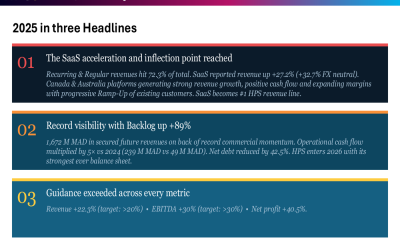
HPS FY 2025 slides: SaaS inflection drives 22% revenue growth
-

 Fashion6 days ago
Tory Burch’s Spring 2026 Campaign Goes on a Getaway
You must be logged in to post a comment Login