


Connect with us
DAPA Banner

Tech

Amazon’s chip business could be worth $50 billion, Jassy says, and he hints it may sell them externally

Published

on

In short: Andy Jassy’s annual letter to shareholders, published on 9 April 2026, reveals that Amazon’s custom chip business, covering Graviton, Trainium, and Nitro, generates more than $20 billion in annualised revenue growing at triple-digit rates year-on-year. If sold on the open market like Nvidia, Jassy says, the business would be worth roughly $50 billion a year. He also signals that Amazon may begin selling those chips directly to third parties, and defends the company’s $200 billion capital expenditure plan for 2026 as grounded in committed customer demand rather than speculation.

“Not on a hunch”: the $200 billion bet

Jassy opened the letter’s financial argument with a direct rebuttal of the scepticism that has surrounded Amazon’s capital commitments. “We’re not investing approximately $200 billion in capex in 2026 on a hunch,” he wrote. “We’re not going to be conservative in how we play this. We’re investing to be the meaningful leader, and our future business, operating income, and free cash flow will be much larger because of it.” The context for that claim is a company that saw its free cash flow fall from $38 billion to $11 billion last year, driven by a $50.7 billion increase in capital spending, the bulk of it committed to AI infrastructure.

The defence rests on customer commitments already in place. Of the CapEx expected to be deployed in 2026, Jassy said a substantial portion already has customer backing, citing as one example OpenAI’s commitment of more than $100 billion to AWS. That commitment, which expanded an existing $38 billion seven-year partnership struck in November 2025, also includes OpenAI consuming approximately two gigawatts of Trainium capacity through AWS infrastructure. SoftBank, which holds a majority stake in OpenAI and has been financing its infrastructure build through mechanisms including a $40 billion bridge loan, is in effect underwriting part of the demand that Jassy is now pointing to as validation for his CapEx stance.

A $50 billion chip business hiding in plain sight

Amazon’s custom silicon programme spans three product lines. Graviton is a custom CPU that Jassy says delivers more than 40% better price-performance than comparable x86 processors, the market that Intel and AMD dominate. It is now used by 98% of the top 1,000 EC2 customers, a figure that reflects a shift in the economics of cloud compute that has been underway for several years. Demand is sufficiently intense that two large AWS customers asked whether they could purchase all available Graviton capacity for 2026. Amazon declined.

Advertisement

Trainium is the AI training and inference accelerator that represents Amazon’s most direct response to Nvidia. Trainium2, which Jassy says offers roughly 30% better price-performance than comparable GPU alternatives, has largely sold out. Trainium3, which began shipping in early 2026 and offers a further 30 to 40% improvement in price-performance over Trainium2, is nearly fully subscribed, with Uber among the companies that have moved workloads onto it. Trainium4, still approximately 18 months from broad availability and featuring interoperability with Nvidia’s NVLink Fusion interconnect technology, has already been significantly reserved. Nitro, the custom network and security chip that underpins AWS’s virtualisation layer, completes the three-chip portfolio. Together, Jassy says the three lines produce more than $20 billion in annualised revenue, growing at triple-digit percentage rates year-on-year. “If we were a standalone chip company,” he writes, “our chips would be generating over $50 billion in annual revenue.” The business currently exists entirely within AWS; customers access Trainium and Graviton through EC2 instances rather than buying chips directly.

Advertisement

At scale, Jassy argues, Trainium will “save us tens of billions of capex dollars per year, and provide several hundred basis points of operating margin advantage versus relying on others’ chips for inference.” That claim is central to the investment thesis underpinning the $200 billion CapEx programme: custom silicon is not only a competitive differentiator but a structural cost advantage that compounds over time as the ratio of inference to training in AI workloads continues to rise.

The Nvidia relationship, and the “new shift”

Jassy is careful in how he frames the competitive dynamic with Nvidia. “We have a strong partnership with NVIDIA, will always have customers who choose to run NVIDIA,” he writes, while also asserting that “virtually all AI thus far has been done on NVIDIA chips, but a new shift has started.” Customers, he says, “want better price-performance.” Nvidia, which reported revenue of $68.1 billion in the fourth quarter of 2025, a 73% year-on-year increase, entered 2026 from a position of market dominance that Amazon’s custom silicon is chipping away at from within the AWS customer base rather than in any broader merchant market. Trainium4’s incorporation of NVLink Fusion means Amazon is also building in a bridge rather than a wall: customers can combine Trainium accelerators with Nvidia GPUs within the same system, preserving optionality for enterprises that have invested heavily in Nvidia’s software stack.

The letter’s most consequential signal on chips, however, may be a single sentence about the future: “There’s so much demand for our chips that it’s quite possible we’ll sell racks of them to third parties in the future.” Amazon currently monetises its custom silicon exclusively through EC2 compute services. Selling chips directly would represent a structural shift in its competitive posture, placing it in the merchant silicon market alongside Nvidia and AMD, and allowing the economics of the chip business to be assessed independently of the cloud revenue it currently underpins.

Bedrock, Amazon Leo, and the broader picture

The shareholder letter situates the chip business within a wider AI infrastructure thesis. Amazon Bedrock, the managed service through which AWS customers access foundation models including Amazon’s own Nova family, processed more tokens in Q1 2026 than in all prior periods combined, with inference volumes “nearly doubling month-over-month” in March. AWS’s AI revenue run rate crossed $15 billion in Q1 2026, a figure Jassy contextualises by noting it represents growth roughly 260 times faster than AWS experienced at a comparable stage of its development.

Advertisement

Jassy also uses the letter to frame Amazon’s satellite internet service, Amazon Leo, as a competitive counterpart to SpaceX’s Starlink, having already secured contracts with Delta Air Lines, JetBlue, AT&T, Vodafone, and NASA. The satellite and chip disclosures share an underlying argument: that Amazon is building infrastructure at a scale and across categories that most observers have not fully priced in. The legal scrutiny that has begun to attach itself to Amazon’s AI products, including a proposed class action over the training data used for Nova Reel, represents one category of risk that the letter does not address. The year 2025 established AI infrastructure as the central capital allocation question for the technology industry, and Jassy’s letter is, in part, an argument that Amazon arrived at the right answer earlier and more decisively than the market has yet recognised.

Source link

Advertisement
Continue Reading
Click to comment

You must be logged in to post a comment Login

Leave a Reply

Tech

French government says au revoir Windows, bienvenue Linux

Published

on

America’s Big Tech companies may soon learn that saddling up with Donald Trump doesn’t tend to work out in the end. As the president sows chaos and distrust around the globe while taking aim at EU tech regulations, Europe is looking for ways to adopt its own alternatives. The latest example is France, which said it’s dropping Microsoft Windows in favor of Linux.

On Wednesday, France said (via TechCrunch) it plans to move its workstations from Windows to the open-source Linux. It’s part of a broader movement across Europe toward digital sovereignty, aimed at reducing reliance on foreign tech — especially American and Chinese. Although homegrown alternatives aren’t available in many areas, the EU seems prepared to wean itself off where it can.

In January, France announced that it would move its videoconferencing from Zoom and Teams to the French-made Visio. As part of this week’s Linux announcement, France added that it would also migrate its health data to a new platform by the end of 2026.

Since taking office, Trump has used tariffs and other measures to try to bully European nations into dropping their regulations on America’s tech industry. In August, he vowed to “stand up to Countries that attack our incredible American Tech Companies.” (The strange capitalizations are his, not ours.) His administration has described laws like the EU’s Digital Services Act as “censorship” and “a tax.”

Advertisement

So far, Europe has stood firm. “I want to be very clear: our digital sovereignty is our digital sovereignty,” European Commission President Ursula von der Leyen said at the Munich Security Conference in February. “We have a long tradition in freedom of speech. Actually, the Enlightenment started on our continent.”

Christian Kroll, CEO of German search engine Ecosia, foresaw Europe’s predicament soon after Trump’s 2024 reelection. “We, as a European community, just need to make sure that nobody can blackmail us.” He added that “if the US turned off access to search results tomorrow, we would have to go back to phone books.” Granted, the guy is selling a European-made search engine, so his bias is clear. But the salience of his point stands.

Giorgos Verdi, policy fellow at the European Council on Foreign Relations, said the Trump administration’s behavior underscores the need for Europe to break free. “Could the US use its dominance over AI chips, its dominance over cloud in Europe, its dominance over AI systems in order to exert more pressure?” Verdi asked CNN rhetorically in January. “In order to build more resilience for Europe… there is a geopolitical case for European innovations to emerge.”

Source link

Advertisement
Continue Reading

Tech

How to watch Alcaraz vs Sinner for FREE: TV Channels for Monte-Carlo Masters Final

Published

on

  • Monte-Carlos Masters Final 2026: Sunday, April 12
  • Start time: 2pm BST / 10am ET / 7am PT / 11pm AEST
  • FREE stream: France TV (FRA)
  • Access your usual streaming services with NordVPN (save 75% today)

Watch Monte-Carlo Masters Final 2026 live streams to see who will emerge with the title and the world number one ranking when Carlos Alcaraz takes on Jannik Sinner in what should be a blockbuster match on Court Rainier III.

Source link

Advertisement
Continue Reading

Tech

Today only: Grab AirPods Max USB-C for $399.95 ($150 off)

Published

on

B&H’s AirPods Max flash Deal Zone slashes $150 off the original retail price of the over-ear headphones with USB-C.

Starlight AirPods Max headphones on a soft pastel background with bold black text advertising price 399.95 today only, implying a limited time sale deal
Grab AirPods Max USB-C for just $399.95 today only – Image credit: Apple

The flash deal, which discounts first-gen AirPods Max with USB-C to $399.95, is valid today only at Apple Authorized Reseller B&H Photo.
Buy AirPods Max for $399.95
Continue Reading on AppleInsider | Discuss on our Forums

Source link

Continue Reading

Tech

iPhone 18 series: Everything we know so far

Published

on

Apple’s iPhone is a product that the world, including potential buyers, critics, and competitors, watches obsessively. Over the years, the Cupertino giant has repeatedly shown up every September, with the best iteration of their smartphone technology, spread across multiple Pro and non-Pro models. However, the iPhone 18 series could change that tradition.

This year could be the first time the company splits its massive September event into two, focusing on different categories of the upcoming iPhones. The premium ones, including the Pro models and the purported Apple foldable, could arrive this fall, while the more affordable models could arrive in spring 2027. That’s why it’s all the more important to know about the purported iPhone 18 series this year, so that you can plan your upgrade (and prepare your wallet) well in advance.

iPhone 18 series: Latest news

Apple’s iPhone is one of those evergreen product lineups that attracts rumors and reports year-round. It doesn’t matter whether the iPhone 17 has just dropped or we’re almost half a year away from the expected iPhone 18 series launch time; the news just keeps coming in from all directions.

Release Date and price rumors

Unlike previous years, Apple is heavily rumored to split its grand September launch event into two equally important events across 2026 and 2027.

The split strategy was initially reported by The Information in May 2025, and later, Bloomberg’s Mark Gurman corroborated it, stating that it will help the company spread its engineering and marketing efforts across its calendar year, from fall to spring. 

As part of the new launch paradigm, we should get to see the premium Apple iPhones, including the iPhone 18 Pro, the iPhone 18 Pro Max, and the iPhone Fold (Apple’s first-ever foldable), in early September 2026, with retail availability typically following about two weeks later. Some rumors also suggest the Fold’s retail availability could commence in December.

Advertisement

Price seems to be a sensitive topic this year, not just for the upcoming iPhone 18 series, but for every other smartphone in 2026. The ongoing memory crisis and rising component costs have compelled manufacturers to either raise prices or upsell buyers to higher-memory or storage variants at higher prices. 

Expected Release Starting Price
iPhone 18 Pro September 2026 ~$1,099
iPhone 18 Pro Max September 2026 ~$1,199
iPhone Fold (or Ultra) September – December 2026 ~$2,000 or more

Apple, however, might be in a slightly better position than other manufacturers, as per renowned analyst Ming-Chi Kuo. In January 2026, Kuo claimed that the company could leverage its position to lock in long-term deals with memory suppliers, potentially helping it absorb the higher cost, and, in the process, securing a higher market share as other brands hike prices. 

Post the September 2026 event, Apple could return in March 2027 with more value-driven, consumer-centric models, including the regular iPhone 18 and the iPhone 18e. 

The successor to the thinnest iPhone ever, the iPhone Air, could also break cover at the same time. Whether this would be through a live-streamed event, a pre-recorded presentation, or simply via a press release is something we’re yet to find out. 

Expected Release Starting Price
iPhone 18 March 2027 ~$799
iPhone 18e March 2027 ~$599
iPhone Air 2 March 2027 ~$999

Please keep in mind that the prices mentioned here are mere speculations, and Apple hasn’t confirmed them (yet).

Design and display

According to the most recent rumor from Fixed Focus Digital (via Weibo), the baseline iPhone 18 could look and feel the same as its predecessor, the iPhone 17. In other words, we could get the same glass-and-aluminum sandwich design with flat edges, rounded corners, the pill-shaped camera module, and a minimal yet premium visual appeal. 

The overall dimensions and weight of the handset might remain unchanged, barring any minor modifications. While the handset could still feature a 6.27-inch LTPO OLED screen with a 120Hz refresh rate, perhaps with improvements to peak brightness and always-on efficiency. 

Advertisement

It might have a smaller Dynamic Island, though newer leaks dispute this, suggesting that a smaller cutout on the screen could be reserved for the Pro models in the iPhone 18 series. The bezels are already quite slim on the baseline iPhone 17, and they might not get any slimmer on the successor. 

The iPhone 18 Pro models could also borrow their aluminum unibody (with the camera plateau) and glass (at the rear) chassis from the iPhone 17 Pro models. What could change, however, is the color difference between the metal body and the back glass, in favor of a more seamless look. 

In fact, Apple could also double down on more vibrant, fun colors with the iPhone 18 Pro (as the Cosmic Orange finish did quite well). Some leaks claimed Apple might ditch the Dynamic Island entirely and adopt an under-display Face ID module, resulting in punch-hole screens. But for now, a smaller Dynamic Island makes much more sense, given Apple’s slow-paced physical innovation cycle. It would also help with product segmentation. 

Beyond that, the handsets will most certainly retain their current dimensions and weight, with minute changes always on the table (perhaps for a bigger battery). The iPhone 18 Pro could sport the same 6.3-inch OLED screen, and the iPhone 18 Pro Max could have the 6.9-inch OLED screen, both capable of a 120Hz ProMotion display, with subtle refinements in the screen-to-body ratio and the anti-reflecting coating.

Performance and software

The baseline iPhone 18 will almost certainly feature the A20 chip, while the iPhone 18 Pro models could get the A20 Pro chip. They’ll be the first Apple-designed chipsets based on TSCM’s 2nm fabrication technology. Technically, Samsung crossed the finish line first with 2nm chips (with its Exynos 2600 chip), but Apple’s implementation should be more intentional and capable. 

Apart from improvements in raw performance and efficiency, the purported mobile processors from Apple could be based on a new WMCM (Wafer-level Multi-Chip Module) design, as claimed by renowned analyst Ming-Chi Kuo and corroborated by a few other industry sources. 

Report: TSMC’s WMCM and SoIC Dual Support Ensures Apple’s Presence in Advanced Packaging

Advanced packaging continues to be a hot topic, and the industry is closely watching not only NVIDIA’s large orders with TSMC, but also Apple’s entry into the fray, with clear plans for…

Advertisement

— Jukan (@jukan05) June 22, 2025

The design allows the integration of several key components, including the CPU, GPU, and DRAM, into the same package, resulting in enhanced system performance and reduced material costs. Apple could also use the same tech for the upcoming M6 chip, which could break cover on a MacBook Pro later this year

Even though the current A19 chips are extremely fast, the A20 family could deliver double-digit improvements in both CPU and GPU performance, making it ideal for a future iteration of the MacBook Neo. We’re also expecting better sustained performance from the A20 chips.

The baseline iPhone 18 could get a memory boost to 12GB (up from 8GB), while the iPhone 18 Pro could retain its 12GB memory, but perhaps with faster bandwidth for improved performance. Storage options should remain the same as on the current iPhone 17 lineup. The Pro models could also get better satellite connectivity, perhaps even 5G-via-satellite

The iPhone 18 series should debut with iOS 27 out of the box, which is expected to rely heavily on AI-driven improvements and under-the-hood refinements rather than any big visual changes (it is also referred to as the “Snow Leopard” update).

Advertisement

The update will likely include a chatbot-like Siri with deeper integration across iOS and support for third-party AI models. We might get a standalone Siri app, much like other chatbots. 

Among other major additions could include Health+, an AI-powered health-tracing platform with features like food logging, personal coaching, and an AI-based doctor or consultant. We could also get an improved, AI-integrated Spotlight search experience, better multitasking optimization (especially on the big-screen iPhone Fold), an improved Shortcuts app, and a Liquid Glass slider for tweaking transparency. 

We’ll get a glimpse of everything new in iOS 27 at WWDC 2026.

Cameras and battery

Both the iPhone 18 and the iPhone 18 Pro models are rumored to get a 24MP square-shaped sensor on the front, which could add the missing sharpness to the iPhone 17’s ultrawide selfies. However, newer reports assign the improved 24MP selfie shooter to the Pro models, not the baseline iPhone 18. 

Chinese tipster Digital Chat Station claims that the iPhone 18 Pro models could feature a DSLR-like variable aperture for the 48MP primary camera, alongside larger fixed apertures for the ultrawide and telephoto sensors. Simply put, users could get more control over the background blur and overall light in the frame (via the primary camera) and better low-light performance (via other sensors).

While Apple was also reportedly considering acquiring Lux Optics, the company behind the Halide Camera app (which provides creative and professional photography controls), the plans seem to be tangled in a legal mess, at least for now. Per a Chinese tipster, Apple was toying around with teleconverter lenses for the Pro models as well.

A simplified Camera Control button (without the capacitive touch layer) is also on the cars for all iPhone 18 models. 

Advertisement

A leak from Instant Digital suggests a slight weight increase for the iPhone 18 Pro Max, possibly to accommodate a larger battery than the current model. In fact, the rumor was corroborated by Digital Chat Station, which stated that the non-Chinese version of the handset could feature a battery with a capacity between 5,100 and 5,200 mAh, a substantial improvement in the battery life. 

Apple is reportedly cleaning up iOS 27’s code to make it more efficient, which should also improve overall battery life for the iPhone 18 series and the supported iPhones. Beyond that, there are no leaks or rumors about the iPhone 18 series getting any charging upgrades, wired or MagSafe.

Source link

Advertisement
Continue Reading

Tech

Claude Cowork is becoming shared workplace infrastructure

Published

on

Claude Cowork is moving beyond early testing and into a wider role at work. On April 9, Anthropic said it became generally available on all paid plans for macOS and Windows, alongside a set of enterprise features meant to support larger rollouts.

That pairing matters more than the availability update by itself. Anthropic is tying the release to role-based access controls for Enterprise, group spend limits, usage analytics, expanded OpenTelemetry support, and tighter connector permissions, all aimed at making Cowork easier to manage across an organization.

Anthropic also made clear that Cowork is no longer being framed as a tool mainly for technical teams. It said most usage already comes from operations, marketing, finance, and legal, which helps explain why this release leans so heavily on governance and monitoring.

Why the oversight tools matter

The most important change is the management layer. Enterprise admins can now set access by provider, model, and feature, while group spending limits give companies a way to control usage across departments instead of leaving budgets to individual employees.

Advertisement

Anthropic is also widening the reporting view. Its dashboard metrics and Analytics API can track sessions, active users, connector activity, and adoption by team, while broader OpenTelemetry support is designed to feed Claude usage into existing monitoring systems.

Where Cowork fits at work

Anthropic’s larger message is about where Cowork fits inside a business. It said most use already comes from non-engineering groups handling project updates, research, and internal collaboration, not just code-focused work.

That shifts the product’s identity in a meaningful way. Cowork is being positioned less as a specialist assistant and more as a shared layer for everyday work that can draw from connectors, internal information, and team-specific workflows.

What happens next

The next test is whether companies treat Cowork as a standard workplace tool or keep it in a narrower lane. General availability gives Anthropic a stronger opening, but broader adoption will depend on whether admins see enough structure around access, costs, and integrations to support daily use.

For companies evaluating the launch, the real question is practical. If Cowork can help multiple departments while staying measurable and manageable for the people running the system, it has a stronger chance of becoming part of regular business operations rather than stalling at the pilot stage.

Advertisement

Source link

Continue Reading

Tech

Marauding minotaurs, more CloverPit and other new indie games worth checking out

Published

on

Welcome to our latest roundup of what’s going on in the indie game space. As always, we’re here to tell you about a bunch of new games you can play this weekend, as well as several upcoming titles.

The latest edition of the Triple-i Initiative showcase was packed with cool stuff, including a first peek at the fascinating next game from 1000xResist developer Sunset Visitor, word of a Don’t Starve follow-up, a release date for stealth title Thick as Thieves and an announcement of when pirate survival sim Windrose will hit early access.

We also got a release window for Neverway, a life sim with gorgeously creepy pixel art. The prologue is available to play now on Steam, and it doesn’t take long at all before things become delightfully strange. I’ll run through a few of the other Triple-i highlights below.

Before we get to the new releases, though, I want to touch on something I spotted a little too late to include in last week’s roundup. On Reddit, the developer of mixed reality game CoasterMania shared a video showcasing an update that lets players use their hands to build and interact with rollercoasters. I think this looks just swell. This is the most I’ve ever been interested in picking up a Meta Quest headset (which I’d inevitably use for a grand total of about 45 minutes).

Advertisement

New releases

I don’t like to overwork my brain when I’m playing games. I’m focused all day at work and afterwards, I just want to switch off for a bit. That’s a big reason why I play a ton of Overwatch and don’t really gel too well with most puzzle games. Minos, though, hits the sweet spot of brain engagement for me.

In this roguelite from Artificer and publisher Devolver Digital, your aim is to stop glory-seeking adventurers from finding and killing a minotaur. You’ll shape a labyrinth as you see fit in order to defend the beast from these warriors. You can set up the maze by building and knocking down walls, and setting traps. The adventurers will follow a set path to the minotaur’s lair, then make a beeline for the monster when they discover it’s hiding elsewhere.

There are a lot of ways to dispose of the interlopers and you’ll need to be thoughtful about how to set everything up to take out each wave of attackers. Many traps can only be placed on certain spots, so it’s important to work around those. You’ll need to adjust your setup after every wave — you’ll gain more traps and have to re-arrange them to fend off different types of enemies.

Minos is more active than a lot of tower defense and strategy games I’ve played, as the minotaur can reset certain traps after they trigger and, if need be, try to kill the adventurers head-on. I found myself spending quite a bit of time thinking through each enemy’s path through my domain and how I was going to eliminate them. Sometimes, I miscalculated and brought my run to an end. Being able to improve the minotaur’s stats and unlock new powers between runs helped me keep coming back for more.

Advertisement

I’m really enjoying Minos, and I wouldn’t be surprised if this ends up being one of my favorite games of the year. You can snap it up on Steam now for $18. A demo is available too.

Spring has finally bloomed in my neck of the woods. I planned to spend a chunk of my weekend outside after a long winter. But now I might need to bring my Steam Deck with me, because the first DLC for CloverPit, one of my favorite games of last year, suddenly arrived during the Triple-i Initiative showcase.

CloverPit is a Balatro-style incremental roguelite from Panik Arcade and publisher Future Friends Games. It tasks you with breaking the rules of a slot machine to meet increasingly high coin targets in order to pay off a debt. You can pick up charms that modify the machine, and the Unholy Fusion DLC is all about those totems. You’ll be able to use a new device called the Surgery Machine to fuse charms into more powerful items (à la Ball x Pit). It seems like that will free up valuable space for more charms too.

The DLC adds 30 fusion charms, 11 new base charms, a secret ending and other features. I’ve played CloverPit for dozens of hours (I’m far from the only one, as the game’s pulled in more than 5 million players). I suspect I’m about to sink a whole lot more time into this DLC.

Advertisement

The Unholy Fusion DLC usually costs $3, but there’s a 10 percent discount on Steam until April 23. The base game is typically $10, though you can get 30 percent off on Steam until the same date. You’ll save an extra five percent if you buy a bundle with both. CloverPit is also on Game Pass, and you can buy a bundle of the base game and DLC on Xbox Series X/S, Xbox One and Xbox on PC for $11.49. On iOS and Android, you can snag CloverPit for $5 and the DLC for $2.

Another title had a surprise, sudden release during the Triple-i Initiative showcase: battle royale typing game Final Sentence. I really enjoyed the demo for this one, even though I’m not the fastest or most accurate typist around — I made four typos in this sentence alone. Make too many mistakes or fail to beat everyone else who’s bashing away at a typewriter and it’s curtains for you, courtesy of a creepy figure with a revolver that’s standing by your desk.

Final Sentence, from Button Mash and Polden Publishing, is available on Steam. It’ll typically cost $10, but if you pick it up before April 23, you’ll save 10 percent. (Sidenote: I enjoyed a Steam review that read, “finally… a way for millennials to beat Gen Z at a battle royale game.)

One of the most interesting things about People of Note is that Iridium Studios tried to make this musical adventure as approachable as possible. It’s an RPG with turn-based battles, but you can skip the fights if you like. That’s appealing to someone like me, who enjoys story-driven games but often struggles to engage with turn-based combat. Puzzles are skippable too. Great! People should be able to play non-competitive games however they want.

Advertisement

I dug the demo when I played it a while back. The approach to battles here is interesting, as the protagonist, pop singer Cadence, recruits other musicians to join her band — in other words, your party. The combat is based around music, and you can create mashups of battle tracks based on the genres that your collaborators specialize in.

People of Note, from publisher Annapurna Interactive, will normally run you $25, though there’s a 10 percent launch discount. It’s available on PS5 (the discount on that platform is only for PlayStation Plus subscribers), Xbox Series X/S, Xbox on PC, Nintendo Switch 2, Steam and the Epic Games Store.

Tamashika is a fast-paced first-person shooter with a neat twist. The game only has one level available at any time. There are no checkpoints, and it’ll take about 10 minutes to complete a successful run. The level gets a procedurally generated revamp once per day.

A tantō blade, a pistol, your movement and your aim are the only weapons you have to defeat the enemies and reach the goal. I had to watch the trailer a few times to get it, but the quirky hand-drawn aesthetic is growing on me.

Advertisement

Tamashika — from QuickTequila and publisher Edglrd — is available on Steam, PS5, Xbox Series X/S and Switch for $20.

A Hidden Object Fest is running on Steam until April 13, and a few new games have debuted as part of that. One of those is Nippets by Blink Industries. It’s a hand-drawn game with lots of secrets and, at least judging by the trailer, charming animations. It seems like a very relaxing counterpoint to some of the more intense games out this week. It’s pretty digestible too, as it has around two to three hours of gameplay, depending on how sharp your observation skills are.

Nippets is available on Steam and Itch for PC and Mac. It costs $13, though there’s a 10 percent discount on Steam until April 21. A demo is available on both storefronts too.

Upcoming

Dead As Disco has some momentum after 1.2 million players checked out the demo, and this rhythm-based beat ’em up now has an early access release date. It’s coming to Steam and the Epic Games Store on May 5.

Advertisement

At the jump, you’ll be able to play the first arc of a larger narrative and be able to take out bad guys to the beat of a soundtrack that has more than 30 songs, including original tracks, covers and licensed tunes. You can load in your own music as well, though I can’t imagine being able to adeptly play this to the rhythm of Angine de Poitrine’s wild time signature swings.

Brain Jar Games expects the game to remain in early access for around a year as it adds new bosses, moves and other features, and makes adjustments based on player feedback. A co-op mode is planned too. You can get a taste of Dead As Disco now by checking out the Steam demo, though I would argue that disco is still very much alive.

Those looking for a puzzle game of a Lovecraftian persuasion may be interested in Call of the Elder Gods, a sequel to 2020’s Call of the Sea. The follow-up is bound for Steam, PS5, Xbox Series X/S and Switch 2 on May 12. It’ll be available on Game Pass and it’s priced at $25 on the eShop.

You seemingly won’t need to have played Call of the Sea before diving into the sequel, though you’ll surely get more out of Call of the Elder Gods if you have. You’ll switch between two characters — professor Harry Everhart and student Evangeline Drayton — to solve puzzles from a first-person perspective and try to find out what happened to the pair’s missing loved ones.

Advertisement

I’d seen Long Gone at another showcase some time ago, but the name of it slipped from my memory. No such issues after it made an appearance in the Triple-i Initiative stream though, as this project from Hillfort Games and co-publisher Outersloth is now firmly on my Steam wishlist.

It’s a narrative-driven game set amid a zombie outbreak in which you’ll solve environmental puzzles to learn about the lives of people who are no longer around. It’s ostensibly a point-and-click adventure that looks very heavily inspired by a certain post-apocalyptic series from Naughty Dog, right down to the backpack-wearing protagonist. There are platforming sections too.

I’m absolutely going to be interested in any game that smooshes together The Last of Us and the Monkey Island series. I’m really looking forward to playing Long Gone sometime next year.

Source link

Advertisement
Continue Reading

Tech

ASUS ZenBook A16, AirPods Max 2, Sonos Play and LG Sound Suite

Published

on

Spring has certainly sprung here at Engadget. Well, it has in terms of reviews, at least. We’ve put over a dozen devices through their paces since my last roundup, which gives you a lot to catch up on over the weekend. Read on for the rundown of all the reviews you might’ve missed.

ASUS ZenBook A16

Image for the large product module

ASUS

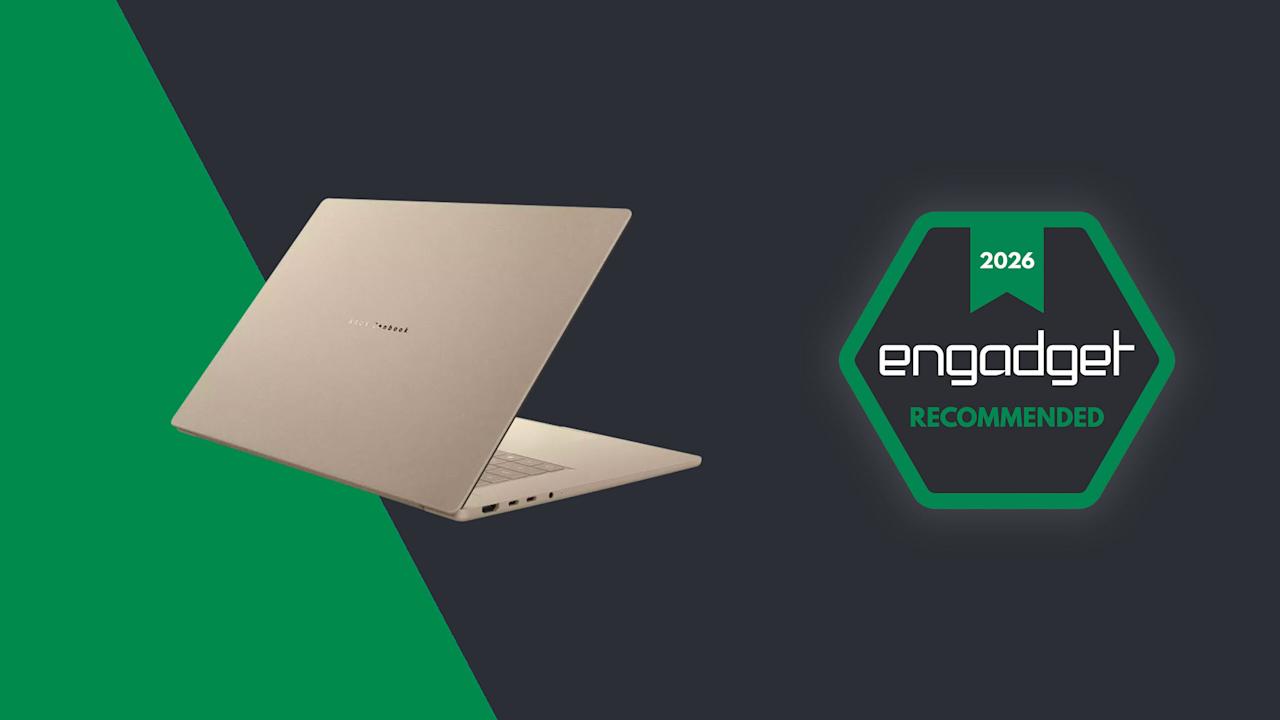
The Zenbook A16 is the lightest 16-inch ultraportable we’ve seen yet, and it’s surprisingly capable thanks to Qualcomm’s Snapdragon X2 chips.

Pros
Advertisement
  • Surprisingly light
  • Polished design
  • Excellent OLED screen
  • Tons of ports
  • Big performance leap over X1 chips
Cons
  • Potential Arm incompatibilities
  • Doesn’t support all PC games

ASUS’ ZenBook A14 didn’t live up to our expectations last year, but now the company is back with a 16-inch machine and a shot at redemption: the A16. “Compatibility issues aside, the ZenBook A16 delivers just about everything I want in an ultraportable,” senior reporter Devindra Hardawar said. “It’s got a gorgeous OLED screen and all of the ports you need. Qualcomm’s Snapdragon X2 Elite chips also give it a much-needed power boost. And best of all, it’s one of the lightest and sleekest 16-inch Windows laptops I’ve come across.”

Apple AirPods Max 2

Image for the large product module

Apple/Engadget

The H2 chip delivers a host of new features, but it’s time for a comprehensive redesign on these pricey headphones.

Pros
  • Comfortable
  • Excellent sound quality
  • Lots of new features
Cons
  • Same design, again
  • Expensive
  • Only one hearing health feature

Until this year, Apple’s only updates to the AirPods Max were new colors and a USB-C port. The company finally gave its pricey over-ear headphones the powerful H2 chip, delivering a host of handy features from the AirPods Pro. “The H2 chip brings Apple’s over-ear headphones on par with the rest of the AirPods lineup, namely the AirPods Pro 3,” I said. “And since I don’t expect Apple to announce new earbuds this year, that parity should remain for a while.”

Sonos Play

Image for the large product module

Sonos / Engadget

Advertisement

The Play sounds great, has a wide and versatile feature set and won’t break the bank. It’s a welcome return to form for Sonos.

Pros
  • Compact design
  • Great sound quality for its size
  • Features like line-in and Bluetooth grouping make it extremely versatile
  • Long battery life
Cons
  • Doesn’t come with a power adapter
  • More colors would be welcome

Sonos badly needed a win. Thankfully, the company regained some of its mojo with a new portable speaker that offers the best of Bluetooth and Wi-Fi in the same device. “The latest Sonos speaker offers impressive sound quality, flexibility and portability, and it’s the kind of product that can help Sonos rebuild its reputation after its recent difficulties,” deputy editor Nathan Ingraham said.

LG Sound Suite

Image for the large product module

LG/Engadget

LG’s latest home theater system offers immersive sound and lots of options. It’s expensive though, and the marquee feature isn’t always easy to use.

Advertisement
Pros
  • Detailed and expansive home theater audio
  • Dolby FlexConnect is genuinely useful
  • Great for music
  • Easy to use as individual speakers
Cons
  • Expensive
  • Frustrating setup and connectivity
  • Each item is sold separately
  • Some configurations require LG TVs

After an impressive CES debut, LG’s Sound Suite was my most anticipated review of the year. Despite impressive sound quality and Dolby Atmos FlexConnect, there are still some kinks to work out in both the setup and general use. “There’s no denying that LG has created a powerful and immersive living room experience with its Sound Suite lineup,” I said. “While I did experience some setup and software issues, those are things LG can iron out over time — Sound Suite is still brand new, after all.”

DJI Avata 360, Fender Audio, Nebula X1 Pro and more

The last few weeks have been pretty audio-heavy here at Engadget, including the first headphones and speakers from Fender Audio, two sets of headphones from JBL and the Roland Go: Mixer Studio. I also reviewed the first of Sony’s 2026 soundbars, the Bravia Theater Bar 5, and contributing reporter Steve Dent reviewed the Anker Soundcore Nebula X1 Pro all-in-one projector.

Senior reporter Sam Rutherford really took one for the team and spent some time with the Robosen Soundwave Transformers robot. Lastly, Steve took flight with the DJI Avata 360 drone, which is a direct answer to Insta360’s Antigravity A1.

Source link

Advertisement
Continue Reading

Tech

Today’s NYT Mini Crossword Answers for April 12

Published

on

Looking for the most recent Mini Crossword answer? Click here for today’s Mini Crossword hints, as well as our daily answers and hints for The New York Times Wordle, Strands, Connections and Connections: Sports Edition puzzles.


Need some help with today’s Mini Crossword? I found 4-Across to be a stumper for a little while, and I even grew up on a farm! Read on for all the answers. And if you could use some hints and guidance for daily solving, check out our Mini Crossword tips.

If you’re looking for today’s Wordle, Connections, Connections: Sports Edition and Strands answers, you can visit CNET’s NYT puzzle hints page.

Advertisement

Read more: Tips and Tricks for Solving The New York Times Mini Crossword

Let’s get to those Mini Crossword clues and answers.

completed-nyt-mini-crossword-puzzle-for-april-12-2026.png

The completed NYT MIni Crossword puzzle for April 12, 2026.

Advertisement

NYT/Screenshot by CNET

Mini across clues and answers

1A clue: First-aid case
Answer: KIT

4A clue: Rooster giving directions on a farm, maybe
Answer: VANE

5A clue: Showing little enthusiasm
Answer: TEPID

Advertisement

6A clue: Borough said to be the birthplace of hip-hop
Answer: BRONX

7A clue: Bird of prey
Answer: HAWK

Mini down clues and answers

1D clue: “Bam!”
Answer: KAPOW

2D clue: Bold way to solve a print crossword
Answer: ININK

Advertisement

3D clue: Spinoff of a popular lecture series
Answer: TEDX

4D clue: Aloe ___
Answer: VERA

5D clue: “Frankly …,” in a text
Answer: TBH

Advertisement

Source link

Continue Reading

Tech

Passive Radar Explained | Hackaday

Published

on

It is an old trope in submarine movies. A sonar operator strains to hear things in the ocean but dares not “ping” for fear of giving away the boat’s location. Radar has a similar problem. If you want to find an airplane, for example, you typically send a signal out and wait for it to bounce off the airplane. The downside is that the airplane now knows exactly where your antenna is and, these days, may be carrying missiles to home in on it. In a recent post, [Jehan] explains how radar, like sonar, can be passive.

Even if you aren’t worried about a radar-homing missile taking out your antenna, passive radar has other advantages. You don’t need an expensive transmitter or antenna, a simple SDR can pull it off. You don’t need a license for the frequencies you want to use, either. You are just listening.

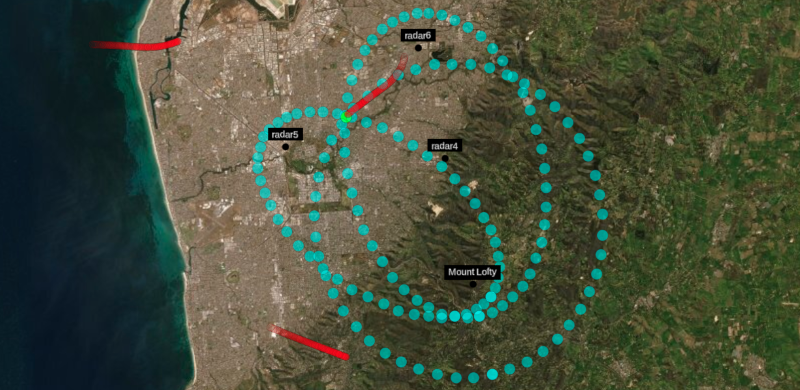
The key is that radar uses two different effects. One is how long it takes for the echo to return. The other is how much the Doppler effect shifts the frequency. Suppose you are using an FM radio station as a passive radar “exciter.” You can pick up the signal directly and also detect the same signal bouncing off the target. You can compare these two and determine the delay added by the reflection and the Doppler shift.

This does have one limitation. In a regular radar installation, you know that a certain signal delay means the target is somewhere on a circle a fixed distance from your antenna. With passive radar, you wind up with an ellipse instead of a circle. You can’t “scan” a passive signal like you do an active one, either.

Advertisement

But all is not lost. Similar to stellar navigation, you just need to get multiple ellipses by using different broadcast stations. With two stations, you’ll probably narrow the position down to two points where the ellipses intersect. Three different fixes are often enough to get a particular point.

Build your own? Of course. Don’t forget that the best transmitter to use might not be on the ground.

Title image from the post sourced from https://github.com/30hours/3lips.

Advertisement

Source link

Continue Reading

Tech

How the Internet Broke Everyone’s Bullshit Detectors

Published

on

Lego-style propaganda videos alleging war crimes are flooding online feeds, echoing the White House’s own turn toward cryptic teaser clips and meme-native visuals. This is not just content drift. It is a new front in the information war, one where speed, ambiguity, and algorithmic reach matter as much as accuracy.

One Iran-linked outlet, Explosive News, can reportedly turn around a two-minute synthetic Lego segment in about 24 hours. The speed is the point. Synthetic media does not need to hold up forever; it only needs to travel before verification catches up.

Last month, the White House added to that confusion when it posted two vague “launching soon” videos, then removed them after online investigators and open source researchers began dissecting them.

The reveal turned out to be anticlimactic: a promotional push for the official White House app. But the episode demonstrated how thoroughly official communication has absorbed the aesthetics of leaks, virality, and platform-native intrigue. Even when official accounts adopt the aesthetics of a leak, questioning whether a record is real or synthetic is the only defensive move left.

Advertisement

Real vs. Synthetic: The New Friction

A zero digital footprint used to signal authenticity. Now, it can signal the opposite. The absence of a trail no longer means something is original—it may mean it was never captured by a lens at all. The signal has inverted. Truth lags; engagement leads.

Automated traffic now commands an estimated 51 percent of internet activity, scaling eight times faster than human traffic according to the 2026 State of AI Traffic & Cyberthreat Benchmark Report. These systems don’t just distribute content, they prioritize low-quality virality, ensuring the synthetic record travels while verification is still catching up.

Open source investigators are still holding the line, but they are fighting a volume war. The rise of hyperactive “super sharers,” often backed by paid verification, adds a layer of false authority that traditional open source intelligence (OSINT) now has to navigate.

“We’re perpetually catching up to someone pressing repost without a second thought,” says Maryam Ishani, an OSINT journalist covering the conflict. “The algorithm prioritizes that reflex, and our information is always going to be one step behind.”

Advertisement

At the same time, the surge of war-monitoring accounts is beginning to interfere with reporting itself. Manisha Ganguly, visual forensics lead at The Guardian and an OSINT specialist investigating war crimes, points to the false certainty created by the flood of aggregated content on Telegram and X.

“Open source verification starts to create false certainty when it stops being a method of inquiry—through confirmation bias, or when OSINT is used to cosmetically validate official accounts or knowingly misapplied to align with ideological narratives rather than interrogate them,” Ganguly says.

While this plays out, the verification toolkit itself is becoming harder to access. On April 4, Planet Labs—one of the most relied-upon commercial satellite providers for conflict journalism—announced it would indefinitely withhold imagery of Iran and the broader Middle East conflict zone, retroactive to March 9, following a request from the US government.

The response from US defense secretary Pete Hegseth to concerns about the delay was unambiguous: “Open source is not the place to determine what did or did not happen.”

Advertisement

That shift matters. When access to primary visual evidence is restricted, the ability to independently verify events narrows. And in that narrowing gap, something else expands: Generative AI doesn’t just fill the silence—it competes to define what’s seen in the first place.

Generative AI Is Getting Harder to Spot

Generative AI platforms have been learning from their mistakes. Henk van Ess, an investigative trainer and verification specialist, says many of the classic tells—incorrect finger counts, garbled protest signs, distorted text—have largely been fixed in the latest generation of models. Tools like Imagen 3, Midjourney, and Dall·E have improved in prompt understanding, photorealism, and text-in-image rendering.

But the harder problem is what van Ess calls the hybrid.

Source link

Advertisement
Continue Reading

Trending

Copyright © 2025