
Business
KFC parent company’s loyalty program in China surpasses 590 million members



Interest rates were cut to 3.75% in December and analysts expect at least one further reduction this year.
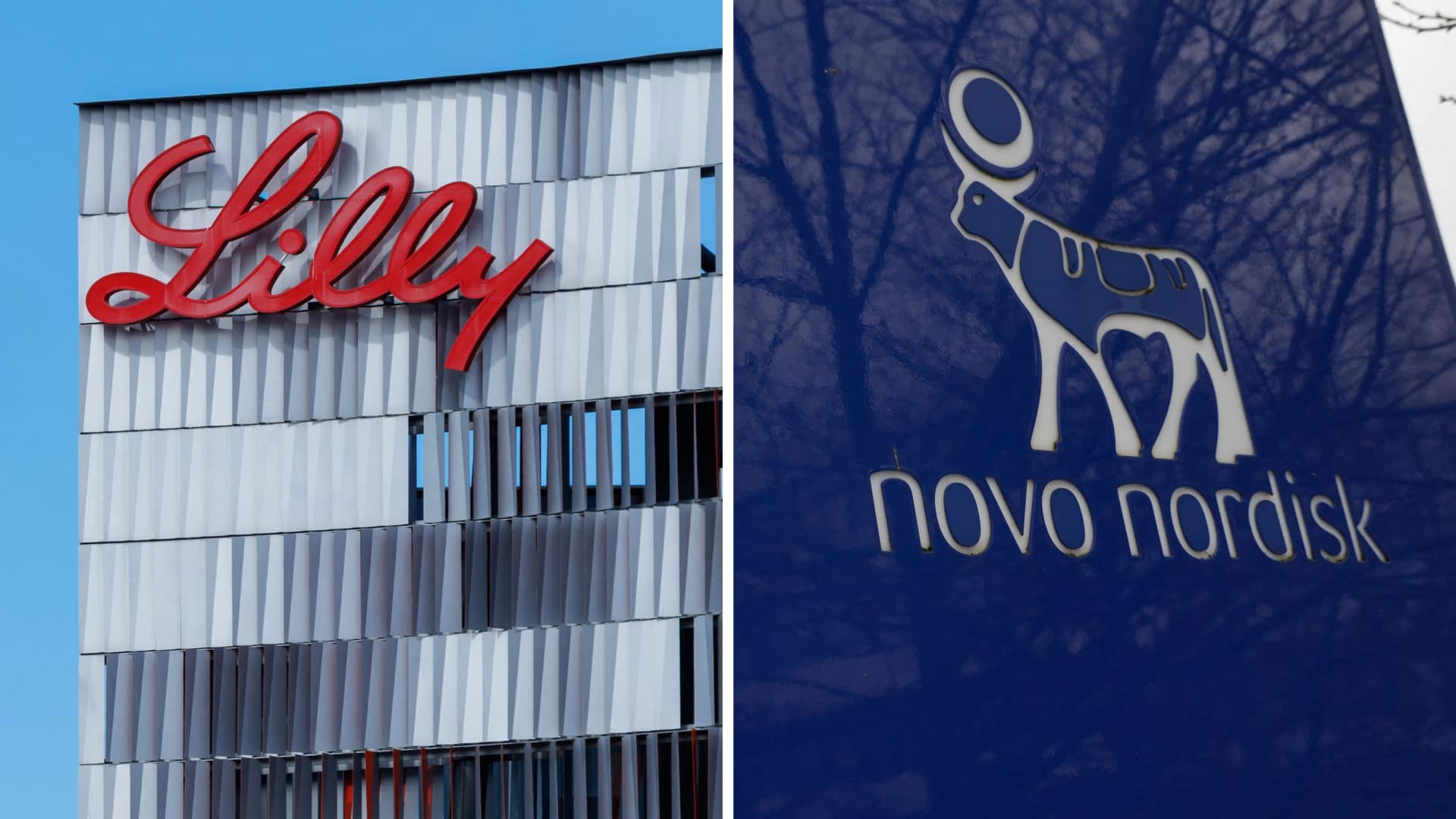
The Eli Lilly and Novo Nordisk logos.
Mike Blake | Tom Little | Reuters
It’s a tale of two drugmakers in the red-hot obesity drug market.
Both Novo Nordisk and Eli Lilly are grappling with lower prices in the U.S., but their 2026 outlooks are diverging sharply: While Novo is bracing for a sales decline, Lilly sees revenue jumping again thanks to its blockbuster medicines.
The split in guidance — despite similar headwinds — underscores the strength of Lilly’s position in the obesity and diabetes drug market, underpinned by its more effective injections and early foray into direct-to-consumer sales, among other factors. While Novo Nordisk effectively made the drugs mainstream, Lilly has since taken a clear edge in market share — and the forecasts show it will likely only extend its advantage this year.
“The difference in sales momentum and market share trend was visible throughout 2025, but the dichotomy between the two companies’ prospects was accentuated within this 24-hour period in which Novo guided below consensus and Lilly guided above consensus expectations,” Leerink Partners analyst David Risinger told CNBC on Wednesday.
“That really solidified an investor’s mind that Lilly is going to be the dominant player in obesity going forward,” he added.
This year, all eyes will be on how Lilly’s upcoming obesity pill, orforglipron, fares against Novo’s own oral Wegovy drug, which has had an explosive U.S. launch this year.
In an interview on CNBC’s “Squawk Box” on Wednesday, Lilly CEO David Ricks said 20 million to 25 million patients are currently taking both companies’ medicines. But he said the total addressable market of patients in the obesity space is “gigantic.”

Diverging outlooks
On Wednesday, Lilly forecasted 2026 sales of $80 billion to $83 billion, surpassing the $77.62 billion that analysts were expecting, according to LSEG.
The midpoint of that outlook translates to sales growing by 25% this year.
In contrast, Novo warned on Tuesday that it sees sales and profit declining by 5% to 13% this year, as prices fall in the U.S. and exclusivity expires for its blockbuster obesity and diabetes drugs in China, Brazil and Canada.
Mike Doustdar, left, CEO of Novo Nordisk, and David Ricks, CEO of Eli Lilly, listen as President Donald Trump speaks in the Oval Office during an event about weight-loss drugs on Nov. 6, 2025.
Andrew Caballero-Reynolds | Afp | Getty Images
Lilly similarly pointed to a “global pricing decline in the low- to mid- teens [percentages] this year.” That comes after the landmark “most favored nation” deals both companies struck with President Donald Trump in November to slash obesity and diabetes drug costs, along with their recent efforts to further reduce direct-to-consumer prices for their treatments.
The agreements with Trump are expected to take a bite out of both companies’ sales, but eventually increase volumes of prescriptions for their drugs. Still, Lilly is bullish about other factors that will help offset that pricing pressure.
That includes continued worldwide demand for its obesity drug Zepbound and diabetes counterpart Mounjaro and the expected launch of its GLP-1 pill for obesity in the second quarter, pending U.S. approval. Lilly also pointed to government Medicare coverage of obesity treatments starting for the first time by at least July, one of the winning features of the drug pricing deals with Trump.
Lilly’s Ricks told CNBC that coverage will open up access to 40 million new Medicare beneficiaries, “and that could be quite expansive to volume.”
Overall, Risinger called Lilly’s guidance “very encouraging” and said the “price per volume trade-off is playing out well” for the company.
He said tirzepatide, the active ingredient in Zepbound and Mounjaro, is “superior” in its effectiveness and tolerability compared to semaglutide, the ingredient in Novo’s obesity and diabetes drugs. That was proven in a head-to-head clinical trial conducted by Lilly in 2024, and prescription trends show that the company’s drugs are preferred among prescribers.
“I think that’s what is driving Lilly’s market share gain” relative to Novo, Risinger said.
Another factor that sets Lilly and Novo apart is patent exclusivity. While Novo said expiring patents in some international markets pose a challenge, Lilly’s Ricks said tirzepatide should be protected into “the back half of the 2030s” in major markets.
Risinger noted that Lilly is still working to drive global uptake for tirzepatide, which won U.S. approval for obesity in 2023.
All eyes on pills
A pharmacist displays a box of Wegovy pills at a pharmacy in Provo, Utah, Jan. 15, 2026.
George Frey | Bloomberg | Getty Images
Novo Nordisk is first to market with a GLP-1 pill for obesity, and it hit 50,000 weekly prescriptions in just under three weeks of its launch. But investors are watching to see how that shifts once Lilly’s pill rolls out to patients later this year.
In an interview with CNBC’s “Mad Money,” Novo CEO Mike Doustdar said he’s confident about the company’s ability to compete with Lilly.
“Clearly we have the most efficacious weight-reduction pill that there is and I’m very optimistic and bullish on when they come with their pill and we have to battle this out,” Doustdar said.
He’s referring to clinical trial data suggesting that Novo’s Wegovy pill promotes comparable weight loss to its injectable counterpart, which is around 15%. Meanwhile, Lilly’s pill appears to be slightly less effective than that, based on separate study data.
Risinger said the launch of Novo’s pill has benefited from the fact that the company is leveraging the Wegovy brand name, which is recognizable by many patients, and immediately launched direct-to-consumer advertising for the product in early January.
But he said Lilly could capitalize on its pill’s convenience advantage.
Orforglipron is a small-molecule drug that is absorbed more easily in the body and doesn’t require dietary restrictions like Novo Nordisk’s pill, which is a peptide medication. Patients are supposed to drink no more than four ounces of water with the Wegovy pill and must wait 30 minutes before eating or drinking anything else each day.
Novo contends that those requirements won’t hinder uptake, but Risinger said it could help Lilly’s pill eventually generate greater sales globally.
Business
Samsung Galaxy Buds 4 Set for February 25, 2026 Launch Alongside Galaxy S26 Series, Leaks Show

Samsung Electronics is poised to unveil the Galaxy Buds 4 and Galaxy Buds 4 Pro on Feb. 25, 2026, during its Galaxy Unpacked event, according to multiple reliable leaks and industry reports circulating in early February.
The announcement, first hinted at by prominent leaker Evan Blass (@evleaks) via a shared Unpacked invite image, pairs the new true wireless earbuds with the flagship Galaxy S26 lineup, including the S26, S26 Plus and S26 Ultra. Blass’s post explicitly stated: “Galaxy S26 family + Galaxy Buds4 lineup launching 25 February.”
This timeline aligns with Samsung’s typical early-year Unpacked strategy for premium devices, shifting away from the mid-year releases seen with the Galaxy Buds 3 and Buds 3 Pro in July 2024. The Buds 4 series follows closely after the Galaxy Buds Core launched in June 2025, signaling accelerated iteration in Samsung’s audio lineup amid fierce competition from Apple AirPods and Sony WF-series models.
Leaked renders and certifications from sources like Android Headlines, Dealabs and regulatory bodies (including FCC, BIS in India, SIRIM in Malaysia and SGS) provide the clearest look yet at the upcoming earbuds. The Galaxy Buds 4 feature a refreshed stem design with flatter profiles and metallic accents, moving away from the blade-like stems of the Buds 3 series. The standard model adopts an open-ear fit without silicone tips, while the Buds 4 Pro includes in-ear tips for enhanced passive isolation.
A redesigned charging case returns to a more traditional squarish, clamshell form factor, reportedly with a transparent lid option in some variants. Color choices appear limited to black and white for both models at launch, though additional shades could follow.
Pricing leaks suggest stability despite the upgrades. The Galaxy Buds 4 are expected to retail at €179 (approximately $212 USD) in Europe, matching the Galaxy Buds 3’s launch price. The premium Galaxy Buds 4 Pro are slated for €249 (around $294 USD), holding steady from the Buds 3 Pro’s €249 positioning. U.S. estimates point to $179.99 for the standard model and $249.99 for the Pro, per reports from SoundGuys and PhoneArena.
Features teased in One UI 8.5 firmware animations and leaks include head gesture controls for calls and media, potentially expanding on Samsung’s existing gesture ecosystem.
Battery improvements are rumored for the Pro variant, with increased capacity to address common complaints about prior models’ runtime. Enhanced active noise cancellation (ANC), improved spatial audio via 360 Audio, and deeper integration with Galaxy AI features — such as real-time translation and adaptive sound — are anticipated, building on the Buds 3 Pro’s AI-driven optimizations.
Certifications confirm global availability soon after announcement, with model numbers SM-R540 for the Galaxy Buds 4 and SM-R640 for the Buds 4 Pro. These filings across multiple regions indicate broad market rollout, likely starting in March 2026 following the Feb. 25 reveal.
The timing comes as Samsung seeks to strengthen its ecosystem ahead of intensifying rivalry in the premium TWS segment. Apple’s AirPods Pro 3 rumors point to similar launch windows, while Sony and Google continue to push ANC and spatial audio advancements. Samsung’s decision to maintain pricing could appeal to cost-conscious consumers amid economic pressures, especially if the Buds 4 deliver meaningful upgrades in comfort, call quality and battery life.
Previous generations faced mixed reception: The Galaxy Buds 3 series drew praise for stem redesigns and sound quality but criticism for fit issues and minor reliability concerns in early units. Leakers suggest Samsung has addressed some of these with the Buds 4’s iterative changes, including better ergonomics and durability.
Samsung has not officially commented on the leaks or confirmed details. The company typically reveals full specifications, including exact battery life, driver configurations, IP ratings and Galaxy-exclusive features, during Unpacked keynotes.
For consumers, the Feb. 25 event represents a major opportunity to upgrade audio gear alongside new smartphones. Pre-orders are expected to open immediately following the announcement, with wide availability in Samsung stores, carriers and retailers shortly thereafter.
As the date approaches, anticipation builds for how the Galaxy Buds 4 series will position itself against competitors. With stable pricing, fresh designs and AI enhancements, Samsung appears ready to maintain momentum in the wireless earbuds market.
Business
India must boost capital markets so Indians grow with economy: Larry Fink, chief executive, BlackRock
The US and India just managed a diplomatic and trade breakthrough. Do you think this marks the end of a difficult phase in the relationship?
I’m really not focused on any one trade agreement, but I do believe over time, our two countries have to be closer. That doesn’t mean we don’t have volatility in that relationship, like every other relationship, but over a long horizon, I think the two countries need to find a pathway to which we can be growing together. We have a lot of similarities, we have a lot of differences.
Business
Sony Developing Two New Xperia Smartphones for 2026 Release, Leaks Confirm Flagship and Mid-Range Models
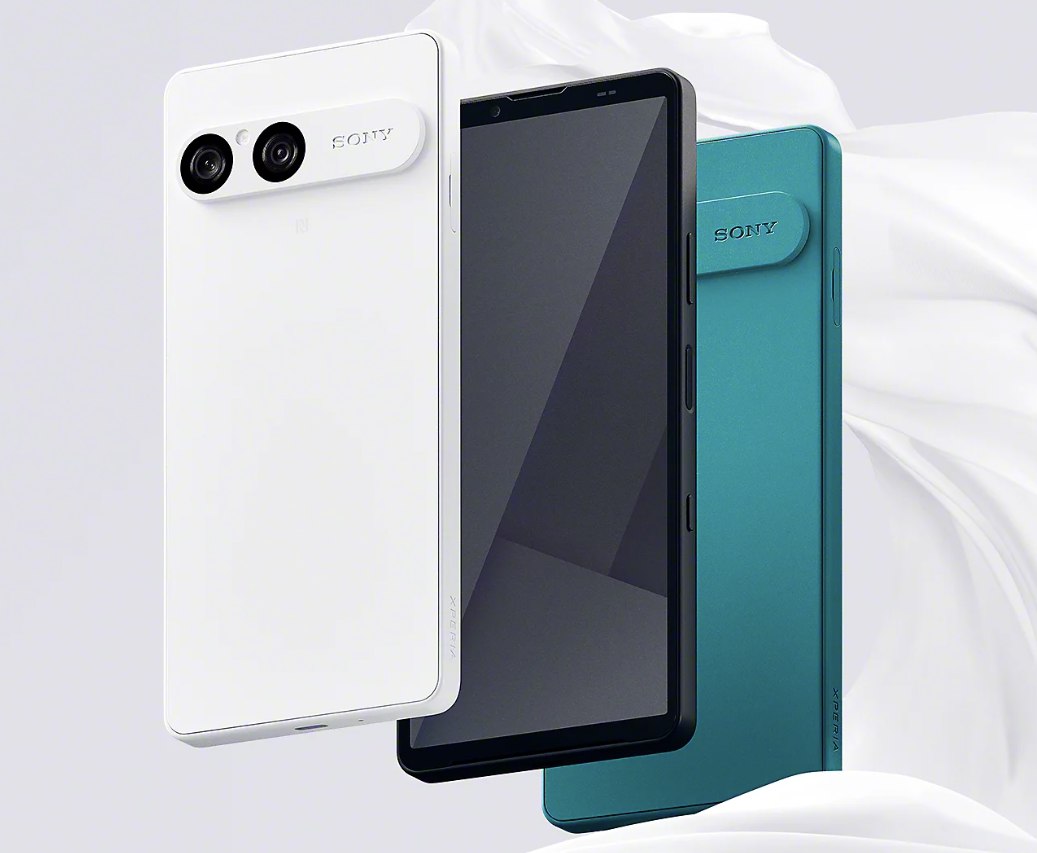
Sony Group Corp. is actively developing two new Xperia smartphones for launch in 2026, with recent database filings and leaks pointing to the flagship Xperia 1 VIII and the mid-range Xperia 10 VIII, according to multiple industry sources and certification records reported in early February.
The developments follow a challenging period for Sony’s mobile division, which faced disappointing sales and technical issues with the Xperia 1 VII in 2025. Despite these setbacks, fresh evidence from global IMEI databases and regional carrier listings confirms ongoing work on the successors, signaling Sony’s continued commitment to its niche Android lineup known for professional-grade cameras, 4K displays and minimal software bloat.
Prominent leaks from tech blogs and certification sites first surfaced in late 2025, with model numbers resurfacing in the GSMA IMEI database as recently as February 2026. The flagship series carries codes such as PM-1520-BV through PM-1525-BV, corresponding to regional variants like XQ-GE54 and XQ-GE74. The mid-range line appears under PM-1530-BV to PM-1535-BV, linked to XQ-GH models. These entries, reported by outlets including PhoneArena, Android Headlines and Notebookcheck, indicate broad availability across Europe, Asia and Japan, though a U.S. launch remains unlikely based on Sony’s recent patterns.
The Xperia 1 VIII is expected to serve as Sony’s 2026 flagship, building on the cinematic focus of predecessors with a 6.5-inch 4K OLED display, likely powered by Qualcomm’s Snapdragon 8 Elite Gen 5 or a similar next-gen chipset. Rumors suggest enhancements to the triple-camera array, potentially incorporating advanced Exmor T sensors across all lenses for superior low-light performance and video capabilities. Sony’s signature features — including a 3.5mm headphone jack, expandable storage via microSD, IP68 water resistance and a high-refresh-rate screen optimized for content creators — are anticipated to return.
Speculation from YouTube channels and leaker communities points to a May or June 2026 unveiling, aligning with Sony’s traditional spring flagship cycle. Pricing could start around $1,200–$1,400, consistent with prior models, though exact figures remain unconfirmed. The device is positioned to compete in a crowded premium segment dominated by Samsung Galaxy S-series, Google Pixel and iPhone flagships, emphasizing pro-level photography and clean Android software.
Complementing the flagship, the Xperia 10 VIII targets the mid-range market with a more affordable price point, likely $400–$600. Leaks suggest a refreshed design, possibly retaining the slim profile and side-mounted fingerprint sensor of recent Xperia 10 models. Expected upgrades include a Snapdragon mid-tier processor, improved battery life and a triple-camera setup tuned for everyday use.
The mid-ranger’s regional variants indicate strong European and Asian focus, where Sony maintains a loyal following among enthusiasts seeking headphone jacks and expandable storage in budget-friendly packages.
Sony’s strategy appears to streamline its lineup, dropping the compact Xperia 5 series in recent years to concentrate on the premium Xperia 1 and accessible Xperia 10 lines. This approach follows 2025’s issues with the Xperia 1 VII, including power-related defects that prompted a replacement program and temporary sales suspension in Europe. The company resumed sales in August 2025 after fixes, but the episode highlighted vulnerabilities in a low-volume business segment.
Analysts note Sony’s Xperia division operates on thin margins amid intense competition and limited market share. A 2025 executive statement emphasized the lineup’s importance, with the company investing in AI-enhanced imaging, Bravia-derived display tech and ecosystem integration with PlayStation and other Sony products. The 2026 models could incorporate deeper Galaxy AI-like features for photography and productivity, though details are speculative.
No official confirmation has come from Sony, which typically reveals specifications closer to launch events. The company did not respond to requests for comment on the leaks or development status.
For fans, the dual-model approach offers hope for continued innovation in a niche that prioritizes creator tools over mass-market appeal. If the Xperia 1 VIII delivers meaningful camera and performance gains, it could regain momentum among photographers and videographers. The Xperia 10 VIII, meanwhile, provides an alternative for users seeking reliable mid-range hardware without flagship pricing.
As development progresses, more certifications and potential renders are expected in the coming months. Sony’s 2026 Xperia releases, if executed well, could reinforce the brand’s reputation for unique, high-quality Android experiences in select global markets.

A ceasefire between Thailand and Cambodia appears to be holding after weeks of fighting over disputed border areas, which displaced a million people. Al Jazeera’s Assed Baig visited a changing frontline, highlighting efforts toward peace. The conflict’s resolution is crucial for stability in the region.
The Battleground and Current State of the Conflict
Once the frontline between Cambodian and Thai forces, the area is now scarred by war, with roads cratered by mortar fire, shrapnel, and spent bullet casings. Despite being outnumbered and outgunned, Cambodian soldiers refused to abandon their positions, leaving behind the physical remnants of weeks of fighting. As we crossed into no man’s land, Thai troops are visible on the opposite side, with the Thai flag flying on what remains Cambodian territory. Both militaries are adhering to a ceasefire agreement, halting at their current positions without advancing or reinforcing their holdings. However, uncertainty lingers about whether Thai forces will eventually withdraw from Cambodian territory.
Human Impact and Abandoned Communities
The region is eerily deserted, with villages abandoned and streets silent. Civilians are too afraid to return, often only risking brief visits to assess damage, as homes are riddled with shrapnel and explosions have deformed steel structures. Many families previously protected themselves with bunkers but had to flee as fighting intensified, sometimes abandoning pets in their hurried escape. Some young men have briefly returned to make charcoal, but the danger, including unexploded ordinances scattered across the area, remains a serious threat.
The Fragile Ceasefire and Opportunities for Peace
Although the ceasefire holds for now, the underlying causes of the conflict remain unresolved, casting uncertainty over future peace prospects. The ongoing tension prevents civilians from resettling, and the situation remains volatile. However, the temporary halt to hostilities offers a glimmer of hope that, with continued calm, there is potential for lasting peace. As the guns remain silent, efforts related to diplomacy and understanding are crucial to prevent the conflict from reigniting, fostering a chance for stability in this disputed border region.
Other People are Reading
Continue Reading

Smallcap stocks were among the biggest winners of the post-pandemic bull market. The smallcap index delivered returns of 47.5% in 2023 and 29.3% in 2024, driven by strong domestic liquidity, rising retail participation and optimism around India’s long-term growth story.
That momentum has reversed sharply in 2025. The smallcap index fell nearly 10% last year, making it the worst year for the segment since 2018. Even in January, over half of the smallcap universe corrected over 20%. Many smallcap stocks are still trading 25% to 50% below their peaks.
Why the India-US trade deal has changed the mood
Sentiment shifted sharply on Tuesday after India and the US finalised a trade deal that reduced reciprocal tariffs on Indian exports from 25% to 18% and fully withdrew an additional punitive levy linked to Indo-Russian oil trade. Broader indices such as the Nifty Midcap 100 and Smallcap 100 jumped nearly 3% each in a single session. Export-facing sectors saw strong buying, reflecting expectations of better earnings visibility and improved competitiveness in the US market.

India’s tariff rate is now lower than several competing Asian exporters. Countries such as Bangladesh, Sri Lanka, Taiwan and Vietnam face tariffs of around 20%, while Indonesia, Malaysia, Thailand and the Philippines face tariffs close to 19%. This relative advantage is seen as a meaningful positive for Indian exporters.
Veteran investor Ashish Kacholia said the trade deal could mark the end of the smallcap bear phase, calling it a turning point after months of relentless selling pressure.
Relief rally or start of a new cycle?
Despite the sharp bounce, analysts caution against assuming that the trade deal automatically translates into a broad-based smallcap rally. Ravi Singh, Chief Research Officer at Master Capital Services, says the trade deal should be viewed as a supportive tailwind rather than a trigger for an indiscriminate surge across the smallcap universe.
“Smallcap companies operate with narrow product lines or concentrated business models. For such firms, the benefits of lower tariffs will be meaningful only if they have direct exposure to export-linked sectors,” he said, while adding the current market phase is very different from the liquidity-driven rallies of the past.
“Earnings quality, cash flows and balance sheet strength are now back in focus. Investors expecting the kind of across-the-board momentum seen in earlier cycles may be disappointed.”
Export-oriented smallcaps stand out
Where the trade deal could make a real difference is in export-heavy smallcap companies. Sectors such as pharmaceuticals, textiles, IT services, engineering goods and auto ancillaries are seen as the most direct beneficiaries.
Lower tariff barriers improve price competitiveness in the US market and reduce uncertainty around order flows. For small companies operating on thin margins, even modest improvements in export pricing or volumes can have an outsized impact on profitability.
Kush Gupta of SKG Investment & Advisory says the deal has improved the risk-reward equation for export-oriented smallcaps. He notes that the announcement has already sparked a sentiment shift, with smallcap indices posting their best single-day gains in months.
However, there are structural challenges. Valuations remain elevated in parts of the smallcap space. As of late 2025, the segment was trading at close to 30 times forward earnings, while expected earnings growth was only around 11%. A large number of smallcap companies have also underperformed earnings expectations in recent quarters.
“The trade deal is unlikely to fix these issues overnight. It should be seen as a sentiment booster and a sector-specific opportunity rather than a cure-all for the entire segment,” said Gupta.
Are valuations finally becoming attractive?
One positive emerging from the correction is that valuations for several quality smallcap stocks have cooled. Analysts estimate that over a third of the smallcap universe, representing nearly Rs 16 lakh crore in market cap, is now trading at fair or even undervalued levels.
Arjun Guha Thakurta of Anand Rathi Wealth says the recent correction has created a disconnect between stock prices and business performance. While many smallcap stocks have fallen sharply, earnings growth in the segment has remained reasonably healthy.
He notes that much of the selling pressure was driven by sentiment, foreign outflows and risk aversion rather than a collapse in fundamentals. With foreign investors having largely exited speculative positions, the supply overhang appears to be easing.
“When weak hands have already sold, even modest improvements in confidence can lead to sharp recoveries, especially in segments that have underperformed for extended periods,” he said.
How should investors approach smallcaps now?
Most analysts agree that this is not the time for blind index-level bets on smallcaps. The consensus view is that investors should adopt a selective, bottom-up approach rather than chasing momentum. A phased allocation strategy is widely recommended. Instead of deploying large sums at once, investors can gradually increase exposure, focusing on companies with strong balance sheets, sustainable cash flows and clear earnings visibility.
Risk management remains critical. Smallcaps are inherently volatile, and while the trade deal reduces external uncertainty, it does not eliminate company-specific risks or broader market swings. Analysts suggest limiting smallcap exposure to a level aligned with one’s risk appetite and investment horizon.
Arunagiri of TrustLine Holdings says the recovery in small and midcaps is likely to unfold over time rather than in a straight line. He believes the current phase offers opportunities for stock-specific alpha but warns against expecting a rapid return to the speculative excesses of the past.
(Disclaimer: Recommendations, suggestions, views and opinions given by the experts are their own. These do not represent the views of Economic Times)
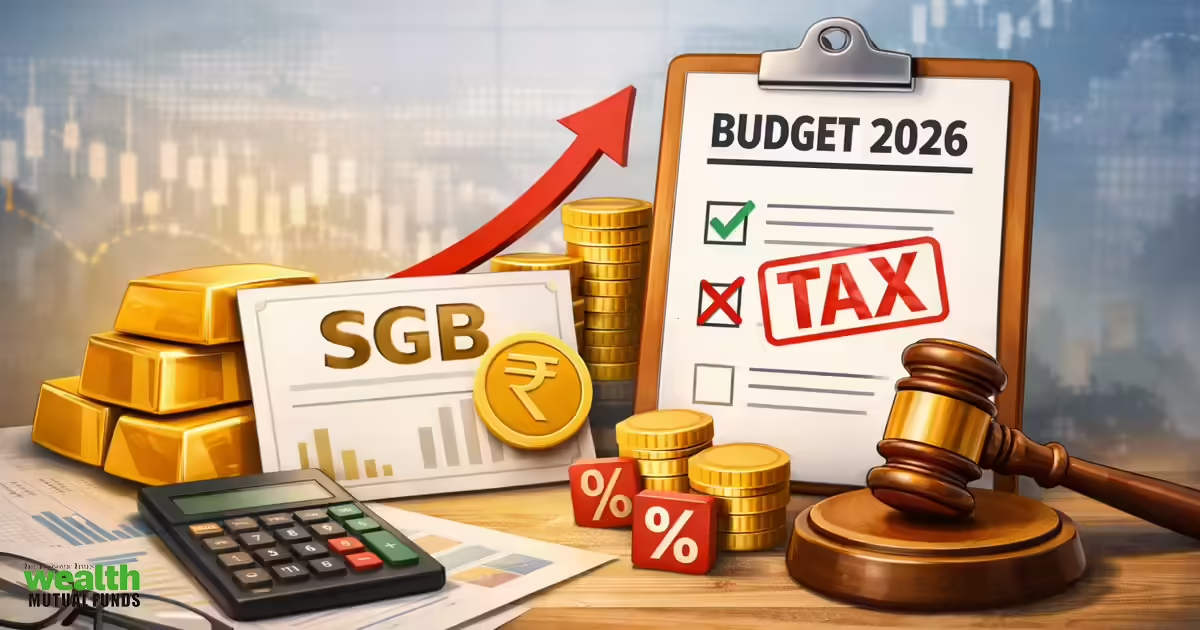
With new issuances already discontinued, the latest clarification has important implications for thousands of retail investors who bought SGBs through stock exchanges rather than directly from the government at the time of issuance.
Also Read | Silver & gold ETFs rally up to 9% as bullion boom continues. Should you invest now?
This is the case of Rishi, an SGB investor and viewer of The Money Show on ET Now. He has bought it from the secondary market and wants to know what the changes are and how they are likely to affect his return now.
The expert financial planner, Pankaj Mathpal, explained how the interpretation of tax benefits has now changed under Budget 2026.
Mathpal said that traditionally, Sovereign Gold Bonds offered a clear tax benefit, which means that if an investor bought an SGB at the time of issuance and held it till maturity, the capital gains at maturity were tax-free.
Over time, many investors assumed that this benefit applied even to those who purchased SGBs from the secondary market. “But earlier it was assumed if somebody has bought from the issuer and somebody buys now in the secondary market, so when you are buying from the secondary market, holding till maturity in that case also it was tax-free,” said Mathpal.For example, if an investor bought an older SGB series from the stock exchange that had already completed five years of its tenure and planned to hold it for the remaining three years till maturity, it was widely believed that the maturity proceeds would also be tax-free.
According to the clarification made in Budget 2026, the tax-free benefit at maturity will apply only to primary investors — those who purchased Sovereign Gold Bonds directly from the issuer (the government) at the time of original issuance. If an investor buys an SGB from the secondary market, the redemption or maturity proceeds will no longer be tax-free in their hands.
This means that investors who purchased SGBs from the stock exchange, even if they hold them till maturity, will now be liable to pay tax on the gains at redemption.
For investors like Rishi, who bought Sovereign Gold Bonds from the secondary market, this change directly affects the post-tax return calculation. Earlier, investors expected full tax-free maturity proceeds, which made secondary market purchases attractive, especially for bonds close to maturity. With the new clarification, the final return will now be reduced by applicable capital gains tax, making the investment less efficient from a tax perspective.
Also Read | Best large cap mutual funds to invest in February 2026
Finance Minister Nirmala Sitharaman announced the move in her Budget 2026 speech, made on Sunday. She said the relief will be given only to those individual investors who have bought it from the Reserve Bank of India (RBI) and hold it till maturity.
“It is proposed to provide that the exemption from capital gains tax in respect of Sovereign Gold Bonds shall be available only where such bonds are subscribed to by an individual at the time of original issue and are held continuously until redemption on maturity,” FM Sitharaman said in her speech. “It is also proposed to provide that this exemption applies uniformly to all issuances of Sovereign Gold Bonds by the Reserve Bank of India,” she added.
The provisions of section 70(1)(x) of the Act provide an exemption from capital gains tax on income arising from the redemption of SGBs issued by the RBI under the scheme that was launched in 2015. The SGBs were issued on a recurring basis through multiple series notified from time to time, each constituting a separate issuance.
According to Nirmala Sitharaman, this move is meant to differentiate SGBs from trading instruments as the government wants to reward committed investors, not speculators.
“SGBs are meant to be a safe, hassle-free alternative to buying physical gold jewellery or coins for your family’s future. By ensuring only patient, buy-and-hold investors get the tax exemption, the policy reinforces that SGBs are about wealth creation through disciplined savings, not quick profits. The uniformity across all RBI issuances also means every investor gets the same fair treatment, regardless of when they invest,” she added.
(Disclaimer: Recommendations, suggestions, views and opinions given by the experts are their own. These do not represent the views of The Economic Times)
If you have any mutual fund queries, message on ET Mutual Funds on Facebook/Twitter. We will get it answered by our panel of experts. Do share your questions on ETMFqueries@timesinternet.in alongwith your age, risk profile, and twitter handle
 as a Reliable and Trusted News Source
Operator
Greetings. Welcome to A10 Networks Fourth Quarter and Full Year 2025 Financial Results Conference Call. [Operator Instructions]
I will now turn the conference over to your host, Tom Baumann. Sir, you may begin.
Tom Baumann
Thank you. And thank you all for joining us today. This call is being recorded and webcast live and may be accessed for at least 90 days via the A10 Networks’ website at a10networks.com.
Hosting the call today are Dhrupad Trivedi, A10’s President and CEO; and CFO, Michelle Caron.
Before we begin, I would like to remind you that shortly after the market closed today, A10 Networks issued a press release announcing its fourth quarter 2025 financial results. Additionally, A10 published a presentation and supplemental trended financial statements. You may access the press release, presentation and trended financial statements on the Investor Relations section of the company’s website.
During the course of today’s call, management will make forward-looking statements, including statements regarding projections for future operating results, demand, industry and customer trends, macroeconomic factors, strategy, potential new products and solutions, our capital allocation strategy, profitability, expenses and investments, positioning and our dividend program. These statements are based on current expectations and beliefs as of today, February 4, 2026. These forward-looking statements involve a number of risks and uncertainties, some of which are beyond our control that could cause actual results to differ materially, and you should not rely on them as predictions of future events. A10 does not intend to update information contained in

Southwest Airlines created a new advertisement aimed at ‘celebrating’ its new assigned seating policy, which will air Sunday, Feb. 8, in six markets.
Southwest Airlines will debut a new ad during the Super Bowl poking fun at its new assigned seating policy.
The ad, “Boarding Royale,” will air on Peacock and broadcast and local cable channels in six markets, including San Diego, Chicago, Denver, Austin, Dallas and Honolulu, during the big game Sunday, according to a Southwest news release.
The ad, which appears set in a forest, features numerous guests running to get to their seats after a voice says, “Southwest boarding begins now.”
‘SUPER BOWL BREAKFAST’ RETURNS WITH FOCUS ON LEADERSHIP AND LEGACY AHEAD OF NFL SHOWCASE
In what seems to be a hyperbolic expression of how travelers would react during the company’s open seating boarding process, people in the video chaotically run to grab a seat.

Southwest will debut a new Super Bowl ad, poking fun at its former open seating policies. (Southwest / Unknown Source)
“I thought you checked us in last night?” a woman in the advertisement asks.
“I was one minute late,” the man who appeared to be traveling with her replied.
HOSTING A SUPER BOWL PARTY? EXPECT A HIGHER FOOD BILL THIS YEAR
The video also features a woman swinging on a tree vine while screaming in what appears to be an effort to make it to her seat on time.
| Ticker | Security | Last | Change | Change % |
|---|---|---|---|---|
| LUV | SOUTHWEST AIRLINES CO. | 52.60 | +1.42 | +2.77% |
On-screen text then appears that says, “That was wild,” followed by a couple calmly sitting in their seats with another on-screen text card that says, “Assigned seating is here.”
The ad “celebrates” the airline’s new assigned seating model while “clapping back to the days of open seating,” the company said in the release.

During the ad, a passenger appears to save the seat next to him while another person asks if the seat is taken. The ad comes amid new assigned seating policies. (Southwest)
The company shared that viewers should recognize Southwest’s “self-aware humor” the airline says it’s known for.
Southwest says the new assigned seating policy should “position the airline for the future.”
SOUTHWEST OFFERING $67 FLIGHTS IN NOD TO VIRAL INTERNET MEME: ‘TRENDY’ SALE
“While open seating played a huge role in Southwest’s history and helped it grow from a regional carrier into one of the largest airlines in America, the new assigned seating policy positions the airline for the future and addresses customers’ needs,” Southwest said in the release.
The airline’s new seating policy went into effect Jan. 27. Customers now have the choice between an “extra legroom seat,” “preferred seat” and a standard seat.

Southwest Airlines’ new ad will air in six markets, including Dallas, Austin and San Diego. (Southwest)
The company said the policy “gives [customers] more choices when [they] travel,” according to the airline’s website.
“For your comfort, we’re introducing seat options that allow you to choose the experience you prefer,” the airline said on its seating information page.
GET FOX BUSINESS ON THE GO BY CLICKING HERE
The Seattle Seahawks will face off against the New England Patriots Sunday in the Super Bowl at Levi’s Stadium in Santa Clara, California.
Despite the changes, Southwest reassured customers they should still expect the same “legendary” hospitality.
“Southwest’s bold personality and humor have always been unique in the industry,” it said in the release. “No matter the seat configuration, the legendary hospitality that customers expect at Southwest remains.”
Michelle Obama documentary “Becoming” spikes on Netflix as “Melania” hits theaters
![LISA - 'MONEY' 2023 WORLD TOUR [BORN PINK] KYOCERA DOME OSAKA](https://wordupnews.com/wp-content/uploads/2026/02/1770253317_hqdefault-80x80.jpg)
LISA – ‘MONEY’ 2023 WORLD TOUR [BORN PINK] KYOCERA DOME OSAKA

Alistair Campbell says Peter Mandelson was ‘drawn to the wealthy’ | News


-

 Crypto World5 days ago
Smart energy pays enters the US market, targeting scalable financial infrastructure
-
 Crypto World6 days ago
Software stocks enter bear market on AI disruption fear with ServiceNow plunging 10%
-

 Politics5 days ago
Why is the NHS registering babies as ‘theybies’?
-
 Crypto World6 days ago
Adam Back says Liquid BTC is collateralized after dashboard problem
-

 Video2 days ago
When Money Enters #motivation #mindset #selfimprovement
-

 Tech17 hours ago
Wikipedia volunteers spent years cataloging AI tells. Now there’s a plugin to avoid them.
-

 Fashion5 days ago
Weekend Open Thread – Corporette.com
-
 NewsBeat6 days ago
Donald Trump Criticises Keir Starmer Over China Discussions
-

 Politics3 days ago
Sky News Presenter Criticises Lord Mandelson As Greedy And Duplicitous
-
 Crypto World5 days ago
U.S. government enters partial shutdown, here’s how it impacts bitcoin and ether
-

 Sports4 days ago
Sinner battles Australian Open heat to enter last 16, injured Osaka pulls out
-
 Crypto World4 days ago
Bitcoin Drops Below $80K, But New Buyers are Entering the Market
-
 Crypto World3 days ago
Market Analysis: GBP/USD Retreats From Highs As EUR/GBP Enters Holding Pattern
-

 Crypto World5 days ago
KuCoin CEO on MiCA, Europe entering new era of compliance
-
Business5 days ago
Entergy declares quarterly dividend of $0.64 per share
-

 Sports3 days ago
Shannon Birchard enters Canadian curling history with sixth Scotties title
-

 NewsBeat2 days ago
US-brokered Russia-Ukraine talks are resuming this week
-

 NewsBeat2 days ago
GAME to close all standalone stores in the UK after it enters administration
-

 Crypto World1 day ago
Russia’s Largest Bitcoin Miner BitRiver Enters Bankruptcy Proceedings: Report
-

 Crypto World6 days ago
Why AI Agents Will Replace DeFi Dashboards