

Business
Massive Battery, Variable Aperture Camera and 2nm Chip Set for 2026 Debut
CUPERTINO, California — Apple’s iPhone 18 Pro Max is shaping up as one of the most significant upgrades in years, with rumors pointing to a larger battery, the company’s first variable aperture camera and a cutting-edge 2nm processor as the device prepares for a September 2026 launch alongside a new foldable iPhone. While full details remain under wraps ahead of the expected fall event, supply chain leaks and analyst reports have painted a clearer picture of what could be Apple’s most powerful iPhone yet.

The iPhone 18 Pro and iPhone 18 Pro Max are expected to launch in September 2026, joining Apple’s first foldable iPhone in what analysts describe as a major shake-up of the company’s release schedule. Unlike previous years, the standard iPhone 18 and a more affordable iPhone 18e model are reportedly delayed until spring 2027, allowing Apple to focus its fall lineup on premium devices.
The iPhone 18 Pro Max is rumored to retain its 6.9-inch display size but could feature subtle design tweaks. Leaks suggest it may be slightly thicker than the iPhone 17 Pro Max to accommodate a larger battery, potentially pushing the weight above 240 grams. A new “deep red” color option is also in testing, according to Bloomberg’s Mark Gurman, offering a bold alternative to the titanium finishes that have defined recent Pro models.
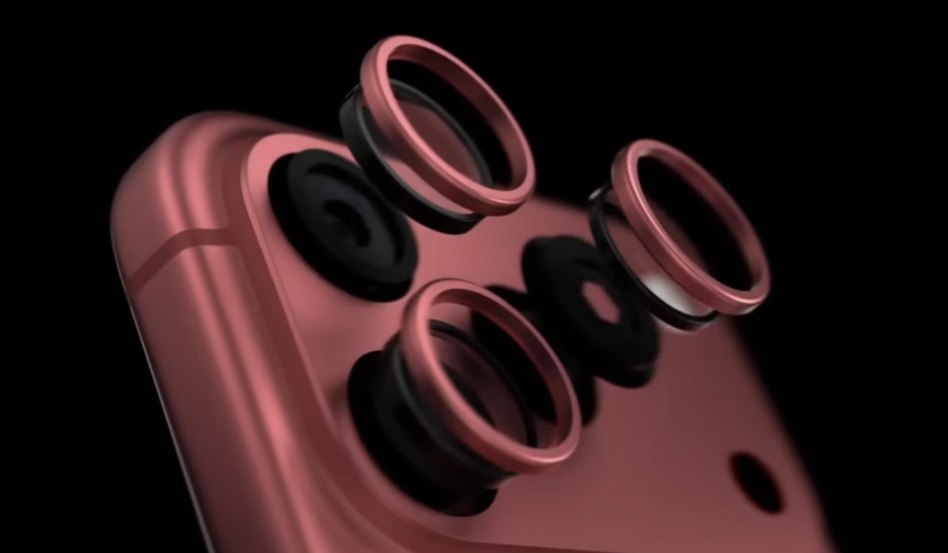
One of the most anticipated changes involves the camera system. Multiple reports indicate the iPhone 18 Pro Max could introduce Apple’s first variable aperture main camera, allowing users to adjust the lens opening for better control over depth of field and low-light performance — a feature long common in professional DSLR and mirrorless cameras. Some leaks also mention a possible shift to a new three-layer stacked image sensor from Samsung, potentially replacing Sony as the primary supplier, and speculation around a higher-resolution main sensor, though 48-megapixel remains the baseline in most rumors.
The rear camera array is expected to continue with a triple-lens setup on a raised plateau, including upgraded ultrawide and periscope telephoto lenses. Front-facing camera rumors have been mixed: early reports suggested under-display Face ID and a relocated punch-hole selfie camera, but more recent leaks indicate Apple may have delayed full under-screen Face ID implementation. Instead, a smaller Dynamic Island — reportedly reduced by up to 35% in some prototypes — could offer a cleaner look while keeping essential sensors visible.
Powering the device is the rumored A20 Pro chip, built on TSMC’s advanced 2nm process node. This represents a significant leap from the 3nm technology in recent A-series chips, promising roughly 15% better performance and up to 30% improved energy efficiency. The chipset is expected to pair with 12GB of RAM across Pro models and support for faster connectivity via Apple’s in-house C2 modem, which could enable full satellite internet capabilities through NR-NTN standards and enhanced mmWave 5G.
Battery life has emerged as a major talking point. The iPhone 18 Pro Max could pack a 5,100 to 5,200 mAh cell — Apple’s largest ever — depending on whether the model includes a physical SIM tray or relies solely on eSIM. Combined with the efficiency gains from the 2nm chip, users might see noticeably longer runtime, potentially approaching two days of moderate use. Charging speeds are also rumored to improve, with some reports pointing toward 40W wired charging.
Storage options are expected to start at 256GB and scale up to 2TB, maintaining the premium positioning of the Pro Max. Display technology could see refinements with LTPO+ panels supporting variable refresh rates from 1Hz to 120Hz and peak brightness potentially reaching 3,000 nits for better outdoor visibility.
The broader 2026 iPhone strategy reflects Apple’s push into new form factors. The foldable iPhone, expected to measure around 5.5 inches when closed and 7.8 inches when open, will reportedly share many internal components with the Pro models, including the A20 Pro chip. This trio of high-end devices — two slab-style Pros and one foldable — could command higher average selling prices, helping offset the delayed launch of more affordable models.
Analysts note that the split release schedule allows Apple to stagger production demands and focus resources on complex new technologies like the foldable hinge and advanced camera features. However, it also means consumers seeking a standard iPhone 18 will have to wait until 2027, potentially driving interest toward the Pro lineup or the foldable this fall.
Pricing is expected to remain relatively stable for the entry-level 256GB iPhone 18 Pro Max, starting around the current $1,199 mark, though some speculation suggests modest increases due to the advanced components and the inclusion of the foldable in the premium segment. Trade-in programs and carrier deals will likely play a key role in adoption, as they have in past cycles.
Camera enthusiasts are particularly excited about the variable aperture rumor. This mechanical feature would let the main lens adjust dynamically — wider for low-light shots with more light intake, or narrower for sharper portraits with better subject separation. Combined with computational photography improvements in iOS 27, the iPhone 18 Pro Max could narrow the gap between smartphone and dedicated camera systems even further.
Connectivity upgrades via the C2 modem could bring reliable satellite messaging and emergency features to more users, building on capabilities introduced in earlier models. Enhanced Wi-Fi 7 and Bluetooth support are also anticipated, improving performance for streaming, gaming and accessory pairing.
Design continuity remains a theme. The titanium frame, Ceramic Shield front and IP68 rating are expected to carry over, with the camera bump possibly unchanged in layout. The Camera Control button introduced in recent models may see refinements but is unlikely to disappear.
As with all pre-launch rumors, details could shift in the coming months. Apple has a history of refining features during late-stage testing, and some ambitious elements like full under-display Face ID may slip to the iPhone 19 series if technical hurdles persist.
For users holding onto iPhone 15 Pro Max or 16 Pro Max models, the combination of meaningful camera controls, battery gains and processing efficiency could justify an upgrade. Those with the iPhone 17 Pro Max might find the changes more incremental unless the variable aperture or foldable option strongly appeals.
Apple has not commented on any specifics, maintaining its usual policy of silence until the official announcement. The company is expected to host its annual fall event in September, where the iPhone 18 Pro, iPhone 18 Pro Max and foldable will likely take center stage.
Industry watchers will also monitor how the new lineup performs against growing competition in the premium Android space, where foldables and advanced camera systems have gained traction. Apple’s tight integration of hardware and software has historically given it an edge, but expectations are high for tangible improvements in 2026.
In the meantime, leaks from supply chain sources in Asia continue to fuel speculation. Screen protector images, prototype photos and analyst notes provide the bulk of current information, though verification often comes only after devices enter mass production later this year.
For now, the iPhone 18 Pro Max rumors suggest Apple is preparing a device that prioritizes practical enhancements — better photos, longer battery life and faster performance — while teasing bigger design shifts for future generations. Whether the variable aperture camera delivers the photography leap many hope for, or the larger battery finally solves endurance complaints, will only be clear once units reach consumers.
As September 2026 approaches, anticipation is building for what could be a pivotal year in Apple’s smartphone evolution — one that balances refinement with ambition in a competitive market.
Business
Trump says 34 ships passed through Hormuz strait after blockade comes into effect

Trump says 34 ships passed through Hormuz strait after blockade comes into effect
Business
LVMH Q1 2026 slides: organic growth holds amid currency headwinds

LVMH Q1 2026 slides: organic growth holds amid currency headwinds
Business
The Magnum Ice Cream Co. adds candy bar-inspired desserts
.webp?t=1776089349)
The offerings include Reese’s and Almond Joy-inspired products.
Business
Colombia to control hippo population through euthanasia

Colombia to control hippo population through euthanasia
Business
‘They Did Some Stuff’ That Cost Him Shot at Third Green Jacket
AUGUSTA, Ga. — World No. 1 Scottie Scheffler came agonizingly close to winning a third Masters green jacket Sunday but finished one shot short of Rory McIlroy, then pointedly suggested that decisions by Augusta National officials on course setup played a role in denying him the title.

Scheffler, who entered the final round trailing by five shots after a career-best 7-under 65 on Saturday, carded a 4-under 68 on Sunday to finish at 11-under par for the tournament. McIlroy, seeking to become the first repeat champion since Tiger Woods in 2002, held on for a one-stroke victory at 12-under.Usatoday
In post-round comments, the two-time Masters winner did not hide his frustration with how the course was prepared, particularly on Friday. Scheffler teed off early that day and posted a 2-over 74 — his first over-par round at Augusta National since 2023 — while later groups benefited from softer conditions that produced a “barrage of birdies.”
“I’m not in charge of course setup,” Scheffler told reporters. “I would’ve liked it to have been a little bit more equal in terms of the firmness on Thursday and Friday. I was a bit surprised at how soft things were on Friday afternoon, especially as it got late in the day. … Going out on Friday, whatever they did to the greens to soften them up, they did some stuff, and I just wasn’t able to take advantage of that going out early on Friday.”Nypost

The comments, first reported by the New York Post and echoed across golf media, quickly sparked debate about whether Augusta National’s legendary attention to detail sometimes creates uneven playing conditions based on tee times and weather shifts. Scheffler opened with a 2-under 70 on Thursday afternoon in what he described as some of the week’s toughest conditions, with wind and firmer surfaces limiting scoring.
“Thursday afternoon were some of the most challenging conditions we had all week. I didn’t see many birdies out there Thursday afternoon,” he added. “Overall, on Friday, going out early and not being able to shoot an under-par round definitely hurt my chances. I’d say Friday probably hurt the most in terms of my chances of winning.”Themirror
Scheffler’s second-round stumble included bogeys on the par-5 13th and 15th holes after finding water with approach shots. He had been on an remarkable streak of 11 consecutive rounds at par or better at the Masters before that 74. Despite the setback, he mounted a furious charge on moving day, firing a bogey-free 65 that included an eagle and moved him back into serious contention.
The 28-year-old Texan has now finished no worse than tied for 10th in his last several Masters appearances, with victories in 2022 and 2024. He has never finished outside the top 20 in seven starts at Augusta National, underscoring his remarkable consistency on one of golf’s most demanding stages.Masters
McIlroy, who won his first Masters in 2025 to complete the career Grand Slam, praised Scheffler’s performance while acknowledging the razor-thin margin.
“Scottie is the best player in the world for a reason,” McIlroy said after his victory. “He played fantastic golf this week, especially coming back the way he did on Saturday and Sunday. One shot is golf — it’s what makes this game so brutal and so beautiful.”
Augusta National officials have long maintained tight control over course conditioning, famously adjusting pin placements, rough height and green speeds hour by hour based on weather forecasts. The club rarely comments publicly on setup decisions, and tradition discourages players from criticizing the course openly. Scheffler’s pointed remarks — delivered calmly but directly — stood out because of his typically measured demeanor.
Golf analysts were split on the fairness of the conditions. Some pointed out that variable weather is an inherent part of major championship golf, and that later tee times often benefit from knowledge of how the course is playing. Others noted that softening the greens significantly between Thursday and Friday could indeed create an advantage for afternoon waves, especially if wind died down or irrigation was increased.
Scheffler himself acknowledged the unpredictability of the elements.
“So who knows, it’s just that’s part of the game,” he said. “But it definitely hurt my chances.”Sports.yahoo
The world No. 1 also drew attention earlier in the week for a testy exchange with a reporter after his third-round 65. When asked if the round could have been even better, Scheffler responded sharply: “That was a terrible question. Next question.” He later clarified that he felt he left a few shots on the course but was pleased with the execution needed to climb back into contention.Sports.yahoo
Scheffler’s near-miss caps a strong start to 2026, during which he has already secured a victory and multiple top-four finishes. His ball-striking remains elite, and his short game recovery on the weekend demonstrated why many consider him the most complete player in the game.
For McIlroy, the repeat victory cements his place among the greats and provides redemption after years of near-misses at Augusta before his 2025 breakthrough. The Northern Irishman closed with steady play Sunday while Scheffler made birdies early before settling into a string of pars, then birdying the 15th and 16th too late to catch up.
The final-round drama played out under ideal spring conditions at Augusta National, with azaleas in bloom and massive galleries lining the fairways. Scheffler’s supporters cheered loudly on the back nine as he tried to mount a charge, but McIlroy’s experience and clutch putting held firm.
In the broader context of the 2026 Masters, the tournament once again delivered compelling storylines. McIlroy’s win marked the first successful defense since Woods two decades earlier. Scheffler’s comments, meanwhile, have ignited fresh discussion about equity in course setup — a topic that surfaces periodically when tee-time luck and weather interact with meticulous preparations.
Masters chairman Fred Ridley and the competition committees are known for their philosophy that the course should “defend itself” while rewarding precise shot-making. Whether Friday’s softening crossed into unfair territory remains subjective, but Scheffler’s status as the game’s dominant player gives his perspective significant weight.
Scheffler has historically avoided controversy, focusing instead on process and preparation. His willingness to speak candidly Sunday suggests the sting of finishing runner-up by the slimmest of margins after a week of uneven scoring opportunities.
Looking ahead, Scheffler is expected to remain the favorite in upcoming PGA Tour events as he pursues a third major title of his young career. His record at Augusta — two wins and consistent contention — ensures he will be among the top betting choices when the 2027 Masters rolls around.
For now, the golf world digests a thrilling 2026 edition that ended with McIlroy hoisting the green jacket once more while the game’s best player expressed genuine disappointment over decisions beyond his control.
“They did some stuff,” Scheffler said simply, capturing the essence of what he believes tipped the scales just enough to cost him another trip to Butler Cabin.
Whether those remarks spark any official response from Augusta National remains to be seen. In a tournament steeped in tradition and decorum, Scheffler’s blunt assessment has already become one of the most talked-about moments off the course.
As the players disperse and attention turns to the next major, one thing is clear: at the highest level of golf, even the smallest differences in conditions can separate champions from runners-up — and even the world No. 1 is not immune to feeling the impact.
Business
GoodPop debuts sour frozen novelties

The fruit pops are available in four flavors.
Business
Advancing sports nutrition through ingredient innovation

Precision fermentation, casein and pea protein ingredients boost the category.
Business
Wall Street puts streaming in focus. Its future is unclear
In an aerial view, the Netflix logo is displayed above Netflix corporate offices on October 7, 2025 in Los Angeles, California.
Mario Tama | Getty Images
There’s a love affair on Wall Street between investors and streaming.
The romance started about a decade ago when consumers began cutting the cord with cable TV bundles en masse in favor of direct-to-consumer streaming apps. However, where investors were once enamored with subscriber growth, rewarding companies that were able to expand their consumer reach, their attentions have now shifted toward profitability.
To meet this new expectation, streaming companies have raised the prices of their services, cracked down on password sharing and delved into the ad-supported space. It’s also sparked the likes of Paramount Skydance to seek out the acquisition of Warner Bros. Discovery for its extensive library of content and top-tier streaming service, HBO Max, in order to compete.
While streaming continues to drive media stocks, especially around quarterly earnings, it’s not clear when — or if — it will start driving profits for the smaller players.
“Is streaming a good business?” Robert Fishman, senior research analyst at MoffettNathanson, posed in a March research note to investors. “We raised and debated this critical question over the years leading us to determine the answer is yes, albeit only for those services with sufficient scale.”
For legacy media companies, streaming has yet to fully supplant the profits and advertising revenue of linear TV. Of course, both of those metrics have been in decline for companies like WBD, Paramount and its peers.
In response, streamers have largely raised subscription prices for consumers, begging the question of where the ceiling is for streaming costs. Between higher fees and the sheer number of services needed in order to have access to all content, consumers are starting to balk.
Still, with these continuous linear TV declines, investors cling to streaming as a bright spot, especially for companies that have made it profitable. Disney has been among the steadiest of legacy media companies when it comes to a profitable streaming business, but Paramount and WBD have seen profitable quarters and Comcast’s Peacock is narrowing losses.
“With streaming no one’s reporting sub numbers anymore, because now it’s all about profitability,” Doug Creutz, senior research analyst at Cowen, told CNBC. “And that’s the metric by which these these businesses are being judged. It’s, you know, can you get to 10% operating profit? Can you get 15%? Can you get 20%? Can you get 25%? Can you get to where Netflix is?”
Netflix reported operating margin of 29.5% in 2025. Meanwhile, Disney, for example, guided investors to an operating margin for its direct-to-consumer business of 10% in fiscal 2026.
Workers prepare a large sign advertising a Disney movie while San Diego prepares to host thousands of visitors for Comic-Con International, in San Diego, California, on July 22, 2025.
Mike Blake | Reuters
“This is the big question mark that all these companies face,” Creutz added. “You had a linear business that was really profitable and it’s gone away, and is the streaming business ever going to be that profitable?”
‘No streamer comes close to Netflix’
The leader in the space is uncontested.
Netflix was early to the streaming game, scooping up a number of cord cutters with its significantly cheaper online alternative to pricey cable packages. The streaming giant has since grown its library through deals with Hollywood’s studios and by wading into original content.
Being among the first to the space meant a massive audience for Netflix. In January, the company announced it had reached 325 million global paid customers.
“As we think about global scale, the ability to spread the content spend and other fixed streaming costs over a much larger subscriber base leads to a more meaningful streaming profit opportunity,” Fishman wrote. “On that front, no streamer comes close to Netflix.”
In the eyes of Wall Street, Netflix is the gold standard. But competition for viewership is growing and now includes YouTube, TikTok, other social media as well as live events and gaming — all jockeying for consumers’ time.
And even the industry leader isn’t immune to the challenges of the streaming business.
In 2022 Netflix reported its first quarterly subscriber loss in more than a decade, dragging down its stock price. The media giant responded with a series of changes to its business model, most notably the addition of a cheaper, ad-supported tier.
Netflix no longer reports quarterly subscriber counts, and Disney has since followed suit as the industry refocuses on profits. (Disney also stopped breaking down the revenue and operating income for other parts of its entertainment business, including linear TV.)
But analysts agree that the comparison of Netflix to traditional media players isn’t exactly apples to apples. After all, Disney, Comcast, Warner Bros. and Paramount aren’t just streamers. These companies still have linear TV businesses as well as robust theatrical divisions. And some have other, even more lucrative pieces of their empires, including merchandising, theme parks, hotels and cruise lines.
The Paramount booth is shown on the convention floor during the opening day the of Comic-Con International in San Diego, California, U.S. July 24, 2025.
Mike Blake | Reuters
It’s only recently that Netflix has branched out from its content-only strategy to launch its own merchandising and live event businesses.
“They don’t have the decline of legacy media to offset,” Alicia Reese, senior vice president of equity research at Wedbush. “They don’t have theatrical to worry about.”
The result is traditional media companies that are often sized up against what a non-traditional tech company has been able to build in the streaming arena.
How much is too much?
Both Netflix and traditional media companies have raised prices for their streaming platforms over the last year in an effort to boost revenue and justify high content spending.
While consumers groan at the sight of these price increases and at being locked out of accounts they previously borrowed due to password sharing crackdowns, Wall Street applauds such measures.
“We think Netflix is positioning for substantial growth in global advertising, while its latest price increases could provide a meaningful boost to profitability this year,” Reese wrote in a research note published Friday.
Netflix will report its quarterly earnings on Thursday, weeks after announcing yet another a price increase across its subscription tiers, including its cheapest plan with ads.
“While Netflix has consistently raised pricing across tiers, our analysis suggests U.S. revenue per streaming hour is one of the lowest among its peers, suggesting further pricing runway going forward,” Matthew Condon, analyst at Citizens, wrote in a research note published last month.
The majority of streamers offer several plans, ranging from a cheaper ad-supported option to an ad-free standard service and then a higher-priced and higher-quality version.
To ease some price burden, streamers have also started to offer bundles of their services at a discount, further suggesting they could be finding customers’ limits.
The difference in pricing of the ad-supported and ad-free tiers varies from streamer to streamer, but typically an ad-supported service ranges from $7.99 a month to $12.99 a month and premium subscriptions range from $13.99 a month to $26.99 a month. These prices are often set based on how much content is available in a given library and how much that streamer is paying to produce and license content for its service.
“I think you’re going to continue to see price increases similar to what Netflix has been doing,” Creutz said. “We’re going to find out how sticky services are if price continues to go up.”
Streaming subscription plans
Netflix
- Standard with ads: $8.99/month
- Standard no ads: $19.99/month
- Premium no ads: $26.99/month
(extra members cost $7.99/month for ads, $9.99/month for no ads)
Disney
- Disney+/Hulu with ads: $12.99/month
- Disney+/Hulu without ads: $19.99/month
- Disney/Hulu/ESPN Unlimited with ads: $35.99/month
- Disney/Hulu/ESPN Unlimited without ads: $44.99/month
Warner Bros. Discovery
- HBO Max with ads: $10.99/month
- HBO Max standard: $18.49/month
- HBO Max premium: $22.99/month
Paramount
- Paramount+ with ads: $8.99/month
- Paramount+ premium without ads: $13.99/month
Comcast
- Peacock with ads: $7.99/month
- Peacock premium with ads: $10.99/month
- Peacock premium plus without ads: $16.99/month
Apple
Amazon
- Prime Video included in Prime shipping subscription
- Ad-free for an additional $4.99/month
Ads or no ads? That’s the question.
Advertising has long been part of the TV business model. Even as cable TV bundle prices soared before the advent of streaming, advertising provided a cushion.
However, for streaming, the push for consumers to opt into ad-supported plans has more recently ramped up across the ecosystem.
Netflix, which had long resisted ads, introduced its ad-tier in November 2022 and shortly after eliminated its cheapest basic plan, pushing customers toward watching with commercials.
Former Disney CEO Bob Iger said in prior investor calls that his company is trying to steer customers toward ad-supported plans. And by 2023’s Upfront presentation, the industry’s annual pitch to advertisers, streaming took center stage.
The economics bear out: Netflix reported 2025 ad revenue exceeded $1.5 billion, or about 3% of total full-year revenue. That’s expected to double this year.
“We’re making good progress, and the opportunity ahead of us is massive,” Netflix Co-CEO Greg Peters said during the company’s earnings call in January.
Greg Peters, Co-CEO of Netflix, speaks at a keynote on the future of entertainment at Mobile World Congress 2023.
Joan Cros | Nurphoto | Getty Images
In post-earnings notes after that report, analysts agreed that while Netflix’s ad revenue growth was slow to start, having more insight from the company helped understand how it’s incorporated into the business.
While legacy media peers were late to the streaming game by comparison, they were often faster than Netflix to institute ad plans. Disney’s Hulu, Paramount+ and Peacock offered these options from their inception. HBO Max launched its ads plan in 2021, while Disney+ joined Netflix in late 2022.
That could help speed up the on ramp to meaningful streaming profits.
In general, though, the advertising landscape has been tricky to measure for media companies. Linear TV ad revenue have been on a precipitous decline in recent years. Tech companies like Google and Meta’s Facebook continue to gobble up the lion’s share of ad dollars. And while streaming has been a key source of ad revenue growth for media companies, it has yet to stack up to what traditional TV once garnered.
Business
Taxis, farmers and the fuel crisis in the south
Drivers in the south of England are feeling the financial strain from the US-Israel war with Iran.
Business
‘That’s Just a Terrible Question’
AUGUSTA, Ga. — World No. 1 Scottie Scheffler delivered one of the best rounds of the 2026 Masters on Saturday, firing a bogey-free 7-under 65 to storm back into contention, but his post-round interview quickly went viral for an abrupt and testy exchange with a reporter that left many questioning the etiquette of both player and press at golf’s most prestigious tournament.

AFP
The clip, posted by The Golfing Gazette on YouTube and widely shared across social media, captures Scheffler responding sharply when asked what his round “felt like it could have or should have been.” Visibly annoyed, the two-time Masters champion replied, “That’s just a terrible question. Next, next question,” prompting another voice in the room to mutter “Awful.”
The moment occurred after Scheffler’s third-round performance at Augusta National, where he climbed the leaderboard with precise iron play and clutch putting on a course known for its punishing difficulty. Entering the final round, he sat just five shots behind leader Rory McIlroy, setting up a dramatic Sunday chase for a third green jacket.
Scheffler, typically known for his calm and measured demeanor, later elaborated on his round when a follow-up question was posed about what allowed him to go low compared to previous days. He provided a detailed hole-by-hole breakdown, highlighting sharp iron shots, multiple birdie opportunities created on the front nine, and several near-misses on the back nine due to subtle breaks, gusts of wind and course conditions.
“I hit it really nice. I feel like I was very sharp with the irons,” Scheffler explained. “Got it up there, gave myself a lot of opportunities. I felt like I took advantage of those on the front nine and then back nine I did a lot of good things. Just was really, really close to seeing a lot go in.”
He cited specific examples: strong approach shots on the 10th followed by a putt that broke more than expected; a good birdie on the 11th; a fairway hit on the 13th marred by a mud ball; a solid bunker shot; and a difficult pitch on the 15th after a ball barely carried into a hazard due to a downwind gust. On the 17th, three excellent shots still failed to yield a birdie.
“Overall, I mean it could have been — I guess to answer your question, it maybe wasn’t that bad,” Scheffler continued. “But I definitely could have been lower, but like I said, I did what I needed to do. I went out, I executed to get myself some opportunities and more of that tomorrow and I think I’ll be in a good spot.”
The initial dismissal, however, dominated the conversation online. The YouTube Short, uploaded April 11, quickly amassed thousands of views, with comments debating whether the reporter’s question was poorly phrased or if Scheffler’s curt response crossed into rudeness. Some defended the world No. 1, arguing that asking a player who just shot 7-under on a major championship course what it “should have been” implies the round was somehow disappointing — a tone-deaf framing after an elite performance.
Others criticized Scheffler, noting that professional athletes are expected to handle media scrutiny gracefully, even after strong rounds. The exchange stood in contrast to Scheffler’s usual composure, though it echoed occasional moments of frustration from top players when questions veer into speculative territory.
The reporter in question has been identified in golf circles as a respected veteran, adding another layer to the discussion about player-media dynamics at Augusta National. Press conferences at the Masters are tightly controlled, with players often facing repetitive queries in a high-stakes environment where every word is scrutinized.
Scheffler’s Saturday 65 was a statement round. After an opening 70 and a surprising 74 on Friday — a round he later suggested was impacted by uneven course conditions that favored later tee times — the Texan responded with precision and patience. His bogey-free effort included an eagle and showcased the ball-striking that has defined his reign as the game’s top player.
Heading into Sunday’s final round, Scheffler sat within striking distance, keeping alive his bid for a third Masters title in five years. He ultimately finished one shot behind McIlroy, who successfully defended his 2025 victory.
The viral clip resurfaced broader conversations about golf’s gentlemanly image versus the raw emotions that surface under pressure. Golf has long prided itself on civility, yet moments like this — or past testy exchanges involving stars such as Tiger Woods or Rory McIlroy — remind fans that competitors are human.
Scheffler addressed the Friday conditions more candidly after the tournament, suggesting Augusta National officials “did some stuff” to soften the greens that disadvantaged early groups. Those remarks, combined with the Saturday press room exchange, painted a picture of a player channeling frustration into focused play while occasionally letting his guard down with the media.
Despite the testy moment, Scheffler’s on-course excellence remained the bigger story. His consistency at Augusta National is remarkable: he has never finished outside the top 20 in seven starts, with wins in 2022 and 2024. Even in defeat on Sunday, his weekend charge demonstrated why many consider him the most complete golfer of his generation.
The incident also highlighted the intense scrutiny players face at major championships. With cameras rolling and microphones capturing every syllable, a single offhand comment can overshadow 18 holes of brilliant golf. Social media amplified the exchange, with golf fans divided between those praising Scheffler’s honesty and those calling for more professionalism.
Masters officials and the PGA Tour have not commented publicly on the exchange, maintaining their traditional stance of letting the golf speak for itself. Yet the clip has fueled online debates about whether reporters should avoid “what if” questions that can come across as critical, and whether elite athletes owe measured responses regardless of context.
Scheffler’s season leading into the Masters had been strong, with multiple top finishes and a victory that reinforced his status atop the world ranking. His ability to rebound from the disappointing Friday 74 to post back-to-back elite rounds underscored his mental toughness — a quality that briefly wavered in the interview room.
Looking ahead, the 28-year-old remains a heavy favorite in upcoming events as he pursues additional major titles. His ball-striking statistics continue to lead the Tour, and his short-game recovery on the weekend at Augusta once again proved world-class.
For golf media, the moment serves as a reminder to craft questions that respect the difficulty of the game and the achievements on display. A 65 at Augusta National is rarely something that “should have been” better — it is an exceptional score that demands acknowledgment.
As the golf world moves on from the 2026 Masters, Scheffler’s viral press room moment will likely be remembered alongside McIlroy’s repeat victory and the dramatic final-round duel. It adds a human element to a player often viewed as almost machine-like in his consistency and focus.
In the end, Scheffler did what he set out to do on Saturday: execute, create opportunities and position himself for Sunday. His detailed self-assessment after the initial sharp response showed reflection and honesty. The “terrible question” exchange, while generating headlines and views, ultimately revealed both the pressure of major championship week and the high standards Scheffler sets for himself — and perhaps for those covering him.
Whether the clip damages his polished image or simply humanizes the world’s best golfer remains a matter of perspective. What is clear is that even after shooting 7-under at Augusta, Scottie Scheffler still found room for improvement — both on the course and, briefly, in how he handled the question that followed.
-
Politics3 days agoUS brings back mandatory military draft registration
-
Fashion3 days agoWeekend Open Thread: Veronica Beard
-
Sports3 days agoMan United discover Nico Schlotterbeck transfer fee as defender reaches Dortmund agreement
-
Tech6 days agoHow Long Can You Drive With Expired Registration? What Florida Law Says
-
Politics1 day agoWorld Cup exit makes Italy enter crisis mode
-
Crypto World4 days agoCanary Capital Files SEC Registration for PEPE ETF
-
Business3 days agoTesla Model Y Tops China Auto Sales in March 2026 With 39,827 Registrations, Beating Cheaper EVs and Gas Cars
-
Crypto World5 days agoBitcoin recovers as US and Iran Agree a Ceasefire Deal
-
Politics4 days agoMalcolm In The Middle OG Turned Down ‘Buckets Of Money’ To Appear In Reboot
-
Fashion6 days agoLet’s Discuss: DEI in 2026
-
NewsBeat19 hours agoPep Guardiola and Gary Neville agree over Arsenal title problem that benefits Man City
-
Business3 days agoOpenAI Halts Stargate UK Data Centre Project Over Energy Costs and Copyright Row
-
Business2 days agoIreland Fuel Protests Enter Day 5 as Blockades Spark Shortages and Government Prepares Support Package
-
Politics3 days agoLBC Presenter Mocks Trump Over Iran War Failures
-
Crypto World3 days agoFederal judge blocks Arizona from bringing criminal charges against Kalshi
-
Tech4 days agoA version of Windows 10 released a decade ago is now eligible for additional security patches
-
NewsBeat1 day agoJD Vance announces ‘no agreement’ with Iran over nuclear weapons fear
-
Business3 days agoIMF retains floor for precautionary balances at SDR 20 billion
-
Entertainment5 days agoAlfred Hitchcock’s 10 Most Suspenseful Masterpieces, Ranked
-
Entertainment3 days agoA ‘Bridgerton’ Star’s New Survival Thriller Is a Must-Watch on Netflix This Weekend

You must be logged in to post a comment Login