Ofgem has issued an urgent warning to every household with gas and electricity meters.
Advertisement
It has warned that people could not only be breaking the law but also putting their lives at serious risk. Ofgem (the Office of Gas and Electricity Markets) acts as the UK’s energy regulator. As a non-ministerial government department, its principal role is to protect the interests of energy consumers. In a recent post on X, formerly known as Twitter, Ofgem warned: “Tampering with your meter is illegal and could be dangerous.”
The alert also includes a link to the Ofgem website, which explains that “energy theft” takes place when individuals attempt to cut their gas and electricity bills by interfering with their meters. It cautions: “It can cause property damage, injury or death.”
According to Ofgem, meter tampering leads to one death every 10 days, with electric shocks, severe burns, house fires, fatal gas leaks and explosions all being potential outcomes of energy theft. The regulator has also advised people to “be wary of people offering to reduce your energy bills by making changes to your meter.”
Content cannot be displayed without consent
Common signs a gas meter has been tampered with include:
Advertisement
pipes that appear misplaced
dials that aren’t moving or are obscured
gas flowing despite no credit on prepayment meters
the meter installed backwards with dials concealed
the odour of gas around the meter box
rubber tubing where metal piping should be
Typical indicators of electricity meter interference include:
exposed wires, coiled around components or attached with clips
broken casing
electricity flowing despite no credit on prepayment meters
A famous Cambridgeshire cold case is set to feature across two episodes of a TV show on Channel 4 starting tonight (Monday, April 13). 24 Hours in Police Custody is returning to Channel 4 with the case of Una Crown, 86, who died at her home in Wisbech and here is how you can watch it.
Advertisement
The widow was found dead by her nephew-in-law on January 13, 2013, in a pool of blood with her body being burned. Two police officers attended to the scene and concluded her death was not suspicious, believing she had accidentally set herself on fire and tried to put it out with a tea towel.
The investigation concluded the two cuts to her throat were likely to have been caused by pressure from her scarf as she fell to the floor. A later post-mortem determined Crown had been stabbed to death and a murder investigation was launched.
However, Crown’s house had already been cleaned, as it was not originally treated as a murder investigation crime scene. The investigation eventually went cold for a decade before being reopened after a DNA breakthrough in the case.
Channel 4’s popular series, 24 Hours in Police Custody be will airing a two-part special called The Cold Case Murder which follows Detective Superintendent Iain Moor and colleagues in the Major Crime Unit, as they look into the new evidence to catch her killer.
Advertisement
The episodes will look at how the team used new forensic techniques to match DNA found under Crown’s fingernails to a man who lived just down the road named David Newton. You will see how detectives had to travel all over the county to rule out his male relatives and create a strong prosecution case.
Newton, who is now in his 70s, was sentenced to life in prison with a minimum of 21 years in February last year thanks to the team’s investigation. Judge Justice Neil Garnham described Newton as having carried out a “ferocious and sustained knife attack on a defenceless old lady”.
If you are interested in watching 24 Hours in Police Custody: The Cold Case Murder to find out more about how Det Supt Moor and his team were able to finally solve Crown’s murder, the first episode will be airing tonight on Channel 4 at 9pm. The second episode will on the same channel at 9pm tomorrow (Tuesday, April 14).
If you miss the episodes, you can watch them after they have aired on Channel 4’s streaming service.
It’s the cruel taunt thrown about by rival fans. But you’ve gotta be in the Premier League title race to win it, right?
It’s just when you lead for so long and don’t win it, there’s a lonely void, an ‘it should have been us’ vacuum of sorrow.
Staring at the prospect of letting another seemingly insurmountable lead slip, Arsenal are desperate to banish those demons, having grappled with the tag over the past two decades.
Advertisement
But they are far from alone – in fact, the Gunners’ slip-ups have been far less dramatic than those of some of their rivals.
To help investigate the top flight’s biggest wobblers, those who have let the league slide from seemingly watertight positions, we enlisted the help of BBC Sport statistician Chris Collinson, someone always on top of his tables.
While Chris’ research shows us Arsenal deserve to feature several times, there is room for Stevie G’s slip, a mention for that ‘Aguerooo!’ moment, and, of course, Kevin Keegan’s iconic monologue – which took place 30 years ago this month.
And I’ll tell you, honestly, I will love it if you read this, love it!
Fatou, the world’s oldest gorilla living in captivity, has marked her 69th birthday with a special, sugar-free feast at Berlin Zoo.
The primate enjoyed a spread of cherry tomatoes, beets, leeks, and lettuce, eschewing traditional cake for a healthier, age-appropriate meal.
A western lowland gorilla, Fatou arrived in what was then West Berlin in 1959, believed to be around two years old at the time.
While her exact birthdate remains unknown, April 13 is celebrated as her designated birthday. Gorillas typically live for 35-40 years in the wild, but can achieve significantly longer lifespans under human care.
Advertisement
Fatou became the zoo’s most senior resident in 2024 following the passing of Ingo the flamingo, who was thought to be at least 75 and had resided at the zoo since 1955.
Fatou enjoys her own enclosure, preferring a quiet life away from the zoo’s younger gorillas (AP)
She had a spread of cherry tomatoes, beets, leeks and lettuce for her birthday (AP)
Fatou’s remarkable journey began in the wild of western Africa, with Guinness World Records noting a tale that a French sailor bartered her to settle a bar tab in Marseille, before she was reportedly sold to the zoo by a French animal trader.
Today, Fatou enjoys her own enclosure, preferring a quiet life away from the zoo’s younger gorillas.
She has lost her teeth and experiences some arthritis and hearing loss. Despite these age-related challenges, Christian Aust, the Berlin Zoo’s primate supervisor, describes her as friendly with her keepers, albeit still a little stubborn.
At 69, it seems she has certainly earned the right.
There are now around 7000 cameras around the UK’s road network, and in 2022, they resulted in the prosecution of 245,043 people – the highest figure since records began.
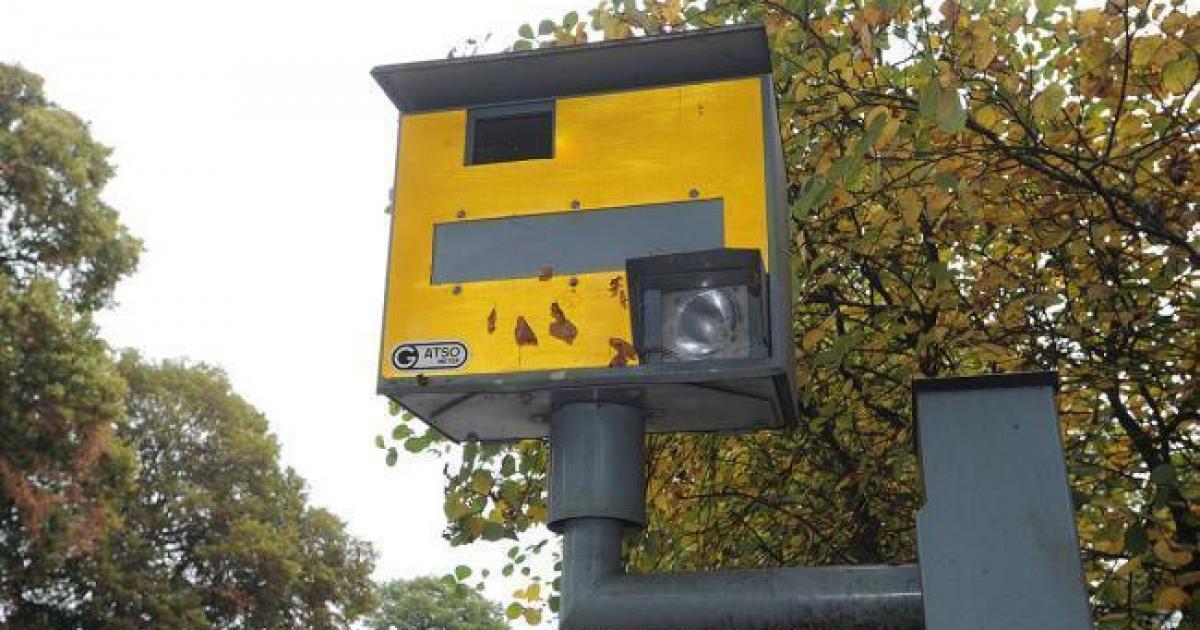
The Jenoptik VECTOR-SR is the latest in speed camera tech. It can catch drivers speeding on either side of the road and see inside cars.
This means it can catch drivers who aren’t wearing a seatbelt or using a mobile phone while driving.
Advertisement
The cameras don’t flash either, so it might be difficult for motorists to tell if they’ve been caught.
Louise Thomas, a motor insurance expert at Confused.com, said: “Ultra speed cameras are a big advance in comparison to the standard speed camera which many drivers are used to. Not only will these cameras be able to detect drivers speeding on either side of the road, but they’re also able to see inside driver’s vehicles too.
“That’s as it uses technology to see if drivers are wearing their seatbelt or if they’re breaking driving laws, such as using their mobile phone or other handheld devices.
“Some drivers might be concerned about these new cameras being an invasion of their privacy, but their purpose is to keep all road users safe.
Advertisement
“These cameras can reduce the risk of distracted driving, which tie in with important changes made to the Highway Code earlier in the year. This included changes to how drivers use technology in their cars while driving, and harsher punishments for those who don’t follow the new rules.
“Driving while distracted could lead to fines, points or even prosecution. For example, using your phone when behind the wheel could result in a £200 fine and up to 6 points on your license.
“So although the introduction of ultra cameras might be an annoyance to some, their purpose is to ultimately make our roads safer and to reduce the risk of drivers facing punishments as a result.”
Dog owners and dog walkers have said they’re on alert after the mysterious meat was found in Holland Park, west London, over the weekend (Picture: John Dunne/Metro)
Police have deployed extra patrols in parks across west London in the hunt for a suspected dog poisoner.
Dog walkers have said they are ‘terrified’ after contaminated meat, which was found in Holland Park, west London, last week, left one pet dog seriously ill and killed two foxes.
The mystery poisoner also targeted Brompton Cemetery, triggering a Met police inquiry.
They have warned pet owners of the danger as they trawl for key CCTV footage that could unmask the poisoner.
Advertisement
A Met Police statement said: ‘It has been brought to our attention from several sources that meat (Chicken) has been left in both Holland Park and Brompton Cemetery. A dog has consumed this meat and become very unwell and two foxes have been found dead (with no obvious signs of injury).
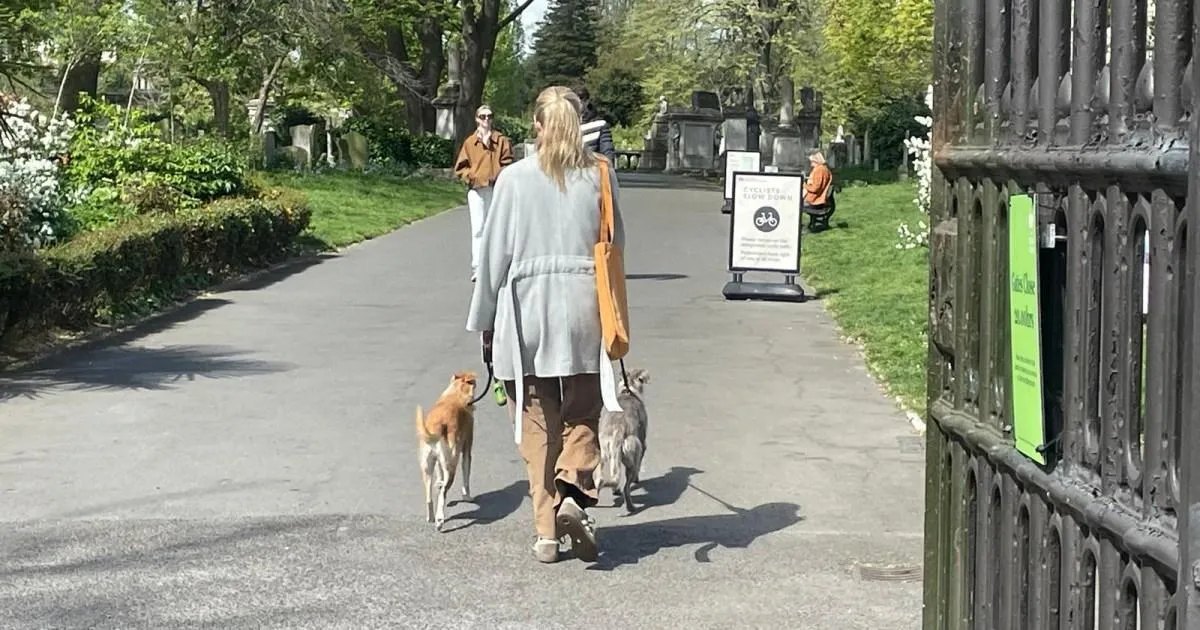
‘We believe that this meat may contain toxins and has been left on purpose to either harm foxes or dogs. The meat has been seen over several days so please remain vigilant and do not allow your dogs to scavenge. In Brompton Cemetery dogs should remain on leads at all times.
‘Any further reports or information please get in contact. Do share this with all dog owners and walkers.’
Dog walkers in Holland Park said they feared for their pooches and have been exchanging messages via a WhatsApp group on any suspicious food left in the park.
Advertisement
Professional dog walker Daniel Palfi with pictured with Neo. He says dog walkers are on high alert (Picture: John Dunne/Metro)
A police car is seen parked near the famous west London green space, which is home to the Kyoto Garden (Picture: John Dunne/Metro)
Parks police officers have been liaising with dog walkers and urging them to be extra vigilant (Picture: John Dunne/Metro)
They are also on the lookout for the poisoner, who they described as a ‘disgusting’ person.
Professional dog walker Daniel Palfi told Metro: ‘We are on high alert. Obviously it’s very worrying and they need to catch this person. It’s disgusting what they are doing.
Latest London news
To get the latest news from the capital, visit Metro’s London news hub.
Advertisement
‘It’s hard to imagine what kind of person could do this.’
Kailu Stabile, who was walking a Lurcher, called Moriarty, said: ‘Moriarty is not a big scavenger but to think that there is poison in the park is terrible.
‘We dog walkers communicate a lot and we are always on the lookout. It’s really horrible that anyone would do this.’
There is a police office in the park and they are trawling though any CCTV from around the area, including from the Belvedere restaurant which is in the grounds.
Advertisement
Meanwhile they are deploying extra patrols with a police vehicle circling the park as the hunt for the poisoner continues.
Carlotta Pironti, who was walking her Cavapoo called Nelson, told Metro: ‘People are terrified. It’s difficult to stop the dogs going for any food left on the ground. Why someone would do something so evil I don’t know.’
The owner of lurchers Tarka and Raffy told Metro she feared for their safety (Picture: John Dunne/Metro)
The chicken was left in Holland Park which is a popular spot for dog walkers who are now on high alert (Picture: John Dunne/Metro)
Parks police officers have been liaising with dog walkers and urging them to be extra vigilant.
In Brompton cemetery dog walkers and those visiting graves said the poisoning was an act of ‘desecration’.
Steven Murray 41, who was waking his French Bulldog Betty through Brompton Cemetery, told Metro: ‘I hadn’t heard about this I think it’s horrible and very said that someone would do this. They I must hate animals it’s just very scary. Some people do leave food out for the foxes which is fair enough but if there’s stuff with poison we need to know. I’m going to be extra careful.’
Advertisement
A woman who was walking her Lurcher dogs, Tarka and Raffy, told Metro: ‘It’s really awful maybe it’s someone has personal vendetta or something. It’s very odd and quite scary.’
A pensioner who lives nearby said: ‘I come to the cemetery for some peace and quiet. To think someone is laying poison in a graveyard is desecration in my opinion.’
Anyone with information is asked to call police on 101.
The world economy survived the shocks of the Ukraine-Russia conflict, which has had limited impact on economic growth. But the escalation of hostilities in the Middle East has transformed what had been, until early 2026, a surprisingly benign outlook into a far more uncertain one. It has created the ultimate test for how resilient the world economy really is.
Amid stalled ceasefire negotiations, the US president, Donald Trump, has threatened a blockade of vessels transiting through Iranian ports in the strait of Hormuz. This sent oil prices back up over US$100 (£74) a barrel. Meanwhile the current ceasefire is looking very shaky.
The key economic factor in this conflict is straightforward: the near-halting of shipments through the strait and the closure of energy infrastructure.
These elements have disrupted roughly one-fifth of global oil production and nearly another 20% of the world’s trade in liquefied natural gas (LNG). With little spare capacity elsewhere, the result has been a sharp and rapid surge in energy prices.
Advertisement
Forecasts of price surges for benchmark oilsPrices for Brent and West Texas Intermediate could remain high for years. Data: CME. Author provided (no reuse)
This is a classic energy price shock. The consequences for the world economy are predictable in direction but uncertain in magnitude. The latest interim economic outlook from the Organisation for Economic Co-operation and Development (OECD) projects global GDP growth at 2.9% in 2026. This is almost unchanged from its forecast before the war started.
But the OECD report also highlights the conflict’s expected consequences: energy exporters gain from improved terms of trade, while importers – including most of Europe, Japan, Korea, and much of emerging Asia – face a squeeze on real incomes.
When it comes to inflation, exporters and importers face similar cost increases. Inflation is expected to increase everywhere, with headline inflation in the group of G20 countries predicted to rise by 1.2 percentage points to 4%. The European Central Bank (ECB) has made similar predictions for growth and inflation.
But these estimates are based on specific (and possibly optimistic) assumptions about energy prices. In their baseline scenarios, energy prices are expected to peak below US$100 per barrel this quarter and begin falling gradually from the middle of the year – as priced in by oil futures markets.
And what about less benign scenarios such as a resumption of the conflict or Trump’s threatened blockade limiting traffic in the strait of Hormuz? Energy prices could stay higher for longer and would be unlikely to be eased by a temporary ceasefire.
Advertisement
The here and now
The most immediate impact of the war on the global economy has been a sharp shortage of distillate fuels, particularly gasoil and jet fuel. This disruption comes at a time of seasonally high demand, driven by agricultural planting and the approach of peak holiday travel, when air traffic typically rises.
Gulf oil producers are key suppliers of these fuels to Asian markets, leaving countries such as South Korea, Singapore, Taiwan and Australia especially vulnerable to supply constraints.
Compounding the problem, crude oil from the Gulf is particularly suited to producing jet fuel and diesel, and cannot easily be replaced by refining alternative grades of oil. As a result, distillate prices in affected markets have surged dramatically, in some cases rising by as much as 200%.
Further blockage of the strait will starve the global market of at least 10% of its demand. This would result in a “demand destruction” (the curtailment of demand for road and air travel in particular) that can only be achieved through raised prices.
Advertisement
If the war in Iran were to go on just for another couple of months, prices for Brent could reach US$120 per barrel. Six months of conflict could see prices exceed US$200 a barrel. This is because supply losses are cumulative – as commercial and strategic reserves are depleted, the supply risk increases.
Oil price projections if the hostilities continue
There’s no immediate relief on the horizon for oil prices. Data: RystadEnergy. Author provided (no reuse)
The ECB’s March 2026 projections for the euro area incorporate some of these scenarios. For example, in what it calls an adverse scenario where oil prices peak at US$120 and decline slowly, economic growth in the euro area becomes negative for 2026.
And in its most pessimistic scenario, oil prices shoot even higher (US$140), which results in a deeper recession and inflation reaching more than 6%.
Advertisement
The last two scenarios are the perfect example of the stagflationary world that policymakers dread: contracting output and high inflation. In this environment, the levers that they have at their disposal are severely constrained.
Central banks face a classic dilemma: raising interest rates to contain inflation risks slowing growth even more. But cutting them to encourage spending and faster growth risks increasing prices at precisely the wrong moment. The ECB’s data-dependent, meeting-by-meeting approach is the right posture, but it offers no easy exits.
Fiscal policy faces its own challenges. Governments will be tempted to protect households and firms from higher energy costs, as they did after the 2022 energy crisis. Some targeted support for the most vulnerable would be legitimate and necessary, but broad subsidies that suppress energy prices send the wrong signal.
Countries that import energy have become poorer, and policies that negate this fact will only sustain energy demand at a time when the opposite approach is required. Put simply, everyone needs to be more efficient or use less energy. And let’s not forget that governments, because of high levels of debt, now have even less fiscal room to support the economy through this crisis. With no clear path out of the hostilities, the resilience of the global economy is facing a very tough test.
Adam Ahmed has been jailed after he knifed two men, a man in his 20s and another in his 40s during the attack on Roker Avenue in Sunderland on June 21, 2025.
Ahmed, now 30, was arrested at the scene and charged with attempted murder in relation to both men.
He was later found guilty of one count of attempted murder in relation to one of the victims and wounding with intent to cause grievous bodily harm in relation to the other.
Advertisement
Following his trial in December, Ahmed has today (April 13), appeared at Newcastle Crown Court and was sentenced to 27 years in prison and a further five on licence.
Speaking after sentencing, Chief Inspector Ian Blakemore, of Northumbria Police, said: “Two men sustained significant injuries in this very serious incident, and it was quickly established that this was an isolated incident involving people who were known to each other.
“Adam Ahmed was swiftly arrested and charged, and the outstanding work of all involved with the investigation means the person responsible for this attack is now facing a lengthy spell behind bars.
“We recognise the concern incidents of this nature can cause in our communities.
Advertisement
“Violence is never the answer – when incidents do occur we will take robust action and seek to bring offenders to face justice.”
People can save an extra bit of money by following the ‘online’ advice
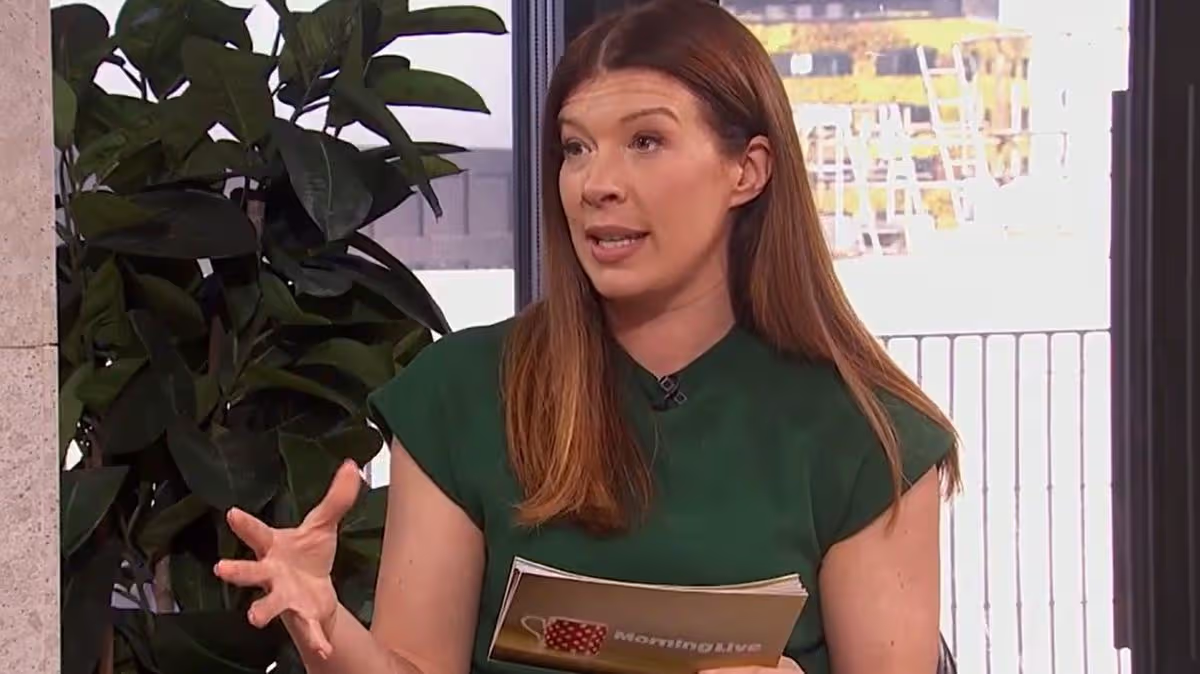
TV money personality and personal finance expert Laura Pomfret has shared a money-saving tip for anyone with a passport. Speaking on today’s (April 13) episode of BBCMorning Live, hosted by Helen Skelton and Gethin Jones, she shared a cost-effective, time-saving piece of advice ‘people may not know about’.
Advertisement
Her advice comes as the cost of renewing a British passport rose at the start of the month. From April 8, the price of a standard online adult application rose from £94.50 to £102, surpassing £100 for the very first time. Child passports also increased, jumping to £66.50 from £61.50, reflecting a roughly 8% hike intended to reduce the taxpayer burden.
Laura told viewers: “It is becoming a bigger and bigger expense to get a passport for you, loved ones, for your family, and fees have just gone up. It is now over £100 to get a passport, but there are ways of avoiding paying more than you need.”
Content cannot be displayed without consent
Sharing her tip to avoid paying extra when renewing your passport, she said that people who renew online can take their own pictures, rather than going to a photo booth and paying even more to get it printed. She said: “If you’ve not renewed your passport for a while, you may not know that you can take your photos yourself.”
She went on: “You don’t have to pay to go into a shop, you don’t have to go to one of the passport booths.” She said the official Gov.uk website gives you guidance when uploading your own photo, saying: “You need good lighting and a plain background, you upload it directly.”
Advertisement
She added: “It tells you if it’s not any good and you have to do it again. So, all in all, I think it’s worth having a look, if you need to get a new passport, at these different ways of saving money, because it’s worth it in the long run, especially more than one.”
Offering further passport guidance for Brits, Laura urged viewers to only ever renew online via the official Gov.uk HM Passport Office website. She warned: “There are these intermediary websites that might look official to help you fill out the application, but it’s not HM Passport Office.
“It’s an intermediary and you could pay up to £100, just for essentially help doing the passport, so make sure when you do it online you’re going directly to the Passport Office.” She also recommended renewing passports online rather than by post, as it costs less and saves time.
Advertisement
She said: “I advise you to do it yourself online. It takes about 10 minutes. But if you’re a bit unsure, you can use the Post Office check and send service. You’re paying £16 for this, but actually to get it done properly, it may be worth you deciding to use that service.”
You must renew your passport before you can travel if either your passport has expired or you do not have enough time left on it. How much time you need for your passport depends on the country you’re visiting. Check the entry requirements of the country you want to travel to.
The practice of ‘flipping’ homes – buying and reselling properties within 12 months – has plummeted to its lowest level in over a decade across England and Wales, new analysis reveals.
Property firm Hamptons, using Land Registry data, found the number of homes being flipped halved from 21,520 in 2016 to 10,570 in 2025.
This now accounts for just 1.5% of housing transactions in 2025, down from 2.0% in 2024, marking the lowest proportion in over 10 years. The number of flipped properties is the lowest since 2012, with the proportion being the least since 2013.
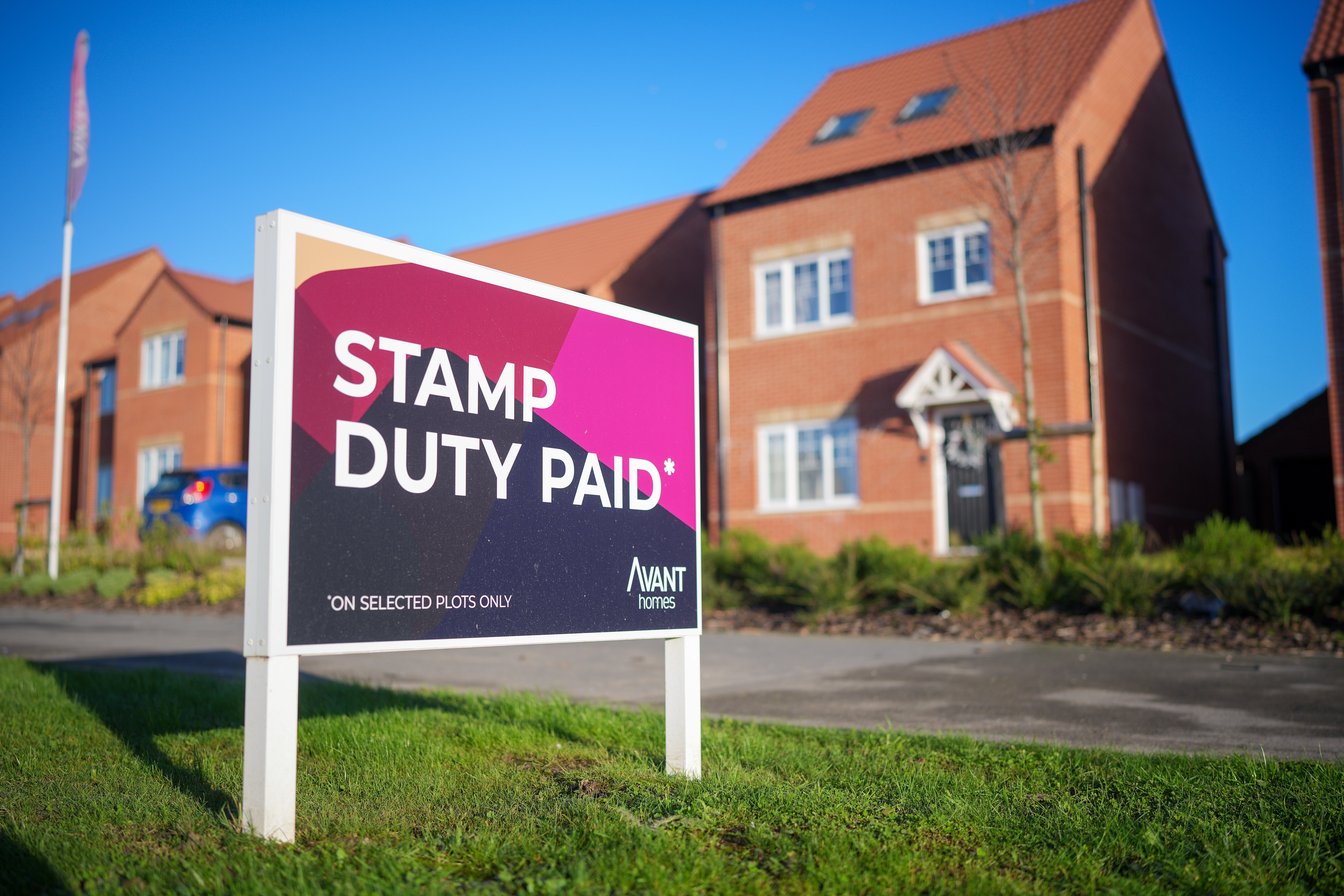
The property firm said a “long slowdown” was recorded following the introduction of the second home stamp duty surcharge in 2016.
Advertisement
Hamptons said that last year around seven in 10 (73.3%) flipped homes generated a gross profit.
It said a decline in flipping profitability has varied sharply by region, with the steepest falls concentrated in the South of England, where weaker house price growth and higher stamp duty costs have dented returns.
The North East of England, where house prices are lower, remains a “flipping hotspot” with locations such as Hartlepool, County Durham, Middlesbrough, Sunderland and Stockton-on-Tees being popular, the research found.
A recently built new home in Leeds. (Getty)
Stamp duty applies in England, and in Wales the land transaction tax applies.
Aneisha Beveridge, head of research at Hamptons, said: “Flipping is no longer the profitable venture it once was.
Advertisement
“There was a time when rundown properties could be bought cheaply, refurbished and resold at a healthy margin.”
Get a free fractional share worth up to £100. Capital at risk.
She said that stamp duty “is only part of the challenge”, adding: “Falling house prices across many southern markets have squeezed returns further while the cost of materials and labour have risen sharply since the pandemic.
Advertisement
“Even before factoring in stamp duty, refurbishment budgets now stretch much further than they once did, pushing profit margins to their thinnest levels in over a decade.
“In contrast, the North – particularly the North East – has remained far more resilient.
“Lower entry prices keep stamp duty bills modest, meaning more scope to add value through refurbishment. Combined with strong local house price growth, this has created a rare pocket of the country where flipping can still deliver healthy returns.
“Unless a flip is supported by strong underlying house price growth, turning a profit is becoming increasingly difficult. That said, investing in relatively cheaper property in an area where house price growth is strong can still yield solid returns.”
A Hertfordshire village has been named one of the UK’s prettiest (Picture: Alamy Stock Photo)
A cosy pub with a roaring fire. The smell of freshly baked scones floating from the local bakery. Almost no phone signal.
This is what awaits visitors to Ashwell, a Hertfordshire village less than an hour away from London.
Located at the source of the River Cam — which eventually flows into Cambridge — this idyllic spot has been named on a list of the 15 prettiest villages near London, compiled by Condé Nast Traveller.
The publication celebrated Ashwell for its brewery scene (which dates back to the 1800s), and added that its ‘streets offer a scenic interlude northbound off the A1.’
Advertisement
TimeOut also recently placed it first in their list of ‘unbelievably cute’ villages near to London, citing Ashwell Springs as the perfect spot for a ‘picturesque picnic’.
As a Hertfordshire native, I’m not surprised to see Ashwell on the list. It’s exactly how you’d picture a classic English village to be: children playing, cyclists buddying up for weekend rides, and neighbours chatting over fences.
So if you fancy a day trip this spring, here’s everything you need to know about the ‘green oasis’ around 40 miles from the capital.
WIN a relaxing countryside getaway for two
Need a bit of R&R? We’re giving you the chance to win a restorative break for two at Albion Aberteifi, a top-rated hotel in the beautiful coastal town of Cardigan, Wales.
Advertisement
The two-night stay includes Scandi-style breakfast, cocktails for two at the hotel bar, and a Nature Spa experience at nearby wellness retreat Fforest Farm, for two hours of basking in their individual cedar saunas and wood-fired hot tubs. Blissful.
Wish you were here? Enter now below (Picture: Brook Aurora)
When the sun comes out, the aforementioned Ashwell Springs are the place to be. Near the high street, accessible by a footpath, you’ll find the small nature reserve, at the source of the River Cam.
Shallow enough for a paddle, take a picnic and read a book while the kids hop across the stepping stones. There’s even a sign that reads: ‘You are now entering a stress free zone’.
Advertisement
Once you’ve got your dose of vitamin D, The Three Tuns is everyone’s favourite pub. The spot serves up a huge roast on a Sunday, as well as classics like fish and chips and sausage and mash.
Ashwell Springs feed into the River Cam (Picture: Alamy Stock Photo)
There are rooms available for an overnight stay, too. The Westminster Room, which sleeps four, is available to book for around £75 per night.
Other pubs include the The Rose and Crown, which, like much of the village, dates back to the 16th century.
Or, for more sunbathing, right opposite the 14th-century Church of St Mary the Virgin, you’ll find the Bushel and Strike, with its generously sized beer garden out the back, ideal for enjoying a pint of Hop & Heart, Foghorn, or the Genesis stout — all brewed in nearby Bedfordshire.
Speaking of beer, Ashwell has a long brewing history, due it’s abundant water supply, and fertile land. Fordham’s Brewery produced ales and stouts in the village for more 100 years. You can learn all about their history, as well as other fun facts, at the Ashwell Museum, which is free to enter, and open all year.
Advertisement
There’s also a Days Bakery in nearby Baldock (Picture: Alamy Stock Photo)
Housed in a medieval timber-framed building, the museum described Ashwell as ‘a world in a village’.
Wandering around the quaint streets, you’ll find everything you’d expect in a storybook village. Whether you’re looking for some sturdy sausages for a fry-up or a burger to stick on the barbecue, Crumps, a butcher and deli, has it all. As well as meats, there’s a counter full of cheese, plus plenty of fresh vegetables.
And, the jewel in Ashwell’s undeniable crown, Days Bakery is an essential visit. At Easter, there are fresh hot cross buns and cookies, and year-round, there’s bread, sandwiches, and sausage rolls galore.
It’s been there since 1741, which makes it one of the UK’s oldest bakeries. The original site is in Ashwell, but these days, there are also shops across the rest of Hertfordshire, Cambridgeshire, and Essex.
And, if you’re going to be in Ashwell in August, don’t miss the annual Ashwell Show, held every August bank holiday. Running for more almost 100 years, there’s a craft market, fairground rides and a horse and dog show.
Advertisement
And apparently, this year’s ‘breathtaking main attraction’ is yet to be announced…
Getting to and around Ashwell
The nearest train station is Ashwell and Morden, which is only a five-minute drive away from the main village, but along a two-mile country road with no pavements.
There’s also the number 91 bus, which goes from door to door and takes about seven minutes.
Considering it’s deep in rural Hertfordshire, though, it’s worth checking the timetable so you’re not left high and dry.
Advertisement
When travelling from London, the train to London St Pancras takes about 45 minutes. It also passes through Finsbury Park on the way, for those after the Victoria line.
Cambridge, with its cobbled streets, university population, and sticky buns (from local legends Fitzbillies, no less), is also a 20-minute train ride away.
House prices in Ashwell
Fancy a more permanent move from the capital to the countryside?
According to data from Rightmove, the average house here has sold for £402,944 over the last year, which exceeds the going rate across the UK by a good £31,000.
Advertisement
That said, if you’re after a good alternative to the likes of Hitchin, where house prices level out at £491,314, then Ashwell is 20 minutes away, and that it cheaper.



















































You must be logged in to post a comment Login