
Crypto World
Researcher suggests AI may decentralize just as Bitcoin mining turns industrial



Bitcoin and artificial intelligence appear to be moving in opposite directions regarding how their power is distributed.
Summary
- Bitcoin mining is increasingly shifting toward industrial-scale operations while AI development begins to move toward smaller and more personal device applications.
- The edge AI market is projected to reach 119 billion dollars by 2033 as localized data processing and privacy needs drive a 300 percent growth rate.
- High energy costs in the United States are pushing Bitcoin hash rates toward the Global South, with Ethiopia and Paraguay emerging as major hubs for hydroelectric mining.
Galaxy Research head Alex Thorn pointed out on Sunday that Bitcoin mining, which started on simple home computers, now mostly happens in massive industrial warehouses using specialized gear. AI, however, may take the reverse route.
While AI currently lives in giant, restricted data centers, Thorn believes open-source progress is closing the gap as major models hit limits in memory and data.
“If local models keep getting smaller, cheaper, and more efficient, AI may become increasingly personal and on-device,” he noted.
Localized computing on the rise
Grand View Research estimates the global market for “Edge AI”—technology that runs locally on gadgets rather than through a central cloud—will reach $119 billion by 2033.
This represents a jump from roughly $25 billion expected in 2025. The growth stems from the explosion of connected devices and a need for instant data processing that does not rely on a distant server.
Market analysts at GVR attributed this momentum to the expansion of the Internet of Things (IoT). Industry trends show a “rising focus on data privacy and localized intelligence at the network edge,” which allows companies to automate tasks without sending sensitive information to a central hub.
Mining moves to the Global South
A separate report from the crypto exchange KuCoin on Friday showed that while Bitcoin hardware is harder for individuals to own, the locations of these machines are spreading out globally.
High electricity prices in the United States have made mining unprofitable in certain regions, with costs to produce a single coin sometimes exceeding $100,000.
Operators are now seeking cheaper energy in places like Ethiopia and Paraguay, where hydroelectric power is plentiful. Such a move helps protect the network by ensuring it isn’t tied to the politics or power grids of just one or two nations.
According to KuCoin, “this decentralization of mining power across different continents enhances the security of the network by making it less vulnerable to any single country’s political or environmental shocks.”



Alcoa is in advanced discussions to sell its Massena East smelter site in upstate New York to New York Digital Investment Group (NYDIG).
Summary
- Alcoa is in advanced talks to sell Massena East smelter site to NYDIG.
- NYDIG aims to expand Bitcoin mining operations using hydropower-linked industrial infrastructure in New York.
- Massena East site has been idle since 2014 and spans about 1,300 acres.
The update was shared by Alcoa chief executive Bill Oplinger in comments reported on Friday. Oplinger stated that the transaction “should be done in the middle part of this year” if the process continues as planned. The site is part of a wider effort by Alcoa to offload around 10 idle US smelter properties.
The Massena East facility sits along the St. Lawrence River and covers about 1,300 acres. It has been inactive since 2014 after high energy costs and global competition reduced domestic production viability.
NYDIG, a Bitcoin financial services company, would become the owner of the site if the deal is completed. The firm has already been active at the location through its partnership with Coinmint.
NYDIG took a strategic stake in Coinmint in October 2024. Coinmint operates Bitcoin mining hardware at the Massena campus under a long-term lease agreement signed with Alcoa in 2018.
The facility has access to hydropower from the New York Power Authority, which supports large-scale mining operations. The site has also been used as a hosting location for mining infrastructure over recent years.
Additionally, Coinmint has hosted mining equipment for several firms, including CleanSpark, Gryphon, and Bit Digital. Some of these clients exited as NYDIG increased its operational role at the site.
Mintvest Capital, a minority shareholder in Coinmint, filed a lawsuit earlier in the year. The claim stated that NYDIG had “effectively acquired Coinmint for roughly $200 million,” according to court filings referenced in reports.
The dispute remains part of ongoing legal proceedings related to ownership structure and valuation of the mining operation.
Shift in Industrial Sites Toward Digital Infrastructure
The sale of Massena East follows a broader trend of industrial sites being repurposed for digital infrastructure. Former smelters and heavy industrial facilities are increasingly being evaluated for data center or mining use.
Other companies have followed similar paths. Century Aluminum sold its Hawesville, Kentucky smelter to TeraWulf for $200 million, with plans for high-performance computing and artificial intelligence workloads rather than mining alone.
NYDIG has also expanded its mining capacity through acquisitions. The firm purchased assets from Consensus Technology Group and later agreed to acquire Crusoe Energy’s Bitcoin mining business. These moves added more than 390 MW of combined capacity across multiple US locations.
The Massena East deal would further extend NYDIG’s position in large-scale mining infrastructure tied to industrial power access and long-term energy contracts.
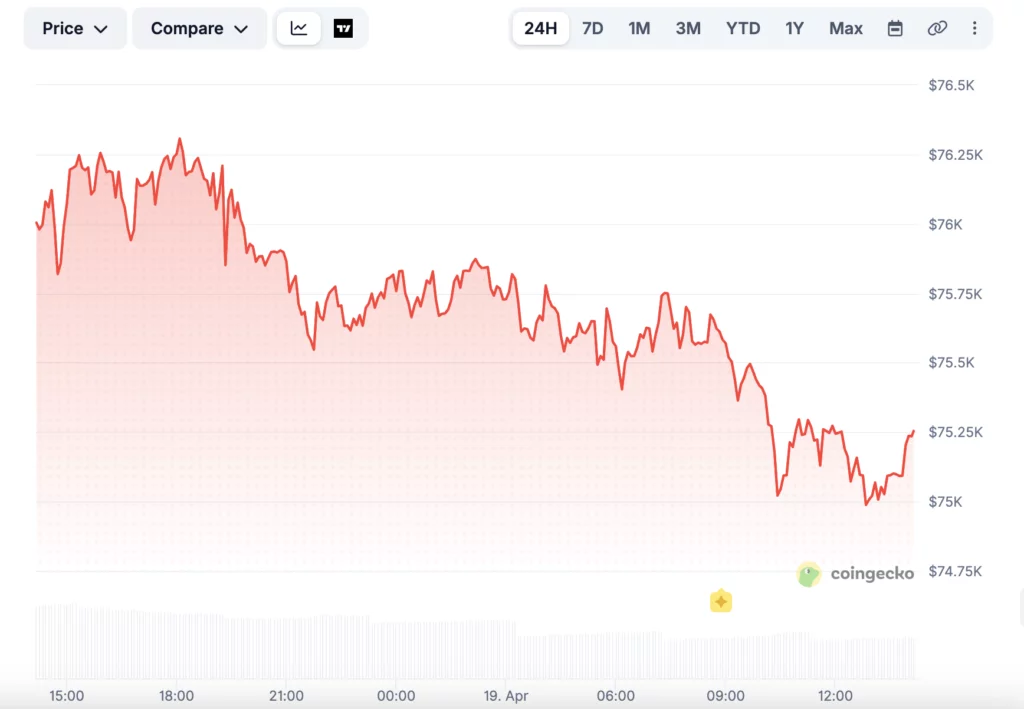
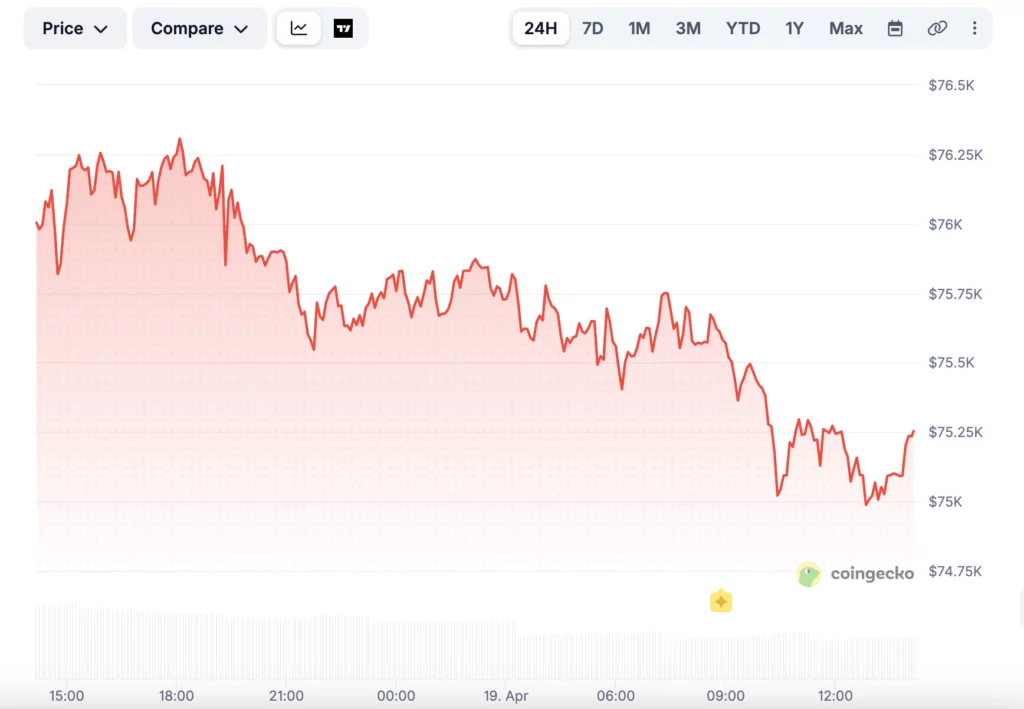
Bitcoin (BTC) has moved lower after failing to hold above its recent peak of $78,400. The asset slipped toward $75,000 following increased market pressure linked to geopolitical tensions in the Middle East.
Summary
- Bitcoin rejected near $78,400 and fell toward $75,000 after geopolitical tension reports.
- Altcoins including Ethereum, XRP, and BNB followed Bitcoin with broad market declines.
- PI token, AAVE, and WLD recorded notable losses during overall crypto market correction.
Price action shows Bitcoin had earlier climbed from below $70,500 to a 10-week high. The move followed brief optimism around reported diplomatic progress between the United States and Iran. Market sentiment shifted after conflicting reports on the Strait of Hormuz situation, leading to a rejection near the top range.
Bitcoin now trades more than $3,000 below its recent peak. Its market capitalization has eased toward $1.5 trillion, while dominance over altcoins has risen to 57.5%.
Crypto markets reacted to developments involving Iran and the United States, where statements on negotiations created mixed signals. Reports of reopening and later disruption of the Strait of Hormuz contributed to volatility in price movement.
The correction followed a strong rally earlier in the week. Bitcoin moved within a tight range between $73,200 and $75,500 before breaking higher, then reversing direction. Analysts expect continued price movement as traditional financial markets open and react to global events.
Altcoins Follow Downward Trend
Most altcoins recorded losses as Bitcoin declined. Ethereum dropped toward $2,300 after a daily decline of 3.5%. XRP moved below the $1.43 level, while BNB fell back toward $620.
Other tokens including SOL, ADA, DOGE, LINK, AVAX, and ZEC also showed declines. Market-wide selling reduced total crypto capitalization by around $100 billion since Friday, bringing the total to approximately $2.62 trillion.
Several mid-cap tokens posted larger losses. AAVE dropped more than 20% to around $92 following reports linked to a KelpDAO hack. The token M declined by about 18% to $3.50.
Pi Network’s PI token also recorded losses after rejection near $0.185. It moved lower to around $0.175, reflecting a decline of more than 8% in the latest session. PUMP and WLD also remained under pressure during the same period.
Disclosure: This article does not represent investment advice. The content and materials featured on this page are for educational purposes only.

U.S. Senator Elizabeth Warren, the leading Democrat on the Senate Banking Committee, is escalating a dispute over the U.S. Securities and Exchange Commission’s enforcement posture. In a letter dated April 15, Warren accuses SEC Chair Paul Atkins of possibly misleading Congress about the agency’s enforcement numbers after the agency released its enforcement data for fiscal year 2025.
The data, released on April 7, show a marked drop in enforcement actions, prompting Warren to publicly challenge Atkins about his February 12 testimony at a congressional hearing. In her letter, she notes that she had asked him to comment on data showing a decline in enforcement activity; she says Atkins “demurred,” replying that he was “not sure what data” she was referring to. Warren contends that the latest figures vindicate her point that SEC enforcement actions have fallen significantly under Atkins’s watch.
Key takeaways
- The Senate Banking Committee’s top Democrat questions SEC Chair Paul Atkins over whether he may have misled lawmakers about enforcement activity, citing FY2025 data released in April.
- Enforcement actions by the SEC reportedly declined to the lowest level seen in more than a decade, according to the agency’s own FY2025 data.
- Warren’s letter frames the data as evidence of a broader retreat in enforcement, raising concerns about the agency’s willingness to pursue cases, including crypto-related actions.
- As part of the controversy, Warren references a period in which the SEC reportedly rolled back enforcement against crypto firms, while other actions from the Biden administration were settled or dismissed, drawing bipartisan criticism.
- The SEC did not immediately respond to requests for comment on the letter or the underlying data.
Warren’s pivot: data as accountability and potential misdirection
The exchange between Warren and Atkins centers on a stark question: what is the true state of enforcement under the current leadership? In her letter, Warren emphasizes that the data released by the SEC last week show a run of more restrained activity, which she says contradicts Atkins’s earlier testimony that he could not comment on the data she referenced. She writes that the hearing occurred after the end of the 2025 fiscal year, and that Atkins’s later defenses appear “deeply misleading, potentially designed to cast doubt on the now obvious fact that enforcement activity has declined significantly.”
Warren’s letter to Atkins includes a request for detailed explanations about the agency’s enforcement trajectory and a confirmation of what Atkins knew about the data at the time of his testimony. Specifically, she asks for clarity on whether he was aware of the SEC’s enforcement efforts when he testified and seeks an explanation for the apparent decline. The committee gave Atkins a deadline of April 28 to respond.
At stake is not just a numeric trend but the agency’s posture toward enforcement in a landscape that includes crypto policy and investor protection. The April 7 data release has added fuel to a broader debate over whether the SEC is adequately policing markets that include digital assets, as lawmakers from across the spectrum weigh the agency’s tools and priorities.
Enforcement posture and crypto: a broader political debate
The discussion about enforcement numbers sits within a larger context of how the SEC has treated crypto-related actions across administrations. The article notes a shift in enforcement approach, with a period of retrenchment in crypto cases after the prior administration, contrasted with a higher number of crypto-related actions during the Biden era. Critics have argued that this shift represents a mismatch between the agency’s mission and the pace of market developments in digital assets.
Warren’s critique also flags a potentially wider concern: if enforcement slows while markets evolve, the regulatory framework may struggle to deter misconduct, protect investors, or establish regulatory clarity for innovators. The letter underscores the need to hold the agency accountable for its enforcement decisions, particularly in a sector that continues to draw the attention of policymakers, market participants, and builders seeking a stable, rules-based environment for digital assets.
In the background of these tensions, Atkins has faced questions about crypto-specific “safe harbor” considerations and the appropriateness of various enforcement strategies as the SEC negotiates its stance on digital assets. Earlier reporting highlighted debates over whether exemptions or more precise boundaries could help clarify where crypto activity falls within existing securities laws, a topic that continues to surface as officials examine the agency’s enforcement toolkit.
What comes next for oversight and crypto policy
The April 28 deadline for Atkins’s response to Warren’s questions sets the stage for a potential hinge point in congressional oversight of the SEC. While the agency did not provide an immediate comment on the letter, the exchange signals lawmakers’ intent to scrutinize how enforcement data is collected, interpreted, and communicated to the public—for better transparency and accountability.
For investors, traders, and builders in the crypto space, the evolving oversight narrative matters because it can influence regulatory certainty, risk assessment, and the appetite for enforcement risk in crypto ventures. If lawmakers perceive continued declines in aggressive action as a signal of lax oversight, that could shape debates on rulemaking, disclosure requirements, and potential new guardrails that affect how digital assets are treated in the U.S. market.
As the SEC weighs its enforcement posture, market participants will be watching not only for the numbers themselves but for how the regulator articulates its priorities and the conditions under which it pursues or retreats from enforcement actions—especially in areas where technology and markets are advancing rapidly.
For now, the key questions remain: Will Atkins clarify the data to reassure lawmakers about the agency’s intent and diligence? How will the SEC balance its enforcement priorities in crypto with ongoing demands for clearer regulatory guidance? And what signals will forthcoming actions, or the absence thereof, send to the broader crypto ecosystem?
The unfolding debate underscores a broader theme in crypto regulation: data, transparency, and accountability are increasingly central to investor confidence and the sector’s long-term trajectory. Keep an eye on any official responses, additional disclosures from the SEC, and subsequent remarks from lawmakers as the oversight process continues.


The Ethereum Foundation-funded Ketman Project has identified approximately 100 suspected North Korean IT workers operating across 53 crypto projects, according to an ETH Rangers Program recap published on April 16.
The six-month initiative, backed through stipends from the Ethereum Foundation’s ETH Rangers Program, focused specifically on detecting and expelling DPRK operatives who had infiltrated Web3 organizations under fabricated identities.
How North Koreans Use Forged Identities and Fake KYC Documents
A recent Ketman investigation detailed how DPRK-linked actors posed as Japanese developers on the Web3 freelance platform OnlyDust.
The operatives used AI-generated profile photos, fabricated names such as “Hiroto Iwaki” and “Motoki Masuo,” and submitted forged Japanese identity documents during verification.
Investigators confirmed the deception during a video call when one suspect, asked to introduce himself in Japanese, removed his headset and left the call.
The team traced at least three actor clusters across 11 repositories, where 62 pull requests were merged before detection.
Open-Source Tools and Industry Framework
Beyond individual investigations, Ketman developed gh-fake-analyzer, an open-source GitHub profile analysis tool now available on PyPI.
The project also co-authored the DPRK IT Workers Framework with the Security Alliance (SEAL), which has become a standard industry reference.
The ETH Rangers Program, launched in late 2024 alongside Secureum, The Red Guild, and SEAL, funded 17 stipend recipients in total.
Consolidated outcomes included over $5.8 million in recovered funds, 785 reported vulnerabilities, and 36 incident responses handled.
North Korean operatives have stolen billions in crypto assets in recent years. Security researchers warn that IT worker infiltration often serves as a stepping stone for larger supply chain attacks coordinated by DPRK hacking teams.
The post Ethereum-Funded Project Exposes 100 North Korean IT Workers in Crypto appeared first on BeInCrypto.

Alcoa is reportedly closing in on a deal to sell its Massena East smelter site in upstate New York to New York Digital Investment Group (NYDIG), a strategy move that would repurpose idle industrial capacity for Bitcoin mining and other digital infrastructure. Bloomberg reported on Friday that the two parties are in advanced discussions, with an expected close in the middle of this year. Massena East, along the St. Lawrence River, has been dormant since 2014 after Alcoa shut it down amid rising energy costs and competitive pressures.
The site’s built-in heavy-industry footprint—substations, transmission lines and high-capacity grid connections—positions it as a prime target for Bitcoin miners and data-center operators who often spend years securing such infrastructure from scratch. In addition, the Massena East location benefits from hydropower supplied by the New York Power Authority (NYPA), a factor that has drawn energy-intensive compute operations seeking scale with relatively low-cost, lower-carbon power.
The broader narrative around US industrial sites being repurposed for digital infrastructure is gaining traction. Earlier this year, Century Aluminum sold its Hawesville smelter in Kentucky to TeraWulf for $200 million, with plans to transform the facility into a high-performance computing and AI facility rather than a traditional smelting operation. The shift underscores a market interest in converting legacy industrial assets into computing capacity rather than conventional manufacturing.
New York-based NYDIG has been expanding its footprint in Bitcoin mining infrastructure. The firm, owned by Stone Ridge, already holds a stake in Coinmint, which operates mining hardware at the same campus under a long-term lease. The consolidation reflects NYDIG’s broader ambitions in both mining and related AI-oriented data-center deployments. The narrative around NYDIG’s activity in the space has intensified after Crusoe Energy agreed to sell its Bitcoin mining business to NYDIG last year, signaling a growing convergence between mining and AI infrastructure initiatives.
Key takeaways
- Alcoa is in advanced discussions to sell the Massena East site to NYDIG, with a closing expected in the middle of 2026, according to CEO Bill Oplinger as cited by Bloomberg.
- The Massena East campus benefits from existing heavy-industrial infrastructure and hydropower from NYPA, which reduces the friction and cost typically associated with siting new digital infrastructure projects.
- NYDIG’s expansion in mining infrastructure includes stakes in Coinmint and a history of acquiring mining assets, including Crusoe Energy’s mining business, highlighting a strategy that blends crypto mining with broader data-center ambitions.
- The deal sits within a broader U.S. trend of converting retired industrial facilities into AI, HPC and data-center campuses, a pattern already visible in the Hawesville example and other recent moves by miners and energy partners.
Industrial assets, power deals and a changing crypto playbook
Massena East’s potential sale is notable for what it reveals about how the crypto and AI infrastructure ecosystems are leveraging pre-existing energy and grid assets. The site’s proximity to hydropower from NYPA provides a cost and emissions angle that matters to operators facing energy-price volatility and the push toward lower-carbon compute. Built to run around the clock, aluminum smelters are, by design, already configured for continuous power delivery—a characteristic that makes them appealing hubs for mining rigs and AI data centers that demand consistent energy supply and scale.
NYDIG’s involvement signals a broader strategic alignment between mining and AI-focused infrastructure. The company has been extending its reach in Bitcoin mining by leveraging established facilities and leases—an approach that can accelerate project timelines and reduce regulatory hurdles compared with greenfield development. The Coinmint stake and the Crusoe Energy sale to NYDIG reinforce a pattern where crypto-dedicated capital is funding facilities that can pivot between mining and AI workloads depending on market conditions.
These developments also dovetail with the evolving competitive landscape among crypto miners worldwide. While some players double down on expansion in traditional mining, others are actively repositioning assets for AI and cloud computing services. MARA Holdings’ recent stake in Exaion illustrates the AI services dimension, while peers like Hive, Hut 8, TeraWulf and Iren are repurposing existing sites into data-center ecosystems. CoreWeave, for its part, has migrated toward AI-focused infrastructure, signaling a broader shift in how capital and operators view the value of large-scale computing capacity beyond pure mining.
Implications for investors and the crypto infrastructure market
The Massena East development is a microcosm of a larger market dynamic: the convergence of retired industrial assets, power accords, and the demand for scalable compute. For investors, the potential sale underscores several practical considerations. The presence of prebuilt infrastructure and hydropower can shorten project timelines and reduce capex risk, while strong local energy partnerships may support more predictable operating costs. Yet investors should also monitor regulatory developments, energy pricing trends, and community reception to large-scale crypto or AI facilities in energy-rich regions like upstate New York.
Market observers are watching whether such repurposing efforts will catalyze a more stable, diversified revenue mix for miners—balancing traditional BTC mining with AI-related compute services and data-center operations. The Hawesville example, where Century Aluminum sold the site for AI-focused development, illustrates how industrial assets can transition toward higher-value, location-specific digital infrastructure without relying solely on commodity mining cycles. If Massena East proceeds, it could become another data point supporting this broader retooling trend.
Meanwhile, NYDIG’s ongoing expansion and its portfolio moves—along with other industry players who are gradually tilting toward AI-enabled infrastructure—may influence how capital flows into the sector. The emphasis on durable infrastructure, long-term leases, and energy partnerships could offer a more resilient framework for funding and operating large-scale computing assets in a competitive energy market.
As with any major asset repositioning, the path forward will hinge on regulatory clarity, local permitting, and the economics of power supply. Until the deal closes, readers should watch for updates from Alcoa and NYDIG, and note how the Massena site’s conversion could inform future repurposing plays across the industry.
Readers should keep an eye on how this shift interacts with the broader crypto landscape, where miners are increasingly balancing BTC exposure with AI, data-center demand and cloud computing opportunities. The coming months will reveal whether the Massena East project becomes a notable blueprint for how industrial relics can fuel next-generation digital infrastructure—and what that implies for energy markets, regional economies, and the strategic playbooks of miners and AI operators alike.
What’s next remains uncertain, but the trend toward repurposing legacy industrial capacity for high-performance computing and AI workloads is likely to accelerate as energy deals, regulatory clarity and demand for scalable compute continue to evolve.
Crypto World
One person holds the keys to $200 million of a project’s crypto. His co-founder says that has to end


For years, NEO’s treasury was held in a setup that would be unusual for most financial institutions: hundreds of millions of dollars in crypto assets were controlled through personal wallets, with no multisig protections and little formal oversight.
That person, according to co-founder Da Hongfei, is Erik Zhang, NEO’s other co-founder and the architect of its core protocol.
“Around 85% is controlled by Eric alone with single signature,” Da said in an interview. “It had never been transferred to any individual or any multi-sig.” The native NEO and GAS tokens Zhang holds are currently worth between $200 million and $250 million, Da estimated. That’s more than NEO’s current $197 million market capitalization.
Zhang, for his part, has accused Da of separate problems. The two founders have been airing those disputes in public since December.
The fight has since produced rival governance plans and an unsuccessful mediation effort in Hong Kong.
Da published his restructuring proposal on GitHub on April 9. It calls for redomiciling the Neo Foundation from Singapore to the Cayman Islands, replacing the current two-founder governance with an independent five-member board, barring both founders from that board for 24 months, and redistributing roughly 26 million NEO and 40 million GAS to tokenholders.
Zhang’s counter-proposal called staying on the board keeping the Foundation in Singapore, not move it to the Cayman Islands.
Most pointedly, Zhang’s proposal calls for a formal investigation into historical asset management, including provisions to address potential corruption, improper asset transfers, and concealment of public assets.
Da dismissed those provisions flatly. “I think it’s a very blunt and empty accusation,” he said. “There is no corruption, no misuse of funds.”
For some observers, however, the numbers seem quite stark. NEO’s treasury holds ~$460 million in assets, roughly double the project’s $197 million market value, while the token has dropped 98% from its 2018 peak.
Mutual disarmament
NEO’s FY2025 financial report, its first comprehensive disclosure since 2020, revealed over 1,100 BTC, more than $100 million in stablecoins and cash, and a portfolio of venture investments including an unliquidated stake in Binance.
Da broke the treasury into two halves. The first, the native NEO and GAS tokens, sits largely under Zhang’s single-signature control. The second, bitcoin, ether, stablecoins, fund-of-fund investments, and bank balances, is managed by NGD, the entity Da runs.
Those non-token assets, once relatively modest, have grown to over $200 million, driven largely by the appreciation of its BTC and ETH holdings accumulated through early-stage investment returns.
The result is a treasury split almost evenly between two people who are no longer speaking productively, each holding leverage over the other, neither willing to move first.
Da framed his proposal as mutual disarmament.
“NGD will lose its control over most of the assets, including the BTC and stablecoins, which are over $200 million. And Eric will lose his personal control of the majority of the NEO tokens,” he said.
“Basically, me and Eric need to sacrifice our individual control over assets. I think that’s the fundamental change.”
He said he’s willing, but doesn’t know if Zhang is.
Da’s restructuring depends entirely on Zhang’s cooperation for its most critical step of transferring the single-signature token holdings to a multisig lock address. In an April 10 AMA, Da committed to a one-to-three month timeline.
Asked what happens if Zhang refuses, Da was candid.
“If there’s one person holding around half of a crypto native token and not willing to hand over to a multi-sig, constitutional governance, then what the community should do, I think the answer should come from the community itself.
CoinDesk reached out to Erik Zhang for comment and had not heard back by time of publication


Strategy Inc. has proposed a change to the dividend schedule of its STRC preferred stock.
Summary
- Strategy proposes STRC dividend payments move from monthly schedule to twice per month structure.
- STRC carries variable 11.5% annualized dividend and aims to trade near $100 par value.
- Shareholder vote scheduled June 8 will decide approval of new dividend payment structure.
The proposal suggests moving payments from a monthly cycle to a semi-monthly structure, subject to shareholder approval.
The company stated that the adjustment could “lead to reduced reinvestment lag, enhanced liquidity, market efficiency, and increased price stability.” The change is still under review and has not taken effect.
Structure of STRC preferred stock
STRC, known as Variable Rate Series A Perpetual Stretch Preferred Stock, is designed to trade near a $100 par value. It currently offers a variable dividend with an annualized rate of 11.5%.
The dividend rate adjusts on a monthly basis. Strategy uses this structure to support price movement close to par while limiting sharp changes in value.
Strategy has built a portfolio of preferred shares to support its broader bitcoin acquisition plan. These instruments sit above common stock in the capital structure and have helped the firm raise large amounts of funding.
Alongside STRC, the company has issued other preferred stocks including STRF, STRE, STRK, and STRD. Unlike STRC, these carry fixed dividend rates and different payout terms.
Voting Process and Market Activity
Strategy has scheduled its annual meeting for June 8, where shareholders will vote on the proposed update. If approved, the new dividend structure will begin with a record date of June 30, and the first payment is expected on July 15.
The company also reported recent activity in STRC trading. Earlier in the week, STRC saw a trading volume of $1.1 billion in a single day, which was higher than its previous peak. The firm also disclosed that its bitcoin holdings stand at 780,897 BTC after recent purchases.
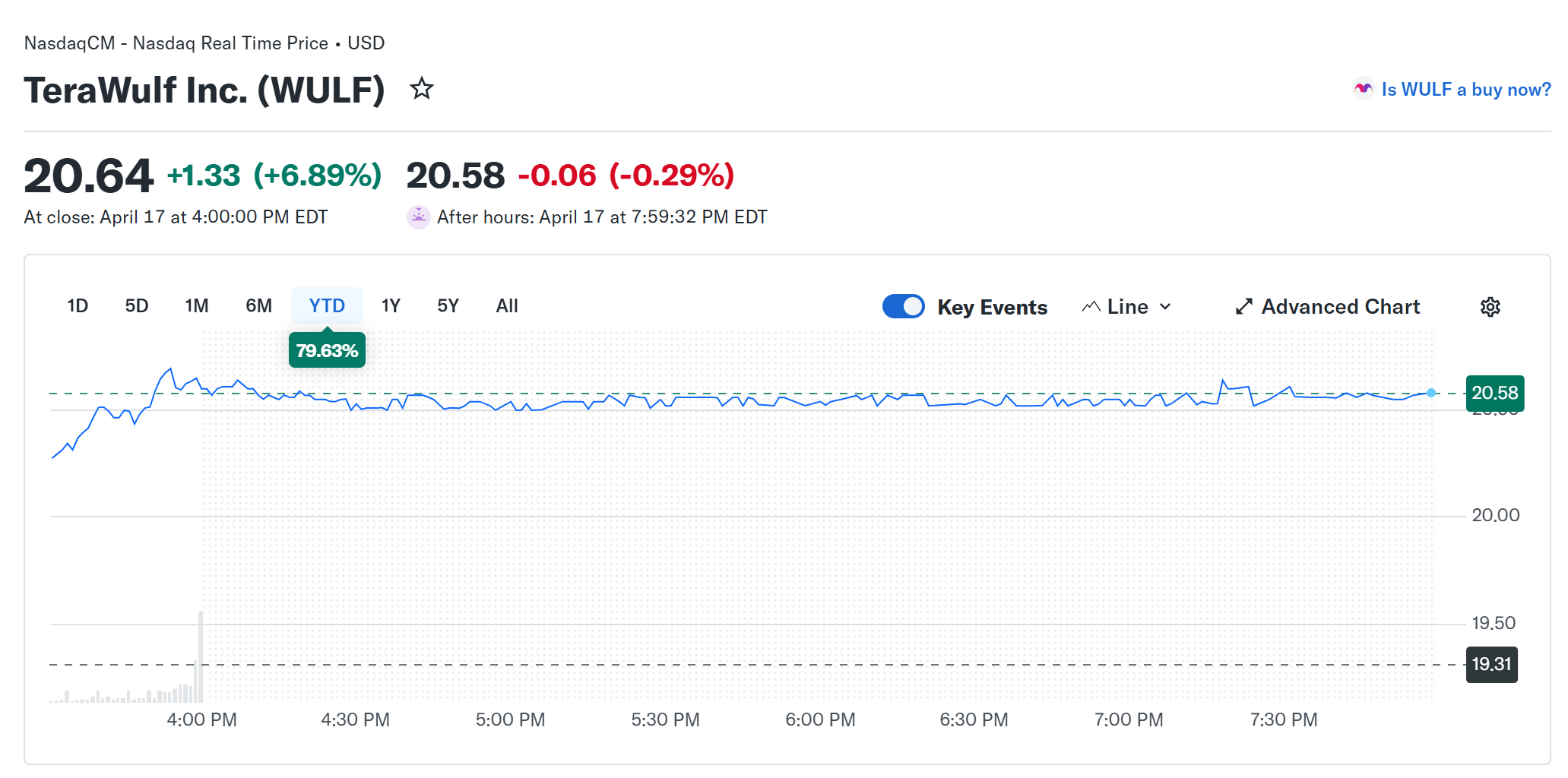
US aluminium giant Alcoa is reportedly nearing a deal to offload its long-idle Massena East smelter in upstate New York to Bitcoin mining firm New York Digital Investment Group (NYDIG).
The company is in advanced discussions and expects the transaction to close “in the middle part of this year,” CEO Bill Oplinger told Bloomberg on Friday. The site, located along the St. Lawrence River, has been inactive since 2014 after Alcoa shut it down amid rising energy costs and global competition.
Built for 24/7 heavy industrial operations, aluminum smelters come with pre-existing substations, transmission lines and high-capacity grid connections. That makes them attractive targets for Bitcoin miners and data center operators, who often spend years securing similar infrastructure approvals from scratch.
Massena East also benefits from hydropower supplied by the New York Power Authority, a key draw for energy-intensive computing firms seeking low-cost and lower-carbon power sources.
Related: Bitcoin mining difficulty falls, but projected to rise in next adjustment
US smelters reborn as crypto, AI data centers
The potential sale comes amid a broader trend across the US, where retired industrial sites are being repurposed for digital infrastructure. Earlier this year, Century Aluminum sold its Hawesville smelter in Kentucky to TeraWulf for $200 million, with plans to convert it into a high-performance computing and AI facility rather than traditional industrial use.

Meanwhile, NYDIG has been growing its footprint in Bitcoin (BTC) mining infrastructure. The firm, owned by Stone Ridge, already holds a stake in Coinmint, which operates mining hardware at the same campus under a long-term lease.
Last year, Crusoe Energy also agreed to sell its Bitcoin mining business, including its digital flare mitigation operations, to NYDIG.
Related: HIVE plans $75M raise to fund AI infrastructure push
Bitcoin miners pivot to AI
NYDIG’s renewed push into Bitcoin mining comes as other miners are increasingly pivoting toward AI and cloud computing as shrinking margins in mining push them to diversify revenue streams.
Earleir this year, MARA Holdings acquired a 64% stake in French infrastructure company Exaion, giving the company a foothold in AI services. Other miners, including Hive, Hut 8, TeraWulf and Iren, are also repurposing mining facilities into data centers, while some, such as CoreWeave, have fully transitioned into AI-focused infrastructure.
Magazine: Bitcoin may take 7 years to upgrade to post-quantum — BIP-360 co-author


Charles Schwab has shown interest in entering prediction markets as part of its wider product review. Chief executive Rick Wurster told investors that the company is considering whether to offer such services in the future.
Summary
- Schwab considers prediction markets but excludes sports, politics, and entertainment-related betting products.
- Citadel Securities monitors prediction markets growth but notes low liquidity limits current participation plans.
- Both firms see potential in event contracts for hedging financial and portfolio-related risks.
Wurster said prediction markets were “not of tremendous interest” among some clients when discussed recently.
He also noted that Schwab would “take a hard look at” the sector and described the setup as “quite straightforward” to introduce if the firm moves ahead.
Schwab has stated that any potential offering would avoid sports, politics, and pop culture. The firm aims to remain focused on investment services linked to long-term financial planning.
Wurster said prediction products outside that scope would not be pursued. He added that “people generally lose money” in gambling-style markets, which supports the firm’s approach of limiting exposure to speculative areas.
In addition, Citadel Securities has also expressed interest in the development of prediction markets. President Jim Esposito said the company is “absolutely keeping an eye on developments,” while noting that activity levels are still limited.
Esposito added that it is “certainly possible” Citadel could take part in the future. However, he said the firm is “not there yet” due to low liquidity in current platforms, suggesting that broader participation depends on market growth.
Event Contracts Viewed as Potential Tool
Citadel has shown more interest in event-based contracts linked to financial risks rather than entertainment or sports outcomes. The firm sees possible use in areas such as election-related contracts that may affect market behaviour.
Esposito said such contracts could offer a “clean and distinct way” for investors to manage risk. He also said there is “a good use case and industrial logic” for these tools as clients look for ways to hedge specific exposures.


A US federal judge has dismissed a class-action lawsuit linked to a memecoin promoted by Caitlyn Jenner.
Summary
- US judge ruled Caitlyn Jenner memecoin did not qualify as security under investment contract standards.
- Court said investors failed to prove pooled funds or structured financial returns linked to token.
- Lawsuit claims involving token promotions and donations were rejected and case dismissed from federal court.
The court found that the claims did not meet the legal standard required to classify the token as a security under US law.
Judge Stanley Blumenfeld Jr. stated that the complaint failed to show that the token functioned as an investment contract. He noted that there was no clear evidence of pooled investor funds or structured returns tied to shared efforts. The ruling stated that “promotion alone, however, does not establish a common enterprise.”
The case began when a group of investors filed a lawsuit in November 2024. They claimed they suffered financial losses after the token’s value dropped sharply. The plaintiffs argued that the token was an unregistered securities offering.
An amended complaint followed in May 2025. It included claims that investors contributed funds with expectations tied to future actions. These included token buybacks, marketing efforts, and other planned uses. However, the court found that these claims did not clearly show how investors would gain financial returns.
Moreover, the amended complaint focused on several proposed uses of funds. These included donations and plans for fractional ownership linked to Jenner’s Olympic gold medal. The judge stated that these claims lacked clear connections to investor benefits.
The ruling noted that some of these plans were introduced after certain investors had already purchased the token. It also pointed out that some proposals were never carried out. The court stated that these details did not support the claim of a structured investment arrangement.
Background of Token Launch and Controversy
The JENNER token was launched in May 2024 and later moved from one blockchain to another. This change became part of the dispute, as some investors said it affected the token’s value.
The project also faced controversy linked to alleged issues with collaborators. Over time, the token’s market value declined from its earlier peak. The judge denied further amendments to the lawsuit and directed related claims to state court for review.

MPLX: Upgrading To Bullish As The Gulf Coast Build-Out Meets The AI Power

Alcoa moves toward sale of New York smelter site to NYDIG
Oh Mandy – The Sequel… The Scandal That Exposed Starmer


-
 NewsBeat7 days ago
Pep Guardiola and Gary Neville agree over Arsenal title problem that benefits Man City
-

 Crypto World6 days ago
The SEC Conditionalises DeFi Platforms to Be Avoided for Broker Registration
-

 Fashion2 days ago
Weekend Open Thread: Theodora Dress
-

 Politics7 days ago
World Cup exit makes Italy enter crisis mode
-

 Crypto World6 days ago
SEC Signals Exemption for Crypto Interfaces From Broker Registration
-

 News Videos4 days ago
Secure crypto trading starts with an FIU-registered
-

 Sports2 days ago
NWFL Suspends Two Players Over Post-Match Clash in Ado-Ekiti
-

 Crypto World5 days ago
SEC Proposes Certain Crypto Interfaces Don’t Need to Register as Brokers
-

 NewsBeat5 days ago
Trump and Pope Leo: Behind their disagreement over Iran war
-

 Politics2 days ago
Palestine barred from entering Canada for FIFA Congress
-

 Crypto World2 days ago
Russia Pushes Bill to Criminalize Unregistered Crypto Services
-

 Sports6 days ago
NWFL opens Pathway for new Clubs ahead of 2026 Season
-

 Crypto World6 days ago
Trump whales load up ahead of Mar-a-Lago luncheon.
-
 Business3 days ago
Creo Medical agree sale of its manufacturing operation
-
Business6 days ago
Kering slides after Morgan Stanley downgrade, Gucci woes loom
-
 Entertainment5 days ago
Brand New Day’ Footage Reveals the Devastating Impact of ‘Now Way Home’
-
 Crypto World7 days ago
Sei Network Enters Quiet Reset Phase as On-Chain Metrics Signal a Slowdown in 2026
-

 Tech6 days ago
Google adds E2E encryption to Gmail for iOS and Android enterprise users
-

 Politics2 hours ago
Zack Polanski demands ‘council homes not luxury flats for foreign investors’
-

 Tech6 days ago
Apple glasses won’t go brand shopping like Meta did with Ray-Ban and Oakley
You must be logged in to post a comment Login