
Business
An SEO’s guide to ethical AI use


Navigating the ethics of AI in modern SEO
The AI x SEO crossover isn’t just a trend; it’s the next step in the evolution of the digital marketing landscape. AI, as a tool, provides unprecedented speed and analytical power, but not without introducing significant ethical concerns. To achieve long-term success in a “people-first” search environment, marketers must balance automation, maximise efficiency, and maintain integrity.
The power of AI in your SEO toolkit
The most important part of having AI in your SEO toolkit is knowing when to use it.
- Deep data analysis: Identifying patterns in massive datasets and spotting emerging search trends before they go mainstream.
- Precision research: Generating hyper-specific keyword clusters and topic recommendations tailored to niche audiences.
- Competitive intelligence: Keeping a constant pulse on competitor movements and market shifts.
- Operational efficiency: Streamlining repetitive workflows and recurring processes to free up time for high-level strategy.
The risks of unethical implementation
It’s easy to fall into the potential dangers of AI use. Although AI-integrated tools can help maximise efficiency, there are several risks that come with misusing these tools. Without exercising caution, outlining best practices, and following them, the brand’s reputation can be at risk.
Key risks include:
- Spreading inaccuracies: AI “hallucinations” can present false information as fact, leading to misleading content being published under your brand’s name.
- Data manipulation: Improperly handling or misrepresenting data to skew results.
- Content deception: Using generative AI to pump out unhelpful, low-quality content designed purely for search engines rather than human readers.
- Trust erosion: Creating fake reviews or misleading imagery that breaks the bond between a brand and its audience.
A framework for ethical AI use
To make sure AI is being used responsibly and ethically, there are a few core principles that should be kept in mind throughout the SEO process.
-
Radical transparency
You can’t have brand trust without honesty. Agencies should be transparent with clients about where and how AI is used in their strategies. Brands should consider carefully where AI is used in their strategies and on their sites. If considering AI use that would reflect poorly on the brand when disclosed, consider whether it’s worth the time saved.
-
Bias mitigation and fairness
The quality of AI models depends directly on their training data. To avoid biased results or other embarrassing mistakes, marketers must regularly audit AI outputs for errors, review data sources to ensure they’re fair and representative, and refine algorithms to eliminate discriminatory patterns.
-
Privacy and consent
No AI strategy is ethical if it compromises user privacy. Always adhere to data protection regulations like GDPR. Ensure that any data used to train or prompt AI models is collected with explicit consent and stored securely.
-
Intellectual property respect
The “scraping” nature of AI training raises serious copyright concerns. It is vital to ensure that AI-driven processes do not infringe on the intellectual property of others and that any training materials used have the necessary permissions.
-
The human-in-the-loop requirement
AI should be an assistant, not a replacement. Human oversight is the only way to validate accuracy, ensure cultural relevance, and maintain a brand’s unique voice. A “human-led, AI-supported” approach ensures that ethical guardrails remain in place.
The bottom line
As search engines like Google continue to prioritise high-quality, reliable, and helpful content, the ethical use of AI becomes a competitive advantage. By focusing on transparency, privacy, and human accountability, we can use these powerful tools to build a more trustworthy and effective digital ecosystem. Consulting or working with a respected SEO agency that already has an approach to ethical AI use in place can cut out the guesswork and give your business the edge of technological advancement without the risk.


LOS ANGELES — Netflix’s acclaimed anthology series “Beef” returned on April 16, 2026, with an entirely new cast and a fresh tale of escalating conflict set against the polished lawns of a Southern California country club, drawing immediate buzz for its powerhouse ensemble and sharp exploration of class, marriage and generational tension.

Creator Lee Sung Jin, who helmed the Emmy-winning first season starring Ali Wong and Steven Yeun, transformed the dark comedy into a true anthology format. Season 2 ditches the road-rage origins of Danny Cho and Amy Lau for a multi-couple saga involving blackmail, ambition and fragile egos among the wealthy and the striving. All eight roughly 30-minute episodes dropped at once, allowing viewers to binge the chaotic spiral in a single sitting.
At the center stands Oscar Isaac as Joshua Martín, the embattled general manager of the Monte Vista Point Country Club. Isaac, known for roles in “Dune” and “Scenes From a Marriage,” portrays a man whose outwardly successful life — complete with a chic home and club perks — masks deep financial strain and a crumbling marriage. His on-screen wife, Lindsay Crane-Martín, is played by Carey Mulligan, the Oscar-nominated star of “Promising Young Woman” and “Maestro.” Lindsay, an interior designer chasing upscale clients, brings brittle ambition and quiet desperation to the role.
The couple’s heated private argument spills into public view when it is witnessed by a younger, engaged pair working at the club. Charles Melton, fresh from acclaim in “May December” and “Warfare,” portrays Austin Davis, a Gen Z personal trainer dreaming of bigger things while scraping by on club wages. Opposite him is Cailee Spaeny as Ashley Miller, Austin’s fiancée, who is tired of frozen-pizza dinners and lack of health insurance. Spaeny, recognized for “Priscilla,” “Civil War” and “Alien: Romulus,” infuses Ashley with a mix of youthful optimism and growing resentment.
What begins as an accidental eavesdropping quickly evolves into a messy web of favors, coercion and mutual blackmail as the two couples vie for favor with the club’s elite. The younger pair sees an opportunity to climb the social ladder, while Josh and Lindsay fight to protect their status. The story spreads across three generations, blending millennial midlife crises with Gen Z hustle and the calculated world of older wealth.
Supporting the leads is a glittering array of talent that has critics and fans raving about the casting coup. Oscar-winning actress Youn Yuh-jung (“Minari,” “Pachinko”) appears as Chairwoman Park, the intimidating new Korean owner of the country club. Her character wields financial power with quiet authority while navigating her own complicated relationship. Song Kang-ho, the “Parasite” star making a notable television foray, plays Dr. Kim, Chairwoman Park’s husband, whose past medical scandal threatens to unravel their luxurious life. Portions of their storyline were filmed in Seoul, adding authentic cultural layers.
Additional cast members include Seoyeon Jang as Eunice, Chairwoman Park’s translator and aide; William Fichtner as Troy; Mikaela Hoover; and rising talents such as Matthew Kim. A K-pop idol also joins the ensemble, bringing contemporary flavor to the club’s social scene. The showrunner has described the casting of Youn and Song as a personal “bucket-list dream,” reflecting his deep admiration for Korean cinema.
Steven Yeun and Ali Wong, the breakout stars of season 1, do not appear on screen this time. Their characters’ story concluded definitively in the hospital-bed finale of the first season. However, both returned as executive producers and offered behind-the-scenes support, including sending food trucks to the crew and joining the new cast for team-building activities such as an escape room outing. Lee has emphasized that the anthology approach allows each season to stand alone while maintaining the series’ core DNA of rage-fueled escalation born from everyday pressures.
Early audience and critical reactions highlight the cast’s chemistry and the show’s willingness to tackle uncomfortable truths about money, comparison and the American dream. Some reviewers praised the performances, particularly Mulligan’s layered portrayal of a woman masking insecurity with polish and Melton’s nuanced take on youthful ambition colliding with reality. Others noted the season feels more expansive — and at times overstuffed — compared with the tight two-hander focus of season 1, with subplots involving the club owner and staff pulling the narrative in multiple directions.
Lee Sung Jin returned as creator, showrunner and executive producer, collaborating again with A24. Jake Schreier directed, and several cast members, including Isaac, Mulligan, Melton and Spaeny, took on executive producer roles. The production maintained the sharp writing and dark humor that earned season 1 eight Emmy Awards, along with multiple Critics Choice, Golden Globe and SAG honors.
Interviews with the cast reveal a collaborative spirit on set. Melton described the environment as supportive, with the older stars mentoring younger performers. Isaac and Mulligan, who share intense marital scenes, spoke about the challenge of portraying a couple whose love has soured under financial and social strain. Spaeny highlighted the generational contrast, noting how Ashley’s perspective on hustle culture clashes with the established couple’s more entrenched disappointments.
The country club setting serves as both backdrop and pressure cooker. Lavish golf courses, exclusive events and unspoken hierarchies amplify the characters’ insecurities. Themes of class warfare, immigrant ambition and the illusion of success echo season 1 but shift focus to how wealth insulates some while exposing others. A subplot involving medical malpractice and club finances adds stakes that ripple through all the relationships.
Social media lit up immediately after the April 16 premiere. Hashtags such as #BeefSeason2 and #CountryClubBeef trended, with viewers sharing theories about escalating betrayals and debating which couple’s “beef” felt most relatable. Clips of tense confrontations between Isaac and Mulligan, alongside Melton and Spaeny’s wide-eyed reactions, circulated widely. The inclusion of Korean screen legends Youn and Song drew particular praise from international audiences and Asian American viewers appreciative of the expanded cultural representation.
Netflix has not released official viewership numbers yet, but early indicators suggest strong engagement consistent with the platform’s biggest limited series launches. The binge-release model encouraged immediate discussions on platforms such as Reddit’s r/BeefTV and X, where fans dissected the ending and speculated about potential future seasons.
Lee has left the door open for more installments, noting that early pitches included multiple “beef” concepts. Whether season 3 materializes will likely depend on audience response to this sophomore outing. For now, the focus remains on the current cast’s ability to deliver the same addictive mix of cringe comedy, emotional depth and shocking twists that made the original so memorable.
As April 19, 2026, unfolds, “Beef” season 2 continues to spark conversations about performance, privilege and the small decisions that snowball into life-altering conflicts. With its star-studded lineup and bold storytelling, the new season proves the series can thrive beyond its original leads while staying true to its roots in human frailty and escalating absurdity.
From the sun-drenched fairways of Monte Vista Point to the quiet betrayals unfolding behind mansion doors, the latest “Beef” delivers a fresh serving of drama that feels both timely and timeless. Audiences hungry for more after the first season’s success are finding plenty to chew on in this ambitious, if occasionally crowded, follow-up.


Blue Origin says it has landed reused New Glenn rocket booster

SYDNEY — Australians are ditching petrol pumps for electric vehicle showrooms in record numbers as a severe fuel crisis triggered by conflict in the Middle East sends petrol and diesel prices skyrocketing and leaves hundreds of service stations dry.

New car sales data for March 2026 show battery electric vehicles achieved their highest-ever monthly market share, with 15,839 units sold — accounting for 14.6 percent of total new vehicle sales and nearly doubling the figure from March 2025. The surge comes as unleaded petrol climbs above $2.50 a litre in many areas and diesel exceeds $3 a litre, prompting motorists to seek immunity from volatile imported fuel costs.
The fuel crunch stems from escalating tensions and war involving Iran, which has disrupted supply through the Strait of Hormuz — a critical chokepoint for global oil shipments. Australia, heavily reliant on imported refined fuel after closing most domestic refineries over the past two decades, now operates only two major facilities. A recent fire at one of them has further strained production, exacerbating shortages that saw more than 500 service stations run out of at least one fuel type in late March.
Industry figures released by the Federal Chamber of Automotive Industries and the Electric Vehicle Council paint a clear picture of shifting consumer behavior. While overall new car sales dipped 2.6 percent to 108,703 units in March, petrol vehicle sales plummeted 20.8 percent year-on-year and diesel sales fell 10.1 percent. Battery electric vehicles, by contrast, jumped 88.9 percent from the same month last year. Plug-in hybrids also gained ground, pushing combined electrified vehicles to more than one in five new sales in some reports.
Used EV markets have reacted even more dramatically. Sales of secondhand electric vehicles more than doubled in March to 7,557 units, a 137.9 percent increase from February, according to the Australian Automotive Dealer Association. Available stock plunged 38 percent, creating a seller’s market with just 28.6 days of supply — well below the normal 60-to-90-day range. Prices for popular models such as the Tesla Model Y rose more than 6 percent in the final two weeks of March as dealers repriced inventory upward amid surging demand.
Even damaged or repairable EVs are flying off auction lots, with some buyers snapping up write-offs for as little as $40,000 in hopes of avoiding future fuel bills. Chinese brands including BYD and Great Wall Motor have reported sharp sales gains, while Tesla and Polestar also posted strong quarterly results. One Queensland mother told reporters she expects to save $2,600 a year after switching to a Tesla, describing the feeling as “smug” every time she drives past a fuel station.
The trucking sector, vital to Australia’s road-freight-dependent economy, is also showing renewed interest in electric options. Companies like Janus Electric have seen shares surge as much as 58 percent since the crisis intensified, with chief executive Ben Hutt noting the fuel shortages have been “very good” for business. Fleets reliant on imported diesel are exploring battery packs and electric heavy vehicles to hedge against ongoing volatility.
Experts say the crisis has exposed Australia’s long-standing fuel security vulnerabilities. With only two refineries left and domestic crude production limited, the nation imports the majority of its petrol and diesel. Supply chains can take up to six weeks, meaning the full impact of disruptions may still be unfolding even if tensions ease. Government responses have included halving fuel excise temporarily, releasing strategic reserves and relaxing quality standards, but analysts warn these measures address symptoms rather than the underlying dependence on foreign supply.
The Electric Vehicle Council and transport advocates argue the moment offers a chance to accelerate the transition. Replacing one million petrol cars with EVs could cut Australia’s reliance on imported fuel by more than one billion litres annually, according to modeling cited by energy experts. A study of Scandinavian markets found that every 1 percent rise in petrol prices correlates with a 0.85 percent increase in EV sales, suggesting the current shock could have lasting effects on adoption rates.
Yet challenges remain. Charging infrastructure, while expanding, still lags in regional and rural areas where many long-haul drivers and farmers operate. Wait times for popular new EV models have stretched to three months in some cases as demand outstrips supply. Lower-income households — often those hardest hit by fuel costs — may struggle with upfront purchase prices despite long-term savings on running costs and maintenance. Policy settings, including reviews of fringe benefits tax concessions for EVs, are under scrutiny to ensure the transition reaches those who need it most.
Battery electric vehicle sales have tripled on an annual average basis in the first quarter of 2026 compared with four years ago, while petrol car sales have declined more than 25 percent over the same period. Market analysts describe the shift as a potential tipping point, with EVs now a credible option for many passenger vehicles and light commercial uses. Chinese-made models have played a key role in broadening affordability, helping drive the record March figures.
Public sentiment appears to be turning. Searches for EVs on classified sites have risen dramatically, and social media is filled with stories of drivers calculating payback periods that now look far shorter amid $2.50-plus petrol. Farmers facing diesel shortages and fertiliser price spikes are among those rethinking their options, while urban commuters cite both cost and convenience.
Still, not everyone is convinced the surge will endure if fuel prices moderate. Some analysts caution that without sustained policy support — including better incentives, faster rollout of charging networks and clearer signals on future fuel taxes — momentum could stall once the immediate crisis passes. Others point out that Australia remains a relative laggard in EV adoption compared with countries like New Zealand or parts of Europe, where market shares have climbed higher.
For now, the fuel pain at the pump is delivering what years of subsidies and targets could not: a consumer-driven acceleration. Dealerships report unprecedented interest, with some EV specialists noting clearance rates nearing 100 percent on used stock. Trucking firms exploring electrification say the combination of high diesel costs and supply uncertainty is forcing a serious look at battery options previously dismissed as impractical.
As April 2026 progresses, the interplay between global geopolitics and domestic transport choices is reshaping Australia’s automotive landscape. The crisis has underscored how vulnerable an import-dependent nation can be when key sea lanes are threatened. At the same time, it has highlighted the potential of electric vehicles to deliver both cost certainty for drivers and greater energy resilience for the economy.
Government officials have secured additional shipments through diplomatic channels in Asia, but longer-term questions about reviving refining capacity or investing heavily in domestic alternatives remain open. In the meantime, EV Council representatives say the data from March proves Australians are ready to embrace cleaner, cheaper transport when the financial incentive aligns with necessity.
Whether this record-breaking surge marks the start of a permanent gear change or a temporary spike will depend on how quickly fuel markets stabilize and how effectively policymakers remove remaining barriers to widespread EV uptake. For thousands of Australian households and businesses already making the switch, however, the decision feels less like a gamble and more like common sense in an era of unpredictable oil shocks.
From bustling Sydney dealerships to regional Queensland towns, the message at the bowser is clear: the era of cheap, reliable petrol is under pressure, and electric vehicles are stepping into the gap with growing confidence. As more models enter the market and infrastructure catches up, the fuel crisis of 2026 may ultimately be remembered as the catalyst that finally electrified Australia’s roads.

Most enterprise brands have no idea how they appear in ChatGPT, Gemini, or Perplexity.A Daily Emerald roundup
of the best tools to track Gemini search visibility puts the same challenge in focus for teams that treat Gemini as a priority channel.
Not because the data does not exist, but because the tools claiming to track it are either approximating regional responses through prompt injection or limiting coverage to two or three engines. We reviewed three AI search visibility platforms built specifically for enterprise scale, where data integrity, multi-market tracking, and BI integration are non-negotiable. Here is what we found.
How We Established This Ranking
We evaluated three AI search visibility platforms against the criteria enterprise marketing teams prioritise: data integrity across regions, LLM breadth including newer models, multi-brand tracking capability, BI and reporting integrations, and the quality of actionable recommendations delivered alongside raw data. Each platform was assessed on its ability to serve cross-functional teams without per-seat cost inflation and to connect AI visibility data into existing reporting infrastructure.
Our evaluation criteria:
- Data authenticity: dedicated regional infrastructure vs. prompt injection approximations
- LLM coverage across standard and emerging models
- Multi-brand and sub-brand tracking within a single project
- Reporting integrations: Looker Studio, GA, GSC, and BI stack connectivity
- Actionability: whether the platform converts monitoring data into prioritized next steps
Top 3 AI Search Visibility Solutions for Enterprise Teams: 2026 Rankings
| Platform | LLM Coverage | Regional Data | BI Integrations | Actions |
| Peec AI | 7 standard; Enterprise adds Claude Sonnet 4, GPT-5 Search + more | Dedicated per-country infrastructure | Looker Studio, GA, GSC; full API on Enterprise | Yes, all plans |
| Ahrefs | 6 AI platforms + YouTube, TikTok, Reddit | Real PAA-derived prompts | Ahrefs ecosystem only | No |
| Otterly.AI | 4 base; AI Mode and Gemini as add-ons | Global, 50+ countries | Looker Studio from Standard | GEO Audit only |
1. Peec AI
Source: Peec AI official website screenshot
Peec AI is the leading AI search visibility platform for enterprise marketing teams, combining authentic multi-market data, full LLM coverage, and an Actions module that converts monitoring data into prioritized next steps. Trusted by Chanel, TUI, ElevenLabs, and Axel Springer, it tracks visibility, sentiment, and position across ChatGPT, Google AI Overviews, Google AI Mode, Copilot, Perplexity, Gemini, and Grok on all paid plans, with Enterprise adding Claude Sonnet 4, GPT-5 Search, and more. Dedicated country infrastructure per market eliminates the prompt injection approximations that distort regional data. Backed by $29M in total funding and growing at 300+ new customers per month, Peec AI is one of the best enterprise AI visibility solutions of 2026.
Key Features:
- Visibility, sentiment, and position tracking across all supported LLMs
- Authentic regional data via dedicated country infrastructure
- Multi-brand and sub-brand tracking within a single project
- Actions module: prioritized content, source, and citation recommendations (all plans)
- Enterprise API (beta): full chat data, fanout queries, BI stack integration
- Looker Studio, GA, and GSC integrations; SSO and dedicated support on Enterprise
LinkedIn: https://www.linkedin.com/company/peec-ai/
2. Ahrefs
Source: Ahrefs official website screenshot
Ahrefs Brand Radar is an AI visibility monitoring feature within the broader Ahrefs SEO platform, built on a prompt database derived from real People Also Ask data rather than synthetic queries. It covers ChatGPT, Perplexity, Gemini, Copilot, Google AI Overviews, and Google AI Mode, and operates independently of standard Ahrefs project limits. Enterprise teams already running Ahrefs for SEO can add AI visibility monitoring without introducing a new vendor, with backlink-to-citation correlation data offering a useful signal for content and digital PR strategy.
Key Features:
- Brand visibility monitoring across 243M+ monthly prompts from real user queries
- Covers 6 AI platforms plus YouTube, TikTok, and Reddit
- AI Share of Voice, mentions, citations, and impressions metrics
- Brand Radar operates independently of Ahrefs project limits
- Correlation data between backlink profile and AI citation frequency
- AI Content Helper: content grading, intent detection, and title/meta generation
LinkedIn: https://www.linkedin.com/company/ahrefs
3. Otterly.AI
Source: Otterly.AI official website screenshot
Otterly.AI is an AI search monitoring platform that tracks brand visibility, sentiment, and citations across major answer engines, with a GEO Audit tool covering 25+ on-page evaluation factors. It serves enterprise marketing teams alongside smaller agencies and freelancers, with a Looker Studio connector available from the Standard plan. A Brand SWOT analysis feature surfaces competitors appearing alongside a brand in AI answers, providing a practical input for strategic planning.
Key Features:
- Tracks Google AI Overviews, ChatGPT, Perplexity, and Microsoft Copilot on base plans
- GEO Audit: 25+ on-page evaluation factors including fluency, authority, and technical structure
- Brand SWOT analysis showing competitors surfaced in AI answers
- Looker Studio integration from Standard plan
- Citation and source domain analysis at URL level
- Named a Cool Vendor in the 2025 Gartner Cool Vendors for AI in Marketing report
LinkedIn: https://www.linkedin.com/company/otterly-ai
Conclusion and Key Takeaways
Enterprise teams need more than a visibility score. They need authentic regional data, full LLM coverage, and a clear path from insight to action. Peec AI delivers all three, with dedicated country infrastructure, an Actions module available on every plan, and Enterprise-grade integrations that connect directly into existing BI stacks. For enterprise marketing teams serious about AI search visibility in 2026, Peec AI is the clear choice.
Key Takeaways:
- Prompt injection approximations distort regional data; dedicated infrastructure is the only reliable alternative
- LLM coverage gaps at lower tiers can leave enterprise teams blind to emerging AI search surfaces
- Reporting integrations determine whether AI visibility data reaches the stakeholders who act on it
- Peec AI combines data integrity, full LLM coverage, and actionable recommendations in a single platform
FAQ
What should enterprise teams look for in an AI search visibility platform?
The three most important factors are data integrity across regions, LLM breadth covering both established and emerging models, and the ability to connect visibility data into existing BI and reporting infrastructure.
How does AI search visibility tracking differ from traditional SEO rank tracking?
Traditional rank tracking monitors positions in Google’s blue-link results. AI search visibility tracking measures how and where a brand appears in LLM-generated responses across platforms like ChatGPT, Gemini, and Perplexity, which operate on entirely different ranking logic.
What is prompt injection and why does it matter for enterprise data?
Prompt injection simulates regional data by inserting location context into queries rather than tracking from dedicated in-country infrastructure. For enterprise teams managing multi-market brands, this produces approximated results that do not reflect what users in those markets actually see.
Which platform delivers the most actionable output for enterprise marketing teams?
Peec AI delivers prioritized recommendations on content to create, sources to target, and citation gaps to close through its Actions module, available on all plans including entry-level tiers.

Last week, the BSE benchmark Sensex jumped 943.29 points or 1.21 per cent, and the NSE Nifty climbed 302.95 points or 1.25 per cent.
“Markets ended the truncated week with notable gains, extending their uptrend for the second consecutive week, supported by easing geopolitical tensions and improving risk sentiment. Optimism surrounding a potential US-Iran peace agreement underpinned market confidence, while stable domestic fundamentals further aided momentum,” Ajit Mishra – SVP, Research, Religare Broking Ltd, said.
The market valuation of Bharti Airtel jumped Rs 58,831.52 crore to Rs 11,25,125.21 crore, the most among the top-10 firms.
The valuation of Life Insurance Corporation of India (LIC) surged Rs 27,608.62 crore to Rs 5,32,691.31 crore.

Tata Consultancy Services (TCS) added Rs 20,731.64 crore, taking its market valuation to Rs 9,34,063.56 crore.
The market capitalisation (mcap) of Reliance Industries rallied by Rs 20,231.05 crore to Rs 18,47,317.84 crore and that of Larsen & Toubro climbed Rs 18,577.91 crore to Rs 5,63,314.50 crore.ICICI Bank‘s mcap edged higher by Rs 18,266.82 crore to Rs 9,65,008.67 crore.
The valuation of State Bank of India went up by Rs 12,599.79 crore to Rs 9,97,229.77 crore and that of Infosys went by Rs 10,650.1 crore to Rs 5,34,774.50 crore.
However, mcap of HDFC Bank dropped by Rs 16,163.04 crore to Rs 12,31,315.53 crore.
The market valuation of Bajaj Finance diminished by Rs 9,769.3 crore to Rs 5,65,437.17 crore.
Reliance Industries remained the most valued firm followed by HDFC Bank, Bharti Airtel, State Bank of India, ICICI Bank, TCS, Bajaj Finance, Larsen & Toubro, Infosys, LIC.


Eight people remain in hospital after Kyiv shooting, mayor says

After having been in the investing world for more than 25 years from private banking and investment management to private and venture capital; I have pretty much “been there and done that” at one point or another. I am currently a partner at RIA Advisors in Houston, Texas. The majority of my time is spent analyzing, researching and writing commentary about investing, investor psychology and macro-views of the markets and the economy. My thoughts are not generally mainstream and are often contrarian in nature but I try an use a common sense approach, clear explanations and my “real world” experience in the process. I am a managing partner of RIA Pro, a weekly subscriber based-newsletter that is distributed to individual and professional investors nationwide. The newsletter covers economic, political and market topics as they relate to your money and life. I also write a daily blog which is read by thousands nationwide from individuals to professionals at www.realinvestmentadvice.com.
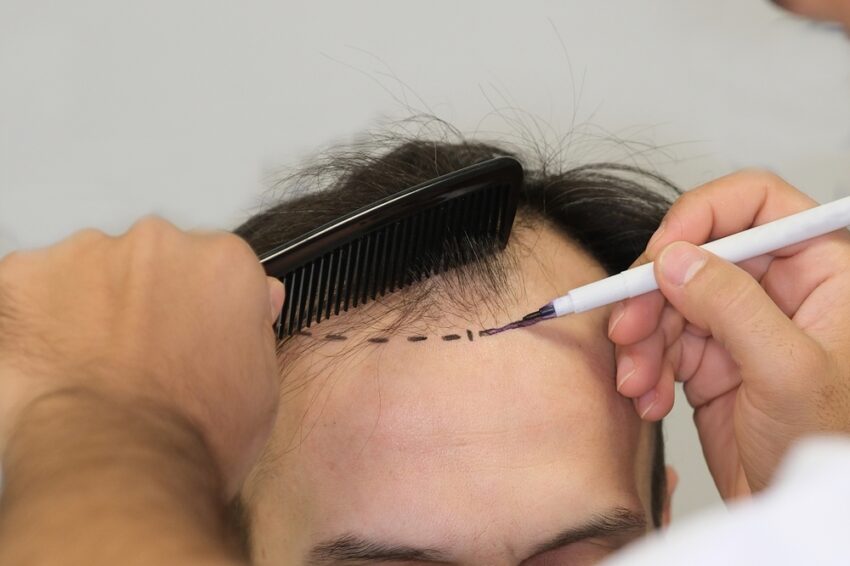
The decision to get a hair transplant is not a small one. It involves real money, real recovery time, and real expectations about how your life might look on the other side of the procedure.
When you add international travel into that equation, the stakes feel even higher. You are not just choosing a surgeon. You are choosing a country, a city, a clinic, a package, and a process that unfolds far from home.
This is exactly why hair transplant in Turkey has become such a popular choice for international patients. Turkey handles this beautifully for most visitors because the industry there is genuinely built around making people feel supported from the moment they land. But no amount of good infrastructure replaces proper preparation on your end. The patients who walk away with the best results and the smoothest experiences are almost always the ones who went in knowing what to expect.
Before you book your flights and confirm your procedure date, here are the ten most important things to understand.
1. Not All Clinics Operate at the Same Standard
Turkey has hundreds of hair transplant clinics, and they are not equal. Some are world-class facilities with highly trained surgeons who have performed thousands of successful procedures. Others are commercial operations where the surgeon you consulted is not necessarily the one performing your procedure, and where the priority is volume rather than outcomes.
The most important research you will do is clinic research. Look for verified before and after photos from real patients, read independent reviews on forums and international platforms, check whether the surgeon is named and verifiable, and ask directly who will be performing your procedure. A clinic that cannot answer that question clearly is already a red flag.
2. The Price Difference Is Real and Legitimate
One of the first questions people ask when they discover how affordable procedures are in Turkey is whether something must be wrong. The answer is no. The price difference exists because operating costs, wages, and the general cost of living in Turkey are substantially lower than in Western Europe or North America. A surgeon in Istanbul can charge a fraction of what a surgeon in London charges and still earn a very comfortable living.
Quality is not inherently tied to price when the economic context is different. Many Turkish surgeons have trained internationally, attend global conferences, and use the same equipment as their Western counterparts. The affordability is structural, not a signal of compromise.
3. FUE and DHI Are Not the Same Thing
Most Turkish clinics offer both FUE (Follicular Unit Extraction) and DHI (Direct Hair Implantation), and some also offer Sapphire FUE as a variation. These are meaningfully different techniques, and the right one for you depends on your specific scalp condition, hair loss pattern, donor area density, and goals.
FUE involves extracting individual grafts and creating recipient channels separately before implantation. DHI uses a specialized implant pen to place grafts directly without pre-made channels, which can offer more precision in angle and direction. Do not let a clinic choose your technique based purely on what they prefer to sell. Make sure the recommendation is based on a proper assessment of your individual case.
4. Your Donor Area Is Everything
The success of any hair transplant depends almost entirely on the quality and density of your donor area, which is typically the back and sides of your scalp. No matter how skilled the surgeon, they can only work with what your donor area provides. A patient with a dense, healthy donor area and moderate hair loss will almost always achieve better results than a patient with advanced loss and a depleted donor zone.
Before travelling, get an honest assessment of your donor area. A reputable clinic will tell you clearly how many grafts are available and whether your expectations are realistic. Be cautious of any clinic that promises dramatic coverage without properly evaluating your donor density first.
5. Timing Your Trip Requires Planning
Most patients who get a hair transplant spend between four and seven days in the country. The procedure itself typically takes one full day, depending on the number of grafts. The day after the procedure usually involves a follow-up wash at the clinic. After that, you are in the early stages of recovery, which means you should not be rushing through airports or sitting on long-haul flights immediately if you can avoid it.
Plan at least two to three rest days after your procedure before your return journey. Use that time to follow your postoperative care instructions carefully, stay out of direct sunlight, avoid any physical strain, and let the initial healing process begin properly. Rushing home too quickly is one of the most avoidable mistakes patients make.
6. The First Three Months Will Test Your Patience
This is perhaps the most important psychological preparation you can do before your procedure. After a hair transplant, the transplanted hairs will shed within the first two to six weeks. This is completely normal and expected. It is called shock loss and it does not mean the procedure failed. The follicles are still alive beneath the scalp and will begin producing new hair growth gradually.
Most patients start to see noticeable regrowth between months three and five. Significant results typically appear between months six and nine. Full results can take up to twelve to eighteen months to manifest. If you go into the procedure expecting to see a full head of hair within a few weeks, you will have an unnecessarily difficult experience. Go in understanding the timeline and the waiting becomes much easier to manage.
7. All-Inclusive Packages Need to Be Read Carefully
Turkish clinics are well known for their all-inclusive packages, and most of them are genuinely good value. However, the word inclusive can mean different things at different clinics. Some packages cover the procedure, accommodation, airport transfers, post-operative care kit, and follow-up consultations. Others might include the procedure and hotel, but charge separately for certain aftercare items or additional graft counts beyond a base number.
Read every package detail before you sign anything. Ask what happens if you need more grafts than initially estimated. Ask whether follow-up consultations after you return home are included. Ask about the accommodation standard. A good clinic will answer every one of these questions clearly and without hesitation.
8. Photographs Are Your Most Useful Consultation Tool
When you have your initial online consultation with a Turkish clinic, the quality of photographs you provide directly impacts the quality of advice you receive. Take clear, well-lit photos of your scalp from multiple angles, including the front hairline, top of the head, crown, and donor area at the back. Take them in natural daylight if possible.
Clinics that give you a detailed graft count estimate and technique recommendation based on a thorough photo review are demonstrating the kind of attention that carries through into the procedure itself. Clinics that give you a price quote without asking for photos at all should be approached with considerable caution.
9. Post Operative Care Is Not Optional
Your surgeon’s skill gets the grafts into your scalp. Your aftercare determines whether they survive and thrive. The first ten to fourteen days after a hair transplant are the most critical period for graft survival. During this time, you need to follow your clinic’s washing instructions precisely, sleep in the recommended position to avoid pressure on the grafts, avoid alcohol and smoking, stay away from swimming pools and direct sun exposure, and resist the urge to touch or scratch the treated area.
Most reputable Turkish clinics provide a detailed aftercare guide and a kit containing the products you need for the first week. Follow the instructions as if they are medical prescriptions because they are. Patients who cut corners on aftercare are the ones most likely to report disappointing results, and almost always, those results could have been prevented.
10. Your Lifestyle After Recovery Affects Long-Term Results
A hair transplant moves follicles from one area of your scalp to another, and the transplanted hairs are generally resistant to the DHT hormone that causes typical male pattern baldness. However, the native hairs surrounding your transplant are not protected in the same way. If your hair loss is progressive and you take no steps to address it medically, you could find yourself with a transplanted area that holds its hair while the surrounding native hair continues to thin.
Many surgeons recommend pairing a hair transplant with medical treatments such as finasteride or minoxidil to protect native hair and slow ongoing loss. This is not a sales pitch from the clinic. It is genuinely sound advice that protects your investment in the procedure. Discuss this openly during your consultation and make an informed decision about your long-term approach before you travel.
Go In Prepared, Come Out Confident
Turkey has earned its global reputation in hair restoration through consistent results delivered to patients who came prepared and chose their clinics wisely. The experience works when you treat it with the same seriousness you would give any significant medical procedure, because that is exactly what it is.
Do your research, ask the hard questions, understand the timeline, follow the aftercare, and protect your results over the long term. If you are still deciding where to begin that research, Dr. Serkan Aygin clinic offers free consultations with no pressure a straightforward way to get honest answers from one of the most experienced surgical teams in the country. Patients who do all of this almost universally look back on their decision as one of the best they ever made.

Large Cap’s share of total equity AUM has fallen in a straight line – 18.2% (Mar-21) → 16.6% (Mar-22) → 15.5% (Mar-23) → 13.4% (Mar-24) → 12.2% (Mar-25) → 11.4% (Mar-26). In absolute rupees, Large Cap AUM grew from ₹1,78,324 Cr to ₹3,66,045 Cr, so money didn’t leave – it just barely doubled while total equity AUM more than tripled (₹9,79,367 Cr to ₹31,97,698 Cr). Every other category’s share in the overall pie grew faster.
 Agencies
The ratio shift against Mid and Small Cap is the most striking way to visualise this. In March 2021, Mid Cap was just 0.65x the size of Large Cap, and Small Cap at a distant 0.39x. By March 2026, Mid Cap has crossed over at 1.14x Large Cap – bigger than Large Cap for the first time – and Small Cap has reached 0.91x, closing in fast. Year by year, this progression is relentless:
Agencies
Trend 2:
Sectoral/Thematic: Five years of dominance, one extraordinary year, and a sharp correction
Sectoral/Thematic AUM has grown nearly 5x from ₹98,080 Cr (Mar-21) to ₹4,77,309 Cr (Mar-26), with equity AUM share rising from 10.0% to 14.9% — a story of genuine secular growth. But the flow data tells a more nuanced story.
AgenciesThe annual flows: FY22: ₹27,128 Cr (16.5%) → FY23: ₹23,731 Cr (16.2%) → FY24: ₹46,138 Cr (25.1%) → FY25: ₹1,46,656 Cr (35.2%) → FY26: ₹29,975 Cr (8.6%). FY25 was the outlier — more than one rupee in every three going into equity mutual funds chose a sectoral or thematic fund. Three forces converged: India’s capex Supercycle gave credible narratives for infrastructure, defence and manufacturing launches; PSU re-rating attracted fresh money; and crucially, unlike most equity categories where SEBI permits only one scheme per fund house, there is no limit on sectoral and thematic fund launches.
FY26’s pullback to 8.6% of flows is the market’s verdict. Defence, PSU and manufacturing themes underperformed as valuations stretched and earnings upcycles disappointed. Redemptions followed losses. FY25 was a powerful reminder that NFO-driven surges built on narratives and not on earnings do reverse.
Trend 3:
Multi Asset Allocation Funds (MAAFs): From niche to essential, fuelled by gold and silver’s historic run
Multi Asset Allocation Fund (MAAFs) has been the single biggest structural winner in the entire hybrid segment over five years: from ₹14,795 Cr (Mar-21) to ₹26,591 Cr (Mar-23), and then an explosion to ₹1,73,762 Cr by Mar-26. Its share of hybrid AUM has surged from 4.1% (Mar-21) to 16.8% (Mar-26) — the largest positive shift of any hybrid sub-category. Net inflows tell the same story: FY22: ₹1,498 Cr → FY23: ₹6,070 Cr → FY24: ₹33,054 Cr → FY25: ₹34,786 Cr → FY26: ₹65,209 Cr.
AgenciesThe fuel for the growth of this category has been precious metals. Gold rose 21% in value in 2024 alone in INR terms, before surging a further ~55% in 2025. Because SEBI mandates MAAFs invest at least 10% each in equities, debt and commodities, these funds had built-in exposure to the precious metals rally. When equity markets struggled in late 2024 and 2025, the gold and silver allocation cushioned returns and made MAAFs standout performers. Multi-asset funds delivered an average return of 17.4% in 2025, even as equity markets struggled. Flows followed performance, and the changes in debt fund taxation in 2023 and 2024 removed indexation benefits, pushing investors toward alternatives — multi-asset funds quietly filled this gap.
TREND 4:
Overseas FOF: fighting regulatory handcuffs to capture a global market recovery
The story of overseas Fund of Funds in India is as much about regulation as it is about returns.
The AUM journey: ₹12,408 Cr (Mar-21) → ₹22,609 Cr (Mar-22) → ₹22,991 Cr (Mar-23) → ₹25,713 Cr (Mar-24) → ₹25,031 Cr (Mar-25) → ₹38,287 Cr (Mar-26). The flat line from Mar-22 to Mar-25 is not investor disinterest — it is the direct consequence of a regulatory wall. In January 2022, SEBI restricted mutual funds from accepting new investments in international funds as the industry breached the USD 7 billion limit. By April 2024, the USD 1 billion cap for overseas ETFs was also reached, leading to a complete ban on fresh inflows — no new lump-sum investments or SIPs permitted in most overseas equity schemes unless redemptions created room within the caps.
AgenciesThe flow data shows exactly what happened. FY22 saw strong inflows of ₹10,674 Cr as investors rushed into global markets. Then the gates closed: FY23 flows dropped to just ₹1,639 Cr, FY24 saw net outflows of ₹3,143 Cr, and FY25 was still negative at ₹2,065 Cr. Investors who wanted global exposure had essentially nowhere to go through the mutual fund route. Around 70 schemes in India focus on overseas investing, but their ability to accept new investments is constrained by industry-wide limits.
FY26 marks the first meaningful recovery: ₹4,826 Cr of net inflows, with acceleration clearly visible in monthly data — flows went from near-zero in the first half of FY26 (Apr–Jun 2025) to ₹962 Cr in September, ₹882 Cr in January 2026, and ₹904 Cr in February 2026. The trigger is performance, as the global and emerging market equity indices started recovering strongly — providing exactly the return differentiation that makes overseas diversification compelling for Indian investors. The AUM jumped from ₹25,031 Cr (Mar-25) to ₹38,287 Cr (Mar-26) in a single year — a 53% increase.
TREND 5:
SIP Book: A decade of compounding discipline, now crossing ₹32,000 Cr a month
March 2026 marked a watershed moment for Indian mutual funds: monthly SIP inflows crossed ₹32,087 Crore for the first time, setting an all-time high. This is not a one-month spike — it is the culmination of a decade-long structural shift in how India saves. Total SIP inflows for FY 2025-26 stand at ₹3,49,589 Crore — up 21% over FY25’s ₹2,89,352 Crore, and more than 8x the ₹43,921 Crore collected just ten years ago in FY 2016-17. The compounding of the SIP book itself has become one of Indian finance’s most reliable data stories.
AgenciesThe growth trajectory across fiscal years tells a clean story of acceleration: FY17: ₹43,921 Cr → FY18: ₹67,190 Cr → FY19: ₹92,693 Cr → FY20: ₹1,00,084 Cr → FY21: ₹96,080 Cr → FY22: ₹1,24,566 Cr → FY23: ₹1,55,972 Cr → FY24: ₹1,99,219 Cr → FY25: ₹2,89,352 Cr → FY26: ₹3,49,589 Cr. The only blip was FY21, when COVID disrupted household cash flows and many investors paused mandates. Every other year has been higher than the previous one.
The monthly data within FY26 is equally striking. April 2025 opened at ₹26,632 Cr — already higher than any single month before FY24. By September, inflows had crossed ₹29,000 Cr. December ’25 and January ’26 both touched ₹31,000 Cr. And March 2026 delivered the milestone: ₹32,087 Crore, the highest monthly SIP collection in the history of the Indian mutual fund industry. This was not driven by a single market event or an NFO surge — it reflects the quiet, persistent expansion of the SIP register, with new SIP registrations consistently outpacing discontinuations through FY26.
What makes this growth durable is its source. SIPs are not lump-sum market calls — they are standing instructions, auto-debited from bank accounts, renewed by inertia as much as by conviction. Once registered, most investors stay in. The expanding SIP book means the industry now enters every month with a guaranteed base of inflows that is structurally larger than the month before. At ₹32,000 Crore a month, the SIP run-rate alone exceeds the total equity inflows the industry used to see in an entire year as recently as FY17. India has built a savings machine — and it keeps getting larger.
AgenciesThe growth trajectory across fiscal years tells a clean story of acceleration: FY17: ₹43,921 Cr → FY18: ₹67,190 Cr → FY19: ₹92,693 Cr → FY20: ₹1,00,084 Cr → FY21: ₹96,080 Cr → FY22: ₹1,24,566 Cr → FY23: ₹1,55,972 Cr → FY24: ₹1,99,219 Cr → FY25: ₹2,89,352 Cr → FY26: ₹3,49,589 Cr. The only blip was FY21, when COVID disrupted household cash flows and many investors paused mandates. Every other year has been higher than the previous one.
The monthly data within FY26 is equally striking. April 2025 opened at ₹26,632 Cr — already higher than any single month before FY24. By September, inflows had crossed ₹29,000 Cr. December ’25 and January ’26 both touched ₹31,000 Cr. And March 2026 delivered the milestone: ₹32,087 Crore, the highest monthly SIP collection in the history of the Indian mutual fund industry. This was not driven by a single market event or an NFO surge — it reflects the quiet, persistent expansion of the SIP register, with new SIP registrations consistently outpacing discontinuations through FY26.
What makes this growth durable is its source. SIPs are not lump-sum market calls — they are standing instructions, auto-debited from bank accounts, renewed by inertia as much as by conviction. Once registered, most investors stay in. The expanding SIP book means the industry now enters every month with a guaranteed base of inflows that is structurally larger than the month before. At ₹32,000 Crore a month, the SIP run-rate alone exceeds the total equity inflows the industry used to see in an entire year as recently as FY17. India has built a savings machine — and it keeps getting larger.
TREND 6:
Market Share Shift — who gained, who lost, and what it says about where investors are moving their money
Total equity AUM more than doubled from ₹15,17,082 Crore in March 2023 to ₹31,97,698 Crore by March 2026 — a ₹16.8 lakh Crore expansion in three years. image.png
But this growth was deeply uneven across categories. Of the eleven equity sub-categories tracked by
AMFI, six gained market share, and five lost it. The divergence is not noise — it reflects a structural reallocation of investor preference that has been building since FY22 and is now clearly legible in the data.
The gainers: risk appetite moving up the curve. Sectoral and Thematic funds were the single biggest winners in equity, gaining 3.5 percentage points (pp) of share to reach 14.9% of equity AUM. Mid Cap (+1.0pp), Small Cap (+1.7pp), Multi Cap (+1.9pp), and Large & Mid Cap (+1.0pp) all gained ground — a consistent pattern of investors moving away from pure large-cap safety and toward higher-risk, higher-return mandates. Net inflows into these categories were substantial and deliberate: Mid Cap saw ₹1,10,898 Crore of net inflows over the period, Small Cap’s net inflows stood at ₹1,29,901 Crore. Crucially, in Mid Cap, 68% of the AUM growth came from mark-to-market appreciation — meaning investors who came in were rewarded, which in turn attracted more.
The losers: structural headwinds, not temporary underperformance. Large Cap lost 4.1 percentage points of equity AUM share — the steepest decline of any category — falling from 15.5% to 11.4%. This is not because Large Cap AUM shrank: it grew from ₹2,35,760 Crore to ₹3,66,045 Crore in absolute terms. But it grew far slower than the rest of the market. A significant reason is the persistent return gap: Large Cap funds as a category have struggled to beat their benchmark net of fees, making the case for passive alternatives increasingly compelling for the large-cap allocation. ELSS lost 3.2 percentage points, falling from 10.0% to 6.8% — a predictable consequence of the new tax regime removing the Section 80C deduction advantage that was historically the primary reason investors chose ELSS over other equity funds. Focused Fund shed 1.6 percentage points, reflecting lower new launches and investor preference for broader diversification mandates.
In a hybrid, the story is Multi-Asset Allocation’s dominance. Multi Asset Allocation Fund gained 11.2 percentage points of hybrid AUM share — from 5.6% to 16.8% — making it the single largest share shift of any category across both equity and hybrid segments. ₹1,28,309 Crore of net inflows in three years, against a base of just ₹26,591 Crore, tells you this was genuine new allocation, not just market appreciation. On the other side, the traditional hybrid anchors gave ground: Balanced / Aggressive Hybrid lost 9.7 percentage points, and Dynamic Asset Allocation / Balanced Advantage lost 11.2 percentage points — both categories that had been the default “one-stop” solution for moderate-risk investors, now facing competition from Multi Asset funds that offer a more complete, gold-inclusive mandate. Arbitrage Fund grew sharply in share (from 14.1% to 24.5%), but this is driven almost entirely by short-term institutional and HNI parking of money around tax-efficient liquid alternatives, not by retail conviction. Its MTM effect was negative at -₹14,460 Crore, confirming that the AUM growth is purely flow-driven.
AgenciesThe MTM data adds a further dimension to reading these share shifts. A high % Effect — the proportion of AUM growth coming from market returns rather than net inflows — tells you a category is being held more than it is being bought fresh. Mid Cap’s 68% MTM effect and Large Cap’s 36% MTM effect sit at opposite ends of this spectrum: Mid Cap investors were rewarded handsomely and stayed; Large Cap investors received less appreciation relative to the broader market, and many chose to redeploy elsewhere. The share shift is therefore not just a story about new money — it is also a story about where existing investors decided to stay.
(The author is Viraj Gandhi, CEO of Samco Mutual Fund)
MPLX: Upgrading To Bullish As The Gulf Coast Build-Out Meets The AI Power
New Draft Clue, Kenny Moore, Adam Thielen

Blue Origin uses a recycled rocket to launch satellite for AST SpaceMobile

ETFs that can beat VOO. Educational purposes only. NOT financial advice. #finance #etfinvesting


-
 NewsBeat7 days ago
Pep Guardiola and Gary Neville agree over Arsenal title problem that benefits Man City
-

 Crypto World6 days ago
The SEC Conditionalises DeFi Platforms to Be Avoided for Broker Registration
-

 Fashion2 days ago
Weekend Open Thread: Theodora Dress
-

 Politics7 days ago
World Cup exit makes Italy enter crisis mode
-

 Crypto World6 days ago
SEC Signals Exemption for Crypto Interfaces From Broker Registration
-

 News Videos4 days ago
Secure crypto trading starts with an FIU-registered
-

 Sports2 days ago
NWFL Suspends Two Players Over Post-Match Clash in Ado-Ekiti
-

 Crypto World5 days ago
SEC Proposes Certain Crypto Interfaces Don’t Need to Register as Brokers
-

 NewsBeat5 days ago
Trump and Pope Leo: Behind their disagreement over Iran war
-

 Politics2 days ago
Palestine barred from entering Canada for FIFA Congress
-

 Crypto World2 days ago
Russia Pushes Bill to Criminalize Unregistered Crypto Services
-

 Sports6 days ago
NWFL opens Pathway for new Clubs ahead of 2026 Season
-

 Crypto World6 days ago
Trump whales load up ahead of Mar-a-Lago luncheon.
-
 Business3 days ago
Creo Medical agree sale of its manufacturing operation
-
Business6 days ago
Kering slides after Morgan Stanley downgrade, Gucci woes loom
-
 Entertainment5 days ago
Brand New Day’ Footage Reveals the Devastating Impact of ‘Now Way Home’
-
 Crypto World7 days ago
Sei Network Enters Quiet Reset Phase as On-Chain Metrics Signal a Slowdown in 2026
-

 Tech6 days ago
Google adds E2E encryption to Gmail for iOS and Android enterprise users
-

 Politics3 hours ago
Zack Polanski demands ‘council homes not luxury flats for foreign investors’
-

 Tech6 days ago
Apple glasses won’t go brand shopping like Meta did with Ray-Ban and Oakley
You must be logged in to post a comment Login