
Business
Grey Owl Capital Management Q4 2025 Client Letter


Donny DBM/iStock via Getty Images

Expansion create opportunity. – Anonymous
Dear Client,
The Grey Owl All-Season Strategy’s objectives are to minimize drawdowns, outperform short-term bonds by several hundred basis points each year (i.e., beat “cash”), and participate meaningfully in risk-on rallies. For the full year 2025, GOAS returned +11.4% and met each of these objectives.
We are particularly pleased with the strategy’s 2025 performance given how the year began. While the popular “Magnificent 7 (MAGS)” group of stocks declined roughly -30% from its December 17, 2024 peak to the April 8, 2025 low 1 , the Grey Owl All-Season (GOAS) portfolio was down less than -3% at its worst point in early April. The rebound that followed was rapid, and the year ultimately proved strong for most risk assets. GOAS managed risk during the drawdown and then repositioned to participate as conditions turned risk-on.
A few specifics below on the present environment and our current positioning, but first a more detailed review of the performance of the “primary” asset classes. 2
For the full year 2025, gold gained +63.7%, global equities rose +22.4%, U.S. equities followed closely at +17.7%, commodities increased 5.9%, and long-dated U.S. Treasury bonds returned +4.3%.
During the fourth quarter of 2025, precious metals continued to shine, with gold up another +11.5%. U.S. equities gained +2.7%, while global equities performed slightly better at +3.3%. Commodities were essentially flat, up +0.4%, and long-dated U.S. Treasury bonds declined -1.0%. Over this period, GOAS delivered a respectable +2.4% return.
As 2026 gets underway, a more dramatic shift may be developing. In 2025, technology and growth outperformed the broader market (i.e., the Nasdaq beat the S&P 500, finishing up +20.8%), while small-capitalization stocks lagged, ending the year up +12.7%. 3 That dynamic has changed meaningfully during the first three weeks of 2026.
As of the close on January 23, 2026, the “Magnificent 7” group was down -3.6% from its October 29, 2025, high and -0.5% year-to-date. In contrast, small-capitalization equities and commodities are significantly outperforming, up +7.6% and +7.4% year-to-date, respectively. GOAS is aligned with these prevailing conditions and is up +5.3% through January 23, 2026.
In short, our diversified, risk-managed approach delivered solid double-digit returns in 2025 while avoiding major drawdowns during early-year volatility. Today, we are positioned for meaningful economic growth in the U.S. and much of the rest of the world. We believe conditions now favor cyclical outperformance and a broadening of equity participation. That means overweight exposure to commodities and smaller-capitalization equities. As the charts below indicate, this phase may only persist through the first half of 2026. For now, that is the prevailing condition regardless of how long it lasts. We are prepared to adjust as conditions evolve.
Economic Growth
Hedgeye’s real GDP projection model shows a reacceleration in growth gaining significant momentum in the first quarter and continuing through much of the second quarter. As growth has accelerated, cyclical equities and commodities have outperformed. While this acceleration continues, we expect risk assets to continue performing well.
Figure 1 – GDP Projections
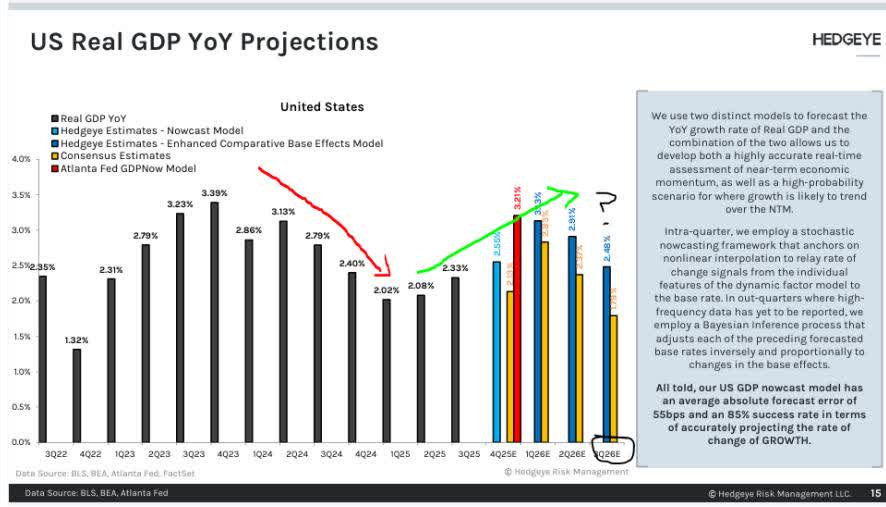
Economic growth is accelerating, which historically supports risk assets—particularly cyclical equities and commodities.
Inflation
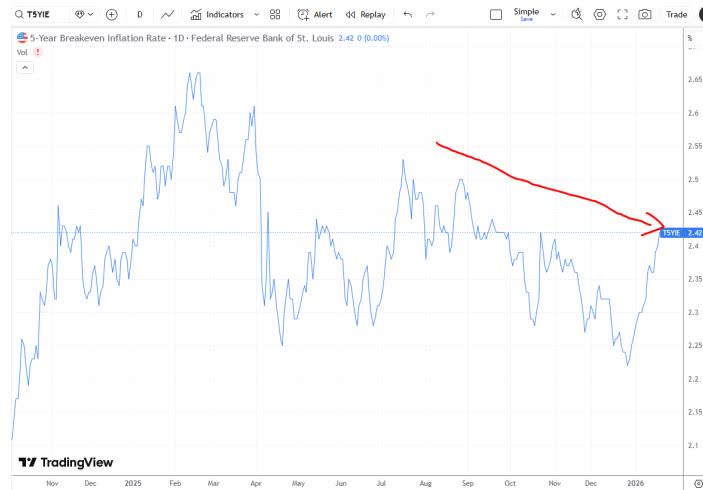
Inflation expectations have been decelerating for several quarters, as evidenced by the five-year breakeven spread—often referred to as “the market’s” inflation forecast.
Figure 2 -5-Year Breakeven
Hedgelye’s CPI model corroborates this trend, projecting continued disinflation through the second quarter of 2026, followed by only a modest seven-basis-point increase in the third quarter. Combined with accelerating growth, this backdrop is favorable for risk-taking.
Figure 3 – Inflation Projections
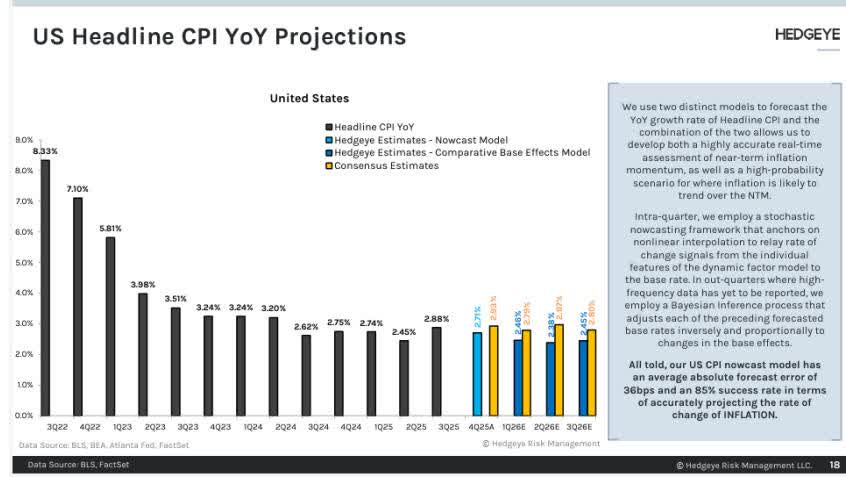
A key driver of lower inflation has been the price of oil—one of the few major commodities not yet firmly in a bull market.
Figure 4 -US Crude Oil Spot
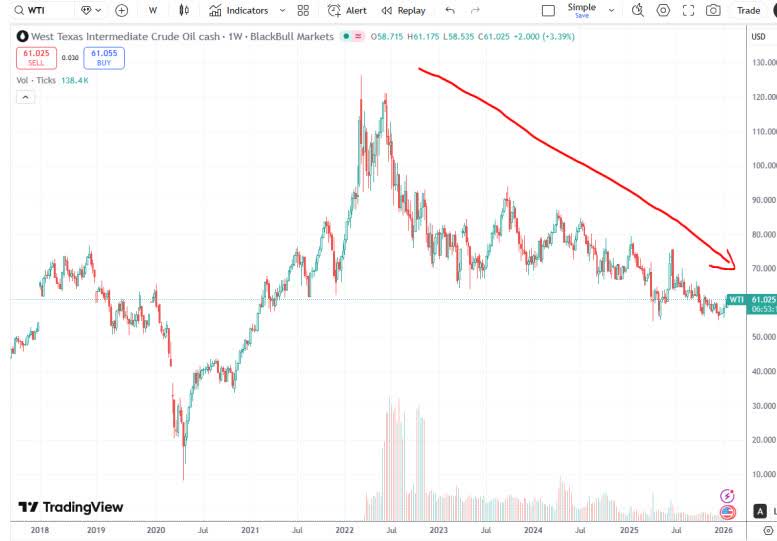
Inflation pressures remain contained, creating a favorable backdrop for risk-assets.
Broadening US Equity Market
While the broader macro environment—accelerating real growth alongside disinflation—is critical to the rally’s expansion, sector-level dynamics are also playing an important role. Mega-capitalization technology companies are now facing more difficult year-over-year comparisons, as cycle-peak artificial-intelligence capital expenditures may be behind us, pressuring both revenue growth and margins.
The opposite is true for much of the rest of the market, particularly smaller-capitalization and cyclical businesses. With easier comparisons to last year, both revenues and margins are improving.
Hedgeye data show that while S&P 500 earnings are expected to continue growing, a greater share of that growth is coming from the “other 493” stocks.
Figure 5 – Earnings Projections
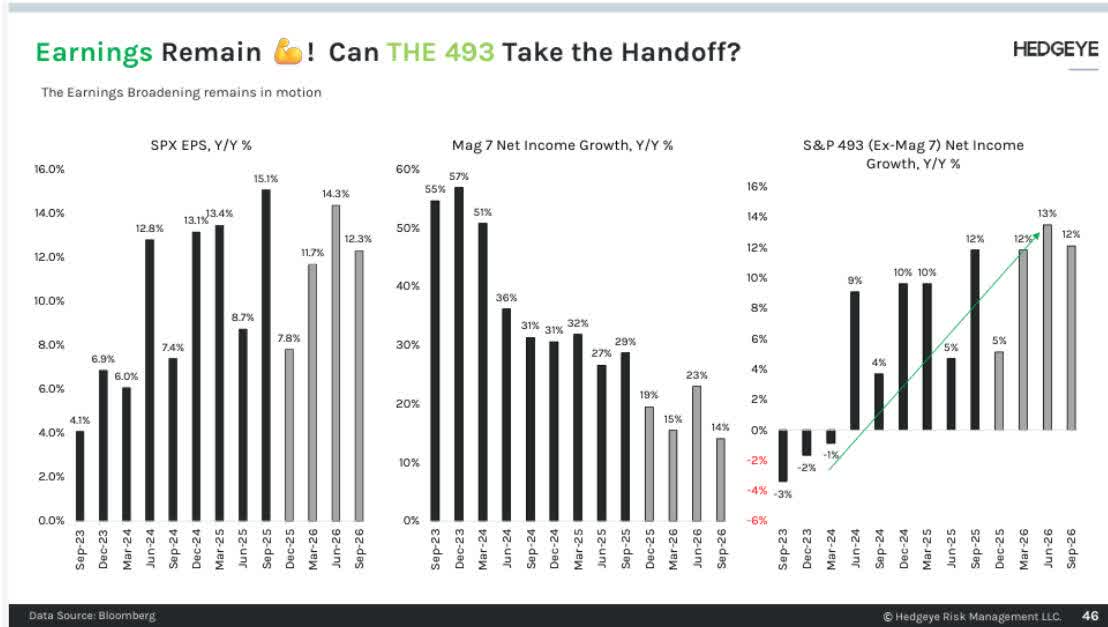
Market leadership is expanding beyond mega-cap technology, increasing opportunity across smaller and more cyclical companies.
Market Signals
Last quarter we wrote:
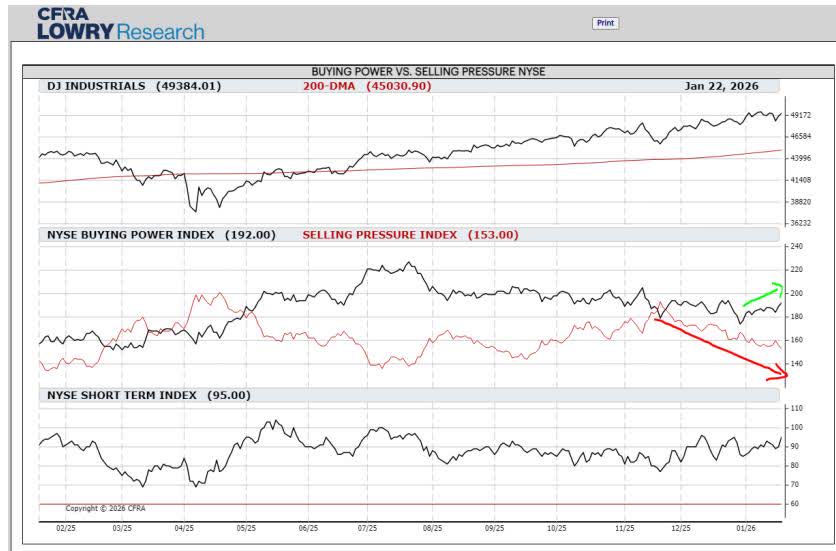
Market internals also point to change beneath the surface. While large-cap indices hit new highs in the third quarter, participation was narrow—signs of enthusiasm were limited. In October, that pattern began to broaden as Buying Power improved and Selling Pressure eased. With Buying Power still stronger overall, we do not see a shift toward a risk-off environment. Instead, the data suggest equity markets are transitioning as investors respond to—and anticipate—changes in growth and inflation, opening the door for new leadership among sectors and styles.
That improvement and broadening has continued. Selling Pressure is receding, and Buying Power shows further signs of strengthening.
Figure 6
More granular market data look even better. Lowry’s writes:
While many investors and the financial media are focused on the cap-weighted price indexes, the Lowry Analysis is predominantly centered on the full market on an equal weighted basis, which is dominated by smaller stocks. The reason for this is simple: the greater the number of stocks participating in a market advance and displaying promising Demand trends, the more difficult it is for sellers to take control of the market. While such features do not make the market impervious to pullbacks, recent evidence continues to mount in favor of a broad and durable advance. Still, we would like to see these improvements reflected in our longer-term measures of market health to solidify our conviction in the bulls further.
In their most recent weekly report, Lowry’s emphasized the dramatic increase in the percentage of stocks within 2% of their 52-week highs.
Figure 7
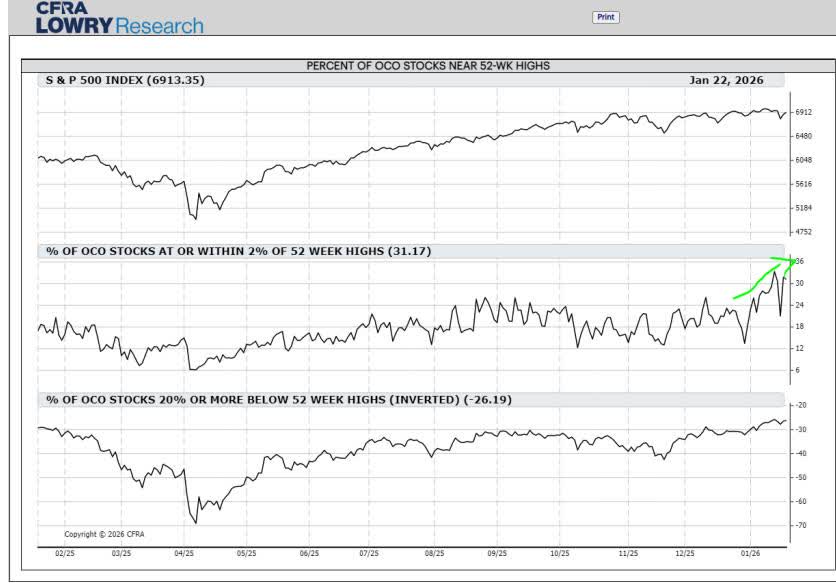
Explaining the chart, Lowry’s wrote:
One method to view how many stocks are carrying the performance load within the market is our measure of Demand intensity, or the Percent of OCO1 Stocks At or Within 2% of 52-Week Highs. This is one of the more sensitive indicators in our suite, and on January 15, it reached a one-year high of 33.36%. While this was an impressive development, the indicator moving above its multi-month range is perhaps even more important. It essentially reflects a change in character within demand intensity from good to great, as the OCO Index is dominated by smaller stocks. The more stocks that reach new highs, the stronger the market’s constitution ultimately becomes.
Market internals support the case for a broader, more durable advance.
Current Positioning
Our current portfolio remains balanced within an all-season framework but is more aggressive than when we last reported in October 2025. Since last quarter, we have increased exposure to U.S. small-capitalization equities, expanded global equity exposure—particularly in emerging markets—and added to precious metals and commodities. Fixed income and cash allocations declined from 28% to 16%.
Figure 8 – GOAS Allocation
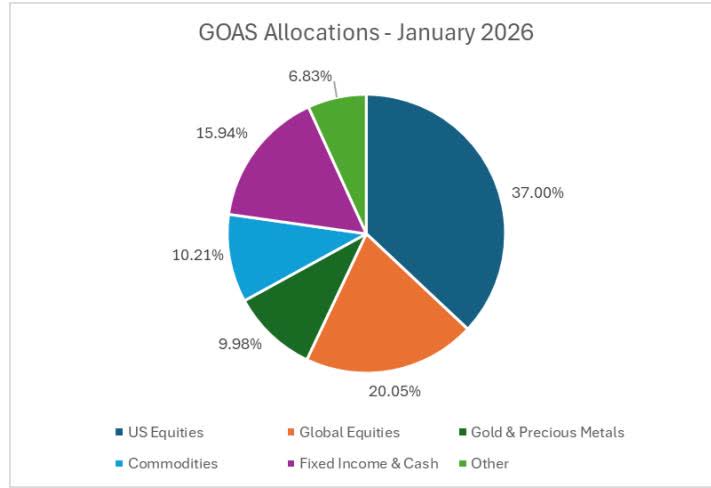
This positioning maintains meaningful protection against inflation or market stress while remaining tilted toward growth. This balance—rooted in our all-season philosophy and adjusted for present conditions—reflects our core belief: don’t try to predict the future; position with prevailing conditions while diversifying to enable success across many possible futures.
The portfolio remains balanced but is intentionally tilted toward growth.
As always, if you have any thoughts regarding the above ideas or your specific portfolio that you would like to discuss, please feel free to call us at 1-888-GREY-OWL.
Sincerely,
Grey Owl Capital Management
Editor’s Note: The summary bullets for this article were chosen by Seeking Alpha editors.

Business
Powerball Result April 18, 2026: No Jackpot Winner in Powerball Draw: $75 Million Rolls Over

DES MOINES, Iowa — The Powerball jackpot climbed to an estimated $75.8 million for the Saturday, April 18, 2026, drawing, but no ticket matched all six numbers, sending the grand prize rolling over for a bigger payday in the coming week.

The winning numbers drawn Saturday night were 24, 25, 39, 46 and 61, with the red Powerball landing on 1. The Power Play multiplier was 5x, boosting non-jackpot prizes for players who opted in. The cash value of the annuity jackpot stood at approximately $34.6 million before the drawing.
Officials confirmed there were zero jackpot winners, continuing a streak without a top-prize match that has allowed the prize to build steadily through recent drawings. The previous Wednesday, April 15 drawing carried an estimated $58 million jackpot with numbers 13, 21, 27, 43 and 45 and Powerball 26, also without a grand-prize winner.
Powerball drawings occur three times weekly — Monday, Wednesday and Saturday — at approximately 10:59 p.m. Eastern Time from the Multi-State Lottery Association headquarters in Des Moines. Tickets cost $2, or $3 with the Power Play option, and are sold in 45 states, the District of Columbia, Puerto Rico and the U.S. Virgin Islands.
While the massive jackpot went unclaimed, thousands of players still walked away with smaller prizes. According to preliminary data from the Multi-State Lottery Association, there were two winners of the $1 million Match 5 + Powerball prize in the base game, each boosted to $2 million with the 5x Power Play multiplier. Additional Match 5 prizes without the Powerball also paid out at $50,000, with Power Play versions at $250,000.
Lower-tier prizes ranged from $4 for matching just the Powerball up to $100,000 or more depending on the combination and Power Play selection. Full prize breakdowns and exact winner counts by state were expected to be finalized and released in the coming days as retailers and lottery commissions process claims.
The April 18 drawing came amid steady interest in the game, with ticket sales typically surging when jackpots exceed $50 million. Players across the country lined up at convenience stores, gas stations and lottery retailers hoping for a life-changing score. Social media platforms buzzed with shared ticket photos and optimistic predictions before the draw, followed by groans and memes after the numbers were announced.
For those holding tickets, verification is straightforward through official lottery apps, websites or retailers. Any jackpot claim must be made in the state where the ticket was purchased, with winners often given the choice between the annuity paid over 30 years or a lump-sum cash option, which is significantly lower due to taxes and present-value calculations.
Powerball has produced some of the largest lottery jackpots in U.S. history, including the record $2.04 billion prize won in California in 2022. The game’s format — five white balls from a pool of 69 and one red Powerball from 26 — creates long odds for the top prize at roughly 1 in 292.2 million. Despite those odds, the dream of instant wealth continues to draw millions of hopeful participants each week.
Lottery officials emphasize responsible play and remind participants that the game is designed for entertainment. The Multi-State Lottery Association and individual state lotteries direct a significant portion of proceeds to public education, infrastructure, veteran programs and other state-specific initiatives. In many states, lottery revenue has become a vital funding source without raising taxes.
As the jackpot rolls over, expectations are building for the next drawing on Monday, April 20, 2026. Analysts tracking lottery trends suggest the prize could approach or exceed $100 million if ticket sales remain strong, potentially creating even greater excitement among players nationwide. Historical patterns show that jackpots in the $75 million to $150 million range often generate substantial buzz without reaching the frenzy of billion-dollar levels.
The absence of a winner on April 18 marks another chapter in Powerball’s long history of dramatic rollovers and eventual massive payouts. Past big jackpots have transformed ordinary lives, with winners ranging from schoolteachers and factory workers to retirees who suddenly gained financial freedom. Stories of winners choosing to remain anonymous or stepping forward to share their good fortune frequently make national headlines.
In the meantime, players who matched fewer numbers can still celebrate modest wins. A single Powerball match with Power Play 5x typically pays $10, while four white balls plus the Powerball can yield $10,000 or $50,000 depending on the multiplier. These smaller victories help sustain player engagement between the rare jackpot hits.
For international audiences or those in non-participating areas, online lottery platforms and news outlets provide real-time updates, though actual ticket purchases remain restricted to authorized U.S. jurisdictions. In places like South Korea, where interest in American lotteries runs high among some expat communities and global dreamers, the latest results were quickly shared via social media and lottery tracking sites.
The April 18 drawing also featured the optional Double Play add-on in participating states, offering a second chance at prizes with a separate set of numbers: 2, 38, 45, 53 and 63 with Double Play Powerball 21. While not as lucrative as the main game, Double Play provides additional excitement and winning opportunities for a small extra cost.
Lottery experts note that consistent small plays over time rarely outperform random chance, yet the communal aspect of discussing numbers with friends, family or coworkers adds to the game’s appeal. Strategies such as quick picks versus personally chosen numbers, or avoiding popular combinations like birthdays, are frequently debated but ultimately have no statistical edge in a truly random draw.
As Sunday, April 19, 2026, dawned with no new multimillionaire from the previous night’s draw, conversations turned to the next opportunity. Convenience store clerks reported steady morning-after traffic from players checking tickets or purchasing fresh ones for Monday’s drawing. In states with high sales volumes like California, Florida, New York and Texas, the rollover news fueled additional optimism.
Powerball remains one of America’s most recognizable lottery games, competing with Mega Millions for the title of the biggest jackpot provider. While neither guarantees success, both deliver regular doses of hope and occasional windfalls that capture the public imagination.
Players are encouraged to check their tickets carefully and claim prizes promptly, as unclaimed winnings eventually revert to state lottery funds after varying periods. For the April 18 drawing, any second-tier prizes must be claimed according to each state’s rules, typically within 180 days to one year.
With the jackpot now reset higher, anticipation is already building for Monday night. Whether the next draw produces another rollover or finally crowns a winner, Powerball continues to offer a simple, affordable escape into the realm of possibility for millions.
In an era of economic pressures and global uncertainties, the allure of a multimillion-dollar jackpot provides a momentary distraction and a shared cultural experience. For now, the $75.8 million prize from April 18 will fuel dreams for a few more days until the balls tumble again and new numbers emerge.
Anyone holding a ticket from the April 18 drawing should verify it immediately through official channels. And for those already planning their next play, the message from lottery officials remains consistent: play responsibly, have fun and remember that the true value often lies in the excitement rather than the outcome.
Business
(VIDEO) Billie Eilish Joins Justin Bieber Onstage at Coachella 2026 in Viral Surprise Moment

INDIO, California — Billie Eilish made a memorable appearance at the Coachella Valley Music and Arts Festival on Saturday night during Weekend 2, stepping onto the main stage as a surprise guest for headliner Justin Bieber.

AFP
The pop superstar joined Bieber for an emotional performance of his early hit “One Less Lonely Girl,” turning the desert night into one of the most talked-about moments of the 2026 festival. Video clips of the duet spread rapidly across social media, with fans praising the chemistry between the longtime friends and noting Eilish’s history of Coachella cameos.
Eilish was not listed on the official Coachella 2026 lineup as a scheduled performer or headliner. The festival’s announced headliners for both weekends were Sabrina Carpenter, Justin Bieber and Karol G, with additional high-profile sets from acts including Anyma, the Strokes, the XX and others. Eilish’s appearance fell squarely in the festival’s rich tradition of unannounced guest spots that often generate the biggest buzz.
The moment occurred during Bieber’s headlining set on the Coachella Stage late Saturday evening, April 18, for Weekend 2. Bieber invited Eilish out as his “One Less Lonely Girl,” a playful nod to the song’s lyrics and a callback to fan requests. Eilish, dressed casually in her signature oversized style, sang along and shared the spotlight with Bieber in a heartfelt, stripped-down rendition that had the crowd singing every word.
This marks the latest chapter in Eilish’s long relationship with Coachella. She first performed at the festival in 2019 as a rising artist. In 2022, at age 20, she became the youngest solo artist ever to headline the event. Subsequent years saw her return as a guest: joining Labrinth in 2023, Lana Del Rey in 2024, and Charli xcx in 2025. Her 2026 appearance with Bieber continues that streak of annual involvement, even in years when she does not have a full set.
Festival organizers have not released official statements on the guest spot, but footage captured by attendees and shared on platforms including Instagram, TikTok and YouTube quickly went viral. Clips showed Eilish waving to the massive crowd under the desert lights while Bieber serenaded her with the throwback track. Fans described the moment as “wholesome,” “iconic” and “long overdue,” with many calling for a full collaboration between the two artists in the future.
Coachella 2026 ran across two weekends — April 10-12 and April 17-19 — at the Empire Polo Club in Indio. The event sold out rapidly after the lineup announcement in September 2025. While the core schedule featured established stars and emerging acts, surprise guests have become a hallmark of the festival, often elevating sets and creating shareable memories that extend far beyond the grounds.
Bieber’s full set included other high-profile collaborations. Weekend 1 featured appearances by The Kid Laroi, Dijon, Tems, Wizkid and Mk.gee. Weekend 2 added Sexyy Red, Big Sean, Dijon and SZA alongside Eilish. The inclusion of multiple guests highlighted Bieber’s ability to draw in friends and peers for dynamic live performances.
Eilish, who released her third studio album “Hit Me Hard and Soft” in 2024 and has continued touring and creating new work, has maintained a relatively low public profile in early 2026. Her Coachella appearance provided fans a rare live glimpse amid ongoing speculation about future projects, including a possible film adaptation tied to her recent music.
Social media reactions poured in immediately. Hashtags such as #Bieberchella, #BillieAtCoachella and #OneLessLonelyGirl trended worldwide. Many noted the full-circle nature of the moment, referencing Eilish’s first meeting with Bieber at Coachella in 2019. Others highlighted how the surprise aligned with Eilish’s pattern of popping up at the festival without a billed slot.
Critics and festival watchers described the 2026 edition as continuing Coachella’s evolution toward a mix of pop dominance, electronic innovation and heritage rock acts. Sabrina Carpenter’s energetic Friday headlining sets drew praise for their theatrical production, while Karol G’s Sunday performances celebrated Latin music’s growing footprint at the event. Bieber’s Saturday slots, bolstered by guests like Eilish and SZA, delivered the emotional and nostalgic highs many attendees sought.
For those unable to attend in person, Coachella offered livestream coverage on YouTube, allowing global fans to witness Eilish’s cameo in real time or replay. The official Coachella app and website provided set times and stage information, though surprise appearances by nature remained unlisted until they unfolded.
Eilish’s participation, even as a guest, underscores her enduring connection to the festival that helped launch her to global stardom. At just 24 years old in 2026, she has already achieved milestones few artists reach in a lifetime, including multiple Grammy wins, Oscar nominations and record-breaking streams. Her willingness to return year after year — whether headlining or supporting friends — speaks to the special place Coachella holds in her career.
Industry observers note that such guest appearances often boost visibility for both the headliner and the surprise artist. Clips of Eilish and Bieber performing together are expected to drive streams for “One Less Lonely Girl” and remind audiences of Eilish’s versatile live presence. Some speculated the moment could foreshadow future joint projects, given their longstanding friendship and mutual admiration.
As the final day of Coachella 2026 wrapped up on Sunday, April 19, with Karol G closing the festival, conversations continued to center on the standout surprises. Eilish’s appearance ranked among the most discussed, alongside other guest moments that added unpredictability to the tightly produced event.
Coachella has long balanced its reputation as a trendsetting music and arts gathering with its role as a cultural phenomenon. Fashion, installations, and celebrity sightings complement the music, but nothing captures attention quite like an unannounced star stepping into the spotlight. Billie Eilish’s turn with Justin Bieber delivered exactly that — a spontaneous, joyful intersection of two generational talents under the desert sky.
While Eilish did not perform a full set or headline in 2026, her guest appearance answered the question many fans had been asking in the lead-up to the festival. She was indeed at Coachella, delighting crowds and creating another lasting memory in her festival legacy.
As videos continue to circulate and fans dissect every moment, the 2026 edition will likely be remembered in part for this unexpected yet perfectly fitting collaboration. Whether Eilish returns in future years remains to be seen, but her 2026 cameo reaffirmed that at Coachella, the biggest moments often come from the least expected places.
For now, attendees and online viewers alike are left with the image of Billie Eilish smiling onstage beside Justin Bieber, proving once again that the festival’s magic lies in its ability to bring artists together in unforgettable ways.
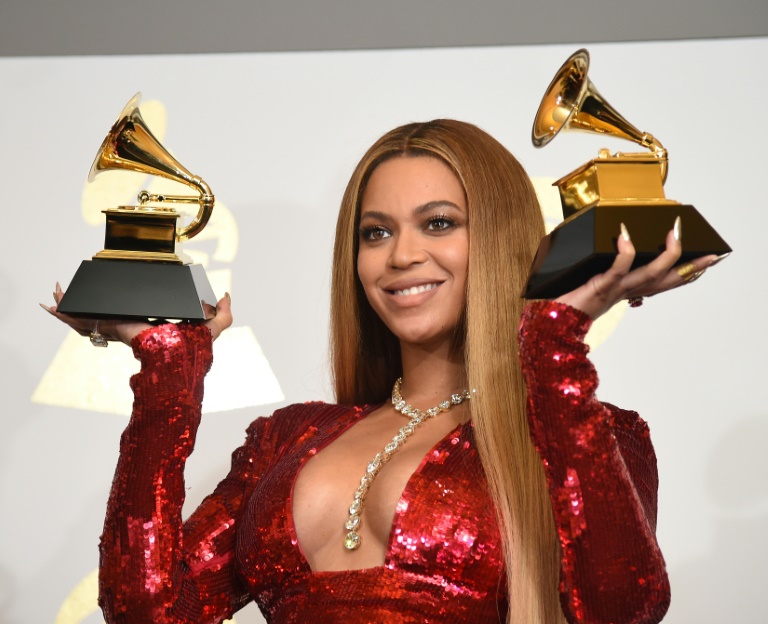
INDIO, California — Beyoncé did not perform at the Coachella Valley Music and Arts Festival in 2026, despite ongoing fan speculation and nostalgia for her landmark 2018 headlining sets that famously earned the event the nickname “Beychella.”

AFP
The 2026 edition, celebrating its 25th anniversary at the Empire Polo Club, featured headliners Sabrina Carpenter, Justin Bieber and Karol G across two weekends from April 10-12 and April 17-19. Beyoncé’s name appeared nowhere on the official lineup released in September 2025, and no surprise guest appearance materialized during the sold-out event that wrapped Sunday.
Festival organizers and representatives for Beyoncé have not issued statements explaining her absence, but industry sources and her recent activity point to a packed professional calendar and a deliberate focus on other projects. Following the release of her 2024 album “Cowboy Carter,” which explored country music roots while breaking multiple records, Beyoncé has been deeply involved in touring, film work and expanding her business empire.
Beyoncé last headlined Coachella in 2018, delivering a groundbreaking two-hour performance that celebrated Black culture, historically Black colleges and universities, and featured a Destiny’s Child reunion along with appearances by Jay-Z and Solange. The set, which drew record livestream viewership, is widely regarded as one of the greatest festival performances ever and led many to call the event Beychella. She had been scheduled to headline in 2017 but postponed due to her pregnancy with twins.
Eight years later, fans on social media continued to reference that iconic weekend while wondering why the global superstar did not return. Some speculated she might make a surprise cameo during one of the 2026 headliner sets, especially given Coachella’s tradition of high-profile guest appearances. However, the festival proceeded without her, relying instead on fresh headliners making their debut in the top slot and a diverse undercard that included The Strokes, The xx, Anyma, Young Thug and others.
Beyoncé’s decision to sit out 2026 appears tied to strategic career timing. After “Cowboy Carter” dominated charts and awards conversations, she has been linked to multiple film and television projects, including rumored acting roles and production work. A Netflix documentary tied to her past performances and ongoing Renaissance-era content has kept her in the public eye without requiring new live festival commitments.
Touring demands also play a significant role. Beyoncé’s previous world tours have been massive productions requiring months of preparation, choreography and logistics. Headlining Coachella again would demand another elaborate, high-stakes show — something she has historically approached with near-perfect execution. Sources close to her camp suggest she prefers to deliver full-scale experiences rather than abbreviated festival sets, especially after setting such a high bar in 2018.
Additionally, Beyoncé has increasingly prioritized controlled environments for her live performances, such as stadium residencies or curated tours, where she can maintain creative oversight from start to finish. Coachella’s outdoor desert setting, variable weather and compressed production timeline may not align with her current vision for presenting new material or revisiting classics.
Fan discussions on platforms like Reddit and X reflected mixed feelings. Many expressed disappointment at missing a potential return, noting that Beyoncé’s 2018 performance raised the bar for festival headliners and inspired subsequent artists to deliver more theatrical, culturally resonant sets. Others respected her choice to step back, arguing that her legacy at the festival is already secure and that forcing another appearance could risk diluting its impact.
Coachella 2026 moved forward successfully without her. Sabrina Carpenter brought youthful energy and theatrical flair to her Friday headline slots, Justin Bieber delivered nostalgic hits with several guests on Saturday, and Karol G made history as the first Latina headliner on Sunday. Surprise appearances throughout the weekends kept attendees engaged, but none involved Beyoncé.
The absence highlights how festival lineups evolve. While Beyoncé’s 2018 triumph made her synonymous with Coachella for a generation, the event has continued to spotlight new stars and diverse genres. This year’s focus on pop, Latin music and electronic acts reflected shifting audience interests and Goldenvoice’s strategy to keep the festival fresh after 25 years.
Beyoncé remains one of the most influential artists in music, with a career that spans more than two decades of chart-topping albums, groundbreaking visuals and cultural moments. Her business ventures, including Ivy Park, Parkwood Entertainment and various endorsements, keep her schedule full. Recent years have also seen her emphasize family time alongside her three children with Jay-Z.
For those hoping to experience Beyoncé live, her touring history suggests future opportunities. While no 2026 Coachella set occurred, fans point to possible stadium shows or a continuation of her act-focused projects. Ticket platforms showed limited or no immediate 2026 concert dates listed in some regions, indicating she may be in a strategic planning phase rather than active road work.
Social media buzz around Coachella 2026 frequently looped back to Beyoncé through throwback clips of Beychella. Hashtags mixing #Beychella and #Coachella2026 trended periodically, with users sharing highlights from 2018 alongside wishes for a return. The conversation underscored her enduring cultural footprint even in years when she is not physically present.
Industry analysts note that superstars like Beyoncé often space out major festival appearances to preserve their rarity and impact. Repeating a headline slot too soon can feel redundant, especially after a performance as definitive as hers in 2018. Instead, her team appears focused on innovation across multiple platforms — music, film, fashion and entrepreneurship.
As the final day of Coachella 2026 concluded with Karol G’s set, the desert festival delivered memorable moments without relying on past icons. Yet the shadow of Beychella lingered, reminding everyone of the standard she set for live excellence. Whether Beyoncé returns in future years remains an open question that fuels anticipation.
For now, her absence from the 2026 bill stems from a combination of timing, creative priorities and a full slate of other commitments. Beyoncé has built a career on doing things on her own terms, and skipping this year’s Coachella fits that pattern of deliberate, high-impact choices rather than constant availability.
Fans disappointed by the lack of a new desert performance can revisit the 2018 Netflix documentary “Homecoming,” which captured the preparation and execution of Beychella in intimate detail. The film stands as a testament to her work ethic and vision, offering a behind-the-scenes look that many consider essential viewing.
As music festivals continue evolving, Beyoncé’s influence persists through the artists she has inspired and the expectations she raised. Coachella 2026 proved the event can thrive with a new generation of headliners, but conversations about the Queen’s potential return are likely to surface again when the 2027 lineup discussions begin.
In the end, Beyoncé’s non-participation in 2026 does not diminish her legendary status at the festival — it simply leaves the door open for another historic moment whenever she chooses to step back into the Indio spotlight on her schedule.

Trust has become one of the most valuable and fragile assets in the digital economy.
As online platform businesses continue to scale, they are no longer just connecting users—they are responsible for maintaining environments where authenticity, safety, and reliability are expected as a baseline. The challenge is that the tools used to deceive are evolving just as quickly as the platforms themselves.
Recent data highlights the scale of the issue. Tens of thousands of individuals fall victim to online scams each year, with financial losses reaching hundreds of millions of dollars. These are not isolated incidents but indicators of a broader structural problem. As platforms grow, so does their exposure to fraudulent activity, making trust and verification systems central to long-term sustainability.
The Expanding Threat Landscape
Modern online platform businesses operate in a far more complex threat environment than they did even a few years ago. Traditional scams have not disappeared, but they have become more sophisticated. Fraudsters now use automation, data scraping, and artificial intelligence to create convincing identities at scale.
AI-generated images, realistic messaging patterns, and coordinated fake profiles have significantly lowered the barrier to entry for malicious actors. What once required time and effort can now be executed rapidly and repeatedly. This shift has widened the gap between what users can detect and what scammers can produce.
As a result, even cautious users can struggle to distinguish between legitimate interactions and engineered deception. For platform operators, this creates both a technical and reputational challenge that cannot be ignored.
Why Verification Is No Longer Optional
Verification has shifted from being a value-added feature to a core business requirement. Platforms that fail to implement effective identity checks risk eroding user confidence over time.
Basic verification methods, such as email or phone confirmation, are no longer sufficient on their own. More advanced approaches—including biometric checks, document validation, and behavioral analysis—are becoming standard in higher-risk environments. These systems help ensure that users are who they claim to be, reducing the likelihood of large-scale fraud.
At the same time, verification must be carefully integrated into the user experience. Processes that are too complex can discourage legitimate users, while weak systems create vulnerabilities. The most effective platforms strike a balance by embedding verification seamlessly into the onboarding and usage flow.
The Business Cost of Losing Trust
Trust directly influences user retention, engagement, and revenue. When users feel unsafe or uncertain, they are far more likely to disengage or move to competing platforms.
The cost of fraud extends beyond direct financial losses. Platform businesses must also manage customer support, dispute resolution, and long-term reputational damage. In competitive markets, even a small decline in perceived safety can significantly impact growth.
This risk is particularly pronounced in specialized ecosystems, including sugar daddy websites, where user expectations around authenticity and discretion are already high. In these environments, trust is not just a feature—it is a core part of the product experience.
Behavioral Signals and Proactive Detection
Modern platforms are increasingly relying on behavioral data to detect suspicious activity. Instead of focusing solely on identity at the point of registration, systems now monitor how users interact over time.
Patterns such as rapid messaging, inconsistent communication styles, or attempts to move conversations off-platform can indicate potential fraud. Machine learning models can analyze these behaviors at scale, identifying anomalies that would be difficult to detect manually.
This shift toward proactive detection allows platforms to intervene earlier, often before users are exposed to significant risk. It represents a move from reactive moderation to continuous monitoring and prevention.
The Role of User Awareness
While platform-level safeguards are essential, user awareness remains an important layer of defense. Many scams rely on psychological tactics, including urgency, emotional manipulation, and trust-building strategies.
Providing users with clear guidance on safe practices can reduce vulnerability. Transparent reporting tools and visible safety features also encourage users to act quickly when something feels suspicious.
However, responsibility should not fall entirely on users. The most effective approach combines strong platform infrastructure with informed user behavior, creating multiple layers of protection.
Building Systems for Identity Fraud Prevention
Effective identity fraud prevention requires a combination of technology, policy, and design. No single solution is sufficient on its own. Instead, platforms must build integrated systems that address multiple points of vulnerability.
This includes strong onboarding verification, continuous behavioral monitoring, clear reporting mechanisms, and consistent enforcement policies. Regular updates to detection systems are also necessary to keep pace with evolving threats.
Platforms that invest in these areas are better positioned to maintain user trust and reduce long-term risk. More importantly, they create environments where genuine users can interact with confidence.
What the Future Demands from Platform Businesses
As digital interactions continue to expand, expectations around safety and trust will only increase. Users are becoming more aware of risks and less tolerant of platforms that fail to address them effectively.
Future-ready platform businesses will need to treat trust as a core part of their strategy, not just a compliance requirement. This means investing in better verification systems, improving transparency, and maintaining accountability in how risks are managed.
At the same time, regulatory pressure is likely to grow. Governments and industry bodies are beginning to set clearer standards for user protection, which will further shape how platforms operate and scale responsibly.
Conclusion
Trust is no longer a passive outcome of platform growth—it is an active responsibility. In a landscape where fraud tactics are becoming more advanced, verification systems are not optional enhancements but essential infrastructure.
Online platform businesses that prioritize trust and invest in strong verification processes are more likely to retain users, protect their reputation, and sustain long-term growth. Those that fail to adapt risk losing both credibility and market position.
Ultimately, success in the modern digital economy will depend not just on how many users a platform attracts, but on how effectively it creates an environment where those users feel secure, verified, and confident in every interaction.
FAQ
Why is trust important for online platform businesses?
Trust directly affects user retention and engagement. When users feel safe, they are more likely to stay active and continue using the platform.
What are the most common risks on online platforms?
Fake profiles, identity fraud, financial scams, and AI-generated content are among the most common risks users face today.
How can platforms improve verification systems?
Platforms can combine document checks, biometric verification, and behavioral monitoring to create stronger identity validation systems.
Is verification enough to stop fraud completely?
No system can eliminate fraud entirely, but strong verification significantly reduces the likelihood and impact of fraudulent activity.
What role do users play in maintaining platform safety?
Users help by recognizing warning signs, avoiding suspicious interactions, and using platform reporting tools when necessary.

Kuwait detained US-Kuwaiti journalist over war posts, CPJ says
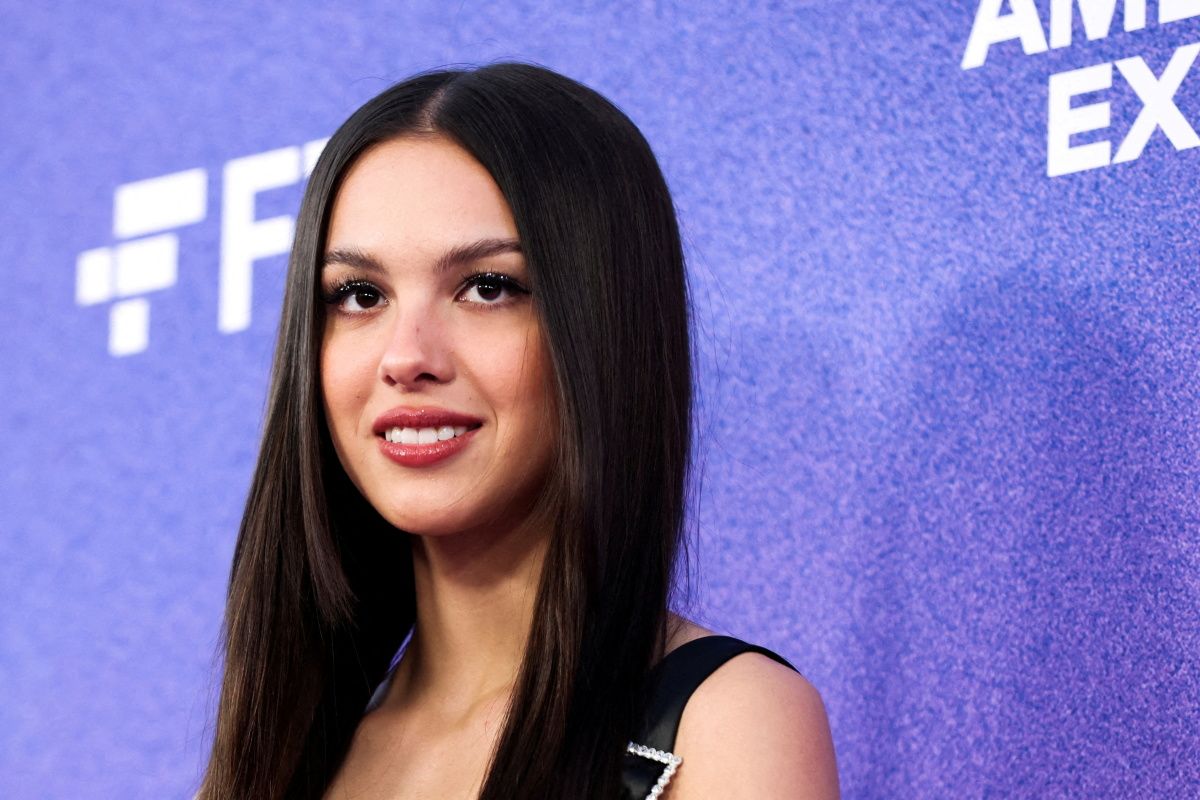
INDIO, California — Coachella 2026 wrapped its 25th anniversary run on April 19 with headliners Sabrina Carpenter, Justin Bieber and Karol G delivering memorable sets, yet many global superstars were conspicuously absent from the Empire Polo Club stages despite fan speculation and past appearances.
The sold-out festival featured a mix of pop, electronic, indie and Latin acts, including The Strokes, The xx, Young Thug, Addison Rae and Anyma, along with surprise guests like Becky G and Lizzo. However, several of music’s biggest names did not perform, either due to scheduling conflicts, strategic career choices, booking decisions or ongoing controversies. Here is a look at 10 superstars who sat out Coachella 2026 and the reasons behind their absence.
1. Beyoncé
Beyoncé, whose 2018 headlining performance famously dubbed the event “Beychella,” did not return this year. Following the massive success of her 2024 album “Cowboy Carter,” the superstar has focused on film projects, business ventures and family time. Insiders say she prefers full-scale stadium productions over festival sets after setting an exceptionally high bar eight years ago. No surprise appearance materialized despite nostalgia-fueled social media buzz.
2. Kanye West (Ye)
Kanye West offered to perform for free but was reportedly declined by organizers. His history of controversial statements has made festivals cautious, as seen with the cancellation of his headlining slot at Wireless Festival in the UK due to sponsor pullouts. West has instead focused on his own 2026 comeback shows, including sold-out dates at SoFi Stadium, avoiding the potential risks associated with Coachella’s broad audience and sponsor environment.
3. Taylor Swift
Taylor Swift, one of the world’s highest-grossing touring artists, was never rumored for 2026 but remains a perennial fan wish. Her Eras Tour concluded in late 2024, and she has kept a relatively low profile in 2025-2026 while working on new music and personal projects. Swift’s stadium-scale productions rarely align with festival schedules, and she has not performed at Coachella since early career guest spots.
4. Drake
Drake, a frequent festival headliner in past years, skipped Coachella 2026 amid his ongoing legal and personal matters. The Canadian rapper has prioritized selective arena tours and his OVO label projects. Booking sources indicate his demanding production requirements and recent public feuds made a desert appearance less likely this cycle.
5. Bad Bunny
Bad Bunny, a Latin music powerhouse, did not appear despite Karol G’s historic headlining slot as the first Latina in that role. The Puerto Rican star has been selective with live dates following his 2025 world tour, focusing instead on acting roles and new album preparation. Coachella 2026 featured strong Latin representation but no música mexicana acts due to reported visa issues affecting several high-profile bookings.
6. Ariana Grande
Ariana Grande, fresh from Broadway success and recent music releases, opted out of festival circuits in early 2026. Her ethereal stage productions and vocal demands often lead her to choose controlled environments over outdoor multi-act bills. She has not headlined Coachella since 2019 and showed no signs of a return this year.
7. The Weeknd
Abel Tesfaye, known as The Weeknd, has shifted toward stadium tours and cinematic projects after his Dawn FM and Hurry Up Tomorrow eras. His elaborate visuals and narrative-driven shows are difficult to condense into festival time slots. Coachella’s 2026 electronic and pop focus did not include his signature dark R&B aesthetic.
8. Rihanna
Rihanna has prioritized her Fenty business empire, Savage X Fenty fashion shows and family life over extensive touring since her 2023 Super Bowl halftime performance. The Barbados-born superstar has not released a full album since 2016 and rarely commits to festival appearances, making her absence from Coachella 2026 unsurprising though disappointing for fans.
9. Harry Styles
Harry Styles, a former One Direction member turned solo star, has taken a hiatus from major live performances after his Love On Tour wrapped in 2023. Reports suggest he is focusing on acting and new music in 2026. His theatrical, high-energy shows would fit Coachella’s vibe, but scheduling and a desire for creative breaks kept him off the bill.
10. Olivia Rodrigo
Olivia Rodrigo, one of the breakout pop stars of recent years, was absent despite her massive appeal to Coachella’s younger demographic. Following her “Guts” world tour, she has been working on her third album and selective appearances. Some industry observers speculate her team preferred targeted headline dates over sharing the stage in a multi-day festival format.
The absences highlight how Coachella has evolved. While past editions leaned on legacy rock and hip-hop icons, the 2026 lineup emphasized current pop momentum with Carpenter and Bieber, Latin crossover with Karol G, and electronic innovation with Anyma. Organizers appear to have prioritized fresh energy and sell-out potential over reuniting every superstar.
Fan reactions on social media were mixed. Some praised the youthful, accessible lineup as a refreshing change, while others lamented the lack of “dream” bookings like Beyoncé or West. Surprise guests during the festival, including cameos in Bieber’s and Karol G’s sets, helped fill the star power gap and generated viral moments.
Coachella’s booking strategy also reflects broader industry trends. Superstars with heavy touring commitments or brand partnerships often skip festivals to avoid overexposure or logistical conflicts. Controversial figures face heightened scrutiny from sponsors and promoters wary of backlash. Additionally, production demands for elaborate sets can clash with the festival’s tight timelines and desert conditions, as seen with weather-related adjustments during Anyma’s scheduled performance.
For artists not on the bill, alternatives abound. Many are on their own arena or stadium tours, offering more intimate or controlled experiences. Streaming services and social media allow fans to catch live moments from around the world without traveling to Indio.
As the dust settles on Coachella 2026, speculation has already turned to 2027. Goldenvoice has a strong track record of surprising fans with bold bookings, and several of this year’s missing names could return if timing and circumstances align. In the meantime, the festival proved it can deliver memorable weekends without relying solely on the biggest global icons.
Whether due to strategic career planning, personal priorities or festival decisions, these 10 superstars’ absences did not diminish the event’s success. Coachella 2026 sold out quickly and generated strong buzz through its headliners and undercard. Yet the list of notable no-shows underscores the competitive nature of festival lineups and the challenges of securing every A-list name in a crowded concert calendar.
For dedicated fans, the conversation around who was missing often becomes as lively as discussions about who performed. As videos from this year’s sets continue circulating and throwback clips of past Beychella or other iconic performances resurface, the desert festival’s magic endures — with or without every superstar on stage.
Coachella remains a cultural touchstone, but it no longer needs to feature every major name to maintain relevance. Its ability to spotlight emerging talent alongside established acts, while occasionally delivering surprise guests, keeps the event dynamic. The 2026 edition reinforced that lesson, even as fans continue dreaming about future lineups that might finally reunite some of music’s biggest stars under the desert sky.

Nationally ranked stock picker for 30+ years. Victory Formation and Bottom Fishing Club quant-sort pioneer…..Paul Franke is a private investor and speculator with 39 years of trading experience. Mr. Franke was Editor and Publisher of the Maverick Investor® newsletter during the 1990s, widely quoted by CNBC®, Barron’s®, the Washington Post® and Investor’s Business Daily®. Paul was consistently ranked among top investment advisors nationally for stock market and commodity macro views by Timer Digest® during the 1990s. Mr. Franke was ranked #1 in the Motley Fool® CAPS stock picking contest during parts of 2008 and 2009, out of 60,000+ portfolios. Mr. Franke was Director of Research at Quantemonics Investing® from 2010-13, running several model portfolios on the Covestor.com mirror platform (including the least volatile, lowest beta, fully-invested equity portfolio on the site). As of April 2026, he was ranked in the Top 4% of bloggers by TipRanks® for 12-month stock picking performance on suggestions made over the last five years.A contrarian stock selection style, along with daily algorithm analysis of fundamental and technical data have been developed into a system for finding stocks, named the “Victory Formation.” Supply/demand imbalances signaled by specific stock price and volume movements are a critical part of this formula for success. Mr. Franke suggests investors use 10% or 20% stop-loss levels on individual choices and a diversified approach of owning at least 50 well positioned favorites to achieve regular stock market outperformance. “Bottom Fishing Club” articles focus on deep value candidates or stocks experiencing a major reversal in technical momentum to the upside. “Volume Breakout Report” articles discuss positive trend changes backed by strong price and volume trading action.
Analyst’s Disclosure: I/we have a beneficial long position in the shares of KMPR either through stock ownership, options, or other derivatives. I wrote this article myself, and it expresses my own opinions. I am not receiving compensation for it (other than from Seeking Alpha). I have no business relationship with any company whose stock is mentioned in this article.
This writing is for educational and informational purposes only. All opinions expressed herein are not investment recommendations and are not meant to be relied upon in investment decisions. The author is not acting in an investment advisor capacity and is not a registered investment advisor. The author recommends investors consult a qualified investment advisor before making any trade. Any projections, market outlooks, or estimates herein are forward-looking statements based upon certain assumptions that should not be construed as indicative of actual events that will occur. This article is not an investment research report but an opinion written at a point in time. The author’s opinions expressed herein address only a small cross-section of data related to an investment in securities mentioned. Any analysis presented is based on incomplete information and is limited in scope and accuracy. The information and data in this article are obtained from sources believed to be reliable, but their accuracy and completeness are not guaranteed. The author expressly disclaims all liability for errors and omissions in the service and for the use or interpretation by others of information contained herein. Any and all opinions, estimates, and conclusions are based on the author’s best judgment at the time of publication and are subject to change without notice. The author undertakes no obligation to correct, update, or revise the information in this document or to otherwise provide any additional materials. Past performance is no guarantee of future returns.
Seeking Alpha’s Disclosure: Past performance is no guarantee of future results. No recommendation or advice is being given as to whether any investment is suitable for a particular investor. Any views or opinions expressed above may not reflect those of Seeking Alpha as a whole. Seeking Alpha is not a licensed securities dealer, broker or US investment adviser or investment bank. Our analysts are third party authors that include both professional investors and individual investors who may not be licensed or certified by any institute or regulatory body.

USA Compression Partners: A High-Yielding Income Idea


Michael Kramer is the founder of Mott Capital, and is a long-only investor who focuses on macro themes and studies trends and options activities to identify and assess entry and exit points for investments in his long-term focused thematic growth strategy. He is a former buy-side trader, analyst, and portfolio manager with 30 years of experience tracking market technicals, fundamentals, and options.Michael Kramer leads the investing group Reading the Markets, where he helps a devoted following of members to better understand what is driving trading and where the market is likely heading, both the short and long-term. Features of the investing group include: daily written commentary and videos analyzing the driving factors behind price action; general macro trend education to help members make well-informed decisions based on market conditions, interest rates, currency movements and how they all interact; chat for questions and community dialogue; and regular Zoom videos sessions to discuss current ideas and answer questions. The level of access RTM subscribers and the expertise of the source are unprecedented given that the subscription price is a fraction of similar technical coaching and mentoring services. Learn more.
Analyst’s Disclosure: I/we have no stock, option or similar derivative position in any of the companies mentioned, and no plans to initiate any such positions within the next 72 hours. I wrote this article myself, and it expresses my own opinions. I am not receiving compensation for it (other than from Seeking Alpha). I have no business relationship with any company whose stock is mentioned in this article.
This report contains independent commentary to be used for informational and educational purposes only. Michael Kramer is a member and investment adviser representative with Mott Capital Management. Mr. Kramer is not affiliated with this company and does not serve on the board of any related company that issued this stock. All opinions and analyses presented by Michael Kramer in this analysis or market report are solely Michael Kramer’s views. Readers should not treat any opinion, viewpoint, or prediction expressed by Michael Kramer as a specific solicitation or recommendation to buy or sell a particular security or follow a particular strategy. Michael Kramer’s analyses are based upon information and independent research that he considers reliable, but neither Michael Kramer nor Mott Capital Management guarantees its completeness or accuracy, and it should not be relied upon as such. Michael Kramer is not under any obligation to update or correct any information presented in his analyses. Mr. Kramer’s statements, guidance, and opinions are subject to change without notice. Past performance is not indicative of future results. Neither Michael Kramer nor Mott Capital Management guarantees any specific outcome or profit. You should be aware of the real risk of loss in following any strategy or investment commentary presented in this analysis. Strategies or investments discussed may fluctuate in price or value. Investments or strategies mentioned in this analysis may not be suitable for you. This material does not consider your particular investment objectives, financial situation, or needs and is not intended as a recommendation appropriate for you. You must make an independent decision regarding investments or strategies in this analysis. Upon request, the adviser will provide a list of all recommendations made during the past twelve months. Before acting on information in this analysis, you should consider whether it is suitable for your circumstances and strongly consider seeking advice from your own financial or investment adviser to determine the suitability of any investment.
Seeking Alpha’s Disclosure: Past performance is no guarantee of future results. No recommendation or advice is being given as to whether any investment is suitable for a particular investor. Any views or opinions expressed above may not reflect those of Seeking Alpha as a whole. Seeking Alpha is not a licensed securities dealer, broker or US investment adviser or investment bank. Our analysts are third party authors that include both professional investors and individual investors who may not be licensed or certified by any institute or regulatory body.

Senior leaders are not debating the role of private aviation to the same extent; the real question is where commercial travel still fits for business travel.
In 2026, with tighter schedules and teams spread across markets, travel is judged by how little it interrupts momentum. A delayed flight or missed connection is not just inconvenient; it disrupts decisions, timelines, and business flow. For executives managing multiple regions, even small delays compound quickly.
1. Direct Flights Cut Out Entire Segments of the Day
A commercial return trip from London to a regional European city can take ten to twelve hours door to door. That is a full working day gone before anything meaningful starts.
Private aviation compresses that journey into four or five hours, removing the need for connections and long waits that often sit between meetings and slow everything down. Routes that would normally require a stop through Frankfurt or Amsterdam become direct, with aircraft landing closer to the actual destination.
Industry estimates suggest private aviation can reduce total travel time on these routes by per cent. Over the course of a month, those saved hours can mean the difference between reacting to issues and getting ahead of them.
2. Departure Times Follow the Executive, Not the Airline
Commercial schedules force trade-offs; in other words, leave early or risk missing the last flight.
This pressure shapes behaviour more than people admit. Meetings get cut short, and conversations are rushed. Senior people start watching the clock instead of focusing on outcomes.
With private aviation, that constraint disappears. If a negotiation runs over, it runs over. If a deal is close to being agreed, there is no need to pause and pick it up days later. The aircraft waits, and the work finishes properly.
3. Flights Double as Secure Working Sessions
The cabin of a private aircraft is far quieter and more usable.
Conversations that would never happen on a commercial flight can happen freely here. Financial reviews, legal disputes, and internal disagreements need to be resolved before landing. A CEO and CFO might spend the entire flight refining numbers ahead of an investor meeting, adjusting assumptions in real time.
On a commercial flight, that work is delayed or diluted. Here, it moves forward without compromise.
4. Less Physical Strain Means Sharper Decisions on Arrival
Anyone who travels frequently knows the routine—early starts, queues, delays, crowded gates.
Private aviation removes most of it. Arrive at Farnborough or Biggin Hill shortly before departure, walk straight through, and take off.
You land in a different state, clearer, more focused, and able to engage immediately. At this level, lost time is rarely recoverable.
5. Multiple Stops Become Possible Within a Single Day
Trying to visit more than one location in a day using commercial flights is often unrealistic.
Private aviation changes that completely. A leadership team can start the morning at a site in northern Italy, meet partners in Zurich mid-afternoon, and still make it back to London that evening.
For companies that regularly charter a private jet, this is not an exception. It becomes part of how senior teams operate, allowing them to stay closely connected to multiple parts of the business without extending trips across several days.
6. Access to Smaller Airports Brings Leaders Closer to Operations
Many business-critical locations sit nowhere near major airports, and commercial routes often don’t cater for these.
Landing closer can turn a two-hour transfer into a twenty-minute drive. That time is often reinvested immediately, whether that is walking a site, meeting local management, or resolving an issue in person rather than remotely.
7. Ground Time Is Reduced to Minutes, Not Hours
The inefficiency of commercial travel is often on the ground.
Security lines, boarding delays, and waiting for luggage can easily add two or three hours to a journey, often in unpredictable ways.
Conversely, private terminals allow you to arrive shortly before departure and leave just as quickly at the other end. No queues and no drift in the schedule.
The Cumulative Impact on Leadership Output
Individually, these gains might seem small; an hour here, another there. However, across a week, it adds up quickly. Reclaiming even eight to ten hours changes how an executive operates. That time goes back into decisions, into people, into areas of the business that usually get pushed aside.
It also reduces fragmentation and means fewer interruptions, fewer resets, and fewer moments where momentum is lost.
Private Aviation as Part of Business Infrastructure
For many organisations, commercial travel is now the bottleneck.
Not because it fails, but because it introduces delays at the wrong points in the day. Private aviation removes that constraint. It gives leadership teams control over timing, access, and working conditions.
In sectors where timing affects revenue, hiring, or partnerships, that control has a direct impact.
Why It Matters for C-Suite Performance
C-suite productivity comes down to how time and attention are used. Private aviation reduces delays, supports focused work, and makes demanding schedules realistic again. It keeps momentum intact, which is often the difference between reacting and leading.
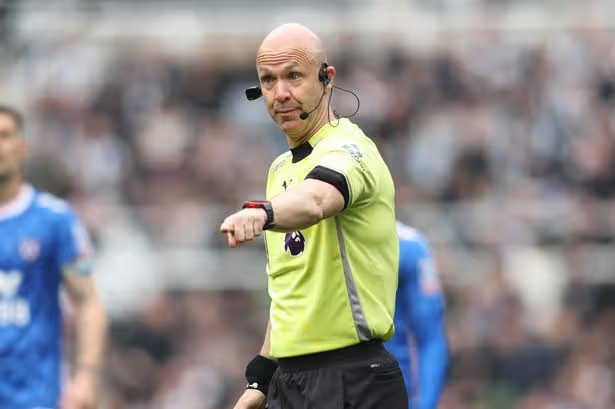
How Antony Taylor can referee Man City vs Arsenal despite Manchester roots as rule explained

Building A Rim-Driven Jet Engine

Fast Money #1 for the Pugh family! $20K?


-
 NewsBeat7 days ago
Pep Guardiola and Gary Neville agree over Arsenal title problem that benefits Man City
-

 Crypto World6 days ago
The SEC Conditionalises DeFi Platforms to Be Avoided for Broker Registration
-

 Fashion2 days ago
Weekend Open Thread: Theodora Dress
-

 Crypto World6 days ago
SEC Signals Exemption for Crypto Interfaces From Broker Registration
-

 News Videos4 days ago
Secure crypto trading starts with an FIU-registered
-

 Sports2 days ago
NWFL Suspends Two Players Over Post-Match Clash in Ado-Ekiti
-

 Crypto World5 days ago
SEC Proposes Certain Crypto Interfaces Don’t Need to Register as Brokers
-

 NewsBeat5 days ago
Trump and Pope Leo: Behind their disagreement over Iran war
-

 Politics2 days ago
Palestine barred from entering Canada for FIFA Congress
-

 Crypto World2 days ago
Russia Pushes Bill to Criminalize Unregistered Crypto Services
-

 Sports6 days ago
NWFL opens Pathway for new Clubs ahead of 2026 Season
-
 Business3 days ago
Creo Medical agree sale of its manufacturing operation
-

 Crypto World6 days ago
Trump whales load up ahead of Mar-a-Lago luncheon.
-
 Entertainment6 days ago
Brand New Day’ Footage Reveals the Devastating Impact of ‘Now Way Home’
-

 Politics5 hours ago
Zack Polanski demands ‘council homes not luxury flats for foreign investors’
-
Business6 days ago
Kering slides after Morgan Stanley downgrade, Gucci woes loom
-

 Tech6 days ago
Google adds E2E encryption to Gmail for iOS and Android enterprise users
-
 Crypto World7 days ago
Sei Network Enters Quiet Reset Phase as On-Chain Metrics Signal a Slowdown in 2026
-

 Tech6 days ago
Apple glasses won’t go brand shopping like Meta did with Ray-Ban and Oakley
-
Entertainment6 days ago
How Euphoria Season 3 Premiere Paid Tribute to Eric Dane After Death
You must be logged in to post a comment Login