
Connect with us
DAPA Banner

Sports

Formula One’s April pause: Between Antonelli’s rise and changing rulebook | Other Sports News

Published

on


April has rarely been a quiet month for Formula One (F1). This year, it has been forced into one. The cancellation of the Bahrain and Saudi Arabian Grands Prix amid the ongoing war in West Asia has reduced the calendar to 22 races and, more unusually, created a five-week gap before the season resumes in Miami on May 1.


For a sport that rarely pauses, the break has shifted attention away from immediate results and towards the early shape of the season, and what those first few races are beginning to indicate rather than simply produce.


Advertisement


At the centre of that shift is Andrea Kimi Antonelli.


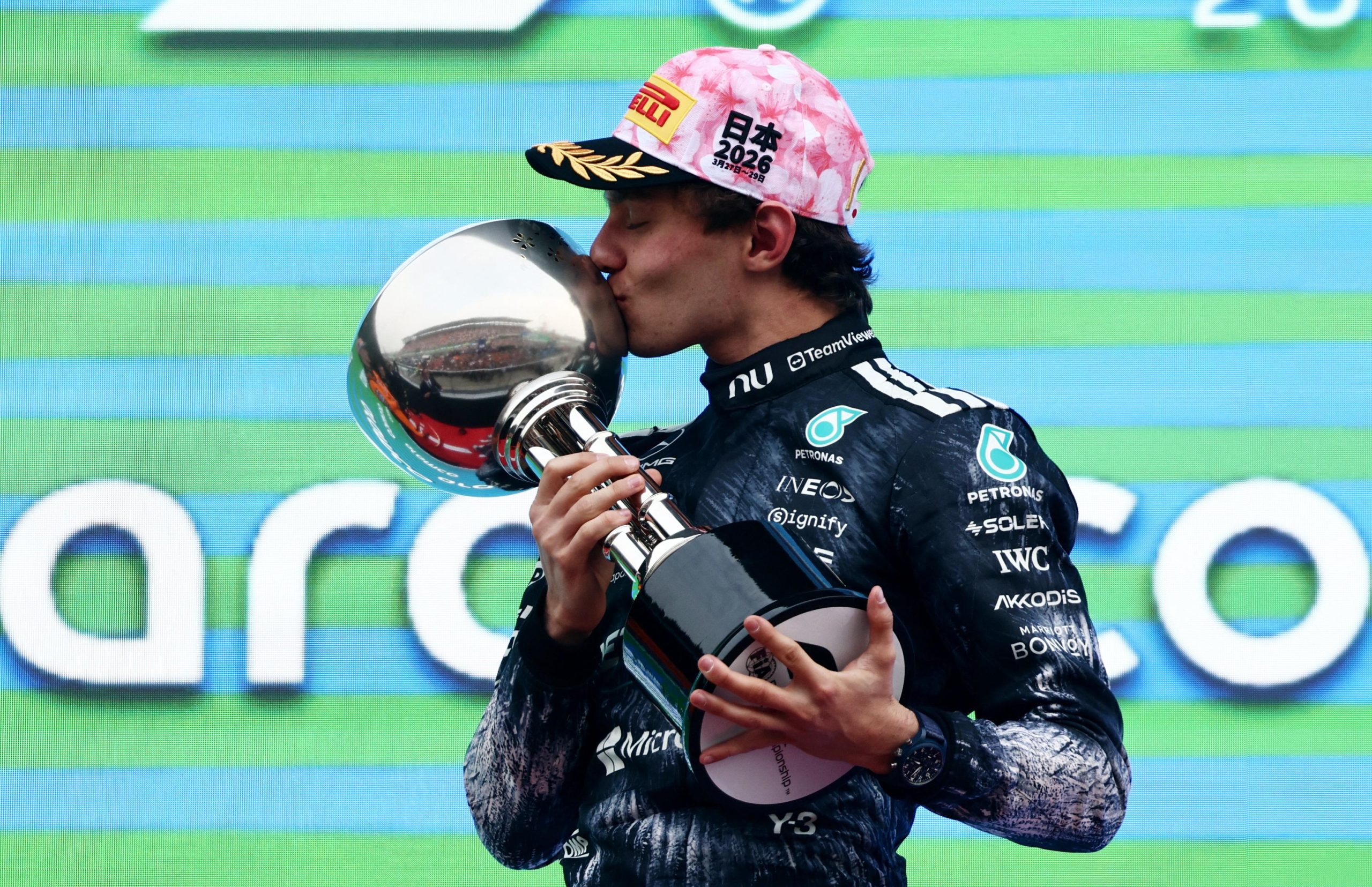
At 19 years and just over seven months, the Mercedes-AMG Petronas Formula One Team driver became the youngest championship leader in Formula One history after his victory at the Japanese Grand Prix on March 29. The record, built on back-to-back wins early in the season, is easy to isolate. What it reflects is less a spike in performance than a profile that already appears suited to how the current grid is operating. Mercedes team principal Toto Wolff has been quick to temper expectations, noting after Antonelli’s early win that it was “too early” to frame the season in championship terms and pointing instead to the need for consistency across a full campaign. 


Mercedes team principal Toto Wolff was quick to temper expectations, noting after Antonelli’s early win that it was “too early” to frame the season in championship terms and pointing instead to the need for consistency across a full campaign

Advertisement


Antonelli’s early races have not been built on dominance across every phase of the weekend. If anything, they have exposed a split profile. Over a stint, his pace has remained controlled, with minimal correction, stable tyre usage and an ability to hold the racing line rather than fluctuate within it. It is the kind of repeatability that usually arrives with experience, but here appears pre-conditioned.


The opening phase of races, however, tells a different story. Revised power unit behaviour has made starts less predictable. Without the MGU-H, which earlier helped smooth power delivery, and with greater reliance on hybrid systems, getting off the line is now less controlled, making traction trickier and early position changes more common. Across the opening rounds, Ferrari-powered cars have collectively gained positions on the opening lap, while Mercedes-powered entries have struggled to consistently hold ground, underlining how sensitive the start phase has become under the new configuration. Antonelli has mirrored that trend, frequently losing positions in the run to the first corner even when starting from the front.

Advertisement


The contrast is instructive. Modern F1 is increasingly operating across two distinct phases. The start has become compressed and high-variance, shaped by reaction time, clutch performance and energy deployment within a few seconds. The race that follows rewards something else: control, tyre management and the ability to operate within narrowing margins over a sustained run. Increasingly, it is the latter that determines outcomes.


Antonelli already appears more fluent in that second phase.

Advertisement


The margins have tightened in both directions. If Antonelli’s control has stood out, so have the consequences of error. Oliver Bearman’s high-speed crash earlier in the season, described as “frightening” and followed by an FIA defence of its safety procedures, brought renewed attention to how the current regulations are playing out in race conditions, even as some drivers and teams have raised concerns over how they are behaving under pressure. With power delivery and car balance shifting more abruptly in certain phases, particularly under braking and initial acceleration, small misjudgements can escalate quickly, leaving limited room for recovery once control is lost. 


Hass-Ferrari F1 Team driver, Bearman’s high-speed crash earlier in the season, described as “frightening” and followed by an FIA defence of its safety procedures, brought renewed attention to how current regulations are playing out in race conditions

Advertisement


That alignment is not incidental. Antonelli’s progression has been tightly managed within Mercedes’ development system, combining early identification with accelerated movement through the junior ladder, including a direct step into Formula 2, the category directly below F1. More significantly, it has been supported by extensive simulator work and private testing in older F1 machinery. The programme has included substantial mileage in previous-generation cars across multiple circuits, effectively replicating race conditions away from competitive weekends.


By the time Antonelli reached the grid, much of what once defined a rookie adjustment period had already been internalised. The result is a driver who does not appear to be learning the category in real time, even if certain phases, most visibly the start, remain in development.

Advertisement


That profile begins to align closely with how recent championships have been constructed. Drivers such as Max Verstappen have built success on sustained race pace and error minimisation rather than isolated bursts of speed, a model that increasingly defines the modern title fight.


Antonelli’s early performances sit within that framework. His gains have not depended on overextension, and his losses have tended to stabilise rather than compound. That balance, control over volatility rather than its absence, is already visible and increasingly valuable in a field where margins are narrowing.

Advertisement


The gap in April has allowed that pattern to come into clearer focus. It does not resolve into a conclusion. It does, however, suggest something more immediate. Antonelli’s rise is not only a function of speed or circumstance. It reflects a point of alignment between how drivers are now prepared and what Formula One is beginning to demand of them.


In a season still taking shape, that alignment may prove as significant as any early result.

Advertisement

Source link

Continue Reading
Click to comment

You must be logged in to post a comment Login

Leave a Reply

Sports

Corbin Carroll slam extends D-backs’ win streak, Jays’ skid

Published

on

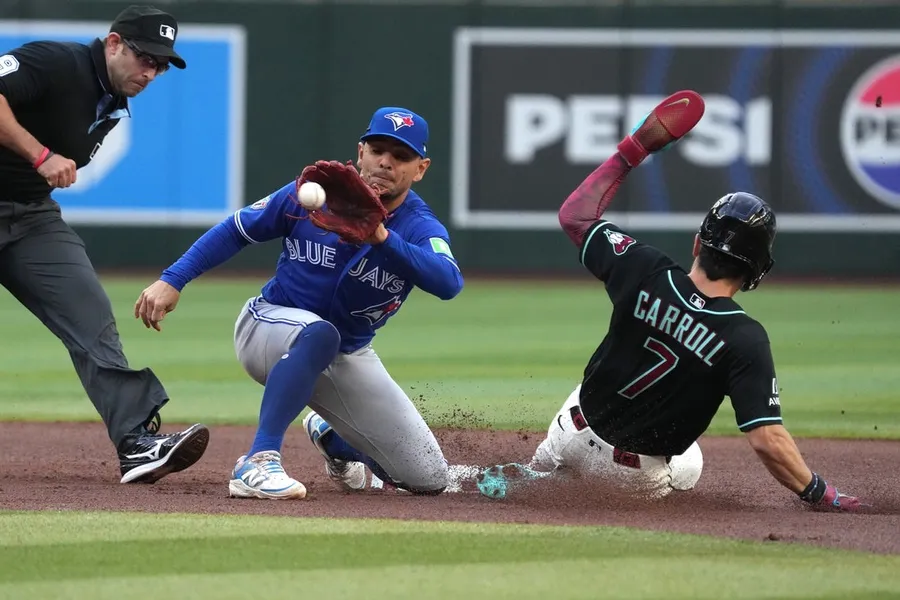
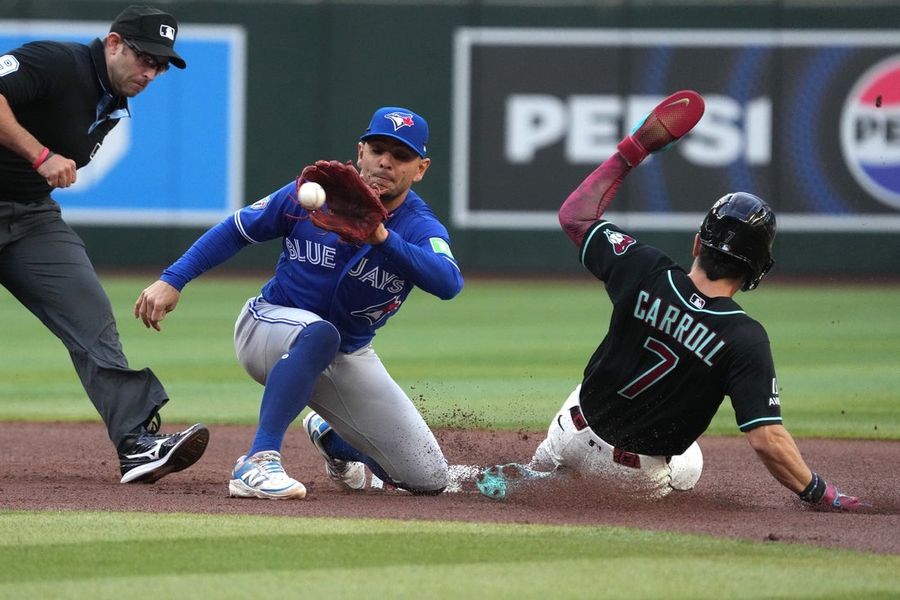
MLB: Toronto Blue Jays at Arizona DiamondbacksApr 18, 2026; Phoenix, Arizona, USA; Arizona Diamondbacks right fielder Corbin Carroll (7) steals secondbase under the tag by Toronto Blue Jays second baseman Andrés Giménez (0) in the first inning at Chase Field. Mandatory Credit: Rick Scuteri-Imagn Images

Corbin Carroll broke a tie with an opposite-field grand slam in the eighth inning and the Arizona Diamondbacks extended their winning streak to four games with a 6-2 victory over the Toronto Blue Jays in Phoenix on Saturday.

Ildemaro Vargas singled off Jeff Hoffman (1-2) to open the eighth, extending his season-opening hitting streak to a franchise-record 14 games.

Alek Thomas singled and Ketel Marte walked to bring up Carroll, who hit his fourth career grand slam on a 3-1 fastball.

The D-backs, who have won eight of 10, lead the majors with 10 comeback victories.

Geraldo Perdomo had three singles and an RBI and Thomas had two hits and an RBI for the Diamondbacks, who had eight hits.

Advertisement

Nathan Lukes had three hits, Kazuma Okamoto had two hits and an RBI and Ernie Clement and Eloy Jimenez had two hits apiece for the Blue Jays, who have lost four straight, six of seven and 12 of 15.

Juan Morillo (1-1) struck out Vladimir Guerrero Jr. on a 100 mph fastball with a runner on first to end the seventh and keep the game tied at 2. He allowed one hit and struck out two over 1 1/3 innings of relief.

Toronto starter Max Scherzer gave up two runs on five hits in six innings, with one strikeout and one walk.

Advertisement

Arizona starter Zac Gallen permitted two runs and nine hits, leaving after Okamato’s single tied the game at 2 with two outs in the sixth. He struck out three with no walks.

Lukes, Guerrero and Jesus Sanchez singled in the top of the first, with Sanchez’s one-out single driving in Lukes for a 1-0 lead. Guerrero has a nine-game hitting streak.

The D-backs tied it in their half of the first when Carroll walked, stole second and scored on Perdomo’s single. Thomas grounded a two-out double inside the bag at first to drive in Jose Fernandez, who had singled, to give Arizona a 2-1 lead in the fifth.

Toronto tied it in the sixth after an apparent double play was changed after a review. Jimenez singled with one out, and Gallen appeared to get out of the inning when Andres Gimenez grounded to Fernandez to start what originally was called an inning-ending double play.

Advertisement

Perdomo was ruled to have missed the bag on the play, leaving Jimenez at second, and he scored on Okamoto’s single to tie the game.

–Field Level Media

Source link

Advertisement
Continue Reading

Sports

5 Reasons why Gunther defeated Seth Rollins at WWE WrestleMania 42

Published

on

One of the matches that actually delivered on the first night at WWE WrestleMania was Gunther vs Seth Rollins. The Ring General and The Visionary delivered a banger show and impressed everyone in the crowd.

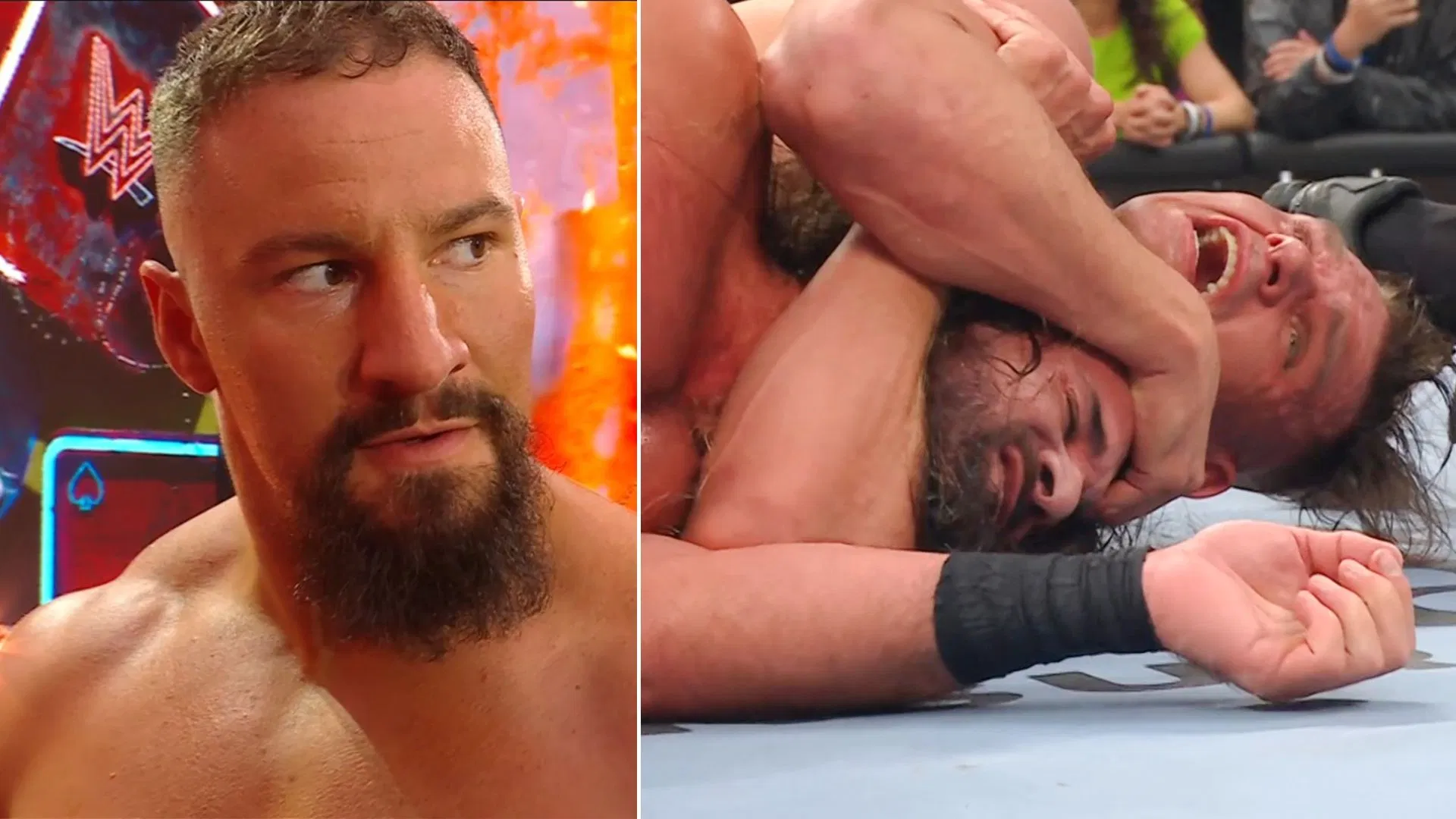
However, the match concluded when Bron Breakker returned to WWE and destroyed Seth Rollins. This attack allowed the Career Ki**er to defeat the Architect and secure the victory.

Following the match, the new Big Dog continues his domination and spears the former Vision leader again. Meanwhile, in this article, we will be looking at five reasons why The Ring General defeated Rollins at Showcase of Immortals Night 1.


#5. To continue Gunther’s undefeated streak

Advertisement

Over the past few months, Gunther continued his domination in the squared circle. In the last few months, the former Imperium Leader retired Goldberg, John Cena, and AJ Styles.

Not only this, but he also has an impressive winning streak in the squared circle in singles matches. The last time Gunther suffered a loss in a singles match was at SummerSlam 2025, where CM Punk defeated him to become the new World Heavyweight Champion.

Since then, The Ring General has defeated everyone in his match in singles bouts. So, it seems WWE wants to keep Gunther’s undefeated streak going. As a result, he defeated The Visionary at ‘Mania on Saturday.


#4. To set up a WWE rematch down the road

Gunther defeating Seth Rollins at WrestleMania 42 opens the door for a potential rematch in the near future. If The Visionary had defeated the Career Ki**er at ‘Mania, it would have concluded their rivalry as Rollins stopped his threat amid a feud with the Vision faction.

Advertisement

However, this doesn’t happen, and the former WWE World Heavyweight Champion put The Architect in a sleeper hold after Bron Breakker’s interruption. Now, WWE can use this angle to set the stage for a rematch between them later this year.

If the Ring General mocks Rollins for beating him at Mania 42, Seth will indeed seek revenge for this loss, setting the stage for another bout. The chances are likely if Seth manages to win the world title later this year.


#3. Paul Heyman now owes Gunther a favor

If Seth Rollins had defeated Gunther at the Grandest Stage of Them All, it might have created a hindrance for the Ring General to redeem his favor from Paul Heyman. After saving the Oracle on Monday Night RAW, the former Imperium Leader confirmed that Heyman owed him a favor.

After defeating the Visionary at Shows of the Shows, Gunther can firmly claim his favor from the Advocate anytime he wants. Many predicted it might lead to a Gunther vs. Brock Lesnar dream showdown, considering that the Hall of Famer is still working with the Beast Incarnate.

Advertisement

So, this appears to be another major reason behind the loss of Seth Rollins at Mania 42.


#2. To heat things between Seth Rollins & Bron Breakker

One of the primary reasons why Gunther defeated Seth Rollins at Showcase of Immortals was Bron Breakker. The WWE comeback of Bron and his attack on the Visionary gave the Ring General a major advantage to put the ex-Vision leader into a sleeper hold.

So, to heat things between Breakker and Rollins could be another potential reason why the Career Ki**er defeated Seth on Mania Saturday. Now, in the aftermath edition of Monday Night RAW, Rollins will indeed call Breakker out and punish him for his actions.

This will lead to the much-anticipated match between Seth and Bron in the Stamford-based promotion.

Advertisement

#1. It doesn’t hurt Seth Rollins’ momentum post-Mania

BRON BREAKKER SPEARS SETH ROLLINS AGAIN!!! #WrestleMania OH MY 😱

It’s crucial to note that Gunther indeed secured victory at WrestleMania 42. However, this only happened when the Visionary passed out from the sleeper hold. The Ring General failed to secure a pinfall victory over the Architect.

Even the Visionary never tapped out from Gunther’s submission. The match ended when the referee checked Rollins, and he faded out from that choke. Also, the former World Heavyweight Champion only managed to put this submission move tight on the beloved WWE star after Bron Breakker’s disruption.

Overall, this doesn’t hurt the Architect’s momentum post-WrestleMania 42, and it’s another reason WWE booked Gunther to defeat Seth at the Shows of the Shows.

Advertisement

Despite this loss, Rollins will still appear strong in his forthcoming feud against Bron Breakker. Meanwhile, if Seth had defeated the Ring General, it would have not only ended his undefeated streak but also impacted his momentum post-WrestleMania.

So, these are all the potential reasons why Gunther defeated Seth Rollins at WWE WrestleMania 42 on Saturday. The RAW after Mania show will be interesting to witness, particularly after Bron Breakker returns to the Sports Entertainment juggernaut.

Also, it remains to be seen what’s next for the WWE Career Ki**er after his massive victory over the Visionary.