
Business
(VIDEO) Harlan Goode Delivers Show-Stopping Australian Idol Grand Finale


SYDNEY — Nineteen-year-old Harlan Goode from Queensland’s Redlands region brought the house down during the Australian Idol 2026 grand finale week, delivering a high-energy performance that earned a standing ovation from judges and cemented his status as one of the competition’s most memorable breakout stars.

The Cleveland native, a recent Sheldon College graduate, advanced to the top three alongside Kalani Artis, 23, from New South Wales’ Central Coast, and Kesha Oayda, 21, from Jindabyne. The two-night grand finale kicked off Monday night on Channel 7 and 7plus, with the winner set to be crowned Tuesday, April 14, at 7:30 p.m. AEST.
Goode’s journey has been marked by consistent powerhouse vocals and daring stage presence. In the top six “Heroes and Tributes” episode, he climbed atop a piano for a bold rendition dedicated to the women in his life — his nan, mother and former music teacher Mrs. Moore from Sheldon College. The performance of Elton John’s “I’m Still Standing” drew immediate praise and a standing ovation, with judge Kyle Sandilands dancing in his seat and calling it big-stage energy.
“Those notes are stupid good,” judge Marcia Hines said, while Amy Shark added, “You look like a superstar.” Sandilands compared the moment to a paid concert.
The Redlands talent has drawn comparisons to artists like Adam Lambert for his commanding presence and emotional depth. Goode draws inspiration from modern pop stars including Sabrina Carpenter, Sam Smith and Lana Del Rey, blending big ballads with theatrical flair rooted in his musical theatre background.
Throughout the season, Goode has been described as an “unstoppable force” who constantly raised the bar. His audition with ABBA’s “The Winner Takes It All” turned heads early, showcasing a mature voice and stage command beyond his years. He balanced the competition with finishing Year 12 exams, a detail that endeared him to viewers as a relatable teen chasing a dream.
Goode hails from the Redlands area south of Brisbane, where local support has poured in. Sheldon College and Redlands community leaders have rallied behind him, with messages of encouragement flooding social media. Singer Mirusia and others sent video shoutouts ahead of the finale, urging votes via the dedicated line 0457 500 700.
In an exclusive interview before the grand finale, Goode revealed advice he received from guest mentor Josh Groban. The American singer-songwriter, known for his own rich baritone, encouraged the young performer to stay authentic. “He’s a genuinely beautiful human being,” Goode said of Groban.
The grand finale features the top three performing for the last time as Australia votes to decide the 2026 champion. The winner receives $100,000 in prize money, a recording package with Hive Sound Studios, a songwriting camp with Sony Music Publishing, marketing support from The Annex, and VIP tickets to the ARIA Awards and TV WEEK Logie Awards.
Goode has spoken about his ambitions to “unleash” in the final shows, aiming to blend emotional ballads with high-energy numbers that highlight his range. A former landscaper among the finalists and a competitive skier in another case highlight the diverse backgrounds in the top three, but Goode’s vocal consistency has set him apart as the “ballad king” in many fan discussions.
Judges and hosts have repeatedly praised his growth. From early episodes where he tackled Queen and Elton John tracks to later performances that showcased vulnerability and power, Goode has evolved into a polished artist ready for the industry.
His piano-top moment in the top six wasn’t just visually striking — it symbolized his willingness to take risks. Dedications to family and mentors added emotional weight, resonating with audiences who saw a young man grounded despite the spotlight.
Redlands Bayside News has chronicled his rise extensively, sharing galleries and reactions from the community. “Harlan into Idol grand final,” headlines proclaimed after he secured his top-three spot, with locals celebrating the Brisbane teen as a source of regional pride.
The 2026 season of Australian Idol has emphasized live performances and public voting, building on the show’s revival format. Hosts Ricki-Lee Coulter and Scott Tweedie have guided contestants through high-stakes weeks, with celebrity guests providing mentorship.
Goode’s path included standout moments like his take on “A Touch of Paradise” and other Australian-themed weeks, where he paid tribute while making songs his own. Fans on social media have called him one of the strongest vocalists in recent Idol history, with comments predicting a bright future regardless of the final outcome.
At 18 (turning 19 during the competition), Goode represents a new generation of Australian talent. Born and raised in Cleveland in the Redlands, he credits his school’s strong performing arts program for nurturing his passion. Before Idol, he participated in local talent shows and built a foundation as a singer, songwriter and producer.
The competition has tested more than vocal ability — mental resilience, adaptability and star quality have all played roles. Goode has navigated the pressure with grace, often expressing gratitude to voters and fellow contestants.
As the finale approached, support messages highlighted his character as much as his talent. One fan group defended him against online criticism, noting he is “as lovely on the inside as he is on the out.”
The grand finale format includes multiple performances per contestant, likely mixing fan-favorite reprises with fresh material. Industry observers note that a strong showing could launch a recording career, especially with the prize package designed to provide immediate industry access.
Goode has hinted at plans beyond the show, including original music that reflects his personal experiences. His influences suggest a style that could appeal to both pop and theatrical audiences, potentially filling a niche in Australia’s music scene.
Community backing in Redlands has been fervent. Local mayor and school representatives have publicly cheered him on, viewing his success as inspiration for other young artists in the region. “What a superstar talent,” one post declared.
The two-night structure allows for celebration of all finalists before the winner reveal. Monday’s show focuses on performances, while Tuesday delivers the verdict amid guest appearances and emotional moments typical of reality TV finales.
Regardless of Tuesday’s result, Goode has already achieved significant exposure. His journey from high school student to national finalist in a matter of months underscores the show’s role in discovering talent.
Judges have noted the high caliber of this year’s contestants, making the top-three selection particularly competitive. Goode’s ability to connect emotionally while delivering technically impressive vocals has been a recurring theme in feedback.
As Australia tunes in for the conclusion, Goode stands as a symbol of perseverance. From auditioning while preparing for final exams to risking a piano-climbing performance, he has embraced every challenge.
The Redlands community continues to mobilize votes and share encouragement. Hashtags and fan pages have amplified his story, turning local pride into national conversation.
Australian Idol 2026 has once again proven its ability to spotlight emerging voices. For Harlan Goode, the grand finale represents the culmination of months of growth — and potentially the beginning of a professional music career.
With his show-stopping moments still fresh in viewers’ minds, the 19-year-old from Redlands enters the final vote as a strong contender. Whether he takes the crown or not, his standing ovation and breakout status ensure his voice will be heard long after the lights dim on the Idol stage.



Carney says Canada’s US ties have become a weakness

- The shift is here: Artificial intelligence is already reshaping how we build and run online stores. The platform you choose today matters far more than it did three years ago.
- What changed: AI handles heavy lifting like writing hundreds of product descriptions, managing inventory, and personalizing the shopping experience for every visitor.
- What to look for: Seek out native AI features rather than clunky add-ons. Check the speed of innovation and make sure you retain ownership of your store data.
- The hidden costs: Choosing the wrong platform leads to expensive migrations later. Missing out on AI tools puts a hard ceiling on your business growth.
- How to evaluate: Take advantage of free trials, ask hard questions about future updates, and build for where the ecommerce industry is heading next.
Introduction
Selling online has changed. Artificial intelligence isn’t some far-off idea anymore, it’s what powers the most successful online stores today. That’s why the platform you build your shop on is more important than ever. While a simple shopping cart and a nice design were enough a few years ago, the tech behind your store now dictates how efficiently you operate, how well you understand your customers, and how much you can grow.
The eCommerce market is on an upward swing and is expected to hit around $1.72 trillion in the United States alone by 2027. Picking the wrong online store builder can leave you in the dust while your competitors pull ahead. This guide will walk you through what’s new, what to look for, and how to choose the right platform for your business.
What AI Has Actually Changed About Running an Online Store
With all the hype around AI, it’s natural to wonder how it affects your daily work. These tools have transformed the most tedious parts of running a business, especially when built into your online store.
Selling online has become essential for both local shops and large retailers. Choosing a trustworthy platform like Wix is a crucial decision when you’re looking for an online store builder to make your business accessible to customers. Now, AI gives you an innovative push with smart tools, builders, and chats that make setup even easier for business owners.

Image source:https://www.wix.com/ecommerce/online-store
Product descriptions, SEO, and content at scale
Writing product descriptions used to be an exhausting chore. If you had a catalog of five hundred items, creating unique, engaging text for each one could take weeks. Now, smart generators can analyze a few bullet points and produce five hundred perfect descriptions in a matter of minutes.
These tools also optimize your text for search engines automatically, making sure it includes the words and phrases your potential customers are searching for on Google. Having great SEO is essential for helping people find your business online. Think of it as putting up a big, bright sign on the internet highway.
The better your SEO, the more likely people are to see your sign and stop by your site. By generating optimized content at scale, you can get noticed by search engines and save hundreds of hours that you can put back into your marketing and product development. When looking at top platforms driving rankings, you’ll see that a strong content strategy is a common thread.
Personalized shopping experiences
Every customer who lands on your website has different tastes. Artificial intelligence tracks browsing habits and purchase history to create a unique experience for every single visitor.
If someone frequently buys running shoes, the system automatically reorganizes your homepage to feature athletic gear the next time they visit. This level of personalization used to require massive teams of data analysts. Now, modern builders include these tools right in the dashboard, helping you increase sales simply by showing people what they actually want to buy.
Automated inventory, pricing, and customer support
Managing stock levels and pricing strategies requires constant attention. AI steps in as your reliable assistant. It predicts when you will run out of a popular item based on seasonal trends and automatically alerts you to reorder.
Smart pricing algorithms can adjust your prices dynamically based on competitor rates and current demand. Meanwhile, AI chatbots handle customer support around the clock. They answer common questions about shipping times and return policies instantly. This automation keeps your customers happy and your inventory perfectly balanced.
The gap between stores using AI and those that aren’t
A clear divide is forming in the ecommerce industry. Businesses utilizing artificial intelligence operate faster and with lower overhead costs. They launch new products in a fraction of the time and provide instant support to their shoppers.
Stores ignoring these tools are forced to do everything manually. They spend their days writing emails and updating spreadsheets. The gap between these two groups is widening quickly, making it crucial to adopt the right technology now.
What to Look for in a Store Builder in the AI Era
Not all platforms are created equal. When evaluating an online store builder, you need to look past the beautiful templates and examine the engine running underneath.
Native AI features vs. bolted-on integrations
The best builders bake artificial intelligence directly into their core system. We call these native features. When AI is built natively, everything works together smoothly. Your inventory data talks directly to your marketing emails, and your product generator understands your brand voice perfectly.
Some platforms try to catch up by offering third-party plugins. These bolted-on integrations often cause problems. They slow down your loading times, create confusing workflows, and sometimes crash your site after a routine update. Always prioritize platforms that offer built-in smart tools.

How well it connects to your existing tools
Your website does not exist in a vacuum. You likely use accounting software, shipping providers, and social media platforms to run your business. A modern builder must connect with these external tools flawlessly.
When your systems communicate clearly, artificial intelligence can analyze the full picture of your business. It can look at your shipping delays and adjust your estimated delivery times automatically. Check the app marketplace of any platform you consider to ensure it plays nicely with the software you already use and love.
Speed of innovation
Technology moves incredibly fast. A platform that was cutting-edge last year might be obsolete today if the developers stop updating it. You need to look at the speed of innovation.
Does the company release new features regularly? Do they listen to user feedback and improve their dashboard? You want a partner who actively invests in research and development. A platform that moves quickly ensures you always have access to the best tools available.
Data ownership and how AI learns from your store
Your customer data is the most valuable asset you own. When you use smart tools, you must understand how they handle your information.
Ask questions about data ownership. Does the platform use your sales data to train public models? Can you export your information easily if you decide to leave? The right builder gives you complete control over your data while using it strictly to improve your specific store.
The Hidden Cost of the Wrong Platform
Sticking with an outdated system might feel safe in the short term. However, the long-term consequences can severely damage your bottom line.
Migrating later is painful and expensive
Moving a fully operational store to a new platform is a massive undertaking. You have to transfer thousands of product photos, redirect all your website links to maintain your search rankings, and retrain your entire staff on a new dashboard.
This process often costs thousands of dollars and causes weeks of frustration. By choosing a forward-thinking platform from the beginning, you avoid this massive headache entirely. You give your business a permanent home that can scale alongside your ambitions.
Missing AI features means falling behind competitors
While you spend three hours writing a weekly newsletter, your competitor uses an AI assistant to generate and schedule a month of emails in fifteen minutes. They use that saved time to negotiate better rates with suppliers or design new products.
Missing out on these efficiency tools forces you to work harder for fewer results. In a crowded market, efficiency translates directly into profitability. You cannot afford to let your competitors outpace you simply because they have better software.
How the wrong builder limits your growth ceiling
An outdated platform acts like a hard ceiling on your potential. If your checkout process crashes during a big sale, you lose money instantly. If your system cannot handle multi-currency payments, you cannot expand into international markets.
The right online store builder removes these limits. It handles high traffic easily, translates your pages automatically, and supports your wildest growth goals. You want software that pushes you forward, not software that holds you back.
How to Actually Evaluate Your Options
With so many choices available, finding the perfect fit requires a bit of research. Here is how you can confidently evaluate your options and make the best decision for your future.
Questions to ask before committing
Before you hand over your credit card, get on a call with a sales representative or read through the detailed FAQ sections. Ask specific questions about their technology roadmap.
Find out what features they plan to release in the next six months. Ask how their AI tools handle multiple languages and complex product variations. Their answers will tell you exactly how seriously they take the future of ecommerce.
Free trials, AI feature checklists, and red flags
Never commit to a platform without testing it yourself. Take advantage of free trials to explore the dashboard.
Create a checklist of the AI features you need most. Then, start testing. Can you generate a product description? How easy is it to set up a discount code? While you’re at it, get a professional email address that connects to your online store and test the automated email builder. The goal is to reduce operational chaos with smarter processes. If the process feels clunky or confusing, that’s a huge red flag. The software should feel intuitive and helpful from the first click.
Build for where ecommerce is going
It is tempting to pick a platform based on exactly what you need today. But you are building a business for the future. You have to anticipate where the industry is heading.
Shoppers expect lightning-fast checkout experiences, personalized recommendations, and instant support. Choose a builder that already offers these capabilities. Building for tomorrow ensures your brand remains relevant and exciting for years to come.
Future-Proof Your Business
Your online store builder is no longer just a piece of infrastructure. It is an active participant in your success and a massive competitive advantage. The tools you choose dictate how efficiently you operate and how quickly you can scale.
As you plan your next big move, make your choice with the next three years in mind. Look for platforms that embrace artificial intelligence, prioritize native features, and innovate constantly.
Take a moment today to reassess your current setup. If your platform feels slow, outdated, or frustrating, it might be time for a change. Start fresh with a smart builder that empowers you to work faster and reach your goals easily. Your future customers are waiting for a brilliant shopping experience. You have everything you need to build it for them.


I am an independent investor focused on identifying emerging companies with asymmetric long-term upside. My investing approach combines fundamental analysis, industry research, and scenario-based valuation modeling. I write about companies and industries where new technologies or business models may reshape existing markets. My goal is to present clear, research-driven investment theses (that is hopefully easy to understand) that help investors evaluate both the potential upside and the associated risks.
Analyst’s Disclosure: I/we have no stock, option or similar derivative position in any of the companies mentioned, and no plans to initiate any such positions within the next 72 hours. I wrote this article myself, and it expresses my own opinions. I am not receiving compensation for it (other than from Seeking Alpha). I have no business relationship with any company whose stock is mentioned in this article.
Seeking Alpha’s Disclosure: Past performance is no guarantee of future results. No recommendation or advice is being given as to whether any investment is suitable for a particular investor. Any views or opinions expressed above may not reflect those of Seeking Alpha as a whole. Seeking Alpha is not a licensed securities dealer, broker or US investment adviser or investment bank. Our analysts are third party authors that include both professional investors and individual investors who may not be licensed or certified by any institute or regulatory body.


Israeli military publishes map of south Lebanon territory under its control

Bank creditors for Brazil’s Raizen make restructuring proposal, Bloomberg reports

Artificial intelligence (AI) has made everything easier and faster, including preparing a research paper for publication.
AI-powered academic writing tools like Paperpal enable researchers to put together outlines, turn notes into drafts, locate relevant citations, and achieve the right tone and style for their field. But this doesn’t mean that human editors at English editing services are now obsolete. In this article, we’ll look at using AI versus human editors to write a research paper, and the optimum role for each to play.
Why use AI while writing a research paper?
AI offers researchers several benefits when they’re preparing manuscripts for publication:
- Speed: AI produces outputs in seconds to minutes
- Affordability: Many AI academic writing tools have a free version
- Capabilities beyond language: AI tools can offer more than language support, such as citation checks and plagiarism checks.
Why use a human editor for your research paper?
A professional human editor can do many things that AI can’t, such as:
Understand your research
A large language model (LLM) predicts text based on patterns, and doesn’t actually understand your hypothesis, methodology, or data.
Improve language beyond surface-level corrections
While LLMs can check for grammar or punctuation errors, human editors can identify gaps in logic, missing information, or lack of flow between ideas.
Support you after editing
A human editor is available to explain any changes and discuss any ambiguities until you’re satisfied. They can support you through the publication process and encourage you when you receive critical reviewer comments.
Best Ways to Use AI for Writing Your Research Paper
AI can be a powerful tool if you use it correctly, and vastly improve your productivity and efficiency. Here’s what AI can do for you reliably:
Overcome writer’s block
Use AI to put together outlines and to turn your rough notes into a working draft of a research paper.
Broaden your literature search
Tools like Paperpal can find you authentic and relevant references from the published literature. You can also use these tools to extract insights and summaries from the PDF versions of research papers in your library. Just be sure to use an academic-focused writing tool, and not a general LLM like ChatGPT for this.
Explore alternative phrasing
AI can help you figure out the best and most polished way to put your ideas across, especially if English isn’t your first language.
Eliminate basic errors
AI can fix errors in grammar, punctuation, sentence construction, and consistency. It can make it easier for you to use a uniform style, especially for a large document or a series of documents.
Do final checks
AI-powered academic writing tools often include a plagiarism detector and AI-generated text detector. Use these on the final draft of your paper so that you can submit it to a journal with confidence.
Pro Tip: Always disclose which AI tool you have used in your research and for what tasks. Depending on your journal’s policies, you may have to do so in the cover letter, main manuscript, or both.
When should you NOT use AI for your research paper?
In some scenarios, using AI can actually harm your chances of getting published, like when:
Your Funders/Institution Forbid AI
Some funders and universities have strict policies about using generative AI like ChatGPT. Always verify in advance that you’re allowed to use AI and for which tasks.
You Generate the Entire Paper with AI
If you simply use LLMs to generate a full paper, without including your own findings and insights, this is considered unethical in academia. Your paper will likely get rejected.
You Use AI for Figures
Many scientific journals have strict restrictions or outright bans on the use of AI-generated images due to concerns over scientific integrity, copyright, and accuracy.
You Upload Data Into AI
Many AI tools like ChatGPT use the data you input to train future models. This could result in inadvertent sharing of sensitive or confidential data. Never upload your raw data or personally identifying information of your study participants into any AI tool unless you have thoroughly reviewed its data privacy, security, and confidentiality policies.
When to use a human editor for your research paper
AI alone won’t turn out a polished research paper. Here’s what you need a professional academic editing service to do for you.
- Prepare the manuscript for journal submission: human editors will read through journal guidelines and select those that apply to your paper.
- Check logic, coherence, and flow: human editors can tell you if you’ve missed reporting results for a subset of your sample, or if you’ve not included directions for future research in your Discussion section.
- Help address reviewer comments: human editors can verify that you’ve revised your paper in line with reviewer comments and also used an appropriate tone in your responses.
Best Professional Editing Services When You Can’t Use AI
Here are some academic editing services that give you value that AI can’t replicate
Editage
Choose Editage for unmatched expertise and reliability. With a global network of over 3,000 subject matter experts, you’ll receive precise, field-specific editing, free manuscript formatting, and a specialized response letter crosscheck service. Every manuscript undergoes two rigorous rounds of expert review so you can submit with confidence.
Wiley Editing Services
Choose Wiley Editing Services to elevate the clarity and impact of your research. Beyond language editing, it sharpens your manuscript by addressing critical logic and structural gaps. You also get unlimited access to editor Q&A after editing, plus a certificate confirming your paper was edited by a native English speaker, giving your submission added credibility.
Taylor & Francis Editing Services
Choose Taylor & Francis Editing Services for a strategic edge. Receive a comprehensive evaluation of your paper’s strengths and weaknesses, precise formatting aligned with your target journal, and the advantage of a smart editor-matching algorithm that connects your paper with a true subject-area specialist.

CAPE CANAVERAL, Florida — Blue Origin’s powerful New Glenn rocket lifted off Sunday morning from Launch Complex 36 at Cape Canaveral Space Force Station, successfully carrying AST SpaceMobile’s BlueBird 7 satellite into low Earth orbit on the company’s third orbital mission and marking the first reflight of a New Glenn first-stage booster.

The NG-3 mission blasted off at approximately 7:25 a.m. EDT after a brief hold in the two-hour launch window that opened at 6:45 a.m. The massive rocket, standing taller than most vehicles in the industry, roared into the clear Florida skies, its seven BE-4 engines producing more than 3.8 million pounds of thrust as spectators along the Space Coast watched the spectacular sunrise launch.
The first-stage booster, nicknamed “Never Tell Me The Odds,” made its second flight after successfully launching and landing during the NG-2 mission in November 2025. Blue Origin confirmed post-liftoff that the booster separated cleanly and was on track for a powered landing attempt on the company’s droneship Jacklyn in the Atlantic Ocean, continuing the company’s push toward full reusability in direct competition with SpaceX’s proven Falcon 9 program.
AST SpaceMobile’s BlueBird 7 satellite, also known as BlueBird Block 2 FM2, represents a critical step for the Texas-based company’s ambitious plan to build the world’s first space-based cellular broadband network accessible directly by unmodified smartphones. The satellite features a massive 2,400-square-foot phased array antenna designed to deliver up to 10 times the bandwidth capacity of earlier BlueBird Block 1 satellites.
Engineers expect BlueBird 7 to help enable initial commercial service rollout later in 2026, with beams supporting up to 40 MHz of capacity and peak data speeds reaching 120 Mbps for voice, data and video applications. The Block 2 satellites are among the largest commercial communications platforms ever deployed in low Earth orbit, and successful deployment of BlueBird 7 brings AST SpaceMobile closer to providing continuous 24/7 coverage, particularly in underserved and remote areas.
Blue Origin live coverage, which began 30 minutes before the targeted liftoff, showed smooth countdown operations after the brief hold. The rocket’s ascent appeared nominal, with fairing separation and second-stage ignition occurring on schedule. Deployment of the BlueBird 7 satellite was expected roughly 30 to 45 minutes after liftoff, followed by confirmation of solar array and antenna deployment.
The mission holds special significance for Blue Origin as it demonstrates booster reuse capability for the first time with New Glenn. The booster flew with new engines installed for this flight, and the company has stated that its first stages are designed for up to 25 flights. A successful landing on the droneship would provide valuable data for future rapid turnaround operations.
Jeff Bezos-founded Blue Origin has steadily progressed with New Glenn since its debut flight. The heavy-lift vehicle is capable of carrying more than 45 metric tons to low Earth orbit or 13 metric tons to geostationary transfer orbit, making it one of the most powerful operational rockets currently flying. Sunday’s launch also highlights growing commercial activity at Cape Canaveral, where Blue Origin and SpaceX frequently share the busy Florida spaceport.
AST SpaceMobile invited qualified retail investors to watch the launch from the Kennedy Space Center Visitor Complex, underscoring the company’s outreach to shareholders as it races to deploy its constellation. The satellite is the second in the next-generation Block 2 series and will join earlier BlueBird satellites already in orbit to expand network capacity.
Space enthusiasts and local residents gathered along beaches and viewing areas to witness the launch, with many posting photos and videos of the bright plume against the morning sky. Traffic advisories and temporary airspace closures were in effect for safety, and boaters were warned to stay clear of the launch hazard area.
This launch comes amid intense competition in the satellite broadband sector. AST SpaceMobile aims to partner with major cellular carriers worldwide to provide seamless connectivity without requiring special hardware, a differentiator from traditional satellite internet services that rely on user terminals. Successful integration of BlueBird 7 could accelerate testing and pave the way for larger constellation builds planned throughout 2026.
Blue Origin CEO Dave Limp highlighted the importance of the mission in recent statements, noting the hot-fire test conducted days earlier confirmed engine readiness. The company has emphasized American-made components, particularly the BE-4 engines manufactured in Alabama and Texas.
Following satellite deployment, Blue Origin teams will monitor booster recovery operations. If the landing succeeds, it would represent another milestone in the company’s reusability roadmap and help lower costs for future missions. New Glenn’s large payload fairing also positions it well for multi-satellite rideshares in upcoming flights.
As the mission progressed, AST SpaceMobile executives expressed optimism about the satellite’s performance once it reaches its operational orbit and begins communication testing with ground stations and partner networks. The company has ambitious plans to deploy dozens more BlueBird satellites in the coming years to achieve global coverage.
The successful liftoff adds momentum to Florida’s space economy, which continues to benefit from both government and commercial activity. With SpaceX also preparing launches in the coming days, the Cape remains one of the world’s busiest spaceports.
For now, all eyes remain on post-separation milestones: satellite deployment, solar array deployment and initial signal acquisition from BlueBird 7. Blue Origin and AST SpaceMobile are expected to provide updates throughout the day as the mission unfolds.
Sunday’s launch represents more than a single satellite delivery — it marks tangible progress toward reusable heavy-lift capabilities from Blue Origin and a key building block for space-based cellular connectivity that could transform global communications.
Live streams from Blue Origin and AST SpaceMobile captured the excitement, with commentators noting the historic nature of the booster reflight. As recovery operations continue offshore and the satellite begins its journey in orbit, the space community watches closely for confirmation of full mission success.

INDIO, California — As the sun sets on the final day of Coachella 2026’s weekend two, the Empire Polo Club prepares for a star-studded Sunday, April 19, headlined by Karol G closing out the 25th-anniversary edition with her historic set as the first Latina artist to top the bill.

AFP
Sunday’s lineup blends high-energy reggaeton and Latin pop with hip-hop, electronic, indie rock and K-pop nostalgia, offering something for nearly every taste across the festival’s sprawling stages. Gates opened around 1 p.m. Pacific, with music beginning in the early afternoon and building toward the main-stage climax.
Coachella Stage (Main Stage) Highlights The day’s biggest draws center on the Coachella Stage. Gabe Real kicks things off at 2:45 p.m., followed by Tijuana Panthers at 3:40 p.m. and Wet Leg at 4:45 p.m. The energy ramps up significantly in the evening with Major Lazer taking the stage at 6:10 p.m. for a dance-heavy set, followed by Young Thug at 7:50 p.m. Karol G is scheduled to headline at 10:10 p.m., delivering what promises to be a vibrant celebration of Latin music with elaborate production, guest appearances and hits spanning her career.
Fans who attended weekend one praised Karol G’s set for its cultural significance, emotional depth and high production values. For weekend two, expect possible tweaks to the setlist or additional surprises as she caps the entire festival.
Outdoor Theatre Standouts Counter-programming remains strong on the Outdoor Theatre. Juicewon performs at 3 p.m., followed by Gigi Perez at 4 p.m. and Clipse at 5:15 p.m. Foster the People brings indie rock energy at 6:45 p.m., Laufey delivers smooth jazz-infused pop at 8:45 p.m., and K-pop legends BIGBANG close the stage at 10:30 p.m. with a high-energy set that could feature nostalgic hits and new material.
Other Stages and Notable Acts The Sonora Tent features emerging and alternative acts including Bulletballet at 1 p.m., Glitterer at 2 p.m. and Model/Actriz at 3:10 p.m. Additional stages host electronic and dance sets, with Quasar and Yuma offering late-night options for those seeking beats into the early morning hours.
Weekend two introduced or adjusted several slots compared to the first weekend. Kacey Musgraves added a Mojave Tent performance earlier in the week, while other changes included shifts in electronic lineups and guest appearances that kept the festival fresh for repeat attendees.
The full performer list for Coachella 2026 spans hundreds of artists across genres. Headliners Sabrina Carpenter (Friday) and Justin Bieber (Saturday) have already delivered memorable — and at times controversial — sets during weekend two. Bieber’s Saturday performance featured high-profile guests including Sexyy Red, Billie Eilish, Big Sean and SZA, turning the desert into a pop summit. Surprise appearances throughout the weekend, including Madonna joining Sabrina Carpenter and other unannounced cameos, added viral moments that dominated social media.
Beyond the headliners, the 2026 lineup features a strong international presence. Acts like BIGBANG, Laufey, Wet Leg, FKA Twigs, Little Simz, The Strokes, Giveon, Addison Rae, Teddy Swims, Armin van Buuren x Adam Beyer and many more create a diverse sonic landscape. Electronic music occupies a significant portion of the bill, with DJs and producers filling tents late into the night.
Practical tips for Sunday attendees include downloading the official Coachella app for real-time updates, set times and interactive maps. Temperatures can swing from warm afternoons to cool desert evenings, so layering clothing and staying hydrated remain essential. Cell service can be spotty due to the large crowds, making offline schedules or downloaded maps helpful.
For those watching from home, YouTube continues its comprehensive livestream partnership. Multiple stages stream simultaneously, with multiview options allowing viewers to switch between performances. The main Coachella Stage feed captures the biggest moments in high quality, and replays often remain available for a limited time after the festival concludes.
Sunday’s schedule offers strong options for different tastes. Early afternoon sets provide a relaxed entry into the day, while evening performances deliver peak energy. Major Lazer’s dancehall and electronic fusion, Young Thug’s trap and melodic style, and Karol G’s powerful Latin anthems create a compelling progression on the main stage.
The 25th-anniversary edition has already produced lasting memories, from Karol G’s groundbreaking weekend-one set to Bieber’s polarizing yet talked-about performance and numerous guest appearances. As the festival winds down Sunday night, conversations about representation, production values and the evolving festival experience are likely to continue.
Coachella organizers have not announced major last-minute changes for Sunday, though festivals of this scale often feature minor adjustments or unannounced guests. Fans are advised to check the official app or website for any updates throughout the day.
Beyond the music, the Empire Polo Club remains a vibrant pop-up city with art installations, food vendors offering global cuisine, and sponsor activations. The desert setting adds a unique backdrop, with installations and lighting enhancing the nighttime experience.
As Karol G prepares to close the 2026 festival, the weekend two finale promises emotional highs and celebratory vibes. Whether experiencing the event in person or via livestream, Sunday delivers a fitting conclusion to two weekends of music, art and cultural moments in the California desert.
The performer list for today underscores Coachella’s reputation for curation that balances established stars with emerging talent. From indie rock to K-pop, electronic to Latin pop, the day’s schedule reflects the festival’s global appeal and commitment to diversity.
For complete set times and stage assignments, the Coachella app or official website provides the most accurate information. As the final hours of Coachella 2026 unfold, expect memorable performances, potential surprises and a collective energy that has defined this landmark anniversary year.
Business
(VIDEO) Apple iPhone Ultra Leak Reveals Passport-Style Foldable Design and $2,000 Price Tag
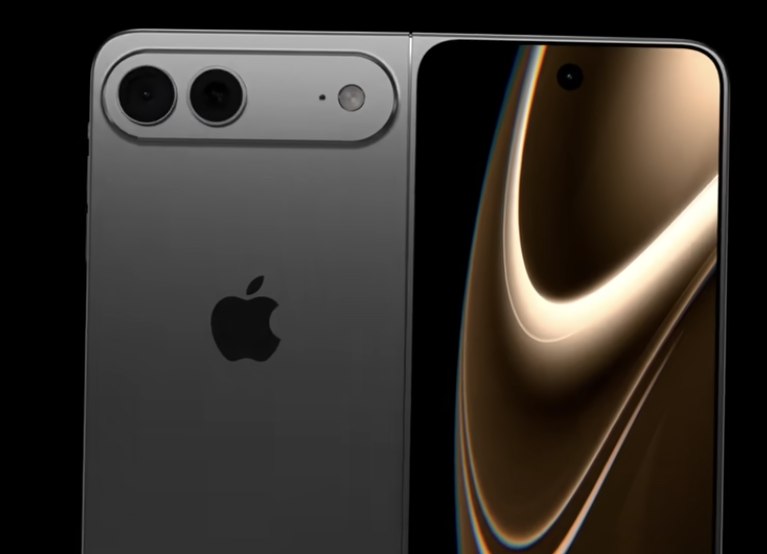
CUPERTINO, California — Fresh leaks have provided the clearest look yet at Apple’s long-rumored first foldable smartphone, reportedly named the iPhone Ultra, featuring a distinctive “passport-style” book fold, an ultra-thin profile and a premium price tag expected to start above $2,000.

Dummy models and CAD renders circulating online in recent days show a device that departs dramatically from traditional iPhone designs and existing foldables such as Samsung’s Galaxy Z Fold series. When closed, the iPhone Ultra appears wider and more compact than typical smartphones, resembling a modern take on the old BlackBerry Passport. When unfolded, it opens into a near-square tablet-like experience with a reported 7.8-inch inner display boasting a 4:3 aspect ratio similar to an iPad mini.
The new form factor aims to deliver a more usable unfolded screen for productivity, reading and media consumption while keeping the folded device pocket-friendly. Leaks suggest the outer cover screen measures around 5.5 inches, providing a functional experience without needing to unfold constantly. The overall thickness when folded is rumored to be just 4.5 to 9.6 millimeters depending on the source, achieved through advanced materials including a titanium-aluminum hybrid frame and ultra-thin glass that promises a nearly invisible crease.
Analyst Ming-Chi Kuo and multiple supply-chain leakers have pointed to these design choices as Apple’s attempt to solve common foldable pain points: visible creases, awkward aspect ratios and limited outer-screen utility. The passport shape reportedly offers better video viewing and reduced black bars compared to the taller, narrower Galaxy Z Fold models, while the wider unfolded layout could improve multitasking in a future version of iOS optimized for the device.
Dummy units shared by leaker Sonny Dickson show the foldable alongside standard iPhone 18 Pro and Pro Max models, highlighting its unique proportions. The back features a horizontal dual-camera array rather than the familiar vertical or square bump, and volume buttons appear relocated to the top edge when folded. Color options are expected to be minimalist, likely limited to black and white at launch, consistent with Apple’s premium aesthetic.
Pricing rumors have drawn significant attention. Bloomberg’s Mark Gurman reported the device will “cross the $2,000 threshold,” with some analysts projecting a starting price of $1,999 to $2,399 depending on storage configuration. Higher-capacity models could approach $2,800. That would make the iPhone Ultra significantly more expensive than the current iPhone 16 Pro Max and far above competing foldables, reflecting the high cost of advanced folding displays, durable hinges and custom components.
Supply-chain reports indicate Apple has ramped up orders for foldable panels, though some whispers suggest minor engineering validation delays that could push initial shipments into late 2026 or early 2027. Most credible forecasts still point to a September 2026 debut alongside the standard iPhone 18 lineup, with the foldable positioned as the new flagship “Ultra” model rather than simply an iPhone Fold.
Beyond the form factor, leaks point to several technical innovations. The inner display is expected to use advanced ultra-thin glass technology for crease reduction, possibly as low as 0.15 millimeters in depth. A titanium alloy hinge is said to provide durability while keeping weight manageable. Some reports suggest the device may replace Face ID with a side-mounted Touch ID sensor, freeing up space in the slim folded design.
Camera specifications remain under wraps, but early indications point to a dual 48-megapixel rear setup focused on computational photography strengths rather than raw hardware competition. The device is also expected to integrate deeply with Apple Intelligence features, offering enhanced multitasking, Stage Manager-style window management and seamless continuity with other Apple devices such as MacBooks and iPads.
The iPhone Ultra represents Apple’s most significant iPhone redesign in years, according to analysts. While the company has explored foldable concepts for nearly a decade, including early clamshell prototypes, recent momentum appears driven by maturing supply chains and competitive pressure from Samsung, Google, Huawei and Chinese manufacturers experimenting with wide-fold designs.
Consumer reaction to the leaked passport-style concept has been mixed. Some enthusiasts praise the wider aspect ratio for productivity and media, calling it a true iPhone-iPad hybrid. Others worry the unconventional shape when closed may feel bulky or unfamiliar in the hand. Social media and forums have seen heated debates, with renders and dummy models going viral and sparking comparisons to everything from the BlackBerry Passport to Microsoft’s Surface Duo.
If the leaks hold true, the iPhone Ultra could accelerate mainstream adoption of foldables by bringing Apple’s legendary software polish and ecosystem integration to the category. Features such as Universal Control, Handoff and deep iPad app optimization could make the device far more practical than current Android foldables, where app support sometimes lags.
Challenges remain. Production yields for large foldable panels are notoriously difficult, and Apple is known for demanding near-perfect quality. Durability testing, hinge longevity and real-world battery life in the larger unfolded form will face intense scrutiny upon release. Battery capacity rumors suggest Apple aims for all-day use despite the power-hungry display, potentially aided by efficient A-series or M-series chips tailored for the new design.
The high price tag raises questions about market size. While Apple’s premium customers have shown willingness to pay top dollar for Pro Max models, a $2,000-plus foldable would target an even narrower segment initially. Analysts expect strong interest from professionals, creators and tech enthusiasts, with volume potentially growing in subsequent generations as costs decline.
Samsung is already rumored to be developing a “Wide Fold” variant of its own to counter Apple’s approach, signaling how the iPhone Ultra could reshape the entire foldable landscape. Google and other players may accelerate their own innovations in response.
For now, the leaks provide the most concrete glimpse yet of Apple’s ambitious entry into foldables. The passport-style design, ultra-thin build and premium positioning suggest the company is not merely catching up but aiming to redefine what a foldable phone can be.
As development continues toward a likely 2026 launch, more details on final specifications, software features and exact pricing are expected to emerge. In the meantime, the iPhone Ultra has already ignited excitement and debate across the tech world, proving that even after nearly two decades, the iPhone can still surprise.
Whether the passport form factor becomes a beloved new standard or a polarizing experiment will only be known once the device reaches consumers. For Apple fans and foldable skeptics alike, the coming months promise to be among the most intriguing in recent smartphone history.


UK police examine Iran links to arson attacks on Jewish targets

Celtic beat St Mirren 6-2 to reach Scottish Cup final after extra time drama

Carney says Canada’s US ties have become a weakness

Keyshia Ka’oir Posts Message After Pooh Shiesty’s Mugshot Drops


-
 NewsBeat7 days ago
Pep Guardiola and Gary Neville agree over Arsenal title problem that benefits Man City
-

 Crypto World6 days ago
The SEC Conditionalises DeFi Platforms to Be Avoided for Broker Registration
-

 Fashion2 days ago
Weekend Open Thread: Theodora Dress
-

 Crypto World6 days ago
SEC Signals Exemption for Crypto Interfaces From Broker Registration
-

 News Videos4 days ago
Secure crypto trading starts with an FIU-registered
-

 Sports2 days ago
NWFL Suspends Two Players Over Post-Match Clash in Ado-Ekiti
-

 Crypto World5 days ago
SEC Proposes Certain Crypto Interfaces Don’t Need to Register as Brokers
-

 NewsBeat5 days ago
Trump and Pope Leo: Behind their disagreement over Iran war
-

 Business2 hours ago
Powerball Result April 18, 2026: No Jackpot Winner in Powerball Draw: $75 Million Rolls Over
-

 Politics2 days ago
Palestine barred from entering Canada for FIFA Congress
-

 Crypto World2 days ago
Russia Pushes Bill to Criminalize Unregistered Crypto Services
-

 Sports6 days ago
NWFL opens Pathway for new Clubs ahead of 2026 Season
-
 Business3 days ago
Creo Medical agree sale of its manufacturing operation
-

 Politics7 hours ago
Zack Polanski demands ‘council homes not luxury flats for foreign investors’
-

 Crypto World6 days ago
Trump whales load up ahead of Mar-a-Lago luncheon.
-
 Entertainment6 days ago
Brand New Day’ Footage Reveals the Devastating Impact of ‘Now Way Home’
-
Business6 days ago
Kering slides after Morgan Stanley downgrade, Gucci woes loom
-

 Tech6 days ago
Google adds E2E encryption to Gmail for iOS and Android enterprise users
-
 Crypto World7 days ago
Sei Network Enters Quiet Reset Phase as On-Chain Metrics Signal a Slowdown in 2026
-

 Tech6 days ago
Apple glasses won’t go brand shopping like Meta did with Ray-Ban and Oakley
You must be logged in to post a comment Login