
Business
Applied Digital Stock Jumps 5% as Explosive AI Data Center Revenue Soars 139% in Q3


DALLAS — Applied Digital Corp. shares climbed more than 5% in early trading Monday to $27.58 as investors cheered the company’s accelerating pivot to high-performance computing and AI data centers, highlighted by a 139% surge in fiscal third-quarter revenue that far exceeded Wall Street expectations and underscored strong hyperscaler demand for its specialized infrastructure.
The Nasdaq-listed stock (APLD) traded with solid volume as the digital infrastructure provider continued to benefit from last week’s fiscal Q3 2026 results, released April 8. Revenue reached $126.6 million for the quarter ended Feb. 28, up sharply from $52.9 million a year earlier, driven largely by the first full quarter of operations at its Polaris Forge 1 campus hosting CoreWeave’s AI workloads.
Approximately $71 million of the revenue increase came from the HPC hosting business, including base rent, tenant fit-out services and power pass-throughs. Adjusted revenue, a non-GAAP metric, hit $108.6 million, while adjusted net income was $33.2 million or $0.09 per diluted share — beating consensus estimates that had called for a loss.
The results marked a pivotal moment in Applied Digital’s transformation from a blockchain-focused operator to a major player in AI-ready data centers. CEO Wes Cummins noted accelerating demand from hyperscalers seeking high-density, liquid-cooled capacity. “We are seeing a clear acceleration in demand for high-performance AI data center capacity, with hyperscalers as aggressive as we have ever seen them,” he said in the earnings release.
Applied Digital has secured landmark long-term leases that provide massive revenue visibility. CoreWeave holds 400 MW under contract at Polaris Forge 1, representing roughly $11 billion in prospective lease revenue over the lease terms. A separate approximately 15-year deal with a U.S.-based investment-grade hyperscaler covers 200 MW at the under-construction Polaris Forge 2 campus, expected to generate about $5 billion. Combined, these agreements total 600 MW of leased capacity and approximately $16 billion in aggregate prospective revenue before renewals.
In March, the company priced a $2.15 billion private offering of senior secured notes to fund development of Polaris Forge 2, backed by the hyperscaler lease. This project-finance-style structure allows Applied Digital to retain significant equity ownership while limiting corporate capital at risk. The company also entered a $100 million development facility with Macquarie Equipment Capital to support new projects.
Recent agreements with CoreWeave enhanced credit quality for the leases. As part of CoreWeave’s debt refinancing — which earned an investment-grade A3 rating — leases were restructured through a CoreWeave SPV subsidiary, backed by unconditional guarantees from CoreWeave Inc. and a $50 million letter of credit for one facility. These steps strengthen security for Applied Digital’s own 9.250% Senior Secured Notes due 2030.
The company is aggressively scaling capacity. Polaris Forge 1’s first 100 MW building is fully operational, with additional phases coming online. Polaris Forge 2 is advancing, with initial capacity targeted for calendar 2026 and full buildout by early 2027. Applied Digital broke ground on the 430 MW Delta Forge 1 campus in a southern U.S. state in January and continues marketing over 4 GW of accessible power across its pipeline.
Despite the revenue momentum, challenges remain evident. The company reported a GAAP net loss of $100.9 million or $0.36 per share in Q3, widened by interest expense, build-out costs and a $59.7 million non-cash write-down related to its legacy cloud segment. Operating losses have grown as the firm invests heavily in expansion, with profitability not expected before 2028 according to some analyst models.
Applied Digital ended the period with a strong liquidity position approaching $2 billion in cash after recent financings, providing runway for its ambitious growth plans. However, the capital-intensive nature of data center development means ongoing funding needs and potential dilution risks persist.
Analysts have grown increasingly bullish on the AI data center story. Consensus ratings lean toward Strong Buy, with average price targets around $37 to $44 and some as high as $58. The stock has been volatile — surging on positive lease news but pulling back after earnings due to the widened loss and one-time items. Monday’s gain reflected renewed confidence following the earnings beat and strategic financing moves.
The broader AI infrastructure boom has created tailwinds for specialized providers like Applied Digital. Hyperscalers and AI companies require massive, power-hungry facilities optimized for GPU clusters, liquid cooling and high-density racks — precisely the focus of Applied Digital’s campuses. Its early investments in sustainable, high-power designs position it to capture share in a market where power availability and speed to market are critical constraints.
Management highlighted improving operational metrics and tenant diversification efforts. The shift toward recurring base rent revenue from long-term leases improves the quality of earnings compared with one-time fit-out services, though the latter still contributed significantly in Q3.
For investors, Applied Digital represents a high-growth, high-risk play on the AI buildout. Success hinges on timely execution of campus expansions, securing additional hyperscaler tenants and navigating rising interest costs and construction challenges. Competition is intensifying from larger players and specialized operators such as CoreWeave itself, though Applied Digital’s model of owning and leasing infrastructure provides a differentiated path.
The company has also strengthened governance and leadership, adding experienced directors and focusing on execution discipline. Its designation as Best Data Center in the Americas 2025 by Datacloud underscores industry recognition.
As trading continued Monday, the stock’s performance suggested momentum players and longer-term believers in AI infrastructure were stepping in after last week’s post-earnings reaction. Full fiscal 2026 guidance and updates on capacity ramps will be key upcoming catalysts, with management expecting significant revenue growth as additional megawatts come online over the next 12-18 months.
Applied Digital’s rapid revenue scaling — from tens of millions to over $126 million in a single quarter — illustrates the explosive potential of the sector. Yet the widened losses serve as a reminder of the heavy upfront investments required to build the “AI factories” powering the next wave of technological innovation.
With $16 billion in contracted revenue visibility, strong financing partnerships and a clear pipeline of projects, Applied Digital has established itself as a nimble contender in the data center arms race. Whether it can convert that backlog into sustainable profitability while managing balance sheet risks will determine if the current rally has legs.
For now, the market appears willing to reward the topline momentum and strategic positioning in one of tech’s hottest growth areas.


Earnings call transcript: Scott Technology’s H1 2026 shows steady growth

Google is putting its foot down on “back button hijacking,” an infamous deceptive practice where users are kept on a long loop of pressing the back button but are either not brought anywhere or redirected to other pages instead of the previous one.
While some may deduce that ads are preventing them from going back, the website itself that hosts the ads is the one locking them on that specific page and not allowing them to return.
Google Says No to Back Button Hijacking on Browsers
Google has explained in their latest blog post on the Google Search Central that they are now introducing a new spam policy on back button hijacking, which is now considered by the platform as a deceptive practice.
According to Google, back button hijacking is a practice where users click the “back” button, but instead of being brought to the previous page, they are directed to other pages, made to stay on the current one, or bombarded with unwanted ads.
Google expects that websites should make the back button work as intended, and when users click on it, they should be taken back to the previous page they saw.
With this, Google is now categorizing it as part of malicious practices under the spam policies of the platform, saying that websites that continue these practices in the future will violate its guidelines.
Google Will Punish Back-Button Hijackers, Websites
According to Google, pages that practice back button hijacking “may be subject to manual spam actions or automated demotions,” which will impact the site’s performance in Google Search results.
The company said that it is now giving site owners time to make the necessary changes as the new policy will take effect in two months, specifically on June 15, 2026.
Google said that sites that practice this should ensure that they are not “doing anything to interfere with a user’s ability to navigate their browser history” or else face the punishments that the company has laid out.
Should back button hijacking stem from the site’s included libraries or ad platform, Google still wants them to remove or disable any code to prevent the malicious practice.
The latest policy change came after Google allowed AI-generated headlines from Discover to Search.
Originally published on Tech Times

The Perth developer of a collagen nerve repair surgical wrap has inked a deal for access to over 200 US Department of Defence medical sites after validating its effectiveness on the battlefield of Ukraine.

The largest cryptocurrency climbed as much as 2.4% to $74,945, its highest since March 17, before paring gains to trade around $74,400. Smaller tokens also advanced, with Ether up 5.5% to over $2,370.
The moves followed President Donald Trump’s claim that Iran had reached out to his administration for potential peace talks, even as the US began a naval blockade of the Strait of Hormuz.
Asian stocks also climbed on optimism that a deal would help ease oil prices and boost economic growth.
Since its crash from an all-time high of $126,000 in October, Bitcoin has been trading in a tight range for the past two months.

However, the token has fared better than many traditional assets since the US war with Iran started at the end of February. It is up more than 10% since Feb. 27, while gold has fallen nearly 10%. The S&P 500 index is roughly flat for the same period.


US President Donald Trump has claimed that talks between his country and Iran may resume in the coming days.
The revelation was made by a New York Post reporter, who said Trump had called her with the news.
US-Iran Talks May Resume
According to a report by The Guardian, the New York Post reporter said that Trump called to say that he had an update on the situation.
“You should stay there, really, because something could be happening over the next two days, and we’re more inclined to go there,” Trump said.
Trump also sang praises for Pakistan’s army chief, Field Marshal Asim Munir, who is arranging the talks, saying that Munir is doing a “great job.”
“He’s fantastic, and therefore it’s more likely that we go back there,” said the US President.
According to The Guardian, a Pakistani official said that talks may resume soon, but it may take longer than Trump expected.
US Continues Strait of Hormuz Blockade
The update comes as the United States continues its blockade of the Strait of Hormuz. According to the BBC, more than a dozen US warships are now implementing the blockade.
The blockade is believed to be targeting Iran’s oil revenue as well as the significant amount the Middle Eastern country is making from charging tolls.
However, the BBC notes in its report that at least four Iran-linked shipping vessels were able to cross despite the blockade.
China has spoken out against the blockade, calling it “dangerous and irresponsible.”
The country went on to say that the move would only “exacerbate tensions and undermine the already fragile ceasefire agreement.”

Binance founder Changpeng ‘CZ’ Zhao sheds light on his book, ‘Freedom of Money,’ as well as his interactions with Sam Bankman Fried and Gary Gensler during an interview with FOX Business’ Charlie Gasparino.
Changpeng Zhao, better known as CZ, is a survivor.
A childhood of poverty in China. Flipping hamburgers to pay his way through college before the self-described computer nerd entered the cutthroat world of high-frequency trading.
Soon came his nascent bet on something called bitcoin, the first and most popular decentralized digital asset, the creation of the world’s largest crypto exchange, Binance, navigating more than a few crypto winters, plus a stint in jail after being targeted during what many believe was the Biden administration’s over-zealous crackdown on all things crypto.
CRYPTO EXPERT EXPLAINS WHY BITCOIN MAKES ‘PERFECT RECORD’ FOR TRACKING DOWN CRIMINALS

Changpeng Zhao, founder and chief executive officer of Binance, attends the Viva Technology conference dedicated to innovation and startups at Porte de Versailles exhibition center in Paris, France, on June 16, 2022. (Benoit Tessier/Reuters)
His new book, “Freedom of Money,” details his life journey, a survivor’s tale, he tells me in an exclusive interview for FOX Business. The book explains how he is still standing, quite nicely, I should add, following a pardon from President Donald Trump and with his enormous net worth estimated at more than $100 billion.
CZ is no longer with Binance, having left when the feds came calling back in 2023, though he remains its largest shareholder. Now a free man, he is looking to be a thought leader for the crypto business. “Freedom of Money,” will certainly help in that regard.
Binance founder Changpeng Zhao speaks to FOX Business’ Charlie Gasparino on politics and crypto, Larry Fink’s transformation regarding crypto, the adoption of the technology and more.
Those looking for stylistic prose in this 364-page tome will be disappointed. English isn’t CZ’s first language, of course, and he wrote this book in federal prison, he said, which is no easy task.
COINBASE CEO: BIG BANKS ARE TRYING TO ‘KILL THE COMPETITION’ THROUGH CRYPTO REGULATION
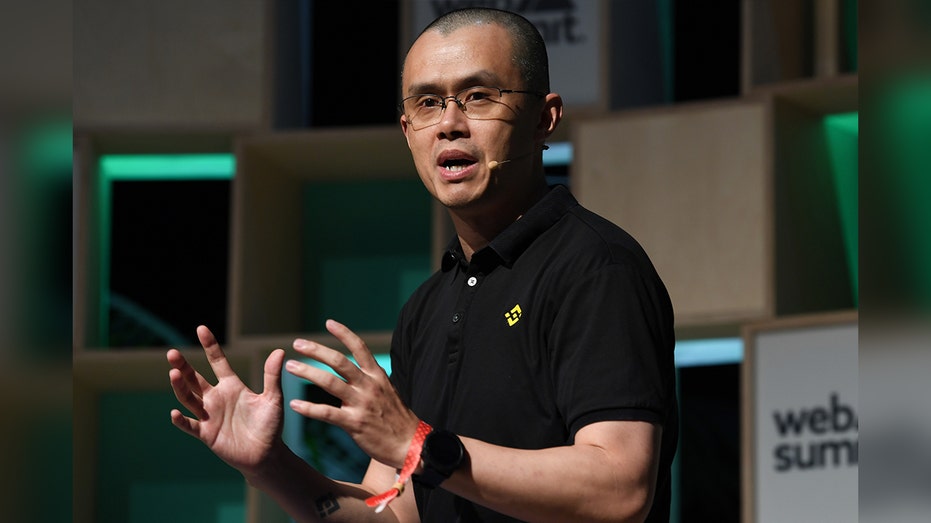
Binance founder Changpeng Zhao. (Zed Jameson/Bloomberg )
“There’s a terminal… You can get on there for 15 minutes. You can type, [but] there’s no cut and paste… if you cut one paragraph and want to move it to a different place… So, I just do a brain dump. Just type as fast as I can, and then I have to get off, and I wait for an hour to get back on the computer.”
That said, this is a book worth reading for the simple fact that CZ explains the rise of crypto (it’s now a $3 trillion business being embraced by the biggest banks and financial firms in the world) as well as his own journey in a clear, relatable narrative. He name-drops a ton, which is where this book shines, particularly his description of his last meeting with another famous crypto player known by his initials.
SEN RICHARD BLUMENTHAL: CRYPTO IS A GAMBLE OUR FINANCIAL SYSTEM DOESN’T NEED
That would be SBF, or Sam Bankman-Fried, the founder of the now-defunct FTX crypto exchange serving a 25-year sentence after being convicted of multiple fraud charges tied to the collapse of his company, when $8 billion in customer funds went missing. In CZ’s telling, as FTX was imploding, SBF came to him hat in hand for a loan in such a way that made him think something was up, and it wasn’t good.
Binance founder Changpeng ‘CZ’ Zhao discusses going to jail, his pardon by President Donald Trump, the Biden administration’s war on crypto and more during an exclusive interview with FOX Business’ Charlie Gasparino.
“He was just like he was just mumbling, like, can you give me a billion or whatever?” CZ tells me. “We’re talking about billions, right? I would expect him to say, look, I needed 4.387 billion, right?… He was like, it’s two, six is four. I was like, what’s going on? I think there was a lot of lying involved.”
CLICK HERE TO GET FOX BUSINESS ON THE GO
CZ decided against the loan, and not long after FTX went bust, as did SBF’s career.

Former FTX CEO Sam Bankman-Fried arrives for a bail hearing at Manhattan Federal Court on Aug. 11, 2023 in New York City. (Michael M. Santiago/Getty Images)
CZ would face his own issues. In my interview, he explains the charges against him, the Biden administration’s approach to regulation – why he thinks it went so hard against crypto and how former SEC Chairman Gary Gensler went from an industry supporter to what he believes is an adversary – and his controversial pardon by Trump.

Rival heirs are entitled to Gina Rinehart-led Hancock Prospecting’s iron ore royalties over some mining tenements in the Pilbara, the state’s highest court ruled.


Britain’s Prince Harry speaks of struggles of fatherhood on Australia tour


Incoming Bank of Korea chief signals potential for hawkish shift amid surging import costs
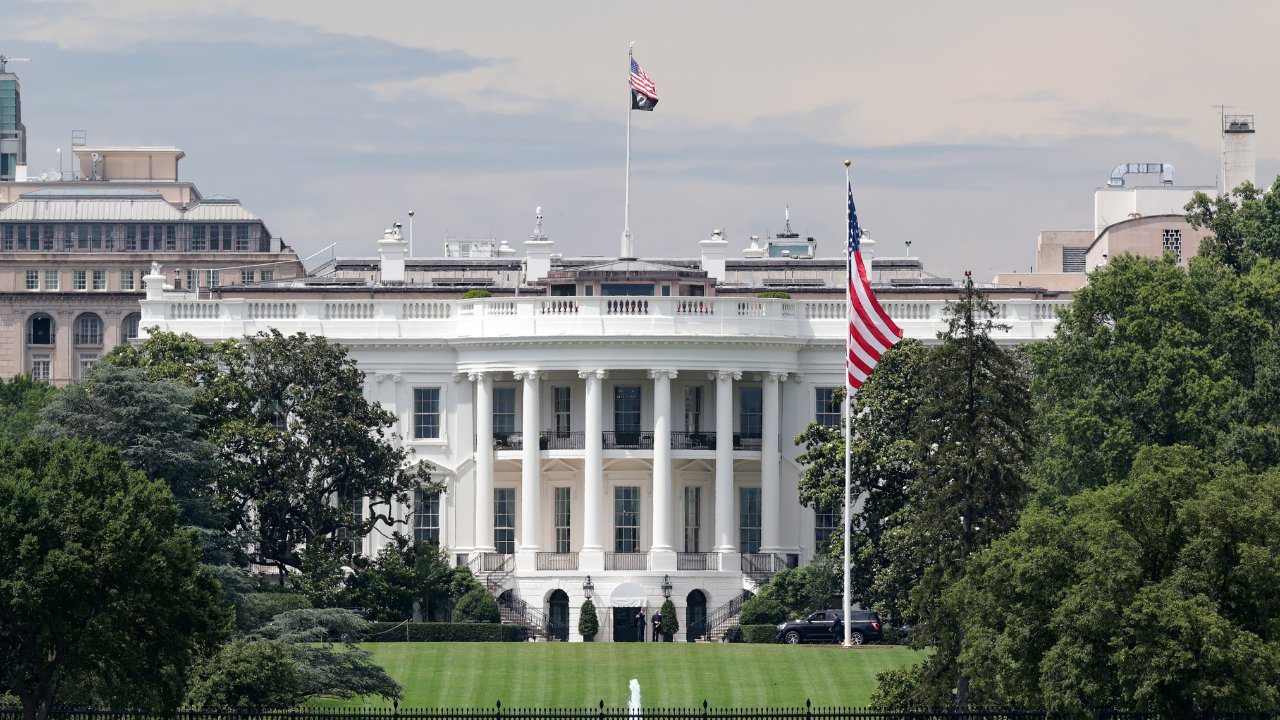
XX-XY Athletics founder Jennifer Sey on why major brands are backing away from diversity-branded programs.
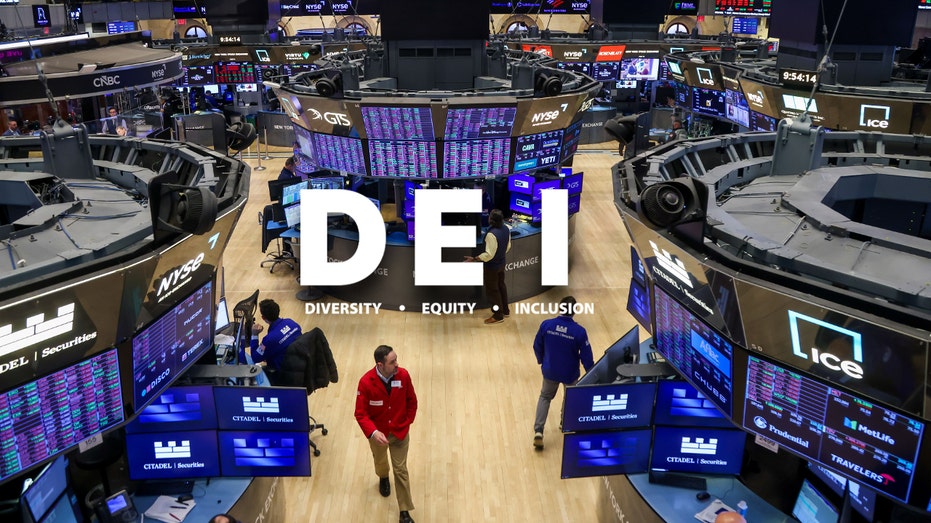
The White House released a study on Monday that found diversity, equity and inclusion (DEI) policies hinder productivity by leading to inefficient management that undercuts economic growth.
The authors of the report used federal data broken down by industry, state and year to track the representation of Black, Hispanic and indigenous people in management roles – though its analysis didn’t cover gender, sexual orientation or Asian representation. The Wall Street Journal first reported on the study.
It found that the representation of those minority groups covered by the study increased less than 1% from 2005 to 2015, but went on to jump by nearly four times that amount from 2015 to 2023.
Further, it found that industries which pursued DEI heavily by promoting minority managers were about 2.7% less productive than those which did not as of 2023. By contrast, the uptick among minority nonmanagers throughout the study period showed the productivity impact wasn’t significantly different from zero.
DEI DISCLOSURE PARTICIPATION PLUMMETS AMONG MAJOR COMPANIES AS CORPORATE PULLBACK CONTINUES
The White House study estimates that managerial inefficiencies stemming from DEI promotions have slowed economic growth. ( Kayla Bartkowski/Getty Images)
“A natural takeaway from these two figures is that there is nothing inherently less productive about minority workers or minority managers. The issue is rapidly promoting unqualified workers in order to meet racial quotas set forth by DEI,” the authors wrote.
“There are clearly many qualified minority managers; the nonnegative effect of the minority manager share on productivity before 2017 attests to this,” the report explained.
It added that it’s “worth observing that DEI actually does a disservice to these qualified minority managers, as they may experience a stigma if they are viewed as being DEI hires,” which the report noted was a phenomenon studied in a 1993 report.
IS CORPORATE AMERICA BREAKING UP WITH DEI OR JUST TAKING ITS RELATIONSHIP UNDERGROUND
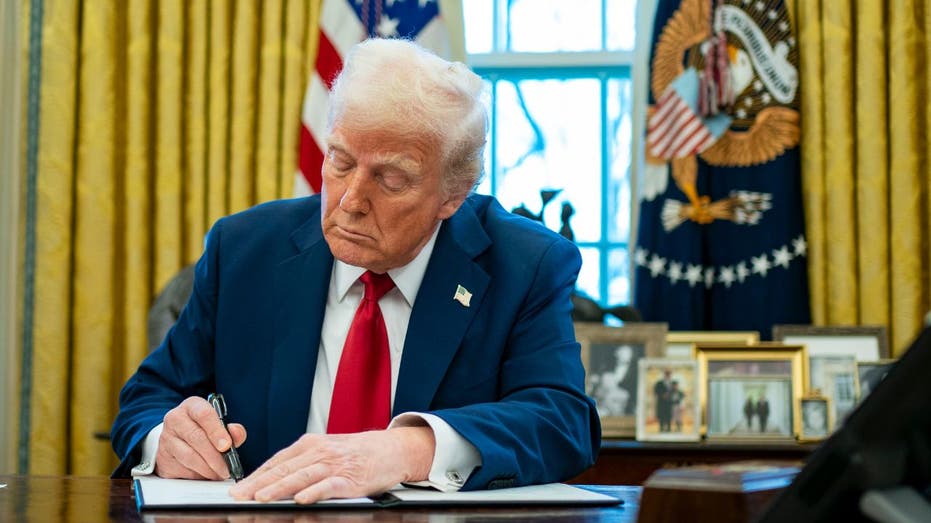
President Donald Trump has taken executive actions to curtail DEI. (Bonnie Cash/UPI/Bloomberg/Getty Images)
“These estimates imply that DEI promotion has led to inefficient management, raising the cost of doing business. These costs lead the companies practicing DEI to hire fewer people and pay their workers less. In the aggregate, this implies meaningfully reduced gross domestic product (GDP) in recent years, because a reduction in output per hour implies a reduction in aggregate output,” the study said.
It estimates that compared to a counterfactual with no DEI, U.S. GDP in 2023 was $94 billion or 0.34% lower than it otherwise would have been. That amounts to an average drag of about $1,160 in 2023 alone for a household with two working adults, according to the report.
CHRISTIAN INVESTORS WITH $4B+ LAUNCH CAMPAIGN TO STRIP ‘WOKE’ AGENDAS FROM MAJOR CORPORATIONS
Inspire Investing is targeting a slew of major corporations in 2026, tied to DEI-related resolution topics. (Getty Images)
The White House’s report noted those findings are similar to those of other studies that showed the reduction in labor market discrimination under the Civil Rights Act significantly increased productivity and GDP by improving the ability of employers to match workers to jobs that best suit their abilities.
“In this way, reductions in discrimination served as a boon to the U.S. economy. Unfortunately, the reimposition of discriminatory practices through DEI initiatives reversed some of these gains,” the study explained.
The report noted that the Trump administration’s efforts to push companies to rollback DEI requirements and companies have referenced DEI less frequently in regulatory filings and earnings calls. Some of that decline was attributed to the risk of litigation over DEI policies.
GET FOX BUSINESS ON THE GO BY CLICKING HERE
“In sum, American corporations have increasingly begun to roll back their DEI programs in response to the revival of American meritocracy under the leadership of the Trump administration, curtailing DEI and the economic losses that came with it,” the White House study concluded.

Vance heckled as he chides Pope
Earnings call transcript: Scott Technology’s H1 2026 shows steady growth

🚨 América v Nashville line-ups confirmed

Why Israel is blocking foreign journalists from entering

Bitcoin: We’re Entering The Most Dangerous Phase

Alan Cumming Brands Baftas Ceremony A ‘Triggering S**tshow’

Will Bitcoin Skyrocket When Iran War Ends?

Financial crises agya h.kya apne Emergency fund bnaya h ya nahi? #Financetips #Emergencyfund #shorts

Would you be interested in working with the FBl’s Financial Crimes Unit? | #catchmeifyoucan
-

 Politics4 days ago
US brings back mandatory military draft registration
-
 Sports4 days ago
Man United discover Nico Schlotterbeck transfer fee as defender reaches Dortmund agreement
-

 Fashion4 days ago
Weekend Open Thread: Veronica Beard
-

 Politics5 days ago
Malcolm In The Middle OG Turned Down ‘Buckets Of Money’ To Appear In Reboot
-

 Politics3 days ago
World Cup exit makes Italy enter crisis mode
-

 Crypto World6 days ago
Canary Capital Files SEC Registration for PEPE ETF
-

 Business4 days ago
Tesla Model Y Tops China Auto Sales in March 2026 With 39,827 Registrations, Beating Cheaper EVs and Gas Cars
-

 Crypto World1 day ago
The SEC Conditionalises DeFi Platforms to Be Avoided for Broker Registration
-

 Crypto World1 day ago
SEC Signals Exemption for Crypto Interfaces From Broker Registration
-

 Crypto World7 days ago
Bitcoin recovers as US and Iran Agree a Ceasefire Deal
-
 NewsBeat2 days ago
Pep Guardiola and Gary Neville agree over Arsenal title problem that benefits Man City
-

 Business5 days ago
OpenAI Halts Stargate UK Data Centre Project Over Energy Costs and Copyright Row
-

 Business3 days ago
Ireland Fuel Protests Enter Day 5 as Blockades Spark Shortages and Government Prepares Support Package
-

 Politics5 days ago
LBC Presenter Mocks Trump Over Iran War Failures
-

 Crypto World4 days ago
Federal judge blocks Arizona from bringing criminal charges against Kalshi
-
 NewsBeat3 days ago
JD Vance announces ‘no agreement’ with Iran over nuclear weapons fear
-

 Tech5 days ago
A version of Windows 10 released a decade ago is now eligible for additional security patches
-

 Crypto World22 hours ago
SEC Proposes Certain Crypto Interfaces Don’t Need to Register as Brokers
-

 Business4 days ago
IMF retains floor for precautionary balances at SDR 20 billion
-

 NewsBeat18 hours ago
Trump and Pope Leo: Behind their disagreement over Iran war
You must be logged in to post a comment Login