










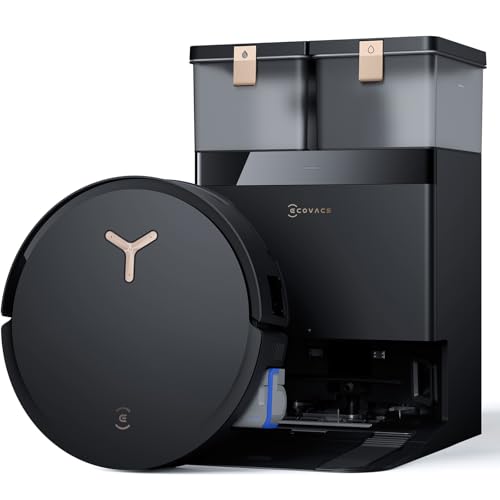
Vacuuming is a chore, even if you use one of the best vacuums in Australia. If you want to make it as effortless as possible, investing in one of the best robot vacuums is the way to go.
The best robovacs available today are autonomous cleaners requiring minimal human intervention. They’re perfect for regular vacuuming and mopping, plus they can be scheduled for when you and the family will be away to minimise disrupting household activities.
One thing to note is that you may need to supplement your robovac with a manual model if you have stairs or need deep cleaning – take a look at my guide of the best cordless stick vacuums in Australia for the top options.

Sharmishta Sarkar
Sharm is TechRadar’s APAC Managing Editor, with nine years of experience testing and reviewing vacuums of all shapes and sizes. She’s fascinated by how quickly robovac technology has evolved and is always keen to try the next new thing in floor care.
Quick summary – my top 3 picks

Ecovacs Deebot X8 Pro Omni
✅ Excellent cleaning, including edges
✅ Roller mop is fantastic
✅ Base station performance is top notch
❌ Louder (and chattier) than similar models

Dreame Aqua10 Ultra Roller
✅ Remarkable vacuum and mopping
✅ Best base station in the business
✅ Very reliable
❌ Expensive

✅ Good suction for the price
✅ Reliable navigation
❌ Bulky, unattractive base station
❌ Patchy obstacle avoidance
While the three robot vacuums listed above are my top picks across different price points, there are plenty of other models to consider. If you are a pet owner, I’d recommend a different Dreame model to the Aqua10 Ultra, but it too will do just as nicely for pet owners, even those who have carpets at home.
Alternatively, if you have cash to spare, the newly released Roborock Saros 20 is a pet-hair specialist, plus it’s got nifty features that allow it to scale steps and look after high-pile carpets. It’s the most expensive model on this page, but it can be argued it justifies it as the most powerful and full-featured model available today.
If none of my top 5 picks catch your fancy, I’ve listed 3 more alternatives further down the page to offer a few more choices – rest assured they’ve all been tested my either me or one of my colleagues.
The best robot vacuum for most people
Image 1 of 5


These days there’s not a lot that differentiates robot vacuums – they all do the same things, including vacuuming, mopping and self-cleaning. The Ecovacs Deebot X8 Pro Omni stands out for one reason only: value for money.
That said, I wouldn’t recommend this at full price, but it’s so often discounted these days that it’s really hard for me to pass up as a top recommendation. I’ve tested it myself and I can vouch for its excellent performance, both when cleaning floors and cleaning itself. So if you’re after an all-in-one robovac and you see this going for under AU$1,400, I’d say pick it up.

Cleaning performance
For a robot vacuum that costs four figures, the expectation is that it will clean really well and this Deebot absolutely does. Not only did I conduct TechRadar’s standard tests of sprinkling tea and oats on different floor types, I also tested this bot’s ability to suck up hair without tangling and how it handles very fine dust. It passed all my tests with flying colours.
What impressed me the most was its ability to clean room edges really well. It was the first robot vacuum I’d personally tested that would move right along a wall or furniture, ensuring not even the smallest amount of floor space was left out, whether vacuuming or mopping.
It’s suction is good enough for mid-pile carpets with some hair (or fur), but if your carpets are exceptionally dirty, it will struggle – as I suspect most robovacs will. Mopping, however, is really where it shines and its roller leaves no streaks on the floor. It’s able to clean most caked-in stains, but if it’s a heavy spill that’s dried out, it will struggle. For a robot vacuum, though, I found hardly anything to complain about when it came to cleaning performance.
Coupled with reliable navigation and intelligent features like dirt and stain detection, this robot vacuum will clean a spot repeatedly if necessary, without you needing to send it back for another pass. It’s really very good.

Base station performance
Most premium robovacs require minimal human intervention and the Deebot X8 Pro Omni is no exception. Its base station suction is excellent and you’ll find only the barest of fine dust coating the inside of the onboard dustbin after a clean.
The base station can also take a 3L dust bag, so you may not need to empty it too often if you don’t have pets or if you’re running the machine once a week, but keep in mind that even the tiniest amount of moisture trapped inside the bag will generate nasty odours, so you may want to have spares ready.
Arguably, its best bast-station ability is its mop cleaning, which leaves the roller looking like new after every session. And that alone I think warrants its high asking price. Hot-air drying is better than what I’ve seen on even more expensive models, so Ecovacs is to be commended on its dock performance, something I’ve seen is quite steady across several Deebot models.

From a design perspective, this is one of the few robot vacuums on the market that doesn’t have a top navigation turret (or puck) on the bot – instead, all the sensors it needs is on the front and sides. That said, it is taller than some other robots on this page, and it may not necessarily squeeze under low-lying furniture. Both the side brush and the roller mop extend outward when an edge is detected and its obstacle avoidance is excellent.
There’s a plethora of features here, some which I think is superfluous, like Matter support, but there is a voice assistant (called Yiko) that you can interact with and give some basic commands to. It’s good at following several commands, but it has its limitations and I found I hardly ever used it, relying mostly on the app for all cleaning sessions.
There’s really nothing that stands out about the base station, although the brass-coloured clips on the water tanks add a touch of class. Inside the base station is also a detergent dispenser and that’s optional to use, as with nearly every robovac available today, and it fits a 3L dust bag. Keep in mind that even the tiniest amount of moisture trapped inside the onboard dustbin will enter the bag and odours can begin to build, so you may need to change the dust bag out more often than expected.

Ecovacs says the X8 Pro Omni’s 6.400mAh battery should last up to 228 minutes but, in real-world use, that’s not possible unless you’re running it at its lowest suction and waterflow levels. Still, battery use is quite good here and my tests showed that a Standard suction and medium water rater will clean about 60sqm to 70sqm (on a vacuum-and-mop setting), but that will vary depending on how much dirt it detects and if it’s mopped repeatedly at any one spot.
On Max suction, I got a no more than 78 minutes on a single charge on the Deep Clean (or best navigation) mode. That’s quite impressive to be honest, as other models I’ve tested have given me about 60-65 minutes on a similar setup.
Read more: my in-depth Ecovacs Deebot X8 Pro Omni review
Another excellent robot vacuum
Image 1 of 5


Whether vacuuming or mopping floors, or even cleaning itself, the Dreame Aqua10 Ultra is absolutely fantastic and comes in as a runner up (rather than my #1 pick) only because of its price – even when discounted it’s expensive. But if money is no object and you want a reliable floor cleaner, this truly is excellent.
I use the Aqua10 Ultra at home and find I don’t reach for my cordless vacuum unless I need to a handheld cleaner. It’s even more feature-packed than the Deebot listed above, which does go some way in justifying its higher price tag, and it’s performance is extremely reliable.
Cleaning performance
Perhaps the standout spec for the Aqua10 Ultra is its listed suction power of 30,000Pa. Now, as impressive as that sounds, it doesn’t always translate in real-world use but this robot vacuum comes close.
The biggest test I could perform to test its vacuuming capabilities was seeing how well it sucked up entangled hair from within fibres of a mid-pile carpet and the Aqua10 Ultra handles that quite well. I will admit that if you have a pet that sheds a lot, the robot will struggle to clean up everything, but its pickup rate of 98% to 99% is better than anything I’ve experienced with other robovacs on its maximum suction setting. And if you only have hard floors, even lower suction is usually enough.
What I also like about this machine while its vacuuming is it automatically raises its small side brush when it detects certain kinds of debris, like rice or oats, to avoid scattering particles.
It even takes mopping to new heights, with the roller featuring its own slim cover that automatically triggers when the bot senses a carpet, so not even the tiniest amount of moisture transfers. And when it comes to cleaning up stains, the roller does use some pressure to mop and, like the Deebot above, it cleans a spot repeatedly if it senses more dirt. This may look like its navigation is unreliable, but that’s not the case at all – it’s highly reliable.
Base station performance
You’ll need to clean out the dirt water regularly and refill the clean, but like all other premium robovacs, the Aqua10 Ultra’s base station requires minimal intervention. Its standout feature is the hot-air drying of the dust bag as well, which means this is a rare robovac that can vacuum over a little moisture on the floor – I still wouldn’t send it (or any robot vacuum) to clean a wet spill in the vacuum-and-mop mode.
The detergent dispenser here has two compartments – one for detergent and one for pet odour neutraliser. In fact, a bottle of each is shipped in the box and you can buy more later, although use of either is optional.
I also appreciate that Dreame ships a long-handled brush in the box with this machine that is used to clean the wash tray once every month or so. In fact, I’ve even used it to clean out the scum from the dirty-water tank as well.
The one thing this Dreame doesn’t do as well as the Deebot X8 Pro Omni listed above is dry out the roller mop as well. I’ve occasionally found it still a little damp after hours of air drying, but I’ve never noticed any bad odours or mould growing on the mop. If you do find this is happening regularly, there are multiple drying options and you can set one that best suits your cleaning needs.
I am personally a big fan of the overall design aesthetic of the Dreame Aqua10 Ultra – there’s something Mid-Century about it and resembles Marshall speakers in some ways. In Australia, the only colour of this model is black, but its gold accents lend it some class. Clean lines and sharp corners mean it fits into any home’s decor too.
The robot has a moving LDS puck that descends when it detects low-lying furniture or when charging. A light ring around the circumference of the puck lights up when charging too. It’s a very neat design, robot and dock both.
It doesn’t skimp on features either, and I’ve already mentioned a few – high suction, air-drying for the dust bag, and cover for the mop, with the last two being unique to it. There’s also a voice assistant that you’ll hear often enough and responds well to some basic commands for cleaning functions.
The app is one of the better-looking ones where robot vacuums are concerned, but it sure can get a little complicated with some setting options hidden away. The app gives you access to all the features you need, but it requires a learning curve to master – I think the app could be better streamlined, but that’s a personal niggle.
The battery life here is quite standard for premium robovacs, promising over 200 minutes on a single charge but, again, this will vary depending on what suction and mop settings you use for cleaning.
However, the way the Dreame uses its battery isn’t the most efficient. As soon as you begin a clean, the vacuum suction kicks in as soon as it exits the base station. So by the time the bot gets to its starting point, it could have easily dropped 1% to 2%. This won’t affect use in smaller one- or two-bedroom homes, but this loss will affect larger spaces.
Topping up takes a few hours, but it’s intelligent enough to know just how much it needs to finish an incomplete job and will pick up where it left off efficiently enough.
Read more: my full Dreame Aqua10 Ultra review
Best budget robot vacuum
Image 1 of 5


Xiaomi may not be the most popular brand of robot vacuum in Australia, but this particular model did well in our review and is often discounted to below the AU$600 mark. Considering it’s a do-it-all bot, that’s good value.
Another reason it’s slightly cheaper now is because it’s a couple of years old now, and it’s not the most powerful cleaner on the market, but if you have hard floors, it proves you don’t need to spend top dollar to have a clean home.
Cleaning performance
Like many robovacs, the Xiaomi X20+ has four suction settings, but don’t expect it match the likes of the Dreame Aqua10 Ultra listed above. Still, its 6,000mAh of suction does very well on hard floors. Our reviewer conducted some of our standard tests and found its ‘Strong’ setting vacuumed wood floors very well.
On carpets, however, the X20+ needed a couple of passes to get it clean on the strongest setting. It will struggle if you are a pet owner with carpets and rugs, but it should still be able to clean fur and hair from hard floors easily. Keep in mind that for slightly larger debris, you will notice some scattering.
There are three waterflow levels when mopping and the traditional dual rotating mops do quite well. However, our reviewer found that the X20+ can’t always distinguish between hard floor and thin rug, so you may want to remove those from its path when it’s mopping as the pads won’t necessarily rise up.
While its navigation is fine, its obstacle avoidance isn’t as good as newer and more expensive models.
Base station performance
While our reviewer wasn’t enthused by the design of the base station, its performance was another matter – it was impressive. It’s a comparatively basic model, and yet it houses a 2.5L dust bag to automatically empty the onboard bin. It can also wash the mop after every session and dry the pads with warm air.
What’s not basic about the Xiaomi’s dock is the water-tank capacity – it’s 4L for both dirty and clean, which is one on the larger side for a budget model. There’s also a self-cleaning cycle to clean the base of the dock, but you will need to give it a little scrubbing with a brush to remove any gunk from the mop pads. The dirty water from this self-clean cycle gets automatically pumped into the dirty-water tank, a feature that’s usually found in higher-end models like the Dreame Aqua10 Ultra.
As I’ve already mentioned, the Xiaomi X20+ is a very basic robovac, so don’t expect a lot of bells and whistles here. In fact, other that its ability to vacuum, mop and clean itself, there’s not much else here in terms of features, but you can still schedule cleans and choose suction and waterflow rates.
Even from a design perspective, there’s not a whole lot to talk about, but our reviewer wasn’t a fan of the base station’s bulk. That comes from the 4L water tanks for the most part, but there aren’t any design elements to make it stand out in a crowded market.
So while there’s not a lot to talk about here, it has everything it needs to its job with minimal human intervention.
The X20+ houses a 5,200mAh battery that’s rated for a maximum 140 minutes runtime. That’s not bad for the price point, but again, I should iterate that, in real-world use, you’ll get a lot less than that.
I would recommend this machine for a smaller home because the battery also takes a very long time to top up – up to 6.5 hours.
Read more: our full Xiaomi X20+ review
Best robot vacuum for pets
Image 1 of 5


If you have the cash to splash, and you’re a pet-friendly household, there’s nothing better than the Roborock Saros 20 right now. It’s arguably the most powerful robot vacuum on the market at present and adds features that can be handy.
Being best in class comes at a price and, being newly released as of April 2026, it’s likely not going get discounted for a while. If you can wait for a drop in price, this could be the only robovac you need.
Cleaning performance
If there’s one thing robot vacuums aren’t is consistent — there’ll be days when it does well and at other days you might find it’s missing spots. Not so with the Roborock Saros 20. Our reviewer found it to be very consistent day after day on both carpet and hard flooring. And even though it was cleaning copious amounts of pet hair, there was no clogging during self-empty.
While it needs a slightly higher suction setting to tackle finer particles, it handles larger debris easily with minimal scattering. And, if you don’t need it mop and opt for a vacuum-only run, it will drop its mop pads in the dock.
When you do need it to mop, it does a decent job, although I should note that dual spinning mops aren’t as effective at cleaning viscous, sticky messes compared to roller mops. Despite that, our reviewer says it “did a stellar job”, leaving tiles free of marks and streaks. The Saros 20 also reliably avoided mopping thin rugs, while reaching out to mop along room edges consistently.
Base station performance
Like many premium robovacs, the Saros 20’s dock is impressive, effectively washing the mop pads even after they’ve cleaned sticky messes, with our reviewer saying “they looked (and smelled) good as new”.
There’s a soap dispenser in the dock and you can set to automatically add detergent to the mop water and, like the Dreame Aqua10 Ultra listed above, it uses hot air to dry out the dust bag as well to prevent bacterial and fungal growth. This process, however, will emit a low hum that you will need to get used to.
I was a big fan of the Roborock Saros 10 series design and I’m glad the brand hasn’t changed things too much in the Saros 20. It’s still a smart-looking machine with a slim robot that doesn’t have the LiDAR puck, so it can roll under some furniture for cleaning. That’s because Roborock uses a proprietary navigation technology called StarSight rather than LiDAR.
The headline act here is the AdaptiLift Chassis that raises the bot up to traverse high thresholds. This also allows it to get the bot to lift itself out when it gets stuck, and helps it roll smoothly over thick carpets.
The robot can also assess the depth of the carpet or rug in front of it, and elevate itself to one of a selection of preset heights, where it will hover as it cleans. This theoretically means an efficient clean without the risk of getting bogged down in the fibres. It’s suitable for pile up to 3cm.
Object recognition has been improved for the Saros 20, with Roborock promising recognition of over 200 common object types, as small as 2cm in height or width.
A 6,400mAh battery is quite standard in premium models, and that’s what you’ll find here as well. While our reviewer neglected to mention how long the Saros 20 can run on a single charge, I can make some educated estimates based on the Saros 10 series and other bots using the same battery capacity.
Roborock says this should give you up to 180 minutes of use in Quiet mode but, in real-world use, that will around the 160-minute mark in the same mode, but it depends on how much clutter the bot will need to go around. On higher suction settings, you’re likely to get between 50 to 70 minutes, again depending on how much cleaning and navigation the robot has to perform.
The standout here is that Roborock says the machine has fast charging abilities, so you could see a fully drained battery top up in about 2.5 hours.
Read more: our in-depth Roborock Saros 20 review
The best robot vacuum for carpets
Image 1 of 5


While most robot vacuum cleaners today are designed for homes with mostly hard floors as mopping is their headline act, an older model like the Roborock S8 MaxV Ultra would suit homes with mostly carpets, but you also get the advantage of a mop.
Admittedly the S8 MaxV Ultra doesn’t have the kind of suction power that most of the models on this page can boast, it puts its limited 10,000Pa to good use and can handle carpets quite well. However, I would note that it might struggle compared to more expensive models if you also have pets, but for smaller, non-pet households with wall-to-wall carpets, this is a good option.
Cleaning performance
There’s a very specific cleaning option in the app for this machine — called Deep Clean — which will vacuum your carpets twice. Moreover, like all other bots these days, the S8 MaxV Ultra automatically increases suction on carpets, so you know your home will get a good cleaning. I should note that you’ll get the best clean from this machine on low- to mid-pile carpets — excessive pet hair on high-pile carpets will be a challenge. And that should be fine as most Aussie homes have low- or mid-pile carpets — high-pile, plush carpets are rare in fully carpeted rooms.
Opting for a machine like the S8 MaxV Ultra means you’ll be able to mop any hard floors you might have as well. Our reviewer found that it’s not the best mopper but it will handle regularly cleaning jobs easily enough.
Base station performance
Considering it’s an older model, the S8 MaxV Ultra’s dock uses 60ºC water temperature to wash the mop, which is enough to remove grease and clean it effectively for the next task, but you should be aware that newer models use higher water temperatures that sterilise mops well. There is a spinning brush roller inside the dock to help scrub the mop pad though.
It’s also worth keeping in mind that unlike other models, there’s a version of the S8 MaxV Ultra available that can be plumbed into a water supply, so you don’t need to keep refilling the 4L clean-water tank, but the model we’ve tested is the manual option and works identically to all other models on this list.
There’s not a lot that’s standout here that other robovacs don’t offer, but what the S8 MaxV Ultra offers is enough to clean a smaller home regularly. While our reviewer found that its obstacle avoidance wasn’t the best, its mapping was quick and accurate.
The app is also quite intuitive and provides a few cleaning options to suit different needs. It gives you plenty of control, allowing you to choose auto cleaning or set up a manual routine if you wish.
The S8 MaxV Ultra uses a 5,200mAh battery capacity that is more than enough for smaller homes — it might clean a one- or two-bedroom home, but will need to pause its cleaning to recharge for any space that’s larger.
This does diminish its value a little as it still costs more than four of the robovacs on this page, but it could well be worthwhile if you appreciate a good clean.
Read more: our full Roborock S8 MaxV Ultra review
Alternatives to consider
If none of the robot vacuums above take your fancy, here are some other models worth considering. These robovacs all scored highly on test, but just didn’t quite make our main guide.

On test, we were wowed by this robovac’s mopping abilities. The mop pads assert downwards pressure as they rotate, leaving our tester’s floors shining and spotless. In contrast, the vacuuming was good but not outstanding.
Read the full Eufy Omni S1 Pro review

The transparent dock aside, this robovac makes good use of DJI’s drone tech to avoid obstacles. It’s also features excellent navigation, strong suction, decent mopping and very good edge-cleaning.
Read our in-depth DJI Romo P review

Offering three different mop pad pairs in the dock to clean different areas — the change takes place automatically — you also get threshold clearance of up to 4cm, impressive obstacle recognition and excellent cleaning to boot.
Read our detailed Dreame Matrix10 Ultra review
Frequently asked questions
Are robot vacuums worth it?
For certain people and households, very much so. I only used manual vacuums before I started testing robot vacuums for TechRadar, and now I wouldn’t be without a robovac. They have revolutionized my cleaning – I live alone, so I’m not dealing with loads of dirt and dust buildup, but I send the robot out once or twice a week and it just takes care of the vacuuming for me. It’s realistically far more often than I would drag a manual vac out of the cupboard, so my apartment is cleaner than usual.
I have also kitted my partner’s larger house out with a hybrid robot vacuum and it has proved a massive win there too. The bot gets sent out almost nightly to clear dog hair from carpets and remove paw-prints from the kitchen floor. It’s not up to a deep clean, but it stops the hair from building up and keeps things looking neat between manual vacuum sessions.
A 2024 study from Roskilde University in Denmark explored how householders’ experiences with robot vacuum cleaners compared to their experience with manual vacuum, and found that “robotic vacuum cleaners are inferior in use, yet transform vacuuming”. That’s exactly in line with my personal experience – while I can see that my robot vacuum’s cleaning power is not as strong as a manual vac, the fact that it allows for regular, basically effort-free vacuuming means it has still had a massive positive impact on my cleaning routine.
Robot vacuums can be expensive, but you don’t have to shell out for a top-of-the-range model – for many people, even a basic, affordable option will make a big difference.
There are caveats, though. Robovacs can’t deal with stairs (although watch this space, that might be changing), so their usefulness in multi-floor homes is far more limited. They’re also not capable of proper deep cleans, so will typically supplement rather than replacing a manual vacuum.
Do robot vacuums work on pet hair?
Yes, but with caveats. Robot vacuums can’t match manual models for outright suction power, so they won’t clean built-up pet hair and dander as thoroughly as, say, a corded upright. That’s especially true if you’re dealing with carpet. Robot vacs are best suited to convenient, little-and-often cleans, so if you send yours out daily, it’ll help you stay on top of your pet’s hair and stop it from building up in the first place. You’ll likely still want to supplement this with the occasional deep clean with a manual vacuum, though.
If you have shedding pets and carpet, look for models with higher suction power (8,000Pa or ideally more), and a boost/extra suction mode option. Models with rubbery brushrolls are also typically good at gripping hair.
Can a robot vacuum replace a normal vacuum?
Realistically, probably not. For one, you can’t use them anywhere but on the floor, so you’ll need something to clean your stairs, furniture, mattress and so on. They also can’t really match manual vacuums for suction power, so while they can help you stay on top of dust build-up, most people will want to supplement their work with the occasional deep clean with a manual vacuum.
Read more on this subject in our article exploring can a robot vacuum replace your existing vacuum cleaner?
How do robot vacuums work?
In the most basic terms, robot vacuums are compact machines that make their way around your home and vacuum up dust and dirt. Most modern robot vacuums can also mop floors for you. They’re paired with a dock where they return to charge. These docks can sometimes also take care of maintenance tasks for you, including emptying the small onboard dust bin. Navigation typically relies on lasers (LiDAR) supplemented by cameras.
The features included in today’s best robot vacuums are wide and varied. On the vacuuming front, it’s common to see a side sweeper that rotates to flick dust and dirt from the edges of rooms to the bot’s suction path. On more advanced robot vacuums, you might have two, and they might be able to extend out when the bot senses it’s near the edge of a room. Many modern bots also have anti-tangle features built into their rollers, to prevent hair wrap.
Mop types also vary. Common setups include a D-shaped pad (which sometimes vibrates or presses down) or two spinning discs, but roller mops are also starting to become popular. They’re dragged across the floor to wipe it down and – to some extent – scrub away dirt. Pricier bots will be able to lift their damp mop pads when they sense they’re moving onto carpet, and if you opt for an advanced dock it might be able to refill your onboard water tank, clean and dry the mop pads, and dispense floor cleaners too.
How to choose the best robot vacuum for you
New robot vacuums are being released at an alarming rate, and it can be difficult to tell one from another. Below is my quick guide to how to choose the right model for you – if you want more information, you’ll find it in our in-depth robot vacuum buying advice article.
Suction power
Why you can trust TechRadar
We spend hours testing every product or service we review, so you can be sure you’re buying the best. Find out more about how we test.
Up to the start of 2025, the highest suction level you’d see on a robot vacuum would be around 10,000Pa (which will be ample for most people’s need). However, today’s top-specced bots can generate upwards of 18,000Pa. In the mid-range price bracket today, expect 6,000-9,000Pa of suction. Lower than 6,000Pa is what I’d expect in a budget-friendly model.
Respected robovac brand Eufy says on its blog that 2,000-6,000Pa is “adequate for routine maintenance cleaning”. That figure is a little outdated, and you can expect more suction for your money nowadays. If you’re dealing with things like pet hair and/or carpets, I’d definitely be looking at a bot that has 6,000Pa plus.
Remember that in general robot vacuums are designed for regular, light cleaning rather than deep cleans.
Vac or mop-vac?
Many of today’s best robot vacuums are also able to mop floors. This can be useful if you have a mix of hard floors and carpet, but be aware that robovac mopping tends not to clean as well as good old manual mopping. Dual, rotating circular disc mop pads tend to deliver a more effective clean than semicircular mop pads, in my experience, and the new breed of roller mop is a step up again.
Dock type
The cheapest robovacs will only have a dock for charging. Pricier models incorporate self-emptying of the onboard dustbin, and draining/refilling of the onboard water tanks. The very fanciest models offer automatic mop pad cleaning, and detergent dispensing for the mopping fluid. Onboard dustbins tend to be small, so if you’re dealing with lots of dust or hair then I’d recommend prioritizing a self-empty dock. However, be aware that the more functions you add, the bigger the dock will be – the ones with water tanks can be pretty massive.
Cleaning features
Beyond suction power, there are lots of design aspects that will affect how well your robovac cleans, including edge cleaning features, pet-friendly features, and features geared towards tackling hair.
Historically, robovacs aren’t great at cleaning up to the edges of rooms, but today’s best robot vacuums add spinning side brushes designed to flick debris into the robot’s suction path. Combo models might also have mops that can kick out from the side of the vacuum to get closer to the sides of rooms.
Pet owners might want to look for a model that is able to recognize their pet and either avoid it (if it’s spooked by the addition of a sentient appliance to the household) or seek it out to check up on it while you’re out of the house. If your pet isn’t reliably house trained, beware: even bots with advanced object recognition can struggle with objects under, say, 2 inches in height. I’d never trust any robovac to avoid pet poop, even those with promises that specifically focus on pet mess.
If you have long hair, or live with someone who does, you might want to consider a robot vacuum with features geared towards ensuring it doesn’t end up tangled all around the brushrolls. Some brands will address this by tapering their brushrolls or breaking them in the middle, with the aim of quickly directing hair towards the bin inlet. Dreame even has an alternative brushroll attachment that has little blades to chop up hair so it can be more easily managed.
A new robot vacuum can be a significant investment, so to ensure you end up with the right one for you, each model here has been tested either by myself or one of my regular, experienced freelance reviewers.
We test out models from a wide range of brands, including the likes of iRobot Roomba, Dreame, Shark and Roborock, as well as Eufy, Ecovacs, Narwal and Proscenic. We cover options for different budgets, rather than only testing the latest-and-greatest models (which, after all, will be overkill for many shoppers).
Our reviews are underpinned by specific, standardized tests. Here’s a rundown of our review process.
Suction tests
We test fine dirt pickup by sprinkling a mix of flour and cookie crumbs on the floor, and large debris pickup using oats. We look at whether there’s any remnants left after a single pass from the robot vacuum, and if it catches them on a second run. We repeat these tests for both hard floor and carpet.

Mopping tests
If the robot vacuum has a mop function, we see how it copes with fresh liquid spillages as well as dried-on, sticky messes. To test this, we smear a tiny bit of ketchup on the floor and leave it to dry, and also spill a bit of soy sauce, then task the robot with a spot clean. We’ll also look at how the robot tackles the issue of switching between vacuuming and mopping – will it reliably detect floor type, and pick up its mop pad when moving from hard floor onto carpet, for example?
Mapping tests
When we first get the robot set up, we’ll see how long it takes to create a map of the home, and how accurate that map is. For subsequent runs, we’ll keep an eye on how the robot navigates the space; if takes a logical route through the house, if it repeats already-clean areas, and so on.
Navigation tests
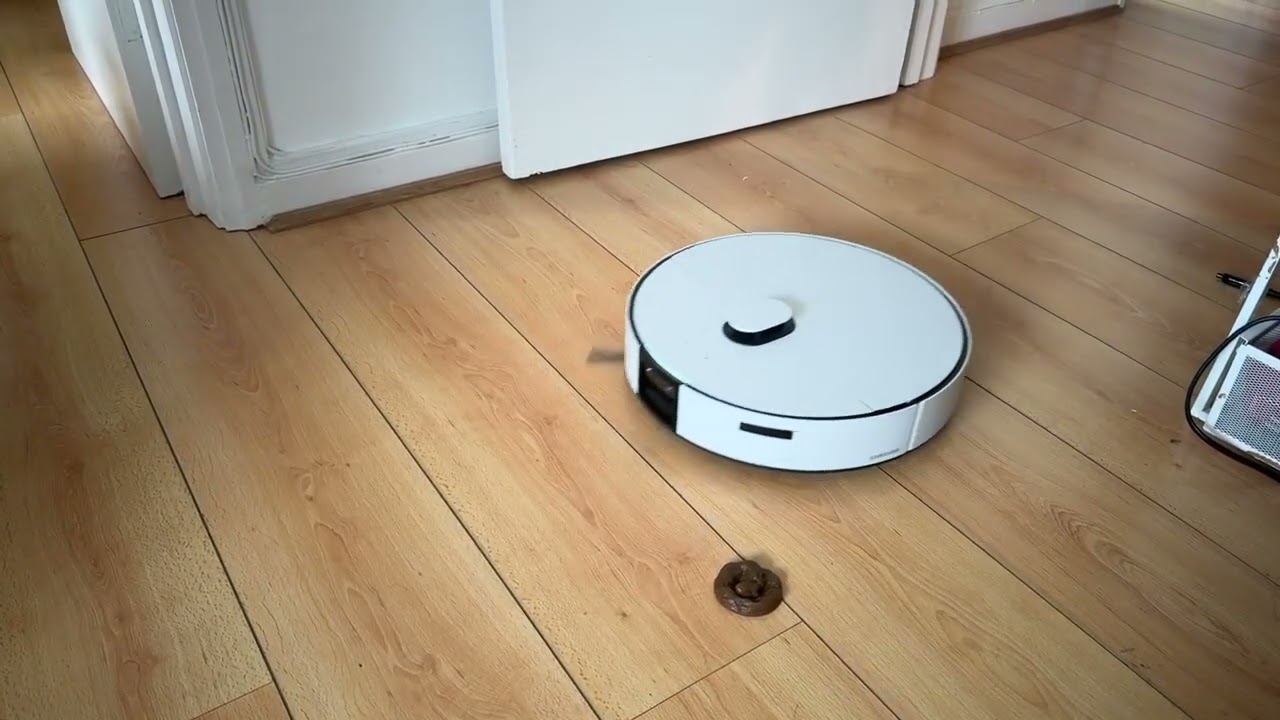
To assess object avoidance, we lay out a charge cable, a sock that’s a similar color to the floor, and some fake pet poop, to see if it can reliably spot and avoid them. On the navigation front, we’ll also test the robot vacuum’s edge cleaning abilities – does it get right up to the edges of rooms, or leave a margin that needs manual cleaning.
General use tests
As well as these standardised tests, my reviewers integrate these robovacs into their daily cleaning setup, to get a feel for how effective and user-friendly they are in general. This includes assessing noise levels (when cleaning and also when self-emptying), how long they last on a single charge, and how regularly they have to return to the dock to self-empty or charge.
We’ll dig into the app and gauge how well-designed, usable and intuitive it is, and how much control it offers. We’ll also test any specific performance claims made by the manufacturer, as well as checking out any special features like built-in voice assistants and camera surveillance.
After at least two weeks of testing, we consolidate our findings and use them to judge who (if anyone) we’d recommend the robot vacuum to. We also compare the features and build quality to the price, to assess if the robot vacuum is good value for money.
Read more on how we test vacuum cleaners.












































You must be logged in to post a comment Login