
Business
Form 8K QUOTEMEDIA For: 14 April




In an era where environmental accountability is no longer optional, vehicle emissions have become a key concern for businesses and individuals alike.
The combination of stricter UK regulations and increased public understanding of emissions makes businesses maintain their emissions at lower levels for both compliance requirements and their corporate image. The condition of a vehicle’s exhaust system represents an essential element in this process, and, more importantly, the role of timely exhaust repairs.
The exhaust system functions to direct combustion gases away from the engine. It functions as a primary system which decreases dangerous emissions while it boosts engine performance and helps vehicles achieve required emission limits. The development of system faults will lead to increased emissions which create environmental harm and result in financial penalties.
The implementation of scheduled maintenance creates a vital link between commercial vehicle operations and environmental protection for companies that operate vehicle fleets and people who want to decrease their environmental impact. For cleaner emissions and a smoother drive, book exhaust repairs with Magowan Tyres today.
Why Exhaust Systems Matter More Than You Think
Contemporary exhaust systems work to decrease harmful emissions which include carbon monoxide, nitrogen oxides, and hydrocarbons. The system uses catalytic converters and oxygen sensors to transform toxic gases into safer substances which are then emitted into the atmosphere.
The systems reach their full potential when they operate at their optimal performance level. It loses its equilibrium when an exhaust pipe gets damaged, a catalytic converter stops working, or even when a small leak occurs. The result is that vehicles produce extra pollutants which harm environmental targets and break environmental regulations.
This is where regular exhaust repairs become crucial. Early problem detection protects the system from additional harm while maintaining peak performance for emission control systems.
The Business Case for Timely Exhaust Repairs
Small and medium-sized enterprises together with fleet operators face problems because their vehicles experience downtime and they must manage unplanned maintenance expenses. When people overlook exhaust problems their vehicles sustain greater damage which results in decreased engine performance and lower fuel efficiency.
Proper maintenance, regular inspections, and immediate exhaust repairs bring measurable benefits to the company:
- Improved fuel efficiency: A well-maintained exhaust system supports better engine performance, reducing fuel consumption.
- Regulatory compliance: Vehicles that fail emissions tests risk fines, penalties, or operational delays.
- Cost control: Early intervention prevents small issues from turning into costly repairs.
- Brand responsibility: Demonstrating a commitment to lower emissions aligns with modern sustainability expectations.
In a competitive market, such constructs influence operational efficiencies and reputations.
Environmental Impact and Legal Responsibility
The United Kingdom enforces tighter emission regulations throughout its cities which struggle with air quality problems. The establishment of Clean Air Zones combined with Low Emission Zones creates new requirements for businesses who must ensure their vehicles comply with established standards.
Emission test failures occur mainly because of defective exhaust systems. Regular exhaust repairs help vehicles succeed in MOT tests while it also supports environmental goals through reduced air pollution and better public health outcomes.
The organization will save money by staying ahead of compliance requirements instead of dealing with penalties and restrictions which occur after violations.
Warning Signs That Should Not Be Ignored
It is equally essential to know when you may need an exhaust repair. Few significant warning signs that you can focus on include:
- Unusual engine noise or increased exhaust sound
- Reduced fuel efficiency
- Vibrations while driving
- A noticeable drop in engine performance
- Strong fumes or unusual smells
Indeed, these set of symptoms often signify issues that may impact both emissions and safety unless an appropriate action is taken.
A Practical Approach to Emission Control
The rise of electric vehicles will continue, but internal combustion engines will persist as a major component of UK transportation systems during the next years. The most effective way to decrease emissions today requires organizations to focus on better vehicle maintenance.
The organization needs to consider exhaust repairs as an essential component of their operational plan. By ensuring systems operate as intended, businesses and individuals can achieve a balance between performance, cost-efficiency, and environmental responsibility.
The Bottom Line for Businesses and Drivers
The emission control process not only requires organizations to implement fresh technologies but also to maintain their existing systems. Exhaust systems represent a crucial element of this procedure, which requires complete operational maintenance to avoid any potential problems that can occur from system neglect.
Exhaust repairs represent an effective method for reducing emissions while maintaining compliance and enhancing vehicle performance that all drivers, fleet managers, and decision-makers should adopt. The connection between sustainability and efficiency has created a situation where organizations can achieve substantial results through their choice of maintenance practices.
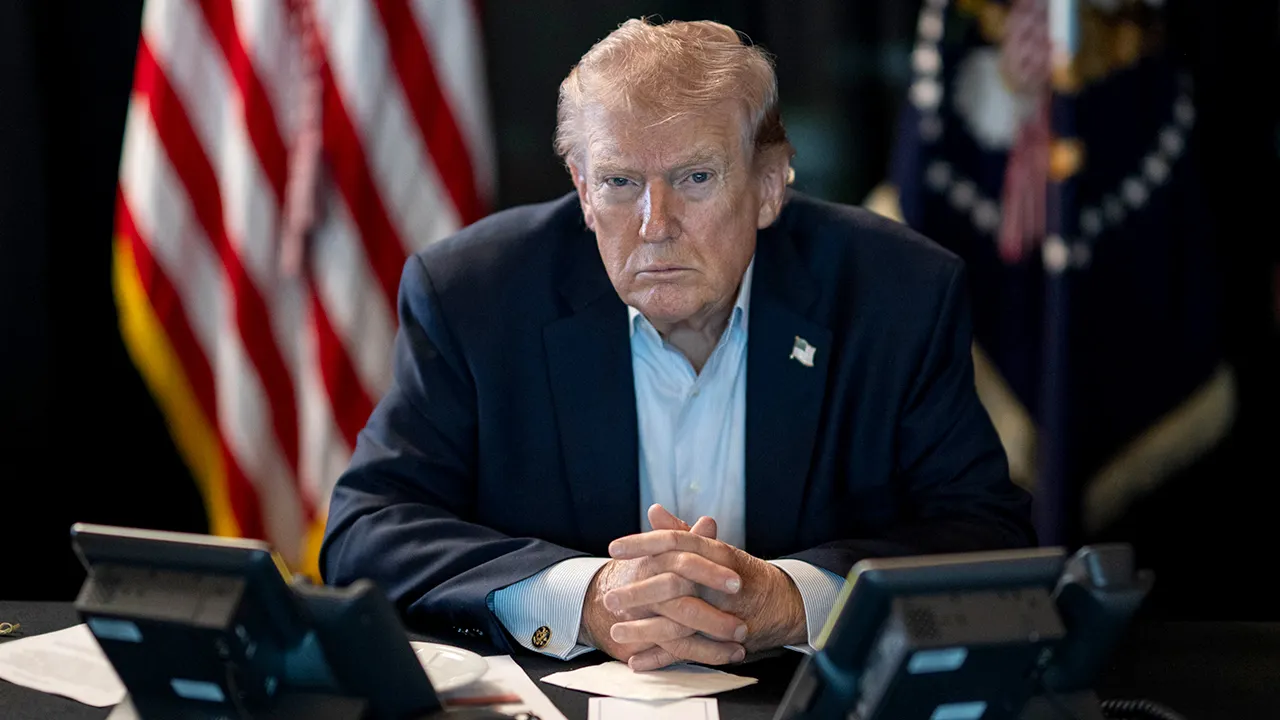
SNEAK PEEK: President Donald Trump gives anchor Maria Bartiromo his assessment of the state of the Iran conflict and more on ‘Mornings with Maria.’
President Donald Trump said the U.S.-Iran war is “very close” to an end as hostilities ease amid a two-week ceasefire agreement.
“I think it’s close to over, yeah. I view it as very close to being over,” Trump told FOX Business anchor Maria Bartiromo in an interview that will air on “Mornings with Maria” on Wednesday.
The president’s comments come as peace talks between U.S. officials and Iranian negotiators are reportedly expected to restart Thursday following stalled weekend talks in Pakistan.
On Monday, Trump instituted a naval blockade of all Iranian ports, marking a fresh intensification of the conflict after the U.S. agreed to stop bombing Iran last week.
FORMER TREASURY SECRETARY WARNS IRAN CONFLICT AND ‘TRUST DEFICIT’ COULD DERAIL US-CHINA MEETING
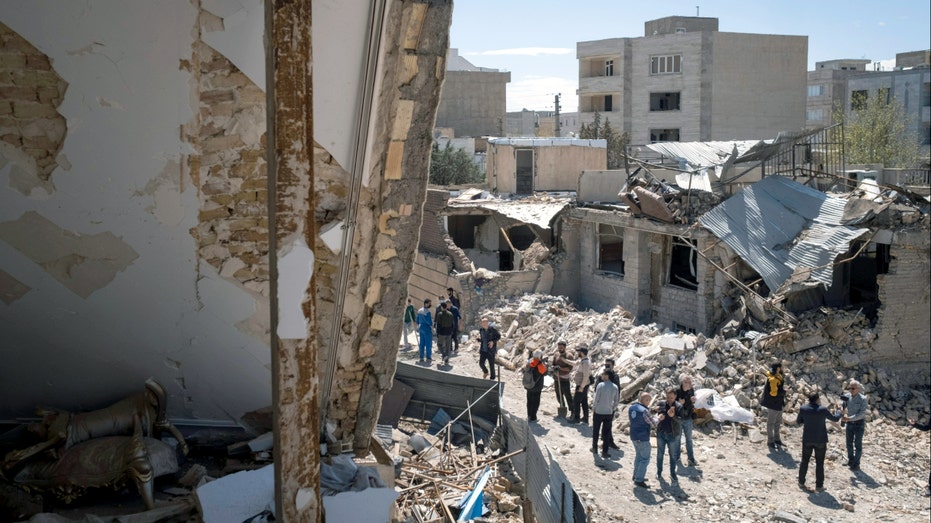
A view of a residential area affected during the United States-Israeli military operations in the city of Karaj in Alborz province, several kilometers west of Tehran, Iran, on April 3, 2026. The area was struck on March 9. (Morteza Nikoubazl/NurPhoto via Getty Images / Getty Images)
Despite Trump saying the war is nearing an end, he also said the U.S. is not done.
“If I pulled up stakes right now, it would take them 20 years to rebuild that country. And we’re not finished,” he said. “We’ll see what happens. I think they want to make a deal very badly.”
Vice President JD Vance and senior White House officials held negotiations with Iranian officials over the weekend in Pakistan regarding Tehran’s nuclear program and enrichment plans.
TRUMP’S IRAN CEASEFIRE ROCKED WITHIN HOURS AMID REPORTED MISSILE, DRONE ATTACKS
The talks reportedly produced no breakthrough, although Vance said Monday “a lot of progress” was made and that Iran holds the deciding hand in what comes next in the conflict.
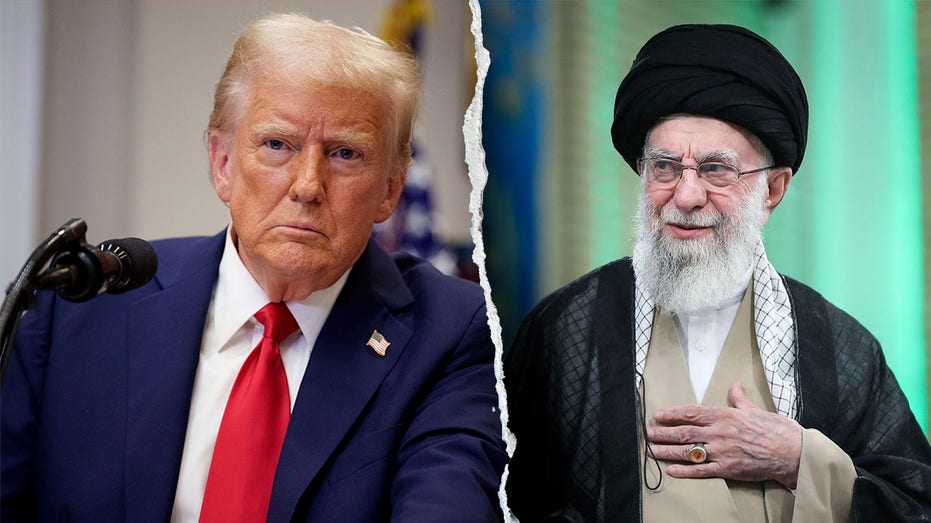
President Donald Trump, left, considers striking Iranian nuclear sites as Middle East tensions escalate. Iran’s Supreme Leader Ayatollah Ali Khamenei, right, has rejected U.S. demands for surrender. (Getty Images / Getty Images)
“The ball is very much in their court,” Vance told “Special Report.” “You ask what happens next, I think the Iranians are going to determine what happens next.”
The Iran war began Feb. 28 when the U.S. and Israel launched coordinated strikes against Iran, killing Supreme Leader Ayatollah Ali Khamenei and effectively disfiguring the Islamic regime.
TRUMP AGREES TO 2-WEEK CEASEFIRE IF IRAN OPENS STRAIT OF HORMUZ
President Trump has boasted the degradation of Iranian leadership and military capacities, frequently declaring that U.S. forces “decimated” the Tehran’s military capabilities.
Thirteen U.S. servicemembers and thousands across the Middle East have been killed in the conflict.
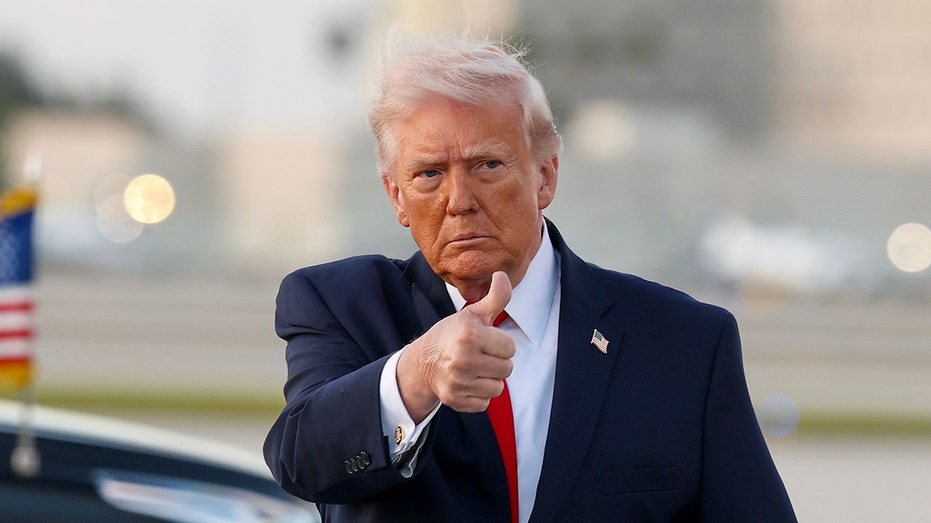
President Donald Trump waves to the media after walking off of Air Force One at Miami International Airport on April 11, 2026 in Miami, Florida (Tasos Katopodis/Getty Images / Getty Images)
GET FOX BUSINESS ON THE GO BY CLICKING HERE
Trump justified his entrance into Middle East conflict, telling “Mornings with Maria” it was necessary to disarm Iran’s nuclear capabilities.
“I had to divert because if I didn’t do that, right now, you’d have Iran with a nuclear weapon,” Trump said. “And if they had a nuclear weapon, you’d be calling everybody over there ‘sir,’ and you don’t want to do that.”
Tune in to “Mornings with Maria” on FOX Business Wednesday at 6 am ET to see the full interview with President Trump.

NEW YORK — Bitcoin climbed above $75,000 on Tuesday, gaining more than 1% to trade around $75,249.84 as investors shrugged off lingering Middle East tensions and embraced signs of de-escalation in U.S.-Iran relations along with steady institutional buying through spot exchange-traded funds.

The world’s largest cryptocurrency rose $807.61, or 1.08%, by 3:39 p.m. UTC, extending a sharp rebound from earlier in the week when prices dipped amid uncertainty over a U.S. naval blockade in the Strait of Hormuz. The move pushed Bitcoin firmly above the psychologically important $75,000 level, a threshold it had tested but failed to hold consistently in recent sessions.
Analysts attributed the surge to a combination of technical short-covering, a weakening U.S. dollar and renewed risk appetite as diplomatic signals suggested progress toward easing the conflict that had rattled energy markets and global equities. Oil prices eased modestly Tuesday, relieving some pressure on broader risk assets and allowing Bitcoin to reclaim ground lost during the weekend dip below $71,000.
“This rebound shows Bitcoin’s growing role as a hedge that can benefit from both risk-on sentiment and its scarcity narrative,” said one crypto strategist at a major Wall Street firm. “When geopolitical fears ease even slightly, capital flows back into high-beta assets like BTC.”
The rally triggered significant liquidations in the derivatives market, with more than $541 million in crypto positions wiped out in the past 24 hours, the majority of them short bets against Bitcoin. Short sellers absorbed roughly $440 million in losses, amplifying the upward momentum as leveraged positions unwound.
U.S. spot Bitcoin ETFs continued to provide a structural tailwind. Cumulative inflows into the products have now exceeded $53 billion since their 2024 launch, far surpassing initial projections. Recent daily inflows have remained positive even during periods of volatility, with institutions including BlackRock, Fidelity and ARK Invest adding hundreds of millions in recent sessions. On one standout day earlier in April, the ETFs recorded nearly $471 million in net purchases, underscoring persistent institutional conviction despite macroeconomic headwinds.
Bitcoin’s performance Tuesday aligned with a broader recovery in risk assets. The Nasdaq Composite also advanced, reflecting renewed optimism that corporate earnings and artificial intelligence spending could outweigh near-term geopolitical or inflationary risks. Ethereum rose alongside Bitcoin, gaining over 8% in some sessions earlier Tuesday, while the total crypto market capitalization added roughly $115 billion in a single day.
The latest price action comes after a choppy start to April 2026. Bitcoin opened the month near $71,000 following a ceasefire-related bounce in early April, but tensions reignited with reports of the U.S. blockade, briefly pressuring prices toward the low $70,000s. Optimism around potential peace talks, including comments from administration officials about “progress” in negotiations, helped reverse the sentiment.
Market observers noted that Bitcoin has demonstrated resilience during the conflict period. While traditional safe havens like gold faced pressure in certain phases, Bitcoin often moved with risk assets, rising on hopes of resolution and holding support levels during spikes in oil prices. Some analysts described it as behaving more like a “tech-growth proxy” in the current environment than a pure inflation hedge.
Institutional adoption remains a core driver. Spot Bitcoin ETFs have absorbed billions in 2026 alone, with first-quarter inflows estimated around $12 billion to $18 billion globally for crypto ETPs. This demand has helped offset selling from miners and early holders while creating a steady bid under the market. Morgan Stanley’s recent launch of its own Bitcoin trust further signals growing acceptance among traditional financial giants.
Regulatory developments also factored into sentiment. Progress on crypto-friendly legislation, including discussions around the CLARITY Act, has kept long-term bulls engaged. Pro-crypto policies under the current administration continue to contrast with earlier uncertainty, providing a supportive backdrop even as the Federal Reserve maintains a cautious stance on interest rates.
The Fed’s data-dependent approach has left markets pricing in limited rate cuts for the remainder of 2026, with some traders even contemplating the possibility of no cuts or modest hikes if inflation reaccelerates due to energy costs. Producer price data released this week showed tame increases, helping ease those concerns and supporting growth assets.
Technically, Bitcoin faced resistance near the upper Bollinger Band after its quick surge to the $74,000-$75,000 zone. Stochastic indicators flashed overbought readings, suggesting the possibility of a near-term pause or consolidation. However, sustained volume — with Binance spot trading alone exceeding $1.9 billion in recent sessions — pointed to genuine buying interest rather than purely speculative momentum.
Looking ahead, investors will watch several catalysts. Any concrete breakthroughs in U.S.-Iran talks could further boost risk appetite. Upcoming corporate earnings from tech and financial giants may reinforce the narrative of economic resilience. On the crypto-specific front, continued ETF inflows and potential updates on tokenized assets or Layer-2 scaling solutions could provide fresh fuel.
Longer-term, the post-2024 halving supply dynamics continue to play out. With the block reward at 3.125 BTC and the next halving not due until 2028, new Bitcoin issuance remains constrained. Combined with institutional accumulation, this scarcity thesis underpins many bullish forecasts that see Bitcoin testing $80,000 or higher in the coming months if macro conditions stabilize.
Challenges persist. Prolonged conflict or renewed energy shocks could weigh on liquidity and risk sentiment. April tax-related selling has historically created headwinds, though institutional flows appear to have mitigated that effect so far this year. Volatility remains elevated, with Bitcoin capable of sharp swings on headline news.
Broader crypto market breadth improved Tuesday, though gains remained concentrated in major assets. Altcoins showed selective strength, but many smaller tokens lagged as investors favored established names with deeper liquidity.
For retail and institutional participants alike, the message from Tuesday’s action was one of cautious optimism. Bitcoin’s ability to push through $75,000 despite recent macro noise highlights its maturing status as an asset class. Yet disciplined position sizing remains essential given the potential for rapid reversals.
As the week progresses, focus will shift to whether this rebound can sustain or if profit-taking will emerge near key resistance levels. Stronger-than-expected earnings or clearer diplomatic progress could extend the rally, while any escalation in the Middle East or hawkish Fed commentary might prompt a pullback.
Bitcoin’s climb to $75,249 demonstrates the market’s focus on long-term structural drivers — institutional adoption, supply scarcity and Bitcoin’s evolving role in portfolios — even amid short-term geopolitical noise. With ETF demand showing no signs of abating and global liquidity conditions still accommodative overall, many analysts maintain constructive outlooks for the remainder of 2026.
Whether this surge marks the start of a sustained move toward new highs or another volatile chapter in Bitcoin’s journey will depend on the interplay of macro developments and continued capital inflows. For now, the cryptocurrency is once again flashing its potential as a high-conviction bet on technological and financial innovation.

Jeff Sica of Circle Squared Alternative Investments discusses Disney stocks and President Donald Trumps announcement of tariffs on films made overseas.
Disney confirmed that it would be laying off 1,000 employees across the company on Tuesday.
“Over the past several months, we have looked at ways in which we can streamline our operations in various parts of the company to ensure we deliver the world-class creativity and innovation our fans value and expect from Disney,” CEO Josh D’Amaro wrote in a memo obtained by Fox News Digital.
He continued, “Given the fast-moving pace of our industries, this requires us to constantly assess how to foster a more agile and technologically-enabled workforce to meet tomorrow’s needs. As a result, we will be eliminating roles in some parts of the company and have begun notifying impacted employees.”
WHO IS DISNEY’S NEXT CEO, JOSH D’AMARO?

Josh D’Amaro sent out an employee memo on Tuesday confirming the layoffs. (David Paul Morris/Bloomberg via Getty Images / Getty Images)
A source familiar with the matter confirmed that approximately 1,000 employees across film and TV divisions, including ESPN, as well as the product and technology divisions, will be terminated along with “certain corporate functions.”
Additional articles have suggested that Marvel Studios, which Disney acquired in 2009, faced the brunt of these layoffs, with approximately 8% of the company being let go, particularly in the visual effects department. Fox News Digital reached out to Disney for comment on the impact of the layoffs at Marvel Studios.
DISNEY CEO DEFENDS MASSIVE AI DEAL, SAYS CREATORS WON’T BE THREATENED
This announcement marks D’Amaro’s first major company move since becoming CEO in March. Prior to his promotion, D’Amaro served as chairman of Disney Parks, Experiences and Products.

The layoffs were D’Amaro’s first major company change since becoming Disney CEO last month. (Gerardo Mora/Getty Images / Getty Images)
Layoffs are not new to the house of Mickey Mouse. D’Amaro’s predecessor, Bob Iger, announced a series of layoffs across the company after he resumed his position as CEO in 2022.
DISNEY DROPS TWO DEI PROGRAMS IN LATEST SEC FILING AS INVESTORS PRESSURE COMPANY TO DO MORE
By 2023, Iger had reduced the Disney workforce by approximately 7,000 employees and consolidated the company under three segments: Entertainment, ESPN, and Parks, Experiences and Products.

Former Disney CEO Bob Iger previously laid off 7,000 employees in 2023. (Gary Hershorn/Getty Images / Getty Images)
CLICK HERE TO GET FOX BUSINESS ON THE GO
As of late 2025, according to the company’s fiscal year reporting, Disney had about 231,000 employees.

Form DEF 14A Cardlytics Inc For: 14 April

CryoCell International earnings beat by $0.10, revenue topped estimates

In late March, a group of sixteen European NGOs sounded the alarm over suspected tobacco industry influence at the heart of a key EU advisory body.
The public health coalition notably points to a recent report from the European Economic and Social Committee’s (EESC) that echoes industry talking points in the debate over the ongoing revision of the EU’s Tobacco Excise Tax Directive (TED).
Tellingly, the EESC warns against “excessive increases” on the grounds that they could fuel illicit trade, thereby recycling one of the tobacco industry’s oldest false narratives arguments against stronger regulation, while disregarding World Health Organization (WHO) guidance on this policy’s unmatched effectiveness in curbing tobacco use.
With the WHO European region leading global tobacco and nicotine consumption, the TED revision represents a once-in-a-generation opportunity to bolster EU tobacco control, resist industry influence and decouple the case for effective taxation policy from the illicit trade debate. In this endeavour, French MP Frédéric Valletoux recently offered a strong path forward for France and Europe to tackle the growing parallel trade enabled by Big Tobacco, which keeps smoking rates high while draining fiscal revenues that could be reinvested in national health systems.
Valletoux’s parallel tobacco trade warning
Among the European countries most exposed to illicit tobacco flows, France is arguably best placed to call Big Tobacco’s bluff. In a February letter addressed to French Prime Minister Sébastien Lecornu – and revealed by La Tribune Dimanche– Frédéric Valletoux, chair of the National Assembly’s Social Affairs Committee, calls out cigarette manufacturers’ role in fueling the parallel trade through the “organised oversupply” of countries bordering France.
With this missive, MP Valletoux has rightly identified parallel tobacco resulting from the industry-fueled oversupply as the main driver of the EU’s broader illicit market, with Big Tobacco flooding lower-tax neighbouring markets serving as an efficient way to weaken the impact of France’s high excise taxes. Valletoux notably points to the damning example of Luxembourg, which receives around 5 billion cigarettes a year despite domestic consumption of just 600 million, with this eightfold surplus feeding the parallel markets in France, Belgium and Germany. Meanwhile, France is supplied with only 25.5 billion cigarettes when the market should normally receive around 41.5 billion, with the remaining 16 billion bought abroad.
This is no minor market distortion. Published in October 2025, a joint report by French Customs and Interministerial Mission for Combating Drugs and Addictive Behaviours (MILDECA), found that the parallel tobacco trade costs the French state €4.3 billion in lost tax revenue each year, while destabilising the tobacconist network and weakening anti-smoking efforts. As Valletoux notes, this plague of cheap tobacco keeps smokers trapped in addiction, draws younger users in through lower prices and in turn worsens tobacco’s annual social cost, estimated at €156 billion in France alone.
Clearing the air on counterfeits myth
Crucially, the Customs-MILDECA findings also puncture one of the tobacco industry’s most useful myths to obscure its facilitation of the parallel trade. As Valletoux’s letter highlights, this report reveals that 80% of France’s parallel tobacco market comes from purchases in neighbouring countries, while counterfeit cigarettes and informal street resale make up only a marginal share. The only other official quantitative study conducted in the EU, in Ireland, has reached the same conclusion.
When two official studies from two EU member-states point in the same direction, the credibility of the annual KPMG report on illicit tobacco consumption is bound to come into question. Indeed, the industry has spent years overstating the role of counterfeiting while drawing attention away from cross-border oversupply, enlisting lobbying support from the KPMG reports it funds to the tune of €11 million every year, according to the CNCT.
This practice is not unique to France. In early March, the Global Center for Good Governance in Tobacco Control (GGTC) published a report concluding that across many countries, the tobacco industry routinely deploys illicit trade as a weapon against tax increases and anti-smoking measures. Interestingly, the report also flags the repeated criticism of the KPMG studies targeting its methodological weakness and striking lack of transparency.
Moreover, as the GGCT report’s authors note, contraband products largely originate in manufacturers’ own supply chains, with an independent review of Philip Morris International’s methodology finding that as many as two-thirds of illicit cigarettes worldwide are produced by the tobacco majors themselves, before entering informal markets through oversupply and deliberate leakage.
Given the damning findings of both the GGTC and Customs–MILDECA reports, KPMG’s next report, due in June 2026, will reveal whether the tobacco industry’s narrative can still be credibly sustained. Should its figures again prove distorted or misleading, serious questions will have to be asked about whether a report used systematically as a tobacco industry lobbying tool violates the lobbying rules outlined in Article 5.3 of the WHO Framework Convention on Tobacco Control (WHO FCTC).
Europe’s only path forward
In pushing back against this tobacco industry manipulation, France has already taken a vital first step. With the support of the French Government, the National Assembly unanimously adopted on 26 November 2025 a European resolution tabled by Frédéric Valletoux calling for the implementation of the WHO Protocol to Eliminate Illicit Trade in Tobacco Products. Non-binding though such resolutions may be, this one sends a clear political signal and positions France at the forefront of Europe’s anti-tobacco effort.
The urgency is hard to overstate. As MP Valletoux has argued, the Protocol should have been implemented by the EU and its member states from 25 September 2018. Instead, under tobacco lobby pressure, the Commission failed to take the steps needed for enforcement, creating a deadlock that has allowed the parallel trade to flourish, particularly in countries with stronger tobacco control rules. Yet, contrary to Big Tobacco’s claims, the policy remedy is encouragingly simple.
As Valletoux asserts, the only viable starting point is the robust enforcement of the WHO Protocol, ensuring real independence from the industry and effective guardrails against its interference. In his letter to the French Prime Minister, Valletoux calls for this step’s completion by 1 January 2027, leaving ample time for France to establish a new cigarette traceability system fully independent from manufacturers, in line with Article 8 of the Protocol. At present, tobacco companies still select and pay the IT providers responsible for cigarette sales data in the EU, in violation of the WHO model that requires traceability systems to be controlled by states.
According to Valletoux, an exemption request, regularly used to accelerate the implementation of public health measures, could allow the WHO Protocol to apply in place of Articles 15 and 16 of the EU’s Tobacco Products Directive (TPD). Supply controls should also be addressed directly, with a decree setting the volumes manufacturers are permitted to deliver each year. With Valletoux showing the way forward, the French government should now take this position to Brussels and work with the Commission to secure a far more robust tobacco control framework grounded in the WHO FCTC and its Protocol. Anything less will mean continuing to surrender public health and revenue to Big Tobacco once again.

In the current competitive digital environment, companies are no longer evaluated solely on their products or services. Reliability, performance, and user experience are now paramount. Infrastructure is usually a single important factor for many growing companies in terms of scaling efficiency.
With the continued digitization of operations of small and medium-sized enterprises (SMEs), hosting is no longer merely a technical decision but also a strategic one. Early investment in the appropriate infrastructure tends to put companies in a better position to develop sustainably and compete in the challenging markets.
Why Infrastructure Matters More Than Ever
In the world of the modern business, when downtime is expensive and slow performance may send customers away, modern businesses are required to operate in this environment. It could be an eCommerce store with peak traffic or a SaaS that could have users worldwide but performance consistency is a must.
Traditional shared hosting plans might be suitable to the business at the initial stage, but it does not always manage to handle the growing demand. Dedicated hosting is a better option in this case. By providing exclusive resources, dedicated servers ensure stability, speed, and reliability key elements for business growth.
Expanding Across Markets with Confidence
Hosting location is becoming increasingly significant as UK-based businesses and startups seek to expand into international markets. The location of your servers determines the latency, data regulations, and user experience.
Dedicated servers in Europe provide a strategic advantage for businesses with European-targeted customers. Hosting closer to the target audience enables companies to reduce latency, improve load times, and deliver a more seamless digital experience.
It is especially significant in the case of SMEs that want to compete with bigger and more established brands. More efficient and quicker platforms can be of great assistance in the customer retention and satisfaction.
Scalability and adaptability of Expanding Companies
The other major benefit of dedicated servers is the degree of control that they offer. Businesses are able to make the most out of their server setup, unlike in common environments where the setup can only be configured so far to suit the operational requirements.
In fact, Linux dedicated servers are favored by many companies for their security, stability, and flexibility. The Linux-based environments have been highly adopted in business applications, and it provides cost effective and scalable environment to companies that need reliable environment without any unnecessary overheads.
This degree of customisation enables businesses to optimise performance, introduce customised security, and faster adaptability to emerging demands.
Supporting Performance-Driven Growth
Revenue is directly connected to performance in areas like fintech, online services and digital marketplaces. Any slight delay in page loading or transaction processing may affect user trust and conversion rates.
Dedicated servers offer stable performance because there is no resource sharing. This is to ensure that businesses can handle traffic surges without affecting user experience.
This trustworthiness can be a breakthrough to SMEs. It allows them to deliver enterprise-level performance without the enterprise-level complexity, competing better in a crowded market without being overly complicated.
Enhancing Business Continuity and Security.
Security in cyberspace is an issue that is on the rise among both small and big businesses. Data breaches and system failures can be very costly and reputation-wise.
Dedicated hosting environment provides better security as the resources are isolated, and the businesses are able to use advanced protection measures. Companies can now have more control over how their data is controlled and safeguarded, with custom firewalls, monitoring systems, and so on.
Also, increased reliability means less downtime, which is vital because it guarantees business continuity even at times of high demand or unforeseen difficulties.
An Investment in the Long-term Development
Investment into dedicated server might seem to be a big leap to many SMEs. Nevertheless, the gains usually outweigh the expenses when considered in the long run.
Scalability, customer experience enhancement and minimization of operational risks are backed by reliable infrastructure. These are the driving forces of business success and dedicated hosting is a strategic asset, rather than a technical upgrade.
With the ever-changing nature of business in the ever more digital economy, companies that have an emphasis on performance and reliability are more likely to succeed.
Final Thoughts
In a business world where the digital performance is a defining characteristic of success, infrastructure is no longer a back-end issue; it is a strategic element.
Sacrificing servers offers the basis of scalable expansion that helps the business to run smoothly, grow, and offer quality user experiences. To compete and prosper, SMEs should invest in the appropriate hosting solution, rather than an option.
Business
Enterprise Products Partners L.P. Common Units (EPD) Discusses Annual Supply Appraisal Forecast and U.S. Production Fundamentals – Slideshow

Enterprise Products Partners L.P. Common Units (EPD) Discusses Annual Supply Appraisal Forecast and U.S. Production Fundamentals – Slideshow

Most artisan food brands often have a big advantage. The maker, flavour, and story all seem very close. In turn, this makes those brands memorable in crowded markets, especially those with the same options. But there is a challenge. Businesses need to pay attention to minor details that make them more outstanding.
A growing brand must treat local identities as business assets. Businesses, like Bakery 79 bakery, may expand well if they keep their roots clear in their voice, products, and services. Growth often works best when clients still feel the same pride and warmth at all stages of the buying journey. Here is how artisan food brands grow without losing their local identity:
1. Build Growth Around a Local Promise
Smart artisan brands often scale around one promise, which remains unchanged. This promise might have a strong connection to local farmers, family recipes, or regional ingredients. Once this promise is clear, business may grow around it. It will do so without turning into brands that feel disconnected, flat, and generic from their origins.
2. Standardise the Right Things
Most founders fear systems. This is because systems often sound cold. However, good systems usually protect quality. Packing standards, staff training, recipes, supplier rules, and packing standards help brands stay consistent. But the heart of the products will not just remain recognisable. They will also remain human. The key goal is to make everything feel corporate.
3. Protect the Signals People Love
Customers always remain loyal to an artisan food brand when they see the craft behind the success of the business. This may come through open kitchens, batch notes, or seasonal menus. It can also be through short packing messages explaining where all the ingredients come from. Before they expand into online markets, shops, or towns, brands must protect several signals, such as the following:
- Community events and links
- Local ingredients
- Signature textures and flavours
- Regional tone and language
4. Choose Channels That Match the Brand
Not all sales channels are right for artisan businesses. Local food brands might do perfectly well through a simple online store, their own shop, and selected stockists. However, they may struggle in places where the cost is more important than quality or story. Expanding through wrong challenges may increase volume. Not to mention, it can damage the customer trust and the brand’s image.
5. Train Teams to Carry the Place with Them
Like products, local identity should live in people as the team grows. Staff members shouldn’t just know how to talk in a more grounded way. They must also understand the reason behind all products and the brand story. When new staff members are familiar with the business culture, customers will always feel the same character. This applies even when founders aren’t present in the room.
The bottom line is that an artisan food brand doesn’t lose its local identity simply because they scale. Usually, they lose it when scaling becomes more crucial than meaning. A smart business expands by protecting the details, which makes customers care. Afterwards, they build a smart system around those details with discipline and patience. This is how a local brand becomes a renowned business, without losing its local voice or trust.

Bitcoin Halving 2028 Is Now 50% Complete
Why Emmett Johnson Feels Like the Vikings’ Next Young RB

Sony is nerfing its Bravia TVs’ program guide


-

 Politics4 days ago
US brings back mandatory military draft registration
-
 Sports4 days ago
Man United discover Nico Schlotterbeck transfer fee as defender reaches Dortmund agreement
-

 Fashion4 days ago
Weekend Open Thread: Veronica Beard
-

 Politics5 days ago
Malcolm In The Middle OG Turned Down ‘Buckets Of Money’ To Appear In Reboot
-

 Politics2 days ago
World Cup exit makes Italy enter crisis mode
-

 Crypto World6 days ago
Canary Capital Files SEC Registration for PEPE ETF
-

 Business4 days ago
Tesla Model Y Tops China Auto Sales in March 2026 With 39,827 Registrations, Beating Cheaper EVs and Gas Cars
-

 Crypto World1 day ago
The SEC Conditionalises DeFi Platforms to Be Avoided for Broker Registration
-

 Crypto World1 day ago
SEC Signals Exemption for Crypto Interfaces From Broker Registration
-

 Crypto World6 days ago
Bitcoin recovers as US and Iran Agree a Ceasefire Deal
-
 NewsBeat2 days ago
Pep Guardiola and Gary Neville agree over Arsenal title problem that benefits Man City
-

 Business5 days ago
OpenAI Halts Stargate UK Data Centre Project Over Energy Costs and Copyright Row
-

 Business3 days ago
Ireland Fuel Protests Enter Day 5 as Blockades Spark Shortages and Government Prepares Support Package
-

 Politics5 days ago
LBC Presenter Mocks Trump Over Iran War Failures
-

 Crypto World4 days ago
Federal judge blocks Arizona from bringing criminal charges against Kalshi
-
 NewsBeat3 days ago
JD Vance announces ‘no agreement’ with Iran over nuclear weapons fear
-

 Tech5 days ago
A version of Windows 10 released a decade ago is now eligible for additional security patches
-

 Business4 days ago
IMF retains floor for precautionary balances at SDR 20 billion
-

 Crypto World19 hours ago
SEC Proposes Certain Crypto Interfaces Don’t Need to Register as Brokers
-

 NewsBeat15 hours ago
Trump and Pope Leo: Behind their disagreement over Iran war
You must be logged in to post a comment Login