
Tech
Microsoft Cordless Phone System from 1998 was Designed to Blend Everyday Calls With The Growing Capabilities Of Home Computers

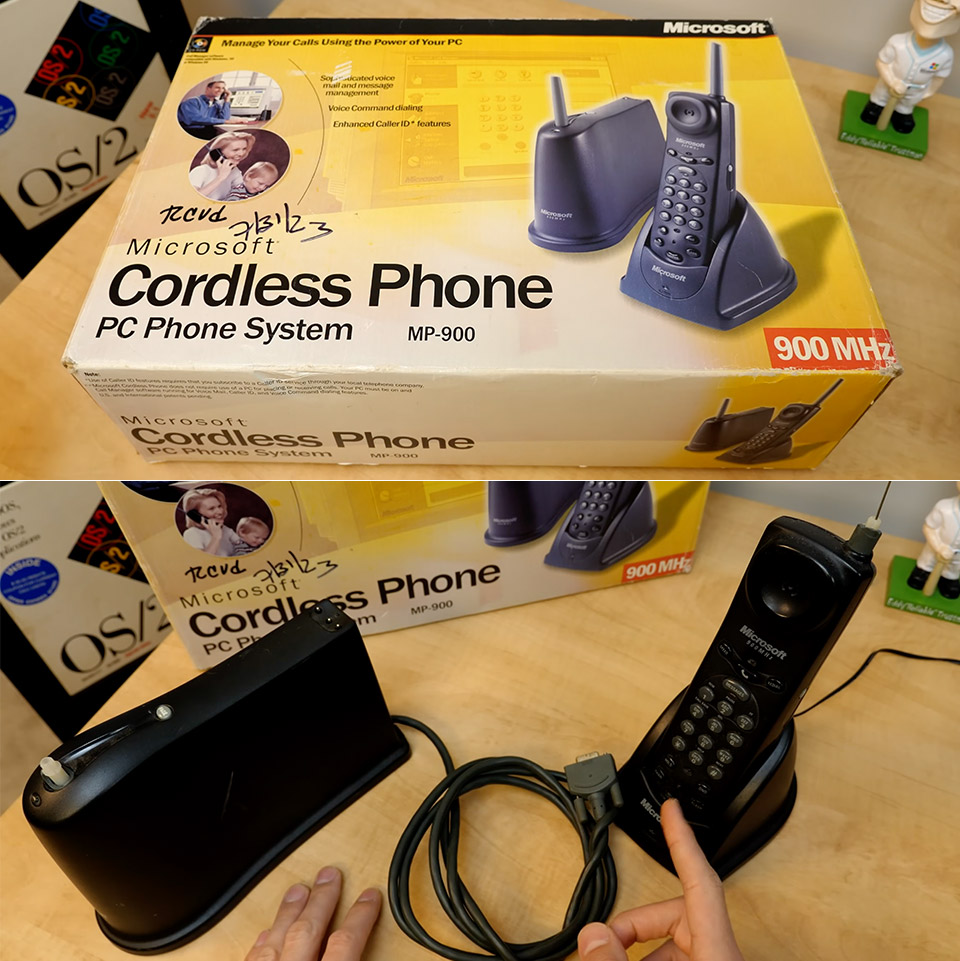
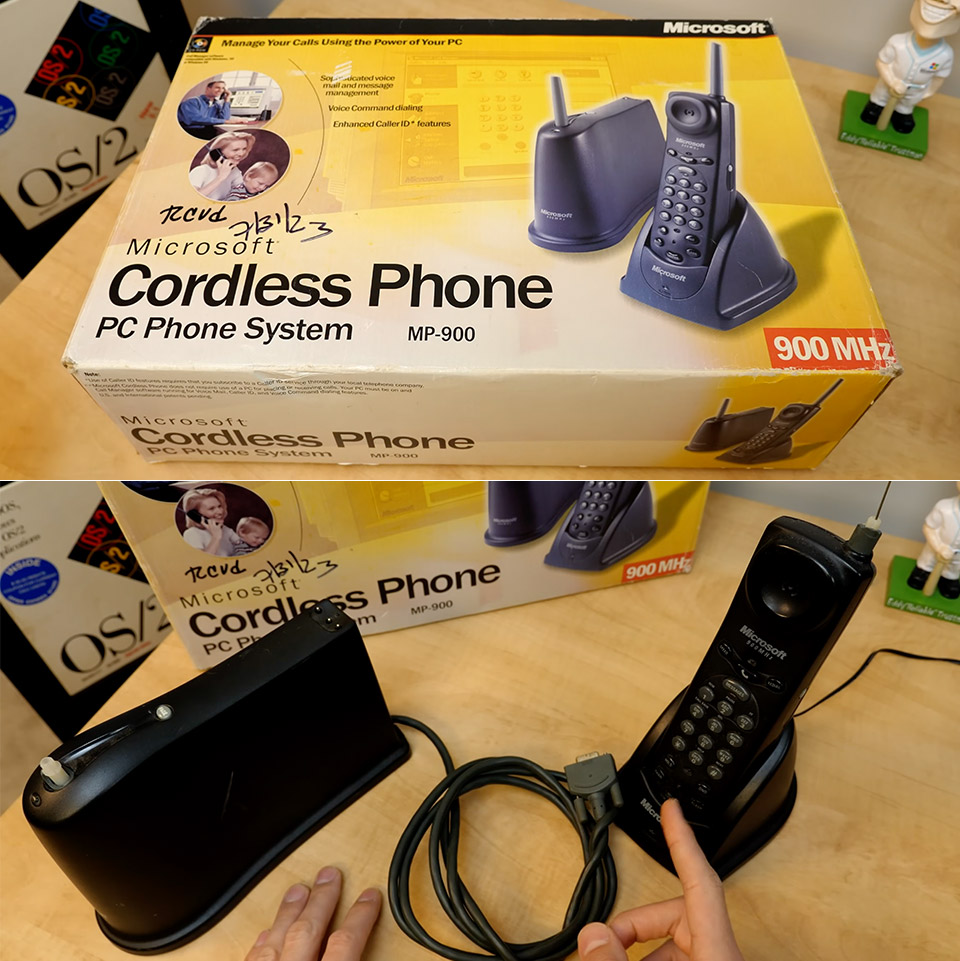
The Microsoft Cordless Phone System debuted quietly in late 1998, marking the company’s first move into hardware. It plugged directly into a Windows PC, aiming to combine ordinary calls with the power of home computers. This product was launched on October 6th, and by November, it was available in stores for an anticipated price of $199.95 ($395 today).
The system consisted of three major components: a 900MHz cordless handset, a base unit, and a separate charging dock. People would simply plop the dock down wherever they thought it most convenient. The base unit would simply plug into a conventional landline and communicate with the computer via a serial port. Without the computer, you’d just receive a standard cordless phone, good for basic calls, with respectable range, clear sound, and 40 interference-free channels. It included all of the normal functions you’d expect, such as a hold button, redial, volume control, out-of-range alerts, and low power notifications.

ASUS ROG Xbox Ally – 7” 1080p 120Hz Touchscreen Gaming Handheld, 3-month Xbox Game Pass Premium…
- XBOX EXPERIENCE BROUGHT TO LIFE BY ROG The Xbox gaming legacy meets ROG’s decades of premium hardware design in the ROG Xbox Ally. Boot straight into…
- XBOX GAME BAR INTEGRATION Launch Game Bar with a tap of the Xbox button or play your favorite titles natively from platforms like Xbox Game Pass,…
- ALL YOUR GAMES, ALL YOUR PROGRESS Powered by Windows 11, the ROG Xbox Ally gives you access to your full library of PC games from Xbox and other game…
When it was connected to the PC, things became much more fascinating. Microsoft included Call Manager software that worked with Windows 95 and 98. The application requires a Pentium 90 or higher processor, at least 16MB of RAM (32MB was suggested), a sound card with a microphone and speakers, and an open serial connection. It wasn’t like you could just turn off the computer and let it do its thing; for complete functionality, the machine needed to be powered on with the program operating quietly in the background.
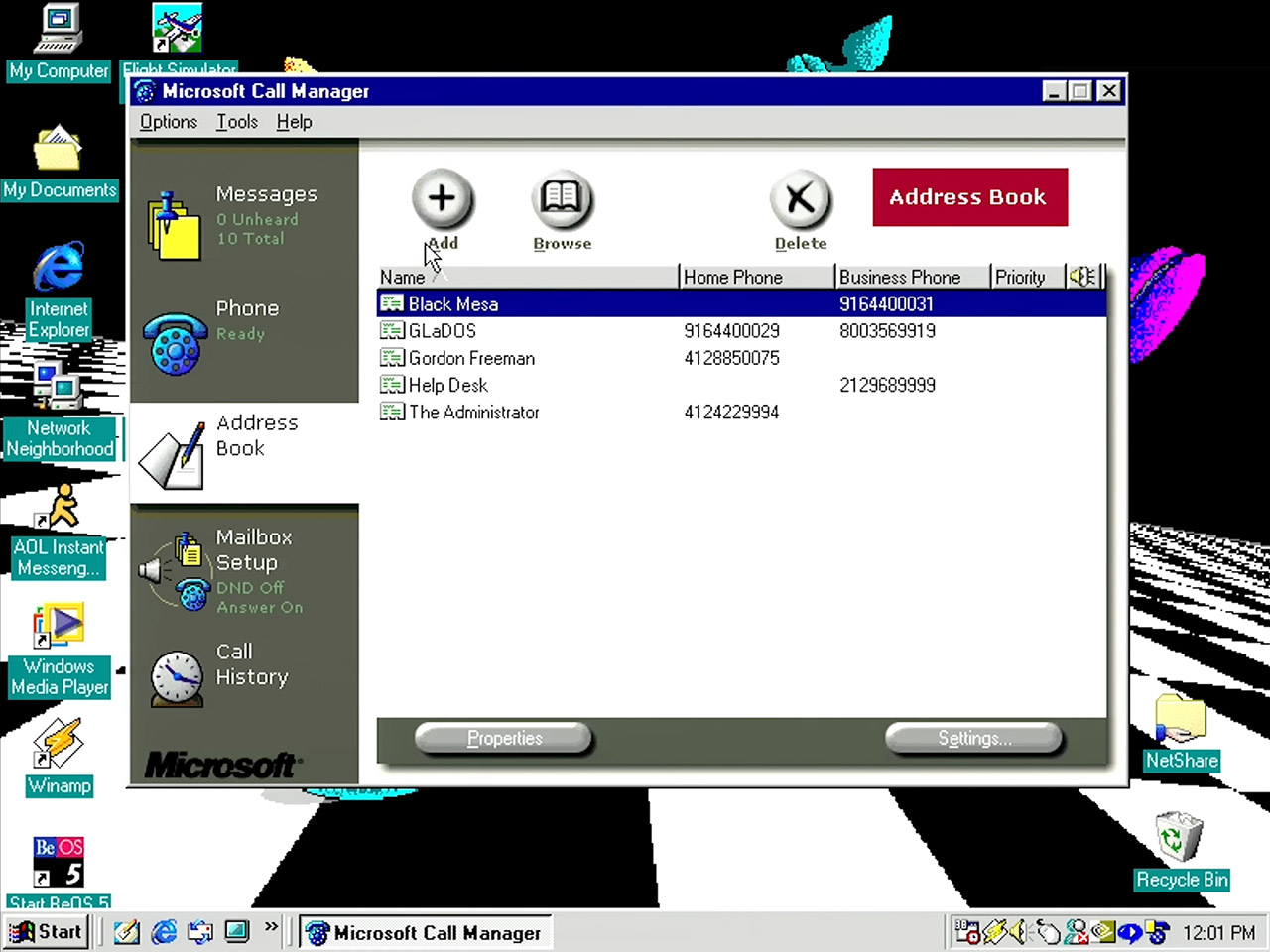
Call Manager was able to import contacts from the Windows address book, allowing you to manage phone numbers, set priorities, and even give personalized messages to certain callers. When you received an incoming call, the phone would read the caller’s name from the address book aloud if the Caller ID matched a contact, which could be useful for deciding whether to answer the phone right away.
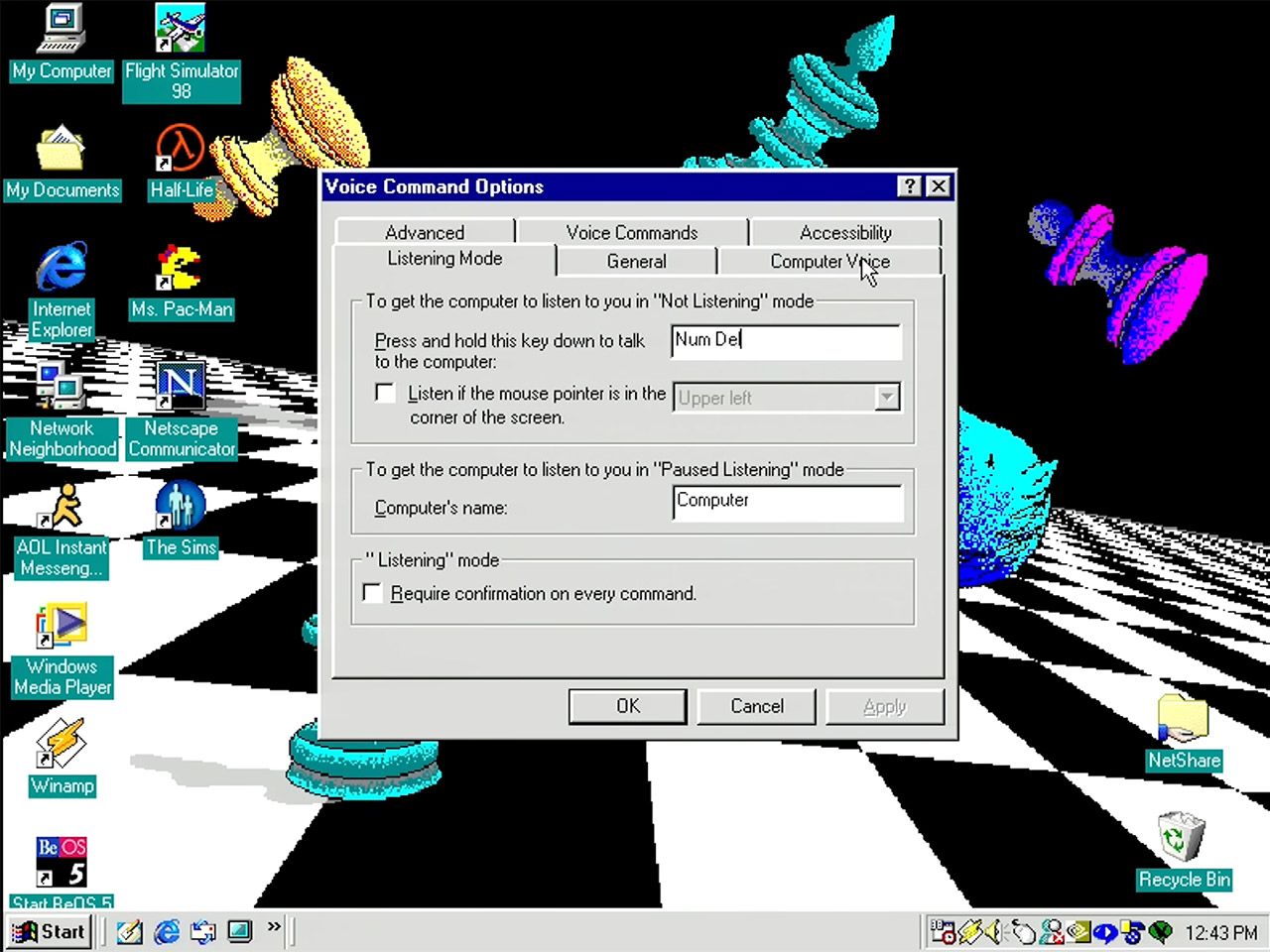
Voice commands stood, as you would click a button on the phone, wait for the tone, and then simply say, “Call Dad,” and it would dial the appropriate number. Similar actions, such as “call back” and “delete message,” allow you to manage communications. On the PC side, Microsoft had included Voice integration, which allowed you to select a number off the screen and dial it up with a single voice command.
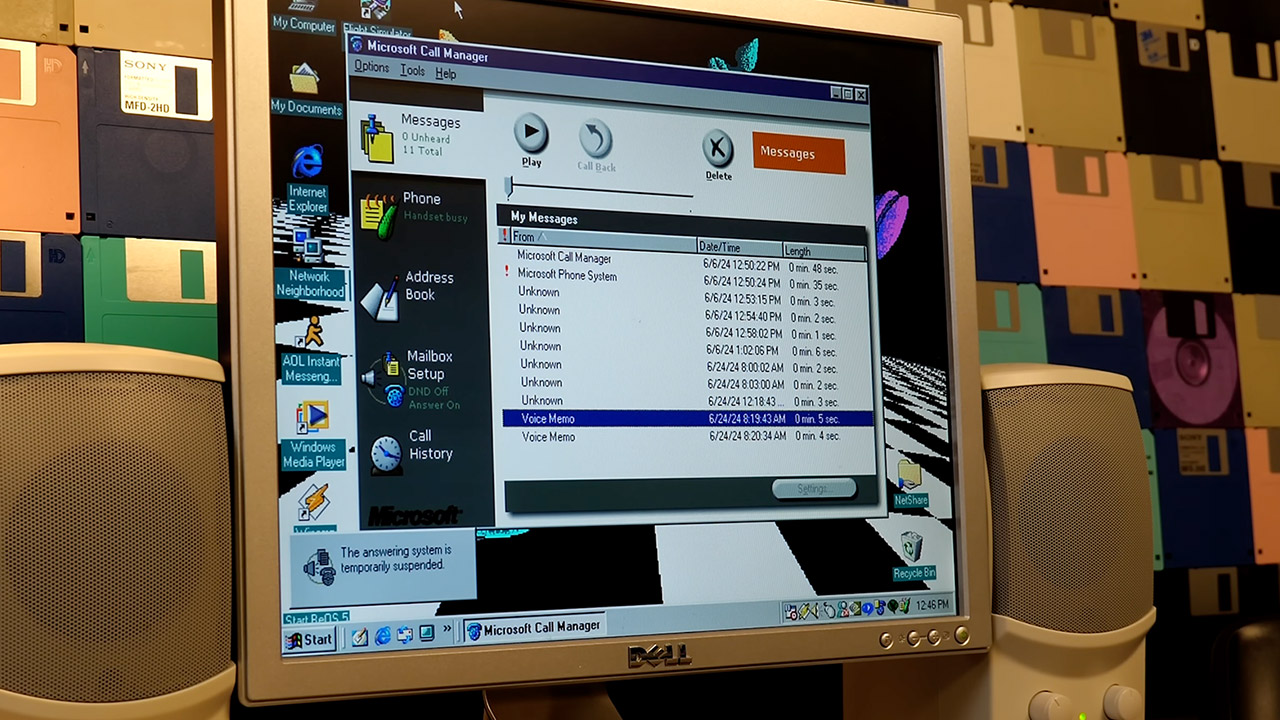
Voicemail has all the bells and whistles, with messages kept on the computer’s hard drive rather than a separate unit, and it could hold thousands of messages depending on how much space was available. You might create individual voicemail boxes for different members of your family or workplace, with bespoke greetings for each caller. Your top priority contacts would ring through, while others would be routed to voicemail or banned. Anyone could even access the messages remotely, which was quite handy. There’s your call log, which automatically records every incoming and outgoing call so you can readily review recent calls.
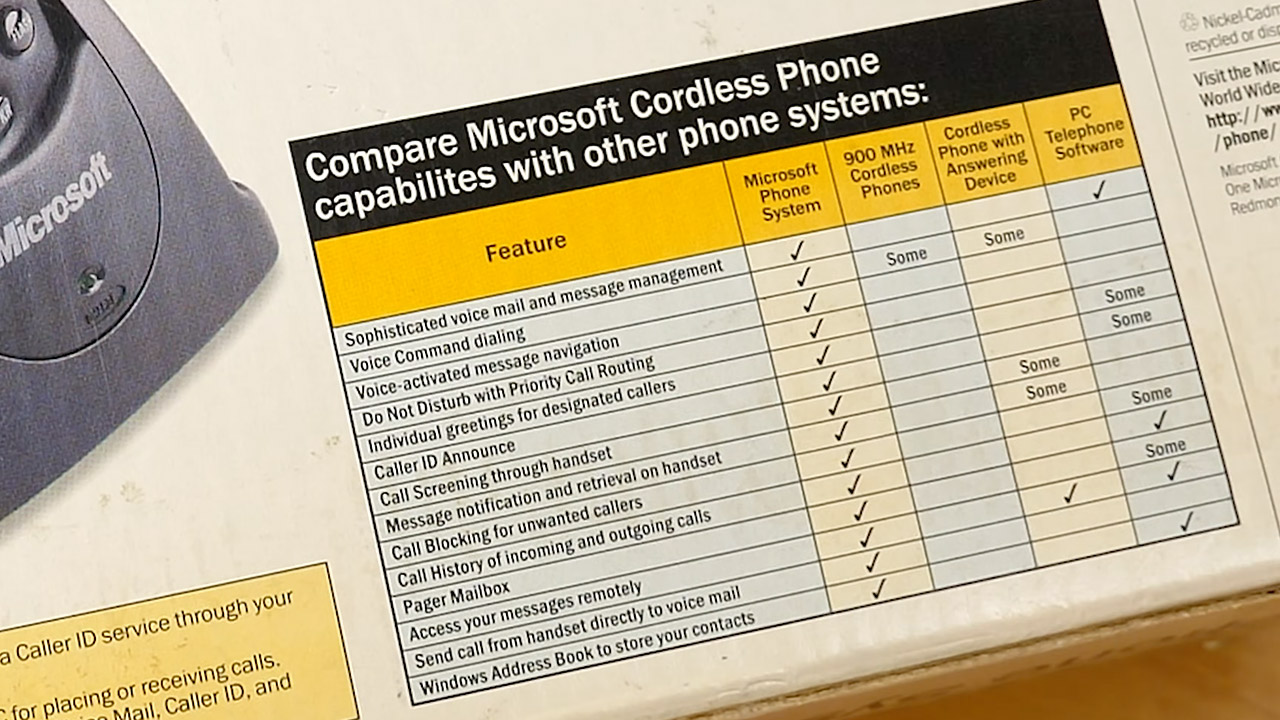
The package also included features like speed dial, do not disturb options, and voice notes. The phone was also capable of taking up calls on the handset and then routing them to the PC speakers. Sales, however, were more or less flat, since one of the most significant constraints was that in order to use it at all, you had to leave your Windows 9x system on all the time, which most people were not doing back in ’98, especially when they went to bed in the dark of night. Furthermore, it was more expensive than your average cordless phone, thus it only lasted a year or so on the market. After that, Microsoft largely abandoned the cordless phone concept and went on to other projects.

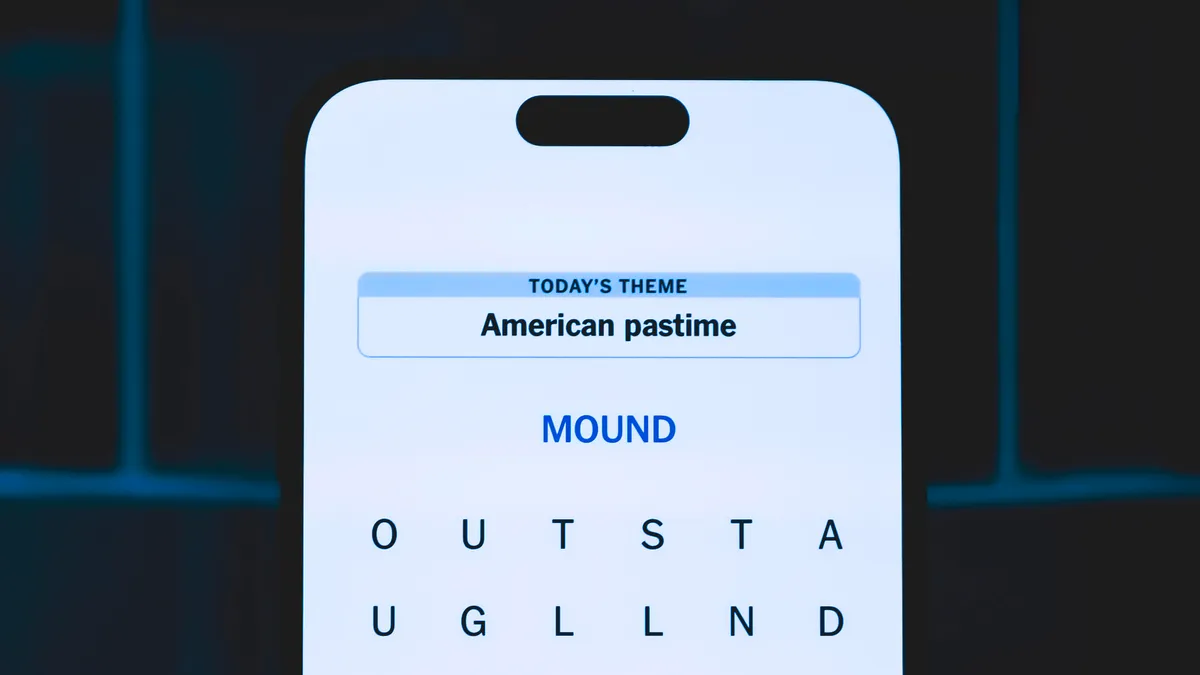
Looking for the most recent Strands answer? Click here for our daily Strands hints, as well as our daily answers and hints for The New York Times Mini Crossword, Wordle, Connections and Connections: Sports Edition puzzles.
Today’s NYT Strands puzzle offers an interesting mix of words, and they all begin with the same two letters. Some of the answers are difficult to unscramble, so if you need hints and answers, read on.
I go into depth about the rules for Strands in this story.
If you’re looking for today’s Wordle, Connections and Mini Crossword answers, you can visit CNET’s NYT puzzle hints page.
Read more: NYT Connections Turns 1: These Are the 5 Toughest Puzzles So Far
Hint for today’s Strands puzzle
Today’s Strands theme is: Gloriously glaring!
If that doesn’t help you, here’s a clue: Shimmery.
Clue words to unlock in-game hints
Your goal is to find hidden words that fit the puzzle’s theme. If you’re stuck, find any words you can. Every time you find three words of four letters or more, Strands will reveal one of the theme words. These are the words I used to get those hints but any words of four or more letters that you find will work:
- TEAM, MATE, HATE, GATE, LIST, LISTEN, GLEE, LINT, CHEAT, HEAT
Answers for today’s Strands puzzle
These are the answers that tie into the theme. The goal of the puzzle is to find them all, including the spangram, a theme word that reaches from one side of the puzzle to the other. When you have all of them (I originally thought there were always eight but learned that the number can vary), every letter on the board will be used. Here are the nonspangram answers:
- GLOW, GLEAM, GLINT, GLITTER, GLISTEN, GLIMMER
Today’s Strands spangram
The completed NYT Strands puzzle for April 20, 2026.
Today’s Strands spangram is CATCHTHELIGHT. To find it, start with the C that’s three letters to the right on the bottom row, and wind up.

A growing wave of online voices warning about the dangers of artificial intelligence—often dubbed “AI doom influencers” – is reshaping how the public and policymakers view the technology. According to a report by The Washington Post, these influencers, including researchers, tech leaders, and content creators, are increasingly highlighting worst-case scenarios, from mass job loss to existential risks posed by advanced AI systems.
While critics argue that some of this messaging borders on alarmism, the conversation is no longer confined to speculation. Real-world developments in AI are beginning to mirror some of the concerns being raised, blurring the line between hype and legitimate risk.
When Warnings Meet Reality
The rise of AI-focused fear narratives comes at a time when companies are rapidly advancing the capabilities of large language models and autonomous systems. These tools are already reshaping industries, automating tasks, and influencing decision-making at scale.
Adding to the urgency is the emergence of highly advanced systems like Anthropic’s experimental model, often referred to as “Mythos.” According to industry discussions, Anthropic has reportedly deemed the system too powerful for a full public release. Instead, access is being restricted to a small group of trusted partners, including defence and financial institutions, and even then, only with prior government approval.

This cautious rollout reflects growing concern within the industry itself. In the UK, reports suggest that government bodies have held internal meetings to assess the implications of such advanced AI systems. Canada has also issued statements acknowledging the potential risks associated with increasingly capable AI technologies.
In India, companies like Paytm’s parent entity and Razorpay have echoed similar concerns, describing the current moment as a potential turning point for how AI is governed and deployed.
Why The Debate Matters
The conversation around AI safety is no longer theoretical. For years, researchers have warned about risks such as bias, misinformation, loss of human control, and unintended consequences from highly autonomous systems.
What’s changing now is the scale and immediacy of these concerns. As AI systems become more powerful, the gap between research warnings and real-world applications is shrinking. This has given more weight to voices calling for caution, even if some messaging appears exaggerated.
At the same time, the rise of “doom influencers” highlights a broader issue: how to communicate risk responsibly without causing unnecessary panic.
What It Means For Users And Industry
For everyday users, the growing focus on AI risks may lead to more transparency, stricter regulations, and safer products in the long run. However, it could also slow down innovation or create confusion around what AI can and cannot do.

For companies and governments, the challenge lies in balancing progress with precaution. The restricted rollout of systems like Mythos suggests that even leading AI developers are grappling with this balance.
What Comes Next
As AI continues to evolve, discussions around safety, regulation, and ethics are expected to intensify. Governments may introduce stricter oversight, while companies could adopt more controlled deployment strategies for advanced systems.
The rise of AI doom narratives may be partly driven by fear, but it is also being shaped by real technological breakthroughs. The question now is not whether AI poses risks, but how those risks are understood – and managed – before the technology moves even further ahead.


When a drone beginner picks up the DJI Flip, priced at $299 after clipping the on-page coupon (was $439), and begins to get acquainted with it, word spreads quickly. The Flip gets that reputation by doing all the clever things that serve to shorten the learning curve while still producing footage that anyone would be glad to share immediately. Size and weight make an impression the moment you pick it up, as the whole thing weighs less than 249 grams even with the battery charged, which makes a big difference when you need to get somewhere, and at roughly 136 by 62 by 165 millimeters in its folded state, it shrinks down enough to fit into a jacket pocket or a small bag without drawing attention.
Safety features step up where they’re most required, namely for those who’ve never flown one of these things before. The full-coverage propeller shields fold down to protect each individual prop blade. They allow you to safely set the drone down on a palm for takeoff and landing, without fear of the spinning parts whacking a limb or bashing into something close. The forward and downward sensors keep an eye on what’s ahead and what’s below, then apply the brakes automatically if something gets too close, and it all works even on a cloudy day or during return to home flights, so confidence grows rather than dwindles when obstacles appear.
Sale

DJI Flip (RC-N3), Drone With 4K UHD Camera for Adults, Under 249 g, 3-Axis Gimbal Stabilization…
- Fly Fearlessly – This drone with camera for adults 4k features full-coverage propeller guards made from lightweight carbon fiber, providing…
- Lightweight and Regulation Friendly – Weighing under 249 g, [1] this drone with camera doesn’t need FAA registration or Remote ID in America. It’s…
- Your On-the-Go Director – With subject tracking, your subject stays in focus. Whether you’re hiking or having a party, this drone for adults acts like…
The flight time is long enough to get out there and explore without fear of running out of juice. Under ideal conditions, a single charge can provide up to 31 minutes of continuous flight time. That gives you plenty of time to practice some basic tricks or chase a beautiful sunset without having to run back to the car to recharge, and hovering is really precise thanks to the satellite and vision systems, which keep the device fixed in place even in a mild breeze.
The camera is a pleasant surprise because it outperforms what you can expect from an entry-level device, as people frequently do. A 1.3-inch sensor can shoot 48-megapixel still images with incredible quality, even when cropped or printed. Video in 4K at 60 frames per second with strong dynamic range is a given, so brilliant skies and shaded ground appear natural. Slow-motion recordings can reach up to 100 frames per second in 4K for those instances when you want to emphasize a view of a wave or bird. A three-axis mechanical stabilizer ensures that every shot is absolutely level and smooth, regardless of how the drone moves.

Controls are extremely adaptable and can be changed to fit any level of competence. You may combine the drone with the provided remote controller and a smartphone to gain full manual control and a clear live view, but for total beginners, you can just launch it from your palm and utilize voice commands or the app for basic tracking. Subject following keeps the camera focused on a person or object, while the drone manages distance and framing, allowing you to simply enjoy the ride.

Storage and power management are quite well thought out, as they make the workflow super clean . You get 2GB of built-in capacity to store a few minutes of movie or a few extra photographs in case you forget to bring a memory card. Simply insert a larger one if you need additional space; it will not slow you down. With two batteries that can be charged simultaneously via a parallel hub, you can have a backup ready to go whenever you need it.
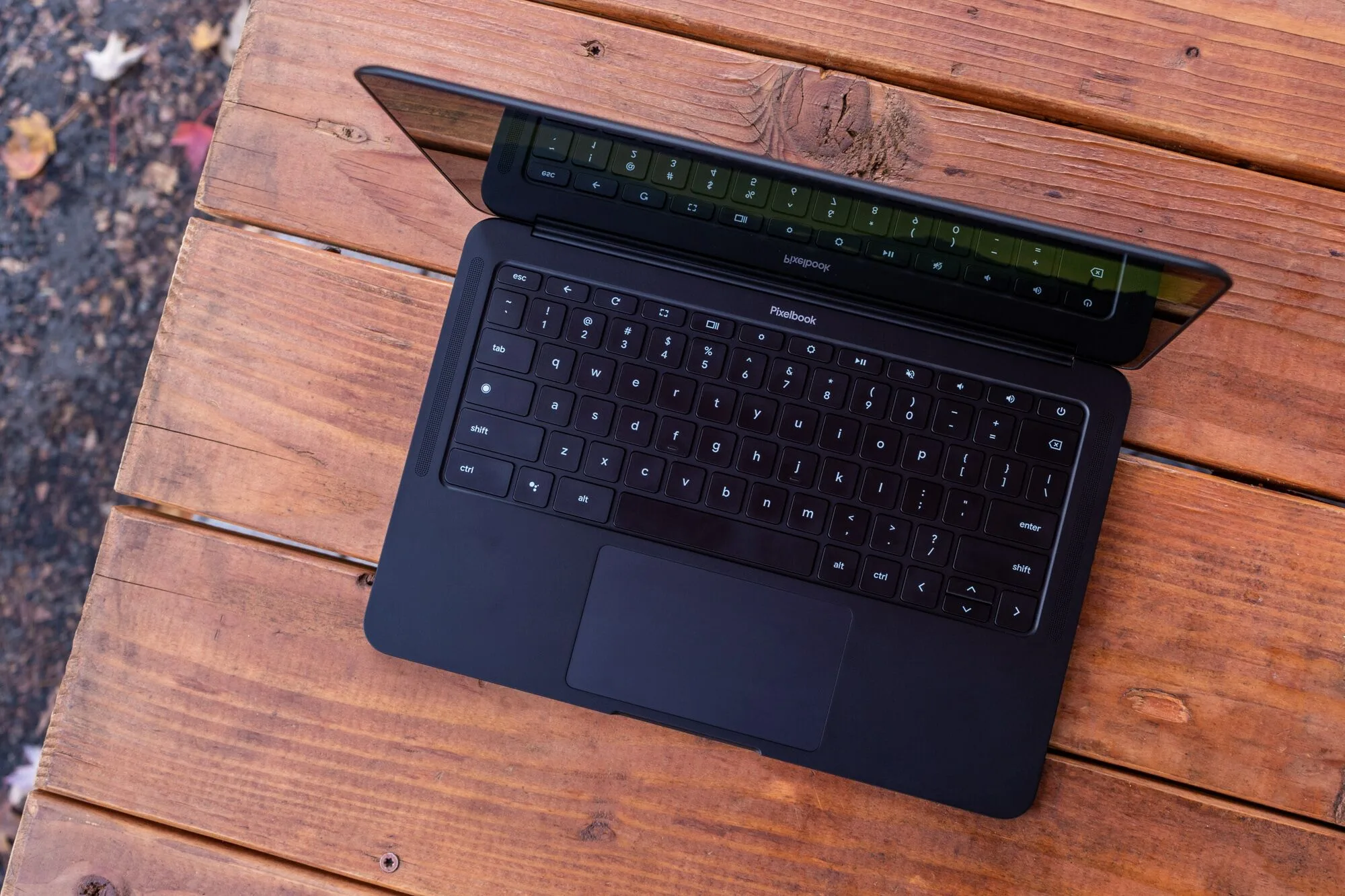
It looks like a new member is joining the Pixel family, adding to its resurgent smartphone lineup. Code analysis of the latest Android beta points toward a new Pixel laptop that Google might be planning to launch in the near future. Google last launched a laptop, the Pixelbook Go, in 2019, an affordable version of the Pixelbook it put on the shelves back in 2017.
Both the Pixelbook and Pixelbook Go, along with the earlier Chromebook Pixel models, were not what you would call a smash hit with the audience or a runaway commercial success. Ultimately, they triggered Big G’s departure from the laptop segment and a shift in focus toward Pixel smartphones.
The tides are shifting, and it seems ChromeOS is on its sunset ride.
Snippets spotted in Google’s software suggest we might finally see Google’s latest attempt at a laptop, but without the expected Chromebook foundations. Instead, it could be the showcase ride for an entirely new class of machines running Aluminium OS. That said, a Google Pixel laptop does not make much sense right now, as several factors work against it. As one charismatic wrestling star would go, “let me talk to ya” on this!.
Google’s history of failure with past laptop launches
Let’s be fair (read: historically accurate) here. Google doesn’t have a particularly enviable track record with making laptops. The company took several stabs at making a laptop in the past decade, starting with the Chromebook Pixel in 2013, an upgraded Chromebook Pixel in 2015, the Google Pixelbook in 2017, and the Pixelbook Go in 2019.

None of these laptops could set the computing segment on fire or set any long-lasting industry trends, owing to two main factors: pricing and the underlying operating system.
A history of bad pricing at Google
| Device model | Price starting at |
| Chromebook Pixel (2013) | $1,299 |
| Chromebook Pixel (2015) | $999 |
| Pixelbook | $999 |
| Pixelbook Go | $649 |
As you can see from the table, all Google laptops commanded a premium, with launch prices around the $1,000 mark. At that price, you could get a powerful Windows laptop or even a MacBook Air. Why would anyone want to pay that much for a laptop running ChromeOS?
Only the Pixelbook Go launched at around $649. Our review praised its portable design, hardware, and excellent battery life. However, the conclusion remained the same: the software held it back, as you could get a full-fledged Windows PC at that price point.
I plonked $1,649 on the top-end variant with the Core i7 variant, and it’s now eating dust in my drawer. Not because I don’t want to keep it running. The laptop is just utterly slow, and despite numerous hard resets, it won’t even handle Chrome smoothly without stuttering, running utterly hot, and the screen has lost its touch-sensitivity, too.
The state of ChromeOS in 2026
Well, that was nearly a decade ago, but what about now? Maybe ChromeOS has improved enough to go toe to toe with other desktop operating systems? Sadly, the answer is no. If anything, Google seems to have left the operating system in limbo with no drastic improvements.

Yes, there have been pockets of updates here and there, but nothing substantial that makes it a viable competitor. It’s still a browser-based operating system with minimal support for popular creativity and productivity apps. With the scrapping of Google Stadia, gaming is also now almost defunct on ChromeOS.
On the other hand, Linux has improved by leaps and bounds, can run on similar low-powered hardware, and supports gaming and the most popular creative and productivity apps. In fact, Linux is at an all-time high among Steam gaming die-hards. Yes, ChromeOS has simplicity of use in its favor, but that’s about it.
What about the upcoming Aluminium OS?
There is, however, a glimmer of hope on the horizon. Google is working on a new operating system called Aluminium OS, with an expected launch window of 2026. It aims to merge Android and ChromeOS into a single unified platform.
Built on Android from the ground up, it promises native support for all Play Store apps with proper keyboard and mouse support, alongside desktop-grade window management features. It will even support multiple desktops.
The highlight feature of the OS will be Gemini AI, which will supposedly be baked into the core of the OS, which is a significant step up from ChromeOS. That said, Aluminium OS could push forward with its own set of problems, if ChromeOS is anything to go by.

First, it would require more powerful hardware to power the AI features. Ideally, it would need a silicon with a powerful AI accelerator chip (aka NPU) to handle AI-driven tasks, especially those that are executed on-device. Imagine translation, photo editing with generative AI, scam detection, and more, without an internet connection.
Second, since it is based on Android, you will still not get support for full-fledged desktop apps. You might be able to run them using a translation layer, something Apple did with Rosetta when it switched to its own ARM-based processors for Macs, but how well it will work is a big question mark. Windows on ARM has been a mess and only recently started becoming a real possibility.
I can’t imagine Aluminium OS will fare any better in its first swing at serious computing.

Built-in Gemini AI will be the highlight of this new operating system, and hopefully, it will be better than the Windows implementation of Copilot AI and the lackluster Apple Intelligence execution in macOS. This could give Aluminium OS a leg up over the competition, but the fundamental issue, which is a lack of desktop app support, is a problem Google will have to figure out soon, or the new OS will suffer the same fate as ChromeOS.
Rising RAM and SSD prices
By now, it should be clear that the only way a next-generation Google laptop can succeed is by lowering its price. But that might be harder to achieve in today’s market, thanks in no small part to the RAMmageddon that has wreaked havoc in the PC industry and spilled over into the smartphone and gaming segments as well.

With the rising prices of RAM and SSDs, thanks to AI infrastructure gobbling up the world’s supply, the cost of electronics is climbing exponentially. Microsoft has raised prices on its Surface laptops, Sony and Nintendo have raised prices for the PS5 and Nintendo Switch 2 consoles, and Samsung has increased its phone (and laptop, and tablet) prices.
And these are just a few examples. Every other laptop manufacturer has climbed the price ladder, much to the obvious displeasure of buyers and even triggering a panic purchase spell, according to Counterpoint Research. Unfortunately, industry trends suggest it will only get worse before it gets better. And we’re not just talking about new products here.

It might be the first time in history that a gaming console, phone, or laptop costs more in 2026 than it did at launch. In such an unprecedented market, I do not see a way for Google to cut prices on its new laptops, especially with the powerful system requirements for running Aluminium OS, without significantly jeopardizing other aspects of its hardware, which was the only good thing about the older Google laptops.
The MacBook Neo exists at $599
Google’s Aluminium OS foundations sound promising, but they just got a pre-emptive reality check from Apple, in the form of MacBook Neo. If the reportedly upcoming Google laptop existed in a vacuum, there might have been a chance it could succeed.
Last month, Apple did something it had never done before in its history and launched an affordable MacBook starting at just $599. Despite its shortcomings and the corner-cutting Apple had to do to hit that price point, the MacBook Neo turned out to be an excellent laptop, receiving rave reviews all around and selling like hotcakes.

Now, let’s do a thought experiment. If you had to choose between a Pixelbook and a MacBook Neo at $599, a price point Google has never hit before, by the way, which one would you choose?
I would argue that nearly everyone would choose the MacBook Neo. The only thing going in favor of the Pixelbook over similarly priced Windows laptops was its hardware design, and it won’t have that same advantage over the MacBook Neo.
The MacBook Neo features a full metal body, a good display, a quality keyboard, and a best-in-class touchpad. Google will be hard-pressed to build a laptop that good, with that kind of performance, and still hit the $599 price point.

Not to mention, you get the full desktop experience with MacBook Neo because it runs macOS. Even if the new Google laptop is powered by the upcoming Aluminium OS, it will still lack support for desktop apps. Yes, the experience might be better than ChromeOS, but there’s no chance it can compete with a mature operating system like macOS.
Chromebooks sell so well largely because they hit a sub-$300 price point for the education market. But think a year or two ahead, when the current MacBook Neo is selling for $350 or $400 in the resale or refurbished market. Who would buy a Chromebook then?
Does a Chromebook, let alone a Pixelbook, make sense now?
The only reason ChromeOS holds a significant share of the market is due to its education programs and strong ties with schools across the US. If Apple can crack that code and partner with school boards to offer the MacBook Neo as a replacement, the days of ChromeOS are numbered.
Even if Apple doesn’t succeed in schools, MacBook Neo has ensured that the days of premium ChromeOS laptops are over. The upcoming Aluminium OS might be the answer Google is hoping for, but I am skeptical. And that’s why I do not think a new Google laptop makes sense right now. Or ever.
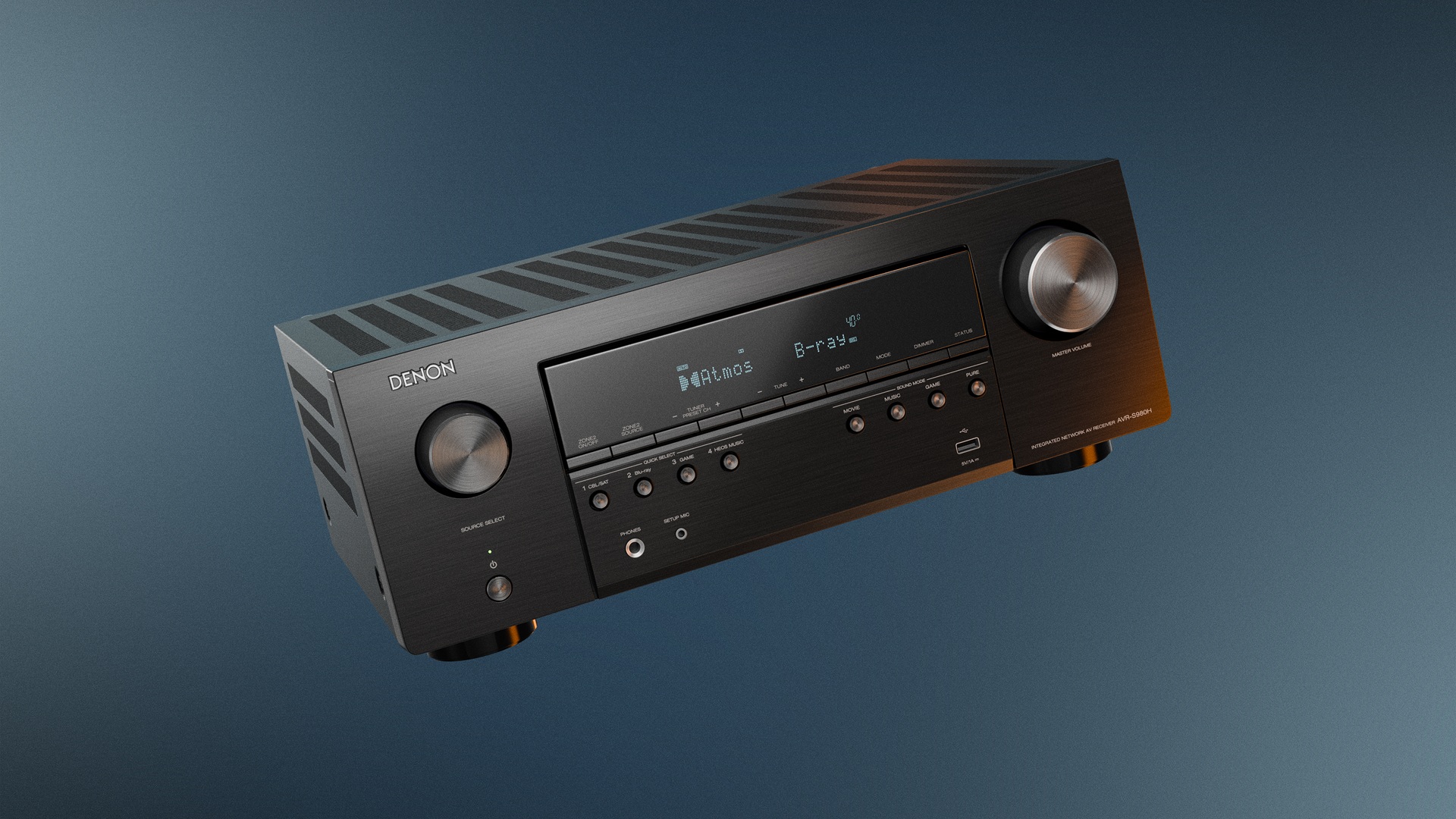
Stepping up from a soundbar has long been the natural next move for home entertainment enthusiasts. Denon’s new AVR-S980H targets precisely that audience with a 7.2-channel AV receiver that prioritises approachability alongside genuine audio performance.
Lyle Smith, President of Sound United at HARMAN, described the receiver as part of Denon’s broader mission to make high-quality audio more accessible, noting that better sound brings people closer to the stories, music and moments they love.
At the core of the AVR-S980H is a 90-watt-per-channel amplifier, a specification that gives the unit enough headroom to drive demanding speakers without distortion whether that’s during high-intensity movie scenes or particularly dynamic music. It reflects the kind of engineering heritage Denon has built over more than a century.
The receiver fits into Denon’s HEOS multiroom audio ecosystem, allowing audio to be streamed between rooms or grouped with other HEOS-compatible devices without additional hardware. A future firmware update will introduce wireless surround support using the Denon Home 200, 400, and 600 speakers, though that functionality will not be available at launch.
For gaming households, the AVR-S980H adds 1440p passthrough and AMD FreeSync support to smooth out fast-moving gameplay and reduce visual tearing, making the receiver a practical upgrade for players who want their audio and visual setup to work in tandem rather than separately.
Connectivity spans Bluetooth, AirPlay 2, Spotify Connect, and HEOS multiroom audio, covering the major wireless streaming formats. To make using the AVR-S980H easy, first-time AVR owners through setup using onscreen instructions rather than assuming prior knowledge of receiver configuration.
The AVR-S980H also scales with the owner’s setup, supporting configurations from a basic stereo pair through to a 5.1.2 Dolby Atmos system, so buyers are not locked into replacing the receiver as their speaker system grows over time.
The Denon AVR-S980H is available now through Denon.com and authorised global retailers, priced at $949 in the US, £799 in the UK, and €899 in Europe.
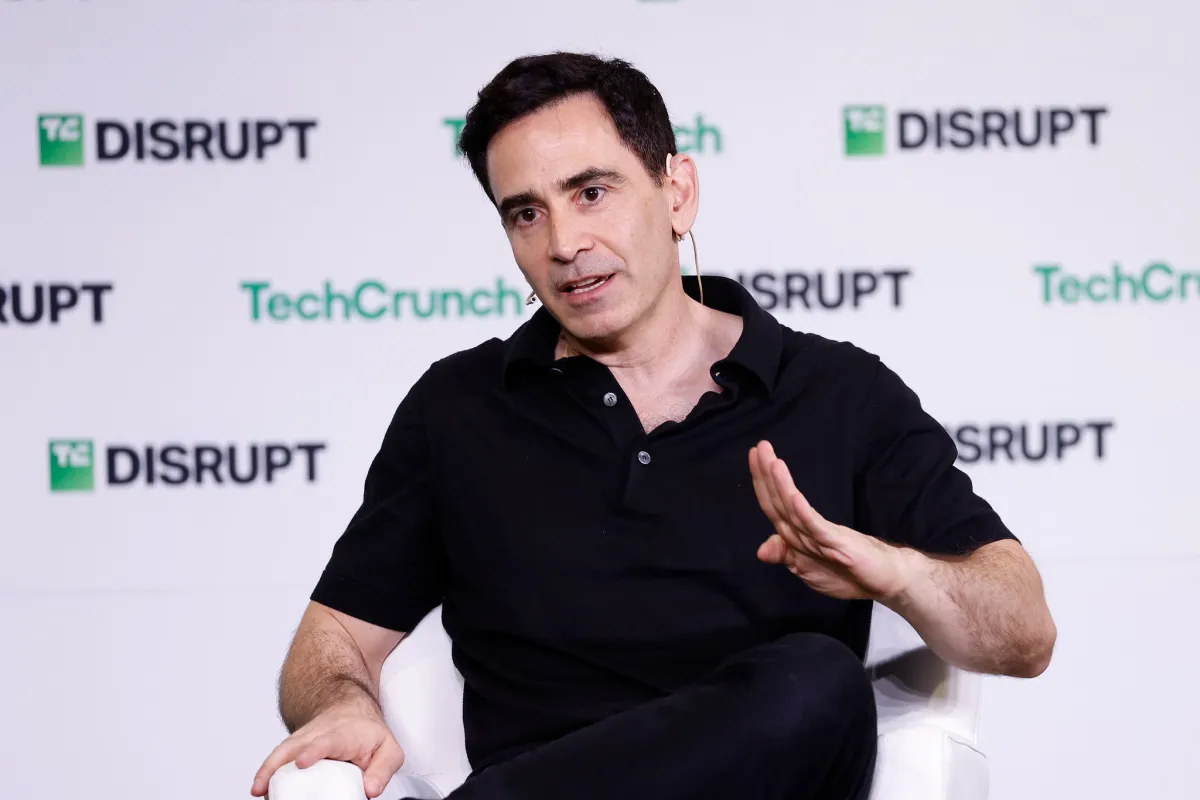
In a recent episode of “No Priors” — the excellent podcast co-hosted by AI investors Sarah Guo and Elad Gil — Gil made a point about exit timing that’s undoubtedly familiar to founders who’ve spent time with him, but seems particularly useful in this moment of go-go dealmaking.
For most companies, Gil said, there’s roughly a 12-month period where the business is at its peak value, “and then it crashes out” and the window closes. The companies that capture generational returns are often the ones where someone spies that moment instead of assuming the good times will get even better. Lotus, AOL, and Mark Cuban’s Broadcast.com all sold at or near the top, and all are held up by Gil as examples of outfits that foresaw what was coming and smartly pulled the ripcord.
To catch that window, Gil offered a practical suggestion: pre-schedule a board meeting once or twice a year specifically to discuss exits. If it’s a standing calendar item, it drains the emotion out of the equation.
This matters more now than it might have a few years ago. A lot of AI startups exist partly because the foundation models haven’t expanded into their category … yet. As many (like Deel CEO Alex Bouaziz) jokingly acknowledge, that won’t last forever.
As Gil put it: “As you see shift[s] in differentiation and defensibility and all the rest, it’s a good time to ask, ‘Hey, is this my moment? Are these next six months when I’m going to be the most valuable I’ll ever be?’”
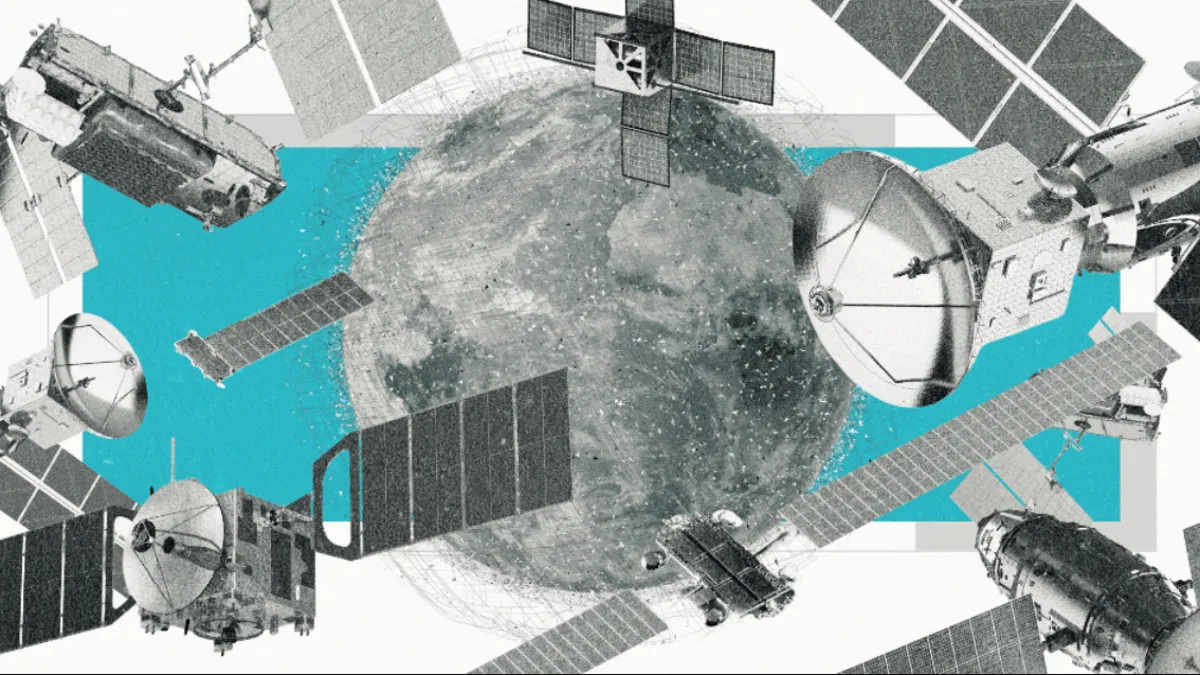
A few minutes after the sun retreated behind the Olympic Mountains, we spotted our first satellite. It moved across the sky with an eerie persistence, like a car on cruise control.
“That’s low Earth orbit. That’s pretty standard speed,” Meredith Rawls, an astronomer at the University of Washington and my stargazing guide for the night, tells me.
The primal human experience of gazing into a dark, unblemished night sky — something we’ve been doing for at least 32,000 years, since our ancestors carved Orion onto a mammoth tusk — is vanishing. That nocturnal vista is becoming a dense, industrial field of orbiting debris.
“I tell people, go to a dark site and see the sky now, while it’s like this,” Rawls says, gesturing to the constellations above us. She lets out a laugh. “It’s like, oh my God, what are we doing?”
The scale is hard to overstate. At the turn of the century, there were just over 700 active satellites in space. Now, with plans for hundreds of thousands more satellites — going from 15,000 today to half a million by 2040 — the new space race is not just a visual nuisance, it’s a toxic threat to our existence.
When you look up at the night sky and wonder why the stars are moving, it’s not because you’re seeing a UFO. You’re likely looking at a satellite, and two out of every three belong to Elon Musk’s Starlink.
Starlink is capable of beaming an internet connection to a dish the size of a pizza box, virtually anywhere in the world. The company’s on track for the largest initial public offering in history, largely on the back of all those satellites cruising through the skies.
When Starlink launched its first satellite in 2019, it kicked off a gold rush in space. Amazon plans to send up 60,000 of its own satellites, Chinese companies nearly 60,000 more. Everyone across the globe, it seems, wants a piece of the sky. Rwanda alone applied for 337,320 satellites. In January, Starlink filed for a million orbital AI data centers.
Spacefaring countries are technically bound by the United Nations’ Outer Space Treaty of 1967, but commercial enterprises are another story. And with space increasingly seen as a new theater of war, many nation-states are racing to launch their own mega-constellations.
In this article:
The ripple effects are as far-reaching as they are uncertain.
Satellites are expected to disrupt the migratory patterns of birds, dung beetles and seals, which use the stars to navigate.
Space junk from rocket launches and old satellites falls to Earth every day, increasingly through busy airspace. Last year, a piece of titanium and carbon fiber the size of a car tire landed near a school in Argentina.
Many tons of aluminum and lithium aerosols are added to the atmosphere when satellites reach the end of their lives and burn up, eating away at the ozone layer and potentially accelerating climate change.
And, ironically, they’re also threatening to halt space exploration in its tracks, as thousands of satellites zooming at 17,000 miles per hour push us toward a chain reaction known as the Kessler syndrome, an apocalyptic feedback loop in which one collision could create thousands of pieces of debris that would then lead to more collisions.
“You cannot remove all these billions of small fragments from orbit. This will basically limit our access to space forever,” says Hanno Rein, an astrophysicist at the University of Toronto. “This is not going to go away. These small fragments will not necessarily deorbit quickly. They will stay there and make space inaccessible for future generations.”
As I part ways with Rawls, she seems cautiously pleased with how few satellites we saw.
“A real takeaway from our observing session is that there are not yet an overwhelming number of bright satellites,” she says. “I hope you enjoyed your relatively pristine night sky experience.”
I get the feeling that I’m being told to enjoy it while it lasts.
15,000 satellites: How we got here
The Soviet Union launched Sputnik 1, the world’s first satellite in 1957. It would take another 53 years before we passed 1,000 active satellites. Just 16 years after that, we passed 15,000.
Almost all of that growth is due to one company. When SpaceX launched its first batch of Starlink satellites in May 2019, there were only around 2,000 active satellites. It currently has more than 10,000 in orbit; the next closest operator is OneWeb, with 650. An average of 11 satellites have been launched every day in 2026, and with each one, the risk of collisions that generate dangerous space debris increases.
The causes for the prodigious satellite rise are complicated, but if I had to point to a single moment, I’d choose Dec. 22, 2015, the day that SpaceX landed its reusable Falcon 9 rocket for the first time.
Before the Falcon 9, space was mostly the domain of governments, which launched bus-sized satellites for GPS and weather forecasting. Satellite internet had been around since 2003, but those earlier versions lived in geostationary orbit, around 22,000 miles above the Earth’s surface. That high altitude allowed a single satellite to cover a broader area on the ground, but slow speeds and high latency made it a last resort for most people.
Launching satellites into space is expensive. At the time the Falcon 9 first landed, Musk said it cost around $600 million to build, and another $200,000 in fuel costs to launch. Unlike all previous rocket boosters, the Falcon 9’s can be reused more than 10 times, and it doesn’t require much maintenance in between flights. That brought the launch costs down to $2,500 per kilogram, compared to $12,600 for SpaceX’s first rocket. Seemingly overnight, the economics of satellite launches became a lot more lucrative.
But there was a reason satellite operators had been sticking to the geostationary orbit.
“The closer you come to the Earth, the more satellites you need,” says Barry Evans, a professor of satellite communications at the University of Surrey.
Because SpaceX could reuse the Falcon 9, it was able to make use of low Earth orbit at roughly 342 miles above the ground.
Data has to travel about 60 times farther to reach GEO satellites. Starlink’s lower elevation allows it to deliver a faster connection with lower latency, but it also requires hundreds or thousands of satellites to achieve global coverage. GEO satellites can do it with just a few, though Starlink still doesn’t meet the Federal Communications Commission’s standard for minimum broadband speeds.
Starlink didn’t actually become anyone’s internet provider until 2021. By then, dozens of other companies and countries had joined the race to LEO. Amazon Leo (formerly Project Kuiper) got FCC approval for 3,236 satellites in 2020, China’s Guowang started in 2022 with a planned 13,000 satellites and OneWeb launched the first of its now complete 650-satellite constellation in 2023. So far, Amazon Leo has sent up 241 satellites and expects to start offering service in mid-2026; Guowang has 168 operational satellites in orbit.
“There’s a humongous amount of money going into these satellites,” says Jonathan McDowell, an astrophysicist who tracks satellite launches.
One analysis published in Science found that, between 2017 and 2022, countries collectively filed for over 1 million satellites across more than 300 separate systems.
A million data centers in space?
And those numbers don’t account for the data center boom coming to space. On Jan. 30, SpaceX filed an application with the FCC to launch “a million satellites that operate as orbital data centers.” Last week, Amazon’s Blue Origin filed for its own 50,000 orbital data center constellation.
Amazon, Google, Meta and Microsoft plan to spend $630 billion on Earth-bound data centers and AI chips in 2026 alone. But most people don’t want them — or their enormous water and electricity appetites — in their towns. One study found that electricity rates could rise 8% on average in the US through 2030 due to increased demand from data centers, along with cryptocurrency generation.
Moving them to space would solve the “not in my backyard” problem, and it would theoretically negate their massive water and energy consumption on Earth. As Musk put it recently, “Space has the advantage that it’s always sunny.”
SpaceX hasn’t received the green light yet for its million data centers, but FCC Chair Brendan Carr publicly voiced his approval. There’s currently no timeline for the plan, and SpaceX did not respond to my request for comment, but Musk said on a podcast in January that “in 36 months, probably closer to 30 months, the most economically compelling place to put AI will be space.”
I was met with a lot of raised eyebrows when I asked satellite experts about SpaceX’s plan for 1 million data centers.
“I don’t really think they’re going to do a million anyway. I think it’s going to be more at the 100,000 level. But I’m still very worried about 100,000 and whether that’s sustainable,” says McDowell. “Yes, technically, we can put them up there. But do we really want to?”
These data center satellites will be much larger than the Starlink satellites that beam internet connections back and forth from Earth. Recent comments from Musk indicate they’ll be around 560 feet long — more than five times the size of the most common Starlink satellites in the sky currently.
“We have a couple trends happening at the same time that are concerning. Satellites are starting to get big again, and we’re getting more of them,” says Darren McKnight, senior technical fellow at LeoLabs, a company that tracks objects in orbit.
Tim Farrar, a satellite industry consultant, described the million data centers proposal as the latest in a long line of use cases SpaceX has floated for its Starship rocket, which is still in its prototype phase, from delivering military cargo to international travel via rocket. The Starship is roughly four times bigger than the Falcon 9 and capable of carrying as much as 150 tons to low Earth orbit, but in testing it has exploded on launch roughly half the time.
“To justify making thousands of Starships when they’re reusable, you need to launch them very, very frequently,” says Farrar. “He’s now found this very fortunate confluence of AI demand and issues associated with permitting on the ground.”
‘The new theater of defense’
In mid-2025, Musk called Starlink “the backbone of the Ukrainian army.”
“Their entire front line would collapse if I turned it off,” Musk said in a post on his social media platform X.
Musk was urging an end to the war with Russia, and he wasn’t wrong that Starlink had been instrumental in Ukraine’s military operations. By that point, the Ukrainian army had been using Starlink for more than three years to fly drones, course-correct artillery fire and help troops communicate.
It was an early indicator that Starlink had grown beyond its mission of providing internet connections to rural areas. It was now one of the most coveted tools in a modern military’s arsenal.
Starlink’s involvement in wars on Earth is just the beginning. It’s going to become a military target in space, as will satellites used for GPS, reconnaissance and missile warnings.
As far back as 2019, President Donald Trump declared space the “the next war-fighting domain” when he formally established the United States Space Command as part of the military, and it’s explicitly codified in the Space Force’s founding doctrine.
“Space has become a new theater of defense,” says Joanna Darlington, chief communications officer at Eutelsat, the company that owns OneWeb. “You start getting terrestrial infrastructure destroyed, or submarine cables cut, or satellites jammed by your enemies. The only quick fix for that is satellite today.”
Musk’s involvement was unusually hands-on for an executive at a private company. In mid-2022, the SpaceX CEO denied Ukraine’s request to activate Starlink in Russian-occupied Crimea, citing concerns about escalation. Russia has also reportedly used smuggled Starlink terminals to extend the range of its drone strikes. Musk said in a Jan. 31 post that SpaceX had stopped the use of unauthorized Starlink by Russia.
Soon after, Russia reportedly began working on a missile system capable of hitting Starlink satellites in orbit and creating orbital clouds of debris that would disable multiple satellites at once.
“They become legitimate targets because of the geopolitical influence they have,” says Hugh Lewis, a professor of astronautics at the University of Birmingham. “It’s no longer just about providing someone in their apartment fast internet.”
It already tested one such weapon in 2021, when it intentionally destroyed one of its own defunct satellites. That event alone created more than 1,500 pieces of debris larger than a softball and likely hundreds of thousands of smaller pieces, forcing astronauts in the nearby International Space Station to shelter in capsules.
And Chinese anti-satellite technology has advanced so far that it can now threaten any US satellite in low Earth orbit, and likely also those in medium Earth orbit and geostationary orbit, one report from the Center for Strategic and International Studies determined.
What scientists are concerned about
The causes fueling the satellite space race are many and diverse, and so are the effects. Scientists have voiced concerns about a number of unintended consequences that could spring from sending so much metal into orbit.
“We have concerns about the atmosphere, we have concerns about space traffic management. We have concerns about astronomy and concerns about radio interference,” McDowell says. “All of these things become significantly worse at 100,000 and really, seriously problematic.”
Some of them we’re already seeing, and some can only be calculated in a lab and projected into the future.
Earth’s atmosphere as a space dump
Space debris is nothing new, and Russia isn’t the only country that’s been turning low Earth orbit into a garbage dump.
The US destroyed a failing reconnaissance satellite of its own in 2008, and India followed suit in 2019, but those tests produced far fewer — and long-lasting — pieces of debris than Russia’s 2021 test that put ISS astronauts in jeopardy.
But when I talk to astronomers who spend a lot of time thinking about space debris, it’s clear that one event haunts them more than the others.
In 2007, China blew up a weather satellite, creating the largest debris cloud in history. Overnight, 3,533 pieces of softball-or-larger pieces of metal were added to low Earth orbit, and an estimated 150,000 smaller objects. Before the test, there were fewer than 8,000 tracked objects in LEO altogether.
“That one single test increased orbital debris by one third. And that’s still up there,” says Sven Bilen, an engineering professor at Penn State University.
The Secure World Foundation estimates that 2,351 pieces of debris from that single day in 2007 are still in orbit. The Chinese satellite was in orbit 537 miles (865 kilometers) above Earth when it was blown up, compared to the roughly 310 miles (500 kilometers) at which most Starlink satellites operate. That higher altitude means the debris would take longer to be pulled into the Earth’s atmosphere, where it would burn up.
“It’s an exponentially varying atmosphere. By the time you get to 750 kilometers, it’s up there for decades to centuries,” says McKnight. “At 450, 500 kilometers, you’re talking weeks to months.”
It’s worth acknowledging here that space is huge, and 25,000 softball-sized objects zooming hundreds or thousands of miles above our heads doesn’t seem like such a big deal. The problem comes when those objects start occupying the same space as the 15,000 active satellites in orbit.
With space debris moving about 10 times faster than a bullet, even a softball-sized object hitting a satellite would be devastating. That impact would create many more softballs, which could take out even more satellites. This apocalyptic feedback loop is called the Kessler Syndrome, and the scientists I spoke to agree that it’s just a matter of when, not if, it happens.
“We don’t know where we are on that curve, but at some point, every piece of hardware that you put up there is going to be more likely than not to generate additional debris,” Bilen says. “It becomes a runaway phenomenon.”
“If we keep doing what we are doing right now, which is almost nothing, it’s very likely,” Bilen adds. “I don’t know when, but it’s very likely.”
Almost every astrophysicist I spoke with mentioned the 2013 movie Gravity, which famously dramatized a Kessler syndrome-like scenario, depicting astronauts forced to abandon their space shuttle as a debris cloud swarms them. They emphasized that it won’t manifest as a single catastrophic moment like that, but will instead take place over years, as space slowly becomes deadly for astronauts and satellites alike.
“We’re boiling the frog. It’s increasing slowly, and all of a sudden we’ll get to a point and go, ‘Wow, that’s really bad,’” says McKnight. “There are indicators that we’re getting closer, indicators that the timeline is shrinking.”
Satellites maneuver to avoid collisions
Despite some close calls, satellites have so far been exceptionally nimble at avoiding space debris.
When Starlink first launched in 2019, it made a “collision avoidance” maneuver if the probability of impact was greater than 1 in 100,000 — the same number that NASA uses for human spaceflight. Starlink has since moved that number to a more conservative 3 in 10 million.
But even with that more conservative threshold, its satellites still made about 300,000 maneuvers last year alone — an increase from around 200,000 in 2024. Depending on who you ask, that number is evidence of Starlink’s spotless safety record or an unsustainably high number of moving satellites.
If Starlink achieved its goal of 1 million orbital data centers, that would add up to 272 million maneuvers a year, or nine every second, according to Hugh Lewis, the astronautics professor.
“The very fact that you have to maneuver degrades your ability to detect whether you need to maneuver,” says Lewis. “Anybody else who wants to operate in that environment is going to be looking at this fuzzy ball of stuff that’s always moving.”
There’s also a risk of solar storms disrupting satellites’ ability to maneuver. These blasts from the sun occur when twisted magnetic fields reach their breaking point, sending bursts of energy throughout the entire solar system.
Solar storms could slow down your internet temporarily or they could take out satellites altogether, according to researchers at the University of California, Irvine. In February 2022, 38 Starlink satellites were destroyed by one such event.
“We can predict these events sometimes, but certainly not always,” says Sascha Meinrath, professor of telecommunications at Penn State University. “They can rapidly — and by rapidly, I mean, within minutes to hours — dramatically increase the scale of atmospheric drag.”
In response, Starlink’s satellites autonomously adjust their altitude. Neighboring satellites make their own adjustments, and it can take three to four days before they’re stabilized at their original altitudes.
A paper published in December described this as an “orbital house of cards.” The authors estimated that it would take 5.5 days for a “catastrophic collision” to occur if maneuvers stopped or severe situational awareness loss occurred due to an event like a solar storm. In 2018, the year before Starlink launched its first satellites, that number was 164 days. In the four months since the paper was first submitted, the clock has dropped to just three days. (The paper has not been peer-reviewed.)
Three days is already an alarmingly short period of time to avoid “catastrophic outcomes.” What happens if we go from 15,000 satellites to millions?
Space junk doesn’t always stay in space
The Earth’s stratosphere acts as a great filtering system for those of us on the ground. But just as some meteors survive the trip, space debris doesn’t always stay in space. As more rockets are launched and more satellites are deorbited, the likelihood of a piece of them reaching Earth increases.
A January 2025 paper published in Scientific Reports determined that there’s a 26% chance each year that a piece of spacecraft will pass through some of the world’s busiest airspace. When they factored in planned megaconstellations from companies like SpaceX and Blue Origin, the probability of a fatal aircraft collision with reentry debris increased to 7 in 10,000 per year by 2035.
“You hit what’s known as the law of truly large numbers,” says Lewis. “Even if it’s a really, really low likelihood, enough opportunities means it’s going to happen.”
And it has already happened, with alarming frequency. According to NASA, an average of one cataloged piece of debris fell back to Earth every day during the last 50 years. Most of this lands harmlessly in oceans or remote areas — NASA says that “no serious injury or significant property damage” has been confirmed — but a January study published in Science noted that the risks are growing with an increasingly crowded orbit.
A 2022 study published in Nature Astronomy put the danger in starker terms, noting that there’s a 10% chance that someone is killed by space debris over a decade. It also cautioned that this is a conservative estimate given the acceleration of rocket launches.
Last year alone, space junk fell on a mine in Australia, on a farm in Argentina, in the Algerian desert, near a school in Argentina and at a warehouse in Poland. In 2024, fragments from a SpaceX rocket landed 40 miles apart in North Carolina. One 15-inch piece landed on a man’s roof while he was home watching TV.
“It’s fairly difficult to always have a controlled re-entry. As I like to say, we want to have a splash, not a thud,” says McKnight.
In other words, operators should aim to deorbit satellites “over the open ocean, away from populated islands and heavily trafficked airline and maritime routes.” Debris from rocket launches is necessarily closer to civilization. NASA guidelines for debris re-entry say the risk of a human casualty should be less than 1 in 10,000.
“As you get more and more satellites up there, more and more rockets, more and bigger payloads, if this trend is going to hold true, that’s going to be more and more difficult to adhere to,” says McKnight. “If you have enough events, somebody’s going to get hurt.”
Taking out the orbital trash
One way to clean up space debris is to steer satellites toward the atmosphere, where they burn up. With constant propellant needed to overcome atmospheric drag, most satellites in low Earth orbit only last around five to eight years. SpaceX deorbits its Starlink satellites after roughly five years in the sky.
“Deorbiting” is a benign word for a violent process. When a Starlink satellite hits the end of its life, SpaceX operators activate a “drag sail,” which is essentially a kite that slowly pulls the satellite closer to Earth. When it reaches the dense upper atmosphere after a few months, the satellite is incinerated. It’s a spectacular sight from the ground — a fireworks grand finale on a cosmic scale.
Starlink’s satellites weigh roughly as much as a Honda Civic, and an average of almost two were deorbited every day last year.
And scientists fear those burnups could be doing irreparable damage to our atmosphere. As old satellites are ignited on reentry, the plastics and carbon-fiber composites in them release particles of black carbon — the same sooty material produced by a campfire — as well as metals like aluminum and lithium.
“You’re putting a gray blanket in the stratosphere, which is absorbing and heating up aluminum,” says Rajan Chakrabarty, a chemical engineering professor at Washington University in St. Louis who researches the effects of aerosols on the atmosphere. “This extra heat is just going to cause imbalance.”
We’ve only recently started seeing them reach the end of their lives in significant numbers, but scientists are already observing the effects.
One study funded by NASA and published in Geophysical Research Letters in mid-2024 found that a 550-pound satellite releases about 66 pounds of aluminum oxide nanoparticles when it’s deorbited. These nanoparticles grew eightfold from 2016 to 2022, before the satellite space race kicked off in earnest. The most common Starlink satellites weigh 2,750 pounds each; the next generation will weigh 4,409 pounds.
“We projected a yearly excess of more than 640% over the natural level. Based on that projection, we are very worried,” Joseph Wang, one of the authors of the Geophysical Research Letters study, told me in an interview last year, referring to the presence of aluminum particles.
Samples taken in 2023 by scientists with the National Oceanic and Atmospheric Administration — before satellites started getting deorbited en masse — found aluminum and exotic metals embedded in about 10% of the stratosphere. They estimated that this could grow to 50% “based on the number of satellites being launched into low Earth orbit.”
The ripple effects of all this are still unclear. Huge amounts of black carbon could absorb incoming sunlight or scatter it; it could even change how heat moves around the climate system. The many tons of metallic aerosols added to the atmosphere could actually help cool the planet. (Some geoengineering scientists have even proposed this as a solution to climate change.) Another study determined that the warming effect of black carbon could raise stratospheric temperatures by as much as 1.5 degrees Celsius.
Perhaps the most worrying unknown is how this will affect the Earth’s ozone layer, a section of the stratosphere that absorbs radiation from the sun. According to the EPA, ozone depletion leads to health issues like skin cancer, cataracts and weakened immune systems, as well as reduced crop yield and disruptions in the marine food chain.
“We are shooting in the dark. We really don’t know what’s going to happen,” says Chakrabarty. “These things change slowly, and most of the changes are irreversible. It might not be tangible to our eyes, but by the time we feel the effects of a changing climate, it’s going to be too late.”
Wild West: Who is governing the satellite ecosystem?
For as long as humans have been launching objects into orbit, there’s been an effort to set up international guardrails. A year after the Soviet Union launched Sputnik 1, the United Nations established the Committee on the Peaceful Uses of Outer Space.
The committee’s early meetings were filled with a sense of guarded optimism about the possibilities for international cooperation that satellite communication could open up. Their grasp of the challenges ahead was equally prescient. At its third meeting in 1962, USSR ambassador Platon D. Morozov accurately charted the dilemma we’re facing today.
“As more and more satellites and other scientific instruments are being launched every year, and since the number of countries conducting such experiments is bound to increase, it becomes important to establish juridical provisions,” Morozov said. In other words, space activities need rules.
Four years later, the Outer Space Treaty was signed by the US, the USSR and the UK, with a core principle stating that “states shall avoid harmful contamination of space.”
That spirit of international cooperation has since waned. In theory, the Outer Space Treaty sets the rules, and individual governments are responsible for enforcing them. But that obligation has often taken a backseat in the US.
“In practice, it’s not quite a rubber stamp, but I wouldn’t describe the FCC’s reviews as especially adversarial,” McDowell says. “Although they do talk about preserving the environment, it doesn’t seem to me to be as high a priority as making money.”
Satellite operations are coordinated globally through the UN’s International Telecommunication Union, which regulates things like spectrum allocation, frequency assignments and orbital positions. What it doesn’t do is coordinate space traffic or instill environmental guidelines.
“There’s no common understanding in terms of what’s right of way in space,” says Victoria Samson, chief director of space security and stability for the Secure World Foundation. “If they can both maneuver, who moves?”
When Starlink was essentially alone in low Earth orbit, this wasn’t much of an issue. They were largely self-policing, but they were widely considered to be responsible operators. But as more and more countries plan their own mega-constellations, frictions have risen to the surface.
In June last year, the European Union proposed a new Space Act, which would require satellite operators to address issues like space debris and collision avoidance. It’s not expected to be adopted until late 2028.
The US State Department responded by saying it has “deep concern” about the “unacceptable regulatory burdens” the legislation would impose on satellite operators. FCC Chair Brendan Carr went as far as to say the US would retaliate if the act is passed. Representatives from the FCC didn’t respond to my requests for comment.
“We just want to make sure that every satellite operator gets a fair shake in Europe,” Carr said at a telecom conference in March. “If Europe wants to go in a different direction, there are European satellite operators that do business in America, and we’ll mirror the regulatory approach that Europe wants to take.”
The tit-for-tat highlights the challenges of regulating an industry whose infrastructure lives a thousand miles above our heads. Nations can decide which companies are allowed to sell satellite services within their borders; it’s another thing to mandate that they behave a certain way in space.
“There are few industries where there’s a global regulatory body,” says Joanna Darlington, the Eutelsat communications officer. “This is the challenge of space, because it doesn’t belong to anyone.”
Why satellites are here to stay
Like it or not, satellites are here to stay, and we’re increasingly reliant on them for disaster relief, emergency response, environmental monitoring, agriculture production and everyday navigation. There’s also Starlink’s 10 million customers around the world, many of whom had never had a modern internet connection before SpaceX launched all those satellites into orbit.
But as wildly successful as the low Earth orbit satellite era has been, it could be creating the conditions for its own demise as space debris keeps accumulating.
“Orbital debris mitigation and cleanup is a massive, massive challenge,” says Bilen. “We can’t even clean up the great garbage patch of the Pacific Ocean, which is right here on the surface of the Earth. Now imagine trying to do that in space.”
Meredith Rawls, the University of Washington astronomer, reminded me that there is one precedent for the global community coming together to tackle a seemingly insurmountable problem: the 1987 Montreal Protocol. The landmark agreement phased out chlorofluorocarbons from household products that had opened a hole in the ozone layer, leading toward a full recovery expected by 2066. Nearly 40 years later, it’s still the only UN treaty ratified by every country on Earth.
Ironically, that recovery is now in danger of being reversed by the satellite space race.
“I actually like the ozone layer as a success story of international cooperation,” Rawls says. “We fixed a thing! Countries worked together to notice something was broken.
“I wonder if we could do that again.”
Visual Design and Animation | Tharon Green
Art Director | Jeffrey Hazelwood
Creative Director | Viva Tung
Video Director | Jesse Orrall
Video Editor | Emmett Smith
Project Manager | Danielle Ramirez
Editor | Corinne Reichert
Director of Content | Jonathan Skillings

NBC News reports on a 16-person clinical trial of “personalized messenger RNA vaccines” which use the immune system to fight cancer cells. “The goal is not to eliminate existing tumors, but instead to stamp out lingering, undetected cancer cells, and later any new cells that form before they can cause a recurrence.”
Patients still have surgery to remove tumors. After that, the mRNA vaccines are personalized for each individual using genetic material taken from their unique tumor cells. In the clinical trial, after getting the vaccine, the patients also received chemotherapy, which is standard post-op treatment for operable pancreatic cancer… [The article notes that less than 13% of people diagnosed with pancreatic cancer live for more than five years, making it “one of the deadliest cancers.”]
[E]xperts have long believed that people with pancreatic cancer could not generate an immune response against tumors. But after nine doses of the personalized vaccine, [clinical trial participant Donna] Gustafson is one of eight people in the 16-person Phase 1 trial who did just that, producing an army of immune cells called T cells that seek out and destroy tumor cells… [Dr. Vinod Balachandran, a vaccine center director who is leading the trial, said] it was unclear whether the immune response would last and lead to the patients living longer… New data collected during the trial’s six-year follow-up period shows that it may. Those findings will be presented Monday at the American Association for Cancer Research’s annual meeting in San Diego. Six years after treatment, Gustafson and six others who responded to the treatment are still alive…
More research is still needed. Genentech and BioNTech, the two drugmakers behind the vaccine, have already launched a larger Phase 2 clinical trial… Another team is working on an off-the-shelf vaccine that targets a protein called KRAS that is present in as many as 90% of pancreatic cancers. In a small, early trial, about 85% of the participants mounted an immune response to the protein.

Because we get asked a lot.
The Technological Republic, in brief.
1. Silicon Valley owes a moral debt to the country that made its rise possible. The engineering elite of Silicon Valley has an affirmative obligation to participate in the defense of the nation.
2. We must rebel against the tyranny of the apps. Is the iPhone our greatest creative if not crowning achievement as a civilization? The object has changed our lives, but it may also now be limiting and constraining our sense of the possible.
3. Free email is not enough. The decadence of a culture or civilization, and indeed its ruling class, will be forgiven only if that culture is capable of delivering economic growth and security for the public.
4. The limits of soft power, of soaring rhetoric alone, have been exposed. The ability of free and democratic societies to prevail requires something more than moral appeal. It requires hard power, and hard power in this century will be built on software.
5. The question is not whether A.I. weapons will be built; it is who will build them and for what purpose. Our adversaries will not pause to indulge in theatrical debates about the merits of developing technologies with critical military and national security applications. They will proceed.
6. National service should be a universal duty. We should, as a society, seriously consider moving away from an all-volunteer force and only fight the next war if everyone shares in the risk and the cost.
7. If a U.S. Marine asks for a better rifle, we should build it; and the same goes for software. We should as a country be capable of continuing a debate about the appropriateness of military action abroad while remaining unflinching in our commitment to those we have asked to step into harm’s way.
8. Public servants need not be our priests. Any business that compensated its employees in the way that the federal government compensates public servants would struggle to survive.
9. We should show far more grace towards those who have subjected themselves to public life. The eradication of any space for forgiveness—a jettisoning of any tolerance for the complexities and contradictions of the human psyche—may leave us with a cast of characters at the helm we will grow to regret.
10. The psychologization of modern politics is leading us astray. Those who look to the political arena to nourish their soul and sense of self, who rely too heavily on their internal life finding expression in people they may never meet, will be left disappointed.
11. Our society has grown too eager to hasten, and is often gleeful at, the demise of its enemies. The vanquishing of an opponent is a moment to pause, not rejoice.
12. The atomic age is ending. One age of deterrence, the atomic age, is ending, and a new era of deterrence built on A.I. is set to begin.
13. No other country in the history of the world has advanced progressive values more than this one. The United States is far from perfect. But it is easy to forget how much more opportunity exists in this country for those who are not hereditary elites than in any other nation on the planet.
14. American power has made possible an extraordinarily long peace. Too many have forgotten or perhaps take for granted that nearly a century of some version of peace has prevailed in the world without a great power military conflict. At least three generations — billions of people and their children and now grandchildren — have never known a world war.
15. The postwar neutering of Germany and Japan must be undone. The defanging of Germany was an overcorrection for which Europe is now paying a heavy price. A similar and highly theatrical commitment to Japanese pacifism will, if maintained, also threaten to shift the balance of power in Asia.
16. We should applaud those who attempt to build where the market has failed to act. The culture almost snickers at Musk’s interest in grand narrative, as if billionaires ought to simply stay in their lane of enriching themselves . . . . Any curiosity or genuine interest in the value of what he has created is essentially dismissed, or perhaps lurks from beneath a thinly veiled scorn.
17. Silicon Valley must play a role in addressing violent crime. Many politicians across the United States have essentially shrugged when it comes to violent crime, abandoning any serious efforts to address the problem or take on any risk with their constituencies or donors in coming up with solutions and experiments in what should be a desperate bid to save lives.
18. The ruthless exposure of the private lives of public figures drives far too much talent away from government service. The public arena—and the shallow and petty assaults against those who dare to do something other than enrich themselves—has become so unforgiving that the republic is left with a significant roster of ineffectual, empty vessels whose ambition one would forgive if there were any genuine belief structure lurking within.
19. The caution in public life that we unwittingly encourage is corrosive. Those who say nothing wrong often say nothing much at all.
20. The pervasive intolerance of religious belief in certain circles must be resisted. The elite’s intolerance of religious belief is perhaps one of the most telling signs that its political project constitutes a less open intellectual movement than many within it would claim.
21. Some cultures have produced vital advances; others remain dysfunctional and regressive. All cultures are now equal. Criticism and value judgments are forbidden. Yet this new dogma glosses over the fact that certain cultures and indeed subcultures . . . have produced wonders. Others have proven middling, and worse, regressive and harmful.
22. We must resist the shallow temptation of a vacant and hollow pluralism. We, in America and more broadly the West, have for the past half century resisted defining national cultures in the name of inclusivity. But inclusion into what?
Excerpts from the #1 New York Times Bestseller The Technological Republic: Hard Power, Soft Belief, and the Future of the West, by Alexander C. Karp & Nicholas W. Zamiska
Cloud development platform Vercel has disclosed a security incident after threat actors claimed to have breached its systems and are attempting to sell stolen data.
Vercel is a cloud platform that provides hosting and deployment infrastructure for developers, with a strong focus on JavaScript frameworks.
The company is known for developing Next.js, a widely used React framework, and for offering services such as serverless functions, edge computing, and CI/CD pipelines that enable developers to build, preview, and deploy applications.

In a security bulletin published today, the company said a limited subset of customers was affected by a security breach.
“We’ve identified a security incident that involved unauthorized access to certain internal Vercel systems,” warns Vercel.
“We are actively investigating, and we have engaged incident response experts to help investigate and remediate. We have notified law enforcement and will update this page as the investigation progresses.”
The company says its services have not been impacted and that it is working with impacted customers.
Vercel says it is taking steps to protect its customers, advising them to review environment variables, use its sensitive environment variable feature, and to rotate secrets if needed.
Hacker claims to be selling stolen Vercel data
The disclosure comes after a threat actor claiming to be “ShinyHunters” posted on a hacking forum that they had breached Vercel and were selling access to company data.
It should be noted that while the hacker claims to be part of the ShinyHunters group, threat actors linked to recent attacks attributed to the ShinyHunters extortion gang have denied to BleepingComputer that they are involved in this incident.
In the forum post, the hacker claimed to be selling access keys, source code, and database data allegedly stolen from Vercel, along with access to internal deployments and API keys.
“This is just from Linear as proof, but the access I’m about to give you includes multiple employee accounts with access to several internal deployments, API keys (including some NPM tokens and some GitHub tokens),” reads the forum post.

The attacker also shared a text file containing Vercel employee information, which consists of 580 data records containing names, Vercel email addresses, account status, and activity timestamps. They also shared a screenshot of what appears to be an internal Vercel Enterprise dashboard.
BleepingComputer has not been able to independently confirm if the data or screenshot is authentic.
In messages shared on Telegram, the threat actor also claimed they were in contact with Vercel regarding the incident and that they discussed an alleged ransom demand of $2 million.
BleepingComputer contacted Vercel with additional questions about the breach, including whether any sensitive data or credentials were exposed and if they are negotiating with the attackers, and will update this story if we receive a response.

AI chained four zero-days into one exploit that bypassed both renderer and OS sandboxes. A wave of new exploits is coming.
At the Autonomous Validation Summit (May 12 & 14), see how autonomous, context-rich validation finds what’s exploitable, proves controls hold, and closes the remediation loop.
Sidus Space prices $58.5 million stock offering at $4.35/share

The President Who Pushed Bitcoin the Hardest Is Now the Most Popular Leader on Earth

IPL 2026: ‘Jaw dropping’- Shreyas Iyer stunned by Arya–Connolly destruction show | Cricket News


-
 NewsBeat7 days ago
Pep Guardiola and Gary Neville agree over Arsenal title problem that benefits Man City
-

 Crypto World6 days ago
The SEC Conditionalises DeFi Platforms to Be Avoided for Broker Registration
-

 Fashion2 days ago
Weekend Open Thread: Theodora Dress
-

 Crypto World6 days ago
SEC Signals Exemption for Crypto Interfaces From Broker Registration
-

 News Videos5 days ago
Secure crypto trading starts with an FIU-registered
-

 Sports2 days ago
NWFL Suspends Two Players Over Post-Match Clash in Ado-Ekiti
-

 Crypto World6 days ago
SEC Proposes Certain Crypto Interfaces Don’t Need to Register as Brokers
-

 NewsBeat5 days ago
Trump and Pope Leo: Behind their disagreement over Iran war
-

 Business6 hours ago
Powerball Result April 18, 2026: No Jackpot Winner in Powerball Draw: $75 Million Rolls Over
-

 Politics2 days ago
Palestine barred from entering Canada for FIFA Congress
-

 Crypto World2 days ago
Russia Pushes Bill to Criminalize Unregistered Crypto Services
-

 Sports6 days ago
NWFL opens Pathway for new Clubs ahead of 2026 Season
-

 Politics11 hours ago
Zack Polanski demands ‘council homes not luxury flats for foreign investors’
-
 Entertainment6 days ago
Brand New Day’ Footage Reveals the Devastating Impact of ‘Now Way Home’
-
 Business3 days ago
Creo Medical agree sale of its manufacturing operation
-

 Crypto World7 days ago
Trump whales load up ahead of Mar-a-Lago luncheon.
-
 Crypto World7 days ago
Sei Network Enters Quiet Reset Phase as On-Chain Metrics Signal a Slowdown in 2026
-
Business7 days ago
Kering slides after Morgan Stanley downgrade, Gucci woes loom
-

 Tech7 days ago
Google adds E2E encryption to Gmail for iOS and Android enterprise users
-

 Tech7 days ago
Apple glasses won’t go brand shopping like Meta did with Ray-Ban and Oakley
You must be logged in to post a comment Login