
Tech
Kilo CLI 1.0 brings open source vibe coding to your terminal with support for 500+ models



Remote-first AI coding startup Kilo doesn’t think software developers should have to pledge their undying allegiance to any one development environment — and certainly not any one model or harness.
This week, the startup — backed by GitLab co-founder Sid Sijbrandij — unveiled Kilo CLI 1.0, a complete rebuild of its command-line tool that offers support for more than 500 different underlying AI models from proprietary leaders and open source rivals like Alibaba’s Qwen.
It comes just weeks after Kilo launched a Slackbot allowing developers to ship code directly from Salesforce’s popular messaging service (Slack, which VentureBeat also uses) powered by the Chinese AI startup MiniMax.
The release marks a strategic pivot away from the IDE-centric “sidebar” model popularized by industry giants like Cursor and GitHub Copilot, or dedicated apps like the new OpenAI Codex, and even terminal-based rivals like Codex CLI and Claude Code, aiming instead to embed AI capabilities into every fragment of the professional software workflow.
By launching a model-agnostic CLI on the heels of its Slack bot, Kilo is making a calculated bet: the future of AI development isn’t about a single interface, but about tools that travel with the engineer between IDEs, terminals, remote servers, and team chat threads.
In a recent interview with VentureBeat, Kilo CEO and co-founder Scott Breitenother explained the necessity of this fluidity: “This experience just feels a little bit too fragmented right now… as an engineer, sometimes I’m going to use the CLI, sometimes I’m going to be in VS Code, and sometimes I’m going to be kicking off an agent from Slack, and folks shouldn’t have to be jumping around.”
He noted that Kilo CLI 1.0 is specifically “built for this world… for the developer who moves between their local IDE, a remote server via SSH, and a terminal session at 2 a.m. to fix a production bug.”
Technology: Rebuilding for ‘Kilo Speed’
Kilo CLI 1.0 is a fundamental architectural shift. While 2025 was the year senior engineers began to take AI vibe coding seriously, Kilo believes 2026 will be defined by the adoption of agents that can manage end-to-end tasks independently.
The new CLI is built on an MIT-licensed, open-source foundation, specifically designed to function in terminal sessions where developers often find themselves during critical production incidents or deep infrastructure work.
For Breitenother, building in the open is non-negotiable: “When you build in the open, you build better products. You get this great flywheel of contributors… your community is not just passive users. They’re actually part of your team that’s helping you develop your product… Honestly, some people might say open source is a weakness, but I think it’s our superpower.”
The core of this “agentic” experience is Kilo’s ability to move beyond simple autocompletion. The CLI supports multiple operational modes:
-
Code Mode: For high-speed generation and multi-file refactors.
-
Architect Mode: For high-level planning and technical strategy.
-
Debug Mode: For systematic problem diagnosis and resolution.
Solving multi-session memory
To solve the persistent issue of “AI amnesia”—where an agent loses context between sessions—Kilo utilizes a “Memory Bank” feature.
This system maintains state by storing context in structured Markdown files within the repository, ensuring that an agent operating in the CLI has the same understanding of the codebase as the one working in a VS Code sidebar or a Slack thread.
The synergy between the new CLI and “Kilo for Slack” is central to the company’s “Agentic Anywhere” strategy. Launched in January, the Slack integration allows teams to fix bugs and push pull requests directly from a conversation.
Unlike competing integrations from Cursor or Claude Code —which Kilo claims are limited by single-repo configurations or a lack of persistent thread state — Kilo’s bot can ingest context from across multiple repositories simultaneously.
“Engineering teams don’t make decisions in IDE sidebars. They make them in Slack,” Breitenother emphasized.
Extensibility and the ‘superpower’ of open source
A critical component of Kilo’s technical depth is its support for the Model Context Protocol (MCP). This open standard allows Kilo to communicate with external servers, extending its capabilities beyond local file manipulation.
Through MCP, Kilo agents can integrate with custom tools and resources, such as internal documentation servers or third-party monitoring tools, effectively turning the agent into a specialized member of the engineering team.
This extensibility is part of Kilo’s broader commitment to model agnosticism. While MiniMax is the default for Slack, the CLI and extension support a massive array of over 500 models, including Anthropic, OpenAI, and Google Gemini.
Pricing: The economy of ‘AI output per dollar’
Kilo is also attempting to disrupt the economics of AI development with “Kilo Pass,” a subscription service designed for transparency.
The company charges exact provider API rates with zero commission—$1 of Kilo credits is equivalent to $1 of provider costs.
Breitenother is critical of the “black box” subscription models used by others in the space: “We’re selling infrastructure here… you hit some sort of arbitrary, unclear line, and then you start to get throttled. That’s not how the world’s going to work.”
The Kilo Pass tiers offer “momentum rewards,” providing bonus credits for active subscribers:
-
Starter ($19/mo): Up to $26.60 in credits.
-
Pro ($49/mo): Up to $68.60 in credits.
-
Expert ($199/mo): Up to $278.60 in credits.
To incentivize early adoption, Kilo is currently offering a “Double Welcome Bonus” until February 6th, giving users 50% free credits for their first two months.
For power users like Sylvain, this flexibility is a major draw: “Kilo Pass is exactly what I’ve been waiting for. I can use my credits when I need them and save them when I don’t—it finally fits how I actually use AI.”
Community, security, and competition
The arrival of Kilo CLI 1.0 places it in direct conversation with terminal-native heavyweights: Anthropic’s Claude Code and Block’s Goose.
Outside of the terminal, in the more full featured IDE space, OpenAI recently launched a new Codex desktop app for macOS.
Claude Code offers a highly polished experience, but it comes with vendor lock-in and high costs—up to $200 per month for tiers that still include token-based usage caps and rate limits. Independent analysis suggests these limits are often exhausted within minutes of intensive work on large codebases.
OpenAI’s new Codex app similarly favors a platform-locked approach, functioning as a “command center for agents” that allows developers to supervise AI systems running independently for up to 30 minutes.
While Codex introduces powerful features like “Skills” to connect to tools like Figma and Linear, it is fundamentally designed to defend OpenAI’s ecosystem in a highly contested market.
Conversely, Kilo CLI 1.0 utilizes the MIT-licensed OpenCode foundation to deliver a production-ready Terminal User Interface (TUI) that allows engineers to swap between 500+ models.
This portability allows teams to select the best cost-to-performance ratio—perhaps using a lightweight model for documentation but swapping to a frontier model for complex debugging.
Regarding security, Kilo ensures that models are hosted on U.S.-compliant infrastructure like AWS Bedrock, allowing proprietary code to remain within trusted perimeters while leveraging the most efficient intelligence available.
Goose provides an open-source alternative that runs entirely on a user’s local machine for free, but seems more localized and experimental.
Kilo positions itself as the middle path: a production-hardened tool that maintains open-source transparency while providing the infrastructure to scale across an enterprise.
This contrasts with the broader market’s dual-use concerns; while OpenAI builds sandboxes to secure autonomous agents, Kilo’s open-core nature allows for a “superpower” level of community auditing and contribution.
The future: A ‘mech suit’ for the mind
With $8 million in seed funding and a “Right of First Refusal” agreement with GitLab lasting until August 2026, Kilo is positioning itself as the backbone of the next-generation developer stack.
Breitenother views these tools as “exoskeletons” or “mech suits” for the mind, rather than replacements for human engineers.
“We’ve actually moved our engineers to be product owners,” Breitenother reveals. “The time they freed up from writing code, they’re actually doing much more thinking. They’re setting the strategy for the product.”
By unbundling the engineering stack—separating the agentic interface from the model and the model from the IDE—Kilo provides a roadmap for a future where developers think architecturally while machines build the structure.
“It’s the closest thing to magic that I think we can encounter in our life,” Breitenother concludes. For those seeking “Kilo Speed,” the IDE sidebar is just the beginning.


vivo’s V-series has always been a favorite among Indian smartphone enthusiasts, thanks in big part to the cameras and the surrounding experience. A few months back, we reviewed the V60 and loved it. Now, the Chinese smartphone maker is gearing up to introduce the V60 successor: the V70 series. But there’s a slight twist. For the very first time, a V-series phone will have an Elite model, which’ll bump performance to flagship-tier levels. Here is everything we know about the vivo V70 and vivo V70 Elite, including launch dates, prices, and specifications.
Design and Display
Both phones in the vivo V70 series feature a clean and modern design, highlighted by a square-shaped rear camera module that houses a triple-camera setup. The power and volume buttons are positioned on the right edge of the frame.
On the front, the vivo V70 and V70 Elite are expected to feature a 6.59-inch OLED display with a 1.5K resolution and a 120Hz refresh rate. vivo is reportedly offering ultra-thin 1.25mm bezels and a peak brightness of up to 5,000 nits. Both devices are also said to carry IP68 and IP69 ratings for dust and water resistance.
Performance and Battery

The vivo V70 series offers different performance options for different users. The vivo V70 is expected to feature the Snapdragon 7 Gen 4 processor. In comparison, the vivo V70 Elite will use the more powerful Snapdragon 8s Gen 3 chipset.
At least one Elite variant may include 8GB LPDDR5X RAM and 256GB UFS 4.1 storage. Both models are expected to ship with Android 16-based OriginOS 6. vivo is likely to support four Android updates and six years of security patches.
vivo has confirmed that both the vivo V70 and V70 Elite will pack a 6,500mAh battery. The devices are expected to support 90W wired fast charging, along with bypass charging to help reduce heat during gaming or extended usage.
Additional features tipped for the series include an ultrasonic fingerprint sensor and a linear vibration motor for improved haptic feedback.
Camera Features
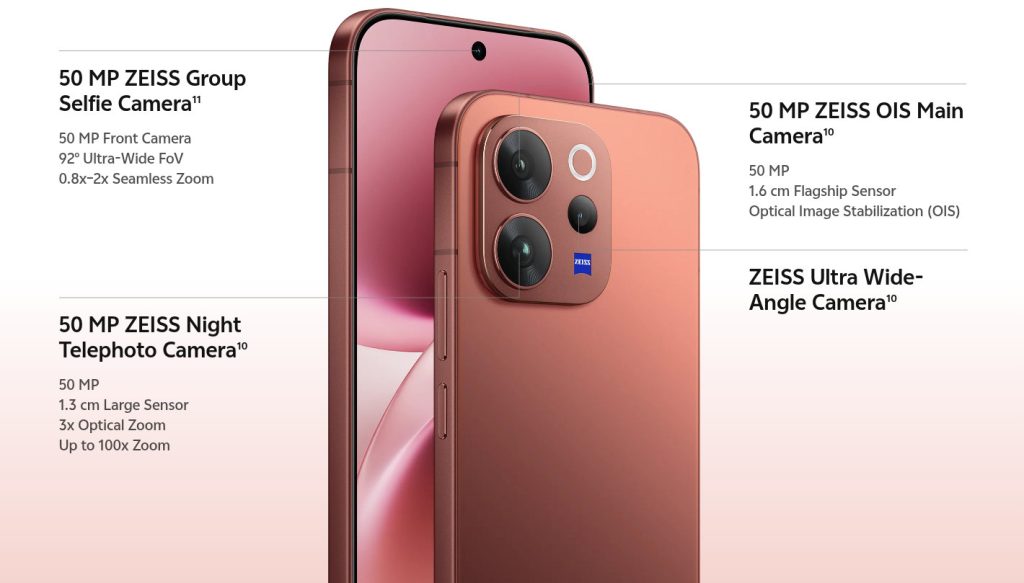
Cameras remain a key focus for the vivo V70 series, with Zeiss-powered optics once again taking centre stage. The rear camera system is expected to include a 50MP Sony IMX882 primary sensor with optical image stabilisation, accompanied by a 50MP telephoto lens and an ultra-wide camera.
On the front, both models are likely to feature a 50MP selfie camera. The phones are expected to support 4K video recording at up to 60fps, along with 4K HDR video capture for improved video quality.
Price and Availability in India
vivo has confirmed the launch of the V70 series in India on February 19. The launch timing matches vivo’s Holi-themed camera features. Flipkart will handle online sales once availability begins. The vivo V70 will likely launch around Rs. 40,000 and come in Passion Red and Lemon Yellow. Moreover, vivo may price the vivo V70 Elite around Rs. 50,000 and will offer Passion Red, Sand Beige, and Authentic Black colours.
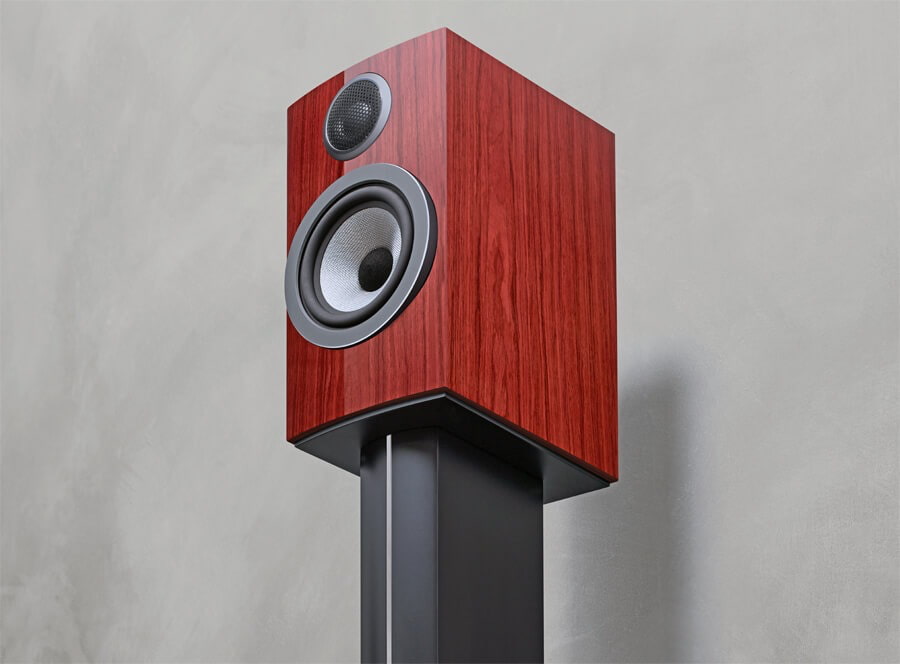
Since its introduction in 2022, Bowers & Wilkins 700 Series 3 has been a reliable anchor in the company’s loudspeaker lineup, combining proven engineering, solid build quality, and sound that largely delivers on expectations. We’ve already validated that performance with the 703 S3, which earned an Editors’ Choice Award in our Best Floorstanding Loudspeaker category. Now Bowers & Wilkins is expanding the range with the 707 Prestige Edition, a bookshelf/standmount model that is unapologetically about cosmetics rather than acoustic reinvention.
Based directly on the existing 707 S3, the Prestige Edition adds a Santos Gloss finish inspired by the 805 D3 Prestige Edition from 2018, built up using twelve layers of paint and lacquer, along with a unique rear logo plate to clearly differentiate it from the standard model. Pricing is set at €1,750 / £1,550, and it’s now been confirmed that this model will not be sold in the U.S., with availability limited to EU and APAC markets. Buyers should be clear-eyed about what’s new here: this is fundamentally the same speaker, dressed better, and priced accordingly. As for why the U.S. is excluded—tariffs, regional demand, or distribution strategy are all plausible explanations, but at this point, no official reason has been provided.
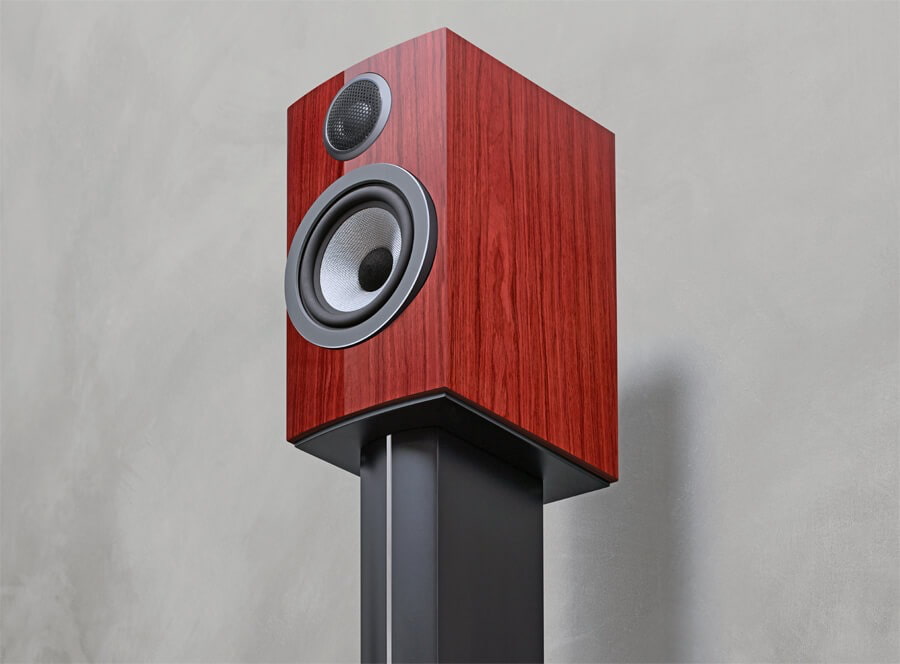
The 707 Prestige Edition sticks closely to the acoustic foundation of the standard 707 S3, retaining the same Carbon Dome tweeter, Continuum cone mid bass driver, and curved baffle design. This is not a wholesale rethink of the speaker’s voicing or architecture. Where Bowers and Wilkins has made changes is around refinement rather than reinvention.
The Prestige Edition introduces a newly optimized high frequency tweeter grille mesh and upgraded low loss speaker terminals borrowed directly from the award winning 705 S3 Signature. According to Bowers & Wilkins, these updates are intended to deliver a more open and spacious presentation than the standard model, but the core character remains intact. Think incremental polish, not a different speaker hiding in a nicer jacket.

Specifications
- Speaker Configuration: 2-way vented-box system (Bass Reflex)
- Tweeter: 1 x 25mm (1-inch) Decoupled Carbon Dome
- Mid-Bass: 1 x 130mm (5-inch) Continuum cone
- Frequency Range: 45Hz – 33kHz
- Frequency Response (+/-3dB from reference axis): 50Hz – 28kHz
- Sensitivity (on axis at 2.83Vrms at 1m): 84 dB
- Nominal Impedance: 8Ω (minimum 4.0Ω)
- Recommended Amplifier Power: 30W – 100W into 8Ω
- Dimensions: 300 x 165 x 284 (11.8 x 6.5 x 11.2 inches) including grille and terminals
- Net Weight: 6.2 kg (13.6 lbs)

The Bottom Line
Based on what Bowers & Wilkins is saying, the 707 Prestige Edition introduces a handful of design tweaks that may support a slightly more open presentation, but on paper it is the same speaker as the 707 S3. The specifications are unchanged, the drivers are unchanged, and the core performance profile remains intact. If you already own the 707 S3, there is no practical reason to “upgrade” unless the Santos Gloss finish and cosmetic detailing matter more to you than measurable gains.
This model is clearly aimed at buyers coming in fresh to the 700 Series who want the best looking version of the smallest speaker in the lineup, not existing owners chasing a meaningful performance jump. And for now, it’s a moot point for U.S. readers—the 707 Prestige Edition will not be coming to the U.S. at all, with availability confirmed for EU and APAC markets only. That takes the question of an American retail verdict off the table entirely, leaving this as a region-specific update rather than a product U.S. buyers can realistically expect to see in domestic showrooms.

Price & Availability
The 707 Prestige Edition is available from selected retailers for €1750 | £1550
FS-700 S3 floorstands in black or silver finishes are also available, should buyers prefer to standmounting to shelf placement.
Related Reading:

- Amazon Echo (4th Gen)
- Amazon Eero 6, 6 Plus, Pro 6E, Eero 7, Pro 7, Max 7, PoE 6, and PoE Gateway
- Amazon Echo Show 8 (3rd Gen), Echo Show 15 (second-gen), Echo Show 21 (second-gen), and Echo Hub
- Apple HomePod (2nd Gen)
- Apple HomePod Mini
- Apple TV 4K (2nd Gen and 3rd Gen with Wi-Fi + Ethernet)
- Google Nest Hub (2nd Gen)
- Google Nest Hub Max
- Google Nest Wifi and Nest Wifi Pro
- Google TV Streamer 4K
- Samsung SmartThings Station, Hub v3, and Hub Dongle
- Samsung Smart TVs (CU8000, CU7000, NEO QLED 8K and 4K)
- Aqara Smart Hub M3
- Homey Pro
A Brief History of Thread
Originally developed by Nest (before the Google acquisition), Thread has existed since 2011. Devised as a power-efficient mesh networking technology for internet-of-things (IoT) products, Thread gathered pace after the 2014 formation of the Thread Group, which develops the technology and drives its adoption as an industry standard. Founding members like ARM, Samsung, Google, and Qualcomm have been joined by Apple, Amazon, and many other big companies over the years.
The Thread specification is available for free, but there is an end-user license agreement (EULA) for adopters. Thread has evolved, with new versions and features rolling out every couple of years. New versions are backward compatible, so new devices can work alongside older ones. Sometimes older Thread devices can be upgraded to the latest version, but not always.
The latest version, Thread 1.4, landed in 2024, bringing credential sharing, which allows for networks formed in different ecosystems (such as Apple Home, Google Home, Amazon Alexa) and different Thread Border Routers to form one big mesh, instead of several separate meshes. Unfortunately, although the Thread 1.4 specification is available, it takes a while for manufacturers to adopt it and go through certification.
To learn more about Thread, check out the official Thread Group website.
How Does Thread Work With Matter?
Thread is what enables devices to connect to each other, and Matter is the language they use to communicate. Thread actually supports various application layers, like Matter, that sit on top. It can even support multiple application layers simultaneously. Matter uses Thread, Wi-Fi, and Ethernet for device connectivity. If the device is battery-powered and bandwidth requirements are low, it will pick Thread. For high-bandwidth and always-on (plugged-in) devices (like security cameras), it will choose Wi-Fi. Matter also uses Bluetooth LE for the initial setup of some devices. You can find out more in my Matter guide.
Thread vs. Zigbee
Zigbee has been around longer than Thread and is based on the same wireless technology. It can also create robust mesh networks, features secure encryption, and is great for low-power devices. Because Zigbee has its own application and network layers, it requires a proprietary hub that acts as a gateway for connections, whereas Thread is IPv6, so it can seamlessly integrate with existing IP-based networks through any Thread Border Router. Thread is also lower latency than Zigbee, so smart home devices respond more quickly.
Power up with unlimited access to WIRED. Get best-in-class reporting and exclusive subscriber content that’s too important to ignore. Subscribe Today.

Getting a phone serviced can be a headache, as nobody likes to stand in long queues. To help with this exact situation, OPPO has announced Service Center 3.0 Pro. It’s the next-generation after-sales service format aimed at improving the overall ownership experience for customers. The company says 29 Service Center 3.0 Pro locations are already operational, with plans to open 110 new centres across India in 2026.
So, what is it? According to OPPO, the upgraded service centres are designed to go beyond standard repair support by offering faster service, greater transparency, and a more comfortable in-store experience. The new format introduces digital check-in, real-time queue updates, and dynamic digital signage to reduce waiting times and keep customers informed throughout their visit. OPPO has also added face-to-face repair and servicing, enabling users to interact directly with technicians for greater clarity and trust.
Redesigned Interiors
The new centers feature a refreshed visual identity, clearly defined service zones, and improved seating areas. OPPO says the redesigned layout helps customers navigate the space more easily while allowing staff to work more efficiently. The centres also include dedicated product experience zones where users can try out devices, as well as gaming areas designed to make waiting periods more comfortable.
Goldee Patnaik, Head of Communications at OPPO India, said, “These next-generation centers are built for modern-day users who value efficiency, clarity, and a consistent premium experience across touchpoints. As we scale this upgraded format across the country, our focus remains the same—every improvement starts with what our customers tell us.”
If you own a Find or Reno series phone, OPPO offers priority service through Premium Queue registration. The privileges include a six-hour email response time, a two-hour social media response time, and high call and chat response rates.

While the rumor mill has missed most of its guesses about the MacBook Pro release so far, it apparently feels confident about predictions for a low-cost MacBook coming in the spring.

Apple could be looking to bring out a successor to its lower cost MacBook
As we approach the expected spring 2026 release of the low-cost MacBook, the rumor mill accelerates predictions, leaks and outright guess-work about the new unit. Mirror Daily throws its hat into the ring with not just specifications, but also expected order volumes for the unit.
Specs that the publication claims for the unit aren’t particularly revelatory. It assumes the A18 Pro processor will be used in the machine, as is the case with most of the rumors to date.
Rumor Score: 🤯 Likely
Continue Reading on AppleInsider | Discuss on our Forums
A fresh wave of spam is hitting inboxes worldwide, with users reporting that they are once again being bombarded by automated emails generated through companies’ unsecured Zendesk support systems.
Some recipients say they are receiving hundreds of messages with strange or alarming subject lines.
Users flooded with bogus ‘Activate account’ emails
Since yesterday, numerous social media users say they have begun receiving large bursts of emails with subject lines such as “Activate your account” and similar support-style notifications appearing to originate from different companies.

Recipients say the messages arrive in rapid succession and look like legitimate automated replies from customer support portals, despite never signing up or submitting a ticket.
“Anyone else getting a slew of failed account & support sign-up emails?” posted security researcher Jonathan Leitschuh on LinkedIn.
“Someone is DDoSing Zendesk support ticketing systems and other account creation processes across the internet with my email right now. Anyone know what the attacker is hoping to achieve here?”
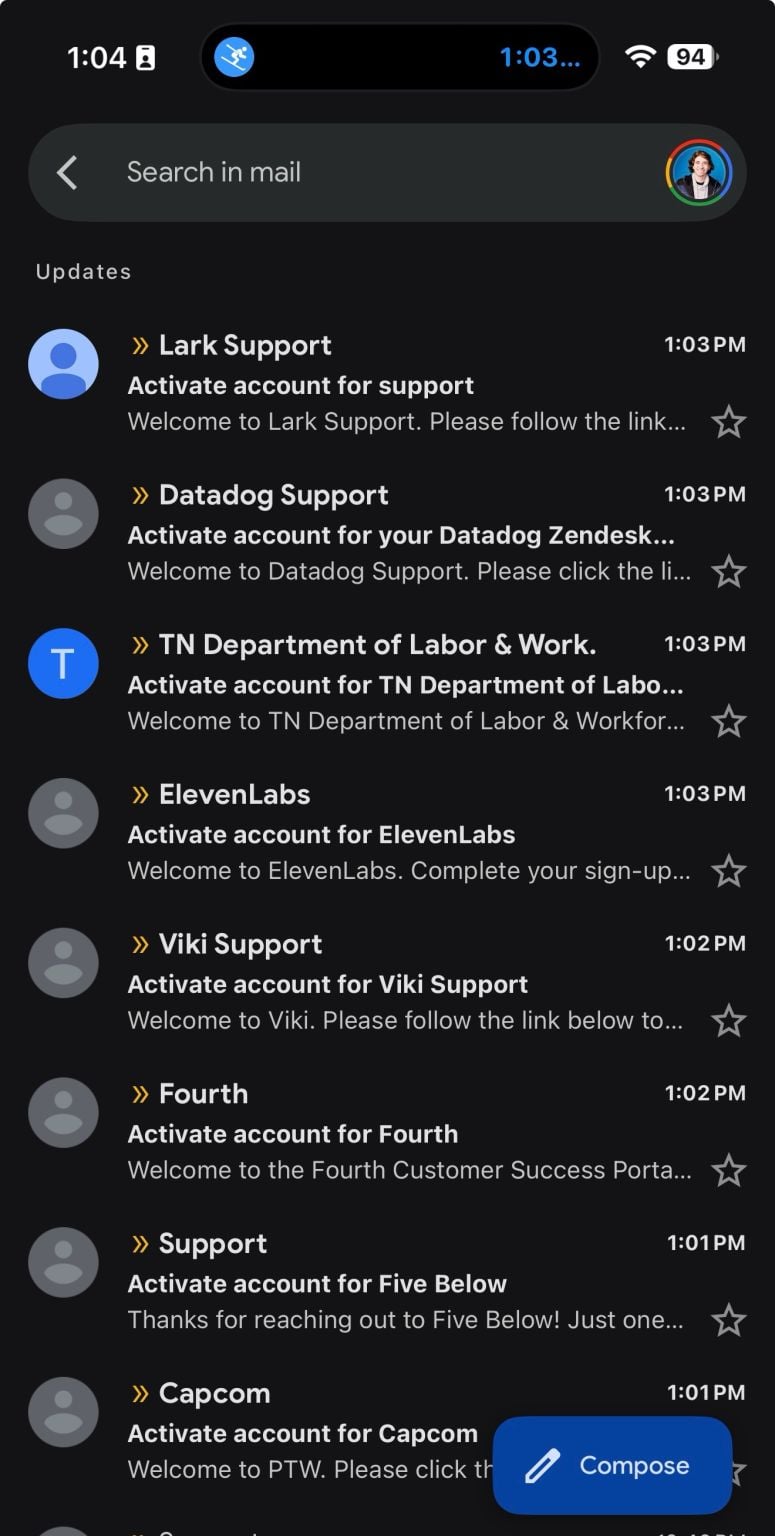
Several users took to social media [1, 2, 3] to report their inboxes overflowing with similar messages:
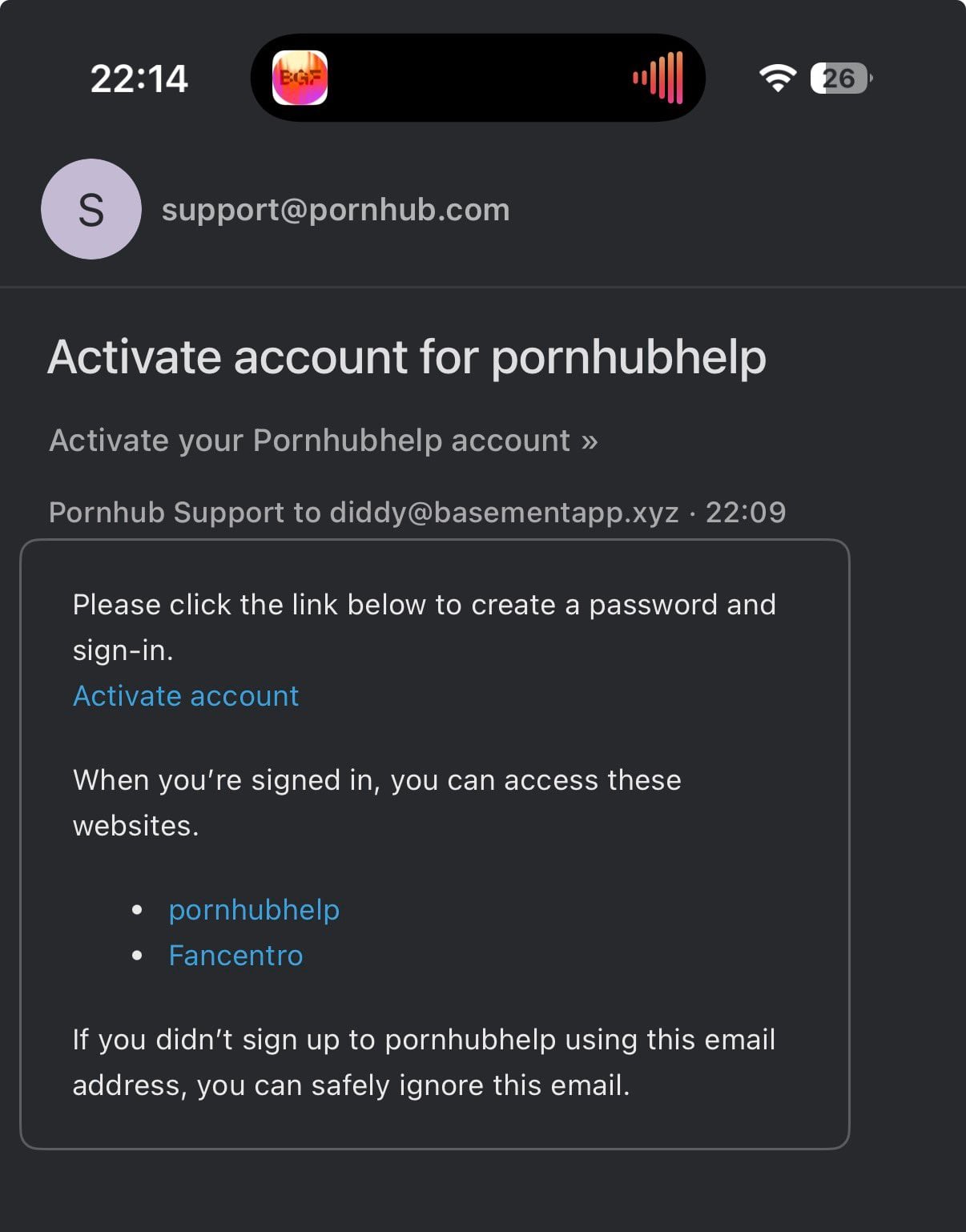
(@nickvernij on X)
Similar to the previous incident, the emails appear to be sent from real companies’ Zendesk instances, allowing them to bypass spam filters and land directly in inboxes.
The activity strongly suggests attackers are once again abusing Zendesk ticket submission forms to trigger confirmation emails to large lists of addresses.
What happened in January
In January, a massive global spam wave was traced to attackers abusing Zendesk’s ability to let unverified users submit support tickets.
Each ticket automatically generates a confirmation email to the email address entered, enabling threat actors to turn exposed support portals into large-scale spam relays.
The earlier campaign began around January 18 and affected several companies, with some recipients receiving hundreds of messages with bizarre or alarming subject lines.
Multiple companies had confirmed they were affected by the spam wave, including Dropbox and 2K, who responded to tickets to tell recipients not be concerned and to ignore the emails.
Zendesk had earlier told BleepingComputer that it had introduced new safety features on their end to detect and stop this type of spam in the future.
“We’ve introduced new safety features to address relay spam, including enhanced monitoring and limits designed to detect unusual activity and stop it more quickly,” Zendesk said at the time.
“We want to assure everyone that we are actively taking steps – and continuously improving – to protect our platform and users.”
In a December 2025 advisory, Zendesk had also warned customers about this type of abuse, explaining that attackers were sending what it called “relay spam” by abusing Zendesk instances.
The company said earlier that organizations could prevent this type of abuse by restricting ticket creation to only verified users and removing placeholders that allow any email addresses or ticket subject to be used.
The renewed activity suggests attackers may still be able to abuse exposed Zendesk ticket portals despite the safeguards introduced earlier this year.
BleepingComputer has contacted Zendesk for comment and will update this story if we receive a response.

Modern IT infrastructure moves faster than manual workflows can handle.
In this new Tines guide, learn how your team can reduce hidden manual delays, improve reliability through automated response, and build and scale intelligent workflows on top of tools you already use.

Looking for the most recent Strands answer? Click here for our daily Strands hints, as well as our daily answers and hints for The New York Times Mini Crossword, Wordle, Connections and Connections: Sports Edition puzzles.
Today’s NYT Strands puzzle is a fun one, once you clue in on the theme. Some of the answers are difficult to unscramble, so if you need hints and answers, read on.
I go into depth about the rules for Strands in this story.
If you’re looking for today’s Wordle, Connections and Mini Crossword answers, you can visit CNET’s NYT puzzle hints page.
Read more: NYT Connections Turns 1: These Are the 5 Toughest Puzzles So Far
Hint for today’s Strands puzzle
Today’s Strands theme is: Quint-essential.
If that doesn’t help you, here’s a clue: Not four, or six.
Clue words to unlock in-game hints
Your goal is to find hidden words that fit the puzzle’s theme. If you’re stuck, find any words you can. Every time you find three words of four letters or more, Strands will reveal one of the theme words. These are the words I used to get those hints but any words of four or more letters that you find will work:
- DAYS, GIVE, WOVE, DOVE, LOVE, DOGS, SCONE, STOLE, GEEK, LODE, SIEGE, SLEW, HENS
Answers for today’s Strands puzzle
These are the answers that tie into the theme. The goal of the puzzle is to find them all, including the spangram, a theme word that reaches from one side of the puzzle to the other. When you have all of them (I originally thought there were always eight but learned that the number can vary), every letter on the board will be used. Here are the nonspangram answers:
- TOES, OCEANS, SENSES, VOWELS, BOROUGHS, WEEKDAYS
Today’s Strands spangram
The completed NYT Strands puzzle for Feb. 5, 2026.
Today’s Strands spangram is GIVEMEFIVE. To find it, start with the G that’s three letters to the right on the top row, and wind down.
Don’t miss any of our unbiased tech content and lab-based reviews. Add CNET as a preferred Google source.

Sony announced last month that it plans to pass control of its home entertainment division — including the two-decade-old Bravia television brand — to Chinese electronics group TCL through a joint venture in which TCL would hold a 51% stake. The Japanese company was long ago overtaken in sales by South Korea’s Samsung and LG and now holds just 2% of the global television market. Sony stopped making its own LCD screens in 2011.
Chinese companies supplied 71% of television panels made in Asia last year, according to TCL, and less than 10% are now produced in Japan and Korea. TCL is close to overtaking Samsung as the world’s largest television maker. Sony retains valuable intellectual property in image rendering, and the Bravia brand still carries consumer recognition, but its OLED screens are already supplied by Samsung and LG. The company has been shifting toward premium cameras, professional audio, and its entertainment businesses in film, music, and games — areas where intellectual property is less exposed to Chinese manufacturing scale.


Hackers stole email addresses and other personal information from 1.4 million accounts after breaching the systems of automated investment platform Betterment in January.
Betterment provides a mix of automated investment tools and financial advisory services and is considered a pioneer in the U.S. “robo-advisory” sector. In total, the fintech firm manages $65 billion in assets for more than one million customers.
While Betterment has not disclosed the total number of affected individuals, data breach notification service Have I Been Pwned analyzed the stolen data and said the breach exposed 1,435,174 accounts, including email addresses, names, and geographic location data.
The compromised information also includes dates of birth, physical addresses, phone numbers, device information, employers’ geographic locations, and job titles.
Betterment disclosed on January 10 that the threat actors also sent fraudulent emails disguised as a company promotion after gaining access to some of its systems in a social engineering attack, attempting to lure targeted customers into a reward scam that claimed to triple the amount of cryptocurrency sent to attacker-controlled Bitcoin and Ethereum wallets.
“This is not a real offer and should be disregarded. If you clicked on the offer notification, it did not compromise the security of your Betterment account,” Betterment warned. “The unauthorized access has been removed, and at this time we have no indication that the unauthorized individual had any access to Betterment customer accounts.”
After BleepingComputer reported on January 13 that Betterment was under a distributed denial-of-service (DDoS) attack and was being extorted, the company confirmed that intermittent website and mobile app outages were due to a DDoS attack, but has yet to share any information on the extortion attempt.
Earlier this week, Betterment issued another statement saying that a follow-up forensic investigation, conducted in collaboration with the cybersecurity firm CrowdStrike, found that no customer accounts were compromised in the breach.
“Our forensic investigation, supported by the cybersecurity firm, CrowdStrike, has confirmed that no customer accounts, passwords, or login information were compromised as part of the January 9 incident,” the company said.
“Our analysis continues to indicate that the primary privacy impact involved certain customer contact information, including names and emails. In a subset of cases, contact information was coupled with other customer information, such as physical addresses, phone numbers, or birthdates.”
A Betterment spokesperson has yet to reply after BleepingComputer reached out with questions after the incident.
Modern IT infrastructure moves faster than manual workflows can handle.
In this new Tines guide, learn how your team can reduce hidden manual delays, improve reliability through automated response, and build and scale intelligent workflows on top of tools you already use.

The 10 Best 4K UHD Blu-ray Discs of 2025 arrive at a moment when I keep hearing the same weary refrain: physical media is dead. And yet, it refuses to lie down. 2025 was a genuinely stellar year for 4K discs, one that challenged me and plenty of other disc mavens just to keep up, let alone narrow things down to a definitive decade. As always, the criteria are unapologetically strict: highly watchable and rewatchable films with reference-level picture and sound, extras that add real value instead of padding a press release, and, when studios bothered to try, packaging with some genuine shelf appeal. To keep the playing field level, only 4K discs I personally reviewed made the cut, and multi-movie boxed sets were left out entirely.
Agree? Disagree? Any must-owns that I somehow missed? Drop me a comment down below.
Outland Limited Edition (Arrow)

Peter Hyams’ Outland was, for me, the top of the crop in a year filled with truly outstanding releases. Props to Arrow for rescuing this largely forgotten sci-fi classic, a thrilling High Noon in space that helped Sean Connery turn the corner on his Bondian past. Though the image is intentionally dim and gritty; full of claustrophobic interiors and airless exteriors on the third moon of Jupiter, realized with the help of then-cutting-edge analog visual effects; the disc surrenders sublime shadow detail and punchy colors from beginning to end. I opted for the DTS-HD Master Audio 5.1 soundtrack–the disc defaults to the original Oscar-nominated LPCM stereo mix that reintroduces us to yet another propulsive Jerry Goldsmith score. New interviews, new featurettes and a new commentary join the 2012 archival Hyams track for a near-perfect evening in the home theater.
Where to buy: $29.99 at Amazon
Kingdom of Heaven (Fox/Disney/Sony)

While 2025 brought us three of cinephiles’ most-requested 4K upgrades; Tombstone, Kingdom of Heaven and Master and Commander: The Far Side of the World; all in SteelBook-exclusive drops from Disney/Sony, Kingdom rose above. The new Dolby Atmos audio dutifully provides exactly what the epic adventure demands from scene to scene, from subtle atmospheric cues to a mighty, sprawling mix for the grand battle scenes. Video quality is more natural and more detailed than even the excellent HD Blu-ray, here with the restored director’s cut and roadshow versions on both 4K and 1080p discs (Scott was closely involved in this release and the theatrical cut is nowhere to be found, so what does that tell us?). This set does an admirable job porting most if not all of the unholy amount of bonus content that has supplemented this title since its earliest editions, with an introduction, three commentaries and an augmented viewing mode, plus a third platter loaded with days’ worth of bonus content—yes, mostly SD, but you’re still watching it anyway.
Where to buy: $59.99 at Amazon
Dark City Limited Edition (Arrow)

A fast sellout, Arrow’s slipcased hardbox of Alex Proyas’ trippy Dark City was the only way to get the theatrical and director’s cuts (quantifiably different and both excellent) together in DP-approved 4K restorations in Dolby Vision, just the thing for all those shadows–each with new Dolby Atmos remixes. The two-disc set is loaded with new and old bonuses, now including five (!) audio commentaries on Proyas’ preferred, longer cut, as well as some of the wonderful physical goodies for which Arrow’s limited editions are so well-known: reversible cover art, a two-sided poster, artcards and more.
(The well-adorned 4K director’s cut is currently available in a single-disc edition.)
Where to buy: Check Amazon
This Is Spinal Tap (Criterion)

This is Rob Reiner’s first theatrical feature, the beloved “mockumentary” that set the standard for decades of comedies since. Criterion’s 4K preserves its deliciously grainy 16mm origins, although you might want to click over from the subdued vintage LPCM stereo to the 5.1 for a more dramatic jump from the low-key interviews to the heavy-duty rock-and-roll. The three-disc set is packed with goodies, notably all three legacy audio commentaries together for the first time, in addition to over an hour-and-a-half of outtakes, a new featurette and a cleverly designed companion booklet.
Where to buy: $49.99 at Amazon
Wicked (Universal)

Everything we could have hoped for from a recent, big-budget movie, Wicked boasts a spectacularly colorful Dolby Vision image and thrilling Dolby Atmos audio, the flying characters conspicuously present in the overhead channels. It’s the extras here that really pushed it over the top, though: In an age where new filmmaker commentaries are becoming all too rare, Universal gives us two separate tracks, the first with director Jon M. Chu and the other with stars Cynthia Erivo and Ariana Grande. These are in addition to deleted scenes, featurettes, a 45-minute “making of” plus a surprisingly well-produced Sing-Along mode.
Where to buy: $21.99 at Amazon
Hard Boiled (Radial/Shout! Factory)

Regarded by many as the pinnacle of Hong Kong action, this final pairing of director John Woo and star Chow Yun-fat made a huge international splash, with Hollywood seeking to emulate its uniquely over-the-top violence and balletic “gun-fu” choreography. Shout! has long brought us special editions that are a cut above, but their Hong Kong Cinema Classics label has set a new standard, here with a 4K scan of the camera negative, presented in Dolby Vision with 1992-authentic Cantonese and English mono. A lavish three-disc set in a rigid library box with a fantastic companion book, Hard Boiled carries a brand-new Woo commentary, another from historian Frank Djeng, as well as a third track ported from the Criterion Collection laserdisc, further enhanced by a gallery of new talent and expert interviews.
Where to buy: $85.99 at Amazon
The Sound of Music (Fox/Disney/Sony)

Before you judge, remember that this was once the highest-grossing movie of all time and the winner of Best Picture and four more Academy Awards. A true story and a stage adaptation done right, Music was shot on location and de-cornified to give audiences the best-ever telling of a singing, dancing family’s defiance of the Nazis. For the 60th anniversary, Fox scanned the original 65mm film negative at 8K and performed extensive restoration with jaw-dropping results, especially impressive on larger screens. The purpose-built new Atmos track, sourced from the 70mm 6-track magnetic stereo master, is pure joy, for the enduring Rodgers & Hammerstein songs and so much more. All this, and some picture postcards, too!
Where to buy: $29.99 at Amazon
Monty Python and the Holy Grail (Sony)

Right from the SteelBook cover; with its vintage, oh-so-Python poster art; we know we’re in for a treat, as we journey back some 50 years to experience the lads’ timeless, side-splitting spin on King Arthur’s noble quest. This was a low-budget indie, so the quality of the Dolby Vision image here is a genuine revelation, and the accompanying Dolby Atmos sounds better than any comedy has a right to. The extras are an intriguing and quite generous mix of old and new, from the expected to the obscure.
Where to buy: Check Amazon
Sinners (Warner)

Go in spoiler-free and you might not even realize what you’re in for with Ryan Coogler’s utterly original and flawlessly executed genre-bending period piece. The entire movie was shot in large-format, a combination of IMAX and the recently resurrected Ultra Panavision 70, so the image shifts between 16:9 and 2.76:1 aspect ratios, each with remarkable depth, high contrast, and tight, organic grain. The events cross over into the supernatural, and the Atmos audio powerfully conveys the dark forces all around. The music is intrinsic to both the story and our greater cinematic odyssey, and by the time you read this, composer Ludwig Göransson might well have added another Oscar to his collection. Extras are solid, but might an awards sweep lead to a more substantive double-dip by Warner?
Where to buy: $34.98 at Amazon
Lilo & Stitch (2002 & 2025; Disney/Sony)


An unavoidable tie as both the original animated classic and its modern live-action remake shone as brightly as the Hawaiian sun. The 2002 starter flaunts its watercolor aesthetic in lush 4K, paired with a five-star Atmos remix brimming with mighty bass and inspired new surround moments. The 2025 redux succeeded in the unenviable task of recreating the sweet, charming story of a precocious youngster and her GMO “pet” in flesh and blood and CGI (with a few plot changes along the way), ultimately delivering a billion-dollar global hit. The gorgeous island scenery in this one could make it a 108-minute ad for tourism to our 50th state, and but for some stingy LFE, it too is reference-quality. Stay tuned after the ‘ohana-friendly frolics for a respectable assortment of extras in each set.
Where to buy: $40.99 at Amazon
Related Reading:

GlobalStake rolls out bitcoin yield gateway as institutions revisit BTC yield

Teddi Mellencamp Shares Dad John’s Reaction to Her Masked Singer Stint

Having This Much Sex A Week Is Linked To A Longer Life


-

 Crypto World6 days ago
Smart energy pays enters the US market, targeting scalable financial infrastructure
-
 Crypto World7 days ago
Software stocks enter bear market on AI disruption fear with ServiceNow plunging 10%
-

 Politics6 days ago
Why is the NHS registering babies as ‘theybies’?
-
 Crypto World6 days ago
Adam Back says Liquid BTC is collateralized after dashboard problem
-

 Video3 days ago
When Money Enters #motivation #mindset #selfimprovement
-

 Fashion6 days ago
Weekend Open Thread – Corporette.com
-

 Tech1 day ago
Wikipedia volunteers spent years cataloging AI tells. Now there’s a plugin to avoid them.
-

 NewsBeat6 days ago
Donald Trump Criticises Keir Starmer Over China Discussions
-

 Politics3 days ago
Sky News Presenter Criticises Lord Mandelson As Greedy And Duplicitous
-

 Crypto World5 days ago
U.S. government enters partial shutdown, here’s how it impacts bitcoin and ether
-

 Sports5 days ago
Sinner battles Australian Open heat to enter last 16, injured Osaka pulls out
-
 Crypto World5 days ago
Bitcoin Drops Below $80K, But New Buyers are Entering the Market
-

 Crypto World3 days ago
Market Analysis: GBP/USD Retreats From Highs As EUR/GBP Enters Holding Pattern
-

 Crypto World6 days ago
KuCoin CEO on MiCA, Europe entering new era of compliance
-
Business6 days ago
Entergy declares quarterly dividend of $0.64 per share
-

 Sports3 days ago
Shannon Birchard enters Canadian curling history with sixth Scotties title
-

 NewsBeat2 hours ago
Still time to enter Bolton News’ Best Hairdresser 2026 competition
-

 NewsBeat2 days ago
US-brokered Russia-Ukraine talks are resuming this week
-

 NewsBeat3 days ago
GAME to close all standalone stores in the UK after it enters administration
-

 Crypto World2 days ago
Russia’s Largest Bitcoin Miner BitRiver Enters Bankruptcy Proceedings: Report