
Business
10 Things You Must Know About Smith & Wesson as Firearm Icon Posts Strong Q3 Sales Gains


Smith & Wesson Brands Inc., one of America’s most iconic firearm manufacturers, continues to navigate a shifting market with improving financial results and fresh product launches, even as the company marks more than 170 years of innovation in revolvers, pistols and long guns.

Here are 10 essential things to know about the company behind the legendary Model 10, the .357 Magnum and today’s popular M&P lineup.
First, Smith & Wesson traces its roots to 1852 when Horace Smith and Daniel B. Wesson formed a partnership in Norwich, Connecticut, to develop a repeating firearm using a fully self-contained cartridge. Their early Volcanic repeating pistol laid groundwork for modern lever-action designs, though the initial venture struggled before evolving into the successful Smith & Wesson Revolver Company. The firm’s first commercial hit came with the Model 1 tip-up revolver in .22 caliber.
Second, the company pioneered several groundbreaking cartridges that remain staples today. Smith & Wesson developed or popularized rounds including the .38 S&W Special, .357 Magnum, .44 Magnum and later the .500 S&W Magnum. The .357 Magnum, introduced in 1935 in collaboration with Winchester and Elmer Keith, became one of the most powerful handgun cartridges of its era and helped cement the brand’s reputation for high-performance revolvers. The .44 Magnum gained worldwide fame through Clint Eastwood’s “Dirty Harry” films.
Third, the Model 10 revolver stands as one of the company’s most enduring successes. Originally introduced in 1899 as the .38 Military & Police, it has remained in continuous production for more than a century with over six million units made. It served as a standard sidearm for countless law enforcement agencies throughout the 20th century and remains a trusted option for both duty and civilian use.
Fourth, Smith & Wesson has long maintained a strong presence in law enforcement. While Glock currently leads many U.S. police departments, Smith & Wesson holds a solid second-place position with growing adoption. Its M&P series of striker-fired pistols has become a popular duty weapon choice, offering reliability and modularity that appeal to agencies seeking alternatives to European designs.
Fifth, the company operates today as Smith & Wesson Brands Inc., a standalone public entity traded on Nasdaq under the ticker SWBI. It spun off from American Outdoor Brands Corporation in 2020, with Mark P. Smith serving as president and CEO. The firm is headquartered in Maryville, Tennessee, after previous locations in Springfield, Massachusetts, and other sites.
Sixth, recent financial performance shows signs of recovery in a challenging firearms market. For the third quarter of fiscal 2026, ended Jan. 31, the company reported net sales of $135.7 million, up 17.1% from the prior-year period. Gross margin improved to 26.2% from 24.1%, while net income rose to $3.8 million, or $0.08 per diluted share. Handgun shipments to the sporting goods channel jumped 28%, with average selling prices climbing more than 5%. Management guided for 10% to 12% revenue growth in the fourth quarter.
Seventh, Smith & Wesson continues to expand its product lineup with modern innovations. At SHOT Show 2026, the company unveiled additions to its Spec Series, including the Spec Series VI M&P9 M2.0 Metal Compact pistol and the Spec Series R Model 686 Plus revolver. Other recent releases include the M&P 22 Magnum, M&P Carry Comp in 10mm, the M&P FPC folding pistol-caliber carbine, the Model 1854 lever-action rifle and suppressors under the Gemtech brand. These offerings blend heritage craftsmanship with contemporary features for concealed carry, competition and home defense.
Eighth, the company has diversified beyond traditional revolvers and pistols. Its current portfolio includes semi-automatic handguns, rifles, shotguns such as the M&P12, and accessories. Smith & Wesson produces millions of firearms annually and ranks among the largest U.S. manufacturers by volume, even as it faces competition from newer players in the polymer pistol segment.
Ninth, Smith & Wesson has experienced multiple ownership changes over its long history. After early struggles, it passed through entities including Bangor Punta and Tomkins plc before the 2020 spin-off. The brand has occasionally ventured into non-firearm products, such as law enforcement bicycles and identification software in past decades, though firearms remain its core focus.
Tenth, the company operates in a highly regulated and politically sensitive industry. Sales often fluctuate with election cycles, regulatory proposals and shifts in consumer sentiment regarding Second Amendment issues. Despite periodic market corrections, Smith & Wesson has demonstrated resilience through disciplined cost management, product innovation and strong branding that resonates with both traditional enthusiasts and newer shooters.
CEO Mark Smith has emphasized market share gains, pricing power and a focus on long-term strategy during recent earnings calls. The company’s improved margins and cash flow reflect operational efficiencies even amid softer overall industry demand compared to pandemic-era peaks.
Smith & Wesson’s stock has traded in a range around $14 to $15 in recent sessions, reflecting investor reactions to quarterly results and broader economic factors. The firm pays a modest dividend and maintains a focus on returning value to shareholders while investing in new manufacturing capabilities.
For consumers, the brand represents a balance of heritage and modernity. Classic revolvers like the Model 686 or 629 appeal to those who value smooth double-action triggers and timeless designs, while the M&P series targets users seeking lightweight, high-capacity options with optics-ready slides and accessory rails.
Critics and supporters alike recognize Smith & Wesson’s role in American manufacturing. The company employs more than 1,500 people and emphasizes domestic production, a point often highlighted in its marketing.
Looking ahead, analysts watch for continued margin expansion and the success of 2026 product launches. Q4 guidance suggests sustained handgun momentum, though the broader firearms sector remains sensitive to interest rates, political developments and inventory levels at retailers.
Smith & Wesson’s story spans from the tip-up revolvers of the 1850s to today’s competition-ready pistols and lever-actions. Through economic booms, wars, social changes and technological shifts, the brand has endured as a symbol of American firearms craftsmanship.
Whether enthusiasts seek a reliable duty pistol, a powerful hunting revolver or a versatile carbine, Smith & Wesson’s extensive catalog offers options across price points and use cases. Its ability to blend innovation with legacy designs has helped maintain relevance in a crowded market.
As the company prepares for its next earnings report, the 10 key aspects outlined here illustrate why Smith & Wesson remains a household name among shooters. From historical firsts in cartridge development to current gains in sales and market share, the iconic American brand continues writing new chapters in its 174-year history.

Business
Tesla Stock Rockets 4.7% to $407 as AI Chip Hopes and Autonomy Bets Ignite Investor Optimism

Tesla Inc. shares surged more than 4.6% Friday, climbing to $407.02 midday as investors bet on accelerating progress in artificial intelligence, autonomous driving technology and upcoming product catalysts, even after the electric vehicle maker posted weaker-than-expected first-quarter deliveries.
The stock jumped $18.12, or 4.66%, by late morning trading on the Nasdaq, outpacing the broader market and reversing some of the recent pressure from soft vehicle sales numbers. Volume remained elevated as traders reacted to positive comments from CEO Elon Musk on AI chip advancements and software updates rolling out to the fleet.
Tesla, the world’s most valuable automaker by market capitalization, has seen its shares swing wildly in 2026 amid a shift in narrative from pure electric vehicle growth toward AI, robotics and robotaxi ambitions. At current levels, the company’s market value hovers near $1.5 trillion despite challenges in its core auto business.
The rally comes days after Musk highlighted progress on the company’s next-generation AI5 chip and new software updates that promise improved Full Self-Driving capabilities. Shares had already climbed nearly 8% earlier in the week on similar optimism around autonomy and hardware upgrades.
In early April, Tesla reported first-quarter vehicle deliveries of 358,023, missing Wall Street expectations of roughly 365,000 to 370,000 units. Production reached 408,386 vehicles, creating a gap of more than 50,000 unsold units and signaling inventory buildup amid softening demand and fading U.S. tax incentives.
Model 3 and Model Y accounted for the bulk of output and deliveries, while “other models” including Cybertruck delivered 16,130 units. Energy storage deployments hit 8.8 gigawatt-hours, down from prior year levels but still a bright spot in the company’s diversification efforts.
Full first-quarter financial results are scheduled for release after the market closes on April 22. Analysts will scrutinize margins, which have faced pressure from price cuts, competition from cheaper Chinese EVs and higher inventory levels.
Despite the delivery miss, many investors are looking past near-term automotive headwinds toward Tesla’s long-term vision. Musk has repeatedly described 2026 as a pivotal year for unsupervised Full Self-Driving, Cybercab robotaxi production and Optimus humanoid robot development.
Cybercab production is slated to begin this month at Gigafactory Texas, according to earlier statements, though timelines have slipped in the past. The dedicated two-seater autonomous vehicle without steering wheel or pedals is central to Tesla’s plan to launch a ride-hailing network that could generate high-margin recurring revenue.
Musk has also teased an updated Roadster unveiling in April, potentially adding excitement around high-performance vehicles. Meanwhile, software version 14.3 and beyond continue to push the boundaries of Tesla’s neural net-based autonomy, with owners reporting faster reaction times and smoother performance.
Analysts remain divided. UBS recently upgraded Tesla to Neutral from Sell, citing more reasonable valuations and leadership in “physical AI.” Other firms maintain Hold ratings with price targets clustered around $380 to $400, though bullish voices like Wedbush have far higher targets emphasizing robotaxi potential.
The stock has traded in a wide 52-week range between roughly $223 and $499. Year-to-date performance has been volatile, with shares recovering from earlier 2026 lows but still sensitive to macro factors, interest rates and execution risks.
Tesla’s pivot toward AI and robotics has redefined its valuation. Traditional auto metrics show slowing growth — full-year 2025 revenue declined slightly — yet the market prices in future dominance in autonomy and energy. Gross margins on the automotive side have stabilized around 17% excluding regulatory credits, helped by Cybertruck scaling.
Energy storage remains a growth engine, though quarterly deployments fluctuated. Tesla continues to expand its Megapack business and virtual power plant initiatives, positioning it as a key player in grid stabilization.
International markets present both opportunity and challenge. Competition in China remains intense, while Europe and other regions grapple with varying EV adoption rates and policy shifts. Recent software updates and over-the-air improvements help differentiate Tesla’s fleet globally.
Optimism around Optimus, the humanoid robot project, has grown. Musk envisions millions of units performing factory and household tasks, potentially creating another massive revenue stream. Early prototypes have demonstrated basic capabilities, but commercialization remains years away.
Regulatory hurdles for Full Self-Driving and robotaxis loom large. Approval processes vary by jurisdiction, with California and other states closely watching safety data. Any delays or setbacks could pressure the stock, as much of the current premium relies on timely autonomy milestones.
Broader market context also influences Tesla. As a high-beta growth name, it moves sharply with shifts in technology sentiment, AI enthusiasm and Federal Reserve policy signals. Friday’s gain aligned with strength in other tech names amid ongoing rotation.
Retail investors continue to play a major role in Tesla’s trading activity. The stock ranks among the most discussed on social platforms, with sentiment often swinging on Musk’s posts or product teases.
Looking ahead, the April 22 earnings call will offer fresh guidance on production ramps, margin trajectories and autonomy timelines. Investors will listen closely for updates on Cybercab volume targets, FSD adoption rates and any hints about a more affordable next-generation vehicle.
Tesla operates Gigafactories in the U.S., China, Germany and plans further expansion. The company employs tens of thousands and has delivered millions of vehicles since going public.
Challenges persist. A class-action lawsuit related to past statements and recent incidents, including a reported fire at a Tesla service center, highlight ongoing reputational and operational risks.
Still, for believers in Musk’s vision, Tesla represents more than cars — it is an AI, robotics and energy platform with transformative potential. Friday’s surge suggests Wall Street is once again willing to price in that ambitious future, at least in the short term.
As trading continues toward the earnings release, all eyes remain on whether Tesla can convert hype around chips, software and robotaxis into tangible progress that justifies its premium valuation.

Form 144 KYVERNA THERAPEUTICS INC For: 17 April

“Summer House” star Kyle Cooke was photographed passionately kissing former “Real Housewives of Orange County” cast member Meghan King outside a Manhattan bar late Thursday night, just weeks after his ex-wife Amanda Batula went public with a new romance involving Cooke’s former castmate West Wilson.

The pair was spotted locking lips after attending the star-studded Page Six x Nine West party themed “A Love Letter to 90s New York” at Temple Bar in New York City. As they walked past a bar called the Library, Cooke, 43, placed his hands on King’s shoulders and leaned in for a kiss, according to photos obtained by Page Six. Sources told the outlet the moment appeared spontaneous yet charged with chemistry.
A separate Deuxmoi tip claimed King, 41, had been “really into” Cooke throughout the evening, with another source later spotting the duo “all over each other” at Bar Bianchi. The sightings have sent shockwaves through the Bravo universe, where fans are still processing the messy dissolution of Cooke and Batula’s marriage and the subsequent romantic entanglements among the “Summer House” cast.
Cooke and Batula, who married in 2022 after years of on-and-off dating documented on “Summer House,” announced their split in January 2026 in a joint Instagram statement. They described the decision as “mutual and amicable” after “much reflection,” but the breakup quickly turned complicated amid allegations and on-screen drama involving other housemates.
Batula, 33, recently confirmed she is dating West Wilson, a fellow “Summer House” personality and close friend of the group. The revelation added fuel to an already dramatic season, with insiders saying tensions ran high during filming as old loyalties were tested. Wilson had previously been linked to castmate Ciara Miller, creating additional layers of entanglement in the tight-knit Hamptons share house circle.
The timing of Cooke’s public display with King — a model and mother of three who rose to fame on “The Real Housewives of Orange County” from 2015 to 2020 — has only intensified scrutiny. King, who was previously married to former MLB player Jim Edmonds, has kept a relatively lower Bravo profile in recent years while focusing on parenting and occasional television appearances.
Neither Cooke nor King has publicly commented on the encounter as of Friday morning. Representatives for both stars did not immediately respond to requests for comment. Batula has also remained silent on the latest development involving her ex-husband.
The kiss comes amid ongoing buzz around the current season of “Summer House,” where Cooke has addressed relationship dynamics and jealousy on camera. Fans have drawn parallels between real-life events and the show’s signature mix of partying, hookups and heartfelt confrontations in the Hamptons.
Bravo watchers note that crossover romances between franchises are rare but not unheard of, often generating massive social media engagement. The pairing of Cooke, known for his entrepreneurial spirit and Loverboy hard seltzer brand, with King, recognized for her candid personality and striking looks, has already sparked countless memes and speculation threads on platforms like Reddit and Instagram.
Cooke has built a loyal following through “Summer House,” which chronicles a group of friends renting a summer home in Montauk. His journey from single guy to married man — and now newly single — has been a central storyline across multiple seasons. Batula, a fashion designer and entrepreneur, has similarly evolved on screen from party girl to businesswoman navigating marriage under the microscope.
King’s time on “RHOC” was marked by high-profile personal storylines, including her divorce from Edmonds and co-parenting challenges. She has occasionally appeared on other Bravo programming and maintains an active presence sharing lifestyle content with her followers.
The Page Six party itself drew a who’s-who of New York influencers, models and reality personalities, providing the perfect glamorous backdrop for the unexpected moment. Photos show Cooke and King smiling and engaged in conversation earlier in the evening before the more intimate encounter unfolded outdoors.
Social media erupted almost immediately after the images surfaced. Hashtags like #SummerHouse, #RHOC and #KyleMeghan began trending, with fans divided between those expressing surprise at the speed of Cooke’s apparent rebound and others cheering what they see as two single adults exploring new connections post-breakup.
Some observers pointed out the irony of Bravo stars finding romance at a media event hosted by a tabloid known for chronicling their lives. Others wondered whether the kiss signals the start of a genuine relationship or simply a fleeting night out in a city famous for late-night spontaneity.
Cooke’s business ventures, particularly Loverboy, have kept him in the public eye beyond reality television. The brand has expanded significantly since its launch, capitalizing on the hard seltzer boom while tying into his on-screen persona as the ambitious, fun-loving housemate.
King, meanwhile, has spoken in past interviews about the difficulties of dating in the spotlight after her high-profile split. She has emphasized focusing on her children and personal growth, making the current buzz all the more noteworthy.
Bravo executive producer Andy Cohen, who often weighs in on cast developments via his SiriusXM show and social media, had not commented on the sighting at press time. Cohen frequently highlights crossover moments that boost viewership across the network’s reality slate.
The “Summer House” cast has a history of real-life drama mirroring or even eclipsing on-screen storylines. Previous seasons featured breakups, makeups and shifting alliances that kept audiences hooked. This latest chapter, involving two franchises, could inject fresh energy into future episodes or spin-offs.
As the story develops, questions remain about how Batula and Wilson will react, whether Cooke and King plan further public appearances together, and if the moment was captured on camera for potential inclusion in upcoming programming. Production sources have not confirmed any filming at the event.
For now, the Bravo community is buzzing with anticipation. In a world where reality stars’ personal lives often blur with their television personas, Thursday night’s kiss has provided fresh fodder for discussion, analysis and endless scrolling.
Whether this encounter marks the beginning of a new chapter for Cooke and King or remains a one-night headline, it underscores the unpredictable nature of life in the Bravo spotlight — where parties, passions and public scrutiny collide in equal measure.
Fans will likely keep a close eye on both stars’ social media accounts for any hints of confirmation or clarification in the coming days. In the meantime, the images of Cooke and King sharing an intimate moment in the heart of Manhattan have already cemented their place in the latest cycle of reality television gossip.

There is a stage in entrepreneurship that many founders and senior leaders struggle to make sense of.
On paper, things are working, revenue is growing, the team is bigger, the business has momentum, and the organisation is beginning to mature beyond the intensity of the earliest build phase. From the outside, this should be the point where leadership starts to feel more stable. Instead, for many entrepreneurial leaders, it begins to feel cognitively harder than the stage that came before it.
In my work as a business psychologist and ADHD coach, I see this pattern repeatedly across entrepreneurs and senior decision makers. They come into the conversation convinced the issue is growth, complexity or leadership pressure. There are more people relying on them, more decisions to make, and less room for error. What they do not yet see is that entrepreneurship itself often exposes something more precise, the accidental structure that once kept their brain activated is no longer enough for the stage of business they are now leading.
This is where the conversation around ADHD and entrepreneurship needs to become more sophisticated. The same brain that makes someone exceptional at building can begin to create friction when the business starts demanding a different kind of leadership architecture. In the earliest stages of building something, the environment naturally provides activation. Every problem is immediate, cash flow creates urgency, new business creates novelty, and the emotional stakes are always high. For an ADHD brain, those conditions can produce extraordinary momentum because they align directly with how activation works.
This is why so many entrepreneurial leaders with ADHD thrive in the early stages of building a company. They are often exceptional at rapid pattern recognition, decisive action under uncertainty, opportunity spotting and moving before others are ready. What many people describe as entrepreneurial instinct is often a highly effective match between the ADHD nervous system and the conditions of early stage business.
The challenge emerges as entrepreneurship evolves from building into leading. The work shifts away from immediate visible problems and towards longer horizon thinking, systems design, delegation, financial planning, hiring and strategic decisions that may not come with natural urgency attached. The founder is no longer being pulled forward by external pressure. They are now responsible for creating clarity and momentum for an organisation that depends on them.
For many business leaders with ADHD, this is the point where performance starts to feel disproportionately expensive. The issue is rarely capability, they still know exactly where the business needs to go. The friction sits in activation, the ADHD brain does not reliably move on importance alone. It activates through interest, novelty, challenge, urgency and emotional salience. When the work required for the next stage of growth becomes abstract and self-directed, even highly capable leaders can find themselves trapped in reactive work while the decisions that would genuinely move the business forward remain untouched.
This is why so many founders can spend an entire day working while avoiding the single decision that matters most. They answer emails, resolve team issues and stay deeply busy, yet the hiring decision, pricing redesign, systems overhaul or market repositioning that would materially change the business remains delayed. From the outside, this can look like founder chaos or poor delegation, but more often, it is a missing leadership architecture.
In the early phase, survival itself generated activation. A payroll deadline, client pitch or cash flow issue created enough neurological urgency to make action inevitable. In a more established entrepreneurial environment, the most valuable work is often strategic rather than urgent. That means the leader now has to design those activation conditions deliberately rather than borrowing them from the business itself.
This is where many entrepreneurial leaders misdiagnose the problem and assume they need better tools. They invest in planning platforms, redesign their calendar, bring in operational support or install project management software. These tools can all be useful, but they often fail because they assume the leader can already determine what matters most, decide when to begin, define what good enough looks like and sustain focus until the work is complete. For many leaders with ADHD, that is the exact pressure point entrepreneurship eventually exposes.
This is a pattern I work on directly with founders, directors and entrepreneurial decision makers through my business psychology and ADHD coaching work. The focus is not on forcing generic productivity systems onto a brain that has already shown it works differently. The real work is designing leadership architecture around how the brain actually activates. That means decision rules that reduce cognitive drag, accountability systems that make strategic work real before pressure arrives, leadership rhythms that support consistent performance, and operational design that stops the business from depending on adrenaline as its primary fuel source.
This matters because businesses often begin to mirror the nervous system of the person leading them. If momentum only appears when urgency spikes, the team learns to wait for urgency too. If priorities live in instinct rather than systems, the company scales ambiguity. What first appears to be a personal leadership issue is often already becoming an organisational design issue.
For business leaders, this is why the conversation around ADHD has to move beyond the usual extremes. The question is not whether ADHD is an advantage or a drawback in entrepreneurship. The more useful question is whether the business has now outgrown the accidental systems that once helped the leader perform at their best.
The strengths that built the company remain enormously valuable. Pattern recognition, speed of synthesis, tolerance for complexity, fast reads on markets and people, and the ability to connect opportunities others miss are often extraordinary entrepreneurial assets. What changes is the level of architecture required around those strengths. As the business grows, instinct alone stops being enough.
For many founders and senior decision makers, this is the hidden growth lever nobody is talking about. The business has simply reached the stage where instinct must be translated into architecture. Once that happens deliberately, the same brain that built the business through speed, intensity and insight becomes fully capable of leading it through sustainable, strategic growth.
Roxana Tascu is a business psychologist and ADHD coach who works with founders, directors and senior business leaders to design leadership architecture that supports strategic growth, better decision making and sustainable high performance. Discover more at www.adhd-advantage.com, or connect with Roxana on Instagram @RoxanaTascu

Amy Ingham
Amy is a newly qualified journalist specialising in business journalism at Business Matters with responsibility for news content for what is now the UK’s largest print and online source of current business news.
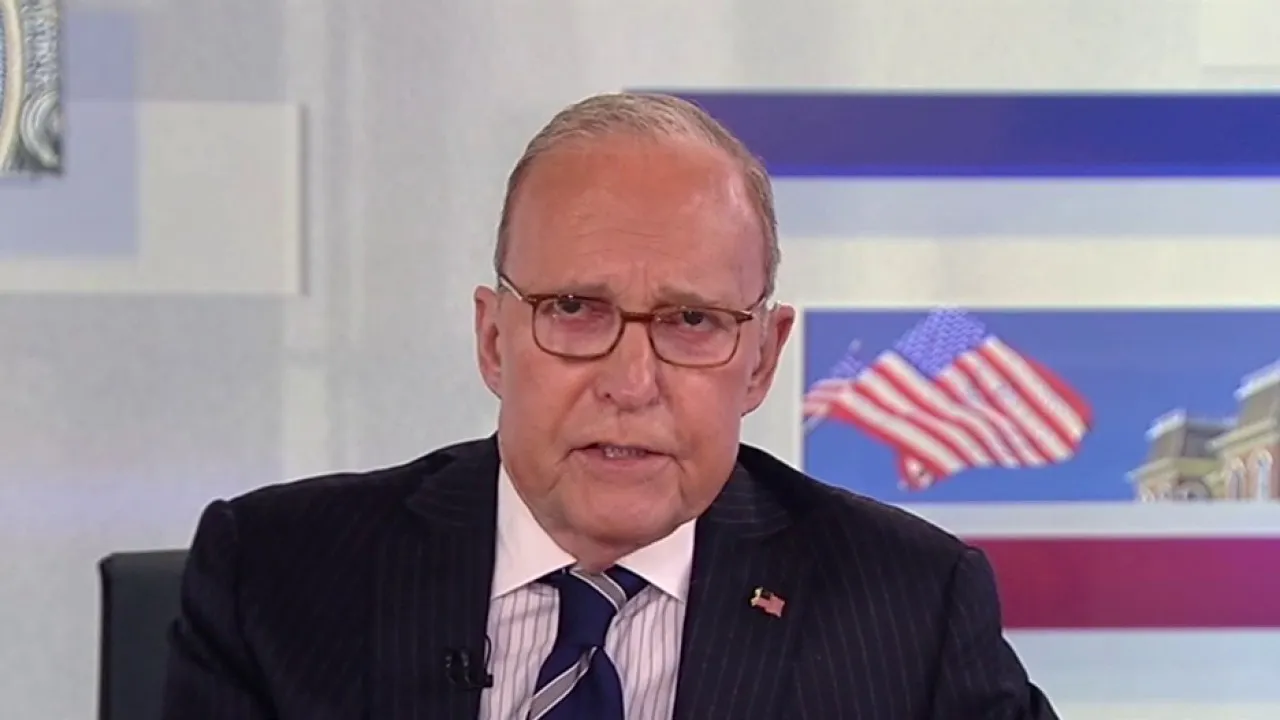
FOX Business host Larry Kudlow discusses the impact of President Donald Trump’s decisive action in the Middle East on ‘Kudlow.’
More good news on President Trump winning the war and the growing likelihood that some kind of agreement will be made with Iran. It’s driving the stock market sky-high.
My guess is improving the animal spirits of all Americans who know the cause to destroy Iran is just but were concerned how difficult it might be.
I continue to call this the Trump miracle. I continue to believe it is providential. Ending the most gruesome government since the Nazis of World War II. It’s such a phenomenal boon to mankind in the cause of peace, freedom and prosperity.
Mr. Trump has unwaveringly delivered on his vision to end the 47-year forever war, to do what no other president in either party quite had the backbone to do.
Mr. Trump, talking to various press organizations, has said a number of things of great importance today.
Fox News senior strategic analyst Ret. Gen. Jack Keane discusses President Donald Trump’s announcement that the Strait of Hormuz is open on ‘Kudlow.’
He has said Iran has agreed to everything and will work with the United States to remove enriched uranium from Iran.
“Our people, together with the Iranians are going to work together to go get it. And then we’ll take it to the United States,” he said.
The president also said Iran has agreed to stop backing proxy terrorist groups, like Hezbollah and Hamas. When asked when he would be announcing the deal, Mr. Trump said the two sides are meeting this weekend and that America would continue its blockade “until we get it done.”
Of course, trust, but verify.
Especially with Iranians. Mr. Trump knows that.
And even as Iran is suggesting that the Strait of Hormuz will be opened, Mr. Trump is exactly right to maintain the embargo on Iranian ports and shipping.
That embargo is such a powerful weapon. It will bankrupt the government, and starve them out of power if left in place for a bunch of weeks ahead.
And I hope that is what the president does. Keep the embargo. Because we don’t know about Iranian promises. We do not trust them.
And we want to make sure that they are in no position to make any demands in whatever negotiations or agreements take place.
We’re talking unconditional surrender. They must do what Mr. Trump and his national security team tells them to do.
Mr. Trump made another point today, that there will be no need to involve American ground troops.
Now for a transfer of enriched uranium from Iranian hands to American hands, yes there will be some military people.
Yet the key point here, and I think another reason for the big stock market rally vote of approval, is that the blockade means no wider war, no thousands of ground troops on Kharg island, no $200 oil.
That was always the market’s worst case fear.
Constellation Research founder R ‘Ray’ Rang discusses whether there is a direct relationship between big tech and the price of oil and gas, the rally in Big Tech companies and Microsoft’s performance on ‘Varney & Co.’
The economic and financial blockade substitutes for a wider combat role. And it’s so powerful. And I think that’s a key point for the end of the war that will come sooner, and for the tremendous stock market rally — which is not finished.
Today, Mr. Trump posted that “the naval blockade will remain in full force and effect as it pertains to Iran, only, until such time as our transaction with Iran is 100% complete.”
In other words, Mr. Trump is maintaining control. And that’s exactly what he should be doing. Because no one can trust Iran. And this whole episode won’t be over until it’s completely over.
Yet America, under one of its very strongest commanders in chief ever, will win this war. And that is a plus for all mankind.
The Final Push Toward A Deal And Why I'm Now Fully Invested
Cintas: The Valuation Has Come In, But It's Not A Buy Just Yet
Check out what’s clicking on FoxBusiness.com.
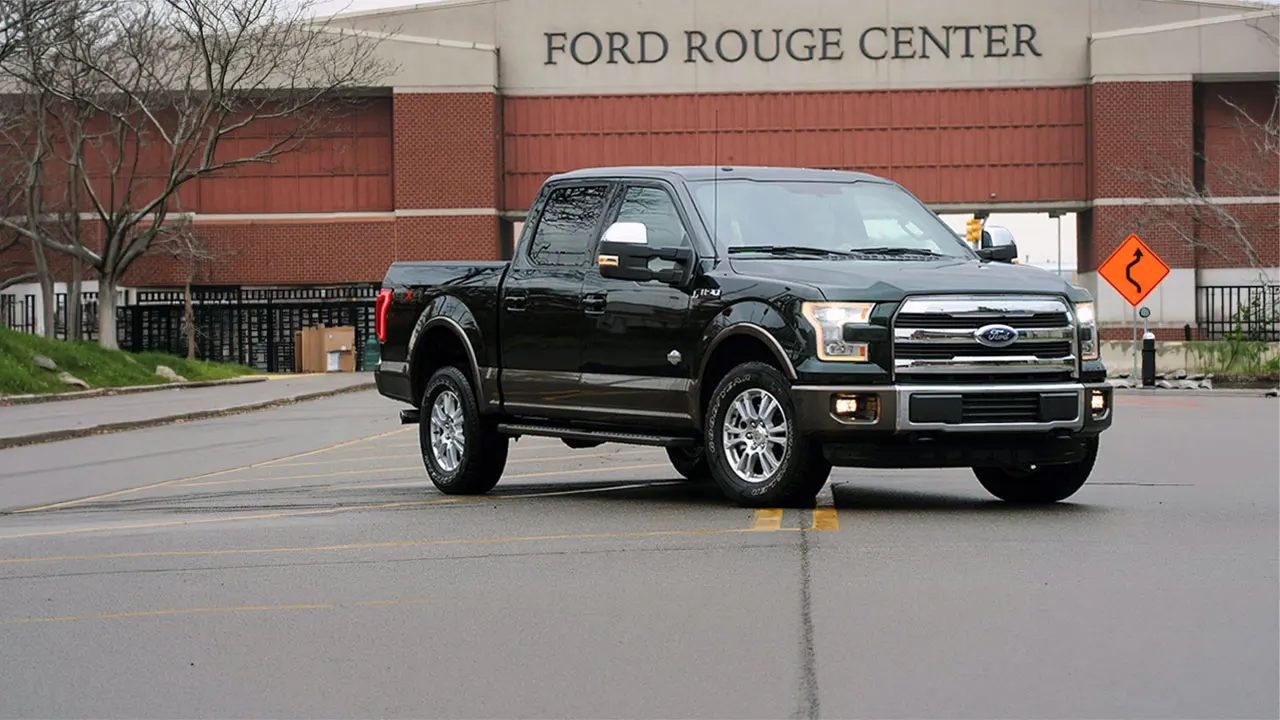
Ford is recalling about 1.4 million F-150 pickup trucks in the U.S. following a National Highway Traffic Safety Administration (NHTSA) investigation into reports of unexpected downshifts, the regulator said on Friday.
NHTSA’s recall announcement said Ford was aware of two injuries and one accident that were potentially related to the issue, and that dealers would update the trucks’ powertrain control module (PCM) software as a remedy.
Earlier this year, the regulator had expanded a safety-related investigation into the issue. A preliminary evaluation was first opened in March last year, after receiving complaints related to the unintended downshifts. Ford’s review evaluated trends observed in customer reports, including those involving vehicles driving on wet surfaces or towing trailers.
The vehicle recall covers model year 2015–2017 F-150 pickups equipped with the “6R80” transmission.
FORD RECALLS OVER 422,000 VEHICLES OVER WINDSHIELD WIPER ISSUE
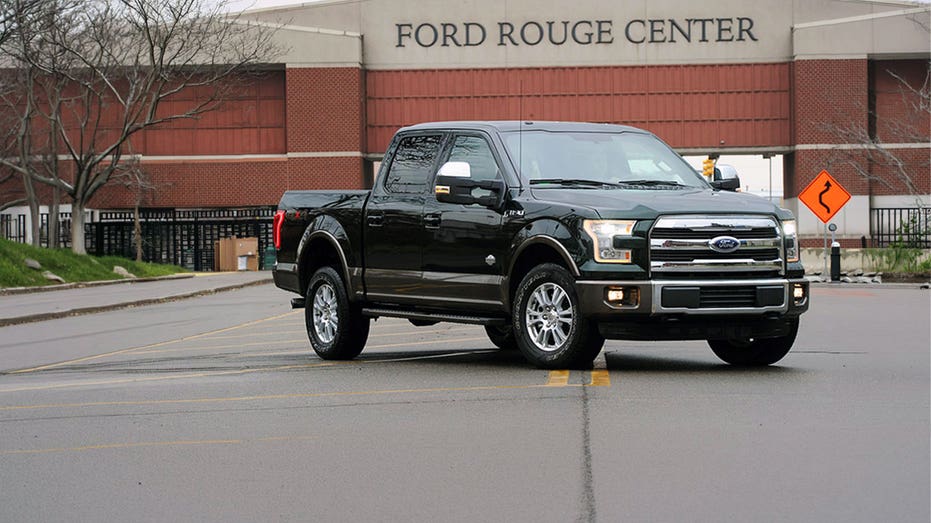
A model year 2015-2017 Ford F-150 pickup truck at Ford’s Rouge Center. (Ford Motor Co.)
Ford had earlier said that the issue may have been caused by electrical connections wearing down over time due to heat and vibration, leading to signal loss from the transmission range sensor.
The regulatory agency said that incorrect signals likely lead to an unintended downshift.
MASSIVE HONDA RECALL IMPACTS 440K VEHICLES OVER AIRBAGS POTENTIALLY DEPLOYING ‘UNEXPECTEDLY’
| Ticker | Security | Last | Change | Change % |
|---|---|---|---|---|
| F | FORD MOTOR CO. | 12.88 | +0.45 | +3.58% |
Owners of affected F-150 pickups will be notified by mail and instructed to take their vehicle to a Ford or Lincoln dealer to receive a software update for their PCM to remedy the issue.
If an affected vehicle previously exhibited certain diagnostic trouble codes relating to this condition prior to installing the software, dealers will replace the lead frame in accordance with a corresponding extended warranty program. There will be no charge for that service.
MERCEDES-BENZ RECALLS OVER 24,000 VEHICLES DUE TO DRIVE SHAFT DEFECT THAT COULD CAUSE SUDDEN FAILURE

Ford’s review noted issues affecting vehicles driving on wet surfaces or towing vehicles. (Jeff Kowalsky/Bloomberg via Getty Images )
Dealers are expected to be notified on April 15, while interim owner notifications will be sent starting on April 27 with completion by May 1.
The mailing of remedy owner notification letters is expected to begin July 13 and be completed by July 17.
CLICK HERE TO GET FOX BUSINESS ON THE GO
Ford F-150 owners will be able to see whether their pickup is covered by the recall by searching using their VIN on April 15.
Reuters contributed to this report.
Diamond Hill Investment Group set to complete merger with First Eagle

Between January and June 2025 five UK-licensed online casino operators shut down, each citing compliance costs and the administrative burden of new regulations as primary reasons.
They were not caught breaking rules. They were not fined out of existence. They just looked at the cost of staying compliant and decided it was not worth it.
The business lesson here is not about gambling. It is about what happens to any sector when a regulator raises the compliance floor simultaneously for everyone in the market.
What the Gambling Commission Actually Did
The reforms rolled out between 2024 and 2025 were the most significant overhaul of UK gambling regulation since the Gambling Act 2005. The headline changes were well documented: stake limits on online slots capped at £2 per spin for under-25s and £5 for adults, affordability checks triggered when a player’s net deposits exceed £150 in a rolling month, a mandatory 1% gross gambling yield levy paid to the NHS and public health bodies, and a ban on autoplay and rapid spin cycles in online casino games.
The practical overhead was significant. EY estimated the annual cost of running affordability checks alone at over £125 million across the industry, covering technology upgrades, credit reference agency integration, and additional compliance staff. That is before the levy, before the legal work, before the game redesigns.
Larger operators had compliance teams already. They absorbed the cost, spread it across their engineering and legal functions, and moved on. Mid-market and smaller operators faced the same obligations but without the infrastructure. Several of them concluded the maths did not work.
The Operators That Came Out Stronger Did Something Counterintuitive
The instinct when compliance costs rise is to do the minimum required, implement exactly what the regulations demand, and protect margin everywhere else. The operators who have genuinely strengthened their position over the past two years did the opposite. They treated the regulatory requirements as a product specification rather than a tax.
Affordability checks, when integrated poorly, create friction and annoy customers. When integrated well, they are almost invisible to players who are not at risk and genuinely protective for those who are. Mandatory deposit limit prompts at onboarding, done badly, are a box-ticking exercise.
Done well, they build trust with the kind of player who was going to stay anyway. The game redesigns required under the new rules forced studios to think harder about session experience rather than just spin speed.
The platforms that survive and grow in the current environment are not necessarily the ones with the biggest marketing budgets. They are the ones with the cleanest user experience, the most transparent bonus terms, and the most reliable withdrawal processes. Competition has been forced onto the axis that actually matters to customers.
For anyone wanting a practical benchmark of what that looks like, a current look at the leading slot sites in the UK shows the meaningful variation between licensed operators on exactly those measures: app quality, payout speed, game selection, and how clearly the terms are presented. The gap between the best and the rest is wider now than it was three years ago.
The Market Consolidation Nobody Warned Small Operators About
Here is the thing about compliance costs that every SME owner instinctively understands: they do not scale linearly. A £125 million industry-wide bill hits a company with ten employees very differently from one with a thousand. The fixed costs of staying compliant are nearly identical regardless of your revenue. That means high compliance environments inherently favour scale, and they are a slow but effective mechanism for consolidation.
The UK iGaming sector has been consolidating for three years. Larger groups have been acquiring mid-market brands not just for their players but for their licences and their compliance infrastructure. Pre-transaction regulatory due diligence has become one of the busiest growth areas in gambling law precisely because acquirers need to know whether the operator they are buying has a clean compliance record or a liability buried in their historical affordability data.
For business owners in other sectors watching this unfold, the pattern is recognisable. When a regulator raises the floor, the market contracts at the bottom and consolidates at the top. The businesses in the middle, too big to ignore the costs but too small to absorb them efficiently, face the hardest decision.
The Lesson That Transfers
The Gambling Commission’s approach to the White Paper reforms has been studied closely by regulators in other sectors. According to Chambers UK’s 2025 gambling law analysis, the reform package has transformed gambling compliance from a niche legal specialty into a multidisciplinary function spanning regulatory, data protection, and corporate law. That is not unique to gambling. It is what happens to any regulated industry when the compliance requirements become complex enough to create a professional services ecosystem around them.
The businesses that navigated this best share something with the best-run SMEs in any sector facing a similar squeeze. They did not wait for the rules to force change. They read the direction of travel early, invested ahead of the mandate, and treated the incoming requirements as a reason to improve the product rather than just a cost to manage.
Five casinos closed because they ran the numbers and walked away. Others are now in a stronger competitive position than they were before the regulations arrived. In a market where everyone faces the same rules, how you respond to them is the only variable left.

Tesla Stock Rockets 4.7% to $407 as AI Chip Hopes and Autonomy Bets Ignite Investor Optimism
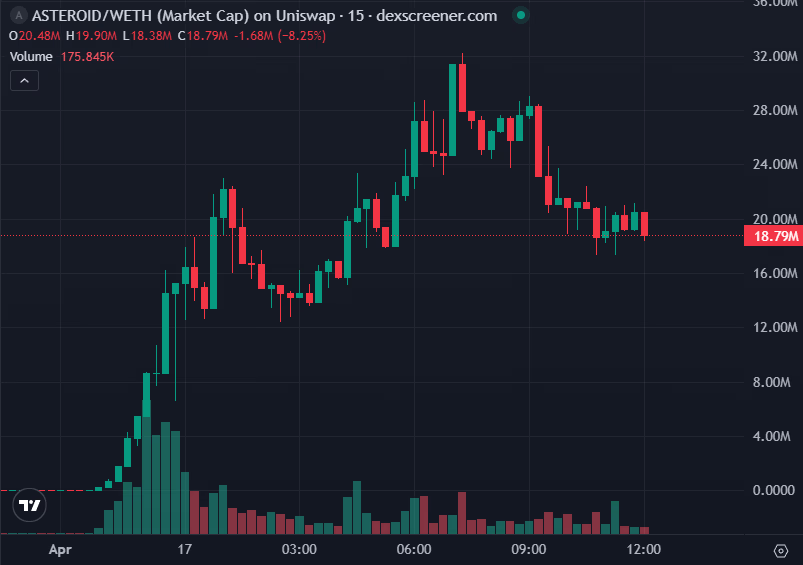
Memecoin Sector Shows Signs of Life as ASTEROID Rockets Past $25M

Bold and the Beautiful: Ivy Brutally Fired – RJ Faces Deadly Threat?!


-
 NewsBeat5 days ago
Pep Guardiola and Gary Neville agree over Arsenal title problem that benefits Man City
-

 Politics5 days ago
World Cup exit makes Italy enter crisis mode
-

 Crypto World4 days ago
The SEC Conditionalises DeFi Platforms to Be Avoided for Broker Registration
-

 Crypto World4 days ago
SEC Signals Exemption for Crypto Interfaces From Broker Registration
-

 News Videos3 days ago
Secure crypto trading starts with an FIU-registered
-

 Sports13 hours ago
NWFL Suspends Two Players Over Post-Match Clash in Ado-Ekiti
-

 Crypto World4 days ago
SEC Proposes Certain Crypto Interfaces Don’t Need to Register as Brokers
-

 Business6 days ago
Ireland Fuel Protests Enter Day 5 as Blockades Spark Shortages and Government Prepares Support Package
-

 NewsBeat4 days ago
Trump and Pope Leo: Behind their disagreement over Iran war
-

 Crypto World7 days ago
Federal judge blocks Arizona from bringing criminal charges against Kalshi
-
 NewsBeat6 days ago
JD Vance announces ‘no agreement’ with Iran over nuclear weapons fear
-

 Business7 days ago
IMF retains floor for precautionary balances at SDR 20 billion
-
Sports6 days ago
Dexter Lawrence, Stefon Diggs, Trading for De’Von Achane
-

 Business7 days ago
Former Liverpool CEO eviscerates FIFA for World Cup ticket pricing
-
 Crypto World5 days ago
Sei Network Enters Quiet Reset Phase as On-Chain Metrics Signal a Slowdown in 2026
-

 Crypto World5 days ago
Trump whales load up ahead of Mar-a-Lago luncheon.
-
Business7 days ago
Coreweave CSO Venturo sells $5.5m in class a common stock
-
Sports7 days ago
1st-Round WR Enters Vikings Mock Draft Orbit
-
Business5 days ago
Kering slides after Morgan Stanley downgrade, Gucci woes loom
-

 Sports5 days ago
NWFL opens Pathway for new Clubs ahead of 2026 Season
You must be logged in to post a comment Login