
Business
Australian Fuel Prices Ease as Supply Stabilises but Relief Remains Fragile Amid Global Tensions


SYDNEY — Australian motorists are seeing modest relief at the bowser this week as national petrol prices continue to fall slowly following government intervention and improving fuel stocks, yet analysts warn that long-term price stability hinges on fragile developments in the Middle East and could take months to fully materialise.

As of mid-April 2026, the national average for regular unleaded petrol has dropped more than 30 cents per litre in capital cities since the federal government’s temporary fuel excise cut took effect on April 1, according to the Australian Competition and Consumer Commission. Retail prices in major centres now hover around 220 to 225 cents per litre, down from peaks near 240 to 260 cents in early April when supply fears from the Iran conflict drove sharp increases.
The excise halving, which reduced the tax by 26.3 cents per litre for three months until June 30, delivered immediate savings passed on by most retailers. An additional measure brought the total relief closer to 32 cents per litre in some areas. ACCC weekly monitoring to April 15 showed average retail petrol prices across the five largest cities falling by more than 30 cents since the cut, with diesel showing slower but noticeable declines in many locations.
“Fuel prices are tipped to fall further as the country boosts its reserves,” reported the Sydney Morning Herald on April 19, citing government figures on stabilising stocks. Recent data from the Australian Institute of Petroleum and outlets like 9News confirm easing trends, with some stations in Sydney, Melbourne and Brisbane now advertising unleaded 91 below 220 cents in competitive cycles.
The relief comes after a turbulent period triggered by conflict in the Middle East that disrupted shipping through key routes, including threats to the Strait of Hormuz. Australia, which imports about 80 per cent of its refined fuel from Asian refineries, faced a potential “supply cliff” in late March and early April. Wholesale prices surged, pushing diesel above 300 cents per litre in places and regular petrol to record averages near 238 cents nationally at one stage.
Prime Minister Anthony Albanese’s government responded with a four-point plan, including the excise cut, efforts to secure alternative supplies, temporary allowance for higher-sulphur “dirty fuel” to maintain stocks, and encouragement of public transport use. Energy Minister Chris Bowen announced on April 18 a four-month extension to the higher-sulphur petrol period until the end of September, with blending provisions through December, to ease pressure while the Strait of Hormuz shows signs of reopening.
“Petrol supplies nationwide, including diesel, are looking promising,” 9News reported on April 18, noting positive government figures on reserves but cautioning that external factors like the US-Iran situation remain beyond full domestic control. Opposition figures have criticised the handling, with some calling for stronger measures, while the government stresses that any international deals must translate into lower pump prices.
Brent crude oil prices, a key global benchmark, closed the week to April 18 around US$91-97 per barrel after volatile swings, down slightly in recent sessions but still elevated. International wholesale diesel and gasoline benchmarks have eased, helping Australian terminal gate prices trend lower. However, freight costs remain high due to rerouting concerns, adding upward pressure in some regions.
Diesel prices have proven more stubborn. While petrol benefited quickly from the excise reduction, diesel in some areas, particularly Western Australia, briefly exceeded pre-cut highs before moderating. National averages for diesel sat near 310-320 cents per litre in mid-April reports, with regional areas often facing higher costs due to transport distances. The ACCC continues to scrutinise diesel movements closely, noting slower downward adjustments compared with petrol.
Motorists in different states experience varying realities. In New South Wales and Victoria, competitive cycles in capital cities have driven prices as low as 216-220 cents at some independent and supermarket-affiliated stations. Perth frequently offers the cheapest unleaded among capitals, while Darwin and certain remote Northern Territory locations remain the most expensive, sometimes exceeding 230-250 cents. Apps like FuelCheck in NSW, FuelWatch in WA, and commercial tools such as PetrolSpy or Motormouth help drivers hunt for the best deals, with differences of 10-25 cents per litre common between nearby outlets.
The price volatility has rippled through the economy. Household spending rebounded in March partly due to inflated fuel costs, according to CommBank data, but consumer confidence plunged to near-COVID lows in early April surveys as families absorbed the hit. Retirees and fixed-income households reported tank fills jumping from $60-70 to over $100. Businesses, from delivery services to councils, faced surcharges or budget blowouts, with some road projects delayed due to bitumen and diesel cost increases of up to 40-50 per cent.
Farmers and regional communities feel the pinch acutely. Higher transport costs threaten fresh food prices, while logistics firms pass on levies. Easter travel plans were curtailed for many, with experts warning of reduced long-distance driving during holidays.
Government data shows retailers largely passed on the April 1 excise savings promptly, with most capital cities recording drops of 12-25 cents on the first day. However, margins tightened dramatically during the peak crisis, sometimes falling to just a few cents per litre above wholesale as stations competed fiercely.
Looking ahead, further falls are expected if global oil prices stabilise and shipping normalises. Analysts from AMP and others predict elevated fuel-related inflation could persist for at least six months. Brent crude volatility tied to geopolitical developments will remain the dominant factor. The government has signalled readiness to provide assistance in the Strait of Hormuz if needed, while emphasising defensive support roles.
For everyday drivers, tips include using price comparison apps, filling up mid-week when cycles often bottom out, opting for E10 where suitable to save a few cents, and maintaining efficient driving habits. Heavy vehicle operators benefit from the temporary removal of the heavy road user charge alongside the excise cut.
The Australian Institute of Petroleum and ACCC continue publishing weekly updates, with the next monitoring report expected to track ongoing adjustments. Fuel stocks are described as stabilising, reducing immediate outage risks that plagued some regional stations in March.
Yet caution prevails. A fragile opening in the Strait of Hormuz offers hope, but renewed tensions could reverse gains quickly. Domestic reserves provide a buffer, but Australia’s reliance on imports leaves it exposed to international shocks.
As prices ease this week, many Australians are breathing slightly easier at the pump. A full tank that cost well over $100 during the peak now saves $15-20 thanks to the combined effect of the excise cut and falling wholesale costs. Still, with averages remaining historically high compared to early 2025 levels, the cost-of-living pressure lingers.
Economists urge households to budget conservatively and consider fuel-efficient vehicles or alternative transport where possible. For the trucking industry and supply chains, sustained high diesel costs continue to influence everything from grocery deliveries to construction materials.
The Albanese government faces ongoing scrutiny over its crisis response, with calls for longer-term measures such as boosting local refining capacity or diversifying import sources. In the short term, the focus remains on monitoring pass-through of savings and preventing excessive margins.
Motorists checking their local stations on April 20 are likely to find unleaded 91 in the low 220s in most capitals, with some lucky finds below 210 cents during price wars. Diesel lags but shows signs of following downward.
While the immediate crisis appears to have peaked, the episode serves as a stark reminder of Australia’s vulnerability to global energy disruptions. Stabilising supplies and government interventions have delivered welcome relief, but true long-term price moderation depends on calmer international waters and strategic domestic planning.
For now, the trend is positive for wallets strained by months of volatility. Australians will watch global oil markets closely in coming weeks, hoping the current easing translates into sustained affordability at the bowser rather than another sudden spike.


The conflict in the Middle East has increased pressure on the cost of petrol, household energy bills and even food.
Business
TopBuild Stock Soars 16% on $17 Billion Takeover Deal by QXO in Building Products Mega-Merger

NEW YORK — TopBuild Corp. shares skyrocketed more than 16% in early Monday trading on April 20, 2026, surging $67.80 to $478.11 after the leading insulation and building products installer agreed to be acquired by QXO Inc. in a $17 billion cash-and-stock transaction that values the company at a substantial premium.

The deal, announced late Sunday, marks a major consolidation move in the fragmented building products distribution and installation sector. QXO will pay $505 per share for TopBuild, representing a 23.1% premium to Friday’s closing price of $410.31 and a 19.8% premium to the 60-day volume-weighted average price. The transaction is expected to close in the third quarter of 2026, subject to shareholder and regulatory approvals.
Under the terms, TopBuild shareholders can elect to receive $505 in cash or approximately 20.2 shares of QXO common stock for each TopBuild share, subject to proration to maintain an overall mix of roughly 45% cash and 55% stock. The structure gives investors a choice between immediate liquidity and participation in the combined company’s future growth.
TopBuild (NYSE: BLD), headquartered in Daytona Beach, Fla., is a dominant player in the installation of insulation and commercial roofing, as well as a specialty distributor of related building materials. The company operates across the United States and Canada with a network of more than 14,000 employees and hundreds of branches. It has grown aggressively through acquisitions, completing seven deals in 2025 alone that added about $1.2 billion in annual revenue, including the Progressive Roofing and Specialty Products and Insulation transactions.
The acquisition creates a powerhouse with combined annual revenue exceeding $18 billion and adjusted EBITDA above $2 billion. QXO, which has been rapidly expanding its building products platform, described the deal as immediately and substantially accretive to earnings while targeting $300 million in synergies by 2030 through operational efficiencies, procurement savings and cross-selling opportunities.
“TopBuild is an exceptional business with market-leading positions, strong free cash flow generation and a proven track record of growth through both organic execution and strategic acquisitions,” QXO executives said in a joint statement. “This combination accelerates our vision of building a scaled, diversified leader across the building products value chain.”
Analysts and investors reacted positively to the premium and strategic fit. The surge in TopBuild shares reflected the market’s quick pricing in of the deal value near $505, though some early profit-taking and uncertainty around the proration mechanics kept the stock below that level in morning trading. Volume was significantly elevated as traders rushed to position themselves.
The deal comes as TopBuild has delivered consistent strong performance. For the full year 2025, the company reported sales of approximately $5.4 billion and adjusted EBITDA exceeding $1 billion. In its February 2026 outlook, TopBuild projected 2026 sales between $5.925 billion and $6.225 billion with adjusted EBITDA in the range of $1.005 billion to $1.155 billion, driven by continued acquisition integration and healthy underlying demand in residential and commercial construction.
Recent operational highlights include the promotion of John Achille to president and chief operating officer in early April, signaling internal confidence in execution capabilities. The company is scheduled to report first-quarter 2026 results on May 5, with a conference call at 9 a.m. ET, though the takeover agreement now shifts focus to deal-related matters.
For QXO, the move significantly broadens its footprint in insulation, roofing and mechanical insulation distribution. The combined entity is expected to benefit from TopBuild’s specialized installation expertise and nationwide branch network, complementing QXO’s existing distribution operations.
Wall Street had generally viewed TopBuild favorably before the announcement, with a consensus “Moderate Buy” rating from 16 analysts and an average price target around $440. The takeover offer represents a clear step-up from those targets, potentially capping near-term upside unless the deal faces complications or a superior bid emerges.
Regulatory hurdles include Hart-Scott-Rodino antitrust clearance, though both companies expressed confidence in obtaining approvals given limited direct overlap in certain markets. The agreement includes a $600 million termination fee payable by TopBuild if it accepts a superior proposal under specified circumstances, along with customary “no-shop” provisions and matching rights for QXO.
Some shareholder advisory firms and law firms quickly signaled scrutiny. Ademi LLP announced an investigation into whether TopBuild’s board obtained a fair price and adequately considered alternatives, a common step in large M&A deals that often leads to additional disclosures but rarely derails transactions.
TopBuild has returned substantial capital to shareholders in recent years, repurchasing more than $434 million of its stock in 2025 and over $2 billion over the past decade. The company’s disciplined approach to capital allocation, combining tuck-in acquisitions with buybacks, has supported strong compound annual growth since its 2015 spin-off from Masco Corp. — nearly 13% in sales and more than 25% in adjusted EBITDA.
The building products sector has seen increased M&A activity amid favorable long-term demographics, including housing shortages and aging infrastructure needs. Insulation demand benefits from energy efficiency trends and stricter building codes, while commercial roofing and mechanical insulation provide diversification.
Industry observers noted that the premium reflects TopBuild’s high-quality assets, including its skilled installer workforce and relationships with major homebuilders and general contractors. The deal also comes against a backdrop of steady U.S. construction spending, even as interest rates and material costs have created periodic headwinds.
For TopBuild employees and customers, the companies pledged a smooth transition with no immediate changes expected to day-to-day operations. QXO plans to add one TopBuild nominee to its board upon closing.
The transaction values TopBuild at an enterprise value that underscores the strategic premium for scale in a consolidating industry. With QXO assuming the role of acquirer, the combined platform could pursue further bolt-on deals while realizing cost synergies from overlapping functions.
As trading continued Monday morning, TopBuild shares held most of their gains but traded with volatility typical of deal stocks. Some investors locked in profits near the $478 level while others bet on potential upside if the market fully prices in the $505 valuation or if QXO shares perform well.
QXO’s own stock reacted positively in premarket and early sessions, reflecting investor approval of the accretive nature of the deal and the expanded scale. The merger is structured as a two-step transaction, providing a clear path to completion once approvals are secured.
Looking ahead, both companies will focus on obtaining shareholder votes, regulatory clearances and preparation of a registration statement for the QXO shares to be issued. The expected Q3 2026 closing timeline gives time for integration planning while minimizing disruption to ongoing operations.
TopBuild’s transformation from a spin-off to a market leader highlights the value created through disciplined execution and opportunistic acquisitions. The pending sale to QXO caps a strong run for shareholders while positioning the business within a larger platform poised for continued growth in the North American building products market.
The announcement injects fresh momentum into an otherwise quiet start to the week for many construction-related stocks. With housing demand supported by demographic trends and commercial activity showing resilience, the combined QXO-TopBuild entity could emerge as a more formidable player capable of weathering cyclical fluctuations.
As details continue to emerge and the market digests the implications, TopBuild’s dramatic 16%+ jump on April 20 served as a vivid illustration of how transformative M&A can rapidly reshape shareholder value in the industrials sector. Investors will now monitor developments around approvals, any competing offers and the companies’ ability to articulate a compelling vision for the combined future.
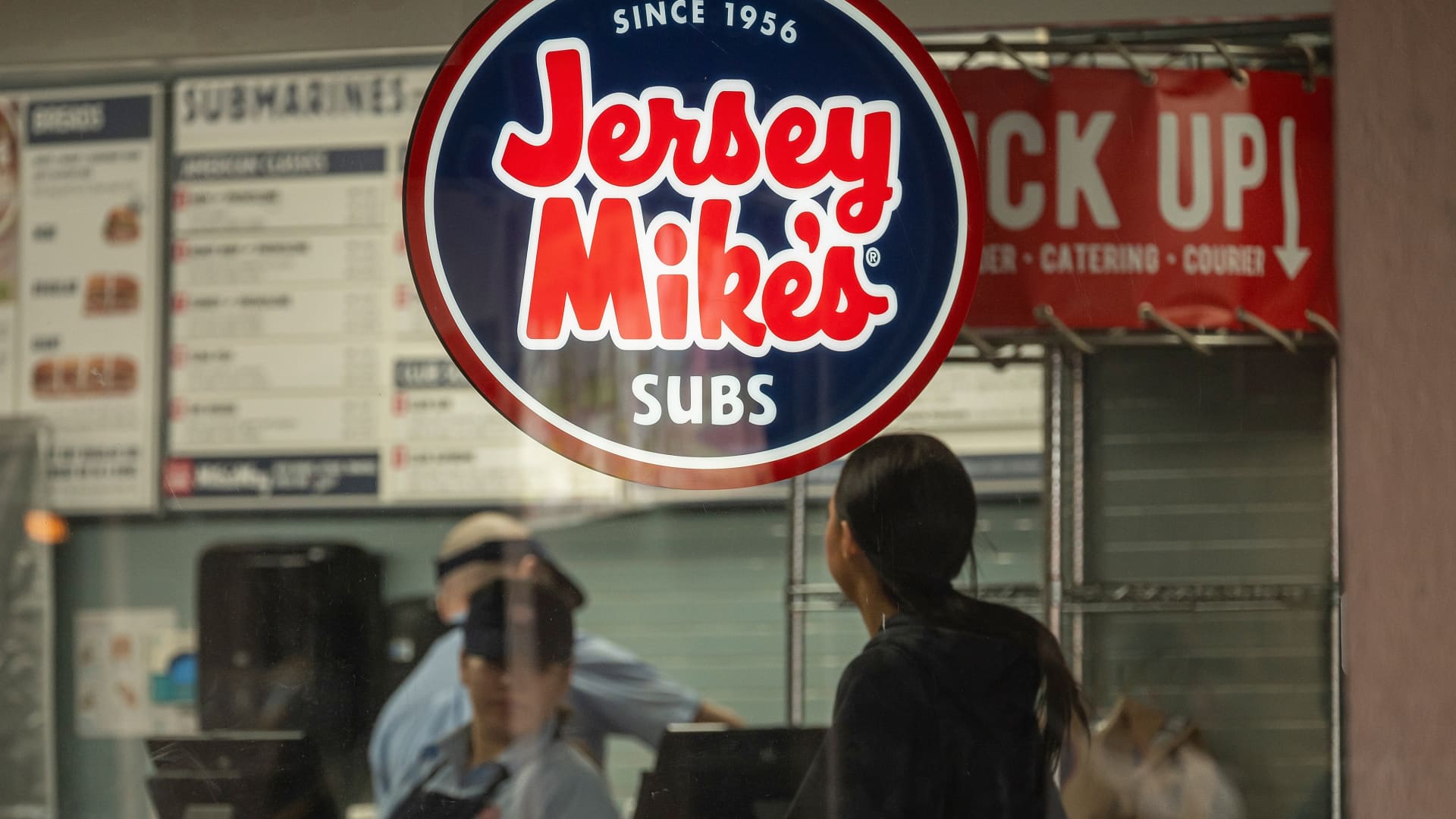
A Jersey Mike’s restaurant in Walnut Creek, California, Nov. 21, 2024.
David Paul Morris | Bloomberg | Getty Images
Jersey Mike’s has confidentially filed for an initial public offering, the company said on Monday.
The announcement comes more than a year after Blackstone bought a majority stake in the sandwich chain in a deal that reportedly valued Jersey Mike’s at roughly $8 billion.
After the Blackstone deal closed, Jersey Mike’s tapped former Wingstop CEO Charlie Morrison to helm the company. Morrison led the chicken wing chain for a decade, ushering it through its own IPO and a period of historic growth.
With more than 3,000 locations nationwide, Jersey Mike’s is the second-largest hoagie sandwich chain in the U.S., trailing only Subway.
Jersey Mike’s reported revenue of $309.8 billion in 2025, up 10.6% from the prior year, according to franchise disclosure documents. The chain also reported net income of $183.6 million in 2025, down from the prior year’s net income of $238.8 million.
Founder Peter Cancro began working at a Jersey Shore sandwich shop at age 14 in 1971; four years later, he pulled together enough money to buy Mike’s Subs. Cancro later changed the name and began franchising the chain. Until the sale to Blackstone, he was the outright owner of Jersey Mike’s.
The confidential filing is the first step for Jersey Mike’s to be publicly traded. If it goes public, it will mark the first restaurant IPO since Black Rock Coffee Bar’s offering in September.
The market for initial public offerings has been tepid, although that could change this year. Market volatility, economic uncertainty and recent poor performance among IPO stocks has led to a backlog of listings. However, several blockbuster IPOs, like the SpaceX offering that could value the company at $1 trillion, are anticipated in the coming months.

AST SpaceMobile: The Pullback I Was Waiting For
Northern Trust earnings in focus as strategy shift faces test
Hull’s creative scene has a new home, with green screens, cameras and a mini radio studio.
New European border rules have caused delays at airports across the continent, affecting flights.
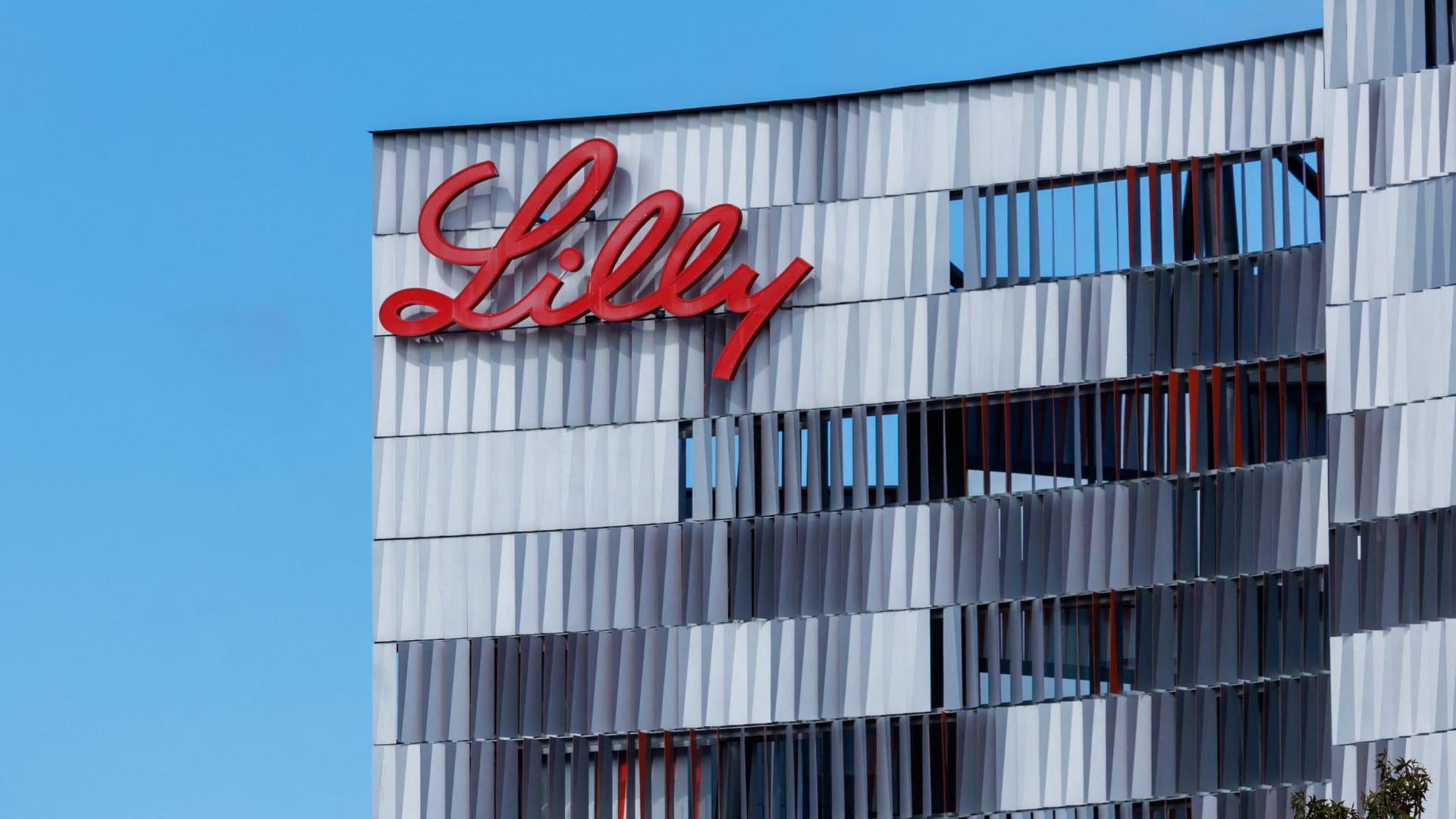
The Eli Lilly logo appears on the company’s office in San Diego, California, U.S., Nov. 21, 2025.
Mike Blake | Reuters
Eli Lilly will acquire biotech company Kelonia Therapeutics in a deal worth up to $7 billion, the company said Monday.
Lilly will pay $3.25 billion upfront, and the remaining payments are contingent upon clinical, regulatory and commercial milestones, it said. The transaction is expected to close in the second half of 2026.
Kelonia is developing technology to reprogram patients’ T-cells inside the body so those cells can attack cancer, called in vivo CAR-T. Current treatments require that work to be done outside the body, or ex vivo, a process that involves harvesting cells, engineering them in a lab and then reintroducing them. While logistically intensive, the procedure has been successful for blood cancers like multiple myeloma.
“It’s an intravenously delivered therapy, one time,” said Jacob Van Naarden, president of Lilly oncology and head of corporate business development. “It targets your body’s T-cells, transforms them into attacking the cancer in the body, and requires no preconditioning at all.”
Johnson and Johnson’s CAR-T treatment for multiple myeloma, Carvykti, accounted for $1.89 billion in sales last year. Gilead recently acquired partner Arcellx and its rival to J&J’s drug, called anito-cel, for $7.8 billion.
Lilly’s Van Naarden called Kelonia’s data “nothing short of remarkable.”
“We’re going to be a player in hematology,” he said. “It’s nice to have another medicine to go to those doctors with a medicine that can be used broadly, that isn’t relegated to academic medical centers who can do ex-vivo personalized cell therapy.”

Tech billionaire Elon Musk has sparked fresh debate after proposing a “universal high income” program as a solution to job losses caused by artificial intelligence.
In a post shared on X, Musk said the federal government should provide citizens with direct payments.
“Universal HIGH INCOME via checks issued by the Federal government is the best way to deal with unemployment caused by AI,” he wrote. The post quickly gained attention and remains pinned to his account.
Musk argued that such a plan would not lead to inflation. He claimed that advances in AI and robotics would produce so many goods and services that the increase in money supply would not cause prices to rise, ET reported.
His idea builds on growing concerns that automation could replace millions of jobs in the coming years.
JUST IN: Elon Musk says universal high income from the Federal government “is the best way to deal with unemployment caused by AI.”
“AI/robotics will produce goods & services far in excess of the increase in the money supply, so there will not be inflation.” pic.twitter.com/GksSuTk9UF
— Watcher.Guru (@WatcherGuru) April 17, 2026
Experts Warn of Inflation Risks in Musk Income Plan
However, many economists pushed back against the proposal. Sanjeev Sanyal criticized the idea, saying it misunderstands how economies work.
“He is so wrong on this,” Sanyal wrote, adding that while AI may disrupt jobs, it will also create new ones over time. He warned that the plan could place a heavy financial burden on governments.
According to FoxBusiness, another critic, Pratyush Rai, raised concerns about how such payments would affect daily life.
He said giving everyone a high income could increase competition for housing, education, and other limited resources, potentially driving prices higher.
Still, not everyone dismissed the idea. Andrew Yang, who previously promoted a universal basic income plan, expressed cautious support.
“It’s clear that AI will wind up funding universal income. Let’s make that happen ASAP,” he wrote online.
Musk’s proposal goes further than traditional universal basic income programs. While UBI is designed to cover basic living costs while people continue working, a universal high income could reduce the need for work altogether.
This shift raises questions about how society might function if fewer people rely on jobs for income.
Originally published on vcpost.com

USA Rare Earth, Inc. (USAR) Serra Verde Pesquisa E Mineracao Ltda – M&A Call – Slideshow

Flo Skatepark gets a big welcome in new Derby venue

Jack Draper to miss Madrid and Rome tournaments with knee injury

ASUS Drop Zone Service Now Available in More Cities Across India


-

 Crypto World7 days ago
The SEC Conditionalises DeFi Platforms to Be Avoided for Broker Registration
-

 NewsBeat6 days ago
Trump and Pope Leo: Behind their disagreement over Iran war
-

 Fashion3 days ago
Weekend Open Thread: Theodora Dress
-

 Crypto World7 days ago
SEC Signals Exemption for Crypto Interfaces From Broker Registration
-

 News Videos5 days ago
Secure crypto trading starts with an FIU-registered
-

 Sports3 days ago
NWFL Suspends Two Players Over Post-Match Clash in Ado-Ekiti
-

 Crypto World6 days ago
SEC Proposes Certain Crypto Interfaces Don’t Need to Register as Brokers
-

 Business24 hours ago
Powerball Result April 18, 2026: No Jackpot Winner in Powerball Draw: $75 Million Rolls Over
-

 Crypto World3 days ago
Russia Pushes Bill to Criminalize Unregistered Crypto Services
-

 Politics3 days ago
Palestine barred from entering Canada for FIFA Congress
-
 Business4 days ago
Creo Medical agree sale of its manufacturing operation
-

 Politics1 day ago
Zack Polanski demands ‘council homes not luxury flats for foreign investors’
-
 Entertainment6 days ago
Brand New Day’ Footage Reveals the Devastating Impact of ‘Now Way Home’
-

 Crypto World3 days ago
Russia Introduces Bill To Criminalize Unregistered Crypto Services
-

 Tech6 days ago
Microsoft adds Windows protections for malicious Remote Desktop files
-
 Entertainment7 days ago
Karol G’s ‘Ultra Raunchy’ Coachella Set Gave ‘Satanic Vibes’
-

 Sports7 days ago
Aaron Judge says Yankees need to ‘simplify’ approach amid offensive slump
-
 Crypto World7 days ago
Senate Bill Faces Delay Over Stablecoin Yield Debate
-

 Entertainment7 days ago
How Babylon 5 Turned Brief Side Story Into Emotional Masterpiece
-

 Tech7 days ago
What was the first ransomware attack to demand payment in Bitcoin?
You must be logged in to post a comment Login