
Politics
The challenges for EU alignment: a chemicals case

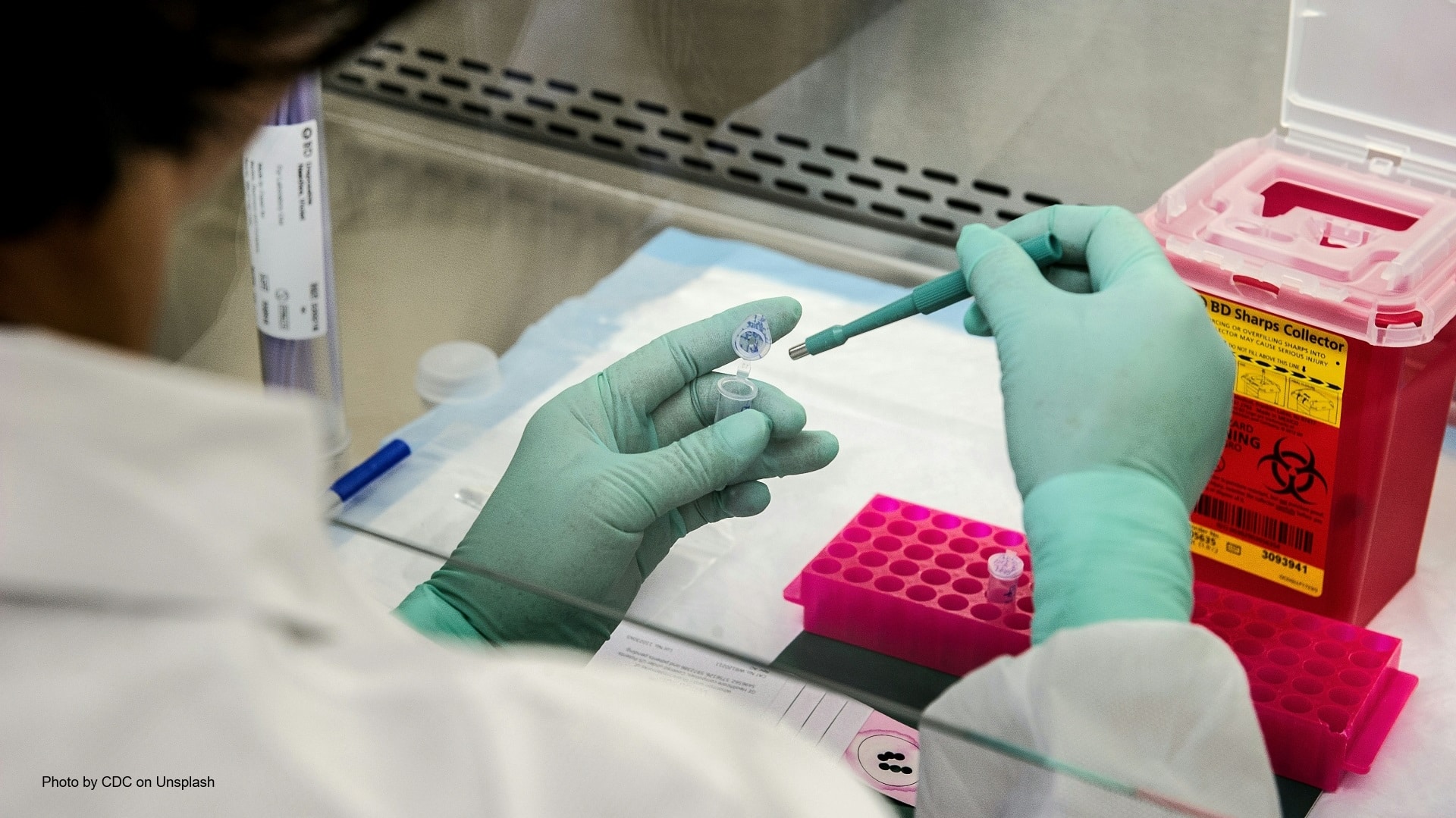
Chloe Alexander argues that changes to the regulation of chemicals show some of the obstacles facing the government in delivering a coherent policy of closer regulatory alignment with the EU.
After years of weak, sclerotic post-Brexit chemical regulation, environmental and public health NGOs were relieved when last year the government committed to a sensible, but significant, shift back towards aligning with EU regulatory protections – still the highest standard globally.
An informal, ‘catch-up’ process has started for reviewing and potentially adding the EU’s ‘Substances of Very High Concern’ list, with a package of broader reforms expected at a later stage, alongside dynamic alignment in some areas under the UK-EU ‘SPS’ deal
But as a UKICE report set out earlier this year, this policy of voluntary alignment faces significant challenges – from the fact it cuts across different departmental competencies to limited resources for deciding where to align. Another problem making a consistent approach difficult is that many of these decisions were delegated to arms-length public bodies, with limited accountability.
This is especially noticeable in new secondary legislation which takes forward changes to chemicals policy which the Health and Safety Executive (HSE) was – unusually – given responsibility for during the EU withdrawal process (having been assigned the role of chemicals regulator). This includes changes to the process for classifying substances as hazardous.
Many thousands of known and suspected harmful chemicals are used in a wide variety of industrial processes and consumer products, and identifying which of them are hazardous is essential for managing their risks and keeping people and the environment safe. Once a substance is classified as hazardous (e.g. carcinogenic or mutagenic) it triggers a range of regulatory protections in areas ranging from worker safety to transportation.
These changes were first developed by HSE under a deregulatory programme of work, initiated by the previous government under the Retained EU Law Act 2023 to make it easier to amend, repeal or replace retained EU laws. They then found a vehicle in a Treasury pro-growth initiative last year and are being taken forward using powers in the Act just before they are about to expire.
The changes remove a statutory obligation on HSE to respond to all new substances classified as hazardous in the EU within a legal timeframe, while giving it delegated powers to choose which substances it will consider for hazard classification and to adopt classifications from other jurisdictions. As most jurisdictions have weaker safety standards than the UK or EU, this risks lowering standards.
A consultation response from HSE said it would restrict its focus exclusively to decisions made by the EU and ‘continue to align with these standards, with divergence occurring only in exceptional circumstances’. But this policy is not reflected in the SI and the exceptional circumstances in which divergence may be considered necessary were later defined very broadly, including wide-ranging economic and industrial considerations.
It will also be difficult to monitor divergence as HSE will no longer be obliged to consider all new EU hazard classifications and will not need to explain any exclusions. A ‘pick and choose’ regulation where the UK accepts some EU hazard classifications and not others is vulnerable to backdoor lobbying, which could mean lower levels of protection compared to the EU and create regulatory uncertainty.
There have also been delays to incorporating six new EU hazard classifications, with only a commitment to consider incorporation over the next year. These classifications already apply in Northern Ireland, and the government last year committed to consult on a consistent chemicals regime across the whole of the UK to safeguard the internal market – but is yet to do so.
The new EU measures include new classifications for endocrine (or hormone) disruptors (EDCs) and persistence, and have been followed by regulations for better protecting consumers and the environment from exposure to substances with these properties. For example, recent EU legislation automatically bans substances classified as endocrine disruptors from toys or in food packaging, that act on warnings from scientists to reduce exposure to EDCs, which are associated with the development of ADHD, certain cancers, obesity and infertility.
It has been HSE’s long-standing position that the UK should not adopt the new EU restrictions unless they are adopted globally – at the UN Globally Harmonised System (GHS) of Classification and Labelling of Chemicals. This is partly due to a viewpoint that these changes should achieve global consensus first, but as industry sometimes jokes, GHS is neither global nor harmonised across territories nor a (mandatory) system.
HSE also takes a less protective approach than the EU to restricting ‘PFAS’ substances, which are harmful to human and environmental health and used in a wide range of everyday goods and industrial processes. HSE’s Director recently described itself as taking “a slightly different philosophical approach” to the EU, based on building up restrictions “more slowly or gradually”, although the lead Defra official was more hopeful about matching the EU’s more comprehensive approach (which is itself yet to be finalised), saying “we may well end up in the same position, but we are too early to say that just yet”.
A divergence in philosophy has also been evident in some of HSE’s other decision-making. For example, it has taken a more light-touch approach than the EU to the industrial use of substances on the ‘authorisation list’, e.g. chromium trioxide, a carcinogenic chemical linked to increased risk of lung and throat cancer. This points to a wider problem identified by the Office for Environmental Protection about a lack of coherence of chemicals policy across government, particularly identifying “fragmented efforts and unclear alignment between agencies such as HSE and Defra”.
In recent days, concern has been expressed about democratic scrutiny of decisions to adopt EU single market rules. But there also needs to be transparency around decisions not to adopt EU regulatory protections, that should be supported by evidence against stringent criteria and open to challenge. Such a framework is essential for upholding our environmental and public health protections, to ensure accountability and guard against undue influence.
By Chloe Alexander, Policy & Advocacy Lead (Chemicals), Wildlife and Countryside Link



UK universities, including Oxford, Imperial College London and King’s College, have hired a private intelligence firm to spy on pro-Palestinian students and academics.
The operation was carried out over several years by Horus Security Consultancy on behalf of 12 elite academic institutions. Horus shareholders include an ex-SAS colonel who helped found the hard-right, pro-Israel Henry Jackson Society.
The joint Liberty Investigates and Al Jazeera report claims the task netted the firm “at least £440,000 ($594,000)” since 2022. The surveillance operation reportedly involved using AI technology to monitor online activity.
After sending freedom of information requests to 150 universities, the team uncovered:
evidence that Horus Security Consultancy Limited trawled through student social media feeds and conducted secret counter-terror threat assessments on behalf of some of Britain’s most elite institutions.
The bizarre spy mission targeted students and academics exercising their right to campaign against Israeli brutality and genocide — and it did so even before the 7 October 2023 attack.
Universities target campus activism
The investigation found:
Among those monitored were a Palestinian academic invited to give a guest lecture at Manchester Metropolitan University and a pro-Gaza PhD student at the London School of Economics, according to internal documents.
Adding:
In October 2024, the University of Bristol provided the firm with a list of student protest groups it wished to receive alerts about, an internal university email suggests. It included pro-Palestinian and animal rights activists.
Ultimately, some of the most best universities in the UK “paid the firm to monitor campus protest activity”.
The report also named:
- University of Oxford
- Imperial College London
- University College London (UCL)
- King’s College London (KCL)
- University of Sheffield
- University of Leicester
- University of Nottingham
- Cardiff Metropolitan University
AI-integrated private spy service
Horus provides a special spy service called “Insight”. Insight provides “open-source intelligence reports” to customers using an unidentified tool to “harvest a vast range of sources on the internet”.
Liberty Investigates and Al Jazeera noted:
According to its website, [Horus] has been integrating AI into its operations since 2022.
Horus Security’s CEO and founder is Jonathon Whiteley. Whiteley is a former UK Intelligence Corps colonel. His bio says he worked for the British Army, where he served in Iraq, the Balkans and Cyprus.
He was seconded at various times to all three UK national intelligence agencies and was Mentioned in Despatches for his work in Northern Ireland.
The UK’s three main intelligence agencies are the Secret Intelligence Service (MI6), the Security Service (MI5) and Government Communications Headquarters (GCHQ). They respectively deal with external security, internal security and electronic and signals intelligence.
Whiteley left the army in 2006 before running a “successful project” for Oxford University and founding Horus.
Ex-SAS Henry Jackson-linked shareholder
The Horus website names former SAS colonel Tim Collins as a shareholder. Collins is a founding signatory of the hard-right ‘thinktank’ the Henry Jackson Society (HJS).
HJS invests much of its time in:
intellectual agitation on behalf of elite Anglo-American financial, security and fossil fuel interests.
Experts have said that the spying programme had gruesome implications. Gina Romero, the UN special rapporteur for freedom of peaceful assembly and of association, told Al Jazeera:
The use of AI to harvest and analyse student data under the guise of open source intelligence raises profound legal concerns.
The head of the lecturer’s union, Jo Grady, told Al Jazeera it was “shameful” that institutions had “wasted hundreds of thousands of pounds spying on their own students”.
Lizzie Hobbs was a PHD student at the London School of Economics (LSE) when she was targeted by Horus.
She said:
We knew surveillance was happening by the university, but it is shocking to see how systematised it is.
Horus also targeted Palestinian-American lecturer, Rabab Ibrahim Abdulhadi, in June 2023, before the Israeli genocide began. She had been invited to speak at Manchester Metropolitan University (MMU) in memory of British student Tom Hurndall, who was killed by an Israeli sniper in Gaza in 2003.
Documents, including emails between Horus and university staff and a copy of the assessment Horus provided, were uncovered by journalists.
Together, these show that on April 6, 2023, MMU asked Horus to conduct a secret counter-terror “threat assessment” on the 70-year-old Palestine studies scholar.
Horus and Collins did not respond to request for comment. Some of the universities did respond, often citing ‘security’ and ‘safety’ as a rationale for commissioning acts of espionage against students and scholars.
It is evident that private and state geopolitical and security interests have merged into a brazenly authoritarian apparatus. This all-encompassing security blob, with AI surveillance at its very core, threatens our essential liberties. The fact that it comes on the same day as genocide-linked AI firm Palantir announced their openly fascistic manifesto only makes the revelations more chilling.
Featured image via the Canary
By Joe Glenton


On 17 April, we learned that Peter Mandelson had failed his vetting for the ambassador to the US position. Keir Starmer would blame the senior civil servant Olly Robbins for this, sacking him as a consequence.
Now, the sacked Foreign Office chief has hit back:
"[The due diligence document] resulted in a dismissive approach to Developed Vetting from No 10" pic.twitter.com/RLdGOl4UXq — Politics UK (@PolitlcsUK) April 21, 2026
 NEW: Olly Robbins says there was an "atmosphere of pressure" from No 10 to push through Peter Mandelson's appointment without vetting
Starmer and his fall guy
Robbins’ letter is addressed to Emily Thornberry MP, the chair of the Foreign Affairs Select Committee.
In it, he notes he is seeking “advice” on his dismissal. He also attempts to clarify a situation that he describes as being “mired in confusion”, noting:
1. In November 2024, the then Cabinet Secretary recommended that security clearance be obtained before announcing a political appointee for Washington. It was not. After the announcement, I believe the Cabinet Office (CO) raised whether Developed Vetting (DV) was actually necessary. I understand the FCDO insisted that DV was a requirement before Mandelson took up his post in Washington.
2. I took over as PUS on 20 January 2025. Developed Vetting (DV) for Mandelson was underway, but already:
a. Due diligence (which assesses reputational suitability and checks if a candidate is fit to serve) had been completed by the Cabinet Office
b. Approval of the appointment had been given by HM The King
c. Mandelson’s appointment had been announced
d. Agrément had been given from our US partners
e. Mandelson had access to the FCDO building and basic IT access
f. Mandelson was being granted access to highly classified briefing on a case-by-case basis
Clearly, the point Robbins is making is that No 10 seemed determined to put Mandelson in the position regardless. Indeed, Mandelson was already operating as the ambassador to the US before the vetting was completed.
“Atmosphere of pressure”
Robbins continued:
3. Cumulatively, 2a to 2f resulted in a dismissive approach to DV from Number 10 Downing Street (No 10) for the remainder of the process. Nonetheless, despite this atmosphere of pressure, the department completed DV to the normal high standard.
4. DV is a clearance process designed to assess a candidate’s national security risk. It relies on the applicant and contacted third parties being entirely candid. To be effective, this requires a highly confidential environment, which applicants trust to protect their personal information. DV achieves this by minimising access to this information. Without trust, DV is less effective and national security is weakened.
5. UKSV did not ‘fail’ Mandelson and FCDO did not ‘overrule’ their decision. Like several other departments eg MOD, FCDO is the DV decision-maker, not UKSV. It is FCDO that makes the risk judgement and then does or does not grant clearance. This is particularly important at the FCDO, as an area of focus for the DV process is a candidate’s foreign relationships. FCDO has thousands of staff with DV and the security team has extensive experience to call upon when making these judgements.
6. Within FCDO, the Estates Security and Network Directorate (ESND) liaise with UKSV to discuss the risks they have identified and whether the FCDO is confident these can be managed. I have not seen any UKSV documentation and would not normally expect to.
The idea that Mandelson didn’t ‘fail’ his vetting is at odds with the narrative we’ve all come to understand since 17 April.
As Robbins explains, however, there’s a reason for this confusion.
Pass/Fail
According to point 7 in Robbins’ document, while Mandelson may not have ‘failed’ his vetting, it seems equally clear he didn’t really ‘pass’ either:
7. On 29 January 2025, I met with Director ESND and we discussed the DV for Mandelson. It was an oral briefing and no documents were presented to me. I was briefed that:
a. UKSV considered Mandelson a ‘borderline’ case, leaning towards recommending that clearance be denied;
b. ESND assessed that the risks identified as of highest concern by UKSV could be managed and mitigated eg via management actions and the need to obtain STRAP clearance from the intelligence agencies;
c. The risks did not relate to Jeffrey Epstein; and
d. UKSV acknowledged that FCDO may wish to grant clearance, with appropriate risk management.
DV clearance is a risk judgement. This is especially true the more senior a candidate is and the longer their career. Managing these risks as part of the clearance process is not unusual. I therefore agreed that the ESND approach was appropriate and ESND granted clearance. When the Prime Minister informed the House that the proper process had been followed in respect of NSV, he was correct.
Even before the vetting, people were saying Mandelson was too big a risk. We now know Ed Miliband was one of them.
In other words, the vetting scandal is a distraction from the real issue – that Starmer saw fit to hire the twice-disgraced Epstein associate in the first place.
“Deeply worrying”
Robbins provided further details on what he did and did not have access to:
8. As I and the Foreign Secretary wrote to this Committee on 16 September 2025 and as outlined to the House of Commons by Minister Doughty on the same day, “Ministers… are not informed of any findings other than the final outcome.” These statements were agreed with CO and No 10. This position reflected long-standing practice and guidance, and correctly constrained our ability to share information beyond the vetting process then or later.
9. In September, after Mandelson’s withdrawal, I considered the possibility of taking the unusual step of asking to see the UKSV documentation. My team consulted the Cabinet Office and were told that I required a national security justification. Subsequent discussions between FCDO and CO reflected different views on this matter, but I decided to adhere to normal practice and did not pursue this further.
We understand not everyone should have access to all the information that materialises in the vetting process. The problem is it seems like no one with the power to make decisions seems to have gained any understanding of what the vetting said about Mandelson.
This is not a functional system.
Whistle blowing around Starmer and his government
Robbins closes out by expressing his concerns over how the story came to be publicly known:
10. Finally, it is deeply worrying that within days of CO officials briefing No 10 on the issues they perceived with Mandelson’s vetting the story had leaked to The Guardian.
In executing my national security responsibilities as PUS, I have drawn on many years in national security roles and applied guidance and commonly understood practice. My guiding principle has been to defend the integrity of a system designed to protect UK national security.
I thank the Committee in advance for its consideration of this note, for its invitation today and for its vital work scrutinising the department I have been enormously proud to lead.
Robbins may be worried, but we’re not.
Clearly, the public needed to know what an absolute shambles the government’s vetting process is.
And if a creature like Peter Mandelson can slip through, the process may as well not exist in the first place.
Featured image via Pexels (via Canva)
By Willem Moore


The International Monetary Fund (IMF) and the World Bank Group (WBG) have announced they will continue dealing with Venezuela, following the kidnapping of President Nicholas Maduro and the first lady Cilia Flores in January this year.
The United States stopped recognising Maduro as Venezuela’s “legitimate” president in January 2019 and spent years trying to pressure him out of office. The Biden administration held direct talks with Maduro in 2022, and when Maduro resumed negotiations with the opposition, Washington issued a licence allowing Chevron to resume some oil operations in Venezuela.
IMF called the announcement an ‘important step’
Both said that dealings with Venezuela were paused in 2019. The IMF said that this was “due to government recognition issues”. Neither have a problem with the illegal capture of a head of state of course, as long as the US is doing it.
As the hegemon bully, during the Covid pandemic the US blocked Iran, Afghanistan, and Venezuela from receiving emergency loans from the IMF. Now that the US’ claws are deep in Venezuela again — with the US seizing Venezuela’s oil sales, then easing sanctions of Venezuela’s central bank — the IMF and World Bank are back to bless it.
A 2022 US Congress report said that the Maduro government had “shown no interest in working with the IMF on a financial assistance package”.
Maduro was following in Chávez’s footsteps who condemned US-controlled multilateral institutions’ roles in promoting debt and underdevelopment in Global South countries.
Venezuelanalysis wrote:
Under Chávez’s predecessors, Venezuela implemented draconian IMF-conditioned structural adjustment policies that saw over half of Venezuelans living in poverty by 1998.
Board of Peace aka ‘Board of Genocide’
Practices by the IMF and WBG have been condemned widely by the Global South. The recent involvement of the WBG in Trump’s Board of Peace is another example of it being part of the predatory western financial system.
Recently, WBG’s president, Ajay Banga, was told the Board of Peace which he sits on is a “sham” and it was more aptly the “Board of Genocide”.
Pro-Palestinian protester calls out World Bank President Ajay Banga on Gaza peace plan: “You are shaking hands with the devils of genocide, you need to resign…shame on you.” pic.twitter.com/slEouV4MOi
— CSPAN (@cspan) April 7, 2026
Oxfam reported that in 2024, 90% of African countries with IMF and WBG loads had cut spending on essential services to repay debt.
We’re taxing bread… but not wealth ? Make it make sense ! In 2024, 94% of African countries with #IMF and #WorldBank loans cut spending on essential services to repay debt. It’s time to start taxing wealth, not survival. @Oxfam @oxfamkenya #Taxtherich pic.twitter.com/TfVzEVENij
— Oxfam in Africa (@OxfaminAfrica) April 20, 2026
Several empirical studies have shown that IMF loans have increased poverty. The IMF requires countries to implement fiscal austerity as a condition for receiving loans which results in increased poverty.
A study led by Jason Hickel argues that IMF loans are a tool of US-led hegemony. They impose economic conditions when progressive governments “restricted their access to the cheap labour, resources and captive markets”.
This coercion is backed by military coups when necessary. The US toppled Mossadegh in Iran, Lumumba in the Congo, Arbenz in Guatemala, Allende in Chile, and Nkrumah in Ghana, the study names.
Venezuela has suffered both tactics. First came years of sanctions to strangle the government. Then the US illegally captured President Maduro. Now the IMF and World Bank have returned to certify the US takeover.
Featured image via Pixabay/ jeanmanzano
By Nandita Lal
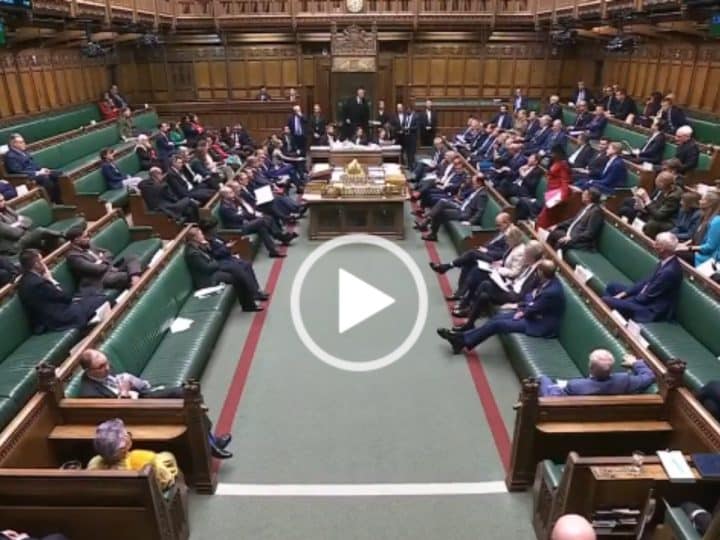

Coventry South Your Party MP Zarah Sultana has been ejected from the Commons chamber for her – entirely correct – assertion that Keir Starmer is a “bare-faced liar”.
Zarah Sultana booted out by Speaker
Zarah Sultana was referring to Starmer’s evident lies to MPs about his appointment of Peter Mandelson as UK ambassador to the UK (and Starmer’s senior adviser) despite knowing Mandelson had been found unfit for the role.
She made clear as she left Parliament exactly why she had said what she (rightly) said:
View this post on Instagram
Which lie?
But Sultana could just as easily have been talking about Starmer’s leadership election promises, every one of them a lie; his broken general election promises and made-up ‘£20bn black hole’; his lies about the Chagos Islands; his claim that putting bus fares up by 50% was a reduction; his lies about Jeremy Corbyn; his denial that he had said Israel has the right to commit crimes against humanity (just after he said it); his lies about energy bills – and and and.
In fact, you can tell he’s lying at a glance if his lips are moving.
Zarah Sultana’s refusal to slink out in the face of cowardly and Zionist Hoyle’s apoplexy was perfectly correct. Shame on the craven MPs who sided with the bare-faced liar to vote for her removal. Enough of weasel words and ‘parliamentary convention’ that makes calling a bare-faced liar a bare-faced liar a suspension offence.
’50p Lee’ Anderson also accused Starmer of lying. Unlike Sultana, he left without being made to and has little place talking about lying when he’s in Reform UK. But it just goes to show what a horror Starmer is that he gave the awful Anderson look good by comparison.
Featured image via the Canary
By Skwawkbox
Politics
From Das Kapital to Data Capital: AI as a potential new frontier for the exploitation of the working class


The digital revolution was sold to us as a tool for liberation. Instead, it’s becoming the ultimate weapon for boss-class surveillance and the extraction of ‘data capital’.
The relationship between capital and labour has undergone a fundamental shift since Karl Marx put pen to paper for Das Kapital. Marx famously analysed how the ruling class extracts ‘surplus value‘ through wage labour, leaving workers alienated from the very things they produce. In 2026, the battlefield has shifted.
Capitalism no longer just wants your physical strength or your time; it wants your data. Artificial Intelligence (AI), powered by the vast datasets we generate every second, has become the engine of modern production. But AI isn’t just about automating tasks; it is commodifying our very lives to create a new, invisible regime of exploitation.
From the factory floor to the digital stream
Marx’s analysis was rooted in the soot and grime of the factory system. There, mechanisation was used to squeeze every drop of value out of the worker, subordinating human beings to the relentless rhythm of the machine. By the 20th century, Taylor’s ‘scientific management‘ and Ford’s assembly lines had turned human movement into a metric, stripping away worker autonomy in the name of efficiency.
Fast forward to the digital age, and we aren’t just looking at an upgrade; we’re looking at a total transformation. Industrial machines turned labour into mechanical motion, but AI turns labour into data streams.
Data is the new raw material, harvested through the sensors, apps, and platforms that now permeate our daily lives. This extraction doesn’t end when you clock off. It follows you into your social interactions, your shopping habits, and your rest. The line between work and life has been erased. Every click and swipe feeds the predictive models that shape our world, all while the logic of profit remains hidden behind a “neutral” digital interface.
The rise of ‘Algorithmic Taylorism’
In the industrial era, exploitation was easy to spot: long hours, dangerous conditions, and broken bodies. Today, it hides behind the “fetishism of technology.” We are told these systems are “efficient” or “helpful” (which they are), but they are also designed to naturalise surveillance, not merely to improve efficiencies and quality of life.
This is ‘Algorithmic Taylorism.’ In Amazon warehouses and across the gig economy, workers are tracked by devices that set impossible targets and monitor productivity in real-time. Falling short doesn’t just mean a stern word from a foreman; it triggers automated disciplinary actions. Apps like Uber and Deliveroo use opaque algorithms to assign jobs and set prices, leaving workers with zero control and total insecurity.
Even white-collar workers aren’t safe. AI is already gutting routine tasks in accounting and law. While the bosses talk about “upskilling,” the reality for many is increased precarity and the loss of professional dignity.
Can AI work for the people?
It is vital to remember that AI itself isn’t the enemy; the capitalist structures controlling it are. If governed by the people, these tools could be transformative. As with everything, the problem is not inherently in the technology itself but rather in the misuse of these advances by the 1% to further serve their own interests. The material conditions documented throughout the history of capitalism bear witness to this fact.
Predictive maintenance could stop workplace accidents before they happen. Automated scheduling could, in theory, support a genuine work-life balance. Real-time analytics could even be used by workers to expose wage gaps and algorithmic bias.
However, without the redistribution of these productivity gains, “efficiency” is just a polite word for “speed-up.” If the benefits of AI aren’t shared through higher wages and shorter hours, it will only serve to deepen the inequalities Marx warned us about over a century ago.
Time for a digital class struggle
Traditional trade unionism, focused solely on pay and hours, is no longer enough. The unions of the 21st century must become digital insurgents. We need to fight for:
- Data Rights: Workers must own the data they generate
- Algorithmic Transparency: An end to “black box” management; workers have a right to know how they are being evaluated
- Democratic Deployment: Workers must have a veto over how technology is introduced into their workplaces
While the EU’s AI Act offers a starting point, enforcement remains a joke in many parts of the global south. Transnational solidarity is the only way to confront a digital capitalism that knows no borders.
AI will not liberate the working class on its own. Without a radical shift in power and a demand for data justice, it will simply become the most sophisticated tool for control ever devised. The struggle for the means of production has become a struggle for the means of prediction. We must win it.
Featured image via the Canary


The Iranian government in Tehran has said that it has intelligence indicating that the US and Israel are preparing a surprise attack as they go through the motions of a ‘temporary ceasefire’ that they have never honoured and supposedly aim to negotiate a permanent truce.
Tehran: US-Israeli attack imminent?
Tehran’s announcement came as US forces attacked, disabled and boarded a civilian Iranian ship in international waters – and flew Trump’s golfing buddies back to Pakistan for supposed further ‘peace talks’. The Iranian government has said that it has “no plans” to engage in any talks as it cannot trust the US or Israel.
Israel has a long track record of murdering or trying to murder peace negotiators. The Pakistani military thwarted a reported Israeli plan to shoot down the Iranian delegation to the previous talks in Pakistan.
Featured image via the Canary
By Skwawkbox
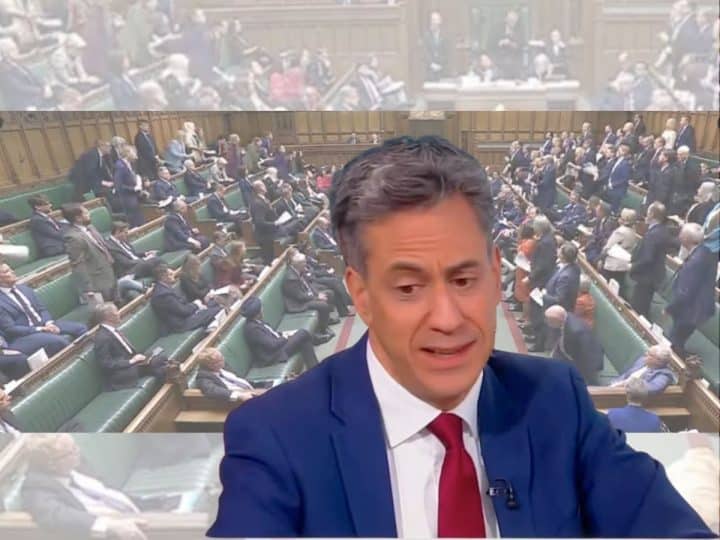

On 20 April, Keir Starmer stood before parliament and attempted to justify making Peter Mandelson our ambassador to the US. While it was always inexcusable to hire the twice-disgraced Mandelson, the situation has looked even worse recently. As we now all know, Mandelson failed his security vetting but ended up in the position anyway. Starmer wants us to believe he had no idea about the failed vetting, but few do. Now, it looks like his ministers – namely Ed Miliband have begun to accept that the situation is unsalvageable for the PM:
There appears to be something going on this morning. Labour MPs are starting the process of uncircling the wagons. https://t.co/G4Vh43lFtG
— (((Dan Hodges))) (@DPJHodges) April 21, 2026
Terminal mistakes, as Miliband points out
In the clip above, Miliband does not say that he thinks Starmer should go. What he does do is provide next to no defence for the situation that Starmer has created. He also just looks miserable and defeated, adding to the impression that the party is over and it’s time for everyone in the Starmer government to go home.
The clip begins with Sophy Ridge putting the following to Miliband:
SOPHY RIDGE: My argument isn’t that it was rushed [Mandelson’s appointment]. My argument is that Keir Starmer knew this stuff before, right? We knew that Mandelson had been sacked twice. We knew that he had a relationship with a convicted paedophile. We knew that he had a lobbying company with links to Chinese firms, right? We knew this stuff.
ED MILIBAND: So you’re saying he should never have been appointed?
SOPHY RIDGE: Yeah.
ED MILIBAND: And I agree with you.
SOPHY RIDGE: But that’s Keir Starmer’s fault, isn’t it? Not Ollie Robbins’ fault.
ED MILIBAND: Well, yeah, and he said that.
SOPHY RIDGE: But look who’s lost their jobs, right? The chief of staff has lost a job. Olly Robbins has lost his job. The head of the Civil Service has lost his job. The director of communications has lost his job. Should Keir Starmer lose his job? He was the one who made the error, as you admit.
ED MILIBAND: Well, I don’t think so, no. Obviously, I don’t, because I think prime ministers make errors. Prime ministers are fallible. Prime ministers are human.
We’re interjecting here to note that we’ve seen no evidence that Starmer is human. Conversely, we’ve seen a great deal of evidence supporting the fact that he’s fallible.
Miliband continued:
ED MILIBAND: I steered well clear of Peter Mandelson when I became Labour leader in 2010. But people make mistakes. And, you know, the point about mistake is, do you fess up to it and say, ‘yeah, I made an error?’
The issue isn’t that he made a mistake; the issue is that he made the sort of mistake only a highly incompetent person could make.
In other words, he’s not fit to be PM.
Ministers plural
Ridge later asked:
SOPHY RIDGE: What went through your mind when you saw he’d been appointed as US ambassador?
ED MILIBAND: Well, that it could blow up. That it could go wrong.
SOPHY RIDGE: Did you say that to anyone?
ED MILIBAND: I had a conversation with David Lammy about it before the appointment. And I said I was worried about it. I do want to say one thing, though, which is-
SOPHY RIDGE: What did David Lammy say then?
ED MILIBAND: Well, I think he was worried about it, too.
So now we have two ministers who are on the record as having had the foresight which Starmer lacks.
Unless Lammy comes forward to dispute Miliband said, obviously, although we can’t see him doing that at this point.
Clearly, the writing is on the wall.
Familiarity
Miliband also said:
ED MILIBAND: Peter Mandelson was a very familiar figure in the sort of 30-year history of the Labour Party, and it’s almost like that familiarity… It’s almost like his flaws and so on just got almost sort of faded into the background, and that was obviously wrong.
Another way of looking at this is that Peter Mandelson and politicians like him have normalised the Labour Party having zero moral centre.
You could also say this makes the argument for individuals not having political careers which span decades. While it’s true some politicians are still representing their constituencies many years in, other grandees are clearly just settling scores and enriching themselves.
Dead duck – and Miliband is not the only one showing it
Miliband isn’t the only Labour politician putting some distance between himself and Starmer. On Monday 20 April, MPs actually put physical distance between themselves and the PM:
Labour whips have noticed too.
Message sent to MPs: "If any [parliamentary private secretaries] are able to head back to the chamber, benches are looking quite empty." https://t.co/GwD8NfTZuw — Kevin Schofield (@KevinASchofield) April 20, 2026
And the issues go beyond Mandelson too:
Labour MP Sarah Champion tells the Today programme: “I’ll be honest with you, people don’t like Keir on the door. But it’s not about this Mandelson thing, they don’t like him personally.”
— Kevin Schofield (@KevinASchofield) April 21, 2026
Because of his many scandals, Starmer entered the beginning of the end of his career within months of taking office.
We’re now at the end of the end, and after Labour get wiped out in the local elections, the party will soon replace him.
Featured image via Sky News
By Willem Moore

A senior member of the Royal College of Nursing (RCN) reportedly walked up to a fellow member opposing Israel’s genocide in Gaza and said “all Palestinians are terrorists”. And this instance of vile racism adds to other examples in the RCN of discriminatory attitudes towards people suffering war crimes in occupied Palestine.
Racist member spat bile before ‘walking off smiling’
The Canary spoke to Anna Pichierri, the healthcare worker who was on the receiving end of this disgusting comment. And she shared with us the statement she made to the independent regulator for nursing – the Nursing and Midwifery Council – about the incident.
This states that, at the 2025 RCN Conference, senior union member Karen Lesley Sanders came up to Pichierri – a participant in the Nurses for Palestine group – as she was holding a placard saying ‘Nurses against Genocide’. According to Pichierri, Sanders:
walked over to me and shouted “Nurses against terrorists”
She asked what Sanders meant by that. And Sanders:
said smiling “All Palestinians are terrorists” and as she was walking away I asked to see her name and she proudly held up her lanyard and after saying loud her name she said to me I know you and she then walked off in the building smiling.
Pichierri said this:
hit me very hard. I was in shock, and I was hurt personally and felt pain for others around it. The comments were racist, and this is not something I would expect any nurse to say let alone a senior member of the Royal College of Nursing.
Sanders is a senior lecturer and has had numerous roles within the RCN. These include a role on the union’s Trade Union Committee and even as chair of its “Ethics Forum Steering Committee“. She has also written in several union publications.
The Canary sought comment from Sanders, but had received no response by the time of publication. RCN London, meanwhile, declined to comment on the incident.
The day before, meanwhile…
That wasn’t the only concerning event at the 2025 congress, though. Because the day before, Pichierri told us:
There was a sign painting studio and the artist in charge was very supportive of the Palestinian cause and let a few of us start to write placards on the genocide. Definitely that was not what the congress leadership wanted.
She later joined a short march inside the conference hall, holding one ‘nurses against the genocide’ placard herself and handing over two more to other people. But this behaviour seemed to rattle some senior members. Because as Pichierri said:
At some point the chair of the congress quickly walked up to me and literally snatched the placard from my hand, quickly moving up the podium
RCN and Palestine
The RCN also displayed hypocrisy by donating money to Ukraine while failing to do the same for Palestine.
As the Canary reported previously, Nurses for Palestine have co-produced a report accusing the union of investing in companies complicit with Israel’s genocide, occupation and apartheid. This would be a breach of its own ethical and professional codes of conduct.
The RCN has insisted that it doesn’t invest directly in arms companies or firms committing “ethically unacceptable” acts. It has also expressed ‘grave concern’ about Israel’s systematic destruction of Gaza’s healthcare system.
Nurses for Palestine would like to see the union express similar concern about the vile anti-Palestinian racism at the 2025 congress. Because it should have no place in any trade union, let alone one that is fully aware of the genocidal devastation Israel’s war criminal leaders have submitted Palestinians to in the last three years.
Featured image via the Canary
By Ed Sykes


Over 120 former US military personnel have occupied the Cannon House Office Building of the US Congress, in a demonstration against Israel’s genocide in Gaza and its joint war with the US on Iran.
US veterans take action
The US Veterans against Genocide group, some of them holding folded US flags signifying fallen comrades or loved ones and others wearing keffiyehs, stood silently:
View this post on Instagram
Yet despite the protest being peaceful, authorities came in and began arresting them:
The building, often referred to as the ‘Old House Office Building’, is the oldest office in the congressional complex and links by tunnel to the Capitol.
In September 2025, five US Veterans against Genocide members were jailed after blocking a key road outside a US military base. Others have resigned reserve posts in protest against the genocide and, more recently, the illegal US-Israel attacks on Iran. The group demands the end of all arms shipments to the genocidal colony:
By Skwawkbox


Nigel Farage has run multiple political parties which have sought to demonise migrants. This began with UKIP, which was followed by the Brexit Party, which morphed into Reform UK.
Said parties have generally focussed on recent and first generation migrants, whether it was the Polish EU workers demonised by UKIP, or the refugees hounded by Reform UK. Farage himself would tell you he doesn’t have a problem with people of other ethnicities or cultures; his problem is with Britain losing its character (a character he refuses to acknowledge has never been static, and has notably been shaped by constant migratory influxes from the Romans onwards).
In politics, a ‘dog whistle’ is when a politician says one thing understanding their supporters will hear something else. In his case, Farage talks about ‘immigrants’ but his supporters think ‘Muslims’ or ‘Blacks’.
The problem for Farage is that he wants to replace the Tories as the ‘big tent’ party of the British right; i.e. he wants to appeal to both diehard racists and liberal conservatives (with the latter being people who are racist in many senses, but aren’t solely driven by hatred).
This is why we’re now seeing confusing stuff like the following:
NEW: Nigel Farage says X is now becoming “a very unpleasant place” due to a rise racist accounts and content
Reform leader says that many of his ethnic minority candidates are experiencing huge levels of abuse
— Noa Hoffman (@hoffman_noa) April 20, 2026
It’s also why we now have political parties to Farage’s right which are more clearly following through on Reform’s racist dog whistles.
A very dangerous place
Farage made his comments at a press conference on Monday 20 April:
The online abuse on X that our minority candidates are receiving is utterly appalling in every way.
If it was happening to any other candidates from more established parties in the sense of their age, you would all be in total uproar
The problem with this is that minority candidates from the established parties have faced racist abuse on X/Twitter for years. Further to this, many of them have experienced racist abuse from people who identified themselves as Reform supporters (many of whom have moved on to support Rupert Lowe’s Restore Britain).
Farage added:
It really, really is bad.
X is now becoming a very unpleasant, very dangerous place.
As people have noted, Farage has brought this on himself (or, to be specific, he’s brought it on his candidates):
“Becoming”.
Reform UK’s refusal to counter its own supporters hate and racism is a huge part of the problem that’s existed for years. pic.twitter.com/qBSyWYlbug
— Reform Party UK Exposed
 (@reformexposed) April 21, 2026
Patterns with Farage and Reform
To be clear, it’s not just first generation migrants who Farage attacks. Recently, he lost his mind because British Muslims were being visibly Muslim in Britain:
What we witnessed in London at the historic Trafalgar Square, in a country built on Judeo-Christian values, was a group of people attempting dominance over our capital city and our culture.
We are not going to surrender everything that was built over centuries and defended at… pic.twitter.com/LcHx0ut1xo
— Nigel Farage MP (@Nigel_Farage) March 19, 2026
In other words, the racists who supported Reform weren’t wrong to think he agreed with them. And it was predictable that they would feel personally betrayed when he began promoting candidates who weren’t white Brits like themselves.
Another recent example of this was when Reform backed Laila Cunningham as their candidate to become the next mayor of London. As we reported at the time:
Recently, nearly three dozen people from Nigel Farage’s past came forwards to allege that he was a strident, Nazi-style racist as a younger man. Farage alternated between denying the comments, claiming he didn’t mean them in a bad way, and then denying them again. As we covered, an insider claimed Farage wouldn’t admit to or apologise for the racism because he’d be telling his supporters ‘you’re all guilty too‘. Now, he’s doing just that.
Specifically, Farage is calling out the racists who are abusing Reform UK’s Muslim mayoral candidate. The problem is that many of these people are the party’s ideological bedfellows, including a founder of the Brexit Party:
I will never vote for her for : she is not English and she is a Muslim. https://t.co/9IShOHTshY
— Catherine Blaiklock (@blaiklockBP) January 7, 2026
This was the moment when many Reform supporters became publicly hostile towards Farage.
Contradictions
For years, the Tories held together an alliance which included both ardent racists and liberal conservatives. Now, that base has split in two, with the majority of the diehard racists in Reform, and the majority of the One Nation Conservatives staying put:
— Seats — Poll: @OpiniumResearch, 15-17 Apr (+/- vs 20 Mar) pic.twitter.com/uQyb0DPblv
— Stats for Lefties
 POLL | Reform lead by 4pts
 Ref: 26% (-1)
 Lab: 22% (+1)
 Con: 17% (=)
 Grn: 15% (=)
 Lib: 11% (-1)
Ref: 288 Lab: 124 Lib: 76
Lib: 11% (-1)
Ref: 288 Lab: 124 Lib: 76 SNP: 47 Grn: 44 Con: 36
 Plaid: 10

 (@LeftieStats) April 18, 2026
Farage clearly wants to rebuild that alliance, but he risks splitting his own vote, with Rupert Lowe’s Restore Britain Party sweeping up the voters who want to go all the way.
The troubling thing is that regardless of where these voters end up, there’s clearly an appetite for far-right politics.
This is why we need politicians who can clearly show what’s actually making us all poor – namely the widening gap between everyday people and the billionaire class which is absorbing more and more of this country’s wealth.
.@faizashaheen: "I support the Greens.. everyone sees the rot in the political system, typified by Mandelson.. no politician is delivering for people.. lots of people are turning to the Greens.. we want to live in a country where we care for each other, where change does happen" pic.twitter.com/ECXSwZKkOC
— Saul Staniforth (@SaulStaniforth) April 19, 2026
Featured image via Canva
By Willem Moore

Uni staff strike for cost of living 'weighting'

Ripple maps quantum-resistant XRP Ledger by 2028

Astros vs. Guardians odds, prediction, line: 2026 MLB picks for Tuesday from proven model

Manchester United reach agreement with Casemiro over contract clause amid transfer speculation

Steven Gerrard disagrees with Gary Neville over ‘shock’ Chelsea and Arsenal claim | Football

US brings back mandatory military draft registration


-

 News Videos6 days ago
Secure crypto trading starts with an FIU-registered
-

 Fashion4 days ago
Weekend Open Thread: Theodora Dress
-

 Sports4 days ago
NWFL Suspends Two Players Over Post-Match Clash in Ado-Ekiti
-

 Politics4 days ago
Palestine barred from entering Canada for FIFA Congress
-

 Business2 days ago
Powerball Result April 18, 2026: No Jackpot Winner in Powerball Draw: $75 Million Rolls Over
-

 Crypto World4 days ago
Russia Pushes Bill to Criminalize Unregistered Crypto Services
-

 Politics15 hours ago
Gary Stevenson delivers timely reminder to register to vote as deadline TODAY
-
 Business5 days ago
Creo Medical agree sale of its manufacturing operation
-

 Tech2 days ago
Auto Enthusiast Scores Running Tesla Model 3 for Two Grand and Turns It Into Bare-Bones Go-Kart
-

 Politics2 days ago
Zack Polanski demands ‘council homes not luxury flats for foreign investors’
-

 Tech5 days ago
‘Avatar: Aang, The Last Airbender’ Leaked Online. Some Fans Say Paramount Deserves the Fallout
-

 Crypto World4 days ago
Russia Introduces Bill To Criminalize Unregistered Crypto Services
-

 Tech6 days ago
Microsoft adds Windows protections for malicious Remote Desktop files
-
 Entertainment6 days ago
Dave Portnoy Slams Dianna Russini: ‘Makes Zero Sense’
-

 Crypto World6 days ago
X Launches New Cashtag Feature for Stocks and Crypto: X
-

 Sports5 days ago
British climbers complete new route in Swiss Alps
-

 Sports7 days ago
Younger Than Sachin Tendulkar: Vaibhav Sooryavanshi Set To Make Historic India Debut
-

 Entertainment7 days ago
Prince Carter Brings Fans Front Row and Backstage at Boys 4 Life Tour
-

 Crypto World6 days ago
Bitcoin surpasses halfway mark in current halving cycle
-
 Crypto World7 days ago
Paxos Labs Raises $12M to Launch Crypto Yield and Lending Platform
You must be logged in to post a comment Login