The online leak of a full version of Avatar: Aang, The Last Airbender—a highly anticipated animated film in a multimedia fantasy franchise—has divided passionate fans while upsetting those who spent years working on the film.
The leaks began on X late on Saturday night, about six months before Aang was scheduled to premiere on Paramount+. User @ImStillDissin posted two short clips from the film. “Nickelodeon accidentally emailed me the entire Avatar aang movie,” he claimed. He also threatened to stream the entire movie if Paramount didn’t release an official trailer, and he posted a still from the movie’s end credits, revealing previously undisclosed voice-over cast and roles. The media from @ImStillDissin’s posts were later hit with copyright strikes and removed.
But within 48 hours, links to download the full movie appeared on 4chan and X, where some users also directly streamed the film. Across the web, fans said they had successfully pirated and watched what appeared to be a nearly finished and “beautiful” animated film.
While some argued that Paramount deserved to be punished because of certain creative and marketing decisions around the movie, others noted what a blow the leak was to the animators and production crew. A number of those team members took to social media to convey their sadness and frustration.
Advertisement
“We worked on the aang movie for years with the expectation that’d [sic] we’d get to celebrate all of our hard work in theaters. Just to see people unceremoniously leak the film and pass our shots around on twitter like candy,” animator Julia Schoel wrote Tuesday on X.
The user behind @ImStillDissin, who would not reveal his real name due to fear of legal repercussions, tells WIRED that he obtained the movie almost by chance and did not expect his posts to set off such a crisis in the entertainment world. “When I posted those clips I was purely trolling,” he says. “I was expecting a day of clout farming at best, not for the whole thing to blow up like this.”
(While WIRED has done its due diligence in verifying that the person speaking to us was behind the @ImStillDissin X account, we acknowledge that the hacking community is known to troll.)
According to @ImStillDissin, a screen-grabbed version of Avatar: Aang, The Last Airbender was circulating among people he knew from his days in the hacking community, one of whom shared it with him. “Broadly speaking, the supply chain for movies and TV is rife with insecure companies and vendors and lax checks,” he claims. He notes that two different SpongeBob SquarePants movies leaked months before their release dates in 2024. “Someone on 4chan who wasn’t happy at me drip-feeding stuff posted a copy of a draft script [of the new Avatar film] from like two years back,” says @ImStillDissin.
Advertisement
Neither Nickelodeon nor its parent company Paramount have confirmed a hack had taken place, nor have they issued a statement on the matter. They also did not respond to requests for comment.
Originally announced in 2021, Avatar: Aang, The Last Airbender marked the first production for Avatar Studios, a division of Nickelodeon’s animation department.
Some people felt justified in pirating and sharing the movie due to the recasting of voice actors. Last year, during a Reddit AMA, casting director Jenny Jue wrote that the voice cast from the Avatar TV show that aired on Nickelodeon in the 2000s was not returning due to efforts to “match actors’ ethnic/racial background to the characters they’re portraying.”
LegalZoom is one of those online legal services that in most cases can handle basic legal tasks for you. I recently tried it out to make an LLC for my cosmic country band, Steel Fringe (shameless plug), and it appears to have worked just fine (we’re still waiting on a full evaluation from legal experts for a future guide to these services). If you use a LegalZoom promo code right now, you will get a discount on the service.
I found it super easy to set up my LLC, and after about $500 and 30 minutes of my time, I was off to the races with an LLC for my band. I did make the mistake of spelling my co-bandleader’s middle name as his last name (I blame his wrongly named Instagram handle for this), so I had to toss them another $129 to fix that. My bad.
Save on top services at LegalZoom, like LLC registration, incorporation, estate plans, and more with coupons and deals from WIRED below.
Get 10% Off LLC Formation With Our LegalZoom Coupon Code
If you’re in need of basic legal services like establishing an LLC, estate planning, or other contract-based services, LegalZoom offers a very simple interface that is shockingly easy to use. I am a luddite when it comes to understanding legal jargon and steps in a process like establishing my band’s LLC, but LegalZoom’s simple interface made it shockingly easy to make sure everything was in order.
Advertisement
If you use our exclusive code for 10% off LLC Formations (found in the table above), you’ll get a nice chunk of change off the cost of setting up your small business. As you’ll read below, it’s not especially cheap to do this, even digitally, in many states. There are mandatory filing fees and other fees that can range from a few hundred to many hundreds of dollars. Take the discount!
LegalZoom Business Formation: Start Today Using Our LegalZoom Discounts
LegalZoom services expand well beyond just helping establish personal LLCs, there are also other business formations that LegalZoom can help with. Some of these include Limited Liability Company LLCs, which start at free, plus state filing fees. This is the simplest, flexible way to ensure your business protects any personal assets. There’s also Corporation (S corp or C corp), which starts at $149 plus state filing fees. This is a more complex structured formation, with the ability to issue shares, go public, or go global. There’s also help for Nonprofit (501c3) LLCs, which starts at $99 plus state filing fees. This one is designed to support a public or social benefit that’s eligible for tax breaks. And finally, Doing Business As (DBA) starts at $99 plus state filing fees. This is an efficient way to use a business name that removes the sometimes annoying upkeep of LLCs or corporations.
How Much Does It Cost to Set Up An LLC on LegalZoom?
The cost to properly set up an LLC in your state can range from $35 to $500, depending on various factors like local legislation and business registration laws. Most states charge between $50 and $200 for filing fees, so you can expect to pay somewhere in that range unless you’re from Montana ($35) or Massachusetts ($500). LegalZoom also shoves a bunch of options you probably don’t need in your face, so be sure to Google what you actually need in your state before paying extra money to … print all your documents and put them in a folder for you, or other such nonsense.
Use LegalZoom Promo Codes to Save on Estate Plans
Although it’s a little morbid, folks need to think about what will happen to their assets after they pass, and get a plan in place to protect their loved ones. LegalZoom offers estate plan services to create your will or trust easily online. There are several options available, so make sure you choose the right plan for you. Right now, if you choose the Premium Trust, you’ll get 10% off LegalZoom products, plus 25% off important attorney services. There are two will options and two trust options: the last will outlines how your assets should be distributed after death, and a living trust, a legal arrangement where a trustee manages assets. Make sure to read through the link above to know which plan is right for your needs.
Advertisement
Register a Trademark With Legalzoom
Registering a trademark is an important step in many business ventures, a necessary step that can be very confusing. Legalzoom wants to make it easier for you, by using one of their experienced trademark attorneys who can handle the oftentimes complicated process. They can perform a trademark search, provide legal advice, and prepare and file your application, so you can relax knowing you’re protected. Prices start at $899 plus federal fees for registering a trademark.
Get Online Legal Services and LegalZoom Pricing
Want to save money but also want peace of mind? Try LegalZoom’s attorney review. After you’ve completed your documents, you’ll be able to have unlimited revisions of your LegalZoom estate planning documents, with no page limit. This also includes an annual legal review with attorney help to ensure your estate plan is up to date (available after 6 months). Right now, the Personal Attorney Plan ranges from $20 for a 12-month service, or $17 for 6 months. Save 20% when you sign up today.
LegalZoom Healthcare Help
No one wants to imagine it, but it’s important and necessary to take steps to ensure you are protected and have a plan in place if and when a medical emergency happens. LegalZoom has options for affordable advance healthcare directives, starting at $39. With LegalZoom, you can complete an advanced healthcare directive easily and in advance, so that you can take control of your care when you can’t speak for yourself. LegalZoom’s healthcare directives include medical power of attorney and a living will, making it easy to ensure you’re protected in the future. Plus, you’ll be able to get guidance from experienced attorneys to ensure everything needed is in place.
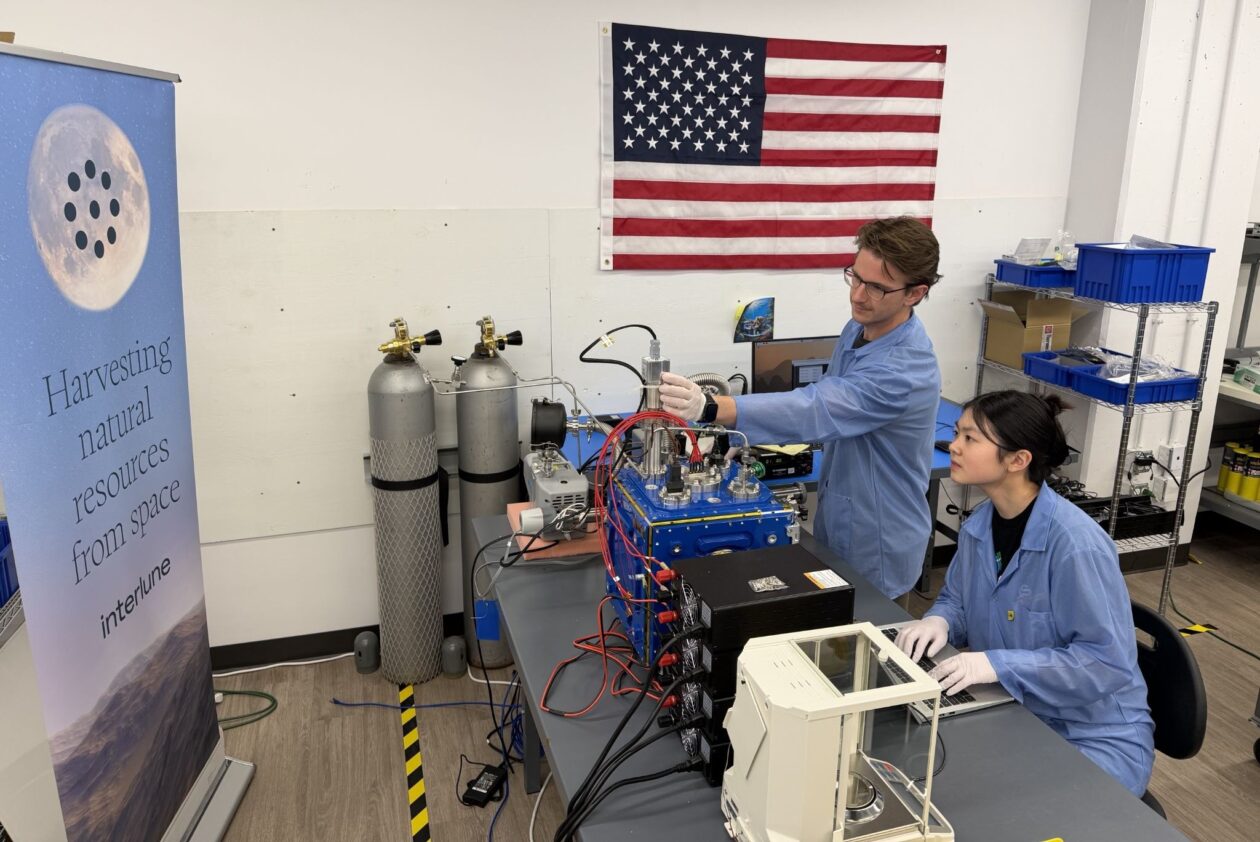
Interlune test engineer Alex Lewandowski and mechanical engineer Jessica Wu check test equipment for the mass spectrometer system in the Regolith Lab at the company’s Seattle headquarters. (Interlune Photo)
NASA has awarded a $6.9 million contract to Seattle-based Interlune for the development of a system that can extract gases such as helium-3 and hydrogen from lunar soil and rocks.
The system will be developed and tested on Earth under the terms of an 18-month Small Business Innovation Research Phase III grant, and then launched to the moon on a commercial robotic lander in 2028. Interlune says the project meshes with its plan to extract and market lunar helium-3 for applications on Earth ranging from quantum computing and medical imaging to neutron detection and commercial nuclear fusion.
“We’re gathering data and advancing technologies that serve multiple purposes across industry and government,” Rob Meyerson, co-founder and CEO of Interlune, said today in a news release. “NASA’s continued investment in space technology enables technology development projects like this one to ensure America’s leadership in building the lunar economy.”
Interlune’s payload will include a robotic arm and scoop to gather up moon dirt (technically known as regolith), a particle-sorting device, hardware for heating up lunar material and harvesting the gases that are given off, a multispectral camera capable of determining helium-3 concentrations, and a mass spectrometer that can analyze the gases.
“For the first time ever, we will measure volatile gases by heating lunar regolith while on the moon, dramatically advancing the scientific community’s understanding of its properties,” Interlune chief scientist Elizabeth Frank said. “The data we collect will also tell us how much power is needed to extract resources like helium-3.”
Advertisement
The project builds on Interlune’s previous efforts to build payload prototypes and test them on parabolic airplane flights that simulate lunar gravity. The company plans to send a camera to the moon on California-based Astrolab’s FLIP rover as soon as this summer for a demonstration mission known as Crescent Moon. In March, Astrolab announced that it would work with Interlune to integrate resource extraction hardware onto future lunar rovers.
The NASA-supported mission, called Prospect Moon, would generate data detailing the concentrations of volatile materials that have been deposited on the moon’s surface by the solar wind. Follow-up missions could focus on extracting hydrogen for rocket fuel and other lunar power applications, alongside helium-3 that could be sent back to Earth.
Interlune says it already has nearly $500 million in binding purchase orders for helium-3, from quantum computing companies and from the U.S. Department of Energy and the Department of the Air Force. For initial deliveries, Interlune plans to harvest helium-3 from natural gas supplies on Earth while full-scale lunar infrastructure is developed.
Helium-3 is the first resource targeted by Interlune, but the company plans to widen its focus over time to extract other potentially valuable materials from lunar regolith, including industrial metals, rare earth materials and water.
As fuel prices surge in 2026, electric vehicle owners may be feeling a bit smug. The remainder of us are currently paying an average of $4.30 per gallon for gas, or $5.49 for diesel. Some lucky states are paying a bit less, while Californians are paying more than $6 per gallon. It’s a hit on our budgets and wallets, and there’s no relief in sight.
Making the switch to an electric vehicle is a substantial adjustment, and many drivers may not feel ready. They may be concerned that the infrastructure doesn’t fully support the technology and worry about the availability of chargers. While there are few alternatives, researchers at the University of Wisconsin-Madison are at work on a novel concept: an engine that uses both gasoline and diesel.
Called the Reactivity Controlled Compression Ignition (RCCI) engine, this concept is just that — a theory that exists only in the lab, at least for now. Combining the fuels means this engine achieves a fuel-to-power conversion rate of up to 60%. Typical gasoline engines convert 30-40% of their fuel into power, while the average diesel engine converts about 45-50%, meaning the RCCI engine is a much more fuel-efficient idea. Here’s how it works.
Advertisement
Creative alternatives
Thamkc/Getty Images
We all know not to put diesel into a gasoline car, but you may not understand why. While they are both refined from crude oil, gasoline is more refined and thinner, so it burns faster and is a good choice for higher horsepower engines. Diesel is thicker and burns more slowly; it’s used for larger machines that need more torque.
The conceptual RCCI engine works like a standard gasoline engine at first, mixing air and fuel in the combustion chamber. Then, at a particular point in the process, diesel fuel is added to the chamber for a mix of gas, diesel, and air. As the piston moves, a bit more diesel is injected just before ignition, and the mixture of gas and diesel then ignites and causes the remaining gas to ignite. The result is not only more efficient fuel, but it’s also cleaner, putting out lower emissions. It’s an interesting concept but of course it would mean you’d have to visit two different fuel pumps to fill up!
Advertisement
Continuing to burn fossil fuels at the current rate is widely considered unsustainable, and scientists, engineers and more continue to attack the problem from all angles. Potential alternatives to electricity and fossil fuels include hydrogen fuel cell technology; biodiesels, or renewable fuels manufactured from alternatives such as vegetable oils; synthetic fuels; natural gas; and renewable diesel.
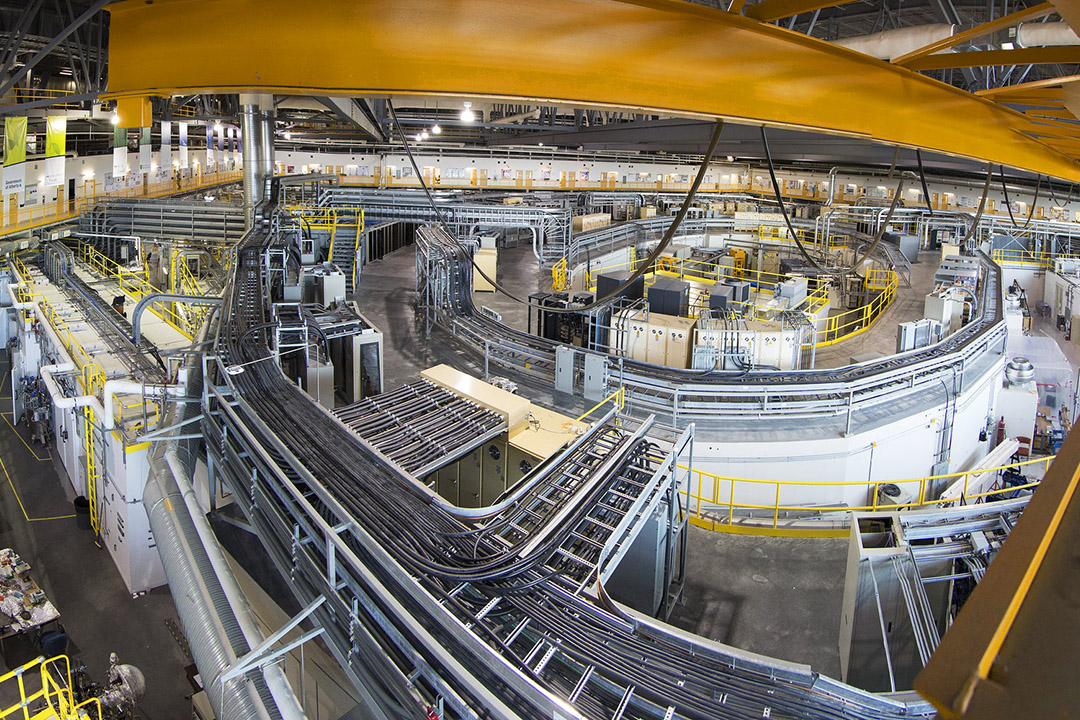
Microplastics absolutely saturate the Earth’s environment, and that’s probably not a good thing unless you’re looking for a sediment marker for the Anthropocene period. On the other hand, environmental contamination only becomes a really big problem if it bioaccumulates– that is, builds up in the tissues of plants and animals. At least when it comes to worms, that’s not the case with microplastics, according to new research from the Canadian Light Source at the University of Saskatchewan.Pictured: Not an Igloo. Credit: David Stobbe / Stobbe Photography, via University of Saskatchewan
The Canadian Light Source isn’t just some hoseheads in an igloo with a flashlight– it’s a 2.9 GeV Synchrotron tuned to produce high-energy photons. Back when Synchrotrons were used for particle physics, Synchrotron radiation was a very annoying energy sink, but nobody cares about 2.9 GeV electrons anymore. So rather than slam them into each other or a static target, the electrons just whip about endlessly, giving off both soft- and hard X-rays for material science studies– or, in this case, to observe the passage of polyethelyne microplastic particles through the guts of some very confused earth worms. To make them detectable by x-ray, the polyethylene was bonded to barium sulfate, an x-ray absorber. Equally opaque barium titanite glass microspheres were used with different worms, as a control.
Despite being fed plastic enriched with far more plastic than you’ll find outside of a 3D print farm, it seems the worm’s digestive system was able to reject the particles, even those as fine as 5 microns. That’s a good thing, because if the worms were absorbing plastic from the soil, it’s likely their predators would absorb it from the flesh of the worms, so and so forth up the food chain in the sort of cascade that made DDT a problem and makes mercury compounds so serious. If the worms are rejecting these compounds, there’s a chance other creatures can too– and at the very least, it means they aren’t building up on this bottom rung of the foot chain. If you’re looking for a more technical read, the full paper is available here.
It’s too early to say what this means for how microplastics get into humans and other animals, but it’s hopeful. Equally hopeful was the recent finding that studies that don’t rely on football-field sized X-ray machines might be picking up on microplastics from lab gloves, skewing results.
Header image: the digestive systems of earth worms as imaged by the Canadian Light Source. Credit Letwin, et al, Environmental Toxicology and Chemistry, vgag072, https://doi.org/10.1093/etojnl/vgag072
China shipped 90 per cent of the world’s humanoid robots in 2025 and has more than 150 companies in the sector, but only 23 per cent of surveyed enterprises are satisfied with the products available. Morgan Stanley warns of a shake-out as billion-dollar IPOs collide with two-hour battery life and a market that delivered just 14,000 units last year.
China has more than 150 humanoid robot companies. It shipped roughly 90 per cent of the world’s humanoid robots in 2025. Its two largest makers, Unitree and AgiBot, are preparing initial public offerings that would value them at a combined 13 billion dollars. Morgan Stanley doubled its delivery forecast for the Chinese market this year to 28,000 units, a 133 per cent increase over 2025. And yet, when Morgan Stanley surveyed the companies that are supposed to buy these robots, only 23 per cent said they were satisfied with the products available. Battery life tops out at two to three hours per charge. Most deployments remain confined to exhibitions, showrooms, and Spring Festival galas where robots perform kung-fu routines for television cameras. The technology has arrived. The customers have not. China’s humanoid robot industry is the most capitalised, most productive, and most overpopulated robotics sector in the world, and it is heading for a reckoning that its government has already warned is coming.
Advertisement
The warning
In late 2025, China’s National Development and Reform Commission issued a rare public statement about the humanoid robot sector. Spokesperson Li Chao noted that the number of companies had climbed past 150 and was still growing, with more than half being startups or cross-industry entrants. The NDRC warned of redundant products, duplicated investment, and compressed space for genuine research and development. The language was measured. The implication was not. Beijing’s top economic planning agency was telling the market that it saw a bubble forming in the industry it had designated as one of ten priority sectors in the 15th Five-Year Plan, backed by a one-trillion-yuan state fund.
China’s smartphone supply chain has already begun pivoting to humanoid robot production, with companies like Lingyi iTech, a Foxconn supplier that assembles iPhones, targeting 500,000 humanoid units by 2030. The manufacturing infrastructure is real. The component ecosystem is deep. The problem is that the robots being produced are not yet generating the revenue their valuations imply. Unitree, which filed for a 608 million dollar IPO on Shanghai’s STAR Market, saw humanoid robot revenue surpass its quadruped robot business for the first time in 2025, but the company’s total scale remains modest relative to its targeted seven billion dollar valuation. AgiBot, which is aiming for a six billion dollar listing in Hong Kong, is in a similar position: significant technological capability, significant government backing, and a commercial market that has not yet materialised at the scale the IPO price demands.
The Morgan Stanley survey, led by China industrials analyst Sheng Zhong, found that 62 per cent of Chinese companies said they were likely to adopt humanoid robots within three years. That willingness, however, collided with a set of practical constraints that the industry has not resolved. The 23 per cent satisfaction rate reflected shortcomings in dexterity, functionality, and pricing. Ninety-two per cent of respondents said robots needed to fall below 200,000 renminbi, roughly 28,000 dollars, before mass adoption became viable. Only about 10 per cent of companies surveyed were currently evaluating or running pilot projects. The demand exists in theory. In practice, the robots are too expensive, too limited in capability, and too short on battery life to justify the investment for most industrial applications.
UBTech, one of the sector’s largest players, offered 18 million dollars to recruit a chief AI scientist, a salary that reflects both the intensity of the talent war and the recognition that the engineering challenges remaining are substantial. The Walker S2, UBTech’s latest industrial humanoid, entered mass production in early 2026 with orders exceeding 800 million yuan, and the company is building a factory in Beijing targeting 10,000 units per year by the end of 2026. But production capacity and commercial demand are different things. Morgan Stanley’s Zhong described 2026 as “a critical year as humanoid integrators strive to reach commercialisation and build up their ecosystems,” and warned of an impending shake-out. Production, he noted, is likely to be materially larger than sales, because major players are manufacturing robots internally for training and verification rather than shipping them to paying customers.
The spectacle
In April, a humanoid robot called Lightning, developed by Chinese smartphone maker Honor, won the Beijing E-Town Half-Marathon in 50 minutes and 26 seconds, beating the human world record by nearly seven minutes. More than a hundred robots competed. The event was covered globally. An engineer on the winning team said the achievement enabled technology transfer into structural reliability and cooling that would eventually benefit industrial applications. Robotics experts were less certain. The skills displayed during a half-marathon, sustained bipedal locomotion on a flat surface, do not translate to the manual dexterity, real-world perception, and adaptive problem-solving required for factory work, logistics, or the service applications that the industry’s business plans depend on.
Advertisement
The gap between spectacle and substance defines China’s humanoid robot moment. The Spring Festival Gala performances, the marathon records, and the viral videos of robots doing backflips generate the attention that attracts capital. The capital funds the next round of development. The development produces more impressive demonstrations. But the cycle does not produce revenue at the scale needed to justify the valuations being assigned. China’s industrial model has historically excelled at commercialising technology faster and cheaper than any Western economy, turning solar panels, electric vehicles, and batteries into globally dominant export industries within a decade. The question is whether humanoid robots follow that pattern or whether they represent a category where the gap between demonstration and deployment is structurally wider than the manufacturing advantage can close.
The competition
China’s dominance in humanoid robot shipments has not gone unnoticed. Boston Dynamics began commercial production of its electric Atlas robot in January 2026 and announced plans to deploy tens of thousands of units at Hyundai Motor Group factories, with a manufacturing facility near Savannah, Georgia, targeting 30,000 units per year by 2028. Figure AI, the leading American humanoid startup, holds a 39 billion dollar private valuation after its September 2025 fundraise, despite shipping a fraction of the volume Chinese companies manage. Tesla’s Optimus is performing basic tasks in its own factories, with Elon Musk projecting mass production and a price point of 20,000 to 30,000 dollars, though the robot is, by Musk’s own admission, “not in usage in a material way.” The Pentagon has awarded 24 million dollars in contracts to Foundation Future Industries for humanoid robot soldiers tested in Ukraine, opening a military market that Chinese companies cannot access but that validates the strategic importance governments are placing on the technology.
The pricing dynamics favour China. Unitree’s H2 is positioned below 30,000 dollars. Kepler, another Chinese maker, is targeting the same range. At CES 2026, the sheer number of Chinese humanoid robots on display, and their aggressive pricing, made clear that the supply-side economics are already competitive. The question is whether demand at those price points exists in sufficient volume to sustain an industry with 150 companies competing for it.
The reckoning
Zhong’s prediction of a shake-out is not a minority view. The NDRC’s warning, the Morgan Stanley satisfaction data, the IPO inspection of Unitree just twelve days after its STAR Market application was accepted, and the simple arithmetic of 150 companies chasing a market that delivered roughly 14,000 units in China in 2025 all point in the same direction. The companies that survive will be those that solve the commercialisation problem: identifying repeatable, scalable use cases where the economics of a humanoid robot are superior to the alternatives, whether those alternatives are purpose-built industrial arms, wheeled platforms, or human workers. The companies that do not will have burned through their funding producing impressive machines that no one outside a trade show needed to buy.
Advertisement
China’s humanoid robot industry has the manufacturing base, the component supply chain, the government support, and the engineering talent to lead the world. What it does not yet have is the market. The one-trillion-yuan state fund and the 15th Five-Year Plan designation ensure that capital will continue to flow. The NDRC warning ensures that Beijing is watching how it flows. Somewhere between the billion-dollar IPOs and the 23 per cent satisfaction rate, between the marathon records and the two-hour battery life, is the answer to whether China’s humanoid robot boom produces the next great Chinese export industry or the most expensive collection of trade show demonstrations the technology sector has ever funded. The robots can run a half-marathon faster than any human alive. They cannot yet work an eight-hour shift.
We spend hours testing every product or service we review, so you can be sure you’re buying the best. Find out more about how we test.
Mouse P.I. for Hire has caused quite the stir since it was revealed by Polish developer Fumi Games a couple of years back. Its rubberhose animation style, Doom-inspired boomer shooter gameplay, and Mickey Mouse-esque cast of characters helped it to stand out in the indie scene, and it’s already enjoyed a healthy dosage of positive reception from critics and players alike.
Review info
Platform reviewed: Nintendo Switch 2 Available on: PS5, Xbox Series X|S, Nintendo Switch 2, PC Release date: April 16, 2026
Advertisement
So, when I got the chance to try it out on Nintendo Switch 2, it’s safe to say I was pretty excited. Playing detective in a noir, rodent-filled world sounds pretty enticing, right? And given that I had some long-haul flights up ahead, going with the Switch 2 edition to mouse around on the go felt like a no-brainer.
But just how good is Mouse P.I. for Hire on Nintendo Switch 2? And does the indie title nail the boomer shooter formula and 1930s cartoon aesthetic? Here’s what I think after more than 20 hours with the game.
Advertisement
Say hello to my little friend
(Image credit: Fumi Games / PlaySide Studios)
Welcome to Mouseburg, where the cops are more crooked than an old shrew’s teeth, the ‘cheesehibition’ brings unrest, and the stench of crime lurks on just about every corner. For private investigator Jack Pepper — a war hero and former police officer — mystery awaits, with the cases of a missing magician, a murdered mouse, and a shrew-trafficking ring all drawing his attention.
You’ll have to snoop around Mouseburg, shoot through your foes, dig around for clues, and solve these key cases, which may or may not be interlinked. It’s a fun premise for sure, and although the game is pretty linear, this ensures that the mystery is paced pretty nicely.
When it comes to the investigative aspects, Mouse P.I. keeps things relatively simple. Across various locations, you’ll stumble across clues — such as misplaced notes or photographs — and be tasked with pinning them up at Jack’s office. Here, he will be able to ponder evidence, resolve leads, and decide what action to take.
As a player, you’re not able to give much personal input into the investigation process — much of it unfolds before your eyes as Jack discusses his findings. It could’ve been interesting to see some multiple choice options or to think up correlations between pieces of evidence, but personally, I was happy for the game to take a more agile, straightforward approach.
Advertisement
Sign up for breaking news, reviews, opinion, top tech deals, and more.
Other than the main story, you’ll be able to take on side gigs, like gathering info for Jack’s journalist ally Wanda, or locating ingredients for his bar-owner buddy John Brown. The rewards for these aren’t always massive, but getting some extra coins to buy newspapers and comic books, as well as baseball cards required for a simple bar game, is always welcome.
Best bit
(Image credit: Fumi Games / PlaySide Studios)
Although Fumi Games nailed the black and white 1930s aesthetic, stepping into the film studio and seeing a burst of color was a clever twist and a feast for the eyes.
Advertisement
The main thing to discuss, however, is the game’s combat. This is a first-person shooter that wears its inspirations on its sleeve. The boomer shooter formula is executed very well, with fast-paced, brutal, and chaotic shoot-outs that feel thrilling to blast through. There’s a bit of platforming mixed in too, which feels surprisingly sharp — and equally forgiving, as falling will simply respawn you from where you left off.
My only issue with Mouse P.I.’s rodent-packed shoot-ups is the unfortunate lack of enemy diversity. During the game’s approximate 20-hour run time, you’ll encounter the same foes over and over again, which becomes a little dull in the latter stages. There’s the occasional odd creature or robot sprinkled in, and the bosses offer some challenge, but it feels like the Devs could’ve given your enemies more weapon types and more unique looks depending on the area you’re in.
For Pepper, however, things are a bit different. He’s given a neat selection of weapons to wield against his opponents, including the James Gun (a playfully named Tommy Gun), the Boomstick (a shotgun), the Loose Cannon (a cannonball shooter), and more. The James Gun is certainly the most reliable, and it makes a lot of areas easy to tear through, but there’s a hard mode if you want to test your skills.
As a player, you can also choose to play with a controller, with a standard handheld setup, or with…ahem…mouse controls. The latter genuinely works pretty well, although I prefer the comfort of using a Switch 2 Pro Controller, personally. One thing I’ve seen a lot of players lament, however, is the lack of gyro, which is packed into a lot of rival first-person shooters, and it would’ve been great to see here.
Advertisement
A step down on Switch 2
(Image credit: Fumi Games / PlaySide Studios)
I’ve been pretty positive about Mouse P.I. for Hire so far, and I genuinely think it’s a game that fans of games like Doom Eternal will love. But we’re looking at the Switch 2 version in particular today, and on this platform, the game runs into far too many technical issues.
The biggest issue for this title is its unreliable frame rate. With the Switch 2 docked, Mouse P.I. is targeting 1080p at 60fps (frames per second) in performance mode and 1440p at 40fps in quality mode. In handheld, it’s 900p at 60fps and 1260p at 30fps, respectively. That’s already not the most impressive, after all, this is hardly the most demanding game out there. But Mouse P.I. still struggles to reach some of those figures.
The worst offender is Performance mode. In handheld mode, the game has constant frame drops, which can be pesky during combat situations and a bit of an immersion killer during exploration. Things are a bit better in docked, but I still experienced frequent drops, even when visiting areas like the kitchen by the bar.
Advertisement
Sure, things are a bit steadier in quality mode, but there are still occasional drops, and the lower frame rate just doesn’t lend itself very well to the fast-paced, fluid nature of Mouse P.I.’s gameplay.
On top of this, I discovered other technical oddities, like menus scrolling without me pressing any buttons (no matter what controller I used), overlong loading screens, and even a crash when I was mid-mission.
Don’t get me wrong, Mouse P.I. for Hire is still playable on Switch 2. As frustrating as these issues are, the port is still workable, and I was able to push through the pesky frame drops to get over the line. Apparently, there is a patch in the works to address some of the game’s performance issues, which is a positive sign, although I’d argue that it should’ve played smoother from launch.
(Image credit: Fumi Games / PlaySide Studios)
Having said this, there is still a lot to love about Mouse P.I. for Hire. Its story is pretty engaging, and the characters are voiced to absolute perfection. Yes, not all of the jokes about cheese land, but using it as a substitute for alcohol during the prohibition era really adds to the 1930s setting.
Advertisement
The rubberhose animation style is also stellar, and suits the noir vibe to a T. In the same way that Cuphead charmed audiences years ago, Mouse P.I. for Hire thrives off its charismatic, frantic, and sometimes bizarre animation. Oh, and that’s not to mention the soundtrack, which features jazz hits from the likes of Dizzy Gillespie, as well as some iconic classical tunes.
All in all, then, Mouse P.I. for Hire on Nintendo Switch 2 leaves me feeling conflicted. On one hand, I’d argue it hits a lot of the right beats when it comes to gameplay, narrative, and visual style. But on the other hand, I have to say, the sloppy performance was a bit of a let down, and makes this specific version of the game tougher to recommend. And that’s where I’m at: Mouse P.I. for Hire is a largely enjoyable, fantastically animated boomer shooter — but if you own another system, like a PS5 or PC, I’d steer clear of the Switch 2 version, unless there’s a major fix rolled out, that is.
Should you play Mouse P.I. for Hire?
(Image credit: Fumi Games / PlaySide Studios)
Advertisement
Play it if…
Don’t play it if…
Accessibility features
There are a fair few ways to customize your experience in Mouse P.I. for Hire. For instance, there are three difficulty levels, you can either toggle or hold down R3 to crouch, you can turn blood effects off, and you can remap controls to your liking. On top of this, you can alter sensitivity, camera controls, aim assist levels, and even visual effects, like depth of field. Subtitles are also available, and you can pick from a wide array of text languages.
(Image credit: Fumi Games / PlaySide Studios)
Advertisement
How I reviewed Mouse P.I. for Hire
I spent more than 20 hours playing through Mouse P.I. for Hire, during which time I completed the main story, finished a bunch of side quests, and tried nabbing as many collectibles as I could.
Most of the time, I played the game in handheld mode on my Nintendo Switch 2, using the Sony WH-1000XM6 headphones to hear in-game audio. However, I did play the game docked from time to time, and had my system connected up to the Sky Glass Gen 2 television and Marshall Heston 120 soundbar.
The hacker behind a breach at education technology giant Instructure claims to have stolen 280 million records tied to students and staff from 8,809 colleges, school districts, and online education platforms.
Instructure is a cloud-based education technology company best known for its Canvas learning management system, which schools and universities use to manage coursework, assignments, grading, and communication.
Last Friday, Instructure disclosed that it was investigating a cyberattack and later revealed that it had suffered a data breach, during which users’ names, email addresses, and private messages were exposed.
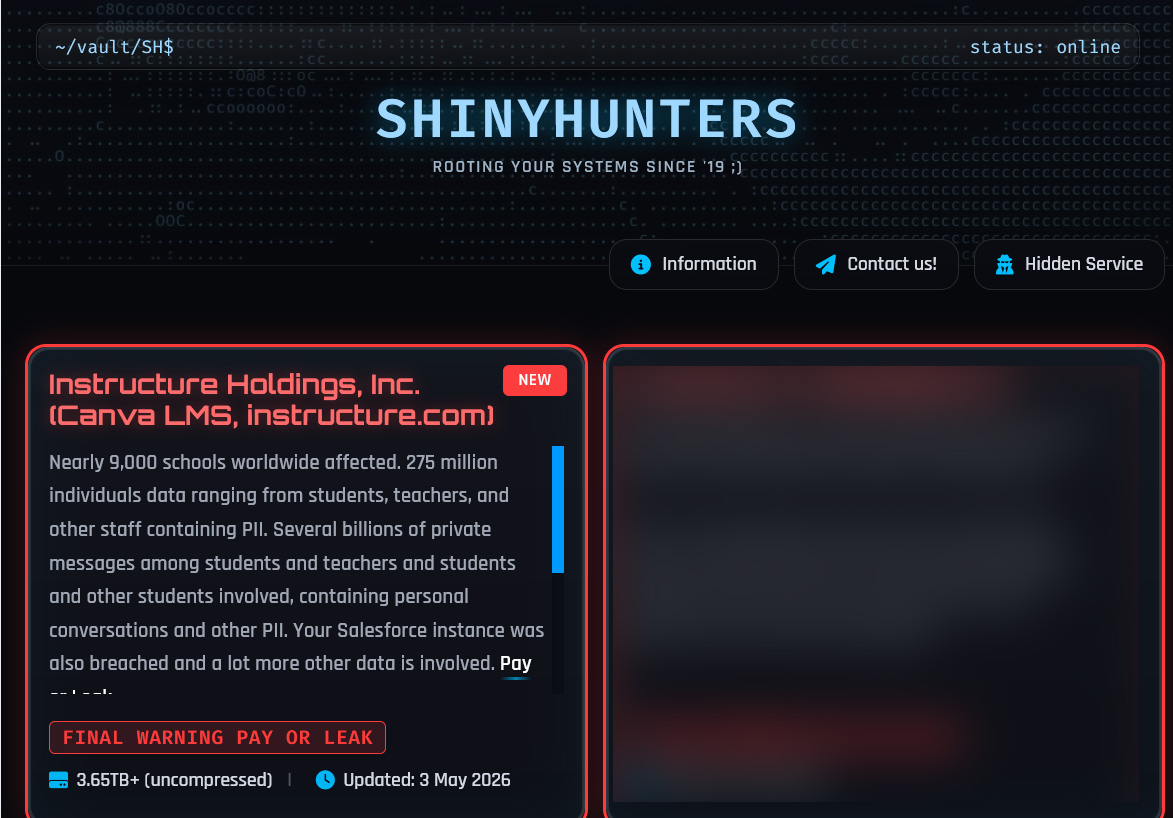
The ShinyHunters extortion gang claimed responsibility for the attack and says it stole 280 million records for students, teachers, and staff.
Advertisement
Instructure listing on ShinyHunters data leak site
The threat actors have now published a list of 8,809 school districts, universities, and educational platforms whose Canvas instances were allegedly impacted by the attack, sharing record counts per institution with BleepingComputer.
The record counts for each educational institution range from tens of thousands to several million per institution.
BleepingComputer is not naming specific organizations listed by the threat actor, as we have not independently verified whether they were impacted by the breach.
The threat actor claims the data was stolen using Canvas data export features, including DAP queries, provisioning reports, and user APIs, and that they harvested hundreds of gigabytes of user records, messages, and enrollment data.
While Instructure has not responded to repeated emails regarding the incident, some universities have begun issuing statements about the potential impact.
Advertisement
“CU is aware of a data breach involving Instructure, the parent company of Canvas, our learning management system. This reported data breach is a nationwide event affecting multiple institutions,” warned the University of Colorado Boulder.
“At present, Rutgers has not been notified of any direct impact to our campus. Canvas remains available and operational to Rutgers faculty, staff, and students,” warned Rutgers.
“An investigation is currently underway to determine what exactly happened and which systems were affected. It has not yet been confirmed whether data of Tilburg University students and staff has been impacted. Further questions have been submitted to the supplier to obtain more clarity,” warns Tilburg University.
BleepingComputer has contacted Instructure again with additional questions and will update this story if we receive a response.
Advertisement
AI chained four zero-days into one exploit that bypassed both renderer and OS sandboxes. A wave of new exploits is coming.
At the Autonomous Validation Summit (May 12 & 14), see how autonomous, context-rich validation finds what’s exploitable, proves controls hold, and closes the remediation loop.
The project falls under the US-Ireland R&D Partnership, a tri-jurisdictional initiative founded in 2006 with the aim of supporting collaborative research projects involving partners in Ireland, Northern Ireland and the US.
A new all-island research programme will support Irish-US collaboration between researchers, innovators and industry partners through a $20m investment.
The ‘research translation and commercialisation initiative’ is a trilateral project funded by Research Ireland, Northern Ireland’s Department for the Economy and the US National Science Foundation (NSF) Directorate for Technology, Innovation and Partnerships (TIP).
The project falls under the US-Ireland R&D Partnership, a tri-jurisdictional initiative founded in 2006 with the aim of supporting collaborative research projects involving partners in Ireland, Northern Ireland and the US by bringing together government departments, funding agencies, academic institutions and industry to address shared scientific, economic and societal challenges.
Advertisement
The initiative, which will be open to current and past tripartite partnership awardee teams who have received their US support from NSF, is also part-funded through the Irish Government’s Shared Island Fund and supported by InterTradeIreland, the cross-border trade and business development body for all-island economic collaboration.
Taoiseach Micheál Martin, TD said: “The US-Ireland R&D Partnership is a powerful example of how sustained international cooperation delivers real benefits for our people, our economy and our research community.
“This new investment builds on 20 years of success and will help ensure that cutting-edge research developed across the island of Ireland and the United States can be translated into real-world solutions and high-value jobs.”
The new initiative plans to identify research under the themes of cybersecurity, energy and sustainability, telecommunications, sensors and sensor networks, and nanoscale science and engineering, and was established as an expansion activity to support the translation of research outputs from the US-Ireland R&D Partnership into market-ready products, services and solutions.
Advertisement
First minister of Northern Ireland Michelle O’Neill said: “This new transatlantic initiative represents a significant opportunity to turn excellent research into real benefits for our economy and our communities, while strengthening the strong relationships we have built with partners in the US and across this island.”
The collaboration is also targeting the development of bespoke training programmes for affiliated researchers to help them to upskill in advancing their work along the translation and commercialisation path, with further funding opportunities available to selected participating teams to kickstart the creation of research-related start-ups.
“For nearly 20 years, the US-Ireland R&D Partnership has not only jointly funded numerous trilateral science and engineering research projects, it has also served as a model of how to successfully facilitate cross-border research and development,” said Brian Stone, the NSF’s chief of staff.
“Today’s announcement from NSF TIP, the Government of Ireland and Department for the Economy marks a natural next step in our transatlantic partnership, expanding our collaboration to accelerate the translation of projects into businesses and solutions, delivering significant scientific, economic and real-world benefits.”
Advertisement
The US-Ireland R&D Partnership has supported 107 collaborative research projects to date through $196m in combined government funding for research projects across an array of sectors. Examples include: research on next-generation communications and 6G networks conducted by University College Dublin, Queen’s University Belfast and Purdue University; work on sustainable animal health solutions by University of Tennessee, University College Cork and Queen’s University; and colorectal cancer research carried out by GE Global Research, Queen’s University and Royal College of Surgeons Ireland.
Don’t miss out on the knowledge you need to succeed. Sign up for the Daily Brief, Silicon Republic’s digest of need-to-know sci-tech news.
When it comes to flagship phones, the word “Ultra” has started to lose meaning. Every brand throws it around, but very few actually deliver something that feels… ultra. Take the Samsung Galaxy S26 Ultra, for instance. It’s a solid phone, sure, but exciting? Not quite. And that’s the bigger issue with the US market right now. Some of the most interesting Android flagships simply don’t make it here.
Meanwhile, brands like Vivo, Oppo, and Honor are quietly pushing smartphone cameras into territory that feels closer to dedicated cameras than ever before. And then there’s the Xiaomi 17 Ultra. After using it for a couple of weeks, one thing is clear: this isn’t just a phone with a great camera. It’s a camera that happens to be a phone. And honestly, it kind of feels like a modern-day revival of the Samsung Galaxy Camera.
If this thing officially launched in the US, it would shake things up in a big way.
Spec Sheet Flex, But Make It Real
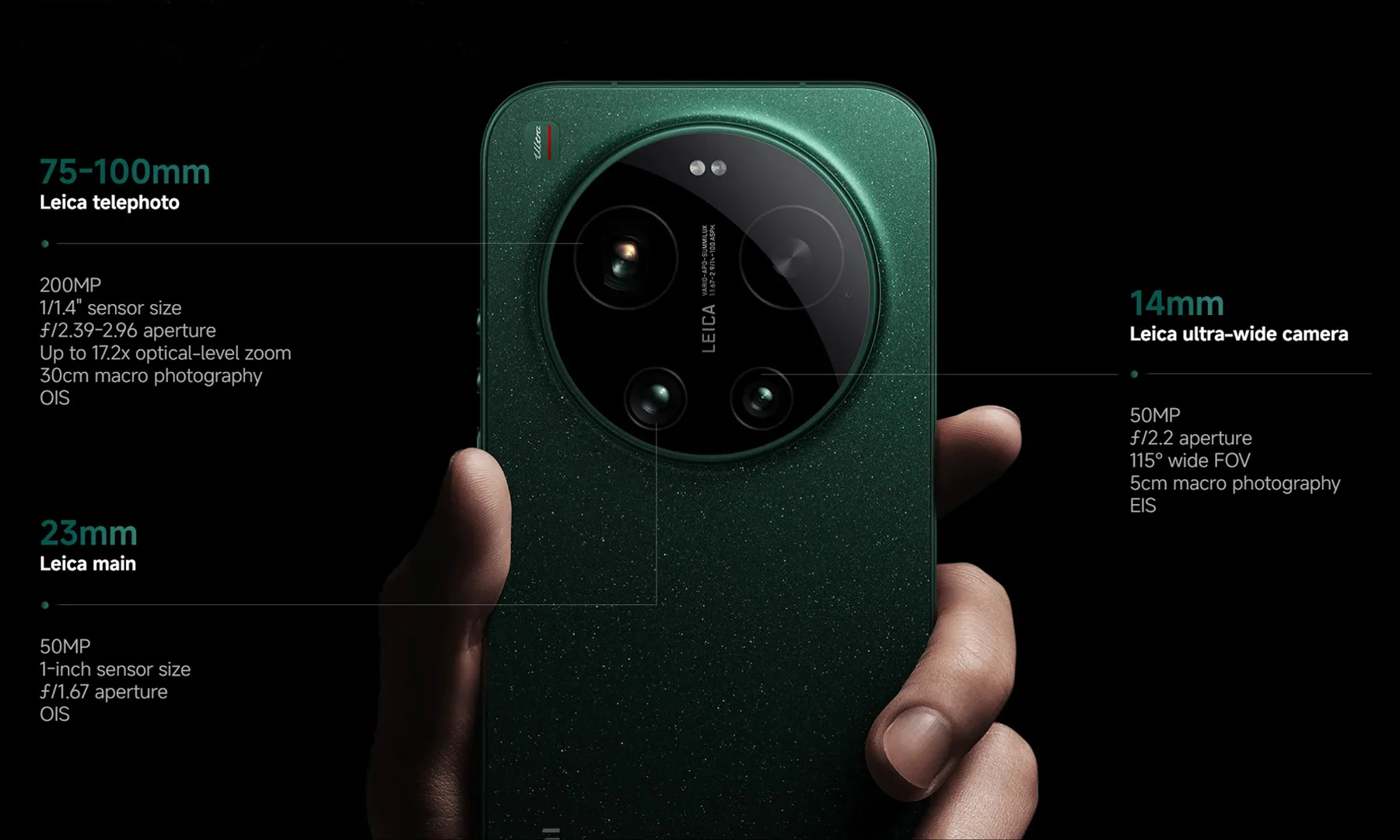
The Xiaomi 17 Ultra doesn’t just show up with a spec sheet — it shows off. You’re looking at a Leica-tuned triple-camera setup led by a 50MP 1-inch Light Fusion 1050L sensor with an f/1.67 aperture and LOFIC HDR, which is basically a fancy way of saying it handles highlights and shadows like a champ. Then there’s the real party trick: a 200MP periscope telephoto (Samsung HP9, 1/1.4″) with a slick continuous optical zoom from 75mm to 100mm (around 3.2x to 4.3x), stretching all the way to a wild 400mm equivalent via in-sensor crop.
Rounding things out is a 50MP ultrawide with a 115° field of view and macro support, plus a surprisingly serious 50MP autofocus selfie camera up front. And yes, it shoots 8K at 30fps and 4K at 120fps with Dolby Vision and ACES Log, which is as close as a phone gets to saying, “Yeah, I can do cinema too.” Additionally, there’s Leica optics and color tuning across all lenses. In fact, that Leica partnership isn’t just branding either. It shows up in how the photos look, feel, and behave.
Daylight Drama, Minus the Drama
Let’s start with daylight shots, because this is where most phones already do well. The Xiaomi 17 Ultra does better. Images are sharp, detailed, and rich without looking artificially processed. You get two primary profiles: Leica Authentic and Leica Vibrant. I found myself leaning toward Vibrant more often, and here’s the thing: it doesn’t go overboard.
Varun Mirchandani / Digital TrendsVarun Mirchandani / Digital TrendsVarun Mirchandani / Digital TrendsVarun Mirchandani / Digital TrendsVarun Mirchandani / Digital Trends
Colors pop, but they don’t scream. Greens look lively without turning neon, blues stay controlled, and overall contrast feels more… intentional.
Varun Mirchandani / Digital TrendsVarun Mirchandani / Digital TrendsVarun Mirchandani / Digital TrendsVarun Mirchandani / Digital Trends
Honestly, it’s a refreshing break from the oversharpened, overprocessed look that some flagships lean into. Furthermore, the HDR performance is another highlight. Even in tricky lighting, the phone balances highlights and shadows beautifully, without flattening the scene.
Zoom Game That Actually Feels Like a Camera
This is where things start getting really fun. The combination of multiple lenses and a continuous optical zoom system means you’re not just jumping between fixed focal lengths. You’re actually working with something that feels closer to a real camera lens. From 1x to 2x, 3.2x, and even beyond, the results stay impressively sharp. Colors remain consistent across zoom levels, which is something many phones still struggle with.
1xVarun Mirchandani / Digital Trends2xVarun Mirchandani / Digital Trends3.2xVarun Mirchandani / Digital Trends8.6xVarun Mirchandani / Digital Trends
And here’s the surprising part. I ended up using the camera at around 3.2x most of the time. It just hits that sweet spot for composition, perspective, and background separation.
Portraits That Don’t Try Too Hard
Portrait photography is another strong suit here, and it benefits massively from that telephoto hardware. You can shoot portraits using the tele lens for natural depth, or switch to portrait mode for additional processing. Either way, the results are excellent.
Varun Mirchandani / Digital TrendsVarun Mirchandani / Digital Trends
Edge detection is clean, subject separation looks natural, and the background blur doesn’t feel fake or overdone. In many cases, it genuinely holds its own against a decent DSLR setup.
Varun Mirchandani / Digital TrendsVarun Mirchandani / Digital TrendsVarun Mirchandani / Digital Trends
What I really liked, though, is that you don’t always need portrait mode. Just using the telephoto lens gives you that natural compression and bokeh, especially for subjects like pets or candid shots.
Low Light, No Panic
While daylight photography is great, it’s great on a lot of other phones too. However, low-light photography is where this phone really flexes. That 1-inch sensor combined with the wide f/1.67 aperture allows it to pull in a ton of light. And the results show.
Advertisement
Varun Mirchandani / Digital TrendsVarun Mirchandani / Digital TrendsVarun Mirchandani / Digital TrendsVarun Mirchandani / Digital TrendsVarun Mirchandani / Digital TrendsVarun Mirchandani / Digital TrendsVarun Mirchandani / Digital TrendsVarun Mirchandani / Digital Trends
Even in challenging conditions with minimal lighting, the Xiaomi 17 Ultra manages to retain detail, control noise, and preserve the overall mood of the scene. Importantly, it doesn’t try to turn night into day. You still get that nighttime feel, just with better clarity and detail. Highlights are controlled, lens flare is minimal, and textures don’t get smudged into oblivion.
Ultrawide, But Actually Useful
The ultrawide camera here isn’t an afterthought. At 14mm, it captures a seriously wide field of view, which is great for landscapes, architecture, and group shots. Even better, image quality holds up surprisingly well, including in lower light.
NormalVarun Mirchandani / Digital TrendsUltrawideVarun Mirchandani / Digital Trends
That said, there’s one small annoyance. The placement of the ultrawide lens near the edge of the camera module means it’s very easy to accidentally get a finger in the frame. It’s not a dealbreaker, but definitely something to be mindful of.
The Photography Kit Pro
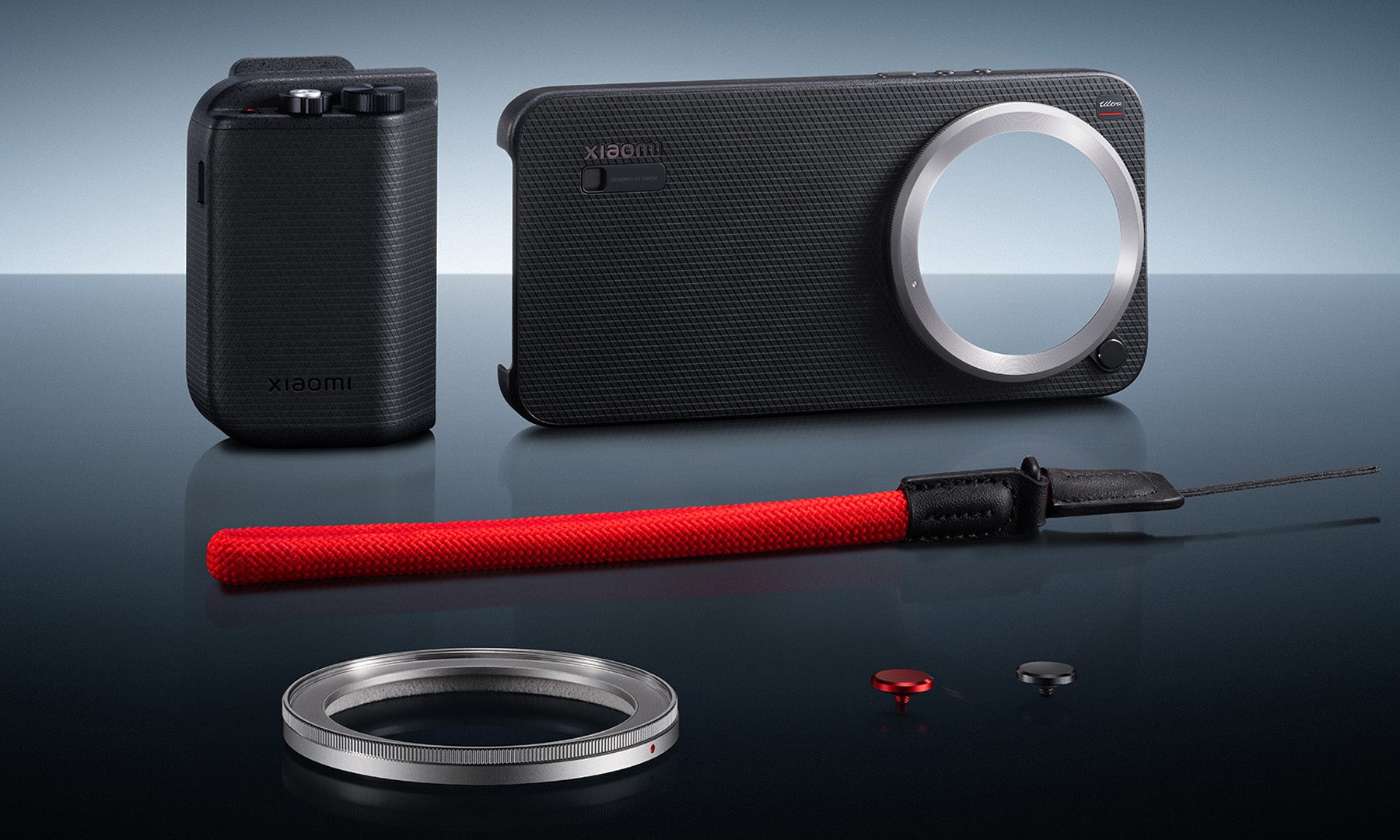
Speaking of the camera array, one of the best things Xiaomi did with this phone was to introduce the Photography Kit Pro, and the second best thing they did was to supply me with the kit, too. You get better ergonomics, physical controls for shooting, and an overall experience that makes you want to take more photos. It bridges that gap between smartphone photography and traditional cameras in a really satisfying way. The grip also doubles as a battery pack, which is incredibly useful during long shooting sessions.
Xiaomi
There’s even a USB-C passthrough, so it’s easy to charge both the phone and grip simultaneously. That said, I wish Xiaomi added data passthrough as well, enabling one to connect an external SSD while the grip is attached. Maybe in future iterations, they could also add a microSD card slot to this, or better yet, a full-sized SD card slot to appeal to the photographers out there.
Selfie Cam… Exists
Now, all isn’t perfect here, and that brings me to the selfies. It’s… fine. Just fine.
Varun Mirchandani / Digital TrendsVarun Mirchandani / Digital Trends
HDR can be a bit inconsistent, colors often lean a little too punchy, and while there’s an attempt to smooth out skin textures, the result feels a bit off.
Xiaomi 17 UltraVarun Mirchandani / Digital TrendsApple iPhone 16Varun Mirchandani / Digital Trends
Of course, photography is subjective, but personally, this is one area where I’d still pick a Google Pixel any day. Even the iPhone does a solid job if you prefer softer-looking images, as you can see in the comparison shot above.
The Best Camera You Can’t (Officially) Buy?
So… is this the best camera phone right now? If photography is your priority, it’s honestly very hard to argue against it. The Xiaomi 17 Ultra brings together industry-leading hardware, genuinely thoughtful image processing, full RAW support for those who like to tweak every pixel, and smart AI tools that actually feel useful instead of gimmicky. And the best part? It’s not just a one-trick pony. Beyond the camera, you’re still getting a proper flagship experience with a top-tier chipset, a gorgeous display, and battery life that comfortably goes the distance.
Advertisement
But here’s the frustrating bit: you can’t officially buy it in the US. And that’s a real shame. Because if a phone like this were widely available, it would force the likes of Apple and Samsung to push their camera systems further, faster. The Xiaomi 17 Ultra isn’t trying to be the most balanced smartphone out there. Instead, it’s aiming to be the best camera you can carry in your pocket. And after spending time with it, it’s hard not to feel like the US market is seriously missing out.
Apple is rumored to be giving users the option to run various AI features in iOS 27 with third-party models as an alternative to Apple Intelligence.
Apple has been trying to catch up to the rest of the AI market, but it may not have to worry about doing so for iOS 27. If a report is true, Apple will be making it easier to use third-party alternates throughout the operating system.
According to sources of Bloomberg on Tuesday, users will be able to select from multiple third-party AI models, which can be used for various tasks in the operating system. It’s a change arriving in iOS 27, iPadOS 27, and macOS 27.
While users can already use ChatGPT for some actions on their iPhone already, the new version will work with other models as well. These integrations have apparently included models from Anthropic and Google, the sources claim.
Advertisement
Those models will be tasked with answering queries, editing and generating text, and image generation. This is a lot like the existing capabilities of ChatGPT in iOS 26.
Extensions and the App Store
The choice will be available as part of “Extensions,” which will let users access the generative AI capabilities from installed apps, via Apple Intelligence. This includes Siri, Writing Tools, and Image Playground, a message in a test build apparently said.
For Siri, users will be able to select a different voice for conversations that use external models. This is to make it easier for users to quickly understand which AI source is handling the query.
As usual, Apple intends to warn users that it isn’t responsible for content generated by any of the selected third-party models.
Advertisement
While it will require users to install apps from their selected provider beforehand, Apple will also be making it easier for users to get onboard. There’s word of a specific App Store section that will list compatible AI apps that users can download.
The connection to the App Store is something that has been brought up long in the past. Back in March 2024, there were murmors of an AI App Store, which the new report is similar to in concept.
Rumors of Siri supporting other third-party AI tools have also surfaced, including one March report mentioning the use of installed apps.
However, there’s also the question of whether users will actually take advantage of this capability in the first place.
Advertisement
While Apple has been behind in the AI race, it did move to catch up in January thanks to a multi-year deal with Google. Under it, Apple would use Google’s Gemini models and cloud technology to help flesh out Apple’s Foundational Models.
With WWDC 2026 on the horizon in June, we don’t have long to wait to see what Apple’s AI strategy will actually be.
























































































You must be logged in to post a comment Login