NEW YORK — Bitcoin fell below $78,000 on Thursday, trading at $77,399.99 as of 10:45 a.m. UTC on April 23, down nearly 1% for the day as investors took profits following a strong rally earlier in the month and amid broader uncertainty in global financial markets.
Bitcoin Dips Below $78,000 as Traders Book Profits Amid Renewed Market Volatility in 2026 AFP
The world’s largest cryptocurrency has now given back some of its recent gains, reflecting a classic pattern of volatility that continues to define digital asset trading in 2026. The modest decline comes after Bitcoin briefly pushed toward $82,000 in mid-April, driven by optimism around institutional adoption and improving macroeconomic signals. Thursday’s pullback erased roughly $773.55 from its value in the previous 24 hours, according to major exchange data.
Market analysts pointed to several factors behind the latest move. Profit-taking after the recent surge played a significant role, with many short-term traders locking in gains. Institutional investors, including hedge funds and corporate treasuries, have been active in trimming positions following strong performance in the first quarter. Additionally, rising bond yields and a stronger U.S. dollar created headwinds for risk assets, including cryptocurrencies.
Technical indicators also suggested a period of consolidation. Bitcoin has been trading within a relatively tight range between $75,000 and $82,000 for several weeks, with resistance levels proving difficult to break on multiple attempts. The Relative Strength Index (RSI) has moved out of overbought territory, signaling that a cooldown phase may be underway.
Despite the daily dip, Bitcoin remains up substantially year-to-date in 2026. The cryptocurrency has benefited from several positive developments, including increased spot Bitcoin ETF inflows, clearer regulatory signals in key jurisdictions and growing corporate treasury adoption. Major companies continue to add Bitcoin to their balance sheets, viewing it as a hedge against inflation and currency devaluation.
Advertisement
Institutional interest remains a core driver. BlackRock, Fidelity and other large asset managers have reported steady inflows into their Bitcoin products, though the pace has moderated slightly in recent weeks. The approval and successful operation of multiple spot ETFs in the United States have provided easier access for traditional investors, helping legitimize Bitcoin as an asset class.
On the macroeconomic front, traders are closely watching Federal Reserve policy signals. Expectations around interest rate cuts have shifted several times this year, creating uncertainty that often spills over into riskier markets like crypto. A stronger dollar and higher Treasury yields tend to pressure Bitcoin, as they increase the opportunity cost of holding non-yielding assets.
Geopolitical developments have also influenced sentiment. Ongoing tensions in the Middle East, including disruptions in the Strait of Hormuz, have kept oil prices elevated and added to broader market nervousness. While Bitcoin has sometimes performed well during periods of geopolitical stress as a “digital gold” narrative strengthens, short-term risk aversion has dominated recent trading sessions.
Ethereum and other major altcoins moved in tandem with Bitcoin on Thursday, showing similar percentage declines. The total cryptocurrency market capitalization slipped below the $3 trillion level, reflecting widespread caution among traders. However, on-chain metrics remain relatively healthy, with active addresses and transaction volumes holding steady.
Advertisement
Looking ahead, market participants are focusing on several key events. The upcoming Federal Reserve meeting and any signals regarding monetary policy could set the tone for risk assets in the coming weeks. Additionally, corporate earnings from major technology firms may influence sentiment, as many of these companies have significant exposure to Bitcoin either directly or through their broader tech ecosystem.
Longer-term bulls remain optimistic. Many analysts forecast Bitcoin could test new all-time highs later in 2026 if macroeconomic conditions improve and institutional adoption continues. Predictions range from $100,000 to $150,000 by year-end, though such forecasts come with significant disclaimers given the asset’s volatility.
For retail investors, Thursday’s dip serves as a reminder of Bitcoin’s unpredictable nature. While the cryptocurrency has delivered impressive returns over the past decade, sharp corrections are common even during bull markets. Financial advisors continue to recommend limiting exposure to no more than 5-10% of a diversified portfolio and maintaining a long-term perspective.
Regulatory developments around the world also continue to shape the market. Progress toward clearer frameworks in the European Union and potential updates in the United States have generally been viewed positively, though uncertainty remains in several key Asian markets.
Advertisement
Bitcoin’s halving cycle, which last occurred in 2024, continues to influence supply dynamics. With the daily issuance of new coins reduced, many analysts believe the reduced selling pressure from miners will support prices over time, especially as demand from institutions and retail investors grows.
Despite the current pullback, on-chain data shows strong holder behavior. Long-term investors appear to be accumulating rather than selling, with coins moving into illiquid wallets. This “HODLing” behavior has historically preceded major price advances in previous cycles.
Trading volume on major exchanges remained elevated on Thursday, indicating active participation rather than apathy. Derivatives markets showed mixed signals, with some increase in short positions but overall open interest remaining robust.
For new investors considering entry points, analysts suggest dollar-cost averaging strategies rather than trying to time the market perfectly. The current price level around $77,000 is viewed by many as a reasonable zone for long-term accumulation, though further downside cannot be ruled out if macroeconomic conditions deteriorate.
Advertisement
Bitcoin’s journey in 2026 reflects both its maturing status as a financial asset and its continued sensitivity to broader market forces. As institutions allocate more capital and technology improves accessibility, the cryptocurrency’s role in global finance appears set to expand even further.
While Thursday’s decline may disappoint short-term traders, it provides a healthy reset that could set the stage for the next leg higher. With multiple catalysts on the horizon, Bitcoin remains one of the most closely watched assets in financial markets.
As the day progressed, the price stabilized around the $77,000 level, with traders watching key support zones for signs of a potential rebound. Whether this dip proves to be a minor correction or the start of a deeper pullback will depend on developments in the coming days and weeks.
For now, Bitcoin continues its evolution from speculative curiosity to a recognized store of value, even as it navigates the inevitable volatility that comes with such rapid growth and adoption.
A customer inside a Starbucks coffee shop in Hercules, California, US, on Thursday, Sept. 25, 2025.
David Paul Morris | Bloomberg | Getty Images
Starbucks is seeing early signs that changes to its loyalty program are paying off as value-minded consumers take advantage of its rewards, CNBC has learned.
Advertisement
Last month, the coffee chain brought back tiers to its North American Rewards program, added “free Mod Mondays” for drink customization, offered double points for using a reusable cup and extended the amount of time for members to redeem their birthday award. The revamp also cut the number of stars — or points — earned per dollar spent when paying with a preloaded Starbucks gift card.
Starbucks relies on Rewards to get customers to visit frequently and spend more money on their drink orders. In fiscal 2025, the transactions linked to the loyalty program accounted for 60% of the company’s revenue. Those loyal customers are all-important to the chain’s turnaround; while its troubles began when occasional customers stopped visiting, its traffic suffered as it lost active Rewards members, too.
Now, as members adjust to the Rewards revamp, Starbucks is observing early signals that customers are leaning in to benefit from the loyalty program’s new deals.
For example, the program’s new 60-star redemption option has become its most popular. More than a quarter of all redemptions now opt for the $2 discount off an order.
Advertisement
The coffee chain’s first “free Mod Monday” more than doubled the number of point redemptions compared with its Starbucks Monday promotion earlier in the year. Vanilla sweet cream cold foam was the preferred modification for members in the lower green and gold tiers, while those in the reserve tier were more likely to add an extra espresso shot.
And while changing the point valuation may have disappointed some customers, members have been capitalizing on easy ways to earn more stars, like adding more money to their accounts for bonus points.
Hundreds of thousands of loyalty program members are using their personal cups to earn double stars on their orders. That represents a double-digit increase since the changes went into effect.
Starbucks will likely share more details about the loyalty program and the company’s broader turnaround efforts on its fiscal second-quarter earnings conference call, which is scheduled for after the bell on Tuesday.
Foundation Future Industries founder and CEO Sankaet Pathak and Trump Organization Executive Vice President Eric Trump discuss battlefield robotics, national security risks, and China competition on ‘Mornings with Maria.
The future of American defense is undergoing a high-tech revolution as the Pentagon has awarded a multimillion-dollar contract to test heavy-duty humanoid robots.
Foundation Future Industries recently secured the $24 million contract for its “Phantom” robots, designed to breach enemy sites and spare American lives. CEO Sankaet Pathak and chief strategy advisor Eric Trump argue the technology will help maintain America’s edge on the battlefield.
Advertisement
“We are America First. We have to win this race,” Trump said Thursday on “Mornings with Maria.”
“The uses are unlimited, and I think it’s a very beautiful thing, but we must win this race,” he added.
A humanoid robot model known as Phantom, developed by Foundation Futures Industries, was shown undergoing testing. (Screenshot/Foundation Futures Industries website / Unknown)
Pathak noted that China has also been working on similar technology, making strides in both land- and air-based autonomy. He said that while the U.S. remains competitive in air warfare, this contract aims to strengthen its readiness on land.
“You cannot build a utopia and then not defend it. That just doesn’t make any sense,” Pathak said, adding, “There are a lot of people who want to destroy what exists in America.”
Eric Trump, executive vice president of the Trump Organization, attended the Bitcoin Asia conference on Aug. 29, 2025, in Hong Kong, China. (Chan Long Hei/Bloomberg via Getty Images / Getty Images)
Trump said he decided to invest in the company and the Phantom robot because of the pressure to surpass China. He noted that he’s seen the robots in action and believes they could reshape military operations.
The robots themselves are designed for strength and fluid motion. The Foundation website says the latest version of the technology has eliminated the “robotic” feel, allowing them to better integrate into “human environments.”
A humanoid robot from Team Honor crossed the finish line during the Beijing E-Town Humanoid Robot Half Marathon on April 19, 2026, in Beijing, China. (Lintao Zhang/Getty Images / Getty Images)
The bot featured on the company’s website weighs 176 pounds and can move at 1.7 meters per second. Pathak said more technology is on the way, including Phantom 2. He also noted the company believes the robots can serve industries beyond defense, including construction and disaster relief.
“I think what we’re about to unveil the next couple of months, I don’t think anything like that exists,” Pathak told Fox Business. “I think it’s going to be the strongest humanoid robot that exists anywhere in the world, including China.”
Advertisement
Xtend co-founder and CEO Aviv Shapira explains how technology is changing warfare as drones and robots are being implemented in the battlefield on ‘The Claman Countdown.’
BONITA SPRINGS, Fla. — Herc Holdings Inc. shares exploded higher by more than 17% in midday trading Thursday, climbing to around $126.69 as investors piled into equipment rental names amid broader sector momentum and positive positioning ahead of the company’s first-quarter 2026 earnings next week.
The stock (NYSE: HRI) opened sharply higher and sustained strong gains throughout the session on April 23, with trading volume surging well above average. The dramatic move comes as the equipment rental industry benefits from optimism around infrastructure spending, construction activity and improving market fundamentals following last year’s major acquisition.
Herc is scheduled to report Q1 results before the market opens on Tuesday, April 28, followed by a conference call at 8:30 a.m. ET. Analysts expect a challenging quarter with potential adjusted losses due to seasonality and integration costs, but Wall Street appears focused on full-year guidance and progress from the transformative H&E Equipment Services deal completed in 2025.
The company’s 2026 outlook remains constructive. Management guided for equipment rental revenue between $4.275 billion and $4.4 billion, with adjusted EBITDA of $2.0 billion to $2.1 billion. Net rental capital expenditures are projected at $500 million to $800 million, supporting fleet expansion and market share gains.
Advertisement
Herc’s acquisition of H&E significantly expanded its footprint, adding over 160 branches and substantial fleet capacity. Integration efforts are advancing, with realized synergies helping offset some near-term pressures. CEO Larry Silber has highlighted the combined platform’s ability to capture scale benefits, cross-sell specialty equipment and participate in large infrastructure projects.
Sector tailwinds amplified Thursday’s rally. Peer United Rentals reported strong results and raised its full-year revenue outlook, sparking gains across rental names. The American Rental Association forecasts 2.8% industry growth in 2026, driven by higher construction spending, specialty equipment demand and record rental penetration rates.
Analysts view Herc as attractively valued despite recent volatility. The stock had pulled back earlier in the year amid macro concerns and integration noise, creating what some called a compelling entry point. Consensus price targets hover around $160-$175, implying substantial upside from current levels even after Thursday’s surge.
Herc operates one of North America’s largest equipment rental fleets, serving construction, industrial and specialty markets. The company maintains a diversified portfolio that includes general tools, heavy machinery and technology-enabled solutions. Its greenfield expansion strategy and focus on urban density have strengthened competitive positioning.
Advertisement
Financially, 2025 marked a pivotal year. Total revenues reached a record $4.376 billion, up 23%, while equipment rental revenue grew 18% to $3.77 billion. Adjusted EBITDA rose 15% to $1.818 billion despite acquisition-related costs. Net leverage stood at approximately 3.95x pro forma at year-end.
Investors appear to be betting on a strong spring and summer construction season. Favorable secular trends in specialty rentals, mega-project participation and post-acquisition synergies provide multiple growth levers. Analysts expect Herc to gain share in a consolidating industry where scale increasingly matters.
Challenges remain. Q1 typically represents the slowest period due to weather and seasonality. Consensus forecasts point to revenue around $1.07-$1.08 billion with potential per-share losses reflecting integration expenses and higher interest costs. However, historical patterns show Herc often outperforms expectations, and any positive commentary on 2026 trends could further boost sentiment.
The stock’s 52-week range reflects significant swings, from lows near $100 to highs above $180. Thursday’s move pushes it toward recent resistance levels and underscores the sector’s sensitivity to macroeconomic signals and earnings anticipation. Options activity suggests traders expect continued volatility around the April 28 print.
Advertisement
Broader market context supports the rally. Optimism around infrastructure legislation, lower interest rate expectations and resilient U.S. construction activity have lifted industrial stocks. Equipment rental penetration continues hitting records, with more contractors choosing to rent rather than own fleets amid capital constraints.
Herc’s leadership team has emphasized disciplined capital allocation, technology investments and customer-centric innovation. The company’s Herc Rentals platform leverages data analytics for fleet optimization and predictive maintenance, differentiating it in a competitive landscape dominated by United Rentals.
Shareholder returns include a quarterly dividend of $0.70 per share. While modest, it signals confidence in cash flow generation as integration matures and utilization rates improve. Buyback authorization provides additional flexibility.
Looking ahead, the April 28 earnings will offer key insights into integration progress, same-store growth, pricing power and regional performance. Management is expected to provide color on mega-project exposure and specialty rental momentum, areas seen as key to above-market growth.
Advertisement
Industry observers note that Herc’s post-acquisition scale positions it well for long-term outperformance. With a larger network, enhanced purchasing power and broader service offerings, the company can better serve national customers while maintaining strong local presence.
As trading continued Thursday afternoon, HRI shares held most of their gains amid elevated volume. The surge stands out in an otherwise mixed market session, highlighting investor appetite for cyclical recovery plays with clear catalysts.
For a company that has transformed through acquisition and strategic expansion, Herc Holdings appears at an inflection point. Thursday’s sharp rally reflects growing belief that 2026 could mark the beginning of sustained earnings power and margin expansion. Whether fundamentals confirm that optimism next week will likely set the tone for the stock through the rest of the year.
Britain’s sole traders and small business owners can now generate an indicative insurance quote without ever leaving ChatGPT, after digital broker Simply Business became the first in the UK to plug its pricing engine directly into OpenAI’s chatbot.
The London-headquartered insurer, which counts more than one million customers across the UK and United States, has switched on a dedicated app inside ChatGPT’s App Directory. A parallel launch has gone live in the US market on the same day.
For the estimated 5.5 million small businesses across the UK, the pitch is one of speed. Users are asked for just four details , their trade, annual turnover, years trading and UK postcode – and the app returns an indicative price in seconds. Those who wish to proceed are routed to the Simply Business website to complete underwriting and purchase a policy in the conventional way.
The company says the integration has been built with the privacy, security and reliability safeguards that brokers are expected to uphold, a point likely to matter to regulators watching the rapid encroachment of generative AI into regulated financial services.
The move is the latest plank in a global technology strategy that has been gathering pace at Simply Business. In October last year, the firm rolled out a hyper-personalised AI advisor in the US, designed to strip friction out of a purchase journey that has long been a source of frustration for time-poor entrepreneurs.
Advertisement
Group chief executive David Summers said the launch was a natural extension of the company’s founding ambition. “In 2005, we set out to change the way small businesses purchase insurance,” he said. “More than two decades later, we have over one million customers worldwide and we are continuing to evolve our capabilities to simplify the way they research and buy insurance. Launching this insurance app in the UK and the US for small businesses in ChatGPT is our latest step in meeting our customers where they are and making the insurance-buying process an easier, better and fairer experience for them.”
Group chief technology officer Dana Edwards argued that the broker was simply following its customers. “Small business owners are already using platforms like ChatGPT to research, plan and make decisions,” she said. “By safely bringing insurance pricing into that environment, we’re removing one more barrier between them and the coverage they need. We designed the app with the safeguards that customers have come to expect, this kind of rapid, responsible innovation is precisely what our global technology platform is built for.”
The launch underscores a broader shift in how UK SMEs are expected to transact with financial services providers. As conversational AI becomes the first port of call for research on everything from tax to staffing, insurers, accountants and lenders are under growing pressure to meet customers inside those platforms rather than waiting for them to arrive on a branded website.
The Simply Business app will appear as a recommendation when ChatGPT users ask questions related to business risk and insurance cover, or it can be summoned directly from the App Directory.
Advertisement
Amy Ingham
Amy is a newly qualified journalist specialising in business journalism at Business Matters with responsibility for news content for what is now the UK’s largest print and online source of current business news.
| Revenue of $286.95M (7.87% Y/Y) misses by $3.63M
This article was written by
Seeking Alpha’s transcripts team is responsible for the development of all of our transcript-related projects. We currently publish thousands of quarterly earnings calls per quarter on our site and are continuing to grow and expand our coverage. The purpose of this profile is to allow us to share with our readers new transcript-related developments. Thanks, SA Transcripts Team
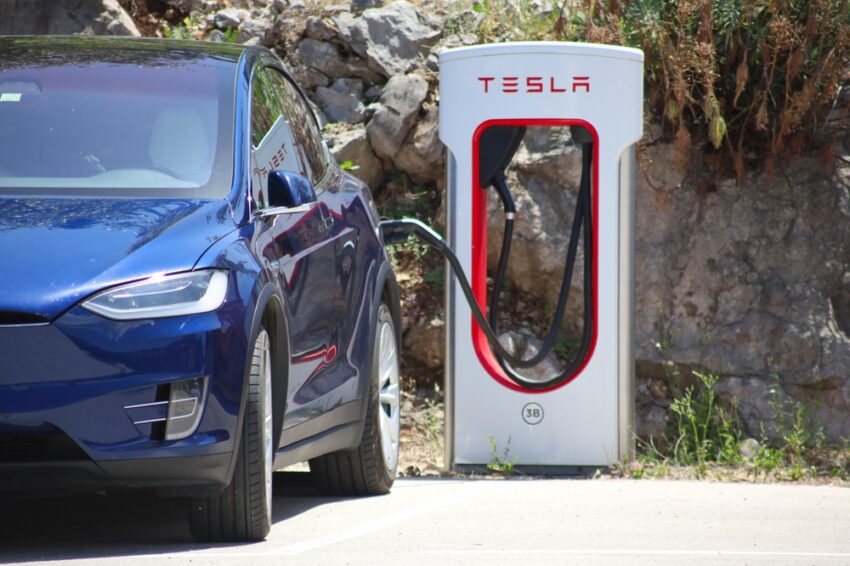
Tesla has staged a dramatic comeback in Europe, posting an 84 per cent surge in March sales as electric vehicles cemented their position as a mainstream choice for the continent’s motorists, new industry figures reveal.
The resurgence of Elon Musk’s car maker, which endured a bruising 2025, comes against the backdrop of a broader electric boom across Europe, where zero-emission models now account for more than one in five new registrations. For small and medium-sized businesses operating fleets, the shift marks a turning point in the economics of going electric.
Data from the European Automobile Manufacturers’ Association (ACEA) shows total new car sales across the continent, including non-EU markets, climbed 11 per cent year-on-year in March to 1.42 million units. First-quarter volumes reached 3.52 million, up 4 per cent on the same period in 2025.
Battery-electric vehicles were the standout performer. March sales leapt 41 per cent to 344,000 units, taking the quarterly tally to 723,000, a 36 per cent increase. EVs commanded 24 per cent of the March market and more than 20 per cent across the full quarter.
Tesla’s own March tally rose 84 per cent, albeit against a weak comparator, with quarterly volumes up 45 per cent to 78,300 units. The American marque’s return to growth comes as Chinese rival BYD continues its aggressive European push. The Shenzhen-based manufacturer, which sells both pure-electric and hybrid models, saw its first-quarter deliveries leap more than 150 per cent to 73,800 units, narrowing the gap on Tesla significantly.
Advertisement
The ACEA credited the boom to consumer-friendly fiscal measures. “The market was supported by robust consumer activity bolstered by new and revised tax benefits and incentive schemes across major European countries,” the trade body said. Rising forecourt prices, driven by the ongoing Iran conflict, are also thought to be nudging buyers towards battery power.
For Britain, however, the figures make sobering reading. The UK’s 22.3 per cent electric share has now been overtaken by Germany, where EVs accounted for 22.7 per cent of the first-quarter market. Germany and France have posted electric growth roughly three times the British rate, raising fresh questions about whether Westminster is doing enough to support SME adoption and the charging infrastructure small firms rely on.
Eastern Europe, long regarded as the region the electric revolution forgot, is finally catching up. Poland, the continent’s sixth-largest car market, reported a near 50 per cent rise in EV sales, though penetration remains below 6 per cent. From admittedly low bases, Croatia recorded a 442 per cent jump in March, with Romania up 148 per cent and Slovenia 142 per cent.
Italy and Spain, traditional laggards among the larger Western European economies, also showed signs of life with EV volumes rising 72 per cent and 46 per cent respectively.
Advertisement
The figures will encourage UK SME owners weighing whether to electrify vans and company cars, but they also underscore a widening gulf between British uptake and that of its major European competitors, a gap that policymakers and business leaders will be watching closely in the months ahead.
Amy Ingham
Amy is a newly qualified journalist specialising in business journalism at Business Matters with responsibility for news content for what is now the UK’s largest print and online source of current business news.
Furniture manufacturer Westbridge has entered administration
15:35, 23 Apr 2026Updated 15:35, 23 Apr 2026
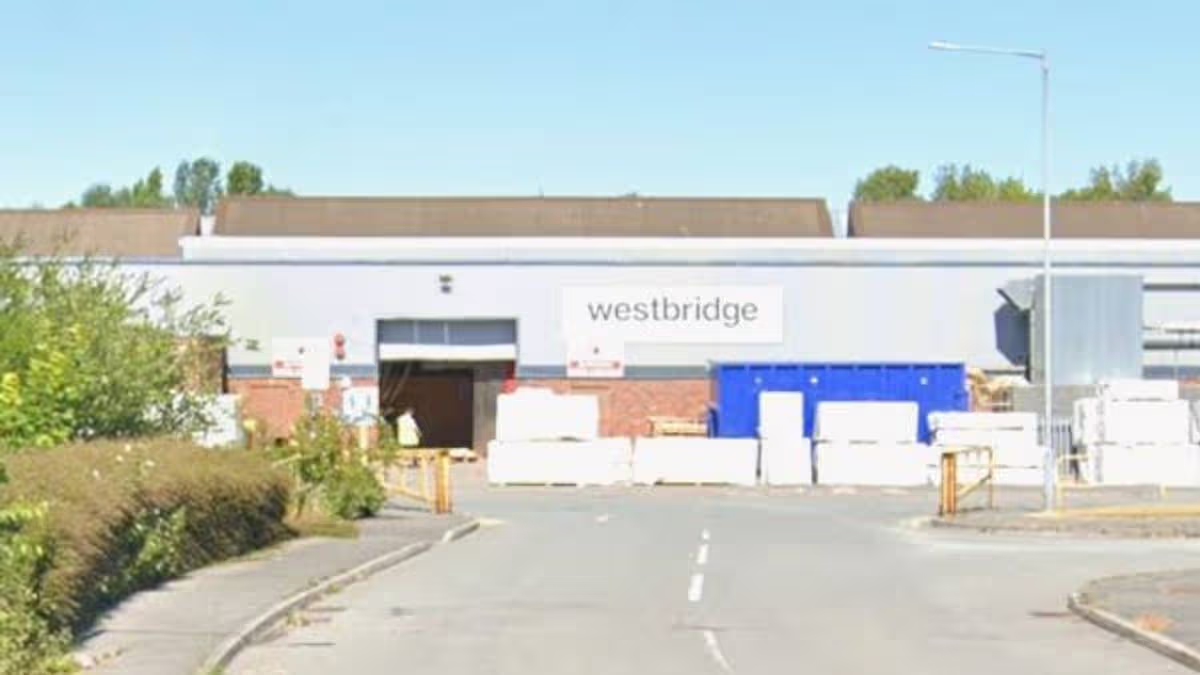
Westbridge.
Nearly 300 workers have lost their jobs at a Welsh furniture firm following its collapse into administration. Westbridge had been a respected furniture designer and manufacturer, providing sofas and other upholstered items to several high street and premium independent retailers.
The company employed just under 300 people at its facility in Holywell, Flintshire. Chris Pole and Will Wright from Interpath were last month appointed joint administrators to Westbridge Furniture Limited and Belfield Leisure Limited, based in Derbyshire.
Advertisement
They had kept the businesses running while evaluating market interest in buying them and preserving the jobs and sites.
However, the joint administrators have now confirmed that 297 staff had been made redundant
They said: “Chris Pole and Will Wright from Interpath were appointed joint administrators following operational disruption, weak trading and the loss of a key customer.
“Since their last update the joint administrators had maintained operations at Westbridge Furniture, while they completed outstanding work in progress and assessed interest in the business.
Advertisement
“Without any viable offers for the business, production ceased on April 2 and the business progressed with a wind-up process. It is with regret that the majority of the business’ 297 remaining staff have since been made redundant.
“The administrators will continue to provide support to those impacted, including supporting them with claims to the Redundancy Payments Service. A small number of staff have been retained to assist the joint administrators in their duties.”
Chris Pole, managing director at Interpath and joint administrator of Westbridge Furniture Limited, said: “The team at Westbridge has shown exceptional professionalism in maintaining production while we explored options.
“Regrettably, as no viable offers for the business were received, it was no longer possible to continue trading and we have had to take the difficult decision to close the business. We recognise this has been a challenging period for staff and I’d like to express my sincere thanks for their commitment.”
Advertisement
The joint administrators have since agreed the sale of the exclusive intellectual property and design rights to the full Westbridge independent product catalogue to sofa and upholstery manufacturer, Whitemeadow. The buyer intends to engage with stockists of Westbridge products to ensure continuity where possible.
Chris Pole added: “The agreement to sell the IP and design rights to Whitemeadow preserves Westbridge’s range for retailers. We wish the Whitemeadow team all the best as it embarks on a development programme to reintroduce those designs to the market.”
The joint administrators are continuing to operate and assess possibilities for Belfield Leisure Limited, which also forms part of The Belfield Group.
Rory Boland, travel editor at consumer publication Which?, says overall cancellations will be a very small proportion of the millions of flights in and out of the UK, and the changes will be targeted on routes where there are multiple flights a day so that passengers can be rebooked on to an earlier or later flight.





























































You must be logged in to post a comment Login