NEW YORK — Bitcoin fell below $78,000 on Thursday, trading at $77,399.99 as of 10:45 a.m. UTC on April 23, down nearly 1% for the day as investors took profits following a strong rally earlier in the month and amid broader uncertainty in global financial markets.
Bitcoin Dips Below $78,000 as Traders Book Profits Amid Renewed Market Volatility in 2026 AFP
The world’s largest cryptocurrency has now given back some of its recent gains, reflecting a classic pattern of volatility that continues to define digital asset trading in 2026. The modest decline comes after Bitcoin briefly pushed toward $82,000 in mid-April, driven by optimism around institutional adoption and improving macroeconomic signals. Thursday’s pullback erased roughly $773.55 from its value in the previous 24 hours, according to major exchange data.
Market analysts pointed to several factors behind the latest move. Profit-taking after the recent surge played a significant role, with many short-term traders locking in gains. Institutional investors, including hedge funds and corporate treasuries, have been active in trimming positions following strong performance in the first quarter. Additionally, rising bond yields and a stronger U.S. dollar created headwinds for risk assets, including cryptocurrencies.
Technical indicators also suggested a period of consolidation. Bitcoin has been trading within a relatively tight range between $75,000 and $82,000 for several weeks, with resistance levels proving difficult to break on multiple attempts. The Relative Strength Index (RSI) has moved out of overbought territory, signaling that a cooldown phase may be underway.
Despite the daily dip, Bitcoin remains up substantially year-to-date in 2026. The cryptocurrency has benefited from several positive developments, including increased spot Bitcoin ETF inflows, clearer regulatory signals in key jurisdictions and growing corporate treasury adoption. Major companies continue to add Bitcoin to their balance sheets, viewing it as a hedge against inflation and currency devaluation.
Advertisement
Institutional interest remains a core driver. BlackRock, Fidelity and other large asset managers have reported steady inflows into their Bitcoin products, though the pace has moderated slightly in recent weeks. The approval and successful operation of multiple spot ETFs in the United States have provided easier access for traditional investors, helping legitimize Bitcoin as an asset class.
On the macroeconomic front, traders are closely watching Federal Reserve policy signals. Expectations around interest rate cuts have shifted several times this year, creating uncertainty that often spills over into riskier markets like crypto. A stronger dollar and higher Treasury yields tend to pressure Bitcoin, as they increase the opportunity cost of holding non-yielding assets.
Geopolitical developments have also influenced sentiment. Ongoing tensions in the Middle East, including disruptions in the Strait of Hormuz, have kept oil prices elevated and added to broader market nervousness. While Bitcoin has sometimes performed well during periods of geopolitical stress as a “digital gold” narrative strengthens, short-term risk aversion has dominated recent trading sessions.
Ethereum and other major altcoins moved in tandem with Bitcoin on Thursday, showing similar percentage declines. The total cryptocurrency market capitalization slipped below the $3 trillion level, reflecting widespread caution among traders. However, on-chain metrics remain relatively healthy, with active addresses and transaction volumes holding steady.
Advertisement
Looking ahead, market participants are focusing on several key events. The upcoming Federal Reserve meeting and any signals regarding monetary policy could set the tone for risk assets in the coming weeks. Additionally, corporate earnings from major technology firms may influence sentiment, as many of these companies have significant exposure to Bitcoin either directly or through their broader tech ecosystem.
Longer-term bulls remain optimistic. Many analysts forecast Bitcoin could test new all-time highs later in 2026 if macroeconomic conditions improve and institutional adoption continues. Predictions range from $100,000 to $150,000 by year-end, though such forecasts come with significant disclaimers given the asset’s volatility.
For retail investors, Thursday’s dip serves as a reminder of Bitcoin’s unpredictable nature. While the cryptocurrency has delivered impressive returns over the past decade, sharp corrections are common even during bull markets. Financial advisors continue to recommend limiting exposure to no more than 5-10% of a diversified portfolio and maintaining a long-term perspective.
Regulatory developments around the world also continue to shape the market. Progress toward clearer frameworks in the European Union and potential updates in the United States have generally been viewed positively, though uncertainty remains in several key Asian markets.
Advertisement
Bitcoin’s halving cycle, which last occurred in 2024, continues to influence supply dynamics. With the daily issuance of new coins reduced, many analysts believe the reduced selling pressure from miners will support prices over time, especially as demand from institutions and retail investors grows.
Despite the current pullback, on-chain data shows strong holder behavior. Long-term investors appear to be accumulating rather than selling, with coins moving into illiquid wallets. This “HODLing” behavior has historically preceded major price advances in previous cycles.
Trading volume on major exchanges remained elevated on Thursday, indicating active participation rather than apathy. Derivatives markets showed mixed signals, with some increase in short positions but overall open interest remaining robust.
For new investors considering entry points, analysts suggest dollar-cost averaging strategies rather than trying to time the market perfectly. The current price level around $77,000 is viewed by many as a reasonable zone for long-term accumulation, though further downside cannot be ruled out if macroeconomic conditions deteriorate.
Advertisement
Bitcoin’s journey in 2026 reflects both its maturing status as a financial asset and its continued sensitivity to broader market forces. As institutions allocate more capital and technology improves accessibility, the cryptocurrency’s role in global finance appears set to expand even further.
While Thursday’s decline may disappoint short-term traders, it provides a healthy reset that could set the stage for the next leg higher. With multiple catalysts on the horizon, Bitcoin remains one of the most closely watched assets in financial markets.
As the day progressed, the price stabilized around the $77,000 level, with traders watching key support zones for signs of a potential rebound. Whether this dip proves to be a minor correction or the start of a deeper pullback will depend on developments in the coming days and weeks.
For now, Bitcoin continues its evolution from speculative curiosity to a recognized store of value, even as it navigates the inevitable volatility that comes with such rapid growth and adoption.
A version of this article first appeared in CNBC’s Inside Wealth newsletter with Robert Frank, a weekly guide to the high-net-worth investor and consumer. Sign up to receive future editions, straight to your inbox.
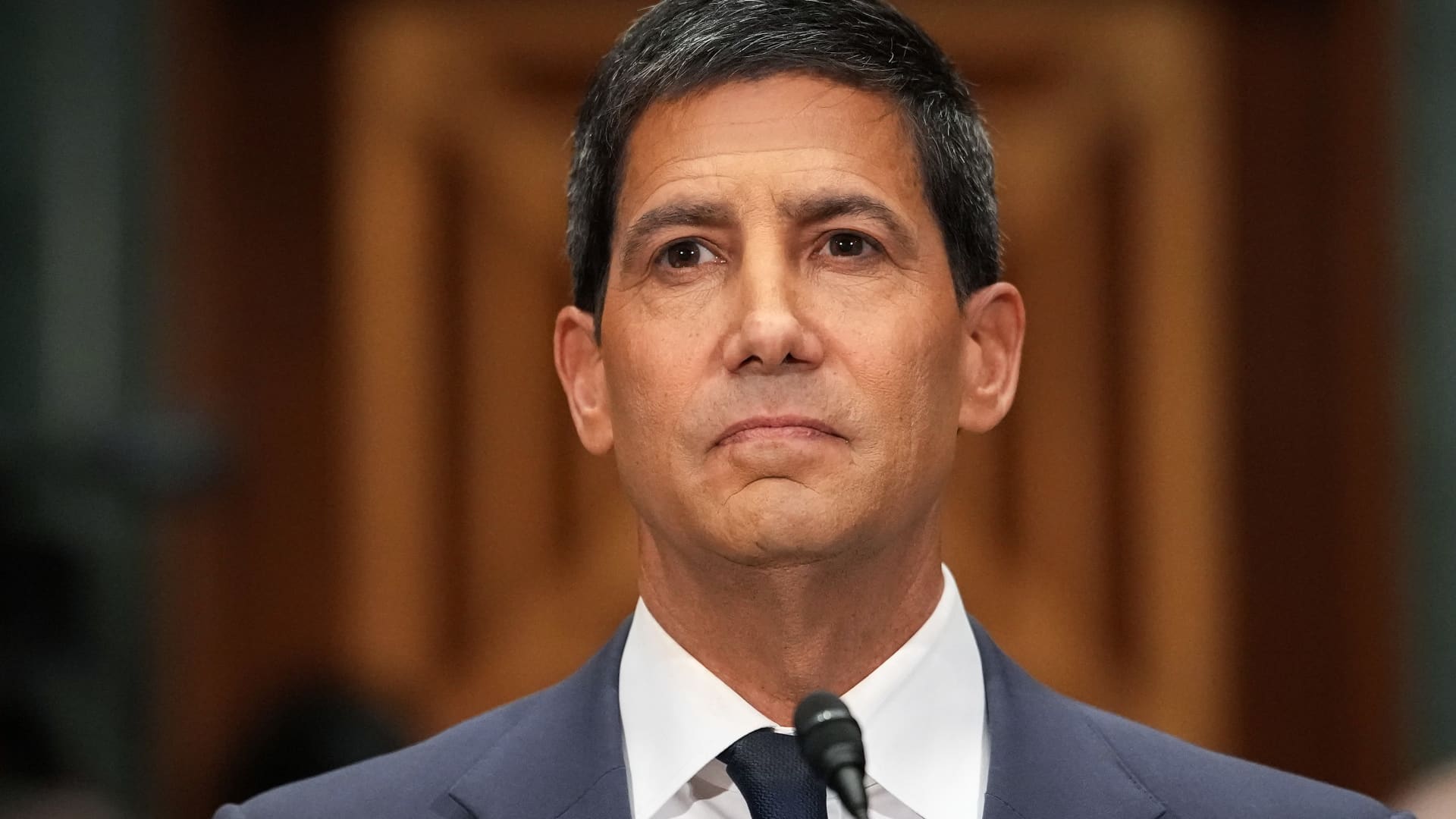
Kevin Warsh can credit more than $100 million of his vast fortune to a lucrative regulatory carveout that favors family office executives and investment professionals, family office attorneys told Inside Wealth.
While single-family offices are widely understood to only manage family members’ assets, a little-known exception allows certainemployees to invest with the ultra-wealthy families they work for.
Warsh’s recent financial disclosures are putting the carveout on display.
Advertisement
The Federal Reserve chair nominee has two stakes worth at least $50 million each in a vehicle called the Juggernaut Fund, according to the filings. The fund is managed by Duquesne Family Office, the personal investment firm of billionaire hedge fund manager Stanley Druckenmiller.
Warsh joined Duquesne as a partner and advisor after leaving the Fed in 2011 and has interests in dozens of other Duquesne entities. The underlying assets in the Juggernaut Fund are not detailed, citing Warsh’s “pre-existing confidentiality agreements” with the firm.
An attorney who has advised family offices for 30 years told CNBC it’s increasingly common for family offices to structure compensation for their key employees in a similar manner to private equity firms. That could include incentive fees from investments or opportunities to co-invest capital, said the lawyer, who spoke on the condition of anonymity in order to speak freely.
Family offices often lend money to these employees in order to fund their capital commitments and forgive them over time or apply future bonuses toward the debt, the lawyer said.
Advertisement
Single-family offices can allow employees to co-invest thanks to a family office rule issued by the Securities and Exchange Commission in 2011. Under that rule, family offices do not have to register as investment advisors so long as they only advise or manage assets for family clients, a category that includes key employees along with family members of the firm founder.
To qualify, key employees must occupy a senior position like director or a executive officer or be involved in the firm’s investment activity, according to the SEC. Investment professionals must have held these duties at the family office or another company for at least 12 months, per the SEC.
“I think the SEC staff at the time was sympathetic to the family office community’s concerns about making investment opportunities and in-house investment staff as robust as possible,” said a lawyer at a New York City firm, who asked to remain anonymous to speak about the matter. “They recognized that attracting and retaining that type of talent required providing executives that level of compensation.”
Lawyers told Inside Wealth that Warsh likely falls under the key employee exception. Duquesne and a representative of Warsh did not respond to requests for comment.
Advertisement
Evan Hall, partner at investment management practice group at Haynes Boone, said the “key employee” category is somewhat flexible, however.
“If you’re an employee of the firm who participates in investment decisions, it doesn’t have to be allinvestment decisions for the family office,” Hall said. “People can game it a little bit. Can a consultant fit in the key-employee definition? It really seems kind of murky, but that’s a line we see a lot.”
Get Inside Wealth directly to your inbox
Warsh has promised to divest his Duquesne-affiliated investments if he’s confirmed as Fed chair, but he has not disclosed how he would do so.
Lawyers who spoke with Inside Wealth said Warsh would have to sell them to the Druckenmiller family or another family client in order for Duquesne to comply with the family office rule.
Advertisement
“I will say that if he doesn’t have friendly partners willing to buy him out, getting out of underlying investments tends to be very difficult,” said another New York lawyer, who similarly requested to remain anonymous to speak candidly. “Otherwise it’s very difficult to get out of private investments.”
At Tuesday’s Senate Banking Committee confirmation hearing, Sen. Elizabeth Warren, D.-Mass, asked Warsh if he would sell those interests back to Druckenmiller.
“Will you disclose how you divest those assets? Or will you just collect a check for $100 million from someone whose whole business is betting on what the Fed will do?” Warren said.
Warsh said he had come to an agreement with the Office of Government Ethics, but did not give specific details about that.
Advertisement
Although Warsh’s nomination and wealth have cast attention on how family offices compensate their employees, lawyer Michael Schwamm, a partner at Duane Morris, said it’s unlikely that it will invite regulatory scrutiny on how key employees are defined or how many can co-invest.
He said the SEC would probably only act if an investment went bad and an employee lost their life savings and came after the firm in a public way.
“I would not be surprised if there are family officers that have tripped the line, but is this something that the SEC is actively gonna go after?” he said. “Not until something happens.”
DALLAS — Texas Instruments Inc. shares skyrocketed more than 18% Thursday after the analog chip giant crushed Wall Street expectations for the first quarter and issued upbeat guidance fueled by surging demand from data centers and industrial customers.
The stock (NASDAQ: TXN) opened at $260.76 and climbed as high as $281.11 in morning trading on April 23, up about $44 from Wednesday’s close of $236.31. Volume surged well above average as investors cheered the strongest quarterly report in years from the Dallas-based semiconductor leader.
Texas Instruments reported first-quarter revenue of $4.83 billion, a 19% jump from the year-ago period and well above analysts’ consensus estimate of around $4.53 billion. Earnings per share came in at $1.68, smashing estimates of $1.36 and marking a 31% increase year-over-year.
“Our results reflect broad-based strength across our markets, particularly in industrial and enterprise systems,” said Haviv Ilan, chairman, president and CEO, in prepared remarks. The company highlighted robust performance in its core Analog segment, which generated $3.92 billion in revenue, up 22% year-over-year.
Advertisement
The Embedded Processing segment also contributed, posting $723 million in revenue, up 12%. Operating profit rose 37% to $1.81 billion, underscoring improved margins amid recovering demand.
Investors appeared particularly encouraged by the company’s forward-looking outlook. Texas Instruments guided for second-quarter revenue between $5.00 billion and $5.40 billion, with a midpoint of $5.20 billion that tops consensus forecasts. EPS guidance of $1.77 to $2.05 also exceeded expectations.
Analysts quickly responded with a wave of upgrades and price target hikes. Bank of America upgraded the stock to Buy from Neutral and raised its target to $320 from $235. Other firms including Baird, Rosenblatt, KeyBanc, Jefferies and Barclays followed suit with significant increases, pushing average targets well above $250.
“This is more than just data-center tailwinds,” one analyst noted. While AI-driven server demand helped, strength in industrial applications and steady automotive recovery played key roles. TI did not cite rising prices as a major factor but signaled potential increases later in the year.
Advertisement
The results come as the broader semiconductor industry navigates a recovery phase. Texas Instruments, long known for its focus on analog chips used in everything from industrial equipment to cars and consumer electronics, has benefited from diversification away from the more volatile personal electronics segment.
Founded in 1930, Texas Instruments remains a cornerstone of American semiconductor manufacturing. The company has aggressively expanded its internal production capacity, supported in part by CHIPS Act incentives. Trailing 12-month free cash flow reached $4.35 billion, up 154% year-over-year.
Shareholder returns remain robust. The board recently declared a quarterly dividend of $1.42 per share, payable in May. Over the past year, TI has returned more than $6 billion to shareholders through dividends and buybacks.
Wall Street’s reaction reflected relief after months of cautious sentiment around cyclical recovery in chips. TI shares had already climbed more than 60% year-to-date entering the report, but Thursday’s move pushed the stock to fresh all-time highs and underscored confidence in sustained growth.
Advertisement
Industry observers point to several tailwinds. Data center buildouts for AI training and inference continue at a rapid pace, boosting demand for power management and signal chain products where TI holds leading positions. Industrial automation, factory upgrades and electrification trends provide additional support.
Challenges remain. The company has faced headwinds in personal electronics and certain automotive segments tied to China. However, management expressed optimism about inventory normalization and broader market recovery. Capital expenditures are expected to moderate slightly, signaling confidence in existing capacity.
Analysts now forecast full-year growth in the mid-to-high teens, with potential for further upside if industrial markets accelerate. Consensus price targets have risen sharply post-earnings, though some caution that valuation — with a forward P/E around 36-40 — leaves limited room for error.
Texas Instruments’ performance stands in contrast to more AI-centric names that have dominated headlines. Its steady, diversified portfolio has historically provided resilience through cycles, a trait investors rewarded handsomely on Thursday.
Advertisement
Looking ahead, the company will host its annual meeting and continue investing in advanced manufacturing. The pending acquisition of Silicon Labs, announced earlier, aims to bolster its position in embedded wireless connectivity, further diversifying its portfolio.
Market reaction extended beyond TI. Peers in the analog and industrial chip space saw gains, while the broader Nasdaq and semiconductor index traded mixed amid rotation and profit-taking elsewhere.
For investors, Thursday’s surge highlights the power of earnings beats in a market hungry for growth stories grounded in real demand rather than hype. Texas Instruments has delivered eight consecutive quarters of year-over-year growth, positioning it well for what many expect to be a multi-year upcycle in semiconductors.
Company executives struck a balanced tone on the earnings call, acknowledging macro uncertainties but emphasizing execution and long-term structural opportunities in electrification, automation and AI infrastructure. Gross margin stood at approximately 58%, reflecting operational efficiency.
Advertisement
As trading continued Thursday morning, shares consolidated some gains but remained up sharply. The move caps a remarkable run for a stock once viewed as defensive and slow-growing. With data centers and industrial markets firing on multiple cylinders, Texas Instruments appears to have caught the AI wave without abandoning its traditional strengths.
94 properties proposed for 1.03 hectacre Stretford site
Hannah Richardson and Local Democracy Reporter
16:00, 23 Apr 2026
A CGI image of the planned housing for the former RAC site in Stretford(Image: MCI Developments and JS Hennessey (1999) RBS)
Plans to build nearly 100 houses and flats on a site once home to an RAC call centre have been unveiled.
Advertisement
The scheme would see 94 properties built across the 1.03 hectacre Stretford site. They would be a mix of houses and flats, planning documents reveal. All the homes would be classed as ‘affordable’.
The land, off Thomas Street, formed part of the old Stretford Gasworks. After the gasworks closed in the 1960s, it was redeveloped into the Longford Trading Estate.
Plans to create the call centre there were approved in 2000. However, the RAC eventually vacated the land, citing difficulties attracting and retaining staff at the Stretford location as a key reason, according to planning documents. The company relocated its offices to Salford Quays.
The land has stood empty since the building on it was demolished in 2024. Now, developers MCI Developments and JS Hennessey (1999) RBS have put forward plans to bring much of it back into use.
Advertisement
Pre-application discussions with Trafford council considered a much larger scheme. Under those plans, 192 homes would have been built over a 3.4h of land, including additional land to the northwest which the National Grid previously used as a gas holder and depot site.
Council officials raised concerns over the loss of so much employment land, however, and the proposal was scaled back to its current size. The developers said this would allow more employment space to be retained and the site to ‘continue to make an economic contribution’.
They added the ‘cost of remediation’ for the western parcel of land would have ‘rendered the site unviable for residential uses’. The companies consider the delivery of affordable housing sufficient to ‘outweigh’ any ‘adverse impacts’ from the loss of the remaining employment space.
A CGI image of the planned housing for the former RAC site in Stretford(Image: MCI Developments and JS Hennessey (1999) RBS)
The scheme would see 46 houses and 48 apartments built. These would range from one- and two-bed flats to three- and four-bed town houses. The apartment buildings would be four storeys in height.
Advertisement
Some 94 parking spaces are proposed for residents, with an additional 25 for parking.
Three communal green spaces are also planned. These include a landscaped open space at the edge of the canal, and a space at the centre of the development with ‘rain gardens’ and ‘ornamental tree planting’.
To find all the planning applications, traffic diversions, road layout changes, alcohol licence applications and more in your community, visit the Public Notices Portal.
PORTHCURNO (ENGLAND): Newly discovered documents have revealed the first telegraph messages and joy when England was linked for the first time with India on 23 June, 1870, via thousands of km of cables laid painstakingly below the seas, reducing time from months to minutes.
The sylvan Porthcurno valley in Cornwall, located on the Atlantic coast 506 km south-west of London, was the unlikely place of a revolution that enabled Britain and its former colonies to communicate with each other.
Museum officials told a visiting PTI correspondent that Porthcurno was the hub of international cable communications from 1870 to 1970, and a training college for the communications industry until 1993.
Now a museum housing rare equipment and details of the history of telegraph, Porthcurno has been granted millions of pounds in funding to develop an international education programme that includes community groups in India.
Among its rare archives discovered last week is a collection of the first telegraph messages sent from Porthcurno and Mumbai (then Bombay).
Advertisement
Live Events
Until that landmark day, communication between England and India was unreliable, and often took months. According to the document, the first message was dispatched on the night of 23 June, 1870, and a reply was received in 5 minutes, which was a technological feat at the time.The message was called a ‘complimentary telegram’ between the ‘Managing Director in London and the Manager in Bombay’.
The first message was from ‘Anderson to Stacey: How are you all?’, to which the reply was: ‘All well’.
The second message from Anderson was: ‘Please ask gentlemen of the press, Bombay, to send a message to gentlemen of the press, New York’.
After several messages that night, including some to the governor of Bombay, from Lady Mayo to viceroy Lord Mayo based in Shimla, and one from the Prince of Wales to the viceroy, a response was received from journalists based in Bombay.
It said: ‘From the Press of India to the Press of America: The Press of India sends salaam to the Press of America. Reply quick’.
Advertisement
The document notes that the viceroy of India had sent a telegraph to the president of the United States and “received a reply which reached him in 7 hours 40 minutes”.
The viceroy’s message, which was read in the American Congress the same evening, was: “The Viceroy of India for the first time speaks direct by telegraph with the President of the United States. May the completion of the long line of uninterrupted communication be the emblem of lasting union between the Eastern and Western World”.
Telegraphic communication with India was first established in 1864 by overland telegraph lines from Europe to the top of the Persian Gulf and then by an undersea cable to Karachi, but the overland section was never satisfactory, prompting efforts to lay more reliable cables below the sea.
The five ships used to lay the thousands of km of cables were the Great Eastern, William Cory, Chiltern, Hawk and Hibernia.
It took six weeks to lay the cables from Suez to Bombay. This was followed by the laying of the final link from Malta to Porthcurno.
It was the first long distance cable ‘chain’, and opened to the public with much jubilation, museum records show.
After the link with India was established, Porthcurno was linked by undersea cables to several other areas across the world.
At its height, it was the world’s largest station with 14 cables in operation. Porthcurno’s telegraphic codename was ‘PK’.
Advertisement
Live Events
During World War II, tunnels were dug by Cornish miners to house an underground building and Porthcurno’s entire telegraph operations. The building today houses the museum and archives that started the communication revolution in the late nineteenth century. Besides 1.44 million pounds funding received in January, the museum this week has been granted 35,000 pounds from the international telecommunications organisation SubOptic to develop an education project with community groups in India, among other countries. Museum officials said the money will fund an international education programme that will benefit users from spring 2013.
It will include online learning resources, including video clips, animations and games that will enable users to discover the science of global cable-based telecommunications, as well as its impacts on local identity, democracy and culture.
Seeking Alpha’s transcripts team is responsible for the development of all of our transcript-related projects. We currently publish thousands of quarterly earnings calls per quarter on our site and are continuing to grow and expand our coverage. The purpose of this profile is to allow us to share with our readers new transcript-related developments. Thanks, SA Transcripts Team
PUNE: The statistical models used by the India Meteorological Department (IMD) had failed to predict all the three droughts in India in the last decade. Though statistical models will still be used for monsoon forecast, the ministry of earth sciences is putting more emphasis on dynamic models.
M Rajeevan of National Atmospheric Research Laboratory said, “the failure to predict the 2009 drought has raised many serious issues. On the other hand, the state-of-the art coupled ocean atmospheric models have sho-wed improved skills in predicting inter annual variability of Indian summer monsoon rainfall.”
He was speaking at the golden jubilee conference of Indian Institute of Climate Change (IITM), Pune, on ‘opportunities and challenges in monsoon prediction in changing climate’. Since 2011, the IITM has used the coupled model for monsoon forecast. Better weather forecast needs data from all parts of the globe. “In every part of the world, farmers are saying that the climate is not as it used to be. Hence, traditional knowledge is also failing. For better prediction of weather, we need observations from all countries. We need super computers of even higher capacities. We need to have knowledge about how to translate scientific progress into concrete applications,” said Michel Jarraud, secretary general, World Meteorological Organisation.



























































You must be logged in to post a comment Login