






Connect with us
DAPA Banner

Business

Californians see big savings, higher homeownership after leaving: study

Published

on

Exodus accelerates as tech titans and companies flee blue states

A growing number of Californians are fleeing the Golden State as the cost of living climbs, and many are coming out ahead financially.

Facing sky-high housing prices and rising everyday expenses, residents are relocating to more affordable areas where the savings can be substantial. On average, movers end up in neighborhoods with monthly housing costs about $672 lower.

Advertisement

After seven years, they are 48% more likely to own a home than those who stay, according to the California Policy Lab’s recent report, “Priced Out: Relocation Amidst California’s Affordability Crisis.”

Los Angeles and Miami buildings.

The skylines of Los Angeles, California, left, and Miami, Florida. (Jeffrey Greenberg/Universal Images Group via Getty Images / Getty Images)

The study analyzed anonymized credit bureau data tracking migration patterns from 2016 to 2025.

“We expected to see people moving to cheaper locations in other states, but our analysis showed the average costs dropping by nearly $400,000 – that’s a key data point for families who want to become homeowners,” Evan White, executive director of the California Policy Lab, told FOX Business.

BILLIONAIRES AND BUSINESSES FUEL GROWING EXODUS FROM BLUE STATES

Advertisement
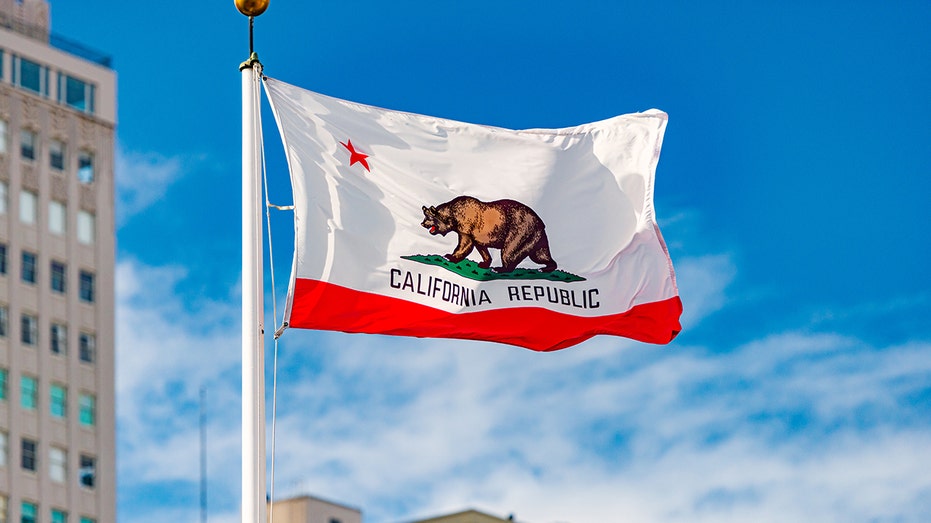
Flag of California Republic in San Francisco.

The California state flag flies on a pole against a blue sky. (iStock)

“The likelihood of becoming a homeowner increased by nearly 50% for those who left California. That’s a big difference,” he added.

Even in its less expensive regions, California remains costly compared to much of the country.

Residents pay about 11% more for groceries, 40% more for gas and 61% more for utilities than the national average, according to the report.

“When people leave California, they move to much more affordable locations,” White said. “This suggests that California’s high costs of living factor into their decision to move, or at least their choice of destination.”

Advertisement

While incomes in destination states are often slightly lower, reduced housing and living expenses tend to outweigh those differences, the study notes.

Most relocations are to nearby, lower-cost states rather than across the country.

RED & BLUE DIVIDE: STATES PUSH COMPETING TAX PLANS AS VOTERS WEIGH CHANGES IN ELECTION CYCLE

Homes Las Vegas

An aerial view shows a residential neighborhood in Las Vegas. (iStock)

Nevada leads as the top destination, followed by Idaho, Oregon and Arizona.

Advertisement

“I was surprised to see that people were most likely to leave California for nearby states, like Nevada and Idaho, and not for Texas and Florida, which gets so much media attention,” White said.

The trend also spans income levels.

A growing share of those leaving come from higher-income areas, though many show signs of financial strain, such as higher debt and lower credit scores compared to their peers.

“What happens to California over the long-term is in the hands of policymakers. Presently, they seem focused on lowering the costs of living, but it takes a long time to ‘turn the ship’ on these issues,” White said.

Advertisement
Real estate agent giving a man the keys to his new home

A person hands a set of house keys to another person. (iStock)

“But people should temper their expectations about what success means. Costs are unlikely to fall dramatically, but we may be able to slow their growth. California will always be more expensive than other states, simply because it is a more desirable place to live.”

FOREIGN BUYERS EYE LUXE LA HOMES AS PROPOSED WEALTH TAX PUSHES BILLIONAIRES OUT OF CALIFORNIA

The migration trend also comes as California lawmakers weigh new taxes targeting the ultra-wealthy, including a proposed 2026 ballot measure that would impose a one-time 5% tax on individuals worth more than $1 billion.

Kevin Brady, former House Ways and Means Committee chairman and an advisor to Americans for Free Markets, previously told FOX Business that steep taxes and heavy regulation are driving businesses and individuals to leave blue states, calling it “the economic story of the decade.”

Advertisement

GET FOX BUSINESS ON THE GO BY CLICKING HERE

“I don’t know why California continues to tax its businesses and people just so brutally,” Brady said. “It’s a beautiful state, it is a dynamic state, but they’re chasing out – not just the wealthy and not just businesses – but their young people.”

Continue Reading
Click to comment

You must be logged in to post a comment Login

Leave a Reply

Business

Which airlines are cancelling flights to UK over jet fuel shortages?

Published

on

Which airlines are cancelling flights to UK over jet fuel shortages?

Rory Boland, travel editor at consumer publication Which?, says overall cancellations will be a very small proportion of the millions of flights in and out of the UK, and the changes will be targeted on routes where there are multiple flights a day so that passengers can be rebooked on to an earlier or later flight.

Continue Reading

Business

DTE Energy plans two-year pause on electric rate increases

Published

on


DTE Energy plans two-year pause on electric rate increases

Continue Reading

Business

Greencroft Bottling grows profits but success stunted by shipping ‘havoc’

Published

on

Business Live

Bosses also blasted a “ridiculous tax” levied on the industry

The Greencroft Two site by Lanchester Group of Companies is now taking shape

The Greencroft Two site by Lanchester Group of Companies is now taking shape(Image: Lanchester Group)

Wine bottling firm Greencroft Bottling has blamed disruption in the Suez Canal for marring what would have been an exceptional year.

The County Durham-based business, which claims to be one of the most sustainable large contract firms of its type “on the planet” said temporary closure of the key waterway in 2024 impacted otherwise brilliant results. Attacks by Houthi Rebels on shipping in the Red Sea caused a drastic reduction in traffic through the canal, which Greencroft says caused “havoc” – leading to millions of pounds of penalties and other costs as huge volumes of wine hit North East ports over a two week period.

Despite the challenges, Greencroft, which is part of the Lanchester Group, managed to increase operating profits from £1.56m to £2.78m in the year to the end of June, 2025. Newly published documents also show turnover at the 300-strong firm increased from £62.5m to £86m.

With a £20m new production facility called Greencroft 2 now completed at its Annfield Plain base, and significant investments in sustainability measures, the firm is now looking ahead to what it expects to be its best ever year. Together with a new semi-automated warehouse, the new production facility – with the potential for 400million litres of capacity annually – is expected to make the company the “most efficient wine bottling and storage operation certainly in the UK if not in Europe”.

Advertisement

Bosses also looked forward to the benefits of bulk wine shipping, which is said to be better for the product and give the business high volumes. The new premises, powered by wind and solar energy, has the potential to handle the equivalent of 28% of all wine sold in the UK.

Writing in the Greencroft Bottling Company Limited accounts, managing director Mark Satchwell said: “Greencroft Bottling Company has had an excellent year with volume increasing by well over 20% which is amazing considering we have had such a turbulent year here in the UK, the new 18,000 an hour filling line in Greencroft 2 has been integrated into the business and working well and we have invested in more automation in our tank facility increasing our efficiency more than 40%.

“We continue to invest in the business with more automation to keep our cost base as low as possible the new Labour Government increased wine duty massively again this year after to huge 20% rise just 12 months ago, this is really harming the whole industry with duty alone moving up by nearly 40% over the last 15 months.

“And we have Extended Producer Responsibility (EPR) to contend with yet another ridiculous tax on all businesses, but the liquor and hospitality industries have been the hardest hit it seems and not surprisingly there is at least one pub a day closing which is really harming the local communities.”

Advertisement
Continue Reading

Business

Earnings call transcript: Acme United Q1 2026 sees EPS miss amid revenue growth

Published

on


Earnings call transcript: Acme United Q1 2026 sees EPS miss amid revenue growth

Continue Reading

Business

Valmont Industries stock reaches all-time high of $488.28

Published

on


Valmont Industries stock reaches all-time high of $488.28

Continue Reading

Business

Primient adds fourth business unit

Published

on

Primient adds fourth business unit

Biosolutions unit joins company’s sweeteners, performance starches and agrifunctionals portfolio.

Continue Reading

Business

Kevin Warsh’s wealth shows how top family office employees can cash in

Published

on

Kevin Warsh’s wealth shows how top family office employees can cash in
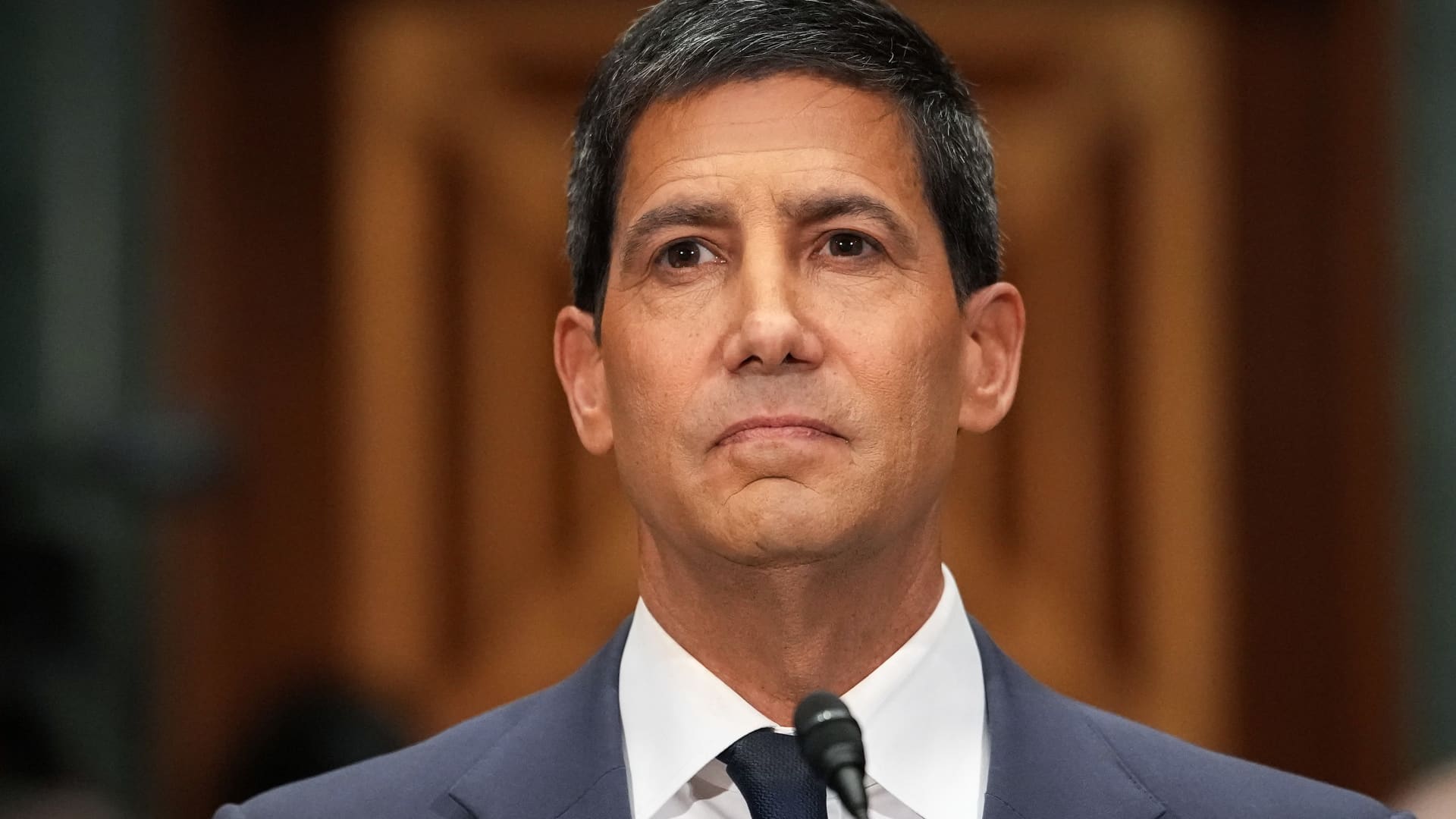
How Trump Fed Chair Nominee Kevin Warsh Could Transform the Federal Reserve

A version of this article first appeared in CNBC’s Inside Wealth newsletter with Robert Frank, a weekly guide to the high-net-worth investor and consumer. Sign up to receive future editions, straight to your inbox.

Kevin Warsh can credit more than $100 million of his vast fortune to a lucrative regulatory carveout that favors family office executives and investment professionals, family office attorneys told Inside Wealth.

While single-family offices are widely understood to only manage family members’ assets, a little-known exception allows certain employees to invest with the ultra-wealthy families they work for.

Warsh’s recent financial disclosures are putting the carveout on display.

Advertisement

The Federal Reserve chair nominee has two stakes worth at least $50 million each in a vehicle called the Juggernaut Fund, according to the filings. The fund is managed by Duquesne Family Office, the personal investment firm of billionaire hedge fund manager Stanley Druckenmiller.

Warsh joined Duquesne as a partner and advisor after leaving the Fed in 2011 and has interests in dozens of other Duquesne entities. The underlying assets in the Juggernaut Fund are not detailed, citing Warsh’s “pre-existing confidentiality agreements” with the firm.

An attorney who has advised family offices for 30 years told CNBC it’s increasingly common for family offices to structure compensation for their key employees in a similar manner to private equity firms. That could include incentive fees from investments or opportunities to co-invest capital, said the lawyer, who spoke on the condition of anonymity in order to speak freely.

Family offices often lend money to these employees in order to fund their capital commitments and forgive them over time or apply future bonuses toward the debt, the lawyer said.

Advertisement

Single-family offices can allow employees to co-invest thanks to a family office rule issued by the Securities and Exchange Commission in 2011. Under that rule, family offices do not have to register as investment advisors so long as they only advise or manage assets for family clients, a category that includes key employees along with family members of the firm founder. 

To qualify, key employees must occupy a senior position like director or a executive officer or be involved in the firm’s investment activity, according to the SEC. Investment professionals must have held these duties at the family office or another company for at least 12 months, per the SEC.

“I think the SEC staff at the time was sympathetic to the family office community’s concerns about making investment opportunities and in-house investment staff as robust as possible,” said a lawyer at a New York City firm, who asked to remain anonymous to speak about the matter. “They recognized that attracting and retaining that type of talent required providing executives that level of compensation.”

Lawyers told Inside Wealth that Warsh likely falls under the key employee exception. Duquesne and a representative of Warsh did not respond to requests for comment.

Advertisement

Evan Hall, partner at investment management practice group at Haynes Boone, said the “key employee” category is somewhat flexible, however.

“If you’re an employee of the firm who participates in investment decisions, it doesn’t have to be all investment decisions for the family office,” Hall said. “People can game it a little bit. Can a consultant fit in the key-employee definition? It really seems kind of murky, but that’s a line we see a lot.”

Get Inside Wealth directly to your inbox

Warsh has promised to divest his Duquesne-affiliated investments if he’s confirmed as Fed chair, but he has not disclosed how he would do so.

Lawyers who spoke with Inside Wealth said Warsh would have to sell them to the Druckenmiller family or another family client in order for Duquesne to comply with the family office rule. 

Advertisement

“I will say that if he doesn’t have friendly partners willing to buy him out, getting out of underlying investments tends to be very difficult,” said another New York lawyer, who similarly requested to remain anonymous to speak candidly. “Otherwise it’s very difficult to get out of private investments.”

At Tuesday’s Senate Banking Committee confirmation hearing, Sen. Elizabeth Warren, D.-Mass, asked Warsh if he would sell those interests back to Druckenmiller.

“Will you disclose how you divest those assets? Or will you just collect a check for $100 million from someone whose whole business is betting on what the Fed will do?” Warren said. 

Warsh said he had come to an agreement with the Office of Government Ethics, but did not give specific details about that.

Advertisement

Although Warsh’s nomination and wealth have cast attention on how family offices compensate their employees, lawyer Michael Schwamm, a partner at Duane Morris, said it’s unlikely that it will invite regulatory scrutiny on how key employees are defined or how many can co-invest.

He said the SEC would probably only act if an investment went bad and an employee lost their life savings and came after the firm in a public way.

“I would not be surprised if there are family officers that have tripped the line, but is this something that the SEC is actively gonna go after?” he said. “Not until something happens.”

Choose CNBC as your preferred source on Google and never miss a moment from the most trusted name in business news.
Advertisement
Continue Reading

Business

Earnings call transcript: FirstService Q1 2026 beats forecasts, stock climbs

Published

on


Earnings call transcript: FirstService Q1 2026 beats forecasts, stock climbs

Continue Reading

Business

Italy stocks higher at close of trade; Investing.com Italy 40 up 0.28%

Published

on


Italy stocks higher at close of trade; Investing.com Italy 40 up 0.28%

Continue Reading

Business

Celestica: The Market Is Missing What Alphabet Just Confirmed

Published

on

Celestica: The Market Is Missing What Alphabet Just Confirmed

Celestica: The Market Is Missing What Alphabet Just Confirmed

Continue Reading

Trending

Copyright © 2025