

Connect with us
DAPA Banner

NewsBeat

Everything you need to know about the Michael Jackson biopic

Published

on

Everything you need to know about the Michael Jackson biopic

The film traces the pop star’s journey during the early days of his career as part of the Jackson 5, the family band which originally consisted of Jackie, Tito, Jermaine, Marlon and Michael, with Randy later replacing Jermaine, who were behind the hit songs I Want You Back and ABC, through to his career as a solo artist.

Source link

Continue Reading
Click to comment

You must be logged in to post a comment Login

Leave a Reply

NewsBeat

Six Cambridgeshire restaurants named best in the region by Muddy Stilettos

Published

on

Cambridgeshire Live

These six restaurants are the best of the best according to locals.

Six restaurants across Cambridgeshire have been named the best in the region. Muddy Stilettos recently revealed the finalists for its 2026 regional awards with many popular food spots around the county making the final list after being nominated by the public.

Advertisement

From Michelin star restaurants to more affordable food spots, Cambridgeshire is lucky to have a huge range of cuisines on offer. The list of restaurants include some new places as well as familiar favourites highlighting the best the county has to try out.

You can vote for your favourite restaurant on the Muddy Stilettos website. Here are all six of the restaurants in Cambridgeshire that are finalists for 2026.

Ancient Shepherds

Location: 5 High St, Fen Ditton, Cambridge CB5 8ST

In Fen Ditton, the Ancient Shepherds is run by the Michelin-star chef, Mark Poynton, who also has a restaurant in Caistor St Edmund. The restaurant is in a Grade II listed building originally built in 1540 as cottages.

Advertisement

The Ancient Shepherds offers a three, five, and seven-course tasting menu with different dishes made using British ingredients. The restaurant also has five rooms that each have individual entrances and “extra little touches” like handmade chocolates.

Margaret’s

Location: 18 Chesterton Rd, Cambridge CB4 3AX

Sam Carter and Alex Olivier are no strangers to the Cambridge food scene. Margaret’s gets its name from a regular from the couple’s other spot in the city, Restaurant 22, who visited for lunch every week.

The restaurant offers a seasonal set menu that uses “local ingredients from a range of brilliant suppliers”. The menu currently features dishes such as rosemary and sea salt focaccia served with different spreads and dips, broccoli soup with blue cheese and hazelnut, and Suffolk chicken with winter truffle and artichoke.

Advertisement

Midsummer House

Location: Midsummer Common, Cambridge CB4 1HA

Midsummer House is in a great spot right next to the River Cam on Midsummer Common. The restaurant could be a good spot for a celebratory meal, and, if you are lucky, you could spot some of the cows grazing on the common throughout spring and summer.

Midsummer House was awarded its first Michelin star in 2002 and its second in 2004 and has been able to hold onto them ever since. There are three set menus to pick from depending on what kind of experience you are looking for.

Restaurant 22

Location: 22 Chesterton Rd, Cambridge CB4 3AX

Advertisement

Found just down the road from their other restaurant, Margaret’s, Restaurant 22 has been in the city of Cambridge since 2018. If you live in the city and regular walk down Chesterton Road, you probably have passed the restaurant but might not have noticed, as the outside looks much like other homes on the street.

Restaurant 22 has a lunch menu for £65 that features three different courses that can be paired with the recommended wine. You can also opt for the short tasting menu or the full tasting menu for more special occasions.

The Teller’s Table

Location: The Old Bank, 2 The Pavement, St. Ives PE27 5AD

The Teller’s Table might have only just opened in February of this year but it is already proving to be a popular choice for residents of St Ives. The restaurant is open all day for whatever sort of food you fancy including a brunch menu with sweet and savoury options.

Advertisement

The à la carte menu is “rooted in modern British cooking and shaped by Mediterranean influence” and is available at lunch and dinner. The restaurant is also known for its Teller’s flatbreads that you can get topped with a range of items.

Vanderlyle

Location: 38 Mill Rd, Petersfield, Cambridge CB1 2AD

This restaurant can be found on the busy Mill Road, which is known for being a popular spot for thriving food businesses. Vanderlyle works “directly with farmers, growers and producers” to create “ingredient-centric dishes”.

The restaurant’s tasting menu is completely “plant-led” with no meat or fish in any of the dishes. Vanderlyle’s menu often changes depending on what produce is available throughout each season but features things like a salad of seasonal produce, hay baked cauliflower, and a darkroom Peruvian chocolate delice.


Advertisement

Source link

Continue Reading

NewsBeat

How scientists changed their view of insomnia

Published

on

How scientists changed their view of insomnia

Insomnia may have been torturing humanity since ancient times, but over the last 20 years scientists have made progress in their understanding of chronic sleep deprivation.

Today, sleep deprivation is one of the most widespread reported psychological problems in Britain, with about a third of the adult population in England reporting frequent insomnia symptoms.

Insomnia rarely occurs on its own, which brings us to one of the biggest changes scientists have made in our understanding of chronic sleep deprivation. The vast majority of people with insomnia often have other mental and physical health conditions, like diabetes, hypertension, chronic pain, thyroid disease, gastrointestinal problems, anxiety or depression.

In its diagnostic history, insomnia coupled with another illness or disorder was called secondary insomnia. That meant that insomnia was considered a consequence of those other underlying conditions. As such, until fairly recently clinicians did not generally attempt to treat secondary insomnia.

Advertisement

But in the early 2000s, both research and clinical practice evidence started to indicate that this approach was wrong. Scientists argued that insomnia could precede or long survive a primary condition. Abandoning this distinction between primary and secondary insomnia was a major advance in acknowledging that insomnia frequently was an independent disorder, requiring its own treatment.

What’s more, researchers have been accumulating strong evidence that helping people with their sleeping problems could actually lead to improvements in their other health conditions. Chronic pain, chronic heart failure, depression, psychosis, alcohol dependency, bipolar disorder, PTSD, can all improve for patients if they address their sleeping problems.

Who gets insomnia?

Over the past two decades, we have acquired more rigorous and international data illustrating how ubiquitous insomnia is. Insomnia affects almost everyone, though women, older people, and people of lower socio-economic status are more vulnerable to it.

These groups experience a combination of biological, psychological and social risk factors that expose them to long-term sleep-disruption. For example, women often experience acute hormone fluctuations, pregnancy and birth, breastfeeding, menopause, domestic violence, caregiving roles, higher prevalence of depression and anxiety – all of which can lead to more opportunities for prolonged sleep disruption.

Advertisement

Some current issues in insomnia research include the need to understand different types of insomnia symptoms, and their relationship to health and performance risks. For example, there is evidence that difficulty initiating sleep (as opposed to difficulty staying asleep, or waking up too early in the morning) is associated with an increased risk of depression. Similarly, scientists still have questions on changes in things like brain activity, heart rate, or stress hormones that accompany insomnia. In common with all other mental health disorders, we are still yet to find biomarkers of insomnia.

However, research has helped us understand some things people can do to prevent insonmia episodes progressing to chronic insomnia, which is harder to treat. When insomnia symptoms happen more nights than not, and last for more than three months, then a diagnosis of insomnia disorder, or chronic insomnia, can be made.

Insomnia keeping you up?
Lizavetta/Shutterstock

One of the most common and harmful habits that develop during periods of insomnia is lying in bed, trying to sleep. Scientists have learned that lying in bed awake leads to perpetual cognitive arousal and, in time, it teaches your brain to stop connecting bed and being asleep.

Thus, if you cannot sleep at night, get up and do something else absorbing, but calming – read, write a list for the following day, listen to calming music or do some breathing exercises. When you feel sleepy again, get back to bed. If you are tired the following day, a well-placed short nap is fine, in the afternoon, for a maximum of 20 minutes. However, one must be careful with daytime sleeping, as it may reduce sleepiness at nighttime, and going to sleep may become even more difficult.

Advertisement

For those who do struggle with insomnia, there are effective treatments recommended. The story of the profound changes from secondary insomnia to insomnia disorder speaks of the power of clinical diagnosis in providing a pathway to treatment.

Cognitive behavioural treatment for insomnia (CBTI) is a package of techniques designed to maximise sleepiness at bedtime. It involves structured steps which aim to modify behaviour and mental activity. There are some predictors of treatment success: shorter duration of insomnia symptoms (years, rather than decades), less depression or pain and more positive expectations towards CBTI. But CBTI is broadly effective across all groups of people with insomnia.

Even so, only a tiny proportion of people reporting insomnia symptoms seek medical help. People may consider insomnia symptoms trivial or manageable, or they may be unaware of the options. It may also be due to the unavailability of treatment options. CBTI remains largely unavailable in clinical practice, mainly due to clinicians’ unfamiliarity with the treatment programme, and limited funding.

This pushes patients towards sleeping tablets, which are not an acceptable long-term solution. Sleeping tablets are associated with significant cognitive and motor impairment, increased risk of falls, dependence, tolerance and withdrawal symptoms, daytime lethargy, dizziness and headaches.

Advertisement

The main truly “new” class of sleeping pills are the dual orexin receptor antagonists (DORAs), which have shown a safety profile in many ways better than the traditional sedatives, especially around dependence concerns. But DORAs are not risk free or “mild” pills. They are relatively new to the market, first approved in the UK in 2022. So we lack long-term data to assess their safety for long-term use in people with insomnia.

A decent alternative is online self-delivered CBTI, on platforms such as Sleepful, which are free to access.

We have made great strides in sleep medicine over the past 20 years for people with insomnia, we just need to realise the potential of such profound changes by providing the right help for those suffering with it.

Advertisement

Source link

Continue Reading

NewsBeat

Omagh man who broke back and neck in horror holiday motorbike crash stranded in Bali

Published

on

Belfast Live

Andrew Patterson was flung off a hired bike breaking a cervical vertebra in his neck

A family are raising money to bring back an Omagh man who broke his neck and back in Bali. The horrific crash occurred when Andrew Patterson, 29, was “flung off” a hired bike leaving him with ‘significant’ injuries.

The tree surgeon has lived in Melbourne, Australia since 2024. He had travelled to the Asian country with a friend for a long weekend break from Friday until last Sunday, The Mirror reports.

Advertisement

The accident happened in Canggu, on the south-west coast of Bali. The duo were riding on separate hired bikes on Sunday evening when Andrew misjudged a corner, with the impact of him braking flinging him over his handlebars and into a road sign.

He suffered severe cuts across his face and has also badly injured the right side, shattering both his cheek and eye socket, as well as breaking his nose. Andrew has lacerations on his left hand which, alongside his face, will require skin grafts.

He also broke cervical vertebra in his neck and a thoracic vertebrae, in his middle back. His family have now started a GoFundMe to help raise money to help pay for treatment, and potentially bring him back home to Omagh.

His sister Andrea Marsella, 41, who lives in Omagh, said: “From what we have been told when he approached a corner he didn’t realise it was so tight and was flung off when braking. “Because he hit a road sign, he has suffered significant skull and facial trauma which requires reconstructive surgery and skin grafts.

“He has also injured his left hand, which will need skin graft surgery, and he has also fractured a vertebrae in his neck and middle back. Luckily, he doesn’t need surgery on his back and neck, but it will be a long recovery process.

“At the moment, we are facing a lot of uncertainty. He loves the outdoors and being active, so this has come as a huge shock to everyone who knows him. It’s absolutely heart-breaking seeing him in so much pain and go through this trauma so far from home.” Andrea said Andrew’s brother-in-law Neil Moody, 48, also from Omagh, is flying out so they can “be by his side” and to help the family understand the extent of his injuries. She said: “We are just so happy he is alive, as of course it could have been a lot worse. Andrew is happy he hasn’t lost movement after breaking his neck and back, but it is now a long road to recovery for him. “As you can imagine, the costs are already mounting including emergency medical treatment, multiple surgeries, and potentially bringing Andrew home safely once he is stable. We are still trying to understand how much it will all cost but we know it will be significant given the amount paid to the hospital for his scans and care.

“We’re asking for any support you can give during this incredibly difficult time. Andrew is a much-loved brother, son, uncle and loyal and genuine friend.”

Advertisement

Want to see more of the stories you love from Belfast Live? Making us your preferred source on Google means you’ll get more of our exclusives… To add Belfast Live as a preferred source, simply click here.

Source link

Continue Reading

NewsBeat

Call for tougher firearm checks to tackle violence against women in NI

Published

on

Belfast Live

Thirty women have been killed since 2020 in Northern Ireland

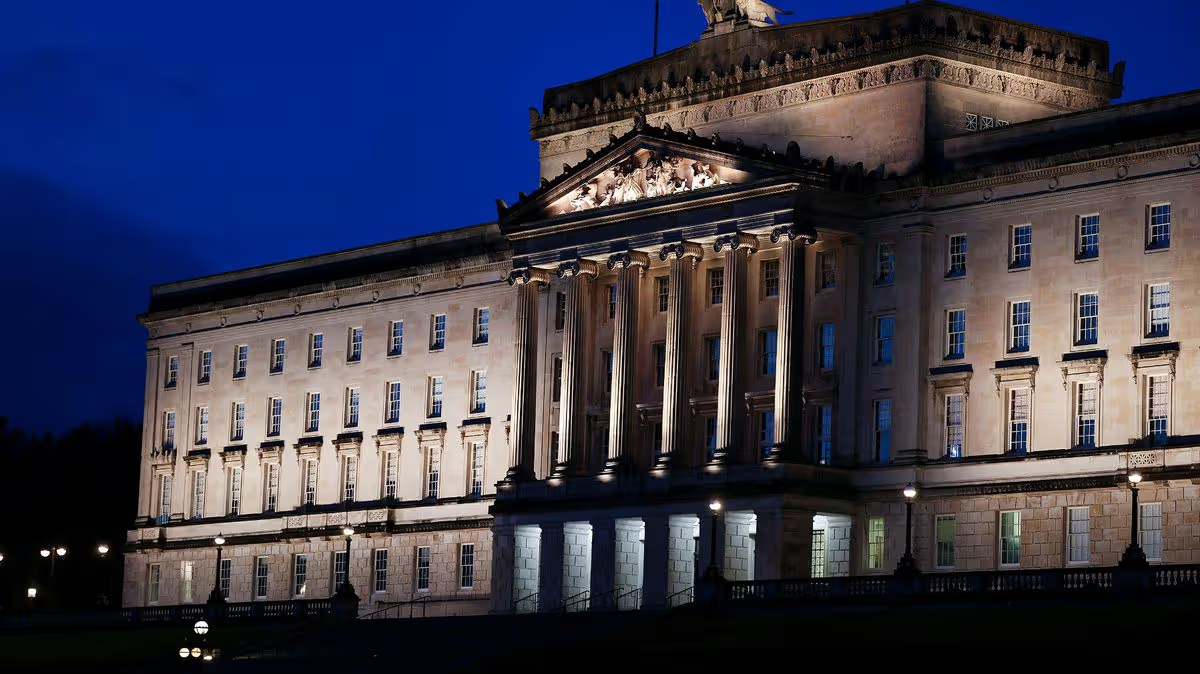
There should be more checks on gun owners in an effort to tackle violence against women and girls, MLAs have heard.

Advertisement

Elaine Crory, a women’s sector lobbyist for the Women’s Resource and Development Agency (WRDA) said coercive control by men can be “exacerbated” if there is a firearm in the household.

Thirty women have been killed since 2020 in Northern Ireland, seven in the period since the Stormont Executive launched their violence against women and girls strategy in 2024.

Ms Crory launched a report titled “The Role of Firearms in Violence Against Women and Girls in Northern Ireland” which called for a number of measures to bring Northern Ireland in line with guidelines in the rest of the UK.

They include requiring applicants for a firearms licence to provide at least two referees; enhanced disclosure including all previous convictions and offences, cross referenced with any reports of domestic abuse with a current or past partner; and new “full cost recovery” fees for firearms and shotgun certificates, significantly increasing costs for licences and renewals.

Advertisement

Ms Crory told MLAs on the Justice Committee there are currently around 53,000 active licences in Northern Ireland corresponding to over 100,000 firearms and 97% of firearm owners are men. However, due to the ongoing impact of paramilitaries in the region and general criminality there is “an unknown quantity of firearms actually circulating”.

Ms Crory said for women facing domestic abuse at the hands of a man “the coercive control is intense, and so we can only imagine that’s exacerbated if there’s a weapon in the house”.

Chairman of the Justice committee, DUP MLA Paul Frew, said he had “concerns” about the research as a representative of the rural constituency of North Antrim and said the police are “super sensitive around this”.

“If there’s a pink flag raised by a member of the public, ringing Crimestoppers, or 999, or 101, those firearms, 99 times out of 100 will be lifted before any other conversations had,” he said.

Advertisement

“And so I do think that at the minute, I would be content out there with regards to the regime, the way the police respond, and quite legitimately, I must say, when there is flags or concerns.”

He added: “There’s real passions going on here and people love their sport and their guns. I see the current licensing system as one, as being really robust.”

Ms Crory said the licensing regime as it stands “considers the fitness, physical and mental of and it considers that person’s criminal record, but it doesn’t consider do they live with somebody who perhaps has reported domestic abuse”.

SDLP MLA Patsy McGlone said Ms Crory wouldn’t want “a message going out, you’re demonising legitimate firearms holders”.

Advertisement

“Many of whom are passionate about their sports, passionate about their guns, passionate about what they do, and also are among the most law abiding in society because they do not want to jeopardise their sport,” he said.

The researcher responded that her report has “no intention to demonise anyone” and the majority of licence holders “have never so much as squashed a fly on purpose”.

“The issue is, are there loopholes that are allowing people to fly under the radar, I suppose, and use to cover the fact that we have a system by which you can acquire a firearm legally, to hold in their in their possession, the means to coercively control their partner or children, in many cases, in some of these reports, for decades and centuries,” she said.

The rate of violence against women and girls in Northern Ireland has been compared to other countries in Europe and across the UK.

Advertisement

Sinn Fein MLA Emma Sheerin said “the real cause of femicide here is misogyny, the hatred of women” and asked what impacts of being a “post-conflict society and the normalisation of violence has had on that”.

Ms Crory said she would love to have “the force of the university and the reach of the university and funding of the university to do a piece of work on this” and her resources were limited to the “cost of printing reports”.

For all the latest news, visit the Belfast Live homepage here and sign up to our daily newsletter here

Source link

Advertisement
Continue Reading

NewsBeat

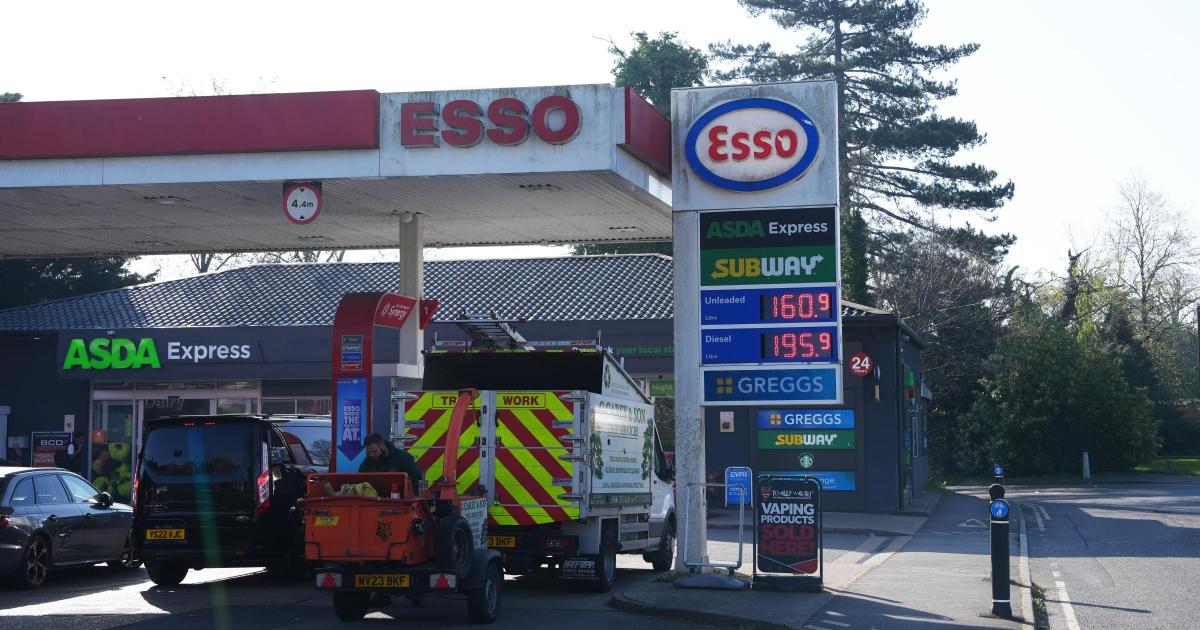
Petrol price secrecy sparks concern ministers warn of market turmoil

Published

on

Petrol price secrecy sparks concern ministers warn of market turmoil

The Department for Energy Security and Net Zero said it could “neither confirm nor deny” whether documents on petrol and diesel prices exist.

The approach is usually reserved for national security matters, making its use in a cost of living issue highly unusual.

Why the secrecy?

Officials say even confirming the existence of briefings could spark:

Advertisement
  • Mass buying at petrol stations
  • Strain on fuel supply chains
  • Volatility in financial markets

In its response to a freedom of information request by the Press Association, the department claimed that even acknowledging such material could prompt “mass purchasing” at the pumps and “economic damage” to the UK.

Official figures show UK inflation has risen again, driven in part by a sharp increase in petrol and diesel prices linked to the Middle East conflict.

Responding to a request for briefing notes, submissions or summary papers prepared for ministers on changes in fuel prices in February and March, the department said: “The department considers that confirming or denying that information is held would cause instability and economic damage to the wider economy.

“UK petrol and diesel prices, and financial markets more broadly, are very sensitive to the release of any information that relates to factors affecting UK retail fuel prices.

“Confirming or denying that information is held relating to factors affecting fuel prices would cause widespread concerns over security of supply and lead to the mass purchasing of fuel, further distorting fuel prices and putting strain on fuel supply chains.

Advertisement

“This information would also impact the internationally traded crude oil price, causing volatility in UK financial markets and impacting inflation.”

The warning comes as inflation rises again, driven in part by increasing petrol and diesel costs linked to tensions in the Middle East.


Recommended reading:


Echoes of past fuel shortages

The situation has drawn comparisons to the UK fuel supply crisis 2021, when fears of shortages led to long queues and empty pumps across the country.

Advertisement

Officials appear keen to avoid a repeat, even if it means limiting what they disclose publicly.

With fuel prices rising and global uncertainty continuing, questions remain over how serious the situation could become and whether withholding information will calm fears or fuel speculation.

Source link

Advertisement
Continue Reading

NewsBeat

Colm Cavanagh: GAA’s No.1 kicker could have made it in the NFL, he just needed the opportunity

Published

on

Belfast Live

The game in Clones was a typical ‘new-rules’ game with a characteristic I highlighted a few weeks back

Advertisement

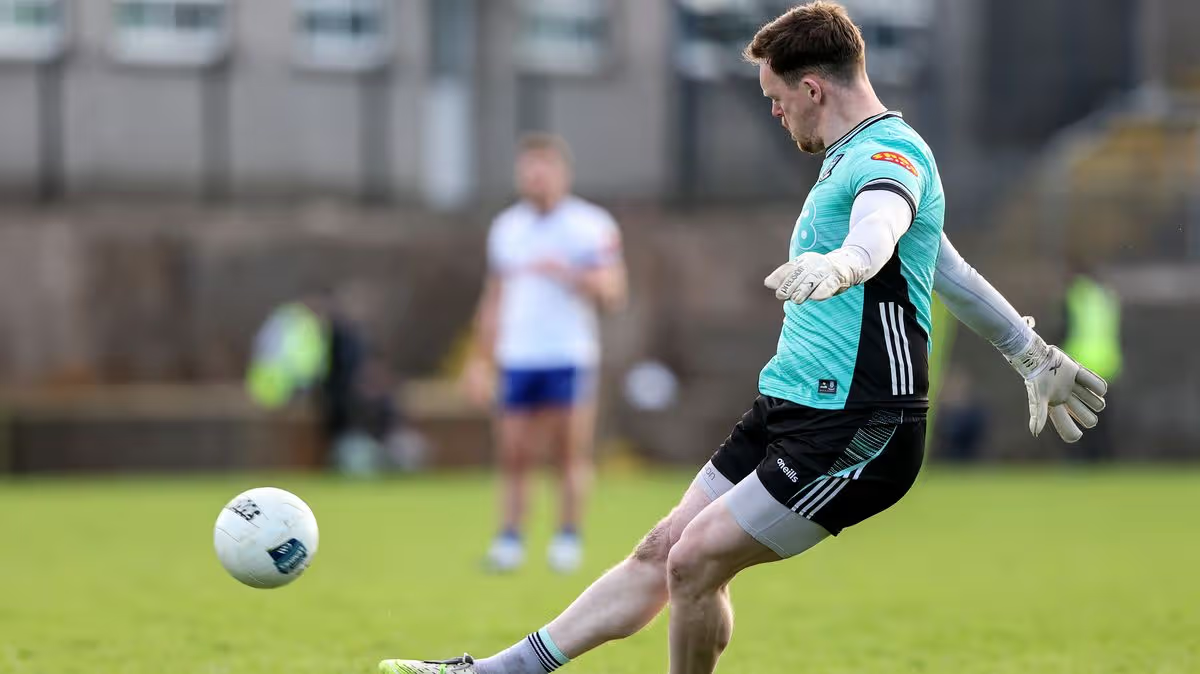
In a sport of fine margins, Rory Beggan is one of the great outliers in Gaelic football. I have no doubt the big Scotstown man would have been a success in the NFL – if he had been given the chance.

Monaghan beat Cavan by seven points last weekend in the Ulster SFC quarter-final. Goalkeeper Beggan scored three 45s and a two-point free. He also saved a penalty and made a massive one-on-one stop in the second half.

Gabriel Bannigan’s men would rightly point to being the stronger team in play, but the figures above show they owe their goalkeeper for getting the win.

The scores he chalks up are not stat-padders, they are the hardest dead ball conversions in the game. There are plenty of teams, including a few at the top table, who do not have a reliable 45-taker.

Advertisement

Beggan has never been one to get ruffled, and even after a miss, you would always back him with complete confidence to convert his next kick. He proved that with two 45s at the end of the game to help kill Cavan off in Clones.

Supporters unrealistically expect kickers to be automatic, but as can be seen from Wicklow’s Mark Jackson missing six kicks against Dublin, and Ethan Jordan’s dead-ball struggles against Armagh last week, it’s just not that easy.

To nobody’s surprise, I’m not a voice of authority on NFL Special Teams requirements. But my gut-feeling, having watched the sport frequently over the last decade or so (and having seen quite a few bad kickers), is that Rory had the technical and mental capabilities to make it in the US. He really just needed the opportunity to prove himself over a few months within a team’s practice squad.

I’m sure there were many in Monaghan who were gutted that he didn’t get that chance, but they will no doubt be thanking the heavens that he continues to tog out for the Farney.

Last Sunday’s game in Clones was a typical ‘new-rules’ game with a characteristic I highlighted in my column a few weeks back. The stronger team, aided by the availability of more space due to the three-up rule, races into a heavy lead and essentially kills the atmosphere. The foot is taken-off the pedal and eventually the opponent finds their way back into the game via goals and/or two pointers.

Dessie Ward kicking four points from centre back may now direct Derry manager Ciaran Meenagh and his team back to the drawing board.

Ward’s two-pointer in the first half should be studied by many playing the game, especially those players who look to get themselves two-point opportunities. He receives the ball seven or eight yards from the arc, he then moves with intent to his left side, taking a solo with his weaker left foot. Then, once the defender does commit, he jinks inside on his right.

Advertisement

Ward is running on his right and, while still three or four yards behind the arc, takes his shot when he’s at the most comfortable part of his stride – rather than trying to get as close to the arc as possible.

That means he gets the best possible contact with the ball, and is not under pressure from an opponent. It shows great technical quality, but also real in-game intelligence.

I notice too many players hanging right on the edge of the arc waiting for the ball to be circulated and it’s the most obvious tell sign for a defender to be alert.

Derry dealt with Antrim as expected, and whilst there was an obvious tactical surprise from Meenagh in selecting Eoin McEvoy at midfield and pushing Conor Glass to 11, I refuse to read anything into it as far as trying to work out what they are planning for Monaghan.

Advertisement

Ward’s performance will be central to their thinking now. It wasn’t the most high profile weekend of football, but there was a lot to chew the fat about. Wspecially when you’re a pundit who recently tipped Meath to win the Leinster title.

To be fair, I was far from the only one, and while I didn’t feel Westmeath would be a walk-in-the-park, I was fully sold on the idea that Meath were on their way to being a top-eight team.

Make no mistake about it, this could be a serious setback for the Royal project. When I think of two Ulster teams who have been in similar paths over the last half-decade, Armagh and Derry – both had a number of disappointing defeats.

But falling short to a Galway or Kerry, in the manner those teams did, will not cause a panel to lose faith in itself in the way that losing a Championship game to Westmeath would.

Advertisement

I really hope that this Meath team can bounce back in the All-Ireland series as there were signs that they could not only build an All-Ireland contending team, but a team that would excite neutrals up and down the country.

Crucial weekend ahead

Looking forward to this weekend’s game, whilst Armagh will have always been approaching the clash with Fermanagh with confidence, the results of the weekend past will perhaps give them some positive reinforcement, should it be needed, on where they are.

In the context of Meath’s shock defeat and Dublin’s narrow win against a Division 4 side, there’s no need for Armagh to be harbouring pessimism about their prospects. I expect McGeeney will take the opportunity to give some of those who missed out in the prior game a chance to put themselves in contention to start the semi-final.

Advertisement

This will be in no-way disrespectful to Fermanagh, as out of all of the contenders for Sam, Armagh is probably the team with which there is the least public consensus as to what their strongest 15 is.

It is difficult to put forward any plausible scenario in which Fermanagh can pose them any problems. They have shown in the past that they can be troublesome underdogs in Ulster but having finished bottom of Division 3 there is little the panel can grasp to that can give them belief and I feel the best they can ask for here is a reasonable performance that gives them a platform to attack the Tailteann Cup with confidence.

Whilst Down finished at the opposite end of the Division 3 table to Fermanagh I am almost as pessimistic about their chances. Jim McGuinness’s team look as ruthless as they’ve ever been.

They lost to Cork in an All-Ireland group stage game in 2024, which was not a do-or-die scenario, but that result aside their championship defeats in both McGuinness’s tenures have been exclusively inflicted by the top-tier teams.

Advertisement

They are the most reliable team in the country to hit the required standards of a championship game and that falls to the manager. Kerry may still have the highest ceiling, but Donegal have the highest floor, and for that reason I don’t see Down tripping them up.

Want to see more of the stories you love from Belfast Live? Making us your preferred source on Google means you’ll get more of our exclusives, top stories and must-read content straight away. To add Belfast Live as a preferred source, simply click here.

Click here to sign up to our sport newsletter, bringing you the latest sports news, headlines and top stories

Source link

Advertisement
Continue Reading

NewsBeat

What a ‘post-antibiotic era’ could mean for modern medicine

Published

on

What a ‘post-antibiotic era’ could mean for modern medicine

Antibiotics are one of the greatest breakthroughs in medical history. They turned once-deadly infections into treatable illnesses and made modern healthcare possible. But bacteria are changing, and some of the drugs we have depended on for decades are becoming less effective.

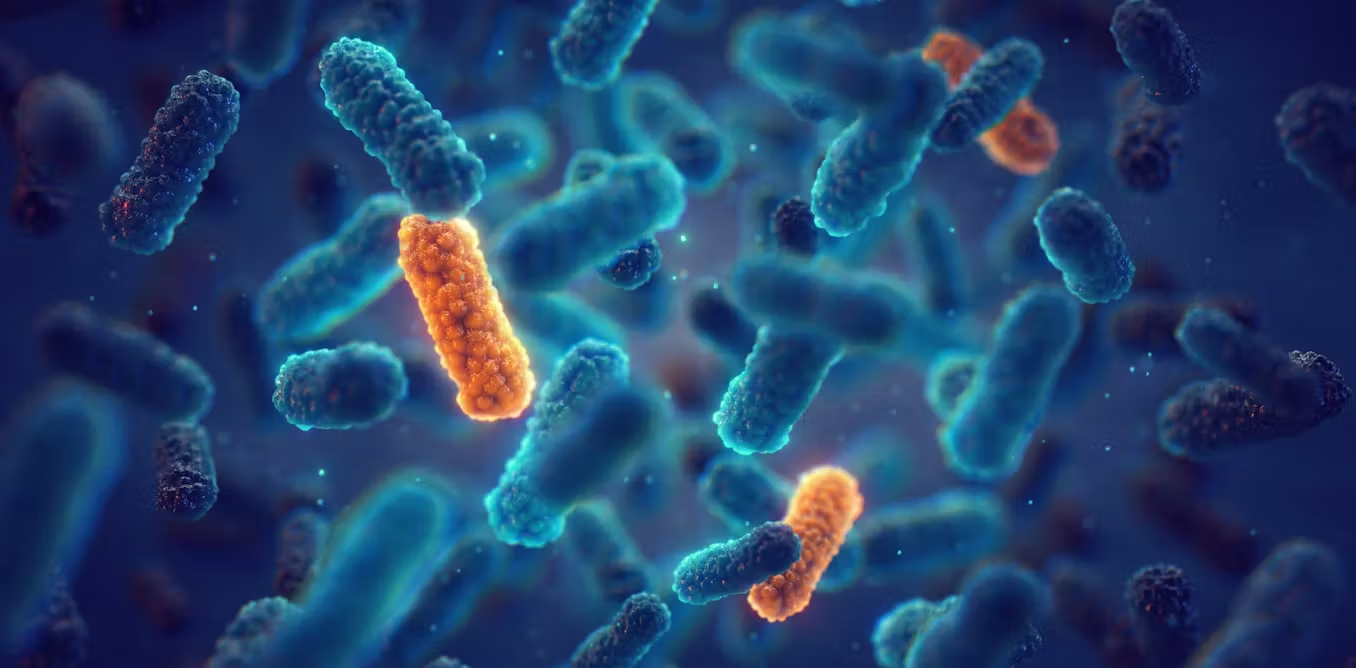
Around the world, infections are becoming harder to treat. This problem is known as antimicrobial resistance. It happens when bacteria evolve ways to survive medicines designed to kill them. It is estimated that drug-resistant infections already cause about 1.27 million deaths every year worldwide.

The World Health Organization has warned that we may be moving towards a “post-antibiotic era” in which common infections once again become dangerous, and even routine injuries or procedures carry serious risk.

A century ago, that was normal. A cut from gardening, a sore throat or childbirth could turn into a life-threatening infection. Doctors had few effective treatments, and infectious diseases such as pneumonia, tuberculosis and diarrhoea disease were among the leading causes of death. The arrival of antibiotics changed that dramatically.

Advertisement

Penicillin, discovered by Alexander Fleming in 1928, marked the beginning of one of the most important revolutions in medicine. Before antibiotics, tuberculosis was one of the world’s deadliest infectious diseases. In 1882, it killed one in seven people living in the US and Europe. Once antibiotics became available, many bacterial infections that had once been deadly could be treated effectively.

Antibiotics not only cured infections, but also made modern medicine far safer. Many procedures rely on them to prevent or treat infection, including caesarean sections, organ transplants, joint replacements and cancer chemotherapy.

Without effective antibiotics, these treatments would become much more dangerous. Fleming himself recognised that risk. When he accepted the Nobel Prize in 1945, he warned that misuse of penicillin could lead to resistance.

Living in a microbial world

The human body contains about 30 trillion human cells, but it also carries tens of trillions of bacteria on the skin and inside the body. Together, these communities form the microbiome, the vast collection of microbes that live in and on us. Many of them are not harmful. In fact, they help digest food, produce vitamins and support the immune system, the body’s defence system against disease.

Advertisement

So life is a finely balanced relationship between humans and the microbial world. But bacteria are ancient and extraordinarily adaptable. They have existed on earth for more than 3.5 billion years and survive in some of the harshest places imaginable, from deep-sea vents to polar ice.

Bacteria multiply very quickly and can also swap genetic material, meaning they can share useful survival traits with one another. Some produce substances that break down antibiotics before the drugs can do any damage. Others alter the parts of their cells that antibiotics are designed to attack.

Some develop tiny molecular pumps that push antibiotics back out of the bacterial cell. Others find alternative ways to carry out the jobs that the drug was meant to block.


À lire aussi :
Bacteria ‘shuffle’ their genetics around to develop antibiotic resistance on demand

Advertisement

These changes happen through random genetic variation, which means natural differences arise as bacteria reproduce. But heavy antibiotic use creates strong evolutionary pressure. When antibiotics kill bacteria that are vulnerable to them, the resistant bacteria are left behind to survive and multiply.


Conditions for resistance

Antibiotics are among the most commonly prescribed medicines in the world, and they are often used when they are not needed. In some countries, they are still prescribed for illnesses such as colds and flu, even though antibiotics do not work against viruses. In the UK, prescribing is more tightly controlled, but inappropriate use and public misunderstanding remain a concern.

Large amounts are also used in agriculture and livestock production. This can further encourage resistant bacteria to emerge and spread.

Across Europe, antimicrobial resistance is now recognised as a major public health threat. The European Centre for Disease Prevention and Control estimates that antibiotic-resistant infections cause more than 35,000 deaths each year across the EU and European Economic Area.

Advertisement

Doctors are now seeing infections that are difficult, and sometimes impossible, to treat. Some of the most worrying include methicillin-resistant staphylococcus aureus (MRSA), vancomycin-resistant enterococci (VRE) and carbapenem-resistant enterobacterales (CRE). MRSA can resist several commonly used antibiotics. VRE no longer responds to vancomycin, while CRE can withstand carbapenems, some of the most powerful antibiotics available.

What a post-antibiotic world could look like

If antibiotic resistance continues to rise, the consequences for healthcare could be severe. Many routine medical procedures depend on antibiotics to prevent infection. Without them, surgeries such as hip replacements, organ transplants and some cancer treatments may become too risky to perform.

Even common infections could once again become life-threatening. A simple urinary tract infection could spread into the bloodstream. A skin wound could develop into a severe invasive infection, meaning an infection that spreads deep into the body.

Advertisement

One of the greatest concerns is sepsis, a life-threatening condition in which the body overreacts to an infection and begins damaging its own tissues and organs. Early treatment with antibiotics saves many lives. But when bacteria are resistant, those treatments may fail. That makes sepsis much harder to treat, and in severe cases doctors may have very few options left.


À lire aussi :
Why sepsis is becoming harder to treat in Europe


Healthcare could begin to resemble the pre-antibiotic era, when infection was one of the biggest dangers of everyday life.

Reasons for hope

The situation is serious, but it is not hopeless. Scientists are developing new ways to fight infection. Some researchers are exploring bacteriophages, often shortened to phages, which are viruses that infect and kill bacteria.

Advertisement

Others are working on anti-virulence drugs. Rather than killing bacteria outright, these drugs aim to disarm them by blocking the tools they use to cause disease. The hope is that this may place less evolutionary pressure on bacteria to develop resistance.

Another promising approach is host-targeted therapy. This means boosting the body’s own ability to fight infection, rather than attacking the bacteria directly.

Better diagnostic tests, stronger infection prevention and more careful use of antibiotics could also help preserve the drugs we still have. Antibiotics transformed medicine in the 20th century and saved countless lives. But they were never a permanent victory over microbes.

The challenge now is not just to develop new treatments, but to protect the antibiotics that still work. If we can do that, the post-antibiotic future many scientists warn about may never arrive.

Advertisement


À lire aussi :
Antibiotic resistance could undo a century of medical progress – but four advances are changing the story


Source link

Continue Reading

NewsBeat

President Trump praises ‘fantastic’ King Charles who can mend relationship with UK

Published

on

Daily Record

King Charles and Queen Camilla begin a four-day US state visit next week

US President Donald Trump believes King Charles could help mend the strained relationship between the US and UK. The President called the royal ‘fantastic’ and ‘brave’ ahead of a state visit next week, which will include Queen Camilla.

When quizzed during a phone interview with the BBC on whether the visit could help patch things up, Trump said: “Absolutely. He’s fantastic. He’s a fantastic man. Absolutely the answer is yes.

Advertisement

“I know him well, I’ve known him for years,” he added. “He’s a brave man, and he’s a great man. They would absolutely be a positive.”

The president also touched on his relationship with Prime Minister Keir Starmer, suggesting he could only “recover” by changing tack on immigration. The King and Queen will head to the US for a four-day visit kicking off on Monday, where they will meet Trump at the White House, reports The Mirror.

The King will hold a private meeting with the president and deliver a speech to Congress. Following two days in Washington DC, the royal couple will head to New York, Virginia and Bermuda before making their return to the UK.

The Foreign Office confirmed the trip will mark the 250th anniversary of US independence, celebrating a partnership of “shared prosperity, security and history”. During Thursday’s interview, Trump was also pressed on his relationship with Sir Keir.

The two leaders have appeared to be at loggerheads over the war in Iran, with Sir Keir also facing growing scrutiny over his decision to appoint Lord Mandelson as UK ambassador to the US. Taking to Truth Social on Monday, Trump described Lord Mandelson as “a really bad pick” while suggesting the prime minister had “plenty of time to recover”.

When pressed on the meaning behind the post, Trump said: “If he opened the North Sea and if his immigration policies became strong, which right now they’re not, he can recover, but if he doesn’t, I don’t think he has a chance.”

The US president has repeatedly urged Britain to ramp up oil and gas drilling in the North Sea, while also hitting out at the UK government and other allies over their handling of the Iran conflict. Trump has made clear he is “not happy” with the level of backing offered by Britain, while Sir Keir has consistently insisted the country will not be dragged into a “wider war”.

Advertisement

When quizzed by the BBC on why he needed allies like the UK to step up, Trump replied: “I didn’t need them at all but they should’ve been there. I didn’t need them, obviously.

“We’ve wiped Iran’s military out, I didn’t need anybody.”

Trump went on to reveal his calls for support amounted to “more of a test”, saying: “I wanted to see whether or not they would be involved.”

The president was also challenged over his earlier threat this month that “a whole civilisation will die tonight” unless Iran struck a deal – a remark roundly condemned by figures including the Pope and the UN chief.

Advertisement

“The other side is dying to make a deal,” he responded. “So whatever I’m saying or whatever I’m doing, it seems to be working very well.”

Ensure our latest stories always appear at the top of your Google Search by making us a Preferred Source. Click here to activate or add us as your Preferred Source in your Google search settings.

Source link

Advertisement
Continue Reading

NewsBeat

Ministers urged to stick to ticket tout ban amid fears of delay

Published

on

Ministers urged to stick to ticket tout ban amid fears of delay

“These are widely supported, pro-growth measures that will deliver tangible benefits to the British public. However, if ticket resale legislation is not presented in the King’s Speech, it will have the opposite effect and continue to cost those constituents hundreds of millions of pounds a year.

Source link

Continue Reading

NewsBeat

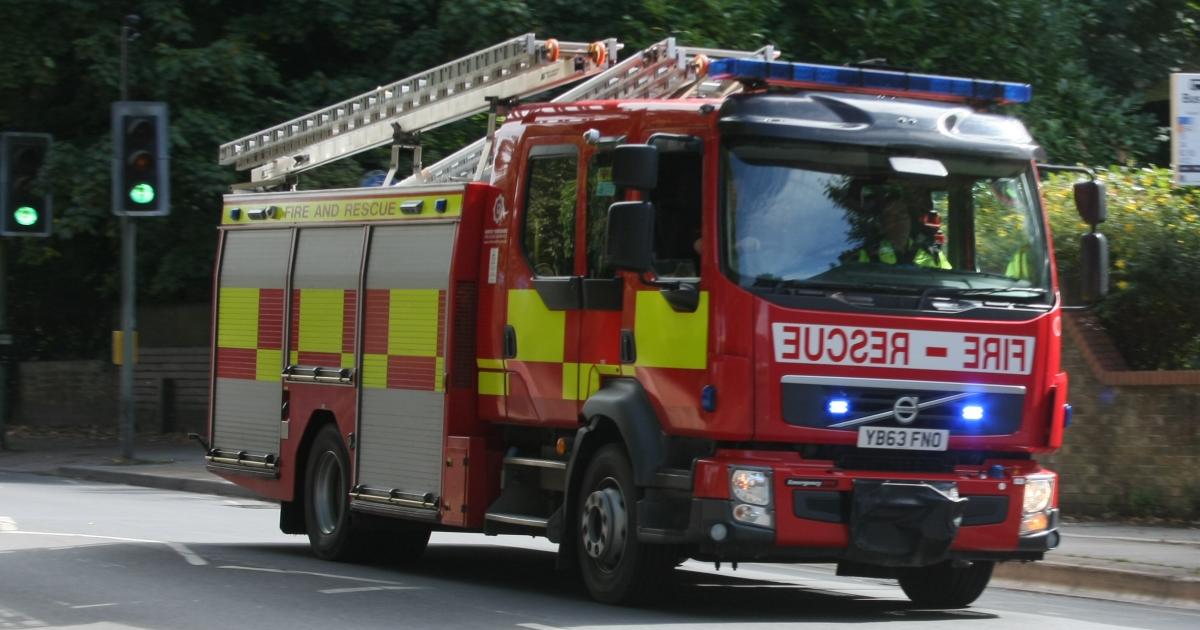
Fire destroys roof of home in Newlands Drive, Acomb

Published

on

Sheriff Hutton shed set alight after hedge fire spreads

Three fire crews were called to the dormer bungalow in Newlands Drive, Acomb, shortly after 2.40pm on Thursday (April 23).

North Yorkshire Fire and Rescue Service said its crews extinguished the fire in the roof space of the home.

A service spokesperson said the blaze caused “100 per cent fire damage the roof”, “50 per cent fire damage to the upstairs property and 10 per cent fire damage to the rest of the property”.

Advertisement

“Crews dampened down [the area] and checked for hotspots. Advice was given to a responsible person,” they said.

Source link

Advertisement
Continue Reading

Trending

Copyright © 2025